
Patio-range BBQs are made by a wide range of manufacturers, from mass-market names like Weber, Napoleon, and Traeger to premium outdoor-kitchen specialists like DCS, Alfresco, and Fire Magic. The term 'patio range' isn't a strict industry category, it loosely describes any compact, patio-friendly cooking unit designed for smaller outdoor spaces, whether that's a portable gas grill, a compact pellet cooker, a built-in power burner, or a small kamado. The right maker and model depends almost entirely on your fuel type, available space, and how seriously you cook outdoors.
Who Makes Patio Range BBQ: Brands, Models & Buying Guide

Caleb Vale
27 Jul 2026
What 'patio range' actually means
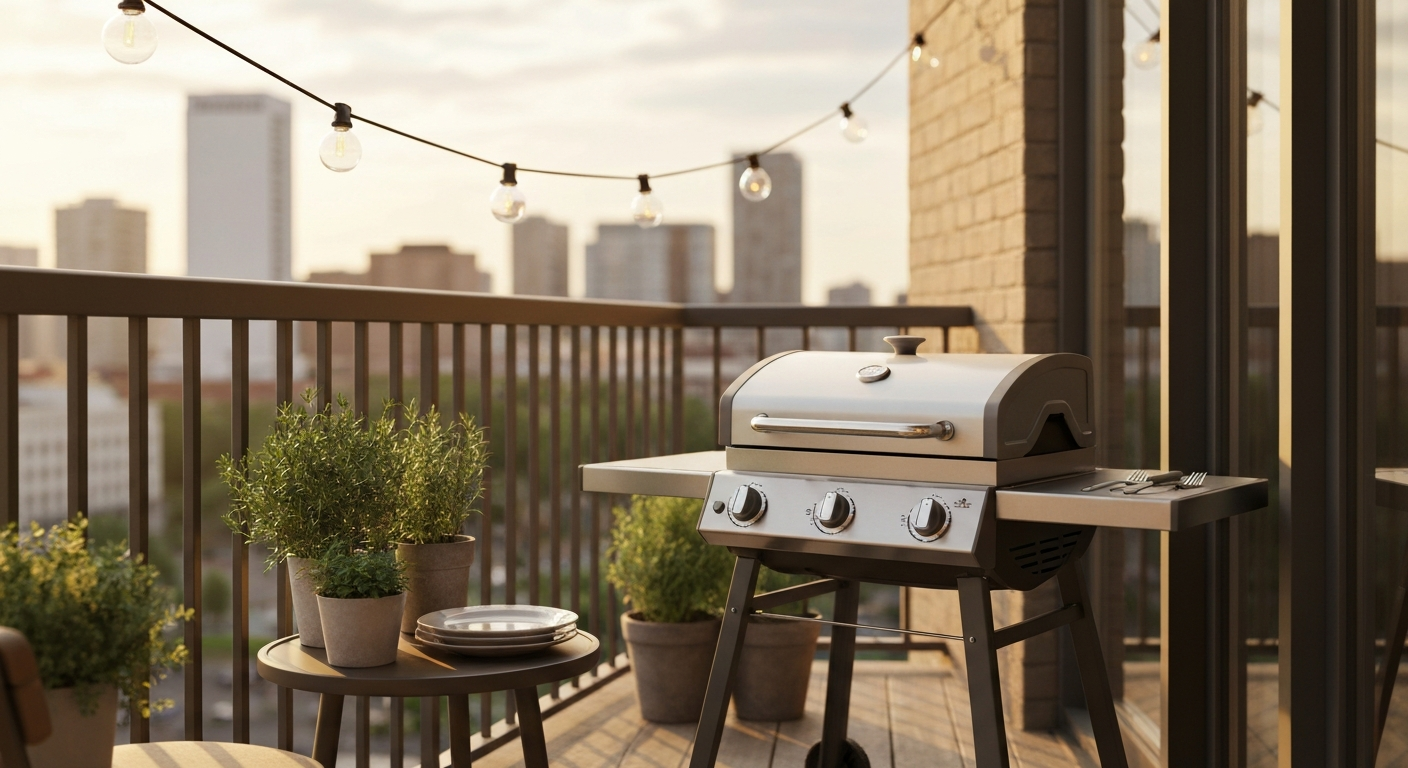
Retailers like Lowe's explicitly filter grills into 'portable,' 'compact,' and 'built-in' categories, and the patio-range segment sits at the intersection of all three. A patio-range BBQ is essentially any grill or outdoor cooktop engineered with a smaller footprint, lower clearance requirements, and often a lighter weight than a traditional full-size backyard grill. That covers everything from a Weber Q 1200 sitting on a balcony table to a 24-inch DCS built-in power burner recessed into a modular outdoor kitchen. What they share is an intentional design for confined or semi-enclosed outdoor spaces where a 60-inch six-burner behemoth simply won't fit, or won't be safe.
Manufacturers themselves use language like 'patio,' 'portable,' or 'compact' to describe these units, and Weber's installation documentation explicitly confirms that built-in barbecues can be installed on a balcony, verandah, or patio, provided local codes and minimum clearance distances are observed. That caveat about local standards is important and comes up again in the installation section below.
Who actually needs a patio-range BBQ
The short version: anyone without the space or setup for a full-size grill. In practice, that includes apartment and condo owners cooking on balconies (subject to building rules and local fire codes), homeowners with smaller patios or courtyards, renters who need something portable they can take when they move, and businesses like hotels, restaurant patios, or catering operations that need compact, self-contained cooking stations. Small-space cooking has driven serious growth in this segment, manufacturers now design purpose-built patio models rather than just shrinking down their full-size lineup.
If you're also thinking about outdoor heating alongside your cooking setup, the placement and clearance rules for a patio-range BBQ interact directly with where you can position a patio heater. Keeping those two elements on the same side of the patio, or separating them by the required clearances, is something worth planning before you buy either.
The three tiers of manufacturers
Major consumer brands
Weber, Napoleon, Char-Broil, and Traeger account for the bulk of what most buyers purchase at hardware stores and big-box retailers. These brands produce purpose-built compact or portable models alongside their full-size lineups. Weber's Q series and Napoleon's TravelQ PRO line are the clearest examples: designed from scratch as small-footprint units rather than cut-down versions of larger grills. Weber publishes component warranty terms for the Q series and built‑in Q line Weber publishes component warranty terms for the Q series and built‑in Q line.. Traeger handles the pellet segment with the Ranger and Tailgater. Char-Broil covers the budget electric and infrared portable space.
Premium and built-in outdoor kitchen specialists
DCS (by Fisher & Paykel), Alfresco, Fire Magic, Lynx, and Blaze manufacture modular outdoor kitchen components, including compact 24-inch built-in grills and power burners intended as 'patio range' cooktops. These are not portable units, they're drop-in modules for stone, stainless, or tile outdoor kitchen counters. The DCS Series 9 PBE1-24 power burner, for example, fits a 24-inch cut-out and delivers up to 70,000 BTU for wok cooking, stock pots, or high-heat searing. Alfresco's 24-inch Versa Power cooking system offers similar LP/NG versatility in a compact built-in format. Alfresco lists the AIPG, Alfresco 24" Versa Power Cooking System (Alfresco) as a 24" Versa Power™ built‑in cooking system available for LP or NG and publishes cut‑out dimensions for installation AIPG — Alfresco 24" Versa Power Cooking System (Alfresco). These brands cost significantly more but are engineered specifically for permanent outdoor installation.
Specialty and custom builders
This tier includes kamado specialists (Big Green Egg, Kamado Joe), infrared-only brands (Solaire), and regional custom outdoor kitchen fabricators. Big Green Egg's MiniMax and Kamado Joe's Joe Jr. sit in a unique category: they're compact charcoal kamado cookers with a dedicated cult following and a proven track record for performance well above their size. Consider the Good-One Smoker Patio Jr as a compact kamado-style smoker that balances portability and genuine smoking performance for small patios. Solaire's SOL-EV17A Everywhere infrared portable is a niche but well-regarded pick for buyers who prioritize searing performance in a truly portable form factor. Custom fabricators build one-off outdoor kitchen islands around whatever built-in components you choose, often combining a patio-range grill with a side burner and storage.
Representative models by fuel type
| Fuel Type | Brand / Model | Cooking Area | Heat Output | Approx. MSRP (USD) | Best For |
|---|---|---|---|---|---|
| Propane (portable) | Weber Q 1200 | 189 sq. in. | 8,500 BTU | ~$229 | Balconies, travel, solo/couples cooking |
| Propane (portable) | Weber Q 2200 | 280 sq. in. | 12,000 BTU | ~$329 | Small patios, families of 2-3 |
| Propane (portable) | Napoleon TravelQ PRO285 | 285 sq. in. | 12,000 BTU | ~$379 | Portable use, two stainless burners |
| Natural Gas (built-in) | DCS Series 9 PBE1-24 | 24" module | Up to 70,000 BTU | $1,000+ | Outdoor kitchens, high-heat cooking |
| Natural Gas / LP (built-in) | Alfresco 24" Versa Power | 24" module | Varies by config | $1,200+ | Modular outdoor kitchens |
| Infrared (portable) | Solaire SOL-EV17A Everywhere | ~140 sq. in. | High-temp sear | ~$350 | Searing, compact balcony use |
| Pellet (portable) | Traeger Ranger | 184 sq. in. | Max ~450°F | ~$329 | Low-and-slow on a small patio |
| Pellet (portable) | Traeger Tailgater | ~300 sq. in. | Max ~450°F | ~$499 | Patio smoking, larger capacity |
| Charcoal/Kamado | Big Green Egg MiniMax | 133 sq. in. | Up to 750°F | ~$549 | Compact kamado, sear + smoke |
| Charcoal/Kamado | Kamado Joe Joe Jr. | ~150 sq. in. | Up to 750°F | ~$399 | Entry-level kamado, small spaces |
A few notes on the table above. The Traeger Ranger and Tailgater both run on 120V AC power (roughly 250W) for the controller and auger, they're not truly off-grid, so you need an outdoor outlet or extension cord rated for outdoor use. The DCS and Alfresco built-in modules require a licensed gas line installation and are not DIY projects in most jurisdictions. The Solaire infrared portable runs on a standard 1-lb propane canister or an adapter hose, which makes it genuinely portable but limits total cook time per canister.
How patio-range models differ from full-size grills
The differences go beyond just footprint. Here's what actually changes when a manufacturer engineers a patio-range or compact model compared to a full-size grill.
- Size and footprint: Patio models are designed around tight clearances. The Weber Q 2200 has a cooking area of 280 sq. in. versus 667 sq. in. on a Weber Spirit E-310. That's not just a smaller grill — it's a fundamentally different cooking capacity and spatial requirement.
- BTU output: Compact propane units run 8,500–12,000 BTU compared to 30,000–45,000 BTU on a full three-burner gas grill. Lower BTU isn't necessarily worse — it's calibrated for the smaller cooking area — but it does affect how quickly you reach temperature and how much you can cook at once.
- Materials: Patio and portable models sometimes use aluminum bodies (Weber Q) instead of stainless or coated steel to save weight. Premium built-in patio modules (DCS, Alfresco) use 304 stainless throughout. Know what you're getting.
- Ventilation and clearance: Full-size freestanding grills are assumed to be used in the open; patio and built-in units come with stricter minimum clearance specifications to combustible materials and overhead structures. Weber's installation guide, for example, specifies minimum clearances above and to the sides of built-in units.
- Installation requirements: Built-in patio modules require cut-out dimensions, gas line connections (LP or NG, not interchangeable without proper conversion), and in many cases a licensed contractor. Weber explicitly warns that converting between LP and NG without proper conversion hardware is unsafe and voids the warranty.
- Weight and mobility: The Weber Q 1200 weighs under 30 lb; the Traeger Ranger weighs 45 lb and the Tailgater 62 lb. The Big Green Egg MiniMax is 76 lb — technically portable but not something you grab with one hand.
- Cooking grate configuration: Compact models typically have a single flat grate with no multi-zone burner separation, limiting your ability to run direct/indirect heat zones simultaneously — a real trade-off for more complex cooks.
Choosing the right type and size for your setup
Space and footprint first
Measure your usable patio space before you look at cooking area specs. Most manufacturers publish assembled dimensions for portable units and cut-out dimensions for built-ins. Add at least 12–18 inches on each side for clearance from walls, railings, or overhead structures, and check your local fire code if you're on a balcony. Many jurisdictions prohibit any open-flame grill on balconies above a certain height; some allow only electric units.
Climate considerations
If you live somewhere with cold winters, the fuel type matters more than you might expect. Propane loses pressure at low temperatures (below about 40°F, standard propane flow starts dropping), which affects ignition reliability and heat output on very cold days. Natural gas lines maintain consistent pressure regardless of temperature, making NG built-in units a better choice for year-round grilling in cold climates. Pellet grills like the Traeger Ranger require an AC power source and can struggle with temperature regulation in wind, not ideal for exposed patios without a windbreak. Kamado-style units (Big Green Egg MiniMax, Kamado Joe Joe Jr.) are excellent in cold weather because the thick ceramic walls retain heat extremely well.
Cooking style and capacity
If you mostly grill steaks, burgers, and vegetables for two to four people, a 280–300 sq. in. propane portable (Weber Q 2200, Napoleon TravelQ PRO285) covers the use case well. For low-and-slow smoking on a small patio, the Traeger Tailgater or a compact kamado will outperform any gas grill. If you want high-heat wok or stockpot performance alongside a grill, a 24-inch built-in power burner (DCS, Alfresco) adds that capability as a modular add-on to a permanent outdoor kitchen. Don't over-buy on cooking area, extra grate space that sits cold just means more cleaning.
Buying checklist
- Size and footprint: Measure your space, add required clearances, and confirm the assembled or cut-out dimensions before purchasing. Check railing heights and overhead clearances on balconies.
- Fuel type: Propane for portability and convenience; natural gas for permanent install with consistent pressure; electric or infrared where open flame is restricted; pellet for smoke flavor with set-and-forget convenience; charcoal/kamado for maximum flavor and heat flexibility.
- BTU and heat output: Match BTU to cooking area — 8,500–12,000 BTU is appropriate for 180–300 sq. in. compact grills. High-BTU power burners (50,000–70,000+ BTU) are for built-in wok burners, not standard grilling.
- Ignition and reliability: Electronic push-button ignition (Weber Q series) is more reliable in damp conditions than piezo ignition. Test customer reviews specifically for ignition failure rates in your climate.
- Construction materials: 304 stainless steel body for permanent outdoor installs. Aluminum lid and porcelain-enameled cast-iron grates (Weber Q 2200) for portable units where weight matters. Avoid thin cold-rolled steel on budget units exposed to rain.
- Cooking surface: Porcelain-enameled cast iron retains heat well and resists sticking but requires careful drying to prevent rust. Stainless grates are more durable and lower-maintenance but less forgiving on sticking.
- Accessories and ecosystem: Weber, Napoleon, and Traeger all have robust accessory ecosystems (griddle inserts, carry bags, covers, hooks). Kamado brands have extensive accessory libraries but accessories are brand-specific and not interchangeable.
- Warranty and parts support: Weber Q series components typically carry a 5-year warranty on major parts (cookbox, lid, burners, grates). Verify parts availability for your specific model — especially for built-in modules from premium brands where replacement parts can be expensive and slow to ship.
Price bands: what you get at each level
| Price Band | Typical Range (USD) | What You Get | Trade-offs |
|---|---|---|---|
| Budget portable | $100–$250 | Basic propane or electric portable, single burner, 150–200 sq. in., thin materials, basic ignition | Limited durability, smaller cook area, fewer accessories, shorter warranty |
| Mid-range patio | $250–$550 | Weber Q 2200, Napoleon TravelQ PRO285, Traeger Ranger/Tailgater, Big Green Egg MiniMax — purpose-built compact units with quality materials, electronic ignition, 185–300 sq. in. | Still limited cook zone separation; pellet models require power; kamados are heavy |
| Premium portable/compact | $550–$1,000 | Traeger Tailgater (upper end), premium kamados, Solaire infrared — specialized high-performance compact units | Niche use cases; higher cost per square inch of cook area; accessories add up quickly |
| Premium built-in | $1,000–$3,000+ | DCS Series 9 24" power burner, Alfresco Versa Power, Fire Magic Aurora 24" built-in — 304 stainless, commercial-grade output, permanent installation | Requires licensed gas install, not portable, high parts cost, full outdoor kitchen context recommended |
The mid-range patio band ($250–$550) delivers the best value for most buyers. See our guide to the best patio bbq grill for top picks across price bands and fuel types. At this price, you're getting purpose-engineered compact grills with verified specs, real warranty support, and parts availability, not scaled-down versions of budget full-size grills. See our guide to the best patio grill for top picks across budgets and use cases. The jump to premium built-in makes sense only if you're building or upgrading a permanent outdoor kitchen and plan to stay in the same home for several years.
Installation, safety, and local codes
This is the section most buyers skip and then regret. A few hard rules that apply regardless of which brand you choose. First, never convert a propane unit to natural gas (or vice versa) without a manufacturer-approved conversion kit, Weber's owner manuals specifically flag this as a safety hazard that voids the warranty. Second, built-in modules require gas lines run by a licensed plumber or gas fitter in most jurisdictions; this is not a DIY afternoon project. Third, check your local fire code before buying anything with an open flame for a balcony or enclosed patio, many municipal codes restrict or prohibit LP grills above the second floor or within enclosed spaces. Fourth, when integrating a patio-range BBQ near a patio heater, maintain the minimum clearance between both units as specified in each manufacturer's documentation, they don't share a clearance standard.
Ventilation matters more with built-in units than freestanding ones. An outdoor kitchen cabinet housing a built-in grill needs ventilation cut-outs sized to the manufacturer's specifications, under-ventilated installations can cause heat buildup, propane accumulation, and fire risk. The DCS Series 9 planning guide and Weber's built-in installation documentation both publish minimum ventilation requirements for their respective units. Follow those specs exactly.
How to evaluate a model before you buy
When reading reviews and ratings for any patio-range model, look for testing methodology that goes beyond subjective impressions. A credible review of a compact grill should include temperature distribution testing across the grate (not just peak temperature claims), ignition reliability across multiple cold starts, preheating time to cooking temperature, and grate-to-grate consistency. AmazingRibs documents a sensor-based grill testing methodology that uses repeatable temperature measurements, that's the standard independent reviewers should be held to. If a review doesn't describe how it measured performance, treat the conclusions with skepticism.
Customer feedback on e-commerce platforms is useful for surfacing durability issues over time, look specifically for patterns in 1-2 star reviews around ignition failure, rust after one season, or gas connection problems. Single reviews about bad shipping are noise; ten reviews about the same burner failing after six months is signal. For pellet grills like the Traeger Ranger and Tailgater, look at customer reports from cold-climate users specifically, since controller and auger performance in low temperatures is a known variable.
Maintenance and ongoing costs
Compact patio grills need the same maintenance as full-size units but in tighter quarters. Cast-iron grates need seasoning and careful drying after rain exposure. Porcelain-enameled grates chip if you use metal brushes, use a nylon brush or wooden scraper instead. Propane connections should be checked seasonally for leaks (soapy water on the regulator and hose reveals bubbles). Pellet hopper residue should be cleared at the end of the season to prevent moisture absorption and mold in the auger tube. Kamado gaskets (Big Green Egg, Kamado Joe) wear over time and should be replaced every two to three seasons depending on use frequency. Built-in stainless modules should be covered with a fitted cover when not in use, 304 stainless resists rust but saltwater environments (coastal patios) will still cause surface pitting over time without protection. For extra protection of decking and patio surfaces, see our guide to the best patio grill mat.
Comparing your options: patio BBQ vs. patio smoker vs. griddle
If you're deciding between a patio-range BBQ, a dedicated patio smoker, or a patio griddle, the core trade-off is versatility versus specialization. A compact propane grill (Weber Q 2200, Napoleon TravelQ PRO285) handles grilling, searing, and basic roasting, but won't deliver true smoked flavor. For propane-focused buyers, consider the Weber Q 2200 as the best patio grill for propane, it balances reliable heat, portability, and parts availability for small-space cooking. A compact pellet grill (Traeger Ranger, Tailgater) does low-and-slow smoking well but tops out around 450°F, not hot enough for a proper sear without a supplemental sear station. See the outlaw patio smoker review for hands-on testing and temperature-stability data on compact patio smokers. A patio griddle offers a wide flat cooking surface ideal for breakfast foods, stir-fry, and smash burgers, but it's a different cooking method entirely. If you're serious about smoking on a small patio, a dedicated compact smoker will outperform a pellet portable at the same price point. The kamado options (Big Green Egg MiniMax, Kamado Joe Joe Jr.) are the most genuinely versatile, they can grill, smoke, roast, and sear at very high temperatures from a single charcoal fire, which is why they command the price premium they do despite their compact size.
FAQ
What is a 'patio range' BBQ and how does it differ from a full‑size grill?
A 'patio range' BBQ refers to compact grills, cooktops, or built‑in modules designed for small outdoor spaces—patios, balconies, RVs, or compact outdoor kitchens. They have smaller cooking areas, lower fuel demands, and simplified ventilation/clearance needs compared with full‑size grills. Patio models are engineered for portability or integrated installation (24" built‑in modules are common) and often prioritize footprint, lighter weight, and lower BTU totals rather than large continuous cooking capacity. Unlike full‑size grills, they may use different materials, fewer burners, smaller hoppers (pellet), or electric options to suit space and code constraints.
Who makes patio‑range BBQs (major manufacturers and specialty builders)?
Major manufacturers: Weber (Q series, Q built‑in modules), Napoleon (TravelQ portable series), Traeger (Tailgater, Ranger pellet portables), DCS, Alfresco and Fire Magic (24" built‑in modules for compact outdoor kitchens), Big Green Egg and Kamado Joe (mini/Junior kamado models). Specialty builders and boutique makers: smaller outdoor‑kitchen brands and custom fabricators who produce compact power burners and built‑in cooktops. Retailers (Lowe's, BBGGUYS, etc.) also market curated 'patio/portable' lines.
Representative models across fuel types—propane and natural gas (compact)
Propane/natural gas examples: Weber Q 1200 (portable gas, ~8,500 BTU, 189 sq. in.), Weber Q 2200 (~12,000 BTU, 280 sq. in.), Napoleon TravelQ PRO285 (~12,000 BTU, 285 sq. in.), DCS / Alfresco 24" built‑in power burners and cooktops (24" modules sized for small outdoor kitchens, available in LP/NG). These cover small free‑standing, cartable, and built‑in patio installations.
Representative models—electric, infrared, and charcoal/kamado options
Electric: compact electric grills from major brands and retailers (look for electric models in Lowe's 'Portable/Electric' categories). Infrared: Solaire 'Everywhere' SOL‑EV17A (portable infrared searing unit). Charcoal/kamado: Big Green Egg MiniMax, Kamado Joe Jr./Classic Joe Jr. — small ceramic kamados well suited to patios but heavier and requiring more clearance and ash management.
Representative models—pellet portables
Traeger Tailgater and Ranger are the leading portable pellet examples: Tailgater (≈300 sq. in., 8 lb hopper) and Ranger (≈184 sq. in., ~8 lb hopper). They run on electricity for fans/controllers and use small hoppers for shorter cooks—good for smoke/flavor in a compact footprint.
How do manufacturers’ patio models differ from their full‑size counterparts?
Design differences: reduced cook surface, fewer or smaller burners, lower maximum BTU totals, lighter or different materials (aluminum bodies on some portables vs heavy stainless on full‑size), simplified controls, and smaller fuel systems (compact LP bottles, small pellet hoppers). Installation guidance and warranties may be specific to built‑in patio models. Venting/clearance rules, conversion restrictions (LP/NG), and accessory compatibility can differ; always consult the manufacturer installation/ventilation guide and owner manual.
Next Articles
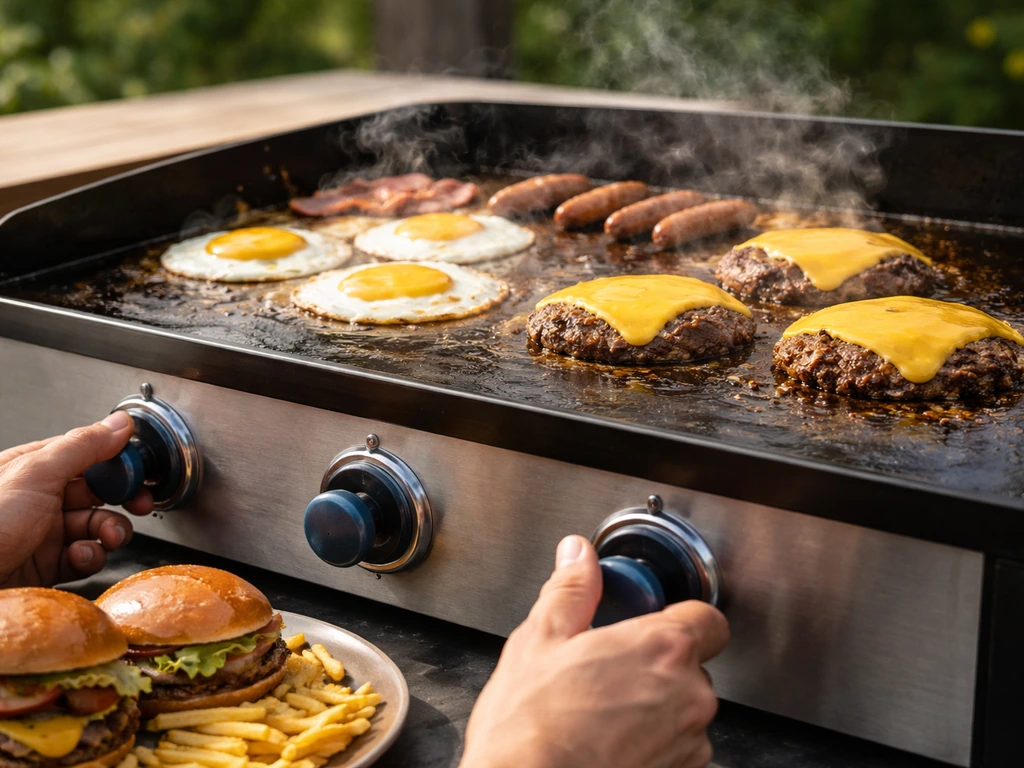
Best Patio Griddle: How to Choose the Right Model
Choose the best patio griddle with fuel, size, heat control, surface, cleanup, safety, and durability tips for your setu
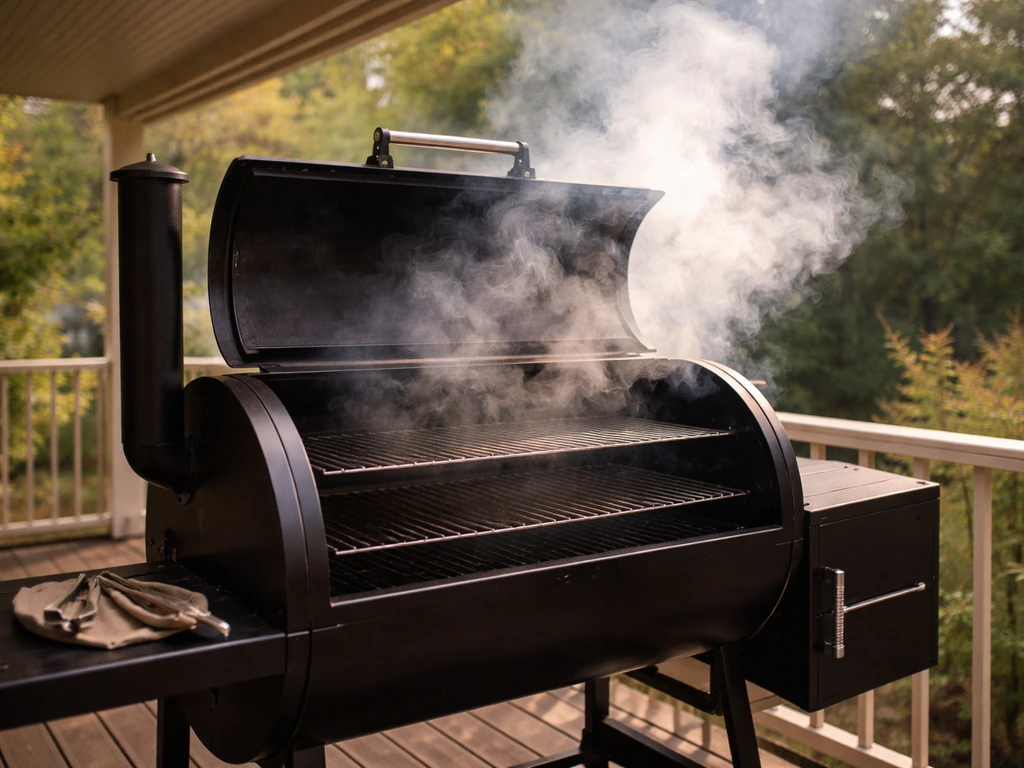
Best Patio Smoker Buying Guide: How to Choose and Use One
Compare pellet, propane, offset, and electric patio smokers with key features, best picks, setup and safety tips.
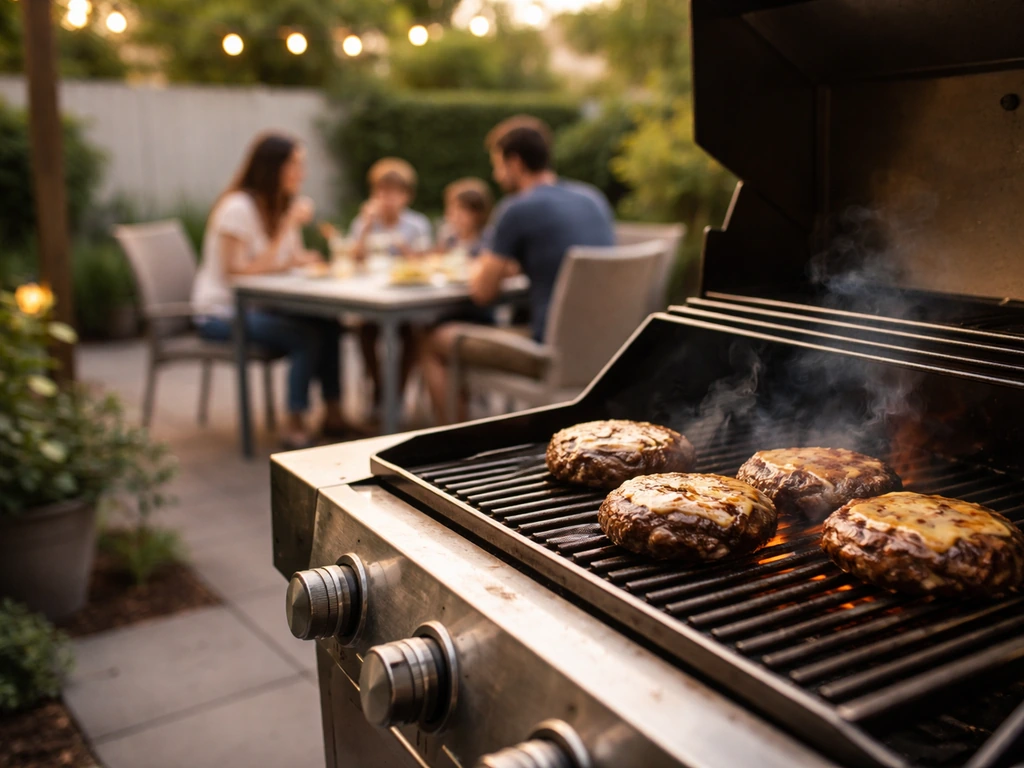
Best Patio BBQ Grill: Buy Guide by Fuel, Space, Budget
Choose the best patio BBQ grill by space, fuel, and budget with clear picks for small patios, families, and entertaining