For most home patios, a propane flat-top griddle in the 28- to 36-inch range hits the sweet spot: enough cooking surface for a family meal, easy fuel hookup, and manageable cleanup. If you're cooking for crowds or running a small outdoor food operation, step up to a 36- or 44-inch model with four or five burners and independent heat zones. If you have a natural gas line already run to your patio, a built-in or cart-style NG griddle will save you money over time and cut the propane-swap hassle entirely. Electric griddles are the right call only for balconies or spaces where open-flame cooking is prohibited.
Best Patio Griddle: How to Choose the Right Model
Caleb Vale
11 Jul 2026
What a patio griddle actually is (and who needs one)
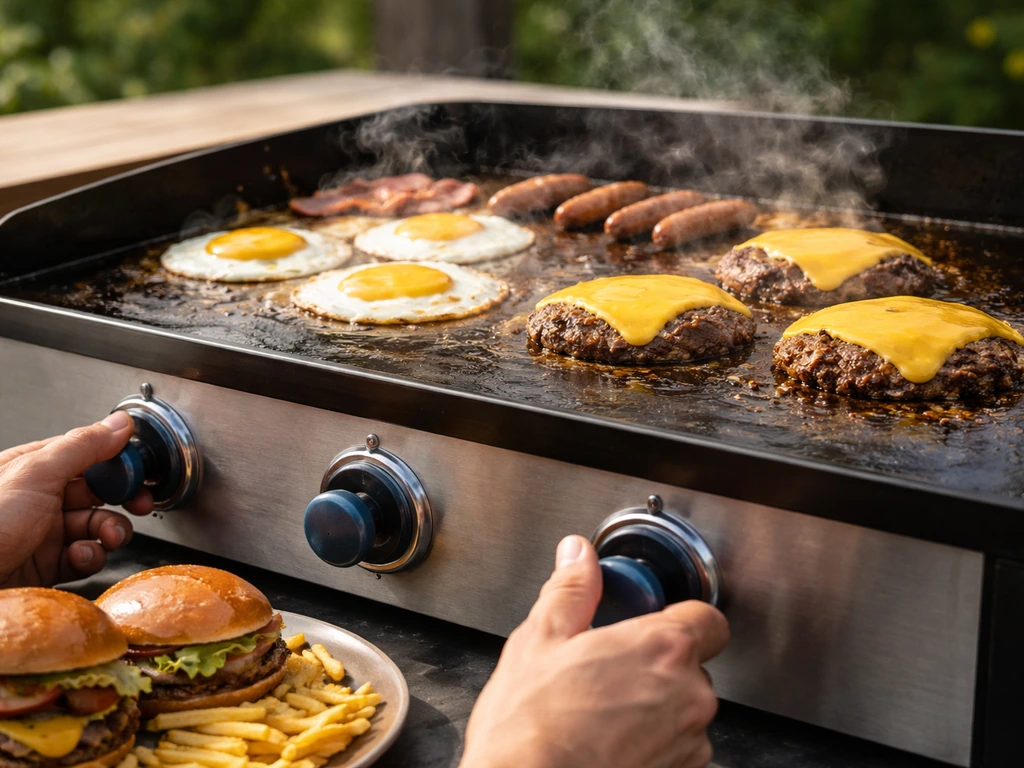
A griddle cooks on a smooth, solid plate. Every part of the food sits in full contact with the cooking surface, which means you get a consistent sear across the entire bottom rather than the striped char marks you get from grill grates. That distinction matters more than it sounds. A traditional grill leaves gaps between food and heat, which is great for steaks and chicken thighs but terrible for eggs, smash burgers, quesadillas, sliced vegetables, fried rice, or anything else that would fall through or dry out without that full-contact surface. A patio griddle brings diner-style flat-top cooking outside, letting you cook multiple things at once across different heat zones without juggling a stovetop and an outdoor grill simultaneously.
The audience for a patio griddle breaks into two clear groups. The first is the home cook who wants more versatility than a standard grill offers: weekend breakfast spreads, smash burgers, stir-fries, tacos. The second is the small outdoor food operator (food trucks, pop-up markets, restaurant patios) who needs serious commercial-grade surface area and consistent multi-zone heat control. Both groups have excellent options in 2026, but the priorities are different enough that they should be shopping in different parts of the market. This guide covers both, but leans toward the homeowner who wants a serious backyard setup.
It's worth distinguishing griddle-style cooking from grill-style cooking before going further. If your main goal is open-flame grill marks on steaks and ribs, a griddle is not the right primary tool. It can complement a grill or smoker nicely, but it's a different piece of equipment with a different cooking logic. If you're also weighing grills or smokers for your patio setup, those are worth looking at separately. If you want the best patio smoker results, you can also pair your griddle with a quality smoker for low-and-slow flavor grills or smokers for your patio setup.
Fuel type and setup tradeoffs
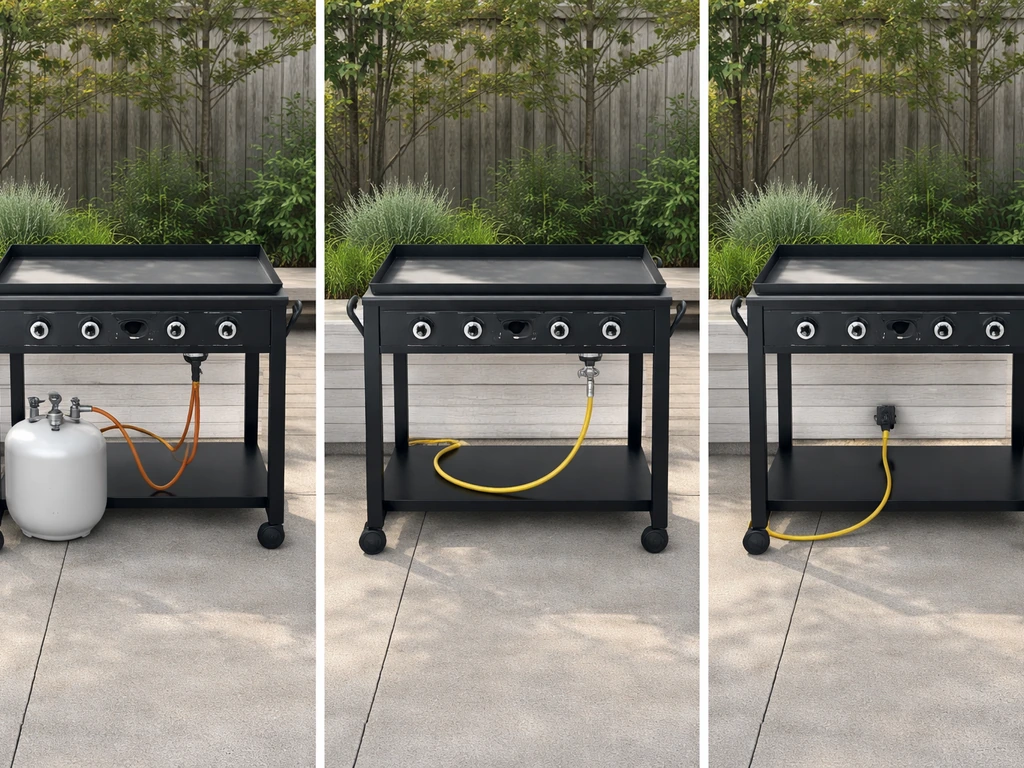
Fuel choice shapes everything downstream: installation cost, convenience, running cost, and where you can actually place the griddle. Here's how the three options stack up in a real outdoor context.
| Fuel Type | BTU Range | Setup Cost | Best For | Main Drawback |
|---|---|---|---|---|
| Propane (LP) | 30,000–50,000+ BTU | Low (just the tank) | Most home patios, portability | Tank swaps, ongoing fuel cost |
| Natural Gas (NG) | 30,000–48,000 BTU | Medium–High (line run required) | Permanent installs, heavy use | Not portable, requires gas line |
| Electric | 1,750W (120V) to higher wattage (208/240V) | Low–Medium | Balconies, no-flame zones | Lower heat output, cord management |
Propane is the default choice for most people, and for good reason. Models like the Blackstone 28-inch 2-burner push 34,000 BTU, and the 44-inch 5-burner unit sold at Costco hits 50,000 BTU total, all from a standard 20-pound propane cylinder. You're up and cooking in minutes. The tradeoff is that you'll track tank levels, do swaps mid-summer, and pay more per BTU over time compared to natural gas.
Natural gas makes the most sense if you already have a NG line on your patio or are willing to pay a plumber to run one. Brands like Evo offer their residential professional wheeled-cart griddle in both LP and NG configurations at 48,000 BTU, and many built-in griddle inserts (like the Blaze LTE Pro 30-inch at 30,000 BTU total) are designed around NG connections. Once installed, you never think about fuel again. The big caveat: you're now committed to one location, so think carefully about patio layout before you run that line. If you're looking at a good-one smoker patio JR setup, the same careful patio layout mindset helps you plan your fuel line and cooking zones.
Electric griddles top out at lower heat outputs, typically 1,750 watts on 120V household current, with larger commercial units requiring 208/240V service. For a covered deck where open-flame cooking is not allowed, or for a balcony apartment, electric is your only viable path. Just go in knowing that recovery time after loading cold food will be slower, and you will not hit the same searing temperatures that a high-BTU propane unit achieves.
Key performance factors: heat, control, recovery, and surface material
Heat output and temperature control
Raw BTU matters less than how well heat is distributed and how independently you can control different zones. A 36-inch 4-burner Blackstone (roughly 35.75 inches wide by 21.5 inches deep of cooking surface) lets you run high heat on one side for searing smash burgers while keeping the other end at medium for eggs and toast. That multi-zone capability is one of the main reasons to buy a larger griddle over a smaller one, even if you're not always cooking for a crowd. Weber's Slate 36 quick-setting guide puts this in concrete terms: direct high is 250–290°C, medium-high is 210–250°C, and each zone should be dialed independently depending on what you're cooking.
Heat recovery speed, meaning how fast the surface returns to target temperature after you load cold food, is where cheap griddles fall short. Good Housekeeping's Institute testing evaluates this specifically: even cooking performance, searing at high temps, and the ability to hold low temperatures without scorching. Camp Chef's manuals note explicitly that you should never heat a griddle on high from cold, which reflects a real performance management point: fast ramp-up can warp thinner plates and cause uneven heat distribution. A quality griddle heats gradually and holds temperature steadily.
Cooking surface material
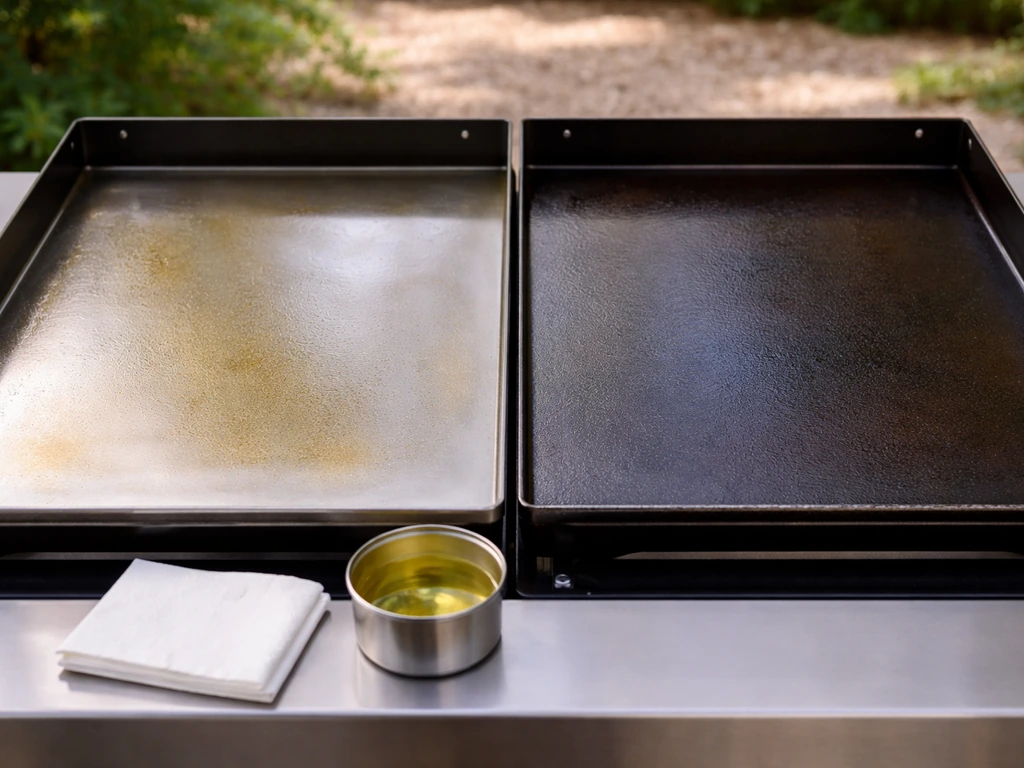
Cold-rolled steel (the Camp Chef and Blackstone standard) and cast iron are the dominant materials in the outdoor griddle market, and both require seasoning. Cold-rolled steel heats fast, responds quickly to burner adjustments, and seasons into a naturally non-stick surface over time. Camp Chef ships its griddles with an all-natural seasoning already baked on. Cast iron holds heat longer and is more forgiving of temperature drops but is heavier, slower to heat, and more prone to cracking if thermally shocked. Stainless steel surfaces look good but require more seasoning effort to become non-stick and can have hot spots if the burner design isn't well matched to the plate. Weber's Slate line uses a hardened steel surface marketed specifically for rust resistance, which is a genuine advantage in humid or coastal climates.
Nonstick coatings exist in some entry-level griddles, but avoid them for high-heat outdoor cooking. They degrade at the temperatures a serious outdoor griddle reaches, flake into your food over time, and can't be restored once damaged. A properly seasoned cold-rolled steel or cast iron surface performs better and lasts indefinitely with basic care.
Size, footprint, and weather suitability for your patio
Griddle size is a direct function of how many people you're cooking for and how much patio real estate you have. A good best patio grill mat can also protect your patio surface from heat, grease, and spills while you cook. Here's a practical breakdown:
| Griddle Size | Burners | Ideal Crowd Size | Footprint Notes |
|---|---|---|---|
| 28 inches | 2 | 2–4 people | Fits a small deck; easy to cover and store |
| 36 inches | 4 | 4–8 people | Most popular home size; enough for multi-zone cooking |
| 44 inches | 5 | 8–12+ people | Needs a large patio; approaches commercial territory |
| Built-in insert (24–30 in.) | 2 | 4–6 people | Integrated into outdoor kitchen; no extra footprint |
Weather suitability is something a lot of buyers underestimate until the griddle starts rusting. Cold-rolled steel and plain cast iron will rust within one season in humid, coastal, or rainy climates if left uncovered and unseasoned. Weber's Slate marketing leans into this with its rust-resistant surface claim, and it's a legitimate differentiator if you live somewhere with high humidity or salt air. For everyone else, the practical answer is to always use a fitted cover, even if your griddle lives under a covered patio. Reddit users with long-term Blackstone ownership are consistent on this: the cover matters more than where you store it.
Portability is another dimension of footprint. A cart-style propane griddle can be rolled to shelter during a storm or repositioned on the patio as needed. A built-in natural gas unit cannot move at all. If your patio setup is still evolving or you rent, start with a cart-style propane griddle. If you have a permanent outdoor kitchen and a NG line, a built-in insert is the cleaner, more integrated option.
Cleanup, grease management, and the real maintenance picture
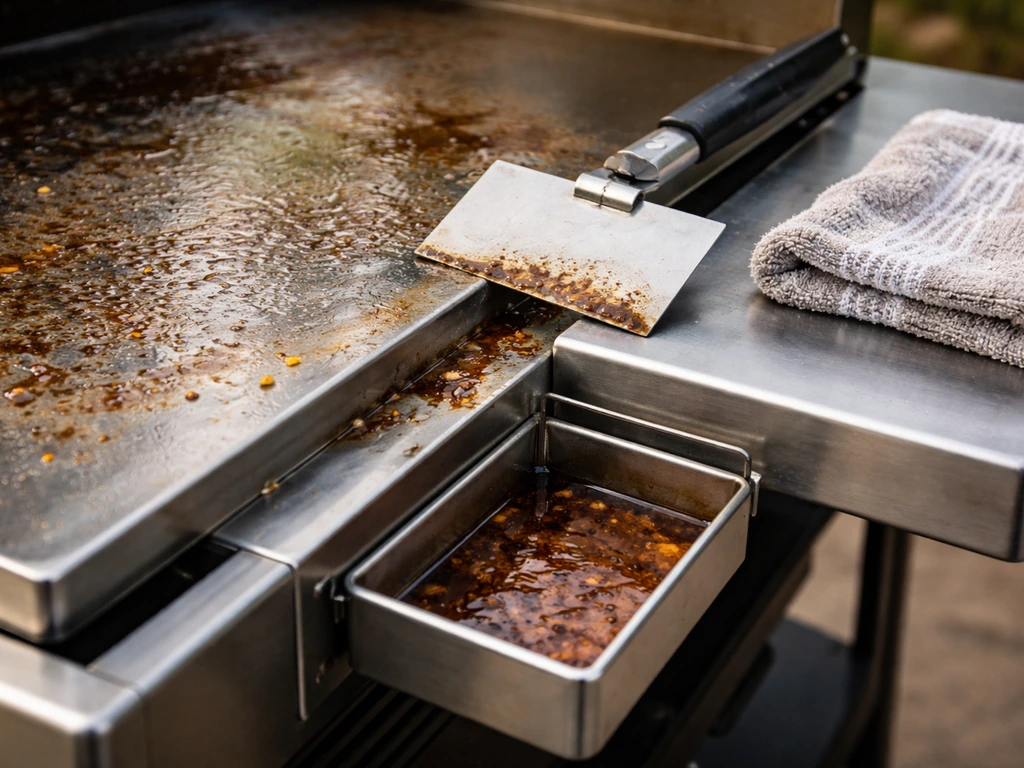
Grease management is the operational reality that separates a well-designed griddle from a frustrating one. Every serious outdoor griddle routes grease off the cooking surface through a drain opening and into a removable cup or tray. Blackstone's rear grease management system channels grease through a drain into a removable cup at the back of the unit. Weber's Slate routes grease into a disposable drip pan that lines a grease tray. Evo's circular cooking surface funnels grease to the outer edge. Whatever the design, the critical thing is that the system works reliably and the cup or pan is easy to access and empty. Camp Chef's manual puts it plainly: never use the griddle without the grease cup holder installed. A missing or improperly seated grease cup means grease accumulates under the unit, and that's a fire risk.
Post-cook cleanup is straightforward once you have a routine. While the surface is still warm (not scorching hot), scrape food particles toward the grease drain using a metal scraper. For stuck-on bits, add a small amount of water to the surface while it's warm and use the steam to loosen debris before scraping. Wipe down with a paper towel, apply a thin layer of cooking oil, and let it cool. That oil layer is both the seasoning maintenance and the rust protection. Camp Chef recommends a chain mail scrubber for more stubborn buildup. The key thing most people get wrong early on is over-cleaning: you don't need to strip the surface every time. Light scraping plus a thin oil coat after every cook is all it takes for day-to-day maintenance.
Seasoning is not a one-time event, but it's also not nearly as demanding as cast iron cookware mythology suggests. Blackstone's guidance is clear: the first seasoning is the most intensive step. After that, scraping and re-oiling after each cook keeps the surface in good shape. If you see rust or flaking, you can strip and re-season from scratch. Evo's cleaning guidance calls this process reconditioning and recommends it whenever you see heavy carbon buildup, rust, or flaking. It takes an afternoon and the griddle is back to new.
Safety and outdoor placement best practices
Outdoor griddles share most of the same safety principles as outdoor grills, but grease management adds a specific fire risk layer that's worth understanding separately. Here are the non-negotiables:
- Maintain at least 36 inches of clearance from any combustible surface: walls, railings, fences, and overhead structures. Blackstone's safety guide specifies this distance, and it aligns with NFPA guidance on outdoor cooking appliances.
- Never use a gas griddle indoors or in an enclosed space. Camp Chef's FAQ is explicit: all its griddle products are approved for outdoor use only. Carbon monoxide accumulation in an enclosed space is a genuine danger.
- Perform a soapy water leak test at the regulator and hose connections before each propane season or whenever you swap a new tank. Bubbles at any connection point mean you have a leak. Fix it before lighting the burners.
- Keep the grease cup installed and emptied regularly. A full grease cup that overflows is the most common cause of griddle-related flare-ups. Grease is flammable, and water makes a grease fire worse, not better.
- Use long-handled tools. The cooking surface of a flat-top griddle retains heat across the entire plate, which means there's no safe edge to rest your hand near while cooking.
- Place the griddle on a stable, level surface. A cart that wobbles on uneven patio stones is a tip-over risk, especially when the surface is loaded with hot food and grease.
- If cooking under a covered patio or pergola, confirm you have adequate overhead clearance (typically a minimum of 8 feet to combustible overhead material) and cross-ventilation. Even under a pergola, heat and grease vapor accumulate.
The clearance issue trips up a lot of people who try to tuck a griddle into a corner of a deck near a railing or siding. Camp Chef’s FTG600 manual includes blank" rel="noopener noreferrer">minimum clearance guidance from combustibles and installation safety rules consistent with gas codes for outdoor use. Reddit discussions among long-term Blackstone owners consistently flag this: the 36-inch clearance rule is not just for the sides, it applies overhead and behind the unit as well. If your patio setup makes that clearance difficult, a smaller griddle positioned in a more open area is safer than a larger one crammed into a tight spot. If you are comparing specific models before you buy, an outlaw patio smoker review can be a useful adjacent check for how people judge outdoor setups beyond just griddles.
How to choose the best patio griddle for your budget and cooking style
Here is the direct decision framework. Match your situation to the profile below and you'll have a clear shortlist to work from. A good starting point is to look for options that match your cooking style and fuel setup, so you can narrow down the best patio grill for your yard.
| Your Situation | Best Fit | Why |
|---|---|---|
| Small patio, 2–4 people, propane | Blackstone 28" 2-burner or Weber Slate 28" | Right-sized surface, manageable footprint, proven cleanup systems |
| Mid-size patio, family cooking, propane | Blackstone 36" 4-burner or Weber Slate 36" | 4-zone heat control, versatile surface, strong aftermarket support |
| Large patio, entertaining crowds | Blackstone 44" 5-burner or Pit Boss 4-burner deluxe | 50,000 BTU+, maximum surface area for high-volume cooking |
| Permanent outdoor kitchen, NG line | Blaze LTE Pro 30" griddle insert or Evo wheeled-cart NG | Clean installation, no tank swaps, serious heat output |
| Humid/coastal climate | Weber Slate (any size) | Rust-resistant surface is a real advantage in wet climates |
| Balcony or no-flame required | Commercial-grade electric griddle (208/240V if available) | Only viable option; go 240V for better heat recovery |
| Budget under $400 | Blackstone 28" or 36" (on sale) | Best value-to-performance ratio in the category; widely available |
Budget deserves a direct word. The Blackstone lineup remains the value benchmark in 2026: the 28-inch and 36-inch models are widely available, well-supported, and have a large enough owner community that troubleshooting is easy. Weber's Slate costs more but earns it with better rust resistance and a cleaner grease management system. Camp Chef and Evo sit above both in price and are worth it for serious cooks who want better build quality and heat consistency. Pit Boss and Traeger (Flatrock) offer competitive options at mid-range prices with some features (like the Traeger 2-zone design) that reviewers at Bon Appétit flagged favorably in 2026 testing.
Your next practical steps: measure your patio space and confirm clearance distances before buying any specific size. Decide on fuel type based on what you have (or are willing to install). If you're in a rainy or coastal climate, lean toward a rust-resistant surface or plan to cover the griddle religiously. Buy a fitted cover at the same time as the griddle, not as an afterthought. Season the surface on your first cook day and get into the scrape-and-oil routine from the start. That's the full setup. You can also check who makes patio range BBQ options by comparing the brands that sell reliable, multi-burner griddles and built-in units. The cooking part takes care of itself once the equipment is right.
FAQ
Do I really need a larger (36 to 44 inch) best patio griddle, or will a 28 inch model be enough?
If you cook more than one item at a time, a wider cooking surface usually matters more than overall BTU. A 28 inch unit often forces you to choose between, for example, keeping eggs at medium while searing burgers on high. If your typical menu is single-item meals, 28 inch can work, but if you regularly cook breakfast spreads, stir-fries, or quesadillas and veggies together, plan for the larger multi-zone models.
What should I do if my patio griddle plate seems to heat unevenly across zones?
First confirm you are not heating on high from a cold start, then check that the burners are centered under the plate and that the regulator and hose are installed correctly. Uneven heat can also come from a warped or poorly seated grease tray or plate components, so inspect alignment after assembly. If one side never reaches target even after gradual heating, the model may have a burner distribution issue rather than a seasoning problem.
Can I use a grill cover or generic tarp, or do I need a fitted griddle cover?
A fitted cover is the better choice because it seals out wind-driven rain and reduces condensation inside. Generic covers often leave gaps that let moisture collect around the plate edges, leading to rust even under a covered patio. The most important practice is that the griddle should be fully cool and the surface lightly oiled before covering.
How do I season a cold-rolled steel or cast iron patio griddle if it is already rusty?
If rust shows up, do not just oil over it. Strip and re-season by scrubbing until the surface is uniformly clean, then heat through gradually and apply thin layers of oil, letting each layer polymerize before adding more. Plan on multiple rounds for heavier rust, and stop when the surface looks dark and even rather than sticky or patchy.
Is it safe to use spray oils or cooking spray on the griddle right away?
It is usually better to use a thin oil wipe (paper towel, chain mail scrubber as needed) rather than spraying heavily, especially in windy conditions. Sprays can pool, create hot spots, or burn off quickly, which may leave carbon buildup. If you do use spray, apply sparingly right after a warm-up wipe, not onto smoking-hot metal.
How often should I scrape and re-oil during normal cooking?
Use the minimum effective routine: scrape and move food toward the drain when you finish a batch, then wipe with a paper towel, apply a thin layer of oil, and let it cool. You do not need to fully strip the surface after every cook. If you see flaking or a dull gray patch, that is a sign you likely need more seasoning attention, not more aggressive cleaning.
What is the safest way to clean a patio griddle after cooking without damaging the surface?
Clean while the plate is warm, not scorching. Steam loosening with a small amount of water on the hot surface is fine, then scrape and wipe. Avoid soaking the plate, and do not use harsh abrasives that remove too much seasoning. After cleaning, apply a light oil film before cooling so rust protection starts immediately.
Why does my grease cup fill up faster than expected, and what should I check?
Grease cup capacity and the drainage path determine how quickly it fills. If it fills faster than your prior model, check that the cup holder is fully seated and that the drain is clear, because partial blockage can cause grease to accumulate. Also note that watery marinades and high-fat foods add more volume, so empty the cup at intervals rather than waiting for it to get near capacity.
What clearance rules should I actually follow for a best patio griddle near railings or siding?
Do not rely only on side spacing. You need clearance around the entire unit, including overhead, behind, and to the sides of hoses, regulators, and any heat shields. If you cannot meet the manufacturer’s clearance guidance, choose a smaller griddle or reposition the unit into a more open area rather than trying to tuck it into a corner.
Can I switch from propane to natural gas later, or are they completely different units?
Sometimes conversion is possible, but many grills and griddles require a specific NG conversion kit and the right regulator settings. Even with a compatible model, you must verify burner and orifice specifications, and natural gas units often perform differently by burner design. If you are not sure, decide fuel type before buying, or confirm conversion availability with the manufacturer for your exact model number.
How do I prevent flare-ups or smoke on a flat-top griddle?
Flare-ups are usually tied to grease management and food fat drippings reaching the burner area. Keep the grease cup installed and empty it routinely, wipe off excess oil between batches, and use lower heat for fatty foods until the surface and drainage are stable. Also avoid cooking with heavy marinades that drip aggressively, which can overload the drain.
Will an electric patio griddle produce the same results as propane for searing?
Electric units typically recover heat more slowly after loading cold food, so achieving the same hard sear often requires preheating longer and managing batch size. If your goal is smash burgers and fast sear performance, propane or natural gas griddles generally have an advantage. Electric can still be great for eggs, breakfast items, and gentle cooking, especially where open-flame cooking is restricted.
What should I look for to estimate heat control quality beyond just BTU numbers?
Prioritize independent heat zones and responsive controls, since even cooking and consistent temperature hold matter more than total BTU. Look for adjustable burner controls that allow separate high and medium settings at the same time, and consider performance features like how the plate ramps up gradually from cold. If the unit has a single uncontrolled hot spot, multi-zone menus become frustrating quickly.
Next Articles
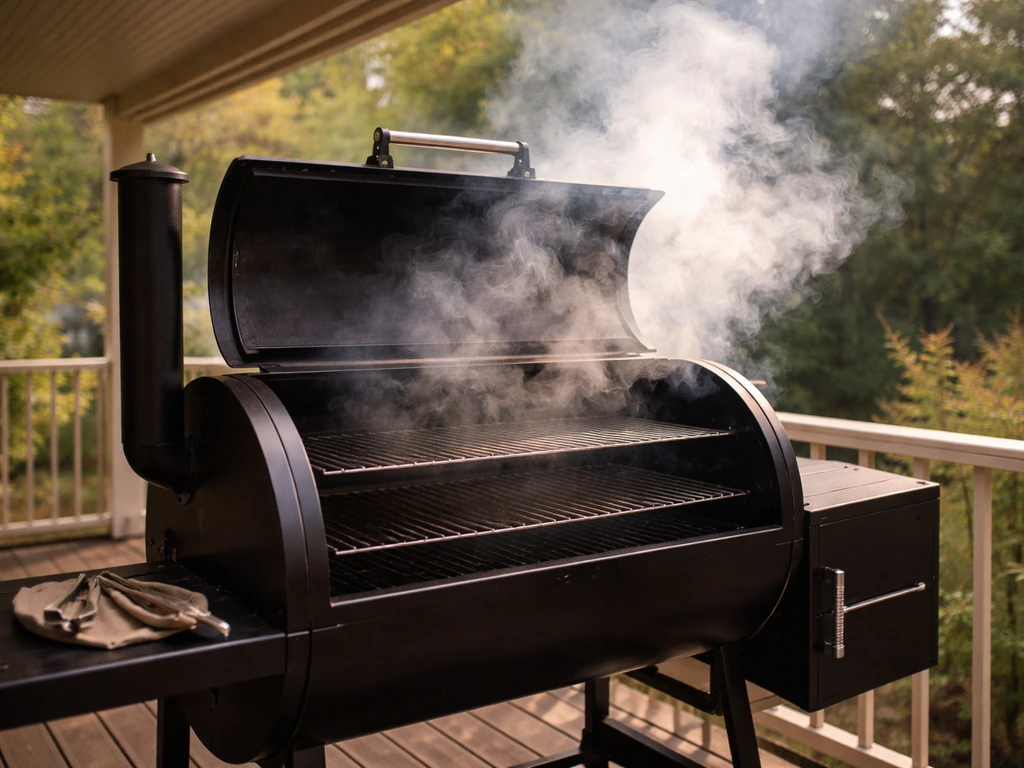
Best Patio Smoker Buying Guide: How to Choose and Use One
Compare pellet, propane, offset, and electric patio smokers with key features, best picks, setup and safety tips.
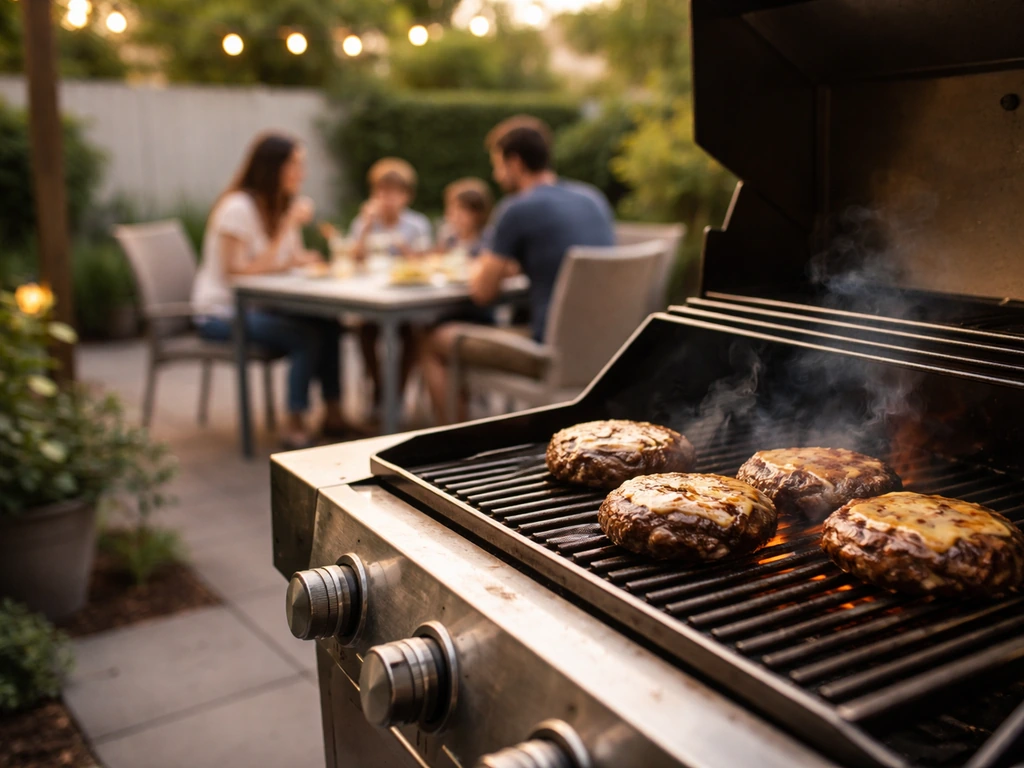
Best Patio BBQ Grill: Buy Guide by Fuel, Space, Budget
Choose the best patio BBQ grill by space, fuel, and budget with clear picks for small patios, families, and entertaining
Best Patio Grill: Buying Guide and Top Picks for 2026
Choose the best patio grill in 2026 with specs, comparisons, safety tips, and top charcoal picks.