
The best patio BBQ grill for most people in 2026 is a mid-range propane or natural gas model in the 3-burner, 450-550 sq in cooking area range. Something like the Weber Spirit EP-425 (roughly 533 sq in of cooking area, consistent heat, minimal flare-ups) hits the sweet spot for family cooking on a standard patio without requiring a dedicated gas line. That said, the right grill for your patio depends heavily on your fuel access, how much space you're working with, whether your patio is covered, and how often you're actually cooking. This guide walks through all of it so you can make a confident decision today.
Best Patio BBQ Grill: Buy Guide by Fuel, Space, Budget

Caleb Vale
15 May 2026
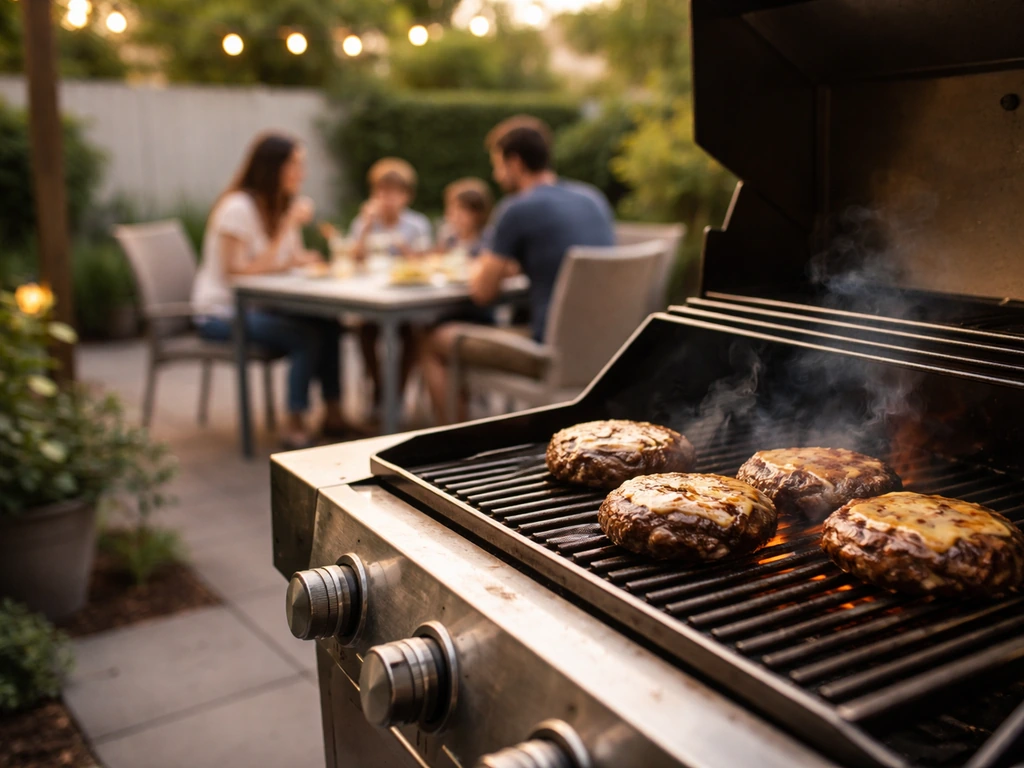
Start with your patio, not the grill specs
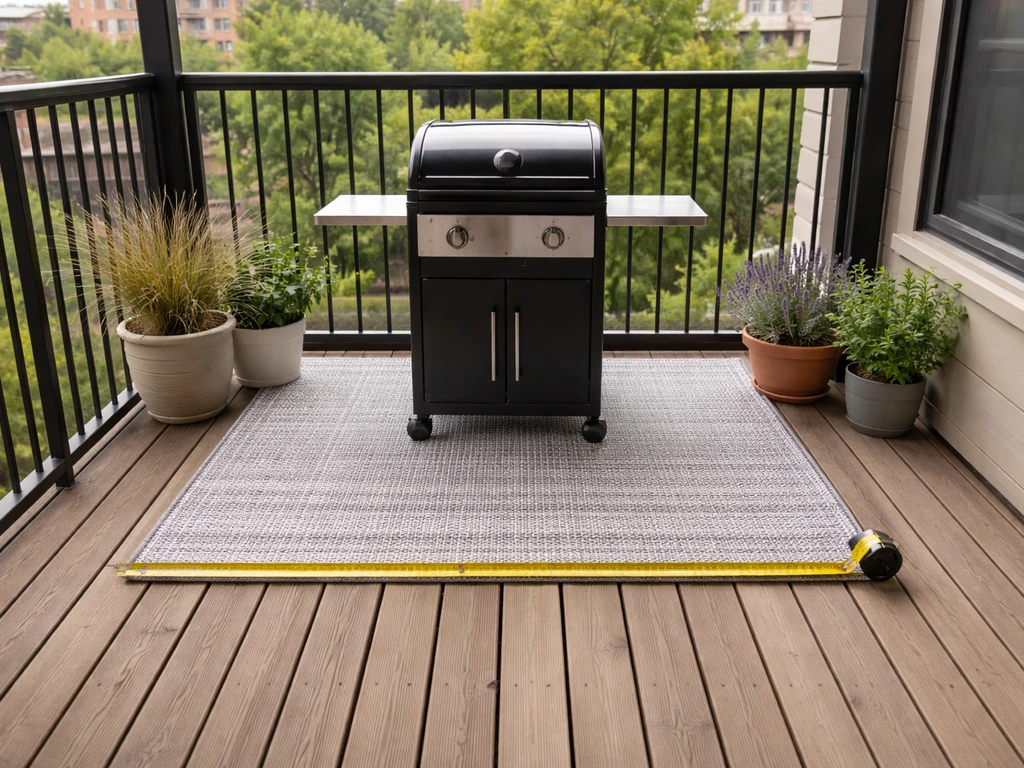
Before you look at BTU counts or burner configurations, take stock of what your patio can actually accommodate. This is the step most buyers skip, and it's why people end up with grills that don't fit their space or create safety problems. Ask yourself four things: How much square footage do I have? Is the patio covered or open to the sky? How exposed is it to wind? And do I have access to a natural gas line, or am I working with propane tanks?
A small urban balcony patio under 100 sq ft needs a compact 2-burner or electric grill, full stop. A large suburban patio with an outdoor kitchen setup can support a freestanding 4-6 burner gas grill or even a dedicated smoker. Most family patios fall somewhere in between, and a 3-burner gas grill in the 450-550 sq in cooking range handles that scenario well. Once you know your patio constraints, everything else in this guide clicks into place.
Key patio questions to answer before buying
- Patio size: measure the actual footprint available, including clearance space on all sides of the grill
- Covered vs uncovered: covered patios restrict fuel options (no charcoal or heavy smoke under a pergola without ventilation)
- Wind exposure: exposed patios make charcoal lighting frustrating and can affect gas flame stability
- Gas access: a natural gas line lets you skip tank refills; propane works anywhere but needs storage space
- Frequency of use: weekend grillers can prioritize simplicity; frequent entertainers need more cooking area and features
- HOA or building rules: apartments and condos sometimes restrict open-flame grills entirely
Fuel type comparison: propane, natural gas, charcoal, and electric
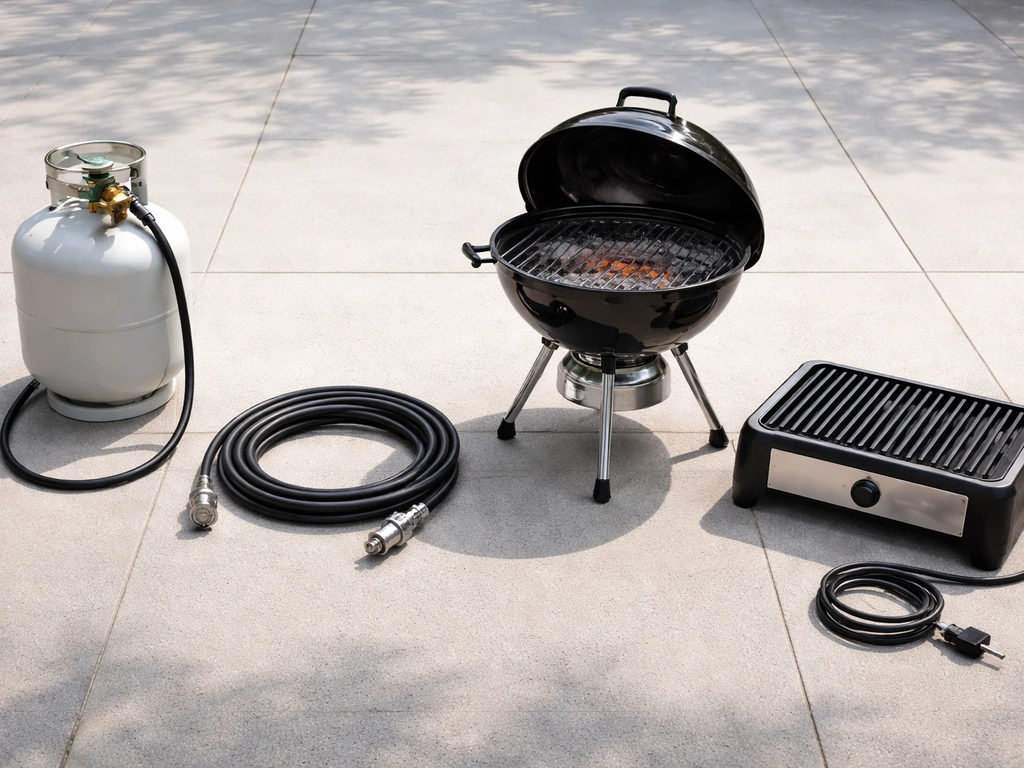
Fuel type is the most consequential decision you'll make. It shapes your patio setup, your cooking style, your ongoing costs, and your safety considerations. Here's a direct comparison across the four main options.
| Fuel Type | Best For | Patio Fit | Flavor | Ongoing Cost | Patio Restrictions |
|---|---|---|---|---|---|
| Propane | Convenience, portability, most patio sizes | Excellent - works anywhere | Good, clean heat | Moderate (tank refills) | Few; avoid enclosed spaces |
| Natural Gas | Frequent grillers with outdoor kitchen setups | Requires gas line hookup | Same as propane | Low (utility rate) | Needs licensed install, check local codes |
| Charcoal | Flavor-first cooks, open uncovered patios | Needs open-air space, airflow | Best traditional smoke flavor | Low per use | Not suitable under covered patios without ventilation |
| Electric | Balconies, HOA-restricted spaces, covered patios | Best for tight/covered spaces | Least traditional flavor | Low per session | Needs outlet; some HOAs allow only electric |
Propane is the default right choice for most patio setups. It lights fast, heats evenly, and you're not locked into a fixed location. The main trade-off is managing tank swaps, but a standard 20 lb propane tank gives you roughly 18-20 hours of cooking time at medium heat, which is plenty for most weekenders. Natural gas makes more financial sense if you're grilling 3 or more times a week and already have a line or plan to install one. Charcoal delivers the best traditional BBQ flavor but demands patience and a truly open, well-ventilated patio. Electric is the right answer for anyone on a condo balcony or a covered patio with no ventilation. If you're specifically looking at propane-specific models, there are dedicated guides comparing the best propane patio grills worth checking out alongside this one.
Cooking performance specs that actually matter
Grill manufacturers love to throw big numbers at you. Here's what actually translates to real-world cooking performance on a patio setup.
Cooking area
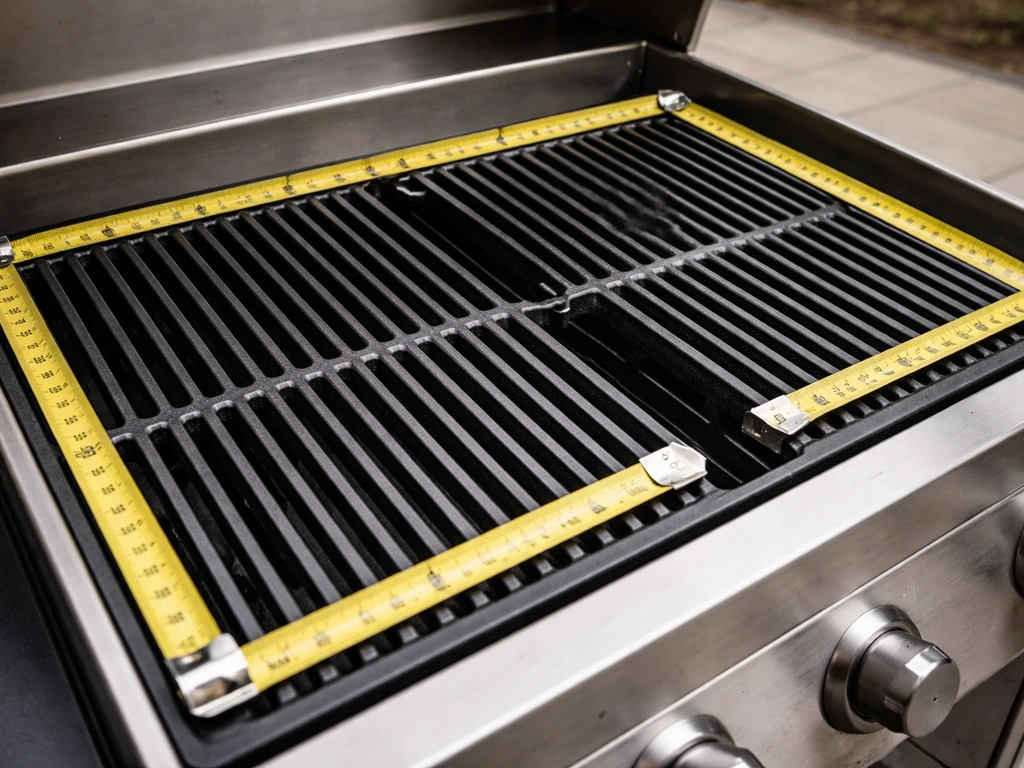
Primary cooking area is your most practical spec. For 2-4 people, 300-400 sq in is workable. For 4-6 people (the average family grill session), 450-550 sq in is ideal. The Weber Spirit EP-425 sits right at blank" rel="noopener noreferrer">533 sq in total, which is why it keeps showing up in top-pick lists. For entertaining 8 or more people regularly, look at 600+ sq in or pair a smaller grill with a side griddle. Speaking of which, if you also do a lot of flat-top cooking, comparing the best patio griddle options separately is worth your time. If you want to shop efficiently, use this guide to narrow down the best patio griddle for your cooking style and space.
BTUs and heat output
More BTUs does not automatically mean better grilling. A grill with 30,000 BTUs and poor lid insulation will lose heat faster than a 24,000 BTU model with a tight-sealing lid. The useful metric is BTUs per square inch of cooking area. For gas grills, 80-100 BTU per sq in is a good target. Below 80 and you'll struggle to maintain searing temperatures; above 100 and you risk hot spots and burning. Preheat time also matters: a well-designed 3-burner gas grill should hit 500°F or above within 10-12 minutes. Consumer Reports uses thermocouple-based preheat testing across the cooking surface, and that kind of even-heat data is more useful than peak BTU ratings. Consumer Reports’ lab testing for the Weber Spirit II E-310 uses a “preheat performance” test that measures temperature over the grill surface after 10 minutes using thermocouples.
Burner count and configuration
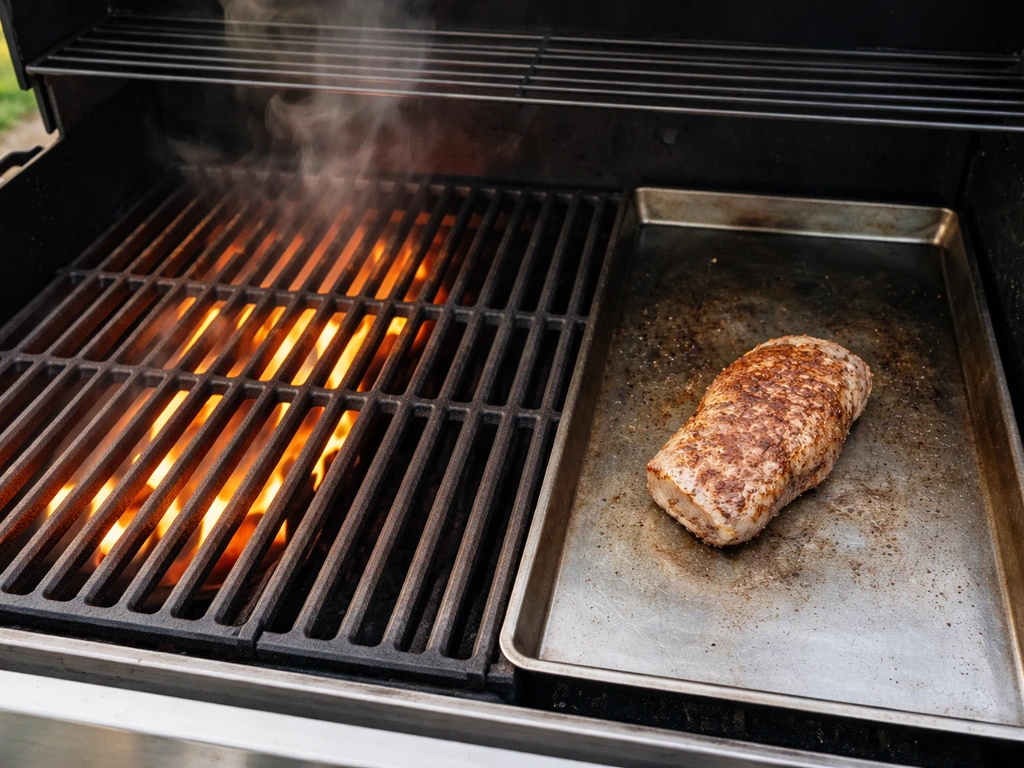
Two burners is the minimum for any indirect-heat cooking (where you cook with the flame on one side and food on the other). Three burners give you proper zone cooking for larger cuts of meat. Four or more burners are for serious entertainers or people doing high-volume cooks. For a patio grill used 2-4 times per month, 3 burners hits the performance ceiling most people need without adding unnecessary bulk.
Grates, ignition, and features worth paying for
Cast iron grates retain heat better and deliver better sear marks, but they require regular seasoning and are heavier to clean. Stainless steel grates are more forgiving and rust-resistant for patios in humid climates. For ignition, push-button electronic ignition is standard now and worth the slight premium over match-light setups. Side burners sound useful but most people rarely use them after the first season. Grease management systems (drip trays that are easy to slide out and clean) are underrated and genuinely improve the long-term usability of any grill. A built-in lid thermometer is helpful, though serious cooks tend to rely on a separate instant-read probe.
Patio setup, weatherproofing, and clearance
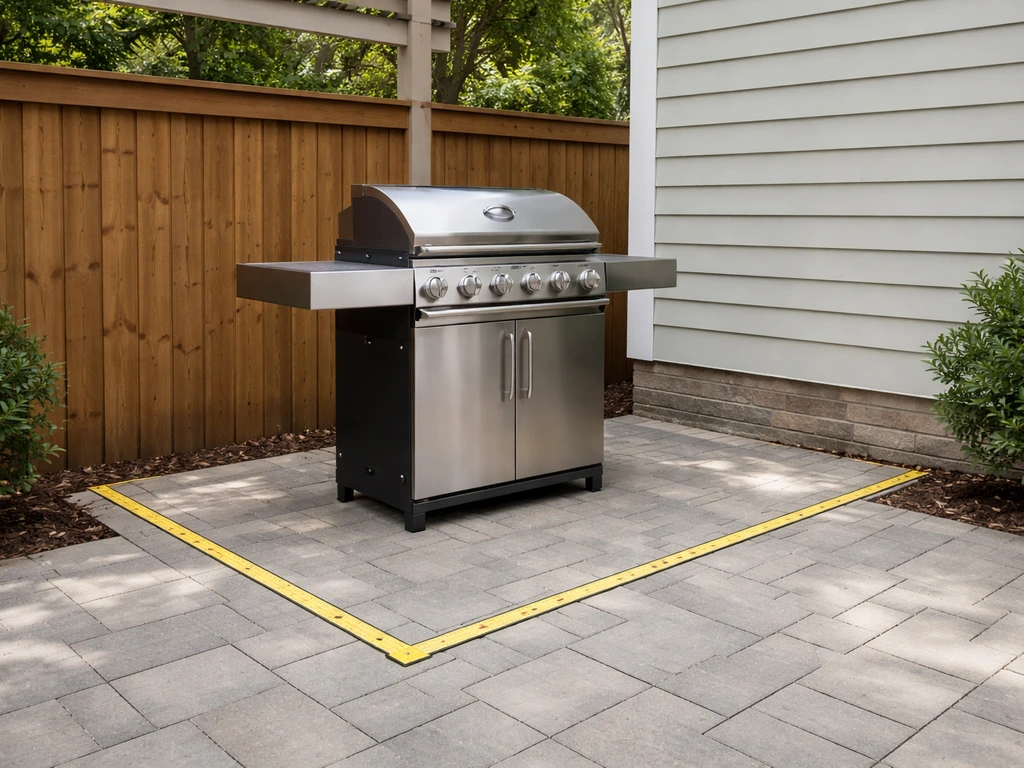
Your patio environment directly affects which grill works well and what safety rules apply. These aren't suggestions, they're practical requirements.
Clearance requirements
Any gas grill needs a minimum of 3 feet of clearance on the sides and rear from combustible surfaces like wood fencing, siding, or pergola posts. The overhead clearance requirement for gas grills under a covered patio is typically 36-48 inches minimum, but check your local code, some jurisdictions require more. Charcoal grills should not be used under any covered structure due to carbon monoxide risk. Electric grills have the fewest restrictions but still need 12-18 inches of clearance from walls or combustibles.
Wind and weather exposure
An exposed patio with regular wind above 10-15 mph will give charcoal users constant headaches with temperature control. Gas grills handle wind better but can still experience flame instability on very exposed setups. If your patio is frequently windy, prioritize a gas grill with a tighter lid seal and consider positioning the grill with its back to the prevailing wind direction. A grill mat under the unit is worth adding too, both for surface protection and easier cleanup. That's a separate topic worth exploring when you're setting up your patio cooking area.
Covered patios: ventilation is non-negotiable
If your patio has a solid roof (not a lattice or pergola), gas grills require adequate cross-ventilation. A rule of thumb: if the covered area doesn't have at least two open sides, don't use a gas grill without consulting local fire code. Infrared and electric grills are much safer choices for enclosed or semi-enclosed patios. For open-roof pergola setups, propane grills are generally fine as long as the 36-48 inch overhead clearance is met.
Weatherproofing your grill long-term
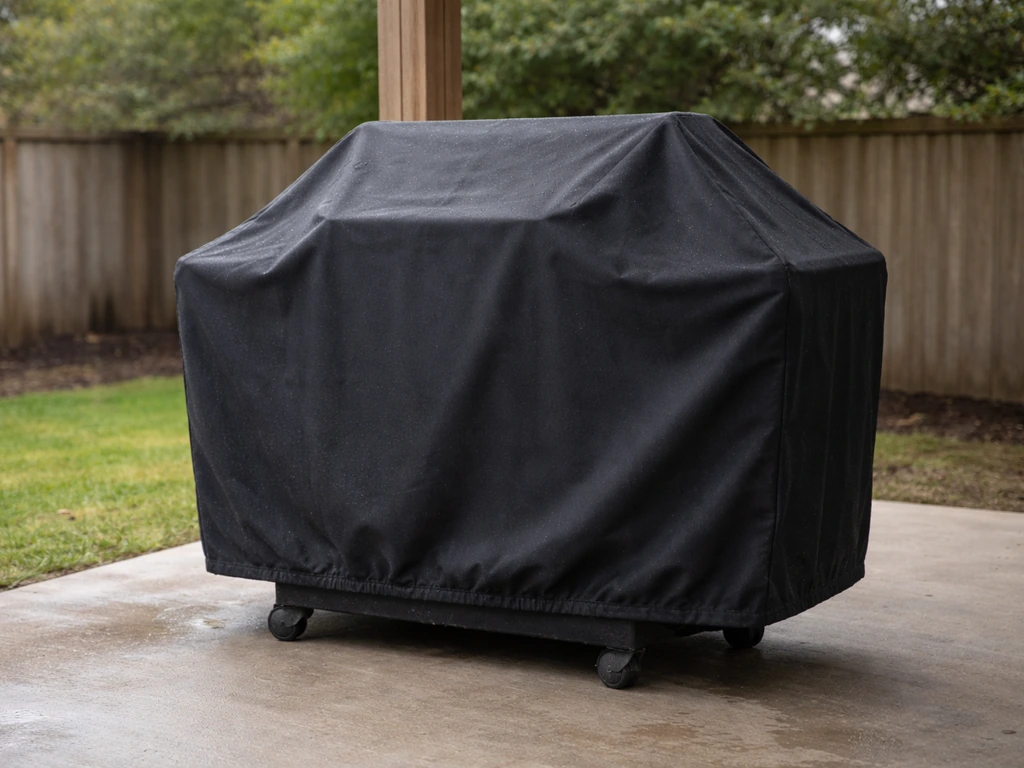
A quality grill cover is not optional. UV exposure, rain, and humidity are the fastest routes to rust, burner corrosion, and igniter failure. Invest in a cover that fits snugly and is rated for your climate. In coastal or humid environments, stainless steel construction on burners and grates pays for itself quickly. Wheeling the grill indoors or into a covered area during extended off-seasons will dramatically extend its lifespan.
Budget tiers: what you get at each price point
Patio BBQ grills run from under $200 to well over $2,000. Here's an honest breakdown of what each tier delivers and where the value drop-offs happen.
| Budget Range | What You Get | Best For | Trade-offs |
|---|---|---|---|
| Under $250 | 2-burner gas or entry-level charcoal, thin steel construction, basic ignition | Occasional weekenders, renters, small patios | Shorter lifespan, limited cooking zone control, thinner grates |
| $250-$500 | 3-burner gas, better lid insulation, cast iron or stainless grates, reliable ignition | Most family patio setups, 3-4x monthly use | May lack sear zone or smart features |
| $500-$900 | 3-4 burner premium gas, thicker construction, dedicated sear burner, better grease management | Frequent entertainers, serious weekend grillers | Diminishing returns start here vs $300-500 tier |
| $900-$1,500 | Built-in-ready or high-end freestanding, commercial-grade burners, sear zones, premium materials | Outdoor kitchen installs, near-daily use | Installation costs can add significantly |
| $1,500+ | Fully built-in gas or luxury pellet/kamado grills, premium stainless, WiFi/smart controls | Dedicated outdoor kitchen, high-volume entertaining | Overkill for most residential patios |
The $300-500 range is where the best practical value lives for most patio setups. You get a grill that will last 5-8 years with basic maintenance, handles family cooking easily, and doesn't require a specialist to set up. Going above $500 makes sense only if you're grilling very frequently or doing a permanent outdoor kitchen installation.
Top pick vs best value: what to buy based on your situation
Top pick: Weber Spirit EP-425
For most family patio setups, the Weber Spirit EP-425 is the grill to beat. With 533 sq in of cooking area, consistent even-heat performance, minimal flare-ups, and Weber's reliable build quality, it checks every practical box. It's available in both propane and natural gas configurations. Testing and real-world feedback consistently cite even cooking across the surface and a lid design that holds temperature well. It sits in the $450-550 range depending on retailer and configuration. If you're cooking for a family of 4-6 and want a grill you'll use confidently for years, this is the pick.
Best value: mid-range 3-burner propane grills ($280-380)
If the Spirit EP-425 is more than you want to spend, a mid-range 3-burner propane grill from Weber, Char-Broil, or Monument Grills in the $280-380 range delivers most of the cooking performance at a meaningfully lower price. You'll give up some construction quality (thinner steel, lighter grates) and possibly a sear zone, but for someone grilling a couple of times a month, the performance gap is smaller than the price gap suggests. Look for stainless steel burners, cast iron grates, and a push-button igniter at a minimum.
For small patios or covered spaces: electric or compact 2-burner propane
If you're working with a small balcony, a covered porch, or an HOA-restricted space, don't fight it. A quality electric grill like the Weber Q 1400 or a compact 2-burner tabletop propane like the Weber Q 2200 will serve you far better than squeezing an oversized gas grill into a space that doesn't fit it safely. The cooking performance gap between a good electric and a good gas grill is smaller than people expect for everyday use.
For flavor-first outdoor cooks on an open patio: charcoal
If flavor is your priority and you have an open uncovered patio with good airflow, a charcoal grill is still the best cooking experience per dollar. A Weber Original Kettle 22-inch ($160-200) is the benchmark that more expensive charcoal grills are measured against. If you want to combine smoking and grilling, look at the kamado-style options or explore dedicated patio smoker comparisons for a deeper look at that category. If you want a focused outlaw patio smoker review before you buy, compare brands side-by-side on build, airflow, and temperature control dedicated patio smoker comparisons. If you plan to do low-and-slow cooking, a patio smoker can be a better match than a basic gas setup. Dedicated patio smokers can be a great choice when you want low-and-slow flavor and consistent smoke over long cooks dedicated patio smoker comparisons.
Use-case summary
| Use Case | Recommended Pick | Approx. Price | Fuel |
|---|---|---|---|
| Small patio / balcony | Weber Q 1400 (electric) or Q 2200 (propane) | $200-280 | Electric or propane |
| Family of 4-6, standard patio | Weber Spirit EP-425 | $450-550 | Propane or natural gas |
| Budget family grilling | Mid-range 3-burner propane (Weber Spirit II E-310 or similar) | $300-380 | Propane |
| Frequent entertaining (8+) | 4-burner gas grill, 600+ sq in | $500-800 | Natural gas or propane |
| Flavor-first open patio | Weber Original Kettle 22" | $160-200 | Charcoal |
| Outdoor kitchen install | Built-in natural gas grill, premium brand | $900+ | Natural gas |
Safety, maintenance, and making your grill last
Safety basics that are easy to skip (don't)
- Check propane connections for leaks every season using soapy water on the hose and valve (bubbles indicate a leak)
- Never leave a lit grill unattended, especially on a covered patio or near combustible surfaces
- Keep a fire extinguisher rated for grease fires (Class K or ABC) accessible on or near the patio
- Confirm your grill meets the clearance minimums: 3 ft sides and rear, 36-48 inches overhead under a cover
- Purge your natural gas line of air before the first lighting of the season
- Turn off gas at the tank or supply valve when the grill is not in use, not just at the burner controls
Maintenance that actually extends grill life
After every cook: brush the grates while still warm and empty the grease tray if it's more than half full. Monthly (or every 4-6 sessions): wipe down the interior with a damp cloth, check burner ports for clogging with a thin wire, and inspect the igniter. Seasonally: deep clean the interior, remove and scrub the heat deflectors and grates, check the burner tubes for corrosion or blockage, and apply a thin coat of cooking oil to cast iron grates before storage. Before the first cook of each season: test all ignition systems, inspect the gas hose for cracks, and reconnect/check all fittings.
Storage and off-season care
A properly fitted grill cover is your single best investment for long-term durability. For propane grills stored through winter, disconnect and store the tank outside in a ventilated area. Never store a propane tank indoors or in an enclosed space. For natural gas grills, shut off the supply valve at the end of the season and cover the unit. If you're in a coastal environment with high salt exposure, consider wiping down stainless components with a dry cloth after rain and applying a stainless protectant spray once a season to prevent pitting.
A well-maintained mid-range gas grill should last 5-8 years with basic care. Premium models from Weber, Napoleon, or similar brands with full stainless steel construction can realistically last 10-15 years. The grills that fail early almost always fail from neglect: clogged burners, rusted grates from lack of covering, and corroded ignition components from moisture exposure. None of these are hard to prevent.
FAQ
How do I choose between 3-burner and 4-burner if my patio space is tight?
Use cooking area first, not burner count. If the 4-burner has only slightly more sq in but takes more width, it can reduce usable clearance for doors and traffic. For family grilling (4-6 people), a well-sealed 3-burner with 450-550 sq in cooking space usually outperforms a larger-but-leaky 4-burner, because heat retention and evenness matter more than extra burners.
What is the difference between “cooking area” and “total grilling area,” and why should I care?
Cooking area is the usable grate space where food sits, total grilling area can include extra shelves or areas that do not contribute to direct cooking. When comparing grills, match specs by cooking area so you can apply the guide’s BTU-per-sq-in thinking and avoid paying for volume you cannot grill on.
Should I buy a grill with higher BTUs if it has a better warranty?
Warranty is about coverage, not real-world performance. You can still end up with uneven heat if the lid seals poorly or the burner ports clog quickly. If the BTUs-per-sq-in target is already in a healthy range, prioritize heat retention features like thick lid insulation, consistent burner construction, and easy-to-clean grease management over raw BTU numbers.
If I plan to grill in winter, do I need a special cover or storage setup?
Yes. A grill cover helps, but storage matters too. For propane models, disconnect and keep the tank outdoors in a ventilated spot, never indoors. For the grill body, protect it from freeze-thaw moisture by keeping it dry under a fitted cover, and do a quick ignition test before the first cook of the season.
Can I use a propane grill on a covered patio if there are two open sides?
Often yes, but the key is ventilation and local fire code. If the covered area does not have at least two open sides, treat it as a no-go for routine use unless you confirm code requirements. Also keep the required side and rear clearance to combustibles, and avoid placing the grill directly against a wall or under overhangs that trap heat.
Is it normal for a gas grill to have some flare-ups, and how do I reduce them?
Some flare-ups happen when drippings ignite, but frequent flare-ups usually mean too much grease buildup or the grill is not set up for indirect cooking when needed. Use the grease tray, empty it before it gets more than half full, and for fatty foods move them to indirect zone cooking instead of leaving them directly over the flame.
What should I check if my burner lights but the grill will not maintain temperature?
First, check burner port clogs and ensure the burner tubes are seated correctly after cleaning. Next, inspect the gas hose connections for tightness and look for signs of poor flow, then confirm the lid closes properly and the gasket is intact. Wind can also cause instability, so test in calmer conditions or adjust placement with the back to prevailing wind.
How often should I clean or replace the heat deflectors and what happens if I skip it?
If you use your grill regularly, inspect heat deflectors at least seasonally. Skipping cleaning allows grease to build up, which can create hot spots, uneven heating, and stubborn flare-ups. When you deep clean, remove and scrub deflectors and grates so the burners can heat evenly across the surface.
Are cast iron grates better than stainless for a humid or coastal patio?
Cast iron can sear extremely well, but it needs more routine care because it can hold moisture and requires seasoning to prevent rust. Stainless grates are typically more forgiving in humid or coastal environments. If you choose cast iron, be strict about drying, applying a thin oil coat before storage, and keeping the grill covered between uses.
Do I need an instant-read thermometer if the grill has a lid thermometer?
For most people, the lid thermometer helps you monitor rough trends, but it is not precise for doneness because it sits in the lid and reads air temperature. An instant-read probe is more useful for steaks, chicken, and thicker cuts because it tells you the internal temperature where food safety and doneness actually happen.
What’s the safest way to position the grill on my patio?
Place it with the manufacturer’s clearance requirements respected on all sides and rear, keep the back away from walls that block airflow, and do not tuck the grill under low overhangs that exceed overhead limits. If your patio is exposed to wind, orient the grill so the back faces prevailing wind to improve stability and reduce flame interruptions.
How can I tell whether an electric grill is a better choice than gas for my covered patio?
Electric is usually preferable for balconies and covered patios with limited airflow. If your setup cannot meet the ventilation requirement for gas grills, or you have stricter condo rules, electric avoids the carbon monoxide risks associated with charcoal under covered structures. Also confirm you have a safe power setup that matches the grill’s voltage and extension cord rating, using only cords intended for outdoor use.
Next Articles
Best Patio Grill: Buying Guide and Top Picks for 2026
Choose the best patio grill in 2026 with specs, comparisons, safety tips, and top charcoal picks.
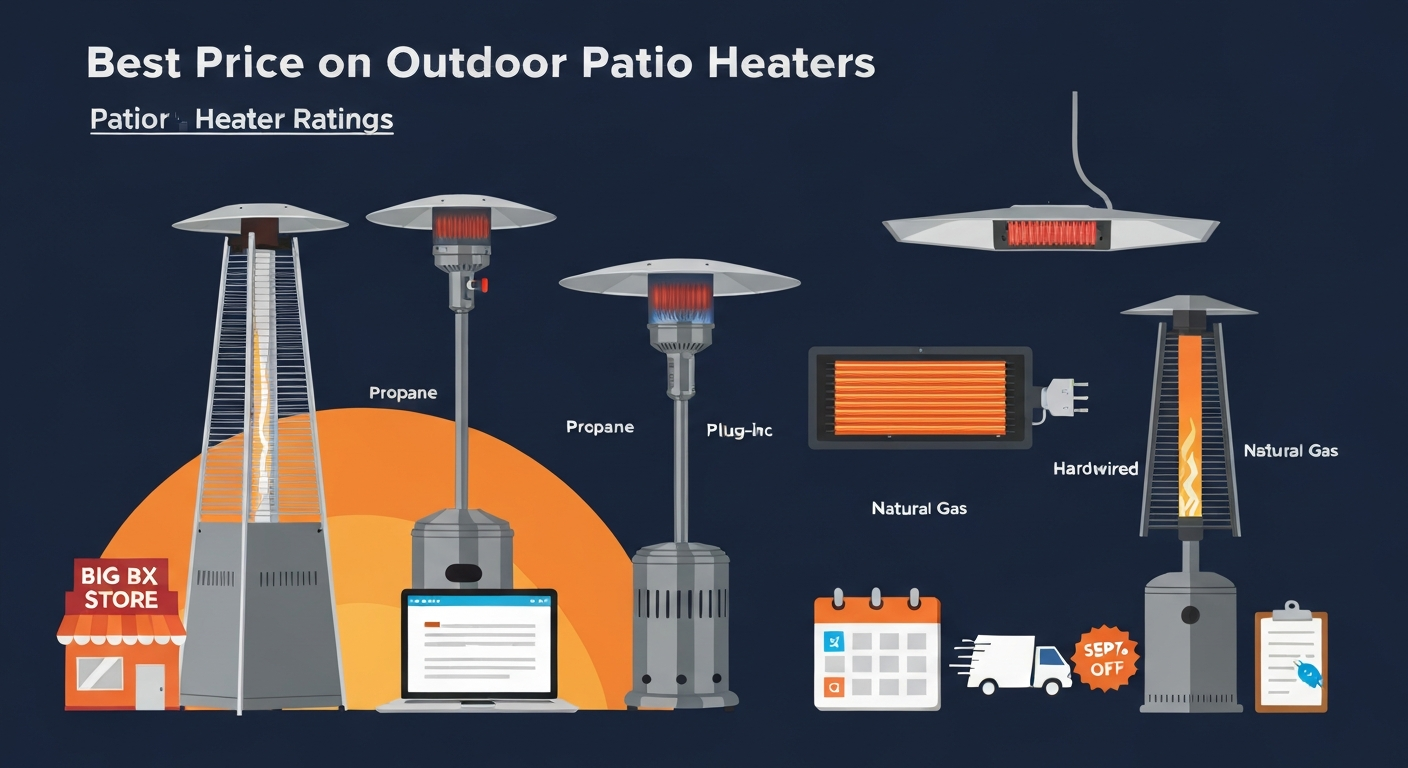
Best Price on Outdoor Patio Heaters: Compare Costs & Deals
Score the best price on outdoor patio heaters, price ranges, top picks, deal tactics, total-cost & safety checklist.
Where Can I Rent Patio Heaters Near Me Today
Find where to rent patio heaters near you today, choose the right fuel type, compare costs, and book safely.