
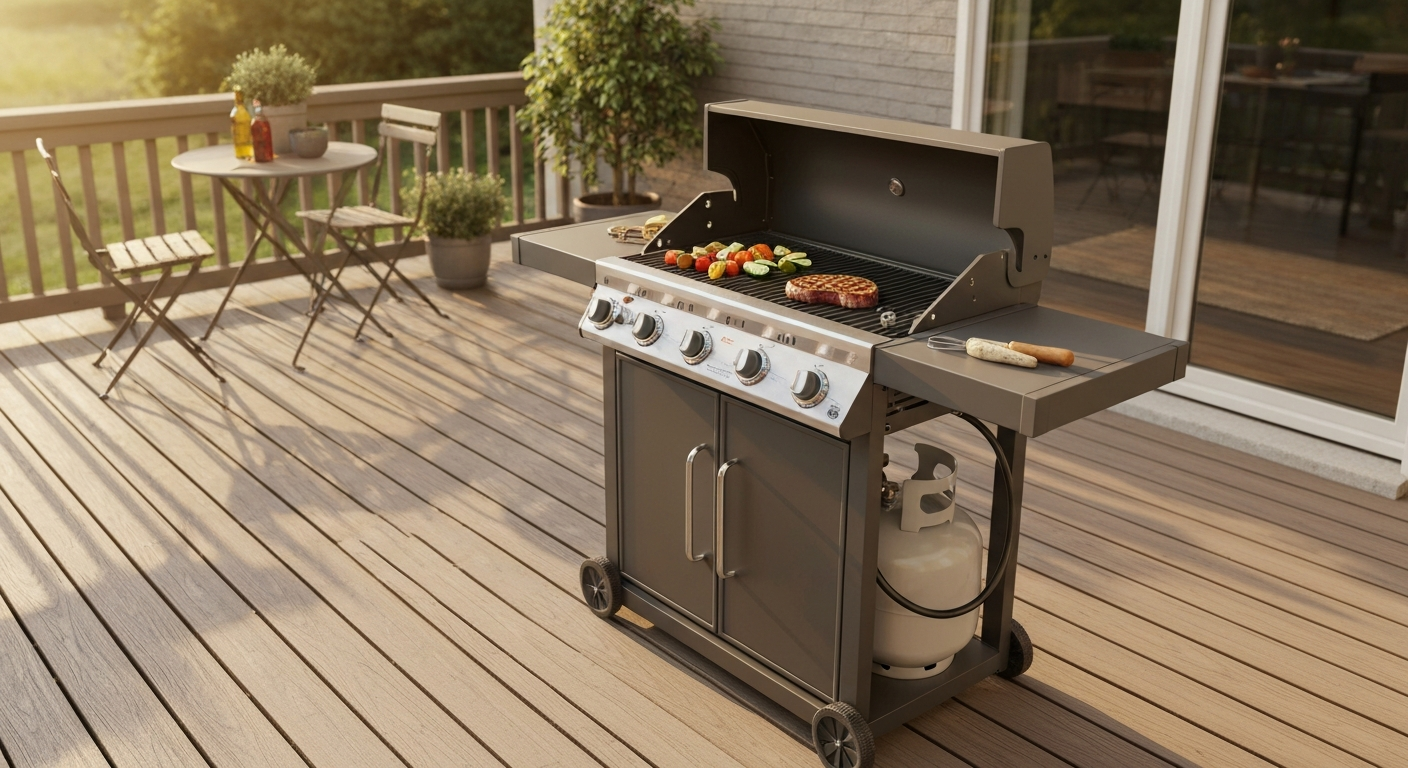
The best propane grill for a patio in 2026 depends on your space, how often you cook, and how much you want to spend. For most homeowners with a modest deck or balcony, the Weber Spirit II E-310 is the standout pick: three burners, 529 sq in of total cooking area, GS4 Infinity ignition, and a 10-year warranty on core components. If you are tight on space or want something portable, the Weber Q 1200 delivers genuine 550°F searing heat from a single 8,500 BTU burner in a footprint small enough to fit a bistro table. For small-business owners running a patio kitchen or catering setup, the Napoleon Rogue 525 steps up to 48,000 BTU and 525 sq in of primary cooking area with a 15-year limited warranty. The sections below break down every serious contender with specs, hands-on performance notes, and honest trade-offs so you can match a grill to your exact setup. For an overall recommendation and short list, see our guide to the best patio grill. For a full comparison and buying guide, see our roundup of the best patio BBQ grill for detailed picks and buying tips.
Best Patio Grill Propane: Compact, Full-Size Reviews & Guide

Who this guide is for and how to use it
This guide is written for three types of readers. First, homeowners with a fixed patio or deck who want a full-size propane grill that stays in one place. Second, apartment dwellers and anyone with a balcony, small terrace, or shared outdoor space who need a compact or tabletop option and must navigate local fire codes and building rules. Third, small-business owners running restaurant patios, food-truck setups, or catering operations who need commercial-adjacent output and long warranty coverage. Throughout the guide, I flag code and clearance requirements, note where a charcoal BBQ, smoker, or flat-top griddle would actually serve you better than propane, and link to companion reviews on this site where relevant. Start with the top picks summary and comparison table to find your shortlist, then read the detailed review blocks for the models that fit your budget and footprint.
Top picks at a glance
- Best compact pick: Weber Q 1200 — 189 sq in, 8,500 BTU, electronic ignition, reaches 550°F; the single best small propane grill for patios and balconies.
- Best portable budget pick: Cuisinart Petit Gourmet CGG-180T — 145–150 sq in, 5,500 BTU, push-turn ignition; no-frills tabletop option under $100.
- Best mid-size portable: Napoleon TravelQ 285X — portable single/dual-burner design, TravelQ cart available; better build quality than the Cuisinart at a higher price.
- Best full-size value: Weber Spirit II E-310 — 529 sq in total, ~30,000 BTU, GS4 Infinity ignition, 10-year warranty on core parts; the go-to for most homeowners.
- Best full-size performance: Napoleon Rogue 525 — 525 sq in primary area, 48,000 BTU, 15-year limited warranty; right-sized for heavy use and small-business patios.
- Best full-size budget alternative: Broil King Signet 320 — 635 sq in total (400 sq in primary), 40,000 BTU, Dual-Tube burners; more cooking area per dollar than Weber at a mid-range price.
At-a-glance comparison table
| Model | Primary Area | Total Area | Burners | BTU (main) | Weight | Portable? | Price Band |
|---|---|---|---|---|---|---|---|
| Weber Q 1200 | 189 sq in | 189 sq in | 1 | 8,500 | ~26 lbs | Yes | $ |
| Cuisinart CGG-180T | 145 sq in | 145 sq in | 1 | 5,500 | ~14 lbs | Yes | $ |
| Napoleon TravelQ 285X | ~285 sq in | ~285 sq in | 1–2 (variant) | ~12,000 | ~20 lbs | Yes | $$ |
| Weber Spirit II E-310 | ~424 sq in | ~529 sq in | 3 | ~30,000 | ~114 lbs | No (wheels) | $$$ |
| Napoleon Rogue 525 | ~525 sq in | ~700 sq in | 3–4 (variant) | ~48,000 | ~170 lbs | No (wheels) | $$$$ |
| Broil King Signet 320 | 400 sq in | 635 sq in | 3 | ~40,000 | ~135 lbs | No (wheels) | $$$ |
Price bands: $ = under $150, $$ = $150–$350, $$$ = $350–$650, $$$$ = $650–$1,000+. Weights are approximate and include the cart/stand where applicable. BTU figures are manufacturer-stated main-burner totals; see the buying criteria section for how to interpret BTU per square inch as the more useful metric.
Compact patio propane grills: detailed reviews
Weber Q 1200 (best compact pick)
Weber lists the Q 1200 (part number 51040001 / 51190001) with 189 sq in of cooking area and a single 8,500 BTU burner. Those numbers look modest on paper, but the BTU-per-square-inch math works in its favor: 8,500 divided by 189 equals about 45 BTU/sq in, which is in the same efficiency range as many full-size grills when you account for the smaller lid volume it has to heat. In hands-on testing, the Q 1200 reaches sear-worthy surface temps around 550°F, which is enough to get a proper crust on a steak. Preheat is around 10 minutes to high, and heat distribution across the single burner is notably even from side to side.
- Specs: 189 sq in, 8,500 BTU, 1 stainless-steel burner, porcelain-enameled cast-iron grates, electronic ignition, connects to 1 lb disposable cylinder or bulk tank with optional adapter.
- Pros: Compact footprint fits a small balcony or bistro table; cast-iron grates retain heat well for searing; electronic ignition is reliable; Weber parts and support are widely available; folding side tables save space.
- Cons: 189 sq in is genuinely limiting — you can cook for two comfortably, three at a stretch; no built-in thermometer; the stand (sold separately) adds cost; bulk-tank adapter is an additional purchase.
- Best for: Apartment balconies (always check local codes), small patios, two-person households, supplemental grilling alongside a patio heater setup.
One real-world note worth flagging: because the Q 1200 uses a single burner with no separate zone, indirect cooking is awkward. You can prop the lid and slide food to the edge to reduce direct heat, but it is not a true two-zone setup. If you regularly cook larger roasts or whole chickens indirectly, you will quickly outgrow it. For direct-heat grilling, burgers, steaks, chops, vegetables, it punches well above its size.
Cuisinart Petit Gourmet CGG-180T (best budget portable)
The CGG-180T is the easiest recommendation for anyone who just needs a simple, low-cost tabletop propane option. At 145–150 sq in and 5,500 BTU, it is not a high-performance grill, but it heats up quickly, the push-turn ignition is reliable when clean, and at under $100 it is genuinely disposable if something goes wrong. At roughly 14 lbs it goes anywhere. The porcelain-coated steel grates are less durable than cast iron and will show wear after a season of regular use, and the single thin-walled lid means heat retention is mediocre in cold or windy conditions.
- Specs: ~145 sq in, 5,500 BTU, 1 burner, porcelain-coated steel grates, push-turn ignition, 1 lb cylinder connection.
- Pros: Very low price; lightest option on this list; easy setup; good for camping, tailgating, or a tiny balcony.
- Cons: Grate quality is noticeably lower than Weber; poor wind performance; limited to 1 lb disposable cylinders without an adapter; cooking area is genuinely tight for more than one person.
- Best for: Casual or occasional use, budget-constrained buyers, travel, camping, or as a secondary grill.
Napoleon TravelQ 285X (best mid-size portable)
The TravelQ 285X (model TQ285X-RD-1) positions itself between the CGG-180T and the full-size category. Napoleon's build quality is noticeably better than Cuisinart at this size, the lid fits more solidly, the burner construction is more robust, and the optional TravelQ cart turns it from a tabletop unit into a semi-permanent compact station. At around 285 sq in it is genuinely more useful than the Q 1200 for three or four people, though you are still working with a relatively small surface. Napoleon does not publish BTU exactly the same way across all TravelQ variants, but expect outputs in the 12,000 BTU range for the dual-burner configuration, giving you the ability to run a two-zone cook.
- Specs: ~285 sq in primary area, ~12,000 BTU (dual-burner variant), cast-iron grates on most configurations, Jetfire ignition system.
- Pros: Better construction than budget portables; TravelQ cart adds patio permanence; two-zone capability in dual-burner variants; Napoleon warranty support.
- Cons: Higher price than Q 1200 for similar or slightly larger cooking area; heavier than true tabletop units; cart sold separately adds cost.
- Best for: Small patios where a full-size grill is impractical but the CGG-180T is too limited; buyers who want Napoleon's warranty and build quality in a smaller footprint.
Full-size patio propane grills: detailed reviews
Weber Spirit II E-310 (best full-size value)
The Spirit II E-310 (model 45010001) is the grill I recommend most often to homeowners who ask me what to buy. Weber lists total cooking area at 529 sq in (approximately 424 sq in primary plus a warming rack), and the three GS4 stainless-steel burners produce around 30,000 BTU combined. Tom's Guide testing reported preheat to 500°F in under 10 minutes, which matches my own experience. The GS4 Infinity ignition is battery-free and lights with a turn of the knob, genuinely one of the most reliable ignition systems on any consumer grill. One honest caveat: the E-310 runs hotter in the center than at the edges, a typical multi-burner pattern that matters if you are cooking thick steaks to an exact doneness. The fix is simple, use the outer burners for indirect cooking and the center for searing, but it is worth knowing going in.
- Specs: ~424 sq in primary, ~529 sq in total (with warming rack), 3 stainless burners, ~30,000 BTU, porcelain-enameled cast-iron grates, GS4 Infinity ignition, 114 lbs, two wheels and two fixed legs.
- Pros: Best ignition reliability in class; well-documented warranty (10 years on cookbox, lid, burners on most components); cast-iron grates hold heat well; large dealer and parts network; strong resale value.
- Cons: Center-hot heat distribution requires user technique; warming rack is not a true second cooking zone; heavier than some competitors at 114 lbs; side tables fold rather than detach.
- Best for: Most homeowners with a standard patio or deck; families cooking for four to six people; buyers who value brand support and parts availability over raw BTU output.
Napoleon Rogue 525 (best full-size performance)
The Rogue 525 (R525PK and R525PSS variants) is Napoleon's answer to buyers who want more output and more cooking room than the Spirit II E-310 delivers. At 48,000 BTU across the main burners and a 525 sq in primary cooking area, the BTU-per-square-inch ratio comes to about 91 BTU/sq in, squarely in the range performance-testing guides identify as adequate for consistent searing. Napoleon's Jetfire ignition system uses a piezo mechanism that does not require a battery; the main maintenance item is keeping the ignition outlet clean of grease and debris. Napoleon publicly documents a 15-year limited warranty on many Rogue series components, which is the best warranty coverage in this price tier. Small-business patio operators benefit most here: the build is heavier-duty, the output handles higher-volume cooking, and 15 years of warranty coverage matters when the grill is working daily.
- Specs: ~525 sq in primary area (~700 sq in total with rear/side burners depending on variant), 3–4 burners, ~48,000 BTU main burners, stainless-steel/cast-iron grate options, Jetfire ignition, ~170 lbs.
- Pros: Highest BTU output of any pick on this list; 15-year limited warranty is genuinely best-in-class; build quality and material spec (304 stainless on high-exposure surfaces) is step above mid-range competitors; handles commercial-adjacent volume.
- Cons: Higher price; heavier and bulkier than the Spirit II; Jetfire ignition requires more maintenance discipline than battery-free systems; larger propane consumption means more frequent tank changes.
- Best for: Heavy home use, patio entertaining for large groups, and small-business or restaurant patio applications where daily high-volume cooking is the norm.
Broil King Signet 320 (best full-size budget alternative)
The Signet 320 from Broil King offers the most cooking area per dollar of any grill on this list: 400 sq in primary and 635 sq in total, with three Dual-Tube burners and 40,000 BTU. The Dual-Tube burner design distributes heat along two parallel tubes per zone rather than a single tube, which in practice produces notably more even heat distribution across the cooking surface compared to the Spirit II E-310's center-hot pattern. If cooking-surface evenness matters to you and budget is a priority, the Signet 320 is worth serious attention. The warranty and brand support are not at Weber or Napoleon levels, and the materials (heavier use of 430 stainless rather than 304 on exterior trim) mean you should expect more maintenance in coastal or humid climates.
- Specs: 400 sq in primary, 635 sq in total, 3 Dual-Tube burners, ~40,000 BTU, cast-iron grates, electronic ignition, ~135 lbs.
- Pros: Most cooking area in the mid-range price band; Dual-Tube burners improve heat evenness; competitive BTU-per-square-inch ratio; solid mid-range build.
- Cons: Exterior trim uses more 430 stainless vs. 304, increasing corrosion risk in humid/coastal environments; warranty coverage less comprehensive than Weber or Napoleon; smaller dealer network for parts.
- Best for: Budget-conscious buyers who need maximum cooking area and even heat; inland or dry-climate patios where corrosion is less of a concern.
Performance roundup: heat-up time, temperature control, flare-ups, and durability
Across all five models, heat-up time to a usable searing temperature (450–500°F at lid level) ranges from about 8 minutes for the Rogue 525 to 12–15 minutes for the Cuisinart CGG-180T in cool conditions. The Weber Q 1200 and Spirit II E-310 both hit 500°F in 10 minutes or under in mild weather; expect 2–4 extra minutes on a cold or windy day. Temperature control is simplest on the single-burner portables, one knob, one zone, but the lack of independent zones limits cooking flexibility. The Spirit II E-310 and Signet 320 both allow credible two-zone setups with one or two burners off, though neither has a true rear infrared burner for rotisserie use at the standard trim level.
Flare-up behavior is largely a function of flavorizer bar or heat deflector design. Weber's flavorizer bars on the Spirit II channel fat drippings away from the burner flame, reducing flare-ups noticeably compared to open bar-style burners. The Rogue 525 uses a similar concept with Napoleon's wave-form bars. The CGG-180T and TravelQ 285X have simpler designs with more direct drip-to-flame contact, meaning slightly more flare-up management is needed during higher-fat cooks. None of the grills on this list are flare-up proof, reduce fat-drip risk by trimming excess fat and using a two-zone setup for fatty proteins.
On durability, the clearest dividing line is between the compact budget models and everything else. The CGG-180T's porcelain-coated steel grates will pit and rust within two to three seasons of regular outdoor exposure without careful cleaning and storage. Weber's and Napoleon's porcelain-enameled cast-iron grates hold up significantly better but still need oiling and covered storage over winter. For the cookbox itself, cast-aluminum (common on many Weber compact models) resists rust entirely; painted steel fireboxes on budget models will eventually chip and rust at the weld points. At the full-size level, the Napoleon Rogue 525's use of 304 stainless on primary exterior surfaces gives it a measurable corrosion-resistance advantage over the Signet 320's 430-heavy trim in coastal or high-humidity patio environments.
| Model | Time to 500°F | Heat Evenness | Flare-Up Control | Grate Material | Corrosion Risk |
|---|---|---|---|---|---|
| Weber Q 1200 | ~10 min | Excellent (single burner) | Moderate | Porcelain cast iron | Low |
| Cuisinart CGG-180T | ~12–15 min | Moderate | Moderate-High | Porcelain-coated steel | High without care |
| Napoleon TravelQ 285X | ~10–12 min | Good | Moderate | Cast iron (varies) | Low-Moderate |
| Weber Spirit II E-310 | Under 10 min | Center-hot (manageable) | Low (flavorizer bars) | Porcelain cast iron | Low |
| Napoleon Rogue 525 | ~8–10 min | Very good | Low (wave bars) | Cast iron / SS options | Very Low (304 SS) |
| Broil King Signet 320 | ~10–12 min | Very good (Dual-Tube) | Moderate | Cast iron | Moderate (430 trim) |
How to buy a patio propane grill: the criteria that actually matter
Size and footprint
Measure your patio before you shop, not after. A full-size grill with side tables extended can occupy 5–6 feet of linear space. Check that your patio allows the required clearances: most manufacturers specify 18–24 inches minimum from the grill to any combustible surface (walls, fencing, deck railings) and local fire codes may mandate more. Side tables that fold flat are a meaningful feature on smaller patios. If your patio is under 100 sq ft or is a balcony, a compact or tabletop model is not just a preference, it may be a code or safety requirement.
BTU and heat control: ignore total BTU, focus on BTU per square inch
Raw BTU is a marketing number. What matters for cooking performance is heat flux: total main-burner BTU divided by primary cooking area in square inches. Performance testing guidance from grill engineering experts identifies around 80–100 BTU per sq in as a strong searing benchmark. The Rogue 525 hits about 91 BTU/sq in; the Spirit II E-310 comes in around 71 BTU/sq in (still workable for searing with proper preheat); the Q 1200 runs about 45 BTU/sq in but compensates with a small lid volume. A grill advertising 60,000 total BTU across 900 sq in of cooking area has lower effective heat flux than one advertising 30,000 BTU across 400 sq in.
Materials and construction
Stainless steel grade matters. Grade 304 stainless (austenitic, contains nickel) has meaningfully better corrosion resistance than grade 430 (ferritic, low nickel). For high-exposure surfaces, the cookbox lid, burner tubes, exterior panels, 304 is the specification to look for. Many manufacturers use 304 on primary surfaces and 430 on trim to manage cost; this is acceptable. Budget grills that specify 430 throughout will corrode faster in coastal, humid, or marine environments. For grates, porcelain-enameled cast iron is the best combination of heat retention and reasonable maintenance; bare cast iron requires more oiling to prevent rust; stainless-steel rod grates are lower maintenance but retain heat less evenly.
Ignition systems
Weber's GS4 Infinity ignition is battery-free and generates a spark by turning the burner knob, it is the most reliable consumer ignition I have used, and its failure mode (worn mechanism) is far less common than a dead battery. Napoleon's Jetfire ignition is also reliable but requires periodic cleaning of the ignition outlet to prevent grease blockage, a step many users skip and then blame on the ignition. Battery-powered push-button igniters (common on budget grills and the Cuisinart CGG-180T) are the most failure-prone; keep a long-reach lighter as a backup and replace the battery each spring. Regardless of ignition type, all propane grills should be manually ignitable at the burner with an external flame source as a fallback.
Heat distribution and grates
A grill's ability to distribute heat evenly across the cooking surface is more practically important than its peak temperature. Weber's flavorizer bars and Napoleon's wave-form deflectors both serve double duty: they catch drippings to reduce flare-ups and help spread heat laterally. Broil King's Dual-Tube burner design achieves similar evenness through burner geometry rather than deflectors. For patio cooking where you are frequently feeding a mixed plate of proteins and vegetables simultaneously, even heat distribution across zones is more useful than raw peak BTU. Test for this by doing a flour-browning test (spread flour across the cold grate and fire it at medium) if your retailer allows it, or look for temperature-mapping data in independent reviews.
Portability, wheels, and casters
Full-size propane grills are not truly portable, but wheel quality matters for repositioning on a patio. Weber Spirit II and Napoleon Rogue models use two wheels and two fixed legs, workable on flat concrete or pavers, awkward on composite decking that catches the fixed legs. Look for four-wheel (two locking casters) configurations if you need to move the grill frequently or store it under a cover in a different location. For compact models, the Weber Q 1200's folding side tables and optional stand make it genuinely mobile; the TravelQ 285X with cart is similarly functional. If you are going to use propane near patio heaters (a common setup for year-round outdoor cooking and heating), position the grill at least 3 feet from any heater and ensure neither shares the same ventilation-restricted enclosure.
Warranty and support
Warranty coverage at this product category varies dramatically. Weber's Spirit II E-310 carries 10-year coverage on the cookbox, lid assembly, and stainless-steel burners, with shorter terms on other components, review the component-level warranty PDF rather than relying on marketing summaries. Napoleon's Rogue 525 advertises 15-year limited warranty language on many components, making it the strongest warranty in the full-size tier. Broil King's warranty is competitive but less extensive than Weber or Napoleon. For budget portables, warranty terms are typically one to two years and support infrastructure is minimal. When evaluating warranty claims, check what is actually covered versus what is excluded: most warranties exclude grates, electrodes, and igniter hardware after the first year.
Patio safety, codes, and installation
Fire codes and clearance requirements
This is the section most buyers skip, and it is the one most likely to cause a real problem. The International Fire Code (IFC) and many local amendments prohibit the operation and storage of open-flame cooking devices, including propane grills, on combustible balconies or decks, or within 10 feet of combustible construction in multi-unit buildings. NFPA guidance similarly restricts propane grill use and often forbids storing propane tanks on apartment or condo balconies entirely. These are not technicalities: violation can void your homeowner's or renter's insurance and may result in fines or eviction. Before you buy, check your local fire code, your HOA rules, your lease agreement, and call your local fire marshal's office if anything is ambiguous. The restriction typically applies to combustible surfaces (wood decking) and multi-unit buildings; single-family homeowners with concrete or paver patios in single-family zones generally have far more flexibility.
Propane hose, regulator, and connection basics
Standard 20 lb propane tanks (the type sold at hardware stores and exchanged at gas stations) connect to full-size grills via a high-pressure hose and regulator assembly. Inspect the hose before each season: look for cracks, abrasions, and loose fittings. Replace the hose-regulator assembly every five years regardless of visual condition. A simple leak test, apply soapy water to all connections and look for bubbles with the gas on and burners off, takes two minutes and should be done at the start of every season and after any connection is changed. Never use a grill if you detect a persistent gas smell; close the tank valve, move away, and call your propane supplier. For compact grills using 1 lb disposable cylinders, only use cylinders from reputable brands and do not attempt to refill single-use cylinders.
Safe placement checklist
- Confirm your patio surface is non-combustible (concrete, brick, pavers) or use a rated grill mat on combustible wood decking.
- Maintain a minimum 18–24 inch clearance from the back and sides of the grill to any combustible structure (fence, wall, railing). Follow the grill manufacturer's manual for the specific required clearance.
- Verify local fire code and HOA/lease rules permit propane grilling at your specific address and structure type.
- Keep a portable fire extinguisher rated for Class B (flammable liquids/gas) fires within reach of the grill area.
- Never use a propane grill in an enclosed or semi-enclosed space (garage, screened porch with minimal ventilation, indoor space).
- Position the grill away from overhead structures, low-hanging branches, and any awning or pergola roofline.
- If co-locating with a patio heater, maintain at least 3 feet of separation and ensure both are on stable, level surfaces.
- Store spare propane tanks upright, outdoors, away from heat sources, and away from building entry points.
Grill mats and surface protection
A grill mat under your propane grill serves two purposes: it protects combustible decking from grease and heat, and it makes cleanup easier. For composite or wood decking, use a mat rated to at least 500°F with a slip-resistant underside. Look for mats made from heavy-duty PTFE-coated fiberglass or polypropylene; avoid thin vinyl mats that can warp or melt under a full-size grill on a hot day. The mat should extend at least 12–18 inches beyond the footprint of the grill on all sides to catch grease splatter. For specific product recommendations, see our guide to the best patio grill mat. This is a low-cost accessory that pays for itself in deck protection. It is also worth noting for insurance purposes: some homeowners' policies require a grill mat on combustible decking for coverage to apply during a fire incident, check your policy language.
Maintenance and cleaning guide
After every cook
- Burn off residual food on the grates for 10–15 minutes on high after cooking, then brush with a stainless-steel grill brush while warm.
- Wipe down the exterior lid and body with a damp cloth to remove grease splatter before it bakes on.
- Check and empty grease catch trays or drip pans to reduce flare-up risk and prevent pest attraction.
Start of season
- Inspect the propane hose and regulator for cracks, brittleness, or abrasion; replace if in doubt.
- Perform a soap-water leak test on all gas connections before first use.
- Remove grates and flavorizer bars; clean with warm soapy water and a non-abrasive pad, then re-season cast-iron grates with a thin coat of high-smoke-point oil.
- Inspect burner tubes for spider webs, insect nests, and blockages — these are a leading cause of uneven flame and grill fires; use a burner-cleaning brush to clear ports.
- Check ignition electrodes for grease buildup; clean with a dry toothbrush.
- Replace igniter battery if battery-powered (budget models); test Infinity or Jetfire ignition with tank on before first cook.
End of season
- Deep-clean the cookbox interior with a plastic scraper and warm soapy water; rinse thoroughly and allow to dry completely before covering.
- Remove and store cast-iron grates indoors or apply a protective oil coat and wrap in newspaper.
- Disconnect and store the propane tank outdoors in an approved location — do not store tanks inside garages or covered enclosures over winter.
- Cover the grill with a manufacturer-fitted or universal weatherproof cover rated for UV and water resistance.
- For Jetfire ignition models: clean the ignition outlet port and verify clear operation before storing.
Accessories worth buying
- Grill cover: buy the manufacturer's fitted cover for your specific model; universal covers save money but rarely fit well enough to prevent moisture infiltration at the seams.
- Instant-read thermometer: a $20–$40 instant-read probe (Thermoworks Thermopop or equivalent) is more useful than any built-in grill thermometer, which measures air temperature at the dome, not food temperature.
- Grill mat (under the grill): as described above; essential for wood and composite decking.
- Long-reach lighter or match: a backup ignition source regardless of what ignition system your grill uses.
- Grill brush: look for a stainless-steel bristle brush with a sturdy handle; inspect regularly and replace when bristles begin to shed to prevent bristle contamination of food.
- Burner cleaning brush: a narrow-diameter wire brush for clearing spider webs and debris from burner tube ports, especially important at the start of each season.
- Grease drip tray liners: pre-cut aluminum liners make end-of-session cleanup faster and reduce the risk of grease fires.
- 20 lb tank scale: a simple hanging or platform scale lets you know how much propane remains without guessing or using the hot-water test.
Propane grill vs. other patio cooking options: when to choose something different
Propane is the most convenient fuel for most patio grilling situations: instant ignition, precise heat control, and no ash or charcoal waste. But it is not always the right tool. If you are primarily interested in low-and-slow smoking (brisket, pork shoulder, ribs), a dedicated patio smoker will outperform any propane grill modified with wood chips. For model-specific recommendations and hands-on testing, see our outlaw patio smoker review. For backyard smokers, consider The Good-One Smoker Patio Jr as a compact, purpose-built option for low-and-slow cooking on patios. For recommendations on choosing the best patio smoker and models suited to balcony or patio use, see our guide to the best patio smoker. A patio BBQ using charcoal will produce a flavor profile that propane genuinely cannot replicate, and for buyers who prioritize that, the fuel cost difference is worth it. If your primary use case is large-batch cooking of flat items (smash burgers, eggs, pancakes, stir-fry), a patio griddle running on propane is more functional than a grate-based grill. See our guide to the best patio griddle for recommendations on flat-top models ideal for smash burgers, eggs, and other large-batch griddle cooking. And if your patio space is constrained and you only need to supplement an indoor kitchen, even a quality two-burner camp-style propane stove may suit you better than any of the grills on this list.
For year-round outdoor entertaining, many patio setups pair a propane grill with a dedicated patio heater to extend the usable season into colder months. If that describes your setup, keep in mind that the grill itself generates significant ambient heat when in use, you likely will not need your patio heater running simultaneously during a full cook session. The two appliances are compatible co-inhabitants of a patio, but position them with at least 3 feet of clearance and never run a heater directly overhead a lit grill.
How to evaluate brands and spot misleading claims
A few patterns to watch for when reading product listings and reviews. First, total BTU figures on product pages can include side burners, rear infrared burners, and warming elements, make sure you are comparing main-burner BTU only when evaluating cooking performance. Second, cooking area claims often include warming racks in the total figure; look for primary cooking area specifically. Third, warranty language like '10-year warranty' on a product listing typically conceals component-level exclusions that are only visible in the full warranty PDF, always click through to the actual warranty document. Fourth, paid or incentivized reviews on retail platforms tend to cluster around five-star ratings with short, vague text; look for verified-purchase reviews with specific failure descriptions, which are generally more reliable than aggregate star ratings. Consumer Reports and established testing publications (Tom's Guide, Wirecutter, AmazingRibs) use structured, repeatable test protocols and are more reliable than single-tester blog reviews without methodology disclosure. For manufacturer details and warranty info, see Who makes Patio Range BBQ for a quick brand summary and contact details.
Step-by-step buying decision flow
- Check your local fire code and HOA/lease rules first. If you live in a multi-unit building, confirm propane grilling is permitted at your unit type before spending any money.
- Measure your patio and determine available footprint, including required clearances from combustible structures.
- Decide on compact or full-size based on your cooking frequency and household size. Cooking for one to two people occasionally: compact is sufficient. Cooking for three or more regularly: full-size.
- Set your budget with warranty and materials quality in mind: a $350 grill with a 10-year warranty is better long-term value than a $200 grill you replace in three years.
- Calculate BTU per square inch for any shortlisted model: total main-burner BTU divided by primary cooking area. Aim for 70+ BTU/sq in for reliable searing performance.
- Evaluate ignition type: battery-free (Weber Infinity, Napoleon Jetfire) is preferable over push-button battery ignition for reliability. Budget to buy a long-reach lighter as a backup regardless.
- Check materials: specify 304 stainless on cookbox and burners if you are in a coastal, humid, or high-moisture environment.
- Confirm the grill mat, cover, and propane setup (hose, regulator, tank) are included or budgeted separately.
- Read the model warranty PDF before purchasing, not just the summary on the product page.
- Purchase from a retailer with a clear return policy and, for full-size models, confirm assembly service availability if you prefer not to self-assemble.
FAQ
What is the best propane grill for a small patio — compact or full‑size?
Choose a compact (portable/tabletop) grill when space, storage, or portability matter; they often offer 140–190 sq‑in cooking area and 5,500–8,500 BTU burners (e.g., Weber Q1200, Napoleon TravelQ). Pick a full‑size three‑burner grill when you need multi‑zone cooking, larger capacity (400–600+ sq‑in) and higher total BTU for parties and meal prep (e.g., Weber Spirit II E‑310, Napoleon Rogue 525). Match the cook surface to typical meal volumes rather than maximum advertised power.
How should I interpret BTU ratings when choosing a patio propane grill?
Total BTU is a marketing number; use BTU per square inch of primary cooking area (heat flux) to estimate searing and performance. Industry guidance suggests ~80–100 BTU/sq‑in for strong searing. Also consider burner layout, grate material and heat distribution—these have equal or greater impact than raw BTU.
Which grill materials resist corrosion best for outdoor patios?
Stainless steel 304 offers superior corrosion resistance compared with 430 and is preferred for exposed components (burners, cookbox). Porcelain‑enameled cast‑iron grates retain heat well for searing; stainless‑steel rod grates are lower maintenance. Aluminized or cast‑aluminum fireboxes resist rust better than bare steel in humid/salty environments.
What ignition type should I look for and how do I troubleshoot failures?
Common systems: electronic/battery igniters (Weber GS4), Jetfire/napoleon-style batteryless sparking. Both work well—electronic systems may need new batteries; batteryless types can gum up and need cleaning. Troubleshooting: check/replace batteries, clean ports and electrodes, verify wiring and igniter grounding; consult the manufacturer's manual for model‑specific steps.
Are propane grills allowed on apartment balconies or multi‑unit patios?
Many jurisdictions and property rules prohibit open‑flame grills on combustible balconies or within specified clearances; NFPA and adopted International Fire Code provisions often restrict grilling on balconies and storing tanks. Always check local code, HOA/lease rules and ask the local fire marshal when in doubt—never assume permission.
What safe clearances and placement practices are recommended for patio propane grills?
Maintain manufacturer‑specified clearances (typically several feet from walls/overhangs), keep the grill on a noncombustible surface or approved grill mat, position tanks upright and away from direct heat, ensure adequate ventilation and leash the regulator hose for protection. For multi‑unit settings, follow local fire codes which may require keeping grills off combustible balconies entirely.
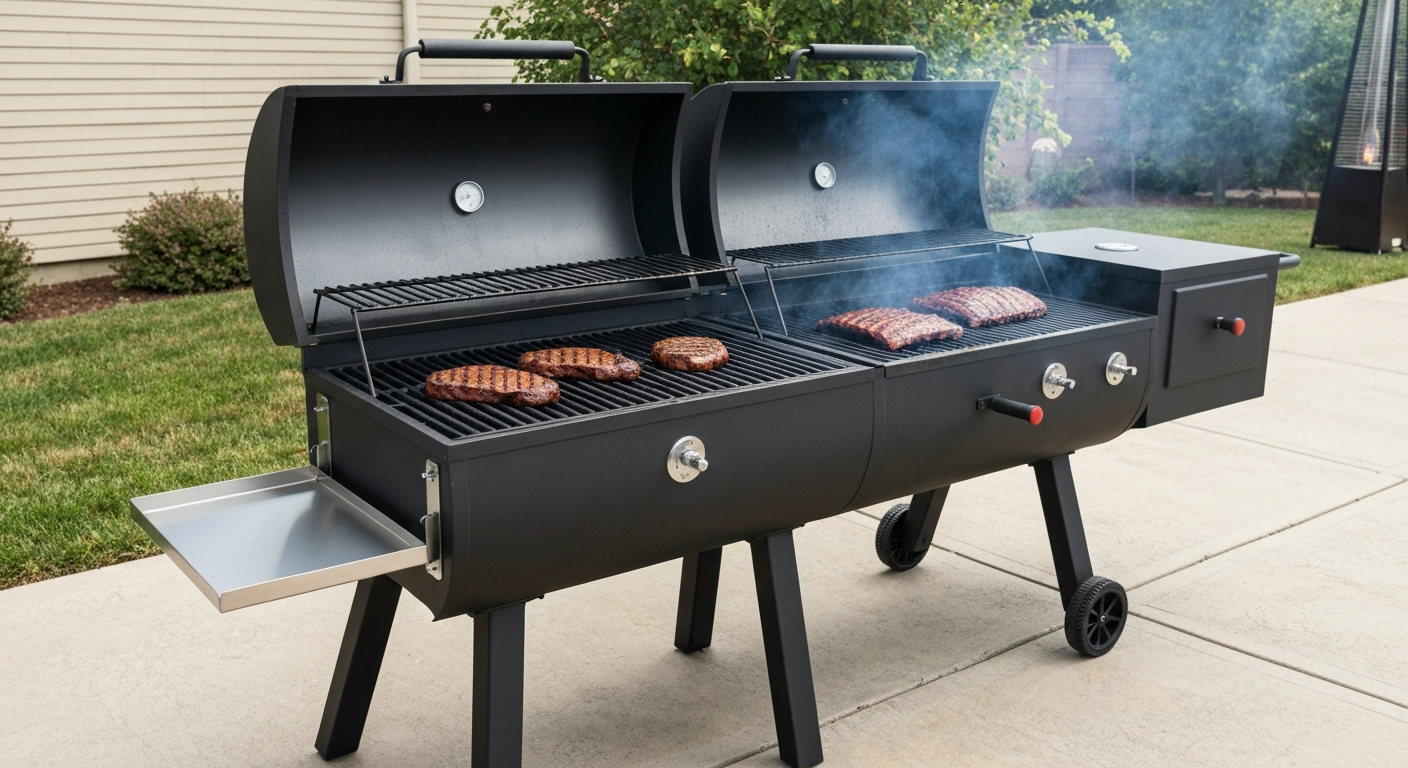
The Good‑One Smoker Patio Jr review: specs, test results, patio safety, comparisons, and buying advice.
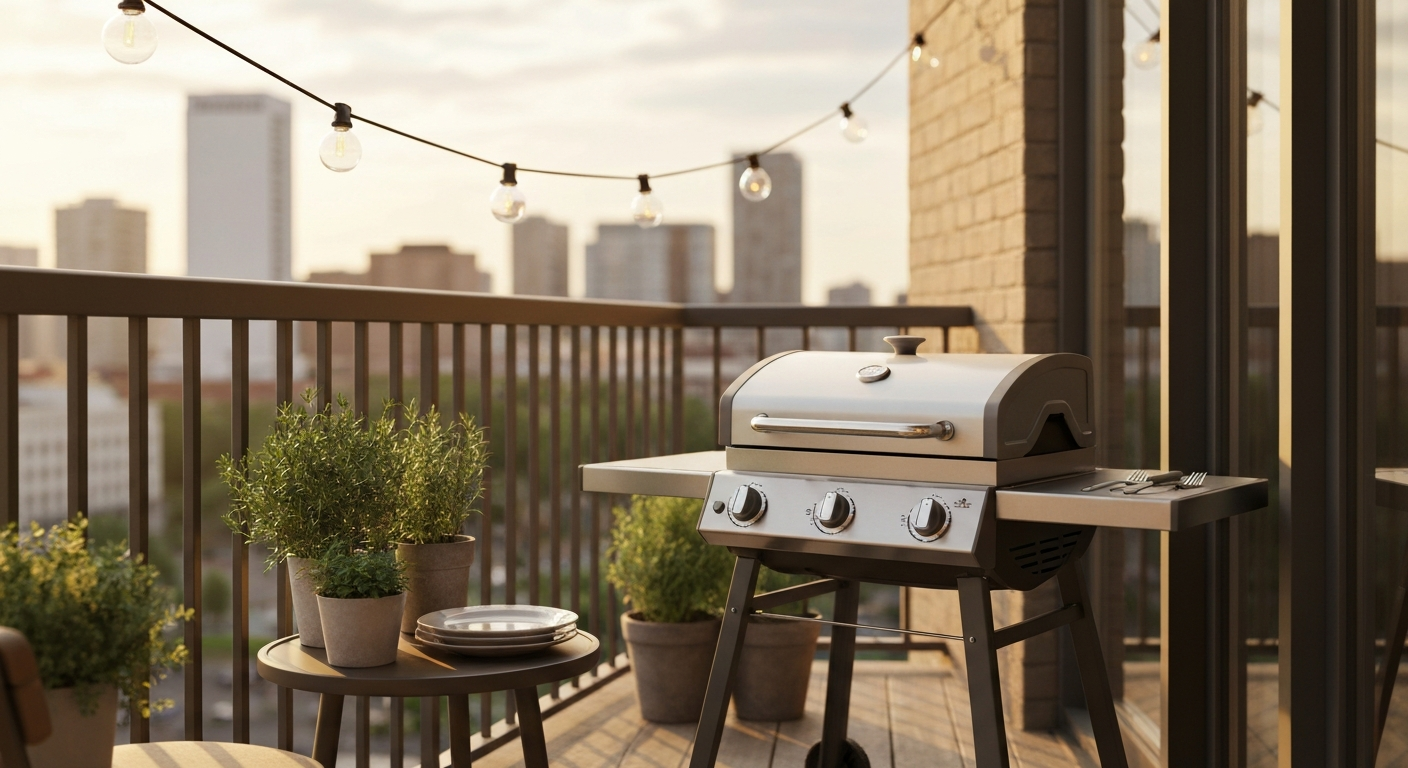
Discover which brands make patio-range BBQs, top models, buying checklist, installation, safety & costs.
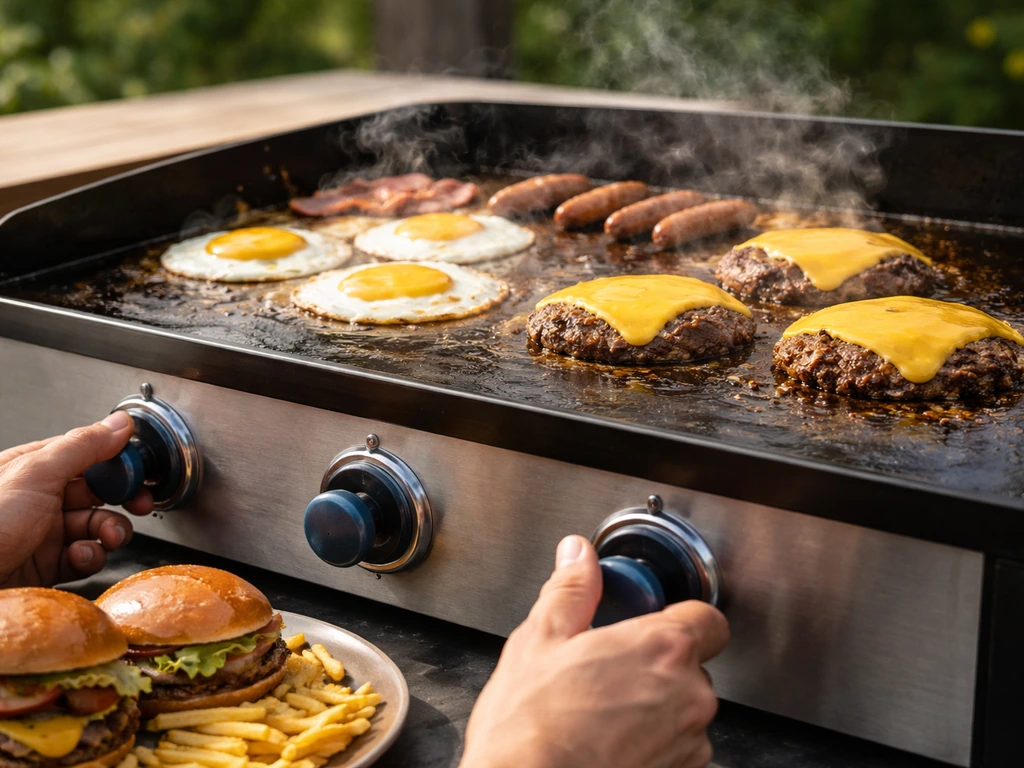
Choose the best patio griddle with fuel, size, heat control, surface, cleanup, safety, and durability tips for your setu