
For most people, propane wins. It lights in seconds, runs all night on a standard 20 lb tank, costs less upfront, and works in any weather without a warm-up period. Pellet patio heaters are a real option if you want a wood-fire aesthetic and lower fuel costs per BTU in areas where wood pellets are cheap, but they come with meaningful trade-offs: a 10–15 minute startup, ash cleanup, mechanical parts that need maintenance, and venting requirements that make placement trickier. If you just want a patio heater that works with minimal fuss, get propane. If you're willing to trade convenience for ambiance and lower ongoing fuel costs, a pellet unit can make sense.
Pellet Patio Heater vs Propane: Wood Pellet vs Propane Guide

Caleb Vale
12 Jun 2026
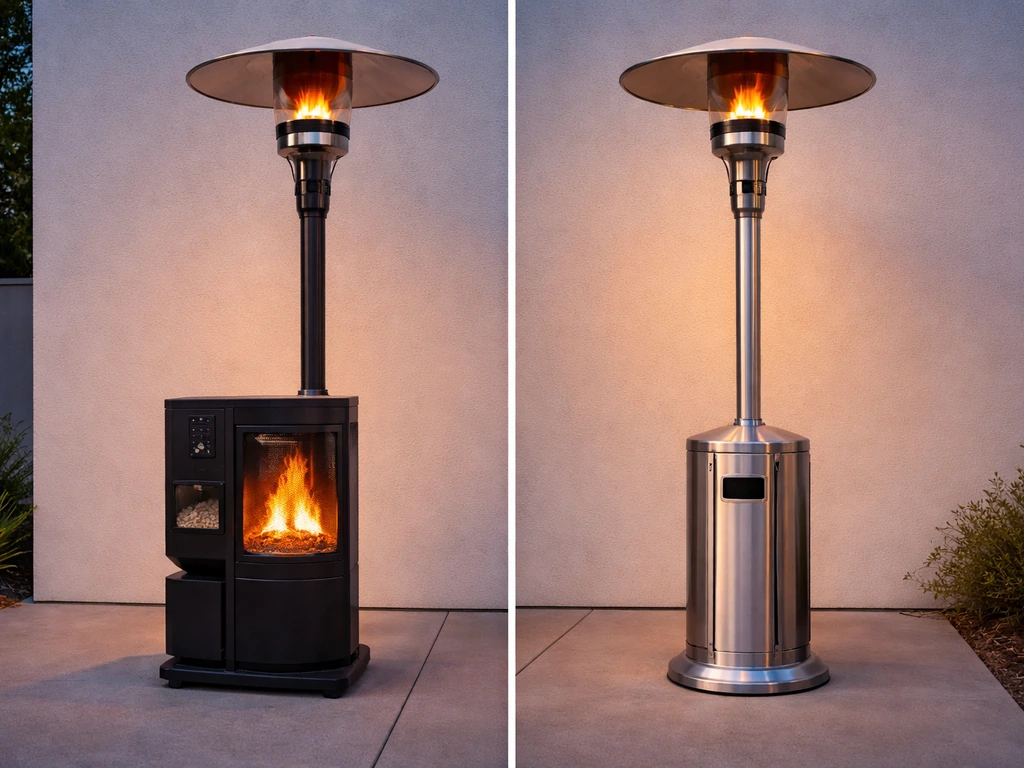
How each type actually generates heat
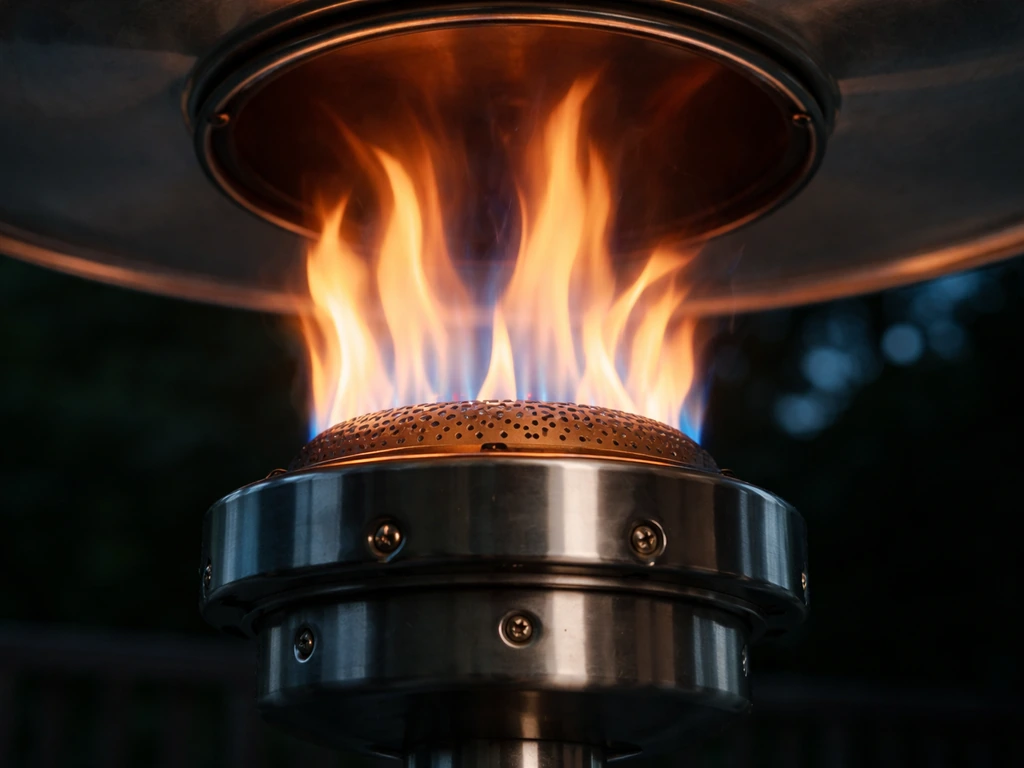
Propane patio heaters burn LP gas through a burner head, producing a flame that radiates heat outward and upward. Most standard mushroom-style propane towers output 40,000–48,000 BTU/hr. You connect a 20 lb tank, turn the knob, push the igniter, and heat is immediate. The combustion is clean and produces mostly water vapor and carbon dioxide. Vent-free propane radiant models (like the Mr. Heater MH40 series at 40,000 BTU/hr) include an Oxygen Depletion Sensor (ODS) that shuts the unit off if oxygen levels drop, which is the primary safety backstop for that class of heater. A Mr. Heater spec sheet for the MH40 class lists the model output at 40,000 BTU/hr and notes the presence of an Oxygen Depletion Sensor (ODS) along with the specified ignition type Mr. Heater MH40 series at 40,000 BTU/hr.
Pellet patio heaters work completely differently. They use a motorized auger that feeds wood pellets from a hopper into a burn pot on a timed cycle controlled by a digital circuit board. A combustion blower pushes air through the fire to sustain it and exhausts combustion gases out through a dedicated vent. If you are comparing different fuel types, infrared vs gas patio heater options can have very different heat output and comfort. Models like the Even Embers units advertise outputs up to 60,000 BTU max, and the Big Timber manual claims around 41,000 BTU burning standard heating stove pellets. Because combustion is mechanical and involves both a blower and an auger motor, there are more moving parts. The fire looks and smells like a real wood fire, which is genuinely appealing, but that startup process takes 10–15 minutes before you reach full output.
What it actually costs to run each one
This is where the two options diverge most clearly, and the numbers favor pellets if you're running the heater frequently. Propane's energy content is roughly 91,450 BTU per gallon. At a national residential average near $2.50–$3.00 per gallon (EIA weekly survey data for 2026), a 40,000 BTU/hr heater burns about 0.44 gallons per hour, costing roughly $1.10–$1.32/hr. A 20 lb tank (approximately 4.7 gallons) gives you around 10–11 hours of runtime at that output. That matches up with the general rule of thumb: about 0.01 gallons per hour per 1,000 BTU consumed.
Wood pellets run cheaper per BTU in most regions. Maine's published weekly fuel price sheet, which lists both wood pellets per ton and propane per gallon with $/million BTU equivalents, consistently shows pellets coming in at a lower $/million BTU than propane. A 40 lb bag of premium pellets typically costs $5–$8 and contains roughly 600,000–640,000 BTU of energy. Even at modest burn efficiency, that's a meaningful cost advantage per hour of heat. The catch is that pellet heaters aren't as efficient at converting that stored energy to usable patio heat as a clean propane flame, so real-world savings are smaller than the raw fuel math suggests. Budget roughly $0.75–$1.10/hr for a pellet heater at moderate settings.
| Factor | Pellet Heater | Propane Heater |
|---|---|---|
| Fuel cost per hour (est.) | $0.75–$1.10 | $1.10–$1.50 |
| Max BTU output (typical) | 40,000–60,000 BTU/hr | 40,000–48,000 BTU/hr |
| Fuel container size | 40 lb bag (~640K BTU) | 20 lb tank (~4.7 gal / ~430K BTU) |
| Runtime per fill/tank | 2–4 hrs per bag (varies by setting) | 10–11 hrs at 40K BTU/hr |
| Refueling effort | Pour pellets into hopper | Swap or refill tank |
| Fuel availability | Hardware/feed stores, seasonal | Gas stations, propane dealers, wide availability |
One practical note on fuel logistics: propane tanks are available everywhere and can be swapped at most gas stations and big-box stores. Wood pellets are easy to find in winter but can be harder to source in spring and fall when patio season actually peaks. If you burn pellets frequently, buy in bulk when they're in stock.
Performance in cold, windy, and variable conditions
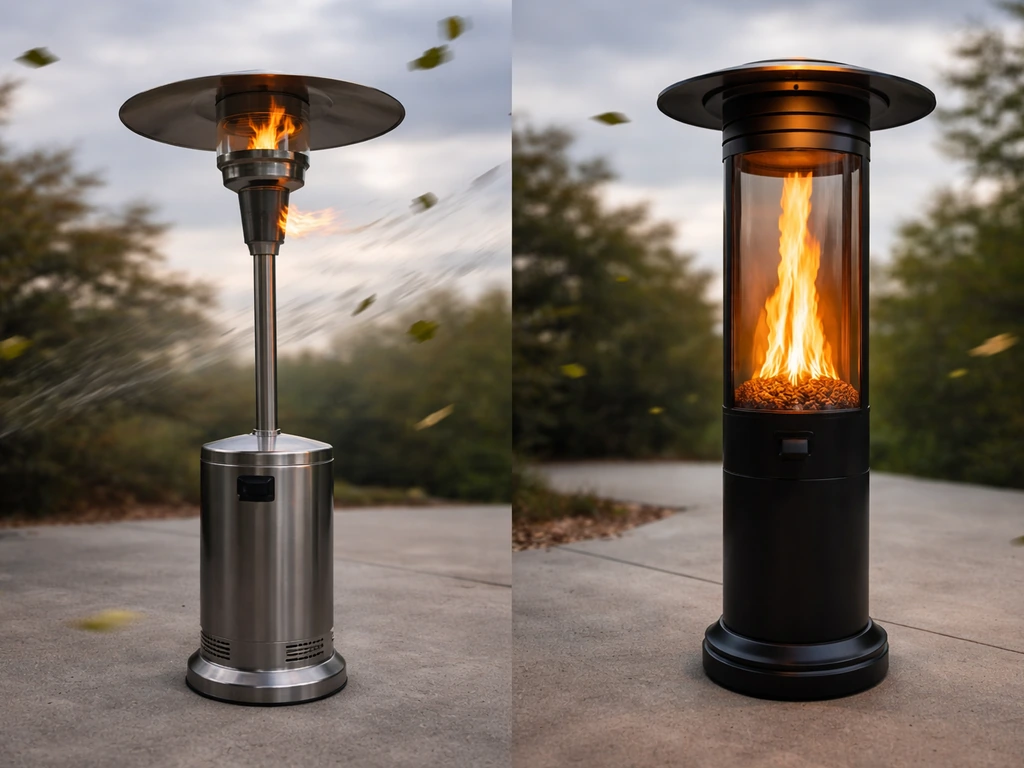
Propane heaters have one significant vulnerability: wind. If you're deciding between a patio heater vs fire table, the same wind sensitivity and heat-output considerations for propane apply Propane heaters. A stiff breeze disrupts the flame, cuts radiant output noticeably, and in some cases can blow out the burner entirely. At outputs around 40,000 BTU/hr, a 10–15 mph wind can make a propane heater feel nearly useless even though it's technically running. Placement against a wall or in a sheltered corner helps a lot. In cold temperatures (below 30°F), liquid propane vaporizes more slowly, which can reduce effective pressure and output, especially with a tank that's less than a quarter full.
Pellet heaters are mechanically more wind-resistant because combustion is enclosed in a burn pot with forced air from a blower rather than an open flame. The fire is less likely to be disrupted by ambient wind. However, pellet units need electricity to run the auger motor and blower, so you need an outdoor outlet nearby. In very cold temperatures, the startup process gets slower and the auger mechanism can be affected by cold if the unit hasn't been used or stored properly. For regular use in cold climates below 25°F, propane is more reliable on a moment-to-moment basis, especially if you need heat quickly.
For heat zone coverage, a 40,000–48,000 BTU propane tower heater covers roughly 150–200 square feet effectively. Pellet heaters in the 60,000 BTU range can warm a larger zone but require those 10–15 minutes to reach full output. If you're hosting and need heat fast, propane is the better choice.
Setup, startup, and day-to-day convenience
Propane heaters are plug-and-play in a way pellet heaters simply are not. You connect a standard 20 lb tank, open the valve, push the igniter, and you have heat within 30–60 seconds. No warm-up period, no electrical hookup required, no ash to deal with. Moving the heater around the patio is easy as long as it's off (Propane.com specifically warns against moving any propane heater while it's operating). Tank swaps take under two minutes.
Pellet heater setup is more involved. You need a 120V outdoor outlet within reach of the power cord. You load pellets into the hopper, start the unit, and then wait. The circuit board-controlled auger begins feeding pellets, the combustion blower builds the fire, and you reach usable heat in about 10–15 minutes according to Even Embers' own product specs. Shutdown isn't instant either: the blower continues running after the fire is extinguished to cool the unit before fully powering off, so budget a few extra minutes. Once a session is done, you're dealing with ash in the burn pot, which needs to be cleared periodically. The hopper needs to be emptied if the heater is going into storage or if rain is expected, because wet pellets jam the auger.
- Propane: connect tank, turn knob, push igniter. Heat in under 60 seconds.
- Pellet: load hopper, plug into outlet, start unit, wait 10–15 minutes for full output.
- Pellet units need a 120V outlet nearby — not optional.
- Pellet hoppers must be emptied before storage or rain exposure.
- Propane tanks can be swapped mid-session; pellet hoppers can be topped off while running.
- Both units should be positioned on stable, level surfaces before lighting.
Safety and code considerations
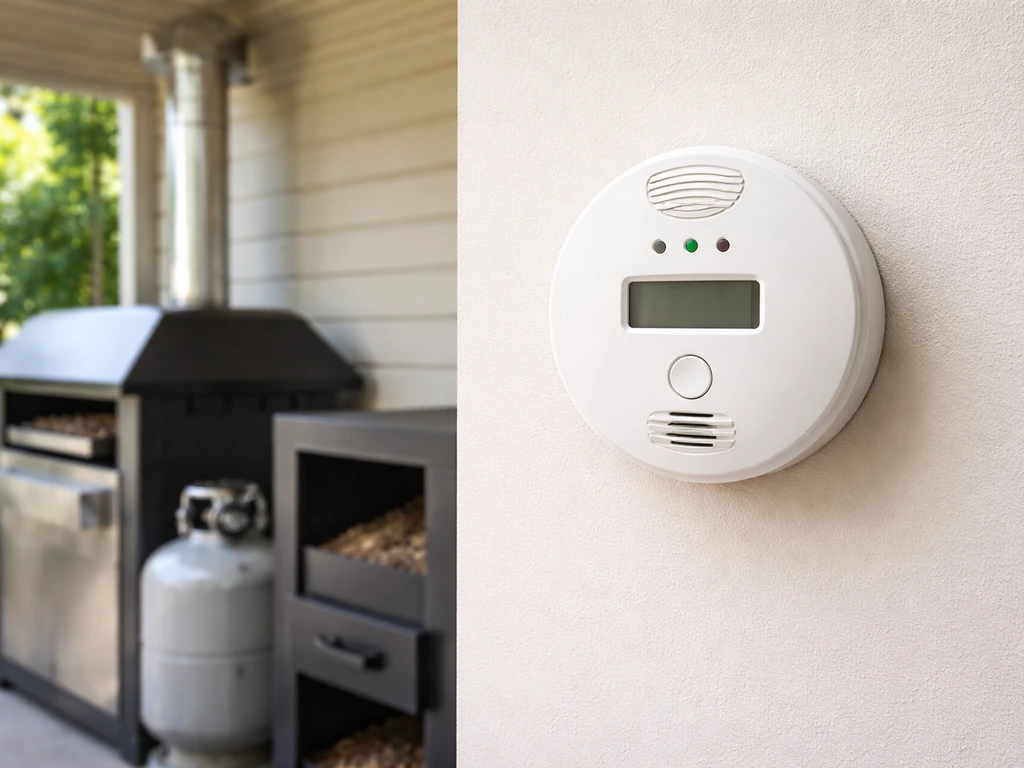
Carbon monoxide is the headline safety concern for both types, and it's worth being direct about it. The CPSC categorizes CO as an invisible killer and has documented CO poisoning deaths linked to propane space heater use, particularly when units rated for outdoor use are moved into enclosed or semi-enclosed spaces like garages, screened rooms, or tents. blank" rel="noopener noreferrer">CPSC research documents CO poisoning deaths linked to propane space heater use, especially when units intended for outdoor use are moved into enclosed or semi-enclosed spaces. Outdoor propane patio heaters (covered by ANSI Z21.63) are designed for open-air use. Vent-free models include an ODS that shuts the heater down if oxygen drops, but ODS is a last-resort safety feature, not permission to use the heater indoors. The rule is simple: if the space isn't genuinely open to outdoor air, don't run either type of heater in it.
Pellet heaters have their own CO risk because wood combustion also produces carbon monoxide as a byproduct. The Big Timber owner's manual explicitly warns about CO risk. More importantly, pellet heaters require a certified, dedicated exhaust vent system (Type PL pellet vent), and that vent must not be shared with any other appliance. Clearance requirements for the vent and the heater body are strict: most pellet patio heater manuals specify a minimum 36 inches of clearance from any combustible material on all sides. With a standard propane tower heater, you just need to keep it away from overhead structures and fabric, typically 3 feet of clearance above and 2 feet on the sides. The pellet vent requirement is a real installation constraint that can limit where you put the unit on a covered patio or pergola.
Local codes matter here too. Some municipalities have restrictions on open-flame devices on wood decks or covered structures. Pellet heaters, because they involve an exhaust vent and mechanical combustion, may require a permit in some jurisdictions. Check with your local building department before buying a pellet heater for a permanently covered outdoor space. Propane tower heaters are generally treated as portable appliances and face fewer regulatory hurdles.
What you'll pay upfront and over time
Entry-level propane patio tower heaters start around $80–$150 for basic models and climb to $400–$800 for commercial-grade stainless units with better burners, weighted bases, and wind guards. Maintenance costs are low: a regulator hose replacement runs $15–$30, igniter replacements are similar, and burner cleaning is a 20-minute job once a season. Parts are widely available and the design is simple enough that most homeowners can handle their own repairs.
Pellet patio heaters are a more niche product and priced accordingly. Models like the Even Embers units typically run $300–$600 at retail. The mechanical complexity means more potential failure points: the auger motor, the combustion blower, the circuit board, and the igniter are all components that can fail and may require professional service or manufacturer-specific parts. Ash cleanup after every few sessions is non-negotiable. You'll want to clean the burn pot and ash drawer regularly, inspect the exhaust vent, and lubricate moving parts seasonally. If the heater sits unused with pellets in the hopper and moisture gets in, the resulting sawdust sludge can damage the auger mechanism. Store it empty and under cover.
| Cost Category | Pellet Heater | Propane Heater |
|---|---|---|
| Purchase price (typical range) | $300–$600 | $80–$800 |
| Fuel cost per hour (est.) | $0.75–$1.10 | $1.10–$1.50 |
| Seasonal maintenance | Moderate (ash, blower, auger) | Low (regulator, burner clean) |
| Parts availability | Limited, manufacturer-specific | Wide, generic parts available |
| DIY repair feasibility | Moderate to difficult | Easy to moderate |
| Storage requirement | Indoors, hopper empty | Standard propane storage rules |
Pellet or propane? Pick the right one for your situation
Here's the honest breakdown by scenario. Most readers will land squarely in the propane column, but pellet heaters have a legitimate use case for the right setup.
Go propane if...
- You want instant heat with no warm-up — critical for impromptu evenings.
- Your patio doesn't have a convenient outdoor outlet nearby.
- You're heating a smaller area (under 200 sq ft) a few nights a week.
- You're in a climate with unpredictable cold snaps where you need reliable quick heat.
- Budget is a constraint — you can get a capable propane heater for under $150.
- You want portability and the ability to move the heater around the patio or store it easily.
- Your patio is covered or semi-enclosed in a way that makes pellet venting impractical.
- You run a restaurant or commercial patio and need simple, fast, durable equipment.
Consider a pellet heater if...
- You have a large open patio (200+ sq ft) and want more BTUs and a real fire experience.
- You have a 120V outdoor outlet and a covered but well-ventilated outdoor space.
- You use the heater frequently (4+ nights per week) and the lower fuel cost per hour adds up.
- Wood pellets are inexpensive and locally available in your region.
- Aesthetics matter — the look and smell of a real wood fire is a priority for your space.
- You're comfortable with a regular maintenance routine and basic mechanical troubleshooting.
- You've verified the 36-inch combustible clearance and exhaust venting requirements work with your space.
Quick decision checklist before you buy
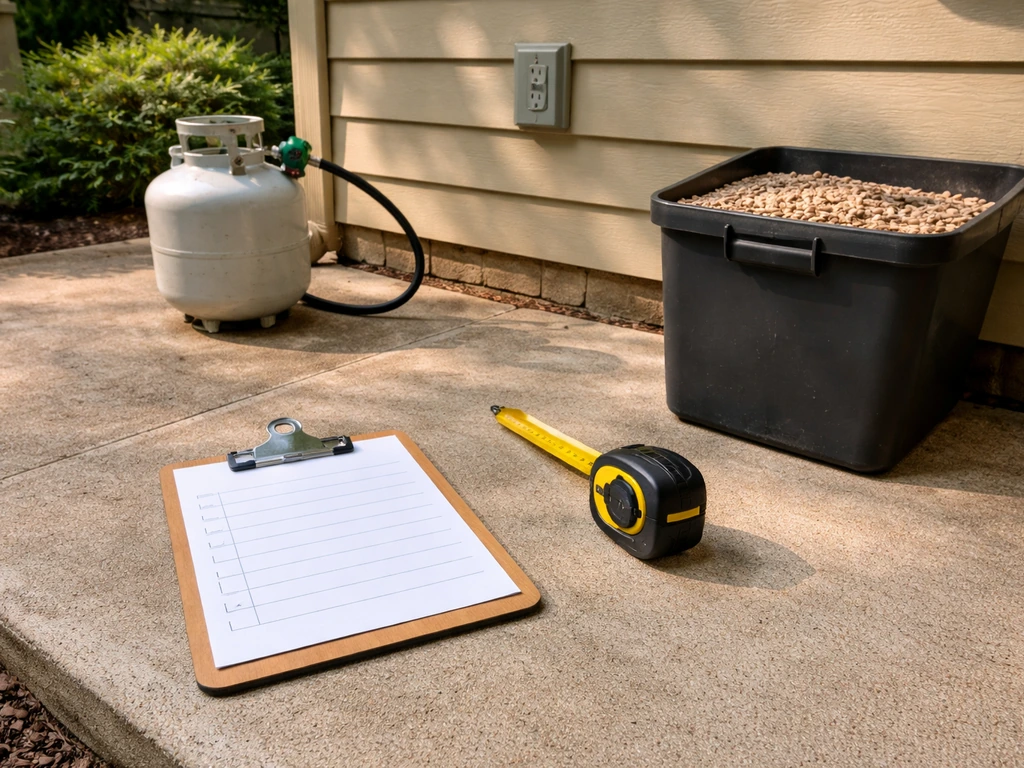
- Measure your patio area. Under 200 sq ft: propane tower handles it. Over 200 sq ft or open expanse: consider a high-output pellet or propane unit.
- Check for a 120V outdoor outlet. No outlet = propane only.
- Map your clearances. Can you achieve 36 inches from all combustibles for a pellet unit? Is there a viable exhaust vent path?
- Estimate your usage frequency. Under 2 nights/week: propane's convenience wins. Over 4 nights/week: pellet's fuel savings start to matter.
- Check local fuel prices. Look up current pellet bag prices and propane $/gallon in your area and run the hourly cost math.
- Confirm your patio is genuinely open-air. Neither type is safe in enclosed or semi-enclosed spaces without proper venting.
- Check local codes if you're on a covered deck or pergola, especially for the pellet exhaust vent.
- Decide on your tolerance for startup time and maintenance. If you want zero friction, propane. If you're okay with a routine, pellets can work.
One final note: if the fire-pit aesthetic is what's really drawing you to a pellet heater, it's also worth comparing fire tables and fire pits directly against patio heaters before committing, since those options can deliver the ambiance piece without the mechanical complexity of a pellet combustion system. And if you're weighing propane against electric, that comparison has its own set of trade-offs around heat type, operating cost, and installation that are worth working through separately. Electric patio heaters can feel convenient, but comparing electric patio heater vs propane is usually where the real trade-offs show up. But if the core question is pellet versus propane, propane is the practical default and the right call for the majority of setups.
FAQ
If pellets are cheaper per BTU, why do they not always cost less per hour in practice?
Propane can be cheaper over the same number of hours because it reaches output instantly and avoids extra losses from pellets like incomplete combustion and lower effective patio heat. Pellet savings only tend to show up when you run the unit frequently and your local pellet $ per BTU stays consistently below propane $ per BTU, and you can source dry pellets reliably year-round.
Can I use either heater on a covered patio, or do they require fully open outdoor space?
Look for a model that matches the kind of shelter you have. If your patio is covered (roof overhead) but open on sides, propane can still work if you keep to clearance and treat it as outdoor-only. For pellets, verify the vent path, required Type PL venting, and whether you can maintain the manual’s clearance on all sides without routing the exhaust through areas that violate vent requirements.
What venting mistakes cause problems with pellet patio heaters?
Do not share a vent with another appliance. For pellet heaters, the exhaust must be dedicated and installed to the manufacturer’s spec for vent type, length limits, termination location, and clearance to combustibles. Sharing or improvised venting is a common mistake that increases CO risk and can cause poor draft.
If there is no outdoor outlet near my patio, is propane the better option?
A good rule is: if you cannot provide power where the heater will sit, propane is usually the safer bet. Pellet heaters need electricity for the auger and combustion blower, and some setups also need enough cord reach and weather-rated outlet protection to run during startup and cooldown.
How do temperature and wind change which fuel is more reliable in winter?
For cold climates, plan around two variables: tank level and wind chill. Propane output drops when tanks get below roughly a quarter full due to reduced vaporization, and windy conditions reduce flame stability even if the heater is rated for the BTU level. Pellet units may start slower in subfreezing temperatures, but they are less affected by wind because the burn is enclosed.
Will a pellet heater heat the patio as well as a propane tower if both are rated for similar BTUs?
Expect different “heat feel,” not just different BTUs. Propane towers are strong for radiant heating near the unit, and performance drops when gusts push the flame. Pellet heaters can throw heat more evenly as the burn stabilizes, but the heater’s 10 to 15 minute ramp-up means it feels less responsive for short, sporadic use.
What should I check regarding propane tanks, regulators, and connections?
Before buying, confirm tank compatibility and regulator requirements. Most propane towers use a standard 20 lb cylinder with a specific connection method, and using the wrong hose/regulator or a non-approved fitting can create low flame or safety shutdowns. Also plan for whether you will refill or do swaps, since availability varies by region.
How much maintenance difference should I plan for between pellets and propane?
For pellets, assume you will clean more often and budget time for maintenance. Ash in the burn pot and ash drawer needs periodic clearing, wet or humid pellets can cause auger jamming, and you will typically need to inspect and maintain the exhaust vent. Propane usually just needs seasonal burner cleaning and occasional regulator hose or igniter replacement.
Which heater is easier to store between seasons without causing startup problems?
If you might move the heater frequently or store it often, propane is generally easier. Pellet units require stricter storage habits: empty the hopper when storing, keep the unit covered, and protect against moisture intrusion so pellets do not form sludge that can jam the auger.
Are oxygen sensors or “vent-free” designs enough protection to use either heater in a screened room or garage?
If you ever consider using one in an enclosure, default to propane only if it is specifically designed for that use case, and never assume any “outdoor rated” unit is safe inside. Even with oxygen-sensing features on some vent-free propane models, oxygen depletion can still be dangerous. The safer approach is to keep both heater types outdoors where fresh air can flow freely.
Next Articles
Electric Patio Heater vs Propane: Costs, Heat, and Safety
Electric vs propane patio heaters compared for heat reach, runtime costs, safety, and buying tips for windy cold patios.
Best Price on Outdoor Patio Heaters: Compare Costs & Deals
Score the best price on outdoor patio heaters, price ranges, top picks, deal tactics, total-cost & safety checklist.
Where Can I Rent Patio Heaters Near Me Today
Find where to rent patio heaters near you today, choose the right fuel type, compare costs, and book safely.