
If you want consistent, targeted warmth for a specific seating area, get a patio heater. If you want a gathering focal point with open flame and ambience, and you're okay with less precise heat coverage, get a fire pit. Those aren't the same goal, and buying the wrong one for your situation is a common and frustrating mistake. Most people searching this comparison are actually after warmth, but they're tempted by the look of a fire pit. This guide helps you figure out which one actually solves your problem.
Fire Pit vs Patio Heater: Which Is Better for Your Patio?

Caleb Vale
16 Jun 2026
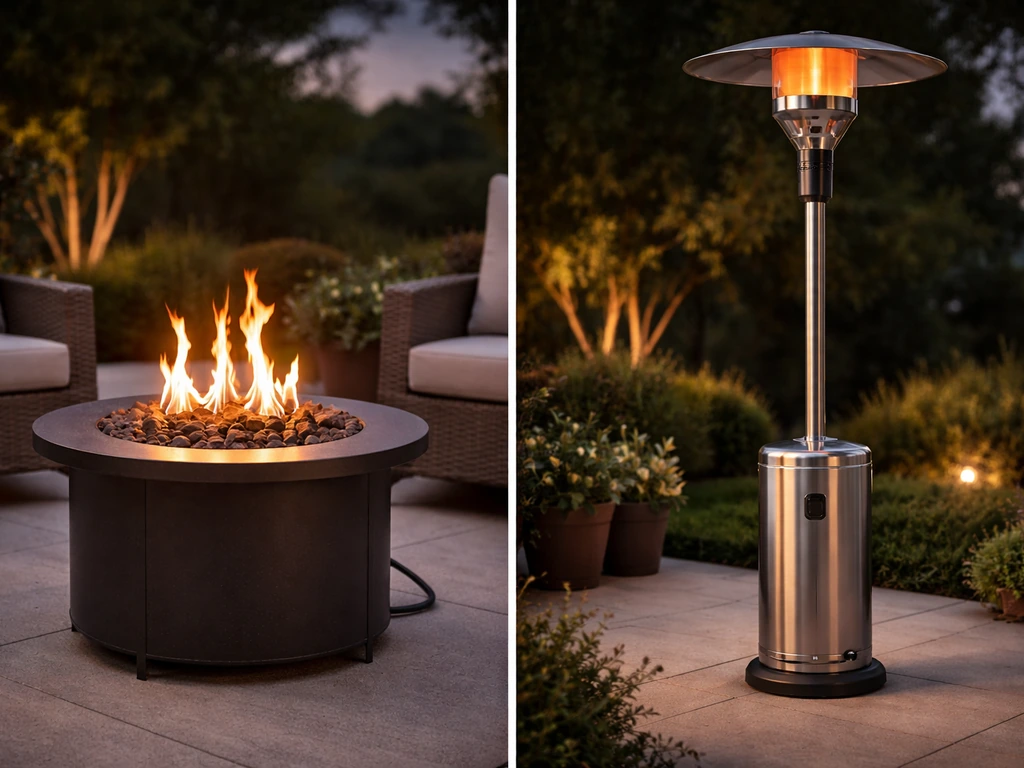
Which one is right for you: the quick answer
A propane patio heater is the better choice if your main goal is measurable, reliable warmth. A full-size freestanding propane heater typically outputs 30,000 to 50,000 BTU and pushes heat downward and outward in a 10 to 15-foot radius, warming the people sitting in its zone directly. You turn it on, it heats up almost immediately, there are no embers, no smoke, and no sparks. For a restaurant patio, a covered deck, or any situation where guests need to stay comfortable without thinking about it, a patio heater is the right tool.
A fire pit is the better choice if the fire itself is the point. It creates a social anchor, people gather around it, it looks beautiful after dark, and on a calm evening it produces real warmth for everyone sitting close to it. But it is not a heating appliance in the same sense a patio heater is. Fire pits scatter heat in all directions, lose significant output to wind, produce embers and ash that require management, and come with clearance and safety requirements that limit where you can put them. If you want heat plus atmosphere, a fire pit table with a propane burner is a reasonable compromise, but it still won't heat your patio the way a dedicated heater will.
Heat coverage and comfort: flame ambience vs real patio heating
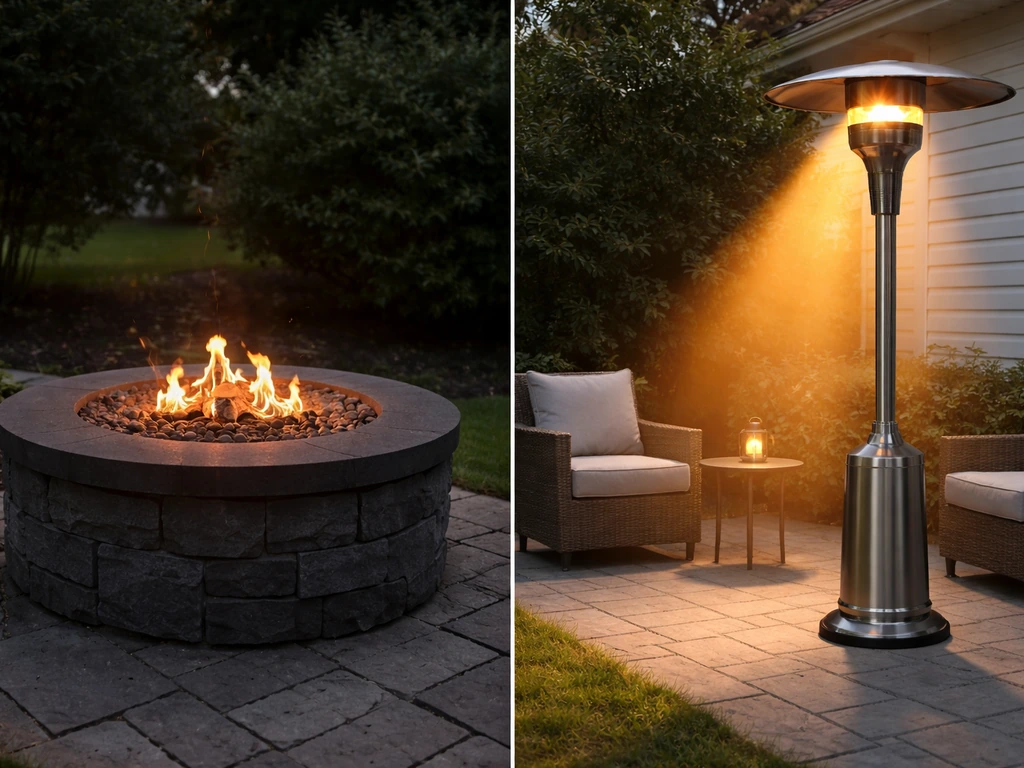
This is the core functional difference between the two, and it matters more than most buyers realize before they purchase. A patio heater is designed around directional, zone-based heat delivery. Freestanding mushroom-style propane heaters use a reflector dome to push radiant heat downward and outward. Infrared patio heaters go further, warming objects and people directly rather than heating the air volume around them, which is why they perform better in wind. If you sit within the coverage zone of a 40,000 to 50,000 BTU heater, you feel warm. If you step outside that zone, you don't. As a rough planning number, expect one heater to cover 100 to 200 square feet depending on BTU output, climate, and how exposed your patio is.
A fire pit heats very differently. The heat radiates outward from the flame in all directions, which means people sitting in a circle around a fire pit share in that warmth, but it's ambient and inconsistent. Someone with their back to the wind gets cold. Someone leaning in gets hot. On a windy evening, a significant portion of the heat output simply dissipates. Propane fire pits with wind guards help somewhat, but they don't fundamentally change the physics. The BTU ceiling on fire pits is actually high, with figures commonly ranging from 30,000 to 150,000 BTU for various models, but raw BTU output on a fire pit doesn't translate to the same usable warmth as the same BTU rating on a directional patio heater.
If your patio is covered or partially enclosed, a patio heater becomes even more effective because heat is retained in the space. If your setup is fully open and you're dealing with regular wind, an infrared patio heater is worth serious consideration over a standard convection-style unit. You can read more about that specific comparison in the infrared vs gas patio heater discussion, which goes deep on wind performance differences.
Propane fire pit vs propane patio heater: the head-to-head
Since a lot of buyers are specifically weighing a propane fire pit against a propane patio heater, let's go direct. Both run off the same 20 lb propane tanks, both need gas-safe setup, and both have operating costs tied to propane consumption. The differences are in how they use that propane and what you get from it.
| Feature | Propane Patio Heater | Propane Fire Pit |
|---|---|---|
| Typical BTU output | 30,000–50,000 BTU (freestanding); 10,000–15,000 BTU (tabletop) | 30,000–60,000 BTU (most residential models) |
| Heat delivery style | Directional/radiant, zone-based | Omnidirectional, ambient |
| Effective heat radius | 10–15 feet per unit | 5–8 feet seated around the pit |
| Wind performance | Moderate (infrared models much better) | Poor without wind guard |
| Ambience/visual flame | None | High — open flame is the main appeal |
| Smoke and embers | None | None (propane); minor soot possible |
| Fuel source | 20 lb propane cylinder | 20 lb propane cylinder (or 1 lb canisters on small models) |
| Burn time on 20 lb tank at full output | ~8–10 hours at 40,000–50,000 BTU | ~7–9 hours at 50,000 BTU |
| Installation complexity | Minimal — assemble, connect, use | Low to moderate — depends on model/table style |
| Typical price range | $80–$300 (freestanding); $50–$120 (tabletop) | $200–$1,200+ (fire pit tables) |
| Doubles as a furniture piece | No | Yes (fire pit tables especially) |
| Outdoor-only requirement | Yes | Yes |
The burn time math is worth understanding before you commit. A 20 lb propane tank holds about 4. Bali Outdoors also notes that a 20 lb propane tank holds about 4.7 gallons and totals roughly 430,000 BTU for a full tank 7 gallons of propane. 7 gallons of propane, and propane contains roughly 91,450 BTU per gallon, giving you approximately 430,000 total BTU per full tank. At 50,000 BTU per hour, that's just under 9 hours of runtime at full output. Both a propane fire pit table at 50,000 BTU and a propane patio heater at the same rating will burn through a tank at nearly the same rate. The difference is what you get from those 9 hours: targeted warmth from the heater, or ambience plus moderate warmth from the fire pit.
One practical edge for propane patio heaters: they typically have adjustable output settings, so you're rarely running at full BTU the entire time. That extends tank life meaningfully in mild weather. Propane fire pit tables often let you adjust flame height too, but there's a social expectation that the flame looks good, which tends to push people toward higher settings. For a comparison of how propane heaters stack up against electric options, the electric vs propane patio heater breakdown covers fuel cost and convenience tradeoffs in detail. For a direct fuel-cost and convenience comparison, electric patio heater vs propane can help you choose the better option for your budget and routine electric vs propane patio heater breakdown.
Cost of ownership: purchase price, fuel, and long-term running costs
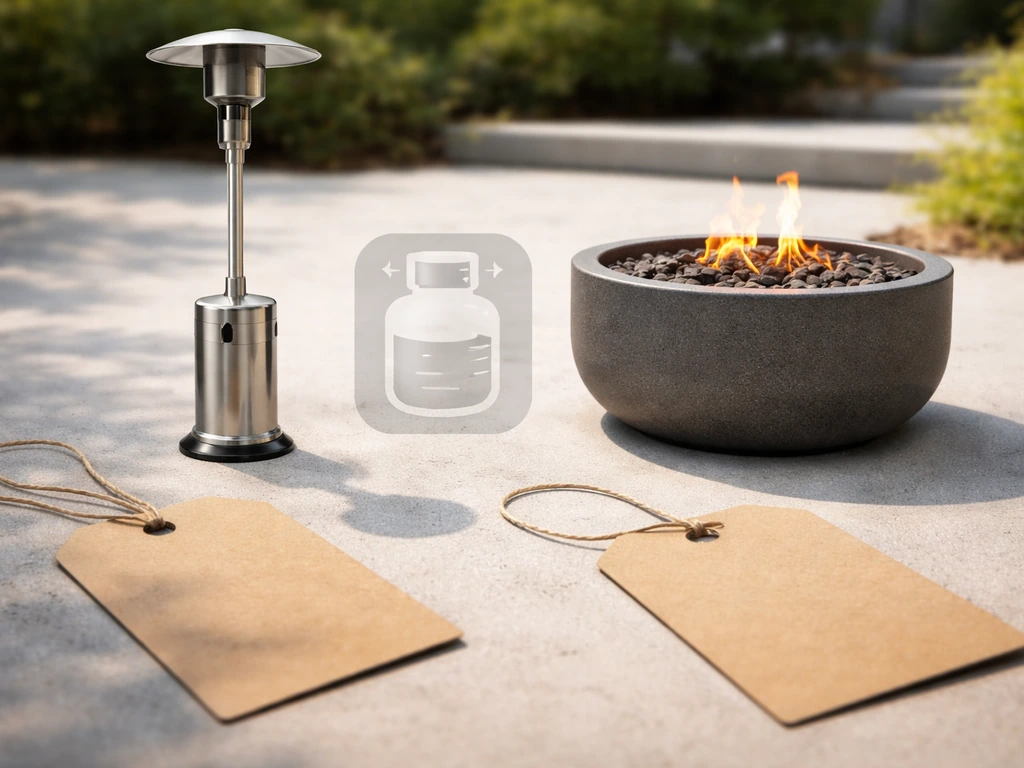
Purchase price ranges are wide for both categories. A basic freestanding propane patio heater starts around $80 to $100 and tops out at $250 to $300 for quality residential models. Commercial-grade units cost more. Tabletop propane heaters at 10,000 to 15,000 BTU run $50 to $120 and are genuinely useful for small tables or supplemental heat. Propane fire pit tables are more expensive across the board. Entry-level models with 40,000 to 55,000 BTU burners start around $200 to $350, but decent quality fire pit tables land in the $500 to $1,000 range, and high-end stone or cast concrete models push well past that.
Fuel costs are essentially the same per BTU for both since both run on propane. The real variable is how many hours you actually run each one. Fire pits tend to be left running longer because they're entertainment-oriented and people sit around them for the experience. Patio heaters get turned off when they're not needed because they're functional tools. In practice, many patio heater owners report lower monthly propane costs simply because they're more intentional about when the heater is on. If you use a fire pit as your primary evening gathering point three to four nights a week through a four-month season, plan for three to five 20 lb tank refills per month at current propane prices.
Maintenance costs also differ. A patio heater requires annual burner inspection, hose and regulator checks before each season, and occasional cleaning of the reflector dome and burner screen. A fire pit table has similar gas-side maintenance but also accumulates debris in the fire media (lava rocks or glass beads), and the table surface itself is exposed to weather and spills if used as outdoor furniture. Factor in a quality patio heater cover ($20 to $40) and the same for a fire table cover, both of which are essential if you leave them outdoors year-round.
Setup and convenience: placement, installation, and day-to-day use
Both products are genuinely low-effort to set up when you buy a portable propane model. You assemble the unit, attach the regulator and hose to a 20 lb cylinder, do a soap-and-water leak check on every connection before first use, and you're done. A patio heater takes about 20 to 30 minutes to assemble out of the box. A fire pit table may take longer depending on how heavy and complex the base is, but it's still a same-afternoon project for most models.
Day-to-day convenience strongly favors the patio heater. You turn a dial, press an igniter, and you have heat in seconds. Point it where you need it, adjust the output, done. Fire pit tables are similarly convenient on the gas side, but the ritual around them is longer: you light it, adjust the flame, manage the social situation around it, and then make sure everyone is done before you shut it off. That's a feature, not a bug, if you want a gathering experience. But if you just want to step outside in the evening without a production, the patio heater wins on convenience every time.
Placement flexibility is another difference. A patio heater on a 10-foot pole needs about 2 to 3 feet of clearance from overhead structures and a few feet of side clearance from anything combustible. You can position it to cover exactly the seating area you need. Fire pit tables are furniture anchors: you place them once, build your seating layout around them, and they define the zone. That's great for a dedicated patio setup but less flexible if your outdoor space serves multiple purposes.
Safety and maintenance: what you actually need to watch out for
Patio heater safety
Propane patio heaters are safe when used correctly, and most incidents come from a small set of avoidable mistakes. The critical rules: use them outdoors only, maintain required clearances from overhangs and combustibles, close the cylinder valve when the heater is not in use, and never use them in enclosed or semi-enclosed spaces where propane could accumulate. Carbon monoxide risk is real if you use any gas heater in an enclosed area. NFPA and propane association guidance is consistent on this: outdoor use only, proper ventilation, no garages or covered porches with limited airflow.
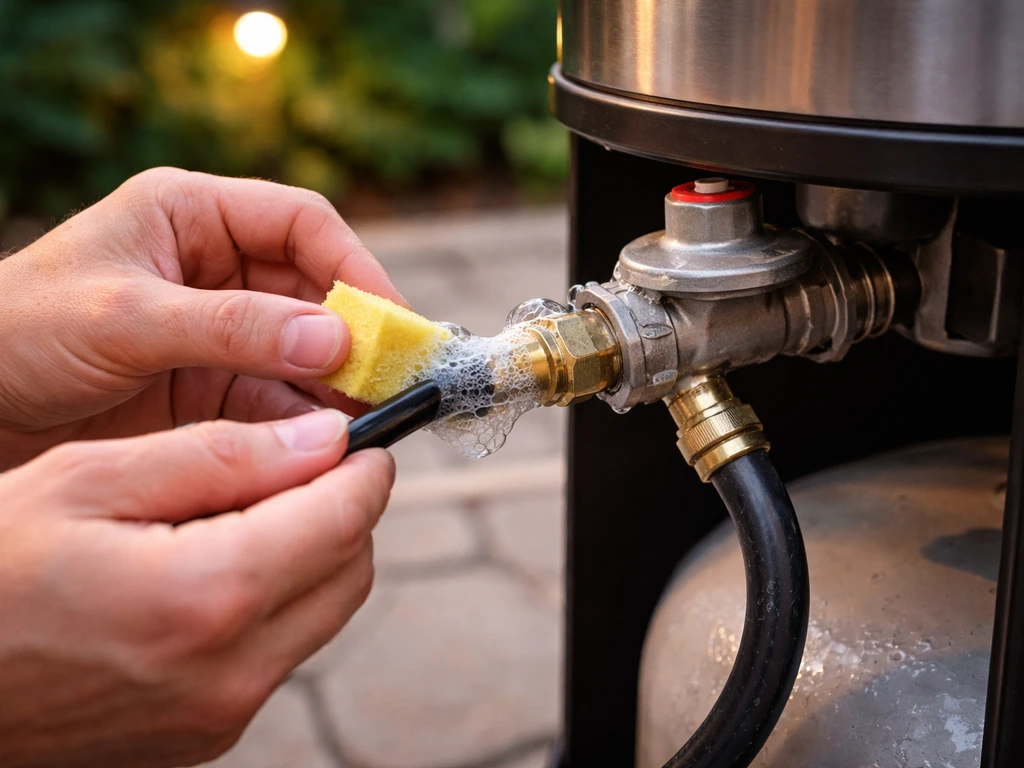
Before each use, inspect the flexible hose for cracks or wear and do a soap-bubble leak test on every gas connection. This takes two minutes and catches regulator seating issues before they become a problem. Many users skip this step after the first season and that's when issues appear. Store propane cylinders upright, outside, away from heat sources and ignition points, and never store them indoors or in an attached garage. Tipping is a real hazard with tall freestanding heaters, especially in wind. Use the base weight cavity and keep heaters on level, stable ground.
Fire pit safety
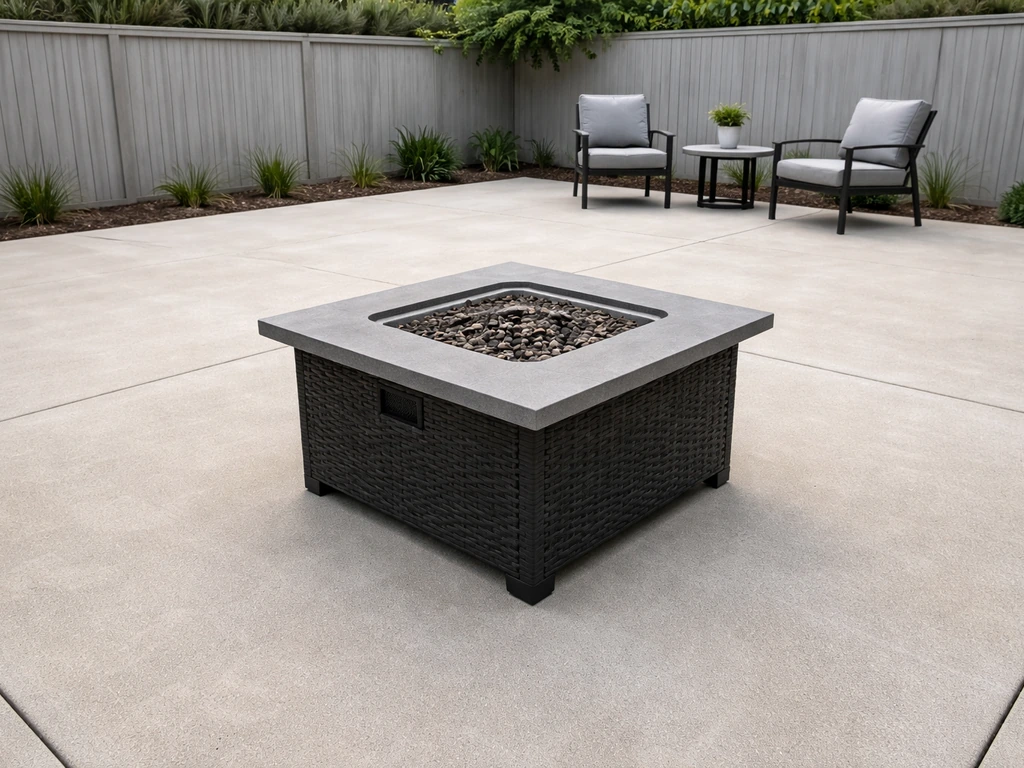
Propane fire pits eliminate the spark and ember risk of wood-burning models, which is a meaningful safety upgrade. But they still produce open flame and require clearances. Many fire pit manuals specify several feet of clearance from the unit to combustible structures, and general guidance for open-flame outdoor appliances calls for at least 10 to 15 feet from structures or overhead combustibles. Use a spark screen if your model includes one or sells one as an accessory. Keep children and pets away from the flame zone, don't leave a running fire pit unattended, and operate on a stable, level surface.
The USFA and Consumer Reports both flag burn injuries from fire pits as a consistent ER-reported category. The primary risks are contact burns from touching the hot rim or frame, burns from reaching across the flame, and fire spread from placing the pit too close to wood decking or dry vegetation. For a wood-burning fire pit, city guidelines commonly cite 15-foot clearances to any combustible structure. Propane models have more flexibility, but giving them space is still the right call.
Ongoing maintenance for both
- Inspect gas hoses and regulators at the start of every season and replace any hose showing cracking, stiffness, or visible wear
- Leak test every connection with soapy water before first use each season and after any regulator removal
- Clean burner ports on patio heaters annually to prevent clogging that leads to uneven flame or ignition failure
- Clean fire media (lava rocks, glass beads) in fire pit tables periodically to remove debris and moisture buildup
- Cover both units when not in use to protect burners, regulators, and surfaces from moisture and debris
- Close the propane cylinder valve after every use and remove the tank if storing for extended periods
- Check for rust or corrosion on the heater pole, base, and burner housing each season, especially in coastal or high-humidity climates
How to choose: a practical decision checklist
Work through these factors in order and your answer will be clear by the end.
- What is your primary goal? If it is consistent, reliable warmth for guests or family on a patio, choose a propane patio heater. If the fire itself is the point and warmth is secondary, choose a fire pit or fire pit table.
- What is your patio size and seating layout? For a defined seating area under 200 square feet, one 40,000 to 50,000 BTU freestanding heater covers the zone. For larger spaces or multiple seating areas, plan on multiple heaters. A fire pit table works best as a central anchor for grouped seating in the 10 to 15-foot radius around it.
- How exposed is your patio to wind? In a consistently windy location, a directional patio heater, especially an infrared model, outperforms a fire pit significantly. Fire pits lose heat rapidly in wind. If wind is a constant factor, a patio heater is the smarter buy.
- Do you have overhead coverage? A covered patio or pergola retains heat from a patio heater much better and can make a 30,000 BTU unit feel like more. Open-sky patios benefit from higher BTU heaters. Fire pits need more clearance from overhead structures, which can limit placement under pergolas or awnings.
- What is your climate? In mild climates where you're taking the chill off rather than fighting cold temperatures, a fire pit may genuinely provide enough warmth with better ambience. In climates with real cold, a patio heater is the practical choice for comfort.
- What is your budget? If you want the best value for heat output per dollar, a $100 to $200 freestanding propane patio heater is hard to beat. Fire pit tables cost significantly more for lower heating efficiency, but they double as furniture and deliver a completely different experience.
- Do you want flexibility or permanence? Patio heaters are portable and repositionable. Fire pit tables define a layout. If your outdoor space changes seasonally or serves multiple purposes, a patio heater adapts more easily.
- Are you open to either type for a covered or semi-enclosed patio? If yes, consider an electric or infrared patio heater instead of propane. The electric vs propane and infrared vs gas comparisons are worth reviewing before finalizing your choice.
The bottom line
If someone asked me straight up which to buy, I'd say this: get a propane patio heater if you need heat, get a fire pit if you want fire. They're not really competing for the same job. A 40,000 to 50,000 BTU freestanding propane heater will keep a seating area warm on a cool evening in a way a fire pit simply cannot match with the same consistency. But a fire pit table at the center of an outdoor dining or lounging setup creates an atmosphere a patio heater never will. Plenty of well-designed patios have both, a patio heater or two positioned for zone coverage and a fire pit table as the social center. For more on how patio heaters compare to fire pit tables, see patio heater vs fire table. If budget forces a choice, know your real priority and buy accordingly.
FAQ
If both list similar BTUs, why does one feel warmer than the other?
Choose based on how many people you want warm at the same time, not the tallest BTU number. A directional heater gives predictable warmth only within its coverage zone, while a fire pit warms people unevenly, strongest in the wind-protected side and closest seats. If you routinely host groups facing the same direction (like around a conversation set), a patio heater is usually the more reliable fit.
Can a fire pit be my main way to heat a cold patio?
Yes, a patio heater is generally easier to use as your primary heat source because you can point it and match your setup to a specific seating zone. A fire pit is more dependent on seating circle geometry and weather, so you may need to add a second heat source (like a heater offset to where people sit) if you want consistent comfort.
Which type handles wind better, and what should I check in the specs?
Look for two numbers before buying: the rated coverage radius (or square footage) and how it handles wind. Infrared heaters typically perform better when wind is normal for your area, while standard convection-style heaters can feel “dead” just a few feet outside their effective zone. If your patio is open, prioritize wind performance over raw flame or BTU marketing.
How does a covered patio change the decision?
For a covered or partially enclosed patio, the ceiling height matters. Low ceilings can trap heat around a convection heater, making it feel warmer but also requiring careful clearance from the overhead structure. In many cases, infrared heaters still win outdoors, but on covered porches you should verify the manufacturer’s minimum overhead clearance for any model you choose.
What if I want both ambiance and actual comfort, with just one unit?
If you want a single product, consider a fire pit table only when ambiance is the primary goal or when your seating is always close to the table. If you mainly want temperature comfort for people spread across a wider area, plan on a dedicated patio heater. A common mistake is buying a fire pit table expecting it to heat the whole dining area the way a heater does.
Which one costs more to run in real life, if I’m using it the same number of hours?
Don’t assume propane cost will match your expectations unless you control run time. Patio heater owners often save propane by turning the heater on when guests arrive and off when they leave, and adjustable output makes that easier. Fire pits often get left burning longer because people linger, so your monthly tank usage usually ends up higher unless you make an intentional schedule.
What maintenance is more annoying over a full season?
Annual prep matters, but the big practical difference is how dirty the “heating media” gets. Fire pit tables accumulate debris in lava rocks or glass beads and the surface can get exposed to spills, so cleaning tends to be more frequent. For patio heaters, routine care focuses more on the reflector dome, burner condition, and checking the hose and regulator connections each season.
Are propane patio heaters and propane fire pit tables really compatible with the same tanks?
Yes, if you go propane. Both categories commonly use 20 lb cylinders, but confirm the included regulator and hose requirements for the exact model, and verify the listed compatibility with your valve type. Also check whether the unit requires an external ignition source or uses an integrated igniter, since that changes convenience and setup time.
Which is more flexible if my patio furniture layout changes often?
Plan placement differently. A freestanding heater can be aimed to cover a precise seating zone, while a fire pit table is usually the center of your layout, with seating arranged around it. If your patio layout changes often (parties, dining vs lounging), heaters are usually more flexible because you can move or reposition them to match the activity.
What safety checks do people commonly skip after the first season?
Use separate clearance and safety rules even for propane versions. For both, you must keep combustibles away, operate outdoors only, and never place the cylinder or hose where it can be heated. For fire pits, also ensure the model has or supports a spark screen, and keep kids and pets out of the reach zone because contact burns from the hot rim are common.
What’s a good pre-use checklist to reduce risk with propane models?
A simple workflow helps. Before every use, inspect the hose for wear, run a quick soap-and-water leak test on connections, and confirm the heater is on stable, level ground (especially tall heaters in wind). For storage, keep cylinders upright outside, away from ignition sources, and avoid storing propane indoors or in an attached garage.
Next Articles
Pellet Patio Heater vs Propane: Wood Pellet vs Propane Guide
Compare pellet vs propane patio heaters: heat, runtime costs, setup, safety, maintenance, and a clear buying checklist.
Electric Patio Heater vs Propane: Costs, Heat, and Safety
Electric vs propane patio heaters compared for heat reach, runtime costs, safety, and buying tips for windy cold patios.
Best Price on Outdoor Patio Heaters: Compare Costs & Deals
Score the best price on outdoor patio heaters, price ranges, top picks, deal tactics, total-cost & safety checklist.