
If you want the fastest, most wind-resistant heat on an open patio, a gas patio heater (propane or natural gas) is usually the better pick. If you want targeted, efficient warmth in a sheltered space without fuel tanks or gas lines, an infrared electric heater is often the smarter choice. Neither type wins across the board, and the right answer depends on your patio size, climate, fuel access, and how hands-on you want to be with installation. If you are choosing between a patio heater and a fire table, the same wind, heat-delivery, and coverage trade-offs usually apply patio heater vs fire table. Here's how to think through it.
Infrared vs Gas Patio Heater: Which Is Better for You?

Caleb Vale
9 Jul 2026
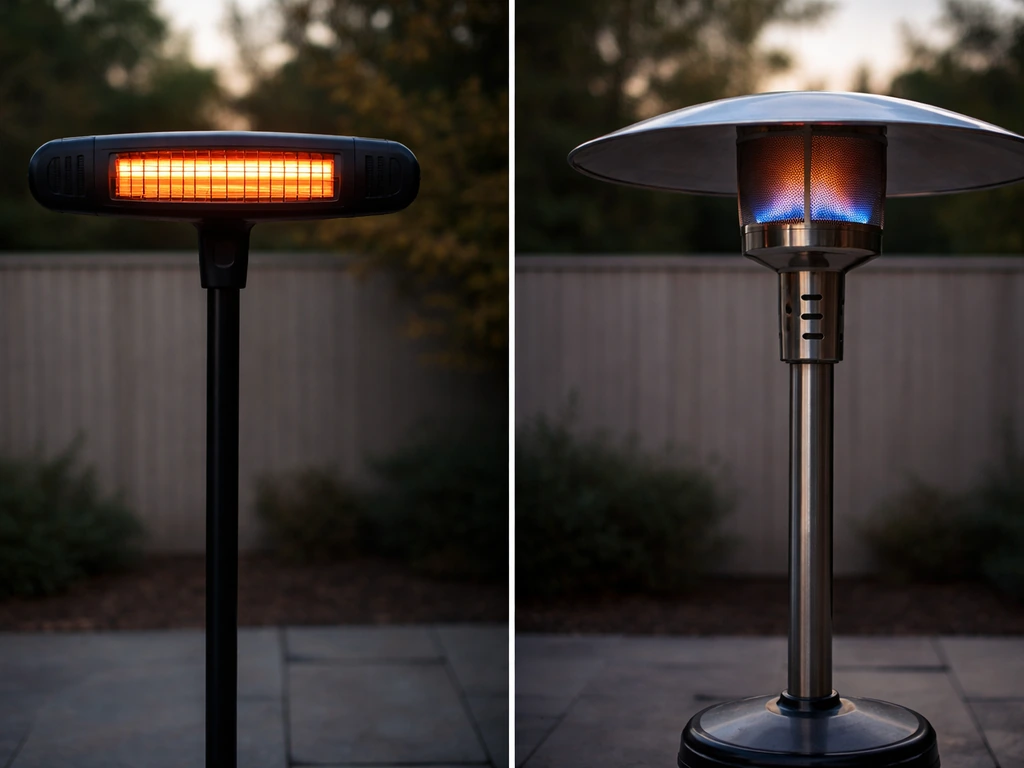
How infrared and gas patio heaters actually work
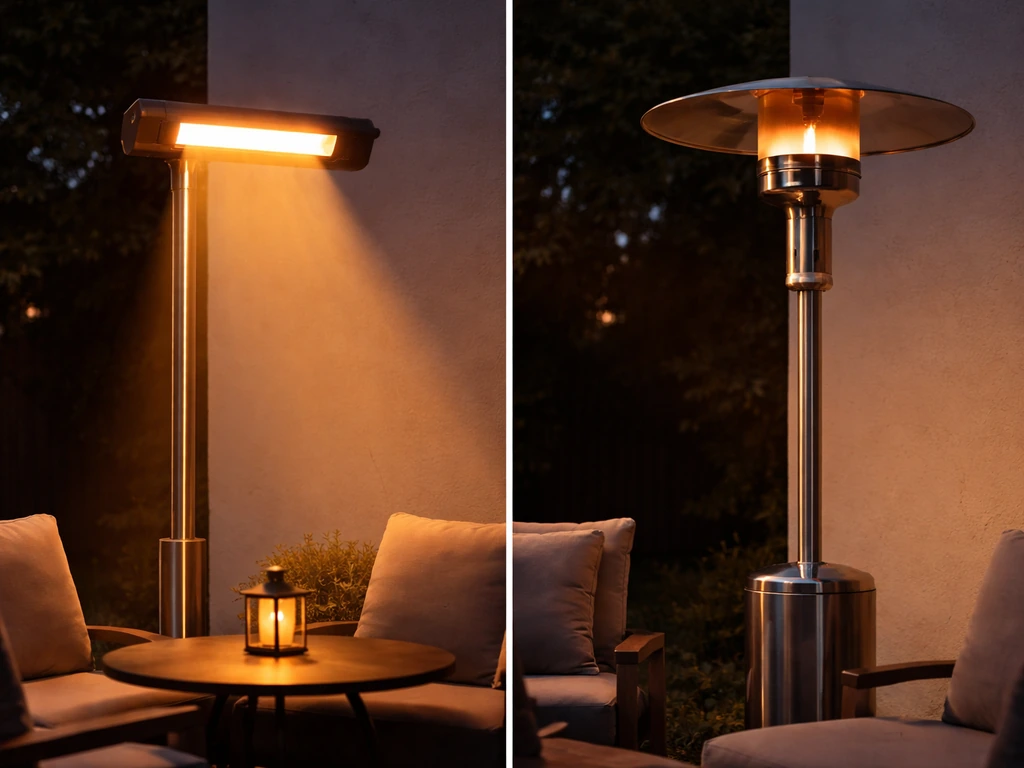
Every outdoor heater warms people and objects through radiant heat, convective heat, or a mix of both. Understanding that distinction is what makes the infrared vs gas comparison make sense.
Infrared heaters
Infrared heaters emit electromagnetic radiation in the infrared spectrum, which heats solid objects and people directly without warming the surrounding air first. Think of sunlight on a cold day: the air is cold, but the sun on your face feels warm. Electric infrared heaters use a resistive element (quartz tube, halogen lamp, or carbon fiber) to generate that radiation. Gas-fired infrared heaters burn propane or natural gas across a ceramic or metal mesh burner surface, which then glows and radiates infrared heat outward. Both are technically infrared, but the energy source changes everything about installation, running cost, and heat output.
Gas patio heaters (convective + radiant)
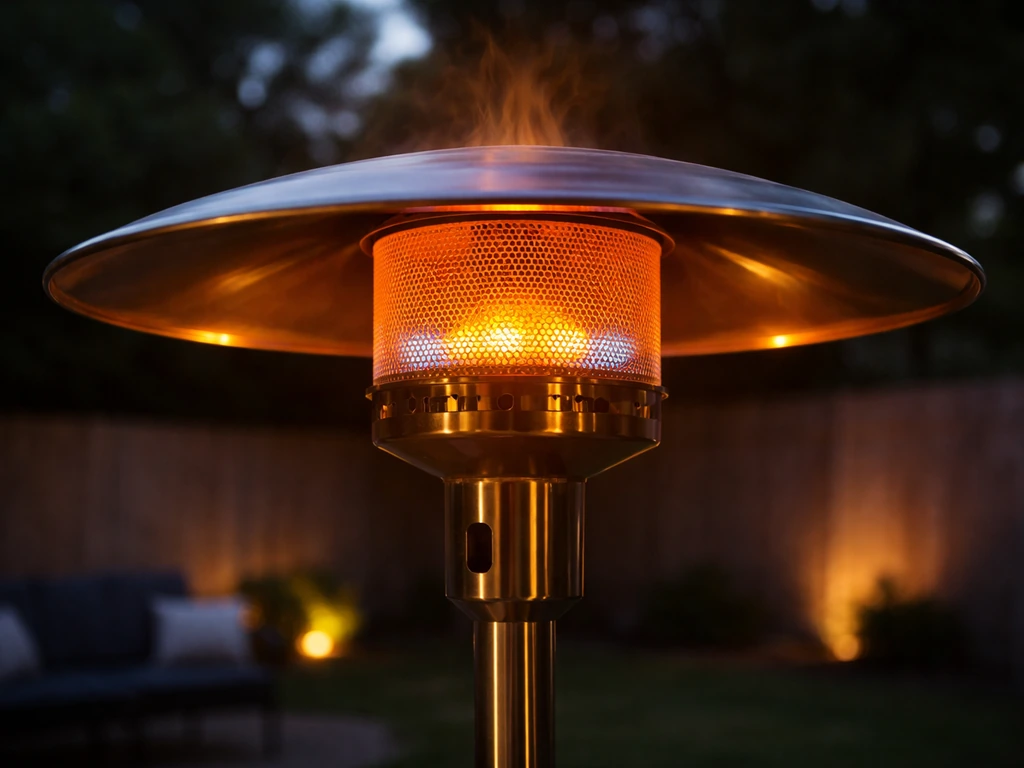
Standard mushroom-style or pyramid gas patio heaters burn propane or natural gas and release heat through a combination of radiant output from the burner and convective heat (warm rising air) from the combustion process. They output heat in all directions around the unit, typically from a central column with a reflective dome at the top. This makes them good at warming a broad area around a single point but less precise than a directional infrared panel.
One thing worth knowing: there is also a category called gas-fired infrared patio heaters, covered under ANSI Z83.26-2014/CSA 2.37-2014, which combines gas combustion with an infrared-emitting burner surface. These are common in commercial patios and restaurant outdoor dining areas. This classification aligns with CSA/ANSI Z83.26-2014 / CSA 2.37-2014 referenced in manufacturer user manuals for gas-fired outdoor infrared patio heaters. When people ask about infrared vs gas, they usually mean electric infrared panels vs propane/natural gas heaters, but it's worth knowing gas infrared exists as a separate category.
Heat performance in real patios: reach, speed, and wind
This is where the real-world differences show up most clearly. Lab specs tell part of the story, but how each heater type behaves outdoors is what actually matters.
Heat output and coverage
Gas patio heaters are measured in BTUs. A standard freestanding propane mushroom heater runs between 40,000 and 48,000 BTU/hr and can cover roughly 200 square feet in mild conditions. Larger commercial units push 50,000 BTU and above. Electric infrared heaters are rated in watts, with residential wall-mounted or ceiling-mounted units typically ranging from 1,500W to 6,000W. A 3,000W infrared heater produces roughly 10,200 BTU equivalent. That means most electric infrared units produce significantly less raw heat output than a standard gas heater, but because infrared heat is directional and warms objects rather than air, it can feel comparably warm to people sitting directly in its beam.
Startup speed
Electric infrared heaters win on startup. Quartz and halogen infrared elements reach full output in seconds, often under 2 seconds for short-wave models. Gas heaters take 30 to 60 seconds to fully warm up the burner and build consistent heat output. In practice, neither delay is a dealbreaker, but if you're stepping outside for a quick drink and want instant warmth, electric infrared is noticeably faster.
Wind performance
This is one of the biggest practical differences. Convective gas heaters lose a lot of efficiency in wind because warm air disperses immediately. A breezy open patio can cut the effective range of a mushroom-style gas heater dramatically. Infrared heaters are less affected by wind because they're warming objects and people directly, not the air. In a windy, semi-exposed patio, a well-positioned electric infrared panel often outperforms a similarly priced gas heater. That said, a high-BTU gas infrared burner mounted overhead in a covered outdoor area is very effective in wind too.
How many heaters do you need?
For open patios without overhead cover, one 40,000-BTU propane heater covers about 200 sq ft in mild weather (above 40°F/4°C). In colder climates or open wind exposure, plan for 150 sq ft per unit. For electric infrared, a 2,000W ceiling-mounted heater covers about 8 to 10 linear feet directly below it, so a 200 sq ft area typically needs two or three units spaced evenly. Ceiling height matters too: most electric infrared heaters are rated for mounting heights of 8 to 10 feet. Go higher and you lose effective warmth at the person level.
Running costs and total cost of ownership
This is where most people's assumptions get challenged. Gas feels cheap until you add up tank refills, and electricity feels expensive until you account for how efficiently infrared delivers heat. If you're deciding between pellet patio heaters and propane models, the fuel and output differences can change both cost and heat feel Gas feels cheap until you add up tank refills.
| Factor | Electric Infrared | Propane Gas | Natural Gas |
|---|---|---|---|
| Typical output | 1,500W–6,000W | 40,000–48,000 BTU/hr | 40,000–60,000 BTU/hr |
| Cost per hour (approx.) | $0.18–$0.72 (at $0.12/kWh) | $0.80–$1.40 (at ~$4/gal propane) | $0.50–$0.90 (at ~$1.50/therm) |
| Startup cost (heater) | $80–$600+ | $150–$400 | $300–$800+ (line install) |
| Installation cost | Low to moderate (electrician for hardwired) | Low (portable) or moderate (fixed) | High (gas line required) |
| Fuel/refill logistics | None (plugs in) | Tank swap every 8–12 hrs at full burn | Continuous (line supply) |
| Efficiency rating | Near 100% (no combustion loss) | ~85–90% combustion efficiency | ~85–90% combustion efficiency |
| Portability | Fixed mount (mostly) | High (tank models) | None (fixed line) |
Propane is convenient but adds up fast. A standard 20 lb propane tank holds roughly 420,000 BTU of energy. Running a 40,000 BTU heater burns through that tank in about 10 hours of continuous use, costing roughly $18 to $25 per fill depending on your location. If you're heating a restaurant patio four nights a week all season, you're spending real money on propane. Natural gas is cheaper per BTU but requires a dedicated gas line, which can cost $500 to $1,500 or more to run if you don't already have outdoor access. Electric infrared has no fuel logistics at all, though a hardwired 240V installation will need a licensed electrician.
Comfort, controls, and coverage planning
Directionality and heat feel
Electric infrared panels are highly directional. Mount one on a wall or ceiling, aim it at a seating area, and the people in that zone feel warm while everyone outside the beam doesn't. This is great for a small defined seating area but requires more planning for irregular or larger spaces. Gas heaters radiate in all directions from the burner column, which makes them better for flexible gatherings where people move around. If you want to warm a long dining table, two or three electric infrared heaters mounted overhead may do a better job than a single gas mushroom in the corner.
Controls and thermostats
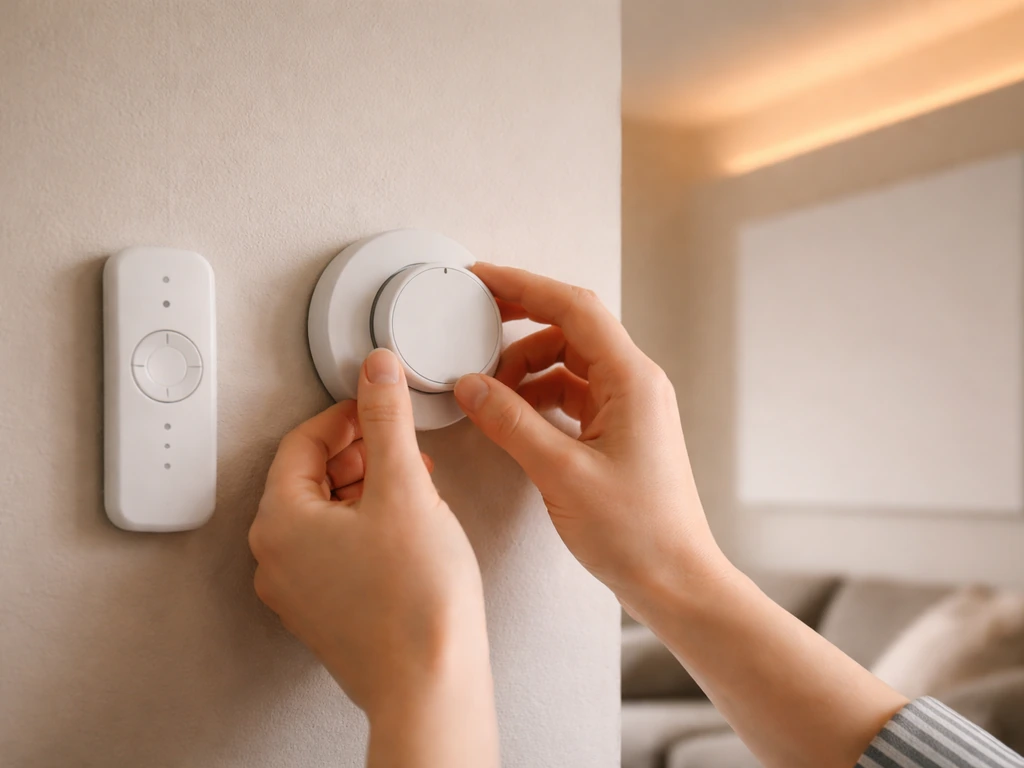
Electric infrared heaters often include remote controls, programmable timers, and dimmer-style heat adjustment. Some smart models work with app control or home automation systems. Gas heaters typically use a manual valve with a piezo igniter or push-button electronic ignition, with a high/medium/low setting at best. If you want precise, hands-off temperature management, electric infrared is the more sophisticated option. Gas is simpler and doesn't require any electrical infrastructure at all, which matters on a patio without outdoor outlets.
Portability
Freestanding propane heaters on wheeled bases are the most portable outdoor heaters you can get. Move them anywhere, store them indoors in winter, take them to different areas of your yard. Electric infrared panels are almost always fixed-mount, either hardwired or plugged into a dedicated outdoor outlet. If flexibility is important (you're renting, or your patio layout changes seasonally), propane gas heaters have a real advantage.
Safety and installation: what you need to know before you buy
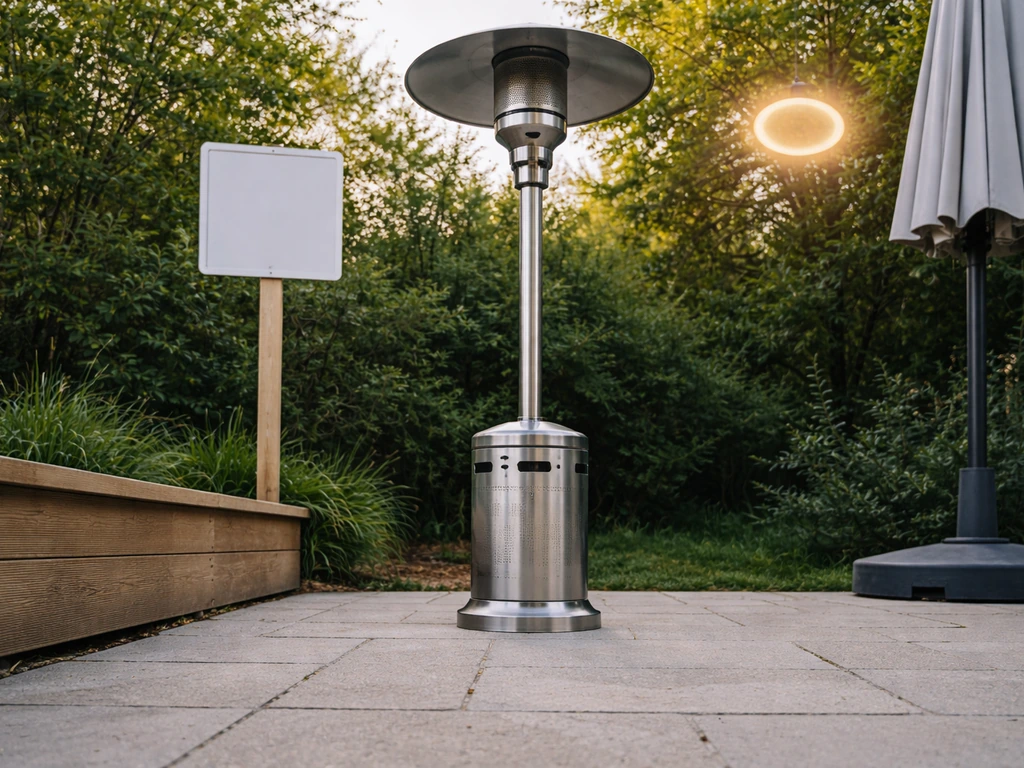
Safety requirements differ significantly between heater types, and getting this wrong creates real hazards.
Gas heater safety and clearances
Gas patio heaters require clearance from combustible materials. Freestanding propane mushroom heaters typically require 24 to 36 inches of clearance from structures, overhangs, and flammable materials overhead and to the sides. Gas-fired infrared models (which mount overhead in commercial pergola/patio structures) have specific clearance requirements listed in their installation manuals, and these must be followed precisely. The C-series and similar commercial gas infrared heaters spell out minimum clearance-to-combustibles distances that you cannot ignore on a covered wood deck or under a low pergola.
Gas heaters also present a carbon monoxide risk if used in enclosed or poorly ventilated spaces. They are rated for outdoor use only. Gas-fired patio heaters designed to ANSI Z83.26-2014/CSA 2.37-2014 standards for outdoor use include oxygen depletion sensor (ODS) shutoff systems that cut the burner when oxygen concentration drops below safe levels. ANSI Z83.26-2014/CSA 2.37-2014 also specifies that these gas-fired outdoor infrared patio heaters may use integral self-contained liquefied petroleum gas (propane) systems limited to a maximum one-cylinder system of 20 lb (9.1 kg) ANSI Z83.26-2014/CSA 2.37-2014 standards for outdoor use. This is an important safety feature, but it doesn't make gas heaters safe to use indoors or in enclosed patios. Always maintain adequate airflow.
Standard portable propane heaters under ANSI Z83.26 are limited to a single cylinder system with a maximum 20 lb (9.1 kg) propane tank. For larger natural gas or high-BTU commercial installs, a licensed gas technician should handle the connection and inspection. Never use a portable propane heater with a larger tank than the manufacturer specifies.
Electric infrared safety and weatherproofing
Electric infrared heaters have no combustion, so no CO risk. But they need proper weatherproofing for outdoor use. Look for an IP rating of at least IP44 (splash-proof) for covered patios and IP55 or higher for exposed installations. Hardwired 240V models should be installed by a licensed electrician with a dedicated outdoor circuit and GFCI protection. Plug-in 120V models are easier to set up but typically max out at 1,500W, which limits coverage. Never use an indoor infrared heater outside, even under a cover.
Pre-purchase checklist
- Check your patio ceiling height: most electric infrared panels are rated for 8–10 ft mounting height
- Confirm you have (or can add) outdoor GFCI outlets or a 240V circuit for electric infrared
- Check for an existing natural gas line or outdoor gas outlet if you want to avoid tank refills
- Measure clearances from overhead structures, walls, and combustible materials before selecting a gas model
- Verify the heater's IP weather rating matches your patio exposure level
- Check local codes: some municipalities require permits for hardwired heaters or gas line work
- For commercial or restaurant use, confirm the model meets ANSI Z83.26 or equivalent standards
Which one should you actually buy?
Here's the honest breakdown based on common patio scenarios.
| Your Situation | Best Pick | Why |
|---|---|---|
| Open patio, cold climate, no gas line | Propane gas heater | High BTU output, portable, no electrical work needed |
| Covered pergola or screened porch, mild to moderate cold | Electric infrared (ceiling/wall mount) | Directional, efficient, no fuel logistics, precise control |
| Restaurant/commercial patio with natural gas access | Gas-fired infrared (overhead mount) | Commercial-grade output, continuous fuel supply, built for heavy use |
| Rental property or patio layout changes seasonally | Propane freestanding heater | Max portability, no permanent installation |
| Small defined seating zone, sheltered patio | Electric infrared panel | Targeted warmth, low running cost, easy remote/timer control |
| Large open entertaining area, regularly windy | Multiple propane heaters or gas infrared overhead | Coverage area and BTU output needed for volume and wind exposure |
If you already have a natural gas line outside, a natural gas heater is almost always the best long-term value. The fuel is cheaper per BTU than propane, there's no tank to manage, and modern units are reliable and durable. If you're comparing propane vs natural gas specifically, the main trade-off is upfront cost of the gas line run versus long-term fuel savings.
For most homeowners without a gas line and with a covered or semi-covered patio, a hardwired electric infrared heater is the cleanest, most efficient, and most controllable option. The running cost per hour is typically lower than propane, there's no refill hassle, and you can set timers so you're not burning electricity when the patio is empty.
It's also worth considering what alternatives exist before you commit. Electric propane comparisons (such as electric vs propane patio heaters) and other fuel type matchups like pellet vs propane cover some of the same cost-vs-convenience ground if you're still narrowing down fuel types. And if you're weighing a heater against a fire pit or fire table, those have a very different coverage and ambiance profile that's worth understanding before buying. If you're torn between a fire pit and a heater, the decision usually comes down to heat direction, speed, and how much space you want to warm at once a heater against a fire pit or fire table.
How to choose a specific model
Once you've settled on heater type, match the output to your patio. For gas heaters, look at BTU output: 40,000 BTU for up to 200 sq ft in mild climates, 48,000+ BTU for larger areas or colder weather. For electric infrared, match wattage to coverage: plan for roughly 10 watts per square foot as a starting point, and check the manufacturer's listed mounting height and coverage radius. Compare the IP rating, warranty length, and whether the unit uses a quartz, halogen, or carbon fiber element (carbon fiber and halogen elements tend to last longer than standard quartz). Use the detailed model reviews and ratings on this site to cross-reference real-world performance reports against spec sheet claims before making a final call.
FAQ
How do I choose how many infrared panels or gas units I need for my patio shape (not a rectangle)?
Measure the actual distance from the heater to where people sit, then check the manufacturer’s coverage claims for that mounting height. With infrared panels, being off-angle quickly reduces perceived warmth, so for long tables you usually need multiple units evenly spaced rather than one heater aimed at a corner.
What’s the biggest reason a gas patio heater feels weak even though it has high BTUs? (Wind, placement, or something else?)
If your patio has partial enclosure or tall winds funneling across it, a gas mushroom can lose a lot of effective range even if the BTU rating is high. In that situation, either choose infrared, or position the gas heater under overhead structure and aim for direct line of sight to the seating zone.
Is a gas patio heater safe to use under a covered pergola or partially enclosed patio if it has an ODS shutoff?
Never assume ODS shutoff means it is safe to use under a roof that could trap combustion byproducts. ODS is for outdoor-rated installations, it will shut down when oxygen levels drop, but you should still treat gas heaters as strictly outdoor with airflow and follow clearance-to-combustibles requirements.
How can I compare operating cost when infrared is directional and gas is not?
Use a simple apples-to-apples comparison based on total output and delivery. Gas is omnidirectional and you pay for air heating, infrared is directional and you pay for beam heating, so the “cheaper” option depends on how much of your seating area sits inside the infrared coverage zone.
What installation details matter most for electric infrared heaters (ceiling vs wall, hardwired vs plug-in, and IP rating)?
For electric infrared, prioritize units with outdoor-appropriate IP rating and verify the mounting type, hardwired vs plug-in, and the required circuit. A ceiling-mounted unit typically performs better for evening gatherings because it warms the seating area directly, but wall mounts can work if you angle them precisely.
If I see “gas infrared” for patio heat, how is that different from the electric infrared panels this article describes?
Gas infrared and electric infrared are different classes. Gas infrared relies on a burner surface and still needs outdoor mounting, clearances, and combustion safety practices, while electric infrared removes combustion but introduces electrical requirements and weatherproofing.
Can I rely on plug-in infrared heaters instead of hardwired models to heat a typical 200 sq ft patio?
Yes, but only if the power source supports it. Plug-in 120V models often cap at 1,500W, so they may not cover the area the specs imply. If you need broader coverage, look for 240V hardwired units or plan multiple smaller panels.
Do carbon fiber or halogen infrared elements truly last longer, and how should I factor warranty into my decision?
Carbon fiber and halogen elements can offer longer service life in common homeowner use, but the real-world difference is often how often you run the heater at high output and how it’s protected from weather. Check the warranty term and whether the element is user-replaceable, because warranties vary more than element type.
What should I do if I need heater portability for different seating spots during the same evening?
If you have to move the heater often, gas wins because most infrared models are fixed-mount and require either hardwiring or a dedicated outdoor outlet. A compromise is using a small infrared zone heater for one seating spot, then relocating a separate mobile heater for other areas.
How close can I place a heater to furniture, railings, or walls without compromising safety or comfort?
A practical rule is to aim the beam so it covers the primary “occupied footprint” and to keep combustible materials within clearance for any gas unit. If the seating area is close to a railing, wall, or overhang, gas heater clearance requirements can force a less ideal placement and reduce usability.
What are common “gotchas” when setting up fuel supply (propane vs natural gas) or electrical power for these heaters?
For gas, confirm whether you need a regulator and what the unit is rated for (propane cylinder vs natural gas line). For electric, confirm you have a GFCI-protected outdoor circuit if hardwired, and do not rely on indoor-rated extensions, since the risk is higher outdoors.
Next Articles
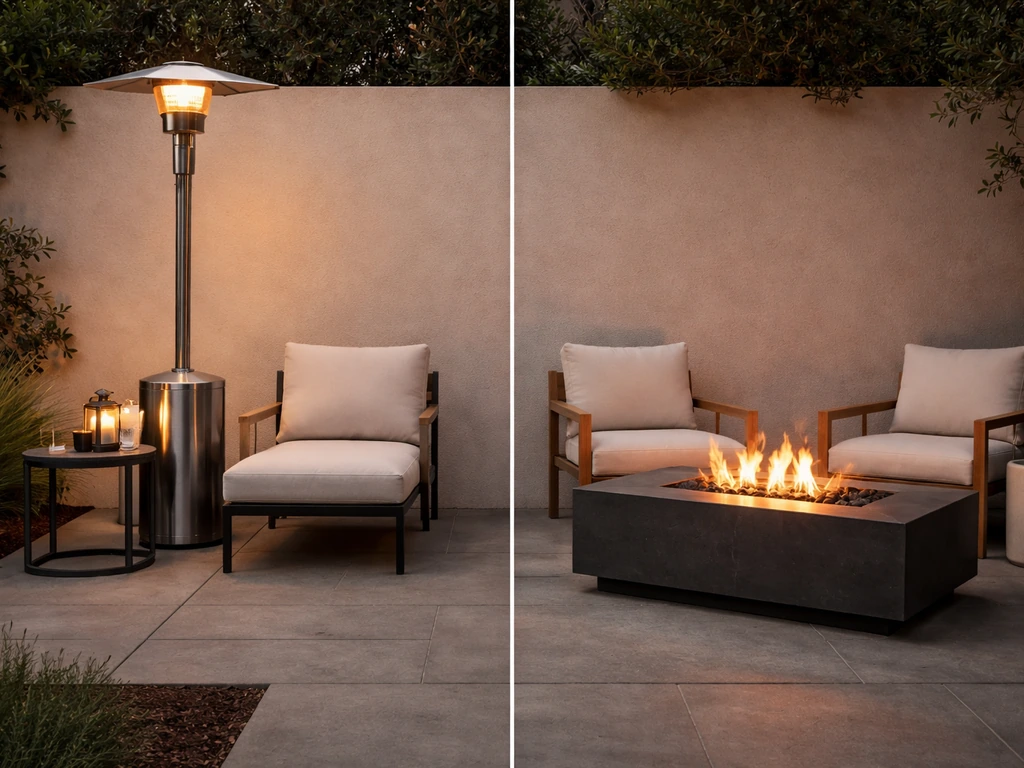
Patio Heater vs Fire Table: Which Outdoor Heat Fits?
Compare patio heaters vs fire tables by coverage, fuel options, costs, setup, safety, and which to pick for your patio.
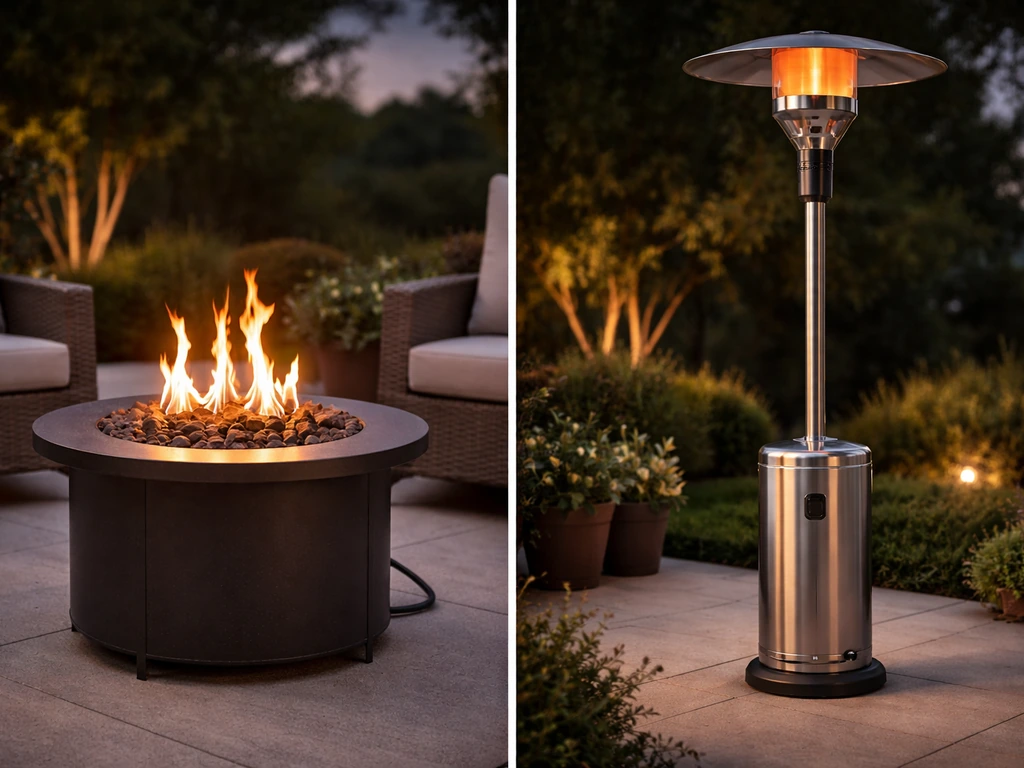
Fire Pit vs Patio Heater: Which Is Better for Your Patio?
Fire pit vs patio heater comparison, including propane models, heat coverage, costs, safety, and which fits your patio b
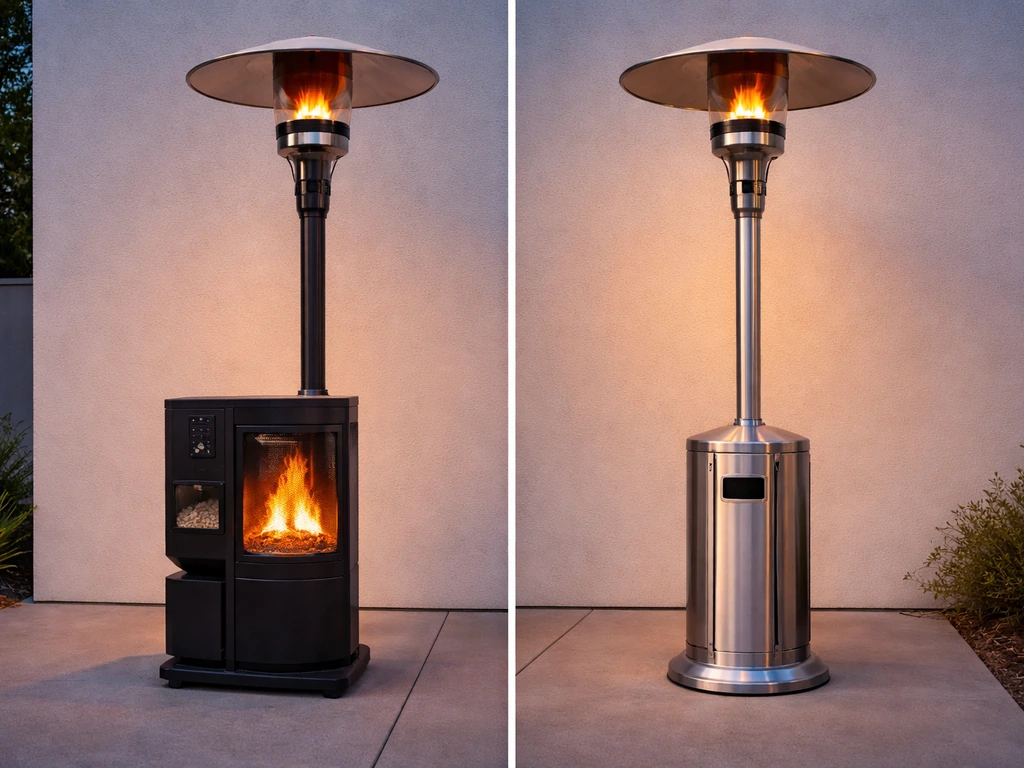
Pellet Patio Heater vs Propane: Wood Pellet vs Propane Guide
Compare pellet vs propane patio heaters: heat, runtime costs, setup, safety, maintenance, and a clear buying checklist.