
If you need to heat a wider seating area and want consistent warmth wherever people are sitting, a patio heater wins. If you want a centerpiece that creates ambiance and warms people gathered close around a table, a fire table is the better call. The honest answer is that these two products solve slightly different problems, and the right pick depends on your patio size, seating layout, climate, and how much fuss you want to deal with on a cold evening.
Patio Heater vs Fire Table: Which Outdoor Heat Fits?

Caleb Vale
17 Jun 2026
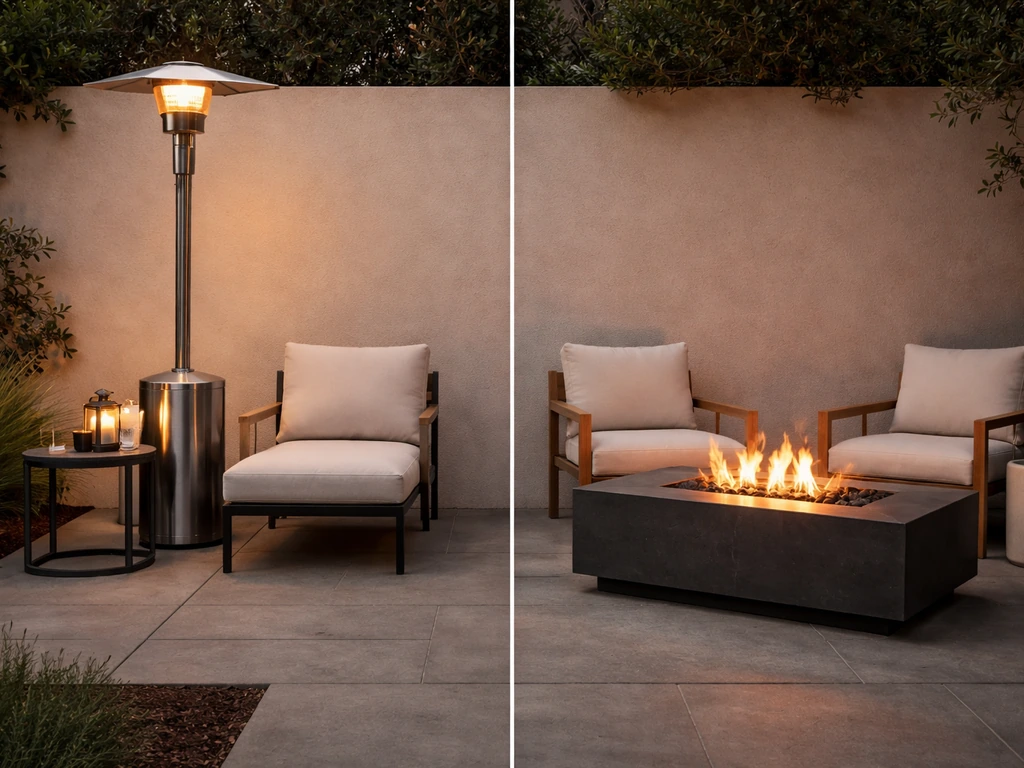
What each one actually is and how it works
A patio heater is a dedicated radiant heating appliance designed to project heat outward from a single point. Most use a burner or heating element at the top of a tall column (mushroom style), on a wall mount, or in a tabletop unit. The heat radiates downward and outward, warming people and surfaces directly. blank" rel="noopener noreferrer">Infrared-electric versions convert electrical energy into infrared radiation that heats objects rather than air, so wind disrupts them less than you might expect. Gas-fired versions (propane or natural gas) burn fuel to generate radiant heat. The core job of a patio heater is thermal output, nothing more.
A fire table is a piece of outdoor furniture, usually a coffee table or dining table height, with a burner cavity built into the center. Most residential models run on propane or natural gas. There are also bioethanol fire tables (EcoSmart Fire's bioethanol burners, for example, put out between 15,000 BTU/hr and 20,433 BTU/hr depending on the burner model). A gas fire pit table like the Real Flame Blake outputs 50,000 BTU. The flame is the visual centerpiece, and the heat radiates sideways from the table surface toward people seated around it. It is partly a furniture piece and partly a heating appliance, which is what makes the comparison interesting.
Heat coverage: spot warming vs. full patio warmth
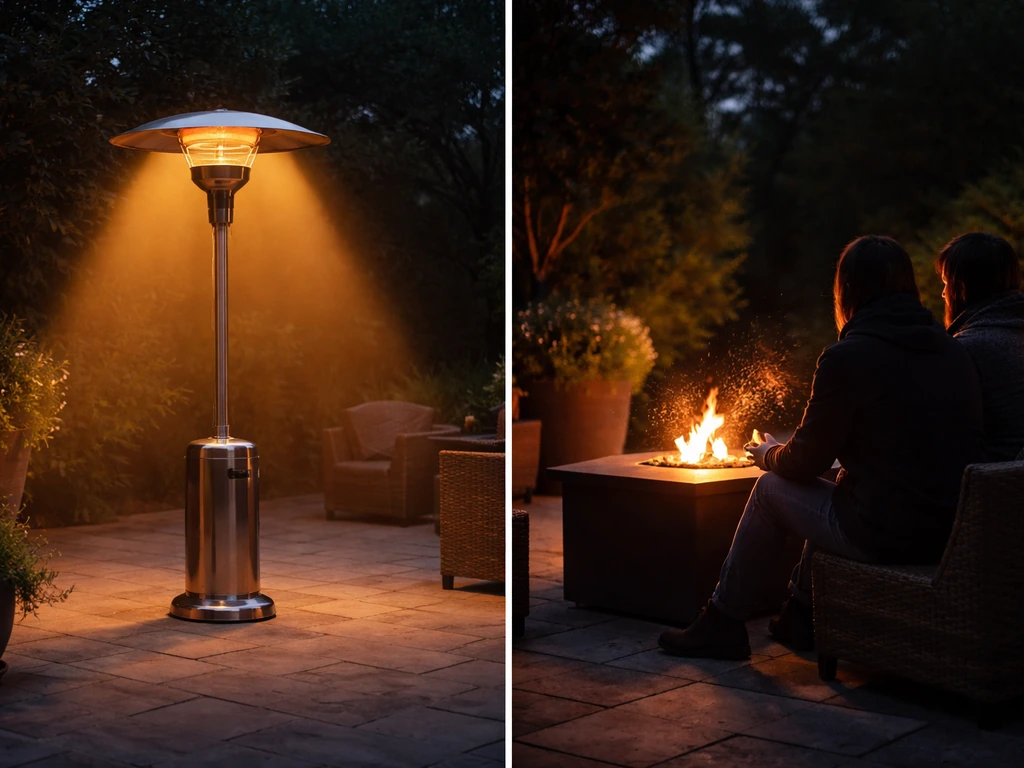
This is where the two products diverge most sharply. A patio heater throws heat in a cone or umbrella pattern from an elevated point. A 40,000 BTU propane mushroom heater can warm an area of roughly 150 to 200 square feet reasonably well when there is no wind. Pellet-fueled patio heaters push even harder: several models on the market list 70,000 to 75,000 BTU output with coverage claims of 120 to 150 square feet. Electric infrared units are more focused, delivering intense spot warmth in a narrower zone, which is great for two chairs but less effective across a large open patio.
A fire table heats people seated immediately around it, typically within 3 to 5 feet of the flame. Its output at the 50,000 BTU range sounds impressive, but because the flame is low and horizontal rather than elevated and radiating downward, the effective warmth zone is smaller than a patio heater at the same BTU rating. Think of it as the difference between a ceiling light and a table lamp: both emit light, but the coverage pattern is completely different.
| Feature | Patio Heater | Fire Table |
|---|---|---|
| Typical BTU range | 30,000–75,000 BTU | 15,000–50,000 BTU |
| Effective coverage | 150–200 sq ft (gas/pellet) | ~10–20 sq ft around table |
| Heat direction | Radiant downward/outward from height | Radiant sideways from table surface |
| Wind sensitivity | Moderate–high (gas); low (infrared) | High (open flame) |
| Best for | Heating entire seating zones | Warming people seated at the table |
Fuel and setup options across both categories
Both product types cover a range of fuel options, and your patio setup will largely determine which fuel is practical for you.
Patio heater fuel types
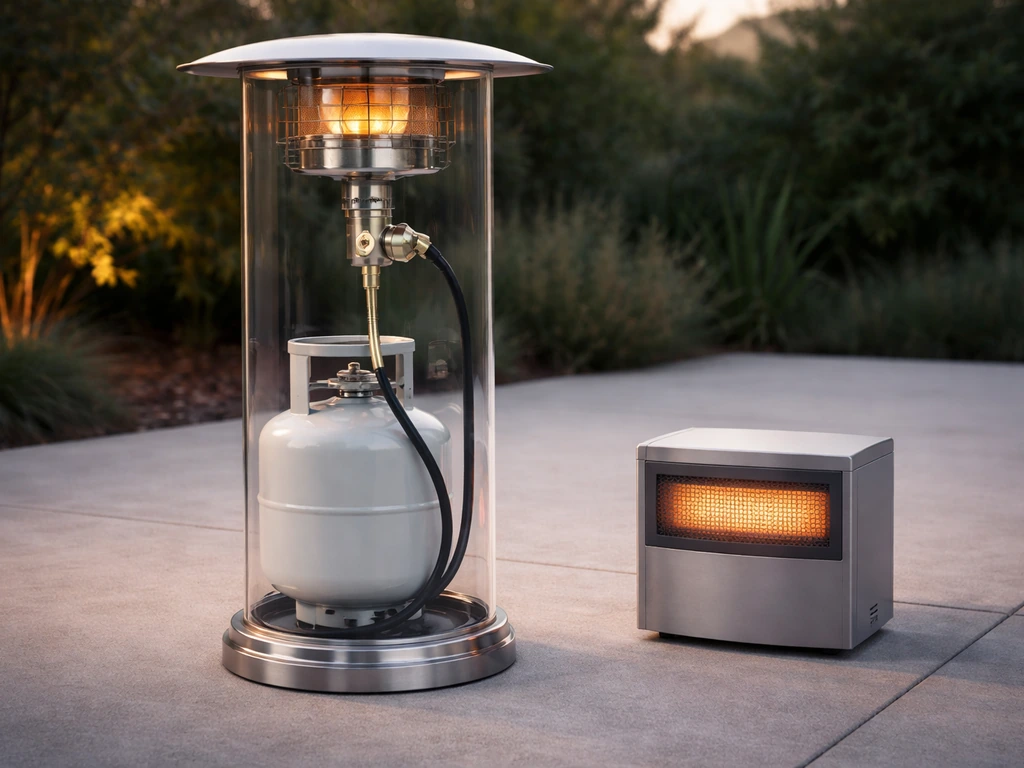
- Propane: Most portable patio heaters use a 20 lb tank. No installation needed, but you will refill every 8 to 10 hours of use at full output. Running a 40,000 BTU heater costs roughly $1.70 per hour in propane, based on typical refill pricing.
- Natural gas: Requires a dedicated gas line run to your patio. Higher upfront cost, but fuel is cheaper and you never run out mid-session. Best for permanent setups.
- Electric (infrared): Plug into a standard 120V or 240V outlet depending on wattage. Cost depends on your electricity rate—at $0.16/kWh a 1,500W unit runs about $0.24/hour. No combustion, no emissions, very low maintenance.
- Pellet: High-BTU output (70,000–75,000 BTU on several models) with a lower per-BTU fuel cost than propane. Requires more maintenance (ash cleanup) and a pellet supply on hand.
- Infrared gas: Combines gas fuel with infrared emitter technology for very efficient directional heat. Covered by ANSI Z83.26/CSA 2.37 safety standards specifically designed for this category.
Fire table fuel types
- Propane: Most common in portable fire tables. Easy to connect, no installation. Tank is usually hidden inside the table base.
- Natural gas: Requires a gas line but eliminates tank swaps. Ideal for a permanent outdoor dining setup.
- Bioethanol: Clean-burning, no gas line needed, no ash. EcoSmart Fire's bioethanol models are UL 1370 and EN 16647 certified. Output is lower (15,000–20,433 BTU/hr) so it is more decorative than functional heat.
- Wood/charcoal fire pit tables: These exist but are a different category. More smoke, more cleanup, and generally not the right choice if actual warmth is the goal.
Cost comparison: what you pay upfront and every time you use it
Entry-level propane patio heaters start around $80 to $150. Mid-range freestanding gas heaters run $200 to $400. Quality infrared electric models land between $150 and $500. Pellet patio heaters typically cost $300 to $600. Fire tables are a different investment: a basic propane fire table starts around $300 to $500, but anything with quality construction and a decent BTU rating (40,000–50,000 BTU) runs $600 to $1,500 or more. High-end bioethanol fire tables from brands like EcoSmart Fire can exceed $2,000 to $3,000.
On operating costs, propane is the most common comparison point. A 40,000 BTU patio heater burns roughly $1.70 per hour in propane. A 50,000 BTU fire table burns proportionally more. If you run either for three hours on a weekend evening, that is $5 to $6 in propane for the patio heater and slightly more for the higher-output fire table. Natural gas cuts ongoing costs significantly. Electric infrared is cheapest to run per hour at lower wattages, but lower-wattage units also produce less heat. Pellet heaters offer the best cost-per-BTU of the combustion options, but pellet supply and ash management add friction.
| Option | Upfront Cost (typical) | Operating Cost (approx.) | Installation Needed? |
|---|---|---|---|
| Propane patio heater | $80–$400 | ~$1.70/hr (40,000 BTU) | No |
| Natural gas patio heater | $200–$500 | Lower than propane | Yes (gas line) |
| Electric infrared heater | $150–$500 | ~$0.24/hr (1,500W at $0.16/kWh) | Usually no (120V plug) |
| Pellet patio heater | $300–$600 | Low cost per BTU | No (but needs pellet supply) |
| Propane fire table | $300–$1,500+ | Slightly more than propane heater | No (tank connects inside) |
| Natural gas fire table | $500–$2,000+ | Lower ongoing cost | Yes (gas line) |
| Bioethanol fire table | $800–$3,000+ | Higher per BTU than propane | No |
Safety, clearances, and compliance: what you actually need to check
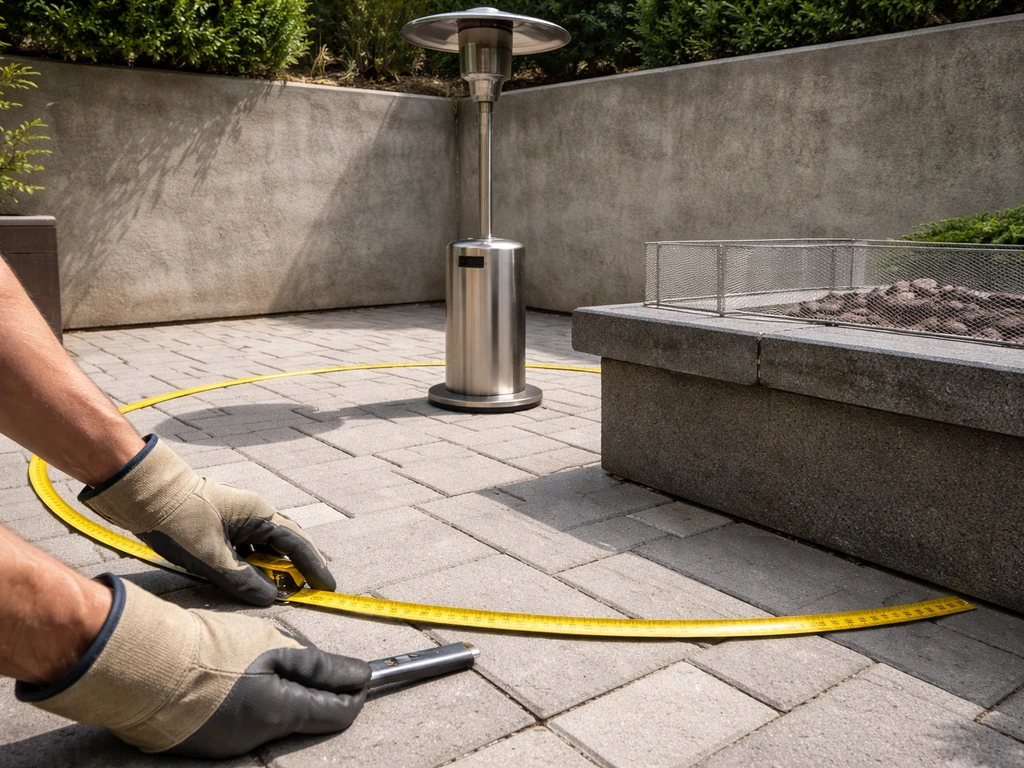
Both patio heaters and fire tables involve combustion or high-heat surfaces, so safety checks are non-negotiable before you buy or install either one.
For gas patio heaters, the baseline rule is a minimum 5-foot clearance from any combustible structure, overhang, or awning. City of Madison fire safety guidance is explicit about this, and it mirrors what you will find in most local codes. Your unit should be UL Listed (or equivalent certified) and used strictly per manufacturer instructions. NFPA 1 (Fire Code) covers outdoor heater safety broadly, and NFPA 58 governs LP-gas storage and handling for propane setups. If you are running natural gas, NFPA 54 (National Fuel Gas Code) applies to the piping installation.
For electric patio heaters, the main risk is heat proximity to combustibles and weatherproofing. Check the IP rating (IP44 minimum for outdoor use, IP55 or higher for rain exposure). Infrared gas heaters follow ANSI Z83.26/CSA 2.37 standards and many include an oxygen-depletion safety shutoff.
Fire tables have the same clearance rules as heaters for the gas or flame component, plus the added consideration that the open flame is low and lateral, which can be closer to tablecloth materials, cushions, or overhanging plants than you think. Delaware's administrative code is a good example of state-level requirements: patio heaters and similar gas appliances must be used outdoors only, must be listed, and require ample fresh air ventilation per manufacturer instructions to prevent carbon monoxide accumulation. This applies equally to fire tables used under covered pergolas or gazebos. If your patio is enclosed or partially enclosed, the ventilation requirement becomes critical for any combustion appliance.
- Always use UL Listed or equivalent certified equipment for both heaters and fire tables
- Maintain at least 5 feet of clearance from buildings, overhangs, and combustibles
- Never use gas-fired heaters or fire tables in enclosed or semi-enclosed spaces without confirmed adequate ventilation
- For propane, store tanks upright and outdoors; follow NFPA 58 storage rules
- For natural gas installations, hire a licensed plumber or gas technician for the line run
- Check local fire codes before buying: some municipalities restrict open-flame fire tables in certain zones
- Bioethanol fire tables should be UL 1370 certified; confirm this on the product spec sheet before purchasing
How to choose based on your patio, climate, and how you actually use it
Patio size is the single most decisive factor. If your seating area is larger than 150 square feet, a fire table alone will not cut it for genuine warmth. You need a patio heater (or multiple heaters) to push heat across that space. A fire table can supplement warmth at the dining table, but it is not a substitute for overhead or perimeter heating in a large outdoor room.
Climate matters a lot too. In mild climates where temperatures dip to 45 to 55 degrees Fahrenheit on cool evenings, a fire table provides enough warmth for people seated directly around it and handles the ambiance role perfectly. In climates where you are dealing with 30 to 40 degree evenings regularly, you want a dedicated patio heater with serious BTU output, ideally 40,000 BTU or higher. Pellet patio heaters at 70,000 to 75,000 BTU are worth considering for genuinely cold climates. Wind is a factor for open-flame appliances: both propane heaters and fire tables perform worse in wind, while infrared electric heaters handle wind best because they heat objects, not air.
Usage frequency matters for the maintenance equation. If you entertain every weekend from March through November, the no-fuss operation of an electric infrared heater or a natural gas patio heater makes more sense than wrestling with propane tanks or hauling pellets. If you use your patio a handful of times per season and want it to feel special, a fire table with a propane hookup is a perfectly reasonable choice.
Choose a patio heater if:
- Your patio is larger than 100–150 square feet and you need heat distributed across the whole space
- You live in a climate with temperature drops below 40°F in your outdoor season
- You need consistent heating during windy evenings (especially true for infrared electric models)
- You want maximum heating efficiency and lower operating costs over time (natural gas or electric)
- You have a covered or screened patio and need an electric or properly ventilated option
- You want a clean-looking solution that does not take up table space
Choose a fire table if:
- You want a furniture piece that doubles as a heat source for intimate gatherings around a table
- Your outdoor season is mild (temps mostly above 45°F) and ambiance matters as much as warmth
- You want to replace an existing outdoor coffee or dining table and want built-in flame
- You are willing to accept a smaller effective heat zone in exchange for better aesthetics
- You have the budget for a quality unit ($600+ for a genuinely warm output) and plan to use it regularly
What to look for when you are actually shopping
For patio heaters, BTU output is the headline spec but efficiency and heat distribution pattern matter more in practice. A 40,000 BTU mushroom heater with a good reflector dome heats more usable area than a 50,000 BTU unit with a poor design. Look for a thermostat or variable output control (not just on/off), a tip-over auto-shutoff, and a weatherproof rating if it will stay outside year-round. For gas models, confirm the fuel type matches what you have available and check the hose/regulator length. For electric infrared, confirm the mounting type and angle adjustability.
For fire tables, the BTU rating, burner quality, and cover/lid situation matter most. A cover lets you convert the fire table into a regular table when the burner is not in use, which significantly increases its day-to-day usefulness. Confirm whether the unit includes a wind guard or glass fire screen. Check what certification the burner carries: for bioethanol units, UL 1370 is the standard to look for. For gas fire tables, look for a CSA or UL Listed mark. Table dimensions matter practically: a fire table that is too large dominates a small patio, and one that is too small feels underwhelming at a large dining setup.
- BTU output: 40,000+ for a patio heater doing real heating work; 40,000–50,000 for a fire table that genuinely warms
- Safety certifications: UL Listed, CSA certified, or ANSI Z83.26 compliant depending on heater type; UL 1370 for bioethanol fire tables
- Controls: variable output, thermostat, timer (patio heaters); ignition type and flame-height control (fire tables)
- Auto-shutoff: tip-over shutoff on portable heaters is a must; flame-out safety valve on gas fire tables
- Wind performance: check user reviews specifically for wind resistance; open-flame products in exposed patios need a wind guard
- Fuel availability: do not buy a natural gas product without confirming a gas line is accessible or installable
- Red flag: BTU claims without coverage area specs, missing certification marks, or no mention of safety shutoff features
Real-world recommendations and a decision checklist
After working through dozens of patio heating setups, here is how I would frame the most common scenarios. If you have a small urban patio (under 100 square feet) with a bistro table setup and you want something elegant that doubles as a centerpiece, a 40,000 to 50,000 BTU propane fire table is a genuinely good call. You will get real warmth for two to four people seated around it, and it looks great.
If you have a medium patio (150 to 300 square feet) with a seating arrangement spread across the space, a freestanding gas or infrared patio heater positioned centrally will outperform a fire table for actual heating. For a more reliable compare-and-choose decision, it helps to weigh infrared vs gas patio heaters against your space and wind exposure.
If you have a large patio or deck (300+ square feet), plan on multiple heaters or a combination: a fire table at the dining end plus one or two wall-mount or umbrella heaters for the lounge seating.
The combination approach is underrated. A fire table gives you the visual warmth and gathering point, while a separate patio heater handles the ambient temperature for the whole space. The two products are not actually competitors in that scenario; they are complementary. If budget is tight and you have to pick one, and heating performance is the priority, the patio heater wins every time on BTU-per-dollar and coverage area.
If you are comparing propane versus electric patio heaters specifically, or looking at infrared versus gas models in more detail, those comparisons involve some meaningfully different trade-offs around installation, running costs, and performance in cold weather that go beyond what fits here. For a direct comparison, review electric patio heater vs propane trade-offs like setup needs, running costs, and how each performs on cold, windy nights. The same is true for pellet patio heaters, which sit in their own performance category at the high end of BTU output.
Decision checklist before you buy

- Measure your patio: note the total square footage and the specific seating zones you need to heat
- Check your coldest typical outdoor use temperature: below 40°F means you need a high-BTU dedicated heater
- Confirm fuel availability: is a gas line accessible? Do you have a 240V outlet for a high-wattage electric heater?
- Check local fire codes and HOA rules for open-flame appliances and clearance requirements
- Identify your covered or uncovered status: covered patios need electric or well-ventilated gas options with confirmed clearances
- Decide on primary job: ambient heat across the whole patio (heater) or focal warmth plus ambiance at a table (fire table)
- Set a realistic budget including installation if applicable: natural gas line runs typically cost $300 to $700 professionally installed
- Look for UL Listed or CSA certified products only; skip anything without visible certification documentation
- Read user reviews specifically for wind performance and actual warmth (not just BTU spec claims)
- If choosing a fire table, confirm it includes a cover/lid so it functions as real furniture when the burner is off
FAQ
Can I use a fire table or patio heater under a covered pergola or gazebo?
Yes, but only if the space is truly open and ventilated. Both patio heaters and fire tables can produce carbon monoxide, especially under a roofed pergola or any enclosure. If there is a ceiling or walls that limit airflow, you may need additional clearance from the structure and you should follow the manufacturer’s ventilation language for that specific model.
What’s the best placement if I want both ambiance and real warmth?
Put them in different zones. For best results, place a fire table at the dining “anchor” so everyone within roughly 3 to 5 feet gets the direct warmth, then add a patio heater for the rest of the seating area. If your heater is behind the group, people often feel cool even with high BTU because the heat does not reach them.
Is it worth paying for adjustable controls on a patio heater or fire table?
A thermostat or variable-output control matters because it prevents overheating on milder evenings and reduces fuel waste. On a lot of units, the difference between full output and a lower setting can be substantial for weekend use, and you will usually feel more consistent comfort than running a fire table at full flame all evening.
How badly does wind affect a fire table vs a patio heater?
Do a quick “wind reality check” before buying. If your patio is exposed, low open flames (fire tables) and even elevated gas heaters can feel weak because gusts move heat away from people. In wind-heavy areas, infrared electric heaters often deliver more reliable spot comfort since they warm objects instead of relying on heating air that gets blown around.
What should I check for electric infrared patio heaters beyond BTU or watts?
For electric patio heaters, look for an outdoor-safe IP rating and confirm the unit is designed to be installed in the mounting location you plan to use (tabletop, wall mount, or freestanding). Many performance issues people report come from using an indoor-rated or improperly positioned unit, not from the BTU or wattage itself.
Which fuel choice is usually least annoying for weekend entertaining?
If the main issue is propane tanks and refill hassle, a natural gas hookup or electric setup often wins for frequent entertaining. Pellet heaters can reduce cost per BTU on paper, but they introduce daily chores like pellet sourcing and ash management, which can outweigh the savings if you only use the patio occasionally.
Can a higher-BTU patio heater still feel less warm than a lower-BTU one?
Yes, but do not assume the BTU number alone will make it “feel as warm.” Coverage depends on the heat pattern, burner height, and shielding, so a higher BTU unit can underperform if the design is inefficient or poorly aimed. A better reflector dome on a patio heater or the presence of a wind guard and proper burner enclosure on a fire table often affects comfort more than raw BTU.
What are common gas setup mistakes when choosing between propane and natural gas?
For gas-burning models, verify the exact fuel type (propane versus natural gas), then confirm you have the correct regulator or conversion path if you change fuel later. For hose-connected setups, also check hose/regulator length and routing so the appliance sits where you want without stressing connections or blocking required clearances.
When is a fire table not enough on its own, even with a high BTU rating?
Yes, but only within reasonable limits. Fire tables look like full-size pieces, yet they heat mainly people near the center, so on larger patios they can feel like “decoration” rather than heating. A common compromise is using the fire table for the dining cluster and adding one or two heaters aimed toward the lounge seating.
What small features make the biggest day-to-day difference for a fire table?
Start by checking whether the fire table includes a lid or cover that lets you use it as a regular table, since that is a major quality-of-life difference. Also confirm there is a wind guard or glass fire screen if it is advertised, and check table height so it comfortably matches your seating and does not push people too far outside the effective warmth zone.
Next Articles
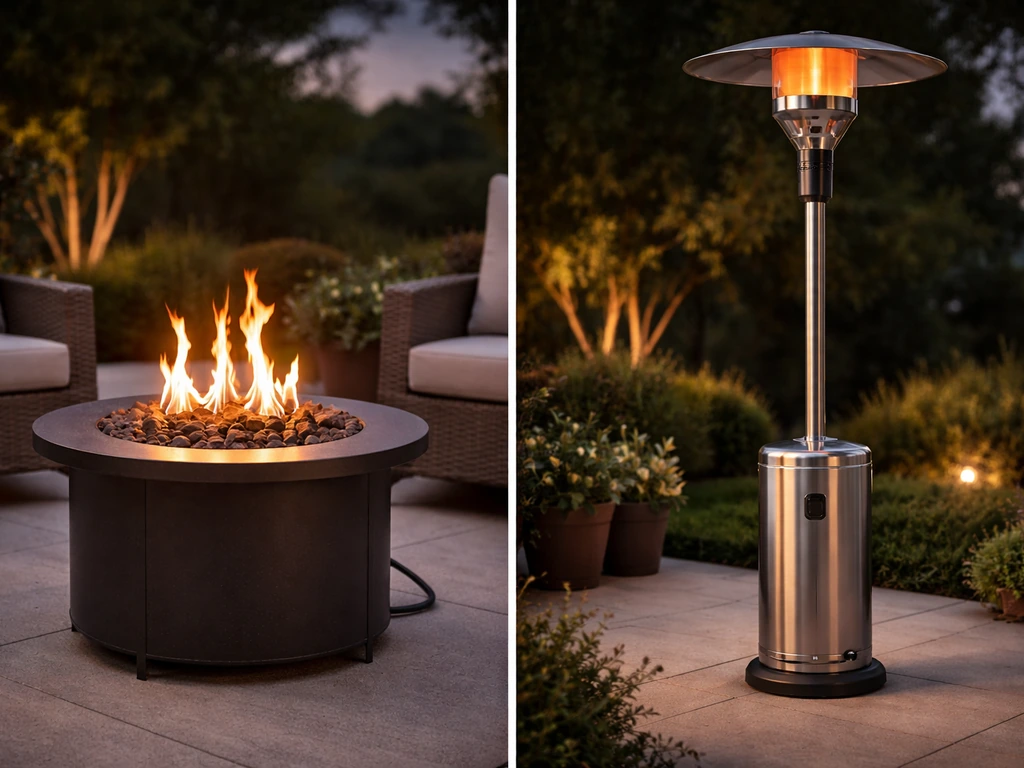
Fire Pit vs Patio Heater: Which Is Better for Your Patio?
Fire pit vs patio heater comparison, including propane models, heat coverage, costs, safety, and which fits your patio b
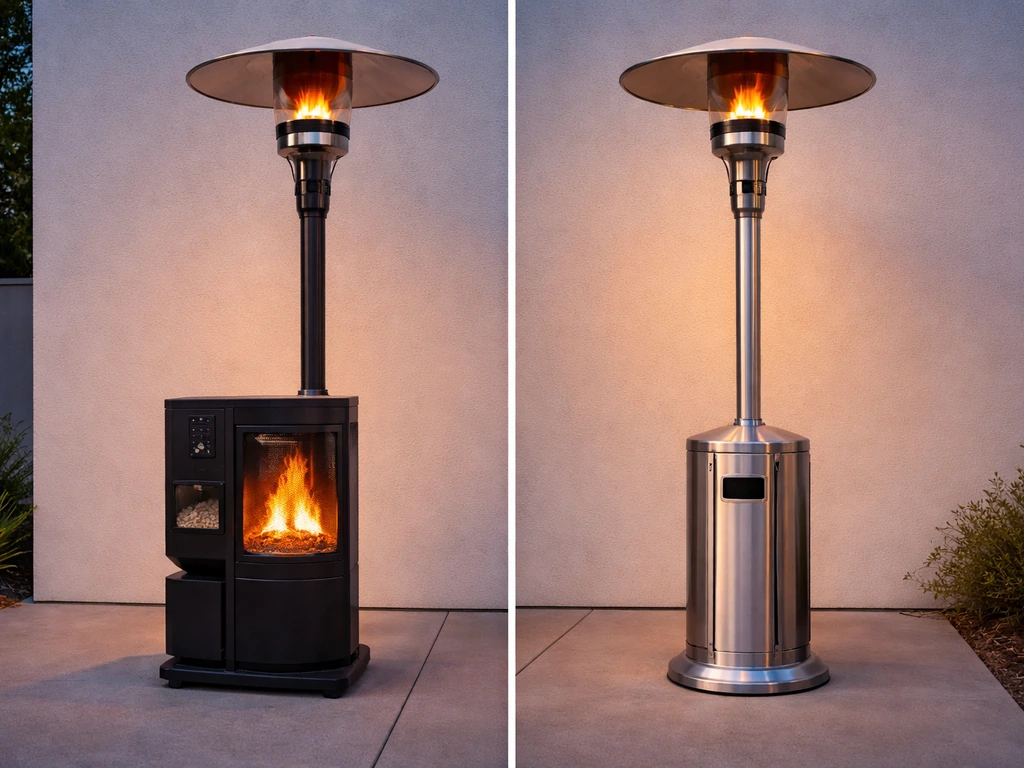
Pellet Patio Heater vs Propane: Wood Pellet vs Propane Guide
Compare pellet vs propane patio heaters: heat, runtime costs, setup, safety, maintenance, and a clear buying checklist.
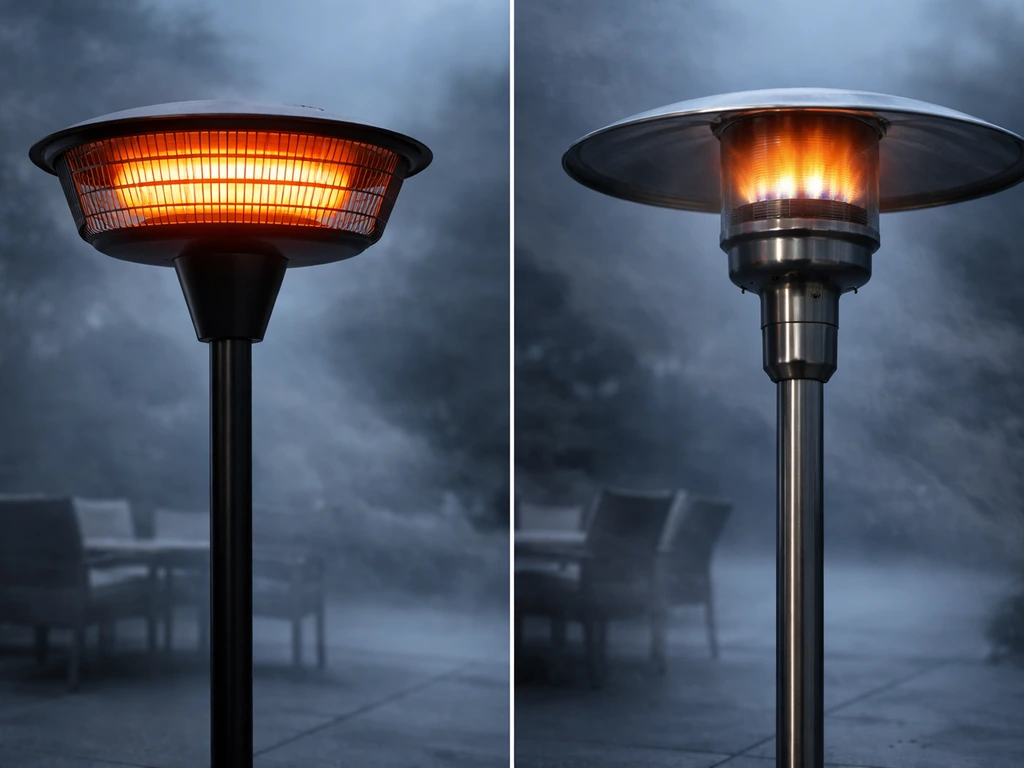
Electric Patio Heater vs Propane: Costs, Heat, and Safety
Electric vs propane patio heaters compared for heat reach, runtime costs, safety, and buying tips for windy cold patios.