
Patio heaters range from about $30 for a small tabletop electric unit to $2,000+ for a built-in natural gas model with professional installation. The most popular freestanding propane mushroom heaters land between $150 and $400. Electric infrared wall-mount and hanging models run $100 to $600. Natural gas hardwired units cost $300 to $900 for the heater alone, plus $200 to $800 or more for gas line work. Pellet-fueled outdoor heaters are a niche category that typically starts around $500. If you are curious about famous brands like Eddie Middleton, you can also look up Eddie Middleton patio heaters net worth to understand how successful these products can be. Beyond the sticker price, operating costs vary a lot: a standard 40,000 BTU propane heater costs roughly $1.50 to $2.50 per hour to run, while an electric infrared heater draws about $0.15 to $0.45 per hour depending on your local rate and wattage.
How Much Are Patio Heaters? Costs to Buy and Run

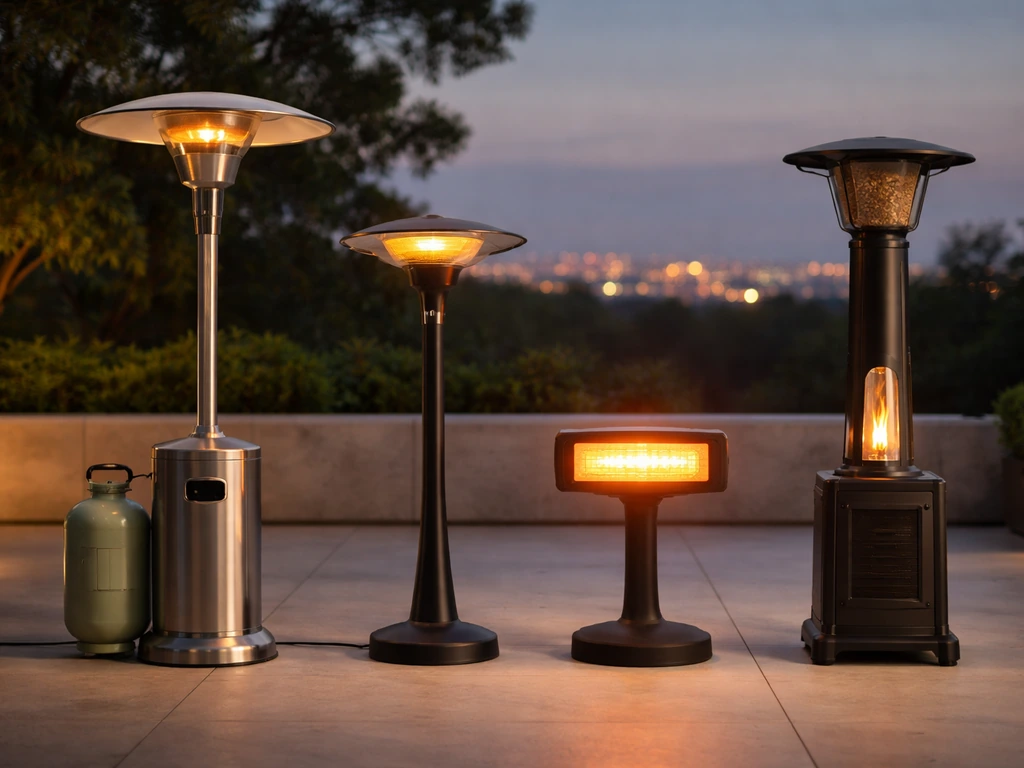
Purchase price by heater type
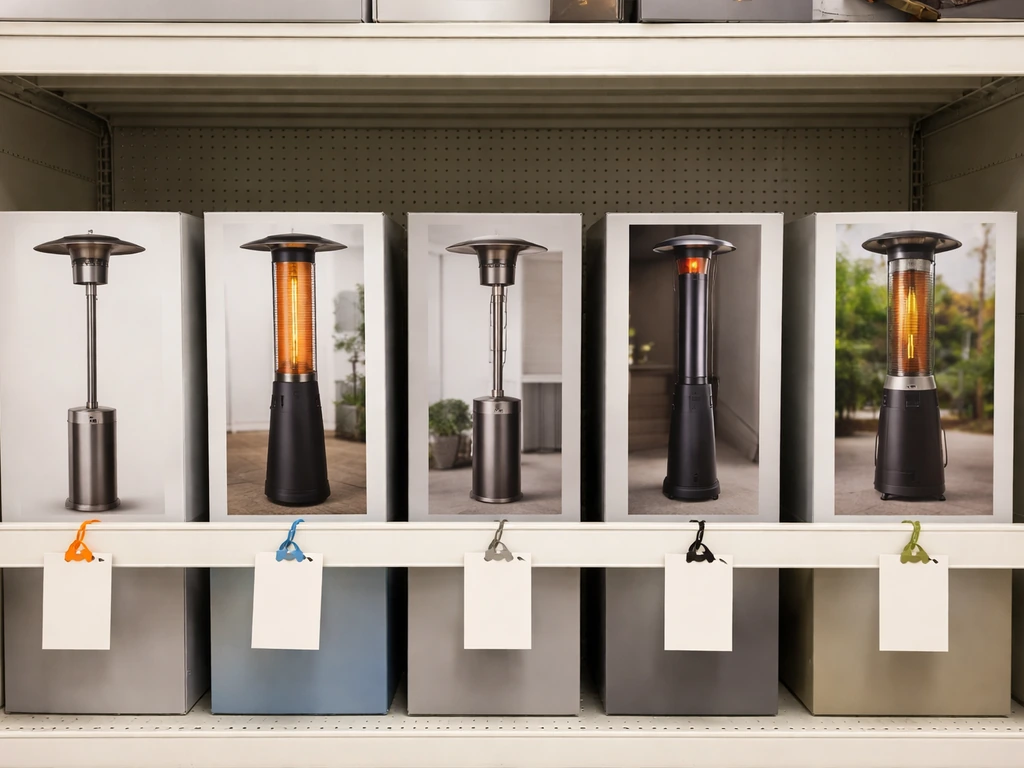
Before you can estimate your total cost, you need a realistic sense of what each category actually costs on a shelf today. Here is a breakdown by fuel type with typical price tiers as of mid-2026.
Propane patio heaters
Propane heaters are the most popular category and have the widest price spread. A basic tabletop propane unit runs $30 to $80. Mid-range freestanding mushroom or glass-tube heaters like the Hiland 40,000 BTU models sell for $150 to $350. Commercial-grade or pyramid flame units with stainless steel construction push into the $300 to $600 range. You will also need a 20 lb propane tank (around $15 to $30 to fill) and a regulator/hose if not included, which adds $15 to $40 on the first purchase.
Electric patio heaters
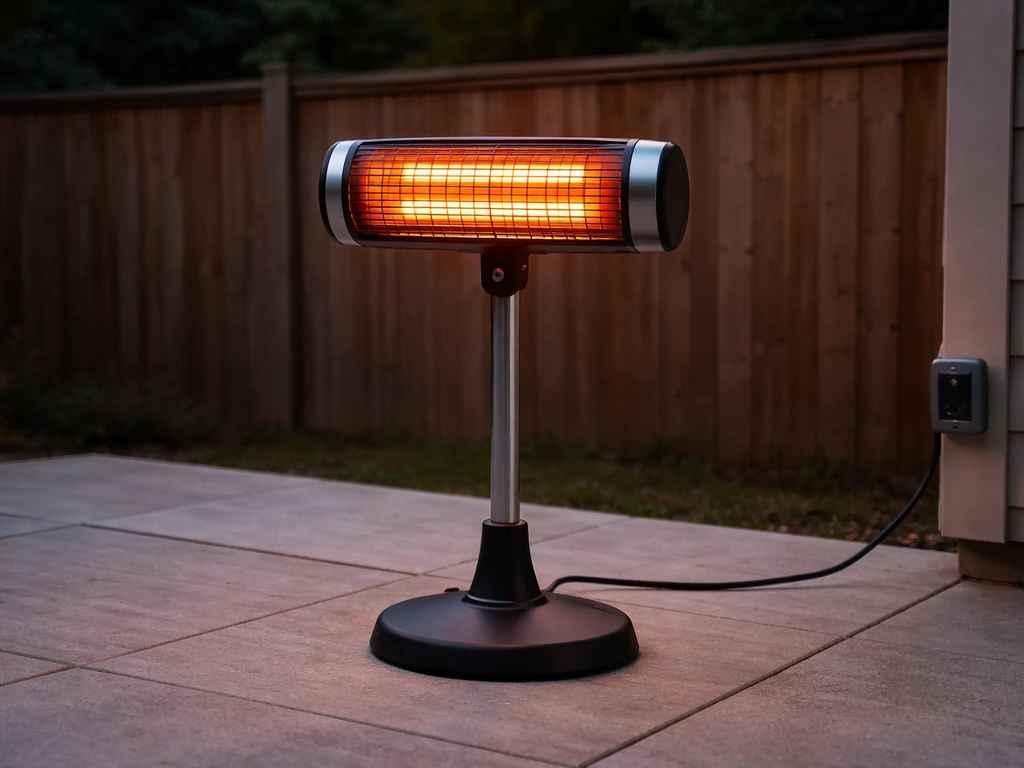
Electric models span the biggest quality range. Basic plug-in infrared units start at $30 to $80. Mid-range wall-mount or ceiling-mount infrared heaters, which are the most practical for covered patios and pergolas, cost $100 to $350. High-output commercial-style electric heaters with 4,000 to 6,000 watts of output run $300 to $600. Premium hardwired models with built-in thermostats and weatherproof housings can reach $800 to $1,200.
Natural gas patio heaters
Natural gas heaters eliminate the refill hassle but require a permanent gas line connection. The heater unit itself costs $300 to $900. Budget $200 to $800 additional for a licensed plumber or gas technician to run or extend a gas line, depending on distance from your existing supply. If a line is already close by, connection hardware alone might cost $50 to $150. These are best for permanent patio setups where you want to run heat for several hours daily without thinking about fuel.
Infrared patio heaters
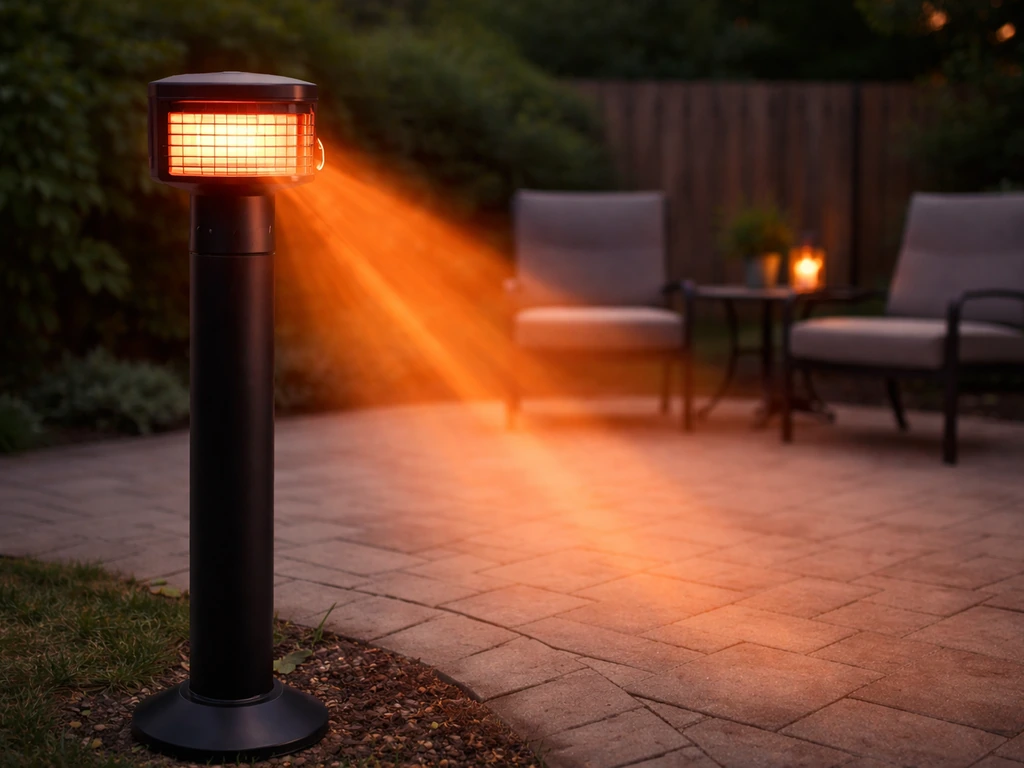
Infrared is a heating technology rather than a fuel type, so infrared heaters can run on electricity, propane, or natural gas. That said, when people say 'infrared patio heater' they usually mean the electric quartz or carbon fiber tube wall-mount style. These run $80 to $400 for residential use, with the sweet spot for a quality 1,500 to 3,000 watt unit sitting at $120 to $250. Infrared heats objects and people directly rather than warming air, which makes it noticeably more efficient on open or breezy patios.
Pellet patio heaters
Pellet outdoor heaters are still a niche product and harder to find at mainstream retailers. Entry-level models start around $500, with most quality units landing between $600 and $1,200. Fuel cost is generally low: wood pellets run $5 to $10 for a 40 lb bag, and a pellet heater might burn 1 to 2 lbs per hour. The trade-off is more maintenance (cleaning out ash) and longer startup time compared to the instant-on convenience of propane or electric.
| Heater Type | Typical Unit Price Range | Extra First-Time Costs |
|---|---|---|
| Propane (freestanding) | $150 – $600 | $15–$70 (tank, hose, regulator) |
| Electric (wall/ceiling mount) | $100 – $800 | $0–$150 (hardwiring if needed) |
| Natural Gas | $300 – $900 | $200–$800 (gas line installation) |
| Electric Infrared | $80 – $400 | $0–$100 (mounting hardware) |
| Pellet | $500 – $1,200 | $15–$30 (first bag of pellets) |
What it actually costs to run each type
The purchase price is just the beginning. Operating costs are where the real differences show up between heater types, especially if you plan to use your heater more than a few hours a week. If you want to know whether patio heaters are expensive to run, the easiest way is to compare your cost per hour by fuel type and multiply by your typical usage time are patio heaters expensive to run.
Propane running cost
A standard 40,000 BTU/h propane patio heater burns approximately 1 lb of propane per hour at full output. A 20 lb tank holds 20 hours of runtime at full blast. At current propane prices of roughly $3.50 to $5.00 per gallon (which works out to about $0.43 per lb), that is roughly $0.43 per hour at the low end. But most people pay retail exchange rates at hardware stores, which translates to about $20 to $25 for a 20 lb tank fill, pushing the cost to $1.00 to $1.25 per hour. If you frequently crank the heater to full output on a cold night, budget $1.50 to $2.50 per hour all-in.
Electric and infrared running cost
Electric heaters are the easiest to calculate. Multiply wattage by your local electricity rate (the US average is around $0.16 to $0.18 per kWh in 2026, but rates vary from $0.11 in the South to $0.35+ in California and Hawaii). A 1,500W heater costs about $0.24 to $0.27 per hour at the national average rate. A 3,000W unit costs $0.48 to $0.54 per hour. A high-output 6,000W commercial electric heater costs $0.96 to $1.08 per hour. Electric infrared models using 1,500 to 2,000 watts sit at roughly $0.15 to $0.40 per hour for most US homeowners.
Natural gas running cost
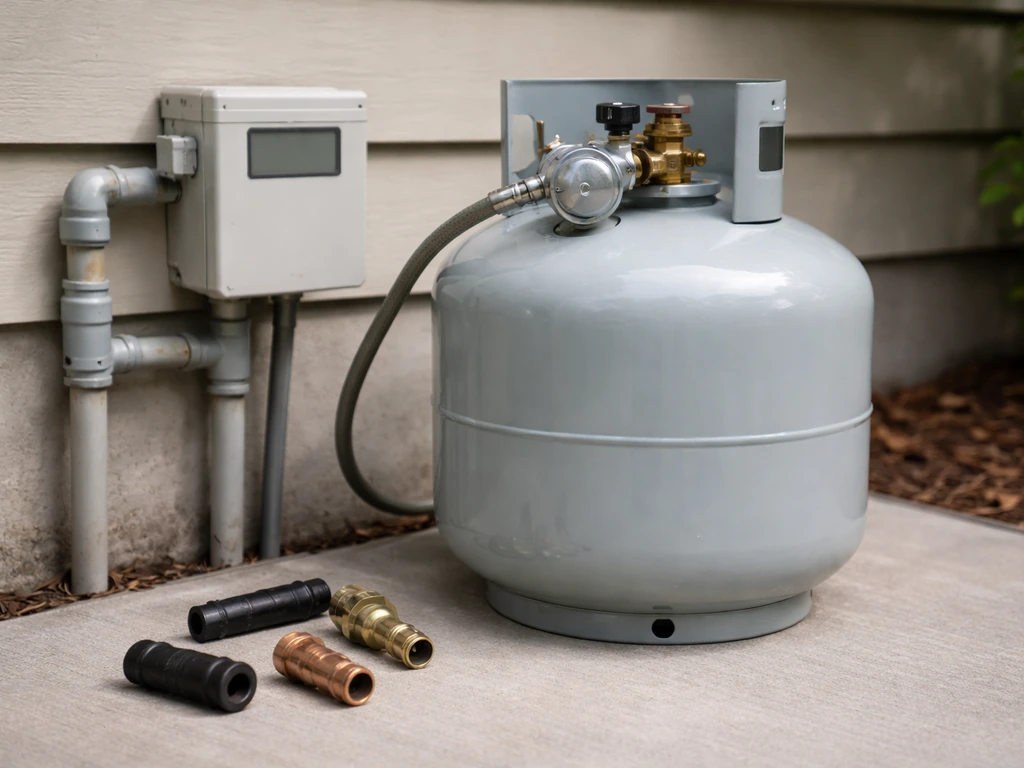
Natural gas is generally the cheapest fuel per BTU right now. A 40,000 BTU/h natural gas heater consumes about 0.4 therms per hour (100,000 BTU = 1 therm). At the 2026 US average of roughly $1.20 to $1.50 per therm, you are spending about $0.48 to $0.60 per hour at full output. That is significantly cheaper than propane and makes natural gas the best long-term value for anyone who runs their heater 3+ hours daily during the cooler months.
Pellet running cost
Wood pellets typically cost $0.25 to $0.35 per lb, and most pellet patio heaters burn 1 to 2 lbs per hour. That puts operating cost at $0.25 to $0.70 per hour, depending on output setting. It is a reasonable middle ground cost-wise but adds the friction of buying, storing, and loading pellets, plus the ash cleanup after each session.
| Heater Type | Typical Output | Estimated Cost Per Hour | Notes |
|---|---|---|---|
| Propane (40,000 BTU) | 40,000 BTU/h | $1.00 – $2.50 | Varies with retail vs. bulk propane price |
| Electric Infrared (1,500W) | 5,100 BTU equivalent | $0.15 – $0.35 | Depends on local electricity rate |
| Electric High-Output (6,000W) | 20,500 BTU equivalent | $0.90 – $1.10 | Best for large covered patios |
| Natural Gas (40,000 BTU) | 40,000 BTU/h | $0.48 – $0.60 | Cheapest per BTU long-term |
| Pellet (medium output) | ~20,000 BTU/h | $0.25 – $0.70 | Burn rate depends on heat setting |
Estimating your actual monthly cost
To get a real number you can budget around, you need three inputs: your heater's output (BTUs or watts), how many hours per day you run it, and your local fuel or electricity rate. Here is a simple formula: monthly cost = (cost per hour) x (hours per day) x (days per month you use it).
For example: a 40,000 BTU propane heater at $1.50 per hour, used 3 hours per evening, 12 evenings per month (3 nights per week): $1.50 x 3 x 12 = $54 per month in propane. The same usage pattern on a natural gas heater at $0.55 per hour: $0.55 x 3 x 12 = $19.80 per month. For an electric 2,000W infrared unit at $0.30 per hour: $0.30 x 3 x 12 = $10.80 per month.
Patio size matters because it determines how hard the heater works. A 40,000 BTU propane heater comfortably heats a 15 to 20 ft diameter area (roughly 175 to 300 sq ft) in mild weather. In colder climates or on windy patios, that coverage shrinks noticeably. If your patio is larger than 300 sq ft, you will likely run the heater at or near full output, hitting the higher end of the cost-per-hour estimates. Related to output: how hot your patio heater actually gets and how much heat it puts out are worth researching separately if you are unsure whether a single unit is enough for your space. Most patio heaters get hot at the heater head or burner, but the exact temperature depends on whether it's propane, natural gas, or electric infrared how hot does a patio heater get.
Climate is the other big variable. In Southern California or Texas, you might only need a heater from November through February, maybe 4 months of the year. In the Pacific Northwest or New England, you could be running it from September through April. Multiply your monthly estimate by 4 to 7 months to get your seasonal cost, and you will quickly see why natural gas or hardwired electric wins on long-term economics even with higher upfront installation costs.
Installation and setup costs you should expect
Many buyers get surprised by costs that kick in after the purchase. Here is what to budget for, by heater type.
Propane: minimal setup, but accessories add up
A freestanding propane heater is plug-and-play in most cases: you buy the heater, attach the hose and regulator (often included), connect a 20 lb propane tank, and light it. If the regulator and hose are not included, add $20 to $40. A good weatherproof cover for off-season storage runs $20 to $50 and is worth every cent for longevity. If you want a dedicated propane supply line rather than swapping tanks, a plumber will charge $150 to $400 depending on distance and complexity.
Electric: free if you have an outlet, expensive if you do not
A plug-in electric heater costs nothing to install beyond mounting hardware if you have a standard 120V outdoor outlet nearby. But a high-output 240V infrared heater requires a dedicated circuit, and running that from your breaker panel to the patio can cost $200 to $600 depending on the distance and your electrician's rate. Wall-mount and ceiling-mount brackets for commercial electric heaters add another $20 to $80. Budget $50 for a stainless-steel weatherproof junction box and appropriate outdoor-rated conduit if the heater will be permanently mounted.
Natural gas: the most significant upfront installation cost
Natural gas heaters need a licensed professional to connect them to your home's gas supply. If a gas line already runs close to your patio (for an outdoor grill, for example), the hookup might cost $150 to $300. Running a new dedicated line from the meter or main supply adds $300 to $800, sometimes more in older homes. You will also need a proper shutoff valve ($20 to $50 in parts) and may need a permit depending on your municipality, which typically costs $50 to $150. Factor all of this in before assuming a natural gas heater is affordable: the break-even point versus propane is usually 2 to 3 heating seasons.
Pellet: minimal installation, modest accessories
Pellet heaters are mostly freestanding and require no utility connection. The main ongoing cost beyond pellets is cleaning supplies and replacement igniter components over time ($20 to $60 annually for regular users). Most units do not require installation in the traditional sense, though some need a small electrical connection for the auger motor and controls.
Output, efficiency, and what your money actually buys
Not all BTUs are equal in practice. A 40,000 BTU propane heater radiates heat in all directions from the top element, meaning a significant portion is lost to the sky on an open patio. To get a realistic sense of how much heat patio heaters give off for your space, look beyond the label and factor in coverage, wind, and whether the heater warms air or directly warms people and objects. Electric infrared heaters direct energy specifically toward people and objects in their beam, which is why a 1,500W infrared unit can feel as warm as a much higher BTU propane heater if you are sitting directly in its line of sight. On fully open patios with no overhead cover, propane mushroom heaters tend to perform better because they throw heat in a wide radius. Under a pergola or covered patio, wall-mount or ceiling-mount electric infrared heaters are more efficient because the reflected heat stays in the space.
Coverage area is a marketing number that varies a lot by conditions. A 40,000 BTU propane heater is commonly rated for a 15 to 20 ft diameter circle, but in a 30 mph wind that shrinks to almost nothing. Electric infrared heaters rated for 100 to 200 sq ft actually deliver that in calm, covered conditions. A good rule of thumb: buy for the conditions you realistically have, not the best-case scenario on the product page. For a 200 sq ft open patio in a cool climate, a single 40,000 BTU propane heater is adequate. For a 400 sq ft covered patio, consider two mid-range electric infrared units rather than one big propane heater, both for efficiency and even heat distribution.
Runtime matters especially for propane buyers. A 20 lb tank on a Hiland 40,000 BTU heater gives you roughly 20 hours of run time at full output. If you use it 3 hours per night, that is about 6 to 7 sessions per tank. At $20 to $25 per fill, that is $3 to $4 per session just for fuel, which is reasonable but adds up during peak season.
How to spend less without sacrificing comfort
There are several practical ways to cut your patio heating costs without downgrading the experience.
- Use a thermostat or timer. Many wall-mount electric heaters accept a plug-in smart plug or dedicated thermostat (add $20 to $80) that prevents you from leaving the heater running for hours after everyone has gone inside. This alone can cut electric bill impact by 20 to 40 percent.
- Zone your heating. Instead of one large heater trying to warm a whole patio, use two smaller directional infrared heaters aimed at where people actually sit. You heat people, not empty space.
- Buy a cover. A good weatherproof cover ($20 to $50 for propane units) extends the heater's life by 2 to 4 years, easily saving $100 to $300 in early replacement costs.
- Shop off-season. Patio heater prices drop 20 to 40 percent in spring (March to May) when retailers are clearing inventory. If you can wait, buy in spring for use in fall.
- Bundle accessories at purchase. Buying a cover, regulator, and hose as part of a bundle from the same retailer almost always saves $15 to $30 versus buying them separately.
- Use bulk propane instead of exchange tanks. If you have a large (100 lb) propane cylinder and a local supplier who does home delivery, you can cut propane cost by 30 to 50 percent versus tank exchange services at hardware stores.
- Add a patio enclosure or windbreak. Even a simple privacy screen or outdoor curtain can dramatically reduce heat loss on a breezy patio, letting you run the heater at a lower setting or shorter duration.
Safety and compliance factors that affect your total cost
Cutting corners on safety with patio heaters can cost you far more than a few dollars in accessories or professional installation fees. Here is what actually matters from a cost and liability standpoint.
Certification and where you can legally use heaters
Only use heaters that are CSA-certified or listed by UL or ETL for outdoor use. Non-certified heaters bought from unverified online sellers may fail to meet local building codes, void your homeowner's insurance in the event of a fire, and create genuine carbon monoxide risks if used in semi-enclosed spaces. If you are using a heater in a restaurant or commercial patio, check with your local fire marshal: many jurisdictions require permitted installation and annual inspection, which costs $50 to $200 per year but is non-negotiable.
Ventilation requirements
Propane and natural gas heaters produce combustion byproducts including carbon monoxide. They must never be used in fully enclosed spaces. Even a partially enclosed patio (three walls and a roof) can accumulate dangerous CO levels without adequate airflow. The practical rule: if your patio enclosure is more than 50 percent covered by solid walls and a ceiling, you should either switch to an electric infrared heater or ensure there is always significant open ventilation. Hardwired natural gas heaters in covered commercial patios typically require a ventilation plan as part of the permit process, which could add $200 to $500 in contractor time if not planned for upfront.
Regulators and gas line pressure
Using the wrong regulator on a propane heater is a surprisingly common and potentially dangerous mistake. Most portable propane patio heaters are designed for low-pressure operation using a standard 20 lb tank with a POL or QCC1 fitting. Connecting a high-pressure line directly, or using a regulator not rated for the heater, can cause the heater to run dangerously hot or produce incomplete combustion. Always use the regulator specified by the manufacturer. Replacement or spare regulators cost $15 to $35 and are worth keeping on hand. For natural gas, confirm your supply pressure matches the heater's rating (usually 4 to 7 inches water column for residential NG) before lighting up, and have a licensed gas tech verify this during installation.
Clearance and placement requirements
Every patio heater has minimum clearance requirements from combustible materials, typically 24 to 36 inches on the sides and 36 to 60 inches overhead. Most patio heaters also differ in height, so check the product’s listed height and clearances before buying height of patio heaters. Ignoring these requirements creates fire risk and also voids any warranty claim. If your covered patio has a wood ceiling at 8 feet, a freestanding propane mushroom heater that stands 7.5 feet tall with a heat radius of 24 inches overhead is a tight fit and may not be appropriate. In these cases, a low-profile wall-mount or ceiling-mount electric infrared heater is the safer and code-compliant choice, and it is often cheaper to install and operate than trying to make a tall propane unit work in a low-clearance space.
FAQ
How much do patio heaters cost upfront if I just want a basic setup for the weekend?
For a quick-start plan, budget around $80 to $250 total for a small electric plug-in or a mid-range freestanding propane unit. For propane, include first-time accessories like a regulator or hose if they are not bundled (typically $20 to $40) and the first tank fill ($20 to $25). If you need 240V electric or a gas line, the price jumps mainly due to installation, not the heater itself.
What’s the cheapest patio heater to run per hour at full blast?
Natural gas usually wins on per-hour fuel cost, then pellet, then propane, with electric varying by wattage and your electricity rate. If you compare apples to apples, use BTU or watt output plus your local rates, because a low-watt electric unit can cost less than a high-BTU propane heater when both are used at the same output level.
Do patio heaters use more power than people expect if they run on low settings?
They can, depending on control style. Some propane heaters cycle on and off, while electric models may maintain output in steps, which affects how close you stay to the stated per-hour number. If your unit has multiple heat levels, estimate cost using the level you actually use most often, not the maximum rating.
How do I estimate cost for intermittent use, like turning the heater off between courses or conversations?
Use a duty-cycle approach. Instead of multiplying cost per hour by total hours present, multiply cost per hour by (hours heater is actually on). For example, if you plan to run it 3 hours total but only for 60 percent of that time, your fuel cost is about 0.6 times the full-on estimate.
Are electric patio heaters actually cheaper in areas with high electricity rates?
They often become less favorable when electricity is expensive, especially for high-output 3,000W to 6,000W units. A 1,500W infrared heater can still be reasonable, but compare your per-kWh rate to the gas or propane equivalent cost per hour. If your rate is near 0.35 per kWh or higher, natural gas or propane may beat electricity for long nightly sessions.
How much extra do I need to budget for installation on electric vs natural gas?
Electric depends on voltage. A plug-in 120V unit usually costs little beyond mounting hardware, while a 240V high-output unit may require a dedicated circuit (often $200 to $600). Natural gas typically needs a licensed hookup, and if the line is not nearby, the total can include $300 to $800 or more for line work, plus permit and parts.
Do patio heaters require permits or inspections?
They can, especially for natural gas connections and in commercial or restaurant settings. Even if a unit is safe, your municipality may require a permit or periodic inspection for gas and sometimes for installed outdoor systems. Plan for small recurring costs (often $50 to $200 per year) if your local rules are strict.
Can I use a propane patio heater under a roof or pergola without problems?
Often yes, but not always. Combustion heaters (propane and natural gas) need airflow, and semi-enclosed spaces can build up carbon monoxide. If the area is more than about half enclosed by solid walls and a ceiling, switching to an electric infrared heater is generally the safer approach. If you keep propane, ensure significant cross-ventilation and follow the manufacturer’s enclosure guidance.
How do I choose between infrared electric and propane if my patio is windy?
Wind reduces effective heat for both, but it tends to punish propane mushroom-style output on fully open patios because heat disperses and can be lost upward and sideways. Infrared electric tends to perform better when you can sit within the beam and you have partial overhead cover. The best decision rule is to buy based on your typical conditions, not the calm-test conditions used for ratings.
What’s the most common mistake that adds unexpected cost for propane heaters?
Forgetting the ongoing tank and accessory cycle. Many buyers underestimate how quickly they burn through fuel when using high output, and costs rise if you repeatedly exchange tanks at retail. Also confirm whether the regulator and hose are included, because missing parts at purchase time can add $20 to $40.
Can I replace a missing or wrong regulator later, and how much does that cost?
Yes, but it’s better to verify fit before use. Replacement regulators commonly run about $15 to $35, and using the wrong type can create unsafe operating conditions. Keeping a spare regulator that matches your heater’s manufacturer specification can prevent delays and prevent accidental mismatches.
How do clearance requirements affect my real installation cost?
Clearance issues can force you to change the heater type or mounting approach, which can add costs even if the heater price is low. If your ceiling height or overhead structure is tight, a tall freestanding unit may not be code-compliant, pushing you toward a low-profile wall-mount or ceiling-mount infrared heater. That can be cheaper than trying to make an incompatible setup work.
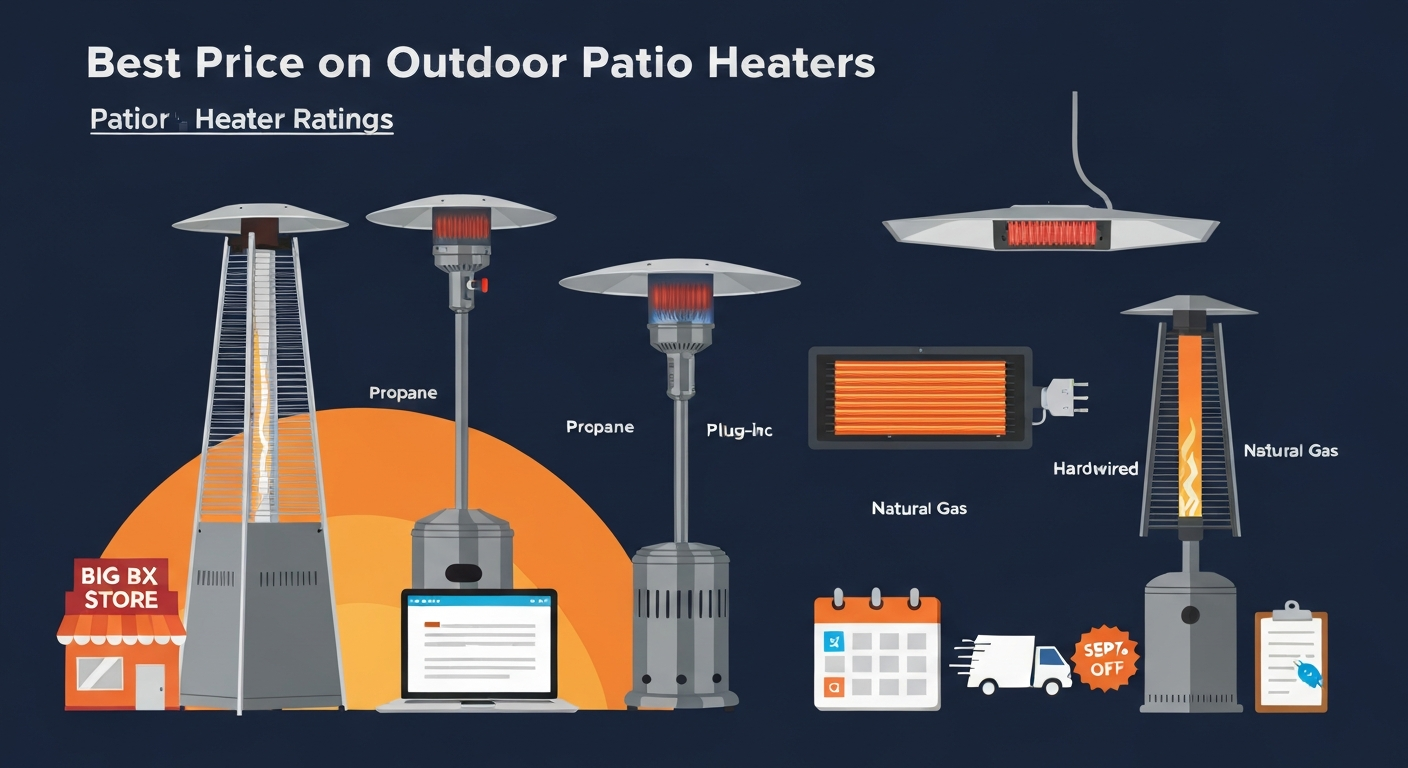
Score the best price on outdoor patio heaters, price ranges, top picks, deal tactics, total-cost & safety checklist.
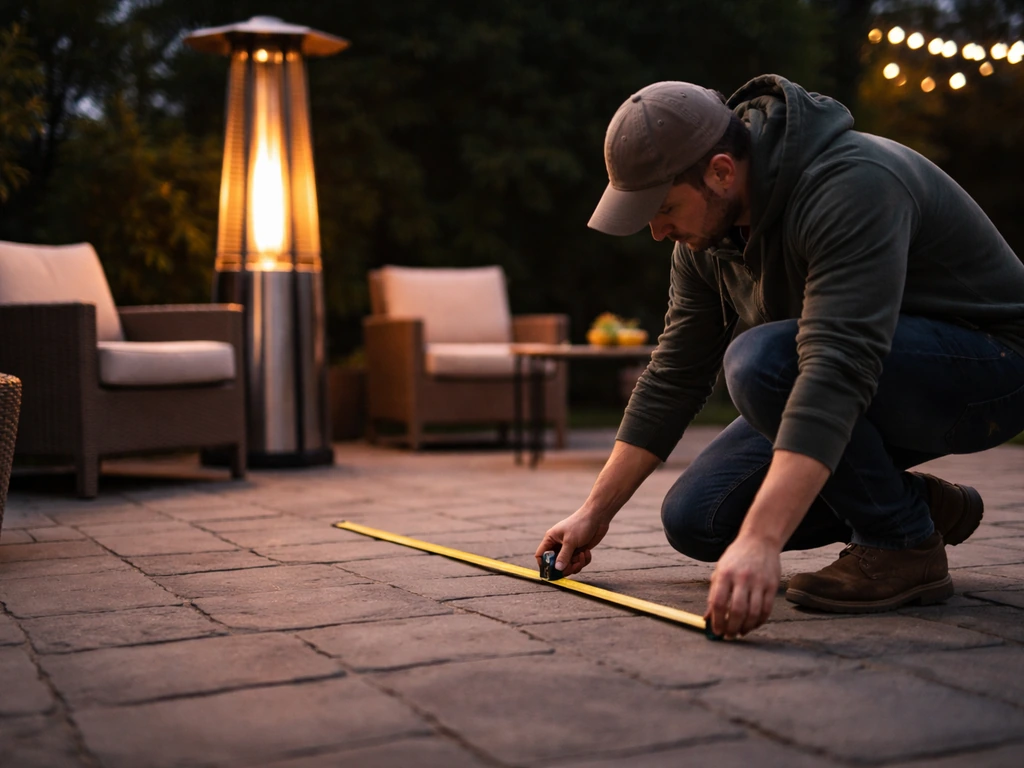
Find where to rent patio heaters near you today, choose the right fuel type, compare costs, and book safely.
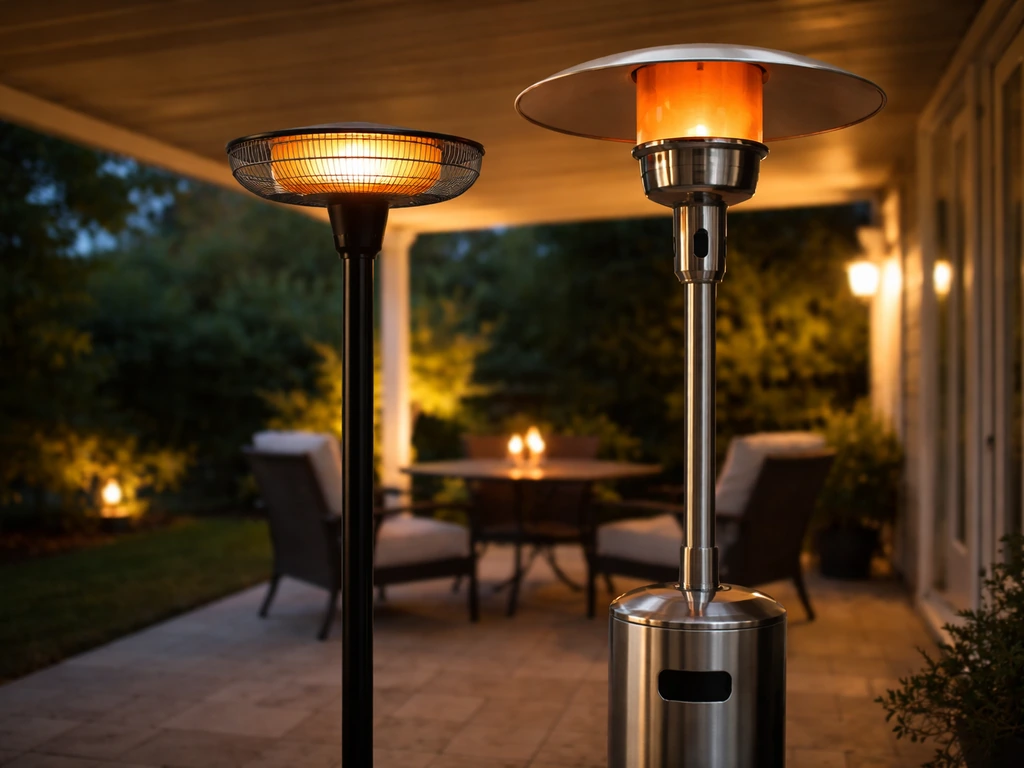
Where to buy a patio heater now, plus electric vs gas vs propane tips, safety checks, and size/BTU buying checklist.