
Most freestanding patio heaters stand between 84 and 93 inches tall (roughly 7 to 7.75 feet). That said, height varies a lot by type: a standard propane tower heater runs about 87 to 91 inches, a pellet heater sits closer to 58 to 84 inches, and electric infrared models are mounted rather than freestanding, so the relevant number is mounting height (typically 7 to 12 feet off the floor). If you need a quick fit check before buying, measure your patio ceiling height, subtract the manufacturer's required clearance, and compare that to the heater's heat outlet height, not just the overall height listed in the specs.
How Tall Are Patio Heaters? Typical Heights by Type

Caleb Vale
4 Jul 2026
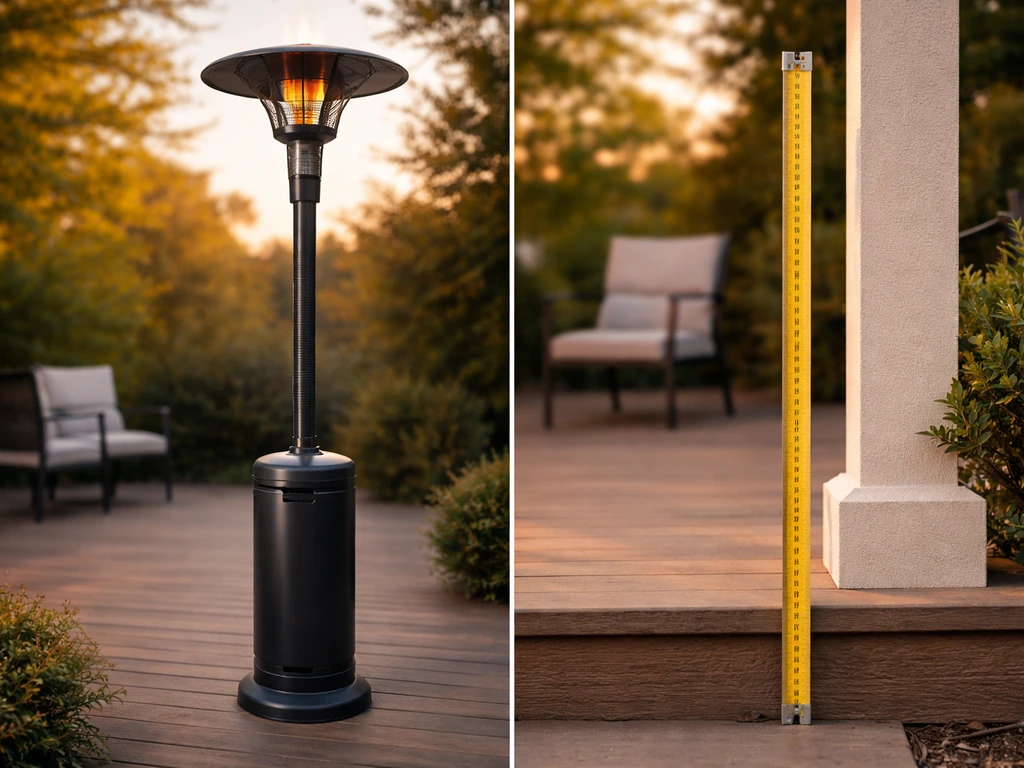
Typical patio heater height ranges by type
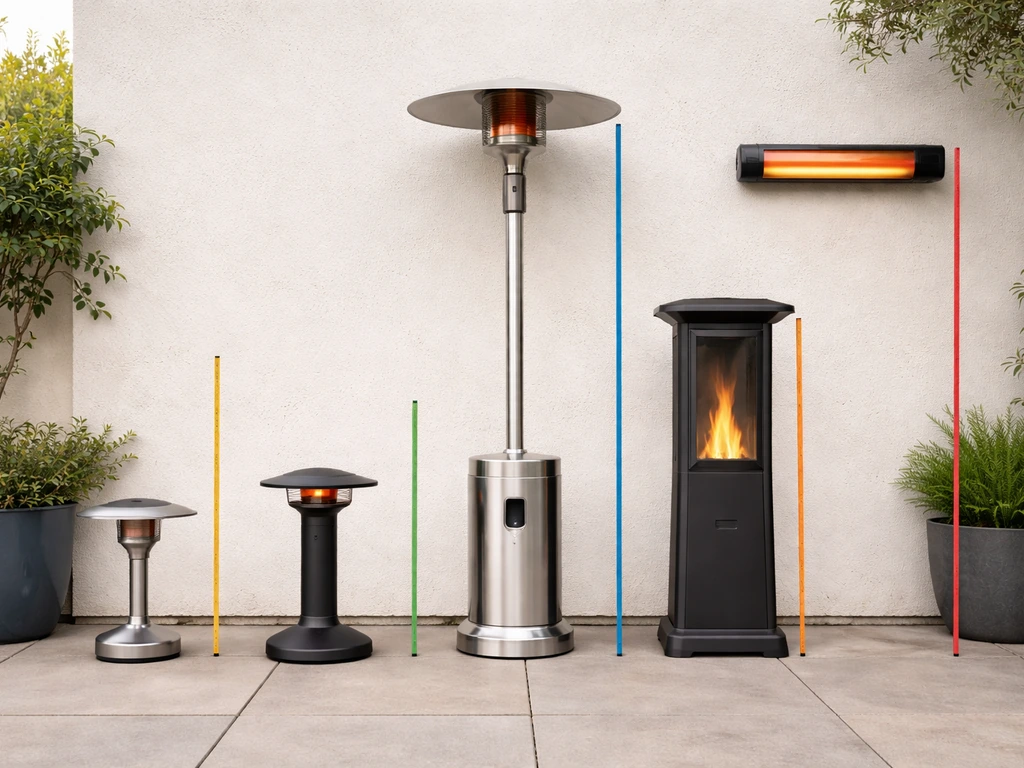
Every fuel type has its own typical size profile. Here is what you can expect when shopping for each main category.
Propane freestanding (tower style)
These are the classic umbrella-shaped heaters you see on restaurant patios. Most fall in the 87 to 93 inch range. Real examples: AZ Patio Heaters HLDS01 (48,000 BTU) measures 88.5 inches per its certification documents, with some retailer listings showing 87 to 91 inches for the same model family. The Master Forge 48,000 BTU floor-standing unit comes in at 89.4 inches assembled. The Sunglo A270SS (40,000 BTU) tops out at 93 inches overall. The Mr. Heater MH-0040-P (40,000 BTU/h radiant model) is listed at 7 feet 2 inches (86 inches). So when you see a "tall patio heater" marketed as such, expect something in that 86 to 93 inch window.
Propane low-profile and tabletop
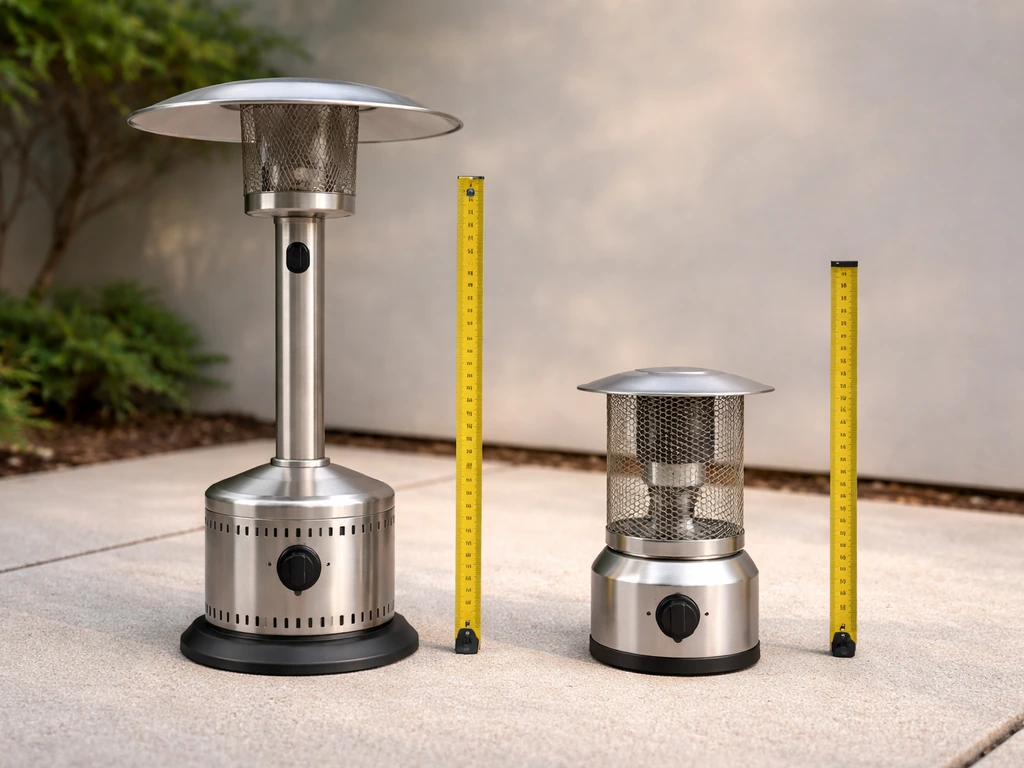
Not every propane heater is a tower. Mr. Heater's Low Profile Patio Heater (MH30LPPH) stands just 33 inches tall. Tabletop propane heaters are similarly compact, typically ranging from 18 to 36 inches. These work well under low pergolas or inside smaller covered spaces, but their heat output and coverage area are proportionally smaller.
Natural gas freestanding and mounted
Natural gas freestanding tower heaters share the same form factor as propane towers, so you can expect the same 87 to 93 inch height range. Natural gas is also common in wall-mounted and ceiling-suspended configurations, where the heater body itself is relatively compact (often 12 to 24 inches wide) and the relevant dimension shifts to mounting height from the floor, typically a minimum of 8 feet per most design guides, including ReverberRay's LIOPDG guide. Bromic's installation guidance recommends at least 36 inches of clearance between the top of a gas wall-mounted heater and any structure above it.
Electric infrared (wall and ceiling mounted)
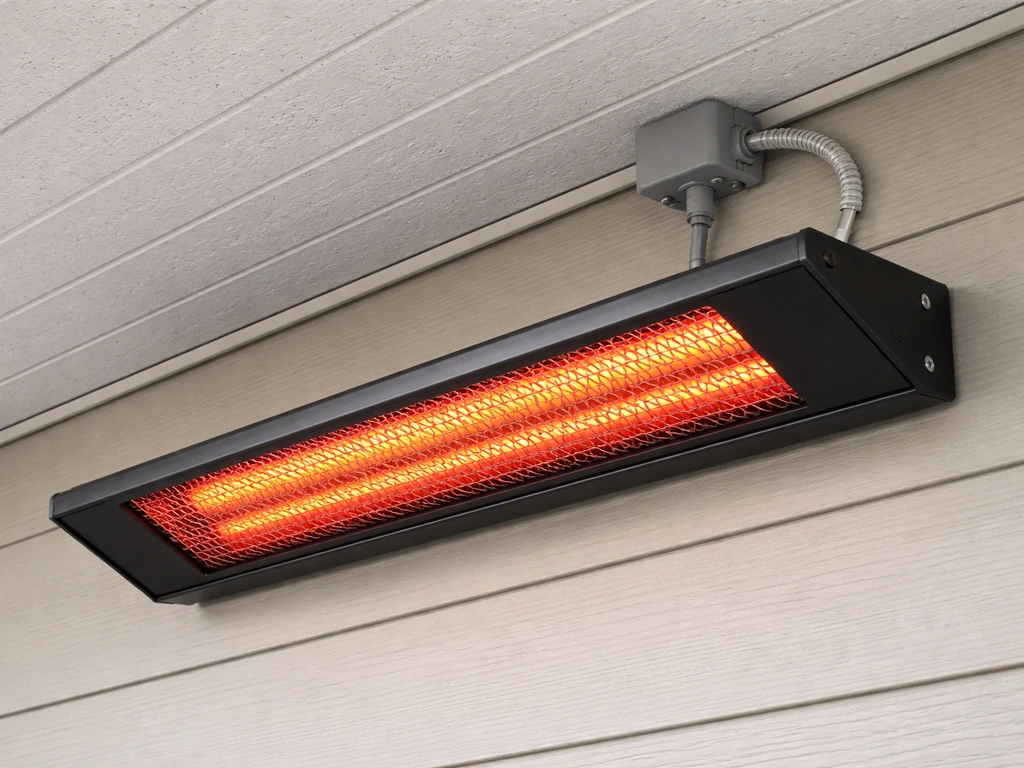
Electric infrared heaters like the Infratech W-series and CD52 don't have a freestanding height in the traditional sense. The heater body itself is a flat panel, often 24 to 60 inches wide and just a few inches thick. What matters is mounting height: Infratech recommends 7 to 12 feet from the floor depending on the model. The CD52 (5,200W dual element) is specifically engineered for standard 8 to 10 foot mounting heights under covered spaces. The Infratech C20 (2,000W) specifies a 7 to 8 foot mounting window. Some brands offer pole-mounted electric infrared versions (like the Westinghouse WES31-1550) that stand about 60 to 72 inches as a portable unit.
Wood pellet freestanding
Pellet patio heaters are the newest category on the market. Heights span a fairly wide range depending on the design. The Onlyfire wood pellet heater with glass tube stands 58 inches (about 4 feet 10 inches). The HEATAK 70,000 BTU freestanding pellet heater measures 79.9 inches assembled. The Timber Stoves Revere (90,000 BTU) comes in at 84 inches. Pellet heaters tend to have a chimney-style silhouette rather than a canopy, so their height profile is narrower and taller relative to their heat output.
| Heater Type | Typical Height Range | Key Dimension |
|---|---|---|
| Propane tower (freestanding) | 86 to 93 inches (7.2 to 7.75 ft) | Overall assembled height |
| Propane low-profile / tabletop | 18 to 36 inches | Overall assembled height |
| Natural gas tower (freestanding) | 87 to 93 inches | Overall assembled height |
| Natural gas wall / ceiling mounted | Compact body, 8+ ft install height | Mounting height from floor |
| Electric infrared (wall / ceiling) | Flat panel, 7 to 12 ft mounting range | Mounting height from floor |
| Electric infrared (pole-mounted) | 60 to 72 inches | Overall assembled height |
| Wood pellet (freestanding) | 58 to 84 inches (4.8 to 7 ft) | Overall assembled height |
How to measure your patio space before buying
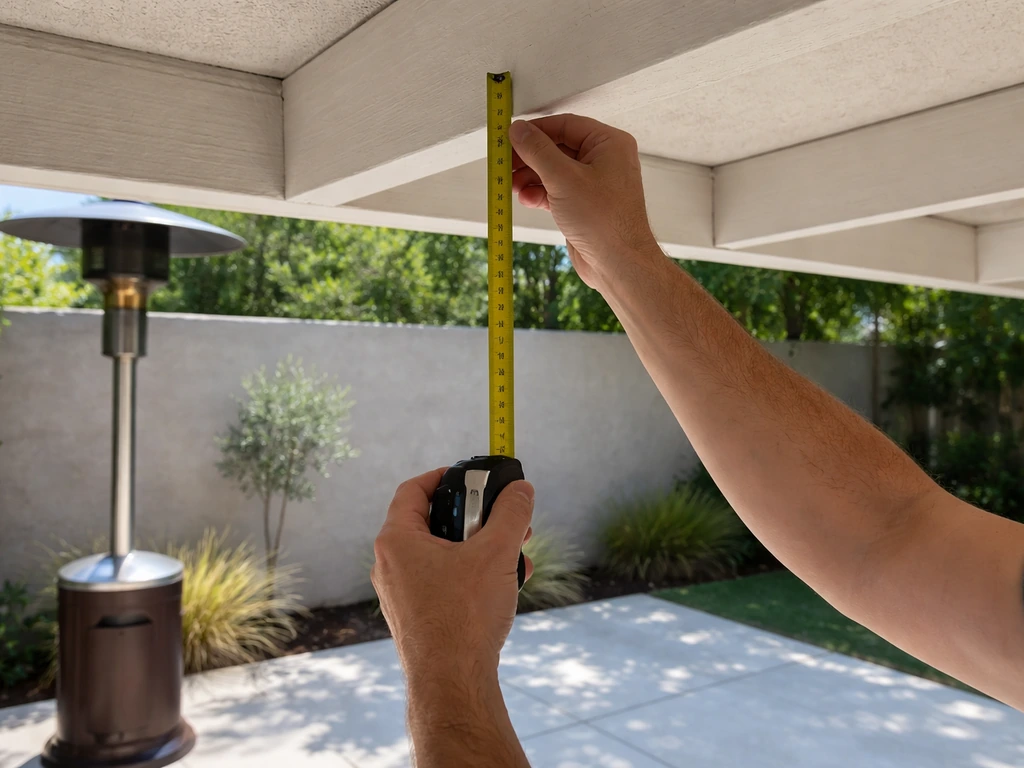
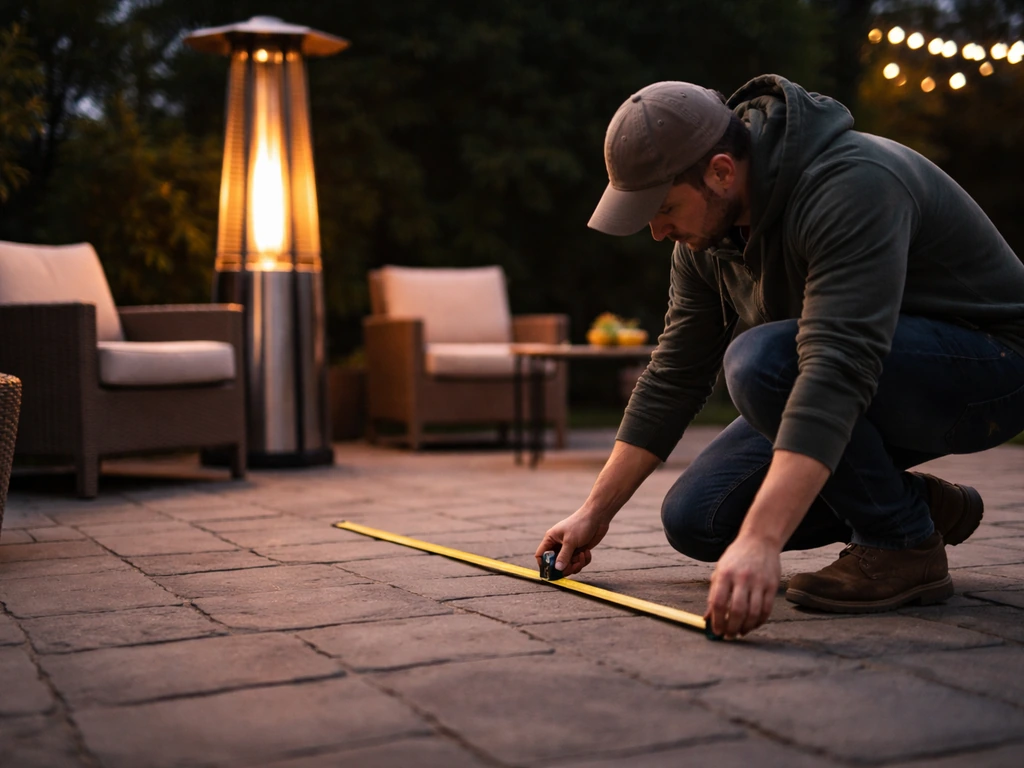
Before you order anything, take three measurements: ceiling or structure height, seating zone dimensions, and the distance from where the heater will sit to the edge of your seating area. These three numbers will tell you more than any spec sheet.
Ceiling or roof structure height
Measure from finished floor level to the lowest overhead obstruction, whether that is a pergola beam, patio cover, umbrella, or roof overhang. Write that number down. For a standard freestanding propane tower at 88 to 91 inches, you need at least 48 inches of clearance above the canopy (per general safety guidance from sources like Outdoor Space Accents), which means your roof should be well over 11 feet. If your ceiling is 9 or 10 feet, a tall tower heater will not work safely, and you should be looking at low-profile, tabletop, wall-mounted, or electric infrared options instead.
Seating layout and coverage zone
Measure the diameter or footprint of your seating area. A standard 48,000 BTU propane tower heater typically covers about 15 square feet directly, so if your seating spans 12 to 15 feet across, one centrally placed tower works well. That said, the exact amount of heat depends on the heater's BTU or watt rating as well as the fuel type and how far away you are seated how much heat do patio heaters give off. Note where chairs and benches sit relative to the heater's likely placement spot, keeping in mind that the heat radiates downward from the canopy, not outward from the base.
Wall and side clearance
Don't just measure the ceiling. Check how close the heater will sit to walls, fences, curtains, and outdoor furniture. Bromic and similar brands recommend at least 36 inches of side clearance from combustible surfaces for gas wall-mounted models. For freestanding towers, give at least 36 inches in every horizontal direction from anything flammable. Measure those distances before you finalize a placement spot.
Overall height vs. heat outlet height: reading the spec sheet correctly
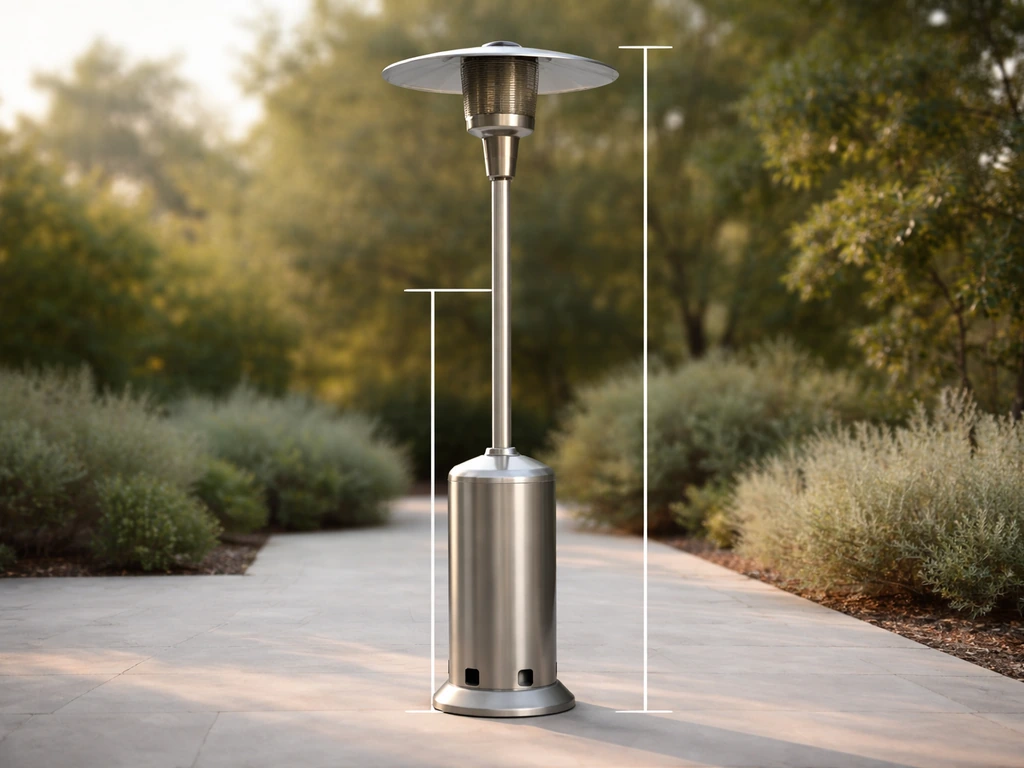
This is where a lot of buyers get tripped up. The "overall height" or "assembled height" on a product listing includes the base, pole, and canopy combined. But the burner or heat element sits at the canopy level, which is typically 6 to 8 inches lower than the very top of the unit. For a heater listed at 91 inches, the actual heat outlet (the reflector and burner) is closer to 83 to 85 inches off the ground. That is the number that really matters for clearance calculations.
The Sunglo A270SS is a useful example: its overall height is 93 inches, but the reflector diameter is 34.5 inches, meaning the bottom of that heat-generating canopy sits noticeably lower than the very tip of the unit. Always look for "burner height," "reflector height," or "heat element height" in the spec sheet. If the manufacturer doesn't list it separately, subtract roughly 6 to 10 inches from overall height as a working estimate and confirm with the manual. For electric infrared panels, the heat outlet is the face of the panel itself, so mounting height and heat outlet height are essentially the same number.
How height affects heat coverage and comfort
Height directly changes where the heat lands and how wide the coverage zone is. A tower heater with a canopy at 84 inches produces a heat cone that reaches the ground roughly 3 to 6 feet around the base. Lower the heater height (or mount an infrared panel lower) and the heat stays more concentrated and intense in a smaller area. Raise it and the heat spreads wider but feels less intense per square foot.
For electric infrared, Infratech's guidance puts the sweet spot between 7 and 10 feet of mounting height for standard residential setups. Mount below 7 feet and the radiant heat is too intense and uneven for seated guests directly under the panel. Mount above 12 feet and you lose too much heat energy before it reaches seated height (roughly 4 feet off the ground for someone in a chair). The same physics apply to gas radiant heaters: ReverberRay's design guide specifies a minimum mounting height of 8 feet above finished floor, not just for safety but for effective heat distribution at that level.
If you are comparing heater options side by side, the heat output in BTUs and the heater's effective height above seated guests work together. A 48,000 BTU propane tower at 88 inches will keep people warm at its rated 15 square foot zone. Drop to a 30,000 BTU low-profile unit at 33 inches and the coverage zone shrinks significantly. How hot a patio heater gets at the comfort zone is as much about placement height as raw BTU output. In practice, the heat you feel depends on how high the heater is mounted relative to where you sit, not just the heater’s fuel or BTU rating how hot a patio heater gets.
Safety clearances for different roof and mounting setups
Clearance requirements are non-negotiable and vary by heater type. Always use the manufacturer's manual as the primary source. Here are the key rules by setup.
Freestanding propane and natural gas towers under a covered patio
Most freestanding tower heaters are not designed for use under a roof or solid pergola cover, especially gas-combustion models. There are two issues: physical clearance and ventilation. On clearance, general guidance (with Outdoor Space Accents citing 48 inches ceiling clearance and 36 inches wall clearance) gives a starting benchmark, but your manufacturer's manual overrides this. On ventilation, combustion-based heaters produce carbon monoxide. Mr. Heater's manuals reference NFPA 54 and ANSI Z223.1 codes and emphasize adequate clearance to combustibles, with CO safety being an explicit non-negotiable for enclosed or semi-enclosed spaces.
Wall and ceiling mounted gas heaters (natural gas and propane)
Mounted gas heaters like ReverberRay models blank" rel="noopener noreferrer">must sit at least 8 feet above finished floor level. Patio heaters can vary a lot in operating cost, and gas models typically cost more to run than electric infrared depending on your local energy prices and how often you use them. Clearances are angle-dependent: ReverberRay's bracket installation documents provide a table of clearances in inches based on mounting angle (0 to 45 degrees). When the heater is tilted, the clearances on different sides change. The rule is to use whichever clearance value is greater when the mounting angle falls between two rated positions. Bromic's guidance calls for at least 36 inches between the top of a gas wall-mounted unit and any overhead structure.
Electric infrared (wall and ceiling mounted)
Electric infrared models like the Infratech W-series require clearance on all four sides and a larger clearance zone directly in front of the panel face. Infratech's installation manuals specify 36 inches directly in front as a minimum clearance from combustible materials, with side and top clearances listed separately. Because there is no combustion, CO is not a concern, but radiant heat concentration near combustibles at close range is still a real risk. Sunpak's installation guidance similarly states that no patio heater (including electric) should be installed below 7 feet from the floor.
Pellet heaters
Pellet heaters are combustion-based like gas, so the same ventilation concerns apply. Use them in well-ventilated or open-sided patio setups, not in enclosed rooms. Side and overhead clearances should follow the manufacturer's manual; given that most pellet heaters have a vertical chimney-style flue, overhead clearance above the exhaust outlet is especially important.
Next-step checklist for choosing the right-height patio heater
Use this list before you finalize a purchase. Go through it in order and you will avoid the most common fit and safety mistakes. If you are comparing different brands, you may also want to look up the Eddie Middleton patio heaters net worth to understand the company behind the products.
- Measure your patio ceiling or overhead structure height from finished floor to the lowest obstruction. Write it down.
- Check the heater's assembled or overall height in the spec sheet, then find the heat outlet or burner height (subtract 6 to 10 inches from overall height if not listed separately).
- Subtract the heat outlet height from your ceiling height. For gas freestanding towers, you need at least 48 inches of remaining clearance above the canopy. For mounted gas models, confirm at least 8 feet from floor to heater and then verify the additional overhead clearance from the manufacturer's manual.
- Measure side distances to walls, fences, curtains, and furniture. Plan for at least 36 inches of horizontal clearance from combustible surfaces on all sides.
- For electric infrared, confirm the mounting height falls within the 7 to 12 foot recommended range for your specific model (check the product's installation manual, not just the listing).
- If you are using a combustion-based heater (propane, natural gas, or pellet) under any covered structure, verify ventilation meets code and consult the manufacturer's manual clearance table before install.
- Cross-check BTU output against coverage area. A 48,000 BTU tower at the right height covers roughly 15 square feet well. Scale up output if your seating area is larger or your climate runs colder.
- Download the heater's full installation manual before buying. Clearance tables vary by model and mounting angle. Retailer listing dimensions are a starting point, not the final word.
Height is just one piece of the selection puzzle. Once you have confirmed your heater fits physically and safely, it is worth digging into questions like how much heat it actually delivers at seating level, how much it will cost to run on an ongoing basis, and what you should budget for the right unit for your setup. If you are wondering how much patio heaters cost, pricing varies by fuel type, brand, and BTU output, so it helps to compare models in the same category. Those factors together make the difference between a heater that genuinely extends your season and one that sits in a corner unused.
FAQ
If my patio ceiling is 10 feet, can I use a tall propane tower heater?
Usually no, unless the manufacturer explicitly allows it, because you must account for the heat outlet height and required overhead clearance, not just the unit’s overall height. A practical check is to measure ceiling height, subtract the manufacturer clearance, and confirm the heat outlet level still has the required space.
Do patio heater height measurements include the base, or only the heat outlet?
Listings often report assembled or overall height, which includes the base and canopy. Clearance calculations should use the heat outlet level (reflector, burner, or panel face), which can be several inches lower than the top of the unit.
What height should I use for clearance if the heater is adjustable or can be angled?
Use the mounting-angle clearance table from the manufacturer. For angled setups, the safe clearance can change on different sides, and you should apply the larger clearance value for any angle that falls between two rated positions.
Can I mount an electric infrared patio heater higher than the recommended 12 feet?
You can physically mount it higher, but performance often drops because radiant energy spreads and attenuates before reaching seated height (commonly around 4 feet). If you exceed the recommended range, plan on hotter temperatures, shorter distances, or a wider mounting footprint.
I have an existing pole-mounted electric patio heater, how do I estimate the correct heat outlet height?
For panel-style infrared, the heat outlet is essentially the face of the panel, so the key number is the panel face height relative to the floor. Measure from finished floor to the center of the panel face (or the manufacturer’s specified outlet point) and compare to the clearance distances.
What if my patio is open on two sides but has a solid roof overhang?
For combustion heaters (propane, natural gas, pellet), the overhang can create a semi-enclosed environment and raise ventilation and CO risks. Even if side clearance is adequate, follow the exact “roofed or enclosed” installation instructions in the manual, not generic ceiling clearance rules.
Do I need extra clearance behind a wall-mounted heater?
Yes, many wall-mounted setups require clearance on multiple sides, not just above the heater. Confirm the rear clearance (and side clearances) in the installation manual, because radiant and convective heat can still reach combustibles close to the unit.
How do I choose between a lower tower heater and a higher one if I care about comfort at chair height?
Match the canopy or heat outlet height to your seating distance. Lower mounting or a lower heat outlet tends to be more intense over a smaller area, while higher mounting spreads warmth wider but can feel weaker near your seating if you exceed the recommended “comfort zone” geometry.
Are tabletop or low-profile propane heaters actually tall enough to work under a pergola?
They can be, because their heat outlet sits much lower, but coverage is smaller and you still must check side clearances to fabric, screens, and nearby furniture. Measure the distance to overhead obstructions relative to the heat outlet, not just the overall tabletop unit height.
What’s the safest way to verify dimensions if the manual is missing “heat outlet height”?
Look for “burner height,” “reflector height,” or “heat element height.” If none are listed, use the overall height minus an estimated offset (commonly 6 to 10 inches as a first-pass) but verify with the manual or the brand before installing, especially near low ceilings.
For pellet heaters, how do I decide the right height in an open-air setup?
Height affects both heat reaching seated guests and safe clearance to combustibles around the chimney-style flue. Prioritize the manufacturer’s overhead clearance above the exhaust outlet and keep the unit in an area with strong airflow, not a partially enclosed alcove.
If I’m close to a building wall, which matters more, heater height or side clearance?
Both matter, but side clearance can be the limiting factor for wall proximity. Even with an appropriate overall or heat-outlet height, many gas and infrared models require minimum inches from combustibles on the sides, so measure wall-to-unit distance before choosing placement.
Next Articles
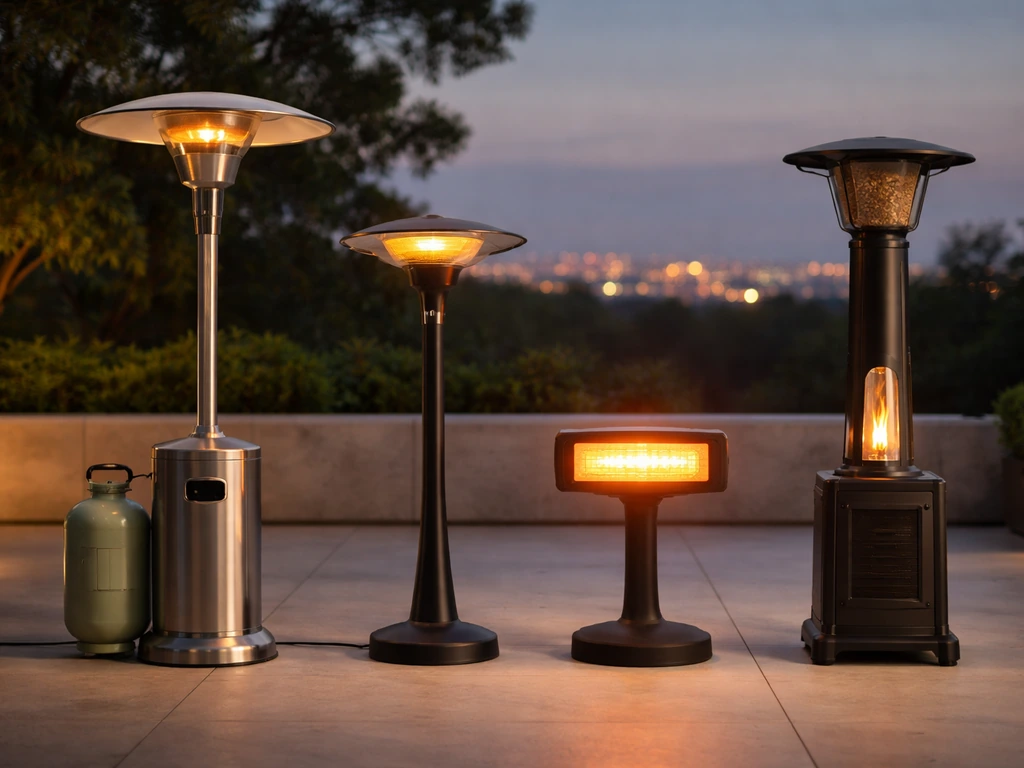
How Much Are Patio Heaters? Costs to Buy and Run
Upfront and monthly costs for propane, electric, natural gas, infrared, and pellet patio heaters, with BTU and runtime e
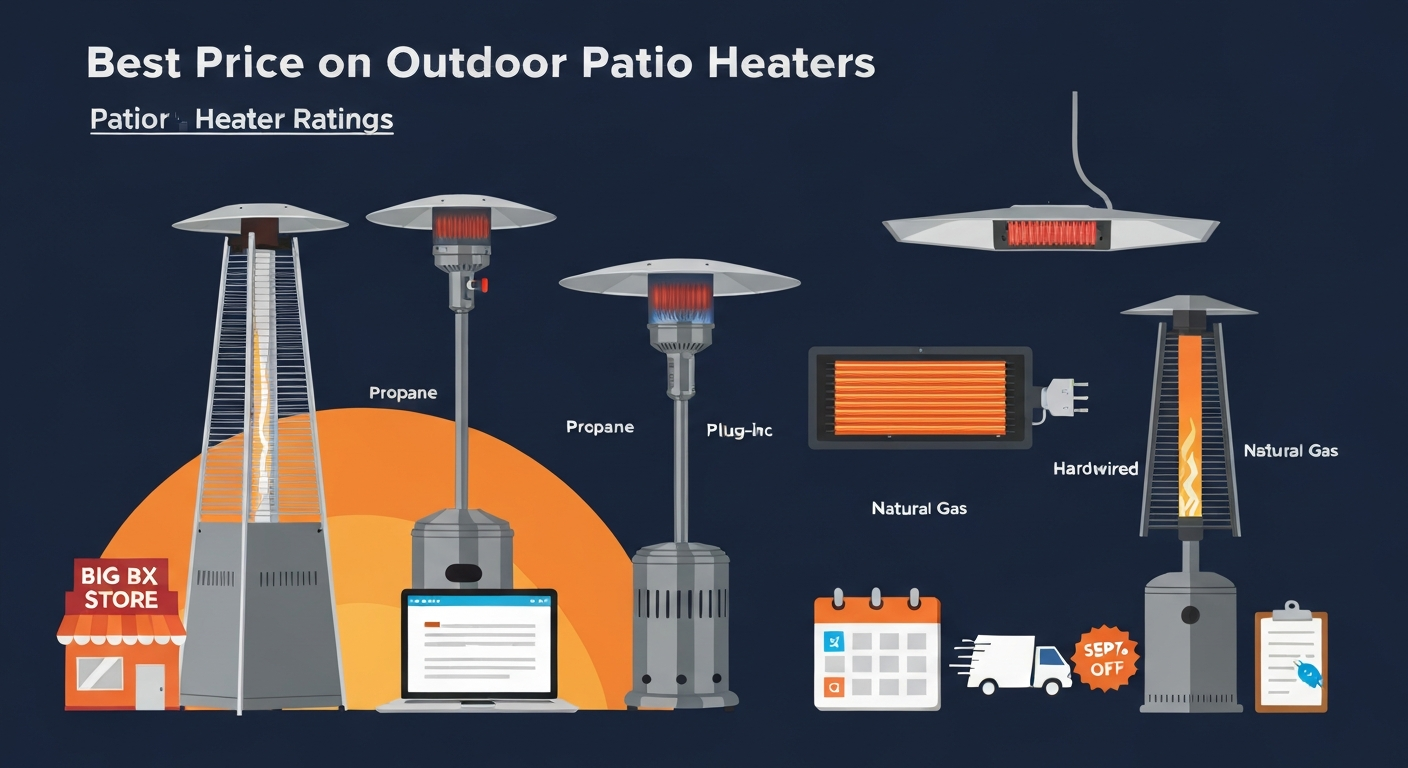
Best Price on Outdoor Patio Heaters: Compare Costs & Deals
Score the best price on outdoor patio heaters, price ranges, top picks, deal tactics, total-cost & safety checklist.
Where Can I Rent Patio Heaters Near Me Today
Find where to rent patio heaters near you today, choose the right fuel type, compare costs, and book safely.