
No verified net-worth figure for Eddie Middleton exists in any major financial publication, business database, or public record. He is a real person: Edwin Beaton Middleton, a Scottish entrepreneur who designed the Chillchaser electric infrared patio-heater range, pitched it on BBC's Dragons' Den in 2009, and ran the associated companies Westhawk (Europe) Limited and Chillchaser Limited until both were dissolved by 2019. Beyond that, no Forbes profile, Bloomberg entry, or audited financial statement ties a personal wealth figure to his name. If you found a number online claiming to be his net worth, it is not sourced from verifiable data.
Eddie Middleton Patio Heaters Net Worth: Who Is He? - Buyer Guide & Verification

Caleb Vale
30 Jul 2026
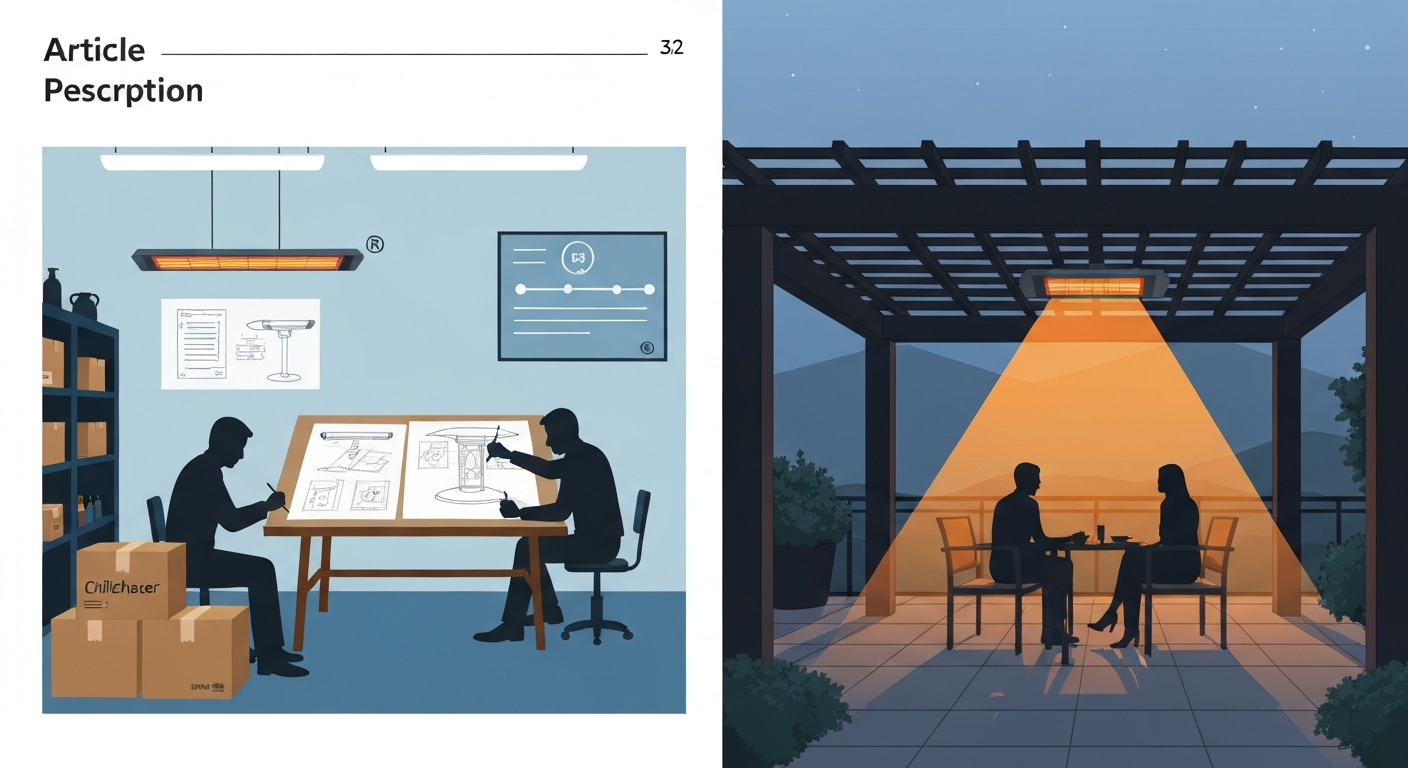
Who this article is for
You're here because you searched 'Eddie Middleton patio heaters net worth' and want to know whether the man behind the Chillchaser brand is a credible figure, whether his company is still operating, and whether any of that affects your decision to buy a patio heater. This article answers all three. It also covers the practical specs and cost questions that matter to anyone buying a patio heater today: how much they cost, how much heat they put out, what they cost to run, and how to spot a trustworthy product regardless of who designed it. For detailed comparisons of output and coverage, see how much heat do patio heaters give off.
Who is Eddie Middleton?
Eddie Middleton is the trading name of Edwin Beaton Middleton, born December 1963, based in Ellon, Aberdeenshire, Scotland. He came to public attention on July 30, 2009, when The Guardian covered his appearance on BBC Two's Dragons' Den (Series 7), pitching an electric patio-heater brand called Chillchaser. The product line included models named Zeus, Neptune, Mercury, Poseidon, Cyclops, and Hercules, all built around carbon-fibre far-infrared heating tubes rather than the LPG gas burners that dominate the freestanding patio-heater market. Middleton positioned Chillchaser as an eco-friendlier, safer alternative to propane heaters, and the Dragons' Den episode database records his pitch as requesting £255,000 for a 48% equity stake in Westhawk, the operating company at the time.
Companies House records show he was a director of WESTHAWK (EUROPE) LIMITED (company number SC301670), incorporated 3 May 2006 in Scotland. Companies House entry 'WESTHAWK (EUROPE) LIMITED, company overview & accounts, Companies House (UK)' lists the company's filing history, including accounts last made up to 31 March 2012 blank" rel="noopener noreferrer">WESTHAWK (EUROPE) LIMITED — company overview & accounts — Companies House (UK). A separate entity, CHILLCHASER LIMITED (company number SC485624), was incorporated 1 September 2014, with Middleton listed as a director until his termination on 10 February 2017. Companies House records (CHILLCHASER LIMITED, Company overview & filing history, Companies House (UK)) for company number SC485624 show incorporation on 1 Sep 2014 and a director termination dated 10 Feb 2017 blank" rel="noopener noreferrer">CHILLCHASER LIMITED — Company overview & filing history — Companies House (UK). Companies House also shows a filing for EDDIE MIDDLETON CONSULTANCY LIMITED, with a director appointment date of 10 March 2014, suggesting he moved into a consultancy structure alongside or after the product-company period. A UK trademark for the word mark CHILLCHASER was filed 21 June 2021 and registered 29 October 2021, with the listed owner as Edwin Beaton Middleton, Ellon, Aberdeenshire. So the brand name itself remained in his control even after the operating companies closed.
Is there a reliable net-worth figure for Eddie Middleton?
No. I ran targeted searches across Forbes, Bloomberg, and the Financial Times, and none of them carry a profile or wealth estimate for Eddie or Edwin Middleton. There is no published, verifiable net-worth number anywhere in the major financial press. Any figure you see on a celebrity net-worth aggregator site is fabricated or guessed, full stop. Those sites routinely invent numbers for anyone with a Wikipedia stub or a TV appearance, and they carry no sourced evidence.
The public filings that do exist, specifically the Companies House accounts for Westhawk (Europe) Limited, show accounts last made up to 31 March 2012, but these are company-level documents, not personal wealth disclosures. A company's reported turnover or net assets tells you about the business, not the founder's personal balance sheet. And with Westhawk placed into compulsory liquidation on 25 February 2015 (winding-up concluded 18 October 2018, dissolved 19 January 2019) and Chillchaser Limited dissolved 22 January 2019, the financial trail is thin and does not support any confident wealth estimate.
Eddie Middleton's role in the patio-heater market
His documented roles are: company director (Westhawk, Chillchaser Limited), product designer (the Chillchaser carbon-fibre infrared heater range), and later consultant (Eddie Middleton Consultancy Limited, from 2014). Distributor pages such as Orion Air, and trade press including Tradex News, identify him as the designer and entrepreneur behind Chillchaser, and marketing copy on those pages cites claims of more than 15,000 units sold to commercial customers including pubs, restaurants, and hotels, and that the product reached export markets. Those figures come from distributor marketing copy rather than audited sales reports, so treat them as indicative, not verified.
The technical specifications repeated across distributor pages describe the Chillchaser models as rated at 1.5kW and 3kW (two heat settings on many models), with IPX5 weatherproofing, an approximate heating radius of 5 metres covering roughly 24 square metres at a 110-degree bloom, and a stated tube life of approximately 6,000 to 8,000 hours. Again, these are manufacturer and distributor claims, not independent laboratory test results, and I have not seen third-party controlled testing published for the Chillchaser range.
I also found no granted patent record in the USPTO database naming Edwin Beaton Middleton or Chillchaser/Westhawk as an assignee. That does not definitively mean no patent exists, but no clear patent family surfaced in standard public searches. The carbon-fibre far-infrared tube technology itself is not unique to Chillchaser: it appears across a number of manufacturers in the same product category.
Where his personal wealth could plausibly come from
Given the publicly available evidence, any personal wealth would most plausibly derive from three sources, though none can be confirmed with the data available. First, equity value realised before or during the Westhawk/Chillchaser operating period: if the Dragons' Den deal closed and the business scaled to the claimed 15,000+ units, there could have been profit distributions or a partial sale. However, the compulsory liquidation of Westhawk in 2015 suggests the UK operating vehicle did not end well financially, and liquidations typically destroy rather than create shareholder value. Second, consultancy income via Eddie Middleton Consultancy Limited from 2014 onward: this is a separate vehicle that remained outside the liquidated entities, and any ongoing advisory or design work would generate income through it. Third, trademark licensing: with the CHILLCHASER trademark re-registered in his name in 2021, there is a possible licensing or brand-sale avenue, but there is no public evidence this has generated significant income.
What the record does not support: any claim of a patent-licensing revenue stream (no documented patent family found), any large exit from the operating companies (both dissolved without apparent buyer), or any investment portfolio or property wealth that has surfaced in public records. The honest summary is that the public data is too limited to support even a rough estimate of personal net worth, and the liquidation of the main operating company is a significant negative data point.
What this means if you're thinking about buying a Chillchaser
This is where the background research becomes genuinely useful to buyers. Both Westhawk (Europe) Limited and Chillchaser Limited are dissolved and no longer active. That has direct consequences for after-sales support, warranty claims, and spare parts. If a retailer or reseller is still listing Chillchaser models today (2026), any warranty they offer is being backed by that retailer or distributor, not by the original manufacturing company. The carbon-fibre heating tubes in the product have a stated life of 6,000 to 8,000 hours, which sounds substantial, but when the original company no longer exists, sourcing a replacement tube if it fails early becomes entirely dependent on whether your reseller holds stock or has a supply chain for the component.
The CHILLCHASER trademark is still held by Edwin Beaton Middleton personally (as of the 2021 registration), so a new operating entity could potentially revive the brand. But as of the research available to me, I cannot confirm an active manufacturing and distribution business is trading under that name with a functioning customer-support infrastructure. If you are seriously considering a Chillchaser unit, the most important step before buying is contacting the seller directly to ask: who backs the warranty, what is the spare-parts supply chain, and is there a UK or international service contact for tube replacement?
This is not unique to Chillchaser. It is a buyer-protection principle that applies to any patio-heater brand with a thin or unclear corporate structure. Company stability, warranty depth, and parts availability matter more to long-term ownership satisfaction than almost any other single factor, and they are routinely underweighted by shoppers who focus only on heat output and price.
How to verify any patio-heater brand before you buy
Here is the process I use and recommend. It takes about 20 minutes and can save you significant hassle and money.
- Check the company on Companies House (UK) or your national equivalent: search the brand name and the director name. Look at the status (active vs. dissolved), the most recent accounts date, and any insolvency entries. A company whose last accounts are more than three years old and whose status reads 'dissolved' is not a trading entity that can honour a warranty.
- Search the CPSC recall database (US buyers) or the OPSS product safety database (UK buyers) for the brand name. A recall is not always a dealbreaker, but knowing whether one exists and whether it was resolved correctly is essential due diligence.
- Verify the warranty in writing before purchase. Get the retailer or seller to confirm in writing who underwrites the warranty (manufacturer, distributor, or retailer), what exactly is covered (heating elements, frame, electronics separately), and for how long. Consumer-grade propane heaters typically carry 1-year limited warranties. Premium electric brands like Bromic publish longer warranties: 2 years on the heater body and up to 7 years on heating elements for their electric commercial range. That gap in coverage length matters if you are buying for a business.
- Ask for certification marks: CE marking (UK/EU), ETL or UL listing (North America), and IP weatherproofing ratings. Chillchaser claimed IPX5, which means protection against water jets from any direction. That is the minimum useful rating for a product used outdoors in rain.
- Look for independent test data, not manufacturer specs. Manufacturer-listed BTU output, coverage area, and tube life are starting points, not verified performance data. Check whether any independent testing organisation, trade publication, or credible review site has tested the specific model under controlled conditions.
Patio heater specs and costs: the practical buying context
Whether or not Chillchaser is part of your shortlist, understanding the real-world specs and running costs of patio heaters helps you make a faster, better decision. Here is what the market actually looks like.
Heat output and coverage
Freestanding propane patio heaters typically output 40,000 to 48,000 BTU per hour. A full-size mushroom-head propane unit at 48,000 BTU is designed to heat a roughly 20-foot diameter area, which works out to about 18 to 20 square metres of effective warmth. Electric infrared units sold for residential and commercial use are typically rated at 2,000 to 6,000 watts, which translates to approximately 6,800 to 20,500 BTU equivalent per hour. Chillchaser's 3kW electric models (about 10,200 BTU equivalent) sit at the lower end of that range, suitable for intimate patio settings rather than large open-area commercial spaces. For detailed comparisons of heat output by model type, the how much heat do patio heaters give off and how hot does a patio heater get guides on this site cover those specifics in depth.
Running costs
Running cost depends heavily on fuel type, local energy prices, and how many hours per week you actually run the heater. A 3kW electric heater running at full power for two hours a day costs roughly 3 kWh multiplied by your electricity rate. At a UK average of around 24p per kWh (mid-2026 approximate), that is about 72p per two-hour session, or roughly £5 per week for daily evening use. A 48,000 BTU propane heater burns through approximately 1 to 1.4 pounds of propane per hour at full output, so a typical 20-pound cylinder lasts 14 to 20 hours of use. Propane costs vary by region but a 20-pound cylinder in the UK or US typically runs £15 to £25 equivalent, making per-session costs comparable or slightly higher than electric for equivalent warmth in a small area. The are patio heaters expensive to run guide on this site has a full cost breakdown by fuel type with current energy pricing.
Height and physical footprint
Standard freestanding mushroom-head patio heaters stand between 87 and 96 inches tall (approximately 220 to 244cm). Wall-mounted and ceiling-mounted electric infrared panels vary but typically project heat downward from a mounting height of 2.2 to 3.5 metres. Chillchaser's units were designed as wall- or ceiling-mounted fixtures rather than freestanding poles, so height is determined by your installation point rather than the unit itself. For full height and footprint data across freestanding and mounted heater types, the how tall are patio heaters article on this site covers standard dimensions by category.
Price tiers and what you actually get
| Price Tier | Typical Price Range (USD/GBP approx.) | Fuel Type | Heat Output | Warranty Norm | Best For |
|---|---|---|---|---|---|
| Budget consumer | $80–$150 / £70–£130 | Propane (freestanding) | 40,000–48,000 BTU | 1 year limited | Occasional residential use, small deck or balcony |
| Mid-range consumer | $150–$350 / £130–£280 | Propane or electric infrared | 40,000–48,000 BTU (gas) / 1,500–3,000W (electric) | 1–2 years limited | Regular home patio use, small restaurant terrace |
| Premium residential / light commercial | $350–$800 / £280–£650 | Electric infrared or natural gas | 3,000–4,500W electric / 40,000–60,000 BTU gas | 2–3 years (heater) / up to 5 years (elements) | Covered outdoor areas, year-round use, hospitality |
| Commercial / heavy-duty | $800–$2,500+ / £650–£2,000+ | Electric infrared or natural gas | 4,000–6,000W electric / 50,000–80,000 BTU gas | 2–7 years depending on brand | Bars, hotels, restaurants, large open terraces |
For specific model recommendations at each budget tier, the how much are patio heaters guide on this site breaks down current retail pricing with model-by-model comparisons. That page is regularly updated with current pricing from major retailers including Home Depot, B&Q, and Amazon.
Propane vs. electric infrared: a quick comparison
| Factor | Propane (freestanding) | Electric Infrared (wall/ceiling mount) |
|---|---|---|
| Heat output | 40,000–48,000 BTU typical | 2,000–6,000W (6,800–20,500 BTU equiv.) |
| Installation | No wiring, cylinder swap only | Requires hardwired or plug connection, mounting |
| Running cost per hour | Higher (fuel cost + cylinder rental) | Lower at low-tariff electricity rates |
| Portability | High (wheel base standard) | Low (fixed mounting) |
| Wind performance | Weaker in strong wind (convective heat loss) | Better (radiant heat less affected by wind) |
| Safety indoors/covered | Not suitable (CO risk) | Suitable for covered outdoor areas |
| Warranty typical | 1 year limited | 1–7 years depending on brand and model |
| Best climate | Open, uncovered patios in moderate wind | Covered terraces, pergolas, year-round use |
The recommendation from my testing experience: for an open, uncovered patio where you want portability and high heat on demand, a quality propane unit in the 40,000 to 48,000 BTU range remains the most cost-effective entry point. For a covered terrace, pergola, or commercial installation where you want consistent performance in wind and rain, a hardwired electric infrared unit from a brand with a documented warranty and active parts supply (Bromic, Infratech, or similar established names) is the better long-term investment.
The bottom line on Eddie Middleton and what it means for shoppers
Eddie Middleton is a real and verifiable figure in the UK patio-heater industry: a Scottish entrepreneur who designed a credible carbon-fibre infrared product, appeared on BBC's Dragons' Den, and built a small commercial business around it. His net worth is simply not a matter of public record, and any number you encounter online is fabricated. The more practically important facts for buyers are that both his main operating companies, Westhawk (Europe) Limited and Chillchaser Limited, have been dissolved, which means the original corporate warranty and parts infrastructure no longer exists in its original form. The Chillchaser trademark was re-registered in his name in 2021, leaving open the possibility of a brand revival, but no confirmed active trading entity has been documented in the research for this article.
If you are considering a Chillchaser product from a reseller, ask the reseller directly who backs the warranty and where replacement heating tubes come from. If they cannot answer clearly, that tells you what you need to know. For everyone else: use the product specifications, running costs, and warranty comparisons in this article to evaluate any patio-heater brand on its actual merits rather than the founder's public profile or purported wealth.
FAQ
Who is Eddie Middleton (also listed as Edwin/Edwin Beaton Middleton)?
Public records and media identify Eddie Middleton as Edwin Beaton Middleton (b. Dec 1963 in Companies House entries). He is the entrepreneur behind the Chillchaser patio‑heater brand and pitched an electric carbon‑fibre infrared heater on BBC Dragons’ Den in 2009 (Westhawk/Chillchaser). Sources: Companies House officer appointments (Edward/Edwin Middleton) https://find-and-update.company-information.service.gov.uk/officers/7P3Xyg39daF1GLJoHIpA0ak1cZI/appointments and The Guardian coverage of the Dragons’ Den pitch https://www.theguardian.com/environment/2009/jul/30/greenwash-patio-heaters.
Is there a reliable public estimate of Eddie Middleton’s personal net worth?
No reliable personal net‑worth figure for Eddie/Edwin Middleton was found in major business outlets (Forbes, Bloomberg, Financial Times) or public wealth databases. Searches of Companies House provide company accounts for Westhawk/Chillchaser (useful for company scale) but do not disclose a personal net worth. Therefore there is no verifiable published net‑worth number. Sources: Companies House company accounts https://find-and-update.company-information.service.gov.uk/company/SC301670 and absence of profiles in major wealth trackers (no Forbes/Bloomberg/FT entry located).
What company records exist for Chillchaser/Westhawk and what do they imply about business stability?
Companies House shows WESTHAWK (EUROPE) LIMITED (SC301670) incorporated 3 May 2006 and later placed in compulsory liquidation (petition 25 Feb 2015; dissolved 19 Jan 2019). CHILLCHASER LIMITED (SC485624) was incorporated 1 Sep 2014 and dissolved 22 Jan 2019 with director termination for Edwin Middleton recorded 10 Feb 2017. Those filings indicate the UK operating vehicles associated with the brand are no longer active. Source: Companies House insolvency/company overview pages https://find-and-update.company-information.service.gov.uk/company/SC301670/insolvency and https://find-and-update.company-information.service.gov.uk/company/SC485624.
What was Eddie Middleton’s role in the patio‑heater market?
Public and trade sources identify Middleton as the designer/entrepreneur behind the Chillchaser electric patio‑heater range (model names Zeus, Neptune, Mercury, etc.). He publicly marketed Chillchaser as an electric carbon‑fibre far‑infrared solution and sought investment on Dragons’ Den in 2009. Distributor pages list him as the founder/designer. Sources: Dragons’ Den coverage (The Guardian) https://www.theguardian.com/environment/2009/jul/30/greenwash-patio-heaters and distributor product pages (Orion Air Chillchaser listings) https://orionair.co.uk/ChillChaser_patio_heaters.htm.
Are there patents or other IP that would indicate significant inventor royalties for Middleton?
A cursory search of USPTO patent public search databases did not reveal patents explicitly naming Edwin/Edwin Beaton/Eddie Middleton for Chillchaser/Westhawk patio‑heater technology. A UK trademark record for CHILLCHASER lists Edwin Beaton Middleton as owner in aggregated listings (filing 21 Jun 2021; registration Oct 29, 2021). Lack of identified patents suggests no obvious public record of patent‑derived royalties. Sources: USPTO search portal (no matching patent found) https://www.uspto.gov/patents/search/patent-public-search and trademark aggregator https://www.trademarkelite.com/uk/trademark/trademark-detail/UK00003659069/CHILLCHASER.
Where could any wealth associated with Chillchaser plausibly have come from (without making unsupported claims)?
Plausible sources of wealth for a founder in this space include: company revenue from sales to commercial and retail customers, licensing or patent royalties if applicable, distributor/wholesale agreements, and investment or equity events (sale/exit). Public evidence shows Chillchaser products were marketed to pubs/restaurants and exported (distributor claims) and Companies House filings exist for the companies, but there are no audited public sales/valuation figures to quantify income. Sources: Distributor marketing claims (Orion Air) https://orionair.co.uk/ChillChaser_patio_heaters.htm and Companies House filings for company scale https://find-and-update.company-information.service.gov.uk/company/SC301670.
Next Articles
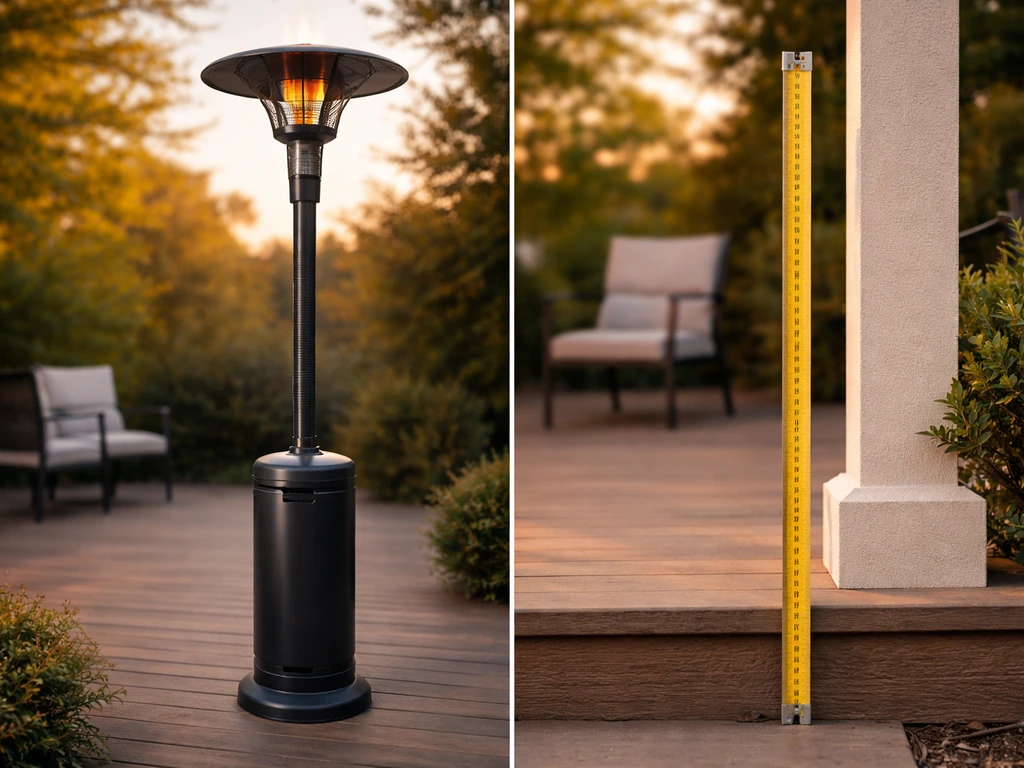
How Tall Are Patio Heaters? Typical Heights by Type
Typical patio heater heights by type, from tabletop to tall towers, plus how to measure clearance for safe fit.
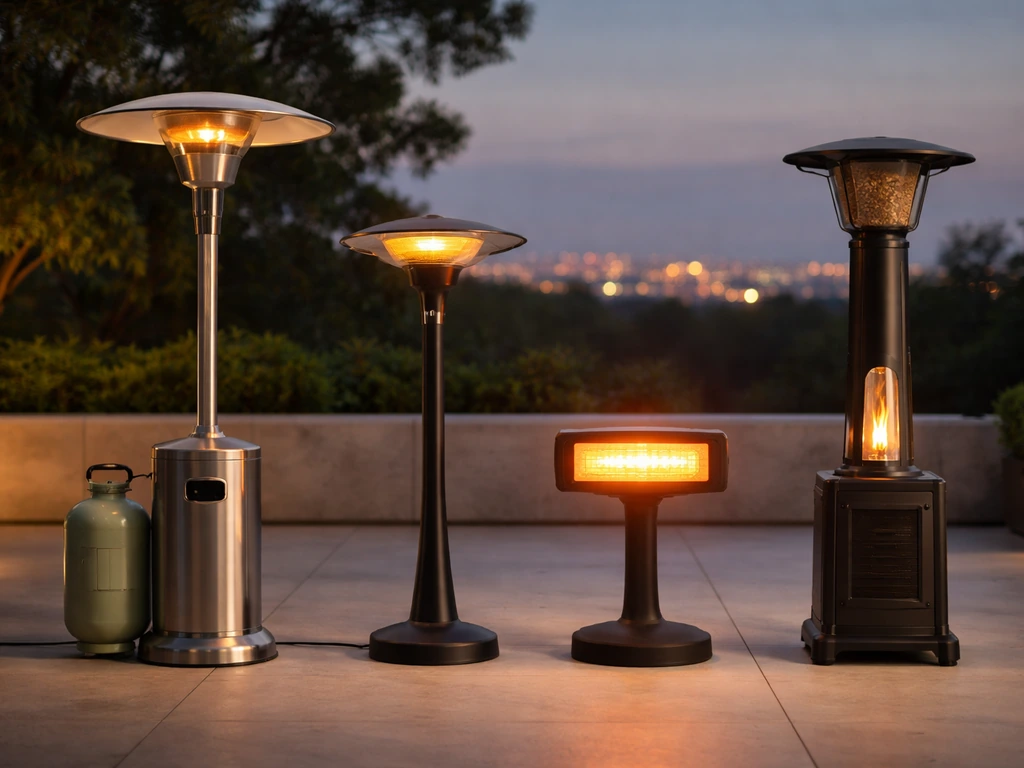
How Much Are Patio Heaters? Costs to Buy and Run
Upfront and monthly costs for propane, electric, natural gas, infrared, and pellet patio heaters, with BTU and runtime e
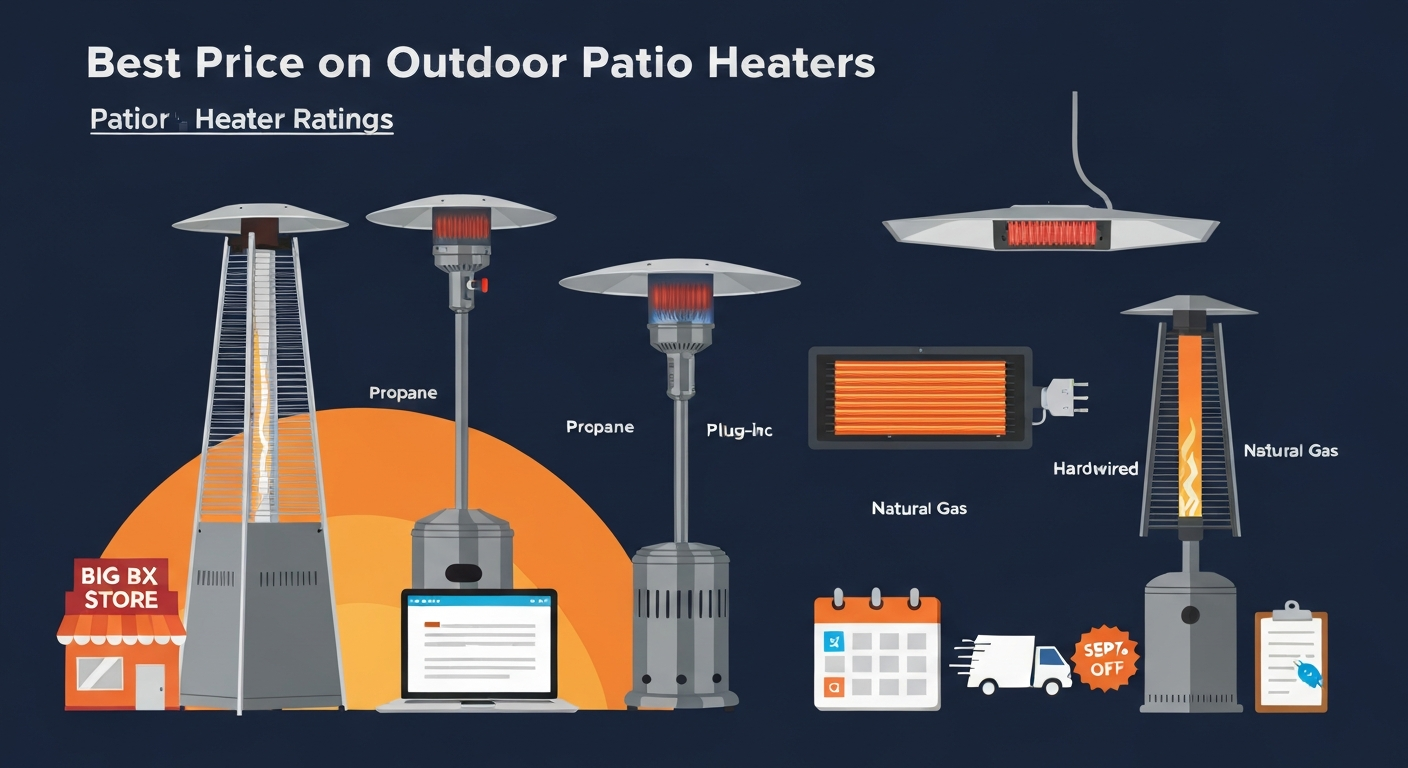
Best Price on Outdoor Patio Heaters: Compare Costs & Deals
Score the best price on outdoor patio heaters, price ranges, top picks, deal tactics, total-cost & safety checklist.