
The best wood pellet patio heater for most people right now is the Even Embers Pellet-Fueled Patio Heater at 70,000 BTU, which handles a small-to-medium covered patio and runs on standard wood pellets without needing a gas line or electrical hookup for heat itself. If you need more punch, longer unattended burn times, and thermostat-style control, a unit like the ComfortBilt HP50 moves you into the semi-permanent install category with a larger hopper and a proper auger-fed combustion system. Which one is right for you depends on your patio size, how cold it gets, and whether you want something you can move around or something that stays put. This guide walks through every decision you need to make.
Best Wood Pellet Patio Heater Guide: Choose, Install, Maintain

Caleb Vale
2 Jun 2026
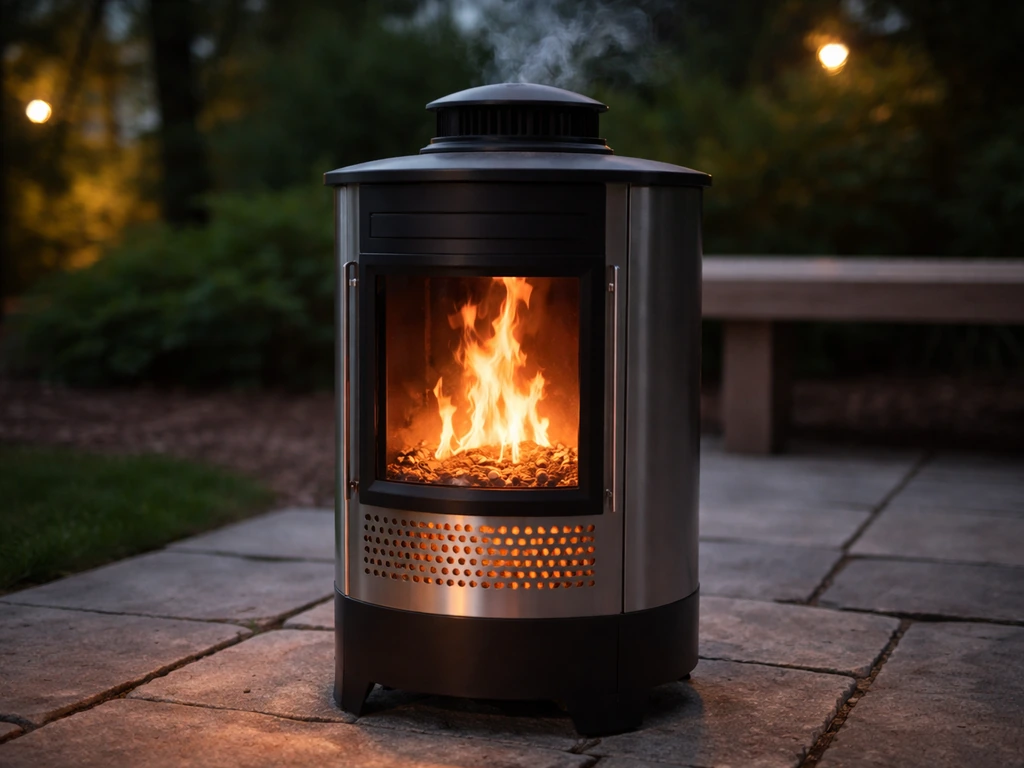
What a wood pellet patio heater is (and when it makes sense)
A wood pellet patio heater burns compressed wood pellets instead of propane, natural gas, or electricity. The simplest models use gravity feed and a manual fire-starting method: you fill a hopper, add starter pellets, light them, and convection carries the heat outward. More advanced units (like pellet stoves adapted for outdoor or semi-outdoor use) run an electric igniter and a motorized auger that screw-conveys pellets from the hopper into a burn pot at a controlled rate. A control board manages auger speed and combustion fans to hold a target output level. Some units support a thermostat mode (T-STAT) where the board varies feed rate based on a temperature sensor, much like a furnace.
Compare that to propane heaters, which use a gas burner with no hopper, no feed system, and no venting requirement beyond open-air placement. Electric patio heaters use a resistive element with zero combustion at all. Wood pellet heaters sit between the two worlds: they produce a real flame and genuine radiant heat (closer to a wood fire in feel and ambiance), but they need electricity for ignition and fan operation, produce ash, and require pellet storage. That trade-off matters for your decision.
Pellet heaters make the most sense when you want the look and feel of a wood fire, you have good pellet access nearby, and you prefer not to run a gas line or pay propane refill prices. They're also a strong choice if you already heat with pellets and have storage and delivery logistics figured out. They're a poor fit if you need something you can grab, wheel out for one evening, and forget about until next time: the startup routine, ash cleaning, and pellet storage add real friction compared to twist-and-light propane.
Sizing and heat coverage: matching BTU output to your patio
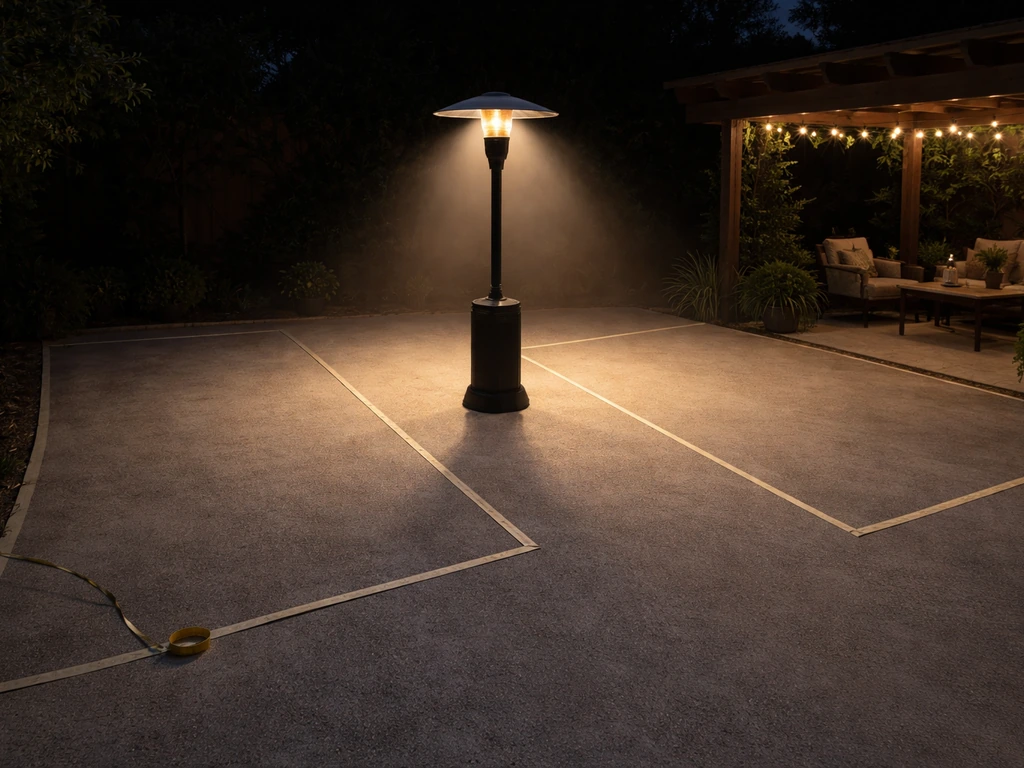
The Even Embers model markets itself as covering 100 square feet at 70,000 BTU. That sounds impressive, but patio heating math is messier than indoor heating math. An open, exposed patio loses heat in every direction, so effective coverage shrinks fast when wind or cold are involved. A rough working rule: plan for about 10 watts (roughly 34 BTU/hr) per square foot of patio space in mild weather, and double that for cold climates or exposed decks. For a 200 square foot patio in moderate conditions, you're looking at 50,000 to 70,000 BTU. For the same space in a cold, windy climate, you'd want to push toward 100,000 BTU or use multiple units.
Openness matters as much as square footage. A covered pergola with three partial walls holds heat dramatically better than an open deck. If your patio is enclosed on two or more sides and has a ceiling, you can get away with a smaller output unit. If it's completely open and exposed, expect your effective coverage to be 30 to 50 percent of what the spec sheet claims. Wind is the biggest heat thief: even a 10 mph breeze can cut effective warmth by half. Factor this in honestly before buying.
Hopper capacity also connects to sizing in a practical way. ComfortBilt’s stove comparison chart lists multiple pellet models and their hopper size and BTU output, which you can use to compare similar-output units when choosing the best option for your patio. A bigger hopper means longer unattended burns before refilling. The ComfortBilt HP50 carries roughly 47 lbs of pellets. At a typical medium burn rate of about 1.5 to 2 lbs per hour, that's 20 to 30 hours of heat per fill. Smaller gravity-fed units like the Even Embers have much smaller hoppers, so plan for more frequent refills on those.
What to look for: features and build quality that actually matter
Ignition system
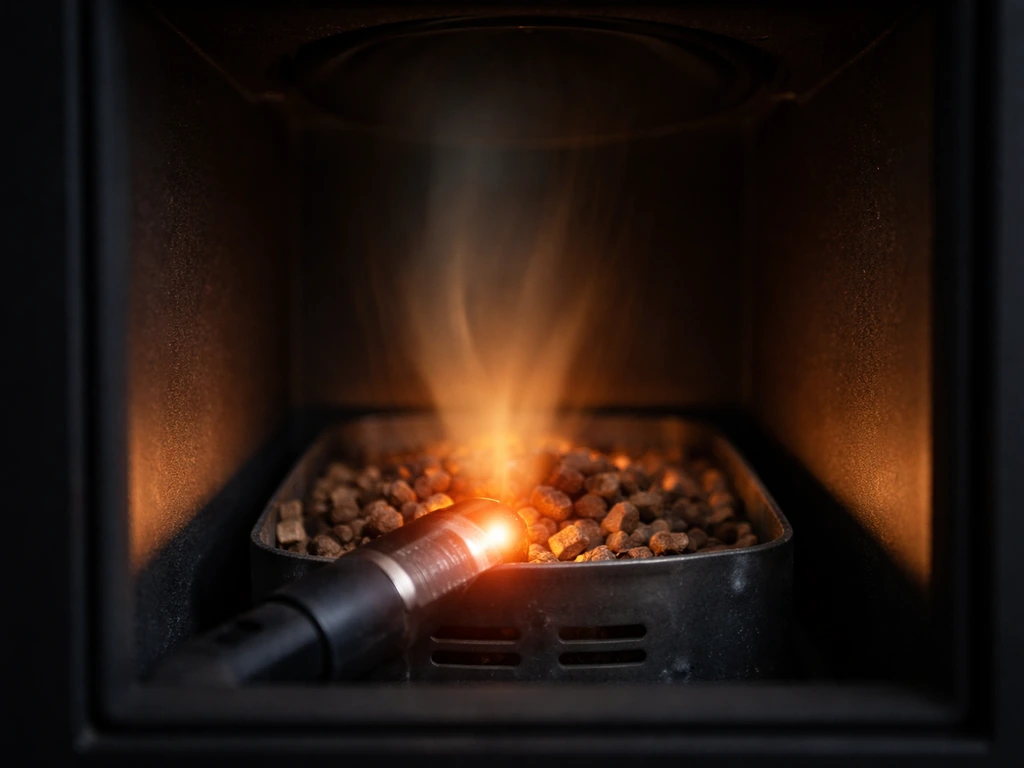
Auger-fed units with electric igniters are far easier to start consistently. You press a button, the igniter heats the pellets in the burn pot, and the fan brings the fire up. Gravity-fed units that require manual starter pellets or fire starters take more patience, especially in damp or cold conditions. If reliable, repeatable startup matters to you, prioritize an electric-ignition model.
Controls and thermostat modes
Better units offer multiple heat settings and a T-STAT mode where the heater cycles its feed rate and fan speed to maintain a set temperature, rather than burning at a constant rate. This saves pellets and keeps the environment more stable. Entry-level gravity-fed units have no controls at all beyond how many pellets you initially load. If you want set-and-forget operation for a multi-hour evening, auger-based controls are worth the extra cost.
Hopper size and refill frequency
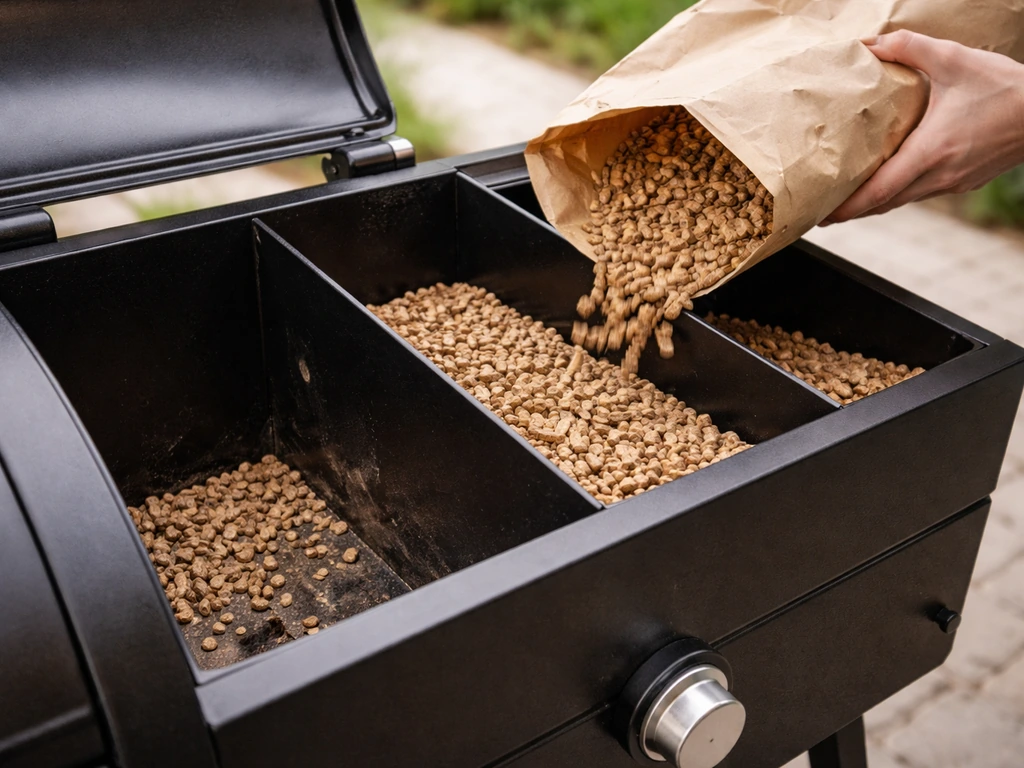
Match hopper capacity to how long you typically entertain. A 10-lb hopper might last 5 to 8 hours at a low setting, which covers most patio sessions. A 47-lb hopper covers multiple days without attention. Larger hoppers also tend to come on heavier, less portable units with fixed or semi-fixed installation requirements.
Ash cleanout and combustion chamber access
Ash is unavoidable with pellet combustion. Look for models with a removable ash pan or a bottom-access cleanout. Units with tight, awkward access to the burn pot are a maintenance headache and will get neglected, which directly hurts performance. Easy ash removal is not a luxury feature.
Weather resistance and materials
Outdoor pellet heaters need to handle moisture exposure, temperature swings, and UV. Look for powder-coated steel or stainless construction. Check that the hopper lid seals well enough to keep moisture out of your pellet supply. Units with exposed electronics or poorly sealed control boards tend to fail first in rainy climates. This is an area where real-world reviews matter more than spec sheets. If you want to see which models hold up in messy weather, Muskoka pellet patio heater reviews are a good place to start real-world reviews.
Portability vs. fixed installation
Gravity-fed units like the Even Embers are freestanding and portable, closer to a traditional patio heater in that sense. Auger-based units tend to be heavier and often need a dedicated power outlet and a semi-permanent venting setup. Be honest about whether you want something you can move for parties or something that lives in one spot.
Costs and fuel logistics: what you'll actually spend
Wood pellets are sold in 40-lb bags at most home improvement and hardware stores, typically ranging from $5 to $9 per bag depending on region and brand. In bulk (by the ton), prices are lower per pound, and in states like Maine, recent seasonal fuel pricing has put pellets at competitive rates compared to heating oil on a per-million-BTU basis. For patio use, bagged pellets are the practical choice since you're not burning at the volume of a whole-home pellet furnace.
At a medium burn rate of 1.5 to 2 lbs per hour, a 40-lb bag lasts roughly 20 to 25 hours of operation. At $7 per bag, that's about $0.28 to $0.35 per hour in fuel cost, which is competitive with propane for the same heat output. The added cost is electricity for ignition and fans: auger-based units typically draw 300 to 500 watts during startup and 100 to 200 watts during steady operation, which adds a few cents per hour.
Pellet storage is a real logistical consideration. Pellets must stay dry: moisture causes them to swell, break apart, and feed poorly (or not at all). Store bags in a covered, dry area. A single season's supply for a patio heater used a few times a week is probably 5 to 10 bags, which doesn't take much space. But if you're buying in bulk, you need a proper dry storage container or bin.
Installation, venting, and placement: the safety checklist
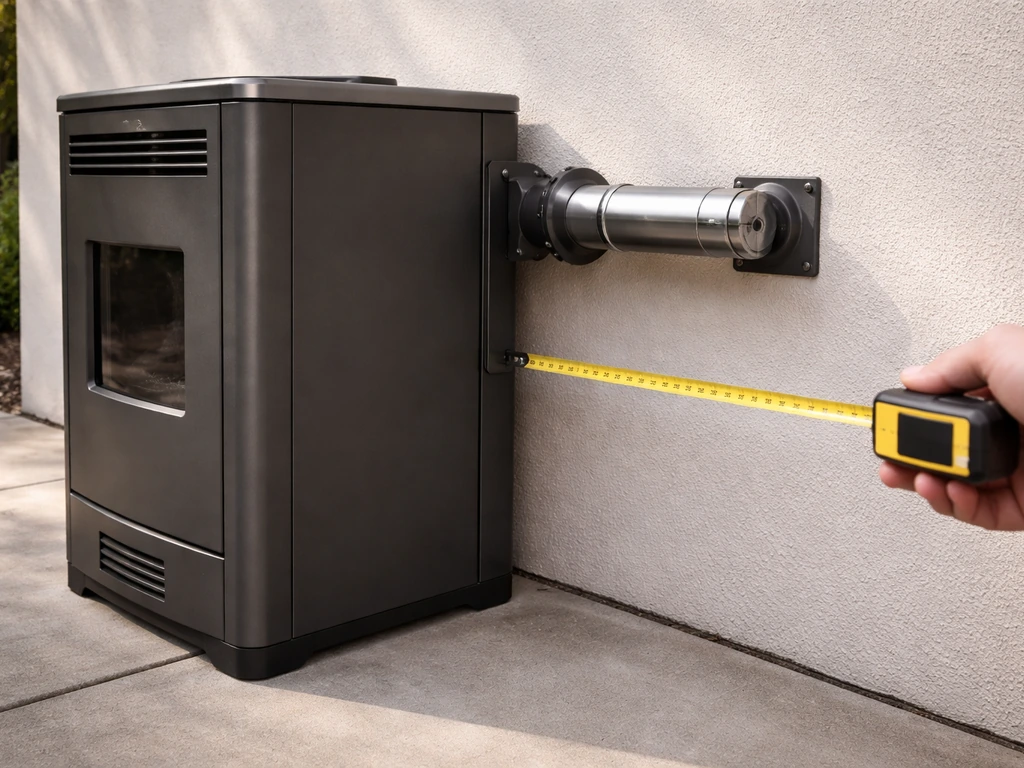
Outdoor pellet heaters like the Wood Pellet Products WPPH001.3 are marked explicitly for outdoor use only. Follow the manufacturer's placement rules without shortcuts. Here are the non-negotiable safety basics:
- Keep a minimum clearance of at least 3 inches between any pellet vent pipe and combustible materials (walls, railings, overhead structures). Check your specific model's manual for its exact clearance spec, which may be larger.
- Never operate under a fully enclosed roof or inside any structure without proper venting clearance and airflow.
- Maintain horizontal clearances from combustibles per the manufacturer's spec, typically 18 to 36 inches on all sides for freestanding units.
- Make sure the unit sits on a non-combustible surface (concrete, brick, or stone pavers). Do not place directly on a wood deck without a non-combustible pad.
- Keep a working CO (carbon monoxide) detector nearby if operating in a semi-enclosed space such as a covered patio or pergola with limited airflow.
- Ensure the electrical outlet for powered units is GFCI-protected and rated for outdoor use.
- Never leave the heater unattended while burning and ensure the area is clear of flammable materials including furniture, cushions, and overhead string lights.
- Follow the manufacturer's shutdown procedure before leaving the unit. Allow full cool-down before covering or storing.
For semi-permanent installs using auger-fed units, check local fire codes. Some jurisdictions have specific rules about solid-fuel burning appliances on residential properties, even outdoors. A quick call to your local fire marshal's office is worth the five minutes.
Maintenance and troubleshooting for reliable burns
Routine maintenance schedule
- After every 2 to 3 uses: Remove ash from the burn pot and ash pan. Accumulated ash restricts airflow to the burn pot and causes poor combustion, smoke, and incomplete burns.
- Monthly (during the season): Clean the combustion chamber walls and any visible glass or viewing port. Inspect the igniter rod for carbon buildup. A dirty igniter fails to light reliably.
- Every season: Inspect the auger (if applicable) for pellet dust compaction. Blow out the auger housing with compressed air. Check all electrical connections for corrosion.
- Before storage: Burn out remaining pellets in the hopper completely. Empty any remaining pellets by hand. Clean the entire combustion path. Cover with a weather-resistant cover.
Common problems and how to fix them
| Problem | Likely Cause | Fix |
|---|---|---|
| Won't ignite or ignition takes many tries | Dirty or failed igniter rod; damp pellets | Clean igniter of carbon deposits; use fresh dry pellets |
| Pellets not feeding (auger units) | Hopper lid interlock not engaged; bridging in hopper; auger jam | Reseat hopper lid; break up pellet bridge manually; clear auger of compacted fines |
| Excessive smoke on startup | Ash buildup blocking airflow; damp pellets; poor-quality pellets | Clean burn pot and ash pan; switch to premium dry pellets |
| Uneven or weak heat output | Low feed rate setting; clogged burn pot; wrong pellet grade | Increase feed rate; clean burn pot; use premium-grade hardwood pellets |
| Unit shuts off mid-burn | Hopper ran empty; safety sensor triggered; power interruption | Refill hopper; check for obstructions near safety sensors; verify power connection |
| Corrosion or warping on exterior | Prolonged wet weather exposure; no cover used | Apply high-temp paint to affected steel; use a fitted cover when not in use |
One thing real-world owners report consistently: pellet quality makes a bigger difference than most people expect. Premium hardwood pellets with low ash content (under 1%) burn cleaner, feed more reliably, and produce less smoke than budget softwood pellets. If your heater is underperforming, switching pellet brands is always the first thing to try before assuming the unit is defective.
Top picks: the best wood pellet patio heater for each situation
Here's how the decision breaks down across real patio types and budgets. Note that the pellet patio heater category is relatively small compared to propane or electric, so the meaningful distinctions are between gravity-fed portable units and auger-fed semi-permanent units. If you want to narrow down the best fit faster, pellet patio heater reviews can help you compare real-world heat output, ignition reliability, and maintenance effort. If you're looking at dedicated wood-burning options beyond pellets, wood burning patio heaters are worth comparing alongside these picks. If you want to compare across fuels, the best wood burning patio heaters are a useful benchmark alongside these pellet options.
| Category | Best Pick | Why |
|---|---|---|
| Best overall | Even Embers Pellet-Fueled Patio Heater | 70,000 BTU, no permanent install, widely available, solid performance for covered patios up to 150 sq ft in mild to moderate climates |
| Best for small patios (under 100 sq ft) | Even Embers Pellet-Fueled Patio Heater | Overkill on BTU for small spaces but the compact footprint and portability make it ideal; dial back pellet load for lighter output |
| Best for cold climates | ComfortBilt HP50 (outdoor-rated setup) | Large 47 lb hopper, auger-fed combustion, thermostat control mode for sustained high output in sub-freezing temps; needs a dedicated power outlet and covered placement |
| Best for windy or exposed patios | ComfortBilt HP50 (positioned in a windbreak) | Auger-fed units with fan-assisted combustion handle wind better than gravity-fed or passive convection models; combine with a three-sided windscreen for best results |
| Best value | Even Embers Pellet-Fueled Patio Heater | Lower upfront cost, no installation complexity, runs on widely available bagged pellets; total cost per season is hard to beat for occasional-use patios |
If you're on a wood deck specifically, pay extra attention to clearances and surface protection regardless of which model you choose. For most people, the best patio heater for a wood deck balances safe clearances with enough BTU output for exposed conditions best patio heater for wood deck. A non-combustible pad under the unit is not optional on wood surfaces. For more on that, deck-specific patio heater placement has its own set of considerations worth reviewing before you finalize placement.
For most people who want a real wood-fire experience on their patio without a gas line, the Even Embers is the practical starting point. If you're heating a large or exposed space regularly through a cold winter and you're willing to do a proper semi-fixed install, the ComfortBilt HP50 class of auger-fed units is the step up that actually delivers consistent warmth. Start with your patio size and climate, match the BTU requirement honestly, then let installation complexity and budget close the decision.
FAQ
Can the best wood pellet patio heater be used on a covered porch or under a pergola?
Yes, but treat it like an outdoor appliance, not a portable indoor heater. You still need safe clearance from siding, railings, and eaves, and you must place it where airflow can support proper combustion. If the patio is partially enclosed, avoid locating it under low overhangs that can trap heat and smoke.
How long does it take for a pellet patio heater to start producing usable heat?
Expect a startup routine even on auger-fed models. Most units still require ignition time and fan ramp-up, and you should let the heater stabilize for several minutes before judging heat output. If you light it repeatedly after short cool-downs, pellet ignition can be less consistent until the burn pot is clean.
What should I look for so ash cleaning does not ruin the day-to-day experience?
Look for a removable ash pan or an easy bottom-access cleanout, then confirm you can reach it without moving the entire heater. If the access requires contortions or frequent disassembly, ash buildup will reduce airflow and performance. A good sign is that owners can service it without tools.
Do I need electricity for the best wood pellet patio heater, or are there reliable options without it?
Use this rule: if you can already run a small outdoor outlet safely, auger-fed models are usually worth it for convenience and thermostat control. If you cannot, gravity-fed units avoid the steady electrical needs. Also consider that power outages can stop auger-fed heaters from feeding pellets.
Can I leave a pellet patio heater outside year-round in the rain?
Not necessarily. Many units can handle light rain exposure, but pellets must stay dry, and electronics need protection from direct water. Your best move is to keep the hopper lid sealed and avoid positioning the heater where it takes splashback or runoff. If the control compartment is exposed, use a manufacturer-approved cover only when allowed by the manual.
How do I troubleshoot poor heat or frequent flame-outs without immediately assuming the heater is defective?
Pellet quality affects ignition, flame stability, and how much soot ends up in the burn pot. If your unit seems “weak,” try a different brand or a higher-rated hardwood pellet first before blaming the heater. Also keep pellets dry, because damp pellets can swell and feed poorly even with a good auger.
Why does my pellet patio heater feel like it covers less area than the advertised BTU rating?
The most common mistake is relying on the BTU spec sheet as if it applies to an open, windy space. Coverage can shrink dramatically with exposure, so size for your actual patio openness and typical wind. Another mistake is matching BTU to square footage only, ignoring ceiling height, partial walls, and temperature swings.
What’s the best way to store pellets so the heater feeds reliably in winter?
If you store pellets in a garage or shed, use a covered, moisture-proof container and avoid leaving bags on concrete floors where condensation can wick in. Bring pellets closer to the heater before a long cold session, since very cold pellets can be harder to ignite. For frequent use, plan storage so you keep an actively used, dry supply on hand.
Is thermostat mode on an auger-fed pellet patio heater actually worth it?
Thermostat modes are most useful for steady evenings when you want consistent comfort rather than maximum burn for quick heat. If you are only heating briefly, a fixed setting can be simpler and sometimes uses fewer control cycles. Also, temperature sensors can read ambient air that is affected by wind and drafts, so expect some variation on exposed patios.
What are the key safety steps for installing a pellet patio heater on a wood deck?
For wood decks, you need a non-combustible base and strict clearance from the deck surface and nearby combustible materials. Don’t improvise with thin pads, and verify the heater’s rated clearance distances for the exact model. If you are unsure, have an installer check the base and clearances before first use.
Next Articles
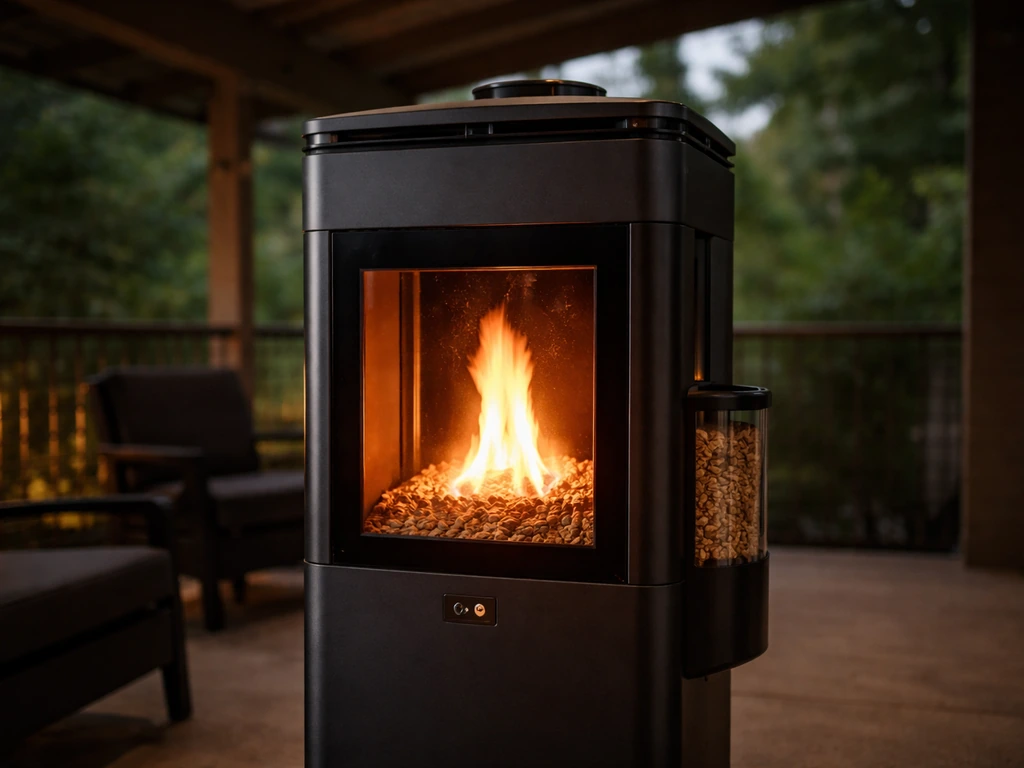
Best Pellet Patio Heaters: Buyer Guide, Picks by Size
Compare pellet patio heater types, key specs, top picks by patio size, plus setup, safety, maintenance and running costs
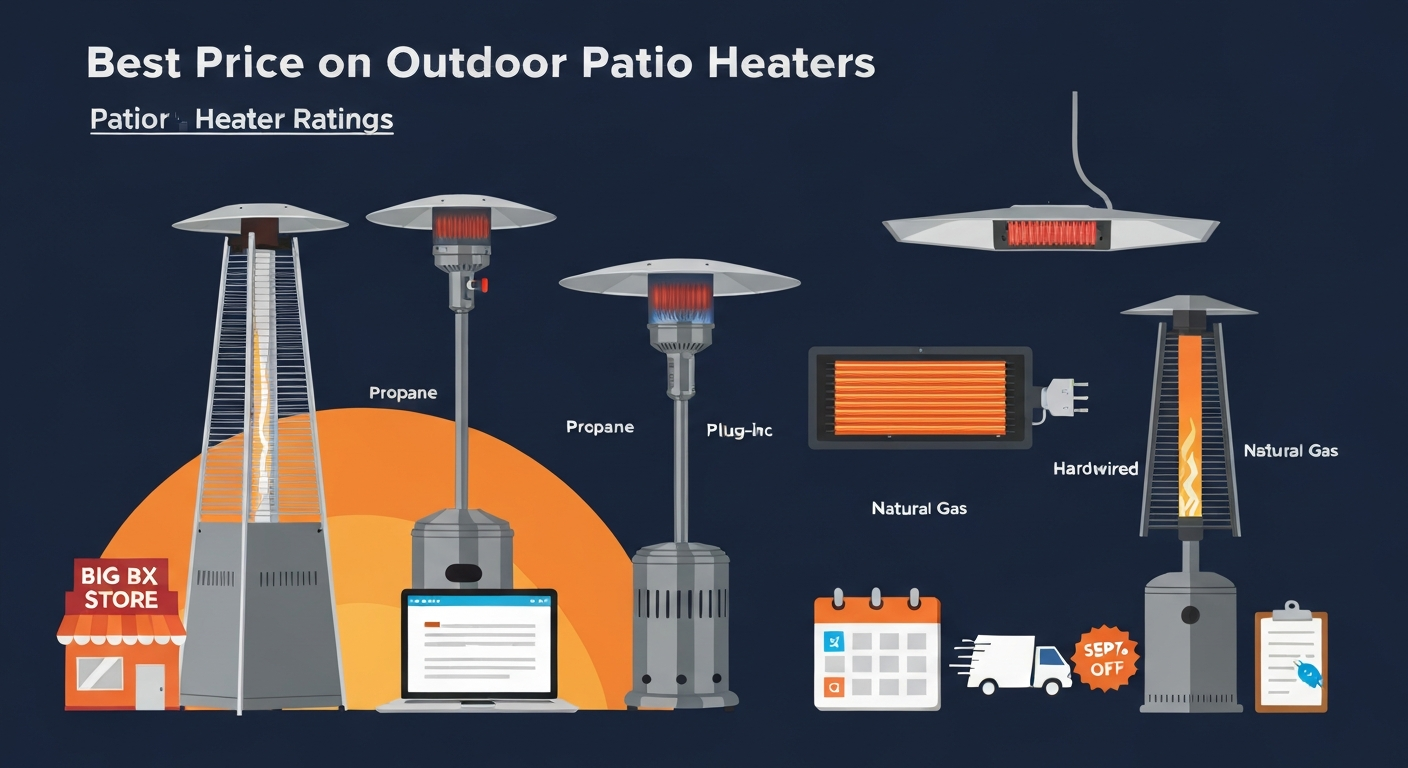
Best Price on Outdoor Patio Heaters: Compare Costs & Deals
Score the best price on outdoor patio heaters, price ranges, top picks, deal tactics, total-cost & safety checklist.
Where Can I Rent Patio Heaters Near Me Today
Find where to rent patio heaters near you today, choose the right fuel type, compare costs, and book safely.