
The best pellet patio heaters right now are the Muskoka 84" Wood Pellet Patio Heater (20 lb hopper, 4. You can compare different options in our guide to the best wood pellet patio heater choices. 5–5 hour burn time, 75,000 BTU), the HeatMaxx SRPS03 (75,000 BTU, auto ignition, 3-panel glass, solid digital control board), and the FlamePro 81" Steel Pellet Heater from Costco (18 lb gravity hopper, ~4 hours, manual ignition, budget-friendly). Each runs on standard wood pellets costing roughly $8–$9 per 40-lb bag, burns cleaner than propane, and throws heat across a radius of around 120–150 sq. ft. depending on conditions. That said, pellet heaters are a specific tool for a specific kind of patio owner, and if you haven't already confirmed this is the right heater type for your setup, spend two minutes on that first.
Best Pellet Patio Heaters: Buyer Guide, Picks by Size

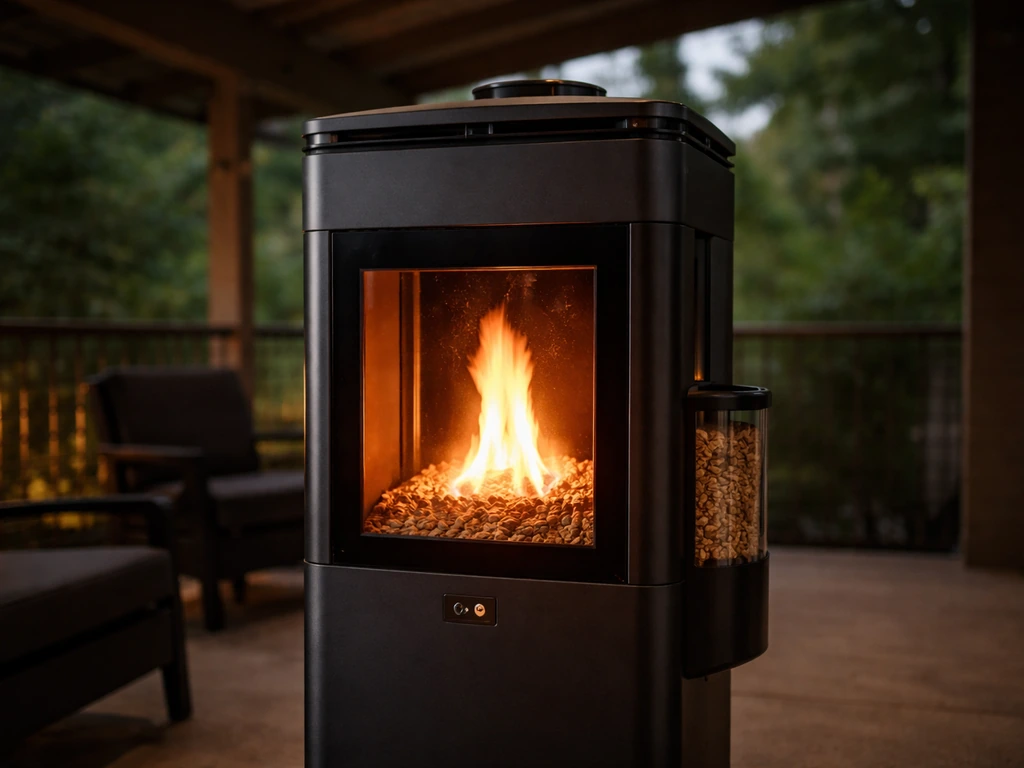
How pellet patio heaters actually work (vs propane, electric, natural gas, and infrared)
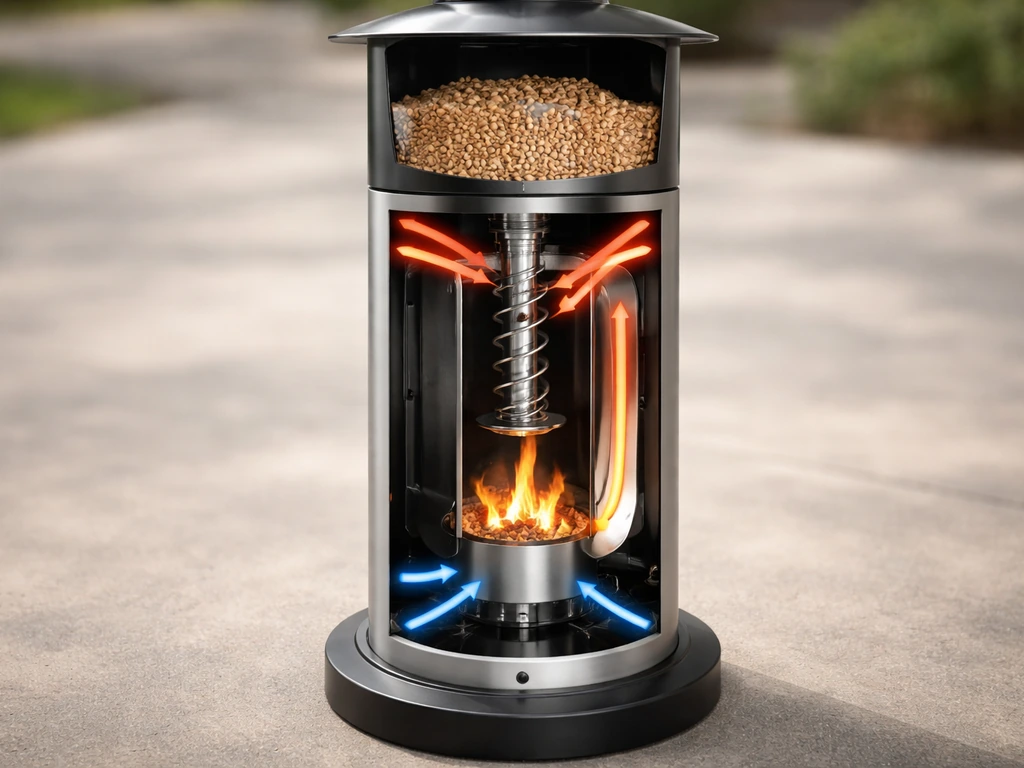
Pellet patio heaters use a hopper-fed auger system. You fill the hopper with compressed wood pellets, and an auger (a rotating screw mechanism) delivers pellets from the hopper down into the burn pot at a controlled rate. A solid-state control board manages auger speed and combustion air together. Increase the feed rate, get more heat; slow it down, get a longer burn on a smaller flame. A forced-draft fan pushes exhaust gases out through a dedicated vent or flue. Some models, like the HeatMaxx SRPS03, use an automatic ignition and digital circuit board to start and control the burn cycle. Others, like the FlamePro, use manual ignition with a lighter and starter fluid. The Even Embers model adds an auto safety shut-off that kills the heater if the flame goes out unexpectedly, which is a genuinely useful feature on a patio where wind gusts are common.
Compare that to what else is on the market. Propane heaters are plug-and-play: connect a tank, turn the knob, get instant heat. Electric and infrared heaters are even simpler but require a power outlet and give up portability. Natural gas heaters need a permanent gas line and professional installation. Pellet heaters sit in an interesting middle ground: more setup and ongoing maintenance than propane, but dramatically lower fuel cost per BTU and a real wood-burning aesthetic that propane and electric can't replicate. If you want zero-effort heat, propane or electric wins. If you want cost efficiency, ambiance, and you're willing to manage fuel and ash, pellet is a genuinely strong choice.
| Heater Type | Fuel Cost | Setup Effort | Portability | Ambiance | Maintenance |
|---|---|---|---|---|---|
| Pellet | Low (~$0.20–$0.25/hr) | Medium | Moderate | High (real flame) | Medium-High (ash, vent) |
| Propane | Medium-High | Very Low | High | Medium | Low |
| Electric/Infrared | Medium | Very Low | Medium | Low | Very Low |
| Natural Gas | Low-Medium | High (permanent) | None | Low-Medium | Low |
| Wood Burning | Low-Medium | Medium | Low | Very High | High (ash, creosote) |
Top picks: best pellet patio heaters by patio size and use case
Here are the models I'd actually recommend today, matched to the most common patio scenarios. All three put out 75,000 BTU, which is about as powerful as patio pellet heaters currently get. The differences come down to hopper size, ignition type, build quality, and how they handle wind and weather.
Best overall: Muskoka 84" Wood Pellet Patio Heater
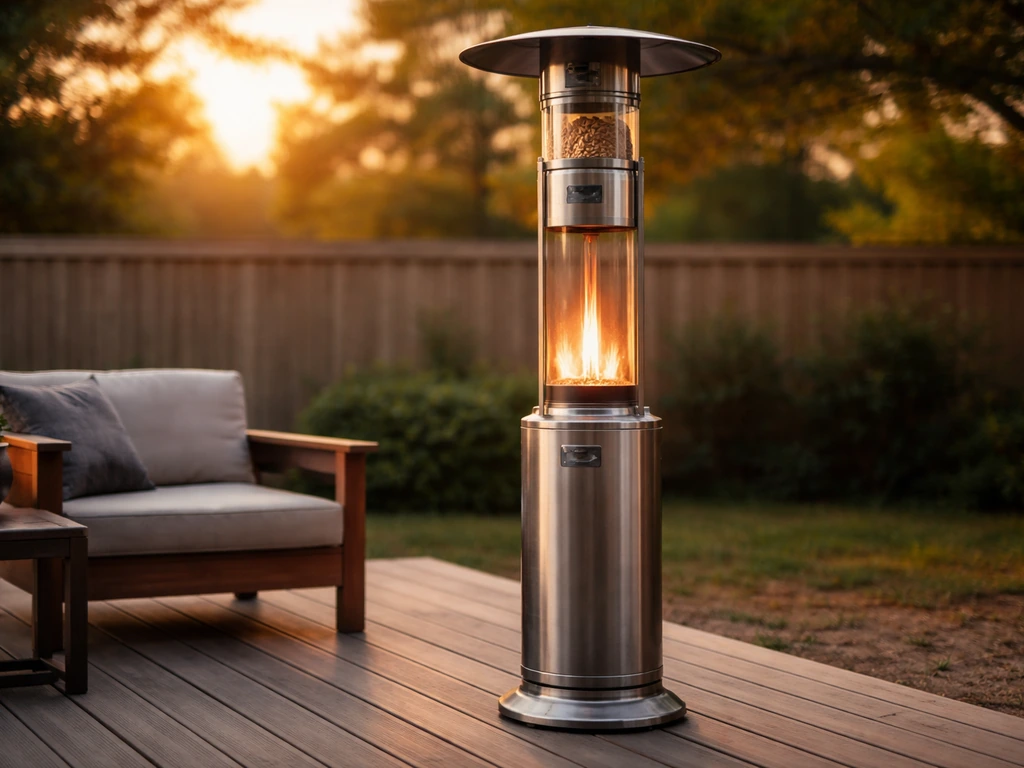
At 84 inches tall with a 20 lb hopper and a burn time of 4.5 to 5 hours on a full load, the Muskoka is the one I'd put on a medium to large open patio where you're hosting regularly. It's available through Walmart and hits the right balance of burn duration and heat output. The 20 lb hopper means fewer refueling interruptions during a long evening. Coverage is rated up to 150 sq. ft. in radius, though realistically in a moderate breeze you'll feel it most within 10–12 feet of the unit. This is also the model to look at if you want the full pellet experience without constantly babysitting fuel levels. If you're interested in wood pellet-specific options, it's the benchmark in that category.
Best for tech-forward setup: HeatMaxx SRPS03 (Home Depot)
The HeatMaxx SRPS03 stands out because of its automatic ignition and digital control board. You're not fiddling with a lighter and starter fluid every session; the board handles ignition and manages the auger feed rate to maintain your selected heat level. The 3-panel glass design also lets the flame do some visual work, which matters if aesthetics are part of why you chose pellet over propane in the first place. Specs list 75,000 BTU and a 150 sq. ft. coverage radius. Best for: covered patios, frequent entertaining, or anyone who wants a more automated experience. The digital controls also make this a good fit if you want to dial in a lower burn setting for a longer, more economical session.
Best budget pick: FlamePro 81" Steel Patio Pellet Heater (Costco)
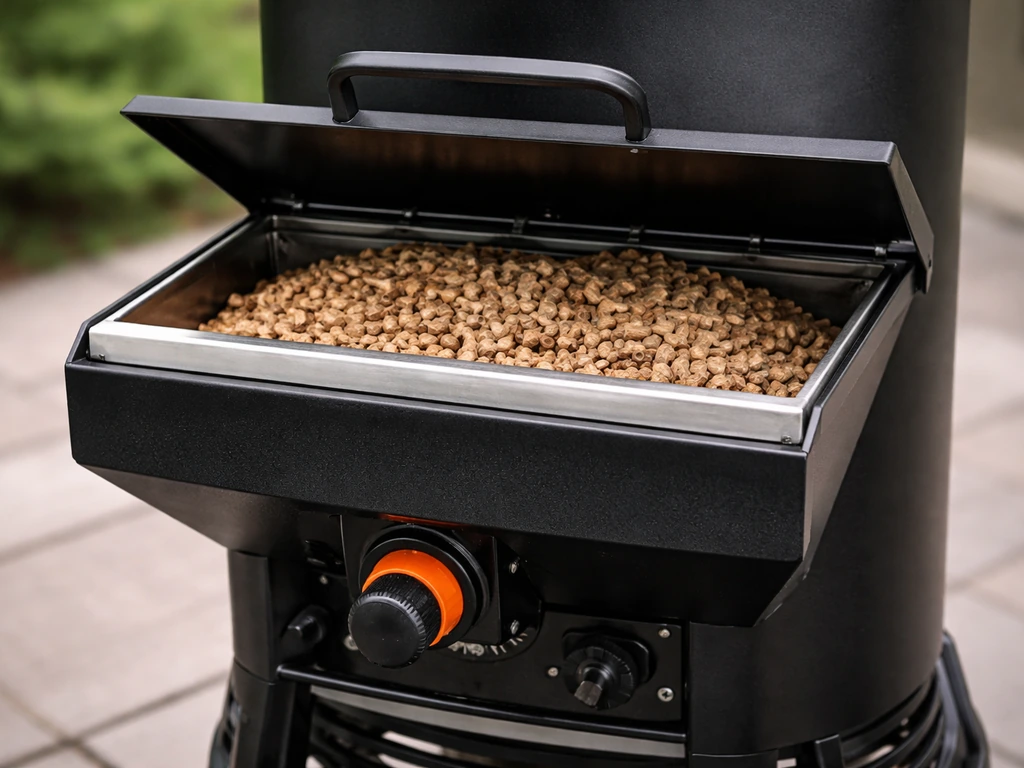
The FlamePro comes in at a lower price point and uses a gravity-fed 18 lb hopper with manual ignition. Burn time is around 4 hours. The trade-off is that manual ignition (lighter and starter fluid) is less convenient, and some owners have reported that heat output can feel a bit short of the 75,000 BTU claim in real-world use, especially in cold or windy conditions. It's a fair buy for occasional use on a small to medium patio where you don't need hours of hands-off operation. If you're comparing this to a wood burning patio heater, the FlamePro is easier to operate and produces less smoke, but you give up some of the raw warmth and crackle of true wood fire.
Honorable mention: Even Embers Pellet-Fueled Patio Heater
Even Embers markets their heater on fuel efficiency and cost savings versus propane, which is accurate. The auto safety shut-off is a standout safety feature: if the flame goes out unexpectedly, the unit cuts off rather than continuing to feed pellets into an unlit burn pot. That's the kind of thing that matters on a windy night. It's a solid pick for safety-conscious buyers or anyone with a partially covered patio where wind is a variable.
What to look for when buying: the specs that actually matter
Heat output and real coverage area
All the major pellet patio heaters cluster around 75,000 BTU. On paper, that covers a radius of 120–150 sq. ft. In practice, wind, ambient temperature, and whether your patio is covered all shrink that number. Some owners of the FlamePro specifically noted it didn't generate the advertised heat in real conditions. Plan around 10–12 feet of comfortable warmth as your realistic radius on a still night, and less in any real wind. If your patio is larger than 300 sq. ft., you should either be looking at two units or a fixed natural gas or infrared system with more consistent output.
Hopper capacity and burn time
Hopper size directly determines how long you can run without stopping to refuel. The Muskoka's 20 lb hopper gives you the longest session at 4.5–5 hours. The FlamePro's 18 lb gravity hopper runs about 4 hours. If you're hosting a dinner party or a long evening outside, those numbers matter. On the shorter end, the Big Timber Elite lists a 2-hour burn time, which is better suited for quick sessions rather than a full evening. Match hopper size to your typical use length, not just your occasional marathon sessions.
Ignition type
Auto ignition (HeatMaxx SRPS03, Even Embers) is more convenient and more consistent. Manual ignition (FlamePro) is cheaper upfront but adds a startup ritual every session. For frequent use, auto ignition is worth paying for. For occasional use on a budget, manual is fine.
Portability and placement
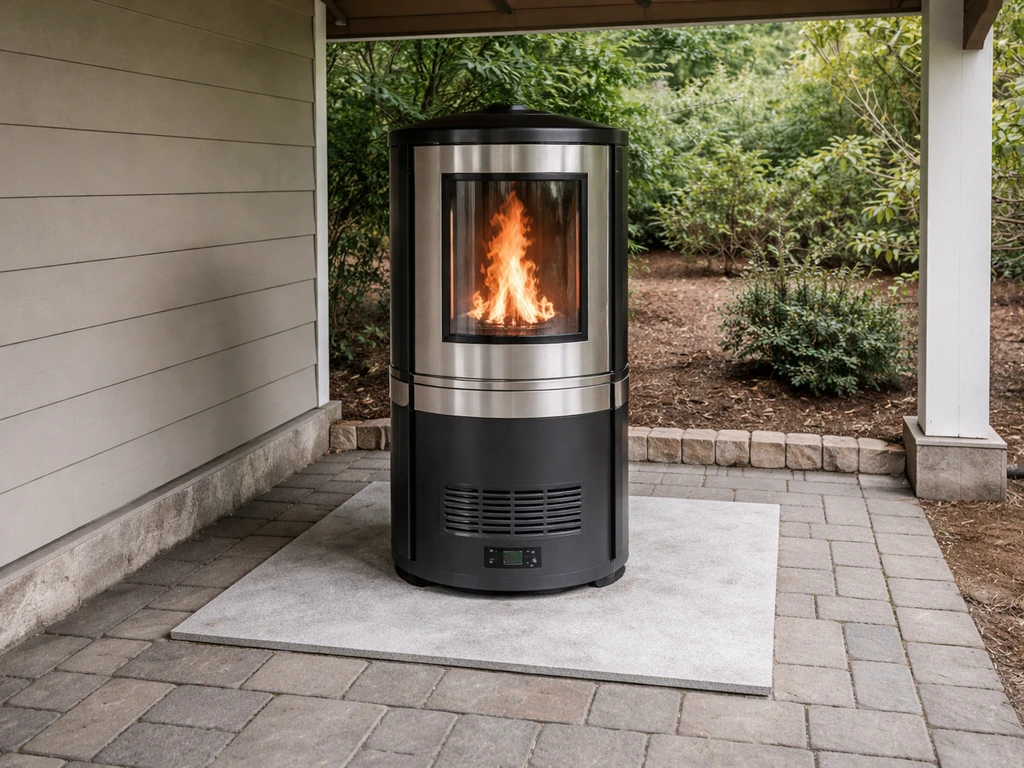
Most pellet patio heaters are freestanding on wheels, which makes them relocatable, but they're heavier than a propane tower heater and have a vent that needs to be clear. They're not as grab-and-go as propane. If you need to move your heater frequently between a deck and a patio, factor in the weight and the exhaust direction.
Control type and ease of use
Digital control boards (HeatMaxx, Even Embers) let you set and forget. The board manages auger feed rate and combustion air together, which keeps the burn consistent and efficient. Models without digital controls require more manual attention to maintain the right heat level. For infrequent users or anyone who finds the tech appealing, digital is the better experience.
Installation, setup, and safe operation checklist
Pellet patio heaters are not as simple to set up as propane, but they're not complicated either. The main things to get right before the first burn are clearances, surface, vent direction, and fuel quality.
- Place the heater on a level, non-combustible surface (concrete, pavers, stone). Avoid placing directly on a wood deck without a protective mat underneath.
- Maintain at least 36 inches (91 cm) of clearance from combustible materials on all sides and overhead, including walls, furniture, overhangs, and fences. The Even Embers manual specifies this exactly.
- Point the exhaust vent away from seating areas, doors, and windows. Never allow the vent to terminate where it could be blocked by snow, ice buildup, or overhanging vegetation.
- Check that the vent pipe is properly connected and seated before each use. A loose or improperly connected vent is the most common cause of smoke problems and combustion failure.
- Use only premium-grade, low-moisture wood pellets. Wet or low-quality pellets cause incomplete combustion, excessive ash, and auger jams.
- Never open the hopper lid while the heater is running. Most models include a hopper lid safety switch that stops the auger when the lid is open, but don't rely on it as a reason to refuel mid-burn.
- Allow the heater to complete its shutdown cycle fully before moving or covering it. The combustion fan typically runs for several minutes after you cut the heat to clear residual gases.
- Install a carbon monoxide (CO) detector nearby. Even outdoors, CO can accumulate in partially enclosed or covered patio spaces. The NFPA and EPA both specifically recommend CO alarms for pellet appliance users.
- Keep a fire extinguisher accessible within 10 feet of the heater.
- Cool the unit completely before refueling or performing any maintenance.
Weather and climate: what pellet heaters handle well (and what they don't)
Pellet heaters are not the most weather-robust outdoor heating option, and it's worth being direct about that. Wind is the biggest challenge. Because the combustion system relies on a forced-draft fan and a matched pellet feed rate, strong or gusty wind that disrupts airflow at the vent termination can cause inconsistent combustion, excessive smoke, or even flame-out. The Even Embers auto shut-off helps here, but it means the heater turns itself off rather than powering through. On a very exposed or windy patio, a propane tower heater or a wall-mounted infrared heater will be more reliable.
Rain is manageable if you have a covered or semi-covered patio. Pellets must stay dry: a wet hopper load will cause incomplete combustion and clog the auger. Never store pellets in an unsealed bag outdoors. If rain or snow can blow into the hopper opening, consider a model with a tight-sealing lid or keep the heater under cover when not in use. Cold temperatures, on the other hand, are where pellet heaters actually shine compared to propane (which loses pressure in very cold temps) and electric (which can struggle with draw in cold climates). A well-fed pellet heater in 20–30°F weather will maintain consistent output as long as the pellets and venting are in good shape.
One specific winter concern: manufacturer guidance explicitly states the vent must not terminate where snow or ice can plug it. If you use the heater in a snowy climate, check the vent cap before every use in winter and keep it clear. A plugged vent is both a combustion problem and a CO risk.
Maintenance, cleaning, and troubleshooting
Pellet patio heaters need more ongoing attention than propane or electric heaters. The upside is that the maintenance tasks are straightforward once you have a routine. The downside is that skipping them leads to real problems fast: poor combustion, auger jams, and venting failures.
After every use
- Allow the heater to complete its full shutdown cycle before touching anything.
- Once cool, remove ash from the burn pot using a small ash vacuum or scoop. Ash buildup in the burn pot disrupts airflow and reduces combustion efficiency.
- Check the glass panels (if your model has them) for soot buildup and wipe with a damp cloth designed for stove glass.
Every few uses or weekly during heavy use
- Inspect the vent pipe and cap for debris, spider webs, ash deposits, or physical blockage.
- Check the hopper for any residual pellets that may have absorbed moisture. Remove and discard damp pellets before refilling.
- Wipe down the exterior with a dry cloth. Avoid using water near any electrical components.
- Listen for unusual sounds during startup: grinding or stuttering from the auger area usually means a pellet jam or pellet dust buildup in the auger tube.
Seasonal (start and end of season)
- Remove all pellets from the hopper before storing for the season. Pellets left in the hopper over winter absorb moisture and expand, causing jams and potential auger damage.
- Inspect the combustion blower/fan blades for dust and ash buildup. A clogged blower is the most common cause of incomplete combustion and sooty glass.
- Check all electrical connections and the control board for corrosion, especially if the unit was exposed to rain or humidity.
- Inspect the vent pipe joints and seals for any gaps or loosening.
Common troubleshooting
| Problem | Likely Cause | Fix |
|---|---|---|
| Won't ignite | Empty/jammed auger or wet pellets | Clear auger, refill with dry pellets, retry ignition cycle |
| Excessive smoke | Plugged vent or wet/low-quality pellets | Clear vent, switch to premium dry pellets |
| Flame goes out mid-session | Wind disruption, clogged burn pot, or low pellet feed | Check vent clearance, clean burn pot, increase feed rate setting |
| Auger noise/grinding | Pellet jam or dust buildup in auger tube | Clear jam, vacuum auger channel, use higher-quality pellets |
| Poor heat output | Ash buildup in burn pot or low-quality pellets | Deep clean burn pot, switch pellet brand |
Running costs: what pellet heat actually costs vs the alternatives
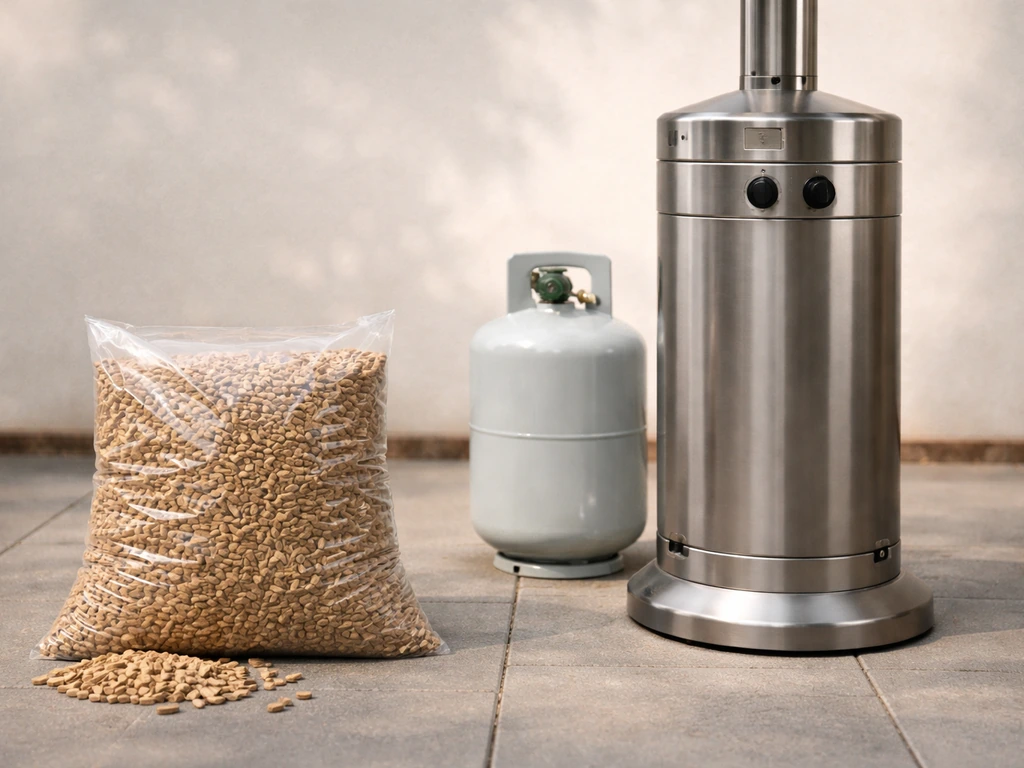
This is where pellet heaters make their strongest argument. Wood pellets currently run about $8–$9 per 40-lb bag (with bulk ton pricing averaging around $200–$400 depending on brand and region). A 75,000 BTU pellet patio heater running for 4–5 hours burns roughly 18–20 lbs of pellets, meaning each full session costs approximately $3.50–$4.50 in fuel. That's genuinely cheap for the heat output involved.
Propane at current April 2026 EIA-tracked residential prices runs higher per equivalent BTU than pellets in most U.S. states. A propane patio heater at 40,000–46,000 BTU will burn through roughly 1–1.5 lbs of propane per hour, and at current pricing that adds up faster than pellets, especially over a full season of frequent use. Electric heaters are convenient but cost depends heavily on your local kWh rate, and they top out at much lower BTU output. Natural gas is cost-competitive with pellets but requires permanent installation. Infrared heaters are efficient per watt but typically output less total BTU than a 75,000 BTU pellet unit.
| Heater Type | Approx. Fuel Cost Per Session (4–5 hrs) | Max BTU Output | Installation Cost | Best For |
|---|---|---|---|---|
| Pellet | $3.50–$4.50 | 75,000 BTU | Low (freestanding) | Cost-conscious, frequent use, aesthetics |
| Propane | $6–$12+ | 40,000–48,000 BTU | None | Convenience, portability |
| Electric/Infrared | $1.50–$4 (varies by kWh rate) | 5,000–15,000 BTU equiv. | Low-Medium | Small areas, low maintenance |
| Natural Gas | $2–$5 | 40,000–60,000 BTU | High (permanent line) | High-frequency use, large patios |
The honest bottom line on value: if you use your patio heater frequently (multiple times per week through a cold season), a pellet heater pays for itself in fuel savings over propane within one to two seasons. If you use it occasionally, the fuel savings are real but less meaningful, and the extra maintenance overhead starts to tip the scale toward the simplicity of propane. For a patio used 2–3 times a week or more, pellet is the clear long-term winner on cost. For occasional weekend use, propane's convenience probably edges it out.
Which one should you actually buy?
If you want the longest burn time and the most reliable fuel capacity for a medium to large patio, the Muskoka 84" is the pick. It has the biggest hopper, the longest session time, and a track record among users who want to set it and enjoy the evening. If automation matters to you and you want digital control and auto ignition, the HeatMaxx SRPS03 is the smarter choice, especially for covered patios where you'll run it regularly. If budget is the main driver and you're an occasional user who doesn't mind manual ignition, the FlamePro from Costco is a fair entry point, just go in knowing the real-world heat output may be a bit below the spec sheet claims.
For anyone who loves the look and feel of real fire but wants something even closer to a traditional campfire experience, exploring dedicated wood burning patio heater options is worth a look alongside these pellet models. If you want the best wood burning patio heaters for a true fire experience, compare pellet models with wood-fired options based on fuel cost, cleanup, and heat output. And if you've already landed on pellet and want a deeper dive into how specific models have held up over time for real owners, checking out dedicated pellet patio heater reviews and Muskoka-specific user feedback will give you the performance context you need to pull the trigger with confidence. That said, if you’re comparing models, reading pellet patio heater reviews can also help you spot common real-world issues like uneven heat and maintenance needs.
FAQ
How much maintenance do the best pellet patio heaters really require between uses?
Not automatically. Pellet patio heaters usually need occasional ash removal, and many owners also clean the burn pot and check the vent path for soot buildup. If you plan to use the heater only occasionally, choose an auto-ignition model with easier startup and make sure you can still commit to a quick pre-burn inspection each time.
Will pellet patio heaters keep burning reliably in windy weather?
Yes, wind can cause flame-out or heavy smoke, even when the unit is built for outdoors. On a gusty patio, avoid placing the heater where the vent termination faces prevailing winds directly, and keep nearby barriers (railings, walls, pergola posts) from creating a draft reversal near the exhaust.
What should I do differently if I use a pellet patio heater in snow or below-freezing temperatures?
Colelctively, pellet heaters can make sense, but cold weather can still create issues if pellets absorb moisture. Store pellets in a sealed indoor container, and in winter check that the vent cap is free of ice or snow before every session, because a blocked vent increases the risk of poor combustion and smoke.
Can I use any pellets in these pellet patio heaters?
Do not substitute pellets with other fuel types. Use compressed wood pellets that match the heater’s specifications (size, ash content, and moisture). Using incorrect pellets is a common cause of auger jams, inconsistent heat, and excess soot.
Why do pellet patio heater BTU ratings not match what I feel on my patio?
You should expect the comfortable warmth radius to be less than the advertised coverage when conditions are not ideal. A practical rule is to plan around the 10–12 foot zone for noticeable heat on a still evening, then reduce further for breezy or exposed areas.
How should I choose based on hopper size if I host different-length evenings?
Hopper size affects how often you refuel, but not just in hours of runtime. Because start-up and ramping burn patterns can differ by model, the most accurate comparison is “time on a full load” plus your typical starting frequency (for example, short sessions may use less fuel but still require repeated starts).
Is auto-ignition worth paying extra for, compared with manual ignition?
Auto-ignition helps with convenience and consistency, but it does not guarantee trouble-free operation in every environment. Manual ignition models can still be fine for occasional use, but if you want minimal steps every session, prioritize a digital control board and automatic ignition features.
How do I choose the best location for a pellet patio heater on a deck or covered patio?
If the heater uses a forced-draft fan, it needs a clear vent/flue path with correct termination clearance from the structure. Place the unit so exhaust goes into open air, not toward a wall, fence, or roof edge where hot exhaust can recirculate.
Can pellet patio heaters be left outside, and how do I protect them from rain?
Pellet heaters should not be treated as fully weatherproof. Rain can enter the hopper and cause incomplete combustion or auger problems, so keep the unit under cover when possible, and avoid leaving pellets outdoors even if the heater is sheltered.
Are pellet patio heaters easy to move around, or do they need a permanent setup?
Typically, yes. You can usually move a freestanding pellet unit, but you must consider weight, the need to keep the vent clear, and exhaust direction so you do not relocate the heater to a spot that changes draft performance or blocks the flue.
What does an auto safety shut-off actually do, and does it change how I should operate the heater?
If the flame goes out unexpectedly, safety shut-off models will typically stop feeding fuel, which can prevent continued pellet feeding into an unlit burn pot. This is especially useful on patios where gusts occur, but you still want to investigate the cause before restarting (for example, vent blockage or wind pattern changes).
What’s the simplest way to decide between one strong pellet heater versus multiple units?
Start by confirming your patio size and how sheltered it is, then match that to the realistic heat radius and burn time you can live with. If your patio is larger than what one 75,000 BTU unit can cover comfortably, plan on two units or a different heat type designed for whole-area coverage.
How long does it take for a pellet patio heater to produce steady heat after starting?
No, pellet heaters are generally not the “fast-heat, walk-away” option that propane units can be. Expect startup and stabilization as the auger feed rate and combustion air come up to operating conditions, and avoid adjusting settings repeatedly in the first few minutes.
What are the most common reasons pellet patio heaters run weak over time?
Many units perform worse when the burn pot or feed path gets dirty. Create a consistent routine: inspect the burn pot before refueling, remove ash as recommended by the manufacturer, and keep the vent system clear to reduce soot buildup and maintain stable airflow.
Are there any CO or safety checks I should do before every use?
You should have a clear plan for CO safety. Even if the heater is outdoors, follow the manufacturer’s venting and clearance requirements, keep the vent cap unobstructed in winter, and stop using the unit if you notice unusual smoke, ignition failures, or signs of venting issues.
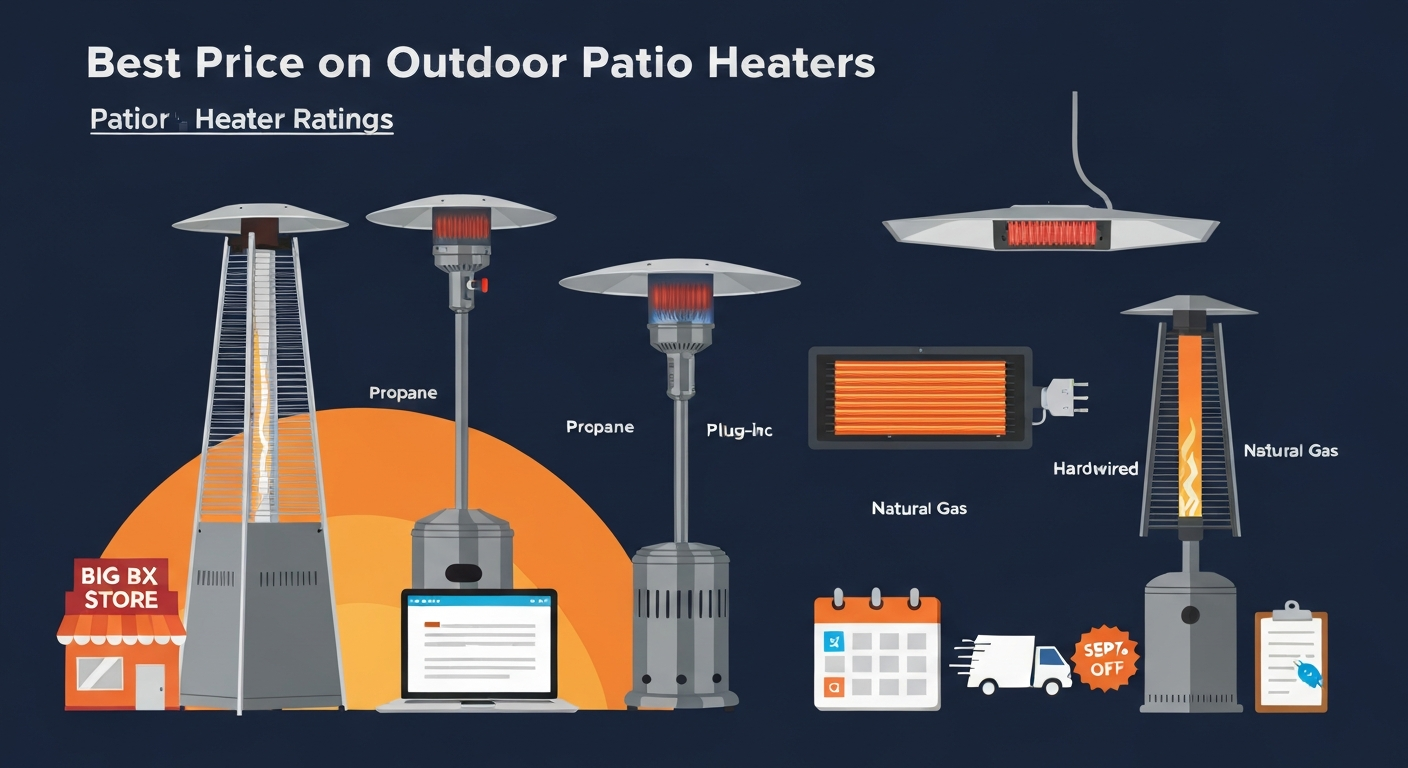
Score the best price on outdoor patio heaters, price ranges, top picks, deal tactics, total-cost & safety checklist.
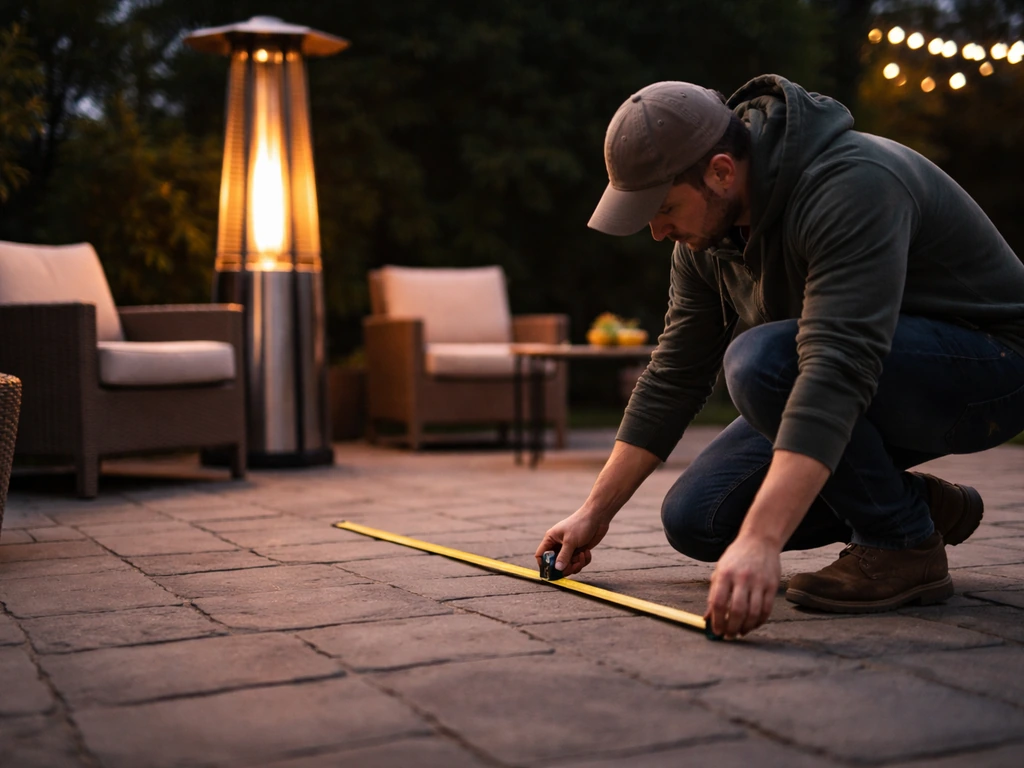
Find where to rent patio heaters near you today, choose the right fuel type, compare costs, and book safely.
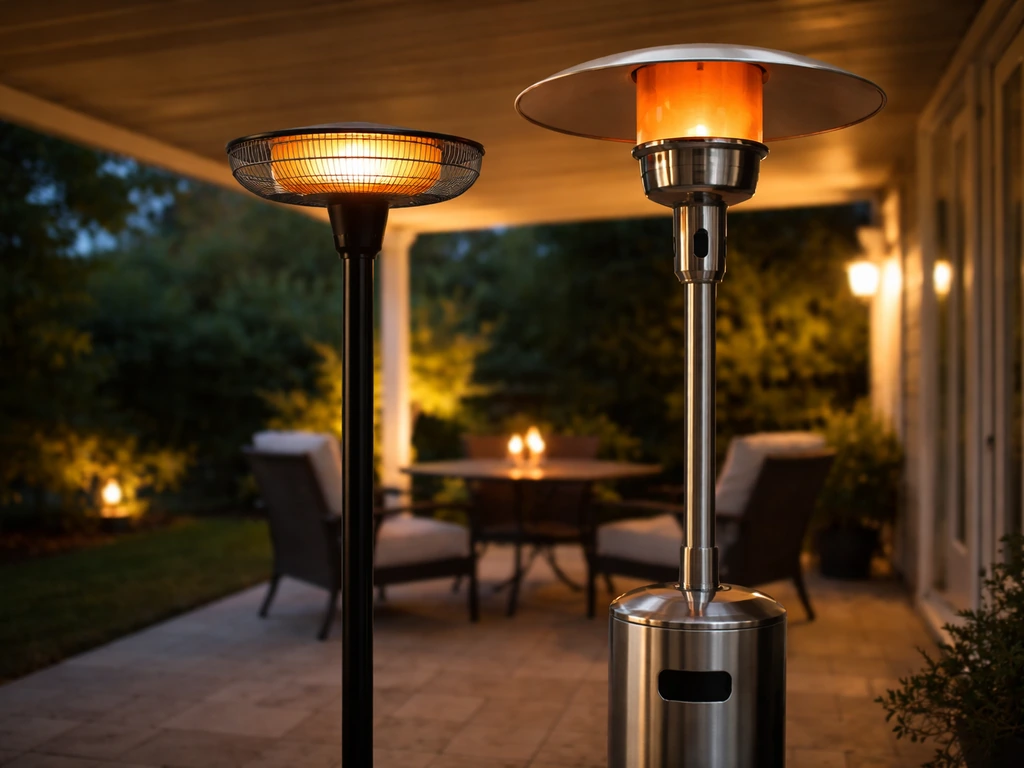
Where to buy a patio heater now, plus electric vs gas vs propane tips, safety checks, and size/BTU buying checklist.