
Pellet patio heaters are worth serious consideration if you want real flame ambiance, solid heat output, and a fuel source that costs less per BTU than propane. The best picks right now are the Solo Stove Tower (72,000+ BTU, great for mid-size patios), the Timber Stoves Big Timber (90,000 BTU, best for larger spaces), and the Even Embers pellet heater (35-lb hopper, longest refuel window). Each has real trade-offs around burn time, startup speed, and maintenance that matter a lot in practice, so keep reading before you pull the trigger.
Pellet Patio Heater Reviews: Best Models, Specs, Pros/Cons

Caleb Vale
5 Jun 2026
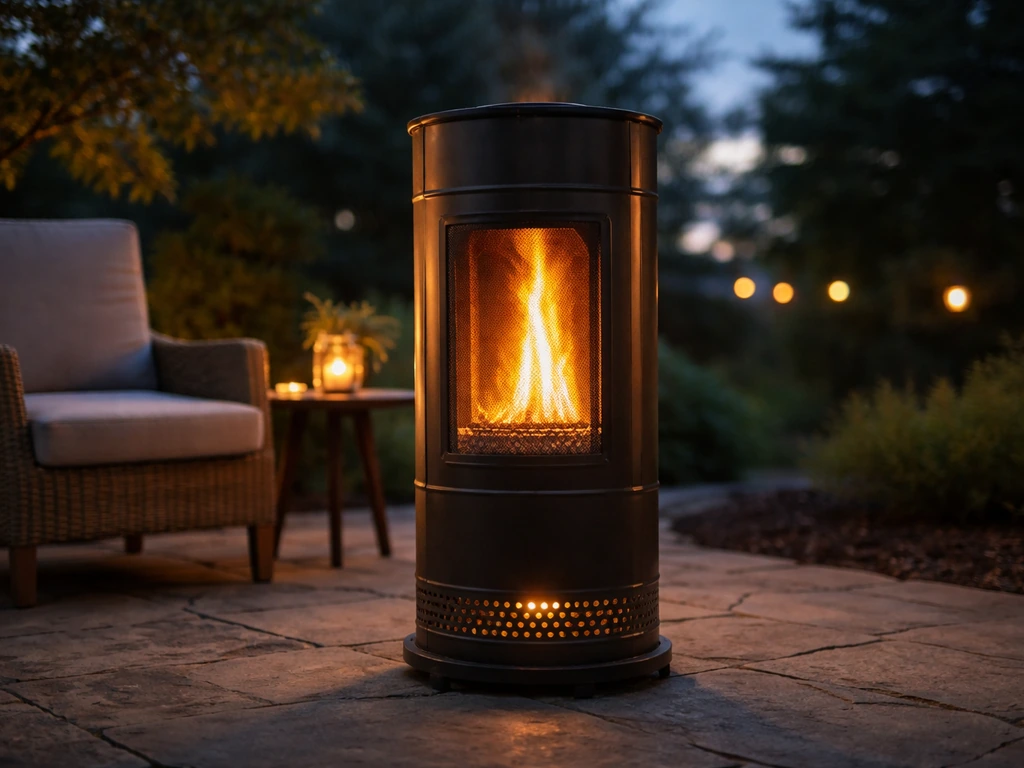
What a pellet patio heater is (and who it's actually for)
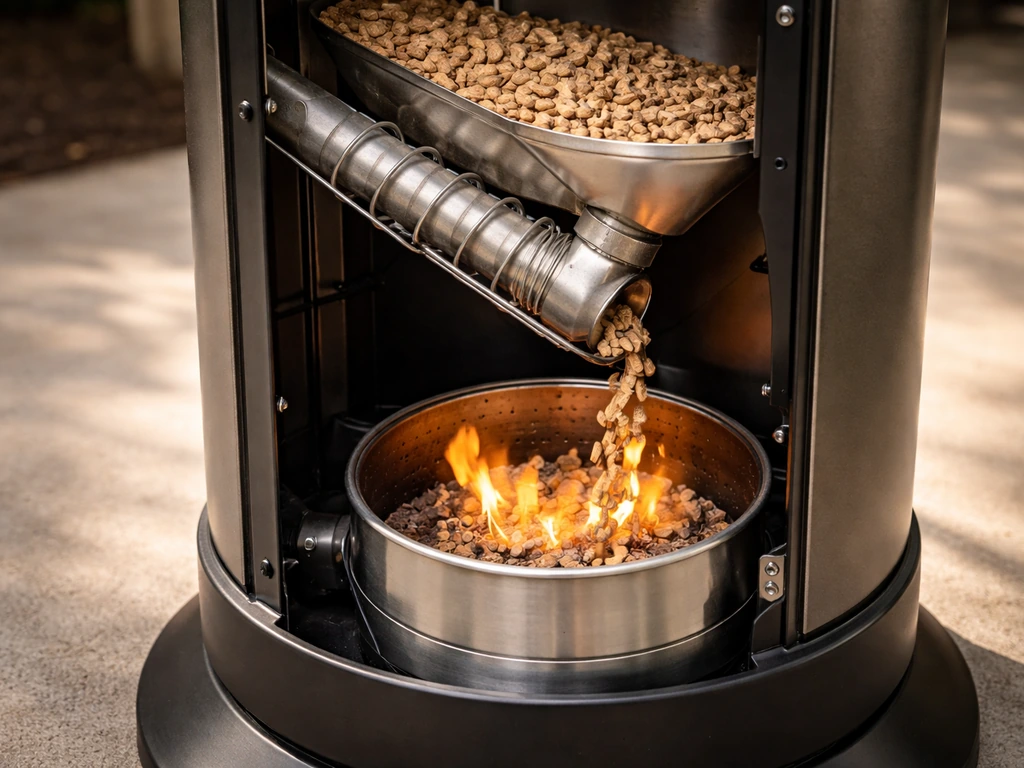
A pellet patio heater burns compressed wood or biomass pellets instead of propane, natural gas, or electricity. Inside the unit, an auger or gravity-feed system moves pellets from a hopper into a burn pot or combustion chamber. Once lit, the fire is largely self-sustaining as long as pellets are in the hopper. You control heat level by adjusting the fuel flow rate, not by turning a knob like propane. The result is a real wood flame, genuine radiant heat, and a much more campfire-like experience than a gas tower heater delivers.
These heaters are best for people who want the look and feel of a wood fire without the hassle of splitting logs or tending a full fire pit. They suit homeowners with medium to large patios, anyone who hosts regularly and wants consistent heat without babysitting the flame, and buyers who are already comfortable with a bit of setup and cleanup. They are not the right call if you need instant-on heat, you want to run a heater for five or six hours uninterrupted without refilling, or you need something with zero maintenance. If you fall into that last camp, a propane or infrared model is probably a better fit for your situation.
Top pellet patio heater reviews: best picks by use case
Solo Stove Tower: best for most people
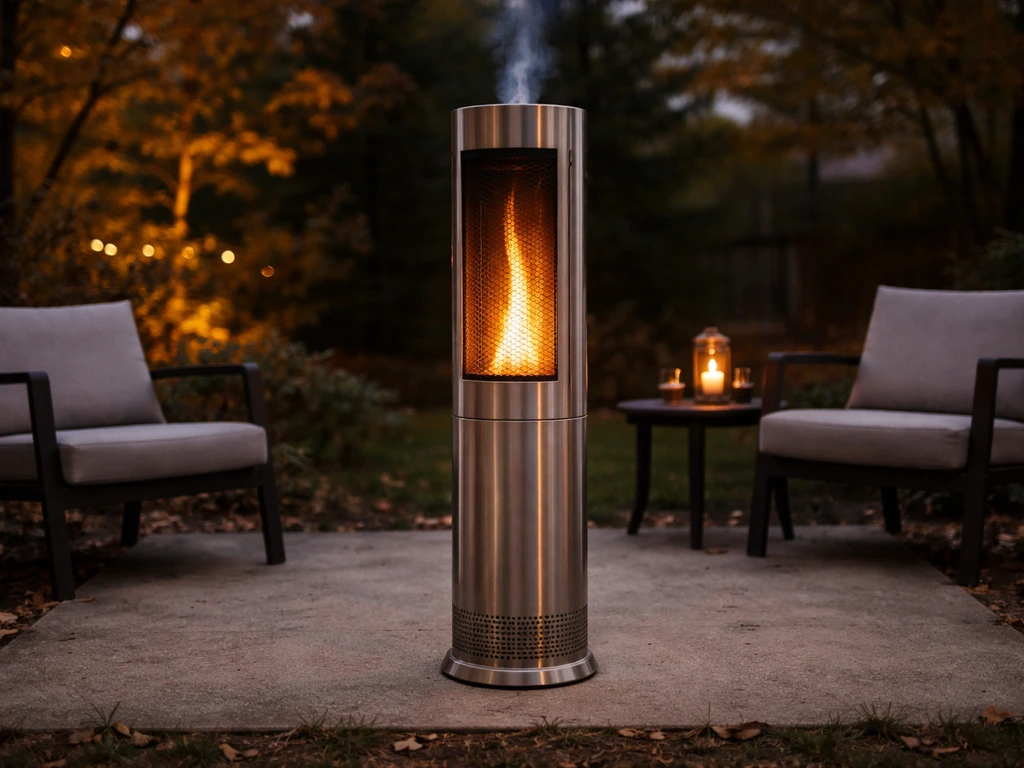
The Solo Stove Tower is the most widely reviewed pellet patio heater on the market right now, and for good reason. It puts out 72,000+ BTU, covers roughly a 10-foot radius, holds 25 pounds of pellets, and delivers about 3 hours of burn time per fill. The gravity-fed hopper uses three feed positions (Open, Half, and Closed) to adjust heat level. Cleanup is handled by a built-in ash shaker and a removable ash pan, which is genuinely one of the better ash management systems in this category. Popular Mechanics included it in their best patio heaters for 2026, and Bob Vila's team rated it their top wood pellet pick after hands-on testing.
- Pros: Wide brand support, solid 3-hour burn time, good heat radius for most patios, relatively easy ash cleanup, no electricity required
- Cons: 25-lb hopper is smaller than the Even Embers (35 lb), heat adjustability is manual and limited to three positions, flame aesthetic is not as dramatic as some expect
- Best for: Homeowners with a standard deck or patio up to 20 feet across who host 2-to-4-hour evening gatherings
Timber Stoves Big Timber: best for larger patios and longer sessions
If you need more raw heat, the Timber Stoves Big Timber is the strongest pellet patio heater you can buy for outdoor residential use. It produces 90,000 BTU and claims up to a 12-foot max heating radius. The trade-off is a shorter burn time: Timber Stoves lists it at approximately 2 hours on a full hopper. The unit is engineered for hopper-based gravity and natural-draft combustion, meaning no electric igniter fan, which simplifies reliability. Timber Stoves explicitly recommends softwood pellets rated at 8,000 BTU/lb or higher for this heater, so pellet selection genuinely matters here.
- Pros: Highest BTU output in class, 12-foot heating radius, no electricity required, strong build quality for regular outdoor use
- Cons: Only ~2 hours per hopper fill, most expensive option in the Timber Stoves lineup, pellet quality requirements are stricter than other models
- Best for: Larger patios, restaurant or commercial patio settings, or any situation where maximum heat output matters more than burn duration
Timber Stoves Lil' Timber: best for smaller spaces on a budget
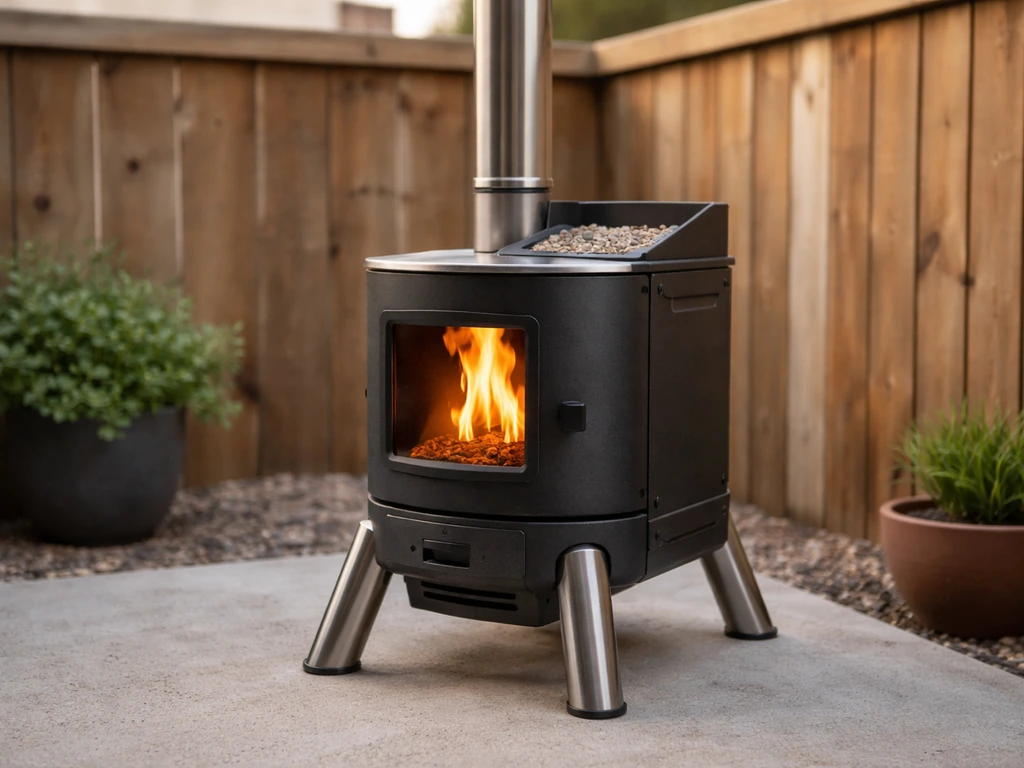
The Lil' Timber is the entry-level option in the Timber Stoves family. It runs about 1. 5 hours on a full hopper, which is the shortest burn time in this roundup. That makes it best suited to smaller patios where you need a focused heat source for a short evening session rather than an all-night gathering.
It operates without electricity, shares the same softwood pellet recommendation as the Big Timber, and carries a lower price point. The Lil' Timber is positioned as operating without an electric igniter fan, so it can run without electricity for ignition depending on the model operates without electricity.
If you want a pellet heater to try the category without a major financial commitment, this is the place to start.
- Pros: Lower cost, no electricity needed, compact form factor for smaller patios
- Cons: 1.5-hour burn time limits how long you can heat without refilling, lower BTU than larger models
- Best for: Small patios, occasional use, or buyers new to pellet heating who want to test the format
Even Embers pellet patio heater: best hopper capacity
Even Embers stands out with a 35-pound hopper, the largest of any model covered here. That larger fuel reserve stretches your burn window before you need to refill. Heat is delivered through natural convection rising through the central column. The startup process involves lighting starter pellets manually and waiting about 10 to 15 minutes before the unit hits full capacity, which is slower than propane but normal for this type of heater. One important operational note from the manual: keeping the door closed is critical for maintaining proper draft. If the door is open, pellets may not burn correctly.
- Pros: Largest hopper (35 lb) means fewer refill interruptions, natural convection heat delivery, straightforward operation
- Cons: 10-to-15 minute warmup period, manual ignition process, draft sensitivity requires door to stay closed during operation
- Best for: Users who prioritize longer burn windows over maximum BTU output, or anyone hosting multi-hour events who wants to minimize mid-evening refueling
GBG GBG-PELHTR: a budget option worth knowing about
The GBG-PELHTR is a simpler, budget-tier pellet patio heater with a standard burn time of about 1.5 hours. One interesting spec from the manual: the unit can continue emitting heat for at least two hours after visible flame reduces, as residual combustion works through remaining pellets. That is a useful characteristic if you want lingering warmth during the tail end of an outdoor gathering. It is not a premium product, and specs are modest, but it is a legitimate entry point if the higher-end units are outside your budget.
Wood pellet fuel: what to buy, what to avoid, and what to expect
Wood pellets carry roughly 7,450 BTU per pound, which is the energy figure that underpins every burn-time claim from manufacturers. Not all pellets are equal, though. Timber Stoves specifically recommends softwood pellets rated at 8,000 BTU/lb or higher for their heaters. Using low-quality or hardwood-only pellets that fall below that threshold can reduce output and cause incomplete combustion, which leads to more ash, more auger jams, and a worse heating experience overall. For any pellet patio heater, using premium-grade, low-ash pellets is not optional if you want reliable performance.
Pellet fuel is widely available at hardware stores, big-box retailers, and online. A 40-pound bag typically runs between $6 and $10, which works out to roughly $0.15 to $0.25 per pound depending on brand and region. At 7,450 BTU/lb, a 25-pound hopper fill delivers around 186,000 BTU worth of potential heat energy. Real-world delivery is lower due to combustion efficiency, but the per-BTU cost is still competitive versus propane at current prices. Pellets are easy to store in a dry space, and unlike propane, you never have to drive to refill a tank.
Key specs to compare before you buy
| Model | BTU Output | Heating Radius | Hopper Capacity | Burn Time | Electricity Required |
|---|---|---|---|---|---|
| Solo Stove Tower | 72,000+ | ~10 ft radius | 25 lb | ~3 hours | No |
| Timber Stoves Big Timber | 90,000 | ~12 ft radius | Not published | ~2 hours | No |
| Timber Stoves Lil' Timber | Not published | Smaller space | Not published | ~1.5 hours | No |
| Timber Stoves Revere | Not published | Not published | Not published | ~2.5 hours | No |
| Even Embers HTR1085AS | Not published | Standard | 35 lb | ~2+ hours | No |
| GBG GBG-PELHTR | Not published | Standard | Not published | ~1.5 hours | No |
Beyond the table above, the three specs that matter most in real-world use are BTU output, hopper capacity, and heat control quality. BTU tells you how much heat is theoretically available. Hopper capacity tells you how long you can run without stopping your gathering to refuel. Heat control tells you how precisely you can dial back the heat on mild evenings. Most pellet patio heaters offer limited granular control compared to a propane unit with a regulator valve, so if fine heat adjustment is important to you, check what the manufacturer actually offers: three positions (Open/Half/Closed on Solo Stove) versus a true variable feed.
Installation, placement, clearances, and startup
Where to place it
Pellet patio heaters need to be placed on a stable, level, non-combustible surface or at sufficient clearance from combustibles. This matters more than people usually expect. The exhaust from combustion rises through the column and exits from the top or upper venting area of the unit, so anything directly overhead (pergola beams, fabric covers, low-hanging branches) needs to be well clear. A general rule of thumb for pellet combustion units is a minimum of 3 feet of clearance from combustibles at the sides and significantly more overhead. Always check your specific model's manual for exact clearance requirements, since these vary by design.
For wood decks specifically, the bigger concern with a pellet heater compared to a propane tower is ash and ember management. If you want the best patio heater for wood deck situations, pay special attention to ash and ember management as well as clearance needs. Even with a pan and shaker system, there is real potential for ash particles to scatter. Placing the heater on a heat-resistant mat or a stone/concrete pad within your wood deck setup is strongly recommended. If you are comparing options for a wood deck, this is one area where a pellet heater requires more care than a gas tower heater.
Startup process
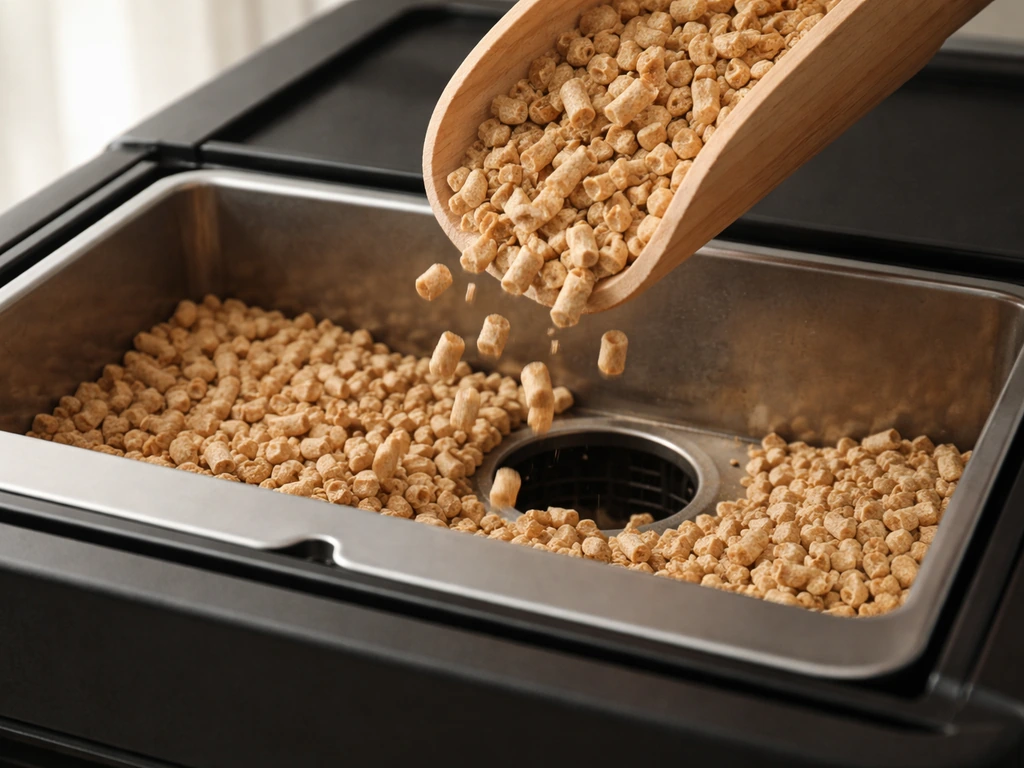
- Fill the hopper with premium softwood pellets (8,000 BTU/lb or higher recommended)
- Load starter pellets into the burn chamber as described in your model's manual
- Ignite the starter pellets using a long lighter or matches (never use lighter fluid)
- Close the combustion door if your model requires it for proper draft
- Allow 10 to 15 minutes for the unit to reach full operating temperature before expecting full heat output
- Adjust feed rate or airflow controls to the desired heat level once the burn is stable
The 10-to-15 minute warmup period is the most important thing to set expectations around. Pellet heaters are not instant-on appliances. If your guests are already outside and cold, you are going to be waiting. The practical solution is to start the heater 15 to 20 minutes before your gathering begins. Once it is running, it stays consistent without manual tending, which is the real payoff.
Running costs vs propane and electric, plus maintenance
Cost comparison
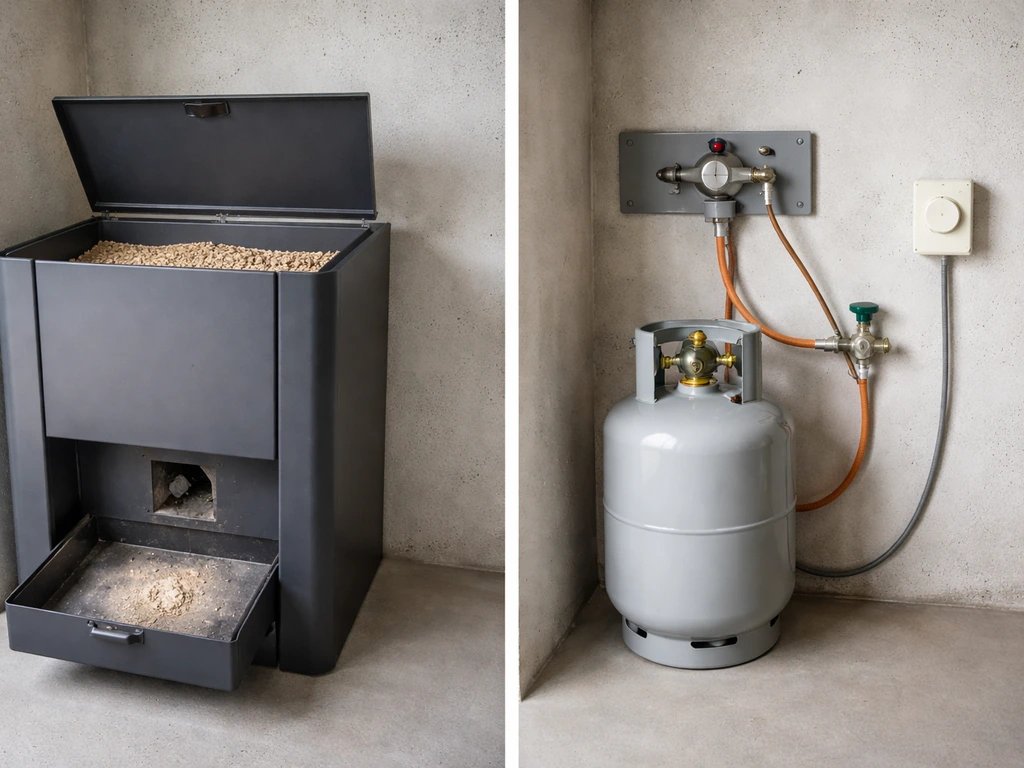
Pellet fuel typically costs $0.15 to $0.25 per pound at retail. At 7,450 BTU/lb, you are paying roughly $0.02 to $0.03 per 1,000 BTU of heat energy. Propane delivers about 91,500 BTU per gallon and currently costs $3.50 to $5.00 per gallon in most U.S. markets, putting it at roughly $0.04 to $0.055 per 1,000 BTU. Electric patio heaters running at 1,500 watts draw about 1.5 kWh per hour, and at the national average electricity rate of around $0.16 per kWh, you are paying about $0.24 per hour for 5,100 BTU of output. On a pure fuel-cost-per-BTU basis, pellets are cheaper than propane and significantly cheaper than electric resistance heat.
The catch is that pellet heaters generally cost more to purchase upfront than a comparable propane tower heater. Budget $300 to $600 for most pellet patio heater models, versus $100 to $300 for a standard propane tower. You will recover that difference over time through fuel savings if you use the heater regularly, but casual or occasional users may not reach the break-even point.
Maintenance you should plan for
Pellet patio heaters require more regular maintenance than propane or electric units. After every use (or at minimum every few uses), you need to clear ash from the burn pot and ash pan. Units with a shaker mechanism like the Solo Stove Tower make this significantly easier, but it still requires attention. Beyond ash clearing, you should periodically check and clean the pellet feed path. Low-quality or damp pellets are the most common cause of auger jams or feed stoppages. If you store the heater outdoors, make sure the hopper and feed area are protected from moisture, since wet pellets will swell, break apart, and clog the system.
- After every use: empty and wipe the ash pan, shake out residual ash from burn pot
- Every few uses: check the pellet feed path for blockages or residue buildup
- Seasonally: inspect the combustion chamber and column for creosote or tar buildup
- Before storage: run the hopper empty and remove any remaining pellets to prevent moisture damage
- As needed: check moving parts (auger, feed mechanism) for wear or corrosion
Safety, weather performance, and what real users say
Safety considerations specific to pellet heaters
The main safety considerations with a pellet patio heater that differ from propane are combustion management and ash handling. The heater produces real combustion byproducts, so never use it in an enclosed space or under a low roof with poor airflow. Keep children and pets at a safe distance from the unit while it is operating and for at least an hour after shutdown, since the exterior stays hot well after the flame goes out. The residual heat-emission period (noted in the GBG manual as continuing at least two hours after visible flame reduces) is a real safety factor: the unit is still hot long after it looks like it is done.
Ash disposal is the other key safety step. Never dispose of ash in a plastic bag or cardboard container immediately after use. Ash can retain enough heat to ignite combustibles for 24 to 48 hours. Use a metal ash bucket with a lid, allow the ash to cool completely for at least 24 hours, then dispose of it safely. This is the same guidance that applies to fireplaces and wood stoves, and it applies equally here.
How weather affects performance
Wind is the enemy of pellet patio heaters. Unlike a propane heater that can be enclosed in a partially-shielded housing, the open combustion chamber of many pellet heaters is sensitive to wind disrupting draft. Strong gusts can cause uneven burns, poor pellet feed, and in some cases extinguish the fire. Most pellet patio heater models are best used in sheltered outdoor spaces: covered patios, areas with windbreak fencing, or spots naturally shielded by walls or landscaping. Rain and high humidity are also a concern, not just for the heater itself but for your pellet fuel. Always store pellets in a dry location and avoid loading wet pellets into the hopper.
What real users actually like and dislike
Across reviews on sites like Bob Vila, Reviewed.com, and Vindulge, the consistent positives are: the visual appeal of a real flame, genuine radiant warmth within the coverage radius, and the satisfaction of not dealing with propane tanks. The most common complaints are: burn time is shorter than people expect (especially on smaller models), startup takes longer than propane, and cleanup requires more involvement than users anticipated. A minority of reviewers report issues with auger feed consistency when using lower-grade pellets, which reinforces why pellet quality is not something to cut corners on.
If you come from using a propane tower heater, the adjustment period is real. Pellet heaters ask more of you: you manage startup, you monitor the hopper, and you handle ash after. What you get in return is better aesthetics, lower fuel cost, and a more authentic heat source. Whether that trade-off works for you depends entirely on how you actually use your patio and how much you value the experience versus pure convenience.
If you are still weighing whether pellet is right versus other wood-burning options, it is also worth comparing these against traditional wood burning patio heaters, which skip the pellet feed mechanism entirely but require even more hands-on fire management. If you are comparing pellets against traditional options, wood-burning patio heaters can still deliver a classic flame, but they demand more day-to-day fire management.
How to make your final decision
Start with your patio size and typical session length. If your patio is under 200 square feet and your gatherings run 2 to 3 hours, the Solo Stove Tower hits the sweet spot on BTU, burn time, and ease of cleanup. If you have a larger space or host longer events, move up to the Timber Stoves Big Timber for maximum output, or choose the Even Embers if you want the largest hopper and fewer refill stops. If you are new to pellet heating and unsure, the Lil' Timber or GBG budget options let you test the format without a major financial commitment.
After picking a model, buy premium softwood pellets rated at 8,000 BTU/lb or higher before your first use, set up your heater on a stable non-combustible surface with clear overhead space, and plan to start it 15 to 20 minutes before you need the heat. That is the entire practical setup formula. A good way to find the best wood pellet patio heater for your space is to compare BTU output, hopper size, and how the unit controls fuel flow. Done right, a pellet patio heater delivers a genuinely different and better outdoor heating experience than a propane tower, and it costs less per hour to run once you are through the upfront investment.
FAQ
Can I use a pellet patio heater under a pergola or patio cover? If so, how do I avoid smoke or incomplete burn?
Most pellet patio heaters should not be run while the fire chamber is obstructed, which includes fabric patio covers or partially closed pergolas overhead. Even if the sides look open, airflow can be reduced enough to cause poor draft and incomplete burning, so confirm the required overhead clearance in your specific manual before using under any structure.
What should I troubleshoot first if my pellet patio heater starts strong but then burns poorly or jams?
If you notice soot buildup, unusual smoky flame, or frequent feed stoppages, the first thing to check is pellet quality and moisture, not the ignition. Damp pellets swell and break apart, and low-BTU pellets can reduce combustion temperature and increase ash load, which then makes jams more likely.
How much does wind affect pellet patio heater performance, and what’s a safe way to shield it?
Pellet heaters typically perform best when operated on a sheltered, wind-stable location, because wind can disrupt the draft and cause uneven fuel flow. If you must use it outdoors in gusty conditions, add a windbreak that does not reduce overhead clearance and does not trap exhaust near the unit.
How long after shutdown is it safe to touch the unit or clean out the ash?
Even after visible flame reduces, the heater can keep emitting heat for hours, so you should treat it like an active fire source until it fully cools. For ash handling, the safer routine is to wait at least 24 hours after shutdown before placing ash in a covered metal container for disposal.
What’s the best way to store pellets to prevent moisture problems and auger jams?
For pellet storage, keep the hopper and nearby feed area dry, and store bags in a covered, moisture-free space. Avoid storing pellets directly on concrete outdoors or in a shed with fluctuating humidity, because condensation can get into bags and make pellets degrade into smaller fragments that feed unevenly.
Can pellet patio heaters be dialed down smoothly for mild weather, or is heat control mostly limited?
Pellet heaters control output by changing fuel feed conditions, so the smallest heat setting may still produce noticeable warmth. If you want tight control for mild evenings, prioritize models with multiple feed positions and consistent combustion behavior, since true “variable” control is often less granular than propane regulators.
How do I estimate real burn time for my patio heater, since manufacturer numbers can differ from what I’ll see?
A pellet heater can look like it has “stopped” because the flame reduces, but residual combustion can continue and still emit heat. If you are planning a gathering, do a test burn once early in the season to learn how long your specific model takes to reach full output and how quickly heat output tapers near the end.
What ventilation risks should I watch for, especially near doors, windows, or enclosed patios?
Never use a pellet patio heater in an enclosed space, and be cautious with low ventilation areas like under a balcony with limited airflow. If you see persistent smoke spillage or smell heavy combustion byproducts, stop using it and improve clearance and airflow before restarting.
What’s the best startup routine to get a stable flame quickly, and what mistakes slow it down?
Start the heater 15 to 20 minutes before guests arrive, then keep the door closed during operation if your model uses a draft-sensitive design. Opening the door or frequent door checks can interrupt draft, leading to poor pellet ignition and more ash in the burn pot.
Besides emptying the ash pan, how often should I inspect the feed path and what signs indicate it needs cleaning?
Pellet feed systems are sensitive to debris, so ash and clinkers can accumulate in areas the pan does not fully capture. Make it a point to periodically inspect and clear the feed path according to the manual, especially after switching pellet brands or after a long storage period.
Are pellet patio heaters a good buy for occasional weekend use, or is propane usually smarter for that schedule?
Yes, but you should expect more setup and cleanup than propane. Pellet heaters can be a good choice for regular hosts who value flame appearance, but if you want grab-and-go convenience, you may not recover the higher upfront cost through fuel savings unless you use it frequently.
Next Articles
Best Wood Pellet Patio Heater Guide: Choose, Install, Maintain
Find the best wood pellet patio heater with BTU sizing, wind and cold performance, setup steps, safety, and upkeep tips.
Best Pellet Patio Heaters: Buyer Guide, Picks by Size
Compare pellet patio heater types, key specs, top picks by patio size, plus setup, safety, maintenance and running costs
Best Price on Outdoor Patio Heaters: Compare Costs & Deals
Score the best price on outdoor patio heaters, price ranges, top picks, deal tactics, total-cost & safety checklist.