
For most patios, a propane or natural gas heater in the 30,000–50,000 BTU range is the most practical all-around choice: it works in cold weather, heats fast, and doesn't require any electrical infrastructure. If you have a covered patio with a 240V outlet nearby, a hardwired electric infrared heater is cleaner, cheaper to run, and frankly easier to live with long-term. Pellet heaters are a distant third for most people. The right answer depends on your patio's layout, how exposed it is to wind, and what fuel or power you already have access to. This guide walks through all of it so you can make a confident call today.
Best Way to Heat an Outdoor Patio: Propane, Gas, Electric

Caleb Vale
10 Jun 2026
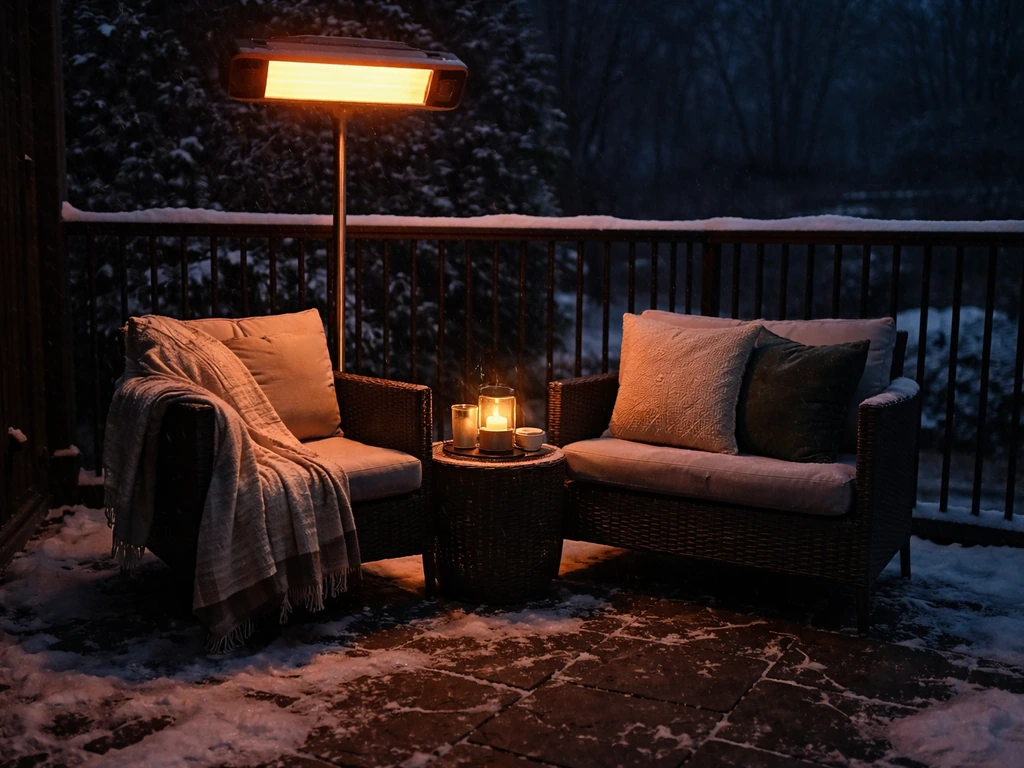
Choosing the Right Heater Type
Every outdoor patio heater works by one of two methods: radiant (infrared) heat, which warms people and objects directly in its line of sight the way sunlight does, or convective heat, which warms the surrounding air. In a typical outdoor or semi-outdoor setting, radiant heat wins almost every time because wind immediately blows warm air away. That said, the fuel or power source is just as important as the heating method, and each has real tradeoffs.
Propane
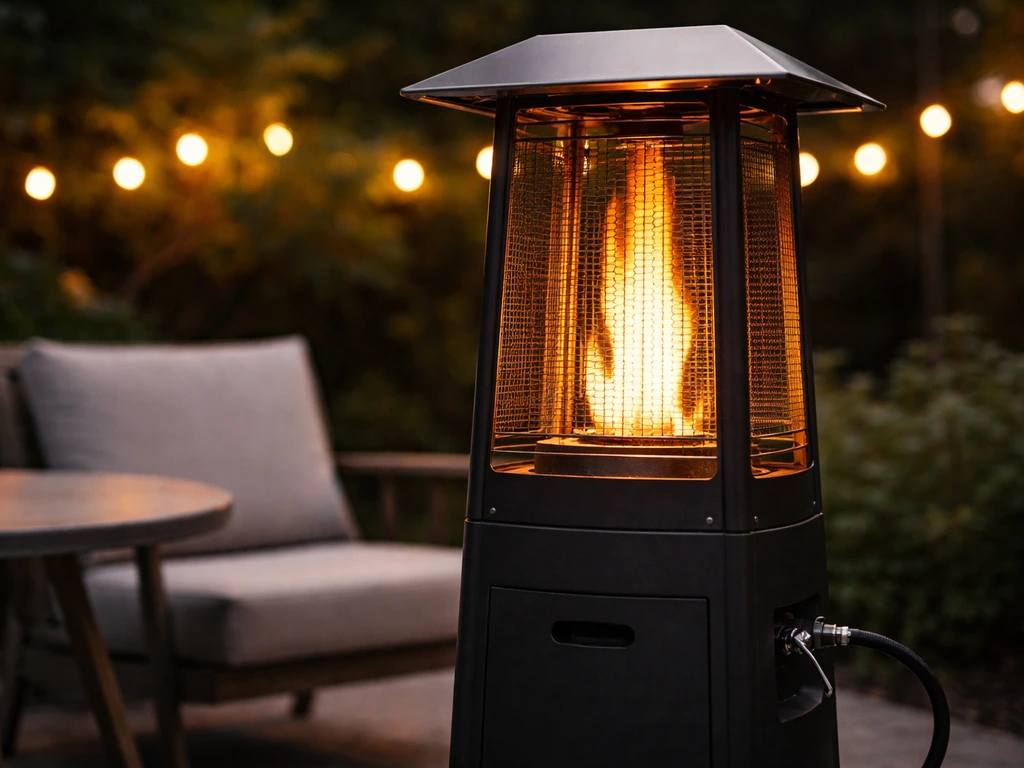
Freestanding propane tower heaters are the most popular option for a reason. They're portable, require no installation, and put out 30,000–46,000 BTU. A standard 20 lb tank runs about 8–10 hours. The downside is refilling tanks, and in very strong wind they can blow out (better models include a thermocouple that shuts off the gas automatically if that happens). For open patios with no gas line and no 240V power, propane is usually the default best choice.
Natural Gas
Natural gas heaters are essentially the permanent, never-run-out version of propane. They put out up to 50,000–58,000 BTU and cost significantly less per hour to run once you factor out the installation cost of running a gas line. If you already have a gas line near your patio, this is a very strong option. If you don't, you're looking at a plumber and permit, which can run $500–$2,000+ depending on your situation.
Electric Infrared
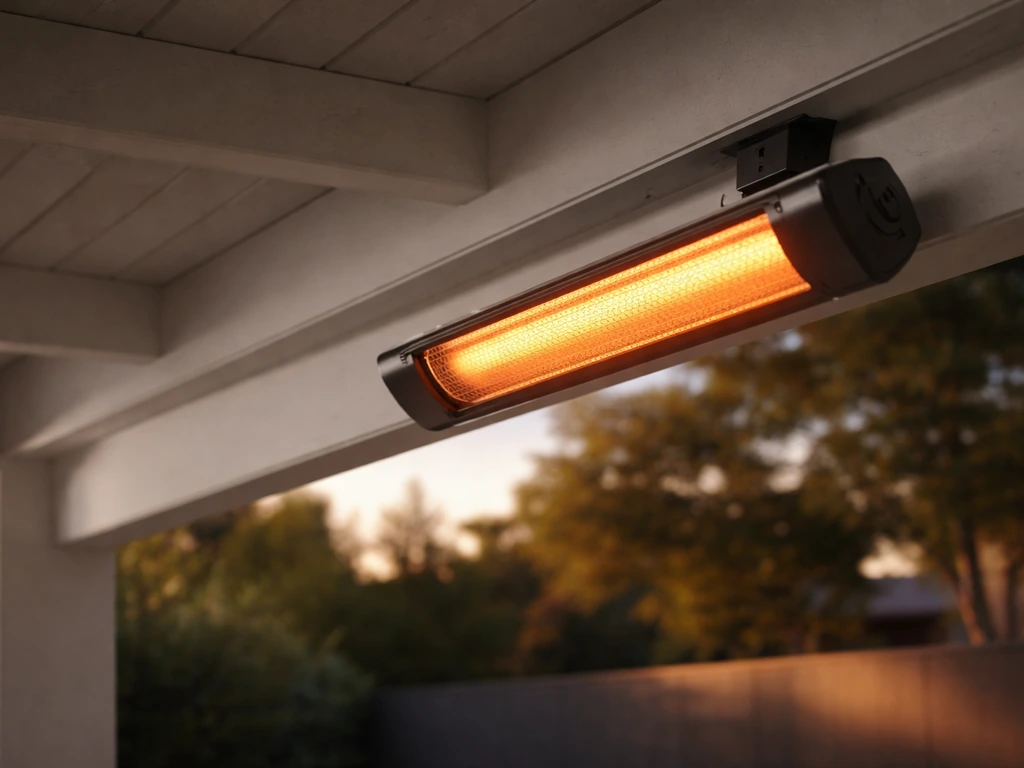
Wall-mounted or ceiling-mounted electric infrared heaters top out around 6,000W (roughly 20,000 BTU equivalent), which is less raw output than a big gas heater, but they convert nearly 100% of electricity into radiant heat with zero combustion. They're silent, instant-on, and produce no combustion gases, which is a big deal if your patio is covered or semi-enclosed. The catch is electricity cost, which varies wildly by state (as low as 8 cents/kWh in some states and over 35 cents/kWh in Hawaii as of 2025 EIA data), plus you need a suitable electrical circuit. The U.S. EIA publishes state-by-state retail electricity price rankings, including the 2025 annual average range by state referenced here 2025 EIA retail electricity price by state.
Pellet Heaters
Pellet patio heaters have a novelty appeal and produce a visible flame effect some people love, but they come with real limitations outdoors. You're supposed to suspend use during strong wind or thunderstorms, pellet feeding can clog or jam, and the heat output is lower than gas. For most people, pellets are a supplemental or aesthetic choice, not a primary patio heating solution.
Quick comparison
| Heater Type | Typical BTU Output | Best For | Main Drawback |
|---|---|---|---|
| Propane | 30,000–46,000 BTU | Open patios, portability, no existing utilities | Tank refills, wind blowout risk |
| Natural Gas | 40,000–58,000 BTU | Permanent setups with existing gas lines | Installation cost and fixed placement |
| Electric Infrared | ~10,000–20,000 BTU equivalent | Covered patios, clean/silent heat, low maintenance | Lower peak output, electricity rate varies |
| Pellet | Varies, generally lower | Ambiance, casual use | Wind-sensitive, fuel management, not for primary heating |
| Infrared (gas-fired) | 30,000–50,000 BTU | Large covered areas, commercial patios | Requires mounting and gas line |
Sizing Heat Output for Your Patio Space
For outdoor radiant heating, you're not trying to heat an air volume like you would indoors. You're trying to create a warm zone where people are sitting. A single freestanding propane heater at ~40,000 BTU can comfortably warm a radius of about 8–12 feet under calm conditions. Woodland Direct also notes that freestanding propane heaters warm an 8, 12 ft radius, and that wind, temperature, and patio layout strongly influence how well they perform a radius of about 8–12 feet. A mounted electric infrared unit at 3,000–4,000W covers roughly a 6x8 ft seating area well. The rule of thumb I use: one good-sized gas heater per 10–12 ft diameter seating zone, or one mounted electric unit per small table grouping.
Wind and ambient temperature cut into that coverage significantly. If your patio is exposed, plan conservatively and go up a size. For a 200 sq ft open patio in a cold climate, two 40,000 BTU gas heaters positioned at either end will outperform one 50,000 BTU unit in the center when wind is involved. For covered patios in the 100–150 sq ft range, two mounted electric infrared units at 3,000W each are usually enough to keep a dinner party comfortable down to about 40°F.
If you want to do a quick calculation: take your seating area square footage, multiply by 25–35 BTU per sq ft for mild climates or 35–50 BTU per sq ft for colder or windier ones, and that gives you a starting target. For a 150 sq ft patio in a cold climate, that's 150 x 40 = 6,000W or roughly 20,000 BTU of radiant output as a floor, not a ceiling.
What Works Best for Your Patio Setup
Covered patios
A covered patio is the best environment for electric infrared heaters. For a quick recommendation, check out the best covered patio heater options for electric infrared and other covered-patio setups. The roof keeps heat from dispersing straight up, so radiant warmth reflects and bounces within the space. Mounted units at 7–9 ft above the seating area work extremely well here.
For gas heaters under a covered patio, CO risk becomes a real concern: the general industry rule is that a covered space only counts as adequately ventilated if at least 50% of the total wall area is open to the atmosphere. If your covered patio is more enclosed than that, stick with electric infrared and avoid combustion heaters.
There's more detail on the specific best heaters for covered patios in the covered patio heater section of this site, and if you're comparing covered versus open patio setups, the guide on the best way to heat a covered patio goes deeper on that distinction.
Open-air patios
Open patios favor higher-output gas heaters simply because you need the extra BTUs to compensate for heat loss to the open sky and wind. Freestanding propane towers are flexible since you can reposition them as needed. Natural gas wall-mount or post-mount heaters work well on an open patio with a fence or wall on at least one side. For fully exposed open patios, wind is the biggest variable: even a 40,000 BTU heater loses significant effective output in a consistent 10+ mph breeze. The best heaters for open patios section of this site covers specific product picks for that scenario.
Screened-in patios and porches
Screened enclosures fall somewhere in between. They block most wind, which helps a lot, but screening is still semi-open so combustion gas generally disperses safely. Electric infrared is still the cleanest choice here, but a properly sized propane heater can work too.
If you’re trying to pick the best patio heater for a screened porch, the decision usually comes down to whether you prefer clean radiant electric heat or a properly sized propane unit best patio heater for screened porch. For more specifics on choosing the right unit for screened-in patios, review the best heater for screened in patio recommendations in the covered patio heater section.
If you're specifically dealing with a screened porch or enclosed screened patio, those setups have their own considerations covered in more detail elsewhere on this site.
Seating layout matters
Zone heating is the right mental model: you're not heating the whole patio, you're heating the areas where people are sitting. Place heaters at the perimeter of a seating cluster rather than the center of the whole patio. For a U-shaped or L-shaped seating arrangement, two smaller heaters flanking the group will outperform one large unit set back from everyone. For a long dining table, a mounted overhead infrared unit running the length of the table beats any freestanding heater placed at one end.
How to Actually Set Up and Place Your Heaters
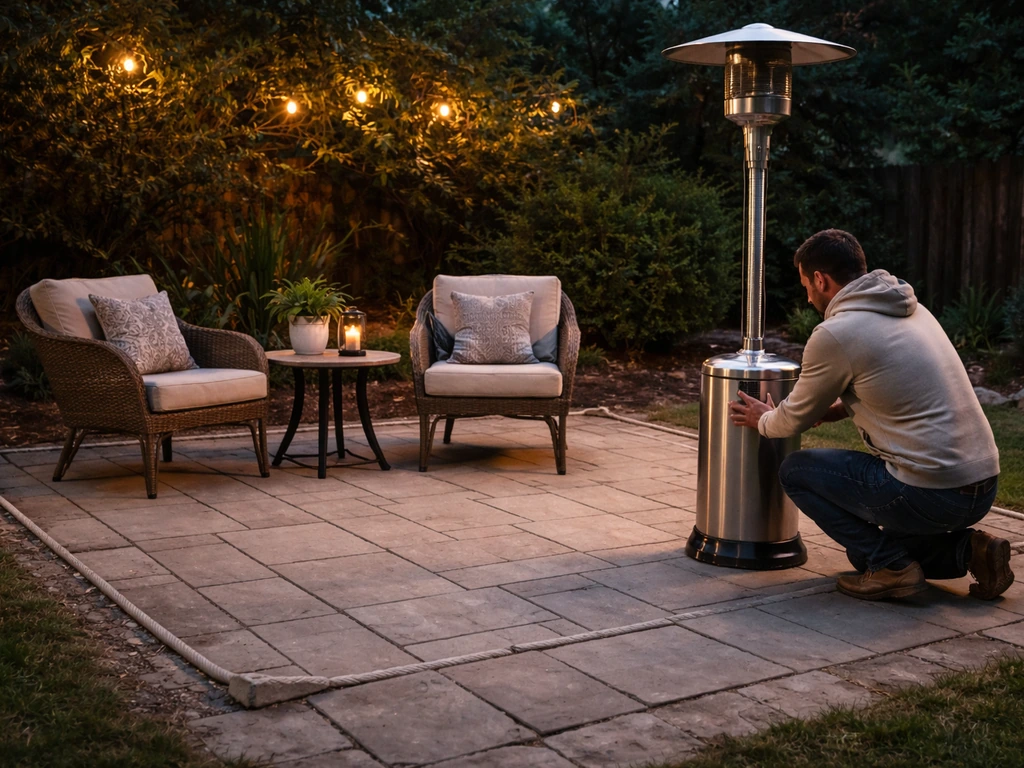
- Identify your seating zones first, not just your patio perimeter. Mark out where chairs and tables actually sit, and plan heater placement around those spots.
- For freestanding propane heaters, position them at the edge of the seating zone rather than in the center. Aim the mushroom-cap reflector inward toward people. Keep them on a level, stable surface and never move them while they're running.
- For mounted electric infrared units, mount at 7–9 ft above the finished floor (the Detroit Radiant design guide recommends a minimum of 6.5 ft above finished floor for outdoor applications, with 8 ft preferred in some configurations). Angle the unit slightly toward the seating area for maximum direct radiant reach.
- Maintain manufacturer-required clearances from combustibles. Infratech's W-series, for example, specifies at least 18 inches from adjacent walls on the sides, with 36 inches of clearance in front of the heating element. Always check your specific model's manual.
- If you have wind exposure, position heaters on the windward side of the seating area so heat blows toward people rather than away. Add a windscreen, pergola panel, or planter wall as a physical break even a modest barrier makes a measurable difference.
- For tabletop or pedestal heaters used near a dining table, the sweet spot is 30–48 inches above the table surface for radiant reach without overheating the food or people directly beneath.
- Test your setup at a cool evening before committing to placement. Run the heater for 15 minutes, sit in every seat, and identify cold spots. Move heaters or add a second unit as needed.
Heating Your Patio in Winter
Winter patio heating is a different challenge than mild-weather use. Below 35–40°F, gas heaters perform roughly the same (combustion output doesn't change much with ambient temperature), but convective heat loss becomes brutal in cold, dry air. Electric infrared heaters are less affected by cold air because they don't heat the air at all, they heat you directly, which is why a 3,000W electric unit can feel adequate at 30°F when a similarly rated gas unit feels underwhelming.
For winter use specifically, here's what actually improves performance beyond just cranking up the BTUs:
- Add a wind barrier on the exposed sides. A canvas screen, glass panel, or even a heavy planter row cuts convective heat loss dramatically. Wind is the largest single variable affecting outdoor heater comfort.
- Preheat the seating area 10–15 minutes before guests arrive. Radiant heaters warm surfaces (furniture, flooring) as well as people, and warm surfaces radiate back, making the zone feel noticeably warmer.
- Layer heaters rather than relying on one large unit. Two 30,000 BTU heaters positioned on opposite sides of a seating group create overlapping radiant zones that feel noticeably warmer than a single 60,000 BTU unit placed in the middle.
- Use outdoor area rugs and cushions. Radiant heat warms surfaces, and warm surfaces under and around seated people substantially improve comfort.
- For pellet heaters, winter use is especially limited: the operational guidelines explicitly state to suspend use during strong wind or thunderstorms, which describes many winter evenings.
In very cold climates (below 25°F), no patio heater on the market makes a fully open patio feel like indoors. Manage expectations: you're buying comfort within a few degrees, not tropical warmth. A covered or semi-enclosed patio with wind barriers and two properly sized heaters can realistically stay 15–25°F warmer than ambient. An open exposed patio will be harder to push past a 10–15°F lift in a sustained wind.
What It Actually Costs to Run Each Type
Running costs are where a lot of people get surprised. Here's a honest breakdown based on current 2025–2026 fuel and electricity pricing:
| Heater Type | Typical Running Cost | Assumptions | Notes |
|---|---|---|---|
| Propane (40,000 BTU) | $1.50–$2.50/hour | ~$4–5 per gallon propane, ~1 lb/hour consumption at full output | Higher in areas with expensive propane; tanks add bulk and logistics |
| Natural Gas (50,000 BTU) | $0.50–$1.00/hour | ~$1.20–1.50/therm national average | Cheapest fuel option once line is in place; no refill hassle |
| Electric Infrared (3,000W) | $0.25–$1.10/hour | National average ~14–16 cents/kWh; Hawaii up to 35 cents | Wide range by state; near-100% efficiency, zero combustion maintenance |
| Electric Infrared (6,000W) | $0.50–$2.15/hour | Same rate range, doubled wattage | Higher output for larger areas; check circuit capacity first |
| Pellet Heater | Varies; ~$0.75–1.50/hour | Based on pellet bag cost and burn rate | Fuel storage, clogging, and weather sensitivity add to real cost |
If you're in a low-electricity-rate state (under 12 cents/kWh), electric infrared can actually beat propane on running cost while being cleaner and easier to maintain. If you're paying 20+ cents/kWh, propane or natural gas is usually cheaper per hour. For a rough personal estimate: multiply your heater's wattage by your local cents/kWh rate and divide by 100. A 4,000W heater at 15 cents/kWh costs about 60 cents per hour to run.
Maintenance costs are real too. Propane heaters need annual cleaning of the burner and thermocouple, and the thermocouple (the safety device that shuts off gas if the flame blows out) eventually needs replacing, typically every few years. Natural gas setups need a periodic inspection of the gas line connection. Electric infrared units are essentially zero maintenance other than keeping the emitter clean and checking wire connections annually.
Safety and Installation Basics
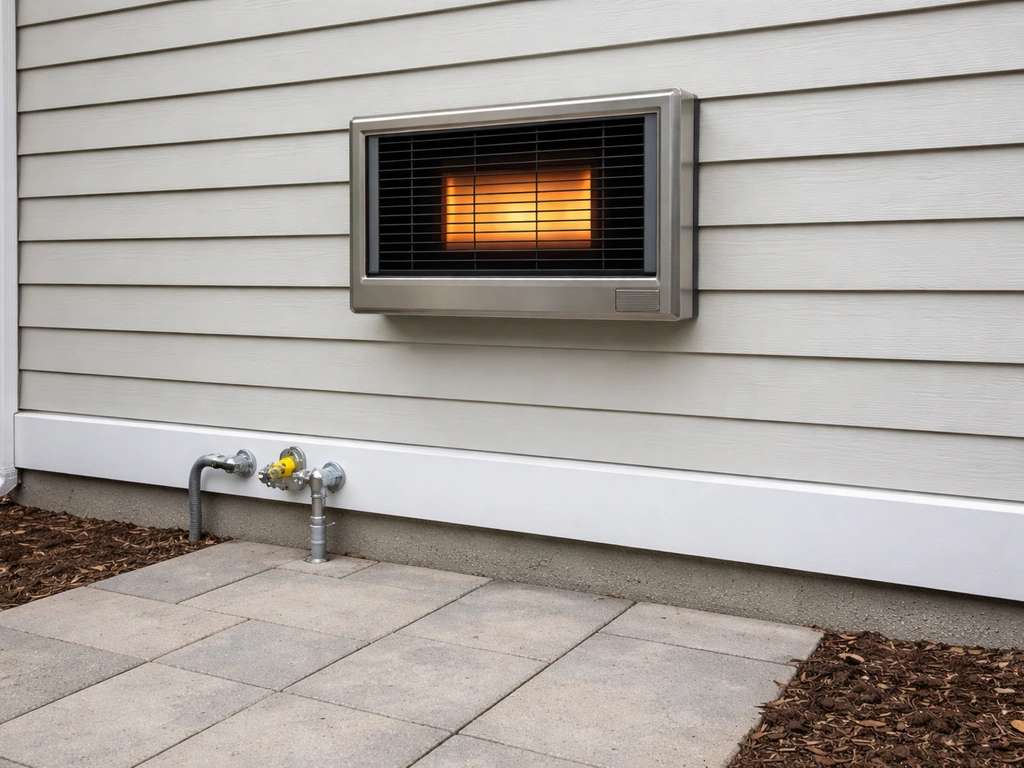
This is the section people skim and then regret skipping. A few non-negotiables:
For all gas heaters (propane and natural gas)
- Never use gas-combustion heaters in a space that doesn't meet the 50% open wall area standard for outdoor classification. If less than half the perimeter wall area is open to the atmosphere, you risk CO accumulation, even with a small overhang or roof.
- Keep propane cylinders upright and on a level surface at all times. Never relocate a running heater.
- Make sure your heater has a thermocouple or ODS (oxygen depletion sensor). These shut off the gas if the flame is extinguished by wind or if oxygen drops too low. This is a baseline safety feature, not a premium add-on.
- For natural gas installations, always use a licensed plumber and pull the required permit. Check local codes before installation.
For electric infrared heaters
- Use only heaters with an IP (ingress protection) rating appropriate for outdoor use. IP55 or higher is the baseline for most outdoor applications; IP65 for wetter climates.
- All outdoor electrical connections must be on a GFCI-protected circuit. This is code in most jurisdictions and is non-negotiable near moisture.
- Respect minimum clearance distances. Infratech's W-series, for example, requires at least 18 inches clearance from adjacent walls on the sides, and 36 inches in front of the emitter face. Radiant heat directed at a wood beam or vinyl siding too close will cause damage over time.
- Don't mount directly above flammable materials, outdoor rugs, or fabric furniture. Any object stored or left under a radiant heater is subject to heat exposure even when you think the angle is safe.
General rules for all types
- Install at a minimum of 6.5 feet above the finished floor in outdoor applications, with 8 feet preferred for high-traffic areas where people might stand and move around under the heater.
- Never leave a running heater unattended for extended periods, especially with children or pets present.
- Check your local fire code and HOA rules before installing any permanent gas or hardwired electric patio heater.
- For pellet heaters, always follow the manufacturer's suspension guidelines: shut down during strong wind and never use in a thunderstorm.
The Bottom Line: Which Setup Is Right for You
If you take one thing from this guide, it's this: match the heater type to your patio's structure and your fuel access first, then size it correctly for your actual seating zone rather than the total patio square footage. A covered patio with electrical access is the ideal environment for electric infrared, and it's worth the installation investment. An open patio with no gas line points directly to propane.
An existing gas line makes natural gas the obvious long-term winner on cost and convenience. Whatever you choose, use two smaller heaters flanking your seating zone rather than one oversized unit at the edge, add a wind barrier if you're in an exposed location, and always check clearances before you mount anything.
FAQ
Should I size a patio heater based on total patio square footage or the area where people sit?
Start with your seating zone size, not the whole patio. If your patio is 200 sq ft but you only use a 10 x 10 ft area for dining, you size for about 100 sq ft coverage (then adjust up for wind). This prevents buying a heater that feels powerful on paper but underheats where people sit.
How do I estimate long-term running cost for an electric patio heater?
Electric infrared is often cheaper only when your electricity rate is low enough. Use the guide’s math, but also add that outdoor heaters are not insulated, so you will usually run longer at colder temperatures. If you are planning evening use in winter, choose the heater based on expected runtime, not just per-hour cost.
Is a covered patio always safe for gas heaters?
For combustion heaters, never assume “covered” means safe without ventilation. A common rule is that at least about half of the wall area must be open to the atmosphere; if your roof is tight or sides are mostly closed, switch to electric infrared or use a professional ventilation plan.
Why does my infrared patio heater feel weak even when it’s the right wattage?
Infrared performs best when the unit has clear line of sight to people. If you have tall planters, umbrellas, or decorative screens in between, the effective warming area shrinks. Reposition the heater or mount higher and closer to the table to maintain direct radiant coverage.
What are the most common reasons a patio heater seems underpowered?
If you notice delayed warm-up, it can be positioning or wind, not only heater type. For gas, output is immediate but radiant warmth can take longer to reach you when the heater is too far or blocked. For electric, confirm the correct power mode and that the heater is plugged into a suitable outdoor-rated circuit.
When should I choose natural gas over propane if I’m not sure about installation costs?
Natural gas is “best” when the gas line is already present or the hookup is straightforward, but you should budget for more than the heater itself. Plan for running the line, permits, and ensuring the mounting location meets clearance rules. If those steps are expensive or disruptive, propane can be the practical short-term best option.
Is it better to buy one big heater or two smaller ones for a patio?
Yes, two smaller heaters can outperform one larger unit when the seating is not centered. Place heaters to flank the seating group, and keep them angled so both people in the conversation area receive direct radiant heat. In wind, distributing heaters reduces the “cold pocket” effect at the center.
How much does wind change the heating coverage, and what should I do about it?
If you are in a consistent breeze, start conservatively and go up in output or number of heaters. A 10+ mph wind can reduce effective warmth significantly even if the heater’s rated BTU is high. Adding a wind barrier (fence panel, louver, or heater placement behind a structural wall) often improves comfort more than upgrading by a small amount.
Can I run an electric infrared patio heater on an outdoor extension cord?
Only if you can verify adequate outdoor electrical capacity and safe installation. Check that the circuit can handle the heater’s wattage, use outdoor-rated wiring and an exterior-rated outlet or hardwire setup, and avoid running it on indoor extension cords. If you cannot confirm circuit capacity, propane or natural gas will be the safer route.
When are pellet patio heaters a bad idea, even if the output seems similar?
Most pellet issues show up outdoors, not indoors. If you expect thunderstorms or strong wind, assume you will suspend use and keep a plan for alternate heat. Also budget for the possibility of jams, because frequent outdoor exposure can increase feed or ignition problems.
What mounting height works best for an electric infrared patio heater?
Set mounting height based on your seating and keep the heater within the manufacturer’s clearance range. In general, electric infrared mounted around 7 to 9 ft above the seating area tends to cover dinners well, but higher mounting can reduce the perceived intensity if line of sight is interrupted. Measure the distance to the table, not just the ceiling height.
What should I realistically expect from patio heating below 35°F?
Use a full warm-zone plan before weather turns. For winter use, expect comfort in a small uplift above ambient, especially on open patios, and plan to run heaters longer rather than relying on “max setting.” A covered or semi-enclosed patio with wind control and two properly sized heaters is the most realistic way to maintain a noticeable temperature lift.
Next Articles
Best Covered Patio Heater Buying Guide and Heater Cover Tips
Choose the best covered patio heater by BTUs, coverage, fuel type, safety placement, costs, and the right protective cov
Best Price on Outdoor Patio Heaters: Compare Costs & Deals
Score the best price on outdoor patio heaters, price ranges, top picks, deal tactics, total-cost & safety checklist.
Where Can I Rent Patio Heaters Near Me Today
Find where to rent patio heaters near you today, choose the right fuel type, compare costs, and book safely.