
For most covered patios, an electric infrared heater is the best choice. It mounts flush to the ceiling, needs no ventilation, and delivers radiant heat right where you're sitting without fighting the air. If your covered patio is large or only partially enclosed, a propane or natural gas heater gives you more raw BTUs and better range. Pellet heaters are a niche pick for ambiance-first setups. The right answer depends on your ceiling height, how enclosed the space is, your climate, and how much you want to spend per hour of heat. This guide walks through all of it so you can make a confident call today.
Best Covered Patio Heater Buying Guide and Heater Cover Tips

Caleb Vale
21 May 2026
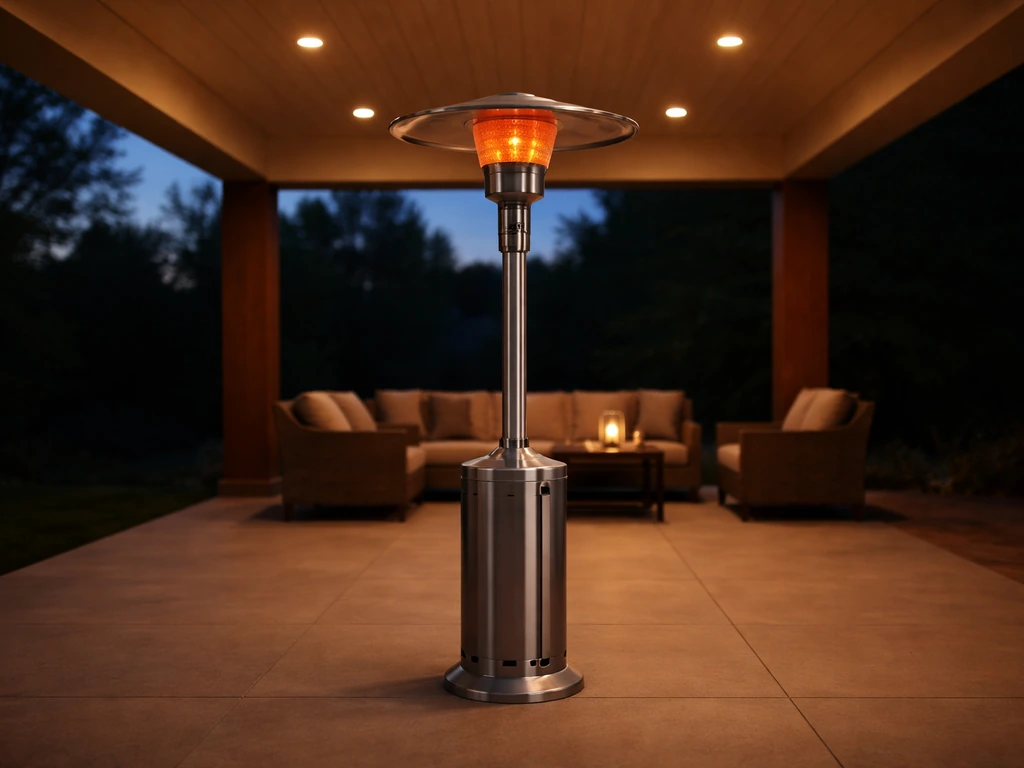
How to Choose a Covered-Patio Heater
Covered patios sit in a tricky middle ground. They're not fully enclosed like a screened porch, and they're not wide-open like a backyard deck. That means the heater you pick has to work within real constraints: ceiling height limits where you can mount or stand a heater, partial enclosure means some heat retention but also some airflow, and any fuel-burning heater raises ventilation questions you have to take seriously.
BTUs: How Much Heat Do You Actually Need?
BTU output is the most-cited spec, but it only tells part of the story under a cover. A standard propane tower heater rated at 41,000 BTU/hr (like the Dyna-Glo cabinet-style) is listed to heat around 314 square feet in open-air conditions. Under a cover with low airflow, you'll get more usable heat from those BTUs because less escapes. In cold or windy climates, even advertised coverage areas shrink, so Infratech and other manufacturers openly note that real-world performance in cold or windy conditions will be less than the stated spec. The practical rule: size for your actual square footage, then factor down 15 to 20 percent if your winters dip below 35°F regularly.
Heat Type and Coverage Shape Matter Too
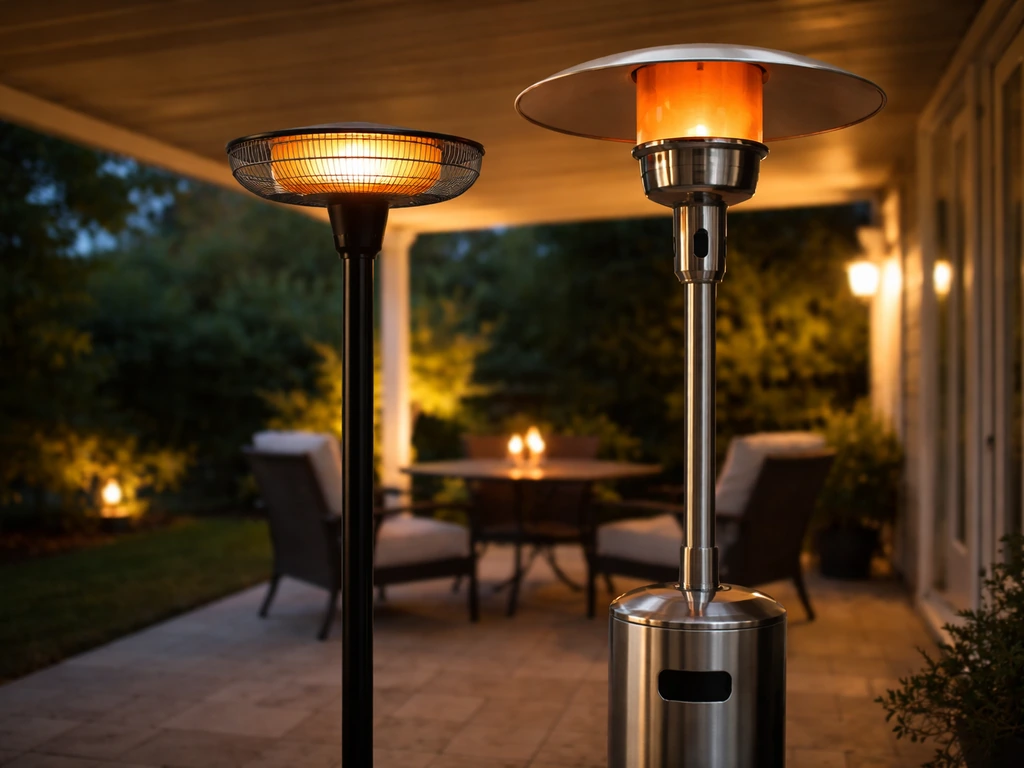
Mushroom-top propane towers radiate heat in a circular, downward cone, which works well in open or lightly covered spaces. For a true open patio, you generally want the highest-output option that can still handle wind exposure and deliver heat close to where you’re sitting open or lightly covered spaces. Mounted infrared panels, by contrast, heat in a directional rectangle, which is much more efficient under a ceiling.
Infratech's C3024WH (3,000W electric infrared) covers an 8 by 8 foot area when mounted between 7 and 9 feet high, exactly the ceiling height range of most residential covered patios. For longer, narrower covered patios, a single infrared strip or two panels are almost always better than a single round-top tower.
Think about the shape of your seating area before defaulting to the most popular style.
Ceiling Height Is a Key Variable
Most covered patios have ceilings between 8 and 12 feet. Below 8 feet, a tall propane tower heater is a clearance hazard and often prohibited by the manufacturer. Above 10 feet, a lower-wattage infrared panel loses effectiveness quickly. Match the heater's rated mounting height to your actual ceiling, and always check the manufacturer's minimum clearance from ceiling, walls, and overhead beams before buying.
Best Heater Types for Covered Patios
Each fuel type has a real sweet spot for covered-patio use. Here's an honest breakdown of how each performs in practice, not just on a spec sheet.
| Heater Type | Best For | Covered Patio Fit | Key Limitation |
|---|---|---|---|
| Electric Infrared | Enclosed or low-ceiling covered patios | Excellent — no ventilation needed, ceiling-mount option | Higher per-unit purchase cost; needs outlet access |
| Propane | Open or semi-open covered patios, portable use | Good — high BTUs, no wiring; needs clearance and airflow | Ventilation required; tank refills add up |
| Natural Gas | Permanent installations, frequent use | Good — unlimited fuel, lower running cost | Requires gas line install; not portable |
| Pellet | Ambiance-focused setups with good airflow | Limited — smoke/particulates under a cover are problematic | Fuel storage, ash cleanup, ventilation concerns |
| Standard Electric (resistance) | Small or very mild-climate covered patios | Moderate — safe indoors, low heat output per watt | Least efficient for cold weather; heats air not objects |
Electric Infrared: The Best All-Around Pick for Most Covered Patios
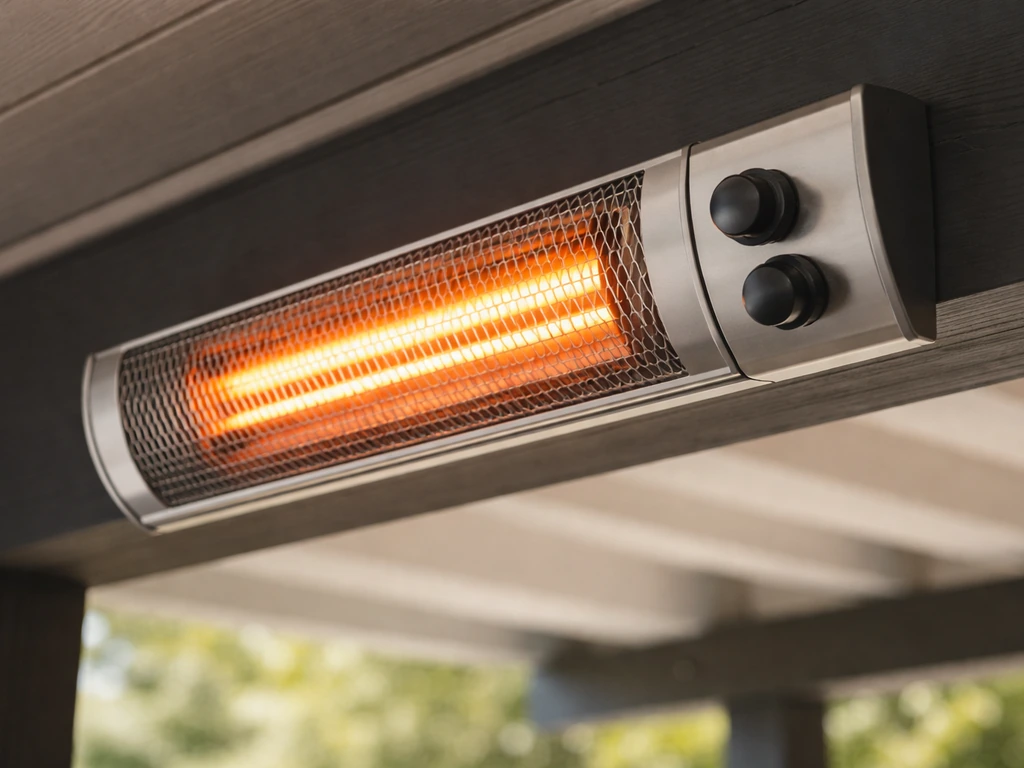
Electric infrared is the top choice for covered patios for one simple reason: it heats people and surfaces directly, not the air. That means less wasted heat rising into your covered ceiling and more warmth where you're sitting. There's no combustion, so no ventilation requirement, and ceiling-mount installation keeps the floor clear. Models like the blank" rel="noopener noreferrer">Dr. Infrared Heater DR-238 offer multiple wattage settings (900W, 1,200W, and 1,500W) and remote control, which makes them genuinely practical for daily use. The trade-off is electricity cost in cold climates with long heating seasons, but for most homeowners running a heater a few evenings a week, it's very manageable.
Propane: Best BTU-per-Dollar for Semi-Open Covered Patios
A propane tower or cabinet heater gives you the most raw heat output for the lowest purchase price. A 41,000 BTU unit like the Dyna-Glo cabinet heater can cover over 300 square feet, making it the right call for larger covered patios or those with taller ceilings where infrared panels lose efficiency. The real concern under a cover is ventilation. Propane combustion produces carbon monoxide, and even a partially enclosed patio can accumulate dangerous concentrations if airflow is restricted. Propane heaters belong on covered patios that are open on at least two sides, not in tightly enclosed gazebos or three-walled structures.
Natural Gas: Best for High-Frequency, Long-Season Use
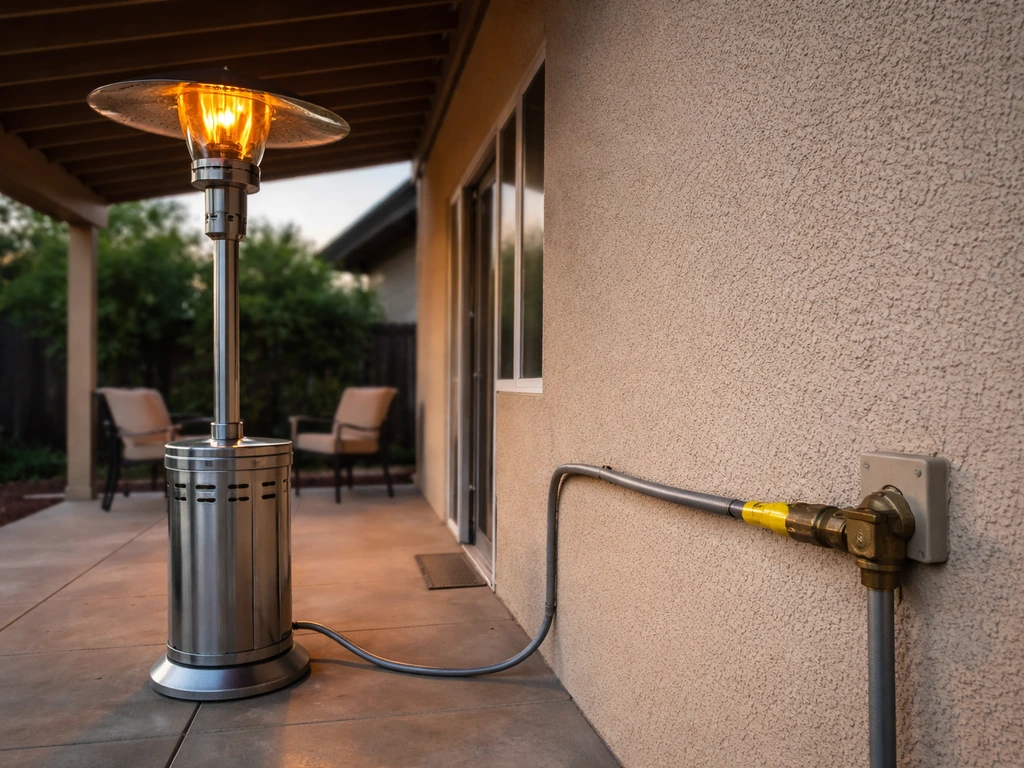
If you use your covered patio four or more nights a week and have access to a natural gas line, running a permanent gas heater makes strong economic sense. The fuel cost per hour drops significantly versus propane, and you never deal with empty tanks. Units like the Rinnai SE Infrared patio heater are rated to operate effectively in wind up to 10 mph, which matters for patios with significant side exposure. The upfront installation cost (running a gas line, professional install) is the barrier. If you're building a new covered patio or doing a renovation, it's worth factoring in.
Pellet Heaters: Ambiance First, Heat Second
Pellet heaters look great and create a fire-like atmosphere, but they're genuinely problematic under a low cover. Smoke, particulates, and ash don't disperse well in a covered space, which is a comfort and air quality issue. If your covered patio is more of an open pergola with a lot of airflow, a pellet heater can work. In a tighter covered space with a solid roof, it's the wrong tool. Save pellet heaters for open-air setups or a dedicated fire-pit area away from the main covered zone.
Top Picks: Best Covered Patio Heaters by Category
These recommendations are based on performance testing logic, real coverage claims, control features, and suitability for covered-patio installation. Every pick here has a clear reason to be on the list.
Best Electric Infrared: Dr. Infrared Heater DR-238
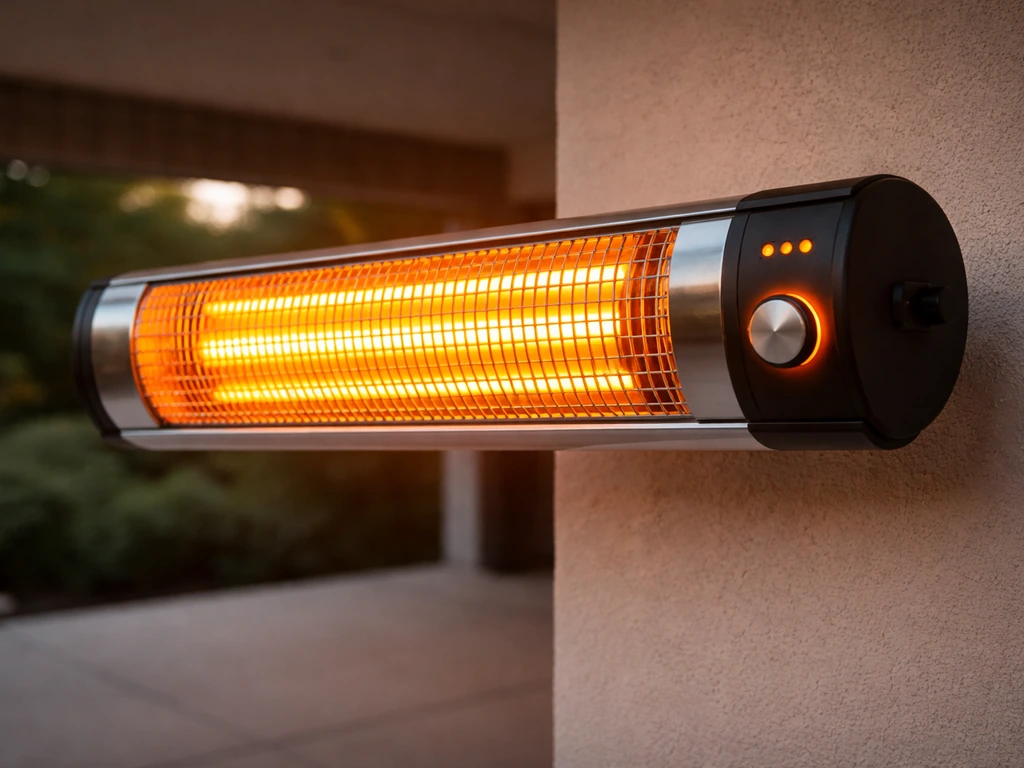
The DR-238 hits the sweet spot of output, control, and price for a residential covered patio. Three wattage settings (900W, 1,200W, 1,500W) let you match heat to conditions rather than running full blast every time. The remote control is a practical feature you'll actually use every evening rather than walking over to the unit. Advertised coverage runs up to 1,000 square feet at full output, though real-world coverage under cold or partially open conditions will be smaller. For a covered patio up to about 200 to 250 square feet in a moderate climate, this one delivers.
Best Premium Ceiling-Mount Infrared: Infratech C3024WH
If you're outfitting a high-end covered patio and want a clean, permanent installation, the Infratech C3024WH (3,000W) is the benchmark. At a mounting height of 7 to 9 feet, it heats an 8 by 8 foot zone, which is ideal for a seating group or dining table. Infratech's control ecosystem (sold separately) allows for zone dimming, timers, and wall switches, which makes this feel like a built-in appliance rather than a portable heater. [Infratech’s control specifications page](https://www.
infratechheating. com/pages/infratech-heater-control-specifications) provides product documentation for its heater control options, tying control hardware and strategies into outdoor comfort and efficient operation. The price is higher, but the build quality, longevity, and aesthetics justify it for permanent installations. Just understand that in extremely cold or windy conditions, coverage will be reduced from the stated spec.
Best Propane for Large Covered Patios: Dyna-Glo Cabinet Propane Heater
At 41,000 BTU/hr with a stated coverage of 314 square feet, the Dyna-Glo cabinet-style propane heater punches hard for the price. The cabinet enclosure hides the tank cleanly, which is a real aesthetic advantage over open-tank tower heaters. For a larger covered patio that's open on at least two sides, this is a strong pick. Always verify ceiling clearance before placing it under any roofline or overhead structure.
Best for Restaurants and Commercial Covered Patios: Backyard Pro Courtyard Series PH1STL
The Backyard Pro PH1STL at 47,000 BTU is a step up in output and is built for the heavier use cycles of commercial settings. It pairs a high BTU input with a listed coverage area in the product spec sheet, making it easier to plan multi-heater layouts for larger commercial covered patio setups. If you're outfitting a restaurant patio or a large covered event space, the extra output and commercial-grade build justify the higher cost.
Best Budget Wall-Mount Electric: AZ Patio Heaters HIL-1898
The HIL-1898 offers 750W and 1,500W heat settings plus a timer function via remote, which is a genuinely useful feature set for a budget-tier heater. It's a wall-mount electric infrared unit that works well for smaller covered patios or as a supplemental heater in a zone you use less frequently. Coverage is modest compared to the premium ceiling-mount options, but the price reflects that. Good entry point if you're not ready to commit to a permanent high-wattage installation.
Patio Heater Covers: How to Choose the Right One
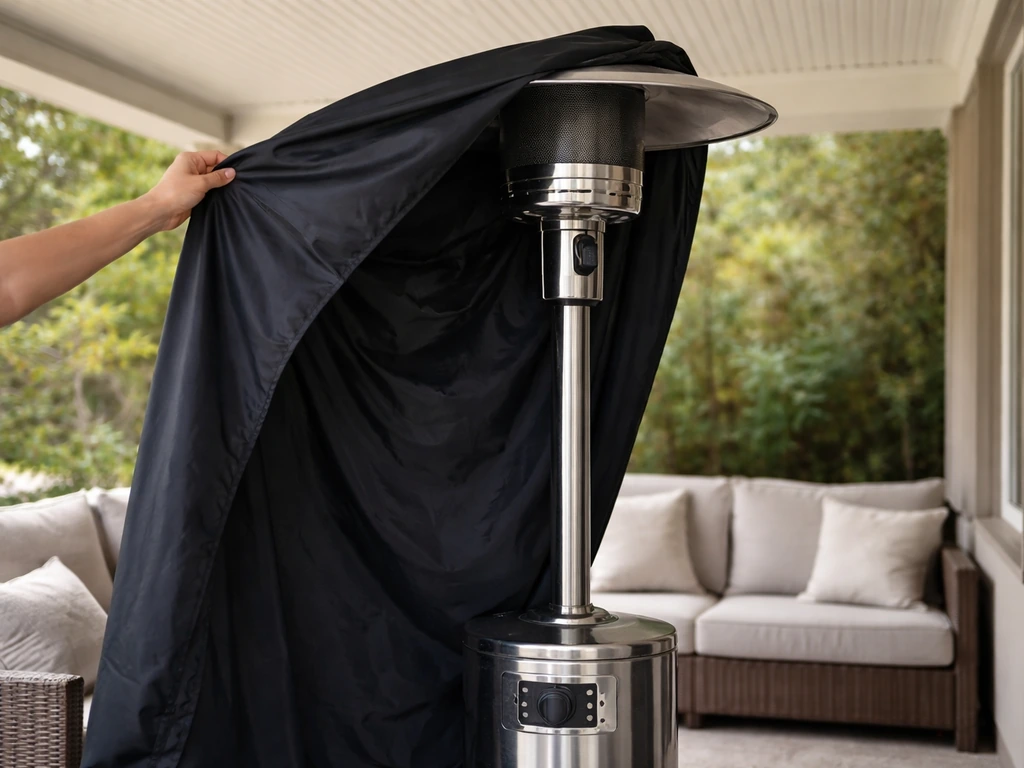
A heater cover protects your investment between uses, especially if your covered patio isn't fully weatherproof. Choosing the wrong cover, or putting it on at the wrong time, can cause just as many problems as not covering at all.
The One Rule That Overrides Everything Else
Never put a cover on a heater that's still warm. AZ Patio Heaters, Mr. Heater, Fire Sense, and virtually every major manufacturer include the same directive in their manuals: wait until the heater has completely cooled down before covering or storing it. Parts stay hot well after the flame or element is off. Covering a hot heater traps heat, risks melting the cover material, and can create a fire hazard. The practical approach is to shut off the heater at the end of the evening, cover it the next morning before weather moves in.
Materials: What Actually Holds Up Outdoors
The best patio heater covers use 600D or 900D polyester with a PVC-backed waterproof lining. This combination resists UV fading, sheds rain, and holds up to wind without tearing at the seams. Cheaper covers use thin 300D polyester or non-backed fabric, which works for a season but degrades quickly in direct sun or wet climates. If you're in a rainy Pacific Northwest climate or a coastal area with salt air, go straight to a heavy-duty 900D option. For dry Southwest climates, UV resistance matters more than waterproofing.
Fit: Match the Cover to Your Heater Style
Covers are designed for specific heater styles. A tall tower cover won't fit a cabinet-style propane heater, and a ceiling-mount infrared panel needs a completely different protective solution (usually a snap-on metal guard or a manufacturer-specific cover). Before buying, measure your heater's height and width and match those dimensions to the cover's listed size range. Most tower heater covers are sized by height: 85-inch, 90-inch, and 96-inch are the common options. A cover that's too loose flaps in wind and collects water in folds; too tight and you'll fight to get it on and off, which means you'll stop using it.
Weather Ratings and Features Worth Paying For
- Waterproof rating: Look for covers explicitly labeled waterproof (PVC-backed or TPU-coated), not just water-resistant.
- UV inhibitors: Important in any climate with more than 200 sunny days per year. Unrated covers fade and crack within one or two seasons.
- Ventilation vents: Small mesh vents at the bottom reduce interior moisture buildup and prevent mold under the cover.
- Drawstring or buckle closure: Cinching at the base keeps the cover on in wind. Velcro tabs at the bottom are an extra plus on tower models.
- Zipper access: Some covers include a side zipper so you can access the propane tank shutoff without fully removing the cover.
Safety, Placement, and Installation for Covered Spaces
Covered patios introduce constraints that open patios don't. A heater that's perfectly safe on an open deck can become a hazard if placed under a low overhang or in a three-walled enclosure. Here's what actually matters.
Clearances: Non-Negotiable Minimums
Every gas or propane heater comes with minimum clearance requirements from the manufacturer. These typically specify a minimum distance from the top of the heater to any overhead surface (usually 24 to 36 inches for propane towers), as well as side clearances from walls, furniture, and curtains. Ceiling-mount electric infrared heaters have their own clearance specs, usually a minimum of 24 to 36 inches from the element to the surface being heated and a few inches above the mount to the ceiling. Read the manual for your specific model and treat those numbers as minimums, not targets.
Ventilation for Gas and Propane Heaters
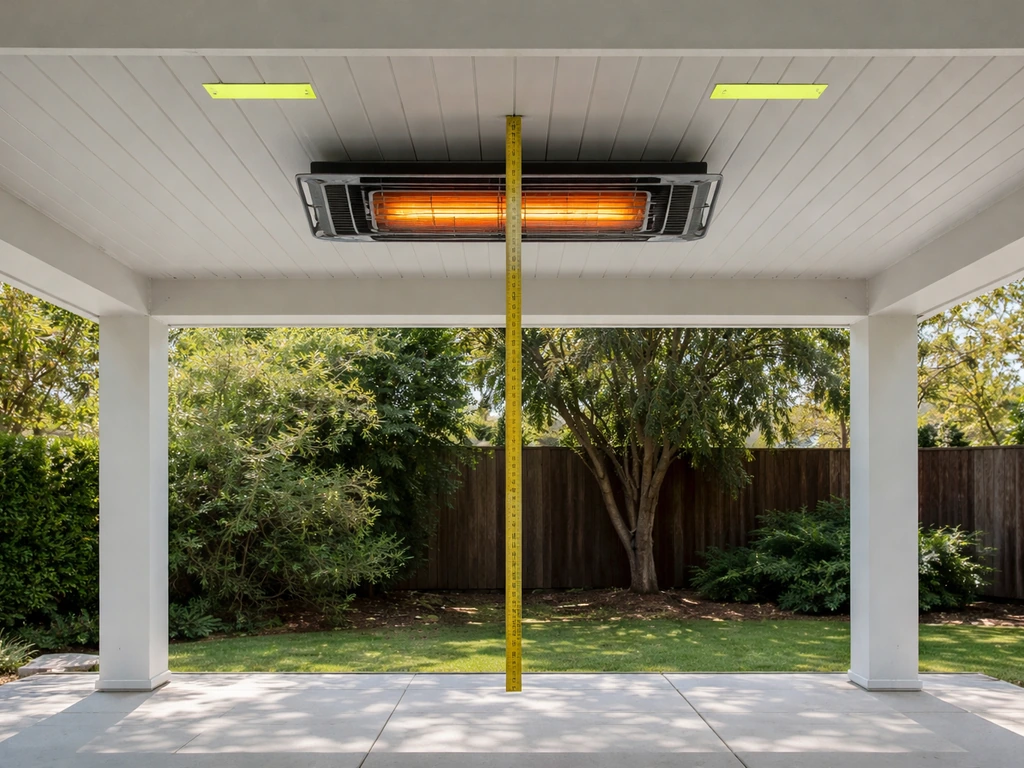
This is the most important safety consideration for covered patios. Propane and natural gas heaters consume oxygen and produce carbon monoxide. Under a solid-roof covered patio that's enclosed on multiple sides, CO can accumulate faster than most people expect. The ANSI/CSA standard for gas-fired outdoor infrared patio heaters (ANSI Z83.26-2014/CSA 2.37-2014) defines these as outdoor appliances, not indoor ones. As a rule, any covered patio where you plan to use a gas or propane heater should be open on at least two sides to allow cross-ventilation, and you should consider a CO detector mounted at breathing height as an added layer of protection.
Placement Tips for Different Heater Styles
- Infrared ceiling panels: Center over the seating area, angled slightly toward seated occupants. Infratech notes that mounting angle and height directly affect how radiant heat is distributed, so don't just bolt it flat to the ceiling without checking the coverage pattern.
- Propane tower heaters: Place centrally, away from overhead beams, curtains, and furniture edges. Never place directly under a solid soffit with no side openings.
- Wall-mount electric heaters: Mount at the height specified by the manufacturer (usually 7 to 9 feet on covered patios) and direct the heat toward the seating zone, not a wall.
- Natural gas permanent heaters: Should be installed by a licensed professional with a dedicated gas line and shutoff valve accessible from outside the patio space.
Controls and Convenience Features That Matter
Remote controls, programmable timers, and multi-zone switching all improve how much you actually use the heater. The AZ Patio Heaters HIL-1898 includes a remote with timer on/off, and the Infratech ecosystem supports wall switches and dimmers. These aren't luxury features; they prevent the habit of just leaving the heater running because it's inconvenient to turn off. That directly reduces your operating cost and extends element life. The Rinnai SE is documented to function reliably in wind up to 10 mph, which is relevant for covered patios with significant side exposure.
Operating Costs: What You'll Actually Spend Running Each Type
Purchase price is only part of the cost equation. If you use your covered patio heater 90 to 120 hours per season, the running cost can easily exceed what you paid for the unit. Here's how the math works out across fuel types, using current average energy prices as of 2026.
| Heater Type | Typical Output | Approx. Fuel/Energy Cost per Hour | Season Cost (100 hrs) | Best Value Scenario |
|---|---|---|---|---|
| Electric Infrared (1,500W) | 1,500W / ~5,100 BTU/hr | $0.18–$0.24 (at $0.12–$0.16/kWh) | $18–$24 | Short to moderate seasons, mild climates |
| Propane (40,000 BTU/hr) | 40,000 BTU/hr | $0.80–$1.10 (at ~$3.50/gallon propane) | $80–$110 | Infrequent use, no gas line available |
| Natural Gas (40,000 BTU/hr) | 40,000 BTU/hr | $0.40–$0.55 (at ~$1.50/therm) | $40–$55 | High-frequency use, existing gas line |
| Pellet | Variable, ~15,000–25,000 BTU/hr | $0.50–$0.90 (at ~$300/ton pellets) | $50–$90 | Ambiance priority, open covered structure |
Electric infrared is cheapest to run for moderate use in mild climates, but propane and natural gas have higher heat output per hour, which means you reach comfort faster and may run them for fewer hours to achieve the same result. Natural gas edges out propane significantly on per-hour cost once you have a line installed, making it the long-term value winner for anyone who heats their covered patio consistently from fall through spring.
The calculus shifts if you live somewhere that needs serious heat: Pacific Northwest, upper Midwest, New England. In those climates, a 1,500W electric infrared panel may not deliver enough output on the coldest evenings, pushing you toward a higher-BTU gas or propane option even if the running cost is higher. Heat output that actually keeps you comfortable is always a better value than a cheap-to-run heater that leaves you heading inside at 40°F.
Sizing Guide and Quick Recommendations for Common Setups
Here's the direct decision framework. Match your patio size, climate, and setup to the right heater type and output range. If you're looking at a screened-in patio or a fully open deck rather than a covered but open-air setup, those scenarios have their own specific considerations that differ from what's covered here. If you have a screened porch instead of a fully open deck, you will want the best patio heater for screened porch conditions and clearance needs screened-in patio. If you're shopping for the best heater for a screened-in patio, focus on airflow limits and whether you need a gas-safe, ventilation-friendly setup.
By Patio Size
| Patio Size | Recommended Output | Best Heater Type | Quick Pick |
|---|---|---|---|
| Under 100 sq ft (small dining nook) | 1,500W electric or 15,000–20,000 BTU propane | Electric infrared wall/ceiling mount | AZ Patio Heaters HIL-1898 or Infratech C3024WH |
| 100–200 sq ft (standard covered patio) | 3,000W electric or 30,000–40,000 BTU gas/propane | Electric infrared ceiling mount or propane tower | Dr. Infrared DR-238 or Dyna-Glo cabinet propane |
| 200–350 sq ft (large covered patio) | 40,000–47,000 BTU gas/propane, or dual 3,000W infrared panels | Natural gas or propane cabinet; or 2x ceiling infrared | Dyna-Glo 41K BTU or Backyard Pro PH1STL |
| 350+ sq ft (commercial or oversized) | Multiple heaters; 47,000+ BTU per zone | Natural gas permanent install or commercial propane | Backyard Pro PH1STL in multi-unit layout; Rinnai SE for gas |
By Climate
- Mild climates (Southern California, Gulf Coast, Arizona winters): Electric infrared at 1,500W to 3,000W is usually enough. Lower running costs and clean installation make it the obvious choice.
- Moderate climates (Pacific Northwest, Mid-Atlantic, mid-South): Electric infrared at 3,000W+ or a propane cabinet heater. Budget for the nights it drops below 40°F and size accordingly.
- Cold climates (New England, Upper Midwest, Mountain West): Natural gas or high-BTU propane is the right call. Electric infrared alone may not cut it on the worst nights; use it as a supplement or go straight to gas.
- Coastal and windy exposures: Prioritize wind-rated heaters like the Rinnai SE (rated to 10 mph wind). Remember that Infratech explicitly notes coverage area shrinks in windy conditions, so upsize your BTU or wattage selection.
Your Pre-Purchase Checklist
- Measure your covered patio's square footage and ceiling height before looking at any product.
- Check whether your covered patio is open on at least two sides. If not, electric infrared is the only safe fuel type.
- Decide between portable (propane tower, cabinet) and permanent (ceiling-mount infrared, natural gas) based on whether you're renting or own the space.
- Verify electrical outlet location or gas line proximity before settling on a heater type.
- Check the manufacturer's minimum ceiling and side clearances against your actual covered structure.
- Plan for a heater cover that matches your heater's dimensions and your local climate's primary weather threat (rain vs. UV vs. wind).
- Set a reminder: always let the heater cool completely before covering it.
- If using propane or natural gas under a covered structure, add a CO detector at seated breathing height.
FAQ
Can I use a best covered patio heater under a ceiling fan or close to an overhead beam?
You can, but only if the heater is installed to the manufacturer’s clearance distances for the element or burner. Don’t rely on “works fine” spacing, beams and fan blades can disrupt the heat pattern and reduce safety margins. If the clearance minimum is measured from a specific part of the heater (element, top housing, or burner), follow that exact reference point.
Do I really need a CO detector if I keep my gas or propane heater on an open patio?
It’s still a good safety layer, especially if the patio is only partially open or the wind can shift. A CO detector should be placed at breathing height and tested regularly, even though the article recommends opening at least two sides for cross-ventilation.
How do I estimate whether an infrared panel will be powerful enough for my covered patio when it’s windy?
Start with the coverage area as a ceiling-mounted zone, then shrink it for cold and wind by budgeting margin beyond the stated square footage. Wind mainly steals comfort by pushing heat away, so avoid placing the seating zone behind curtains or walls that cause recirculation, keep the heater aimed at the people instead of the far wall.
What’s the safest way to mount an electric infrared ceiling heater on a covered patio?
Use the specified mounting height range for your model, confirm the structural attachment point, and verify clearances to the ceiling and nearby materials. If your roof underside is unusually insulated or has soffits, check that nothing combustible sits inside the heater’s minimum clearance envelope.
Can I leave a heater cover on all season, even when the heater is off?
You can, but only if you ensure the heater is fully cooled before covering and the cover allows moisture to vent rather than trap humidity. In damp climates, periodic checks for standing water, mildew smell, and loose seams help prevent corrosion and fabric degradation.
How tight should a heater cover fit, should it be taut like a drum?
Neither extremely tight nor floppy is ideal. Too loose means it will flap, abrade, and collect rain in folds. Too tight can be hard to remove and can stress seams, which increases tearing in wind. Match the cover size range to the heater’s height and width, then aim for snug but removable.
Is it safe to store a portable propane heater indoors under a covered structure?
Avoid bringing a burning or recently used propane unit into enclosed spaces. The key risk is that exhaust gases and residual heat can build up, and propane tanks are not meant for indoor storage. If you store it on-site, do it only when fully cooled and follow the unit’s manual about enclosure limits.
What should I check if my heater frequently cycles off or won’t reach comfort?
For electric infrared, confirm you are using the correct wattage setting and that nothing blocks the radiant line (privacy curtains, solid side panels, or furniture placed directly in front). For gas, make sure the heater has adequate clearance and ventilation, verify the gas pressure meets requirements, and check for drafts that push the warm zone away from your seating.
Can I install multiple heaters instead of one larger unit on a long covered patio?
Yes, and it’s often more effective. For a long, narrow patio, multiple infrared zones usually deliver better comfort than a single distant source because radiant heat is directional. For gas setups, separate heaters can reduce how long each runs, but you must still respect each unit’s clearance and ventilation requirements.
Are pellet heaters ever a good choice for a covered patio if it has a solid roof?
Generally no. Pellet heaters tend to struggle in solid-roof covered areas because smoke, particulates, and ash do not disperse well. If you use pellets at all, place it only in a high-airflow location where exhaust can clear, otherwise pick an electric infrared or an appropriately ventilated gas setup.
What cover material should I choose if my patio is near the coast or has salt air?
Choose a heavy-duty 900D polyester cover with a waterproof lining, and inspect the seams and zippers for damage after storms. Salt air accelerates corrosion, so a slightly thicker cover that resists both UV and rain helps protect the heater body and fasteners over time.
Does the mounting height matter for infrared coverage, or is wattage all that matters?
Mounting height matters because coverage is defined as a zone at a certain height range. If you mount too high, the radiant intensity at seating drops and the effective footprint shrinks. If you mount too low, you risk clearance violations and increased heat concentration on nearby surfaces.
Next Articles
Best Price on Outdoor Patio Heaters: Compare Costs & Deals
Score the best price on outdoor patio heaters, price ranges, top picks, deal tactics, total-cost & safety checklist.
Where Can I Rent Patio Heaters Near Me Today
Find where to rent patio heaters near you today, choose the right fuel type, compare costs, and book safely.
Where to Buy a Patio Heater: Best Places and Types
Where to buy a patio heater now, plus electric vs gas vs propane tips, safety checks, and size/BTU buying checklist.