
For most small patios under 150 square feet, a 1,500W to 2,900W electric infrared heater or a portable propane heater in the 10,000 to 18,000 BTU range will do the job. Electric infrared is the cleaner, lower-maintenance choice for covered or semi-covered spaces, while propane wins when you need portability or lack an outdoor outlet. The best portable patio heaters are typically propane models, since they don't require an outdoor electrical outlet. Natural gas makes sense only if you already have a gas line and want permanent heat. Pellet heaters are niche and high-maintenance. If you're heating a balcony, a wall-mounted infrared panel or a tabletop electric heater is almost always the right call.
Best Small Patio Heaters: Buyer Guide by Space, Type, Cost

Caleb Vale
1 Jun 2026
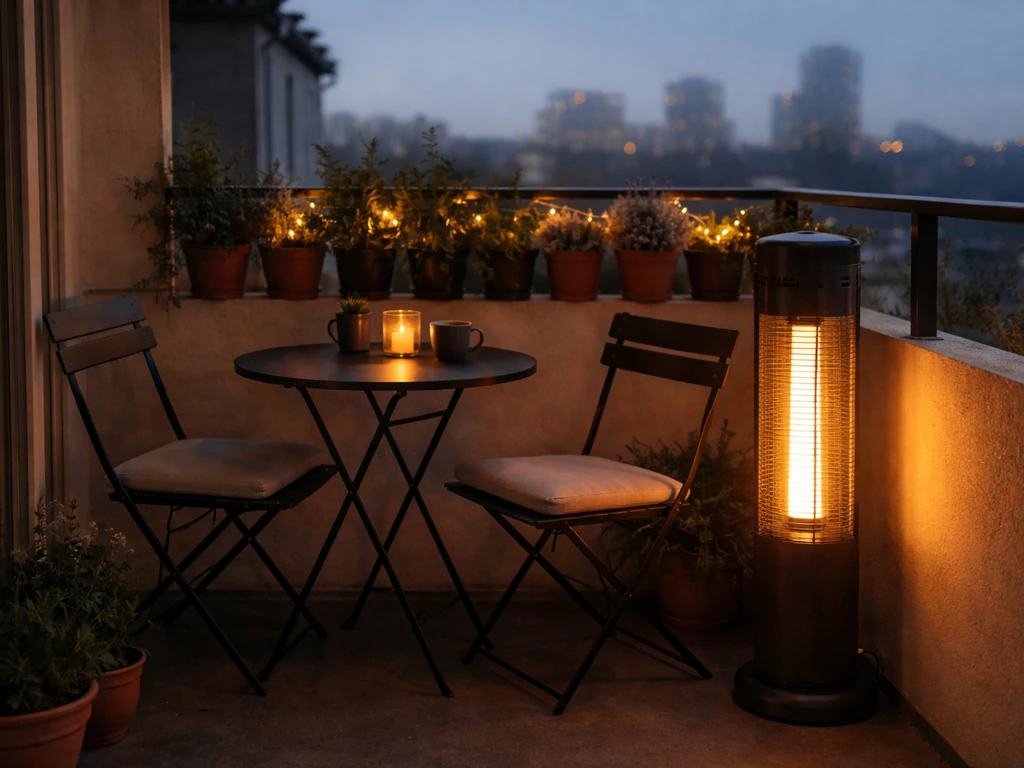
How to choose the right small patio heater
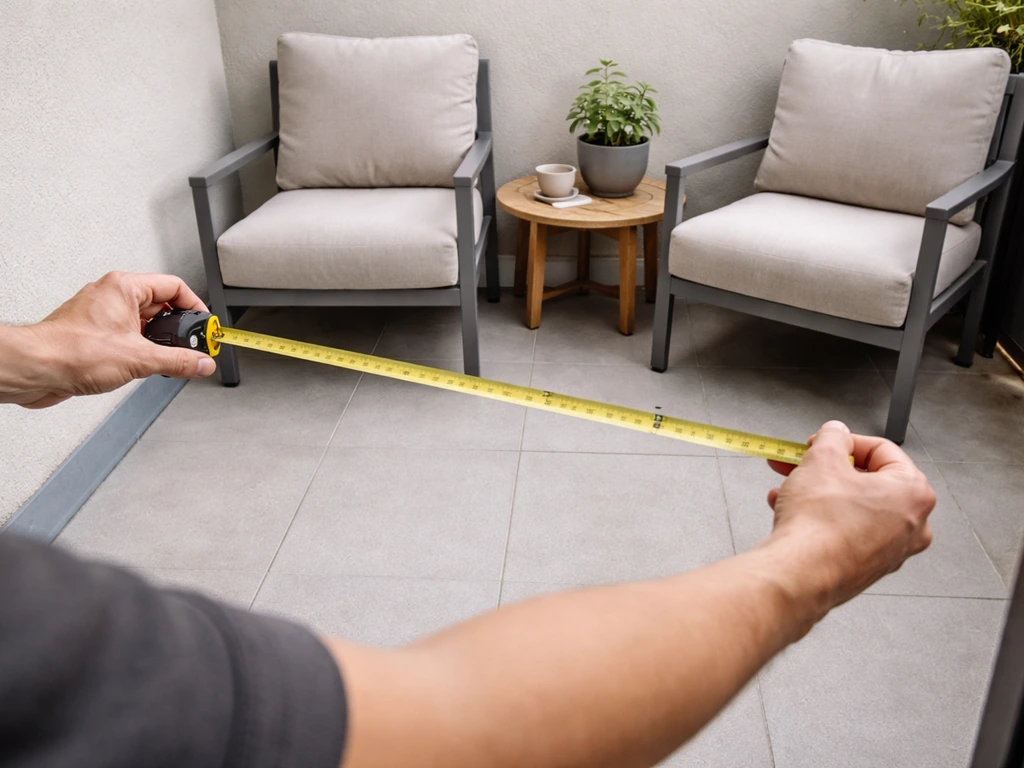
Start by measuring your space. Most small patios run between 60 and 150 square feet, and that number matters more than anything else when you're shopping. If you're specifically comparing options like the best chiminea for small patio, size and heat radius are still the deciding factor. A single commercial-grade infrared heater rated at 2,900W (like the Bromic Eclipse Smart-Heat series) covers around 121 square feet, which lines up well with that range. For patios under 300 square feet, you generally need one or two heaters with a heating radius of 5 to 10 feet, depending on output.
Next, think about exposure. A covered patio needs roughly 100 to 150 watts per square meter. A semi-covered space needs 200 to 300 W/m², and a fully exposed patio needs 300 to 400 W/m². That's not marketing fluff, that's a practical planning target. In real terms, an exposed patio can shrink your effective coverage area by roughly 56 percent compared to a covered one. A heater rated for a 12x12 foot footprint under a roof might only give you reliable warmth across an 8x8 foot zone in the open air.
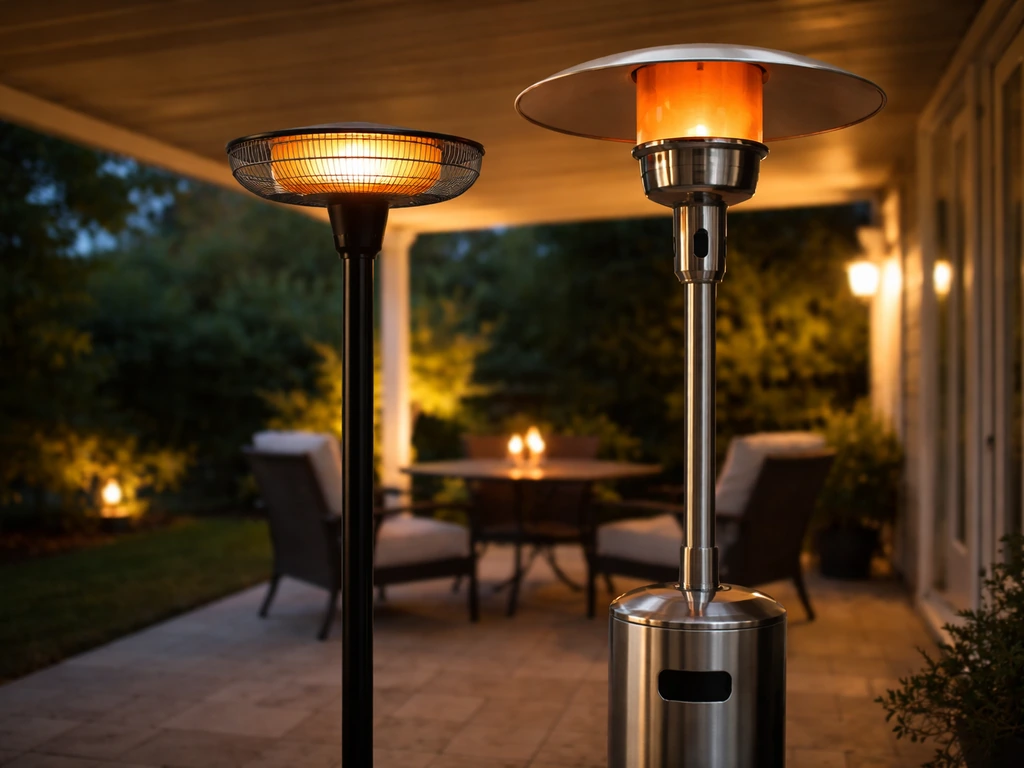
Finally, decide how you want to feel the heat. If you're hosting people around a small seating area, close-in radiant heat (from an infrared panel or a propane mushroom-style heater) works best at 4 to 6 feet from the heat source. If you want to warm a broader zone and people move around a lot, a tower-style propane or natural gas heater distributes heat more evenly but loses efficiency fast in wind.
Key specs to check before buying
- Coverage area in square feet (compare this against your measured patio size, not the marketing claim)
- BTU output for propane and natural gas (10,000–18,000 BTU is right for most small patios), or wattage for electric (1,500W–3,300W)
- IP rating for weather resistance (IP44 or higher for any outdoor heater exposed to rain)
- Mounting type: freestanding, wall-mounted, tabletop, or ceiling-mounted
- Power source requirements: 120V standard outlet, 240V dedicated circuit, propane tank, or gas line connection
- Safety features: tip-over shutoff, tilt switch, oxygen depletion sensor (ODS) for propane
Electric vs propane vs natural gas vs infrared vs pellet
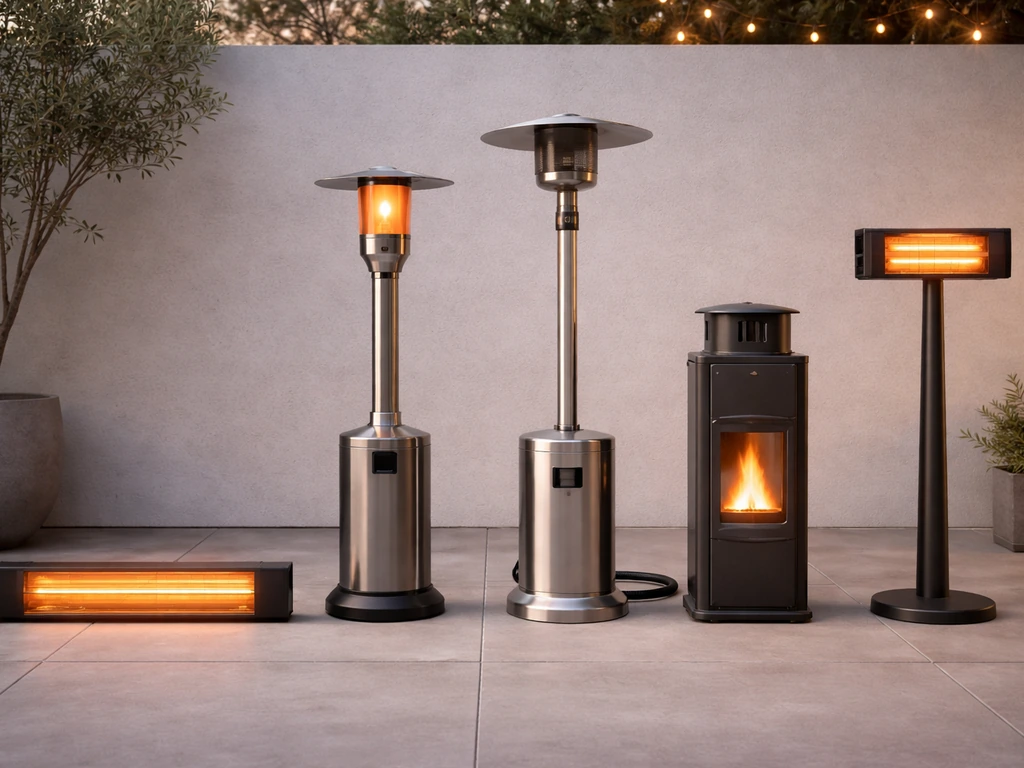
These five categories overlap a bit, so here's how they actually break down for small patios. Infrared is a heating technology, not a fuel type, and it can run on either electric or gas. When people say 'electric heater,' they typically mean an electric infrared panel or resistance heater. When they say 'infrared,' they often mean a mounted radiant panel. Here's an honest breakdown of each.
| Type | Best For | Pros | Cons | Wind Sensitivity |
|---|---|---|---|---|
| Electric infrared | Covered/semi-covered patios, balconies | No fuel cost, easy control, dimmable, fast warmth in under a minute | Needs outdoor electrical outlet or 240V circuit, weaker in fully exposed spaces | Moderate (radiant beam holds better than convective heat, but drops above 5 MPH wind) |
| Propane | Portable use, no gas line, temporary setups | High BTU output, portable, no wiring needed, works in all weather types | Tank refills needed, higher ongoing cost, requires clearance from combustibles | Low to moderate (mushroom-style loses heat fast in wind; infrared propane is better) |
| Natural gas | Permanent installs with existing gas line | Lowest fuel cost, no tank swaps, consistent supply | Requires gas line hookup, not portable, installation cost is high | Low to moderate (same as propane mushroom heaters) |
| Infrared (radiant panel) | Targeted close-in warmth, covered patios | Directional heat stays on people not air, fast warm-up, efficient | Loses meaningful effectiveness above 5 MPH wind, covered location is almost required | High sensitivity above 5 MPH |
| Pellet | Aesthetic appeal, rustic settings | Ambiance, burns renewable fuel | High maintenance (ash cleanup, fuel storage), CO hazard risk, for outdoor use only on flat non-combustible surfaces, complex setup | Very high sensitivity |
Pellet heaters deserve a frank word here. They produce a charming fire-like effect and run on wood pellets, but they require significantly more work than any other category: regular ash cleanup, pellet storage, careful placement on flat non-combustible surfaces, and real carbon monoxide risk if misused. They're strictly outdoor-only appliances. For most small-patio buyers, they're not worth the trade-offs unless you specifically want that campfire aesthetic. If that's what you're after, a fire pit or chiminea might actually be a better fit.
Top picks by use case
Balcony or apartment patio
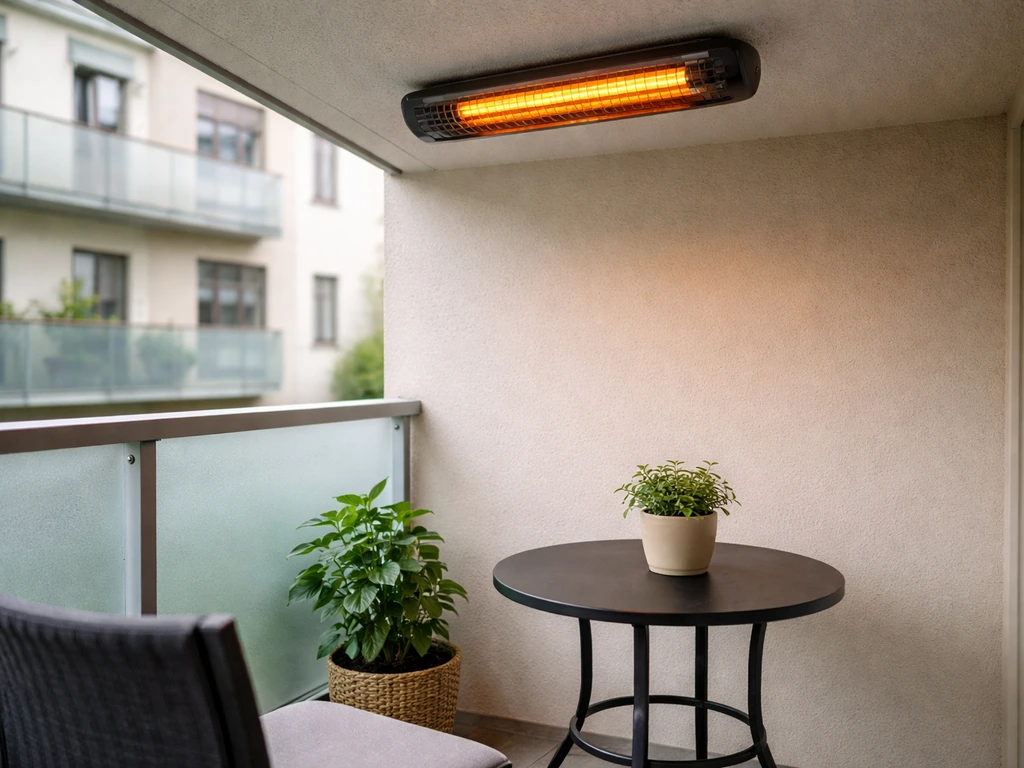
A balcony is almost always the most restrictive setup: limited space, no gas hookups, weight limits, and neighbors below or beside you. Electric infrared is the only practical answer here. A wall-mounted infrared panel in the 1,500W to 2,000W range handles a typical balcony of 40 to 80 square feet comfortably, and a tabletop electric heater works if you can't drill into the wall. Look for models with a tilt switch (like the Bromic Eclipse Smart-Heat, which includes one) and a remote or dimmer so you can reduce intensity when sitting close. Avoid propane on a balcony, most building codes prohibit it, and tank storage is a fire hazard in enclosed balcony areas.
10x10 covered or semi-covered patio
A 100-square-foot covered patio is the sweet spot for a single electric infrared heater in the 2,000W to 2,900W range, or one propane tower heater at around 40,000 BTU if you want the classic mushroom-style look. If you like that classic flame look and portability, you may also want to compare this with a best small propane patio fire pit that targets similar close-to-people warmth and ambiance propane mushroom-style.
The Bromic Eclipse Smart-Heat 2900W series covers 121 square feet and is a solid match here. For covered patios, mounting matters: ceiling or wall-mounted infrared panels direct heat straight down to where people sit, which is more efficient than a freestanding unit aimed from the side. A semi-covered patio in the same footprint will need more wattage to compensate for heat loss at the open edges.
Windy or exposed small patio
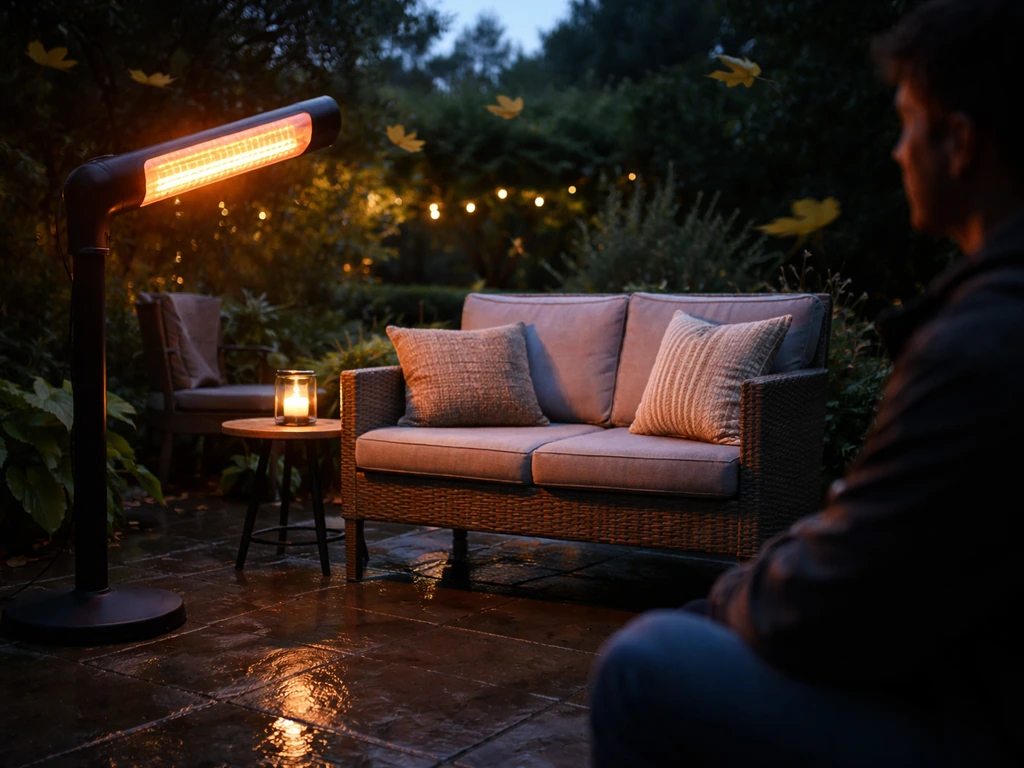
This is where most heater guides go wrong. Infrared radiant heat does hold up better than convective (blown air) warmth in wind, because it heats objects and people directly rather than warming the air. But it's not immune: effectiveness drops noticeably above 5 MPH wind velocity.
If your patio is fully exposed, you have two options: go with a higher-wattage infrared panel than your square footage alone would suggest (use the 300 to 400 W/m² planning target), or switch to a propane mushroom-style tower heater, which at least pushes a higher raw BTU output that brute-forces through moderate wind. Adding a windscreen or privacy panel on the windward side of your patio will do more for heating efficiency than upgrading to a more powerful heater.
Close-to-people heating for a small seating area
If you're warming a specific spot, like a bistro table for two or a small loveseat area, a tabletop infrared heater or a Mr. Heater-style propane radiant unit at 10,000 to 18,000 BTU is exactly right. People sitting 4 to 6 feet from these units feel comfortable warmth without overheating. The Mr.
Heater MH18B is a popular pick here: it delivers up to 18,000 BTU, mounts directly to a standard 20 lb propane tank, and includes a tip-over safety shutoff. For detailed az patio heater propane antique bronze fire pit reviews, compare BTU output, heat coverage, and safety features across top models. For electric, a tabletop infrared panel in the 750W to 1,500W range is enough for two people at close range and draws from a standard 120V outlet.
Safety, placement, and clearance rules
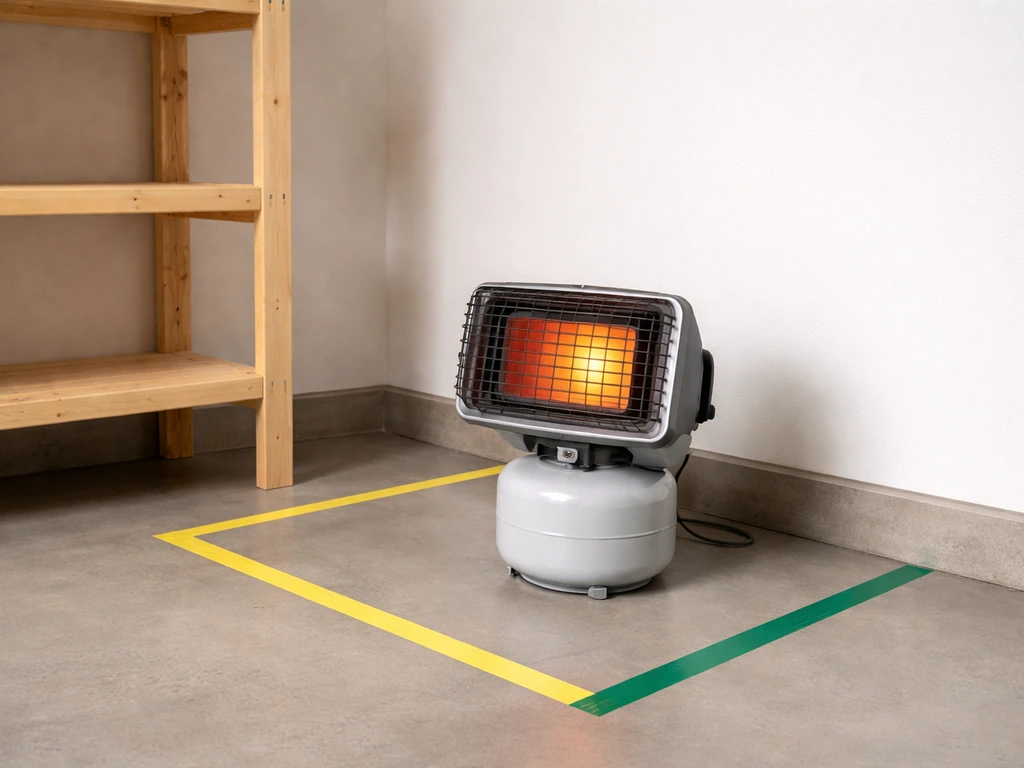
Every heater type has specific clearance requirements, and skipping them is how accidents happen. Here's what you need to follow for each category.
Propane heaters
The Mr. Heater MH18B manual specifies a minimum 30 inches of clearance from combustibles above the heater. Keep the same thinking for side and front clearances: don't put upholstered furniture, fabric umbrellas, or wood fencing within the heat cone. Always use the tip-over safety shutoff feature (don't disable it), and store propane tanks upright and away from heat sources. Never use propane heaters indoors or in enclosed patios without ventilation.
Electric infrared heaters
Electric models like the Bromic Eclipse Smart-Heat require a weatherproof outdoor electrical connection, and the wiring must be protected from moisture. Always verify earth continuity (ground connection) before first use. The Bromic Eclipse Smart-Heat 3300W portable electric heater manual highlights installation safety requirements, including checking earth continuity (ground connection) before use verify earth continuity (ground connection). Wall and ceiling-mounted units need to be secured to rated structural surfaces, not just drywall. Keep the tilt switch functional and don't obstruct airflow around the heating element. Most outdoor-rated electric infrared panels are safe for covered patios where they won't get direct rain exposure, but check the IP rating against your specific installation.
Pellet heaters
Pellet heaters must be used outdoors only, placed on a flat, level, non-combustible surface. Vent terminations require a minimum 3 inches of clearance from any combustible material. Never connect a pellet heater vent to any other appliance's exhaust. The biggest safety issue with pellet heaters is carbon monoxide: they produce CO during combustion, so never use them in enclosed or semi-enclosed spaces, and don't lean over or stand directly downwind of the exhaust.
General placement rules for small patios
- Keep any heater at least 3 feet from overhead structures unless the manual explicitly allows closer mounting
- Don't position heaters under fabric pergola covers, canvas awnings, or low wooden overhangs without checking clearance specs
- Never leave a propane or pellet heater unattended while lit
- In wind above 10 MPH, consider shutting down freestanding propane units to prevent tip-over risk
- Always place freestanding heaters on stable, level ground, never on uneven pavers or soft grass
Operating costs and efficiency
Running costs vary a lot by fuel type and how often you use the heater. Here's a realistic breakdown based on average 2026 U.S. energy prices.
| Heater Type | Typical Output | Approx. Cost Per Hour | Notes |
|---|---|---|---|
| Electric infrared (120V) | 1,500W | $0.18–$0.25 | Based on ~$0.12–$0.17/kWh national average; plug-in, no installation cost |
| Electric infrared (240V) | 2,900W–3,300W | $0.35–$0.56 | Higher output, needs dedicated circuit; most efficient per square foot covered |
| Propane (portable) | 10,000–18,000 BTU | $0.50–$1.10 | Based on ~$3.50–$4.50 per gallon propane; 20 lb tank lasts roughly 8–10 hrs at mid output |
| Natural gas | 30,000–40,000 BTU | $0.35–$0.60 | Cheapest fuel cost long-term, but upfront gas line installation adds $300–$800+ |
| Pellet | Variable | $0.40–$0.80 | Pellet cost varies; factor in time cost of loading, cleaning, and ash disposal |
For a small patio used a few evenings per week, a 1,500W electric infrared heater running 3 hours per session costs roughly $0.55 to $0.75 per use. A propane tank-top heater at mid output runs closer to $1.50 to $2.00 for the same session. Over a full season of 50 sessions, that's the difference between about $35 and $100 in fuel. Electric wins on cost if you have the outlet. Propane wins on flexibility and portability if you don't.
One efficiency factor people overlook: heat goes where it's aimed. A ceiling-mounted infrared panel pointed directly at a seating area wastes almost nothing. A freestanding mushroom-style propane heater radiates in all directions, so a lot of that BTU output is heating empty air or ground nobody's sitting on. For small, defined seating areas, directional infrared gives you more comfort per dollar, even if the upfront cost is higher.
Installation and setup checklist
Getting the installation right is what separates a heater that actually works from one that underperforms or creates a hazard. Here's what to handle before you plug in or light up.
Electric infrared setup
- Measure your patio and calculate the wattage you need (use 150 W/m² for covered, 300 W/m² for semi-exposed, 400 W/m² for fully exposed)
- Check whether your outdoor outlet is rated for the heater's draw (most 1,500W units need a 15A circuit; 2,900W+ units need a 240V/20A dedicated circuit)
- For wall or ceiling mounts, locate studs or use rated anchors rated for the heater's weight plus vibration load
- Run all outdoor wiring through weatherproof conduit with GFCI protection at the circuit breaker or outlet
- Verify earth continuity (ground connection) with a multimeter before first use
- Confirm IP rating matches your installation environment (IP44 minimum for any rain exposure)
- Set the mounting angle per the manufacturer's diagram—most infrared panels should tilt 30 to 45 degrees downward toward the seating area
Propane heater setup
- Assemble the base and pole per manufacturer instructions before connecting the tank
- Attach the regulator hose to the propane tank before threading it to the heater (always check O-ring condition)
- Perform a soap-bubble leak test at every connection before first light
- Place the heater on a stable, flat surface at least 30 inches from combustibles overhead
- Test the tip-over shutoff by gently tilting the unit before full use to confirm it cuts fuel flow
- Keep a 1-lb disposable tank on hand as a backup, or note the nearest propane refill location for 20 lb tanks
Natural gas setup
- Hire a licensed plumber or gas fitter to run and connect the outdoor gas line (this is not a DIY job in most jurisdictions)
- Confirm the heater is rated for natural gas, not just propane (they are not interchangeable without a conversion kit)
- Install a dedicated shutoff valve at an accessible location near the heater
- Inspect all fittings and the gas line connection for leaks after installation, before first use
Pellet heater setup
- Position on a flat, level, non-combustible surface (concrete or stone pavers, not wood decking or grass)
- Install the vent termination with at least 3 inches of clearance from any combustible material
- Do not connect the vent to any other appliance exhaust
- Load the hopper with food-grade or heating-grade pellets only (not treated wood or charcoal pellets)
- Run a first burn to burn off any manufacturing residue before using near people
Maintenance, durability, and what to look for in a warranty
Routine maintenance by type
Electric infrared heaters are the lowest-maintenance option. Wipe down the heating element and reflector with a dry cloth at the start and end of each season. Check the wiring connections annually for corrosion, especially if you're in a coastal or humid climate. Replace any cracked or discolored quartz tubes immediately since a compromised element is both a performance and safety issue.
Propane heaters need a little more attention. Clean the burner nozzle once per season with compressed air to clear debris that reduces ignition reliability. Inspect the regulator hose for cracks or brittleness before each season. Store the heater with the tank disconnected in an off-season storage area, never in a garage or enclosed structure with the tank attached.
Natural gas heaters require an annual inspection of the burner and thermocouple by a qualified technician, especially if the unit is permanently installed and exposed to weather year-round. Check for spider webs or insects in the burner tube every spring since blocked burners are a leading cause of irregular flame and ignition failure.
Pellet heaters have the highest maintenance burden by far. You need to empty and clean the ash pot after every few burns, clean the burn pot and exhaust vent monthly during active use, and inspect the hopper and auger mechanism for pellet dust buildup. Budget at least 30 minutes of maintenance per week of heavy use.
Durability factors worth checking before you buy
- Housing material: powder-coated steel or stainless steel lasts significantly longer than painted aluminum in coastal or humid climates
- Quartz element quality for infrared heaters: premium quartz tubes (like carbon fiber or halogen quartz) outlast cheaper ceramic elements
- IP weather rating: IP44 handles rain splash, IP65 handles direct water jets, IP67 is submersion-rated (overkill for most patios but useful for very wet climates)
- Regulator quality on propane units: a high-quality brass regulator is worth paying extra for since cheap plastic regulators crack after one or two seasons
- Brand support and parts availability: check that replacement heating elements, igniters, and regulators are actually sold separately before buying
What a good warranty actually covers
For electric infrared heaters, look for a minimum 2-year warranty on the heating element and 1 year on electronics. Premium brands like Bromic offer longer coverage on major components. For propane and natural gas heaters, a 1-year full warranty is standard; 2 years or more on the burner assembly is a sign of a quality unit. Be cautious of warranties that exclude 'normal wear' on the igniter or regulator, since those are exactly the parts that fail first. Always confirm the return window before purchasing: 30 days is the minimum acceptable, and some specialty heater brands offer only 15-day windows, which is not enough time to properly evaluate performance across changing weather conditions.
If you're still weighing whether a heater or a fire feature is the right choice for your small outdoor space, it's worth knowing that compact fire pits and chimineas are genuinely competitive options for patios where ambiance matters as much as raw warmth. But for reliable, controllable heat on a consistent basis, a quality small patio heater is the more practical long-term investment.
FAQ
How do I choose the right heater if my patio size is close to the cutoff (for example, 120 to 170 sq ft)?
If you're near the middle, don't match the square footage exactly. Use exposure first (covered, semi-covered, exposed) and then aim for a usable heat zone rather than “full coverage.” For fully exposed patios, plan on either higher wattage than the footprint suggests or a directional heater aimed at the seating cluster, because wind typically reduces effective warmth more than the extra square footage number you pick.
Is a higher-watt electric infrared heater always better for a small patio?
Not always. For infrared, placement and aim matter as much as output. A stronger unit can overheat people if it's mounted too close or aimed incorrectly. If people will sit 4 to 6 feet from the source, start with the output that fits that distance and coverage radius, then adjust with dimming or a lower setting instead of assuming more watts is automatically more comfortable.
Can I use an electric patio heater under a pergola or gazebo if it gets occasional rain?
Possibly, but only if the unit's weather rating matches your installation. Look for an outdoor-rated IP level for your exact exposure and ensure all electrical connections remain protected from direct splashes. If you can't guarantee dry conditions at the connection point, choose a setup where the heater and wiring are both under shelter, not just the heating element.
What wind conditions should I plan for, and what should I do if it’s often breezy?
A common failure point is assuming infrared is windproof. Infrared effectiveness drops noticeably above moderate wind, so if your patio is fully exposed, prioritize directional placement, and consider adding a windscreen on the windward side. If breezes are frequent, propane mushroom-style heaters can feel stronger because they deliver more raw output, but comfort still depends on where you position people relative to the heater.
How far should outdoor furniture, umbrellas, and plants be from the heater?
Use clearance guidelines as a minimum and then add extra distance for anything that softens or deforms, like fabric umbrellas, cushions, and vinyl. Keep fabrics out of the direct “heat cone,” not just away from the heater body. For propane units, also keep tall decor or hanging items from drifting into the heat plume when there’s a gust.
Can I mount an infrared heater on a wall or ceiling if the wall is drywall or not structural?
No, you should only mount into rated structural surfaces. Exterior-rated drywall is not a structural anchor. Confirm the mounting points, use appropriate hardware for your wall type, and avoid relying on drywall anchors, because a heater is a heavy, heat-producing load and vibration can loosen weak fasteners over time.
What’s the safest way to test whether my patio setup is working without wasting fuel or power?
Do a short “spot test” on a cool evening. Start with the heater positioned to target the seating zone, then check whether people feel comfortable at the expected distance (about 4 to 6 feet for close-in radiant comfort). If the area feels weak, adjust aim or add a windscreen before upgrading to a higher-output model.
How often should I inspect and clean a propane heater, and what am I looking for?
Plan on at least seasonal cleaning and more frequent checks if you live in a dusty or pollen-heavy area. Focus on the burner nozzle for blockages, inspect the regulator hose for cracks or brittleness, and confirm the unit ignites reliably. If you notice delayed ignition, uneven flame, or odor changes, stop using it and have it checked rather than continuing to run it.“
Is it okay to use a propane heater on a balcony if my local building rules allow it?
Even when allowed, balconies have extra risk factors like limited ventilation, nearby railings, and neighbor proximity. For most balcony setups, electric infrared is still the practical default due to fewer fire and storage concerns. If you do use propane, follow safety rules strictly, keep the tank storage outside restricted areas, and ensure the heater has safe clearances from combustibles and building materials.
What warranty details matter most when shopping for small patio heaters?
Look for coverage on the parts that typically fail first and check what “normal wear” excludes. Compare return windows too, 30 days is a solid minimum, and shorter windows can make it hard to evaluate performance through changing weather. For electric infrared, prioritize element coverage plus electronics terms, and for fuel-burning units, confirm burner assembly coverage duration.
Should I buy a heater or a fire feature for my patio if ambiance matters?
If you want consistent, controllable warmth for gatherings, a heater is usually the better long-term choice. If your priority is flame look and mood, compact fire features can work, but they often provide less predictable heat distribution and can require more attention to placement, smoke considerations, and safety spacing. Many buyers solve this by choosing one heater for comfort and keeping a smaller fire feature for ambiance rather than relying on it as the primary heat source.
Next Articles
Best Price on Outdoor Patio Heaters: Compare Costs & Deals
Score the best price on outdoor patio heaters, price ranges, top picks, deal tactics, total-cost & safety checklist.
Where Can I Rent Patio Heaters Near Me Today
Find where to rent patio heaters near you today, choose the right fuel type, compare costs, and book safely.
Where to Buy a Patio Heater: Best Places and Types
Where to buy a patio heater now, plus electric vs gas vs propane tips, safety checks, and size/BTU buying checklist.