
The best fire pits for small patios are compact propane models in the 19 to 28-inch diameter range, putting out 40,000 to 58,000 BTUs, with a low-profile design that stays under 24 inches tall. For most people with a patio under 150 square feet, a portable propane fire pit like the Outland Living Firebowl 893 or a tabletop gas fire table hits the sweet spot of heat output, safe clearances, and manageable footprint. If you’re also shopping for a chiminea on a small patio, look for a compact, stable model that stays within your clearance limits portable propane fire pit. Wood-burning fire pits can work too, but gas gives you better heat control, no smoke drift toward neighbors, and easier compliance with the 15-foot clearance rules that most municipalities enforce.
Best Fire Pits for Small Patios: Top Picks and Sizing Tips

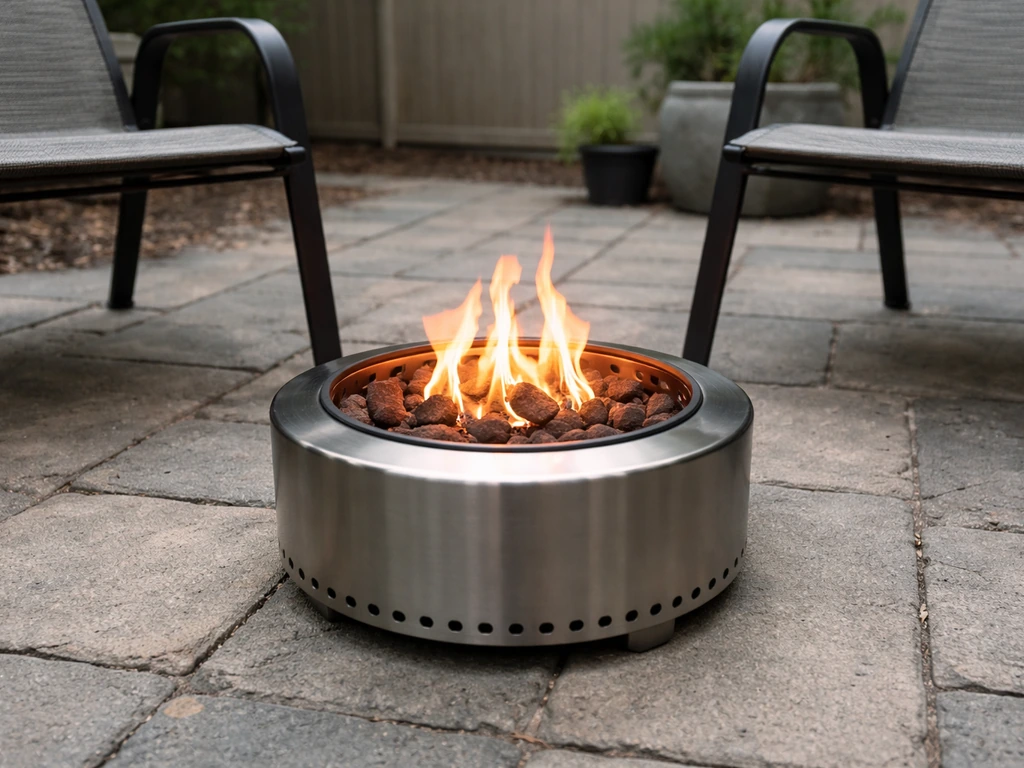
Measure your patio before you order anything
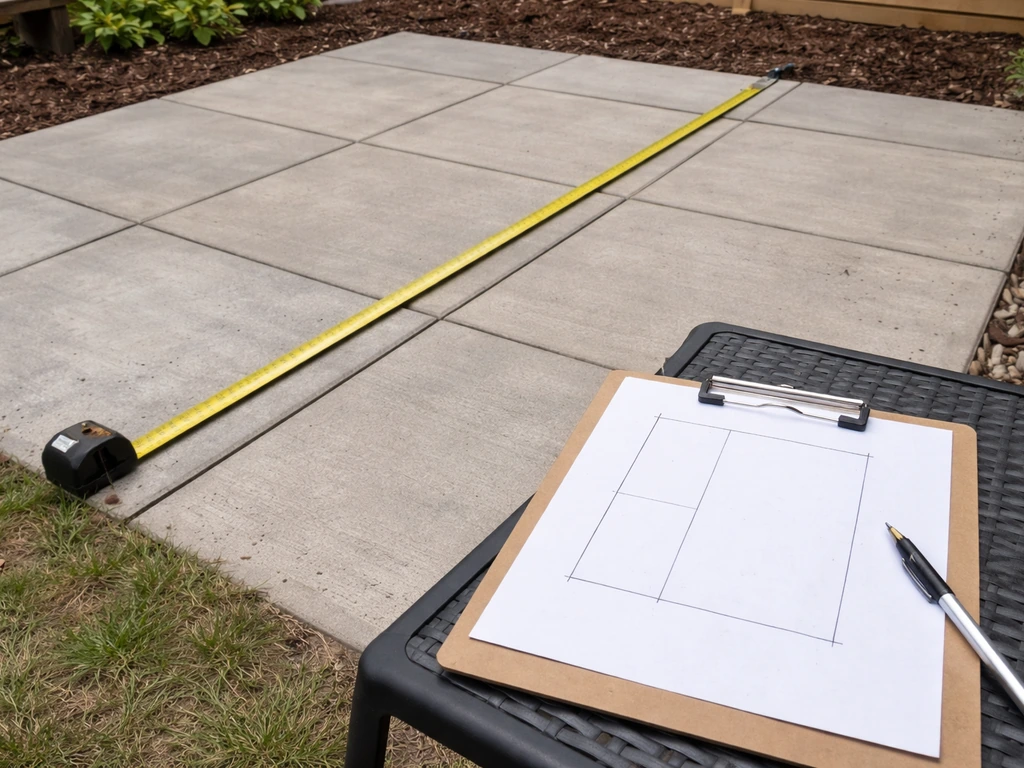
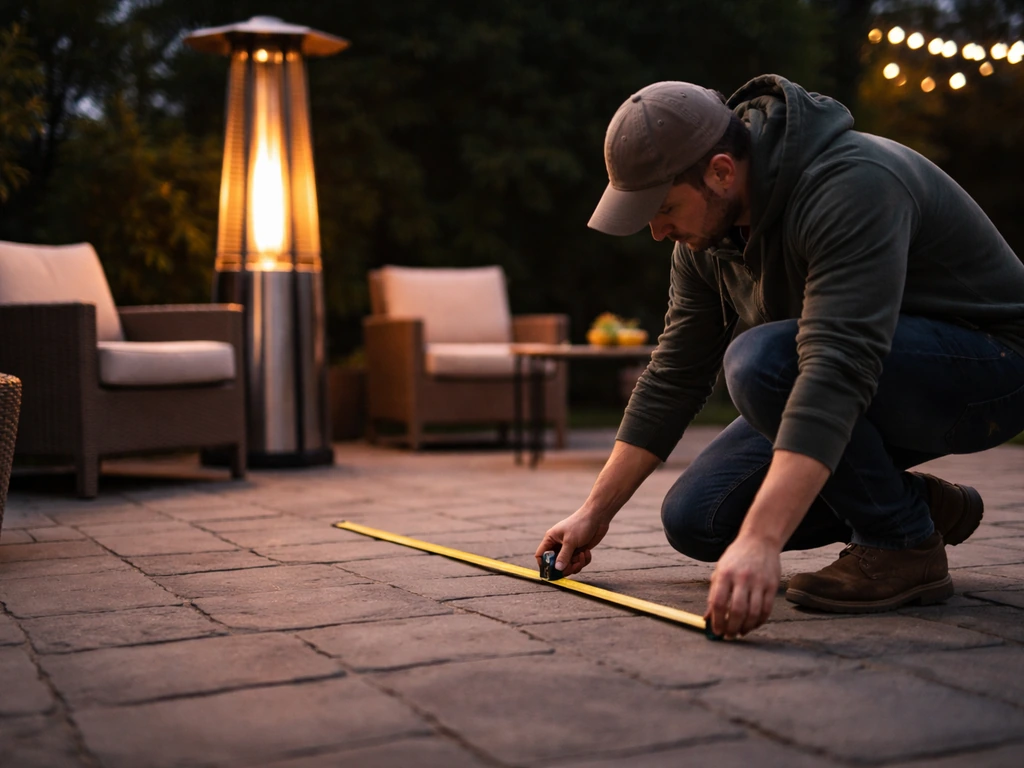
This step gets skipped constantly, and it's the number one reason people return fire pits. A fire pit that looks "compact" in a photo can eat up more usable space than you'd expect once you factor in the required clearance buffer. Before you buy, grab a tape measure and figure out these four numbers.
- Total patio square footage: length times width. Under 80 sq ft is very tight; 80 to 150 sq ft is the typical small patio range; 150 to 250 sq ft gives you more options.
- Distance from the nearest wall, fence, or structure: you need at least 15 feet of clearance from any combustible structure for portable outdoor fireplaces under IFC 307.4.3. For a gas fire pit's burner pan edge specifically, HPC Fire's clearance table calls for 36 inches to any combustible on each side.
- Overhead clearance: if you have a pergola, awning, or covered patio, measure from where the fire pit top will sit to the lowest overhead surface. You need at least 84 inches (7 feet) of overhead clearance for fire pits up to 200,000 BTU, per HPC Fire's safety manual.
- Surface type: is your patio concrete, pavers, composite decking, or wood? Non-combustible surfaces (concrete, pavers, stone) are strongly preferred. If you're on composite or wood decking, you need a fire pit pad underneath and extra scrutiny on the model you choose.
Once you have those numbers, you'll know roughly what diameter fire pit you can fit. A general rule: your fire pit plus its clearance buffer should not exceed 60 to 70 percent of your patio's shortest dimension. For a 10x12 patio, that means a fire pit no wider than about 24 to 28 inches at the bowl, positioned in the center or against the open edge farthest from the house.
Best fuel types for small patios
Fuel type is probably the single biggest decision you'll make, and it affects everything from heat control to neighbor relations. Here's the honest breakdown.
Propane: the most versatile pick for small patios
Propane portable fire pits are the best overall fit for small patios. You don't need a gas line, you can move them as needed, and heat output is dialed in with a simple valve. A standard 20-pound propane tank lasts roughly 4 to 6 hours at medium output. Propane fire pits produce minimal smoke, which matters a lot in a tight space surrounded by neighbors. The downside: you need to store and swap tanks, and cost per BTU is higher than natural gas.
Natural gas: best if you already have a line or plan to install one
If your patio is adjacent to a natural gas hookup or you're willing to pay for a licensed plumber to run a line, natural gas fire pits are the most convenient option long-term. No tanks, no running out mid-evening, and operating cost is lower than propane. The trade-off is zero portability and upfront installation cost, which typically runs $200 to $500 or more depending on line length and local labor rates. For small patio owners renting their home, natural gas is usually off the table. For homeowners with a permanent patio setup, it's worth the investment.
Wood burning: works, but has real limitations in small spaces
Wood-burning fire pits deliver great ambiance and crackle, but on a small patio they create problems fast. Smoke direction is unpredictable, and in a tight space surrounded by furniture and walls, you will get smoked out regularly. Spark management is also a real concern on wood decks. Many municipalities restrict wood burning in residential zones, and the 15-foot clearance rule is hardest to satisfy with a wood fire pit on a small patio. If you love the aesthetic, a chiminea style (which channels smoke upward) handles small patios better than an open bowl.
Alcohol and gel fuel: proceed with serious caution
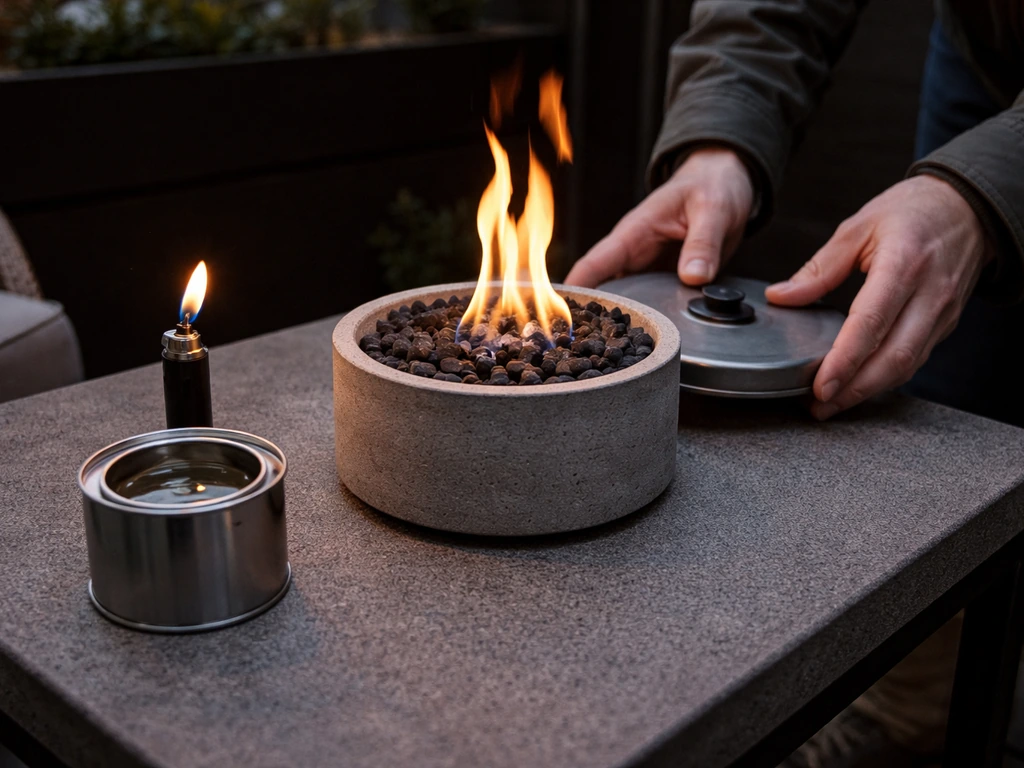
Tabletop fire pits running alcohol-based or gel fuel look appealing for small spaces because they're tiny and portable. However, the CPSC has issued warnings about alcohol-burning fire pits violating ASTM F3363-19 due to "flame jetting" hazards, and has documented 31 reports of flames escaping and 19 burn injuries from recalled models like those from Colsen. If you go this route, check that your specific model is ASTM-compliant and has not been recalled. Given the safety record, I'd steer most people toward propane tabletop burners instead.
Key features that matter in a small-patio fire pit
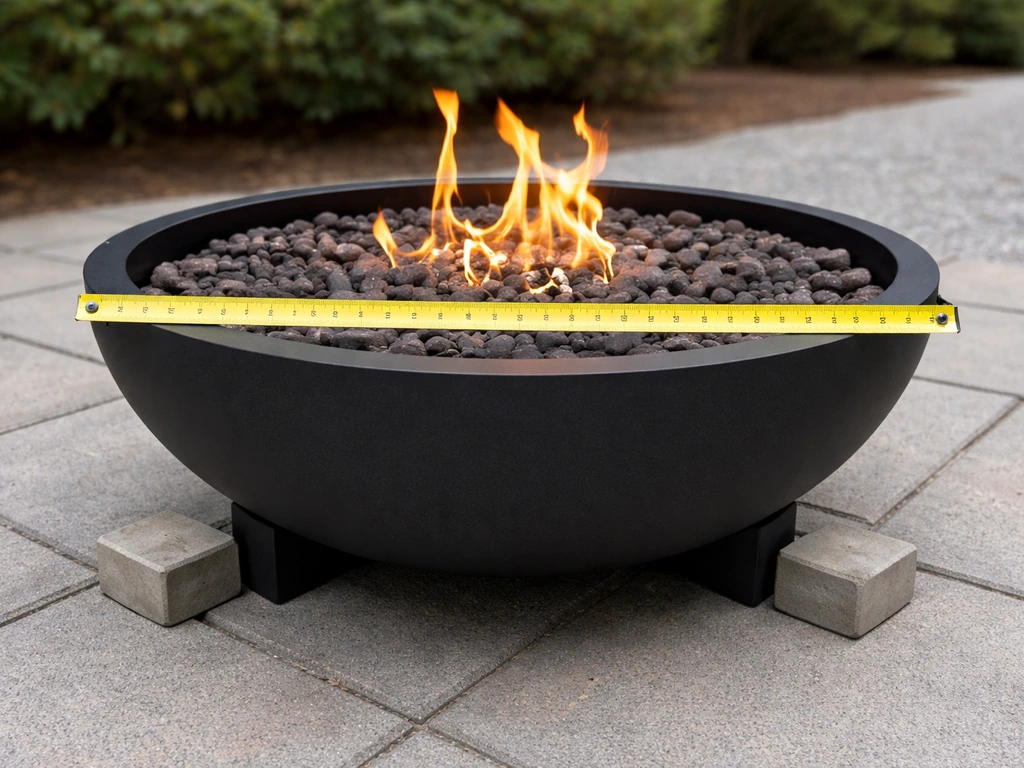
- Footprint size: look for a bowl or table diameter of 19 to 28 inches. Anything over 30 inches gets difficult to position safely on a patio under 150 sq ft.
- Heat output: 40,000 to 58,000 BTU is the sweet spot for small patios. You don't need 80,000+ BTU in a tight space; it will actually overheat the area and push guests back, wasting the ambiance.
- Flame height control: a quality regulator or dial lets you lower the flame for calm evenings and bump it up when the temperature drops. Fixed-output models are limiting.
- Ignition method: electronic push-button or piezo ignition is far more practical than match-light in a small, potentially windy patio setting. Look for models with electronic ignition rated to function in light wind.
- CSA or UL certification: non-negotiable for any gas fire pit. This tells you the burner system has been tested to a recognized safety standard.
- Low-profile design: a fire pit that sits 12 to 20 inches off the ground keeps the heat at seating level without a tall flame column that's hard to manage in a covered patio.
- Wind guard: glass wind guards aren't just aesthetic; they protect the flame and reduce the hazard of embers being pushed sideways in a tight space.
- Ignition reliability in wind: check user reviews specifically for ignition performance in windy conditions, a real-world factor that lab specs won't tell you.
Top fire pit picks for small patios
These are the models I'd recommend based on footprint, safety record, heat performance, and user feedback. If you want a deeper look before buying, these az patio heater propane antique bronze fire pit reviews can help you compare heat, build quality, and value propane fire pit reviews. I've organized them from most practical to most premium.
| Model | Fuel Type | BTU Output | Diameter / Footprint | Best For | Price Range |
|---|---|---|---|---|---|
| Outland Living Firebowl 893 Deluxe | Propane | 58,000 BTU | 21 inches | Renters, move-around flexibility, tight patios | $130–$160 |
| Outland Living Firebowl 870 | Propane | 58,000 BTU | 19 inches | Very small patios under 80 sq ft, budget buyers | $100–$130 |
| Endless Summer GAD1429SP | Propane | 40,000 BTU | 28-inch table | Fire table aesthetics, dual-function patio table | $180–$230 |
| Bond Manufacturing Augusta Fire Table | Propane | 40,000 BTU | 32-inch table | Mid-size small patio (120+ sq ft), integrated storage | $200–$280 |
| Sunnydaze 40-inch Fire Pit | Wood | N/A | 40 inches | Patios 150+ sq ft with open exposure, no covered roof | $100–$150 |
| AZ Patio Heaters Fire Pit (propane) | Propane | 40,000–50,000 BTU | 24–28 inches | Budget-friendly gas option with decent build quality | $140–$200 |
| Brightstar Fires Pebble Gas Fire Pit Table (natural gas) | Natural Gas | 30,000 BTU | 24-inch table | Permanent patio setups with existing gas line | $300–$500 |
Best overall: Outland Living Firebowl 893 Deluxe
The 893 Deluxe is the easiest recommendation for most small patio owners. At 21 inches in diameter and 58,000 BTU, it pumps out serious heat relative to its footprint, and the regulator hose connects directly to a standard 20-lb propane tank with a built-in pressure regulator. Outland specifically rates it as compliant with CSA requirements for operation on non-combustible surfaces, which is the right call. The included lava rocks plus optional glass beads give you flame coverage without a messy setup. Portability is a genuine advantage here: if you need to reposition for a dinner party or a windy night, you can move it in under two minutes.
Best budget pick: Outland Living Firebowl 870
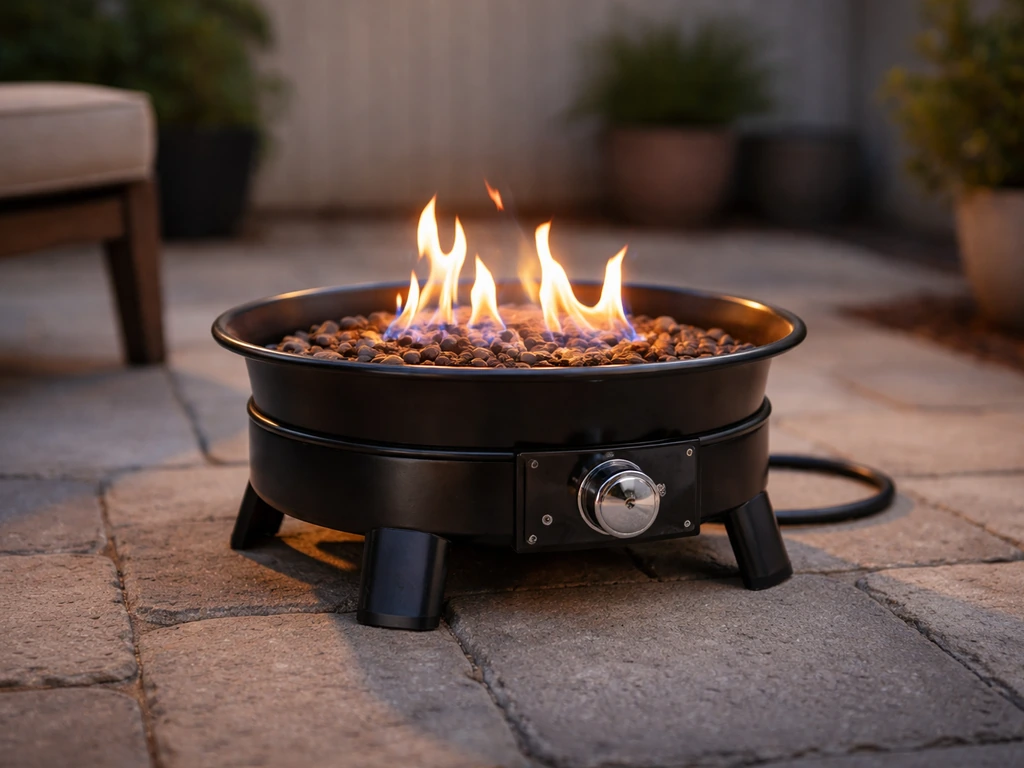
The 870 is essentially a smaller-footprint version of the 893. At 19 inches it's the most compact propane fire pit that still delivers meaningful heat. If your patio is genuinely tiny (think apartment balcony or 6x10 ft space), this is the one. Heat output is the same 58,000 BTU, so you're not sacrificing warmth, just visual size. The build is slightly less refined than the Deluxe, but for the price it's hard to argue with.
Best fire table for small patios: Endless Summer GAD1429SP
If you want a fire pit that doubles as an actual table surface when it's off, a fire table makes a lot of sense in a small patio where multi-function furniture matters. The GAD1429SP runs 40,000 BTU, which is enough for a 2 to 4 person patio setup, and the 28-inch footprint is manageable. It ships with a cover insert that converts it to a flat table surface. The assembly is more involved than a simple firebowl, but the dual function earns its place in a tight space.
Best natural gas option: permanent gas fire pit table
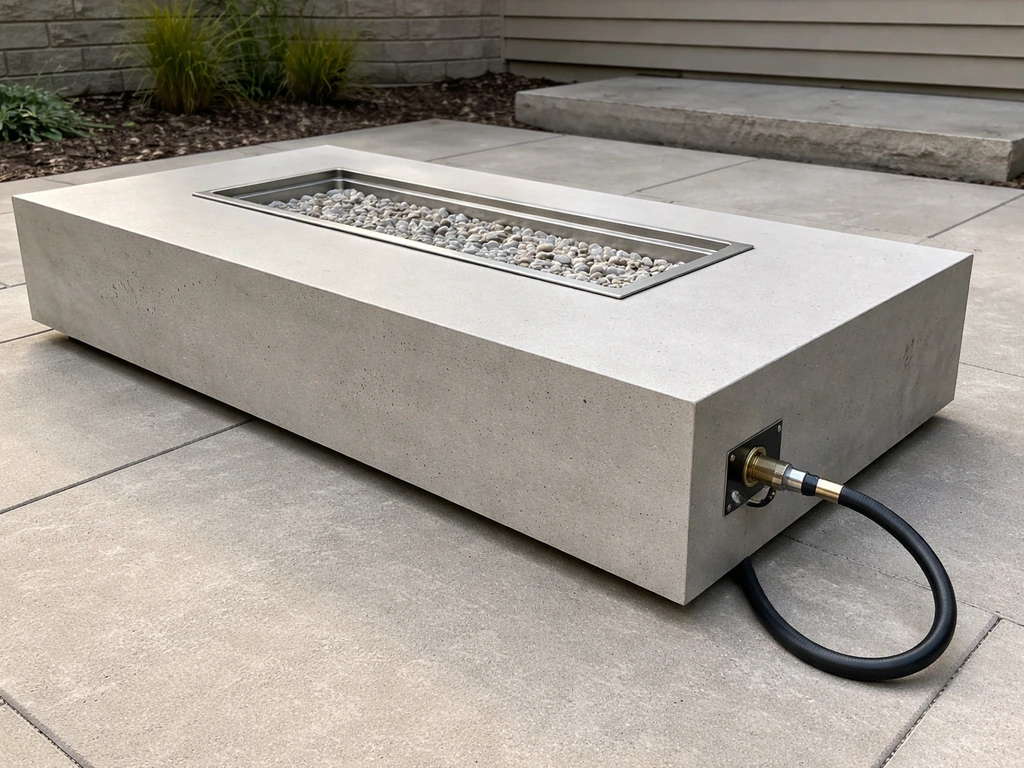
If you have a permanent patio and access to natural gas, a low-profile gas fire pit table wired to your gas line is the cleanest long-term setup. Operating cost runs roughly 30 to 50 percent less than propane over time. You lose portability entirely, and you'll pay for installation, but for a homeowner with a fixed entertaining space, it's the most polished and hassle-free solution. Look for models with electronic ignition, a CSA-certified burner, and a removable media tray so you can switch between lava rock and glass for aesthetics.
Safety, placement, and clearance on a tight patio
The IFC 307. 4. 3 rule that portable outdoor fireplaces must be at least 15 feet from any structure or combustible material is the baseline. Fairfax County Fire and Rescue reiterates IFC 307.
4. 3, stating portable outdoor fireplaces must not be used within 15 feet of a structure or combustible material when following manufacturer instructions [at least 15 feet from any structure or combustible material is the baseline. ](https://www. fairfaxcounty.
gov/fire-ems/fire-marshal/portable-fireplaces). Fairfax County and most municipalities have adopted this same standard. In practice, on a small patio this means your best positioning is usually the outermost corner or edge of the patio, as far as possible from the house wall.
If you cannot achieve 15 feet of clearance from your home structure, check your local fire code: some jurisdictions allow exceptions for listed gas appliances with manufacturer-specified clearances, which are typically much shorter (HPC Fire calls for 36 inches of horizontal clearance from the burner pan edge to any combustible for gas fire pits under 200,000 BTU).
For covered patios or pergolas: you need 84 inches (7 feet) of overhead clearance from the top of the fire pit to any overhead combustible surface. If your pergola rafters are lower than that, an open-flame fire pit is not the right choice; consider an infrared or electric patio heater instead. If you want heat without the flame, the best portable patio heaters are a practical alternative for covered spaces and small patios.
Surface matters more than most guides admit. Outland Living explicitly recommends operating only on a non-combustible surface per CSA fire table requirements. Outland Living’s FAQ notes this safety precaution as it relates to CSA fire table requirements. Concrete and stone pavers are ideal. If you're on composite decking, you need a fire-rated deck protector pad of at least 36 inches in diameter under the unit. Wood decking is a hard no without very robust protection, and even then I'd avoid it with any open-flame fire pit.
- Keep a fire extinguisher or bucket of sand within arm's reach, not across the patio.
- Flame height should not exceed 3 feet above the fire pit per standard outdoor burning codes like Manchester CT's quick guide.
- Never leave a gas fire pit running unattended, even with a closed valve. Confirm the valve is fully closed before going inside.
- Keep cushions, umbrellas, and any fabric furniture at least 36 inches from the burner edge.
- For gas models: check the hose and regulator connection before every use, especially if the unit has been stored through winter.
Setup, installation, and what it'll actually cost to operate
Propane setup
Portable propane fire pits are genuinely DIY-friendly. Unbox, attach the regulator hose to a standard 20-lb tank, fill the bowl with lava rock or glass media, and you're running in about 20 minutes. No professional required. A 20-lb tank costs roughly $20 to $25 to fill and lasts 4 to 6 hours at a medium flame on a 58,000 BTU unit. Budget around $4 to $6 per hour of operation at full output, less at lower settings.
Natural gas installation
Natural gas fire pits require a licensed plumber or gas fitter to run and connect the line. Expect $200 to $500 for a straightforward connection near an existing exterior gas outlet, and $500 to $1,500 or more if new line has to be run from inside. After installation, natural gas operating costs run about $0.50 to $1.50 per hour at typical residential rates, making it significantly cheaper long-term than propane if you use the fire pit regularly.
Wood-burning setup costs
Wood fire pits have near-zero setup cost, but factor in firewood. A cord of seasoned hardwood runs $200 to $400 depending on region. For occasional backyard use you'll buy by the bundle at $7 to $10 per bundle, which gives you about 1 to 1.5 hours of burn time. The hidden cost on small patios is smoke management: if neighbors or your HOA complain, you may end up switching to gas anyway.
Quick decision checklist: match your patio to the right fire pit
Run through this before you finalize your purchase. It covers the most common scenarios and steers you toward the right category fast.
| Your Situation | Best Fuel Type | Recommended Footprint | Top Pick |
|---|---|---|---|
| Patio under 80 sq ft, renting, no gas line | Propane portable | 19–21 inches | Outland Living Firebowl 870 |
| Patio 80–150 sq ft, homeowner, no gas line | Propane portable or fire table | 21–28 inches | Outland 893 Deluxe or Endless Summer GAD1429SP |
| Patio 80–150 sq ft, homeowner, existing gas line | Natural gas | 24–28 inch table | Permanent gas fire pit table (CSA-certified) |
| Covered patio or pergola, 84"+ overhead clearance | Propane or natural gas (low flame) | 19–24 inches | Low-profile propane firebowl with wind guard |
| Covered patio, overhead clearance under 84" | Not recommended for open flame | N/A | Consider an infrared or electric patio heater instead |
| Open patio 150+ sq ft, wood burning OK locally | Wood burning | 30–40 inches | Sunnydaze or similar steel wood fire pit |
| Budget under $150, basic use | Propane | 19–21 inches | Outland Living Firebowl 870 or AZ Patio Heaters propane model |
| Budget $150–$300, fire table aesthetic | Propane | 28–32 inches | Endless Summer GAD1429SP or Bond Manufacturing Augusta |
One last note: if you're weighing a fire pit against a patio heater for warmth and ambiance, they solve slightly different problems. A fire pit gives you flame presence and social focal point; a patio heater gives you directional heat coverage without the open flame management. For small patios where clearance is marginal, a quality small propane patio heater or infrared model is worth considering as a complement or alternative. If you're primarily chasing warmth rather than the fire pit experience, it may actually be the smarter call.
FAQ
How do I estimate how much heat a small patio will actually feel, not just the BTU rating?
BTUs tell you total heat output, but the “feel” depends on wind and how much of the heat is blocked by walls, furniture, and the wind direction. On small patios, even a moderate breeze can strip heat fast, so prioritize models with adjustable valves and a wind-resistant burner design, and position the unit on the most sheltered edge of your patio.
Do I need to worry about carbon monoxide with propane fire pits on small patios?
Propane units can be used safely outdoors, but you should still treat them as open-flame appliances, not indoor heaters. Use them only in open outdoor air, keep them away from enclosed structures like screened rooms, and never run them under covered spaces unless the unit is rated for that configuration and you meet the overhead clearance requirements.
What clearance measurements matter most if my patio is close to a wall or railing?
Don’t just measure to the house wall. Measure from the burner pan and sides of the unit to any vertical combustible surfaces, plus leave extra room for stable footing and safe entry around the flame. If you have a low railing, you may need more clearance than the “distance to the structure” number you find online because rail materials can trap heat and limit airflow.
Can I use a fire pit on pavers or do I need a special base?
Concrete and stone pavers are usually fine, but the base still matters for heat transfer and stability. Ensure the unit sits on a level, hard surface, and follow the manufacturer guidance on non-combustible operation. If your pavers are over wood framing or have combustible material beneath, treat it as not compliant unless the unit explicitly allows it.
What’s the safest way to position a fire pit if I can’t get 15 feet from the house?
First, check local fire code, because some jurisdictions allow listed gas appliances to use manufacturer-specified clearances. If your model is not listed for a shorter clearance, use it only in an area that can meet the baseline requirement. Also consider relocating away from doorways and windows, since airflow patterns can bring flame heat and exhaust toward openings even if the structure clearance seems adequate.
How often should I replace or replenish lava rocks, and do they affect performance?
Rocks can shift, reduce flame coverage, or trap moisture depending on media and usage. Replace or redistribute them if you notice uneven flame, sootier burns, or flare-ups. Also keep media away from burner ports so you do not restrict airflow, since restricted burners can produce incomplete combustion.
What propane tank size should I buy for small patios so I’m not swapping mid-evening?
A common 20-pound tank is designed for roughly a few hours at medium output, but small patios often lead people to run higher than expected. If you want “start to finish” comfort for multiple hours, consider planning for an extra tank or using a lower setting on arrival and ramping only when guests gather.
Is a cover insert for a fire table safe to use as a real table surface?
It can be, but only if you use the exact cover insert the manufacturer provides and ensure it fully rests as designed. Do not improvise covers, and do not place hot or heavy objects in the center if the insert is not meant for that load. Also verify the unit is turned fully off before using the tabletop function.
What should I check before using a portable fire pit near plants, umbrellas, or outdoor furniture?
Watch for indirect contact and “heat soak.” Umbrellas, chair backs, and nearby cushions can be combustible even if they are not directly in the flame path. Keep seating farther back than the minimum clearances, and remove or retract umbrellas to prevent fabric from warming or catching.
Can I convert or interchange media like switching from lava rocks to glass beads safely?
Only if the manufacturer states the unit is compatible with that media. Glass beads can change flame appearance and how heat distributes, and some burner assemblies require specific media depth or size. If you switch media, test carefully on a low setting first and confirm the flame reaches the intended pattern without lifting away from the burner.
How do I handle wind gusts on windy patios with a propane fire pit?
On small patios, gusts can increase soot and push flame and heat toward nearby surfaces. Position the fire pit with the burner facing away from the wind-blown side when possible, and use lower settings in higher winds. If you see persistent flame instability or excessive smoke, stop using it until conditions improve.
Are gel or alcohol tabletop fire pits worth it compared with propane for safety and day-to-day use?
For most small patio owners, propane is the safer operational choice because it uses a more controlled burner design and avoids the “flame behavior” risks that come with some liquid-fuel tabletop products. If you still consider gel or alcohol, verify the specific model is current with safety standards, not recalled, and used only as directed with the correct container and ventilation context.
What’s the best alternative if my patio is covered or has low overhead clearance?
If overhead clearance does not meet the open-flame requirement, switch away from open-flame fire pits. An infrared or electric patio heater can provide warmth without the same open-flame clearance constraints, and it’s often easier to run under pergolas where open flames are a poor fit.
How can I tell if a fire pit is compliant with my surface type and my deck material?
Look for explicit manufacturer statements about the surface rating, not just “suitable for outdoor use.” For composite decking, ensure you use a deck-protector pad that matches the manufacturer’s dimensions and installation instructions. If the unit is only rated for non-combustible surfaces, treat composite and wood as disallowed even with partial protection.
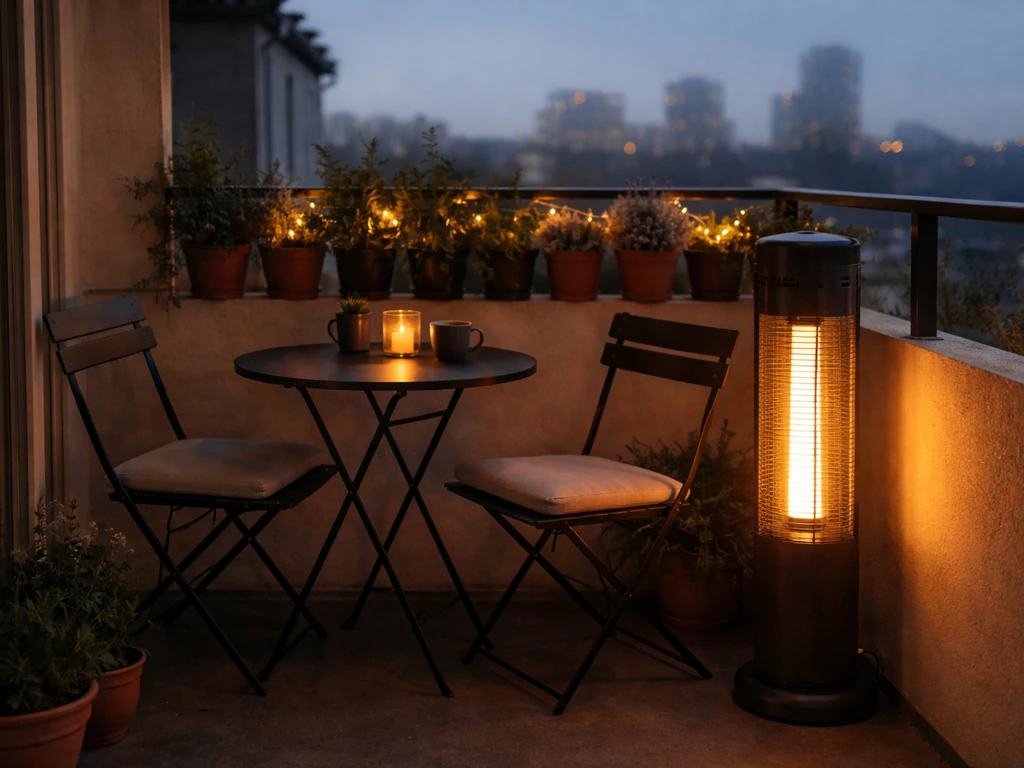
Find the best small patio heater for your balcony or patio with size, type, BTU, safety, setup, and running-cost tips.
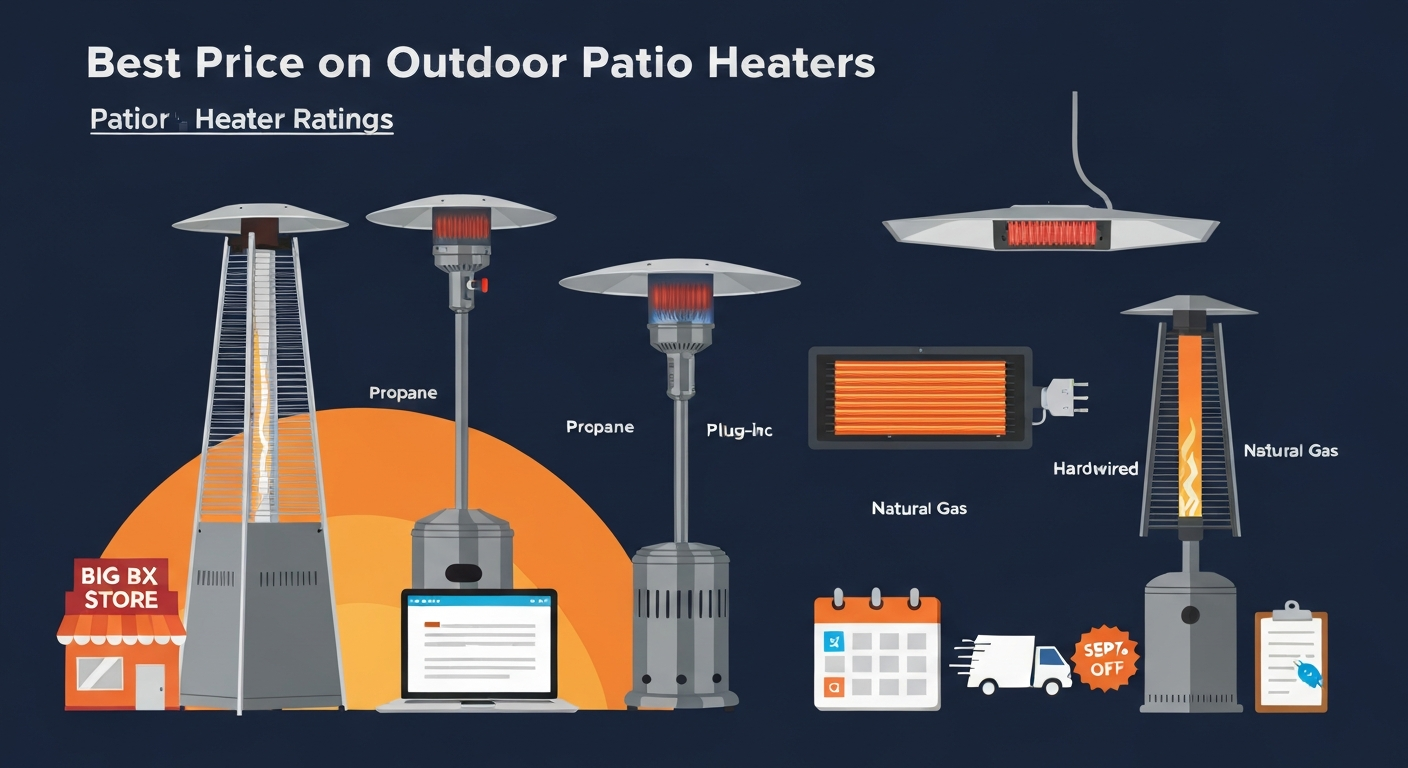
Score the best price on outdoor patio heaters, price ranges, top picks, deal tactics, total-cost & safety checklist.
Find where to rent patio heaters near you today, choose the right fuel type, compare costs, and book safely.