
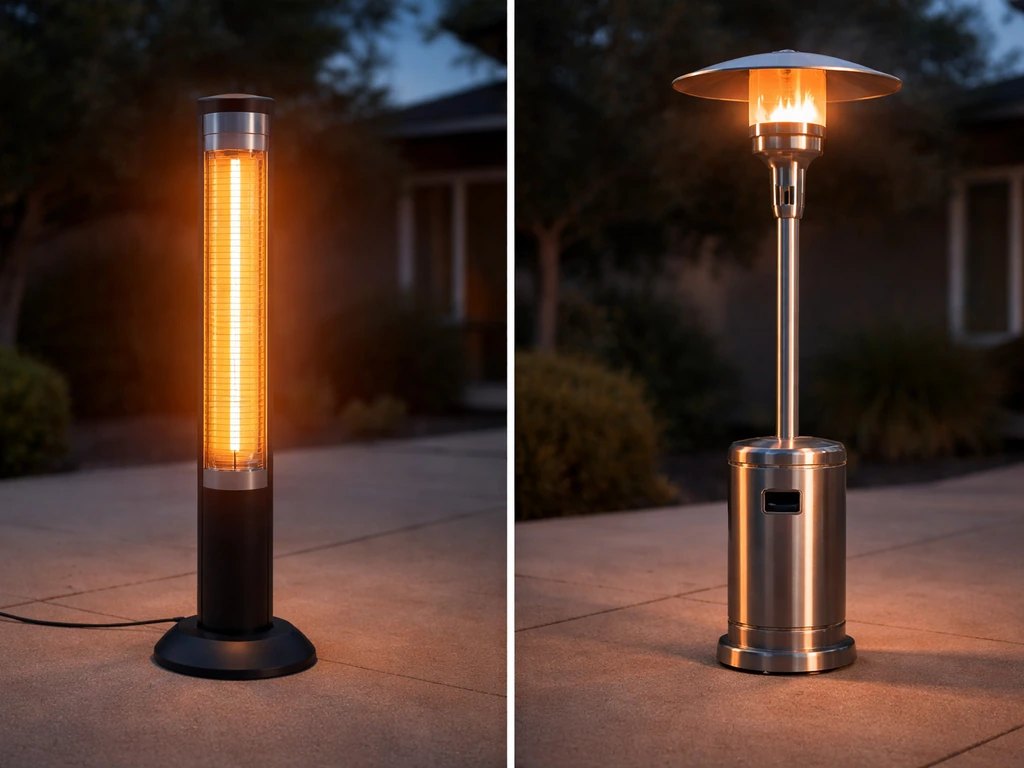
The best portable patio heaters for most people come down to two real choices: a propane mushroom-style tower (think 40,000–48,000 BTU, covers roughly 150–200 sq ft) or a plug-in electric infrared unit (1,500–2,000W, good for 100–150 sq ft of focused warmth). If you have a power outlet within reach and you're heating a small seating area, go electric, it's cheaper to run, safer, and takes about 60 seconds to set up. The best small patio heaters are the ones that match your space size and wind conditions small seating area. If you're heating a larger open patio, need to move the heater to a spot with no outlet, or you're running a restaurant or bar patio, propane is the answer. Everything below will help you nail down exactly which model and size fits your space.
Best Portable Patio Heaters in 2026: Electric vs Propane Guide

What 'portable' actually means in real-world use
The word 'portable' gets stretched pretty thin in heater marketing. Before you buy, it's worth being specific about what kind of portability you actually need, because it changes everything from fuel type to wattage.
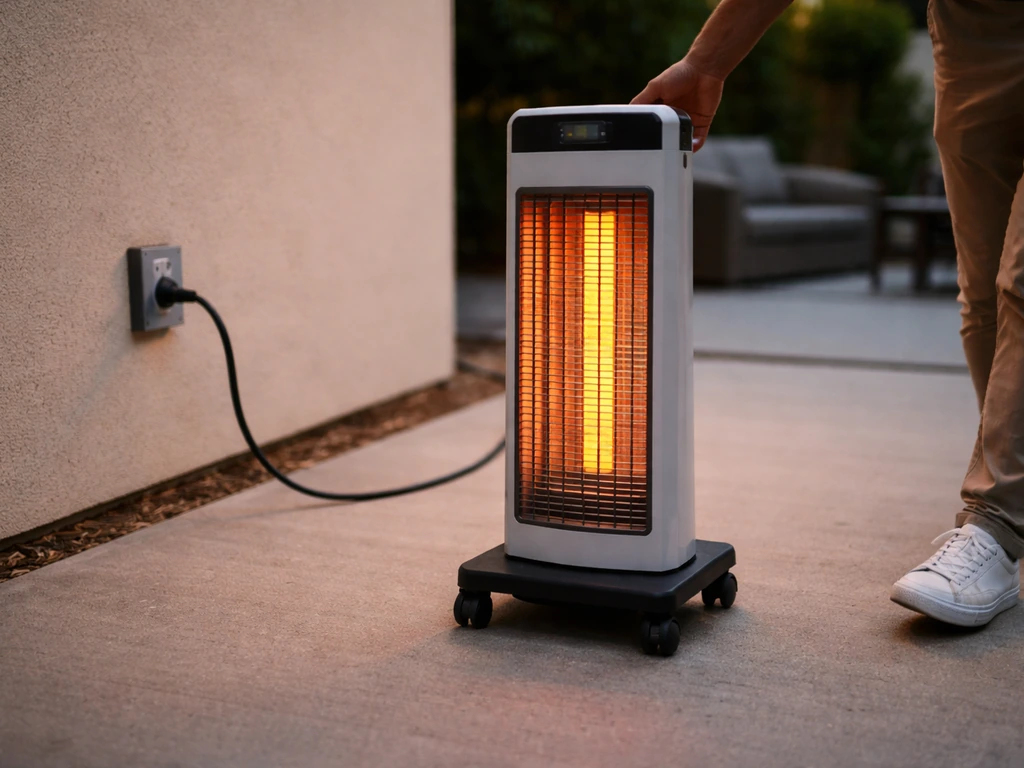
True portability means you can move the heater without planning around it. A freestanding propane tower on wheels qualifies, the 20 lb tank is self-contained, and you roll it wherever you need warmth. A plug-in electric tower also qualifies, but only within the reach of a power cord (typically 6 feet, extendable with a heavy-duty outdoor extension cord rated for the wattage). A 'portable' electric infrared wall panel that still needs a dedicated 240V circuit is really a semi-permanent install, not portable in any practical sense.
Coverage area matters as much as BTUs or watts. A 40,000 BTU propane tower can warm a 150–200 sq ft circle around it, but wind erodes that fast. On a breezy patio, you can lose 30–40% of effective heat output from a radiant mushroom heater. Electric infrared heaters direct heat at objects and people rather than warming the air, so they're less sensitive to wind, a 1,500W electric infrared unit can feel surprisingly effective in a 10–15 mph breeze where a propane tower is struggling. That's a practical difference worth knowing before you buy.
- Propane tower heaters: 38,000–48,000 BTU, coverage ~150–200 sq ft, fully cordless, wind-sensitive
- Tabletop propane heaters: 10,000–12,000 BTU, coverage ~50–75 sq ft, extremely portable, good for single-table warmth
- Portable electric infrared (tower/pyramid): 1,500–2,000W (roughly 5,100–6,800 BTU equivalent in felt warmth), coverage ~100–150 sq ft, cord-dependent, wind-resistant
- Portable electric tabletop or wall-mount: 750–1,500W, coverage 50–100 sq ft, best for enclosed or semi-enclosed spaces
- Natural gas patio heaters: high output but require a gas line—not portable at all
- Pellet heaters and chimineas: technically moveable but not 'portable' in a quick-deploy sense—better covered as fire pit or chiminea alternatives
Heat spread speed is the other practical factor. Propane heaters ignite in seconds and throw heat immediately, but you're warming air that the wind can steal. Electric infrared heaters also work instantly, they heat surfaces and bodies directly via radiant warmth, no warm-up lag, and that heat doesn't blow away the same way. Convection-style electric heaters (the fan-blown box type) take a few minutes to build up warmth and are really only suited for enclosed patio rooms or screened porches.
Best portable patio heaters: quick picks by use case
Here's where I cut to the chase. These are the configurations I'd actually recommend based on space size, layout, and conditions, not just a ranked list of brands.
| Use Case | Best Heater Type | Output to Look For | Key Feature |
|---|---|---|---|
| Small patio, near-seating warmth, outlet nearby | Portable electric infrared tower | 1,500W | Tip-over shutoff, remote control |
| Medium open patio, no outlet, residential | Propane mushroom tower (freestanding) | 40,000–46,000 BTU | Wheels, anti-tilt shutoff, stainless burner |
| Large open patio or restaurant/bar | Propane mushroom tower (commercial grade) | 46,000–48,000 BTU | Commercial-rated reflector, CSA-certified |
| Windy exposed patio (any size) | Electric infrared wall/ceiling mount or low-profile tower | 1,500–2,000W | Directional radiant panel, IP44+ weather rating |
| Single table or small seating group | Tabletop propane or electric infrared | 10,000–12,000 BTU / 750–1,500W | Compact, stable base, safety auto-shutoff |
| Enclosed patio room or screened porch | Portable electric infrared or convection tower | 1,500W | Overheat protection, thermostat, quiet fan |
| Events or temporary setups (business) | Propane tower or pyramid, wheeled | 40,000+ BTU | Easy tank swap, stable weighted base |
A few patterns stand out: for residential use where you have an outlet, electric almost always wins on convenience and running cost. For commercial or large-space use where you need to heat a lot of air fast and move freely, propane is still king. The tabletop category, both propane and electric, deserves more attention than it gets; a quality tabletop unit focused on a seating group is often more effective per dollar than a full tower trying to heat a whole patio. If you are shopping for the best chiminea for small patio vibes, a compact tabletop heat source is often the easiest way to get cozy without overpowering the space tabletop unit.
Best portable electric patio heaters: what actually matters for performance
Electric is where I get the most questions, mostly because the specs look similar across price points and it's hard to know what you're actually buying. Here's what separates a good portable electric patio heater from a bad one.
Heat output and element type
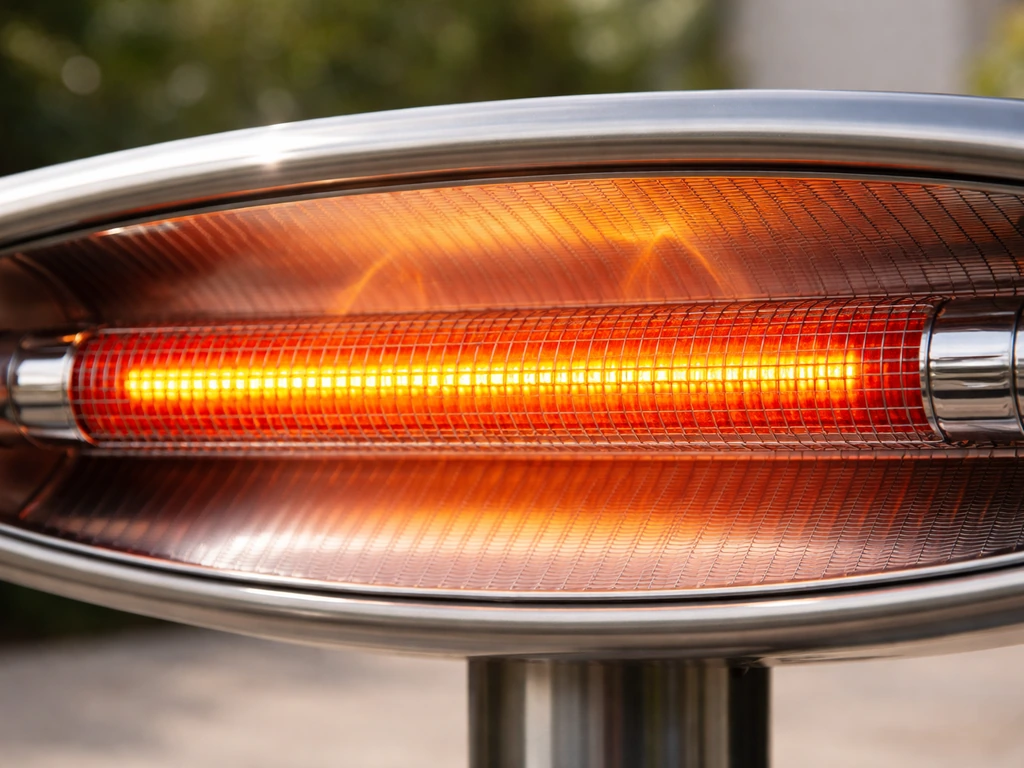
Standard residential outlets top out at 1,500W (about 5,100 BTU equivalent). That's actually enough for a focused seating area of 100–150 sq ft when you're using infrared. The element type matters: quartz or carbon infrared elements heat up nearly instantly (under 3 seconds) and throw directional heat you can feel on your skin. Halogen-element heaters are cheaper but less efficient and have a shorter lifespan. Ceramic elements in convection-style units are quieter and safer for enclosed spaces but depend on air movement, which means wind kills them outdoors.
Safety certifications you should actually look for
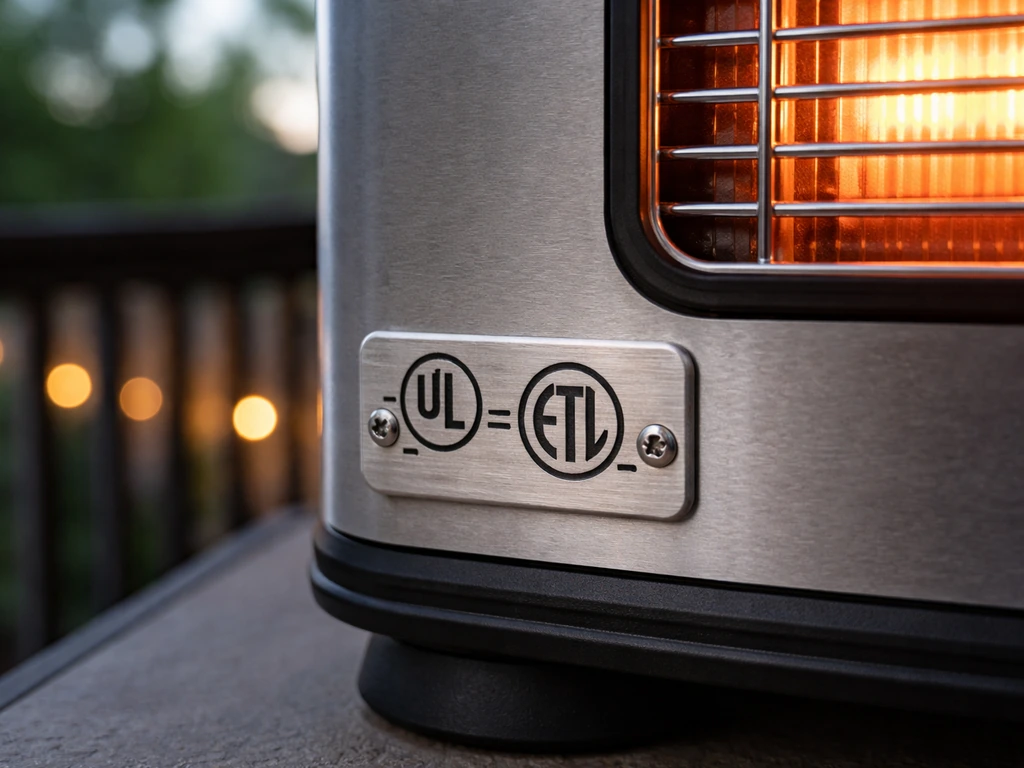
This is non-negotiable. Look for UL Listing under ANSI/UL 1278, or ETL certification, on any portable electric heater. Under UL 1278 standards, a listed portable electric heater must have a tip-over switch that cuts power when the unit tilts, a requirement that came into focus after CPSC testing found that some samples on the market were shipped without tip-over switches at all. Overheat protection (auto-shutoff if the internal temperature spikes) is also required for listed products. If a heater doesn't show UL, ETL, or CSA certification on the box or product page, don't buy it for outdoor use.
Weather resistance
Most cheap electric patio heaters are rated for 'outdoor use' but have no IP (Ingress Protection) rating, which means any serious rain will kill them. For a heater you're leaving on a patio regularly, look for at least IP44 (splash-proof from any direction). IP55 or better is ideal if your area gets real rain. Wall-mount and ceiling-mount electric infrared units usually have better IP ratings than tower-style units because the housing design is simpler and the element is better protected.
Controls, thermostat, and convenience features
A remote control or smart app control is genuinely useful outdoors, nobody wants to get up from their patio chair to adjust the heat level. Thermostatic control is worth paying for if you run the heater for hours at a stretch; it'll cycle the heater and cut your electricity bill noticeably versus running on full blast all evening. Timer functions are also practical, especially for models you leave mounted where you can't see them easily.
Noise
Pure infrared electric heaters make no noise at all, no fan, no combustion sound. If quiet matters to you (and on a conversation-oriented patio it usually does), stick with infrared. Fan-forced convection units produce a low hum that's manageable indoors but annoying on a quiet patio.
Electric vs propane vs other fuels: when portability limits your options
The fuel type debate for portable heaters really comes down to three practical factors: where you're placing the heater, how much you'll spend to run it, and how much hassle you're willing to accept.
| Factor | Electric (portable) | Propane (portable) | Natural Gas | Pellet / Fire Pit |
|---|---|---|---|---|
| True portability | Yes (cord-limited, ~6–25 ft) | Yes (fully cordless) | No (needs gas line) | Limited (heavy, slow to deploy) |
| Heat output range | 750W–2,000W (2,500–6,800 BTU) | 10,000–48,000 BTU | 30,000–60,000 BTU | Varies, inconsistent |
| Wind performance | Good (infrared) | Poor to moderate | Poor to moderate | Poor |
| Running cost (per hour) | $0.15–$0.30 (avg US electricity) | $0.90–$1.60 (20 lb tank ~$20–25, lasts 8–12 hrs full blast) | Lower than propane per BTU | Low (pellets cheap), but labor-intensive |
| Setup time | Plug in, done | 5–10 min (attach tank, check connections) | Professional install required | 15–30 min to light and stabilize |
| Safety complexity | Low (certified units) | Moderate (leak check, clearances) | High (requires licensed install) | Moderate (open flame, ash handling) |
| Best for | Small–medium patios, outlets nearby | Medium–large or outlet-free patios | Permanent patio setups | Ambiance-focused, not primary heat |
Natural gas heaters put out tremendous heat and cost less per BTU than propane, but they require a permanent gas line, so they're not portable in any real sense. If you're setting up a permanent outdoor kitchen or commercial patio and have a gas line available, natural gas is worth considering, but that's a different buying decision entirely. Pellet heaters and chimineas are similarly better categorized as fire pit alternatives valued for ambiance; they're not reliable primary heat sources for a patio on a cold evening. If you are comparing it to a best patio chiminea setup, keep in mind chimineas are mainly for ambiance and slower radiant heat rather than consistent coverage.
The honest cost comparison: running a 1,500W electric infrared heater for three hours costs roughly $0.45–$0.90 depending on your electricity rate. Running a 40,000 BTU propane tower for the same three hours burns through roughly a third to half of a 20 lb tank, costing $7–$12. Over a season, that difference adds up fast. Electric wins on operating cost for smaller spaces. For large commercial patios where you need 48,000 BTU to keep 30 people warm, propane is still the only portable option that can do the job.
Safety, placement, and dealing with wind
Patio heater safety isn't complicated, but it does require a few non-negotiable habits. Both NFPA guidelines and propane industry standards are consistent on the fundamentals.
Clearance rules
For propane tower heaters, keep combustible materials at least 24 inches above the top of the unit and 36 inches away from all sides. If you're shopping specifically for propane tower models, these az patio heater propane antique bronze fire pit reviews can help you compare real-world performance and heat output propane tower heaters. That means no low overhangs, no patio umbrellas directly above, no string lights draped close to the burner. This isn't a suggestion, it's the minimum clearance specified in the owner's manual for most units and is blank" rel="noopener noreferrer">consistent with NFPA 1 fire code guidance for outdoor heaters. The infrared outdoor heater manual from Tractor Supply specifies that you should not use any pressure regulator or hose assembly other than the one supplied with the heater, and it lists a specific part number for a replacement regulator/hose assembly blank" rel="noopener noreferrer">minimum clearance specified in the owner's manual. Keep propane hoses away from any heated surface.
For electric infrared heaters, the element itself runs very hot, so clearances from combustibles matter even though there's no open flame. Check your specific model's manual, but a typical recommendation is 24–36 inches from any wall, furniture, or overhead surface for a tower-style unit.
Tip-over and stability
Freestanding tower heaters, both propane and electric, can tip in strong wind or if bumped by people or pets. For propane towers, this is a serious fire risk. Look for a weighted base (most quality towers fill the base with water or sand) and a built-in anti-tilt shutoff that kills the gas valve if the unit tilts past a set angle. For electric towers, the UL-required tip-over switch cuts power on tip. Test it yourself when you first set up a new unit, push it gently until it tips and verify the power actually cuts. Some cheaper uncertified products have failed this test in regulatory assessments.
Wind strategy
On an exposed patio in a 15+ mph wind, a freestanding propane mushroom heater is fighting a losing battle, the convective heat plume just blows away. A small propane patio fire pit can be a great option when you want an actual flame look while still keeping the footprint compact propane mushroom heater. In those conditions, switch to a directional electric infrared unit mounted low and angled toward the seating area, or use a windscreen (glass or acrylic patio panels) to shelter the heater zone. Tabletop propane heaters placed at table height perform better in wind than tall towers because they're closer to people and lower to the ground. If wind is a consistent issue on your patio, it's one of the strongest reasons to go electric infrared.
Propane-specific safety habits
- Check the hose and regulator connection for leaks each time you attach a new tank—use soapy water and look for bubbles
- Only use the regulator and hose assembly that came with the unit (or the exact manufacturer-specified replacement part number); aftermarket regulators can be mismatched for pressure
- Never store propane tanks indoors or in enclosed spaces
- Shut off the tank valve completely when the heater is not in use, not just the burner control
- Keep the heater upright during transport and storage—never lay a propane tower on its side with the tank attached
Setup, operation, and what it'll actually cost you to run
Setting up a propane portable patio heater
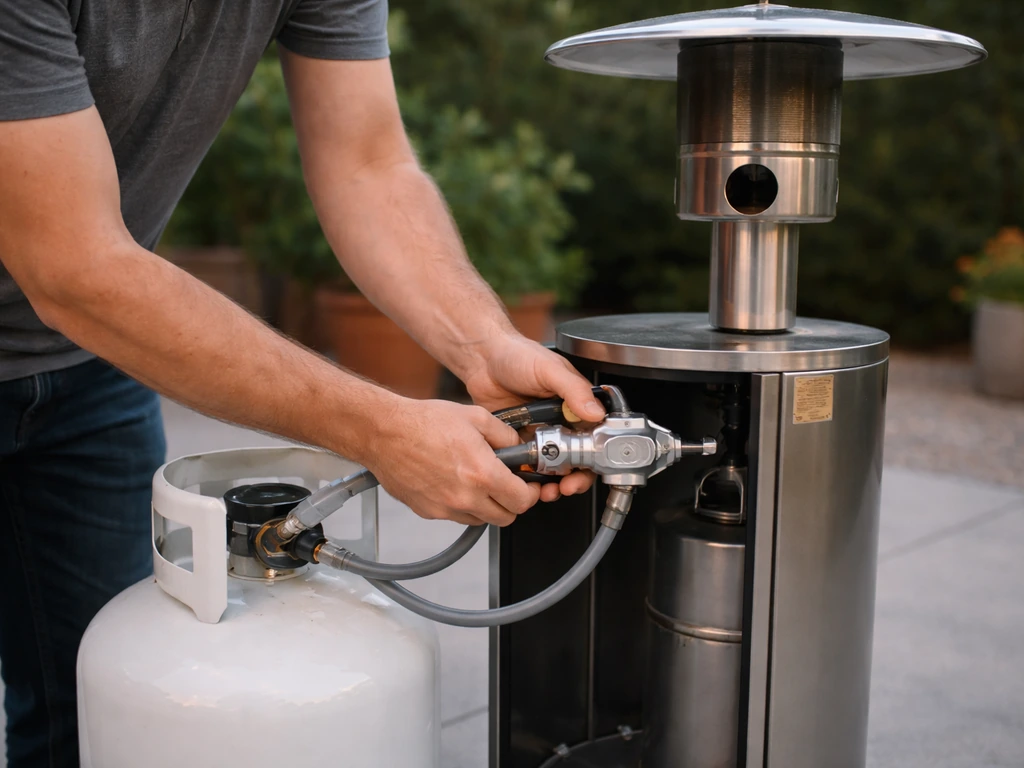
- Unbox and assemble the pole sections and reflector head—most towers take 15–20 minutes with a basic tool set
- Fill the base with water or sand per the manual (usually 30–40 lbs of fill for stability)
- Attach the 20 lb propane tank inside the base column—thread the regulator hose hand-tight, then 1/4 turn with a wrench
- Leak-check the hose connection with soapy water before first use
- Open the tank valve slowly, press and hold the igniter button for 2–3 seconds, then ignite
- Allow 30–60 seconds for the thermocouple to warm up before releasing the control knob
Setting up a portable electric infrared heater
- Assemble the stand or base (5–10 minutes for most tower models)
- Position the unit where you want it—check the clearances above and around the element
- Plug into a standard 120V outlet (15A circuit minimum for 1,500W units)
- If using an extension cord, use only a heavy-duty outdoor-rated cord of 14 AWG or heavier, no longer than 25 feet
- Power on and select heat level—infrared units deliver warmth within seconds
Running costs: the real numbers
| Heater Type | Output | Cost per Hour | Cost per Season (est. 150 hrs) |
|---|---|---|---|
| Electric infrared (1,500W) | 1,500W / ~5,100 BTU felt | $0.18–$0.36 | $27–$54 |
| Propane tabletop (10,000 BTU) | 10,000 BTU | $0.30–$0.55 | $45–$82 |
| Propane tower, medium (40,000 BTU) | 40,000 BTU | $1.00–$1.60 | $150–$240 |
| Propane tower, commercial (48,000 BTU) | 48,000 BTU | $1.20–$1.90 | $180–$285 |
These numbers assume US average residential electricity rates around $0.12–$0.24 per kWh and propane at $3.50–$4.50 per gallon (summer 2026 national average range). Your propane cost will vary by region and whether you buy exchange tanks at a hardware store or fill direct. Exchange tanks typically cost more per gallon but are more convenient. If you're running a heater commercially multiple nights a week, propane costs pile up, an electric solution saves real money at smaller scales.
Maintenance on propane towers is mostly annual: inspect the burner screen and reflector for debris, check the venturi tube for spider webs or blockages (a surprisingly common ignition problem), and test the thermocouple. Electric infrared units are nearly maintenance-free, wipe the reflector occasionally, check the cord for wear. Expect a quartz or carbon infrared element to last 5,000–10,000 hours before replacement is needed.
Your buying checklist and how to pick the right model size
Use this as your final decision filter before you commit to a model. Work through it in order, most people get tripped up by skipping the space measurement step and buying too big or too small.
- Measure your patio area in square feet and decide which zone you actually want to heat (the whole patio vs. one seating group)
- Check for a nearby outdoor-rated outlet—if yes, electric infrared is your default first choice for spaces under 150 sq ft; if no outlet, go propane
- Assess your wind exposure: consistently breezy? Go electric infrared (directional) or add windscreen panels to any heater setup
- Confirm overhead clearance: anything under 8 feet rules out a full propane tower; switch to tabletop or low-profile electric
- Check certifications: look for UL (ANSI/UL 1278 for electric) or CSA certification (gas heaters under ANSI Z83.26/CSA 2.37); skip uncertified units regardless of price
- Verify tip-over shutoff (electric) and anti-tilt valve shutoff (propane) are listed as included features—not optional
- For propane: confirm IP or weather protection rating if leaving outdoors; stainless steel or powder-coated aluminum resists rust far better than chrome
- For electric: confirm IP44 minimum for any unit left outdoors in rain-prone areas; check cord length and whether a thermostat/remote is included
- Set your budget range: quality freestanding propane towers run $150–$350 for residential, $300–$600+ for commercial-grade; electric infrared towers range $80–$250 for residential quality with certifications
Buy this if...
- Small patio, outlet nearby, under 150 sq ft: buy a 1,500W UL-listed portable electric infrared tower with remote and tip-over shutoff
- Medium to large open patio (150–300 sq ft), no reliable outlet: buy a 40,000–46,000 BTU propane tower with wheeled base, weighted fillable base, and CSA certification
- Large commercial patio or restaurant: buy a 46,000–48,000 BTU commercial-grade propane tower—look for stainless burner, commercial reflector, and a unit explicitly rated for commercial use
- Single table or tight seating group: buy a tabletop propane or electric infrared unit (10,000–12,000 BTU propane or 1,500W electric) for concentrated warmth exactly where you need it
- Consistently windy exposed patio: buy a wall- or ceiling-mount electric infrared unit (1,500–2,000W, IP55+) aimed directly at your seating zone—it's the only reliable solution in serious wind
- Enclosed or screened patio room: buy a portable electric infrared tower or convection heater—propane combustion products need ventilation, so electric is the safe call for enclosed spaces
One last thought: if you're on the fence between a portable heater and something with more ambiance, a fire pit or chiminea, know that those options work differently. Fire pits and chimineas are great for small gatherings and atmosphere but aren't reliable targeted heaters. If you are shopping for the best fire pits for small patios, focus on size, heat output, and safe placement around seating Fire pits and chimineas. They're worth considering as a complement to a patio heater, not a replacement, unless your patio is very small and the mood is the point.
FAQ
I want the best portable patio heaters, but my outlet is 120V. Can I still get enough heat?
If you only have one standard 120V outlet, you will usually be limited to about 1,500W for safe continuous use. That typically means an electric infrared heater sized for roughly a 100 to 150 sq ft seating area, not a whole-patio solution. If you want a larger electric heater, you may need a 240V model, and you should avoid using random extension cords or adapters to “make it fit.”
Can I use an extension cord with an electric patio heater, and what mistake should I avoid?
Use a heavy-duty outdoor extension cord only if the cord rating matches the heater’s wattage and the run is short enough to prevent excessive voltage drop and overheating. If the heater draws near the upper limit for its plug, a longer or thinner cord can reduce heat output and become a safety risk. When in doubt, place the heater closer to the outlet instead of extending the cord length.
How should I size the heater if my patio is windy and open?
A great rule of thumb is to buy for the seating zone you want to keep comfortable, then manage wind and height. Taller heaters spread heat farther but are more affected by wind. For breezy patios, directional infrared aimed at people tends to feel warmer per square foot than a high-output tower that is fighting airflow all night.
Do I just go by square footage when choosing the best portable patio heaters, or is wind exposure more important?
On many patios, the measured square footage is less important than the wind exposure. Two people can experience the same heater differently depending on whether it is shielded behind a wall, fence, or screen. If you get frequent gusts, treat the “effective coverage” as smaller, and consider wind protection like acrylic or glass panels around the heater zone.
Is a thermostat or smart control worth it for electric patio heaters?
Yes, but only if you pick the right control type. A basic on/off heater wastes energy if you only need brief boosts. Look specifically for thermostat or selectable power modes (low, medium, high), which helps maintain temperature without running full power continuously.
What does IP rating mean for outdoor electric heaters, and what IP level should I prioritize?
You should avoid “outdoor use” claims without an IP rating. Many heaters are marketed for outdoor conditions but still fail in real rain because the electrical housing is not protected. For regular leaving-outdoors use, target at least IP44, and for areas with real storms or frequent heavy rain, IP55 or higher.
What are the most common clearance mistakes people make with propane patio heaters?
Propane clearance requirements are easiest to get wrong because people underestimate how close patio furniture and accessories can be. Measure from the heater’s sides and top, then account for items that can move or hang, like umbrellas, string lights, and table cloths. Also keep hoses away from heated surfaces.
How can I test that the tip-over shutoff on an electric patio heater actually works?
Absolutely. Even if the unit has a tip-over switch, you should verify it by gently tipping it yourself during the first setup. If it is supposed to shut off at a set angle, you want confirmation that power actually cuts reliably. This matters most for freestanding towers, where strong wind or bumps are realistic.
What maintenance should I do to keep a patio heater performing well season after season?
For propane, annual inspection is the practical baseline: check the burner and reflector for debris, look for spider webs or blockages around the venturi tube, and confirm the thermocouple is functioning. For electric infrared, maintenance is lighter, but you still need to inspect the cord and wipe the reflector since dirt can change how heat is directed.
If my propane heater feels weak in gusts, what’s the best upgrade path?
If you have consistent wind and you want truly targeted warmth, prioritize infrared that can be angled toward your seating group, and consider mounting height that keeps the emitter low. Tabletop options can also outperform tall towers in gusty conditions because they sit closer to people and are less affected by drifting heat.
Is a chiminea or fire pit ever a substitute for the best portable patio heaters?
When choosing between a patio heater and a chiminea or fire pit, treat them as different tools. Heaters are for directed, repeatable comfort in colder temperatures, while chimineas and fire pits are often slower and more ambiance-driven. If your goal is reliable targeted heat for sitting, don’t rely on a fire pit as your primary heater unless your patio is very small and you understand coverage limits.
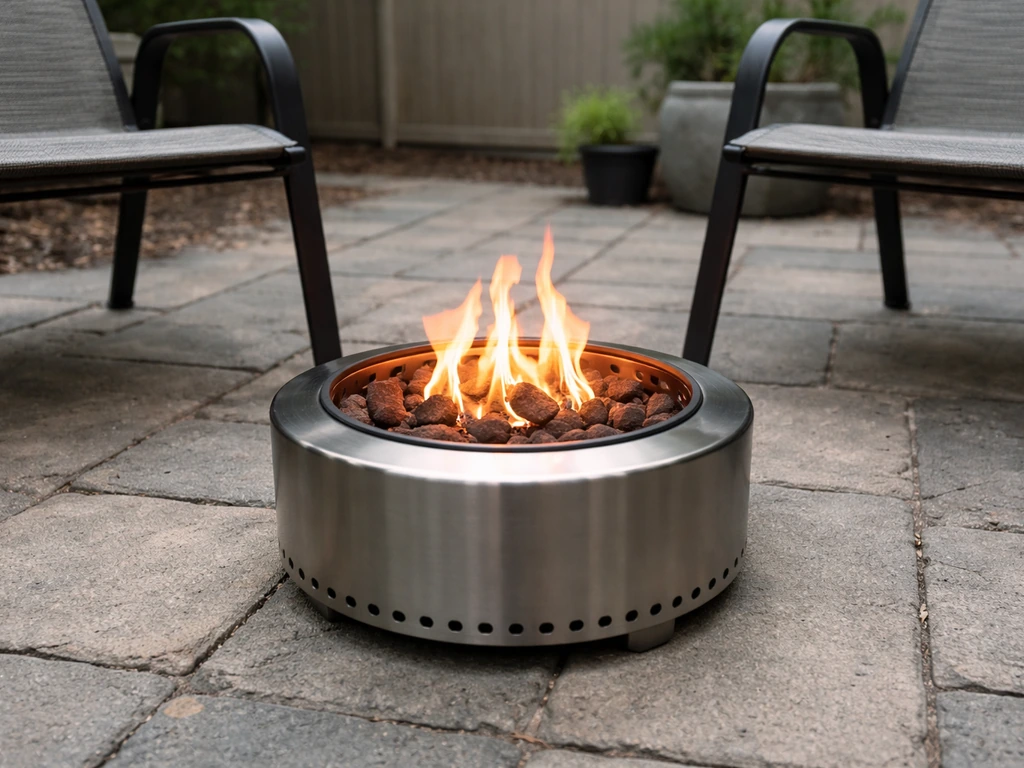
Top small-patio fire pits with sizing tips, gas and non-gas picks, clearances, and setup steps for tight spaces.
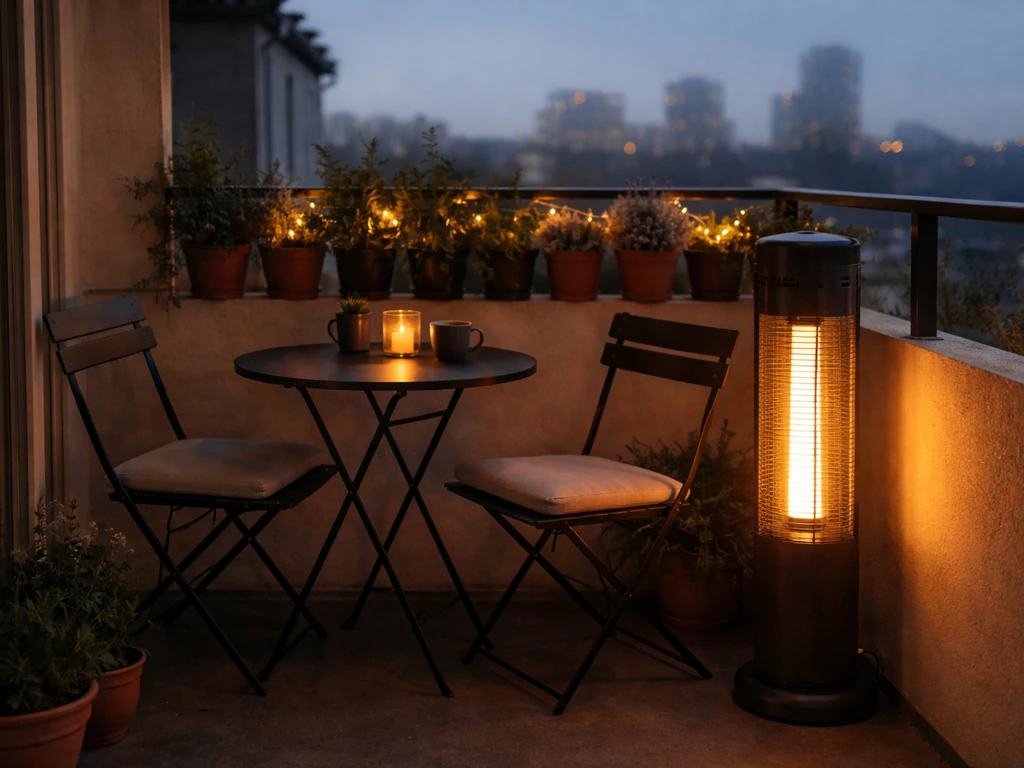
Find the best small patio heater for your balcony or patio with size, type, BTU, safety, setup, and running-cost tips.
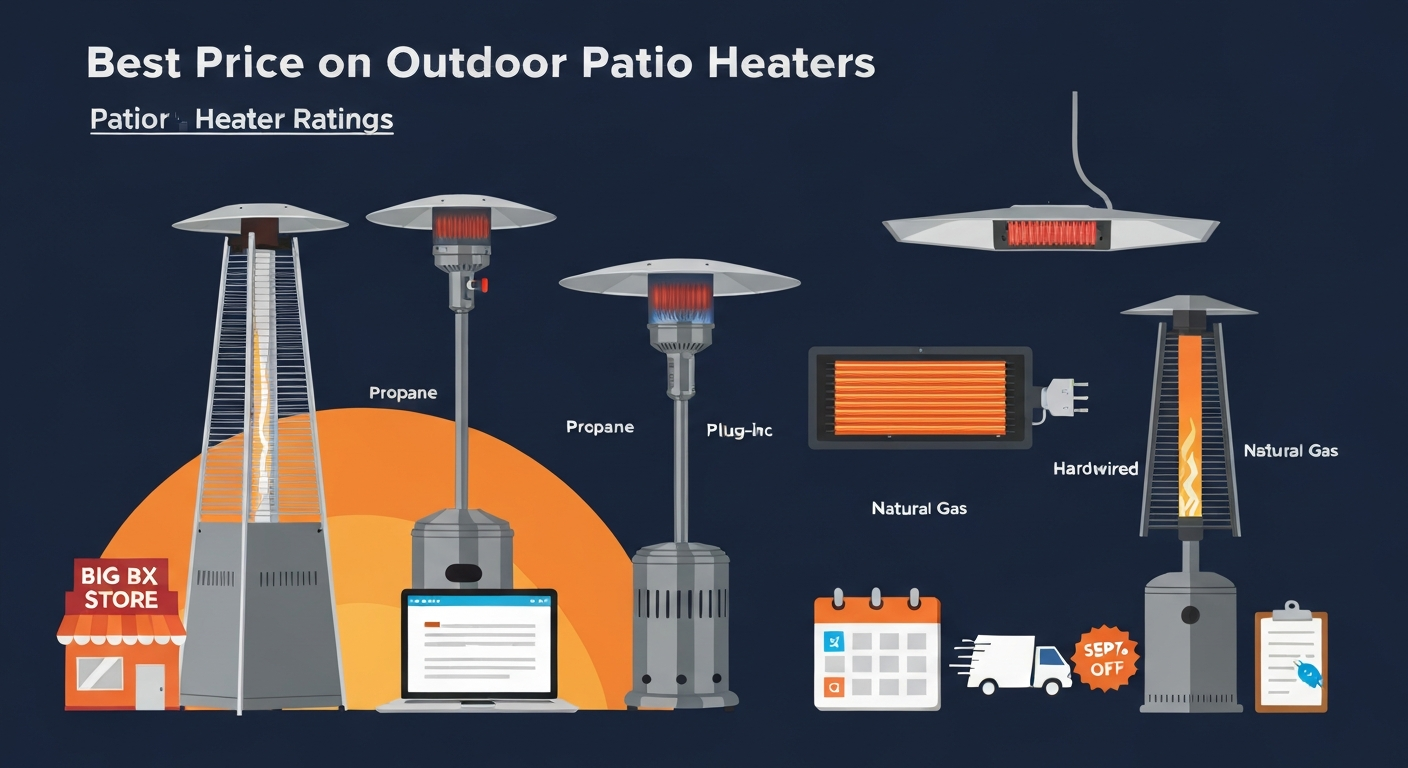
Score the best price on outdoor patio heaters, price ranges, top picks, deal tactics, total-cost & safety checklist.