
For most covered patios, a hardwired electric infrared ceiling heater is the best choice: clean, quiet, no fuel lines, and ready in seconds. If you have a natural gas line nearby and a larger uncovered or semi-covered space, a ceiling-mounted gas infrared tube heater beats electric on raw heat output and cost per hour. Propane ceiling units work well where gas isn't piped in. Pellet heaters are not a practical ceiling-mount option. The right pick comes down to five things: whether your ceiling is covered or open, your ceiling height, your patio size in square feet, what fuel or power is already available, and your budget for installation.
Best Ceiling Heaters for Outdoor Patio: Buy Guide & Picks

Caleb Vale
3 Jul 2026
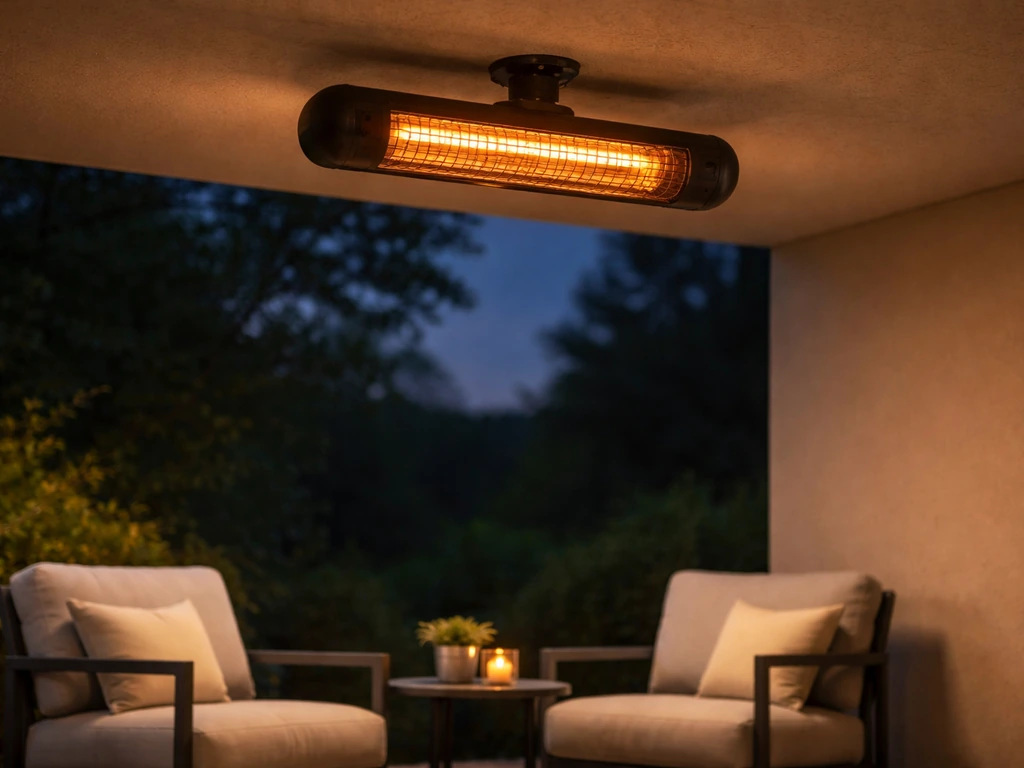
Ceiling-mounted patio heaters: how to choose the right type
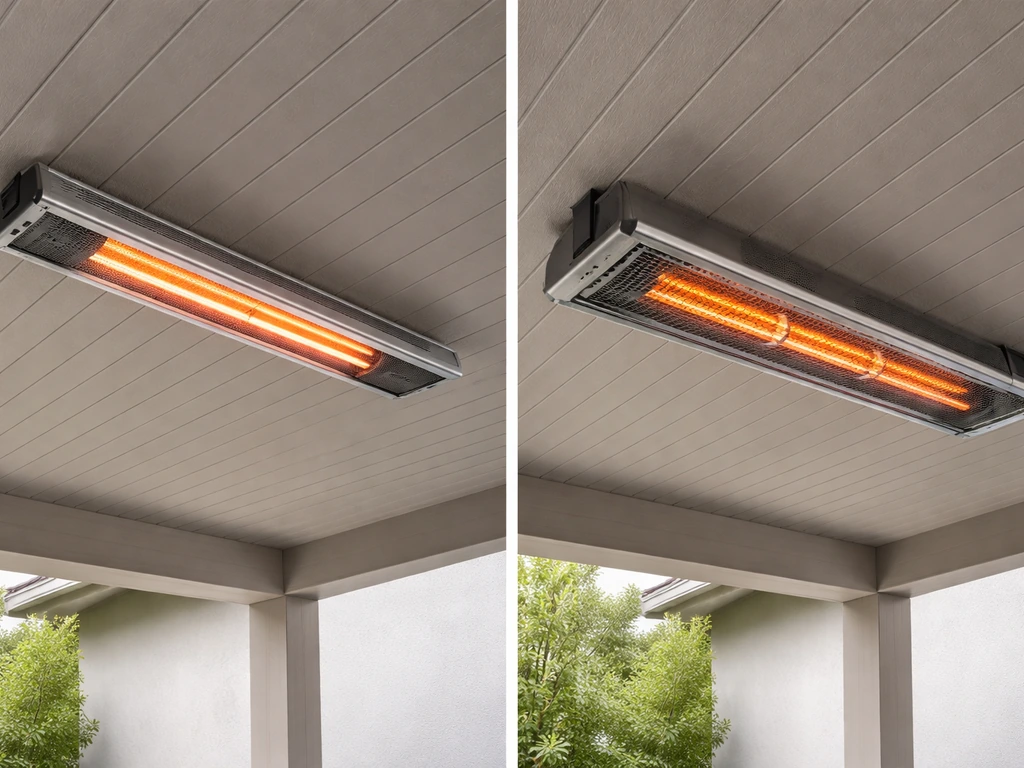
Ceiling-mounted heaters are the cleanest solution for permanent patio setups. Unlike freestanding mushroom-style heaters, they stay out of the walkway, can't tip over in wind, and heat from above the way the sun does. For permanent installations on patios and decks, wall- or ceiling-mounted heaters are genuinely the better long-term call over portable units. But not every ceiling-mount style works for every patio, so understanding what's out there is worth five minutes before you buy.
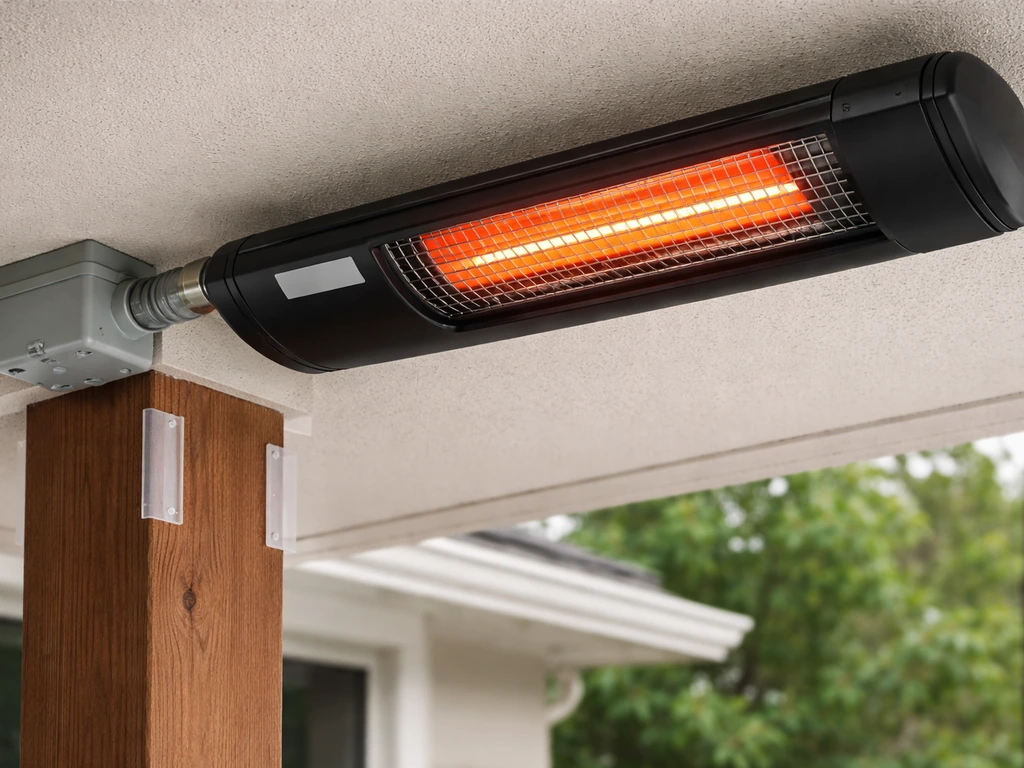
Ceiling-mounted outdoor heaters fall into two main categories: electric infrared and gas infrared (natural gas or propane). Both use radiant heat, meaning they warm people and objects directly rather than heating the air. That matters outdoors because air heat just blows away. A gas tube heater runs a long radiant burner tube along the ceiling. An electric infrared heater is a compact unit with a quartz or carbon element. The heat delivery feels similar; the installation and running cost are very different.
A third format worth knowing: some products are marketed as 'ceiling patio heaters' but are really wall-bracket or flush-wall units angled downward. These are close cousins and share most installation rules, but true ceiling-flush or ceiling-pendant mounts hang or fasten directly overhead. If you're comparing models, check the mounting orientation in the manual before assuming they're equivalent.
Radiant vs convection: why it matters outside
Every ceiling patio heater worth buying is radiant, not convective. Convection heaters warm air, and open or semi-open patios bleed that warm air in seconds. Radiant infrared heats surfaces and people directly, so wind has far less effect on perceived warmth. When you see a heater labeled 'infrared,' that's what you want for outdoor ceiling use, whether it's electric or gas.
Best picks by fuel type
Electric infrared
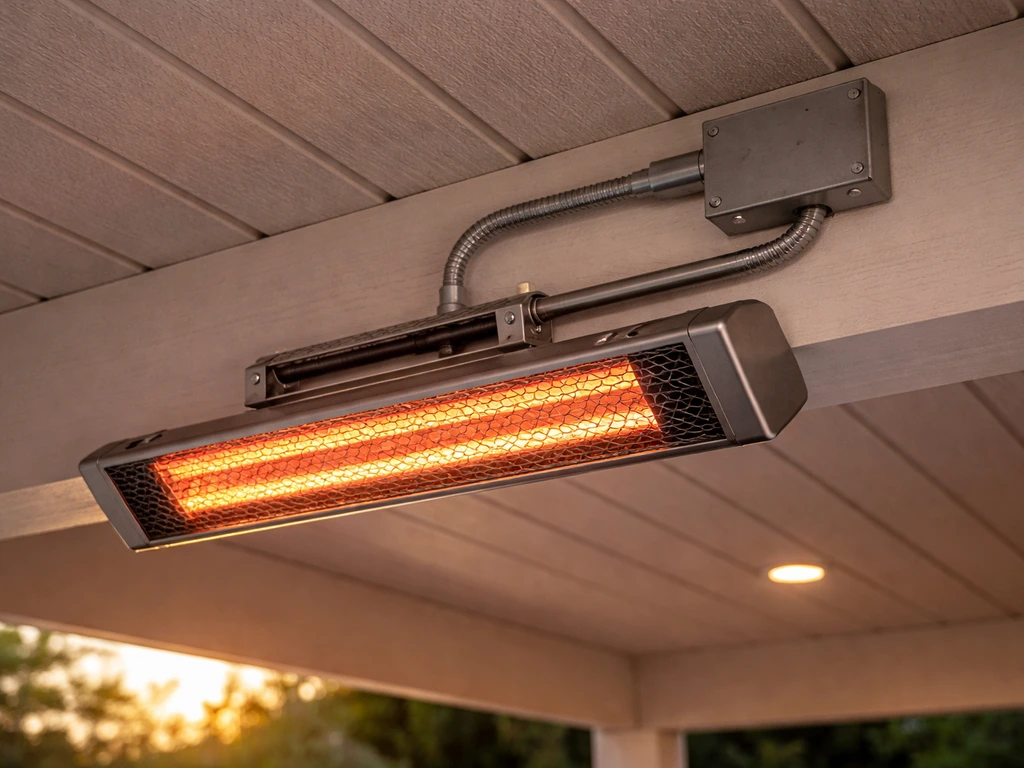
Electric infrared ceiling heaters are the most popular choice for residential covered patios. Units like the Solaira ICR series (240V, hardwired) and the VASNER Teras 25 (IP65-rated, horizontal ceiling-mount capable) are well-regarded. A 1500W/120V model such as the Solaira Cosy XL covers roughly 80 square feet and runs at about $0. 20 per hour at average electricity rates.
Larger 240V units in the 3000W–6000W range scale up for bigger spaces. The key spec to verify: IP65 weatherproofing (dust-tight and protected against water jets), which is the minimum you want for any outdoor ceiling heater. Units like the ThermoMate 1500W electric infrared also add an 8-hour timer and remote control, which genuinely cuts energy waste outdoors. Best for: covered patios with existing 120V or 240V service, homeowners who want zero fuel logistics.
Natural gas infrared
Gas infrared tube heaters are the workhorses for larger patios and commercial spaces. They put out serious heat, 30,000–60,000+ BTU/hr in most ceiling-mount residential configurations, and natural gas costs significantly less per equivalent BTU than electricity in most U.S. regions. The trade-off is installation: you need a gas line run to the ceiling, proper venting clearances per NFPA 54 and the manufacturer's manual, and ideally a licensed gas plumber. Brands like SunStar and Infratech (SL series) are frequently specified for pergola and restaurant patio installations. Best for: large semi-covered or open-pergola patios, restaurant/bar patios, and anywhere with existing natural gas service. Compliance must follow ANSI Z83.26/CSA 2.37 for gas-fired outdoor infrared patio heaters.
Propane infrared
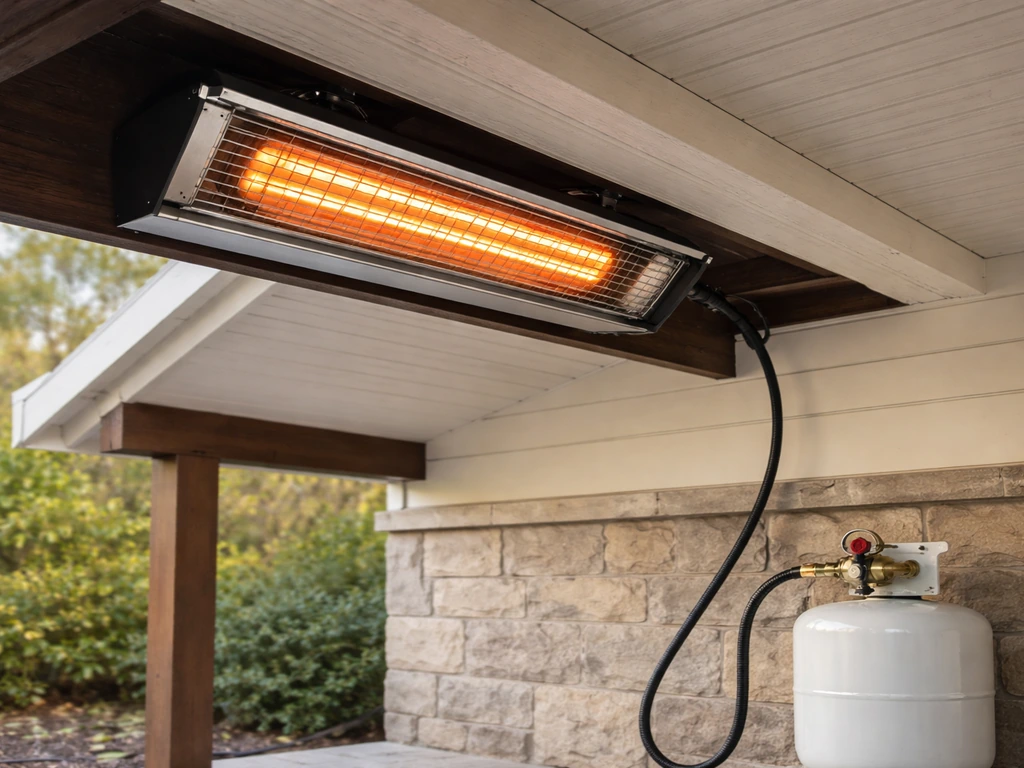
Propane ceiling heaters are the go-to when natural gas isn't piped to your patio. They use the same infrared tube or spot-heater technology as natural gas units but run off a tank or bulk propane supply. Running cost is higher: a 40,000 BTU/hr heater burns roughly 0.44 gallons of propane per hour, which works out to about $1.70/hour at typical retail propane prices. The connection point matters: always match the heater to its listed fuel type and use only the included hose and regulator. Swapping propane hardware to natural gas or vice versa is a safety hazard and voids listings. Best for: patios without piped gas where you want high heat output and don't want to run electrical conduit.
Infrared radiant (standalone ceiling-mount electric)
This is really a subset of electric, but it's worth separating because 'infrared radiant' ceiling heaters come in short-wave (quartz) and medium-wave (carbon) element styles. Short-wave units heat up in under 2 seconds and put out a bright glow. Medium-wave units take 30–90 seconds to reach full output but produce a softer, less glaring light. For residential patios where aesthetics matter, medium-wave or 'dark emitter' electric models are increasingly popular. Both are ceiling-mountable with the right bracket. If glare bothers your guests, go medium-wave.
Pellet heaters
Pellet heaters are not ceiling-mount options. They're freestanding floor or wall-insert appliances that require a hopper, auger, and exhaust flue. Their BTU range (roughly 8,000–90,000 BTU/hr for residential models) is impressive, but the format is fundamentally incompatible with overhead ceiling mounting. If you want a pellet heater on your patio, it goes on the floor or against a wall. Don't try to adapt one for ceiling use.
Coverage, BTUs/watts, and how to size for your patio
Sizing a ceiling patio heater is not the same as sizing an indoor heater. Outdoor radiant sizing depends on your exposure level, not just floor area. Here's the most practical framework: start with 20 BTU per square foot of usable seating area for a semi-covered patio. The best outdoor heater for a small patio usually comes down to matching radiant coverage and mounting height to how exposed your seating area is best outdoor heater for small patio.
Add 10–20% if the space is fully open to the sky or wind. Subtract 5–10% if it's fully covered with solid roof panels. If your ceiling height exceeds 8 feet, switch to a cubic-footage approach because you're heating a larger volume of rising air.
For electric infrared sizing, Heatscope's planning ranges are a reliable reference: about 100–150 W/m² for covered spaces, 200–300 W/m² for semi-covered, and 300–400 W/m² for fully exposed patios. To convert: 1 m² is roughly 10.8 sq ft. So a 20 m² (215 sq ft) semi-covered patio needs roughly 4,000–6,000 watts of electric infrared ceiling capacity, which typically means two or three 1500–2000W units spread across the ceiling.
| Patio Exposure | Electric (W/m²) | BTU/sq ft rule | Typical unit count for 200 sq ft |
|---|---|---|---|
| Covered (solid roof) | 100–150 W/m² | ~15 BTU/sq ft | 1–2 units |
| Semi-covered (pergola/awning) | 200–300 W/m² | ~20 BTU/sq ft | 2–3 units |
| Fully open/exposed | 300–400 W/m² | ~25+ BTU/sq ft | 3–4 units |
Wind exposure is a wildcard that most sizing charts ignore. Even radiant heat loses effectiveness when wind breaks the warm air layer right at skin level. If your patio is consistently windy, size up by at least 20% or add a partial windbreak (glass panels, screens) rather than just adding more heaters.
Installation essentials for outdoor ceiling mounting
Minimum mounting height and clearances
The most common installation mistake is ignoring clearance-to-combustibles requirements. Every ceiling-mount heater has a manual that specifies exact distances, and they vary by model, orientation, and material. A general benchmark: most gas and electric infrared ceiling heaters require a minimum of 8 feet above finished floor level. Some gas tube heaters specify 18 inches minimum clearance to combustibles above the unit and 6 inches behind the face plane via brackets. These are not suggestions; they're code-required safety clearances tied to the product's CSA/UL listing. If your ceiling is lower than 8 feet, check the specific model's manual before you buy, not after.
For ceiling materials: standard drywall and wood framing are combustible. If you're mounting to a wood pergola beam, you need to verify the clearance from the heater element to that beam. Tilt angle also changes clearance requirements, which is a point that trips up a lot of DIYers. The manual for your exact model is the final word, and some models publish different clearance tables for horizontal vs angled mounting.
Electrical wiring for electric ceiling heaters
Most residential electric infrared ceiling heaters run on 120V (for smaller 1500W units) or 240V (for 3000W+ units). A 240V unit requires a dedicated circuit and hardwiring, which means a licensed electrician in most jurisdictions. Before purchasing, confirm your panel has capacity for a new 20–30A circuit and that you can run conduit to the ceiling location. The Solaira ICR series 240V manual specifically calls out disconnecting breaker power before any wiring work. IP65-rated units tolerate outdoor moisture and dust, but the junction box and conduit entry points still need to be weatherproofed with outdoor-rated fittings.
Gas line installation for gas and propane ceiling heaters
Running a gas line to a ceiling-mounted heater is a licensed plumber job in most states. You need rigid pipe (or approved flexible CSST) run to the ceiling mount point, a shutoff valve within reach, and compliance with ANSI Z223. 1/NFPA 54 and (in Canada) CSA B149. 1.
The heater must be connected only to the fuel it's listed for: don't connect an LP-rated unit to a natural gas supply. A callout summarizing NFPA 54 Section 10. 1. 1 notes that gas appliances that are vented must be [vented outdoors](https://www.
callout. app/codes/nfpa-54-10-1-1) to help prevent carbon monoxide poisoning and moisture damage inside the building. Rigid mounting brackets are also essential for gas ceiling units; the bracket must prevent the heater from swinging under wind load, which can stress gas connections and create leaks.
DIY vs hiring a pro
A 120V plug-in electric infrared heater with a ceiling bracket is a realistic DIY job for someone comfortable with basic hardware. A 240V hardwired electric unit is a licensed electrician job in most places. Any gas line work, period, should go to a licensed plumber or gas fitter. The cost savings from DIY on gas work are not worth the liability or the safety risk.
Safety and weatherproofing checklist
- Verify the heater carries a CSA or UL listing specifically for outdoor use. A listing for indoor or covered use only is not sufficient for an exposed patio ceiling.
- Confirm IP65 or higher weatherproofing rating on any electric unit. IP65 means dust-tight and protected against water jets from any direction.
- Follow the manufacturer's clearance-to-combustibles table exactly. If the ceiling material is combustible (wood, vinyl), measure and document the clearance before mounting.
- For gas and propane heaters: ensure adequate ventilation. Even on a covered patio, there must be sufficient open sides to prevent carbon monoxide accumulation. NFPA guidance and Delaware/state fire code both require adequate ventilation for gas-fired outdoor heaters.
- Install a rigid, non-swinging bracket for gas ceiling heaters. A unit swinging in wind can stress the gas connection and cause leaks.
- Use only the fuel the heater is listed and rated for. Do not swap LP and natural gas hardware.
- For propane ceiling heaters: position the tank and supply line so the propane supply is a vapor-withdrawal system, not a liquid-withdrawal system.
- Install a CO detector if you're using any gas or propane heater in an enclosed or semi-enclosed patio area.
- Check that all wiring (for electric units) uses outdoor-rated conduit and weatherproof junction boxes.
- Read and keep the installation manual. Clearance tables and safety requirements are model-specific, not generic.
Operating costs, controls, and how to run it efficiently
Running cost depends entirely on fuel type and output level. Electric infrared is the most straightforward to calculate: watts divided by 1000, times your local $/kWh rate, equals cost per hour. At $0.20/kWh (close to the U.S. average in mid-2026), a 1500W unit costs $0.30/hour and a 4000W unit costs $0.80/hour. Some product listings reference $0.30–$0.64/hr for mid-range electric models at that rate. Propane costs more per BTU: a 40,000 BTU/hr propane ceiling heater burns about 0.44 gallons per hour, coming to roughly $1.70/hour at typical retail propane prices. Natural gas is generally cheaper per BTU than propane and is often cheaper than electricity for equivalent heat output in gas-heavy regions.
| Fuel Type | Typical output | Approx. cost/hour | Best efficiency strategy |
|---|---|---|---|
| Electric infrared (120V) | 1000–1500W | $0.20–$0.30 | Timer + thermostat; only heat occupied zones |
| Electric infrared (240V) | 2000–6000W | $0.40–$1.20 | Dimmer or multi-zone switching |
| Propane gas infrared | 30,000–50,000 BTU/hr | $1.40–$2.20 | Use at lower settings; don't run unoccupied |
| Natural gas infrared | 30,000–60,000 BTU/hr | $0.60–$1.20 | Zone valves or thermostatic control |
Controls matter more outdoors than indoors because outdoor heat bleeds fast. Look for heaters with a built-in thermostat, a remote control, or a smart timer. The ThermoMate 1500W includes an 8-hour timer and remote specifically to reduce energy waste. For gas units, a thermostatic valve or a simple on/off wall switch with a timer module does the job. Running a heater at 100% when the patio is empty is the single biggest waste you can avoid: a timer set to shut off 30 minutes after your usual outdoor session ends pays for itself quickly.
For multi-heater setups, zone switching is worth the extra wiring cost. If your ceiling has heaters over the dining area and heaters over the lounge area, putting each zone on its own switch (or smart switch) means you heat only where people actually are.
Quick buying guide: what to look for before you buy
Before you order anything, run through this process. It takes 10 minutes and saves you from buying the wrong unit or discovering on installation day that the clearance doesn't work. If you want a shortcut, compare these ceiling-mounted options against the criteria in this guide on what is the best outdoor heater for patio before you finalize your purchase.
- Measure your patio area (length x width) and note whether it's covered, semi-covered, or fully open. This gives you your BTU or wattage target using the sizing table above.
- Check your ceiling height. If it's under 8 feet, your options narrow significantly. Most ceiling-mount heaters specify 8 feet minimum. Look for models with explicit low-ceiling compliance language.
- Identify your fuel or power availability: 120V outlet only, 240V panel capacity, existing gas line, or propane tank option. This filters out half the market immediately.
- Decide on radiant vs any other style. For outdoor ceiling use, radiant infrared is the correct answer in almost every case.
- Verify IP rating: IP65 minimum for any outdoor electric unit. For gas units, look for CSA/UL outdoor-listed product.
- Pull the installation manual for your shortlisted model and confirm clearance-to-combustibles numbers against your actual ceiling material and height. Do this before buying, not after.
- Check controls: does it have a thermostat, timer, or remote? These are practical features, not just nice-to-haves, outdoors.
- Get a quote for installation. For 240V or gas, factor in the electrician or gas plumber cost before comparing sticker prices. A $150 electric unit requiring $400 of electrical work might cost more than a $400 plug-in unit.
- Confirm warranty terms cover outdoor use. Some manufacturers void warranty if the unit is installed in an uncovered outdoor location despite having an IP65 rating.
If you're still deciding between a ceiling heater and other formats like wall-mounted, freestanding tower, or portable space heaters for your patio, the key factor is permanence and patio traffic. Ceiling-mount locks in the heat direction and keeps the floor clear; it's the right move for any space you use regularly. For occasional use or a small patio where portability matters, other formats may be more practical. If you're weighing options across patio types, covered patios have a particularly strong case for ceiling-mount electric infrared given the lower sizing requirements and simpler wiring needs. If you are shopping for the best outdoor heat lamps for patio comfort, this style is often a smart starting point ceiling-mount electric infrared.
Bottom line: electric infrared ceiling heaters are the right starting point for most homeowners with covered or semi-covered patios. Go gas infrared (natural gas preferred, propane as a fallback) when you need higher heat output for a large or exposed space and have or can run a gas line. Get the clearances right, hire licensed help for gas or 240V wiring, and use a timer or thermostat to manage running costs. That's the whole decision, laid out.
FAQ
Can I use a ceiling heater on a fully open, uncovered patio if I only pick one unit?
Yes, but expect you may need multiple heaters spaced across the ceiling to cover seating evenly, because wind and heat loss are higher. Use the higher electric planning ranges for fully exposed areas, and if you consistently get gusts, size up by about 20% or add a partial windbreak (screens or glass panels) rather than relying on one “center” unit.
What does IP65 actually mean for a ceiling heater, and is it enough for rain?
IP65 means dust-tight and protected against water jets, which is the minimum you want for outdoor ceiling mounting. Still, the junction box, conduit entry, and any exposed wiring must be weatherproofed with outdoor-rated fittings, and you should avoid installing the heater where runoff or direct sprinkler spray hits the control housing.
Do I need a wind guard or special mounting hardware for outdoor ceiling heaters?
For electric infrared, a solid ceiling mount is usually enough if the unit is rated for outdoor installation and the mounting points meet the manual. For gas infrared tube units, the bracket must prevent swinging in wind load, since movement can stress gas connections. Always use the manufacturer’s mounting bracket and follow their clearance and tilt orientation rules.
How do I choose between short-wave (quartz) and medium-wave (carbon) infrared for guests?
Choose medium-wave (often described as “dark emitter”) if glare bothers people, since short-wave quartz tends to produce a more visible bright glow and warms quickly. If you need rapid heat-up for short sessions, short-wave can be better because it reaches useful output in under 2 seconds, but glare tolerance matters for dining areas.
Is 8 feet above the floor a universal rule for clearance-to-combustibles?
No. Some heaters require higher than 8 feet depending on model, element type, and mounting orientation (horizontal vs angled). Use 8 feet only as a starting benchmark, then confirm the exact distances in the manual to your ceiling material, beams, and nearby combustibles.
Can I mount an outdoor ceiling heater directly to a wood pergola beam or wooden fascia?
Only if the manual allows it and you can meet the element-to-combustibles clearance with your exact beam type and mounting angle. Wood is combustible, so you may need a standoff, a specific bracket, or different orientation to satisfy the clearance table before you buy.
What’s the safest way to manage power for a 240V hardwired electric ceiling heater?
Plan for a dedicated circuit sized per the heater’s nameplate, and include a proper disconnect where required by local code. Also confirm you can run conduit to the ceiling location and that the junction box and conduit penetrations are rated for wet locations, not just the heater body.
Can I convert a propane ceiling heater to natural gas (or the other way around) to save money?
Do not, even if it seems like a simple swap. Propane and natural gas versions are typically listed as separate fuel configurations, and using the wrong regulator, or modifying fuel hardware, creates a safety hazard and can void the listing and warranty. Buy the correct listed fuel model for your supply.
How close can a ceiling heater be to my patio ceiling fan, pergola slats, or lights?
Check the manual for clearance to adjacent objects, because moving air (from fans) can change how quickly radiant warmth is perceived. Also ensure the heater’s element and hot surfaces have safe separation from slats, light housings, and any wiring or fixtures, especially if you mount at an angle.
Will a thermostat or smart control actually reduce costs outdoors?
Yes, as long as the heater has compatible controls, because the biggest waste is running at full output when the patio is empty. A timer can work well for predictable usage, and a thermostat is best if outdoor conditions vary a lot. If your heater cycles frequently, adjust setpoints to avoid constant on-off and check the manufacturer’s guidance.
If I have multiple ceiling heaters, how should I wire them for even coverage?
Use zoning so each heater group serves a specific seating area, such as dining versus lounge, rather than turning everything on together. Independent switches (or smart switches rated for the load) let you match heat to where people are, which reduces total runtime in gusty or partially sheltered corners.
Do radiant ceiling heaters work through windy conditions, or will they be useless?
They work better than convective heaters, but they are not immune to wind. If wind is frequent, plan for reduced effectiveness at skin level and size up by at least 20% or add a windbreak to restore the warm layer near the seating area.
Is DIY installation acceptable for gas ceiling heaters if I’m handy?
No. Gas line work should be performed by a licensed plumber or gas fitter in most states, because it involves rigid or approved piping, shutoff valves, leak testing, and compliance with applicable standards. DIY on gas can be dangerous and can fail inspection, even if the heater itself is installed correctly.
How many square feet will one ceiling heater cover, and why do manufacturers’ numbers differ?
Coverage depends on ceiling height, exposure level, mounting height, and spacing between heaters, not just the square footage of the patio. Manufacturers often assume specific wind and roof conditions, so your real-world coverage may be lower in windy or fully exposed areas. Treat wattage per heater and placement as the main variables, then validate with the planning ranges for your patio exposure.
Next Articles
Best Outdoor Heater for Patio: Types, Costs, and Picks
Compare propane, electric, natural gas, infrared, and pellet patio heaters with costs, coverage, and best-pick tips.
Best Heater for Outside Patio: Choose Propane, Electric, Gas
Compare propane, electric, natural gas, infrared and pellet patio heaters by BTUs, coverage, wind, setup cost and safety
Best Outdoor Heater for Covered Patio: Electric and Gas Picks
Electric vs gas patio heaters for covered porches: picks, sizing tips, safety, and cost comparisons to choose fast.