
For a covered patio, electric infrared heaters are almost always the right call. They produce no combustion byproducts, need no ventilation clearance, mount flush to the ceiling or wall, and work beautifully in the partially sheltered environment a covered patio creates. If you want a single recommendation, the Bromic Tungsten Smart-Heat Electric (4000W) is the best outdoor heater for a covered patio for most homeowners: it covers up to 120 sq ft, runs on a standard 240V circuit, mounts cleanly overhead, and the dual heating elements let you dial back output when the evening is mild. That said, propane and natural gas heaters can also work well under a covered patio if you have the right ventilation and clearance, and pellet heaters are a niche but legitimate option if you want ambiance alongside heat. Here is the full breakdown to help you match the right type and model to your specific setup.
Best Outdoor Heater for Covered Patio: Electric and Gas Picks

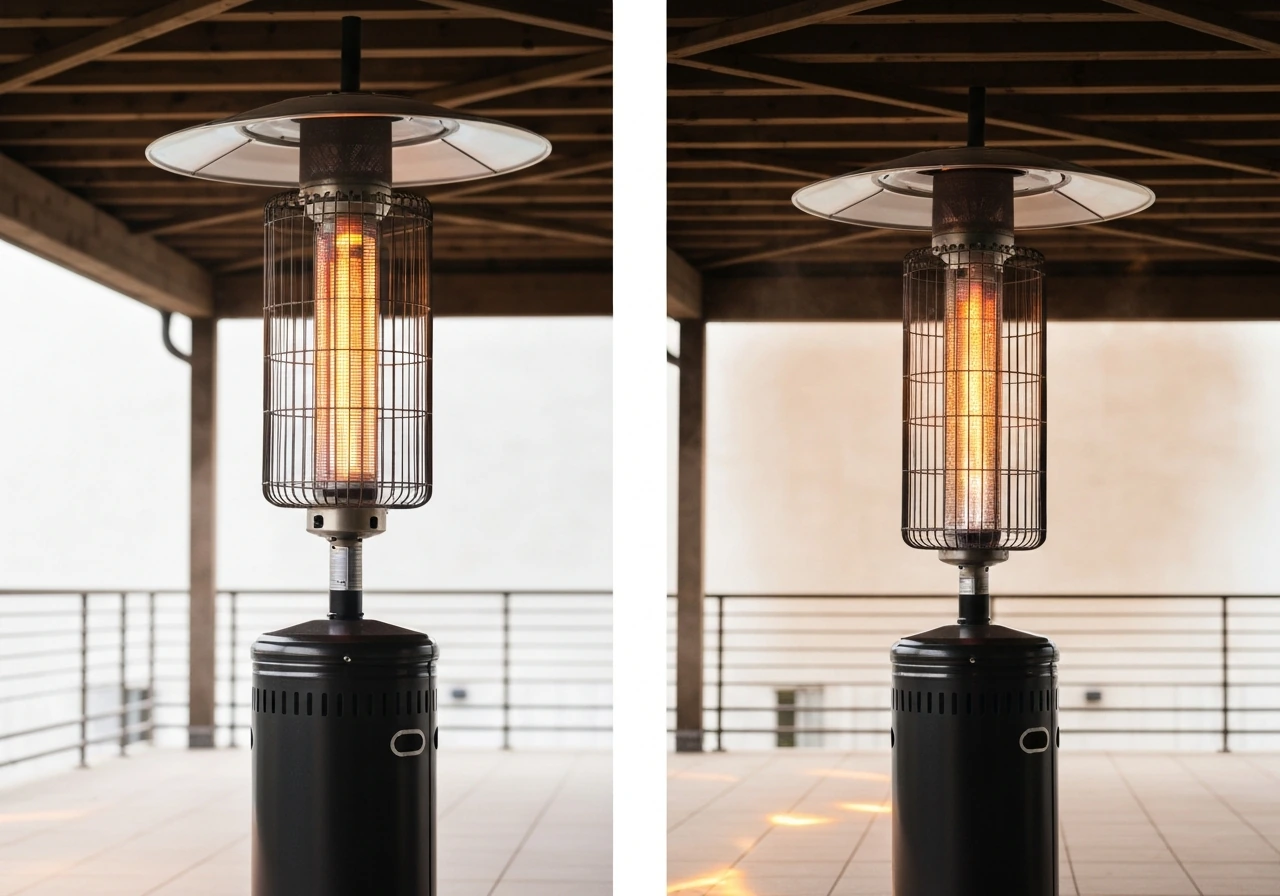
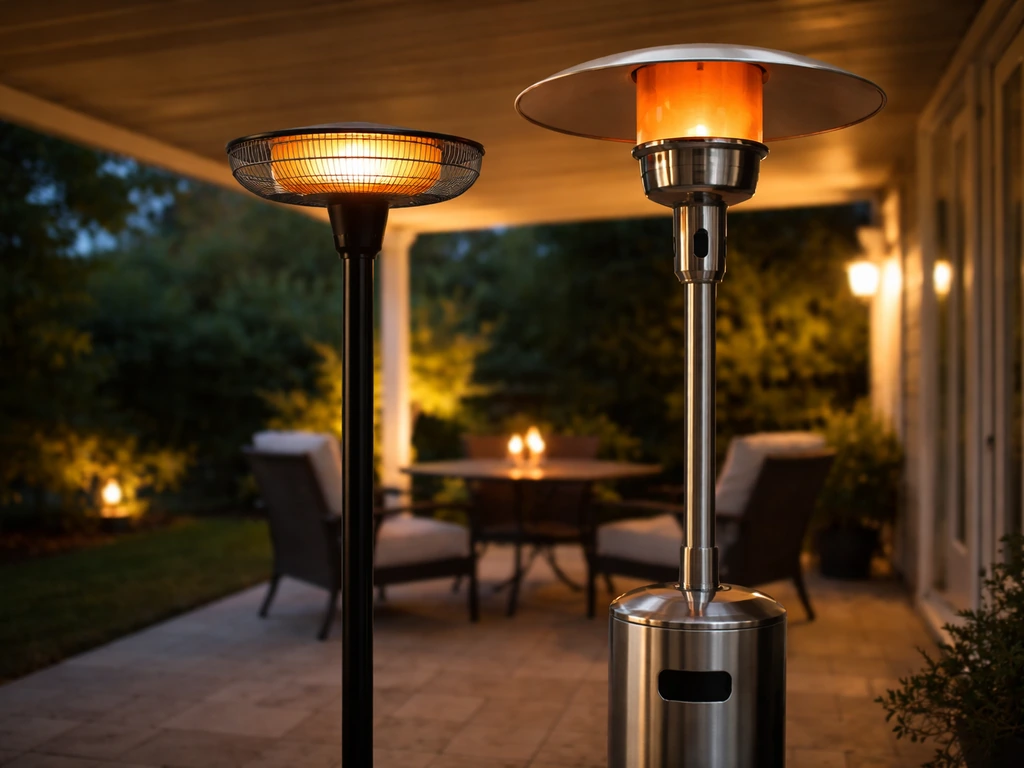
Electric vs propane vs natural gas vs infrared vs pellet: which type fits a covered patio?
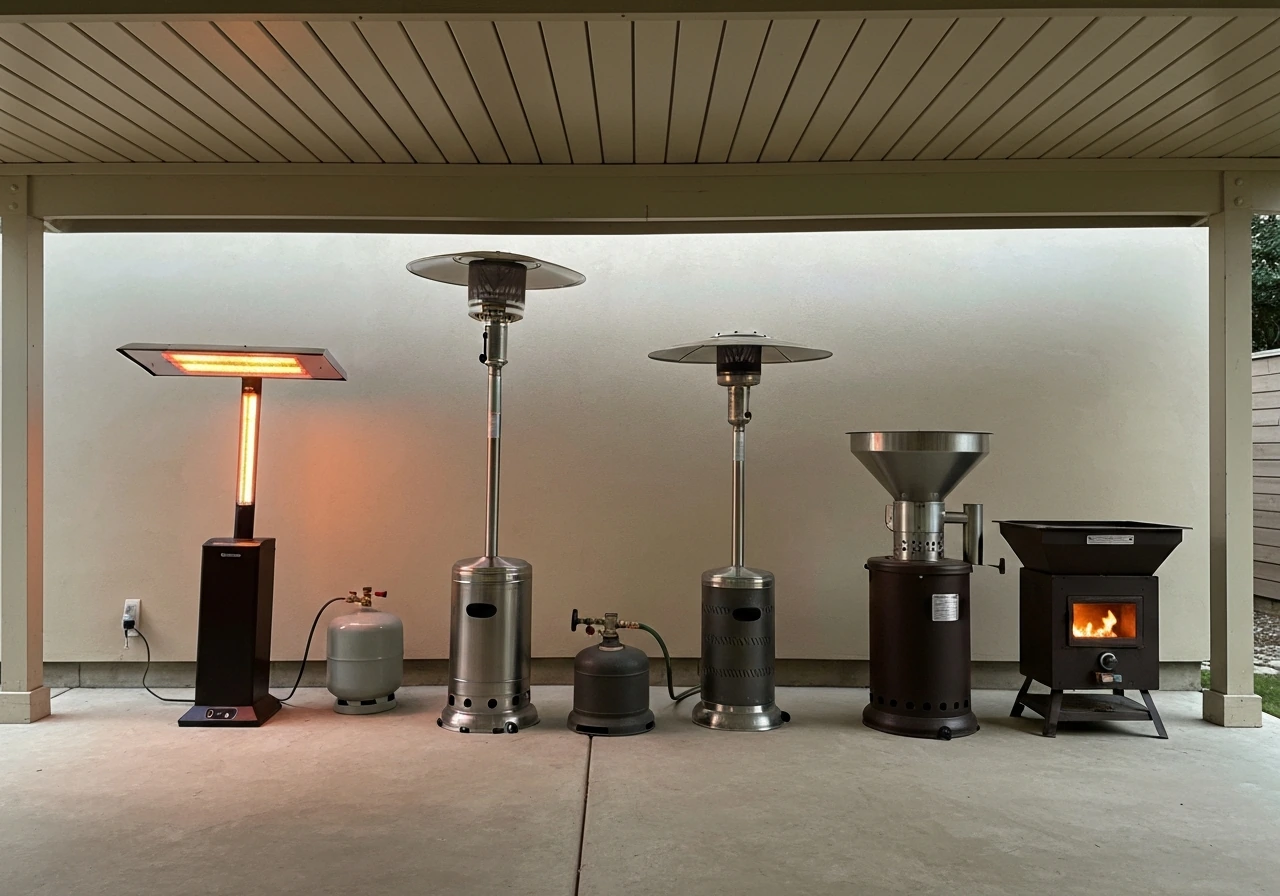
The covered part of the equation changes the calculus significantly compared to open patio heating. Under a roof, you lose full open-air dispersion, which means combustion gases can accumulate, clearances become harder to maintain, and fire risk from overhead sources increases. That context shapes which heater types are genuinely safe and practical here.
| Heater Type | Works Under a Covered Patio? | Ventilation Needed? | Key Trade-off |
|---|---|---|---|
| Electric infrared (wall/ceiling mount) | Yes, ideal choice | No | Needs 240V circuit; professional wiring recommended |
| Propane (freestanding mushroom style) | With caution; requires open sides and airflow | Yes, significant | CO risk if enclosed; can't use in fully sealed spaces |
| Natural gas (infrared overhead) | Yes, if sides are open and clearances are met | Yes, open sides required | Permanent install; needs gas line run to patio |
| Electric freestanding | Yes, with some limitations | No | Lower output; extension cord risk; trip hazard |
| Pellet | With caution; open-sided only | Yes, significant | Ash/smoke output; messy; high ambiance, lower practicality |
Electric infrared heaters win for covered patios because they convert power directly to radiant heat, warming people and surfaces rather than the air. Under a covered roof, that matters: the roof reflects and holds that radiant warmth better than open-air settings do, which means you often need slightly less wattage than you would outdoors. Propane mushroom-style heaters, while popular, are genuinely risky in enclosed or semi-enclosed covered spaces because of carbon monoxide buildup. If the sides of your covered patio are mostly open, a propane or natural gas heater can work, but keep a CO detector nearby and never run one in a three-sided or enclosed pergola. Pellet heaters add a fireplace-style look but produce particulate smoke and ash, which makes them a poor fit under a low roof.
Best heater picks for covered patios: top contenders by type
Here are the best performers across types, with honest notes on who each one actually suits.
| Model | Type | Output | Coverage | Best For | Approx. Price |
|---|---|---|---|---|---|
| Bromic Tungsten Smart-Heat Electric 4000W | Electric infrared (ceiling/wall) | 4000W | Up to 120 sq ft | Most covered patios; best all-around pick | $600–$750 |
| Bromic Tungsten Smart-Heat Electric 3000W | Electric infrared (ceiling/wall) | 3000W | Up to 100 sq ft | Smaller covered porches under ~10x10 ft | $500–$650 |
| Bromic Tungsten Smart-Heat Electric 6000W | Electric infrared (ceiling/wall) | 6000W | Up to 160 sq ft | Large covered patios; dual-element control | $800–$950 |
| Dr. Infrared DR-238 (2000W wall-mount) | Electric infrared (wall) | 2000W | Up to ~65 sq ft | Budget; small covered porch; 120V option | $180–$240 |
| Patio Comfort Infrared Natural Gas (overhead) | Natural gas infrared | 25,000–40,000 BTU | ~150–200 sq ft | Open-sided covered patios with gas line access | $400–$600 |
| AEI Sunpak S25 S TSH (Natural Gas) | Natural gas infrared | 25,000 BTU | ~10x10 ft zone | Restaurants, large open-sided covered areas | $450–$600 |
| Dyna-Glo 48,000 BTU Propane (freestanding) | Propane mushroom | 48,000 BTU | Up to ~200 sq ft open air | Open-sided patios only; not sealed spaces | $150–$200 |
The Bromic Tungsten Smart-Heat Electric line dominates this category for a reason: it is purpose-built for this exact environment. The 4000W model (BH0420032) runs on 240V at 16.6A, mounts overhead, and has dual heating elements so you can run half-power on warmer nights. It is not cheap, but it is the heater you install once and do not think about again. The Dr. Infrared DR-238 is the budget entry point if you only need to warm a tight 6x10 ft covered porch and you want to avoid running a 240V circuit. For gas, the Patio Comfort and AEI Sunpak are solid commercial-grade options for genuinely open-sided covered structures like pergolas or restaurant patios where airflow is not a concern.
Best electric outdoor heaters for a covered patio: the detailed shortlist
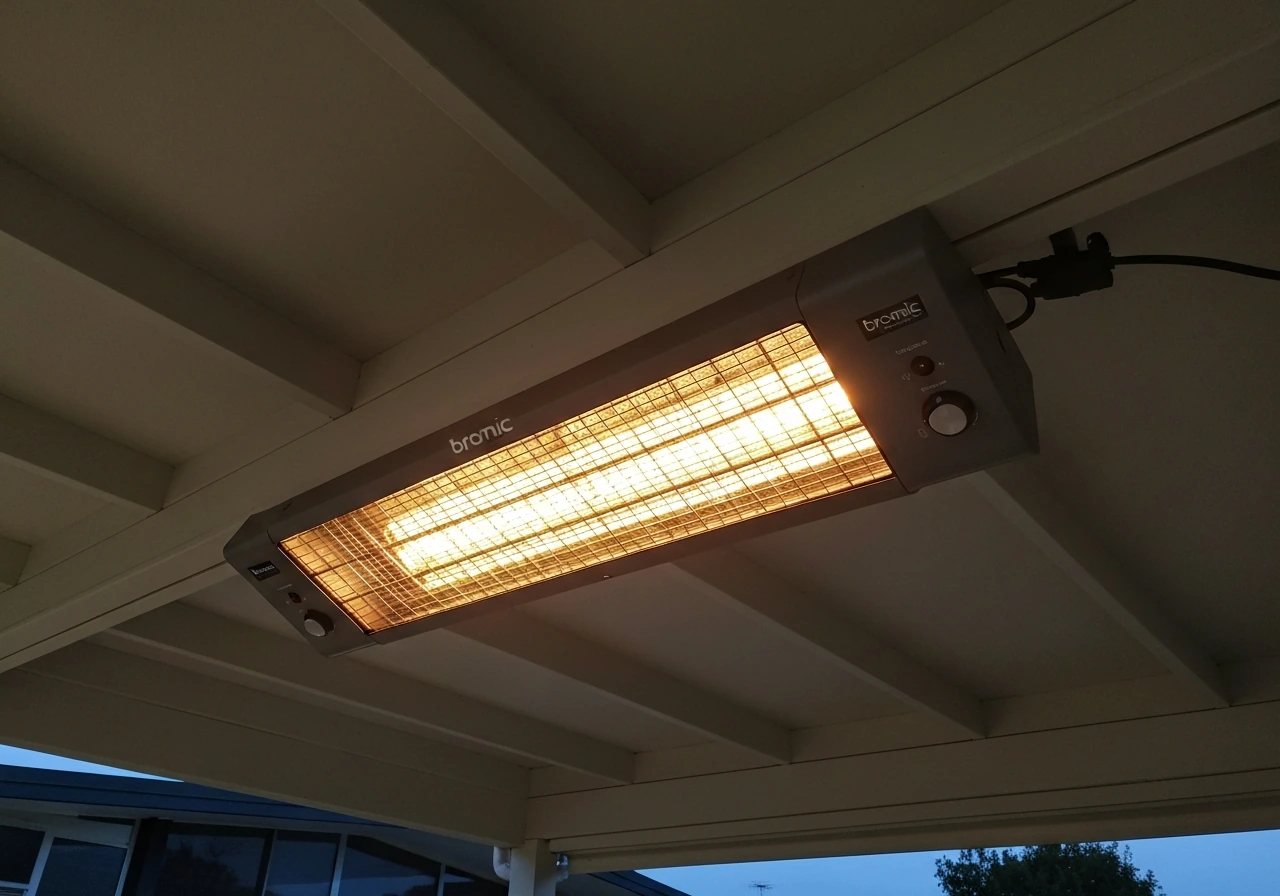
If you searched for the best electric outdoor heater for a covered patio specifically, here is the focused answer. Electric is the right move here, and the differences between models come down to mounting style, voltage requirements, output, and build quality.
Bromic Tungsten Smart-Heat Electric (2000W / 3000W / 4000W / 6000W)
This is the category benchmark. All models run on 240V, with the 2000W drawing 8.3A, the 3000W at 12.5A, and the 4000W at 16.6A. Coverage scales from about 64 sq ft (2000W) to 100 sq ft (3000W) to 120 sq ft (4000W) to 160 sq ft (6000W), and Bromic's figures reflect protected-environment use, which is exactly what a covered patio is. Bromic’s installation manual also lists the BH0420012 (3000W) as heating area up to 100 ft² and the BH0420030 (2000W) as heating area up to 64 ft² protected-environment use. The 4000W and 6000W models have dual heating elements you can control independently, which is genuinely useful: run both elements on a cold November night, run one element on a mild spring evening. The heater mounts to the ceiling or wall, sits flush, and looks like it was designed for the space rather than dropped into it. The main catch is the 240V requirement. You will need to hire an electrician if you do not already have a 240V outlet at the patio, which typically adds $200 to $400 to the project cost. Worth it. If you are specifically shopping for the best outdoor heat lamps for patio use, start with electric infrared models designed for covered, protected environments.
Dr. Infrared DR-238 (2000W wall-mount)
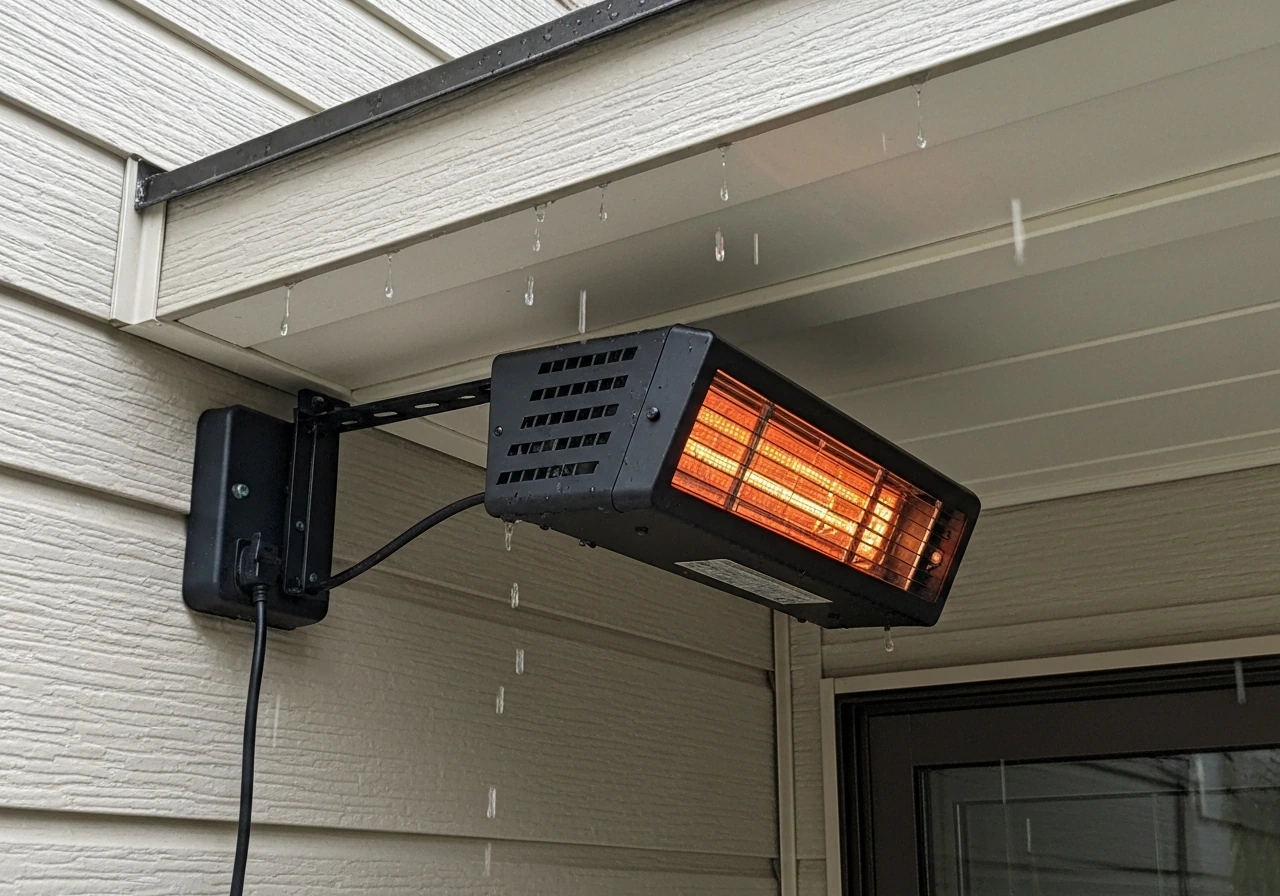
If your covered porch is small (think 6x10 ft or under) and you want to avoid the 240V wiring project, the Dr. If you are shopping for the best outdoor heater for small patio spaces, this 120V option is a strong place to start small (think 6x10 ft or under). Infrared DR-238 runs on 120V standard household current and covers up to about 65 sq ft. It wall-mounts, comes with a remote, and is IPX4-rated for moisture resistance. The trade-off is real: at 2000W on 120V, it pulls about 16.7A, which is close to the limit of a 20A circuit. You should not run it on an extension cord, and you want it on a dedicated circuit. It also does not have the build quality or coverage of the Bromic, but at roughly $200, it is a legitimate option for a small covered porch on a budget.
Infratech W-Series or CD-Series (hardwired 240V)
Infratech makes a strong alternative to Bromic at a similar or slightly lower price point. The W-Series single-element heaters run from 1500W to 6000W, and the CD-Series dual-element models go up to 8000W. Build quality is comparable to Bromic. Infratech's control systems and dimmer compatibility are a slight advantage if you want a multi-zone or smart-home-integrated setup. The aesthetic is sleeker, which matters if your covered patio is a high-design outdoor living space. Either Bromic or Infratech is an excellent choice; the differences come down to personal preference and which dealer has better local support in your area.
What to avoid in electric heaters for covered patios
- Freestanding electric tower heaters: they are a trip hazard, have lower output, and sit at ankle level rather than overhead where radiant heat is most effective under a roof
- Any electric heater not rated for outdoor/damp or wet locations: an unrated heater in a covered patio will fail prematurely and is a safety risk
- Heaters requiring extension cords: never run a high-wattage outdoor heater on a standard extension cord, even temporarily
- Heaters without a listed IP or ETL/UL outdoor rating: these are common on marketplaces and look like a bargain until they short out
Sizing, coverage, and placement under your covered patio
Getting the sizing right matters more under a covered patio than in open-air settings, because the roof changes airflow and heat retention. The good news is that a covered, partially enclosed space is actually more efficient: radiant heat from an overhead heater bounces off the ceiling and nearby walls, so you often get more effective warmth from fewer watts than you would in a wide-open backyard.
As a practical rule, use the manufacturer's 'protected environment' or 'moderately protected' coverage figure rather than the open-air figure. Bromic's data is already calibrated for this: the 4000W model covers 120 sq ft under protected conditions, which is the number to plan around for a covered patio. SunStar's guidelines for gas infrared heaters use a similar distinction, showing that a 'moderately protected' layout allows wider heater spacing and greater coverage per unit compared to exposed, breezy locations.
For mounting height, Bromic specifies a ceiling mounting height of 96 inches (8 ft) above floor level as the standard installation geometry. SunStar's sizing guidance for gas models recommends mounting heights between roughly 8 ft and 11 ft depending on exposure and heater output. At 8 ft you get the most focused heat; at 10 to 11 ft the heat cone spreads wider but with less intensity at body level. If your covered patio ceiling is 9 to 10 ft, you are in the ideal range for overhead infrared mounting.
For placement, center the heater over the seating zone rather than over the perimeter. A single 4000W Bromic at 8 ft covers a 10x12 ft seating area effectively. For a larger 20x15 ft covered patio, plan on two 4000W units staggered over the main zones. Avoid mounting directly above a dining table if you have a low ceiling (under 8 ft), as the heat can feel intense at close range.
Installation, controls, weatherproofing, and fuel considerations
Electric installation
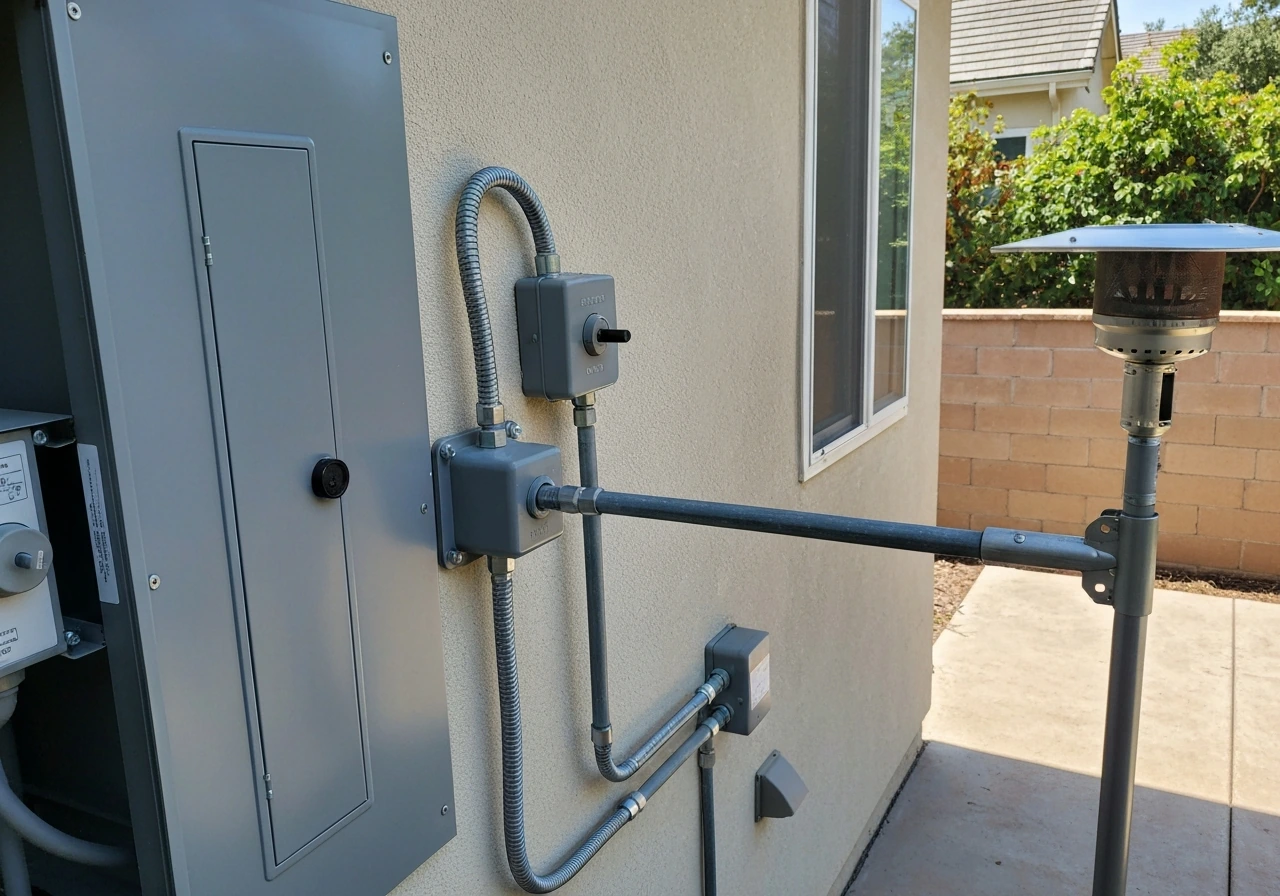
Hardwired 240V electric heaters like the Bromic Tungsten require a dedicated circuit run from your main panel to the patio. A licensed electrician will install a weatherproof junction box at the ceiling or wall mount point, connect the wiring, and attach the heater's mounting bracket and element housing. The Bromic manual notes that 240V service can be accomplished using two 120V lines in a split-phase configuration, which is standard in US residential panels. Budget $200 to $400 for the electrical work on a simple run. If your panel is far from the patio, the run cost goes up. Bromic and Infratech both offer optional dimmer and remote-control accessories that wire in at installation time. Get those installed at the same time rather than as an afterthought.
Propane and natural gas installation
Natural gas overhead heaters like the AEI Sunpak require a permanent gas line run to the patio and a licensed gas plumber for connection. This is a bigger upfront cost but eliminates tank swaps. Freestanding propane heaters are simpler: connect a standard 20 lb tank and wheel it into position. Propane tanks must be stored upright in a well-ventilated outdoor area and should never be stored indoors or in an enclosed patio structure. Check the tank connection O-ring seasonally and replace the regulator every few years.
Weatherproofing expectations
A covered patio protects heaters from direct rain, but not from humidity, condensation, wind-driven moisture, or insects building nests in the element housing over summer. For electric heaters, look for an IP55 rating or better (the Bromic Tungsten Smart-Heat Electric is IP55 rated). For gas heaters, inspect burner ports at the start of each season and run a short test fire to burn off any debris before guests arrive. Even under a covered roof, treat your heater as an outdoor appliance and protect it with a cover when not in use during off-season months.
Safety on a covered patio: clearances, ventilation, and fire risk
This is the section most buyers skip and then regret. Covered patios create specific hazards that open patios do not, and the rules are different for each fuel type.
Electric heaters: clearance requirements
Electric infrared heaters produce no combustion gases, but they still get hot and have minimum clearance requirements you need to follow. Bromic's installation manual specifies at least 10 inches of clearance to the sides of the heater and a minimum of 12 inches below the heater to any surface or object (these values vary slightly by mounting configuration, so always check your specific model's manual). Never mount directly above flammable materials, fabric furniture cushions, or low-hanging plants. At the recommended 8 ft ceiling height, a properly mounted electric infrared heater poses minimal fire risk, but check clearances on your specific model before mounting.
Propane and gas heaters: ventilation is non-negotiable
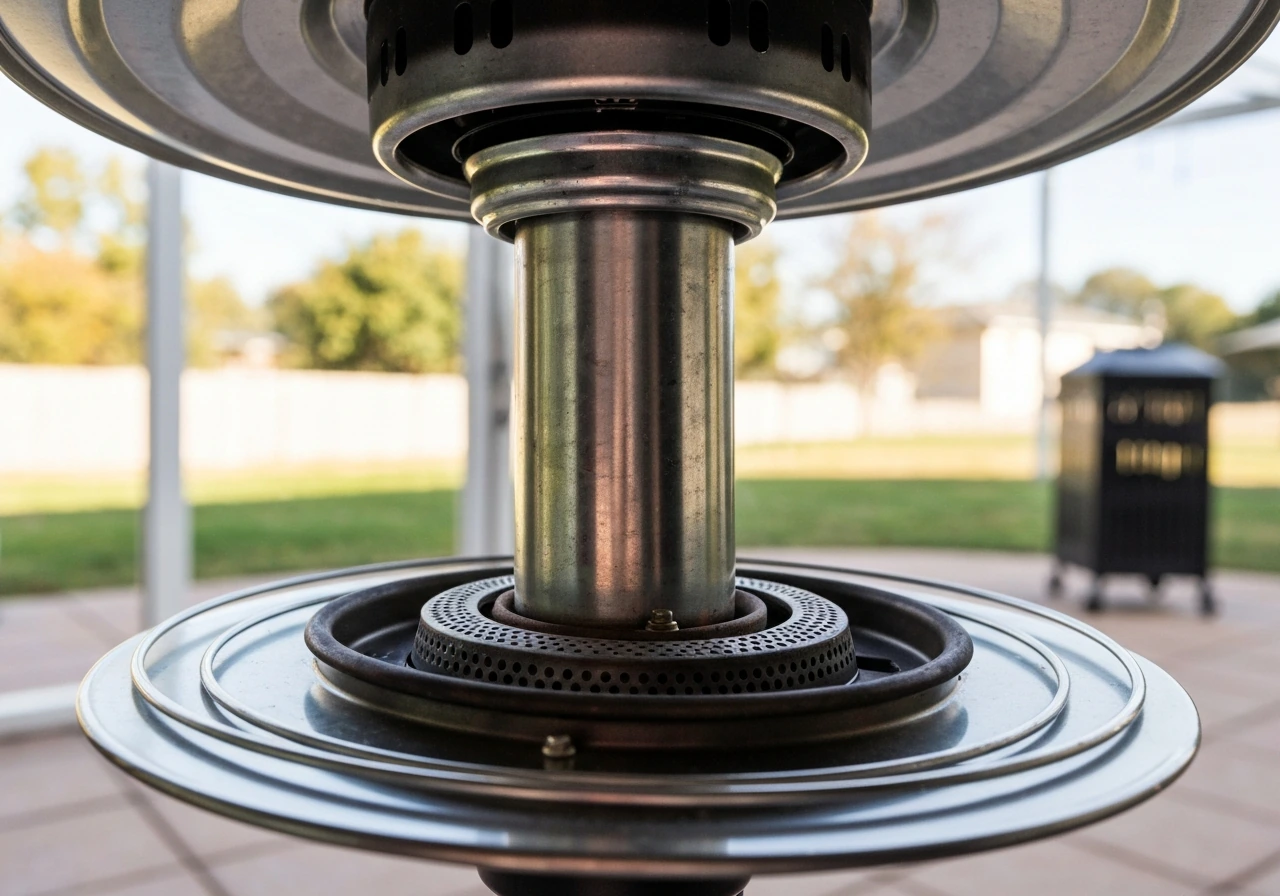
This is where people get into trouble. The City of Carbondale's outdoor heater safety guidance is direct: propane and gas patio heaters require proper ventilation. The Canadian Propane Association's patio heater safety fact sheet is equally clear that patio heaters are designed for outdoor use only and should never be used in enclosed or semi-enclosed spaces. ANSI’s listing for CSA/ANSI Z83.26-20/CSA 2.37-2020 covers gas-fired outdoor infrared patio heaters for natural gas and/or propane and highlights scope updates, including terminology around propane and field conversion kits. A 'covered patio' with three walls and a roof is effectively a semi-enclosed space. If you run a propane or gas heater there without significant open-air exposure on at least two full sides, you create a carbon monoxide hazard. If you choose gas or propane for a covered patio, install a CO detector at the space, ensure at least two sides are fully open to outside air, and never run the heater with tarps, curtains, or winter-enclosure panels fully closed. The same logic applies to pellet heaters, which also produce combustion gases.
Vent-free heaters: keep them indoors
You may see 'vent-free' natural gas radiant heaters in search results. Products like the Mr. Heater vent-free radiant series are designed for indoor supplemental heating of spaces up to 300 sq ft and are not appropriate substitutes for outdoor patio heaters. Their application is fundamentally different. Do not conflate vent-free indoor heaters with outdoor-rated patio heaters: they are separate product categories.
Budget vs performance: operating costs and real-world efficiency
Upfront price is only part of the cost story. Here is how the main types actually compare once they are installed and running.
| Heater Type | Typical Purchase Price | Installation Cost | Operating Cost (per hour, approx.) | Efficiency Under Covered Roof | Runtime Notes |
|---|---|---|---|---|---|
| Electric infrared (hardwired 240V) | $500–$950 for quality models | $200–$400 (electrician) | $0.48–$1.44/hr at $0.12/kWh (4000W–12,000W) | Excellent; radiant heat retained by roof | Unlimited; on demand |
| Electric infrared (plug-in 120V) | $150–$250 | $0–$50 (outlet may need upgrade) | $0.24/hr at $0.12/kWh (2000W) | Good for small zones | Unlimited; on demand |
| Natural gas infrared (overhead) | $400–$600 | $500–$1,200 (gas line + plumber) | $0.15–$0.35/hr at typical NG rates | Very good; efficient radiant output | Unlimited if piped |
| Propane (freestanding) | $150–$300 | $0 (no install needed) | $1.00–$2.00/hr (20 lb tank ~20 hrs at 40K BTU) | Moderate; loses heat to open sides needed for venting | ~20 hrs per 20 lb tank |
| Pellet | $200–$600 | $50–$200 (footing/shelf) | $0.50–$1.50/hr (pellet cost varies) | Low-moderate; smoke/ash limit enclosure | Depends on hopper size; ~4–8 hrs |
Natural gas infrared is the cheapest to run long-term by a significant margin, but the installation cost (running a gas line to the patio) often exceeds $800 to $1,200 depending on your home's layout. If you plan to heat the patio heavily for many years, natural gas pays off. For most homeowners who heat the patio seasonally, electric infrared is the best value: the operating cost is predictable, there is no fuel to manage, and the protected-environment performance under a covered roof is genuinely better than the open-air numbers suggest. Propane looks cheap upfront but costs more per hour to run than electric in most US electricity markets, and the ventilation constraint under a covered patio makes it a compromise choice.
Your buying checklist and next steps by scenario
Use this to land on the right decision for your specific situation.
Before you buy anything, confirm these basics
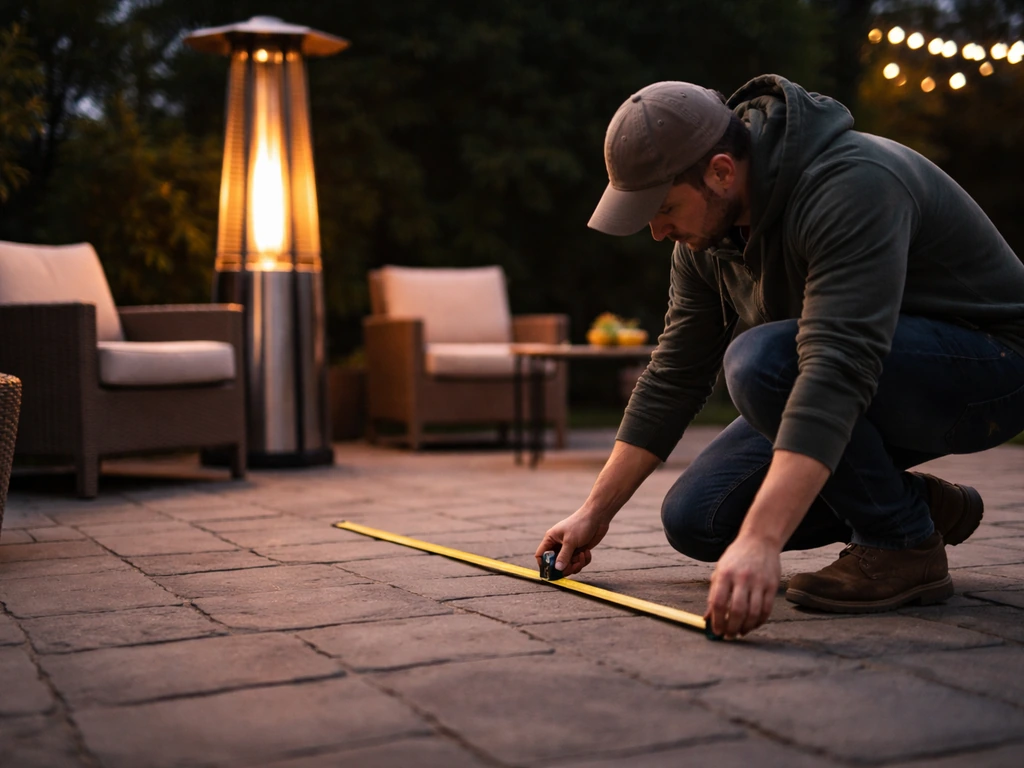
- Measure your covered patio: length x width in sq ft. This determines how many heaters you need and at what wattage or BTU rating.
- Check your ceiling height. Ideal is 8 to 10 ft for overhead electric infrared. Below 8 ft, check model-specific clearance minimums carefully.
- Determine if your patio is open-sided or semi-enclosed. If two or more sides are enclosed (walls, screens, curtains), electric is the only safe choice.
- Check your electrical panel for a 240V slot or a 20A 120V circuit availability. If neither is available, budget for an electrician.
- Decide if you want permanent (hardwired or gas-piped) or portable (propane tank, plug-in) setup.
Small covered porch (under 80 sq ft), budget-conscious
Go with the Dr. Infrared DR-238 2000W wall-mount at around $200. It runs on 120V, covers the space adequately, and avoids the electrician cost. If you later want to upgrade, the mounting bracket location you establish now can guide where to run 240V service later.
Mid-size covered patio (80 to 130 sq ft), best overall performance
Buy the Bromic Tungsten Smart-Heat Electric 4000W. Have an electrician run a 240V, 20A circuit to the ceiling mount point. The dual-element design gives you flexible output, the IP55 rating handles the outdoor environment, and coverage at 120 sq ft protected is exactly right for this size. This is the recommendation for the majority of readers.
Large covered patio (130 to 300 sq ft)
Plan for two heaters rather than one oversized unit. Two Bromic 4000W units give you 240 sq ft of coverage and two zones of control. If the patio is open-sided and you have gas access, the AEI Sunpak S25 natural gas overhead units are an excellent commercial-grade option that will run cheaper long-term. For large covered spaces that also host small businesses or restaurants, the overhead natural gas infrared category is worth the installation investment.
Open-sided pergola or covered structure with gas line access
If both sides of your covered structure are genuinely open and you already have a natural gas line nearby, a ceiling-mounted natural gas infrared heater like the Patio Comfort or AEI Sunpak gives you the lowest operating cost over time. Confirm with your gas plumber that the run is feasible and get the heater rated for outdoor-only use, as required by most manufacturers.
Prefer electric and want smart-home or dimmer control
Both Bromic and Infratech offer compatible dimmer and zone-control accessories. Have your electrician install the control wiring at the same time as the heater circuit, not as a retrofit later. Infratech's multi-zone controllers are particularly useful if you are installing three or more heaters across a larger covered space and want independent zone management.
If your search started with finding the best ceiling heater for a covered patio or the best heat lamp for a patio setup, the electric infrared overhead category is where those searches land in practice. For readers focused on smaller or open-air patio setups without a permanent roof structure, the buying logic shifts somewhat, since those contexts allow more heater types without the ventilation and clearance constraints that a covered patio introduces.
FAQ
What size covered patio can one 4000W overhead electric infrared heater handle?
For a covered, protected-environment layout, the article’s example 4000W unit is planned around about 120 sq ft. If your patio is more open to wind or the ceiling is lower than typical (near 8 ft), you may need either a wider spacing adjustment or a second heater to keep temperatures consistent across the seating zone.
Can I use an extension cord with a 120V infrared patio heater?
No. The 120V model discussed draws close to the 20A circuit limit, and extension cords increase voltage drop and overheating risk. The safer approach is a dedicated outlet on a properly rated circuit, ideally wired for outdoor use.
How do I choose between running the heater over the center of the seating area vs over the perimeter?
For best comfort, center the heater over where people sit rather than near the edge. Overhead infrared warms what it can “see,” and covered patios reflect heat off nearby surfaces, so aim for the main lounging zone. If you place it near the perimeter, people at the far edge can feel uneven warmth.
What should I do if my covered patio sides are mostly open but still have wind issues?
Even with open sides, wind-driven moisture and heat loss can reduce the effective coverage. In practice, start with the manufacturer’s “moderately protected” or “protected environment” spacing guidance, and if gusts are common, plan to increase the number of heaters rather than simply using the largest wattage once.
Do I really need a CO detector if I’m only using a propane heater occasionally?
Yes, because CO accumulation depends on ventilation conditions, not how often you use the heater. A detector is the practical safety layer for covered patios, especially when weather shifts reduce airflow. Place it in the occupied area, not near the heater combustion source.
Are vent-free natural gas heaters safe alternatives under a covered patio roof?
Usually not. Vent-free indoor heaters are meant for supplemental indoor heating and have different safety and ventilation assumptions. For a covered patio, use outdoor-rated patio heaters designed for that application, and do not swap categories based on similar fuel type.
How high should the heater be mounted, and what if my ceiling is lower than 8 ft?
The article cites 8 ft as a standard geometry for focused heat, with wider spread at 10 to 11 ft. If your ceiling is below 8 ft, you may run into stronger intensity near seating and potential clearance problems, so you may need a different mount location, lower output per zone, or multiple smaller heaters rather than one overhead unit.
What clearance mistakes cause the most problems with electric infrared heaters?
Avoid placing the heater too close to cushions, curtains, plants, or any flammable decorations, and don’t ignore the model-specific side and below-clearance values. Many buyers remember “it’s electric” but still violate clearance around nearby objects, which is where overheating and fire risk can occur.
Is IP55 enough protection for a covered patio, or should I use a cover anyway?
An IP55-rated heater is designed to handle outdoor water exposure, but it does not prevent condensation buildup, humidity corrosion, insects, or debris in the element housing. The article’s recommendation to use an off-season cover still helps, especially in humid climates and near trees.
What’s the right way to maintain gas infrared heaters each season?
Do a quick inspection of burner ports at the start of the season and run a short test burn before guests arrive to clear debris. Also check connections and ensure screens, guards, or protective parts are installed correctly, since nests or soot can form even under a roof.
If I’m planning upgrades later, should I run 240V wiring now even if I buy 120V first?
It’s often smart to plan ahead. The article notes that establishing the future 240V circuit location now can make later upgrades easier, especially if you want to move from a budget 120V heater to a higher-coverage 240V model without redoing mounting hardware.
How should I set up zones if my covered patio has two seating areas?
Instead of one large heater, use two heaters spaced to each zone and control them independently. Dual-element models are helpful because you can run partial output during mild evenings, and zone control lets you keep one area comfortable without overheating the other.
Can I mount the electric heater on a wall instead of the ceiling on a covered patio?
Yes, many of these units are designed for ceiling or wall mounting, but the clearances and coverage pattern differ by mounting configuration. If you go wall-mounted, confirm the model’s manual spacing and ensure the heater faces the seating area so infrared “line of sight” coverage is good.
When should I choose two smaller heaters instead of one more powerful heater?
Choose multiple units when your patio layout has separate clusters, when the seating area is longer than the recommended coverage shape, or when you want independent control for windward vs sheltered sides. It usually improves comfort uniformity and reduces the need to run full power all evening.
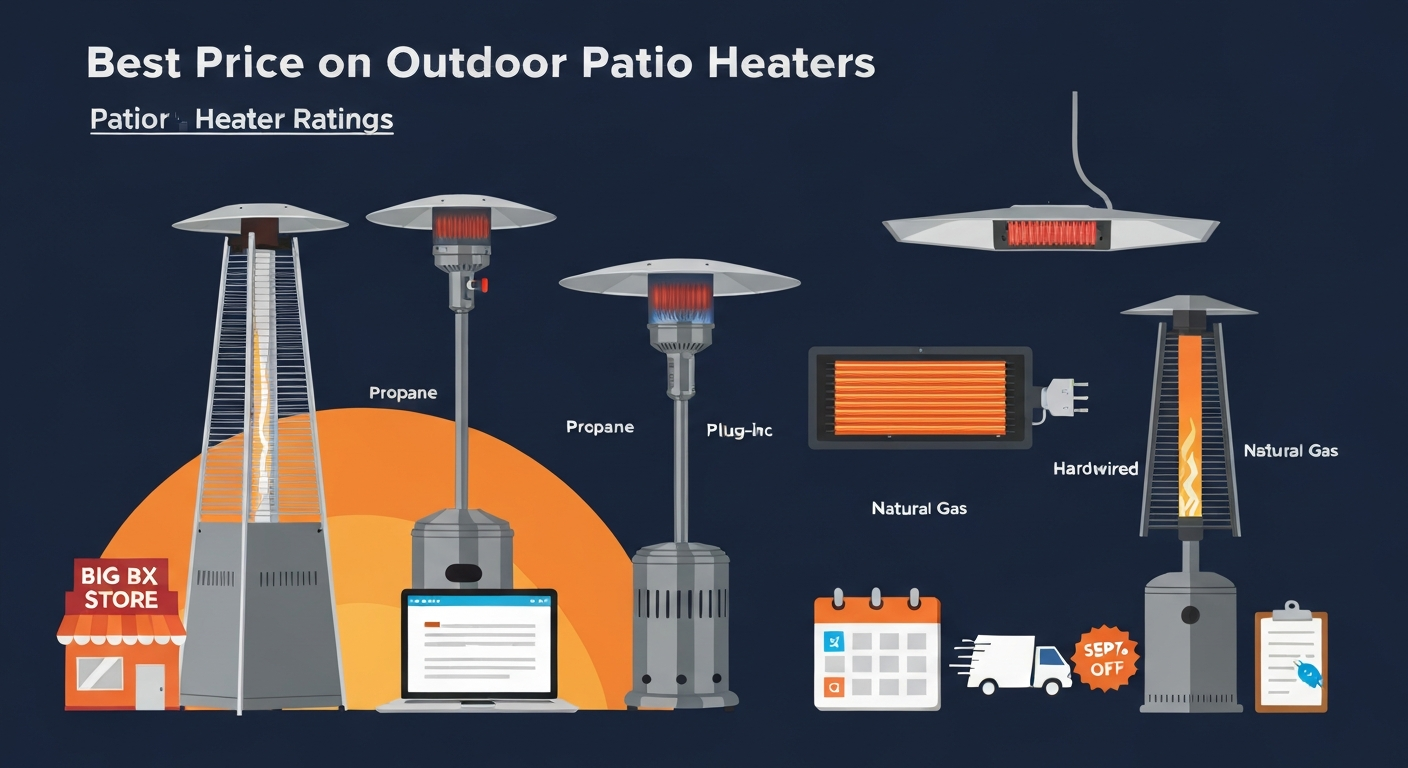
Score the best price on outdoor patio heaters, price ranges, top picks, deal tactics, total-cost & safety checklist.
Find where to rent patio heaters near you today, choose the right fuel type, compare costs, and book safely.
Where to buy a patio heater now, plus electric vs gas vs propane tips, safety checks, and size/BTU buying checklist.