
The best rated propane patio heaters right now are the Amazon Basics 46,000 BTU Propane Patio Heater with Wheels (best value for most people), the Bromic Tungsten Smart-Heat Gas (best for wind-exposed or premium setups), and the Cuisinart Portable Tabletop Propane Heater (best tabletop pick). If you have a standard 300 to 325 sq. ft. patio and want reliable, affordable heat with easy portability, the Amazon Basics model is the one to get. If you're dealing with wind, want a premium finish, or need something that mounts flush to a wall or ceiling, the Bromic is worth the upgrade. Tabletop models like the Cuisinart or the Fire Sense Stainless Steel work well for smaller gatherings but won't heat a full patio.
Best Rated Propane Patio Heater: Reviews and Buying Guide

Caleb Vale
28 Apr 2026
What 'best rated' actually means for propane patio heaters
When a heater gets labeled 'best rated,' that label can mean a few different things depending on the source. It might reflect verified purchase reviews averaged across thousands of buyers on retail platforms, hands-on test scores from outlets like Popular Mechanics, or aggregated scores from consumer feedback sites. None of those alone gives you the full picture, which is why this guide combines all three angles.
The most trustworthy ratings for propane patio heaters look at actual heat output against the claimed coverage area, how quickly the heater reaches its listed radius, ease of setup and portability, build quality over time, and safety features like auto-shutoff and tilt sensors. Popular Mechanics' 2026 testing methodology, for example, specifically tracked how long each heater took to heat its listed radius and evaluated build quality and real-world usability alongside specs. That kind of structured, performance-first evaluation is the gold standard for 'best rated' because it filters out heaters that look great on paper but underperform in the field.
What you want to avoid is letting star ratings alone drive your decision. A heater with 4.6 stars from 8,000 reviews sounds compelling, but if most reviewers live in mild climates and you're in Minnesota, their experience won't match yours. The ratings in this guide weight heat performance, safety, real-world durability, and climate suitability equally.
Top propane patio heater picks right now
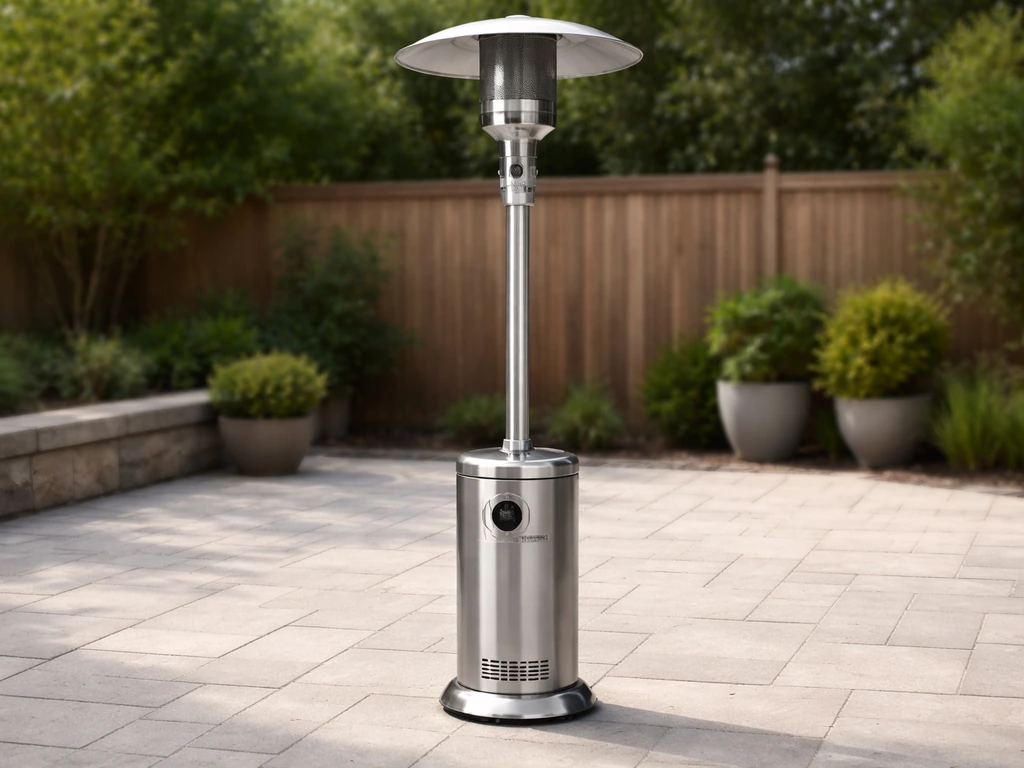
Amazon Basics 46,000 BTU Propane Patio Heater with Wheels, Best Value
This is the pick for most people, and it earned the 'Best Value' title in Popular Mechanics' 2026 patio heater test for good reason. At 46,000 BTUs, it covers roughly 324 sq. ft., which lines up well with a standard mid-size patio. The wheels make repositioning easy, and the base housing is designed to hold a standard LP tank with a small chain that helps secure the cylinder during movement. That's a detail worth noting because a tipping heater is a safety hazard, and Amazon Basics actually built in a safeguard most budget competitors skip.
Setup is straightforward: connect your regulator to the propane tank, perform the required leak test (more on that below), and you're running in under 30 minutes. The ignition is simple push-button, and flame height is adjustable. The main trade-off is aesthetics: it's functional, not beautiful. If your patio has a polished look, you might find the utilitarian design a mismatch. But for pure heat-per-dollar delivered safely, nothing in this price class touches it.
Bromic Tungsten Smart-Heat Gas, Best Premium Pick
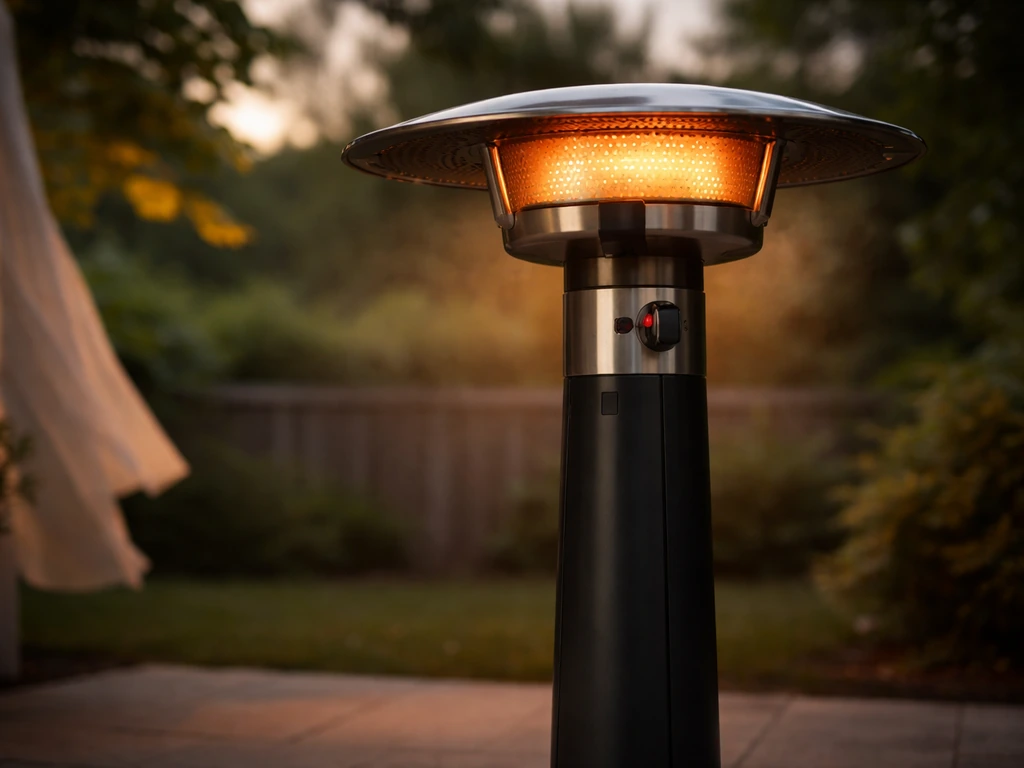
The Bromic Tungsten Smart-Heat is a different category of heater in terms of build quality, design, and wind performance. Bromic rates the freestanding version to overcome winds up to 12 km/h (roughly 7.5 mph), which makes a real difference on open decks, rooftop patios, or coastal properties where standard mushroom-style heaters struggle to stay lit or maintain consistent output. The portable version uses a 1.5V repetitive spark ignitor, and the combustion design is engineered to work with natural convection rather than against it.
The Tungsten line supports propane and delivers radiant infrared heat rather than convective heat, meaning it warms people and surfaces directly rather than heating the surrounding air. In breezy conditions, that's a significant performance advantage. The price is considerably higher than the Amazon Basics, but if you're outfitting a restaurant patio, a high-end deck, or any space where appearance and durability matter, the Bromic justifies the cost.
Cuisinart Portable Tabletop Propane Heater, Best Tabletop
Popular Mechanics named this the Best Tabletop option in its 2026 list. Tabletop propane heaters are genuinely useful for small gatherings, balconies, or camping situations where a full standing heater is overkill or impractical. The Cuisinart is compact, easy to carry, and runs off a standard 1-lb propane cylinder.
Fire Sense Stainless Steel Table Top Patio Heater, Runner-Up Tabletop
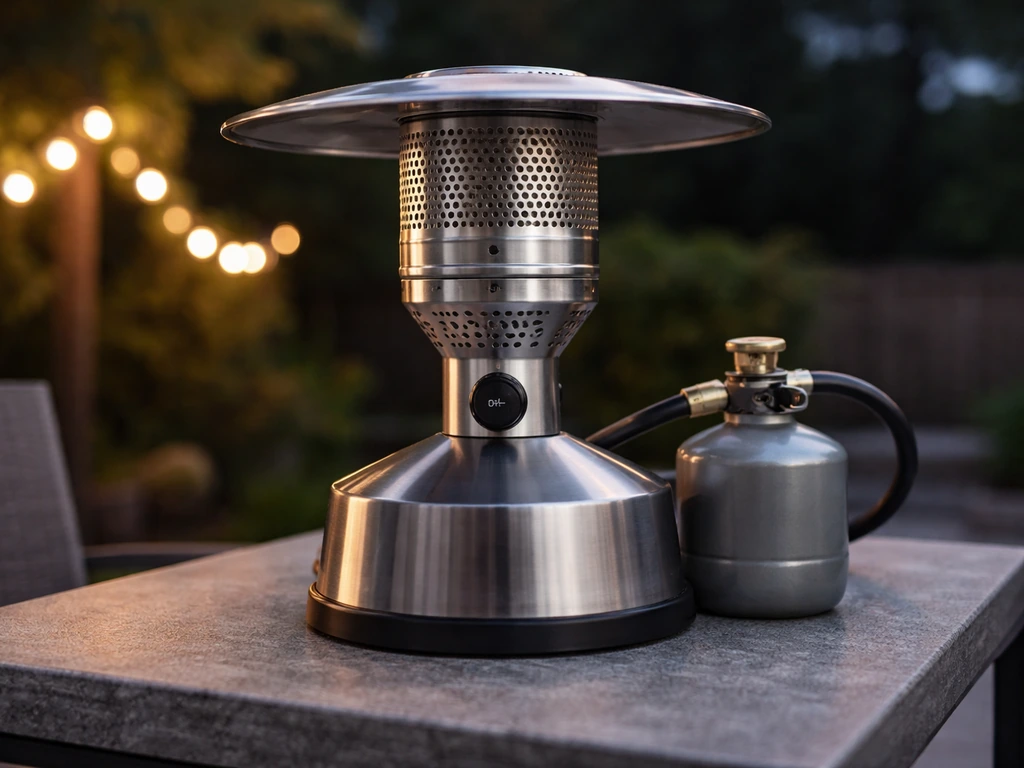
Tom's Guide highlights this as a solid tabletop option with an adjustable 10,000 BTU output and about three hours of runtime on a single 1-lb LP cylinder. The stainless steel construction holds up better outdoors than powder-coated alternatives, and the adjustable output lets you dial back heat on warmer evenings to stretch that runtime. At 10,000 BTUs it's not going to heat a 15-person gathering, but for two to four people around a table on a cool evening, it does the job well.
How to choose: BTUs, coverage, patio size, and climate
BTU output is the single most important spec to match to your patio size and local climate. As a general rule, a quality freestanding propane heater covering around 300 sq. ft. needs roughly 40,000 to 46,000 BTUs to be effective in mild to moderate conditions. If you're in a colder region (think consistent temps in the 30s and 40s Fahrenheit), you'll either want a heater at the higher end of that BTU range or you'll want to plan for two units to cover the same area. Buying a 40,000 BTU heater and expecting it to make a 600 sq. ft. patio comfortable in 35-degree weather is a setup for disappointment.
| Patio Size | Recommended BTUs | Number of Heaters | Notes |
|---|---|---|---|
| Up to 150 sq. ft. | 10,000–20,000 | 1 | Tabletop or small standing unit works fine |
| 150–325 sq. ft. | 40,000–46,000 | 1 | Standard freestanding propane heater range |
| 325–600 sq. ft. | 40,000–46,000 | 2 | Two units give better coverage than one oversized model |
| 600+ sq. ft. | 46,000+ | 3 or more | Consider natural gas or multiple propane units |
Climate matters beyond just temperature. Wind is one of the biggest enemies of propane patio heaters, particularly the standard mushroom-style freestanding models. Convective heat gets swept away quickly in wind, and some heaters will lose their flame entirely. If your patio is exposed to consistent breezes, the Bromic Tungsten's wind resistance spec is a real advantage, not just marketing. For sheltered patios, a standard 46,000 BTU model like the Amazon Basics handles mild wind without much issue.
Portability vs. fixed installation is another choice point. Wheeled freestanding models (like the Amazon Basics) are flexible and can follow you around the patio, but they take up floor space and tip more easily in wind. Wall-mounted or ceiling-mounted propane heaters save floor space and are more stable, but they require a permanent gas line or careful hose routing, and you lose the flexibility to reposition them. For most homeowners, a wheeled freestanding model hits the right balance of convenience and performance.
Safety, setup, and installation checklist
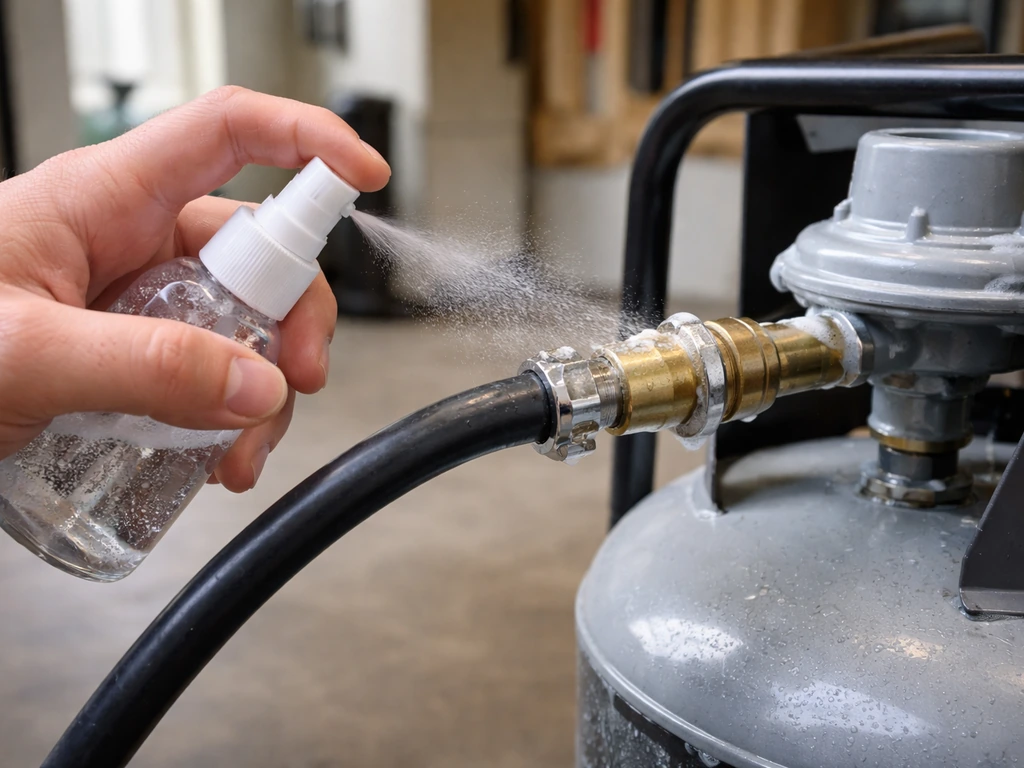
Propane heaters are safe when set up correctly, but this is genuinely one category where skipping steps can cause real harm. The most important habit to build is the leak test before every first use of the season and after any tank change.
- Perform a leak test before first use: mix soapy water and apply it to all connections between the regulator, hose, and tank valve. Bubbling indicates a leak. Do not operate the heater if you detect a leak.
- Check clearances: most freestanding propane heaters require a minimum of 36 inches of clearance from overhead obstructions (pergola beams, umbrella canopies, string lights). Check your model's manual for the exact spec.
- Place on a stable, level surface: an unstable heater on uneven pavers is a tip-over risk. Most units have a tilt-sensor auto-shutoff, but prevention is better than relying on that feature.
- Secure the propane tank: use the built-in chain or strap if provided (as on the Amazon Basics model) to keep the cylinder stable during use and especially during repositioning.
- Only use the correct gas type and pressure: the Amazon Basics manual specifies C30/031 butane/propane at 28 to 30 or 37 or 50 mbar. Using the wrong gas type or pressure voids safety compliance and can cause dangerous operation.
- Allow the heater to cool completely before moving or cleaning: turn off the propane at the tank valve first, not just the heater control, then wait at least 15 to 20 minutes.
- Clean burner ports and air vents regularly: clogged ports cause uneven flame and poor combustion. Use a soft brush or compressed air on the vents at least once per season.
- Never use a propane patio heater indoors or in enclosed spaces: these heaters produce combustion byproducts including carbon monoxide. Outdoors-only is not a preference, it is a safety requirement.
- Inspect the hose and regulator annually: look for cracks, abrasions, or stiffness that can indicate dry rot or damage, especially after winter storage.
Propane costs and real-world usability
Propane operating costs are straightforward to estimate. A standard 20-lb propane tank holds roughly 430,000 BTUs worth of fuel. A 46,000 BTU heater running at full output will burn through a full 20-lb tank in approximately 9 to 10 hours. In practice, you'll rarely run a heater at full output the entire time, so realistic tank life at moderate output is closer to 12 to 15 hours per fill. A 20-lb refill typically costs between $18 and $28 depending on your area and whether you're refilling or exchanging. If you're using your patio heater four evenings a week for two to three hours per session, expect to refill once every two to three weeks during peak season.
Tabletop models using 1-lb cylinders (like the Fire Sense and the Cuisinart) run about three hours per cylinder at full output. Those small cylinders cost around $3 to $5 each, so per-hour fuel cost is actually higher than a 20-lb tank setup. They're convenient for occasional use but not economical for regular patio entertaining.
Controls on most propane patio heaters are analog: a rotary valve that adjusts flame height, which indirectly controls heat output. You won't find digital thermostats on most models in this category, and that's fine for outdoor use where you're adjusting to ambient conditions rather than targeting a precise indoor temperature. The important thing is that the valve has clear low, medium, and high positions, and that the knob is easy to operate with cold hands. Some premium models like the Bromic offer remote control compatibility, which is a nice feature for mounted or difficult-to-reach installations.
Durability and weather resistance vary significantly by price point. Powder-coated steel is standard on budget and mid-range models and holds up well for several seasons if you store the heater under a cover during off-season months. Stainless steel (as seen on the Fire Sense tabletop) resists rust better but still benefits from a cover. The Bromic Tungsten line uses materials designed for commercial durability and performs better in coastal or high-humidity environments. Whatever model you buy, a fitted cover during winter storage extends heater life considerably and protects the ignition components, which are the first thing to fail on neglected units.
How to use third-party ratings and Consumer Reports-style guidance
Consumer Reports does periodically cover patio heaters, but their coverage is not always up to date with current models. The methodology matters more than any single score: look for reviews that test actual heat output against claimed coverage, assess setup safety, and evaluate durability over time rather than just first impressions. Popular Mechanics' 2026 testing approach (timing heat-up across each heater's listed radius, plus hands-on setup and portability evaluation) is a good model for what rigorous testing looks like.
When using retail platform ratings, filter by verified purchases and read the one- and two-star reviews carefully. Negative reviews for patio heaters tend to cluster around three issues: ignition failure after one season, rust or finish degradation, and regulator/hose problems. If multiple reviewers report the same failure mode within the same year of purchase, take that pattern seriously regardless of the overall star average. If you want another real-world sanity check beyond star averages, you can also scan threads for best patio heater reddit style experiences from people after months of use.
- Prioritize sources that test in real outdoor conditions, not just lab specs
- Look for BTU output verification against claimed coverage areas, not just the manufacturer's number
- Weight recent reviews (within 12 months) more heavily than older ones, since models and QC can change
- Check if the reviewer's climate matches yours: a 4-star review from someone in Arizona means less if you live in the Pacific Northwest
- Cross-reference two or three independent sources before deciding, rather than relying on a single roundup
For anyone specifically looking for what Consumer Reports ranks as top propane patio heaters: their scoring framework typically emphasizes safety features (auto-shutoff, tip-over protection), heating effectiveness, ease of assembly, and long-term durability. Even without access to their current database, you can apply the same lens to any product you're evaluating. Ask: does this heater have auto-shutoff? Has the brand shown consistent quality control across reviews over multiple seasons? Is the coverage claim realistic given the BTU output? Those questions will get you to the same place a formal Consumer Reports ranking would.
Propane vs. other patio heater types: when to switch fuels
Propane is the right choice for most homeowners because it's portable, doesn't require any permanent installation, and delivers high heat output quickly. But it's not always the best answer, and it's worth being clear about when other fuel types make more sense.
| Fuel Type | Best For | Main Advantage | Main Drawback |
|---|---|---|---|
| Propane | Most patios, renters, portable use | No installation, high BTU output, widely available | Ongoing fuel cost, tank management, not ideal indoors |
| Natural Gas | Permanent installations, heavy users | No tank refills, lower per-BTU cost over time | Requires gas line, professional installation, no portability |
| Electric (plug-in) | Covered patios, mild climates, indoor/outdoor spaces | No fuel cost, silent, immediate on/off | Lower BTU output, dependent on outlet proximity |
| Infrared (electric) | Targeted spot heating, wind-exposed areas | Heats people not air, very wind-resistant | Higher upfront cost, hardwired models need installation |
| Pellet | Ambiance + heat combo, longer sessions | Aesthetic appeal, renewable fuel | More maintenance, slower to heat up, heavier units |
If you're using your patio heater several hours every day through a long season, a natural gas hookup will pay for itself in fuel savings within a couple of years. If you have a fully covered, enclosed patio or a four-season room, electric infrared is safer and more practical than any combustion heater. But for the majority of people with a standard open or semi-covered outdoor patio who want flexible, high-output heat they can set up without a contractor, propane remains the most practical and cost-effective starting point. That said, you still need to compare costs, heat output, and how you’ll use your space to decide whether propane patio heaters are worth it for your situation. If you're deciding between propane options, choosing the right model size and heat output is key to getting the best propane patio heater for your setup. A detailed list of the best propane heaters for patio setups like yours is in our full comparison.
If you're still deciding between propane options specifically, portability is often the deciding factor. A wheeled freestanding unit like the Amazon Basics gives you flexibility that a mounted or tabletop model doesn't. There are also propane patio heaters built specifically around portability and ease of transport, which are worth considering if you move the heater between multiple locations or want to take it camping or tailgating. A good option for shoppers is the best portable propane patio heater that pairs solid coverage with easy repositioning. Whatever direction you land on, matching BTU output to your actual patio size and climate is the most important decision you'll make, and getting that right matters more than brand loyalty or price alone.
FAQ
How do I figure out what BTU output I need for my patio if the coverage claims don’t match my measurements?
Start with your patio’s approximate square footage, then adjust for openness. If it’s an open-air deck or you have frequent wind, treat advertised coverage as optimistic and size closer to the top of the recommended BTU range (or plan for two heaters). If it’s semi-sheltered with walls or a roof, you can usually use the middle of the range. Also remember that “coverage” assumes people are within the heated radius, not that the whole space becomes uniformly warm.
Can I use a propane patio heater on a screened-in porch or partially enclosed area?
You can use it only if there is adequate ventilation and the heater is rated for that type of use. Fully enclosed or poorly ventilated spaces can trap combustion gases, so avoid running heaters in conditions where air circulation is limited. If your porch is truly enclosed like a sunroom, electric infrared is generally a safer bet than any combustion-based unit.
What should I do if my heater lights briefly, then shuts off?
That pattern commonly points to regulator problems, inadequate gas flow, or ignition not sustaining the flame. First, ensure the propane tank is properly seated and the valve is fully open, then re-check the regulator connection and do a fresh leak test. If it still shuts off, inspect the igniter and burner area for blockage (especially after storage), and consider replacing a faulty regulator rather than repeatedly trying to ignite.
How often should I leak-test, and what’s the safest way to do it?
Leak-test before the first use of the season and again after any tank change, regulator swap, or if you ever smell gas. Use an approved leak-detection method (typically a soap solution) on every connection point, and never use a flame to test. If you see bubbles, shut off the tank immediately and re-seat the connection before trying again.
Should I run a heater at full blast all evening, or can I save fuel by lowering it?
You can usually lower output with the flame-height valve to reduce fuel use without turning the heater off, especially in milder temperatures. However, lowering the flame also reduces the heated radius, so if your goal is to keep people comfortable near the edge of the coverage area, you may need to stay closer to medium or high. A practical approach is medium at first, then adjust higher only when ambient temperatures drop.
What’s the main difference between radiant (infrared) and convective heating for patio comfort?
Radiant heaters primarily warm people and objects they “see,” so comfort is felt quickly even when the surrounding air stays cool or breezy. Convective heaters warm the air, which can be less effective in wind because moving air carries heat away. In exposed conditions, radiant-style performance often feels stronger for the same or similar BTU output, even though the room-air temperature may not change much.
Are wheeled propane heaters actually safe in wind, or do they tip more easily?
They can tip more easily than wall-mounted units in gusty conditions, which is why wind matters for freestanding designs. If your patio gets regular breezes, choose a heater with stronger wind performance or follow the manufacturer’s stability guidance closely, such as placing it on a level surface and not operating during severe gusts. If the heater’s base is smaller or the floor is sloped, tip risk increases, so avoid using it on uneven ground.
What propane tank size should I buy, 20-lb versus small 1-lb cylinders?
A 20-lb tank is typically better for regular patio use because it runs roughly 9 to 10 hours at full output and you refill less often. Small 1-lb cylinders are convenient for occasional tabletop heating, but you’ll replace them much more frequently and the per-hour fuel cost is usually higher. If you entertain multiple evenings each week, plan around a larger refillable tank to reduce hassle.
Do I need any special tools or accessories to connect a propane patio heater?
Usually you need the correct regulator connection for your specific heater and a compatible propane tank type. Before purchasing, confirm the heater includes the regulator required for your setup, and check hose length limits so you don’t stretch the line across walkways. If you plan to reposition frequently, also verify you can safely disconnect and reconnect without twisting or stressing the hose.
How do I extend the lifespan of a propane patio heater through the off-season?
Use a fitted cover to protect from rain and debris, and store it in a sheltered area when possible. Before covering, let it cool completely and ensure there’s no moisture trapped in vents or near ignition components. If you store it for months, consider running the heater briefly before the next season to confirm ignition works, and keep an eye on any burner dust or insect nesting around air intakes.
What are common early warning signs I should not ignore?
Look for changes like repeated ignition failures, flame color shifts that don’t return after cleaning, unusual regulator noise, or visible rust progression at key metal joints. If multiple reviews describe the same failure mode and your heater starts showing a similar pattern, it’s usually better to troubleshoot the specific component (often regulator or ignition parts) rather than continuing to use it at full output. If you smell gas at any point, stop immediately and re-check connections before relighting.
Next Articles
Best Portable Propane Patio Heater: Buying Guide and Safety Tips
Choose the best portable propane patio heater by BTUs, coverage, wind resistance, efficiency, and safety setup for your
Best Patio Heater Reddit Guide: Picks by Patio Size
Reddit-style patio heater picks by patio size, climate, and fuel type with BTU, cost, safety, setup, and common warnings
Best Propane Heaters for Patio: Buyer Guide and Picks
Compare the best propane patio heaters for covered patios: BTU, wind safety, tank compatibility, coverage, and top picks