
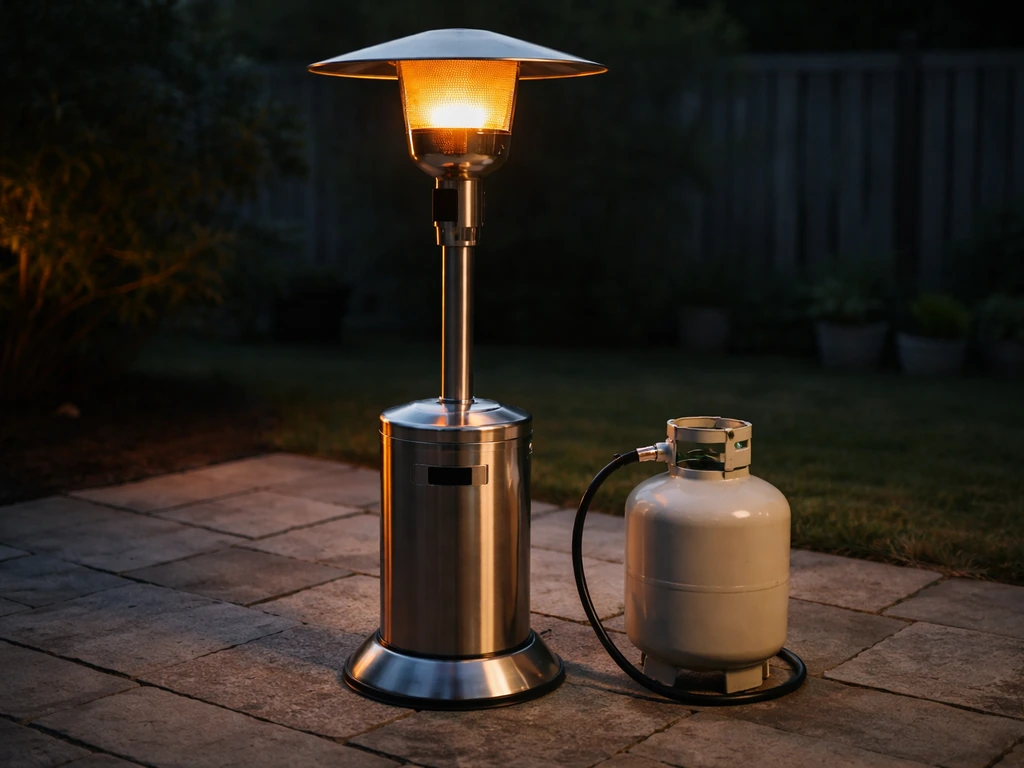
For most people, the best portable propane patio heater in 2026 is a full-size mushroom-style unit putting out 40,000 to 48,000 BTU on a standard 20-lb propane tank, with a push-button piezo igniter, a tip-over safety shutoff, and either wheels or a lightweight frame you can actually move. If you want real-world opinions before you buy, you can also search for the best patio heater Reddit threads and compare what people recommend for similar patios and weather best portable propane patio heater. That covers a medium patio of 150 to 200 square feet on a cool evening (50s°F) with minimal wind. If you have a small balcony or a table setup, a 11,000 BTU tabletop model like the Cuisinart COH-500 makes more sense. If you're heating a large commercial deck or need near-winter performance (30s°F), you want the highest BTU you can find (46,000 to 48,000+) with a weighted base and casters. The size-to-BTU match, portability logistics, and safety setup are what separate a heater you'll actually use from one that sits in your garage after one season.
Best Portable Propane Patio Heater: Buying Guide and Safety Tips

What actually makes a portable propane heater 'the best'
Manufacturers love to advertise BTU numbers and coverage squares, but those figures are marketing starting points, not guarantees. Here's how to read them honestly, and what else actually matters.
BTU output and coverage area
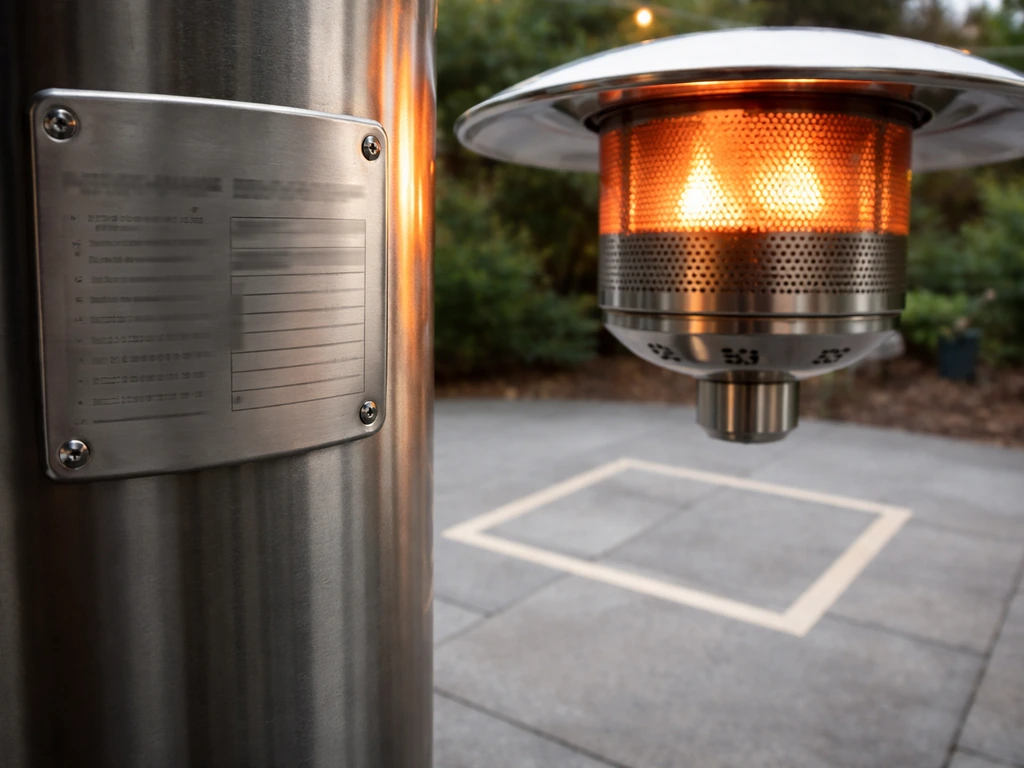
BTU (British Thermal Units per hour) is the core heat-output number. As a rough guide, about 10,000 BTU covers around 250 sq ft and 18,000 BTU covers around 450 sq ft under ideal conditions. A 40,000 BTU unit like the Backyard Pro Courtyard Series projects heat across roughly a 10-foot diameter circle (about 78 sq ft of effective warmth close to the heater). The Dyna-Glo DGPH202SS at 48,000 BTU is one of the higher-output portable units on the market. Real-world coverage always shrinks with wind, lower ambient temperatures, and open-air exposure, so treat manufacturer sq ft claims as a ceiling, not a floor.
Controls and ignition
A reliable push-button piezo igniter is the baseline expectation on any heater above $100. Some units use an electronic igniter that needs a battery, which is fine but adds a failure point. Thermocouple safety valves (which keep the gas flowing only when a flame is detected) are standard on quality models, but Bob Vila's testing has flagged that thermocouple buildup can cause reliability issues over time, even on otherwise powerful units. Look for a variable control knob so you can dial between low, medium, and high rather than just on/off.
Mobility and stability
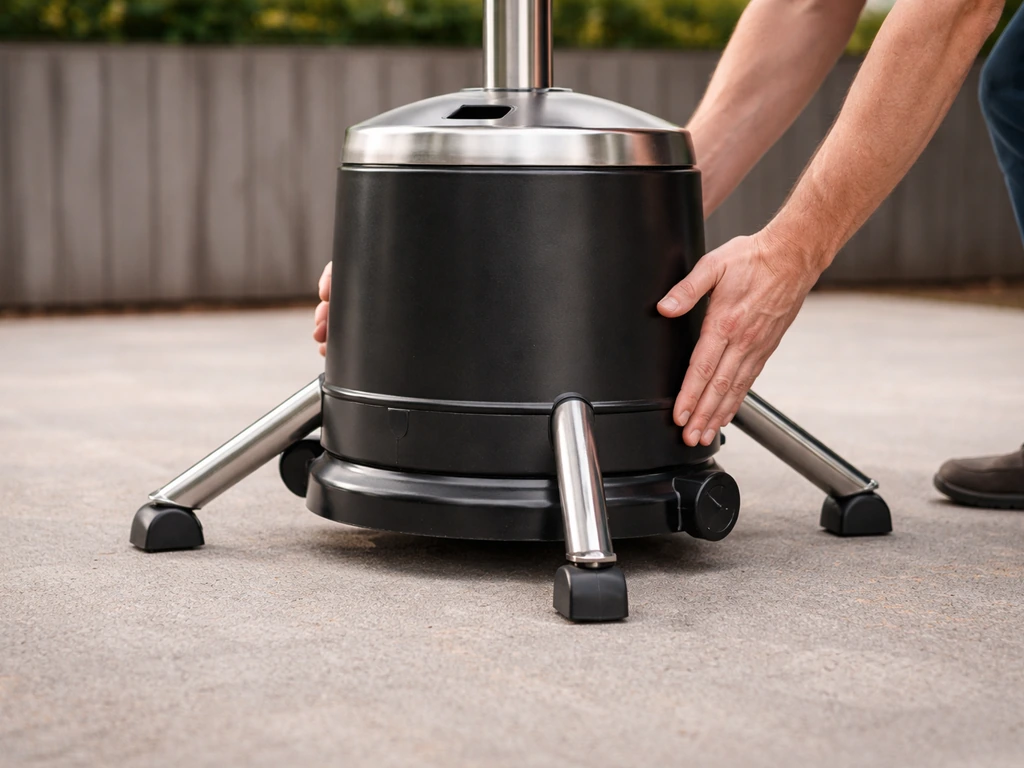
Portability in propane heaters is a real trade-off. Full-size mushroom heaters (the tall pole style) typically weigh 20 to 35 lbs without the tank. A 20-lb propane tank adds another 37 lbs when full, so you're moving 55 to 70 lbs total. Casters or wheels are not optional for frequent repositioning. A wide, weighted base matters for wind resistance. Tabletop propane heaters like the Cuisinart COH-500 are genuinely light and portable (under 10 lbs) but use small 1-lb cylinders, which is a different fuel-logistics situation. Pyramid-style heaters fall in between on both portability and stability. If you're moving the heater between events or storing it seasonally, check that the base and frame collapse or disassemble easily.
Build quality and weather resistance
Stainless steel emitter screens and powder-coated steel frames hold up better than painted aluminum in outdoor conditions. Glass tube models (like some Backyard Pro units) look great but are more fragile. Check that the gas hose and regulator are rated for outdoor use. Any cracking, splitting, or deterioration in the hose or regulator is a replacement trigger, not a 'watch and see' situation. UL-listed or CSA-certified models give you a baseline assurance that the design has been tested against safety standards.
Picking the right size for your patio and climate
The single biggest buying mistake is matching BTU to square footage on paper without accounting for how cold it actually gets or how exposed your space is. Here's a practical sizing framework.
| Patio Size / Use Case | Typical Ambient Temp | Recommended BTU Range | Heater Style |
|---|---|---|---|
| Small balcony or table (under 50 sq ft) | 50–65°F cool evenings | 10,000–15,000 BTU | Tabletop propane |
| Medium patio (100–200 sq ft) | 45–60°F, light wind | 30,000–40,000 BTU | Full-size mushroom/pyramid |
| Large deck or entertaining space (200–400 sq ft) | 35–55°F, moderate wind | 40,000–48,000 BTU | Full-size high-output, multiple units |
| Light commercial / restaurant patio | 30–50°F, variable wind | 46,000–48,000+ BTU | Commercial-grade full-size with casters |
Wind is the variable most people underestimate. A 40,000 BTU heater on a calm 55°F evening feels great. The same heater on a 45°F evening with a consistent 10 mph breeze will feel inadequate. If your patio is exposed, go one tier higher on BTU than the square footage math suggests, or look at adding a windscreen or privacy screen. Near-winter use (30s°F) on a medium patio typically requires a 46,000+ BTU unit just to feel comfortable at 6 to 8 feet from the heater.
For occasional spot heating (one or two people reading outside), even a mid-range 30,000 BTU unit works well. For frequent entertaining with 8 to 12 guests spread across a larger space, you'll likely need two full-size units or one very high-output model positioned centrally. Residential use can usually get by with one 40,000 BTU unit for a standard 12x16 ft patio. Light commercial setups (restaurant, bar, event venue) should budget for multiple units and prioritize casters and rugged frames.
Portability and propane setup: tanks, regulators, and refills
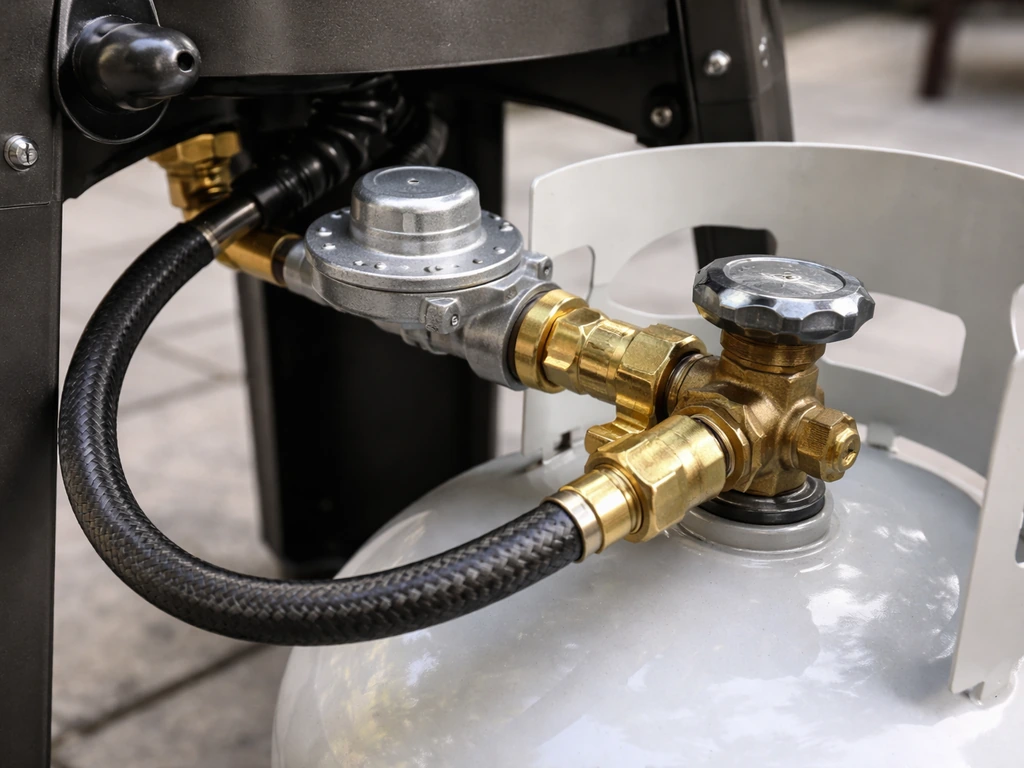
Most full-size portable propane patio heaters are designed to run on a standard 20-lb propane tank (roughly 4.7 gallons of fuel). That's the same tank you use for a gas grill, which makes refills and exchanges widely available at hardware stores, gas stations, and big-box retailers.
Runtime and fuel consumption
A rough runtime estimate works like this: a 20-lb tank holds about 430,000 BTU of usable energy. Divide that by your heater's BTU rating to get approximate hours at full output. A 40,000 BTU heater burns through a full tank in about 10 to 11 hours. A 46,000 BTU unit gets closer to 9 hours. Run it on a medium setting (typically 60 to 70% of max BTU) and you can stretch a tank to 14 to 18 hours of real use. Tabletop models using 1-lb disposable cylinders get much shorter runtime, typically 2 to 3 hours at max output per cylinder, so they're best for occasional use, not nightly entertaining.
Regulators, hoses, and compatibility
Most full-size patio heaters ship with a regulator and hose already attached, sized for a standard 20-lb cylinder. The regulator controls propane flow and steps down tank pressure to a usable level (typically not exceeding 11 inches water column for most portable units, per ANSI Z21.103 scope). When connecting a cylinder, rotate it clockwise toward the regulator until tight. Do not use a wrench on plastic regulator fittings. If the hose shows any cracking, splitting, or stiffness from cold-weather storage, replace the hose and regulator assembly before the next use. Regulators are inexpensive and available at any hardware store.
Storage when not in use
blank" rel="noopener noreferrer">The Canadian Propane Association's guidance is clear: when storing a patio heater for security or off-season, disconnect and remove the propane cylinder. Store cylinders upright, outdoors, in a secure well-ventilated area away from ignition sources. Never store a propane cylinder in a basement, garage, shed, or enclosed space. In the r/preppers discussion about propane storage, commenters also highlight guidance such as keeping propane tanks outdoors rather than storing them year round in enclosed spaces blank" rel="noopener noreferrer">Never store a propane cylinder in a basement, garage, shed, or enclosed space.. Cover the heater unit itself with a weather cover if leaving it outside, or bring it indoors (without the cylinder) for the winter.
Safety essentials you actually need to follow
Portable propane heaters are safe when used correctly outdoors. The risks come from using them in enclosed or semi-enclosed spaces, skipping leak checks, and ignoring clearance guidelines. These are not fine-print warnings you can skip.
Outdoor use only, CO is the real risk
Carbon monoxide (CO) is colorless and odorless. Any propane-burning device produces CO as a combustion byproduct, and in an enclosed space, it builds up fast enough to be fatal. The NC Department of Agriculture explicitly warns that devices intended for outdoor use can give off potentially deadly CO if used indoors or in enclosed areas. NCDA&CS also provides guidance specifically on propane heater safety, including outdoor-vs-indoor use and carbon monoxide risks propane-burning device produces CO. This includes garages, sheds, tents, screened porches with solid walls, and covered patios with little airflow. If guests ask you to move the heater inside because it's cold, the answer is no. Use it outdoors only, in open or well-ventilated areas.
Clearances to combustibles
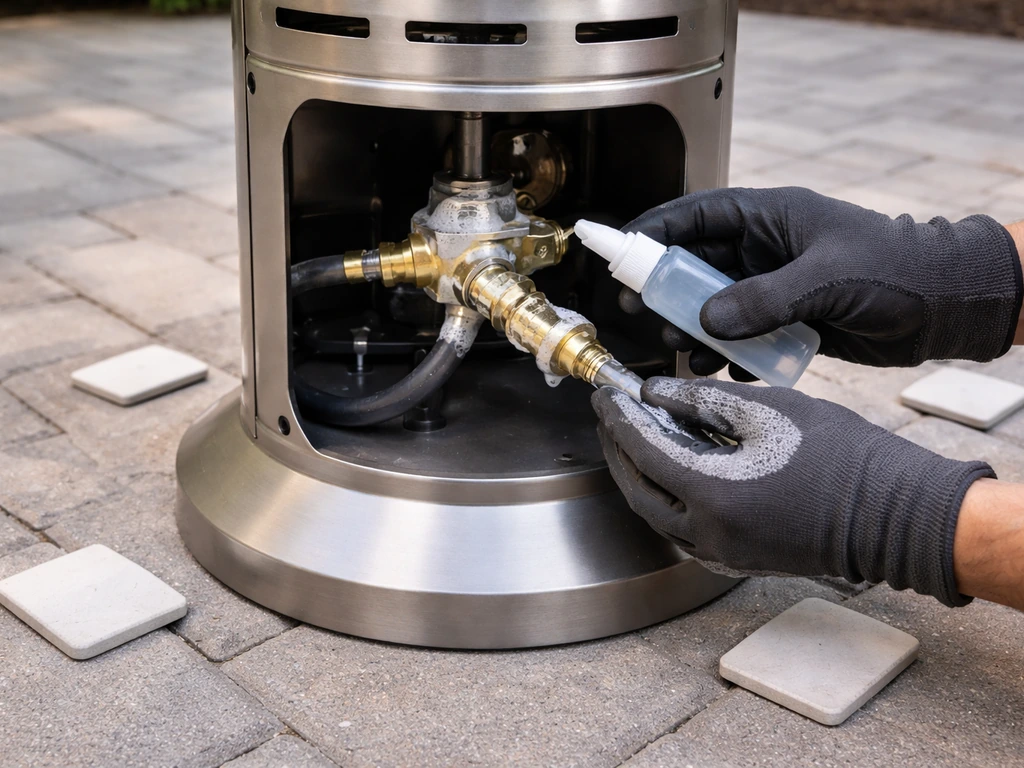
Fire Sense's manual specifies a minimum of 48 inches of clearance from combustible materials on the sides and top of a full-size patio heater. Some tabletop models specify 18 inches on top and 24 inches on the sides as minimum clearances. Keep the heater away from patio umbrellas, string lights, fabric cushions, awnings, and overhanging trees or eaves. Position it on a flat, stable surface so it cannot tip. If your patio has a low pergola or fabric shade sail overhead, measure before placing the heater underneath.
Leak checks before every tank swap
Every time you swap a propane cylinder, perform a leak check before lighting. Mix a 50/50 solution of dish soap and water, apply it to the regulator connection, hose, and all fittings, then open the tank valve slowly without lighting. Bubbles indicate a leak: close the valve immediately, disconnect, check the connection, and retest. Do not light the heater if you see bubbles. This takes 90 seconds and should be a non-negotiable habit. Also do this at the start of each season after winter storage.
First-use ignition procedure
On first use, or after changing a cylinder, air trapped in the gas line can prevent the heater from lighting. Amazon Basics' manual instructs pushing and holding the control knob for 2 minutes to purge air from the gas lines before attempting ignition. Open the tank valve fully, set the control knob to the pilot position, push and hold, then trigger the igniter. Hold the knob for 30 to 45 seconds after the flame appears to allow the thermocouple to heat up and keep the gas valve open. If the heater goes out after you release the knob, repeat the process. Avoid inhaling the fumes emitted during the first ignition on a new unit.
Tip-over shutoffs and wind safety
A tip-over safety shutoff is a baseline safety feature worth confirming before you buy. The Cuisinart COH-500 includes a tilt switch as a listed safety spec. On full-size units, a wide base and low center of gravity (with the tank inside the base, not on top) are your best protection against wind tips. In conditions above 15 mph sustained wind, it's better to move the heater to a sheltered spot or bring it in rather than fight the wind with extra ballast.
Propane vs electric, natural gas, infrared, and pellet heaters
Portable propane is not always the right answer. Understanding the trade-offs helps you avoid buying the wrong technology for your setup.
| Heater Type | Best For | Key Advantage | Key Limitation |
|---|---|---|---|
| Portable propane | Any outdoor space, no utility connection needed | True portability, high BTU output, no wiring | Tank refills, runtime limits, outdoor-only use |
| Electric (plug-in) | Covered patios near an outlet, low-maintenance use | No fuel logistics, instant on/off, indoor-safe options | Lower BTU output, needs nearby power, cord management |
| Natural gas (fixed) | Permanent installations, high-frequency use | Unlimited fuel supply, lower per-hour cost | Requires gas line, no portability, professional install |
| Infrared (electric or gas) | Targeted spot heating, wind-resistant warmth | Heats objects/people directly, less wind-sensitive | Higher upfront cost, directional (not ambient) |
| Pellet | Ambiance + heat, rural/off-grid use | Renewable fuel, fire aesthetics | Higher maintenance, slower heat response, less common |
Choose portable propane when you need flexibility: a rental property, a patio without a natural gas line, a space you use seasonally, or a setup where you move the heater between events or locations. If you want a quick bottom-line take on whether propane patio heaters are worth it for your space, use this guide to compare BTU, coverage limits in wind, and runtime on your tank size Portable propane. Electric heaters measured in watts (not BTU/h) are genuinely easier to maintain and safer near covered areas, but a typical 1,500-watt electric heater outputs only about 5,100 BTU, which is a fraction of what a 40,000 BTU propane unit delivers. Natural gas is the better long-term choice if you're installing a permanent heater on a fixed deck and already have a gas line, but that's a different product category entirely. Infrared heaters are worth considering if wind is a persistent problem, since they heat people and surfaces directly rather than warming ambient air. Pellet heaters make sense if atmosphere matters as much as heat output, but they're slower and need more attention.
If you're comparing portable propane to other propane patio heater formats (like fixed mushroom heaters or pyramid styles with permanent placement), the portability question comes down to how often you reposition the heater and how much you value easy storage. Wheeled full-size units split the difference well. If wheels are a priority, look for caster models and check their tip-over design before you buy.
How to read reviews and test claims without getting misled
Patio heater reviews vary enormously in quality. Here's how to filter useful signal from noise.
- BTU and coverage claims are manufacturer-reported, not independently tested in most retail reviews. Treat any coverage area above 200 sq ft for a single portable unit with skepticism. Real-world coverage shrinks fast with wind and open-air conditions.
- Look for reviews that mention distance-specific performance, like 'measured a 15-degree temperature increase at 10 feet.' That kind of concrete data point is more useful than 'heats my whole patio.'
- Ignition reliability is the most common long-term complaint. Reviews written after 6 to 12 months of use are more valuable than first-impression reviews for catching thermocouple or igniter degradation.
- Runtime claims in reviews should align with the BTU math: a 40,000 BTU heater on a 20-lb tank should give roughly 10 hours at full output. Claims of '20 hours per tank' on a high-BTU unit at full output are not accurate.
- Runtime per small cylinder (tabletop models) is typically 2 to 3 hours at max output. Tom's Guide's testing of a Fire Sense tabletop unit listed this as a key limitation. Budget for that in your buying decision.
- CSA-certified or UL-listed models have passed independent safety testing. This is worth confirming, especially for off-brand units sold through marketplaces.
- Regulator and hose quality are frequently underreported in reviews. If multiple reviewers mention the heater losing pressure or failing to stay lit, a faulty regulator (not the burner) is often the culprit.
- Check reviews for complaints about stability in wind. A heater that tips in a moderate breeze is a safety issue, not a minor inconvenience.
When comparing two models, put side-by-side specs in front of you: BTU, tank compatibility, certified/listed status, regulator included, tip-over shutoff, weight, and warranty length. A model with 46,000 BTU, a CSA listing, a piezo igniter, a tip-over shutoff, casters, and a two-year warranty is worth more than a 48,000 BTU unit with no certification and a 90-day warranty, even at a slightly higher price.
Your buying checklist and next steps
Use this checklist when comparing models online or in-store. It takes under five minutes and will prevent the most common buying mistakes.
- Measure your patio and note typical evening temperatures and wind exposure. Match BTU to that reality, not just square footage on paper.
- Confirm the heater uses a standard 20-lb propane tank if you want easy refill access. Tabletop models using 1-lb cylinders are convenient but expensive per hour of heat.
- Check for a tip-over safety shutoff and a thermocouple safety valve. Both should be listed in the spec sheet or manual.
- Verify CSA certification or UL listing. Avoid uncertified units, especially from unfamiliar brands.
- Confirm the regulator and hose are included, and check reviews for regulator quality complaints.
- Look at the base width and check whether casters are included if you'll be moving the heater regularly.
- Check the clearance requirements in the product manual against your actual patio setup (overhangs, umbrellas, awnings).
- Read reviews from 6+ months post-purchase, specifically filtering for ignition reliability and regulator performance.
- Budget for a cover if you'll leave the heater outdoors between uses, and plan where you will store the propane cylinder (outdoors, upright, ventilated).
- Before first use: perform a soapy-water leak check, purge the air from the gas line per the manual, and confirm you have 48 inches of clearance from combustibles on all sides.
The most common mistakes to avoid: buying a tabletop unit when you actually need a full-size heater, skipping the leak check after a tank swap, placing the heater under a low patio cover or umbrella, and assuming BTU-to-coverage claims hold up in real wind. If you're debating between propane and other fuel types, also check out guidance on best propane patio heaters with wheels for moving between spaces, and resources comparing propane to electric for covered patios, since those comparisons often surface details that shift the decision.
For most residential buyers in 2026: a 40,000 to 46,000 BTU full-size mushroom-style portable propane heater with casters, a piezo igniter, a tip-over shutoff, and a CSA or UL listing is the right call for a standard outdoor patio. Spend $150 to $300 for a solid residential unit. Spend $300 to $500 for a commercial-grade build you'll use nightly through a full season. The fuel logistics are manageable, the heat output is genuinely impressive on cool evenings, and portability makes it far more flexible than a fixed natural gas or electric installation. If you want a deeper breakdown of how this compares to propane alternatives, see what is the best propane patio heater for guidance on BTU, coverage in wind, and runtime.
FAQ
Can I use a portable propane patio heater inside if I crack a window?
Yes, but only if the manufacturer explicitly allows indoor or enclosed-area use, and even then you need strong ventilation. In most cases, portable propane patio heaters are not designed for garages, screened porches with solid walls, tents, or covered patios with limited airflow because carbon monoxide can accumulate quickly.
How do I choose the BTU output if my patio is very windy?
Start with the BTU range and then add a buffer for exposure. A practical rule is to choose one tier higher BTU for windy, exposed patios, or plan to add a windscreen to reduce airflow across the heater’s heat plume.
What should I look for if “portable” means moving it frequently across uneven patio surfaces?
Wheels help, but look specifically for casters on a stable, wide-based frame. If you will reposition often, prioritize smooth-rolling casters that lock or at least track well on your patio surface, and make sure the tank sits low within the base for stability.
Why does the heater shut off after I release the knob?
If your heater is extinguishing when you release the control knob, it usually points to a thermocouple not heating long enough, a dirty flame path, or air in the line after a tank change. Try the purge-and-hold procedure (hold longer once the flame appears), then retest after confirming the flame is steady.
How can I estimate how many hours I will get from a tank if I use medium instead of high?
A full-size 20-lb unit runs far longer on a refill you can swap at local stations, but the actual burn time depends on using low or medium settings. For planning, estimate full-tank runtime at max BTU, then add that you can typically stretch a tank substantially by using 60 to 70 percent output during steady use.
Can I leave the heater outside under a tarp during the season?
Yes, but with caution. You should not cover the tank or regulator connection with a tight cover that traps moisture or heat, and never operate the heater while it is under a cover that could block clearance. Use a weather cover only when the heater is off, fully cooled, and the cylinder is disconnected and stored properly.
How do I know whether to replace the hose and regulator before the next outdoor season?
The hose and regulator are designed for outdoor-rated connections, but any cracking, stiffening, or splitting means replace before the next use. If you stored the heater through cold weather, inspect for damage even if it worked last season.
What should I do if the heater won’t light after changing the propane tank?
If it fails to ignite after a cylinder swap, first check that the tank valve is fully open and that the regulator connection is seated properly. Then follow the purge step (holding the knob for an extended period) to clear trapped air, and confirm there is no leak before trying again.
Why does it keep relighting and then going out a few minutes later?
If the heater goes out repeatedly, do not keep cycling the ignition. Let it cool, then perform a fresh leak check at the regulator and all fittings, inspect the flame behavior, and confirm you are holding the control knob long enough for the safety valve to stay open.
Are manufacturer square-foot coverage claims realistic?
Many “coverage” numbers assume calm, ideal conditions. For real planning, treat claimed square footage as a ceiling, then factor in wind, lower temperatures, and distance from the burner. Choose BTU based on how far people are from the heater, not just your patio size.
What positioning reduces the risk of tipping the most?
For balance and tipping resistance, the safest setups put the tank low and keep the heater’s center of gravity down. In practice, the biggest improvement over a narrow base is a wide, weighted base with a stable footprint, plus positioning on level ground.
Can I run a full-size portable propane heater on a smaller propane cylinder?
Typically you should not use an undersized or incompatible cylinder with a heater designed for a 20-lb standard tank, because the regulator and hose system are tuned for that configuration. Always use the exact fuel setup the manufacturer specifies for that model.
When is a tabletop propane heater actually enough, versus needing a full-size unit?
If you are choosing between a taller mushroom heater and a tabletop model, pick based on how many people and how much area you need to warm. Tabletop units are better for very small, close-range spots, while full-size units give meaningful comfort across a circle and handle guests that are farther away.
Is a tip-over shutoff enough protection in strong wind?
Most quality heaters include a tip-over shutoff, but you should still confirm it is listed or certified for safety and that the base design supports it in your conditions. If you frequently deal with wind above about 15 mph sustained, it may be smarter to move the heater to a sheltered location rather than rely on shutoff alone.
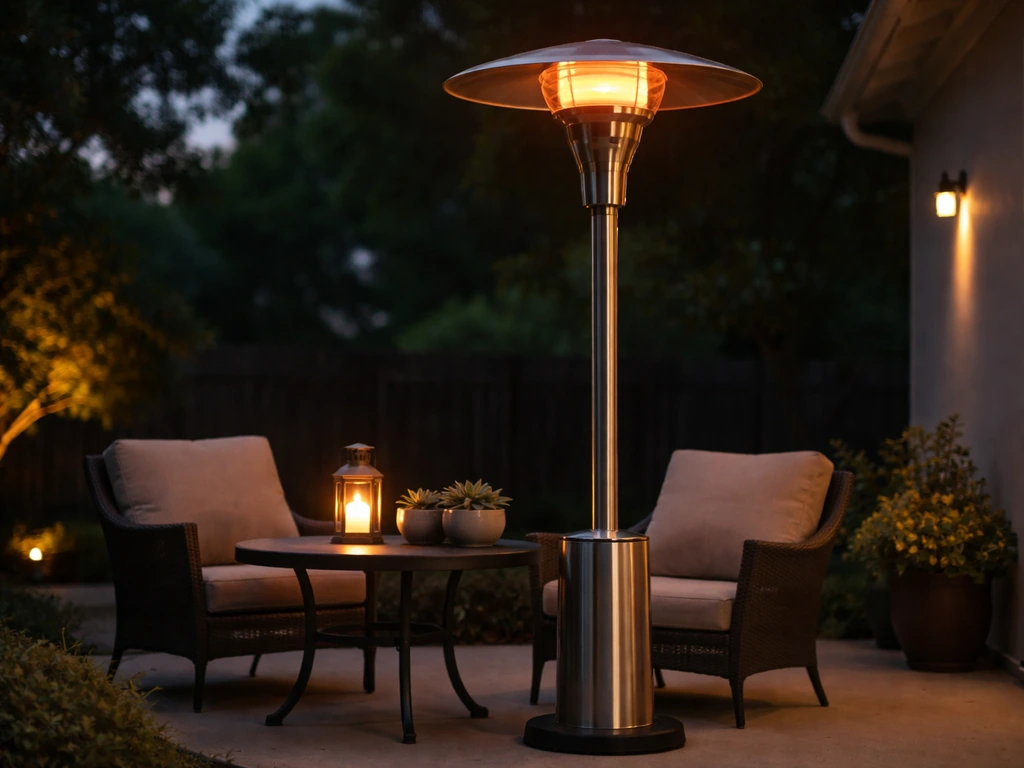
Reddit-style patio heater picks by patio size, climate, and fuel type with BTU, cost, safety, setup, and common warnings
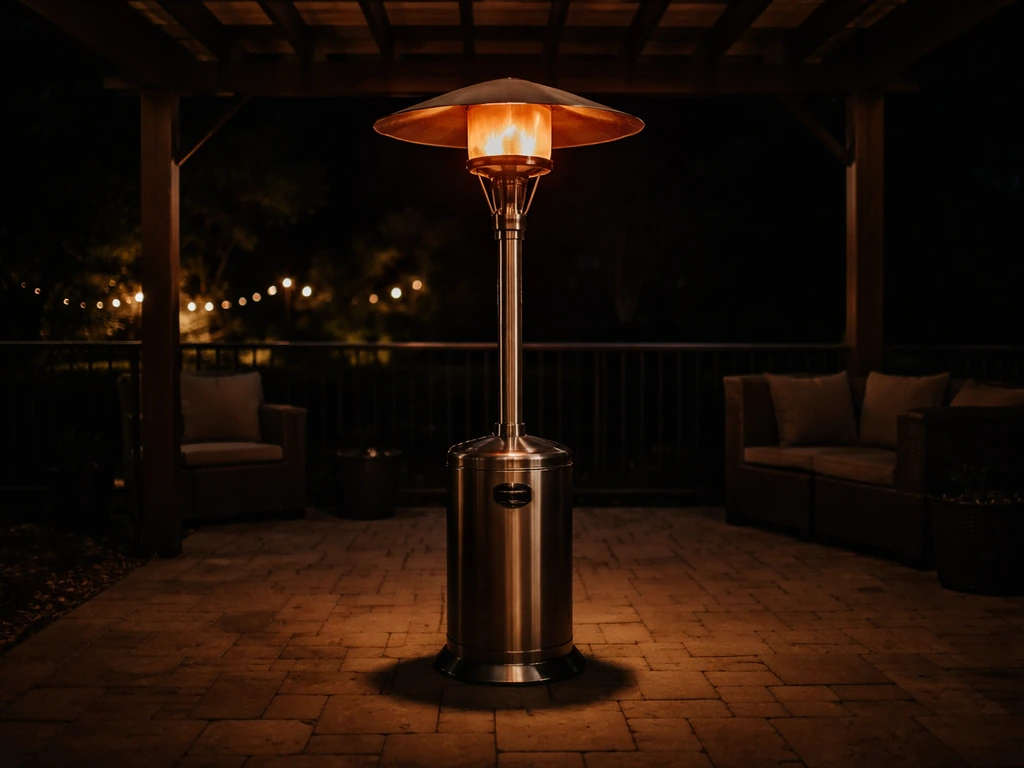
Compare the best propane patio heaters for covered patios: BTU, wind safety, tank compatibility, coverage, and top picks
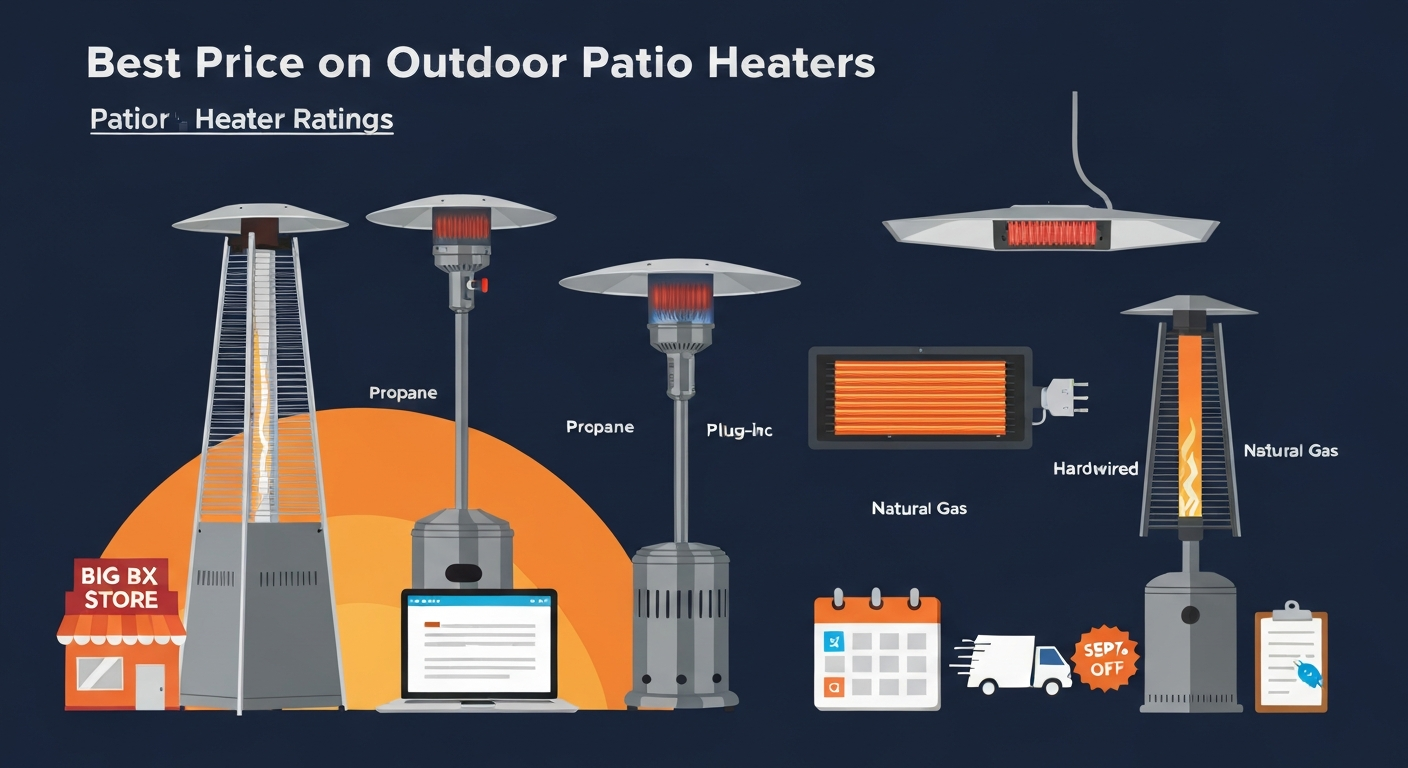
Score the best price on outdoor patio heaters, price ranges, top picks, deal tactics, total-cost & safety checklist.