
For most open patios, a freestanding 46,000 BTU propane heater is the right pick. It covers roughly a 9-foot radius, runs about 9 to 10 hours on a standard 20 lb tank, and costs under $150 from brands like Amazon Basics or Fire Sense. For a covered patio, you need to rethink the style entirely: a tall mushroom-top heater sitting under a low ceiling is a fire hazard, and you are better off with a mounted infrared unit or a low-clearance tabletop model. The choice really comes down to your ceiling height, patio size, wind exposure, and whether you want portability or a permanent setup. If you are wondering are propane patio heaters worth it, your best bet is to match the BTU and placement to your patio size, ceiling height, and wind exposure.
Best Propane Heaters for Patio: Buyer Guide and Picks

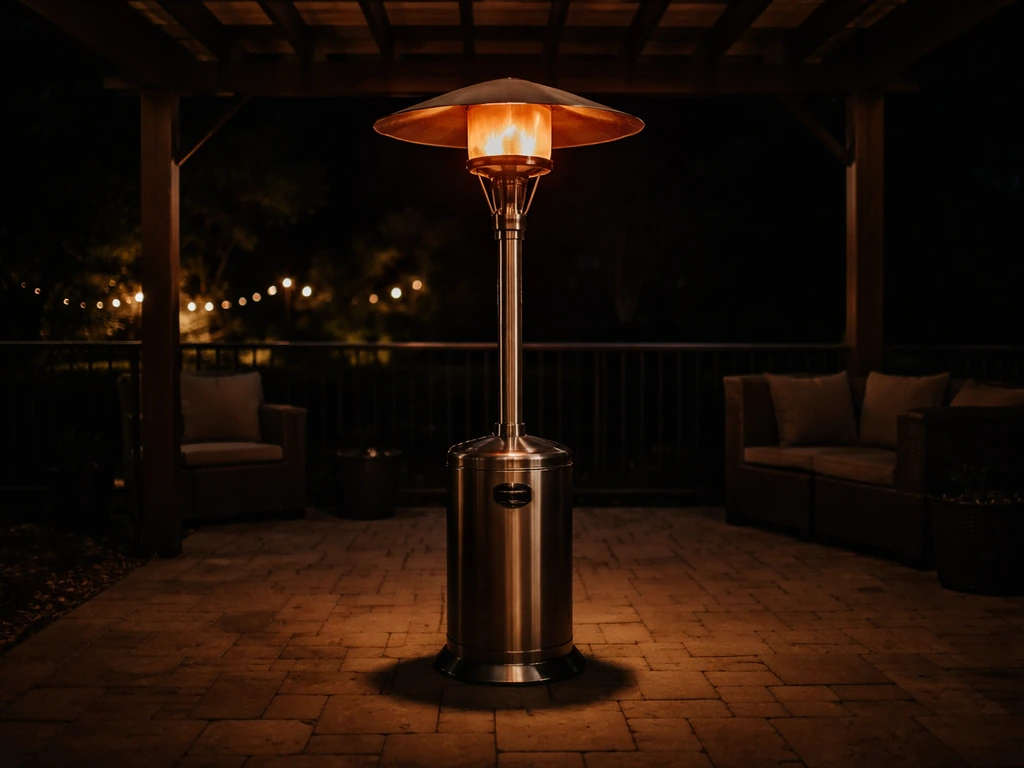
How to choose the best propane patio heater for your space
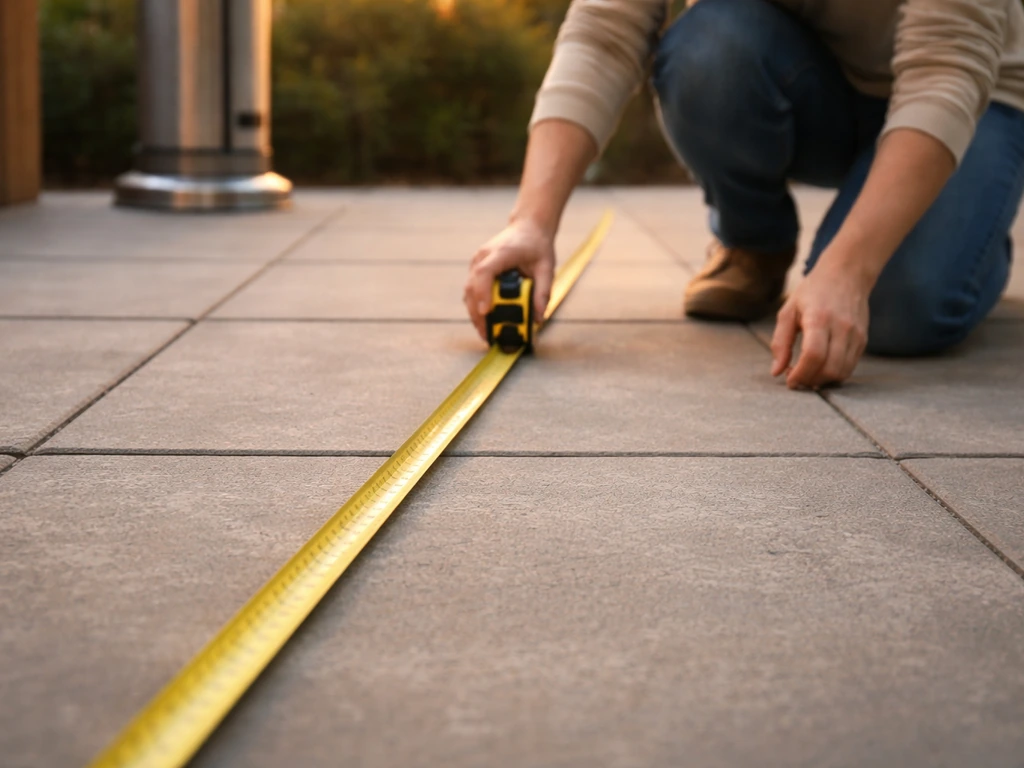
Start with your patio size. A rough starting point is 20 BTU per square foot of outdoor space. A 200 sq ft patio needs around 4,000 BTU at minimum, but that number goes up fast if it is windy, if temperatures drop below 40°F, or if the space is fully open. A freestanding 46,000 BTU unit is more than enough for most residential patios, but do not buy more heater than your space can use safely. If you are comparing options, the best rated propane patio heater for your patio size and wind exposure is usually the one that meets clearance and coverage needs without overbuying BTUs.
After BTU, think about ceiling height and structure. If you have a pergola, covered patio, or screened enclosure, the heater type changes completely. Tall freestanding heaters require at least 1,000 mm (about 39 inches) of clearance above the heat emitter to non-combustible surfaces, and at least 500 mm (about 20 inches) on the sides. Most residential covered patios cannot meet those numbers with a standard 7- to 8-foot ceiling. That is not a deal-breaker, it just means you choose a different heater style.
Portability is the other big decision point. Freestanding heaters with wheels are easy to move around and store, but they need a flat, level surface to stay stable (tipping triggers the safety shutoff). If portability is your top priority, the best portable propane patio heater option usually means choosing a freestanding unit designed to move and store easily. Wall-mounted or ceiling-mounted propane heaters are permanent but free up floor space and work better under low ceilings. Tabletop models are the most portable but are only practical for small gatherings.
Best type of propane patio heater for open vs covered patios
Open patios are where freestanding tall heaters shine. A standard 46,000 BTU mushroom-top heater can warm a 20-foot diameter circle in calm conditions. In wind, that coverage shrinks to roughly a 10-foot circle, so placement matters a lot. Put the heater on the side the wind comes from, not in the center of the patio. If your open patio is large and frequently windy, consider two smaller-output heaters placed strategically rather than one unit fighting the breeze.
Covered patios, pergolas, and screened porches are a different story. The ceiling and walls block wind (great for efficiency) but create a clearance and ventilation problem. For these spaces, the best options are infrared overhead heaters (mounted to the ceiling or wall at the manufacturer-specified height, typically no lower than 7 feet from the floor), or compact tabletop propane heaters for smaller gatherings. Some manufacturers like SunStar offer optional heat shields that reduce the required overhead clearance to combustibles, which can make ceiling-mount installs possible in spaces with lower clearances. Freestanding mushroom-top heaters are generally not recommended for covered patios unless the ceiling is very high and well-ventilated.
| Heater Type | Best For | BTU Range | Covered Patio Safe? | Portability |
|---|---|---|---|---|
| Freestanding tall (mushroom top) | Open patios, decks | 40,000–46,000 BTU | Only with very high ceilings (39"+ clearance above emitter) | High (wheels) |
| Tabletop propane | Small open or partially covered areas | 10,000 BTU | Yes, if ventilated | Very high (no setup needed) |
| Ceiling/wall-mount infrared | Covered patios, pergolas | 25,000–50,000 BTU | Yes (designed for it) | Low (permanent) |
| Low-profile freestanding | Smaller open patios | 30,000–40,000 BTU | Check clearance specs | Medium |
Key specs that decide performance (BTUs, coverage, wind, controls)
BTU output and coverage area
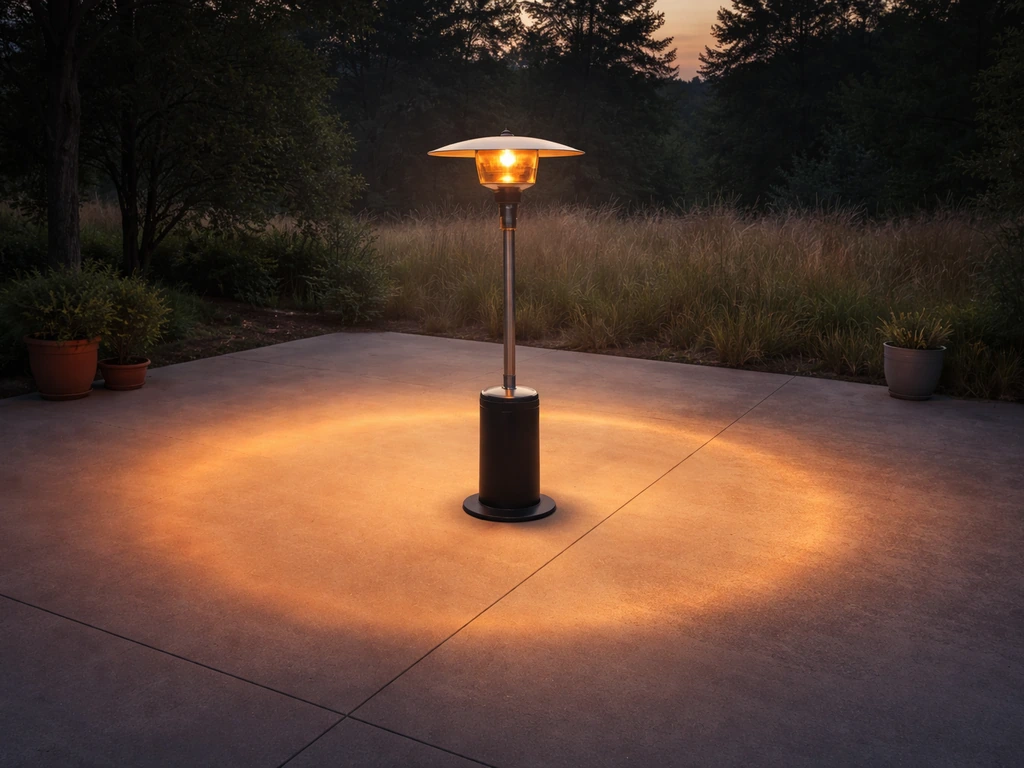
Use 20 BTU per square foot as your baseline, then add a buffer for wind and cold weather. A 46,000 BTU freestanding heater covers roughly a 9-foot radius in calm conditions. Drop that to about 5 feet in a steady breeze. For a 200 sq ft patio, 40,000 to 46,000 BTU is more than enough. For a smaller seating area of 100 sq ft or less, a 10,000 BTU tabletop unit like the Fire Sense tabletop heater will do the job without wasting fuel.
Wind resistance
Wind is the biggest enemy of patio heaters. Even a moderate breeze strips heat away from the coverage area fast. Freestanding heaters with a reflector dish (the saucer-shaped top) direct heat downward, which helps somewhat, but they are still vulnerable to crosswinds. If you deal with regular wind, either choose a protected placement or go with an infrared overhead heater that focuses radiant heat directly on people rather than trying to warm the air.
Ignition and controls
Most consumer freestanding heaters use Piezo ignition (a push-button spark), which is simple and reliable. Higher-end and commercial units offer electronic ignition, which is more consistent in cold weather and easier to use with gloves on. Look for a variable heat control knob so you can dial back the output on milder evenings and save propane. Some heaters have a thermocouple that cuts the gas if the flame goes out, which is an important safety feature worth having on any model you consider.
Safety features to look for
- Tip-over / anti-tilt shutoff: cuts gas automatically if the heater tips or is not level
- Thermocouple / flame failure device: shuts off gas if the flame is extinguished by wind or other causes
- Oxygen depletion sensor (ODS): shuts off the heater if oxygen drops below 18% (critical for any enclosed or semi-enclosed use)
- CSA or ETL certification: confirms the unit meets North American safety standards
Safety, placement, and ventilation for covered patios
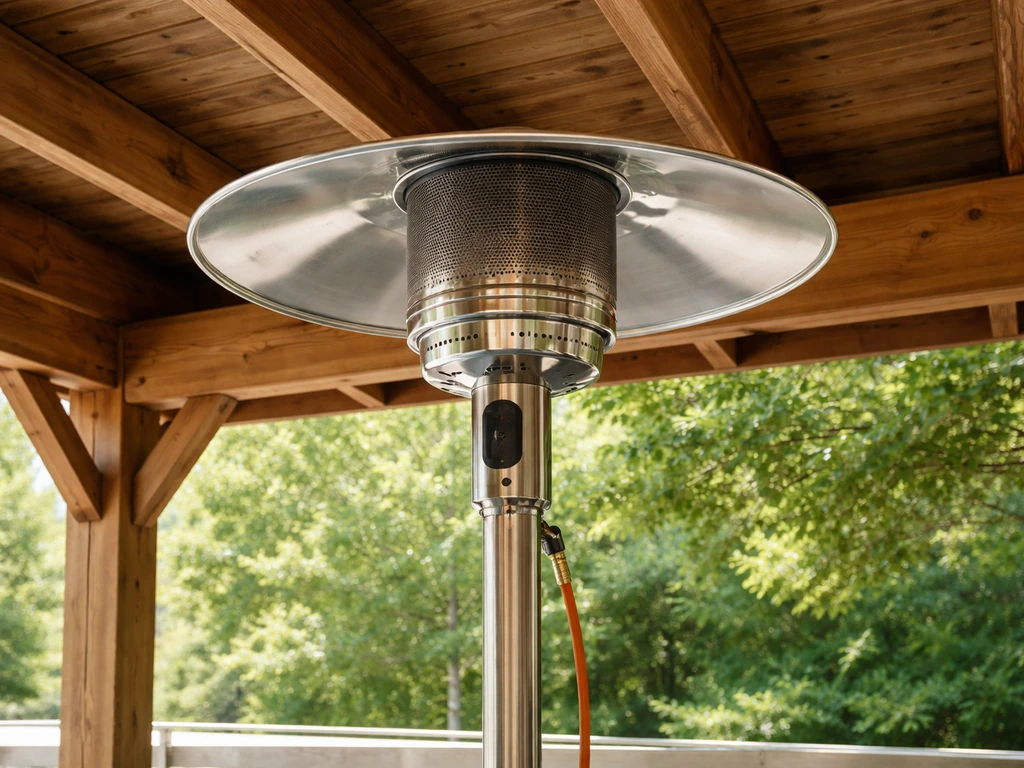
Propane combustion consumes oxygen and produces carbon monoxide, so ventilation is non-negotiable on any covered patio. Open-sided pergolas with good airflow are generally fine for smaller propane heaters. Fully enclosed or screened patios need to have at least two sides open or a significant airflow path. Never use a propane patio heater inside a completely sealed enclosure, garage, or tent.
For ceiling clearance, the Amazon Basics 46,000 BTU heater manual requires a minimum of 1,000 mm (39 inches) above the heat emitter and 500 mm (20 inches) to the sides from any combustible material. If your covered patio ceiling is 8 feet high and a tall freestanding heater stands 7 feet tall, the heat emitter at the top is close to the ceiling, which likely does not meet clearance requirements. Measure first.
If you are installing a ceiling-mounted or wall-mounted heater, no unit should be installed below 7 feet from the floor, per standard industry guidance from manufacturers like Sunpak. Follow the clearance-to-combustibles table in your specific heater's installation manual, as values differ by model. Some units offer an optional heat shield that reduces overhead clearance requirements, which can be a practical solution for lower ceilings.
Wind blowing out the pilot is a common issue even on partially covered patios. If this keeps happening, move the heater to a more sheltered spot rather than just relighting repeatedly. Persistent pilot outages can allow unburned gas to accumulate, which is a hazard.
Propane tank, hookups, and running costs (what to expect)
Most freestanding patio heaters, including the Amazon Basics 46,000 BTU model, are designed specifically for a standard 20 lb propane tank, which stores about 430,000 BTU of energy. At 46,000 BTU/hr, that tank lasts roughly 9 to 10 hours of continuous use. At 40,000 BTU/hr the runtime stretches to about 10.75 hours. Running at lower heat settings extends runtime further, which is why a variable control knob pays off in fuel savings.
To estimate fuel cost, divide the BTU rating by 91,452 to get gallons per hour of propane consumed. A 46,000 BTU heater burns about 0.5 gallons per hour. At current propane prices of roughly $3 to $4 per gallon, that is $1.50 to $2.00 per hour to run. A full evening of 4 hours costs about $6 to $8 in fuel, which most people find very reasonable.
Tabletop heaters like the Fire Sense 10,000 BTU model use small 1 lb disposable propane cylinders (not included). Those cylinders hold about 21,000 BTU, so one cylinder lasts roughly 2 hours at full output. This gets expensive quickly if you use the heater regularly. They are convenient for occasional use but not cost-effective as a primary heater.
Most freestanding heaters come with the regulator and hose included. Use the supplied parts and do not mix in aftermarket hoses unless they are rated for the same pressure. Before every season and after any long storage period, do a leak test: apply soapy water to every gas connection and check for bubbles with the valve open. This is standard guidance in most heater manuals and takes about two minutes.
Comparison checklist and my top picks by patio scenario
Here are the most common patio scenarios and the heater type that fits each one best. These are not exhaustive model lists, but they are the practical picks that match what most people are actually dealing with.
| Scenario | Best Heater Type | Recommended Output | Tank Size | Key Feature to Verify |
|---|---|---|---|---|
| Open patio, calm conditions, 150-250 sq ft | Freestanding tall (mushroom top) | 40,000-46,000 BTU | 20 lb standard | Reflector alignment, tip-over shutoff |
| Open patio, frequent wind | Freestanding + protected placement, or infrared | 40,000-46,000 BTU | 20 lb standard | Thermocouple, wind-sheltered spot |
| Covered patio, high ceiling (10+ ft) | Freestanding tall with clearance verified | 40,000-46,000 BTU | 20 lb standard | 39" clearance above emitter confirmed |
| Covered patio, low ceiling (7-9 ft) | Ceiling/wall-mount infrared propane | 25,000-45,000 BTU | 20 lb or direct line | ODS sensor, 7 ft minimum floor height |
| Small table or balcony gathering | Tabletop propane | 10,000 BTU | 1 lb disposable | Piezo ignition, open ventilation nearby |
| Large open entertaining area (300+ sq ft) | Two freestanding units or commercial rated unit | 46,000 BTU each | 20 lb standard | Spacing for overlapping coverage zones |
Pre-buy checklist: verify these before you order
- Measure your patio square footage and multiply by 20 to get your minimum BTU requirement
- Measure ceiling height and subtract the heater's standing height to confirm you have at least 39 inches of clearance above the heat emitter (for tall freestanding units)
- Check whether the space is open, semi-covered, or enclosed, and choose a heater style rated for that environment
- Confirm the heater has a tip-over shutoff and thermocouple at minimum; look for an ODS sensor if using in any semi-enclosed space
- Verify the tank size the heater is designed for (most residential units use a standard 20 lb tank)
- Check that the regulator and hose are included, or budget for compatible parts
- Plan your propane storage: 20 lb tanks need to stay upright and outdoors, away from heat sources
- Perform a soapy-water leak test at every gas connection before first use each season
For most people with a standard open patio, the Amazon Basics 46,000 BTU or the Fire Sense 46,000 BTU freestanding heater with electronic ignition hits the sweet spot on price, output, and ease of use. If you have a covered patio with a low ceiling, skip the tall freestanding heaters entirely and look at ceiling-mount infrared options from brands like SunStar or Sunpak, where the installation manual will give you exact clearance tables and ODS requirements for your specific model. If you want the best rated propane patio heater for a low-ceiling covered patio, ceiling-mount infrared models are often the safest choice. If you are still wondering what the best propane patio heater is, focus first on BTU output and whether it fits the clearance and ventilation limits of your setup. The right heater for your space is the one that fits safely, covers your seating area adequately, and matches the propane setup you can actually maintain. Many shoppers also compare options and safety tips on best patio heater reddit threads before choosing a model. If you are hunting for the best propane patio heater reddit discussions, look for comments that mention BTU coverage, wind performance, and safe clearance for covered patios.
FAQ
Can I use a propane patio heater under a covered pergola or screened porch?
Yes, but only if the patio is truly open to airflow. If the space has at least two open sides (or a clear, unobstructed airflow path) and you follow the manufacturer’s clearance and keep combustibles away from the heater, it can be acceptable. Avoid anything that feels like a mostly enclosed room, and never rely on a screen enclosure as a substitute for ventilation.
How do I choose BTU when my patio is partially covered (like with side curtains or a wall nearby)?
Do not go by the heater’s maximum BTU alone. First confirm clearance-to-combustibles for the exact model you buy, then treat the usable heat footprint as smaller in real wind and partial blockage. A heater that “fits” clearance on paper can still underperform if the seating area is not in the radiant path.
Is the heater’s coverage radius accurate, or does placement change it a lot?
Many heater burners use a heat shield and/or reflector, but the coverage is still primarily line-of-sight for radiant heat, especially with infrared units. For freestanding mushroom-top heaters, aim to keep the center of the seating area within the stated radius, and in wind avoid placing the heater directly downwind from where people sit.
What should I do if the pilot keeps blowing out on my propane patio heater?
If the pilot keeps going out due to wind, stopping the behavior by relighting repeatedly is not the fix. Move the unit to a more sheltered location, tighten up the patio layout so wind does not blow across the pilot area, and confirm the regulator/hose connections are secure. If it still persists, consider switching to an infrared setup that is less dependent on a stable pilot flame.
Piezo vs electronic ignition, which is better for cold evenings?
Not necessarily. In general, electronic ignition is more consistent in cold weather and easier with gloves, while Piezo is simpler and usually fine in milder conditions. If you often heat early or late in the season, prioritize electronic ignition and also look for a stable thermocouple safety shutoff.
Will using the low or medium setting really save propane, or does it not matter?
Yes, using the variable heat knob is one of the simplest ways to extend propane runtime. Running at a lower setting lowers BTU output, which typically reduces fuel consumption proportionally, so you can often cover the same seating area on milder nights without wasting propane.
I get steady wind on my patio, should I buy a bigger heater or add another one?
You should treat the wind as a sizing factor. If your area is consistently breezy, plan on a much smaller effective heat footprint than calm-condition claims, or use two smaller heaters positioned to reduce crosswind effects. Central placement on an open windy patio often performs worse than side placement.
Are tabletop heaters worth it versus a 20 lb tank setup for regular patio use?
A 1 lb disposable cylinder tabletop heater is often convenient for occasional use, but it is usually not cost-effective for frequent nights. If you plan regular use, a standard 20 lb tank freestanding heater will generally be cheaper per hour and more practical to run for multiple evenings.
Can I use an aftermarket propane hose or regulator to connect my patio heater?
You should not. Even if a hose “fits,” mixing regulators or aftermarket hoses can create pressure and safety issues. Use the regulator and hose included with the heater, or only replace parts with components that are explicitly rated for the same pressure and matching model requirements.
How can I tell if ventilation is sufficient on my patio?
For partially covered patios, ventilation issues are usually the main risk, not the actual heat level. Do not operate the heater in a nearly sealed area, and do a quick check that smoke or exhaust is not lingering. If you ever notice unusual odors, immediately shut off and address the issue before restarting.
What installation height rules should I follow for wall- or ceiling-mounted propane heaters?
If you need to mount it, use the installation manual as the source of truth for height and clearance, because different models can require different distances and may specify an ODS (oxygen depletion sensor) behavior. As a general rule, do not install lower than the commonly referenced 7 ft from the floor, and confirm side clearance to combustibles for your exact unit.
How often should I perform a soapy-water leak test, and what should I check?
A leak test is not just for the first season. Do it before use each season and after any long storage, and also after you change cylinders or fittings. Use soapy water on every connection point and watch for bubbles with the valve open.
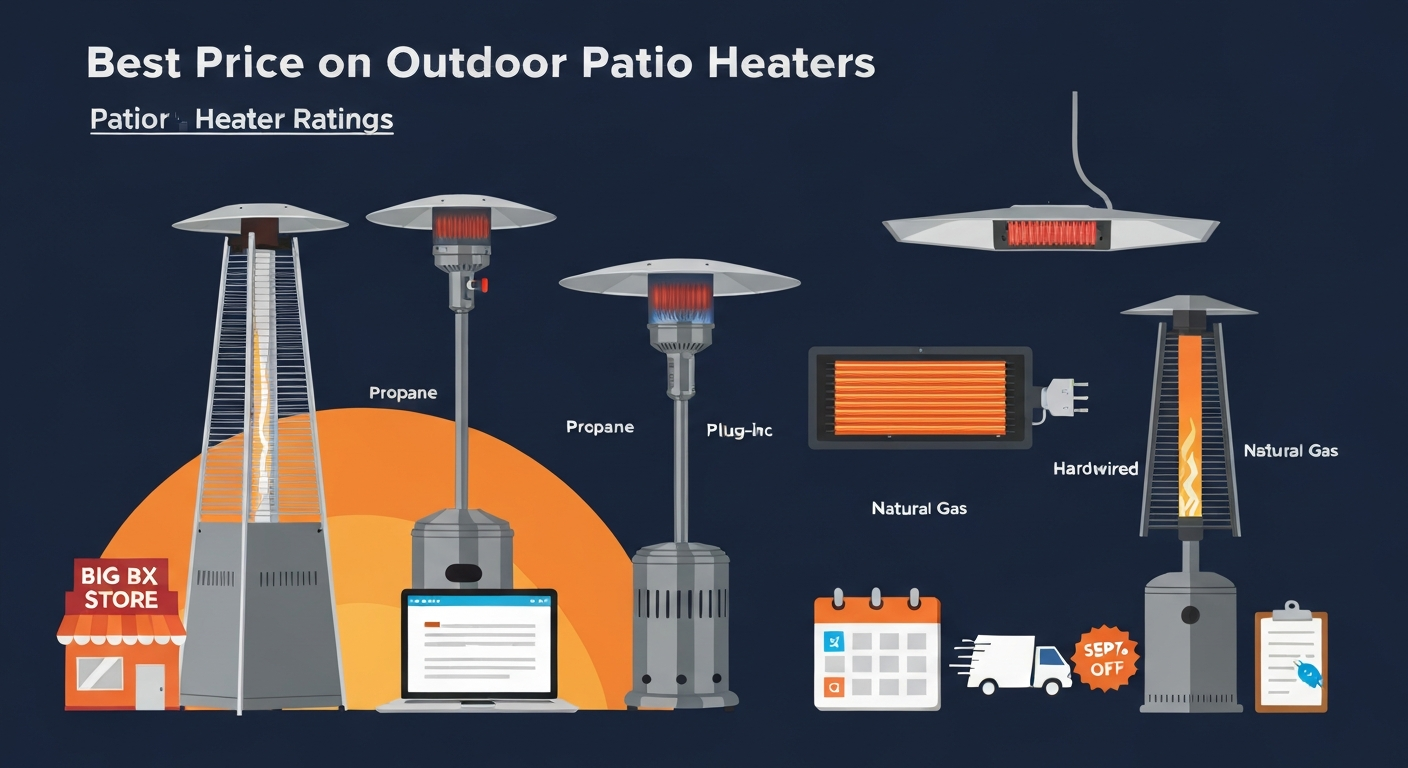
Score the best price on outdoor patio heaters, price ranges, top picks, deal tactics, total-cost & safety checklist.
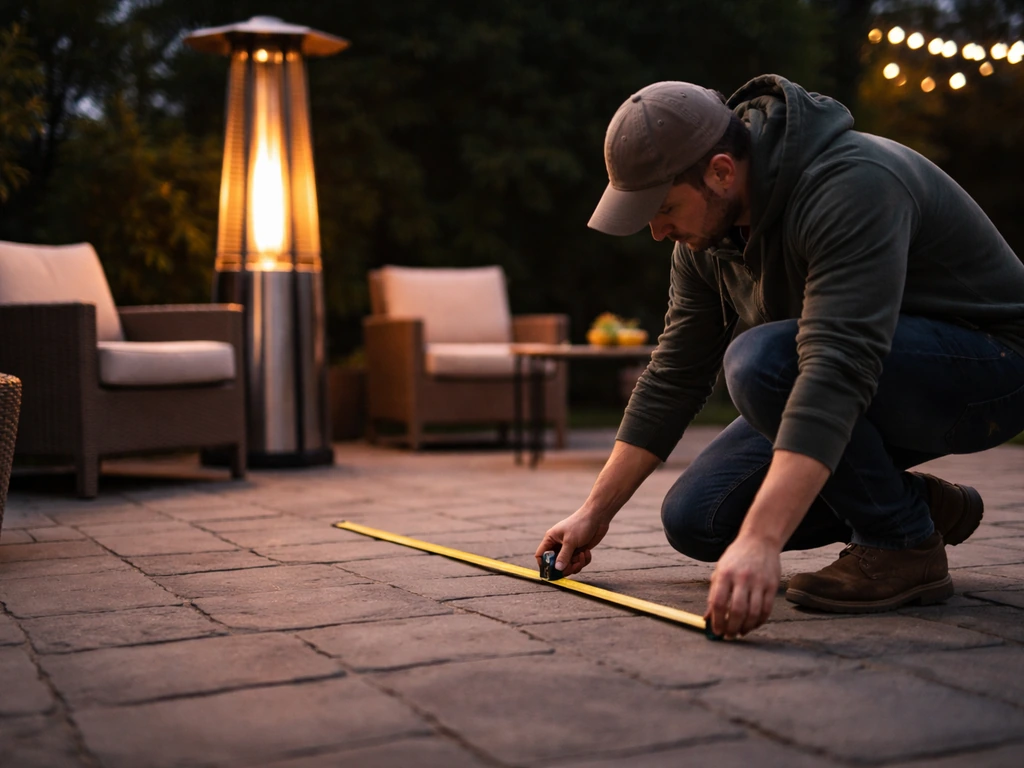
Find where to rent patio heaters near you today, choose the right fuel type, compare costs, and book safely.
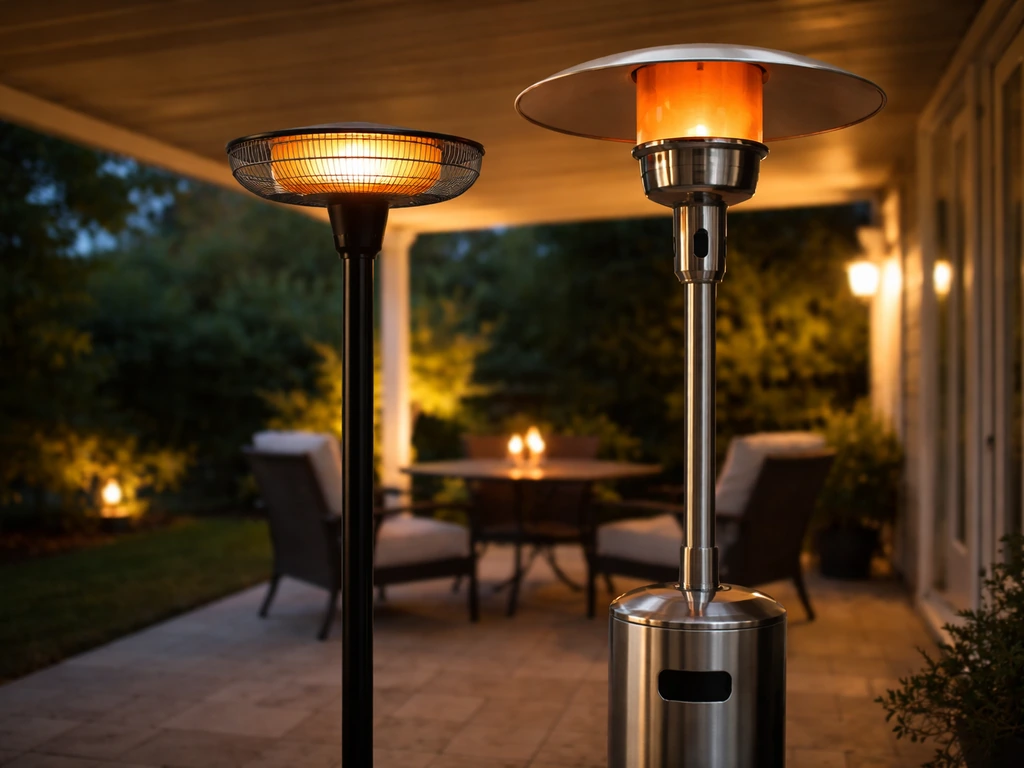
Where to buy a patio heater now, plus electric vs gas vs propane tips, safety checks, and size/BTU buying checklist.