
For most patios, a 40,000 BTU propane mushroom-style heater or a wall-mounted electric infrared panel is the best starting point. Propane gives you portability and serious heat output with no wiring required, while electric infrared is cleaner, quieter, and works best when you have a covered or semi-covered space with an outlet nearby. If you have a natural gas line, piping to a fixed gas patio heater drops your per-hour fuel cost from around $1.70 (propane) to about $0.48. The right answer depends on your patio size, whether it's covered, how windy it gets, and whether you're heating it daily or just for weekend gatherings. This guide walks you through all of it.
Best Heater for Outside Patio: Choose Propane, Electric, Gas

Caleb Vale
6 May 2026
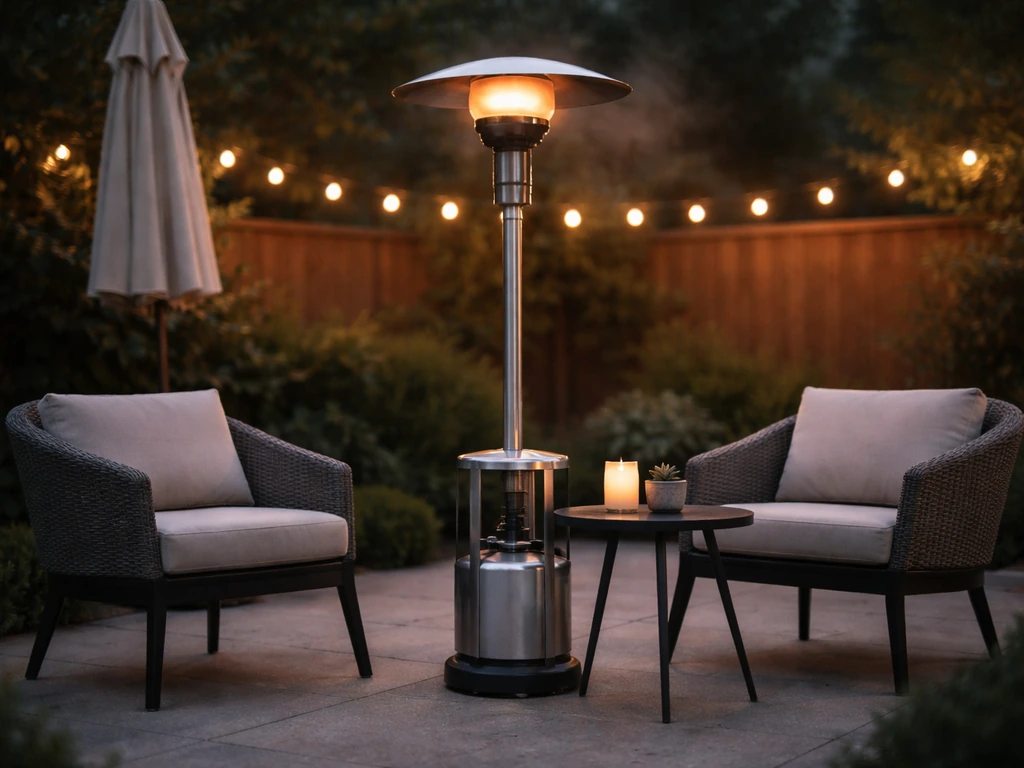
How to choose the best outdoor patio heater for your space
Before you buy anything, answer four questions: How big is your patio? Is it covered or open-sky? How exposed is it to wind? And how often will you actually use it? Those four things determine your heater type, output, and number of units more than any other factor.
For sizing, use the 20 BTU per square foot rule as your baseline. A 200 sq. ft. patio needs roughly 4,000 BTUs of output, a 400 sq. ft. space needs around 8,000 BTUs, and a 1,500 sq. ft. covered patio area might need 30,000 BTUs total. In terms of unit count, plan on one heater per roughly 100 to 200 sq. ft. depending on how cold your climate gets and how open the space is. A single full-size propane heater with a 40,000 BTU output covers about a 20-foot radius (around 314 sq. ft.), which works well for a mid-size patio.
Ceiling height matters more than most buyers expect. For covered patios with low 8-foot ceilings, overhead infrared panels (mounted at 6 to 8 feet) are ideal. Open pergola or high-ceiling spaces give you more flexibility, and freestanding propane towers work well there. If you have a small balcony or tight urban patio, a compact wall-mounted electric panel or tabletop propane unit keeps things simple without cluttering the space.
Wind exposure is the other big variable. Open patios with consistent breeze eat into the effectiveness of any heater that warms the air around you, meaning convective or forced-air heaters underperform badly outdoors. Infrared panels, which heat people and objects directly through radiation rather than warming the surrounding air, hold up much better in wind. If your patio is regularly breezy, infrared is the more practical choice regardless of heat source.
Heater types compared: propane, electric, natural gas, infrared, and pellet
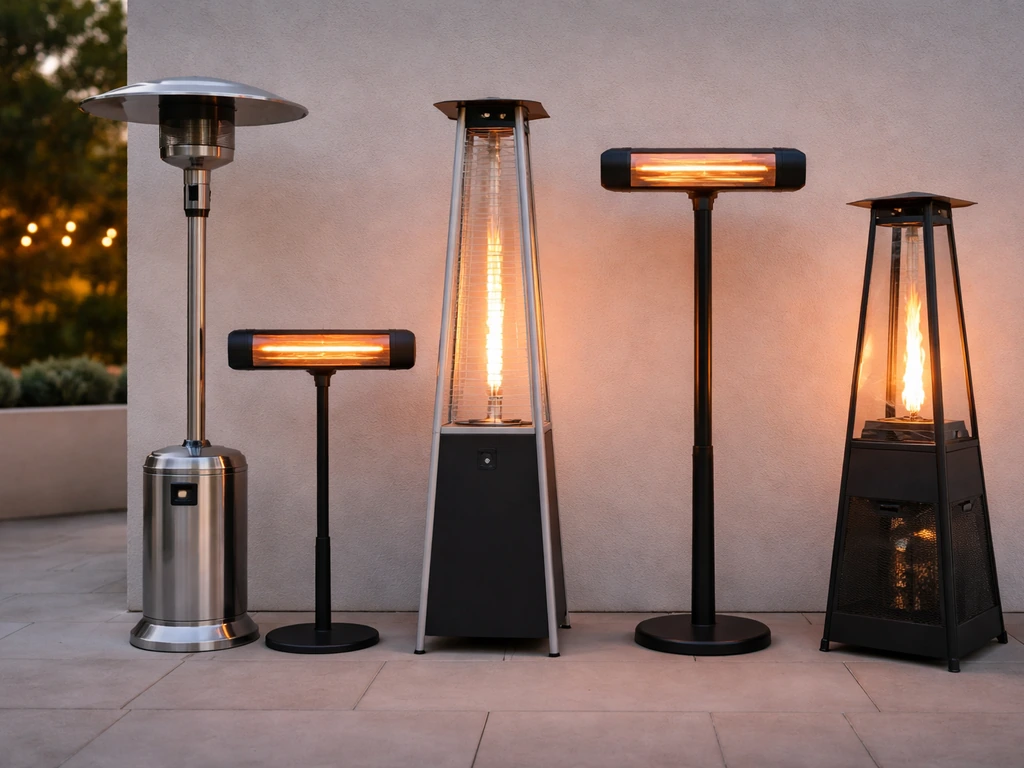
Each heater type has a clear use case. Here's a practical breakdown of what each one actually delivers and where it falls short.
| Heater Type | Typical Output | Coverage | Portability | Wind Performance | Setup Complexity |
|---|---|---|---|---|---|
| Propane (mushroom/tower) | 30,000–48,000 BTU | ~20 ft radius / 314 sq. ft. | High (tank on board) | Moderate (air heating) | Low — no install needed |
| Electric infrared (panel) | 1,500W–6,000W (~5,000–20,500 BTU) | 65–160 sq. ft. per unit | Low (fixed mount) | Excellent (radiant heat) | Moderate — wiring required |
| Natural gas (fixed) | 30,000–50,000 BTU | ~314 sq. ft. | None (fixed) | Moderate (air heating) | High — gas line required |
| Gas infrared (tube/plaque) | 35,000–100,000 BTU | Varies widely by model | None (fixed) | Very good (radiant heat) | High — gas line + mounting |
| Pellet | 70,000–75,000 BTU | Similar to propane towers | Low-moderate | Moderate | Moderate — fuel management needed |
Propane patio heaters
The classic mushroom or tower-style propane heater is the easiest entry point. You wheel it out, connect the tank, and you're heating in under a minute. A standard 40,000 BTU unit running on a 20 lb propane tank will burn for roughly 8 to 10 hours at mid-output. The downside is cost: propane runs about $1.70 per hour at full output, and you're buying and swapping tanks regularly. These are best for open, uncovered patios where you want flexibility and don't want to deal with wiring or gas lines. If wind is a constant problem on your patio, propane mushroom heaters lose some efficiency since they heat the air around you.
Electric infrared heaters
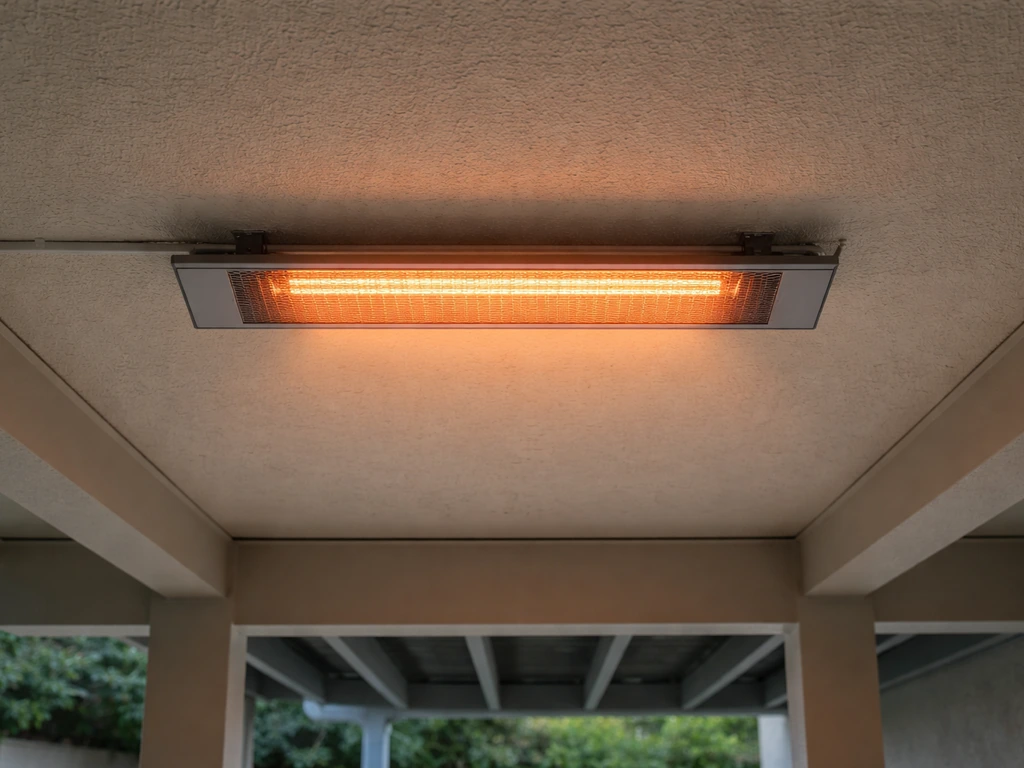
Electric infrared panels are my top recommendation for covered patios with access to a standard or 240V outlet. Brands like Bromic's Tungsten Smart-Heat Electric series offer 2,000W to 6,000W models covering 65 to 160 sq. A reseller listing for Bromic's Tungsten Smart-Heat Electric claims it is available in 2,000W to 6,000W and that it can cover up to 160 sq. ft., with the 6,000W model rated up to 20,472 BTU. ft. per unit, with instant-on performance and zero emissions. The 6,000W model typically runs on 240V and needs a dedicated circuit. Electrician cost to install a new circuit runs $200–$500 depending on your setup, but it's a one-time expense. Running cost is predictable: a 4,000W panel at the average U.S. electricity rate costs roughly $0.52–$0.64 per hour. Infrared electric models with IPX4 water resistance ratings handle rain splash and mist, making them genuinely weather-safe for covered outdoor use. For a small balcony or covered patio, this is often the cleanest and most maintenance-free long-term solution.
Natural gas heaters
If you already have a natural gas line or are open to running one, a fixed natural gas heater is the most economical to operate at scale. The per-hour fuel cost drops to around $0.48 for a 40,000 BTU unit, which is less than a third of propane. The trade-off is installation: you need a licensed plumber or gas tech to run the line, pull permits, and connect the unit. Once it's in, though, you never deal with tank swaps, and the heater is always ready. Fixed gas heaters are the right choice for permanent installations on larger patios, restaurant outdoor dining spaces, or anywhere you want professional-grade reliability.
Gas infrared heaters (tube and plaque style)
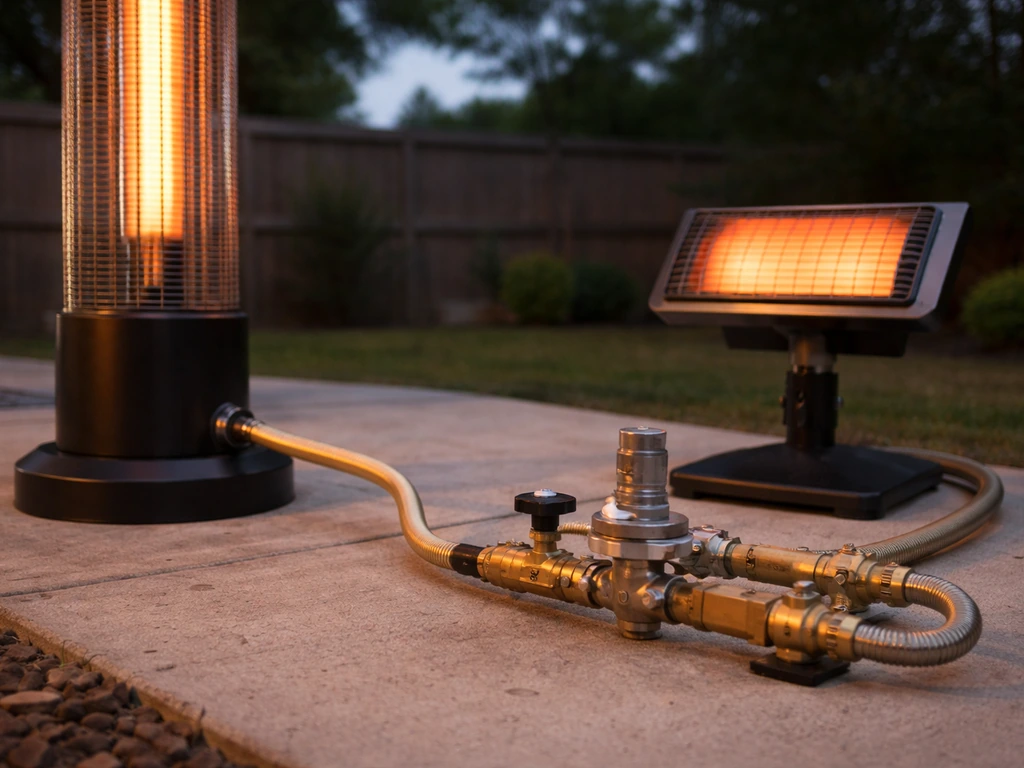
Gas infrared heaters, like low-intensity tube heaters and high-intensity plaque models, combine the fuel economy of natural gas with the wind-resistant performance of radiant heat. Commercial tube heater systems (like the ReverberRay DSR series) can output 65,000 to 100,000 BTU per unit, making them ideal for large restaurant patios, commercial outdoor spaces, or any application where you need to heat a wide area reliably even in colder climates. Installation is more complex and expensive than standard gas heaters, requiring proper clearances and professional mounting, but the performance is unmatched for serious outdoor heating.
Pellet heaters
Pellet patio heaters are a niche but interesting option. Units like the FlamePro (75,000 BTU) and Even Embers (70,000 BTU) use gravity-fed wood pellets and produce real flame, giving you ambiance alongside heat. Fuel cost is low, with some manufacturers claiming up to 75% savings versus propane. The trade-offs are real: you need to store bags of pellets, manage ash, and they require more attention to operate than a turn-of-a-dial propane unit. They're best for buyers who want a firepit-like experience with better heat output and don't mind the upkeep.
Real-world heat output: BTUs, coverage radius, and wind impact
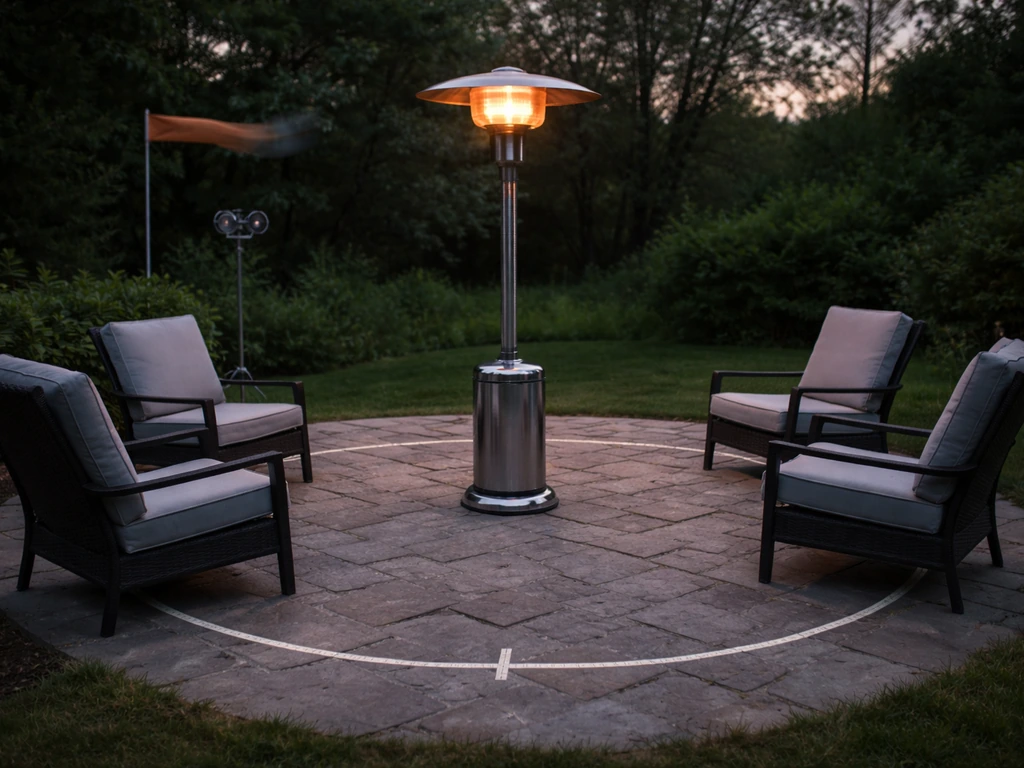
BTU ratings on patio heaters are measured in ideal lab conditions. Real-world performance outdoors is almost always lower, especially in cold or windy conditions. A 40,000 BTU propane mushroom heater that claims a 20-foot radius in marketing materials will feel like significantly less on a 35°F night with a 10 mph breeze. Plan conservatively: use the 20 BTU per square foot formula, then add 15–20% if your winter temperatures regularly drop below 35°F or if your patio has any real wind exposure.
Infrared heaters (both electric and gas) perform more consistently in real outdoor conditions because they warm people and surfaces directly, not the surrounding air. Wind can't carry that heat away the way it does with convective warmth. This is why a 4,000W electric infrared panel that covers 130 sq. ft. on paper often feels more useful than a 40,000 BTU propane tower on a breezy open patio, even though the raw BTU numbers look wildly different.
For open spaces without any windbreak, the best strategy is multiple smaller heat points rather than one giant unit. Two or three positioned panels or propane heaters spaced across the patio zone produce more even comfort than a single large unit pushed to its limits. If you're covering a large uncovered patio for frequent gatherings, plan on one heater per 100 sq. ft. of the area where people will actually be sitting.
BTU planning by patio size as a quick reference: 100–150 sq. ft. needs 30,000–40,000 BTU total; 150–250 sq. ft. needs 40,000–50,000 BTU; 250–400 sq. ft. needs 50,000–65,000 BTU; anything over 400 sq. ft. needs 65,000 BTU or more, which typically means multiple units or a high-output gas infrared system.
What it actually costs to run and set up
Cost breaks down into two buckets: setup (one-time) and running costs (ongoing). Both matter, and the math changes significantly depending on how often you actually use the heater.
| Heater Type | Typical Setup Cost | Fuel/Energy Cost per Hour | Annual Maintenance Notes |
|---|---|---|---|
| Propane (portable) | $150–$500 for the unit | ~$1.70/hr at 40,000 BTU | Tank refills (~$20–$25 per 20 lb tank) |
| Electric infrared | $200–$800 for the unit + $200–$500 wiring | ~$0.52–$0.80/hr (4,000–6,000W) | Minimal — no fuel, wipe-down cleaning |
| Natural gas (fixed) | $300–$900 for the unit + $500–$2,000 gas line | ~$0.48/hr at 40,000 BTU | Annual gas line inspection recommended |
| Gas infrared (commercial) | $600–$3,000+ installed | ~$0.48–$1.20/hr depending on BTU | Annual burner inspection, keep clean |
| Pellet | $300–$700 for the unit | ~$0.40–$0.80/hr (varies by pellet price) | Ash removal after each use, pellet storage |
If you use a patio heater 3 hours per night, 60 nights per year (a realistic shoulder-season and weekend use pattern), propane costs around $306 annually in fuel alone. Natural gas for the same use drops to about $86. Electric infrared at a mid-range rate lands around $100–$145 per year. Pellets can be similarly economical to natural gas, depending on local pellet prices. For light users who fire up the heater 10–15 times a year, propane's lower setup cost usually makes it the practical winner. For daily or near-daily users, natural gas or electric infrared pays back the higher installation cost within 1–3 seasons.
Safety, installation, and code basics you need to know
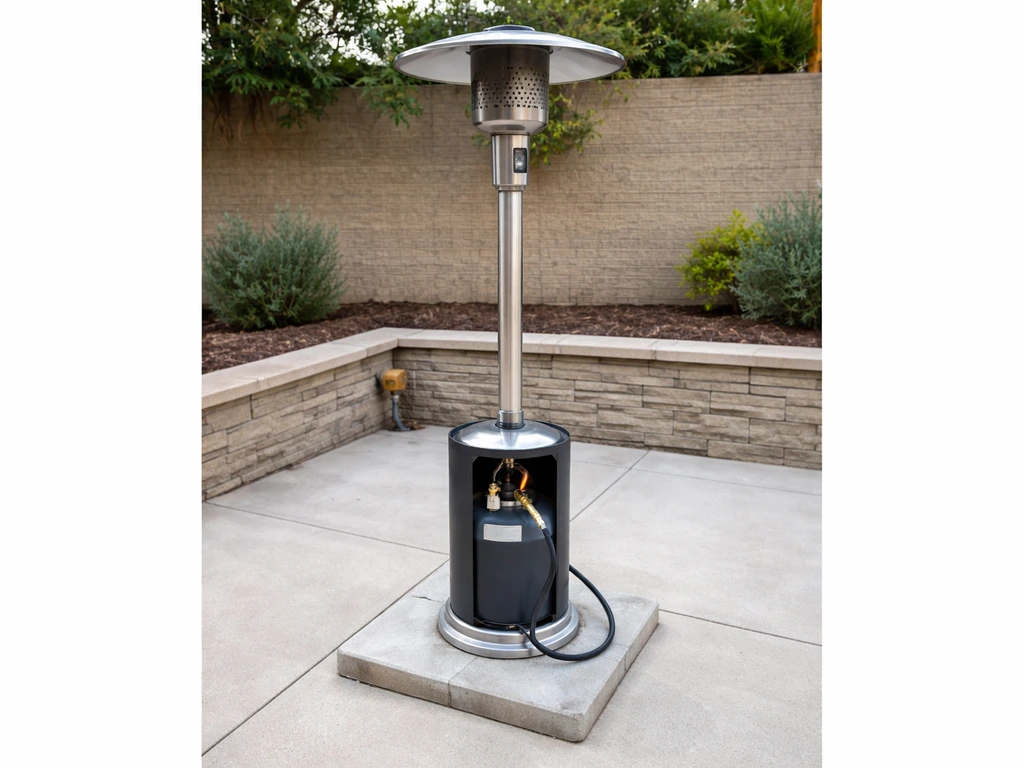
Patio heater safety isn't complicated, but skipping these basics is how fires start or how you fail a permit inspection. For detailed guidance on safe outdoor heater use based on blank" rel="noopener noreferrer">NFPA 1 (Fire Code), see NFPA’s “Outdoor Heater Safety” fact sheet. Follow these regardless of which type you buy.
- Keep anything that can burn (furniture cushions, umbrellas, string lights, curtains) at least 3 feet from the heating element at all times. This is the core NFPA/USFA recommendation and it applies to every heater type.
- Turn off portable heaters when no one is present to monitor them. This is non-negotiable for propane and pellet units specifically.
- Look for tip-over shutoff on any freestanding propane or electric heater. If the unit doesn't auto-shutoff when knocked over, it's a liability on any patio with kids, pets, or large gatherings.
- For propane units: store spare tanks upright in a well-ventilated outdoor area, never indoors. Check hose connections for leaks before each season (soapy water bubbles = leak).
- For natural gas and gas infrared: all installations must be permitted and inspected. Gas lines must be run by a licensed contractor. Follow ANSI Z83.26/CSA 2.37 certification when selecting gas-fired outdoor infrared units.
- For electric infrared: use outdoor-rated wiring and components with a minimum IPX4 water resistance rating. A dedicated circuit is required for 240V models (most 4,000W+ panels). Do not mount these inside unventilated enclosures.
- Observe published clearance-to-combustibles from the manufacturer's installation guide. Ceiling clearance for overhead infrared heaters is typically specified in the manual — ignoring this creates fire risk in covered patio structures.
- For pellet heaters: treat them like a fire appliance — keep a fire extinguisher rated for Class A fires within reach and never leave them fully unattended.
- For covered patios with gas heaters: ensure adequate ventilation. Fully enclosed spaces with gas combustion units can create carbon monoxide risk. Gas infrared and gas tube heaters must be used in open or well-ventilated covered spaces only.
If you're mounting an overhead electric infrared panel, the standard installation height range is 6 to 8 feet above the floor for residential models and up to around 8.5 feet (2.60 m) for commercial-grade units. Mounting too high reduces effective warmth; mounting too low creates clearance and safety issues. Always follow the specific model's installation guide for exact height and angle specs.
Matching the heater to your patio style and how you use it
The right heater for a small apartment balcony is completely different from the right heater for a 600 sq. ft. restaurant terrace. Here's how to match the choice to your actual situation.
Small balcony or compact urban patio (under 100 sq. ft.)
Space constraints rule everything here. A freestanding 40,000 BTU propane tower is often too large and too much heat for a small balcony where you're sitting 4 feet from the unit. A compact wall-mounted or ceiling-mounted electric infrared panel (1,500W–2,000W) is the smarter choice: it frees up floor space, delivers targeted heat to where you're sitting, and poses no fuel-storage concerns in a tight urban setting. For more on sizing this kind of setup, the guide on the best outdoor heater for small patio covers it in more depth. For a small patio, the best outdoor heater for small patio choices usually focus on compact infrared or a carefully sized electric option. For more help picking the best outdoor heater for patio use, use the sizing and scenario guidance above to match output and fuel type to your space best outdoor heater for small patio.
Mid-size covered patio (100–400 sq. ft., pergola or roof)
This is where overhead electric infrared panels or fixed gas infrared heaters shine. If you have an 8-foot covered ceiling, one or two 4,000W electric panels can handle a 200–250 sq. ft. space well, and they're clean and maintenance-light. With a gas line available, a pair of 40,000 BTU gas heaters gives you more raw output at lower ongoing cost. Covered patios benefit the most from overhead mounting because the heat bounces off the ceiling and floor rather than escaping upward. For covered patio-specific guidance, the best outdoor heater for covered patio breakdown is worth reading alongside this guide.
Large open patio or backyard entertaining space (400+ sq. ft.)
For large open spaces, you're almost always better off with multiple units than one giant heater. Two 40,000 BTU propane towers positioned around the seating area will deliver more usable warmth than a single 80,000 BTU unit in the middle. If wind is an issue, switch the propane towers to gas infrared tube heaters mounted overhead or wall-mounted infrared panels angled toward the seating zone. Large open patios in consistently cold climates may need a combination: infrared panels for the dining area and a freestanding propane heater near the bar or periphery.
Party and event use
For occasional large gatherings, portable propane towers are the most flexible. You can rent additional units for big events, rearrange them as your crowd shifts, and store them when not needed. For recurring event use (restaurant patios, bars, regular entertaining), fixed natural gas or electric infrared is worth the installation investment because the convenience and reliability pay off over time.
Cold-climate and winter use
If you're trying to use your patio in serious winter temperatures (below 30°F), a standard 40,000 BTU propane mushroom heater is going to struggle to keep people comfortable in an open space. You'll want higher output, better wind protection through landscaping or windbreak panels, and ideally infrared heat sources that work regardless of ambient temperature. High-output gas infrared tube heaters in the 65,000–100,000 BTU range are the go-to for commercial cold-weather patio heating. Residentially, multiple electric infrared panels in a covered or semi-covered space with a windbreak is a practical cold-weather setup.
Top picks by scenario and a buying checklist
Here's a straightforward summary of what to buy based on your situation, followed by a checklist to run through before you finalize any purchase.
Quick scenario recommendations
- Best overall for flexibility: A 40,000 BTU portable propane mushroom heater. Covers ~314 sq. ft., no installation required, works on any patio. Best for casual users who want plug-and-play warmth.
- Best for covered patios with electricity: A 4,000W wall or ceiling-mounted electric infrared panel (like Bromic Tungsten Smart-Heat Electric). Covers 120–130 sq. ft. per unit, IPX4 weather-rated, nearly zero maintenance.
- Best for long-term value (gas line available): A fixed 40,000 BTU natural gas patio heater or gas infrared model. $0.48/hr running cost versus $1.70/hr for propane. Higher setup cost, lowest ongoing cost.
- Best for wind-exposed open patios: A gas infrared tube heater or multiple wall-mounted electric infrared panels aimed at seating zones. Radiant heat bypasses wind effectively.
- Best for ambiance-plus-heat: A 70,000–75,000 BTU pellet patio heater (gravity-feed). Real flame, high output, low fuel cost — with trade-offs in maintenance and attention needed during operation.
- Best for small balconies: A compact 1,500W–2,000W wall-mounted electric infrared panel. No floor space used, no fuel storage, safe for tight urban settings.
Pre-purchase checklist
- Measure your patio square footage and multiply by 20 to get your minimum BTU target.
- Determine if your patio is covered, semi-covered, or fully open — this affects heater type and mounting options.
- Assess wind exposure: if it's consistently breezy, prioritize infrared (electric or gas) over convective propane.
- Check if you have a natural gas line stub-out or 240V outdoor outlet available, or budget for adding one.
- Confirm ceiling height for any overhead or wall-mounted models (6–8 ft is standard for most residential infrared panels).
- Verify the heater has a tip-over shutoff (for freestanding units) and check its water ingress protection rating (IPX4 minimum for outdoor electric use).
- Look for CSA or ANSI Z83.26 certification on any gas-fired outdoor infrared heater.
- Calculate your annual running cost based on your realistic hours of use per week and your local fuel/electricity rates.
- Factor in clearance: confirm you can maintain 3 ft from combustibles at your intended placement location.
- If installing gas or 240V electric, budget for professional installation and permit costs before comparing unit prices.
One last practical note: don't overbuy on output just because a higher BTU number sounds better. A single 40,000 BTU propane heater in a 150 sq. ft. covered space with no wind is going to make people take off their jackets within minutes. Match the output to the space, account for how open it is, and buy accordingly. The best patio heater is the one that's sized right for your specific setup and that you'll actually use safely season after season.
FAQ
Can I install an electric infrared patio heater under a low overhang, like a pergola or covered porch?
Yes, but only if you can mount and power it correctly. Infrared electric panels need adequate clearance, the correct mounting height, and a properly rated outlet or hardwire setup (often 240V for higher-watt models). If you cannot meet the installation height or you only have a standard 120V outlet, a smaller wall or tabletop option usually performs better than trying to force a larger panel to run on the wrong voltage.
What water resistance rating should I look for if my patio gets frequent rain or mist?
Look for a weather rating that matches your exposure, not just “outdoor” labeling. IPX4 typically covers rain splash and mist, but it does not mean the unit can be directly exposed to heavy rain or standing water. If your patio gets driven rain or puddling, choose a higher IP rating (and use a cover when the unit is off, if the manufacturer allows it).
How should I size heaters if I only use the patio for short sessions, not all evening?
BTU claims assume steady, ideal conditions, so plan controls and zoning instead of buying for the “maximum radius.” If you use your patio 2 to 3 hours at a time, consider multiple smaller heaters spaced across the seating area so you can turn on only the units near your guests. This also helps when the crowd moves around.
Is it better to buy one high-output heater or multiple smaller ones for a windy patio?
In most cases, more heaters placed closer to people beats one large unit pushed to its limit, especially in wind. Try “coverage mapping,” place heaters so their warmth overlaps where people sit or stand, and angle infrared panels toward the seating zone. If you already own a propane tower, adding one additional smaller heater near the windward side can improve comfort without doubling fuel use.
What’s the best setup for an open-sky patio with steady wind, especially if I already own propane?
For open-sky or very breezy patios, choose infrared rather than convective heaters because infrared warms people and surfaces directly. If you must use propane, position heaters to reduce direct exposure, and use windbreaks like solid panels or fencing where allowed. For mixed conditions, a hybrid setup often works: infrared over the main seating, propane at the periphery.
If an electric infrared heater is “outdoor,” can I safely run it from an extension cord?
Yes, but confirm the electrical path before you assume “plug-in is fine.” Many infrared panels require hardwiring or a dedicated circuit, and outdoor-rated outlets must be GFCI-protected and weather-rated. If your heater draws near the maximum for your circuit, you may need a new circuit or breaker to avoid nuisance trips and overheating.
When is natural gas actually the best choice, given the installation effort?
Natural gas is usually worth it when you will run the heater frequently (daily or near-daily) and the patio is a permanent fixture. If you are a light user or you rent, propane often wins because there is no permit work or fixed infrastructure. If you do go with gas, plan for proper clearances, professional hookup, and controls so you do not waste fuel heating empty space.
What changes if I want to use my patio heater in real winter temperatures, not just cool fall evenings?
Start with realistic winter comfort targets. If temperatures commonly drop below about 30°F, a single residential 40,000 BTU propane heater often struggles in open conditions, especially with wind. In that scenario, use higher-output gas infrared tube heaters for larger areas, or use multiple electric infrared panels over seating if you can keep the area covered and somewhat wind-protected.
How can I lower the operating cost without making the patio feel cold?
You can often reduce running costs by controlling heat where people are. Use timers or smart plugs for scheduled use, and use multiple-zone heaters so you heat only the seated area rather than the whole yard. Also, avoid running at maximum output for long periods when lower settings plus better placement maintain comfort.
What’s the most common mistake people make when choosing a heater for a small balcony?
For balconies and tight urban patios, the biggest mistake is choosing a freestanding “mushroom” heater that is oversized and too close to occupants. Prefer compact infrared panels mounted to a wall or ceiling, or a small tabletop propane unit only if ventilation and clearances are guaranteed. Also consider nuisance issues like heat blowing into windows or doors, and whether nearby structures block the infrared beam.
How do I position an overhead infrared panel to get the best warmth at seating height?
If you’re installing overhead electric panels, mount height affects both comfort and effectiveness, mounting too high can reduce perceived warmth, and too low can create clearance and safety problems. For residential units, follow the manufacturer’s height range (commonly 6 to 8 feet), and set the panel angle so the beam points toward the seating, not the outer wall.
Are pellet patio heaters a good choice for easy weekend entertaining, or are they too high-maintenance?
If you are using pellet heaters for ambiance, the limiting factors are maintenance and storage, pellet dust and ash, and the need to keep fuel dry. If you dislike frequent cleanup or do not have a safe, weather-protected spot for pellet bags, a propane or electric infrared heater will be easier to run consistently. Also ensure you can accommodate exhaust and clearance requirements for the specific pellet model.
Next Articles
Best Outdoor Heater for Covered Patio: Electric and Gas Picks
Electric vs gas patio heaters for covered porches: picks, sizing tips, safety, and cost comparisons to choose fast.
Best Price on Outdoor Patio Heaters: Compare Costs & Deals
Score the best price on outdoor patio heaters, price ranges, top picks, deal tactics, total-cost & safety checklist.
Where Can I Rent Patio Heaters Near Me Today
Find where to rent patio heaters near you today, choose the right fuel type, compare costs, and book safely.