
The best gas patio heater for most people is a 40,000 BTU propane mushroom-style or infrared heater if you want portability and flexibility, or a plumbed natural-gas model if you have an existing gas line and want lower ongoing fuel costs. Propane wins on convenience and placement freedom; natural gas wins on cost-per-hour and never running out mid-evening. Which one actually makes sense for your patio depends on four things: how big your space is, how exposed it is to wind, whether you have a gas connection nearby, and how enclosed the area is.
Best Patio Heaters Gas: Buying Guide, Cost, Safety, Picks

Caleb Vale
24 May 2026
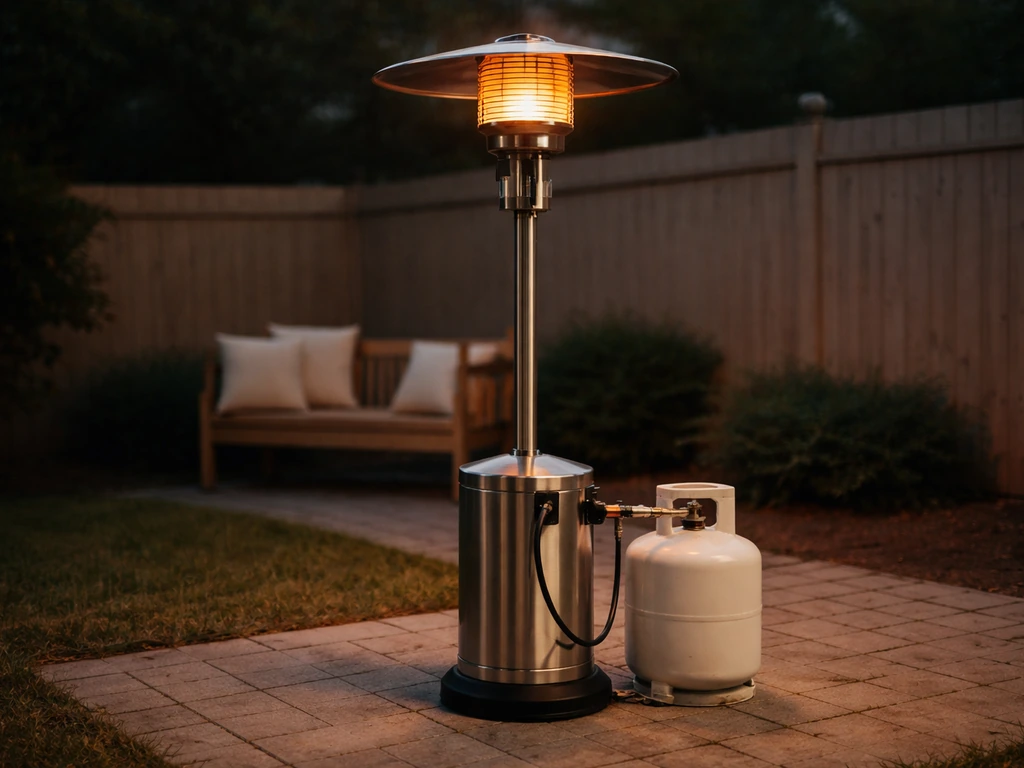
Propane vs Natural Gas: How to Choose the Right Fuel Type First
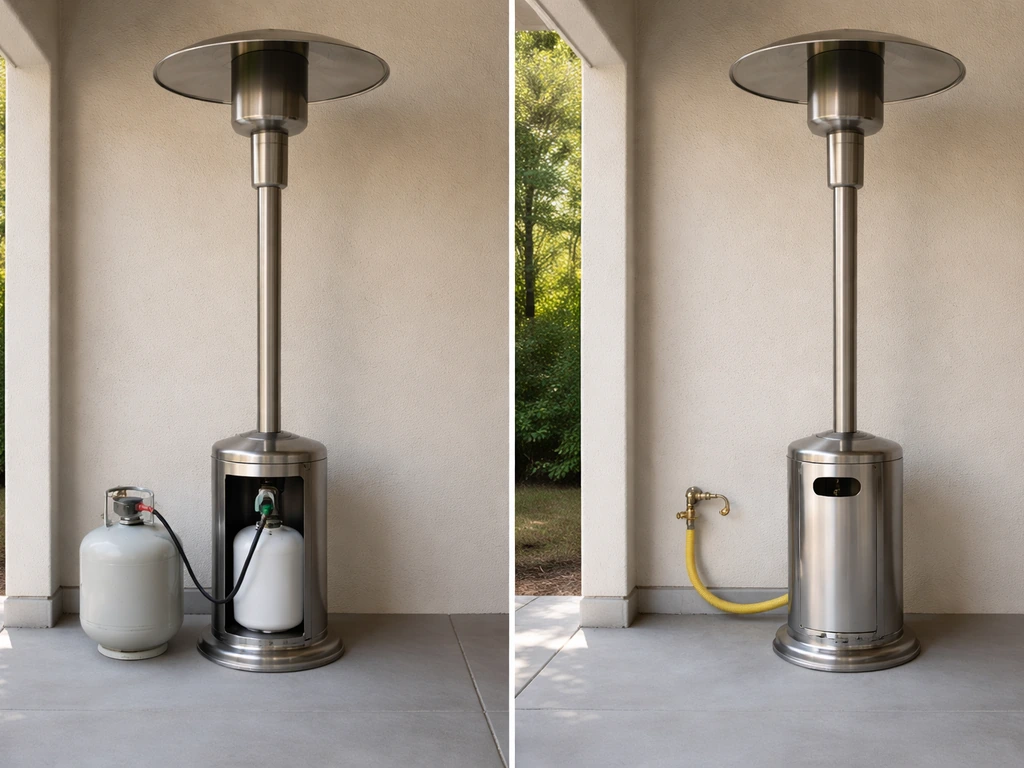
This is the decision that shapes everything else, so get it right before you even look at BTU ratings or model names. Propane heaters use a portable tank (usually a standard 20 lb barbecue cylinder) and can go anywhere on the patio. Natural gas heaters require a fixed gas line connection, which means a licensed plumber or gas fitter needs to run a line and install a shutoff valve if you don't already have one. That upfront cost is real, but the payoff comes in operating cost.
At a 40,000 BTU output (the most common rating for full-size patio heaters), propane costs roughly $1.70 per hour to run, while natural gas comes in around $0.48 per hour. Over a season of regular use, that gap adds up fast. The fuel pressure systems are also different: propane regulators typically operate at around 11 inches water column, while natural-gas appliance regulators run at about 7 inches water column. These are not interchangeable, which is why you cannot simply swap a propane heater onto a natural gas line without a proper conversion kit that includes the right orifices, hose, and regulator.
| Factor | Propane | Natural Gas |
|---|---|---|
| Fuel source | 20 lb portable tank | Fixed gas line connection |
| Portability | High — move it anywhere | None — fixed installation |
| Approx. cost per hour (40,000 BTU) | ~$1.70 | ~$0.48 |
| Upfront installation cost | Low (just buy the heater) | Higher (gas line + plumber) |
| Risk of running out mid-use | Yes — tank empties | No |
| Best for | Renters, flexible layouts, patios without gas line | Permanent installs, high-use patios, restaurants |
If you're renting, frequently rearrange your outdoor space, or simply don't have a gas line within reach, propane is the practical choice. If you own your home, use the patio heavily, and have or can add a gas line, natural gas pays for the installation cost within a couple of seasons of regular use.
BTU Output, Coverage, and What Wind Actually Does to Your Heat
Most full-size gas patio heaters are rated at 40,000 BTU per hour. That's the standard output for a mushroom-style tower heater, and it's what you'll find on the majority of propane and natural gas models on the market. Smaller tabletop models run 10,000 to 15,000 BTU. Commercial-grade or high-output models push 50,000 BTU and above.
Coverage claims from manufacturers vary wildly and should be treated as best-case numbers in ideal conditions. One 40,000 BTU listing claims coverage up to 400 square feet. Another claims 100 square feet for the same BTU rating. A more useful reference: a 40,000 BTU heater can realistically heat an area up to about 20 feet in diameter (roughly 314 square feet) in calm, mild conditions. Wind changes everything. Even a light breeze strips radiant heat away from people and dramatically shrinks effective coverage. In a fully exposed patio on a breezy evening, that same heater may only keep people within 6 to 8 feet comfortable.
If your patio is wind-exposed, look specifically at heaters engineered for that environment. Bromic's Platinum Smart-Heat Gas series, for example, is specifically designed to maintain performance in winds up to 20 km/h (about 12 mph). That's a meaningful engineering claim versus a generic mushroom-top heater that loses efficiency the moment a breeze kicks up. Infrared-style gas heaters also tend to perform better in wind than convective mushroom heaters because they heat objects and people directly rather than heating the air.
- 10,000–15,000 BTU: tabletop heaters, small seating groups, calm conditions only
- 30,000–40,000 BTU: standard full-size heaters, covers up to ~300 sq ft in calm conditions
- 50,000+ BTU: large open patios, commercial settings, wind-exposed spaces
- Wind-resistant infrared gas heaters: best for exposed decks and rooftop spaces
Fuel Cost, Efficiency, and How Long a Tank Actually Lasts
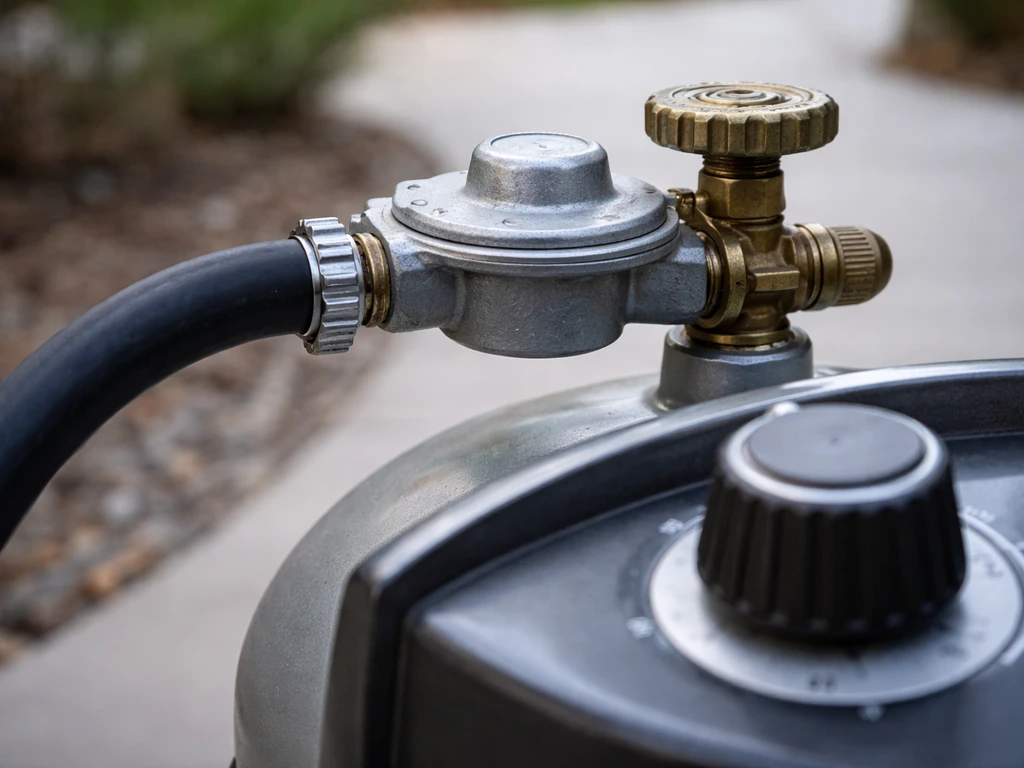
At full 40,000 BTU output, a propane heater burns roughly one pound of propane per hour. A standard 20 lb cylinder gives you about 20 hours of runtime at full blast, though in practice most people run heaters at lower settings, which stretches tank life considerably. At current propane prices, you're looking at approximately $1.70 per hour at full output. Natural gas at the same output costs closer to $0.48 per hour, since 1 therm equals 100,000 BTU and natural gas is significantly cheaper per BTU than propane.
The regulator matters more than most buyers realize. Propane regulators step cylinder pressure down to the appliance-ready level (around 11 inches water column) and are specifically designed for outdoor appliances like grills and patio heaters. If you buy a heater and the flame is weak, flickering, or yellow instead of blue, the first thing to check is whether the regulator is properly connected and not in bypass mode (a common issue if the tank valve is opened too fast). Never mix regulators between gas types. A propane regulator on a natural gas line, or vice versa, creates a dangerous pressure mismatch and is a code violation.
To lower operating costs without sacrificing comfort: use a thermostat-equipped model if available, dial output down on milder evenings, and position the heater closer to the seating group rather than trying to heat the full patio perimeter. Efficiency is about directing heat where people actually sit, not heating open sky.
Safety, Installation, and Ventilation: What You Must Verify Before You Light It
Gas patio heaters are outdoor-only appliances, full stop. Using any outdoor gas heater indoors or in an enclosed space creates a carbon monoxide risk that can be fatal. This applies to garages, sheds, screened porches with walls on more than half their perimeter, and any space that doesn't have substantial open-air ventilation. An outdoor space only qualifies as "outdoor" for heater use if at least 50% of the wall area is completely open to the atmosphere. If you have a screened or glass-enclosed porch, a gas heater is the wrong tool.
Clearances to combustibles are non-negotiable. The Patio Comfort PC-02, as one documented example, requires a minimum of 24 inches from the top of the reflector and 24 inches from the sides to any combustible material. Your specific model's manual will have exact numbers, and you need to honor them. This matters especially under pergolas, market umbrellas, and string-light setups where the overhead clearance is tighter than it looks.
For natural gas models, installation must be done by a licensed gas fitter or plumber in most jurisdictions. The connection point, shutoff valve, and supply line all need to meet local code (ANSI Z83.26 / CSA 2.37 covers outdoor gas infrared patio heaters and is the relevant certification standard). Only buy heaters that are UL or CSA certified. Before first use on any gas heater, check every fitting with soapy water for leaks. Bubbles mean a leak, and the heater does not get lit until it's fixed.
- Never use outdoors gas heaters indoors, in garages, or in substantially enclosed spaces
- Check clearances to combustibles in your owner's manual before placing the heater
- Inspect the rubber gas hose before every use for cracks, kinks, or wear
- Test all fittings with soapy water before first use of the season
- Only use UL or CSA certified heaters
- Natural gas installation requires a licensed professional in most areas
- Ensure propane tanks have an OPD (Overfill Protection Device) valve — modern tanks do by default
Which Heater for Which Patio: Matching the Right Model to Your Setup
The biggest source of buyer regret with gas patio heaters is mismatching the heater type and BTU output to the actual use case. Here's how to think through it by scenario.
Small Patios and Intimate Seating Areas (Under 150 sq ft)
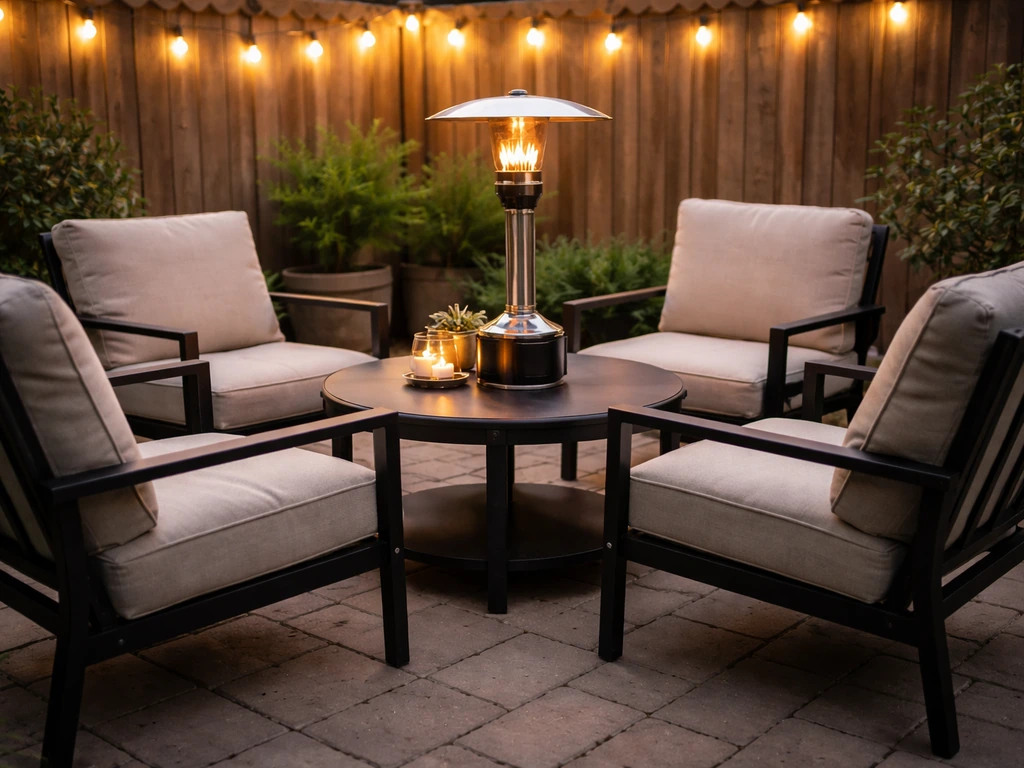
A 40,000 BTU tower heater is often overkill for a small patio with 4 to 6 people in a tight seating arrangement. A 10,000 to 15,000 BTU tabletop propane heater placed at the center of the table is more efficient and easier to manage. If you do use a full-size unit, dial it down to a lower setting and keep it at the perimeter pointing inward.
Large Open Patios and Backyard Entertaining Spaces
For patios above 300 square feet or spaces with multiple seating zones, a single 40,000 BTU heater won't cut it unless guests are clustered tightly around it. Consider two or three heaters positioned strategically, or step up to a 50,000 BTU model. If you have a natural gas line nearby, this is the scenario where plumbing it in makes the most financial sense.
Pergolas and Covered Patios
Pergolas are one of the trickier situations. If the pergola has an open lattice roof and open sides, you're fine with a standard tower heater (respecting overhead clearances). If the pergola has a solid roof, you need to treat it like a partially enclosed space and pay careful attention to ventilation and overhead clearance. Wall-mounted infrared gas heaters are often a better fit here because they can be angled toward the seating area and positioned to clear the overhead structure more easily than a tall tower heater.
Wind-Exposed Decks and Rooftop Spaces
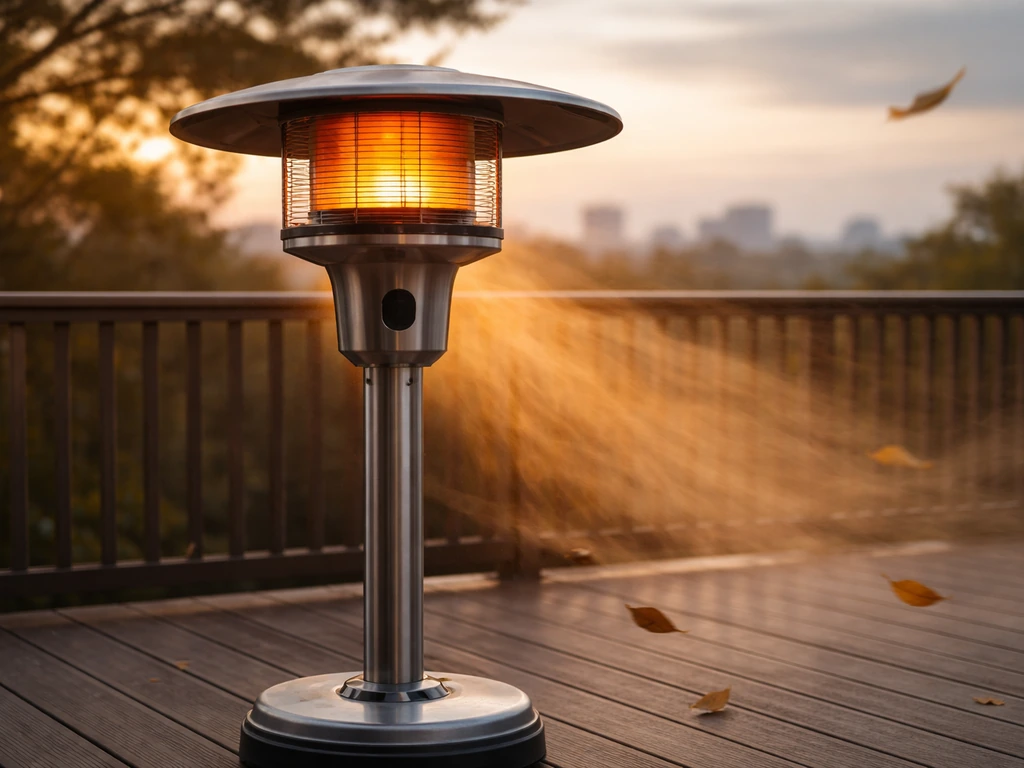
Standard mushroom-top propane heaters underperform badly in wind. For exposed decks or rooftop spaces, look for infrared gas heaters specifically rated for wind performance (like the Bromic Platinum Smart-Heat Gas rated for up to 20 km/h wind) or mount heaters low and close to the seating group to minimize wind interference. Weighted bases and anti-tip features are also essential for safety in windy spots.
Commercial Patios and Restaurant Use
Commercial use means heaters running hours every day, which changes the economics completely. Natural gas is almost always the right call here: lower per-hour cost, no tank swaps, and no running out mid-service. Look for commercial-grade heaters with steel or cast-iron construction, commercial certifications, and robust ignition systems. If you are comparing the best commercial patio heaters, prioritize models designed for constant daily use and reliable ignition. For commercial settings, infrared heaters mounted overhead or on walls keep the floor clear for tables and staff movement, which is a significant practical advantage over freestanding tower heaters.
What to Actually Check in Reviews and Specs Before You Buy
Gas patio heater listings are full of marketing language that doesn't help you predict whether the thing will work well for your specific situation. Here's what to look for in the actual specs and in real user reviews.
| Feature | What to Look For | Why It Matters |
|---|---|---|
| Ignition type | Piezo (battery-free) or electronic igniter | Piezo is simple and reliable; electronic starters are convenient but can fail in damp weather |
| Safety shutoff | Thermocouple or tilt-switch automatic shutoff | Thermocouple cuts gas if flame dies; tilt switch cuts gas if heater tips — both are essential |
| Heat reflector design | Anodized aluminum or stainless; angled for wide distribution | Poor reflectors waste heat upward; good ones direct heat at the 5–7 ft zone where people stand/sit |
| Materials and weather resistance | 304 or 430 stainless steel construction, powder-coated steel | Carbon steel without coating rusts fast; stainless lasts years with minimal care |
| Stability and base design | Wide base, weighted base, or mounting option; anti-tip feature | Tall propane tower heaters are top-heavy — base width and weight are critical in wind |
| Controls | Variable heat settings; thermostat if available | On/off-only heaters waste fuel and comfort; variable settings let you dial to conditions |
| Certification | UL listed or CSA certified | Non-certified heaters may not meet safety or performance standards; don't skip this check |
| Portability | Wheels, handle, or fixed mount | Propane models with wheels allow seasonal repositioning; fixed gas models are permanent |
In user reviews, pay attention to complaints about ignition reliability after 6 to 12 months of use, thermocouple failures causing the flame to shut off unexpectedly, and rust on non-stainless components. Also watch for comments about wind performance in reviews from people in similar climates to yours. A heater that gets five stars in Phoenix might get three stars from someone in coastal New England where wind is a constant factor.
Maintenance, Off-Season Storage, and Fixing Common Problems
Seasonal Maintenance Checklist
Gas patio heaters don't need much maintenance, but skipping it is exactly why most ignition and flame problems happen. Do this at the start of each season and you'll avoid most issues.
- Inspect the rubber gas hose for cracks, brittleness, or kinking — replace it if there's any doubt
- Check all fittings from the tank or gas line to the burner with soapy water; look for bubbles indicating leaks
- Clean the burner ports and venturi tube — insects love to nest in venturi tubes over winter, and a blocked venturi causes weak or no flame
- Check the pilot orifice for clogs and clean with compressed air or a soft brush (never a metal pin that can enlarge the orifice)
- Inspect the reflector for corrosion and clean with a mild soap solution
- Test the thermocouple and tilt switch function before the first use
- Check the regulator connection and reset it if necessary (close tank valve, disconnect regulator, wait 30 seconds, reconnect, open tank valve slowly)
Off-Season Storage
For propane models: turn off the burner, close the tank valve, and disconnect the tank before storing the heater. Store the propane tank outdoors in a well-ventilated area, never indoors or in a garage. Cover the heater with a weather-resistant cover to keep insects and moisture out of the burner and venturi tube. For natural gas models: shut off the gas supply at the dedicated shutoff valve and cover the burner assembly. Both types store best upright in a covered patio area or shed; avoid lying them on their side as it can damage internal components.
Troubleshooting the Most Common Problems
The majority of gas patio heater problems fall into three categories: ignition failure, flame that won't stay lit, and weak or yellow flame. Here's what causes each and what to check. A manufacturer troubleshooting guide for an LPG commercial patio heater lists common maintenance-related checks such as the correct pilot position and possible blockages in the pilot, venturi, or burner ports that can cause performance problems blank" rel="noopener noreferrer">Fire Sense.
| Problem | Likely Cause | Fix |
|---|---|---|
| Igniter clicks but no flame | Blocked venturi tube or burner ports; or depleted/disconnected gas supply | Clean venturi and burner ports; check tank level and connection |
| Flame lights then goes out | Thermocouple not heated by pilot; thermocouple failure | Make sure pilot flame contacts thermocouple tip; replace thermocouple if needed |
| Flame is yellow or weak | Clogged burner orifice; regulator issue; low gas pressure | Clean orifice with compressed air; reset regulator; check tank level |
| Heater shuts off randomly | Tilt switch triggered (heater slightly unlevel); thermocouple aging | Level the heater; replace thermocouple if leveling doesn't fix it |
| Hissing sound at fittings | Gas leak at connection point | Shut off gas immediately; check all fittings with soapy water; tighten or replace |
If you've worked through these steps and the heater still won't perform correctly, stop there and call a professional technician. Gas appliance repair beyond cleaning and regulator resets is not a DIY task. A technician can test the thermocouple, regulator output pressure, and gas valve function with proper tools and safely.
The Bottom Line: What to Buy and What to Verify First
For most residential patios, a 40,000 BTU propane heater with a stainless steel build, piezo or electronic ignition, automatic thermocouple shutoff, and a wide stable base is the practical starting point. If you use the patio heavily and have a gas line available, a plumbed natural gas model cuts your operating costs by more than 70% per hour and removes the tank-management hassle entirely. The U.S. EIA Henry Hub natural gas spot price is published as dollars per million Btu, providing a market-based basis for the $/MMBtu calculations behind operating-cost examples like these blank" rel="noopener noreferrer">plumbed natural gas model cuts your operating costs by more than 70% per hour. For wind-exposed or commercial spaces, move up to an infrared model with documented wind resistance rather than a standard mushroom-top convective heater. If you're just trying to figure out the best type of patio heater overall, start by matching the fuel source and BTU output to your patio size and wind exposure infrared model.
Before you buy, confirm: the BTU output matches your patio square footage (not just the manufacturer's best-case coverage claim), the fuel type matches your infrastructure, the heater has the right certifications (UL or CSA), and you can meet the clearance requirements for your specific patio setup. If you are comparing options, these checks also help you narrow down the best patio heaters for your patio size and setup. Those four checks will eliminate most of the buyer regret that shows up in reviews. If you're still weighing gas against other fuel types entirely, it's worth looking at how gas options stack up against the broader range of patio heater types available today. If you want a quick answer to what are the best patio heaters, start by matching the heater type and BTU output to your patio size and wind exposure.
FAQ
Can I use a natural-gas patio heater with an outdoor propane tank, or just change the regulator?
No. Propane and natural gas systems require different regulator settings and also different orifices and burner components. Even if the heater lights, a regulator-only change can create a dangerous pressure mismatch, so only use the manufacturer-approved conversion kit for your exact model.
What does “wind up to 12 mph” or similar mean in real use?
It usually means the heater is tested to maintain safer flame behavior and reasonable radiant output under defined conditions, not that it will feel equally warm in every breeze. You still need to position the heater close to seating, avoid directing heat into open air, and respect clearance rules under pergolas or umbrellas.
How many heaters do I need for a large patio instead of one 40,000 BTU unit?
Use heater count as a comfort tool, not just BTU. For larger or multi-zone patios, placing two or three heaters closer to seating clusters usually works better than one unit trying to cover the whole area, because wind and air movement quickly reduce effective radiant warmth.
Is it safe to run a gas patio heater under a pergola with a partial roof?
Safety depends on ventilation and overhead clearance. If the pergola has a solid roof, treat the area like a partially enclosed space, verify the exact clearance to combustibles in the manual, and avoid positioning that traps heat or restricts airflow around the burner and reflector.
Why does my propane heater sometimes have weak, flickering, or yellow flame after setup?
A common cause is a regulator or tank-valve issue, such as an incorrect connection or the regulator not operating in the intended mode. Check that the tank valve is opened correctly (not abruptly), confirm the regulator type matches propane, and inspect for improper hose/connection fit before relighting.
How often should I check for gas leaks on a patio heater?
At minimum, check before first use each season. Use soapy water on every fitting and connection, and re-check after any tank change, regulator change, or if the heater has been moved, because a slightly loosened connection can happen during transport.
What’s the correct way to store a propane heater and tank for the off-season?
Store the heater outdoors (or in a shed) in an upright position and cover it with a weather-resistant cover. Keep the propane cylinder outdoors in a well-ventilated area, never indoors or in a garage. Also disconnect and close the tank valve before storage.
Can I keep a gas patio heater running all night in the background?
Most guidelines treat these heaters as attended outdoor appliances. For safety and fuel management, avoid leaving it running unattended. If you use it for long periods, choose models with more robust controls like automatic shutoff, and follow the manufacturer’s operating and shutdown instructions.
Do infrared gas patio heaters use less fuel than convective mushroom heaters?
Not automatically. Infrared models often provide better perceived warmth in wind because they heat people and objects directly, but fuel savings depend on how long you run them and the output you select. The main real advantage is comfort per perceived warmth under breezy conditions.
What maintenance prevents the most ignition and “won’t stay lit” problems?
Clean and inspect the heater at the start of each season, and verify the regulator connection and burner condition. Many issues that show up after months are avoidable with basic upkeep, and if ignition failure or repeated flame-out persists after cleaning, stop and have a technician check the thermocouple and gas valve.
Next Articles
What Are the Best Patio Heaters Best Type for Your Space
Choose the best patio heater by space, climate, wind, coverage, and budget, comparing propane, electric, gas, infrared,
Best Patio Heaters Buying Guide: Propane, Electric, Gas
Compare propane, electric, gas, infrared, pellet patio heaters with coverage, cost, power, wind, safety tips and best pi
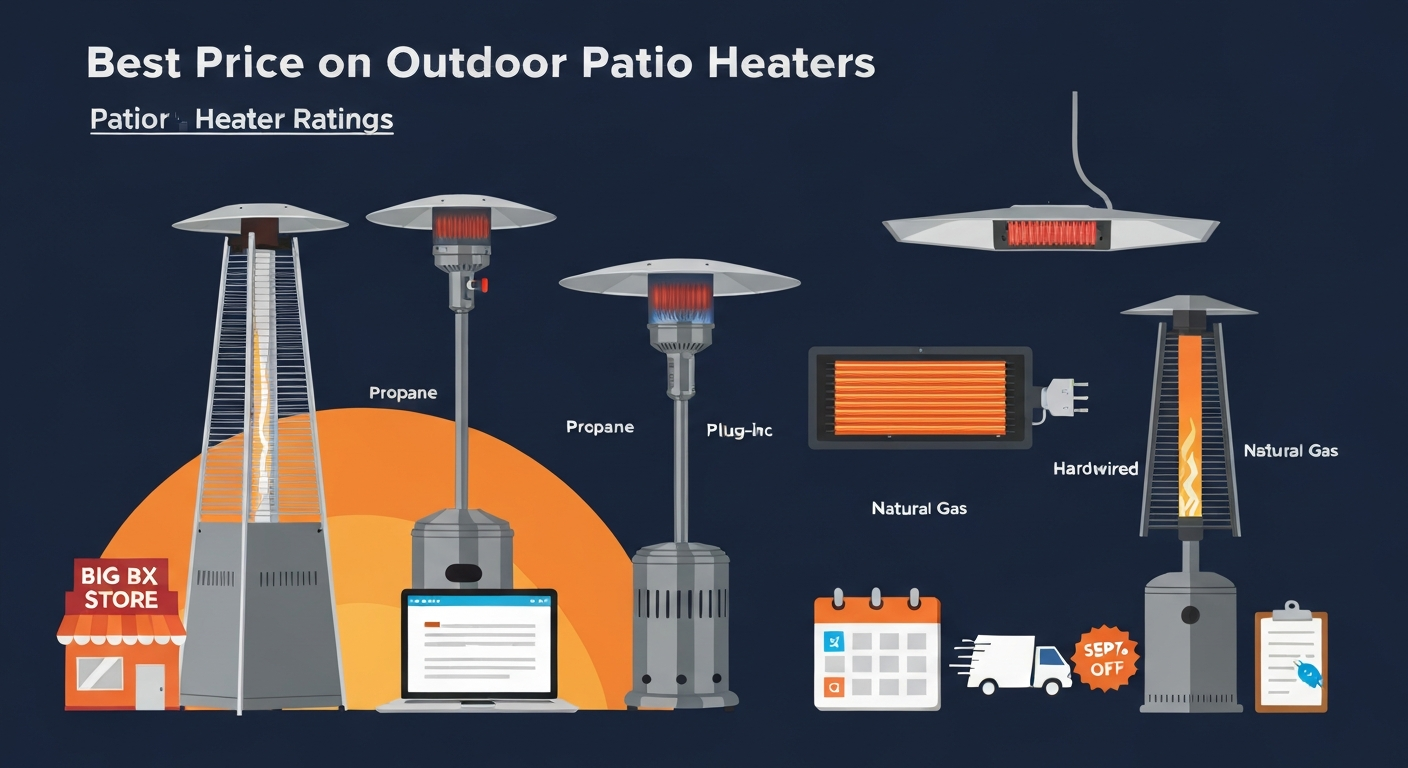
Best Price on Outdoor Patio Heaters: Compare Costs & Deals
Score the best price on outdoor patio heaters, price ranges, top picks, deal tactics, total-cost & safety checklist.