
For most commercial patios, a propane or natural gas infrared heater in the 40,000 to 46,000 BTU range is the best all-around choice. Each unit covers roughly a 10-foot diameter area, so a mid-sized restaurant patio of 400 square feet typically needs four to six heaters spaced about 12 feet apart. For example, BaliOutdoors states that a 40,000+ BTU propane heater burning at full output uses about 0.4 gallons per hour and that wind and patio layout can change the comfort you actually feel blank" rel="noopener noreferrer">burns about 0.4 gallons per hour. If you have a hard gas line, go natural gas and save on tank swaps. If portability matters or a gas line isn't practical, liquid propane is the most flexible and widely used option for commercial settings. Electric infrared works well for covered or enclosed spaces where running power is easier than running gas. Pellet heaters are a niche option best suited to ambiance-focused venues willing to accept higher maintenance. The sections below break all of this down by fuel type, sizing math, installation rules, and running costs so you can make a confident purchase today.
Best Commercial Patio Heaters Guide for Propane and More

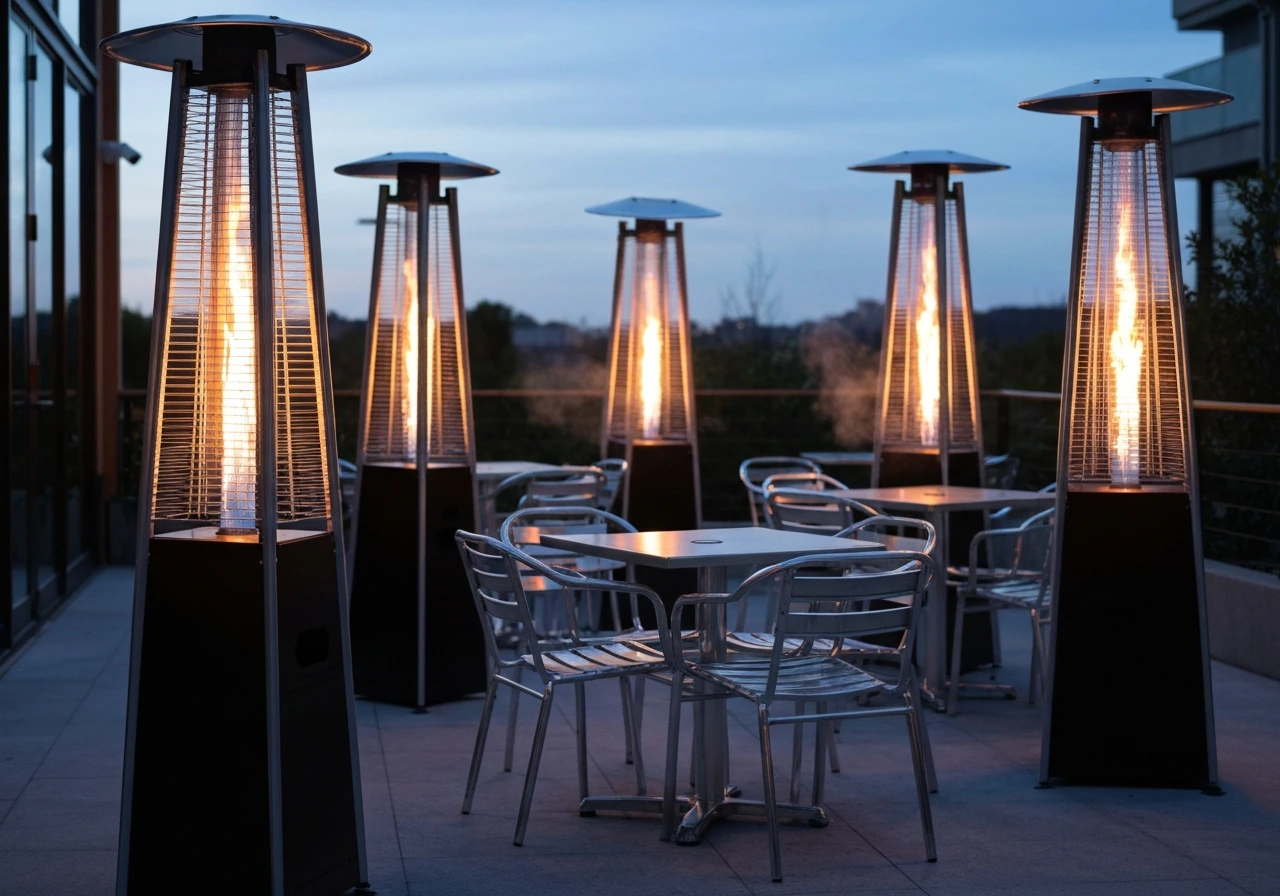
Quick pick: which commercial patio heater is best for your situation
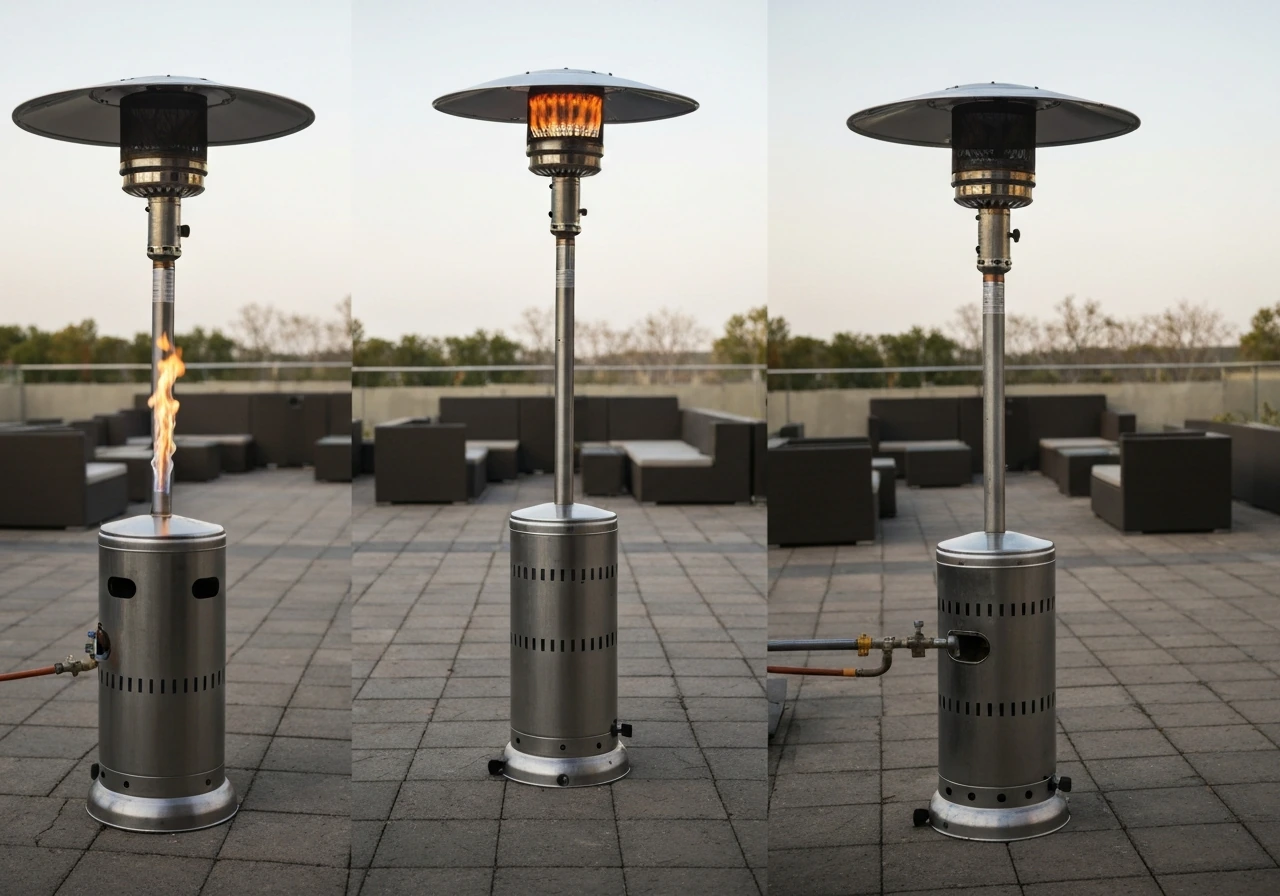
There is no single best commercial patio heater for every setup, but there is almost always a clear winner for your specific situation once you know your fuel access, layout, and budget. Here is a direct breakdown by scenario.
| Your Situation | Best Fuel Type | Recommended BTU Range | Why |
|---|---|---|---|
| Restaurant patio, no gas line, need portability | Liquid Propane | 40,000–46,000 BTU | Tank-fed, no utility hookup, easy to reposition between seasons |
| Bar or restaurant with existing natural gas line | Natural Gas | 40,000–50,000 BTU | Eliminates tank swaps, lower fuel cost per hour, always-on supply |
| Covered patio, pergola, or enclosed canopy | Electric Infrared | 3,000–6,000 watts | No combustion byproducts, precise zone control, silent operation |
| Upscale venue prioritizing ambiance and aesthetics | Pellet or Propane Pyramid | 40,000 BTU | Visual flame appeal; propane pyramid is lower maintenance than pellet |
| Temporary or event-based outdoor heating | Liquid Propane (freestanding) | 40,000–46,000 BTU | No installation, fully portable, available immediately |
| Large open commercial space with high winds | Natural Gas or Propane (mounted) | 50,000+ BTU or multiple units | Mounted units resist wind better; multiple units provide redundancy |
If you are still deciding between fuel types, the next sections give you the detailed comparison and sizing math you need. If you already know propane is your answer, skip ahead to the propane buying checklist.
Commercial sizing: BTUs, coverage area, and how many heaters you need
Sizing commercial patio heating is more important than picking a brand. Get the math wrong and you will either have a cold patio or a patio with so many heaters it looks cluttered and wastes money on fuel.
Coverage area per heater
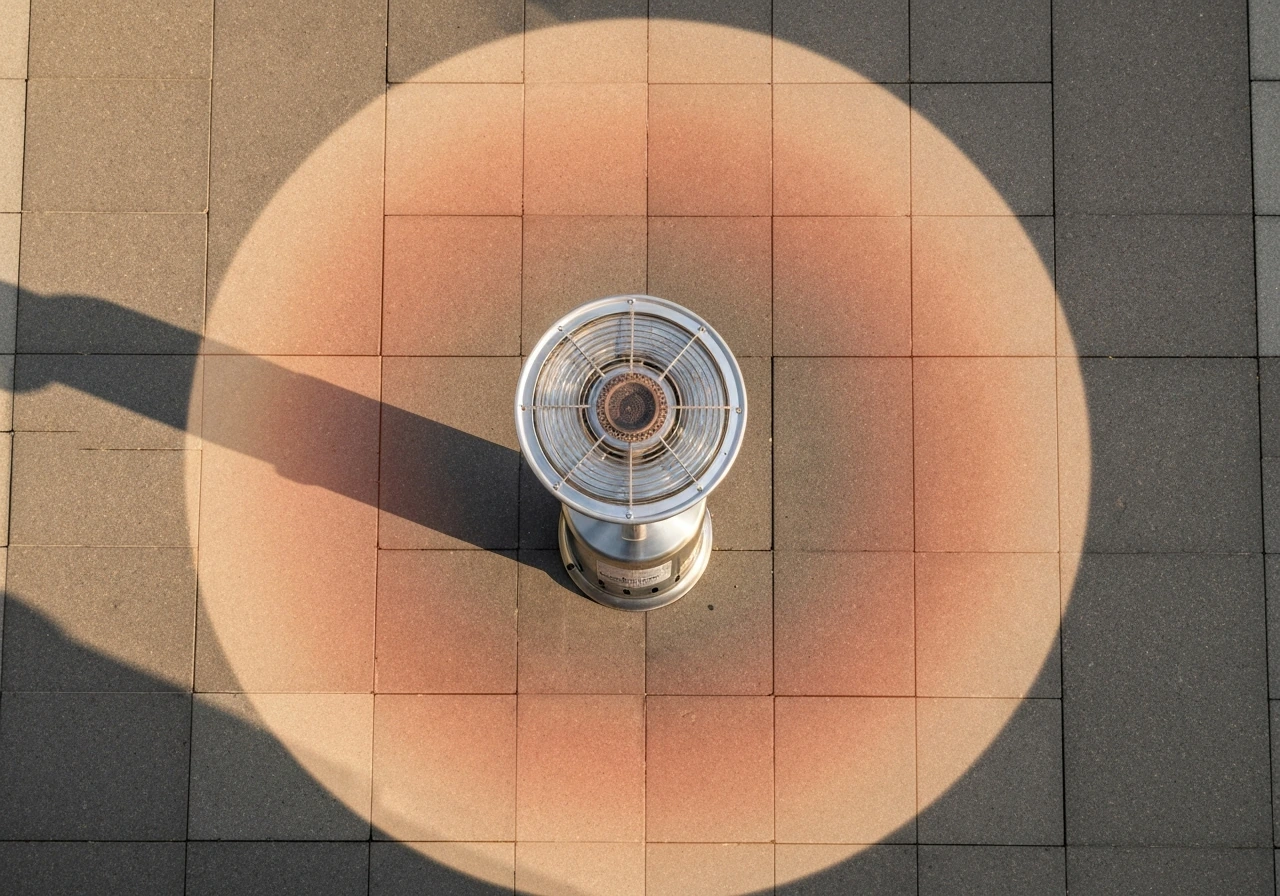
Most commercial-grade propane and gas heaters in the 40,000 to 46,000 BTU range cover roughly a 10-foot diameter area. The Sunglo A270 (40,000 BTU) officially rates its coverage at 10 feet by 10 feet with an average recommended spacing of 12 feet between units. The Backyard Pro Courtyard series (46,000 BTU) lists a 10-foot diameter coverage area. A 40,000 BTU pyramid-style heater like the Hiland heats approximately a 10-foot radius. Those numbers assume calm or lightly breezy conditions. In a fully open or windy commercial patio, expect effective coverage to shrink by 20 to 30 percent.
How enclosures and wind screens change the math
If your patio has windscreens, walls, hedges, or a partial enclosure, heat retention improves significantly. Sunglo's own guidance notes that in a protected patio, heaters can be spaced at 15-foot intervals and still provide adequate comfort in mild climates. That means you may need fewer units than the baseline calculation suggests. Conversely, a completely open rooftop or exposed terrace in a cold climate may require tighter spacing, closer to 10 feet, to deliver usable warmth.
Calculating the number of heaters for your patio
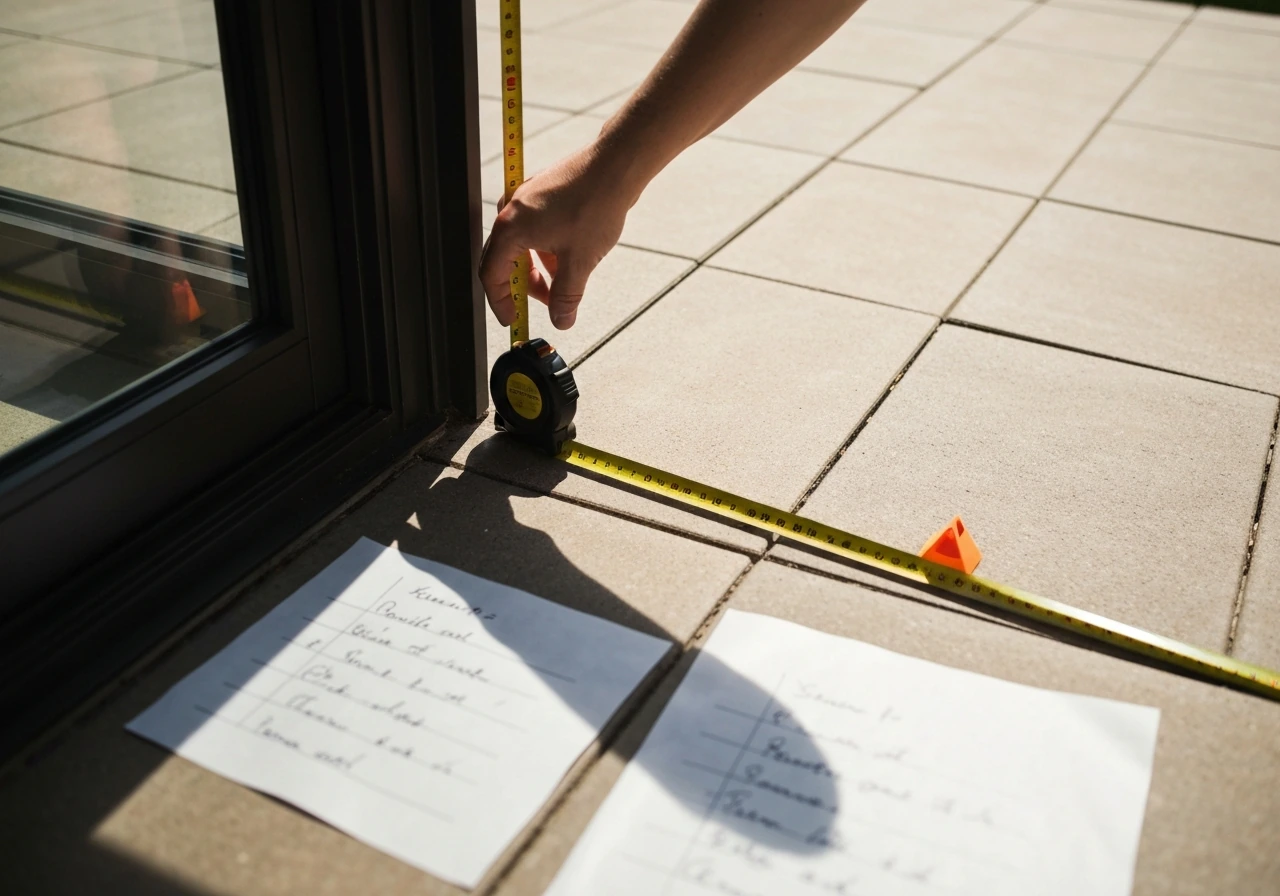
Start with your patio's square footage, then divide by the effective coverage per heater. A standard 40,000 BTU freestanding heater covers roughly 100 square feet (10 ft x 10 ft) in open conditions. Use 150 to 175 square feet per heater if your patio is sheltered or in a mild climate.
- Measure your patio dimensions and calculate total square footage.
- Subtract any areas not needing heat (service corridors, bar counters, planters).
- Divide the heated square footage by 100 (open/windy) or 150 (sheltered/mild) to get the minimum heater count.
- Add one extra unit as a buffer for peak nights or cold snaps.
- Sketch a layout with heaters spaced 12 to 15 feet apart to confirm coverage overlaps without hot spots.
Example: a 600-square-foot open restaurant patio needs at least six 40,000 BTU heaters at 12-foot spacing. The same patio with three-sided windscreens in a mild climate could work with four heaters spaced 15 feet apart. Running the numbers before you buy prevents both under-heating and over-purchasing.
Propane commercial patio heater buying checklist
Propane is the dominant fuel choice for commercial patio heating because it requires no utility hookup, the heaters are portable, and the output is high. But buying a commercial propane heater involves more than just picking a BTU number. Here is what to verify before you commit.
Output and coverage
- Target 40,000 to 46,000 BTU for commercial freestanding use. Units below 30,000 BTU are residential grade and will underperform on a busy patio.
- Confirm the listed coverage area matches your spacing plan. 10-foot diameter is realistic for 40,000 to 46,000 BTU units in average conditions.
- Check whether the heater has variable output or just an on/off valve. Variable output lets you dial back heat on warmer nights and extend tank life.
Safety features
- Require an automatic tilt/tip-over shutoff valve on every freestanding unit. This is non-negotiable for commercial settings with staff and guests moving around.
- Look for ETL or CSA listing. The Backyard Pro Courtyard RNDFHSTL, for example, is ETL listed. Unlisted heaters may fail local permit inspections.
- Anti-tilt shutoff, pilot safety valve, and a CSA/ETL certification together satisfy the most common local fire code requirements.
- Verify the heater includes an automatic safety shutoff in case the flame is extinguished by wind. The AZ Patio Heaters LP-195C and Sunglo A270 both incorporate this feature.
Tank and regulator considerations
- A standard 20 lb propane cylinder runs a 40,000 BTU heater for approximately 10 to 10.75 hours at full output. For a busy commercial patio running 5 to 6 hours a night, plan on roughly two full nights per tank.
- At rated capacity, a 40,000 BTU heater consumes about 0.44 gallons of propane per hour. At roughly 1.8 lbs per hour, a 20 lb tank lasts just over 11 hours at full burn.
- Most commercial freestanding heaters come with a regulator, but confirm it is rated for the heater's BTU output. A mismatched regulator will cause low flame or shutdown.
- For high-volume venues, consider connecting to a larger 40 lb or 100 lb bulk tank with a manifold and hose assembly. This eliminates mid-service tank swaps and reduces per-gallon cost.
- If using standard 20 lb tanks, have a minimum of two spare tanks per heater on hand for weekend service. Running out mid-shift is a real operational problem.
- Always inspect hoses and regulator connections for cracks, kinks, or leaks before each service. If you smell gas, close the tank valve immediately as outlined in the Patio Comfort PC02 safety instructions.
- Propane installations for commercial use should comply with ANSI/NFPA 58 and, where applicable, CSA B149.1. The AZ Patio Heaters LP-195C manual and NPS fire safety guidance both reference these standards.
Build quality and portability
- Choose stainless steel or powder-coated aluminum frames for commercial use. They resist rust, clean easily, and hold up to daily handling.
- Weighted bases with locking wheels are ideal for patios where you reposition heaters between lunch and dinner service.
- Confirm parts availability before buying. The Sunglo A270 explicitly advertises complete parts availability, which matters when a burner assembly or igniter fails mid-season.
- Check the ignition type. Electronic piezo ignition is the most reliable for commercial use where heaters are lit and extinguished multiple times daily.
Side-by-side comparison: propane vs electric vs natural gas vs infrared vs pellet
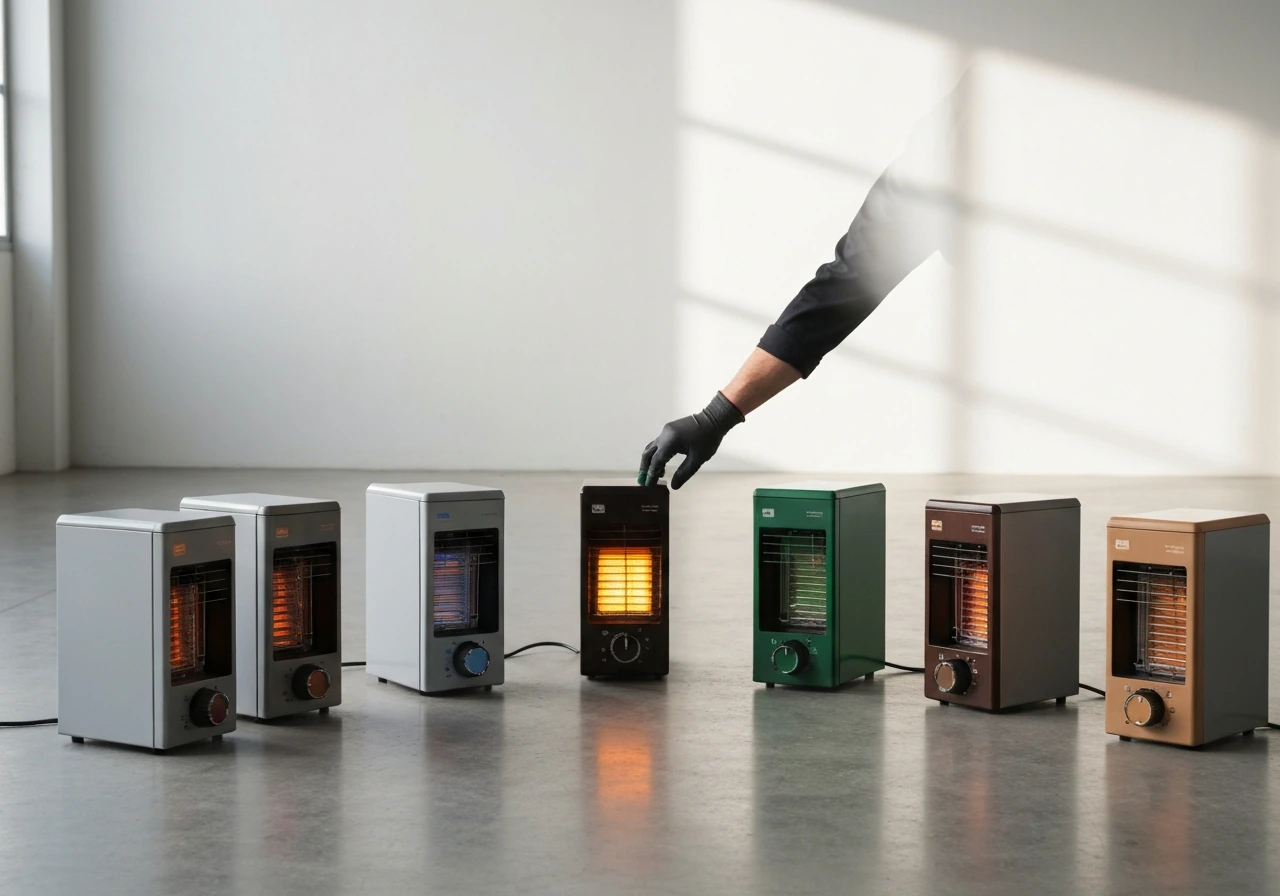
Each fuel type has a legitimate use case in commercial settings, but they are not interchangeable. This comparison covers the attributes that matter most when you are buying for a real business, not a backyard.
| Fuel Type | Typical BTU Range | Coverage per Unit | Portability | Installation | Running Cost | Best For |
|---|---|---|---|---|---|---|
| Propane (liquid) | 40,000–46,000 BTU | 10 ft diameter | High (freestanding) | None (self-contained) | Moderate (~$0.05–0.07/min at full burn) | Patios without gas lines, events, temporary setups |
| Natural Gas | 40,000–50,000 BTU | 10–12 ft diameter | Low (fixed) | Gas line required | Low (lower $/BTU than propane) | Permanent patios with existing gas service |
| Electric Infrared | 3,000–6,000W (10,000–20,000 BTU equiv.) | Zone-specific, directional | Medium (wall/ceiling mount) | Electrical circuit required | Low to moderate (depends on kWh rate) | Covered patios, pergolas, enclosed areas |
| Gas Infrared (radiant) | 30,000–50,000 BTU | 10–15 ft diameter | Low to medium | Gas line or propane | Low to moderate | Overhead mounting, efficient radiant warmth |
| Pellet | 10,000–30,000 BTU | 6–8 ft radius | Medium | None (self-contained) | Variable (pellet cost + maintenance) | Ambiance-focused venues, low-traffic areas |
Propane vs natural gas
Propane wins on flexibility. You can place heaters anywhere on the patio and move them seasonally. Natural gas wins on convenience and fuel cost once you have the line installed. If your venue runs heaters more than 150 nights a year, a natural gas conversion typically pays for the plumbing work within a season or two. If you are running seasonal or event-based heating, propane is the practical choice and keeps your options open. For a deeper look at gas heater options specifically, the best patio heaters gas guide covers natural gas and propane models across both residential and commercial categories. If you are deciding between propane and natural gas, the best patio heaters gas guide can help you compare options and pick the right fit for your setup.
Gas vs electric infrared
Electric infrared is the right answer for covered or enclosed commercial patios. It produces no combustion byproducts, so it is safe for canopied areas where ventilation is restricted. It is also silent and instant-on with precise zone control. The downside is that electric infrared heaters deliver lower absolute BTU output than gas units, so they work best in sheltered spaces where you are supplementing warmth rather than fighting outdoor cold. On an open patio in a cold climate, you will need significantly more electric units to match the output of a propane or natural gas setup.
Pellet heaters in commercial settings
Pellet heaters are genuinely good-looking and create a real flame ambiance, but they require the most maintenance of any option. You are managing fuel hopper refills, ash cleanup, and mechanical components that can fail. For a high-volume restaurant patio, pellet heaters are a secondary or decorative element, not a primary heating solution. For a slower-paced wine bar or boutique hotel terrace where ambiance is the point, they make more sense.
Installation and safety requirements for commercial patios
Commercial patio heater installation is regulated more strictly than residential use. Ignoring local codes is not just a safety risk, it is a liability risk and can affect your business license. Here is what you need to know.
Clearance requirements
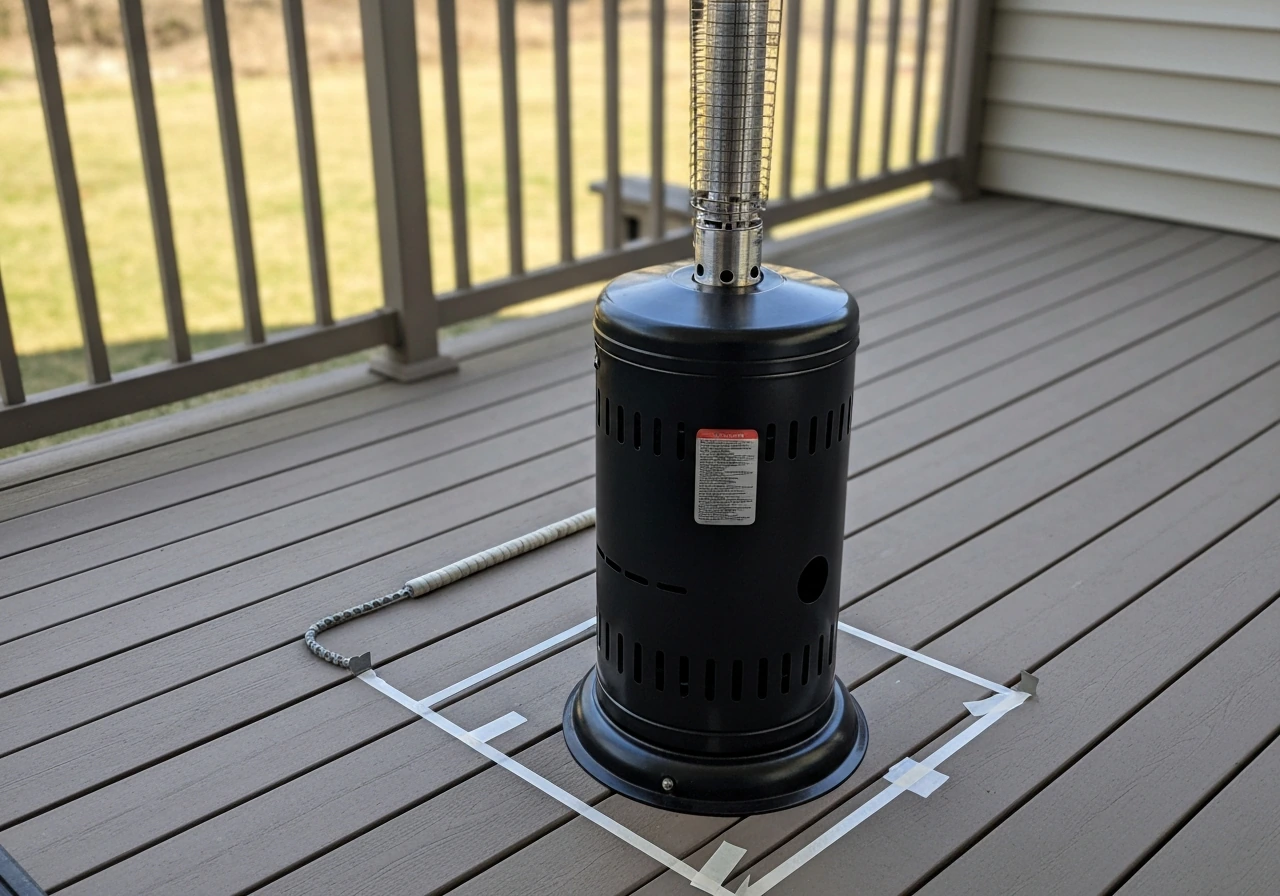
Clearance rules vary by jurisdiction, but several authoritative references give you a working baseline. The National Park Service fire and life safety guidance requires patio heaters not to be located within 5 feet of any structure or combustible material. Portable outdoor heaters used for temporary heating have a separate 6-foot minimum in the same document. Delaware's adopted version of NFPA 58 states heaters must maintain at least 36 inches of clearance from all other materials from the hot surface. For electric infrared heaters, Infratech's installation instructions specify a minimum of 18 inches clearance on all four sides and 36 inches directly in front of the heating element, plus a 6-inch clearance behind the face of the unit provided by mounting brackets.
In practice, plan for at least 3 feet of clearance around freestanding propane and gas heaters in all directions, and keep them away from awning edges, umbrellas, and overhead fabric. For overhead-mounted electric infrared, follow the manufacturer's exact mounting dimensions and have a licensed electrician confirm the circuit.
Code and certification requirements
- All commercial propane heater installations should comply with ANSI/NFPA 58 (Liquefied Petroleum Gas Code) and CSA B149.1 where applicable.
- Gas-fired infrared patio heaters are governed by ANSI Z83.26-2014/CSA 2.37-2014, the standard specifically written for gas-fired outdoor infrared patio heaters for residential and nonresidential installations.
- Require ETL, UL, or CSA listing on every unit you purchase. Unlisted equipment will fail inspections and may void your commercial liability insurance.
- Units must be used only outdoors, used per manufacturer instructions, and installed as listed. This is codified in Delaware's NFPA 58 adoption and is standard language across most jurisdictions.
- Check with your local fire marshal or AHJ (Authority Having Jurisdiction) before installing any fixed or semi-fixed commercial heater. Requirements for tents, canopies, and temporary structures are often stricter than for permanent patios.
- If connecting to a natural gas line, installation must be performed by a licensed gas technician in most states and municipalities.
Ventilation requirements
Propane and natural gas heaters must only be used outdoors with adequate air circulation. They are never appropriate in enclosed or semi-enclosed spaces without verified ventilation meeting local codes. CSA B149.1 has specific sections covering combustion air and ventilation supply for outdoor gas appliance installations. If your covered patio is more than 50 percent enclosed by walls or screens, get a ventilation review before installing gas heaters. Electric infrared has no combustion byproducts and is the safe default for partially enclosed spaces.
Running costs, efficiency, and maintenance
Propane running costs
A 40,000 BTU propane heater burns approximately 0.44 gallons per hour at full output, or about 1.8 lbs of propane per hour. At an average commercial propane price of around $3.50 to $4.50 per gallon (prices vary significantly by region and supplier), you are looking at roughly $1.50 to $2.00 per heater per hour at full burn. A patio with six heaters running five hours on a Friday night costs approximately $45 to $60 in propane. That is a predictable and manageable cost for most food and beverage businesses when set against the revenue from extended patio seating.
A 20 lb propane cylinder gives you roughly 10 to 10.75 hours of full-output runtime on a 40,000 BTU heater. At a bulk rate, larger 40 lb or 100 lb tanks reduce cost per gallon and cut the frequency of tank exchanges. For venues running heaters more than three nights a week, a bulk tank setup nearly always makes financial sense compared to retail 20 lb cylinder exchanges.
Natural gas running costs
Natural gas costs substantially less per BTU than propane in most U.S. markets. The trade-off is the upfront cost of running a gas line and installing permanent connections. Once that infrastructure is in place, natural gas heaters are the most cost-effective option for high-usage commercial patios. There is no tank management, no mid-shift refueling, and no per-exchange delivery fee.
Electric infrared running costs
Electric infrared operating costs depend entirely on your local electricity rate. A 4,000-watt electric infrared heater running at full output consumes 4 kWh per hour. At an average commercial electricity rate of $0.12 to $0.18 per kWh, that is $0.48 to $0.72 per heater per hour. Electric infrared is typically the cheapest to run per hour but covers less area than a 40,000 BTU gas unit, so you often need more units to match the coverage. The efficiency advantage is strongest in covered, sheltered spaces where the radiant heat is not lost to wind.
Maintenance and durability
- Propane and natural gas heaters: inspect and clean the burner head, emitter screen, and pilot assembly at the start and end of each heating season. Carbon buildup on the emitter screen reduces output and can cause ignition failures.
- Check regulator hoses annually for cracks, brittleness, or leaks. Replace hoses every two to three years as a preventive measure, regardless of visible condition.
- Electric infrared heaters require the least maintenance: keep the reflector clean, inspect mounting hardware seasonally, and verify the wiring connections annually.
- Pellet heaters require ash removal after every use and hopper cleaning weekly in high-use settings. Budget for this labor or pellet heaters will fall into disuse quickly.
- Store freestanding propane heaters with tank valves fully closed and covers installed when not in use. Moisture and debris in the burner assembly are the most common causes of ignition failure.
- Parts availability is a real consideration for commercial buyers. Before purchasing any brand, confirm that replacement burners, igniters, and emitter screens are stocked by the manufacturer or a distributor. The Sunglo A270 specifically advertises complete parts support, which is worth noting when comparing commercial-grade options.
Factors that affect actual efficiency
- Wind: the single biggest enemy of outdoor heater efficiency. Even light wind disperses heat faster than the heater can replace it. Wind screens recover most of this loss.
- Ambient temperature: in very cold climates, a 40,000 BTU heater may not achieve comfortable temperatures even at its rated coverage area. In these conditions, move to higher-BTU commercial models or add more units.
- Heater height and angle: freestanding tower heaters work best at the rated standing height. Lowering a heater concentrates heat but reduces coverage radius.
- Operating level: most propane heaters have adjustable output. Running at 70 to 80 percent of maximum output rather than full burn extends tank life and reduces operating cost with only a minor reduction in heat output.
Your commercial patio heater buying checklist
Before you order, run through this checklist. It captures every decision point covered in this guide and ensures you are not missing anything that will cost you money or cause a safety issue after delivery.
- Measure your patio and calculate square footage to be heated.
- Identify your fuel access: existing natural gas line, propane tank availability, or electrical circuits for electric infrared.
- Choose fuel type based on installation reality, not just preference (see the comparison table above).
- Calculate the number of heaters needed: divide heated square footage by 100 (open) or 150 (sheltered) for 40,000 BTU units.
- Confirm your chosen heater has ETL, UL, or CSA listing appropriate for commercial outdoor use.
- Verify the heater includes a tilt/tip-over safety shutoff and automatic flame-failure shutoff.
- For propane: confirm tank size, regulator compatibility, and plan your tank rotation or bulk-tank setup.
- Check local fire code and AHJ requirements for clearances, listing requirements, and any permit needs before installation.
- For gas infrared or natural gas heaters: hire a licensed gas technician for line connection.
- For covered or semi-enclosed patios: assess ventilation requirements before choosing a combustion heater.
- Confirm parts availability and warranty terms for every model on your shortlist.
- Calculate expected running costs per night based on your fuel type and heater count to confirm ROI against extended patio revenue.
The best commercial patio heater is the one that is properly sized, safely installed, fueled correctly, and matched to your specific space. A 40,000 to 46,000 BTU propane or natural gas unit from a reputable commercial manufacturer, with safety certifications and parts support, will serve most commercial patios reliably for years. Get the count right, follow the clearance rules, and you will have a patio that stays open and profitable well into the cold months.
FAQ
Can I use propane or natural gas patio heaters under a covered patio or awning?
Yes, but only if the venue can meet the ventilation requirements for that specific heater and installation. As a rule of thumb from the guide, if your patio is more than about half enclosed, you should not treat it as an outdoor space by default. Ask for the heater’s required clearances, combustion air, and any hood or ventilation guidance, and have the installation reviewed against local code (and the manufacturer’s instructions) before turning it on during service.
What should I do if my patio is open and breezy, even when I use the right BTU range?
Don’t estimate by BTU alone when you have a lot of wind movement or when heaters are blocked by walls or landscaping. The guide notes effective coverage can drop 20 to 30 percent in fully open or windy patios, so treat your spacing plan as a worst-case layout and reduce intervals. Practically, you can add one extra heater beyond the baseline calculation in the windiest zone and reposition the rest to avoid leaving “cold pockets” near seating edges.
When calculating heater coverage, should I use radius or diameter for all heater types?
If you rely on the “10-foot diameter” guideline, confirm you are using the correct interpretation for your heater shape. The guide gives different coverage geometry depending on design, for example a pyramid-style heater is described as heating about a 10-foot radius. Mixing up radius vs diameter can easily cut your heating coverage in half, which then forces you to add units after installation.
How do I plan propane tank swaps for long service nights or special events?
For commercial use, plan a fuel logistics method that matches your service rhythm. The guide estimates cylinder runtime at about 10 to 10.75 hours on a 40,000 BTU heater, so if a heater runs continuously through a long event, one cylinder may not be enough. Set up a swap schedule (or bulk tanks) so you never start a service without guaranteed runtime, and keep spare cylinders staged where permitted by clearance rules.
Can electric infrared heaters replace gas heaters on a very open outdoor patio?
Generally, no. Even when an electric infrared heater is rated for outdoor use, its output may not translate well to an open cold-conditions patio because electric units deliver less BTU than gas. The guide’s approach is to treat electric infrared as a supplement for sheltered spaces, so if your patio is exposed and you need “stand-alone” warmth, increase heater count and confirm coverage assumptions with the manufacturer’s diagrams for your exact model.
If I buy one heater now, can I later switch it from freestanding to wall or ceiling mounting?
Yes, but you can create safety and performance problems if you change the mounting style. The guide emphasizes that overhead-mounted electric infrared heaters must follow the manufacturer’s exact mounting dimensions, and a licensed electrician should confirm the circuit. If you move from freestanding to mounted, or mount to non-rated surfaces, you need an updated installation plan rather than reusing your earlier clearance layout.
Are pellet patio heaters practical for busy restaurant patios?
Pellet heaters need more operational time than the other fuel types. The guide calls out hopper refills, ash cleanup, and mechanical components that can fail, so treat them like an “ambiance feature” unless your venue has staff time and maintenance capacity. If you choose pellets for a commercial patio, budget for more frequent attention during operation and have a backup heating plan for service-critical nights.
How much clearance is realistic in a real restaurant patio layout, not just on paper?
A common mistake is placing heaters too close to fabric, awning edges, umbrellas, or other combustibles to “make the layout fit.” The guide suggests planning at least about 3 feet clearance in all directions in practice, and then following stricter manufacturer or jurisdiction rules where they apply. If your patio layout forces tighter spacing, adjust the heater count or reposition them, rather than compressing the clearances.
What’s the best way to avoid underheating the areas guests actually use?
Use a two-step approach: first size for effective coverage based on openness and wind (including the guide’s reduction factor where relevant), then verify total BTU delivered to the busiest seating area rather than the whole square footage equally. “Underheating” tends to show up where guests sit longest, so align heater zones to table clusters and traffic flow, not just to the overall patio footprint.
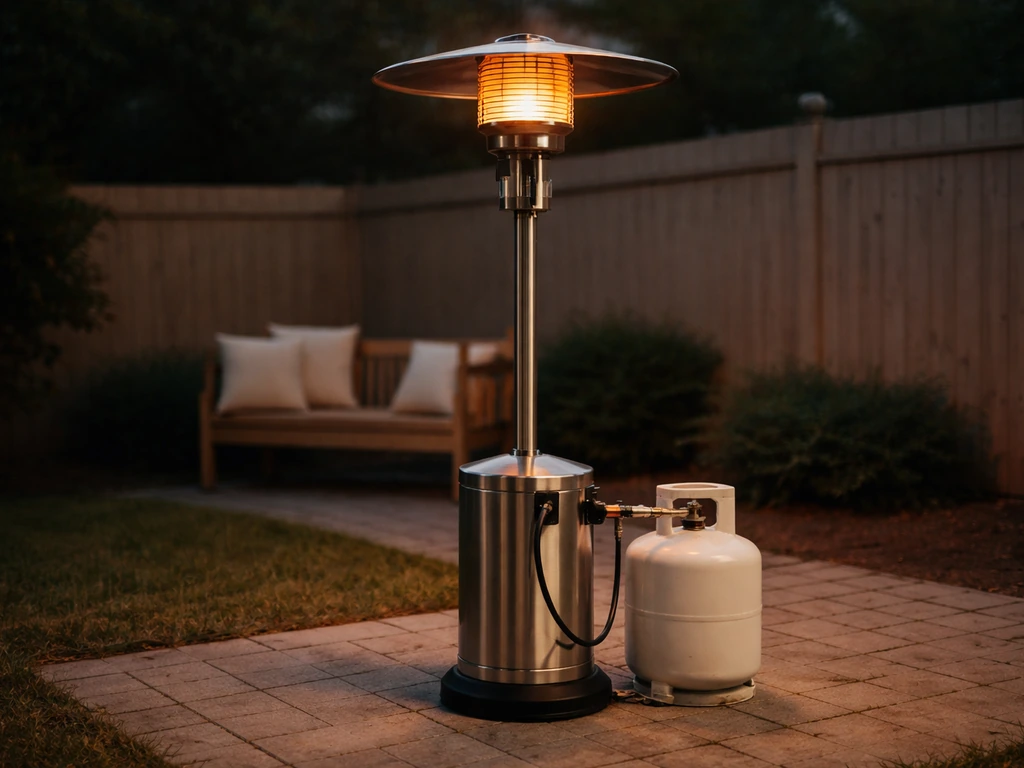
Choose the best gas patio heater with BTU coverage, wind reality, propane vs natural gas costs, and essential safety tip
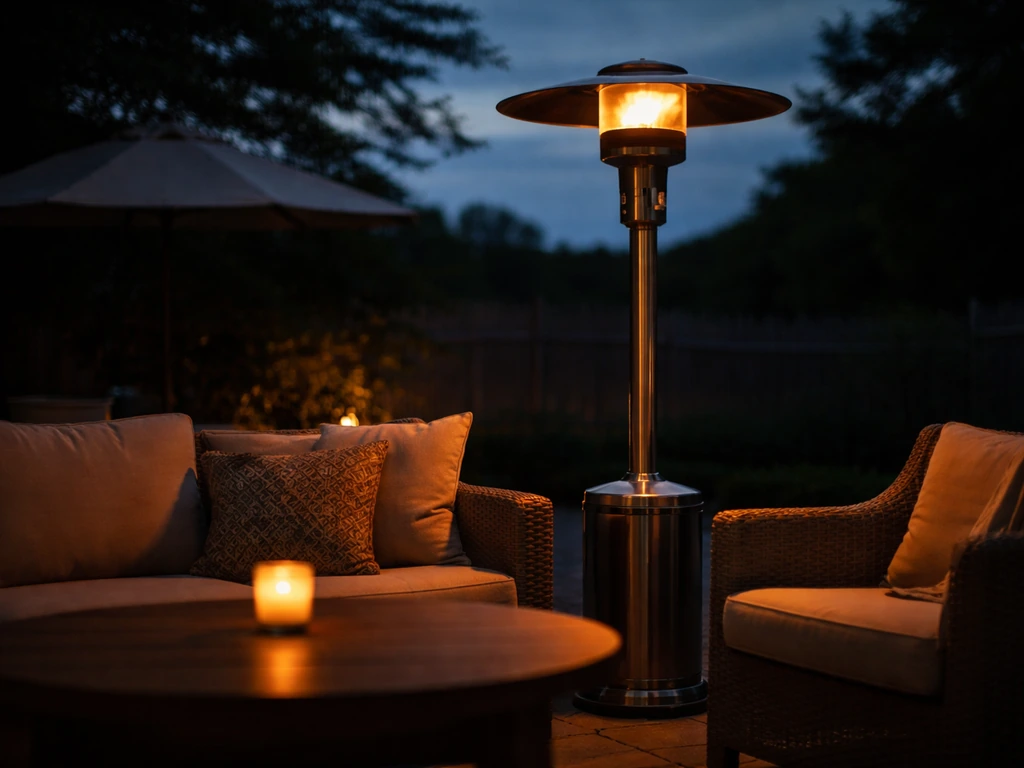
Choose the best patio heater by space, climate, wind, coverage, and budget, comparing propane, electric, gas, infrared,
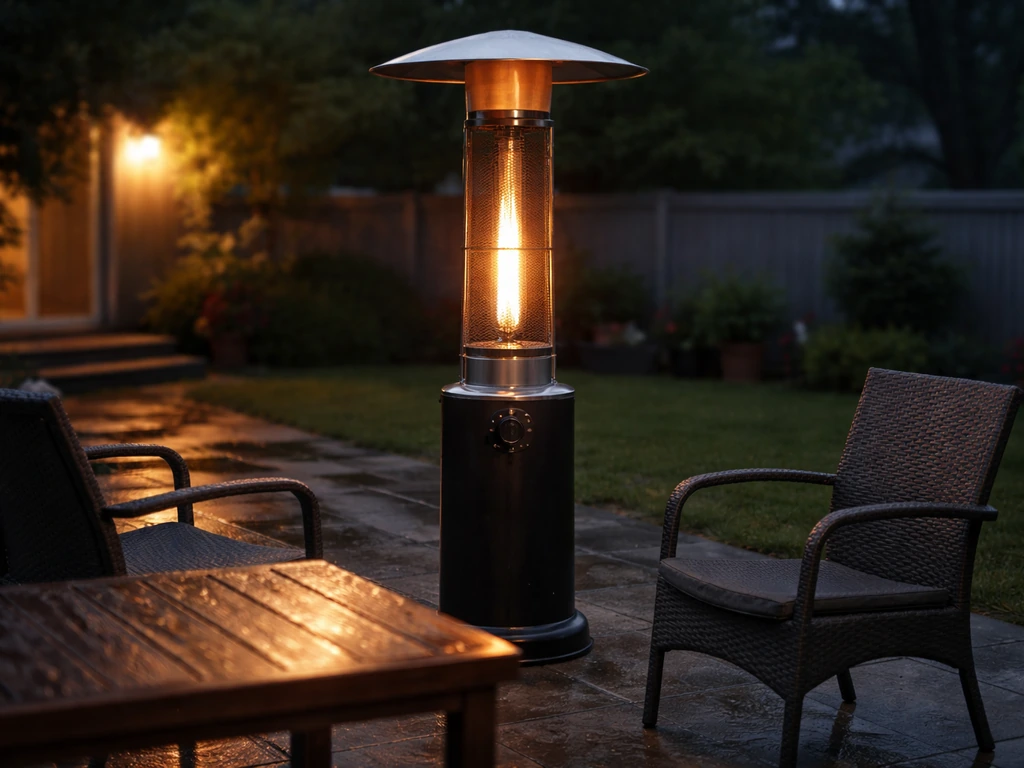
Compare propane, electric, gas, infrared, pellet patio heaters with coverage, cost, power, wind, safety tips and best pi