
The best patio heater for your situation depends on three things: whether your space is open or covered, how much square footage you need to heat, and what fuel source is practical for your setup. If you have a large open patio with no nearby outlets, a blank" rel="noopener noreferrer">propane or natural gas heater putting out 40,000 to 58,000 BTUs is your best bet. If you have a covered or semi-enclosed patio under around 200 sq ft with access to an outlet, an electric infrared heater will perform better and stay safer. Everything else is a matter of nailing down the details, and that's what this guide will help you do.
What Are the Best Patio Heaters Best Type for Your Space

Caleb Vale
18 May 2026
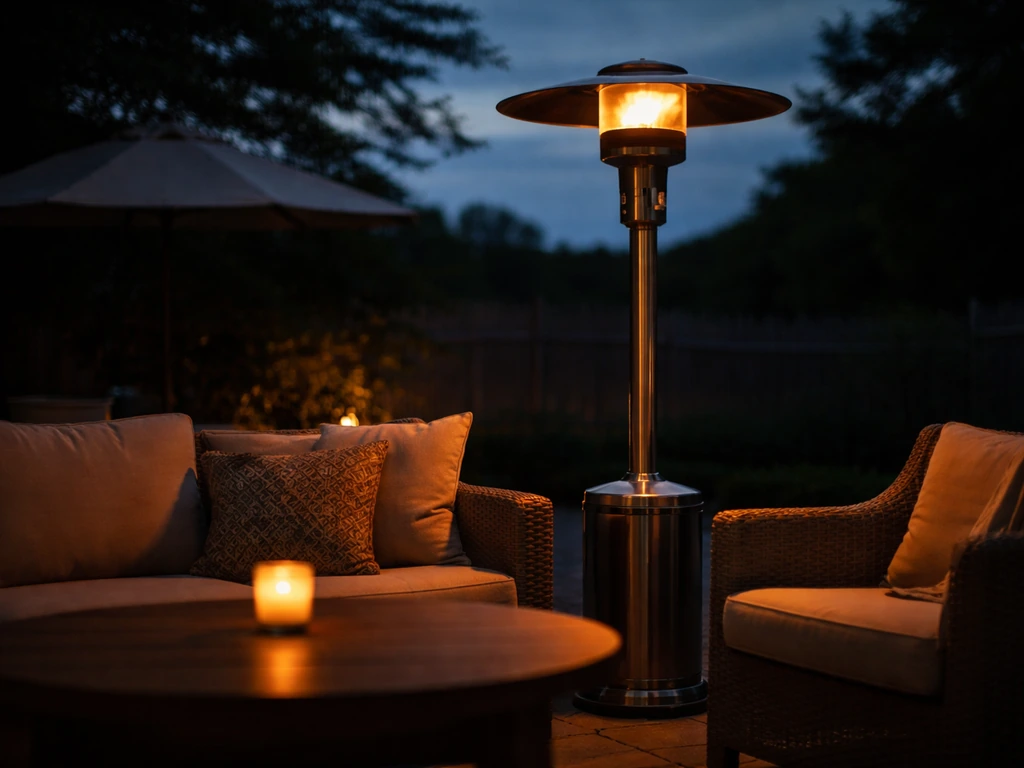
How to choose the right patio heater for your space
Start with your patio's size and layout. A reliable rule of thumb is about 20 BTUs per square foot of patio space. For a covered patio, one heater can realistically serve 1,500 to 2,000 sq ft when positioned correctly, but that number drops fast in open, wind-exposed setups. Most standard freestanding gas heaters have a heating radius of roughly 5 to 10 feet depending on output, so for a larger open area you'll almost always need more than one unit.
Next, think about your climate and wind exposure. Wind is the single biggest enemy of outdoor heating efficiency. A heater that comfortably warms 15 feet of radius on a calm evening can feel barely adequate in a 10 mph breeze. Infrared heaters hold up better in wind because they heat objects and people directly rather than warming the air (which just blows away). For very exposed spots, the practical answer is often multiple smaller infrared units positioned at different zones rather than one big heater.
Finally, consider whether your patio is covered or open. This changes both the heater type and the safety picture. Gas and propane heaters are fine under a roof if the space has at least two sides fully open or a minimum of 25% of the wall area open for airflow. Otherwise, carbon monoxide becomes a real concern. Electric heaters sidestep that entirely, which is why they're the go-to for pergolas, gazebos, and tight covered areas.
Best patio heater types compared
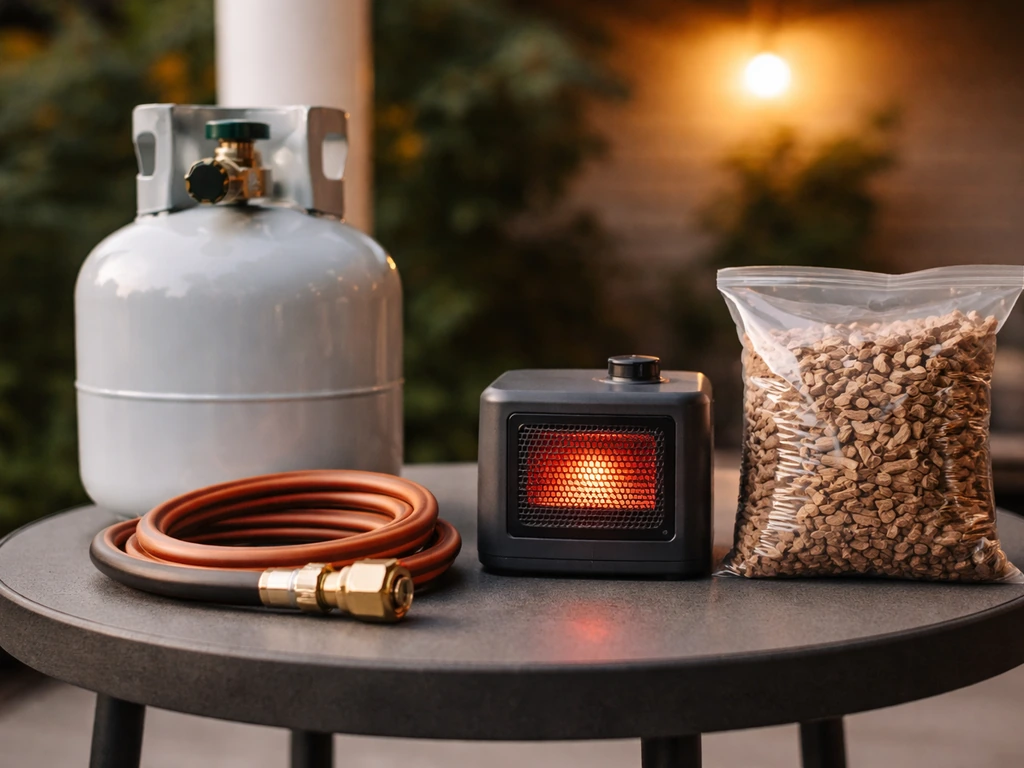
Each heater type has a clear sweet spot. Here's an honest breakdown of how they compare across the factors that actually matter when you're making a purchase decision.
| Type | Typical Output | Best For | Covered/Open | Key Trade-off |
|---|---|---|---|---|
| Propane | 30,000–58,000 BTU | Large open patios, portability | Open or semi-open | Ongoing tank costs, portability limited by tank weight |
| Natural Gas | 30,000–66,000 BTU | Permanent large installations | Open or semi-open | Requires gas line installation, not portable |
| Electric Infrared | 1,500–4,000W (5,100–13,600 BTU) | Covered/enclosed patios, small spaces | Covered preferred | Limited range, needs outlet or hardwiring |
| Gas Infrared | 25,000–50,000 BTU | Commercial or large semi-enclosed patios | Semi-open minimum | Installation complexity, CO safety requirements |
| Pellet | Up to 75,000 BTU | Ambiance + heat, open areas | Open | Fuel storage, feed management, less precise control |
Propane heaters
Propane is the most popular choice for good reason. You get serious heat output, genuine portability, and no need for any permanent installation. The freestanding mushroom-style towers are the classic form factor, and they still work well. The main downside is ongoing fuel cost and the fact that a full 20 lb propane tank adds significant weight. On a windy patio, you'll burn through fuel faster than expected, and that's worth budgeting for.
Natural gas heaters
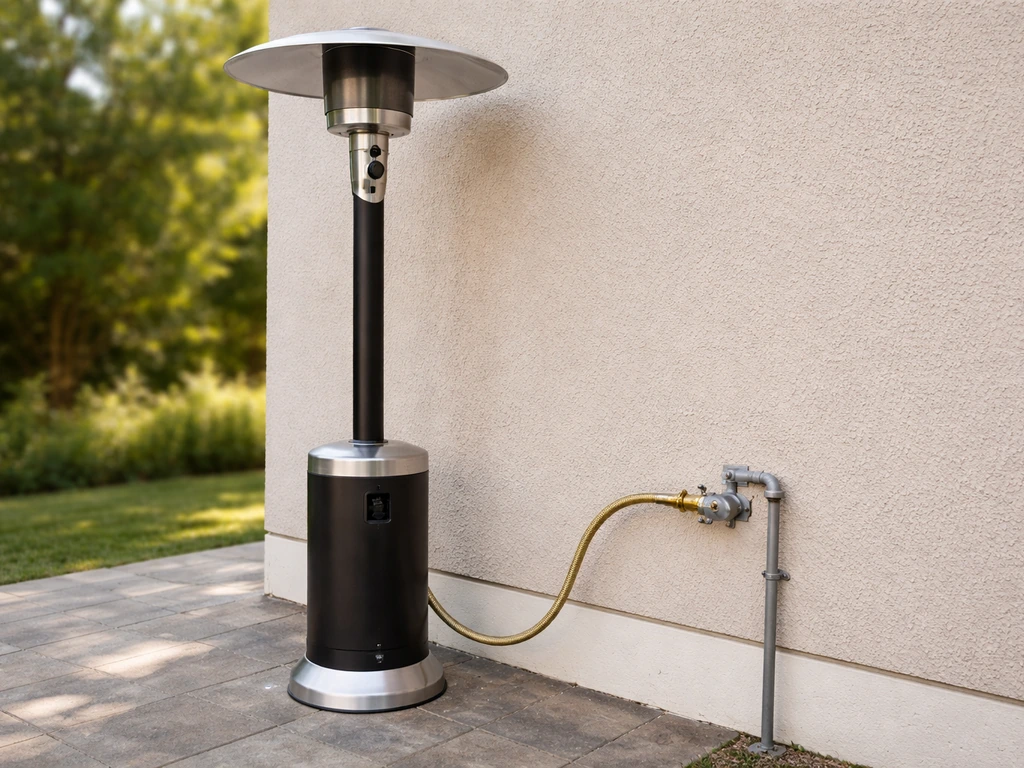
Natural gas heaters are the best long-term choice for a permanent patio setup where you want to run the heater frequently. A 40,000 BTU natural gas heater covering around 314 sq ft runs at roughly 48 cents per hour, which is hard to beat. The catch is upfront installation: you need a gas line run to your patio, which adds cost and requires a professional. Once it's in, though, you'll never deal with swapping tanks. These units also tend to top out at higher BTU ratings, with some commercial models reaching 66,000 BTU.
Electric infrared heaters
Electric infrared heaters are the right call for covered patios, pergolas, and smaller outdoor dining areas. They produce warmth within seconds (sometimes described as instant to about 60 seconds for perceived effect), they're silent, and they have zero combustion emissions. This makes them the only truly safe choice for enclosed or low-ventilation covered spaces. The trade-off is that their raw output is lower than gas, and their effective range is more limited, so you may need two or three units spread across a larger covered space.
Gas infrared heaters
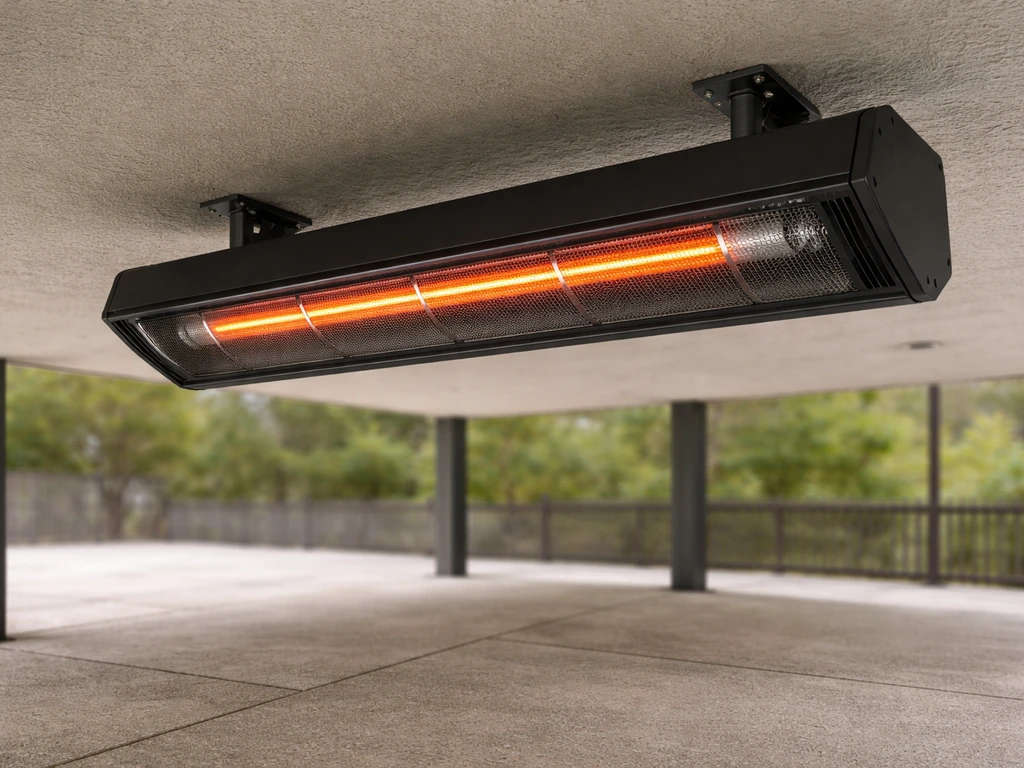
Gas-fired infrared heaters combine the high BTU output of gas with the radiant heating style of electric infrared. They're more common in commercial settings and are typically wall or ceiling mounted. They're excellent for large semi-enclosed commercial patios where you need both power and the radiant feel. Just make sure any unit you're considering is ANSI Z83.26 / CSA 2.37 certified, which is the recognized safety standard for this category.
Pellet heaters
Pellet patio heaters are the newest mainstream category, and they're genuinely interesting if you want ambiance alongside heat. Current models like the FlamePro 81" steel patio heater available at Costco claim outputs up to 75,000 BTU with a 120 sq ft coverage radius and use a gravity-fed pellet system, so there's no electricity required to feed fuel. The downsides are real though: you need to store pellets, manage fuel loading, and control is less precise than a dial on a gas heater. Think of pellet heaters as the campfire experience in a more structured format.
Best patio heater by use case
Small covered patio or pergola (under 200 sq ft)
Go electric infrared, wall or ceiling mounted. You don't need the BTUs of a gas unit, and you absolutely benefit from the zero-emission operation. A 1,500 to 2,000W unit is usually enough. Mount it at or above 7 feet from the floor and angle it toward the seating area. Infrared heater geometry matters, including mounting height and orientation under overhangs or pergolas, and that may reduce effective output so you sometimes need multiple emitters instead of a single heater Mount it at or above 7 feet from the floor and angle it toward the seating area.. No ventilation concerns, no fuel costs, just plug in and go.
Large open patio for gatherings (over 300 sq ft)
A high-output natural gas or propane heater is the right tool here. Aim for at least 40,000 BTU, and plan for one heater per zone of seating rather than one heater for the whole area. If you're using propane and don't have a gas line, position heaters centrally in each seating cluster and make sure they're sheltered from the prevailing wind direction where possible.
Windy, exposed areas
This is where multi-zone infrared wins. Use multiple electric or gas infrared units positioned at different angles across the seating area rather than relying on one large convective heater. Radiant heat warms people and surfaces directly, so even if the air is moving, you still feel the warmth. Adding physical windbreaks (screens, planters, fencing) also meaningfully improves effective coverage for any heater type.
Under-cover commercial or restaurant spaces
For commercial use, ceiling or wall-mounted gas infrared heaters with ANSI Z83.26 certification are the standard choice. They keep floor space clear, direct heat exactly where customers are sitting, and can handle the hours of continuous operation a restaurant requires. Make sure your space meets the ventilation minimums (at least two open sides, or 25% of wall area open) before using any gas unit in this setting.
What 'works best' actually means: performance factors to look for
Marketing claims on heater boxes can be misleading. Here's what the specs actually mean in practice and what to look for when comparing models.
- Heat output (BTUs or watts): More isn't always better. Match output to your actual space. Oversized heaters waste fuel; undersized ones disappoint. Use the 20 BTU per sq ft rule as your starting anchor.
- Effective coverage radius: Manufacturer claims are usually measured in still air on a calm day. In real-world conditions with any wind, cut that radius estimate by 20 to 30 percent.
- Radiant vs. convective heat: Radiant (infrared) heats you directly and works better in wind. Convective heats the air and works better in enclosed or calm spaces.
- Controls and thermostat: Look for adjustable heat settings at minimum. A thermostat or timer is a genuine quality-of-life upgrade, especially on electric models. Remote controls are worth paying for on ceiling-mounted units.
- Safety features: Tip-over shutoff is non-negotiable on any freestanding gas or propane unit. Under the ANSI Z83.7 standard, a compliant tip-over shutoff should cut off fuel within seconds of the unit tipping. Also look for overheat protection on electric models.
- Weather resistance: Check the IP rating on electric units for moisture resistance. For gas heaters, look for stainless steel burner components and corrosion-resistant finishes if you live in a humid or coastal climate.
- Portability: Freestanding propane units with wheels are genuinely portable. Natural gas and hardwired electric units are fixed. Know which you need before you buy.
Buying guide checklist: what to confirm before you purchase
Run through this list before finalizing any heater purchase. It covers the practical details that most buyers only think about after delivery.
- BTUs or watts vs. your square footage: Calculate your space, apply the 20 BTU/sq ft rule, and confirm the unit hits that number at its standard setting.
- Fuel type availability: Do you have a natural gas line on your patio? A nearby electrical outlet with the right amperage? Or will you be managing propane tanks? Be honest about what's actually convenient.
- Fuel cost and runtime: A 40,000 BTU natural gas unit runs around 48 cents per hour. Propane costs more per BTU than natural gas in most markets. A 20 lb propane tank at 40,000 BTU output gives you roughly 9 to 10 hours of run time. Electric rates vary by region but are typically predictable.
- Portability needs: Do you store your heater between seasons or move it around? If yes, propane with wheels is your category. If it stays put, natural gas or hardwired electric will be more cost-effective long term.
- Weather and UV resistance: Look for powder-coated or stainless steel construction for durability. Check whether the unit comes with a cover or if one is available.
- Safety certifications: For gas units, look for CSA or UL certification and specifically ANSI Z83.26 compliance for gas infrared models. For electric units, look for ETL or UL listing.
- Installation requirements: Confirm ceiling height (no gas or propane unit should be mounted below 7 feet from the floor), clearance to combustibles, and ventilation for any gas model used under a roof.
- Warranty and parts availability: Heater components like burner tips, igniters, and thermocouples wear out. Check that the brand sells replacement parts and offers at least a one-year warranty.
Installation and safety basics you actually need to know
Placement and clearance
The 7-foot rule is the most important starting point: no patio heater should be installed with its heating element below 7 feet from the floor. This applies to wall and ceiling-mounted units and freestanding tower heaters alike. Beyond height, maintain clearance from combustible materials like wood beams, fabric furniture, umbrellas, and awnings. Each manufacturer specifies exact clearances in their manual, and you should treat those numbers as hard limits, not suggestions.
Ventilation for gas heaters under a roof
Using a propane or natural gas heater under any kind of roof or overhead structure requires real ventilation. The guideline is that the space should have at least two sides completely open, or a minimum of 25% of the total wall area open to the outside. If your covered patio doesn't meet that threshold, stick with electric. This isn't about comfort, it's about carbon monoxide accumulation, which is genuinely dangerous in insufficiently ventilated spaces.
Wind considerations and positioning
Position gas heaters on the leeward (sheltered) side of your patio where possible. Wind affects both comfort and efficiency, and consistent gusts can actually cause some gas heaters to malfunction or extinguish. The ANSI Z83.26 standard for gas outdoor infrared heaters explicitly addresses wind performance requirements, so look for certified units if you're in a consistently breezy area. Physical windbreaks like privacy screens or planter rows make a meaningful difference and cost almost nothing compared to the alternative of running a heater at full output just to fight the wind.
Propane-specific safety
Always use the pressure regulator and hose assembly that came with the heater, or an equivalent certified replacement. Don't improvise with non-rated hardware. Store spare propane tanks upright, away from the heater and from any enclosed space. Check the hose and connections for wear or leaks before each season, and use a soap-and-water test at the connections when you hook up a new tank.
Carbon monoxide risks
Any gas combustion heater produces CO as a byproduct. Outdoors with proper ventilation, this disperses harmlessly. The danger comes when people try to use propane or natural gas heaters in spaces that are too enclosed: a three-season room with the windows shut, a garage, or a tightly wrapped tent. If the space is enclosed enough to feel like a room, it's not appropriate for a combustion heater. Use electric infrared in those situations.
Top picks and recommendation framework
Rather than a one-size-fits-all list, here's how to think about the best pick for your specific situation, plus the category leaders worth looking at now.
Best overall: high-output propane tower (40,000+ BTU)
For most homeowners with an open or semi-open patio who want versatility and strong heat without a permanent installation, a quality 40,000 to 46,000 BTU propane tower heater is the best starting point. Look for a cast iron burner, a reliable piezo igniter, a tip-over shutoff, and a CSA-certified rating. Brands like AZ Patio Heaters and similar mid-range manufacturers consistently deliver on these basics without unnecessary markup. Expect to pay $150 to $300 for a reliable residential unit.
Best for covered patios: wall-mounted electric infrared
A 1,500 to 2,000W wall or ceiling-mounted electric infrared heater is the right call for pergolas, covered patios, and screened porches. Look for an IP55 or higher weather resistance rating, adjustable heat settings, and ideally a remote or timer. This is the safest category for enclosed spaces, and the operating cost is predictable. Mount at 7 to 9 feet for best coverage and angle toward the seating area.
Best for permanent large-patio setups: natural gas
If you're investing in a permanent outdoor entertaining area and use your patio heater more than 30 to 40 hours per season, natural gas pays off. The per-hour operating cost (around 48 cents at 40,000 BTU) is lower than propane in virtually every market, and you eliminate the tank management hassle. The upfront gas line installation is the only real barrier. For homes with existing outdoor gas connections (for a grill, for example), this is an easy addition.
Best for commercial use: ceiling-mounted gas infrared
For restaurant patios and commercial spaces, ceiling-mounted gas infrared heaters with ANSI Z83.26 certification are the professional standard. They keep the floor clear, direct heat precisely at table height, and handle continuous commercial operation. Look for ETL or similar third-party certification on the specific model, not just the brand. If you're evaluating multiple units, the best commercial patio heaters section of this site goes deeper on commercial-specific criteria.
Best for ambiance seekers: pellet heater
If you want the look and feel of a fire alongside real heat output, a pellet heater like the FlamePro at 75,000 BTU is genuinely impressive on paper and creates a focal point for an outdoor gathering. Just go in with realistic expectations about fuel management and the fact that you can't dial it up or down as quickly as a gas unit. It's a great choice for patios where ambiance matters as much as pure heating efficiency.
How to make your final call
Use this framework: covered and small means electric infrared; open and large means propane or natural gas; frequently windy means multi-zone infrared; permanent and high-use means natural gas; commercial means certified gas infrared; ambiance-focused and open means pellet. If you're still on the fence about which fuel type is the right long-term fit for your patio, the best patio heater types guide on this site walks through the trade-offs in even more detail. For buyers specifically comparing propane and natural gas options for larger spaces, the best patio heaters gas guide covers those categories side by side.
FAQ
How many patio heaters do I actually need for my space?
It’s usually better to warm the seating zone than try to heat the entire patio air. Start by counting the number of distinct “clusters” of chairs or tables, then match heater placement so each cluster has direct line of sight to a radiant source (especially for infrared). If your patio is open and windy, plan on multiple smaller heaters or multi-zone infrared rather than one unit rated for a big radius on paper.
Are patio heater BTU ratings the best way to compare models?
BTU ratings can mislead because manufacturers often quote ideal, calm-air conditions. For open patios with wind, real comfort is often determined by windbreaks, mounting height, and whether the heater is radiant (infrared) or convective (air warming). Use the 20 BTU per square foot rule as a baseline, then adjust by expecting reduced performance in breezes and by aiming for zone coverage.
Can I use a propane or natural gas patio heater under a roof?
A propane tower heater can be used under an overhead structure only if the area has meaningful airflow (at least two fully open sides, or at least 25% of wall area open). If the space feels like an enclosed room when you’re sitting there, don’t use a combustion heater, switch to electric infrared, or rework the layout so you can keep doors or sides open.
Why do some heaters feel weak even if their BTU rating is high?
A good “instant comfort” test is to look for radiant heat reach, not just total BTUs. Infrared heaters typically feel warm within about a minute because they heat people and nearby surfaces. If you see delayed comfort or you only feel heat very near the heater, it usually means the unit is undersized for your seating distance or blocked by wind, umbrellas, or furniture.
What’s the best way to handle windy patios when choosing a heater?
Freestanding gas or propane heaters can be less efficient in gusty areas because flame and heat output can be affected by wind. Position the heater on the sheltered (leeward) side when possible, and if you’re in a consistently breezy location consider ANSI Z83.26 certified outdoor infrared gas models or use multiple infrared units spread across zones.
Where should I mount an electric infrared heater for best coverage?
For most wall or ceiling mounted electric infrared units, aim the panel so the radiant beam hits the seating area, not the floor. Mounting below the 7-foot minimum reduces safe clearances and also shortens the effective comfort zone, which can force you to run at higher output. If you have adjustable models, fine-tune the angle so people in chairs get direct line-of-sight heat.
What safety steps should I take before the first season with a propane heater?
Don’t use non-rated parts. For propane, always use the regulator and hose that came with the heater or an equivalent certified replacement, and replace worn hoses rather than trying to “make it work.” Before first use each season, check connections for leaks using a soap-and-water test, and verify the cylinder is stored upright in an appropriate location.
When does natural gas become worth it compared with propane?
If you already have a grill or other outdoor gas connection, adding a patio heater is often the simplest path to natural gas, but it still requires professional installation and correct line sizing. The key decision point is whether you’ll run the heater more than roughly 30 to 40 hours per season, since that’s where natural gas operating cost typically starts to outweigh propane tank management.
What should I look for if I’m buying a heater for a restaurant patio?
Look for continuous operation suitability and third-party certification on the specific unit, not just the brand name. For commercial gas infrared heaters, ANSI Z83.26 certification matters, and many buyers also verify ETL or similar certification for the exact model. Also confirm that your patio ventilation meets the outdoor-use airflow requirements before any combustion heater is used.
What are the practical downsides of pellet patio heaters compared with gas?
A pellet heater can be a great centerpiece, but don’t expect it to behave like a gas heater. It’s harder to dial output quickly, and you’ll need an ongoing workflow for storing pellets and loading the hopper. If your main goal is predictable temperature control for changing crowd sizes, gas or electric infrared is usually the better fit.
What counts as “too enclosed” for a propane or natural gas patio heater?
If you have a three-season room, a garage, or a tent-like setup where windows are closed and it feels enclosed, you should not use combustion heaters there. In these scenarios, switch to electric infrared and use it outdoors in a properly ventilated open area. For semi-covered areas that do meet airflow thresholds, choose combustion only if ventilation conditions are clearly satisfied.
Next Articles
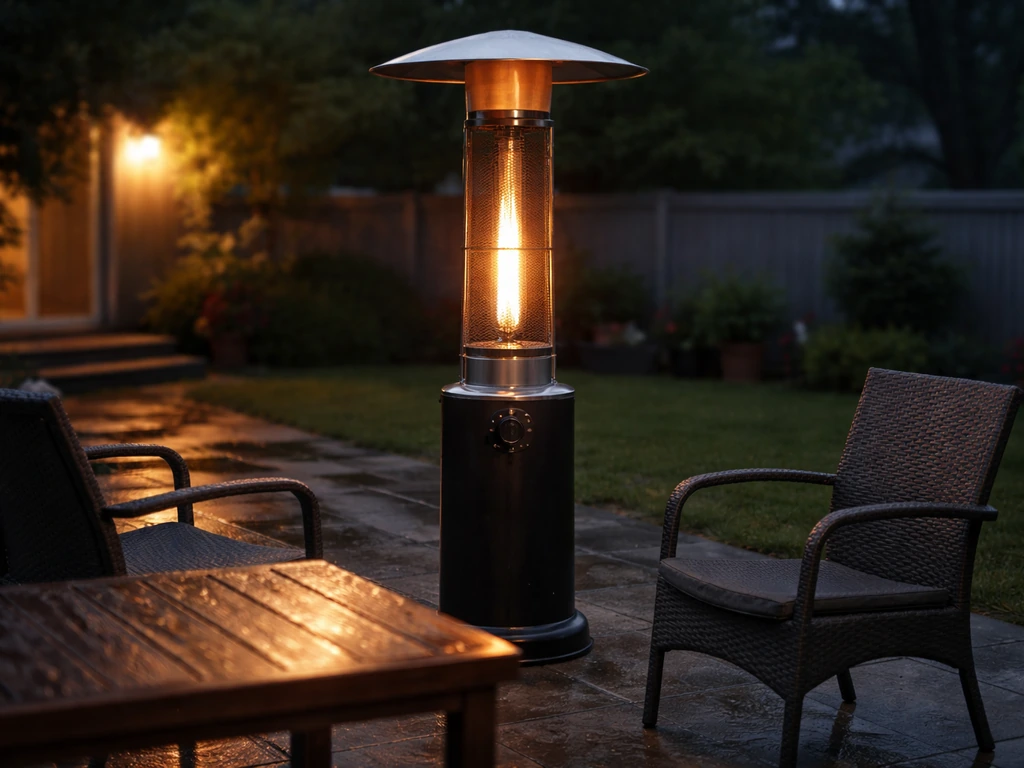
Best Patio Heaters Buying Guide: Propane, Electric, Gas
Compare propane, electric, gas, infrared, pellet patio heaters with coverage, cost, power, wind, safety tips and best pi
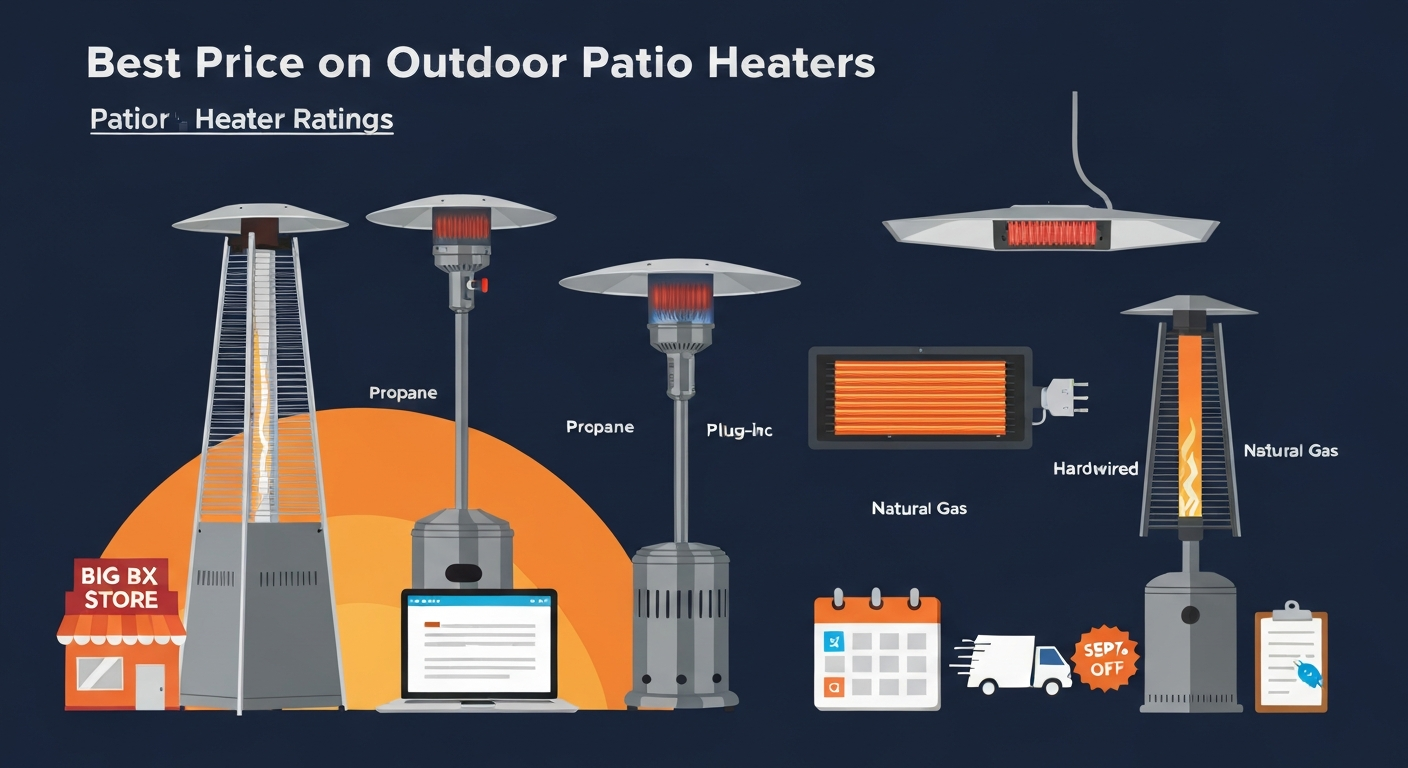
Best Price on Outdoor Patio Heaters: Compare Costs & Deals
Score the best price on outdoor patio heaters, price ranges, top picks, deal tactics, total-cost & safety checklist.
Where Can I Rent Patio Heaters Near Me Today
Find where to rent patio heaters near you today, choose the right fuel type, compare costs, and book safely.