
A patio heater is an outdoor appliance designed to keep people warm on a porch, deck, or open terrace by projecting heat outward rather than warming an enclosed room. If you are comparing options, knowing what the best patio heaters are for your space, fuel type, and wind exposure is the fastest way to narrow it down. The best ones use radiant (infrared) technology, which heats people and surfaces directly instead of warming the surrounding air.
Best Patio Heaters Buying Guide: Propane, Electric, Gas

Caleb Vale
30 Apr 2026
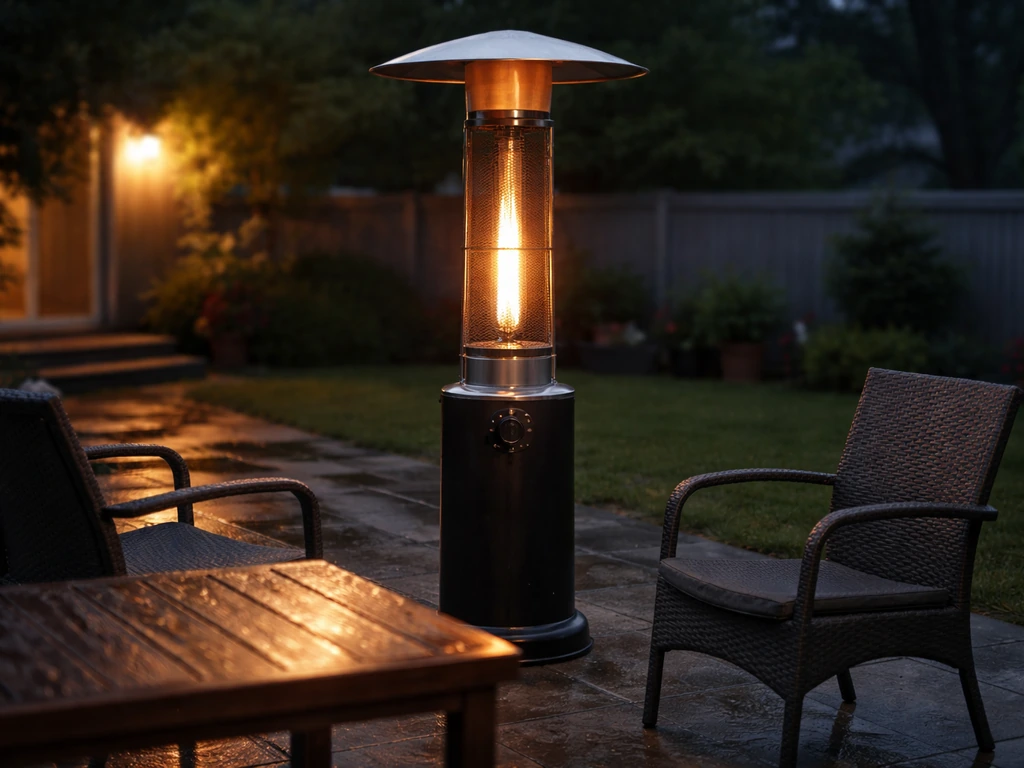
That distinction matters more than most buyers realize: convection-style heat warms the air around you, which then rises and disperses almost instantly outdoors. Radiant heat travels through open air and lands on you, which is why infrared heaters work in a light breeze while a forced-air unit would be nearly useless outside.
What a patio heater actually does (and why radiant heat wins outdoors)
Every patio heater works by converting a fuel source, propane, natural gas, electricity, wood pellets, or a mix of gas and infrared elements, into usable heat that reaches people sitting or standing nearby. The fundamental split is between convective heating (warming air) and radiant heating (warming objects and people directly). Outdoors, radiant wins every time.
Bromic has published research on this, and it lines up with what you observe in practice: the moment a breeze picks up, a convection heater becomes almost useless because the warmed air blows away before it reaches anyone. Radiant energy travels in a beam, like sunlight, so it still warms you even when there is a light wind.
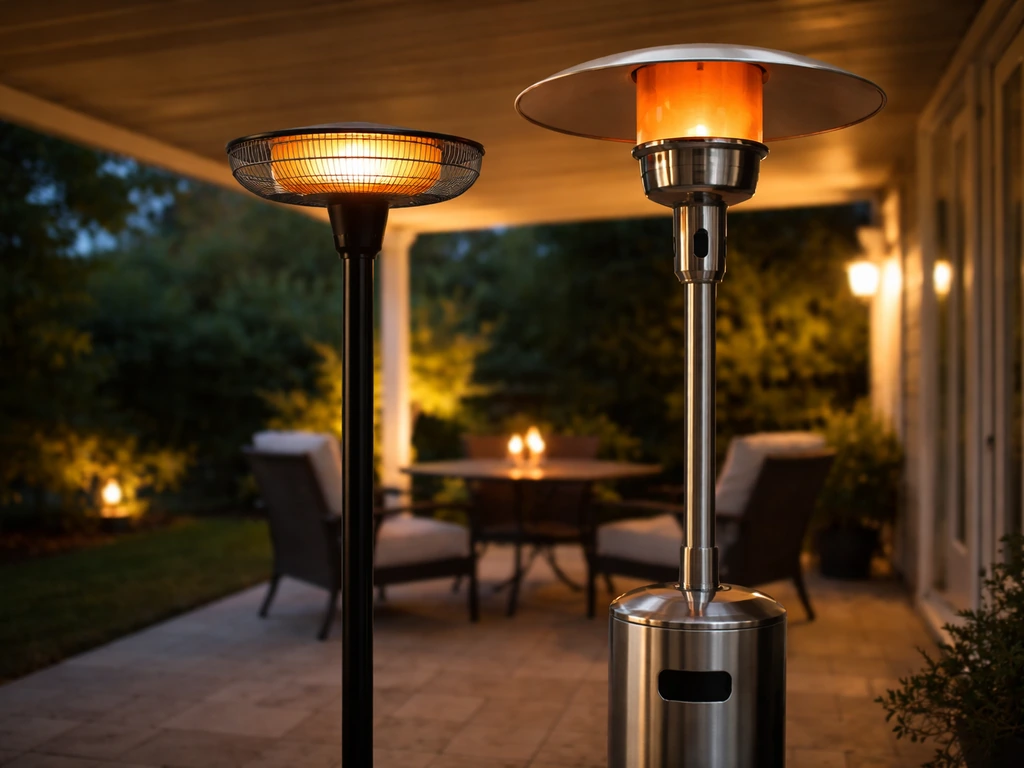
Most quality patio heaters today use radiant or infrared elements for exactly this reason, even gas-fired mushroom-style heaters use a radiant reflector dish to direct heat downward and outward.
Coverage area and BTU or wattage output are the two numbers that translate heater type into real-world performance. A heater rated at 30,000 BTU will comfortably warm a modest seating area, while 48,000 to 60,000 BTU models are built for larger open patios. Electric models are rated in watts, with serious outdoor units starting around 1,700 watts and going up to 6,000 watts for commercial-grade installations.
The five types of patio heaters
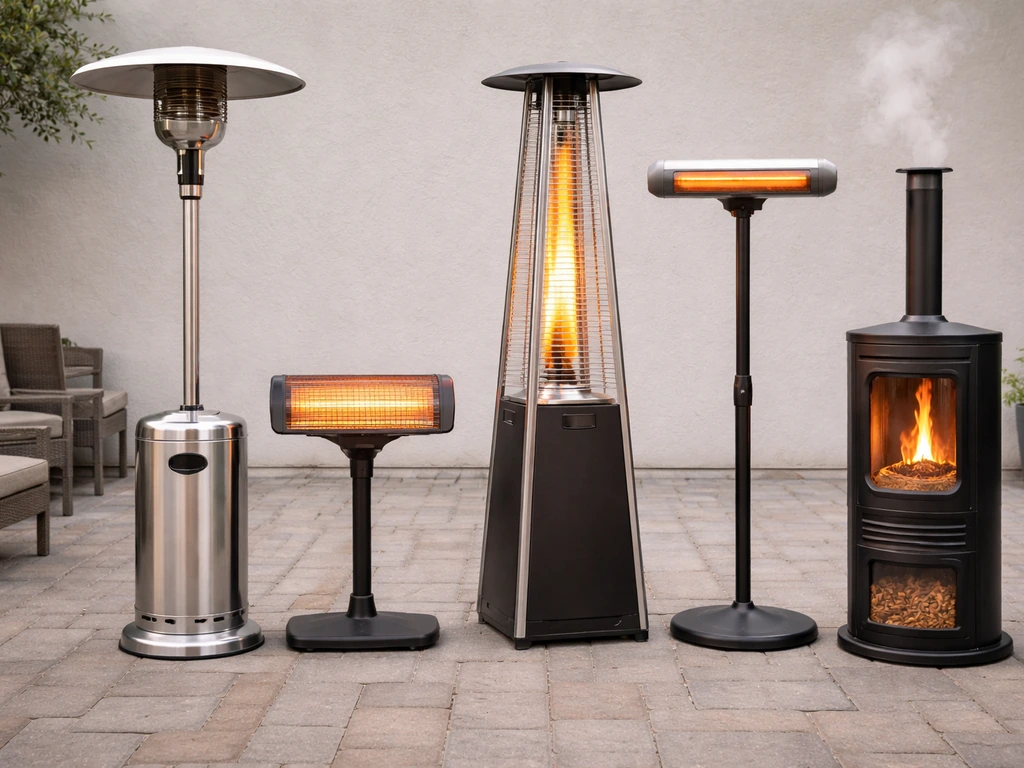
Each fuel type has a real use case and real trade-offs. Here is a plain-language breakdown of all five categories the market offers today.
Propane patio heaters
Propane heaters are the most popular choice for residential patios because they are completely portable and require no electrical hookup or gas line. You connect a standard 20 lb tank and you are done. Output typically runs from about 30,000 BTU on the low end to 48,000 or even 60,000 BTU on high-output models, which is enough to heat a generous outdoor seating area. Mr. Heater's 48,000 BTU portable propane model and Hiland's 48,000 BTU freestanding heater are common examples of the mid-to-upper range. The downside is tank management: a 20 lb cylinder lasts roughly 8 to 10 hours at full output, so you will be refilling or swapping tanks regularly if you use the heater often.
Electric patio heaters
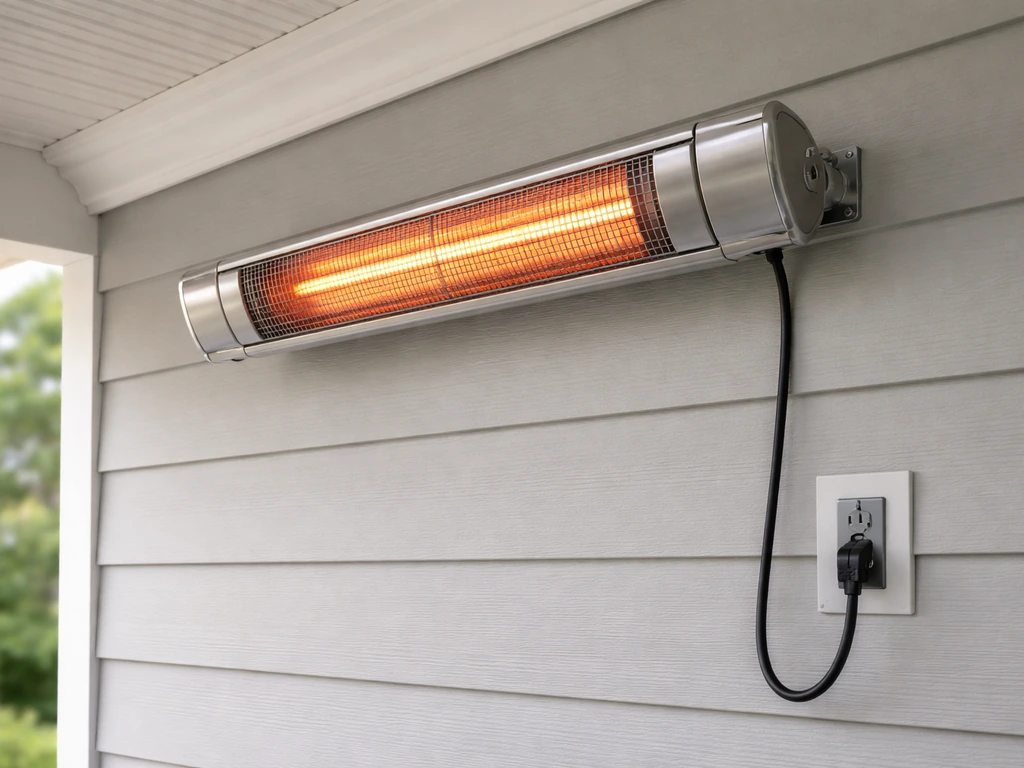
Electric radiant heaters are the cleanest and lowest-maintenance option. They plug into a standard or hardwired outlet, produce zero emissions at the point of use, and turn on instantly with no warmup period. Output ranges from modest 1,500-watt wall-mount units to serious 4,000-watt and 6,000-watt ceiling-mount heaters like the Bromic Tungsten Smart-Heat Electric series. They work especially well on covered patios, pergolas, and restaurant dining areas where you can mount them overhead and direct the beam exactly where guests sit. The catch is that they depend on a reliable electrical supply, and high-wattage models may need a dedicated circuit.
Natural gas patio heaters
If you already have a natural gas line running to your home or business, a hardwired natural gas heater is the most cost-effective option to run long term. You never deal with tanks, and natural gas is generally cheaper per BTU than propane. The trade-off is installation: you need a licensed plumber or gas fitter to run the line and connect the unit, and the heater stays in one spot. This category is the go-to choice for restaurants and bars that use their patios year-round, and it pairs well with wall-mount or ceiling-mount infrared panels that cover specific seating zones.
Infrared patio heaters
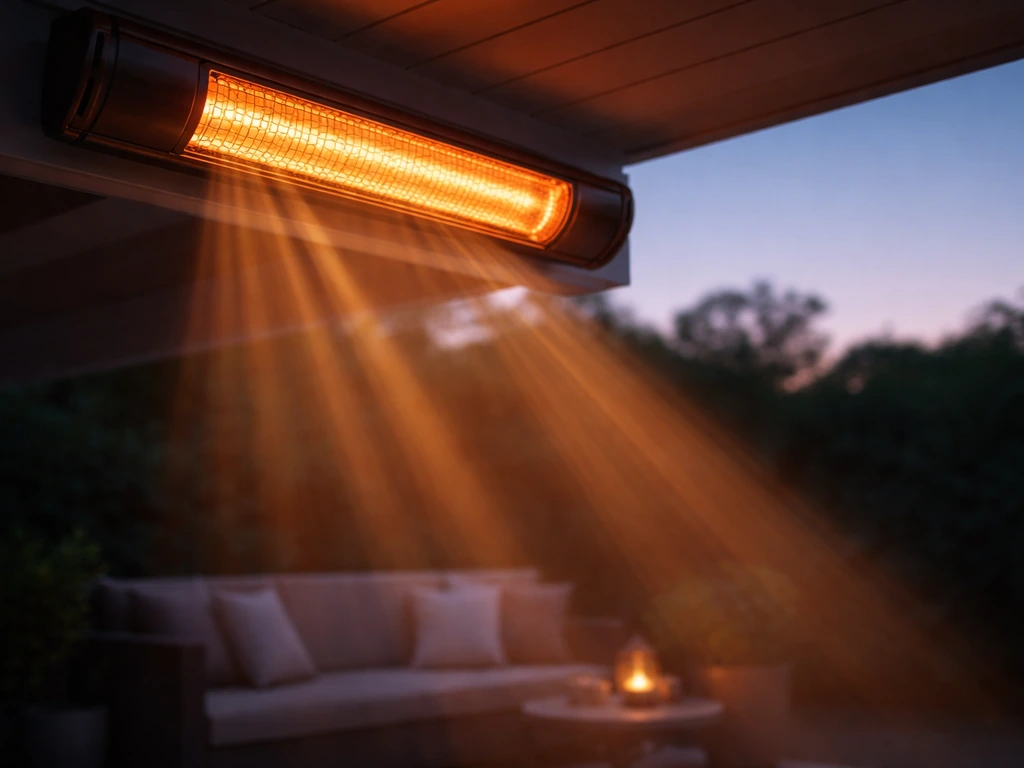
Infrared is a heating method, not strictly a fuel type, but manufacturers and shoppers use it as a distinct category because it describes how the heat is delivered. Infrared heaters can run on electricity or gas, and they specifically use infrared radiation to warm objects and people rather than the surrounding air. [ANSI Z83. 26](https://webstore.
ansi. org/standards/csa/ansiz83262014csa37) / CSA 2. [37 is the specific safety and approval standard for gas-fired outdoor infrared patio heaters. ](https://cdn.
intertek. com/www-intertek-com/dms-legacy/ANSI-Z83-26-CSA-2-37-SUN-Rev-11-1-2020-ED-6-1-2023. pdf) This makes them the most wind-tolerant option across all fuel types. If your patio is exposed or semi-open, an infrared model should be near the top of your list.
Bromic's Tungsten Smart-Heat gas units, for instance, claim to hold performance in winds up to 12 km/h, which is a meaningful spec for an open deck or rooftop.
Pellet patio heaters
Wood pellet patio heaters are the most niche category, but they fill a real gap for people who want the ambiance of a flame with solid heat output. The Hiland glass-tube wood pellet patio heater, for example, is rated at 85,000 BTU, which is significantly higher than a typical propane mushroom heater. They burn compressed wood pellets, produce a visible flame effect, and can be a conversation piece on a residential patio. The downsides are maintenance (ash removal, pellet storage) and the fact that they are not suitable for fully covered areas due to combustion byproducts. They are best suited for open or semi-open residential use where you want heat plus atmosphere.
How to compare patio heaters before you buy
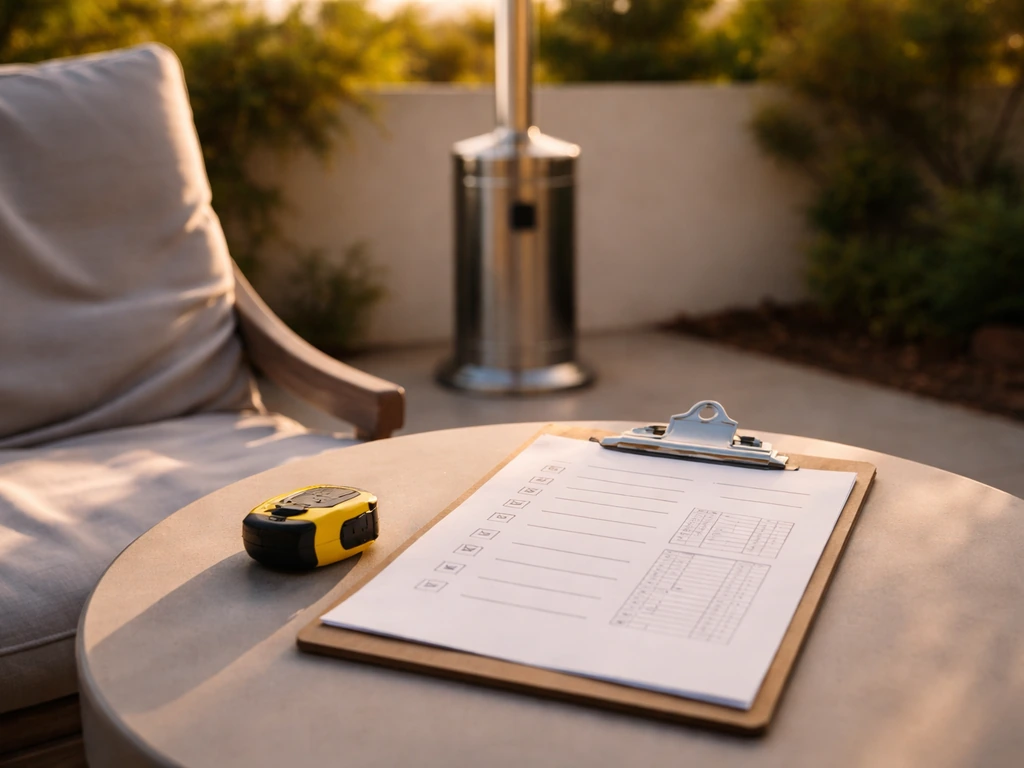
Shopping by brand or price alone will get you the wrong heater. Here are the specs and factors that actually predict whether a unit will perform in your specific setup.
| Factor | What to look for | Why it matters |
|---|---|---|
| BTU / Wattage | 30,000–48,000 BTU for most patios; 4,000–6,000W electric for large areas | Undersized heaters run at 100% constantly and still fall short on cold nights |
| Coverage area | Match heater rating to your seating footprint, not total patio square footage | Heaters heat people in a zone, not the full patio uniformly |
| Heating method | Radiant/infrared for any open or exposed space | Convection heat disperses too quickly outdoors to be practical |
| Wind tolerance | Look for directional infrared or enclosed burner designs | Open patios and rooftops need units rated for wind resistance |
| Fuel type | Propane for portability; natural gas for fixed, frequent use; electric for covered/enclosed areas | Fuel cost and convenience affect long-term satisfaction more than purchase price |
| Controls and thermostat | Timer, remote, smart controls are worth paying for on fixed installations | Set-and-forget controls reduce fuel waste and improve comfort |
| Portability vs. fixed | Freestanding with wheels for flexibility; wall/ceiling mount for permanent zones | Fixed mounts free up floor space and improve sightlines |
| Safety certifications | Look for CSA, ETL, or UL listings; gas models should meet ANSI Z83.26 or CSA 2.37 | Certified units have been tested for failure modes including wind-induced flameouts |
If you are comparing gas versus electric specifically, the honest summary is this: gas heaters produce more raw BTU output and work well in fully open spaces, but electric infrared panels offer more precise zone control, require zero ventilation, and are easier to install under a pergola or covered patio roof. For a business running a patio all winter, the economics of natural gas usually win over several seasons. For a homeowner who uses the patio on weekends from April through October, a quality propane or electric unit is perfectly sufficient and far simpler to set up.
Best patio heaters by use-case
There is no single best patio heater for everyone, but there is a clear best answer for each common scenario. Here is how to match heater type and output to your actual situation.
Small patios and balconies
For a tight balcony or small deck under about 100 square feet, a wall-mount electric infrared panel in the 1,500 to 2,000 watt range is the smartest choice. It mounts out of the way, heats a defined seating area, and does not eat up precious floor space. A compact freestanding propane heater rated around 30,000 BTU also works here if you prefer portability. Mr. Heater's 30,000 BTU Low Profile Patio Heater is a solid pick in this class.
Large open patios
For a large deck, backyard patio, or open entertaining space over 200 square feet, you need either multiple smaller units positioned strategically or a single high-output heater in the 48,000 to 60,000 BTU range. Home Depot and major retailers carry 60,000 BTU class propane and natural gas models designed exactly for this. A single 60,000 BTU mushroom-style propane heater can anchor a large gathering, but two or three 30,000 BTU units positioned around the perimeter often give better coverage than one unit in the center.
Covered patios, pergolas, and restaurant dining areas
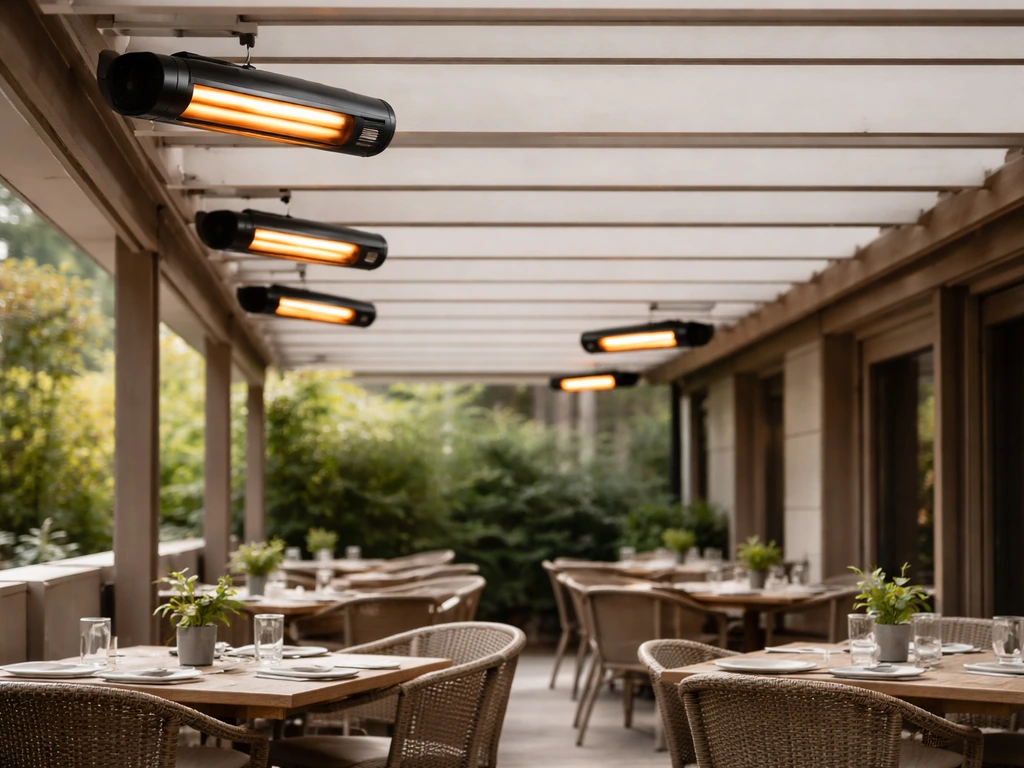
This is where ceiling-mount and wall-mount electric infrared heaters shine. A covered patio or pergola lets you direct heat straight down into seating areas without wasting energy heating open sky. Bromic's Tungsten Smart-Heat Electric 4000W and 6000W models are built for exactly this scenario, with directional output and smart control compatibility. If you have a natural gas line, a gas-fired infrared ceiling heater is another excellent option and often cheaper to run per hour. The key installation rule: maintain the manufacturer's minimum clearance to combustibles, which is typically at least 24 inches above the heater to any overhead surface.
Windy or exposed locations
Wind is the biggest performance killer for outdoor heaters. If your patio faces prevailing winds or sits on an elevated deck or rooftop, prioritize infrared heaters with enclosed or directional burners. A windbreak (privacy screen, fence, or planted hedge) makes any heater more effective, as SunStar's sizing guidelines specifically recommend. For the heater itself, a wall-mount infrared panel angled downward is far more effective than a freestanding mushroom heater in windy conditions. If you prefer freestanding, look at models explicitly marketed as wind-resistant.
Commercial and business use
Restaurant patios, bars, hotels, and event spaces have different needs than a residential backyard. You need consistent performance night after night, low maintenance, and compliance with fire and safety codes. Hardwired natural gas or electric infrared systems are the standard choice at this level because they eliminate tank swaps and provide predictable operating costs. For businesses that need flexibility, such as event venues or pop-up spaces, high-BTU propane heaters with commercial-grade build quality are worth the premium. The separate sibling topic on best commercial patio heaters goes deeper on the business-specific considerations if that is your primary use case.
What separates a quality patio heater brand from a mediocre one
The patio heater market has a lot of cheap imports that look fine in product photos and underperform within a season. When you are evaluating brands, here is what actually predicts build quality and long-term reliability.
- Safety certifications: Look for CSA, ETL, or UL listings on every unit. Gas models should comply with ANSI Z83.26/CSA 2.37 for gas-fired outdoor infrared heaters. A heater without a recognized certification listing is a hard pass.
- Warranty length and coverage: Quality brands stand behind their units with at least a one-year warranty on parts and labor. Commercial-grade brands often offer two to three years on heating elements and controls.
- Availability of replacement parts: Burner tips, ignitors, and thermocouples wear out. Brands that stock and sell replacement parts (not just full replacement units) are far easier to own long-term.
- Real customer feedback patterns: Short-term reviews can be gamed, but patterns across hundreds of reviews over multiple seasons reveal genuine durability and ignition reliability issues.
- Customer service responsiveness: Gas and electric heater troubleshooting often requires talking to a real person. Brands with accessible technical support save you hours of frustration.
- Heater-specific design experience: Brands that specialize in outdoor heating (rather than selling patio furniture, grills, and heaters as an afterthought) tend to produce better-engineered burner assemblies and reflector geometry.
Bromic is the most recognized premium brand in the infrared patio heater space globally, with a strong track record in both residential and commercial applications. Hiland is a widely available mid-market brand found at major retailers with solid value for residential use. Mr. Heater focuses on the propane portable segment and has well-established safety credentials. For natural gas and high-BTU commercial installations, SunStar and similar professional heating brands are worth specifying through a licensed installer. The right brand for you depends more on your fuel type and use case than on any single ranking.
Safety, installation, and operating rules you need to know
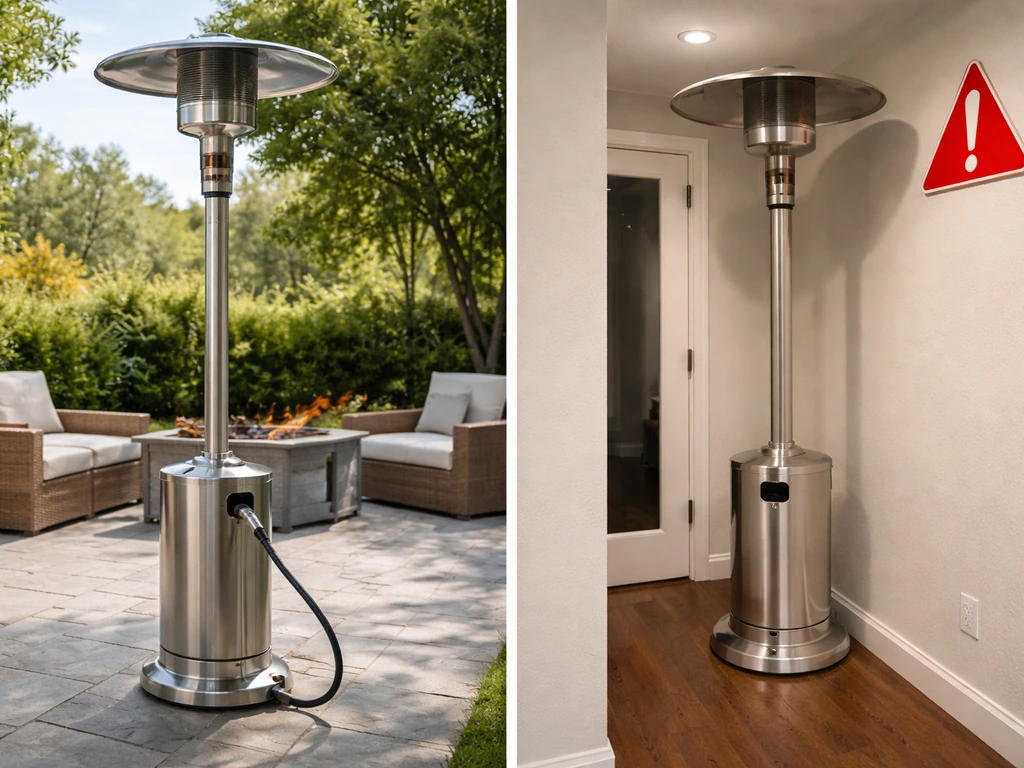
Patio heaters are safe when used correctly and genuinely dangerous when they are not. The risks are real: the U.S. CPSC states that using an outdoor heater indoors can cause deadly carbon monoxide buildup within minutes. Even outdoor-specified propane heaters can accelerate CO buildup faster than indoor-rated heaters if used in a poorly ventilated shelter. Keep these rules in place before and after you buy.
- Never use any outdoor patio heater indoors or in an enclosed space. Not in a garage, not in a tent, not in a sunroom with the windows closed. This applies to all fuel types.
- Maintain clearance to combustibles. A common minimum is 24 inches above the heater to any overhead surface, but always follow your specific model's manual. Codes including ANSI Z223.1/NFPA 54 and CSA B149.1 set the framework for gas-fired units.
- Keep patio heaters at least 5 to 6 feet away from combustible materials, railings, umbrellas, and fabric furniture. The NPS fire safety guidelines for outdoor events cite a 5-foot minimum clearance.
- Inspect propane hoses and valves before every season and after changing cylinders. Apply soapy water to connections and look for bubbles that indicate a gas leak before igniting.
- Use a windbreak if your patio is exposed to direct wind. A screen or fence on the prevailing-wind side improves heater efficiency and reduces the risk of flame irregularities in gas models.
- Follow local codes for fixed installations. Natural gas line connections must be made by a licensed gas fitter in most jurisdictions. Electric hardwired units typically require a licensed electrician.
- Store propane cylinders outdoors and upright, away from the heater and any ignition sources when not in use. NFPA standards and USFA guidance both address cylinder storage in assembly occupancies.
- Check for CSA 5.90 or ANSI Z83.26 certification on gas-fired infrared models specifically. These standards include testing under wind conditions, which is directly relevant to outdoor performance and safety.
Your buying checklist and next steps
Before you buy anything, work through this checklist. It takes five minutes and will save you from returning a heater that was never right for your space.
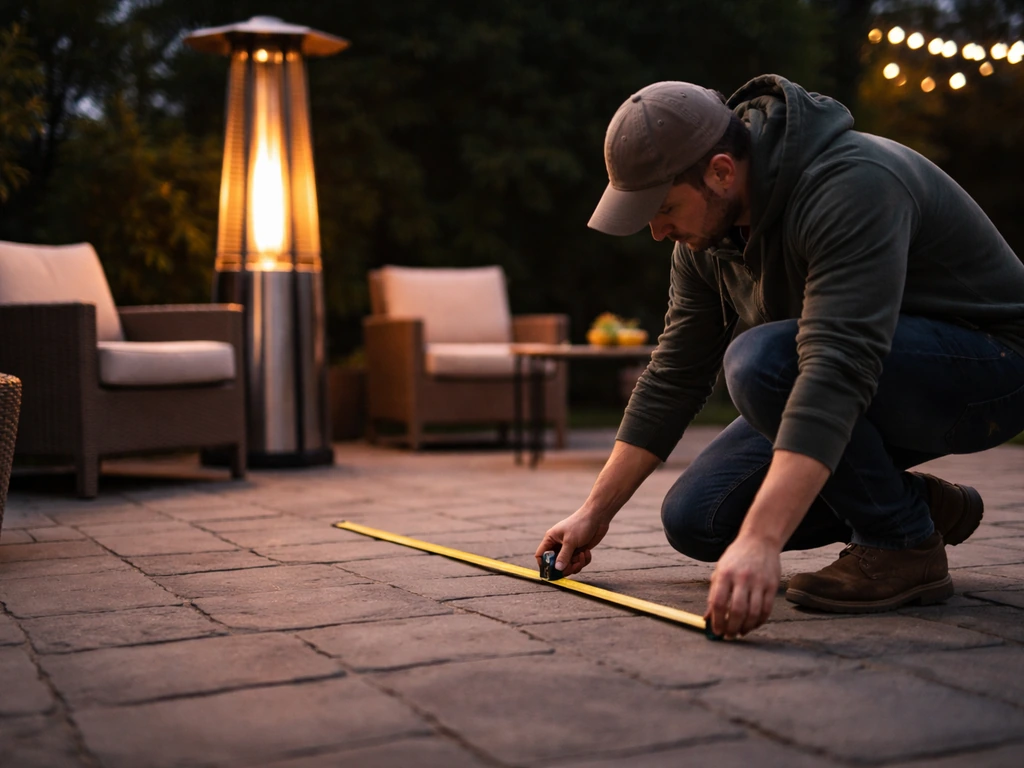
- Measure your patio seating area (not the full patio). Note whether it is covered or open to the sky.
- Identify your fuel options: Do you have a natural gas line nearby? A convenient outdoor electrical outlet or the budget for a dedicated circuit? Or do you prefer propane for portability?
- Assess wind exposure. Is your patio sheltered by a fence or house wall, or does it face open sky and prevailing winds?
- Decide between freestanding and mounted. Freestanding is easier to set up and move; wall or ceiling mount frees up floor space and delivers more precise coverage.
- Set a realistic BTU or wattage target: 30,000–48,000 BTU for propane or gas on a standard residential patio; 2,000–4,000 watts electric for a covered seating zone; 48,000–60,000+ BTU for large open spaces or commercial use.
- Confirm safety certifications (CSA, ETL, UL) on any model you shortlist. Skip any heater without a listed certification.
- Check warranty terms and whether replacement parts are available from the brand.
- If you are shopping for a business or commercial patio, read the dedicated guide on best commercial patio heaters for compliance requirements and performance specs specific to high-use environments.
- If you want to compare fuel types side by side before deciding, the guide on the best type of patio heater breaks down each option with efficiency and cost-per-hour data.
- Buy from a retailer that accepts returns, especially for your first propane or electric unit. Real-world coverage rarely matches the spec sheet exactly, and you may need to size up.
The right patio heater is almost always the one that matches your fuel source, your patio layout, and your realistic usage pattern, not the one with the highest BTU rating or the lowest price. Get those three things right and you will be comfortable outdoors on nights when everyone else has gone inside.
FAQ
Can I use a patio heater under a gazebo or in a partially enclosed patio?
Yes, but only if the device is explicitly rated for the environment you intend. Radiant heaters still need adequate clearance from ceilings, walls, and combustible materials, and they must be installed with the manufacturer’s minimum height and side spacing. For propane or gas, confirm the required venting or outdoor-only certification, because “radiant” does not automatically mean “safe in enclosed spaces.”
What should I check before buying an electric patio heater to be sure it will plug in and run safely?
Start by matching heater controls to your wiring or power method. If you have a standard 120V outlet, many 4,000W to 6,000W models will not be practical, because they may require a dedicated circuit or hardwiring. For electric radiant, also check whether the unit can be controlled by thermostat or smart controls, since that affects comfort and energy use more than the heater’s max wattage.
What’s the best way to handle a windy patio where people sit across from the heater?
If you want heat on breezy nights, prioritize radiant infrared with directional output, and avoid relying on “space-warming” convection claims. A practical edge-case is a patio with strong crosswinds, where heat from the heater can miss people entirely. In that situation, choose an angled wall-mounted infrared unit, position it so the beam lands on seating, and consider adding a windbreak that blocks the wind path rather than only providing privacy.
How do I estimate coverage area correctly if my patio has multiple seating zones?
Do not size by square footage alone. Consider how many seating “rows” you need to cover (distance to guests), and whether the patio is open to the wind on multiple sides. A common mistake is buying a single unit for a large patio, then finding it only warms people nearest the heater. For wide layouts, plan multiple units placed around the perimeter or at least one unit per distinct seating zone.
Can I mix heater types, like using electric infrared in one zone and propane in another?
Yes, but the bigger decision is whether you want radiant beams aimed at people (electric infrared) or a fuel system with fixed output (propane or natural gas). If your patio is covered, overhead mounting often gives better directional coverage, but it increases the need to verify clearance to combustibles and roof materials. For rooftop or elevated decks, also ensure the heater’s burner or reflector is designed for outdoor wind exposure, not just marketing photos.
Can I install a patio heater myself, and what are the common “no-go” cases?
Typically yes, but you should keep the heater’s installation rules in mind. For propane and natural gas units, clearance, stability, and required access for cylinder or line routing matter. For electric units, verify the mounting structure can support the weight and that weatherproofing requirements (outdoor-rated connections, drip loops, conduit) are met so the heater can run reliably season after season.
How can I compare propane vs natural gas vs electric running costs for my usage schedule?
When comparing fuel costs, look at real operating hours and your desired comfort time, not only per-BTU price. Natural gas often wins for consistent, long-duration use, while propane can be cheaper overall for weekend or occasional use if you do not have to pay for installation. Also consider the hassle cost of refilling tanks, since that can drive you to run hotter or longer than intended.
Why does a higher-BTU heater sometimes feel worse than a smaller one?
Do not assume “higher BTU” always means better comfort. Heat output must be paired with placement and beam reach, especially for radiant models, and even with convection models you can lose performance if warmed air disperses before it reaches people. If you are choosing between two heaters, compare the rated output range plus the recommended coverage and installation placement, then choose the one that directs heat where people actually sit.
How can I avoid cheap imports that look good but fail quickly?
Budget-friendly heaters are more likely to have inconsistent ignition, weaker corrosion protection, and shorter reflector or burner life, which leads to underperformance after a season. Before buying, check warranty length, the availability of replacement parts, and whether the brand publishes installation requirements and clear safety specs. Also scrutinize controller quality for electric models, because cheaper thermostats can lead to uneven warmth.
Is it safe to use a patio heater near an open door or inside a screened-in area?
Generally you should never use a patio heater indoors, even if windows are open, because CO risk depends on airflow and can build rapidly. If you need warmth near an outdoor shelter or screened area, keep the heater in the open air portion only, maintain clearance, and ensure you follow the manufacturer’s outdoor-use requirements. Also confirm your local rules, since indoor or semi-enclosed usage can be prohibited.
Next Articles
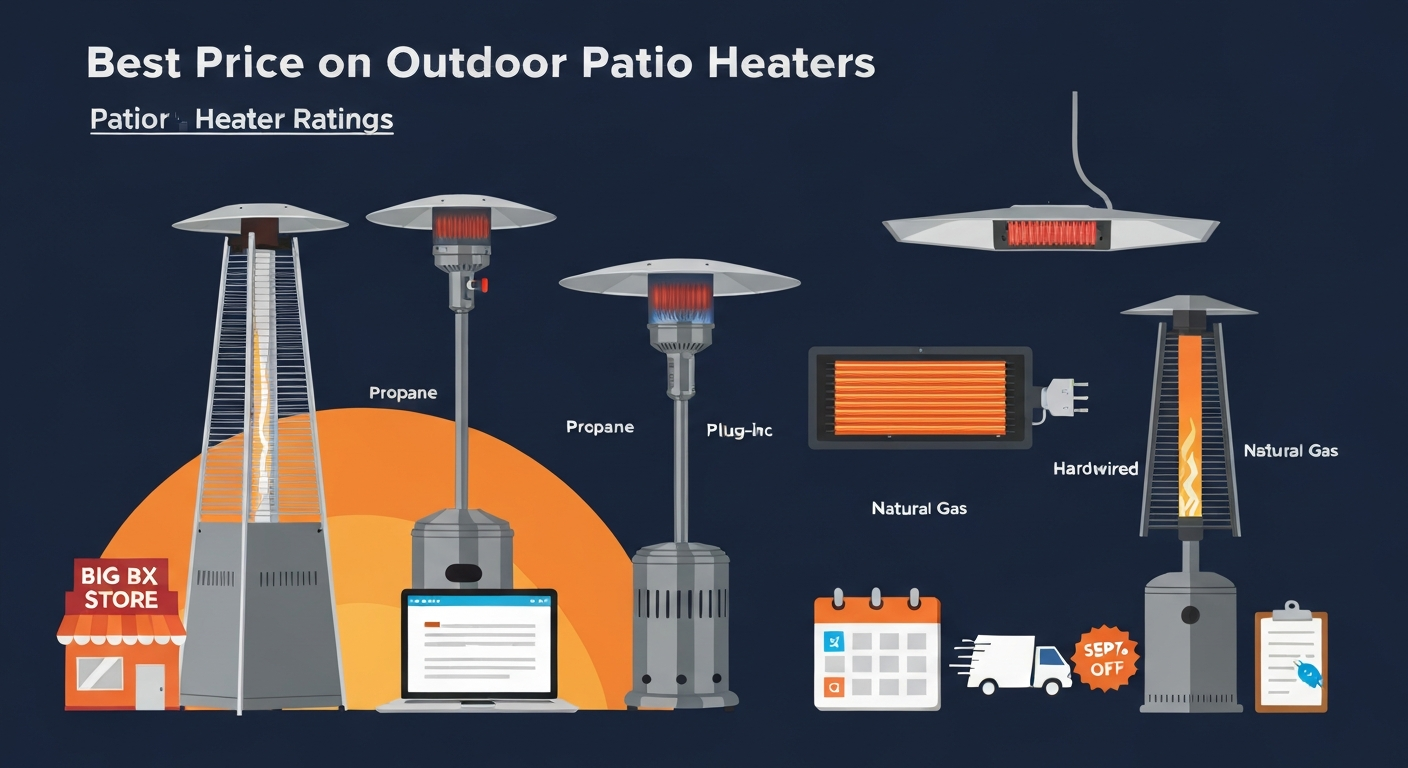
Best Price on Outdoor Patio Heaters: Compare Costs & Deals
Score the best price on outdoor patio heaters, price ranges, top picks, deal tactics, total-cost & safety checklist.
Where Can I Rent Patio Heaters Near Me Today
Find where to rent patio heaters near you today, choose the right fuel type, compare costs, and book safely.
Where to Buy a Patio Heater: Best Places and Types
Where to buy a patio heater now, plus electric vs gas vs propane tips, safety checks, and size/BTU buying checklist.