
For most patios in 2025, a 40,000-BTU propane standing heater is the best all-around pick: it's portable, powerful enough to cover roughly 200 square feet, and you can buy one without any installation. If you have a covered patio or pergola, a mounted electric infrared heater is the smarter choice because it's safer under ceilings, cheaper to run per hour, and controllable with a remote or smart switch.
Best Patio Heaters 2025: Propane, Electric, Gas, Infrared

Caleb Vale
31 May 2026
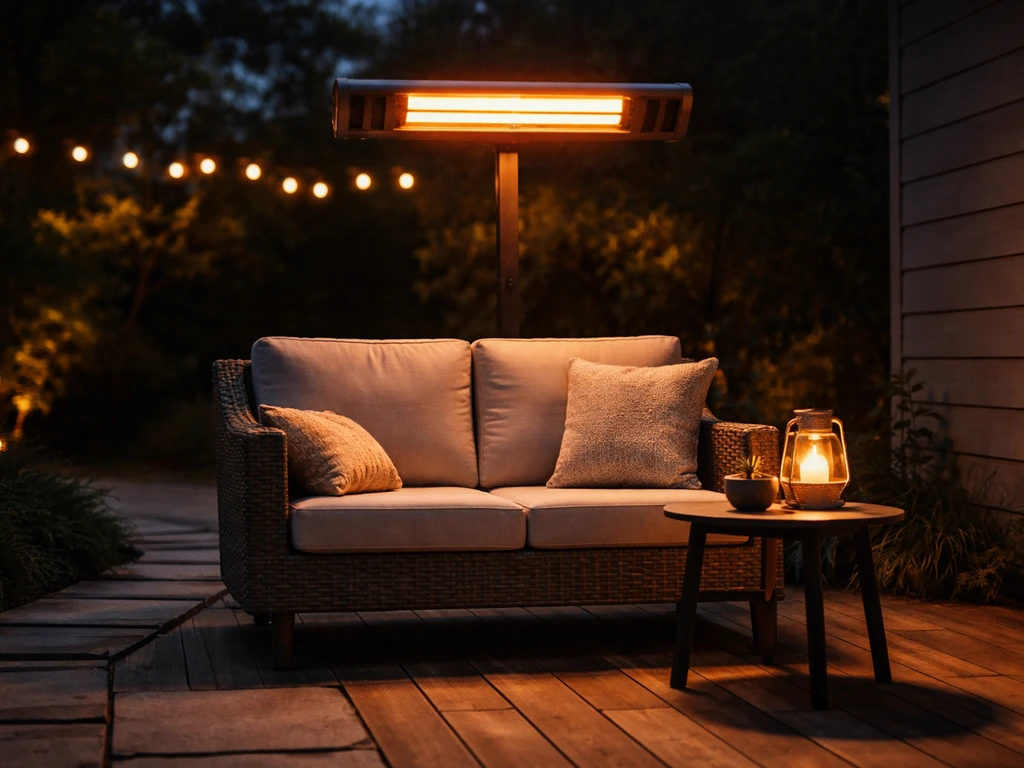
If you want ideas on the top options that were popular this time of year, check the top patio heaters 2021 list for what performed well covered patio. If you have a permanent outdoor dining space and a natural gas line nearby, a plumbed gas heater gives you the most consistent, low-hassle heat with no tanks to swap.
And if you want ambiance alongside warmth and don't mind some maintenance, a pellet patio heater like the Solo Stove Tower is genuinely fun, though it's a different experience from a set-it-and-forget-it heater.
Quick picks by heater type and patio size
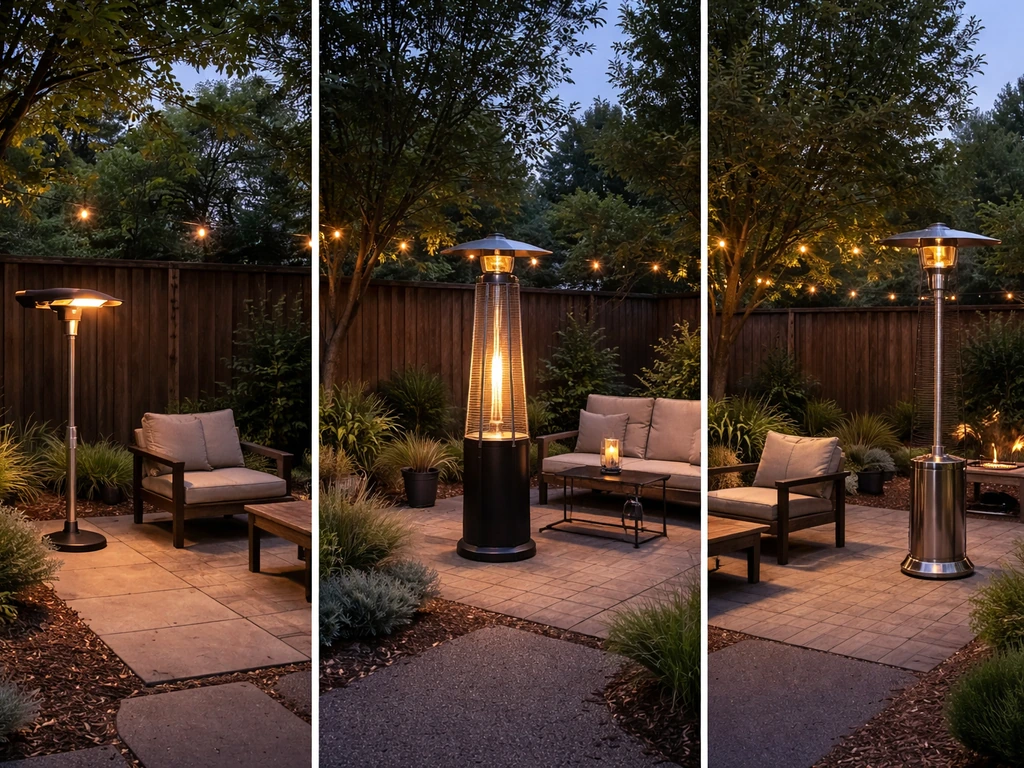
Before going deep on each type, here's a fast reference for matching heater style to your situation. These are the categories where each type wins clearly.
| Patio Setup | Best Heater Type | Output Target | Notes |
|---|---|---|---|
| Small seating zone (under 150 sq ft) | Electric infrared, wall- or ceiling-mounted | 1,500–3,000W (5,100–10,200 BTU-eq) | Safe under covered patios; cheapest to run |
| Medium open patio (150–300 sq ft) | Propane freestanding (40,000 BTU) | 40,000 BTU/hr | Portable; ~0.44 gal/hr consumption |
| Large open patio or deck (300–600 sq ft) | Natural gas freestanding or mounted | 50,000–65,000 BTU/hr | Needs gas line; best for permanent setups |
| Covered pergola or restaurant patio | Overhead electric infrared strip | 3,000–6,000W per zone | No combustion; ceiling-safe with proper clearance |
| Fire-feature/ambiance patio | Wood pellet patio heater | Up to 10-ft radius warmth | 3-hr burn on 25 lbs pellets; more maintenance |
The 20 BTUs-per-square-foot rule of thumb (per Lowe's buying guidance) is a useful starting point, but real-world coverage shrinks fast in wind or open exposed conditions. For a small 120-200 sq ft seating zone, one propane tower or one to two mounted electric units usually gets the job done. For anything larger, start with two zones rather than one oversized unit.
What to look for in the best patio heaters
Heat output and real coverage
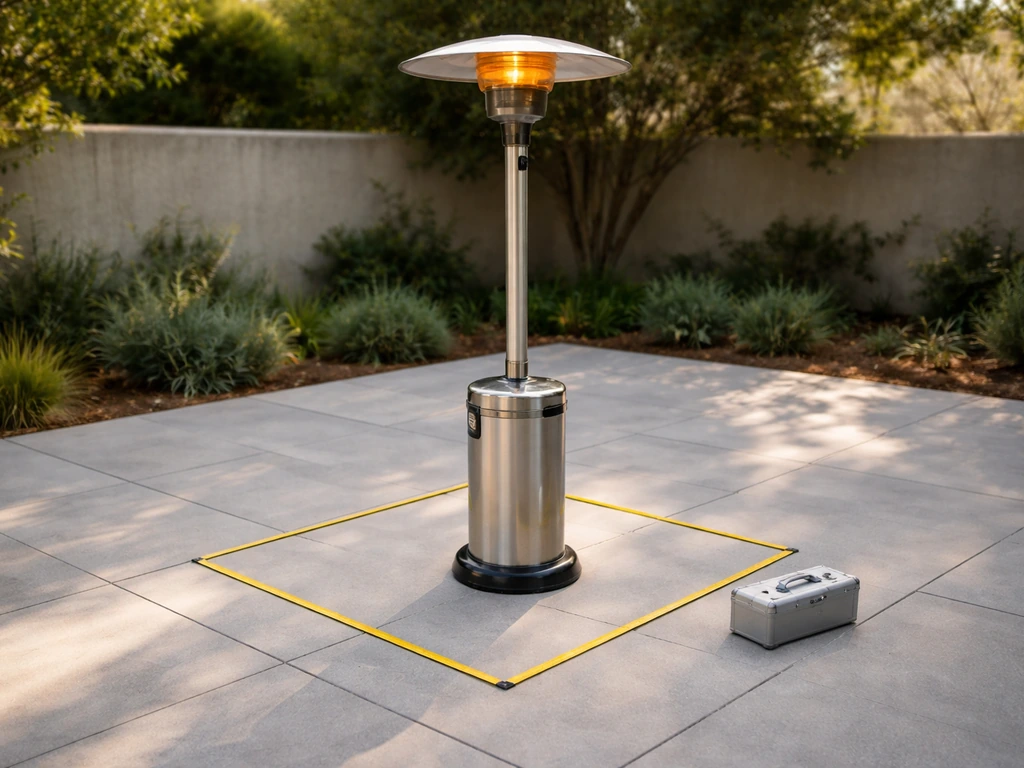
BTUs measure output for propane and gas heaters; watts measure it for electric ones. To compare them directly: one watt of electric radiant output equals roughly 3.41 BTU per hour. So a 3,000W electric infrared heater delivers about 10,200 BTU-equivalent per hour. That's significantly less raw output than a 40,000-BTU propane tower, which is why electric units work best in tighter, sheltered zones while gas and propane rule in open or larger spaces. Don't take manufacturer coverage claims at face value. A 3,000W infrared heater that claims a large coverage area often delivers comfortable warmth over about 64 square feet in real-world conditions, per published specs from manufacturers like Eurofase. Coverage drops further in wind or cold.
Controls, thermostats, and convenience features
Electric heaters have a real edge here. Many quality electric and infrared models include wireless remotes, dimmer-style heat controls, and in some cases smart-switch compatibility. Gas and propane heaters are mostly manual: you turn a valve, ignite, and adjust a dial. Auto shut-off is the most important safety feature to look for on any type. Tip-over shut-off switches are essential on freestanding propane units, and overheat protection matters for electric models. Some electric models also include a low-oxygen shut-off sensor, which is especially useful in semi-enclosed spaces.
Wind performance
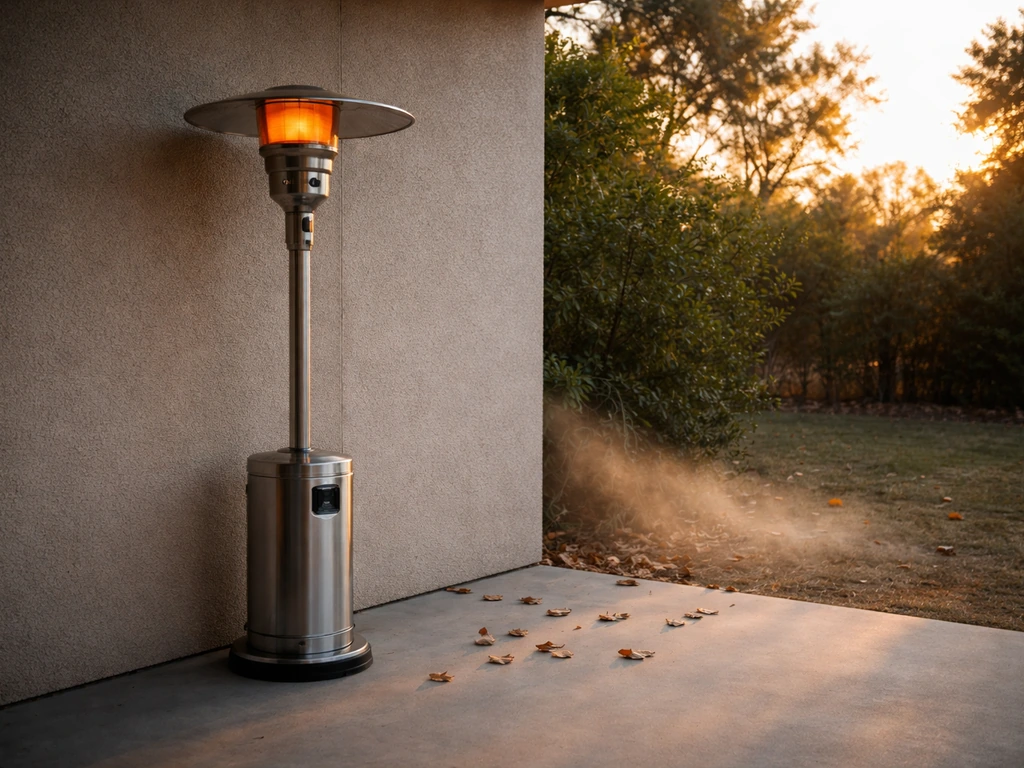
Wind is the enemy of patio heating efficiency. CSA/ANSI Z83.26 (the standard for gas-fired outdoor infrared patio heaters) addresses wind performance because it's a known real-world failure point. Infratech's own installation materials note that extremely cold or windy conditions reduce effective coverage area. This matters when you're sizing: in a consistently windy location, add 25-30% more output capacity than the rule-of-thumb math suggests, or plan for windbreak screens alongside your heater.
Portability vs. permanent installation
Freestanding propane heaters are the most portable option. You can move them seasonally, store them indoors, and don't need a contractor. Electric and natural gas mounted heaters require installation work: running conduit or a gas line, mounting brackets, and potentially a permit. The convenience of permanent installation pays off if you use the space regularly. If you're renting, hosting occasional gatherings, or want flexibility, stick to propane or a plug-in electric unit.
Best propane patio heaters
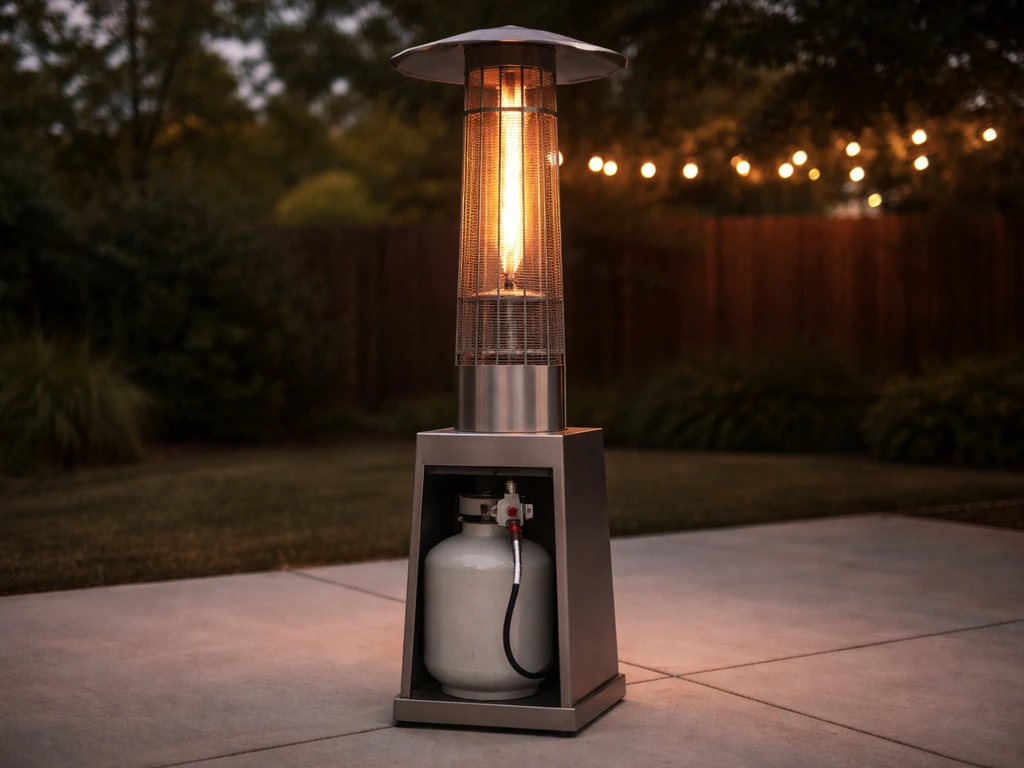
Propane remains the most popular patio heater fuel type in 2025 for good reason: no installation required, serious heat output, and you can take them anywhere. The standard 40,000-BTU mushroom-style tower is still the workhorse of this category. It covers roughly 200 square feet of open patio and runs for about two hours on a standard 20 lb tank at full power (based on the roughly 0.44 gallons-per-hour consumption rate at 40,000 BTU). Dial it back to 50-60% and you'll stretch that to four or five hours, which covers most backyard gatherings.
What to look for in a propane heater
- Tip-over safety shut-off switch: non-negotiable on any freestanding model
- Stainless steel or powder-coated aluminum construction for weather resistance
- Push-button piezo ignition: easier and more reliable than match-lighting
- Adjustable heat output: variable valve control lets you manage runtime and comfort
- Wheel kit or carry handles for repositioning without lifting
- Regulator and hose quality: cheap regulators leak; look for CSA-certified hardware
Propane regulator and tank connection basics
Every propane heater connects to its tank via a regulator, which steps down tank pressure to a safe, usable level. Always do a soapy water leak test at the regulator and hose connection after attaching a new tank: apply soapy water to the connection, turn the gas on, and look for bubbles. Bubbles mean a leak and you should not ignite until it's fixed. Use the regulator and hose that came with the heater, or replace with a CSA-certified equivalent. If you want to use a 20 lb tank instead of a small 1 lb cylinder, many heaters like the Mr. Heater MH18B support this with an optional hose and adapter kit.
Propane operating cost
At full 40,000-BTU output, a typical propane tower costs about $1.70 per hour to run based on standard propane pricing. At reduced settings, that drops meaningfully. Over a full outdoor season, propane costs more per hour than electric but gives you the flexibility of a completely untethered, high-output heater. For occasional use (weekend entertaining), the per-hour cost rarely matters. For daily restaurant or commercial patio use, the fuel costs add up and a plumbed natural gas heater starts to look more attractive.
Best electric and infrared patio heaters
Electric infrared is the right choice for covered or semi-covered patios, pergolas, and any situation where you need a no-combustion option. Infrared heat works by warming objects and people directly rather than heating the air, so it feels immediate and is less affected by light breezes (though still reduced in heavy wind). It's also the easiest type to control: most quality electric infrared heaters offer dimming, wireless remotes, and straightforward plug-in or hardwire installation.
Efficiency and operating cost
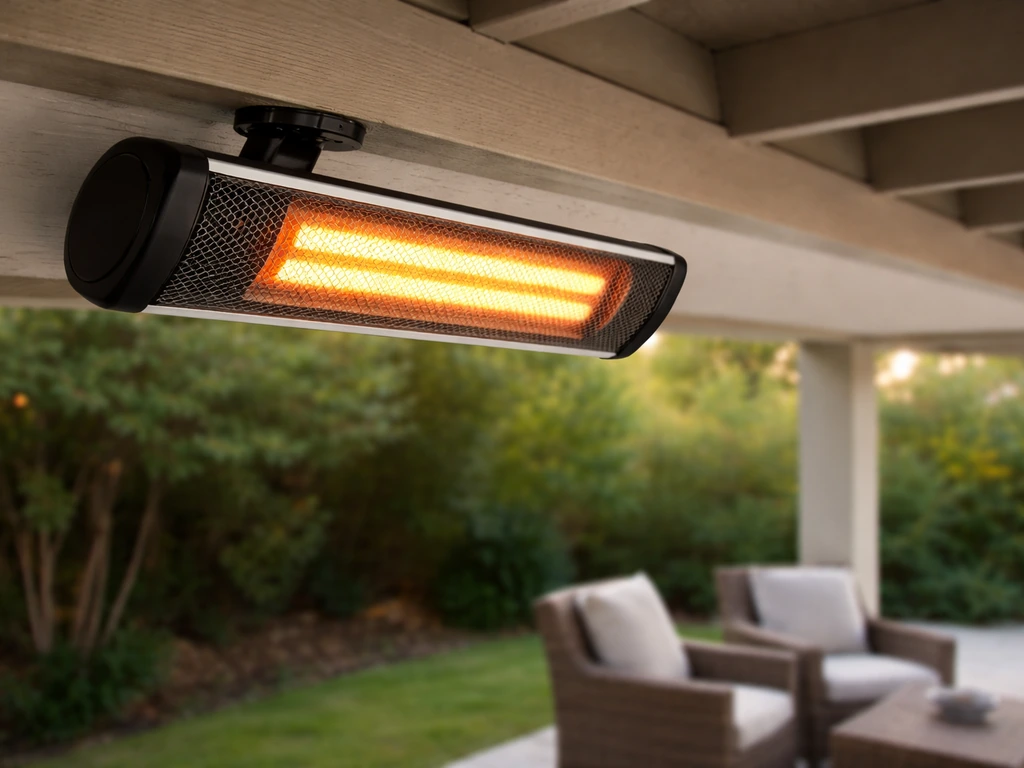
At the 2025 national average retail electricity rate of roughly 17 cents per kWh, a 3,000W electric infrared heater costs about 51 cents per hour at full power. At 13 cents/kWh, that drops to around 39 cents per hour, per Infratech's own cost example. Compare that to $1.70/hr for propane: electric infrared is dramatically cheaper to operate when you have a power source nearby. The trade-off is coverage area. That same 3,000W unit delivers comfortable warmth in roughly a 64-square-foot zone at recommended mounting heights of 7 to 9 feet. For larger coverage, you zone multiple units rather than trying to find one high-wattage unit to do everything.
Placement and mounting
Mounting height is critical with electric infrared. Most manufacturers, including Infratech, specify a range (typically 7 to 9 feet for wall and ceiling mounts) that balances heat intensity and coverage. Mount too high and the heat disperses before reaching people. Mount too low and it feels hot on the head and uneven at foot level. For overhead ceiling or pergola mounting, confirm your mounting structure can handle the weight and heat load, and check clearance requirements in the manual before installation. Angle matters too: a slightly downward-angled wall-mounted unit over a seating area outperforms a straight-down ceiling unit in most cases.
Controls and smart features
Electric patio heaters have the best control options of any category. Look for models with wireless remote controls, variable power settings (not just on/off), and built-in overheat protection. Auto shut-off is standard on quality units. Some models are compatible with standard smart switches or dimmers, making it easy to integrate into a patio lighting and heating setup. Lowe's buying guidance specifically highlights auto shut-off and wireless remote as key convenience features to look for when comparing electric models.
Best natural gas and permanently installed heaters
If you have a restaurant patio, a large outdoor living space you use year-round, or access to an existing natural gas line, permanently installed gas heaters are the most practical long-term solution. You get high BTU output (typically 40,000 to 65,000 BTU per unit), no tank logistics, and consistent pressure regardless of outdoor temperature. The upfront installation cost is real, but the ongoing operating cost and convenience are hard to beat for high-frequency use.
BTU output and sizing for larger spaces
Using the 20 BTUs-per-square-foot rule, a 500 sq ft covered patio needs about 10,000 BTU just to maintain comfortable warmth in mild conditions. In practice, a 40,000-BTU gas heater is the entry point for open patios, and commercial setups often use 50,000-65,000-BTU overhead infrared gas heaters in a grid pattern to cover large areas evenly. Gas-fired infrared patio heaters are common in restaurant patios precisely because they can be mounted overhead (out of foot traffic), run continuously, and provide even, directional heat across a defined zone.
Gas line and installation requirements
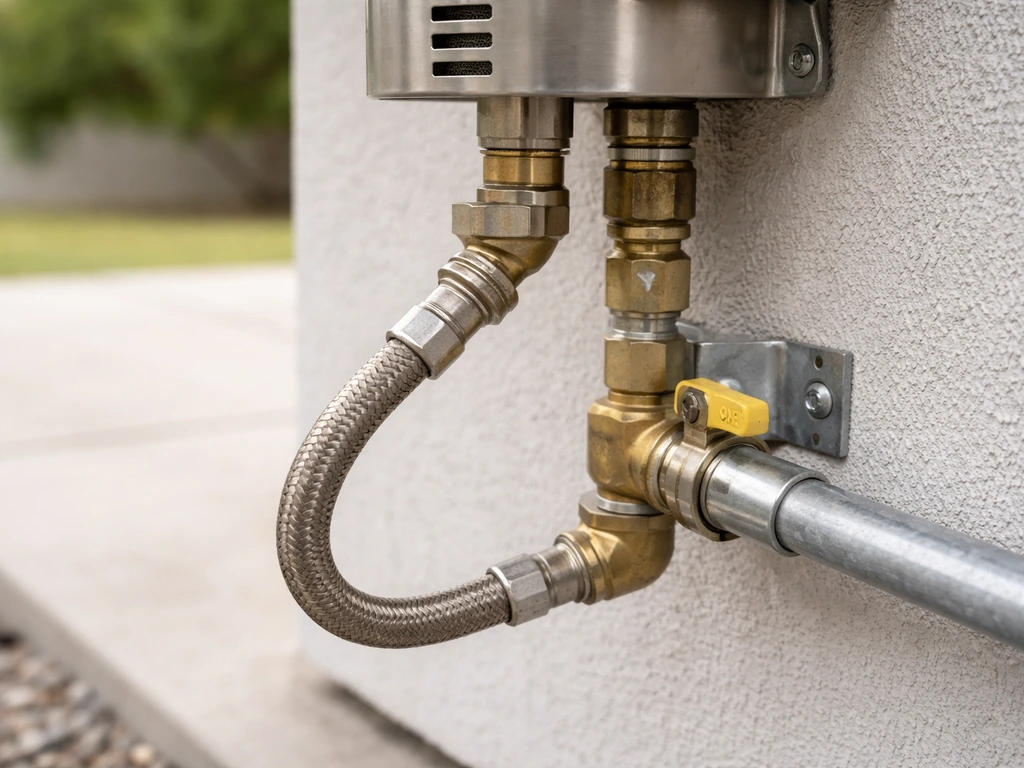
Natural gas heaters require a dedicated gas line run to the installation location, which means a licensed plumber or gas fitter and (in most jurisdictions) a permit. This is not a DIY project. The gas line sizing matters: undersized supply lines cause pressure drop and inconsistent heat output, especially if you're running multiple heaters. Your installer should size the line based on total BTU load.
Overhead gas-fired infrared heaters also have ventilation considerations: even though they're designed for outdoor use, placement under a solid roof requires attention to clearance from combustibles and adequate air movement to prevent CO buildup. Always follow the manufacturer's minimum clearance specs, which can include top clearance requirements (some models specify at least 8 inches of clearance above the unit in certain mounting scenarios).
Natural gas vs. propane: when to choose which
| Factor | Natural Gas | Propane |
|---|---|---|
| Installation | Requires gas line + licensed installer | No installation; plug-and-heat |
| Fuel cost | Lower per BTU in most markets | Higher per BTU; ~$1.70/hr at 40K BTU |
| Portability | Fixed; permanent installation | Fully portable |
| Output range | 40,000–65,000+ BTU | 10,000–48,000 BTU typical |
| Best for | Year-round commercial/home patios | Occasional use, renters, seasonal setups |
| Tank logistics | None | Refill or swap 20 lb tanks |
Pellet patio heaters: what they are and who they're for
Pellet patio heaters, like the Solo Stove Tower, occupy a different niche than propane or electric. They burn compressed wood pellets, produce a visible flame (which adds genuine ambiance), and deliver heat in roughly a 10-foot radius. The Solo Stove Tower holds up to 25 lbs of pellets and burns for up to 3 hours without refueling, thanks to a gravity-fed hopper. That's comparable to propane runtime for casual use.
But pellet heaters require more hands-on management: loading pellets, monitoring the burn, and regular ash cleaning. The manufacturer recommends cleaning the hopper and auger tube roughly every 6 to 8 bags of pellets to prevent sawdust buildup. If you want a fire-like experience with functional warmth and you don't mind the maintenance routine, pellet heaters are a genuinely enjoyable category. If you want effortless heat, they're not the right call.
Safety, installation, weather durability, and maintenance
Clearances and combustibles
Every heater type has clearance requirements from combustibles: nearby furniture, cushions, overhead structures, plants, and fabric. For freestanding propane heaters, keep them at least 3 feet from anything flammable and never position them under a low ceiling or umbrella. Gas-fired overhead infrared units have specific top-clearance specs (some as tight as 8 inches to a non-combustible surface, but more for combustible materials). Check your specific model's manual, not just the category rule. Keep paper, plastics, and any fuel sources well away from any operating heater. Propane.com recommends placing portable propane heaters at least 5 feet from exits to avoid blocking emergency egress and reducing trip-over risk in foot traffic areas.
Tipping and stability
Freestanding propane and pellet heaters tip. It's not a question of if but when, especially in wind or around kids and pets. Any freestanding heater you buy should have a tip-over safety shut-off that cuts gas flow immediately if the unit falls. Some propane towers also have weighted bases or base rings that allow you to add sand or water ballast. Use them. On hard surfaces like concrete or pavers, rubber feet and a stable base mat also help. Never leave a freestanding heater unattended while lit.
CO and ventilation for gas and propane
Propane and natural gas heaters produce carbon monoxide as a byproduct. Outdoor use is designed to disperse CO safely, but semi-enclosed spaces (covered patios with solid walls on multiple sides, garages, screened porches) can accumulate dangerous levels. Never use propane or gas heaters in truly enclosed spaces. For covered patios, make sure there's adequate open-air ventilation on at least two sides. Low-oxygen shut-off sensors, found on some propane heaters like the Mr. Heater MH18B, provide an added safety layer by cutting fuel if oxygen levels drop to unsafe levels. This feature is worth seeking out for any semi-enclosed application.
Weatherproofing and seasonal storage
Weather durability varies a lot by construction quality. Stainless steel reflectors and powder-coated aluminum or steel bodies hold up best in humid or coastal climates. Cheaper chrome-plated or bare steel units rust quickly. For electric heaters, make sure the IP (ingress protection) rating matches your climate: IP55 or higher is appropriate for uncovered outdoor use in rain.
Cover all heaters when not in use: a proper heater cover (usually sold separately) dramatically extends the life of the finish and ignition components. For freestanding propane heaters, store them with the tank disconnected and the gas valve closed during off-season. For pellet heaters, clean out all ash and store pellets in a dry location to prevent moisture absorption, which causes poor combustion and jamming.
Maintenance by heater type
| Heater Type | Key Maintenance Tasks | Frequency |
|---|---|---|
| Propane freestanding | Leak-test regulator/hose, clean burner screen, inspect igniter | Each season start + before use after storage |
| Electric infrared | Wipe quartz tube or element, check mounting hardware, inspect cord/wiring | Monthly during use season |
| Natural gas (fixed) | Annual gas-line inspection, clean burner and reflector, check pilot or igniter | Once per year (licensed tech for gas line) |
| Pellet heater | Empty ash pan after each use, vacuum hopper every 6–8 bags, store pellets dry | After each use + as pellet consumption dictates |
Safe shutdown every time
For propane: turn the burner valve to off first, then close the tank valve, and let the heater cool fully before moving or covering it. For electric: switch off at the unit and unplug if possible during storms or extended non-use. For gas: close the gas valve at the heater and, if you're shutting down for the season, have the supply valve at the line closed as well. For pellet heaters: let the fire burn out naturally (do not douse with water) and wait until the ash pan is fully cool before removing and disposing of ash.
Which type is actually right for you
Here's the honest summary: if you want one heater with no installation and maximum flexibility, buy a quality 40,000-BTU propane tower. If you have a covered patio and want the most cost-effective, controllable, and safe daily-use option, go electric infrared mounted overhead. If you're outfitting a permanent outdoor dining space or commercial patio and have gas access, natural gas is the long-term winner on cost and convenience.
And if the experience is as important as the heat output, a pellet heater adds something no other type can: a real fire. Just go in knowing it takes more effort. The right answer depends entirely on your setup, and the good news is that in 2025, all four categories have solid options across a wide range of budgets.
If you're comparing what's changed from year to year in this market, the core technology hasn't shifted dramatically, but specific model lineups, pricing, and feature sets have evolved. It's worth reviewing how this year's picks compare to the best patio heaters from previous years to spot which products have held up in long-term testing and which have been quietly updated or replaced by newer options. If you're specifically looking for the best patio heaters 2022, focus on which models maintained strong real-world coverage and safety features as newer versions arrived best patio heaters from previous years.
FAQ
What mounting height should I use for an infrared electric patio heater to get coverage right?
Stay within the manufacturer’s specified range (often 7 to 9 feet). If you’re outside that range, you can end up with uneven heat, where people feel hot at head level but the far end of the seating area stays cold. For wall mounting, aim for a slightly downward angle over the seating, and verify the ceiling or pergola structure is rated for the heater’s weight plus vibration.
How do I choose how many electric infrared heaters for a large patio without overspending?
Instead of buying one very high-watt unit, zone the space. A common approach is to treat coverage as small overlapping zones (for example, one heater per roughly mid-60-square-foot comfort area). If the patio is exposed to wind, reduce effective coverage further by adding an extra heater rather than raising wattage beyond what the fixture is designed for.
Is it safe to run propane or gas patio heaters under a partially covered roof?
It can be risky if the space is effectively enclosed. For covered patios, ensure ventilation on at least two sides (more is better), and never operate heaters in a room-like enclosure. If the heater’s manual calls for clearance to combustibles and minimum air movement, follow it even if the product is marketed for outdoor use.
What should I do if my propane heater won’t light or keeps shutting off?
First check the regulator and hose connection for bubbles on a soapy-water test, then confirm the tank valve is fully open and the burner knobs are set correctly. If it still won’t stay lit, stop using it and inspect for blocked burner ports or an incorrectly installed regulator. Repeated ignition attempts when there’s a suspected leak or blockage increases risk.
Can I use a smaller propane tank (like 1 lb) on a heater designed for 20 lb cylinders?
Sometimes, but only if the heater has an approved adapter kit and compatible regulator setup. A 1 lb cylinder can run out quickly at high output, and using the wrong regulator can create unsafe pressure conditions. Check the heater’s manual for the specific cylinder sizes and listed accessories before connecting anything.
How do I compare “coverage claims” across brands fairly?
Look for real-world comfort descriptions and installation guidance, not just marketing area numbers. Electric infrared coverage is especially sensitive to mounting height, angle, and local wind. If a heater claims a very large area but provides no mounting-height or distance guidance, treat the number as optimistic and plan for smaller zones or extra units.
What’s the best way to reduce heat loss from wind?
Wind breaks and layout help more than wattage alone. Place heaters so they are not directly downwind of the seating, and add a wind screen or use patio placement that blocks prevailing gusts. In persistently windy yards, plan for additional output capacity (the article suggests adding extra capacity beyond rule-of-thumb sizing), and consider using overhead infrared units under a structure.
What safety feature matters most on freestanding propane heaters?
Tip-over shut-off is critical, because heaters can fall over in wind or around pets and kids. Also consider a weighted base option if the heater supports ballast, and keep it away from traffic paths where people might bump it. Never leave it operating unattended while lit.
Do electric infrared patio heaters need an IP rating if they’re exposed to rain?
Yes. If the unit is uncovered, choose an IP rating appropriate for wet conditions (often IP55 or higher). Also confirm the plug type and whether the unit is designed for outdoor use, then cover it when not in use to protect reflectors and ignition electronics.
How much more does outdoor heating cost in colder months and windy weather?
Expect higher runtime and lower effective coverage in cold, windy conditions, so the same heater may deliver less comfort for the same clock time. The practical fix is zoning and placement plus adding capacity in problem weather, rather than assuming published coverage will hold year-round.
What clearance rules should I follow so I don’t scorch nearby materials?
Use the specific model manual for clearance to combustibles, not just general category guidance. Overhead units have their own top-clearance requirements, sometimes surprisingly tight on non-combustible surfaces. Keep furniture, cushions, plants, and any fabrics away from the heat path, and verify clearance around umbrellas and pergola elements.
Are pellet patio heaters allowed in semi-enclosed patios?
Treat pellet and gas heaters similarly for ventilation and combustion safety. Pellet models still produce exhaust and particulates, and airflow affects burn quality. If your patio is semi-enclosed, confirm the manual’s ventilation and clearance requirements, and avoid using it in areas that feel enclosed.
What’s the correct shutdown procedure for each heater type to avoid hazards?
Propane: turn the burner valve off first, then close the tank valve, and allow full cooling before moving or covering. Electric: switch off at the unit and unplug if possible, especially around storms. Natural gas: close the heater gas valve, and if shutting down for the season, close the supply valve at the line. Pellet: let the burn finish naturally, then dispose of cool ash only after the ash pan is fully cold.
Next Articles
Best Price on Outdoor Patio Heaters: Compare Costs & Deals
Score the best price on outdoor patio heaters, price ranges, top picks, deal tactics, total-cost & safety checklist.
Where Can I Rent Patio Heaters Near Me Today
Find where to rent patio heaters near you today, choose the right fuel type, compare costs, and book safely.
Where to Buy a Patio Heater: Best Places and Types
Where to buy a patio heater now, plus electric vs gas vs propane tips, safety checks, and size/BTU buying checklist.