
Yes, patio heaters work, but not the way most people expect. So, if you're wondering are patio heaters worth it, the answer is yes, as long as you plan for the warmth zone and wind conditions. They don't heat your whole patio like a furnace heats a room. What they actually do is create a warm zone around the heater itself, warming the people and objects in that zone rather than the open air. Get that distinction right and you'll buy the correct heater, place it properly, and stay genuinely comfortable. Get it wrong and you'll end up with a 40,000 BTU propane tower that barely takes the chill off.
Do Patio Heaters Work? How Well They Heat Your Patio

Caleb Vale
27 May 2026
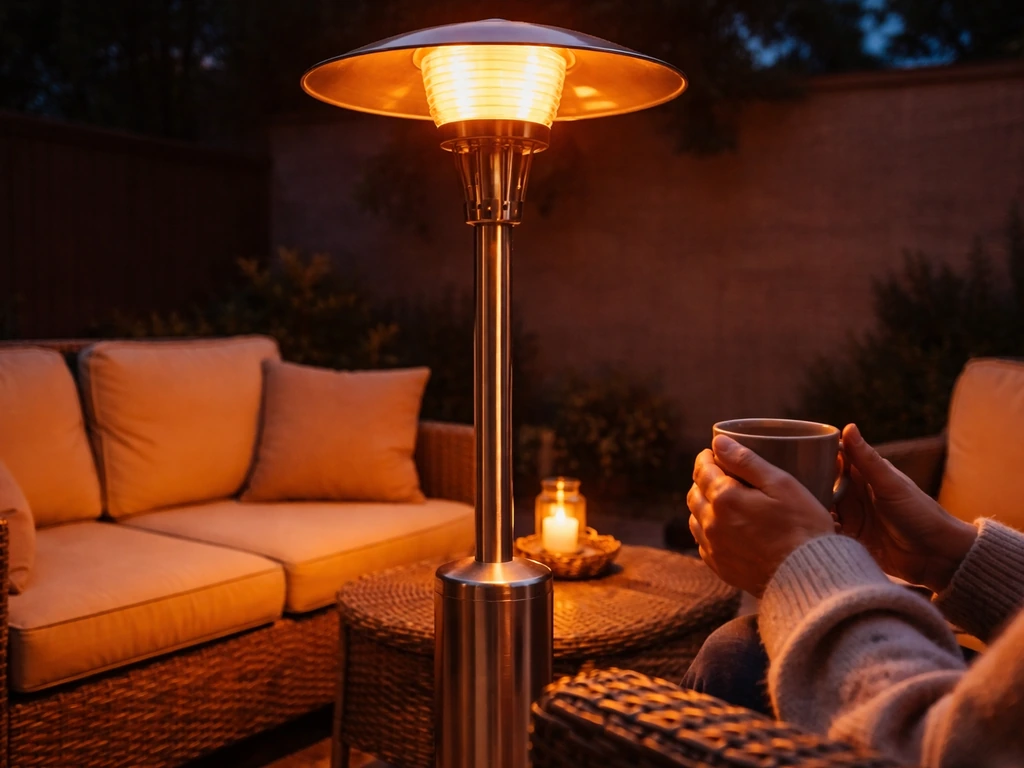
How patio heaters work (and why results vary so much)
Most outdoor patio heaters work through radiant (infrared) heat transfer. Instead of warming air, they emit infrared radiation that travels outward and warms solid objects and people directly on contact, the same way sunlight warms your skin even on a cold day. This is intentional: heating outdoor air is pointless because it disperses almost instantly. Radiant heat stays effective even when the air around you is cold, because it's absorbed by your body before it can dissipate.
Convective heaters (those that heat air) do exist in the outdoor category, but they perform poorly in open or breezy environments for obvious reasons. The radiant approach is why good infrared patio heaters are fundamentally more resistant to wind than alternatives. That said, radiant heat is still line-of-sight only. As Sunpak puts it directly in their design guidance: the heater will only heat things it can shine on. Obstructions, angles, and distance all eat into your effective coverage.
Results vary because of a handful of factors that interact with each other: heater output (BTUs for gas, watts for electric), mounting height and angle, distance from users, wind exposure, and whether you have a roof, pergola, or windbreak walls nearby. Any one of these can make or break comfort. A heater that feels like a campfire on a calm night under a pergola might feel almost useless on a windy exposed deck.
Do they really heat a patio? Real-world expectations by heater type
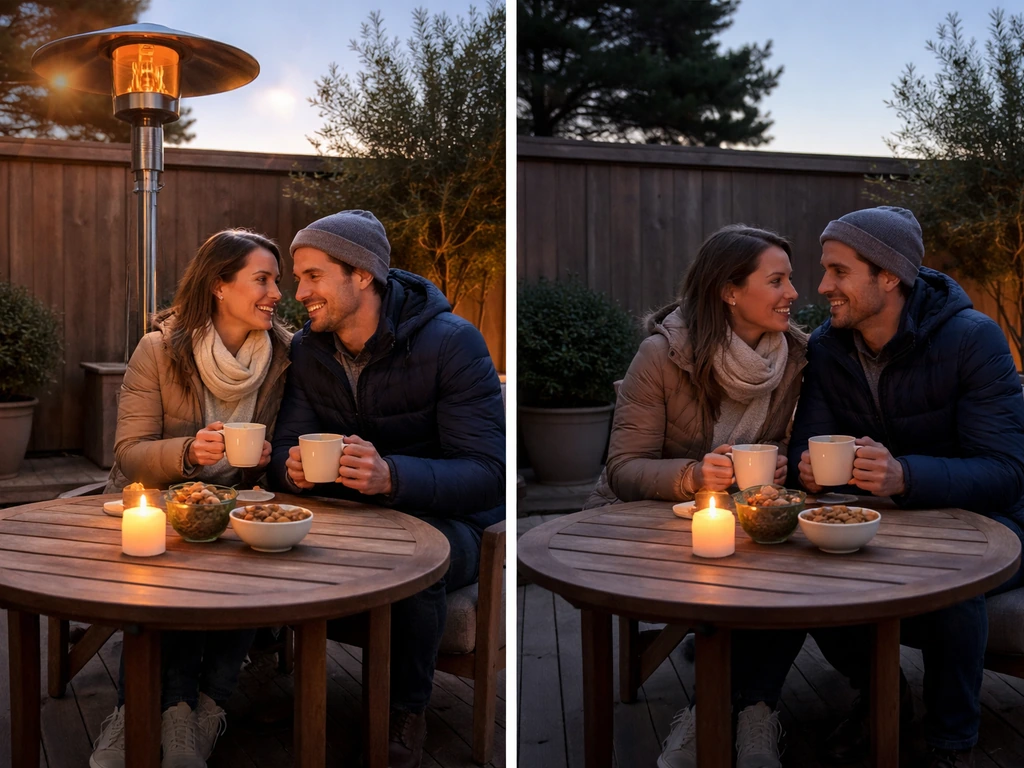
The honest answer is: they heat the people on the patio, not the patio itself. This is actually the right outcome, and once you reframe your expectations that way, performance numbers make a lot more sense. A full-size propane tower heater running at 40,000 BTU/hr can distribute warmth across an area up to 20 feet in diameter (roughly 314 square feet) under good conditions. That's a meaningful warm zone for a small to mid-size seating area. But that coverage assumes calm conditions and people positioned within the radius, not at the edge of the claimed diameter.
BBQGuys makes a useful distinction between 'range' (the total theoretical area) and 'radius' (the maximum distance where you'll actually feel warmth). The radius is what matters for comfort planning. For a 40,000 BTU propane heater, that comfortable radius is roughly 8 to 10 feet from the center. For a 1,500-watt electric infrared unit, expect more like 6 to 9 feet depending on mounting height and angle. Compact ceiling or wall-mounted electric heaters like the Patio-Pal series list effective coverage at around 81 square feet per unit for covered installations, which is honest and specific.
The 'heats the person, not the place' framing matters most in winter or windy conditions. Infratech's own manual acknowledges that coverage can be less than average in extremely cold or windy environments. If you're trying to heat a fully exposed rooftop deck in February, one heater won't cut it regardless of BTU rating. Multiple units in a zoned layout, combined with some wind protection, is how professionals actually make outdoor spaces reliably comfortable in shoulder-season or winter conditions.
Performance guide: warmth zones, BTUs/watts, wind, and coverage
Use this as your planning baseline. BTU ratings apply to gas-fired heaters (propane and natural gas), while wattage applies to electric units. Higher output doesn't automatically mean better comfort if placement and geometry are wrong.
| Output | Heater Type | Comfortable Radius | Best For | Wind Sensitivity |
|---|---|---|---|---|
| 10,000–20,000 BTU/hr | Propane / Nat. Gas | 5–7 ft | Small seating zones, covered patios | Moderate |
| 30,000–40,000 BTU/hr | Propane / Nat. Gas | 8–10 ft | Mid-size open patios, restaurant terraces | Moderate to high |
| 750–1,200W | Electric infrared | 4–6 ft | Covered porches, small balconies | Low (if mounted) |
| 1,500–2,000W | Electric infrared | 6–9 ft | Mid-size covered or semi-open patios | Low to moderate |
| 3,000–4,000W | Commercial electric infrared | 9–13 ft | Large covered patios, commercial use | Low (if mounted) |
Wind is the single biggest performance killer. Engineering guidance from Detroit Radiant Products specifies that above roughly 5 mph wind, adequate wind barriers become necessary for many radiant heating applications. At 10 to 15 mph, even a high-output heater loses significant effective radius. A simple windbreak wall, glass panel, or pergola with curtain sides can recover most of that lost performance. If your patio is fully exposed, factor in either wind protection or extra heater count from the start.
Coverage isn't just about a single heater's output. SunStar's sizing and layout guidelines make clear that consistent comfort across a full patio area comes from multiple units spaced in a planned layout, not from one oversized heater in the corner. Infratech recommends heating from two sides for ideal comfort in their installation guidance. Think of it like lighting: one bright lamp in the corner leaves shadows. Multiple fixtures positioned around the space give you even, reliable warmth.
Electric vs propane vs natural gas vs infrared vs pellet: which works best
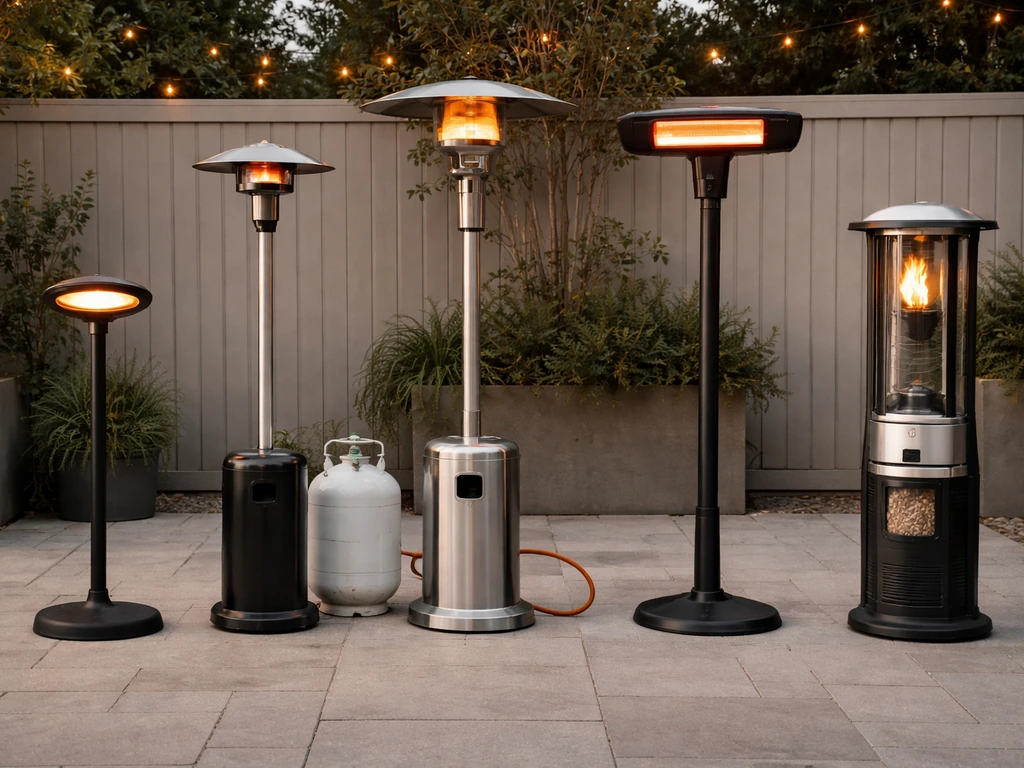
Every fuel type has a real use case. Here's how they compare on the factors that actually affect day-to-day performance.
| Type | Typical Output | Setup | Wind Performance | Best Scenario | Drawback |
|---|---|---|---|---|---|
| Propane | 20,000–48,000 BTU/hr | Portable, no install | Moderate | Open patios, no gas line, portability needed | Tank refills, tip-over risk |
| Natural Gas | 20,000–50,000 BTU/hr | Permanent, needs gas line | Moderate | Restaurants, permanent patios | Fixed location, install cost |
| Electric Infrared | 750–4,000W | Simple mount/plug | Low (mounted units) | Covered patios, balconies, indoor/outdoor rooms | Electricity cost, needs outlet |
| Infrared (gas-fired) | 15,000–50,000 BTU/hr | Ceiling/wall mount | Low to moderate | Commercial covered patios, large zones | Requires ventilation clearance |
| Pellet | Low–moderate | Portable, no gas/elec | Moderate | Aesthetic ambiance, light warmth | Labor-intensive, low heat output |
Propane stands out for flexibility. A standard 20 lb propane cylinder (the maximum allowed under ANSI Z83.26/CSA 2.37 for self-contained portable units) gives you several hours of run time at full output, and you can move the heater wherever you need it. The trade-off is ongoing fuel cost and the need to manage tank levels. For permanent setups, natural gas wins on convenience: you're never running out of fuel mid-dinner.
Electric infrared is my first recommendation for covered patios, pergolas, and enclosed outdoor rooms. Wall or ceiling-mounted units have no open flame, no combustion byproducts (meaning no ventilation required, as Bromic confirms for their electric range), and they mount out of foot traffic entirely. Wind resistance is excellent when mounted overhead. The main knock is that they require an outdoor-rated electrical circuit, and power costs add up with regular use.
Pellet heaters are the most aesthetic option and create a genuine campfire feel, but they are not high-performance heaters. They require manual loading and cleaning, output is limited compared to gas or electric, and they work best as supplemental warmth or ambiance rather than primary heating. For anyone focused on reliable, repeatable warmth, propane, natural gas, or electric infrared will always outperform a pellet unit in real-world conditions.
It's worth noting that infrared as a technology cuts across fuel types. Gas-fired infrared heaters (natural gas or propane burner heating a ceramic or quartz element) and electric infrared heaters both deliver radiant heat, just through different energy sources. The heating physics are similar; the practical differences come down to fuel access, installation requirements, and placement options. If you want to go deeper on infrared-specific performance, there's a detailed breakdown of how infrared patio heaters work on their own, and a dedicated look at how well propane patio heaters work worth reading alongside this.
Choosing the right patio heater for your space and climate
Start with your patio's actual conditions, not just its square footage. A 200 sq ft covered restaurant patio and a 200 sq ft exposed rooftop deck have almost nothing in common when it comes to heater selection. Ask yourself these questions first:
- Is the space covered (roof, pergola, awning) or fully open to the sky?
- Are there windbreak walls, glass panels, or fencing, or is it fully exposed?
- What's the coldest temperature you realistically want to use the space in?
- How many people are you typically heating (zone size vs. total area)?
- Do you have access to natural gas, or will you use propane or electricity?
- Is the heater location permanent or do you need portability?
For covered patios under 200 sq ft, a single 1,500 to 2,000W mounted electric infrared unit or one 30,000 to 40,000 BTU propane tower is typically enough for mild to moderate climates. For spaces between 200 and 400 sq ft, plan for two units positioned opposite each other, which aligns with Infratech's two-sided heating recommendation for consistent comfort. Commercial setups or large residential patios above 400 sq ft should follow a zoned layout approach: map seating areas and place heaters above each zone rather than trying to cover the full space from one location.
Climate matters more than most buyers realize. In regions where temperatures drop below freezing regularly, every heater's effective radius shrinks. Infratech explicitly notes reduced performance in extremely cold conditions. In those climates, size up your output by at least one tier, prioritize enclosed or semi-enclosed space, and add windbreak protection wherever possible. If you're in a mild climate (rarely below 35°F), a mid-range propane or electric unit will deliver comfortable results with minimal fuss. Winter and below-freezing performance is a topic worth exploring in detail separately if your climate pushes those limits. In fact, most patio heaters do still work in winter, but you have to plan around cold air and wind to get dependable warmth patio heaters work in winter.
Setup, placement, and safety tips that make them work better
Even the right heater underperforms if it's poorly placed. Position matters more than most buyers expect, and a few setup decisions make a measurable difference in real-world comfort.
Placement rules that actually move the needle
- Mount overhead or ceiling heaters directly above or just inside the seating zone, not at the edge of the patio pointing inward from a distance.
- For wall or angle-mounted infrared units, most manufacturers allow up to a 30-degree angle from vertical. Use that range to direct heat precisely where people sit.
- Position portable propane towers at the center or near center of the seating zone, not in a corner where two-thirds of the heat radiates into unused space.
- Keep heaters out of high foot-traffic paths. Tip-overs are the primary safety risk with freestanding propane units.
- If possible, use two heaters opposite each other rather than one large heater, especially for dining tables or rectangular seating areas.
- Add windbreak panels or curtains on the windward side of the seating area. This single change can recover 30 to 50 percent of perceived warmth on breezy evenings.
Safety checklist before first use
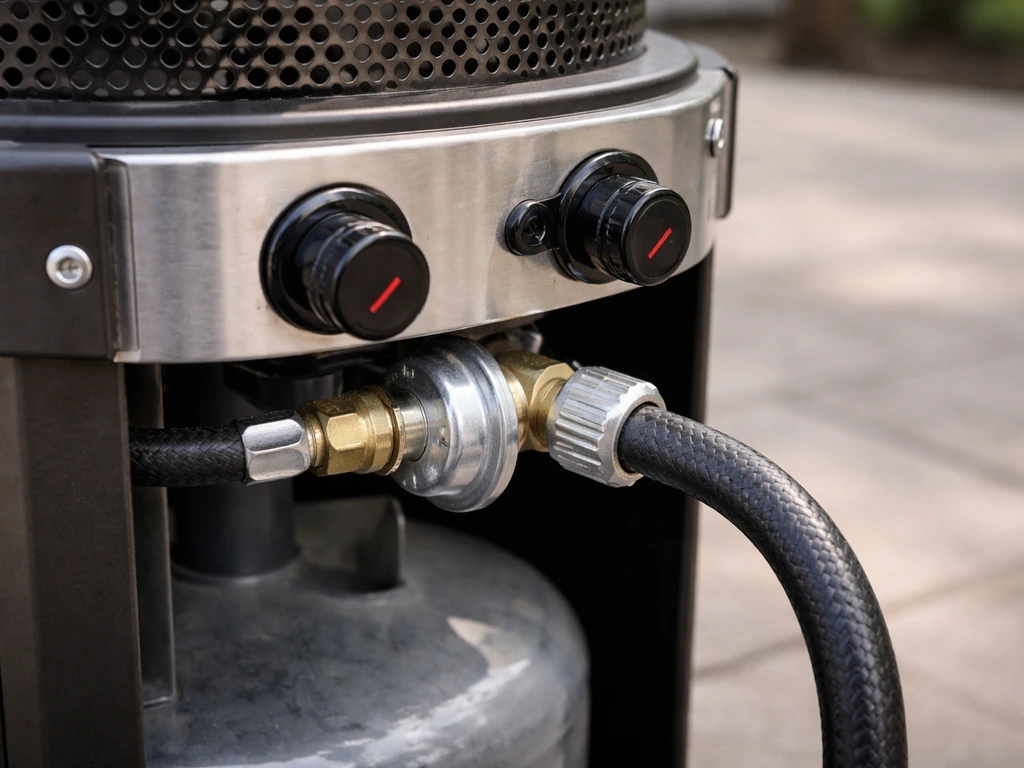
- For propane units: inspect the hose, regulator, and valve connections before every season. Replace any cracked or damaged hose. Never modify gas components, as Patio Comfort's manual explicitly warns against this.
- Verify the propane cylinder is within ANSI-allowed size limits for your heater model (maximum one 20 lb cylinder for most portable units under ANSI Z83.26/CSA 2.37).
- Check overhead clearances to combustibles. Gas-fired heaters require specific clearance distances to any ceiling or overhead structure, detailed in the manual for your specific model (SunStar, for example, includes dedicated clearance sections in all their SGL series manuals).
- For electric units: use only outdoor-rated plugs and sockets that match the heater's IP rating. Bromic specifies IP54-rated connections for their Eclipse models to maintain safe outdoor operation.
- Never operate a gas-fired patio heater in a fully enclosed space. These heaters produce combustion byproducts and require open-air or adequately ventilated semi-open conditions.
- Secure freestanding propane heaters on level ground. Consider a base weight or anti-tip anchor for windy locations.
- Keep children and pets at least 3 feet from the heater at all times during operation.
Quick-start checklist: match a heater to your patio right now
- Measure your seating zone (not the total patio), and note whether it's covered or open.
- Identify your worst-case wind condition. If gusts regularly exceed 10 mph, plan for windbreaks or increase heater count.
- Choose fuel type based on access: electric if you have a suitable outdoor circuit and a covered space; propane if you need portability or have no gas line; natural gas for permanent high-use installations.
- Select output: 30,000–40,000 BTU for propane/gas covering up to a 10-ft radius; 1,500–2,000W electric for covered zones up to roughly 8 ft; scale up or add units for larger areas.
- Plan placement before you buy: overhead or wall-mount for covered patios; freestanding center-position for open patios.
- Build in wind protection if your space is exposed. Even a portable privacy screen on the windward side makes a meaningful difference.
- Read the installation manual for your specific model before setup, paying close attention to clearance, gas connection, and IP rating requirements.
Patio heaters absolutely work when they're matched to the right conditions and set up correctly. If you choose the right heater type and set it up for wind and line of sight, patio heaters can be very effective at keeping people warm outdoors are patio heaters effective. If you're weighing options, it helps to review patio heaters based on output, coverage radius, and wind resistance. The ones that disappoint are almost always cases of mismatched output for the space, poor placement, or unaddressed wind exposure. Get those three factors right and you'll have a genuinely comfortable outdoor space from early spring through late fall, and potentially year-round depending on your climate and setup.
FAQ
Do patio heaters work in snow or freezing temperatures?
They work in winter, but only in the warm “line of sight” zone. In sub-freezing conditions, assume the effective radius shrinks, and plan for either more units (zoned, not one corner heater) or better enclosure and wind barriers (semi-enclosed patio, curtains, glass panels).
Will a patio heater heat an open rooftop deck?
You can, but it will likely feel weak if the patio is breezy or fully exposed. Radiant heaters heat what they can “see,” so outdoors wind and distance matter more than raw BTU. For rooftop or open decks, prioritize wind protection and consider two-sided or multi-unit placement.
Can one patio heater warm my entire patio?
Not reliably, because the heat output drops off with distance and wind, and radiant heat is not like forced-air heat spreading through the whole area. If you want comfort across an entire seating area, use a planned layout with multiple heaters spaced to overlap warm zones.
How high should I mount an electric infrared patio heater?
The key is mounting height and angle, plus where people actually sit. Too high or aimed incorrectly can waste radiant heat overhead, leaving the outer seating cold. As a rule, place heaters so seated head-and-shoulder height is within the intended coverage path (and avoid blocking with furniture, plants, or structural beams).
Does a higher BTU (or watt) patio heater always mean more comfort?
Yes, but you should treat BTUs or watts as a starting point, not the finish line. For gas, BTU is the output rating, but comfort depends on radius, wind exposure, and line of sight. If your patio is exposed, increase heater count or add wind barriers rather than only buying a higher-BTU model.
Do patio heaters work if the heater is not directly over the seating area?
It depends on whether your heater is aimed and whether there are obstructions. Radiant heaters are most effective when people are within the beam path and distance is within the expected radius. Walk around your typical seating positions and consider furniture and columns as blockers.
How much does wind affect do patio heaters work in real life?
Wind is the biggest factor. Above roughly 5 mph, you should expect noticeable performance loss, and at 10 to 15 mph even high-output heaters can lose effective radius. A glass wind panel, curtain side, or pergola with side screens can restore comfort without constantly increasing fuel cost.
Is it better to use multiple patio heaters or one large one?
Yes, zoning helps. Instead of one heater trying to cover the full footprint, place units over distinct seating groupings and keep spacing such that warm zones overlap. The “two sides” approach often improves uniform comfort because you reduce shadowing.
Are patio heaters energy efficient compared with heating the air?
Typically yes if installed correctly, because radiant heat reduces wasted energy from heating open air. However, real savings depend on whether you operate during actual occupancy, use the right fuel type for your setup, and manage wind exposure (wind barriers and proper placement).
Which is safer for an enclosed or covered patio, propane or electric infrared?
Gas heaters are fine with ventilation needs, but electric infrared avoids open flame and combustion byproducts. If you’re choosing for enclosed outdoor areas, electrical compatibility matters, make sure you have an outdoor-rated electrical circuit, and factor in power cost for frequent use.
When should I run patio heaters, and at what level?
Add a simple control strategy: turn heaters on before guests arrive, then run at moderate output if your models support it. Frequent on/off cycles can be more annoying than simply keeping a stable comfort level once people are seated, especially with radiant heaters where the warm zone takes time to build.
What is the difference between coverage “range” and actual comfort “radius”?
For radiant performance, distance and coverage radius are the practical limits. If your seating is near the edge of the claimed coverage area, you may feel a temperature drop. Plan for a comfortable radius that’s smaller than the theoretical range and adjust based on wind and whether the patio is covered.
Next Articles
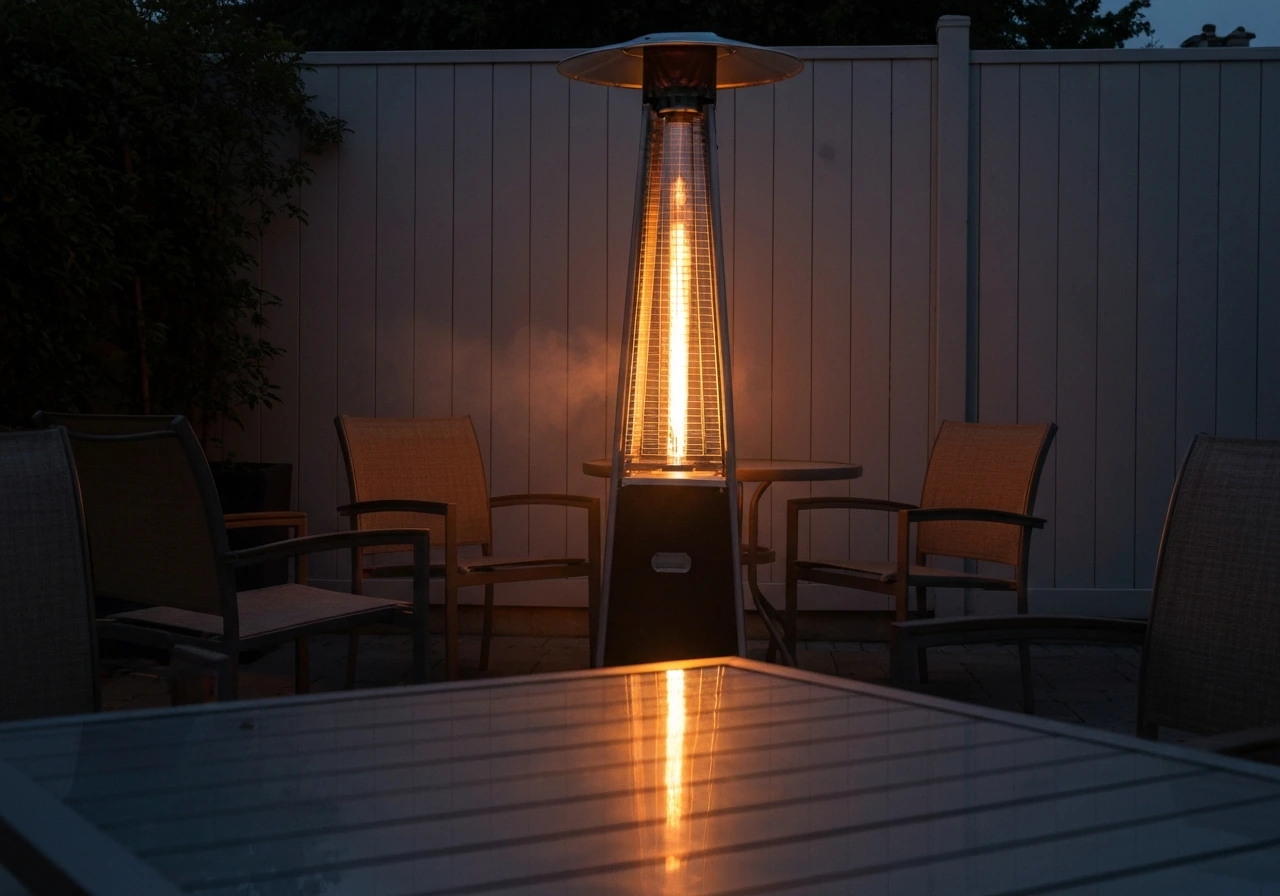
Review Patio Heaters: Best Types, Coverage, Costs, Safety
Review patio heaters with coverage, costs, safety, and model comparisons to pick the best propane, electric, gas, infrar
Best Price on Outdoor Patio Heaters: Compare Costs & Deals
Score the best price on outdoor patio heaters, price ranges, top picks, deal tactics, total-cost & safety checklist.
Where Can I Rent Patio Heaters Near Me Today
Find where to rent patio heaters near you today, choose the right fuel type, compare costs, and book safely.