
If you need to buy a patio heater right now, here's the fast version: propane tower heaters are the most versatile pick for most people, infrared electric heaters are the best fit for small covered spaces and renters, and natural gas units are the smartest long-term investment if you have an existing gas line and a permanent patio setup. Pellet heaters are a niche choice that trades convenience for ambiance. The rest of this guide breaks down exactly how to compare models, what the reviews actually mean, and which specific type fits your situation.
Review Patio Heaters: Best Types, Coverage, Costs, Safety

Caleb Vale
7 May 2026
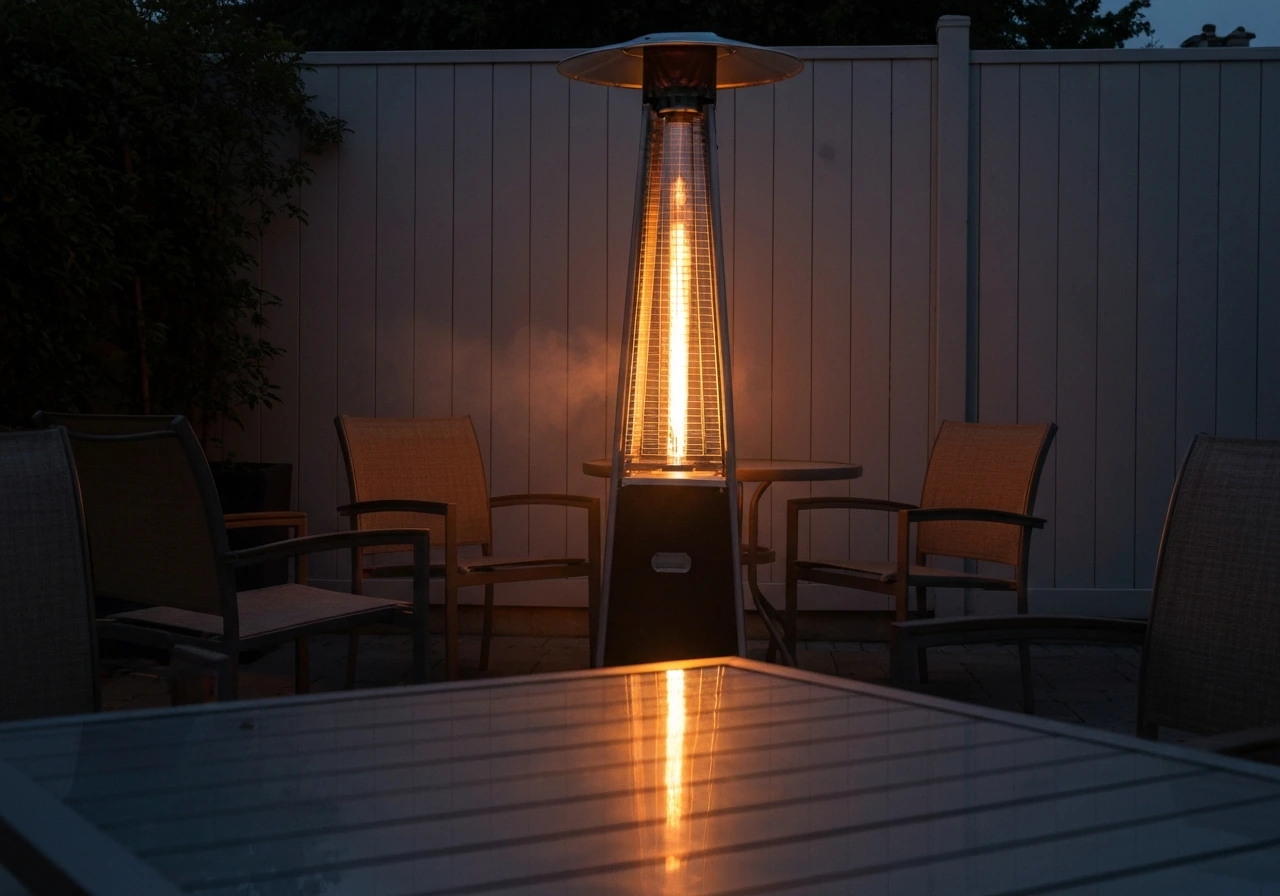
Why you're probably here: getting the right patio heater fast
Most people searching for patio heater reviews have already done a quick scroll through Amazon or a big-box store and walked away more confused than when they started. You see BTU numbers that range from 10,000 to 48,000, prices from $50 to $1,500, and marketing copy that calls every single unit "powerful" and "weatherproof." The reviews themselves are a mess too: five-star ratings next to complaints about units dying after one season, or heat that barely reaches two feet.
What you actually need is a framework for cutting through that noise. This guide gives you exactly that: a consistent set of criteria for judging any patio heater, a breakdown of which heater type fits which patio setup, and a short list of scenarios mapped to real recommendations. Whether you're heating a 60-square-foot apartment balcony or a 500-square-foot restaurant patio, the decision tree is the same, and it's not complicated once you know what to look for.
How patio heater reviews should be judged
Not all review criteria are created equal. A lot of online reviews lead with aesthetics or ease of assembly and bury the performance data. Here's what actually matters and how to weight it when you're comparing models.
Heat output and coverage area
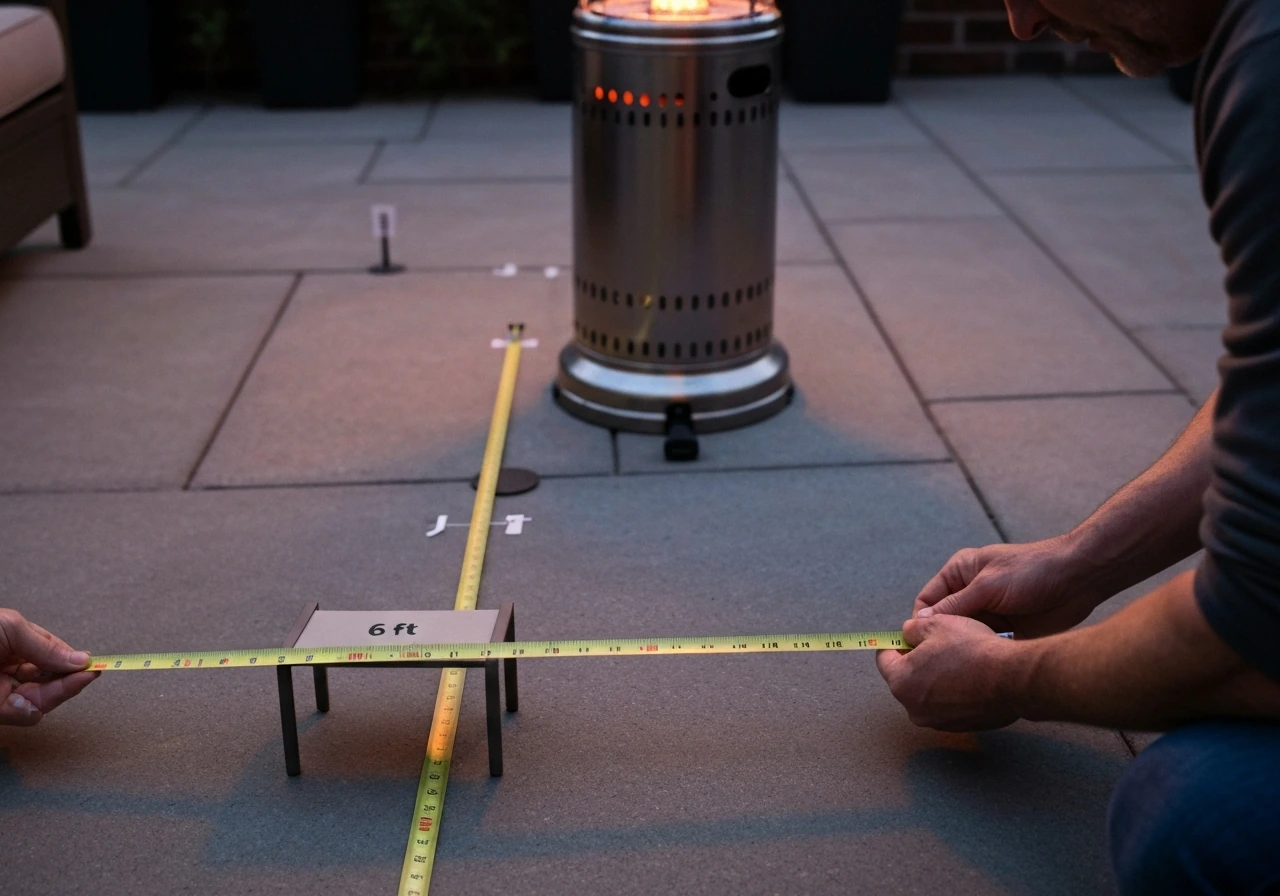
BTU (for gas) and wattage (for electric) tell you the raw power, but coverage area is the number that matters in practice. A 40,000 BTU propane mushroom heater typically covers a circle of about 15 to 20 feet in diameter under calm conditions. Electric infrared units rated at 1,500 watts cover roughly 100 to 150 square feet. Hardwired electric units, like some wall-mounted infrared panels, can run up to around 6,000 watts and cover much larger zones. Always match coverage spec to your actual seating footprint, not your total patio size.
Heating speed and comfort at seating distance
Infrared heaters warm people and objects directly rather than heating air, which means they feel warm almost instantly. Convective gas heaters take 3 to 5 minutes to reach full output. For outdoor use, this matters a lot: if you're stepping out for 20 minutes, you want heat in 30 seconds, not 5 minutes.
At a typical seating distance of 5 to 8 feet, a quality 40,000 BTU propane unit should raise perceived warmth by around 10 to 15 degrees Fahrenheit. That same kind of performance is why many people ask how well do propane patio heaters work at typical seating distances, especially when the heater is sized correctly a quality 40,000 BTU propane unit.
Infrared models at the same distance deliver a more direct, radiant warmth that many people find more comfortable, especially in light wind.
Controls and ignition
Piezo ignition is the standard on most propane units and works most of the time, but it's the first thing to fail in wet or cold conditions. Electronic ignition with a battery backup is more reliable. For electric heaters, look for a proper thermostat or at least multi-level heat settings: units with only an on/off switch are frustrating in practice. Remote controls and smart-home compatibility are genuine usability upgrades, not just marketing features, especially for mounted or ceiling units you can't reach easily.
Build quality and weather resistance
The materials tell you most of what you need to know. Powder-coated steel is the budget standard and holds up reasonably well with a cover. Stainless steel is significantly more durable outdoors, especially in coastal or humid climates. For electric units, IP ratings matter: IP44 means splash-proof, IP65 means you can leave it in the rain. Most budget electric infrared heaters are IP44 at best, which means they need shelter. Cast aluminum housings are lighter than steel and more corrosion-resistant, making them common in higher-end electric models. Any unit you plan to leave outside year-round should be IP55 rated or higher.
Best patio heater types by setup
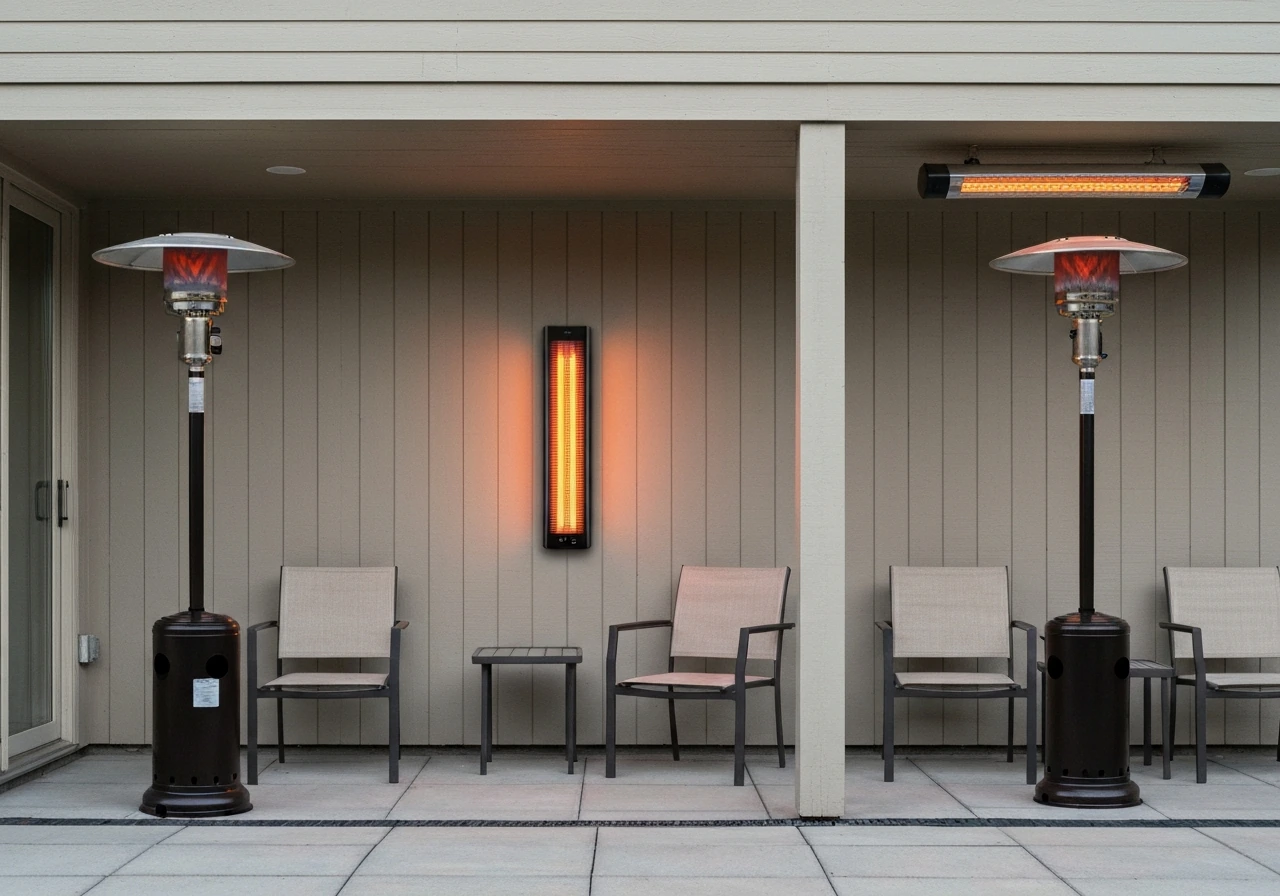
Each fuel type has a real sweet spot. The wrong heater for your setup will either underperform or cost you more to run than it should. Here's a direct comparison across the five main types.
| Type | Best For | Typical Output | Portability | Running Cost | Big Drawback |
|---|---|---|---|---|---|
| Propane | Most patios, no utility hookup | 30,000–48,000 BTU | High (tank-based) | Moderate ($1–2/hr) | Tank refills, wind sensitivity |
| Electric (plug-in infrared) | Small spaces, covered patios, renters | 750–1,500W | High | Low–moderate ($0.15–0.30/hr) | Limited range in open spaces |
| Natural gas | Permanent large patios, commercial use | 30,000–50,000 BTU | None (fixed) | Low ($0.30–0.80/hr) | Requires gas line, professional install |
| Hardwired electric infrared | Covered patios, pergolas, commercial | 3,000–6,000W | None (fixed) | Moderate ($0.45–0.90/hr) | Electrician required, high upfront cost |
| Pellet | Ambiance-focused patios, mild climates | 8,000–20,000 BTU | Moderate | Low–moderate | Ash cleanup, slow heat-up, less control |
Propane heaters
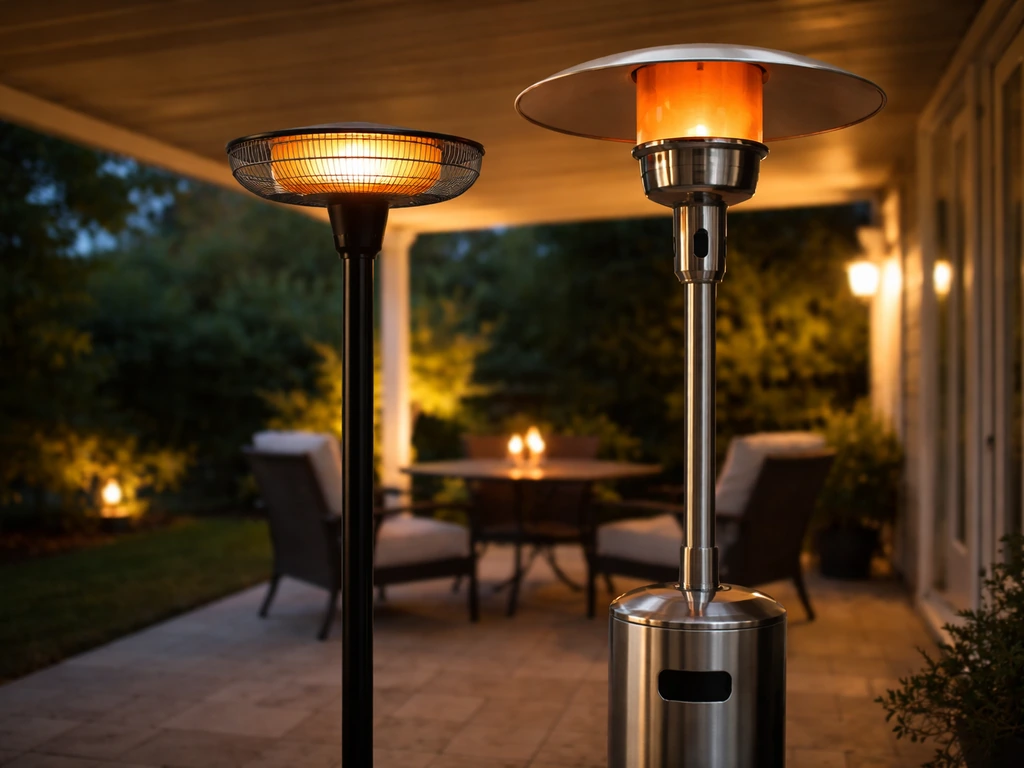
Propane tower heaters (the classic mushroom style) are the most popular choice for good reason: they're portable, powerful, and need nothing except a 20-pound propane tank that you already own if you have a gas grill. A quality unit in the 40,000 to 46,000 BTU range runs about 8 to 10 hours on a standard tank. The downside is that they're less effective in wind over 10 mph because convective heat disperses fast. Tabletop propane models are a solid option for small groups of 2 to 4 people and work well on apartment balconies where a full tower won't fit.
Electric infrared heaters
Plug-in infrared heaters are the go-to for renters, small covered patios, and anyone who doesn't want to deal with fuel. They heat people rather than air, which makes them surprisingly effective even in breezy conditions. That effectiveness is one of the main reasons patio heaters can work well for comfort when used with the right setup and distance surprisingly effective even in breezy conditions. The tradeoff is range: a 1,500-watt unit comfortably warms a circle of about 8 to 10 feet. Hardwired electric units scaled up to 6,000 watts are a different category entirely, more comparable to commercial propane setups in terms of coverage, but they require a licensed electrician for installation.
Natural gas heaters
If you have a permanent patio and access to a natural gas line, this is the lowest hassle, lowest long-term cost option. You never run out of fuel, operating cost per hour is roughly half that of propane, and larger units can heat zones that would require multiple propane heaters. The upfront commitment is real though: you'll pay for a gas line extension if you don't already have one, plus professional installation. This is a homeowner's option, not a renter's.
Pellet heaters
Pellet heaters are the outlier in this category. They burn wood pellets, produce a real flame, and add genuine ambiance that gas and electric simply can't replicate. The heat output is lower than gas, warmup is slow, they produce ash that needs regular cleaning, and heat control is imprecise. For a restaurant wanting to create atmosphere or a homeowner who burns wood pellets anyway and wants something that feels like a campfire, they're worth considering. For everyone else who just wants to stay warm efficiently, they're not the right tool.
Performance in real life: wind, distance, and cold weather
Marketing specs are measured in lab conditions. Your patio is not a lab. Here's what actually changes in real-world use.
Wind
Wind is the biggest enemy of convective heaters (propane and natural gas). Once sustained wind hits around 10 to 12 mph, a 40,000 BTU mushroom heater starts losing significant effectiveness because the hot air column disperses before it reaches sitting height. Infrared heaters handle wind much better because they're heating objects directly rather than warming air. If your patio is exposed and regularly windy, infrared is the smarter choice, or you invest in windscreen panels alongside your propane unit.
Effective seating distance
A 40,000 BTU propane mushroom heater is at its most effective for people sitting within about 8 feet of the unit. Beyond 10 to 12 feet, heat falls off noticeably. For a large patio with multiple seating groups, you either need multiple heaters or a high-BTU natural gas system. Infrared panels mounted overhead at 8 to 10 feet are excellent for defined seating areas because they direct heat straight down at the zone below.
Cold weather and below-freezing temps
Most patio heaters are designed for extending shoulder seasons, meaning they perform best when outdoor temps are between 30 and 55 degrees Fahrenheit. They can run in freezing conditions, but your expected warmth gains shrink as ambient temperature drops. Most patio heaters will struggle to deliver the same comfort level as temperatures drop, but the right fuel type can still work reliably below freezing below-freezing temps.
Propane also loses pressure as the tank gets cold: a tank that sat at 20°F overnight produces noticeably less output until it warms up. Electric infrared heaters don't have this problem and maintain consistent output regardless of temperature. For genuine cold-weather use (regularly below 25°F), a hardwired electric infrared or a high-BTU natural gas unit is more reliable than propane.
Safety, installation, and maintenance checklist
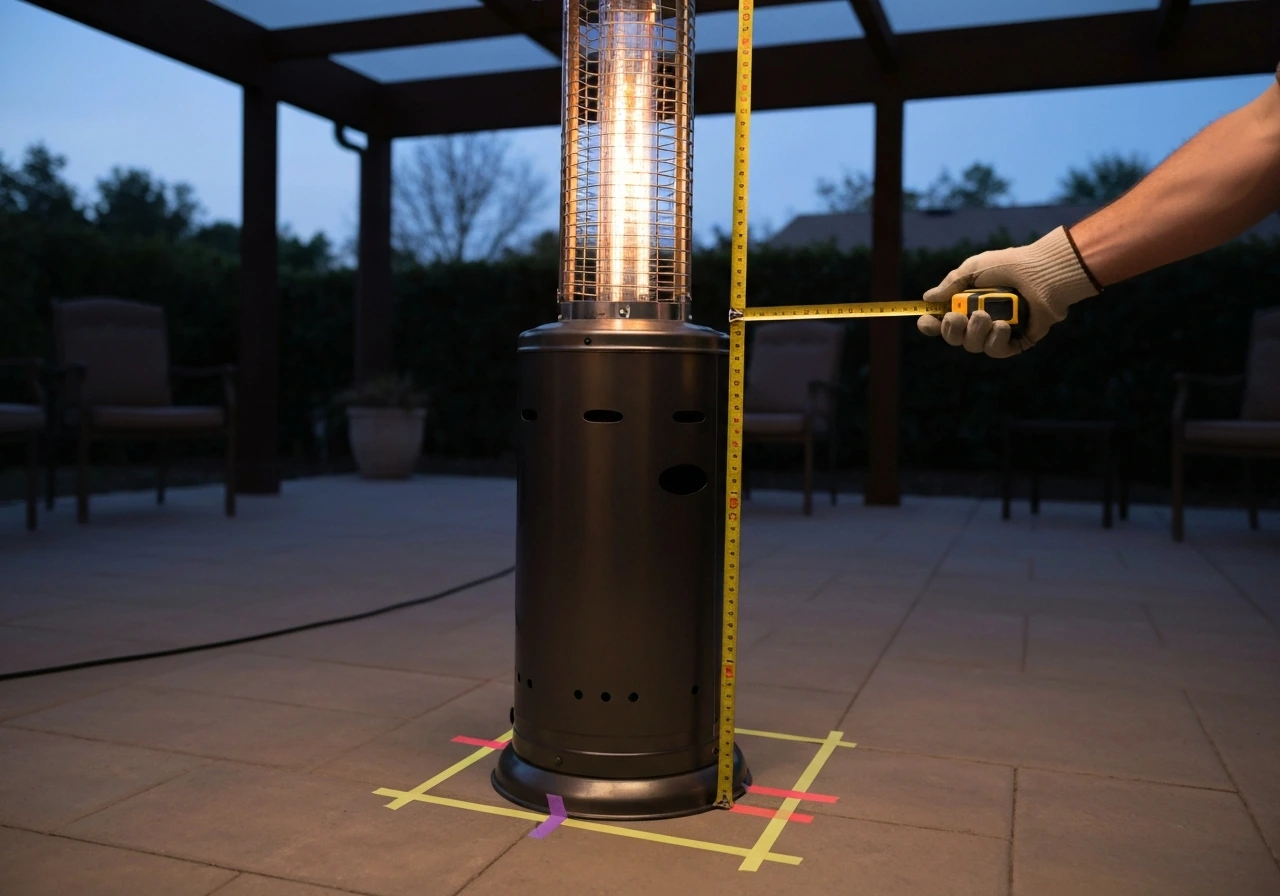
blank" rel="noopener noreferrer">Patio heaters are safe when used correctly, but there are specific rules that matter. Ignoring them creates real fire and carbon monoxide risks. Do not use portable heaters or lanterns while sleeping or in enclosed areas, because they can produce carbon monoxide that is dangerous to you and your household Do not use portable heaters while sleeping or in enclosed areas. Here's a practical checklist covering the main categories.
Clearances and placement
- Maintain at least 24 to 36 inches of clearance above any gas or propane heater (check your specific model's manual, as this varies)
- Keep a minimum of 3 feet of horizontal clearance from combustible materials: furniture, umbrellas, curtains, and wood structures
- Never use propane or natural gas heaters in fully enclosed spaces: ventilation is non-negotiable to prevent carbon monoxide buildup
- Position freestanding tower heaters on level, non-combustible surfaces to reduce tip-over risk
- For mounted infrared heaters, follow manufacturer mounting height specs precisely: too low and you create a burn hazard, too high and efficiency drops
Safety features to require in any heater you buy
- Tip-over auto-shutoff: mandatory for any freestanding propane heater, especially in high-traffic areas or households with kids or pets
- Overheat protection: important on electric units, cuts power if the element exceeds safe operating temps
- ODS (Oxygen Depletion Sensor): found on many gas heaters, shuts the unit off if oxygen levels drop, critical for semi-enclosed setups like a screened porch
- Flame failure device: cuts off gas automatically if the flame goes out unexpectedly
Installation notes
- Natural gas heaters require a licensed plumber or gas fitter for the line connection: this is not a DIY job
- Hardwired electric heaters (240V models especially) require a licensed electrician
- Propane and plug-in electric units are true DIY: read the assembly manual, check hose connections with soapy water before first use
- For ceiling or wall-mounted heaters, confirm your mounting surface can support the unit's weight plus dynamic load
Weatherproofing and seasonal maintenance
- Use a fitted heater cover any time the unit is not in use: UV and moisture are the main causes of early failure in budget models
- At the start of each season, inspect gas hoses for cracks and test connections before first use
- Clean burner ports on gas heaters annually with a small wire brush: clogged ports cause uneven flames and reduced output
- For electric infrared units, wipe the quartz element housing with a dry cloth periodically: dust buildup reduces radiated heat output
- Store propane tanks upright in a ventilated area away from direct sunlight: never store tanks indoors or in enclosed spaces
Operating costs and value: what you're actually paying per warm evening
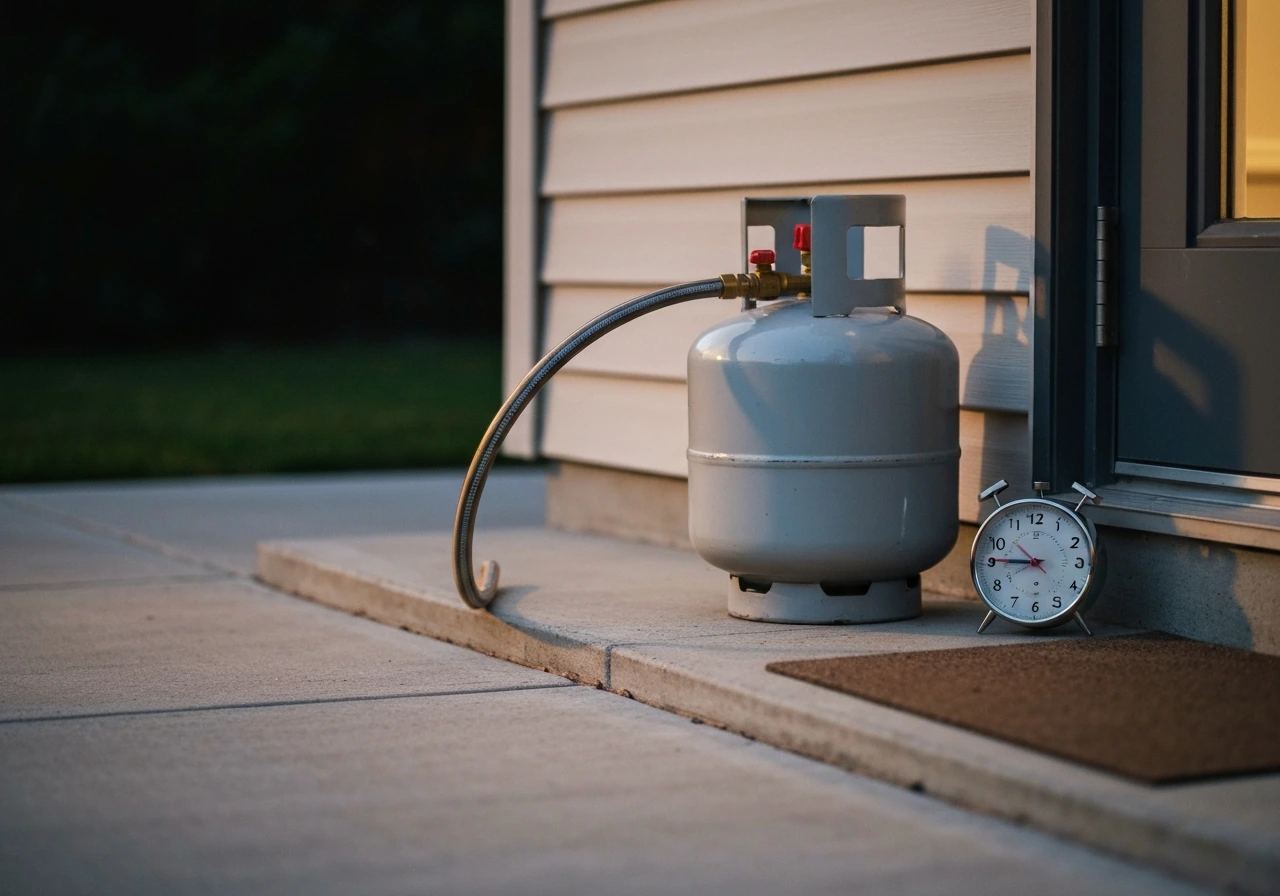
Purchase price is the least important number in the cost equation. What you really want to know is total cost over two or three seasons of regular use. Here's how the math actually plays out.
| Heater Type | Typical Purchase Price | Fuel/Electricity Cost Per Hour | Est. 3-Season Cost (100 hrs) | Notes |
|---|---|---|---|---|
| Propane (tower) | $100–$300 | $1.50–$2.50 | $250–$550 total | Tank refill ~$20–25 for ~8–10 hrs |
| Plug-in electric infrared | $50–$250 | $0.15–$0.30 | $65–$280 total | Based on ~$0.15/kWh avg rate |
| Hardwired electric infrared | $300–$900 + install | $0.45–$0.90 | $345–$990 total | Higher output, larger coverage |
| Natural gas | $200–$800 + install | $0.30–$0.80 | $230–$880 total | Install cost ($300–$1,000+) adds to upfront |
| Pellet | $200–$600 | $0.50–$1.00 (pellets) | $250–$700 total | Includes pellet cost at ~$6/40 lb bag |
Plug-in electric infrared units win on pure operating cost for small spaces. Over 100 hours of use (roughly a full season of regular evening use), you'll spend $15 to $30 on electricity for a 1,500-watt unit. Natural gas wins on per-BTU cost at scale: if you're running a large heater for long sessions, the lower fuel cost pays back the installation within one to two seasons compared to equivalent propane usage. Propane is the most flexible but the most expensive to run regularly.
One note on budget propane heaters under $100: they frequently have thinner steel, less reliable ignition, and shorter lifespans. In my experience reviewing these units, a $150 to $200 propane heater from a reputable brand outperforms and outlasts two cheap units combined. The same goes for electric: a $180 infrared heater with a proper IP65 rating and a cast aluminum housing is a better investment than a $60 unit that needs replacing every 18 months. If you are wondering, are patio heaters worth it, this is often the deciding factor better investment.
My top picks by patio scenario and what to buy next
Here's how I'd match heater type to real situations. These aren't brand endorsements, but scenario-to-type recommendations you can apply to any reputable model in that category.
Small balcony or apartment patio (under 100 sq ft)
A plug-in infrared electric heater in the 1,500-watt range is the right call here. It's portable, safe for semi-enclosed spaces (no combustion), and costs almost nothing to run. Look for a wall-mountable or freestanding model with at least IP44 weatherproofing and two to three heat settings. If you have a covered overhang, a small ceiling-mount infrared panel is even better because it keeps floor space clear.
Medium open patio (100–300 sq ft), mild to moderate climate
A propane tower heater rated at 40,000 to 46,000 BTU is the standard here and it earns that status. It heats a circle of roughly 15 feet in diameter, moves around as needed, and works off a standard 20-pound tank. Spend at least $150 to $200 on the unit and get one with a tip-over shutoff and a reliable electronic ignition. If your patio is partially covered, an overhead infrared propane or electric unit gives you better directional heat.
Large patio or outdoor entertaining space (300+ sq ft)
At this scale, you're choosing between two or three propane towers, a high-BTU natural gas heater, or multiple hardwired infrared units. If you own the home and have or can run a gas line, natural gas is the clear winner: lower operating cost, unlimited runtime, and large single-unit coverage up to 50,000 BTU. If gas isn't an option, two quality propane units positioned at opposite ends of the patio outperform one oversized unit trying to cover too much ground.
Windy or exposed patio
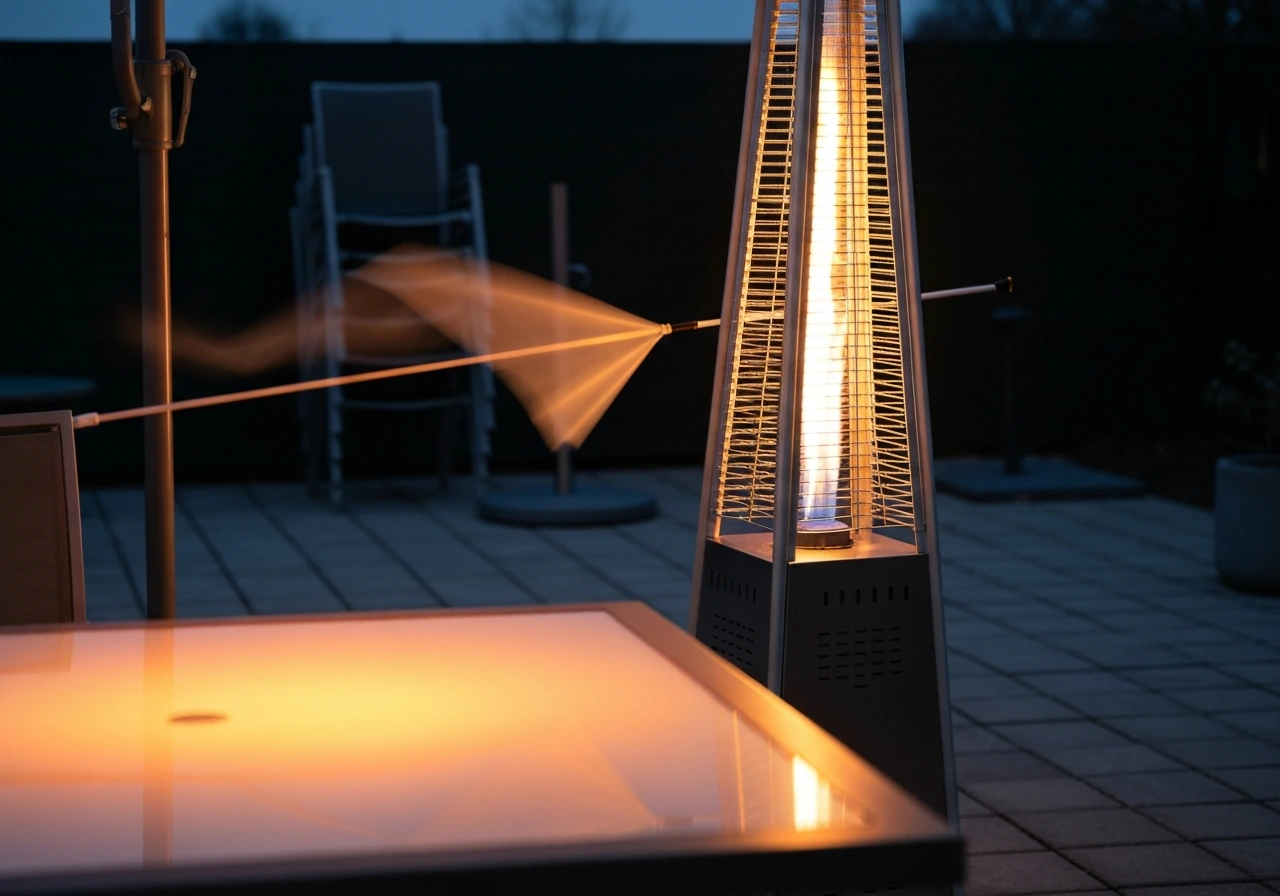
Go infrared, either electric or infrared-style propane (sometimes called "pyramid" or "flame" heaters). Infrared heats bodies and surfaces, not air, so wind doesn't carry the heat away. A ceiling-mount or wall-mount infrared unit pointed directly at the seating zone is the most wind-tolerant setup available. If you're committed to a tower propane heater on a windy site, invest in portable windscreen panels to surround the area.
Commercial patio (restaurant, bar, event venue)
Commercial setups need reliability above everything else: units that fire up every time without fuss, cover large zones efficiently, and hold up through heavy seasonal use. Hardwired electric infrared panels (the kind mounted overhead at 8 to 10 feet) are popular for covered commercial patios because they're maintenance-light, have no fuel cost variability, and create a clean visual aesthetic. For open commercial patios, a grid of natural gas freestanding heaters connected to a commercial gas manifold is the most scalable solution. Either way, budget for professional installation.
Cold-weather use (regularly below freezing)
Hardwired electric infrared or natural gas wins here. As noted earlier, propane pressure drops in very cold ambient temperatures, making output inconsistent. Electric infrared maintains full rated output regardless of outdoor temperature and is the most predictable cold-weather performer. If you're specifically trying to extend outdoor use into genuinely cold winters, whether patio heaters work well enough in those conditions is worth thinking through as part of this decision, since even the best units have limits.
Your next step
Start by answering three questions: How much space do you need to heat? Do you have access to a gas line or are you working with outlets and portability? And how exposed is your patio to wind? Those three answers will point you directly to the right heater type, and from there you're just comparing models within that category on build quality, BTU or wattage rating, safety features, and price. Avoid letting a low sticker price be the deciding factor: a heater that underperforms or fails after one season costs you more than buying right the first time.
FAQ
My patio is big, should I just buy the highest-BTU propane heater I can find?
Not always. If your seating is spread out beyond about 8 feet from a propane tower, or you have frequent wind, you often need multiple heaters or a directional setup (overhead infrared, or propane plus windscreen panels). A heater can have “enough BTU” on paper but still feel weak because the heat falls off before it reaches the people.
How should I interpret the coverage area on patio heater specs?
Use the stated coverage as a target, then subtract for wind and seating height. For convective models (propane, natural gas), coverage assumes calmer conditions; once sustained wind is around 10 to 12 mph, real-world effective comfort drops notably, even if the unit still runs at full power.
Do infrared patio heaters really work better in windy conditions?
Often yes, if you mount or place it correctly. Infrared usually warms people and objects faster and tends to hold up better with breezes, but you still need line of sight (avoid pointing it at the patio floor or away from seating). If you cannot aim the beam at the group, add another unit rather than relying on higher wattage alone.
What ignition type should I prioritize if my patio gets wet or stays cold at night?
Generally, no. Piezo ignition can be more failure-prone after exposure to wet or cold, while units with electronic ignition (ideally with battery backup) tend to start more reliably. If your area gets overnight freezing or rainy evenings, prioritize ignition type before “brand claims” about easy starts.
Are thermostats on patio heaters actually useful, or just marketing?
Yes, but do it intentionally. A thermostat helps you avoid over-heating a covered space, but many outdoor heaters use limited temperature control (sometimes multi-level settings rather than fine-grained control). If the model only offers an on/off switch, you may end up cycling frequently and burning through fuel or electricity faster than expected.
Is IP44 “weatherproof” enough if I plan to leave the electric heater outside all season?
Check weatherproofing for the way you will use it, not just the label. If the heater will sit outside uncovered, look for an IP55 or higher rating for electric units. If it is only sheltered under a covered overhang, IP44 can be acceptable, but you should still avoid leaving it exposed during heavy rain.
Can I use a propane or natural gas patio heater in a screened porch?
You cannot safely assume a “heater rating” equals safe indoor use. Patio heaters are designed for outdoor ventilation, combustion controls, and clearances. If you want warmth in a screened or partially enclosed space, choose electric infrared (no combustion) and follow clearance guidance, or you risk carbon monoxide exposure with gas units.
Why does my propane patio heater feel weaker after it has been cold overnight?
For propane, yes. When a tank is very cold, output can drop until it warms up, so you may notice weaker heat after an overnight cold soak. Keeping spare tanks ready and storing cylinders in a sheltered area helps maintain more consistent performance.
How close do people need to sit for a propane tower heater to feel effective?
Consider placement first. For propane towers, people near the heater (roughly within 8 feet) feel the biggest difference, beyond that the effect fades. For broader comfort, place multiple heaters to “cover” seating zones instead of trying to cover the whole yard from one center point.
Is hardwired electric infrared worth it, or will installation make it impractical?
For many homes, yes, but it depends on electrical access and power capacity. Hardwired infrared panels or larger systems may require a licensed electrician, and some setups need dedicated circuits. If you do not have the electrical infrastructure, natural gas can be simpler for permanent, large-zone heating.
What are the most common placement mistakes that reduce performance or safety?
Clean air flow and safe clearances matter even when the heater is “working.” If you cover the heater with furniture, curtains, or a low ceiling that blocks airflow, performance and safety can both suffer. For gas units, never operate with blocked combustion air, and keep a firm clearance around the heater’s intake and outlet as specified by the manufacturer.
Will a patio heater still be comfortable in winter, or should I switch to a different fuel?
Yes, depending on climate and how low you go in temperatures. In genuinely cold conditions (especially regularly below about 25°F), propane output can be less predictable, while hardwired electric infrared or high-BTU natural gas is generally more consistent. Still, expect reduced comfort gains as ambient temperature drops, even with the right fuel.
Are expensive patio heaters actually better, or can I get away with a budget model?
A higher price can be worth it, but only if it buys you reliability and correct weather protection. Budget units under about $100 for propane or very low-priced electric models often have thinner materials and less dependable ignition or shorter lifespan. If you use the heater frequently over multiple seasons, the total cost usually favors a mid-range unit that you do not replace quickly.
Next Articles
Best Price on Outdoor Patio Heaters: Compare Costs & Deals
Score the best price on outdoor patio heaters, price ranges, top picks, deal tactics, total-cost & safety checklist.
Where Can I Rent Patio Heaters Near Me Today
Find where to rent patio heaters near you today, choose the right fuel type, compare costs, and book safely.
Where to Buy a Patio Heater: Best Places and Types
Where to buy a patio heater now, plus electric vs gas vs propane tips, safety checks, and size/BTU buying checklist.