
Yes, infrared patio heaters work well, and for most homeowners and businesses they are worth buying. They heat people and surfaces directly using electromagnetic radiation rather than warming the air, which means you feel warmth almost instantly and wind does not strip the heat away the way it does with a convection heater. A quality 3,000 W to 6,000 W electric infrared unit delivers between roughly 10,200 and 20,500 BTU/hr and can comfortably warm a covered or semi-enclosed patio zone of 80 to 160 square feet. They do have real limits, they are not the right tool for every outdoor setting, and the upfront cost is higher than a basic propane mushroom heater, but on the core question of whether they actually work, the answer is yes. For a detailed look at effectiveness across different settings and outputs, see our guide on are patio heaters effective.
Do Infrared Patio Heaters Work? Verdict, Costs & When to Buy

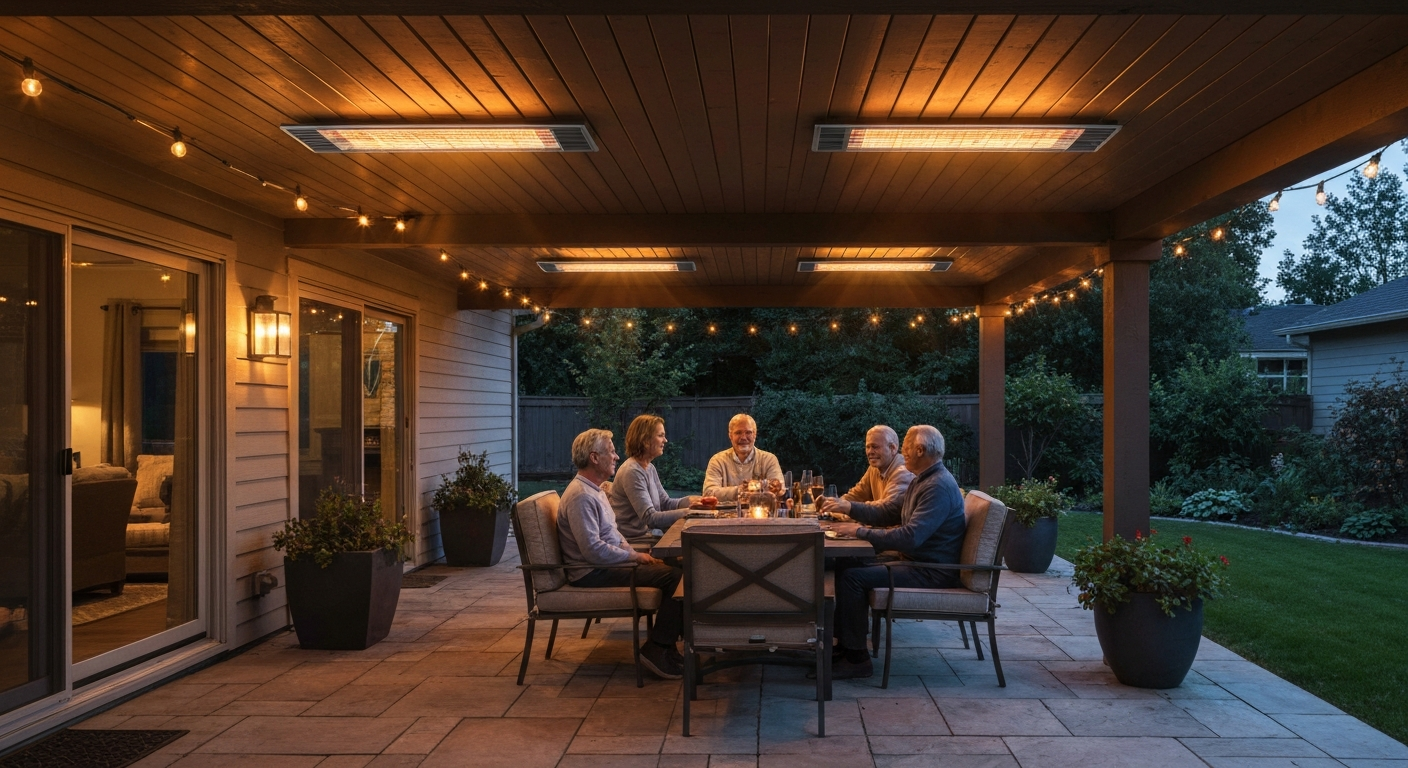
How infrared patio heaters actually work
Infrared heaters transfer energy as electromagnetic radiation, not by moving heated air. When radiation from the element hits your skin, clothing, furniture, or a concrete slab, it is absorbed and converted to warmth at that surface. ASHRAE defines a radiant heating system as one where at least 50% of heat transfer occurs by radiation, electric infrared patio heaters are nearly 100% radiant at the element level, with only a small convective component from the hot lamp casing. Because photons require no medium to travel, a gust of wind cannot carry that energy away before it reaches you. The ASHRAE Handbook, Chapter 4: Heat Transfer notes that radiative thermal emission depends on absolute temperature and surface emissivity and that radiation requires no medium to propagate blank" rel="noopener noreferrer">ASHRAE Handbook — Chapter 4: Heat Transfer. That is the single biggest practical advantage over convection-based heaters.
Infrared is conventionally divided into near-IR (roughly 0.75–1.4 μm), mid-IR (roughly 1.4–3 μm), and far-IR (above 3 μm). Most premium electric patio heaters use medium-wave quartz or tungsten elements that emit broadly in the short-to-mid infrared range. Brands like Bromic (Tungsten Smart-Heat series) and Infratech (C/WD series) specifically use medium-wave quartz for a balance of projection distance and low visible glow, which keeps the ambience on a restaurant patio or backyard deck from looking like a construction site. Far-infrared ceramic elements run cooler, emit at longer wavelengths, and are more common in lower-output residential models.
The performance numbers that actually matter
When you are evaluating any infrared patio heater, five metrics tell you most of what you need to know: wattage (or BTU/hr), coverage footprint, warm-up time, effective range (throw distance), and IP weatherproofing rating. Here is what each one means in practice.
- Wattage / BTU output: The conversion is straightforward — 1 W equals approximately 3.412 BTU/hr. A 3,000 W unit outputs about 10,236 BTU/hr; a 6,000 W unit outputs about 20,472 BTU/hr. Bromic's 6,000 W Tungsten Smart-Heat is rated at roughly 20,500 BTU/hr and is one of the most powerful single-element commercial electric units you can buy. Infratech offers a range from 1,500 W up to 6,000 W across its fixed-mount series, and Solaira's ICR series covers 3,000 W (about 10,236 BTU/hr) and 4,500 W (about 15,354 BTU/hr) options.
- Coverage footprint: Manufacturer claims are layout-dependent and assume a specific mounting height and sheltered conditions. Bromic publishes a coverage figure of up to about 160 sq ft for its 6,000 W unit at the recommended mounting height. Treat any coverage claim as a ceiling figure for ideal conditions, not a guarantee for your specific patio.
- Warm-up time: Electric infrared heaters reach operating temperature in under 30 seconds, often within 5–10 seconds. Gas radiant heaters take slightly longer due to burner ignition and element pre-heat. This near-instant response is a real advantage for residential use where you do not want to pre-heat 20 minutes before sitting outside.
- Effective range / throw distance: Mounting height and beam angle determine how far the radiant cone actually reaches. Most ceiling-mount or wall-mount units are designed for mounting heights of 7–10 feet. A wider beam angle covers more area but delivers lower intensity per square foot.
- IP rating: This tells you how well the unit is sealed against moisture and dust. Look for a minimum of IP55 for a covered patio, and IP65 or higher if the heater could be exposed to direct rain or spray. Lower-rated units will corrode and fail prematurely in wet climates.
How well they work in different settings
Open patios
An open, fully exposed patio is actually where infrared has its strongest argument against convection heaters, because wind is irrelevant to radiant transfer. That said, an uncovered patio means the heater cannot benefit from any reflected or trapped warmth, so you need adequate wattage pointed directly at the seating area. A single 3,000 W ceiling or wall mount unit works well for a concentrated seating zone of around 60–80 sq ft in mild temperatures. For a larger open deck or a colder climate, plan on at least 6,000 W per seating zone or multiple lower-wattage units arranged to overlap coverage.
Semi-enclosed and covered spaces
This is where electric infrared really excels. A pergola, covered patio, or rooftop bar with partial walls reflects radiant energy back into the space and lets surface thermal mass build up, which compounds the heating effect. Bromic's coverage claim of up to 160 sq ft for a 6,000 W unit is most realistic in exactly this kind of geometry. Many restaurants and bars use Infratech or Bromic ceiling-mount units at 8–10 feet and report that guests stay comfortable well into cooler evenings without the space feeling overwhelmingly hot.
Very windy environments
Radiant heat reaching your skin is not affected by wind, but wind chill absolutely is. In high-wind conditions, your body is losing heat faster through convection from your skin even as the infrared element is adding heat. In practice, a sustained wind above about 15–20 mph will noticeably reduce perceived comfort even with a quality infrared heater overhead. In chronically windy spots, the better move is to add windbreak screening and use infrared rather than to rely on raw wattage alone.
Performance below freezing: what to expect under 32°F
Electric infrared heaters work fine electrically in freezing conditions, there is no fuel line to freeze, no burner to struggle with cold air, and no pilot light to go out. For a practical guide on whether patio heaters work in winter, see do patio heaters work in winter. The heating element itself is unaffected by ambient temperature. What changes below freezing is the delta-T (the difference between your body temperature and the ambient air), which is much larger, so you need more radiant intensity to compensate. For practical guidance on performance and setup in subfreezing conditions, see do patio heaters work below freezing. A 2,000 W unit that felt comfortable at 45°F will not keep you warm at 28°F unless you are sitting very close to it or the space has walls that trap reflected heat.
As a rough planning figure, budget about 10 watts per square foot for mildly cold conditions (35–50°F) and step that up to 15–20 watts per square foot for genuinely cold weather (below 32°F). Commercial installations in cold climates often run multiple Infratech or Solaira units in overlapping arrays rather than relying on one large element. If you are regularly heating in freezing conditions, a propane or natural gas patio heater with a high BTU output may actually be a more practical choice, purely on a cost-per-hour basis, more on that below.
Infrared vs propane, natural gas, and electric convection: a direct comparison
All four heater types work outdoors, but they have genuinely different strengths. For a direct look at coverage, BTU output, and operating cost of propane units, see how well do propane patio heaters work. Here is how they stack up across the dimensions that most buyers care about.
| Feature | Electric Infrared | Propane | Natural Gas | Electric Convection |
|---|---|---|---|---|
| Heating method | Radiant (direct to surfaces/people) | Radiant + convective | Radiant + convective | Convective (warms air) |
| Wind resistance | High (radiant not affected) | Moderate | Moderate | Low (heat disperses in wind) |
| Warm-up time | 5–30 seconds | 1–3 minutes | 1–3 minutes | Several minutes |
| Typical output range | 1,500–6,000 W (~5,100–20,500 BTU/hr) | 40,000–48,000 BTU/hr | 40,000–48,000 BTU/hr | 750–1,500 W (~2,500–5,100 BTU/hr) |
| Fuel / running cost (per hour) | ~$0.27–$1.08 at $0.18/kWh | ~$1.40/hr at $2.67/gal | ~$0.70/hr at $1.45/therm | ~$0.14–$0.27 at $0.18/kWh (lower output) |
| Installation | Hardwired ceiling/wall mount (most units) | Freestanding, portable | Permanent gas line required | Plug-in or hardwired |
| Portability | Low (fixed mount) | High | Low | Moderate |
| Safety indoors/semi-enclosed | Safe (no combustion, no CO risk) | Not recommended (CO risk) | Not recommended (CO risk) | Safe |
| Maintenance | Low (lamp replacement every 3–5 years) | Moderate (fuel, burner cleaning) | Moderate (gas line, burner) | Low |
| Typical upfront cost | $200–$1,500+ (commercial) | $100–$400 | $300–$800 (installation extra) | $50–$300 |
The standout point from that table: propane heaters deliver 40,000–48,000 BTU/hr from a single floor unit, roughly twice to four times the output of a premium electric infrared unit, at a lower upfront cost. But propane costs about $1.40 per hour in fuel (at recent U.S. average prices of around $2.67/gallon), and you cannot safely use them in enclosed or semi-enclosed spaces because of carbon monoxide risk. Natural gas is cheaper to run at roughly $0.70/hour for a comparable BTU output, but it requires a permanent gas line installation. Electric infrared sits in the middle: lower BTU output than gas, but no combustion risk, near-instant response, and very low maintenance. For a covered patio or indoor-adjacent space, electric infrared is often the only sensible choice from a safety standpoint.
Energy use and what it actually costs to run
Electric infrared heaters are site-efficient: essentially 100% of the electricity drawn at the element is converted to heat. There are no combustion losses, no flue, no pilot flame. The math is simple: watts divided by 1,000 gives you kilowatts, and kilowatts multiplied by your electricity rate gives you cost per hour.
| Heater size | Draw (kW) | Cost/hr at $0.18/kWh | Cost/hr at $0.14/kWh | Cost/hr at $0.22/kWh |
|---|---|---|---|---|
| 1,500 W | 1.5 | $0.27 | $0.21 | $0.33 |
| 2,000 W | 2.0 | $0.36 | $0.28 | $0.44 |
| 3,000 W | 3.0 | $0.54 | $0.42 | $0.66 |
| 4,500 W | 4.5 | $0.81 | $0.63 | $0.99 |
| 6,000 W | 6.0 | $1.08 | $0.84 | $1.32 |
At the U.S. average residential electricity rate of around $0. EIA, Electricity data (representative retail price context for residential/commercial electricity) provides national and regional retail electricity price data commonly used to benchmark residential rates like the ~$0.18/kWh figure used here EIA — Electricity data (representative retail price context for residential/commercial electricity). 18/kWh, a 3,000 W unit costs about $0.54 per hour and a 6,000 W commercial unit costs about $1.08 per hour. Compare that to a 48,000 BTU/hr propane heater running at roughly $1.40 per hour in raw fuel cost, or a natural gas unit at about $0.70 per hour. On a straight fuel-cost basis, electric infrared is cheapest for smaller outputs and competitive for medium outputs. The propane heater's much higher BTU output means it heats more area for that $1.40/hr, so direct cost comparisons require you to normalize for output and coverage area, not just hourly fuel spend.
One practical note on the electricity numbers: most infrared heaters do not run at 100% output continuously. Units with dimmers or thermostatic controls (which Bromic and Infratech both offer) will cycle or reduce output once the area reaches the desired comfort level, bringing average hourly cost down meaningfully from the maximum figures above.
Safety, installation, and mounting, what to get right
Electrical and mounting requirements
Most commercial-grade electric infrared units above 2,000 W require hardwiring to a dedicated 240V circuit. This is not a plug-in product, plan for a licensed electrician to run a circuit from your panel to each heater location before you buy. The Infratech and Bromic Tungsten series are hardwired 240V products. Some residential-grade 1,500 W units are 120V plug-in, but their output is limited. Always check the amperage draw: a 6,000 W / 240V unit draws 25 amps and needs a 30-amp breaker and appropriately rated wire.
Clearances and mounting height
Follow the manufacturer's minimum clearance requirements to combustible surfaces, these are specified in the installation manual and are not optional. Most ceiling-mount infrared units require at least 24–36 inches of clearance above and to the sides from combustible materials. Recommended mounting heights for overhead units are typically 7–10 feet above the floor for residential applications and up to 12 feet for commercial installations with higher wattages. Mounting too low concentrates heat uncomfortably on one spot; too high reduces effective intensity at the floor level. Infratech's installation manuals include a mounting-height-to-coverage matrix that is worth consulting during layout planning.
Weatherproofing and IP ratings
IP rating is the single most important spec to check for outdoor durability. IP55 means protected against dust and low-pressure water jets from any direction, adequate for a covered patio with no direct rain exposure. IP65 is fully dust-tight and protected against water jets, which is what you want if the heater could get splashed or is under a roof edge that channels water. For fully exposed installations, look for IP66 or better. Installing an under-rated unit in a wet environment is the fastest way to shorten its life and potentially create an electrical hazard. Bromic's Tungsten Smart-Heat units are rated IP55; Infratech's outdoor series is similarly rated for covered outdoor use.
Safety advantages over gas heaters
Electric infrared heaters produce no combustion byproducts, which means no carbon monoxide risk, a critical safety difference when comparing them to propane or natural gas heaters in semi-enclosed spaces like covered patios, screened porches, or restaurant dining rooms with partial walls. There is no fuel stored on-site, no gas line to develop a leak, and no pilot flame to go out. The element surface is hot but typically enclosed behind a guard or reflector, reducing accidental contact risk. These are the features that make electric infrared the preferred choice in any application where ventilation is limited.
Maintenance, lifespan, and real-world durability
Electric infrared heaters have very few moving parts. The main consumable is the heating element (quartz lamp or carbon element), which typically lasts 3,000 to 5,000 hours of use for mid-range units and up to 10,000 hours for some premium commercial lamps. For a residential user running the heater 200 hours per season, that is 15–25 seasons before an element replacement, which itself is usually a straightforward swap costing $30–$100. The reflector and housing require occasional cleaning to maintain efficiency; a dirty reflector can reduce output noticeably. In coastal or high-humidity environments, corrosion of the housing and mounting hardware is a more common failure point than the element itself, which is why IP rating and stainless or powder-coated hardware matters.
Gas radiant heaters have higher maintenance demands: burners need periodic cleaning, valves and gas fittings should be inspected annually, and propane tanks need to be exchanged or refilled. Natural gas units require professional inspections of the gas line connection. From a pure maintenance standpoint, electric infrared wins decisively.
Pros and cons at a glance
- Pro: Heats people and surfaces directly, not the air — works in windy conditions where convection heaters fail
- Pro: Near-instant warmth (5–30 seconds to full output)
- Pro: No combustion, no CO risk — safe for covered and semi-enclosed spaces
- Pro: Very low maintenance and long element lifespan
- Pro: Clean, low-profile ceiling and wall-mount designs suit commercial aesthetics
- Pro: Dimmable and smart-control options (Bromic, Infratech) for precise comfort and lower average energy cost
- Con: Lower maximum BTU output than propane or natural gas floor heaters
- Con: Requires 240V hardwiring for most commercial units — adds installation cost
- Con: Directional heating means areas outside the beam stay cold
- Con: Higher upfront cost than basic propane mushroom heaters
- Con: In very cold weather (below 32°F), coverage per unit drops — more units needed
When infrared is the right choice (and when it is not)
Infrared electric heating is the best choice when you have a covered or semi-enclosed patio, a restaurant or bar with partial enclosure, a screened porch, or any space where open-flame or CO-producing heaters are not allowed. It is also the right call when aesthetics matter, a flush-ceiling Infratech or wall-mount Bromic is far less intrusive than a mushroom propane heater taking up floor space. For residential use where you want quick, low-maintenance warmth for a regular seating area, a 2,000 W to 4,000 W unit covers the typical use case well. If you’re wondering whether are patio heaters worth it, this guide compares costs, performance, and settings to help you decide (see internal resource 8838f547-cf33-44f6-a576-35f40777b46f). For side-by-side model comparisons and hands-on test results, see our review patio heaters for recommendations and buying tips.
Propane is a better fit when you need portability, very high BTU output to heat a large open space in cold weather, or when running an electrical circuit to the heater location is impractical. Natural gas makes sense for permanent commercial installations in cold climates where the heating load is large and electricity rates are high. If you are weighing these options in detail, the broader question of which fuel type delivers the best value for your specific patio is worth thinking through carefully, the trade-offs between portability, installation cost, running cost, and safety are all meaningful.
Buying checklist: what to confirm before you order
- Calculate your zone size in square feet and use 10 W/sq ft for mild climates, 15–20 W/sq ft for cold climates below 32°F
- Confirm your ceiling or wall can support the mounting weight and provides the required clearance from combustibles
- Verify you have (or can run) a 240V dedicated circuit for any unit above 2,000 W
- Check the IP rating matches your exposure: IP55 minimum for covered patios, IP65+ for any rain exposure
- Choose a mounting style (ceiling flush, surface mount, or wall-angle bracket) that matches your structure
- Look for dimmable or smart-control compatibility if you want to manage running costs or integrate with a home/building system
- Confirm warranty terms: reputable brands (Bromic, Infratech, Solaira) offer 2–3 year warranties on the unit and separate lamp/element warranties
- Budget for professional electrical installation if hardwiring is required — factor this into the total cost of ownership
FAQ
Do infrared patio heaters actually work to warm people outdoors?
Yes. Infrared (radiant) patio heaters transfer heat as electromagnetic radiation directly to people and surfaces rather than warming the air. Properly sized units (for example, 3,000–6,000 W electric units or 40,000–48,000 BTU propane floor models) produce perceptible warmth within their projected footprint when mounted at manufacturer‑recommended heights and aimed correctly. Performance falls off with distance and in strong wind, but in sheltered or semi‑enclosed patios radiant heaters are very effective at delivering comfort where convective heaters struggle.
Are infrared heaters effective below freezing?
Yes — infrared will still heat people below freezing because radiation does not require warm air. However, effectiveness depends on emitter power, wavelength, mounting height and exposure: higher output (e.g., 4,000–6,000 W electric or 40k–48k BTU gas) and lower mounting heights improve perceived warmth. In very cold, windy, or fully open settings, even high‑power radiant systems may not provide desired comfort across large areas; wind reduces the perceived benefit by cooling exposed skin and carrying heat away.
How much area will a typical infrared patio heater cover?
Coverage depends on output and mounting: many commercial electric infrared models (1,500–6,000 W) advertise practical footprints from ~40–160 sq ft when mounted per spec; propane standing heaters (≈40k–48k BTU) commonly claim radii of ~8–13 ft. These figures assume recommended mounting heights, sheltered conditions and typical seating configurations; real‑world coverage shrinks in wind or very low temperatures.
Are infrared heaters more cost‑effective than propane or natural gas?
It depends on fuel price, unit power and how you measure cost (site energy vs useful heat delivered). Example operating costs using typical U.S. retail prices: a 3,000 W electric infrared draws 3.0 kW → at $0.18/kWh ≈ $0.54/hr; a 6,000 W unit ≈ $1.08/hr. A 48,000 BTU/hr propane heater consumes ≈0.525 gal/hr → at $2.67/gal ≈ $1.40/hr (fuel only). Natural gas (48,000 Btu ≈ 0.48 therm/hr) at $1.45/therm ≈ $0.70/hr. Electric resistance converts nearly 100% of site energy to heat at the element, while gas burners have different useful‑heat fractions; choice depends on local fuel prices, duty cycle, and whether you prioritize lower per‑hour cost or convenience and deployment flexibility.
How do infrared heaters compare with convective electric heaters?
Infrared warms people and surfaces directly, so it feels immediate and works better outdoors or in drafty spaces. Convection (fan or ambient) heaters warm the air, which is inefficient outdoors since warm air is lost. For covered/semi‑enclosed patios where you want targeted warmth and minimal warm‑air loss, infrared is usually superior. For fully enclosed indoor rooms where you need even air temperature, convection heaters are often preferable.
How do infrared heaters compare with propane and natural‑gas patio heaters?
Propane/natural‑gas radiant heaters typically provide very high power (many consumer propane units ≈40k–48k BTU/hr) and can heat larger open areas, often at lower hourly fuel cost than electricity depending on local prices. Electric infrared gives clean, quiet operation, simpler installation (no gas line), and better suitability for covered ceilings or mounted applications. Gas is good for large, open spaces; electric infrared is excellent for fixed mounted solutions, aesthetic control, lower local emissions and places where running fuel is impractical.
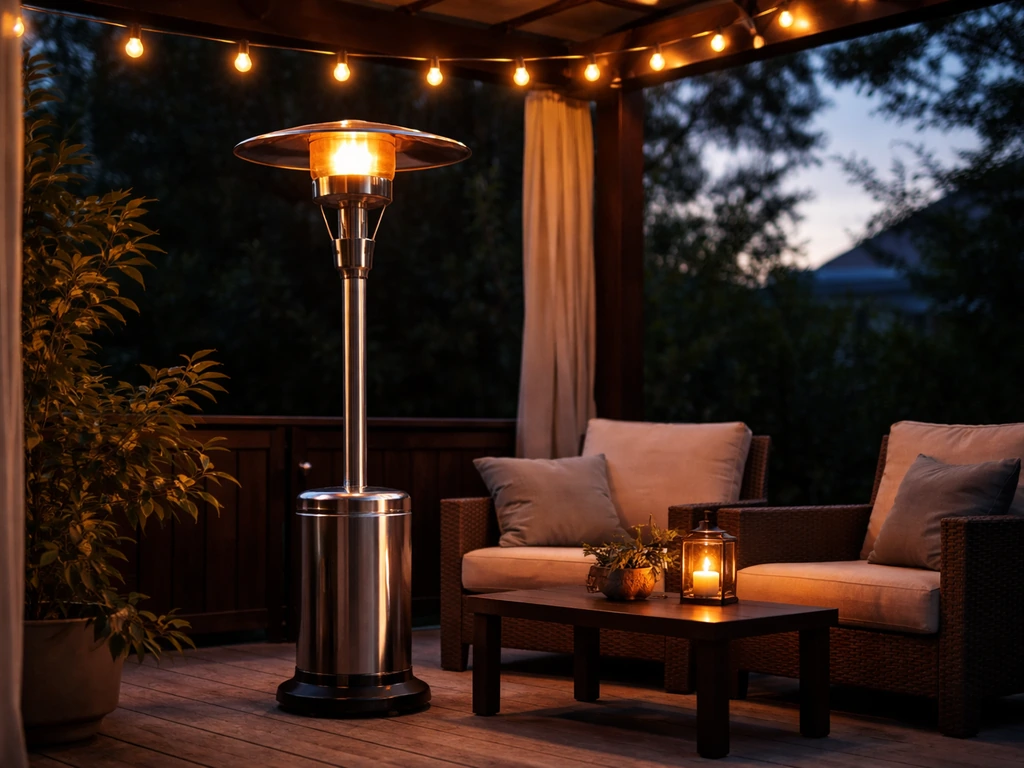
See if patio heaters are worth it: compare electric vs gas costs, coverage, wind impact, safety, and best type for your
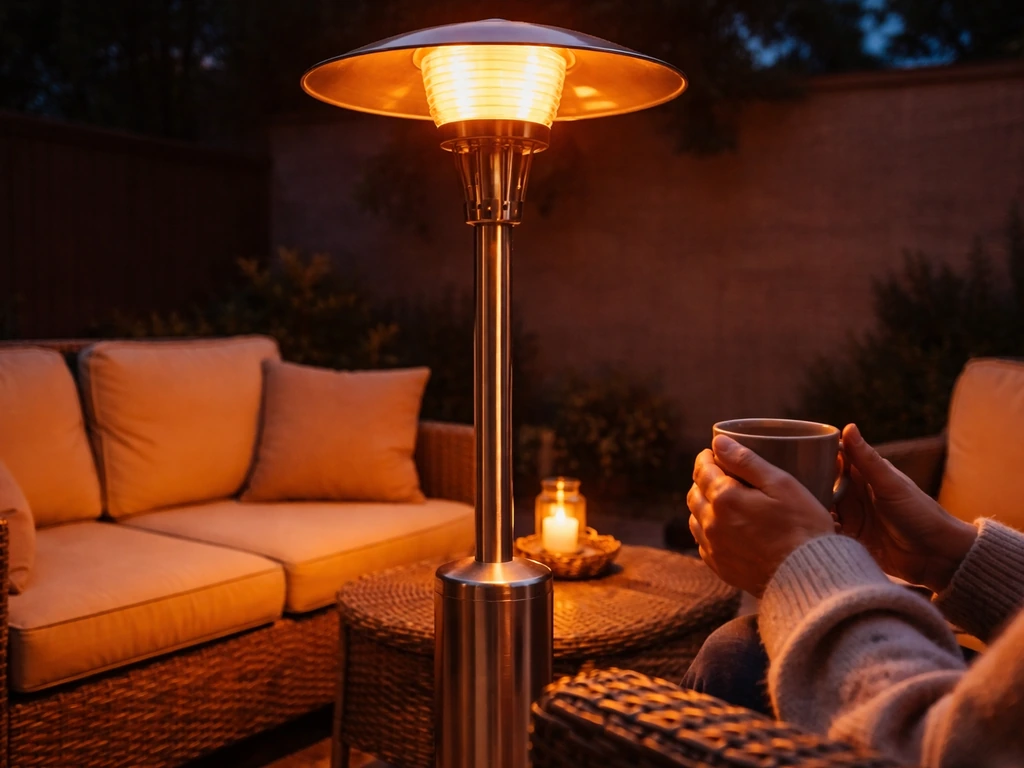
Learn how well patio heaters heat outdoors, what affects coverage, BTUs vs watts, and how to choose safely for your pati
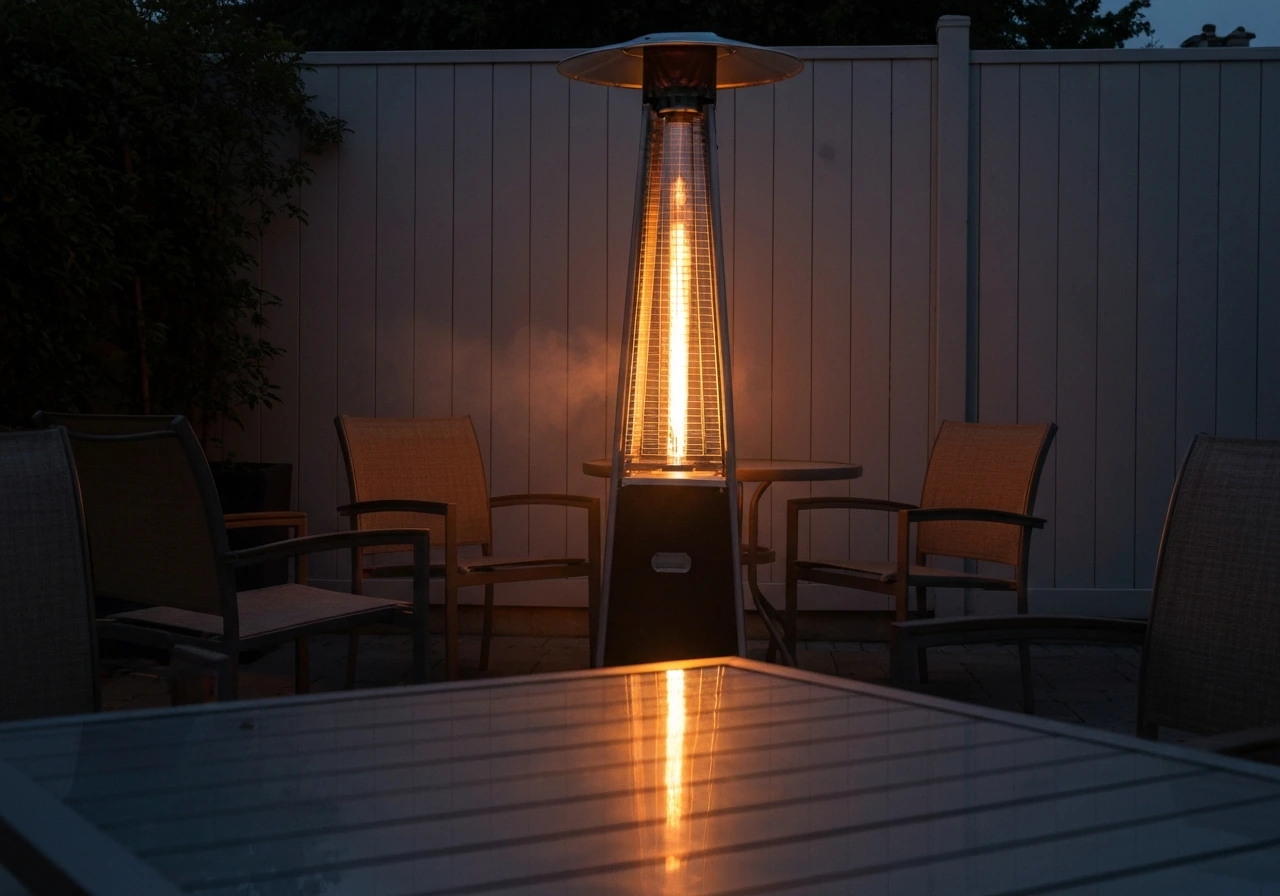
Review patio heaters with coverage, costs, safety, and model comparisons to pick the best propane, electric, gas, infrar