
For a covered patio, a propane or natural gas fire pit is your best all-around option if you have at least 84 inches of ceiling clearance and solid ventilation on two or more sides. If you want a similar setup that works well under most covered patios, patio torches are often a good add-on for safe, focused light and warmth best all-around option. If your ceiling is lower or your patio is more enclosed, go electric.
Best Fire Pit for Covered Patio: Safe, Best Picks Guide

Caleb Vale
29 May 2026
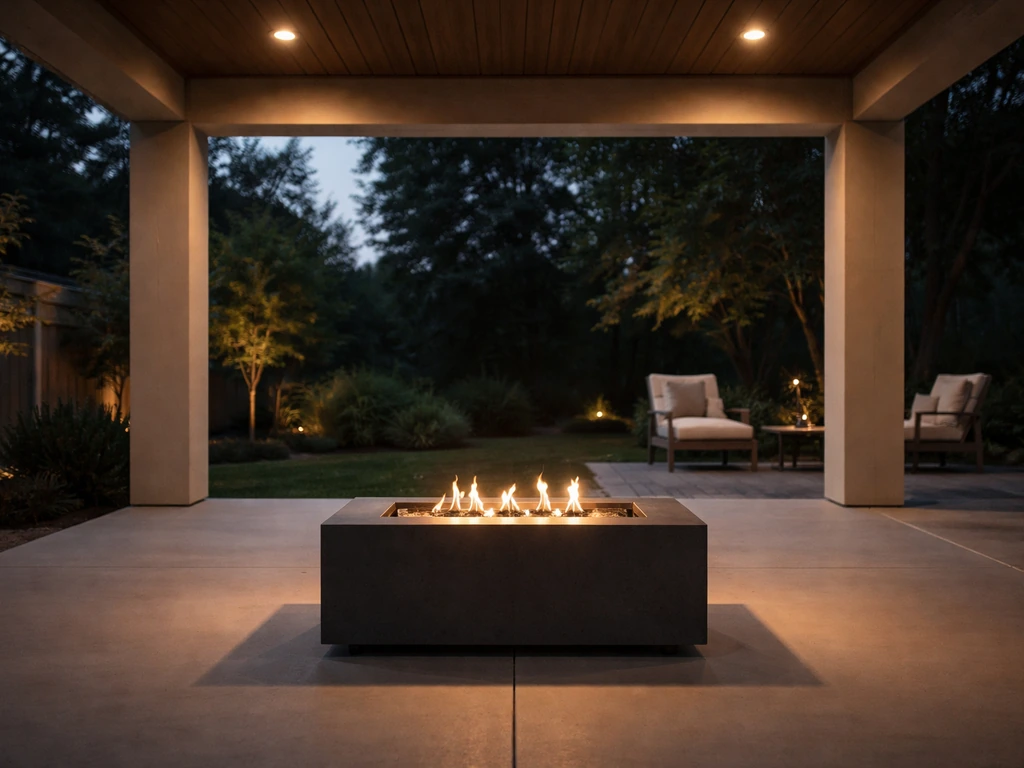
Wood-burning fire pits, including pellet models, are generally not safe under a covered patio due to smoke, ember risk, and CO buildup. The right choice comes down to three things: how high your ceiling is, how open the sides of your patio are, and how much heat you actually need.
Covered patio fire pit safety and the smoke/venting reality
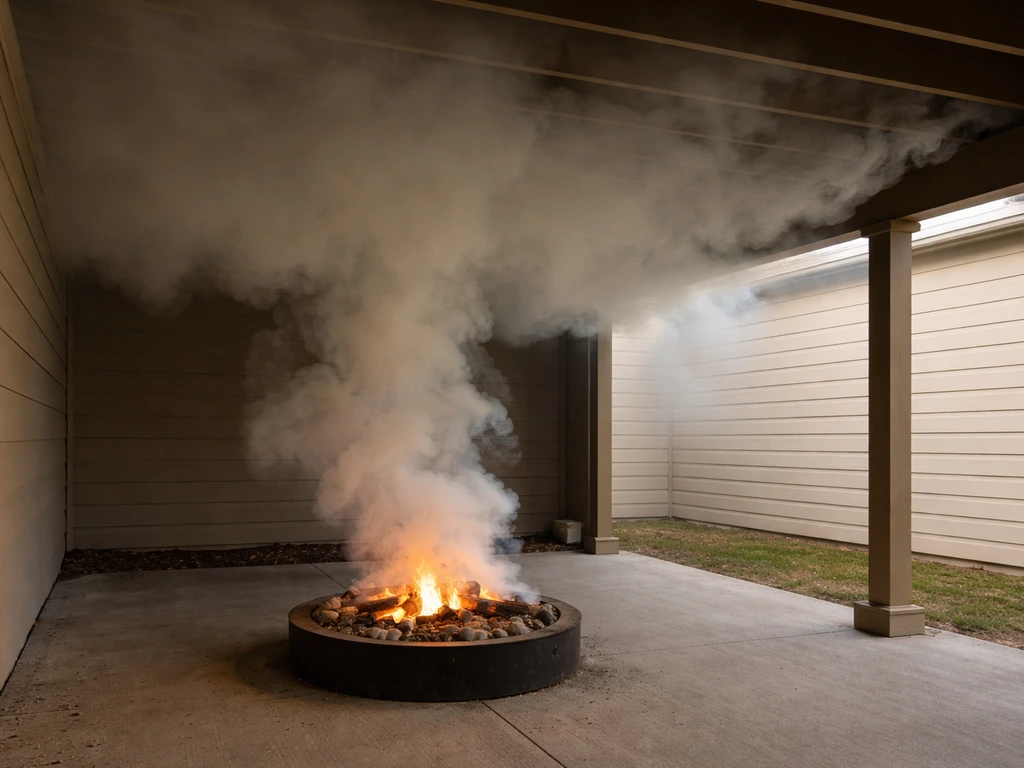
This is where most people go wrong. A covered patio is not an open yard, and fire pits designed for open-air use behave very differently once you put a roof over them. The two main dangers are carbon monoxide (CO) and embers. CO is colorless, odorless, and produced by any fuel-burning appliance including propane, natural gas, and wood. Symptoms of CO poisoning include headache, dizziness, weakness, nausea, vomiting, chest pain, and confusion, and it can be fatal before you realize anything is wrong. The CPSC calls it the 'invisible killer' for good reason.
WorkSafeBC explicitly recommends using electric heaters to reduce CO exposure risk whenever you're enclosing or semi-enclosing an outdoor space with propane or gas units. Consumer Reports echoes this: gas-burning patio heaters produce carbon monoxide and should never be used in fully enclosed areas. The key word is 'enclosed.' A covered patio with two fully open sides is different from a three-season room with screens. The more enclosed your space, the stronger the case for electric.
The second issue is negative air pressure. Covered patios, especially those attached to a house, can develop airflow patterns that pull combustion gases back toward seating areas rather than venting them outward. If your covered patio is near a door or window, this is a genuine concern with any fuel-burning fire pit. Even 'smokeless' designs and premium gas burners are not immune to this effect when the wind direction changes or when the overhead structure traps heat and redirects airflow.
Bottom line on safety: install a battery-operated CO detector on any covered patio where you use a gas or propane fire pit, never leave a fuel-burning fire pit unattended under a roof, and always have at least two fully open sides to the space. If you can't guarantee those conditions, choose electric.
Best fire pit types for covered patios: propane, gas, electric, and wood/pellet compared
Not all fire pit types are created equal when there's a roof overhead. Here's an honest breakdown of each.
Propane fire pits
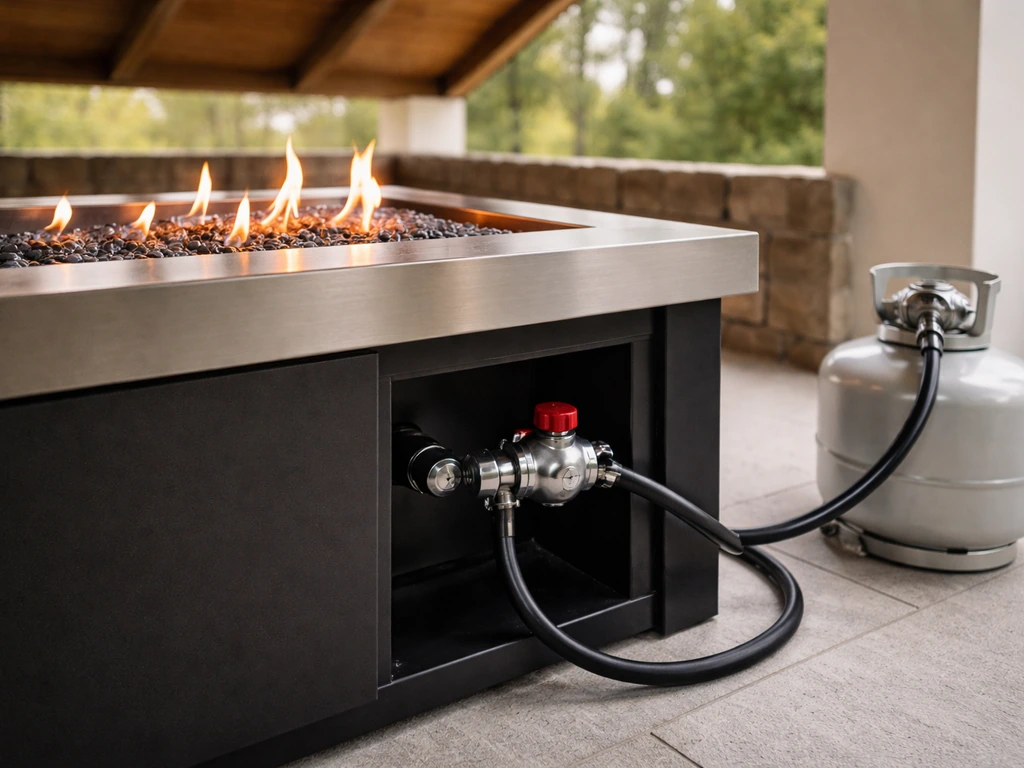
Propane fire pits are the most popular choice for covered patios when you have adequate ceiling height and open sides. They deliver serious heat, typically in the 58,000 to 195,000 BTU/h range depending on burner size, with mid-tier table models landing around 65,000 to 80,000 BTU/h. You get a real visible flame, precise flame control via a knob or electronic ignition, and no smoke. The tradeoff is CO output and fuel cost.
At roughly $2. 58 per gallon of propane (the current national average), a 20-pound tank running a 60,000 BTU/h burner at full output will last around 8 to 10 hours. Propane can also have trouble vaporizing in cold temperatures, which causes the tank to frost and the flame to drop, something worth knowing if you live somewhere that gets genuinely cold evenings.
Natural gas fire pits
Natural gas is ideal if you already have a gas line on your patio or can run one without major cost. You get unlimited fuel, consistent pressure regardless of temperature, and no tank swapping. Natural gas has less energy per volume than propane, so the burner runs a bit longer at lower flame settings to deliver the same heat, and you may notice a slight hissing sound at the lowest setting. Installation is a fixed upfront cost (a licensed plumber or gas tech to run the line and connect the fitting) but the per-BTU fuel cost is generally lower than propane long term. The CO risk is identical to propane, so the same ventilation rules apply.
Electric fire pits
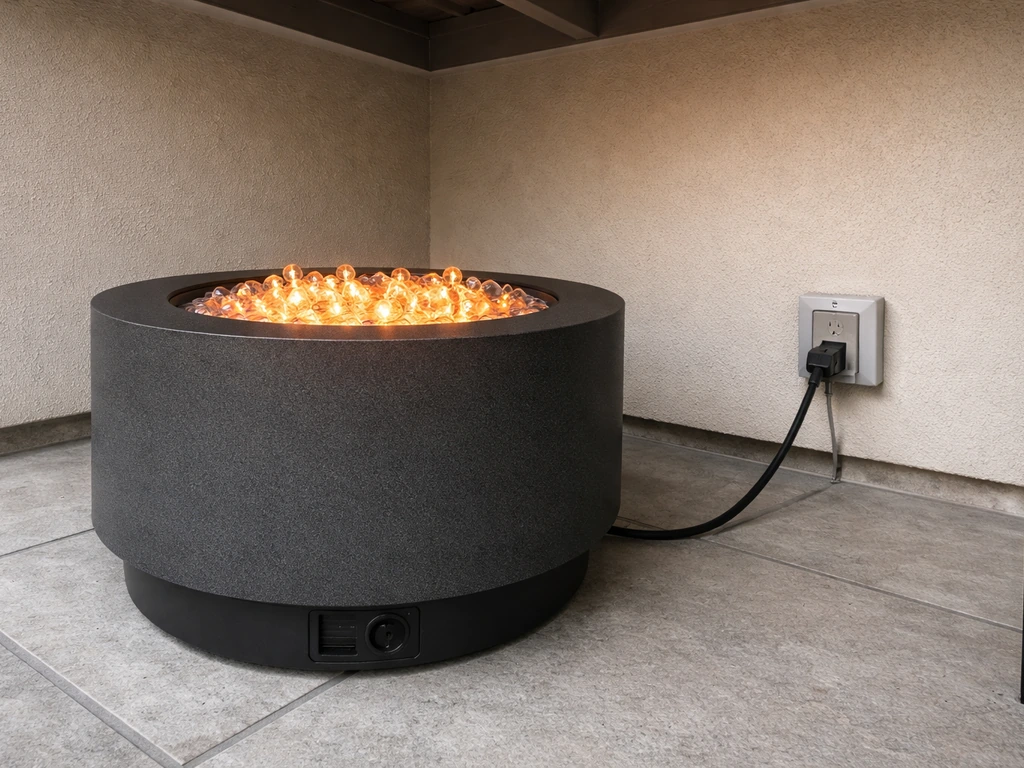
Electric fire pits produce zero CO, no smoke, no embers, and no real combustion at all. For a semi-enclosed or low-ceiling covered patio, they are the safest choice by a wide margin. The tradeoff is heat output and flame realism.
Most electric fire pits top out at 5,000 to 6,000 BTUs of equivalent heat (from 1,500-watt heating elements), which is enough to take the chill off a small to medium seating area but not enough to replicate the radiant warmth of a propane fire table on a cold night. The flame effect is LED-based and looks convincing at a distance but obviously artificial up close. At the current U. S.
average electricity rate of around 17. 3 cents per kWh, running a 1,500-watt unit costs about 26 cents per hour, making it cheap to operate. If your priority is ambiance over serious heat, or if your patio is on the enclosed end of the spectrum, electric is the smart call.
Wood-burning and pellet fire pits
Wood and pellet fire pits are generally not appropriate for covered patios. Even 'smokeless' designs like pellet burners (the Flame Genie, for example, uses bottom-to-top airflow to minimize smoke and claims up to 56,000 BTUs) still produce some smoke, especially during the first 5 to 15 minutes of lighting while the fuel catches.
Reviewers consistently note that 'truly smokeless' is only achieved once the fire is well established. Under a covered patio, that initial smoke is trapped. Add to that the ember risk, the blank" rel="noopener noreferrer">1,200-plus degrees generated in the burn chamber, and the CO output, and wood or pellet pits are a combination of fire hazard, health hazard, and ceiling damage risk that isn't worth taking.
To avoid issues like heat and smoke harming the patio surface, it's important to choose a fire pit style that is actually safe under a covered patio ceiling damage risk. Save these for an open yard setting. Wood-burning and pellet models can be a fire hazard on a covered patio, so many people end up choosing the best patio wood burning fire pit only for open-air setups.
| Fire Pit Type | Safe for Covered Patio? | Heat Output | CO Risk | Smoke | Fuel Cost (ongoing) | Best For |
|---|---|---|---|---|---|---|
| Propane | Yes, with open sides + 84"+ ceiling | 65,000–195,000 BTU/h | Yes, ventilate well | None | Moderate (~$2.58/gal propane) | Open covered patios, high ceilings |
| Natural Gas | Yes, with open sides + 84"+ ceiling | 60,000–150,000 BTU/h | Yes, ventilate well | None | Lower long-term than propane | Patios with existing gas line |
| Electric | Yes, all covered patios | ~5,000–6,000 BTU equivalent | None | None | Low (~$0.26/hr at 1,500W) | Enclosed/semi-enclosed patios |
| Wood/Pellet | Not recommended | Up to 56,000 BTU/h | Yes | Yes (especially at startup) | Low (pellets/wood) | Open yards only |
What to measure before you buy anything
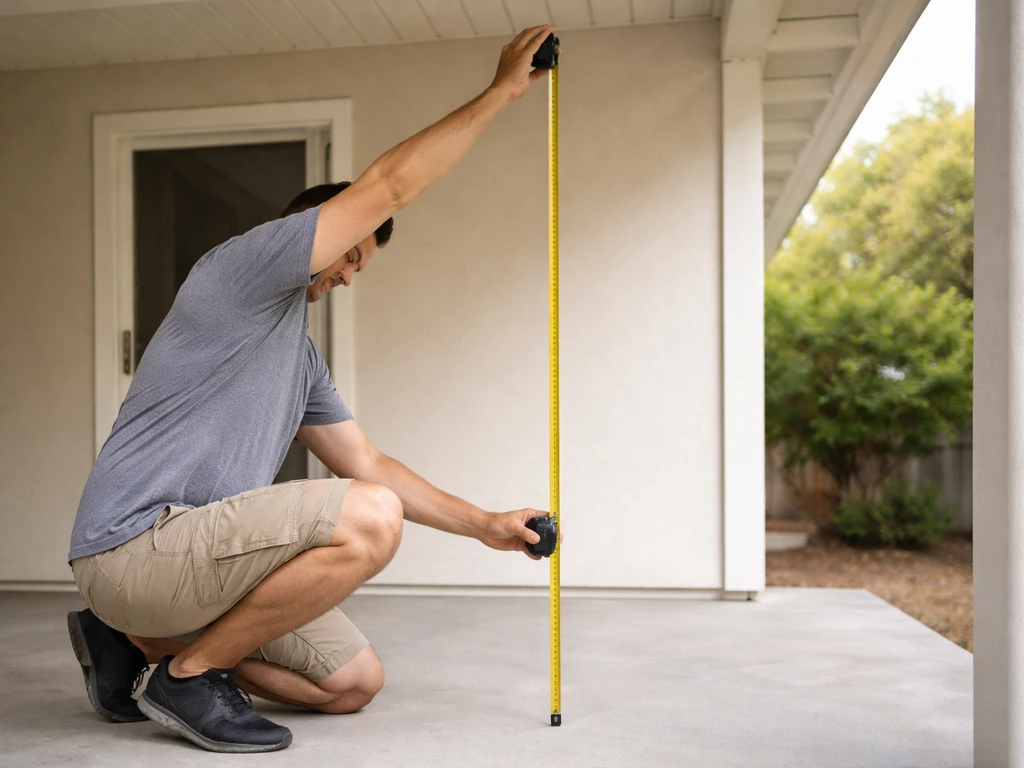
Before you look at a single product listing, grab a tape measure and spend five minutes on your patio. These four measurements will save you from a return or, worse, a safety problem.
Ceiling height and overhead clearance
This is the most critical measurement for any gas or propane fire pit under a covered patio. Manufacturer clearance requirements vary, but most gas fire pit and fire table manufacturers require a minimum of 72 to 84 inches of clearance from the top of the burner to any overhead combustible surface.
Some larger or higher-output models (like the Skyline 72 linear fire table) specify 84 inches to overhead combustibles. If your covered patio ceiling or roof structure is lower than that measured from the top of the fire pit, a gas model is not safe to use there. Period. Measure from the floor to the underside of your roof structure, then subtract the height of the fire pit unit you're considering.
The result must meet or exceed the manufacturer's minimum overhead clearance.
Patio footprint and seating layout
Measure the length and width of your patio in feet. A 10x12 foot covered patio is very different from a 20x20 foot one in terms of how much fire pit you need and how safely you can position it. As a rule, you want at least 3 feet of clearance between the edge of the fire pit and any furniture or wall, and ideally 5 or more feet from any combustible structure like a wood post or lattice wall. Note where your seating clusters. The fire pit should be centered among the seats, not pushed against a wall or near a support post.
Openness of the sides
Count how many sides of your covered patio are fully open (no screens, walls, or glass). Two or more fully open sides is the minimum for a gas or propane fire pit. If three or more sides have walls, screens, or glass panels, treat the space as semi-enclosed and use electric. Also note if any doors or windows to your home are within 10 feet of where you'd place the fire pit. Combustion gases can enter through open doors and windows, which is how CO problems happen in adjacent indoor spaces.
Electrical and gas access
For electric fire pits, check where your nearest outdoor outlet is and whether it's GFCI-protected (it should be). For natural gas, note whether there's an existing gas stub-out on the patio or if running a new line is feasible. For propane, the only infrastructure you need is a flat, stable surface and a 20-pound tank (most fire tables have a cabinet that hides the tank below the unit).
Top picks by scenario
Different covered patios call for different fire pits. Here are the scenarios I run into most often, with the type of unit that makes the most sense for each.
| Scenario | Best Type | What to Look For | Approx. Budget |
|---|---|---|---|
| Large open covered patio, 9'+ ceiling, max heat | Propane or natural gas fire table | 60,000–80,000 BTU/h, auto-ignition, CSA/UL listed, lava rock or glass media | $400–$1,200 |
| Medium covered patio, 8' ceiling, wants real flame | Propane fire table (low-profile) | Under 24" tall burner height, 50,000–65,000 BTU/h, confirm 72"+ clearance with that model | $300–$700 |
| Semi-enclosed or screened patio, any ceiling height | Electric fire pit or fire table | 1,500W element, LED flame effect, tabletop or floor model, plug-in | $150–$500 |
| Small covered patio, ambiance over heat | Electric tabletop fire pit | Low footprint, plug-in, LED flame | $80–$250 |
| Natural gas line already on patio | Natural gas fire table | CSA-certified, compatible with gas line pressure, auto shut-off valve | $500–$2,000+ |
| Covered patio attached to house, doors nearby | Electric only | No CO risk, no smoke, remote control or smart home integration a plus | $150–$600 |
If you're comparing fire pits to a more permanent built-in option, it's worth considering whether a covered patio fireplace might be a better long-term fit for your space. If you want the best patio fireplace option for your setup, focus on venting, overhead clearance, and how open your patio really is covered patio fireplace. That's a different category with its own venting and installation requirements, but it's worth knowing the option exists if you're building or renovating.
Performance and comfort: heat output, flame visibility, and coverage
BTUs tell you the potential heat output, but what actually matters for comfort is how that heat reaches the people sitting around the fire pit. Gas and propane fire pits produce convective heat (the warm air rising from the flame) as well as some radiant heat from the flame itself. A 60,000 to 80,000 BTU/h propane fire table will comfortably heat a 200 to 300 square foot seating area on a 40 to 50 degree night. Below 35 degrees, you'll want to be at the higher end of that BTU range, and as mentioned earlier, propane vaporization can become inconsistent at very low temperatures.
Electric fire pits work differently. Their heat output is infrared or convective from a 1,500-watt element, which is the functional equivalent of roughly 5,100 BTUs per hour. That's real warmth within about 5 to 8 feet, but it won't heat a large open covered patio on a cold night the way a gas unit will. Think of electric as taking a 60-degree evening to a comfortable 68 degrees for people seated right next to it, not as a primary heat source for a large group.
Flame visibility under a covered patio is actually better than in an open yard because wind doesn't affect the flame. Gas and propane fire pits produce a consistent, attractive flame with glass beads or lava rock media. Electric fire pits have improved significantly in the past few years, with newer LED flame effects that look convincing in low-light evening conditions. During daylight, the illusion is less effective.
Installation, fuel cost, and maintenance for each type
Propane fire pits
Installation is minimal. Most propane fire tables arrive assembled or require basic assembly (attaching legs, connecting the burner to the regulator hose). You connect a standard 20-pound tank, test for leaks with soapy water, and you're running. Maintenance is light: keep the burner ports clear of debris, check the hose and regulator annually for cracks or corrosion, and cover the unit when not in use. Fuel cost runs roughly $5 to $10 per session at moderate use, depending on your BTU output and local propane prices.
Natural gas fire pits
Installation requires a licensed plumber or gas technician to connect to your existing line. Budget $200 to $600 for the connection work depending on your setup. After that, the unit is essentially zero-maintenance on the fuel side: no tanks to swap, no pressure variations. Burner maintenance is the same as propane. Long-term, natural gas is cheaper per BTU than propane in most regions, and you never run out of fuel mid-evening.
Electric fire pits
Plug into a GFCI-protected outdoor outlet and you're done. No professional installation required. Maintenance is essentially nothing: wipe down the unit, keep it covered when not in use, and replace the LED light components if they fail (most modern units have long-rated LED lifespans). At 17.3 cents per kWh, a 1,500-watt unit costs about 26 cents per hour to run the heater element, and the flame effect alone (LEDs only, no heat) costs pennies. For most homeowners, electricity is the lowest-maintenance and lowest-drama option available.
Buying checklist and mistakes to avoid
Use this checklist before finalizing any purchase for a covered patio fire pit.
- Measure ceiling height from floor to the underside of your roof structure. Confirm the unit you're considering meets the manufacturer's overhead clearance requirement (commonly 72" to 84" from the top of the burner).
- Count the open sides of your patio. Two or more fully open sides required for any gas or propane fire pit. Three or more enclosed sides, or any screen/glass enclosure: choose electric.
- Check for nearby doors, windows, or vents within 10 feet of your planned fire pit placement. If present, choose electric or reposition the unit.
- Confirm the product is CSA or UL listed (look for ANSI Z83.26/CSA 2.37 on gas models). Unlisted fire pits have no verified safety compliance.
- Install a battery-operated CO detector rated for outdoor or garage use on any covered patio where you use a gas or propane fire pit.
- For propane: confirm the hose and regulator are rated for outdoor use and inspect them annually.
- For natural gas: hire a licensed professional for the connection. Do not DIY gas line work.
- For electric: confirm the outlet is GFCI-protected and rated for the wattage of your unit.
- Check your local codes or HOA rules. Some municipalities have specific restrictions on open-flame appliances on covered structures.
- Never use a wood-burning or charcoal fire pit under a covered patio. This applies to standard fire pits and also to pellet models during startup.
Common mistakes that cause problems
- Buying a fire pit based on open-yard BTU ratings without checking the overhead clearance requirement for covered use.
- Assuming 'smokeless' pellet fire pits are safe under a roof. They still smoke at startup and still produce CO.
- Placing a gas fire pit against a wall or near a post to save space, without checking side clearances to combustibles.
- Using a propane fire pit on a screened porch or three-season room. Screens do not provide adequate ventilation.
- Skipping the CO detector because 'we're outside.' A covered patio with low airflow can accumulate dangerous CO levels.
- Buying an undersized electric fire pit expecting it to provide the same heat output as a propane unit.
- Not covering the fire pit when not in use, leading to burner port clogging and corrosion that shortens the unit's life significantly.
If you're still deciding between a fire pit and a more permanent heating solution for your covered patio, it's worth comparing against a dedicated covered patio fireplace or a high-output infrared patio heater. Fire pits provide ambiance and 360-degree heat distribution that overhead heaters and fireplaces don't, but fireplaces built for covered use have proper venting systems that eliminate the CO concerns entirely. Each approach has its place depending on your space and how you use it.
FAQ
Can I use the fire pit’s cover or any lid while it’s running under a covered patio?
Most covered-patio gas and propane fire pits should not be used with the lid closed or with a top cover that traps heat. If your model has a protective cover, use it only after the unit is fully cool. For any “spark screen” or glass enclosure, keep it in the manufacturer-approved position because airflow affects combustion, CO levels, and flame stability.
Are pellet or “smokeless” wood fire pits safe under a covered patio if there is good airflow?
No, you should not rely on “smokeless” pellet or wood media under a roof. Even when smoke is minimal once established, the first minutes after ignition and flare-ups can produce smoke and embers that get trapped overhead. If your priority is safety in a covered space, electric is the fallback when you cannot guarantee strong ventilation.
How close can a gas or propane fire pit be to a door or window on the covered patio?
Place the unit so the exhaust and flame are not aligned with a nearby door, window, or return vent path. A practical rule is to keep at least 10 feet away from any door or window where air can pull into your home, and avoid putting the fire pit directly beside a wall that could act like a channel for airflow.
Do electric fire pits still require special power setup on a covered patio?
For electric, look for an outdoor-rated cord connection or a manufacturer-specified plug setup, and confirm it is GFCI-protected at the outlet. If you need an extension cord, use only an outdoor-rated, correctly gauged cord sized for the wattage, route it away from walk paths, and never run the cable where it can be pinched by a door or furniture.
What is the best way to estimate BTU needs, do I size it to the whole patio?
Do not size based on the patio’s total square footage alone. Use the seating layout, wind exposure, and your target comfort temperature. If the coldest evenings are in the 30s to low 40s, the safest approach is to choose the higher end of the recommended heat range or switch to a unit with more heat output, because electric comfort drops quickly beyond the 5 to 8 foot zone.
Can I put a propane or natural gas fire pit directly on a deck or patio surface?
You can place a gas fire pit on a noncombustible surface, but you should not mount it directly onto a surface that can trap heat, like some stone veneers, thin tile, or finishes that are not rated for high temperatures. Use the manufacturer’s required base and keep clearance around the sides and bottom so heat does not transfer into the floor or supports.
What should I do if the flame looks weak or keeps going out on my covered patio?
If you notice flame ghosting, repeated sooting, or the flame goes out, shut it down and check ventilation and burner cleanliness first, then inspect the regulator and hose for damage. In a covered patio setting, poor combustion can raise CO risk, so treat any abnormal burning as a safety issue rather than a performance problem.
Where should I place a battery-operated CO detector for a covered patio?
Yes, you can use a covered patio CO detector, but choose a unit designed for carbon monoxide in occupied areas and test it before each season. Since CO can build differently with wind and door traffic, also consider placing the detector where people actually sit or where combustion gases could enter, such as near the doormost seating cluster.
Will a gas or propane fire pit still operate during a power outage?
Running a gas or propane fire pit during a power outage depends on the ignition type. Some units use electronic ignition that may not work without power, while others have different lighting mechanisms. Before buying, confirm whether you need electricity to light and what the manufacturer recommends for emergency restart.
Next Articles
Best Price on Outdoor Patio Heaters: Compare Costs & Deals
Score the best price on outdoor patio heaters, price ranges, top picks, deal tactics, total-cost & safety checklist.
Where Can I Rent Patio Heaters Near Me Today
Find where to rent patio heaters near you today, choose the right fuel type, compare costs, and book safely.
Where to Buy a Patio Heater: Best Places and Types
Where to buy a patio heater now, plus electric vs gas vs propane tips, safety checks, and size/BTU buying checklist.