
If you're shopping for a patio heater at Best Buy, the good news is the selection covers all the major types: electric infrared, propane, and natural gas models ranging from compact 900W wall-mount units to 50,000 BTU freestanding towers. The right pick depends on four things: the size of your outdoor space, your local climate, what fuel or power source you have access to, and your budget. Get those four factors straight first and the Best Buy listings become a lot easier to navigate.
Best Buy Patio Heater Guide: Choose the Right One Today

Caleb Vale
11 Jun 2026
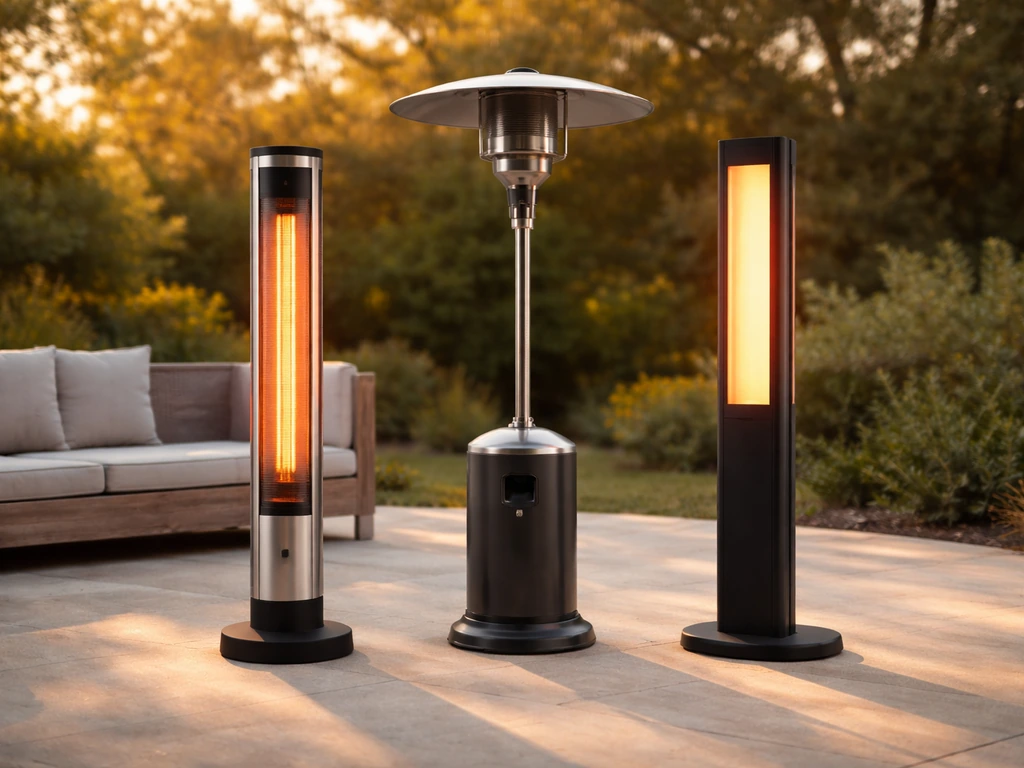
How to choose the best patio heater from Best Buy listings
Best Buy's patio heater category page lets you stack filters simultaneously, which is genuinely useful. Start by setting the "Indoor/Outdoor Use" filter to Outdoor so you're not wasting time on units that aren't rated for open-air exposure. Then layer on your price range. From there, use the fuel-type or feature filters ("Remote Control" is one available facet) to narrow further. What you're left with is a workable shortlist instead of a wall of products.
Once you have that shortlist, compare models on four things: heat output (watts for electric, BTU for gas), coverage area, weather/IP rating, and safety certifications. Best Buy product pages typically surface these in the listing description and spec table, so you don't need to hunt through manuals. That said, marketing language like "9ft Blanket of Heat" or "up to 1,000 square feet" should be read critically. A 1,500W electric infrared heater and a 50,000 BTU propane mushroom heater both make big coverage claims, but they perform very differently in an open breezy patio versus a covered pergola.
Pay attention to what the listing confirms versus what it implies. A unit listed as "IP55" is genuinely dust and water-jet resistant; one described only as "weather-resistant" with a powder-coated finish is a different story. CSA certification on a gas heater tells you it's been independently tested against ANSI Z83.26/CSA 2.37 standards, which cover tip-over shutoff, flame-failure shutoff, and wind-condition performance. ETL certification on electric models is the equivalent signal of third-party safety testing. These aren't nice-to-haves; they're the baseline you should require.
Best Buy electric patio heaters: what to look for
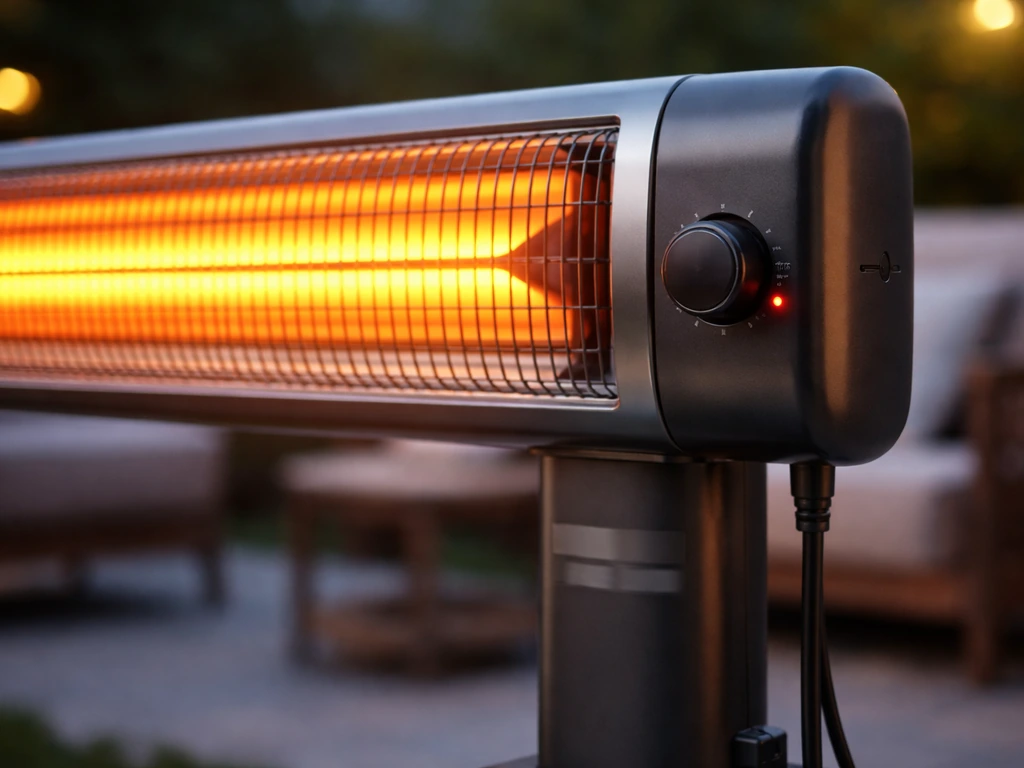
Electric models make up a big chunk of Best Buy's patio heater inventory, and they vary more than you'd expect from wattage alone. The key specs to compare are wattage, IP rating, control type, and mounting style.
Wattage runs from 900W to 1,500W for most residential models. A 900W unit like the SereneLife SLOHT52 (IP65 rated, remote included, tip-over and overheat protection) is fine for a small covered patio but carries an explicit 15 sq. ft. heating area claim, which tells you exactly how modest the output is. The DR. Infrared DR-238S at 1,500W (IP55, 120V, three power levels at 900W/1,200W/1,500W, 9-hour timer, remote, and a "90% heat reflection" carbon element) is a more capable wall or ceiling-mount option, with third-party reviewers citing coverage up to around 1,000 sq. ft. in ideal conditions. The difference between those two is not subtle.
IP rating matters a lot for outdoor electric heaters. IP34 (like the Lycvki model on Best Buy, which also carries ETL certification, a 9-level temperature control, timer, tip-over protection, and overheat protection) resists splashing water but isn't suitable for direct rain exposure. IP55 handles water jets from any direction. IP65 is fully dust-tight and water jet rated. If your patio is uncovered or you're in a rainy climate, don't buy anything below IP55.
Control features are a real quality-of-life differentiator. A basic touch rocker switch (like on the zachvo waterproof model) is fine if the heater is within arm's reach. A remote plus timer plus multiple power levels (like on the DR-238S or the Lycvki) means you can set it from across the patio and avoid running at full 1,500W when conditions don't need it. Tower-style electric infrared units like the Lifesmart outdoor infrared tower include a digital multi-function control panel and remote, which is worth the slight price premium if the heater will be freestanding and away from your seat.
One practical safety note for any outdoor electric heater: it needs to be plugged into a GFCI-protected outlet. This isn't optional. Manufacturers specify this in their manuals, and it's the right call any time you're combining electricity and a wet outdoor environment.
Best Buy outdoor heater types explained
Best Buy carries heaters across all the main fuel types. Here's what each one actually means for your patio situation.
Electric infrared
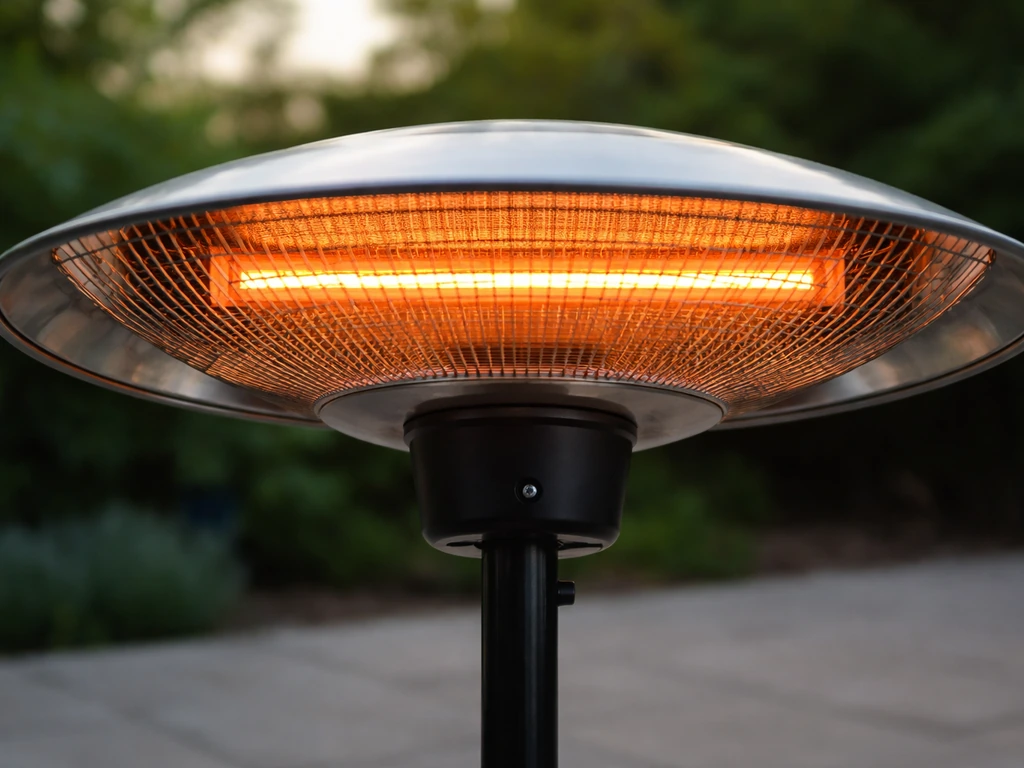
These heat objects and people directly rather than warming the air, which makes them more efficient in breezy conditions. The Fire Sense Telescoping Offset Pole-Mounted model (1,500W) specifically claims "Not Affected by Wind" in its listing, which tracks with how infrared heating works. They're the easiest to install (plug in and mount), and they come in wall-mount, ceiling-mount, pole-mount, and freestanding tower styles. The trade-off is that at 1,500W you're covering maybe 150 to 200 sq. ft. realistically in decent conditions, not the 1,000 sq. ft. figures you'll see in some marketing copy.
Propane
Propane models on Best Buy run from about 40,000 to 50,000 BTU. The Mondawe 50,000 BTU round table-style heater advertises a 20-foot heating radius and 360-degree coverage, CSA certification, and tip-over protection. The Fire Sense Square Flame at 46,000 BTU and the Costway glass-tube at 41,000 BTU are in the same tier. These are the go-to for large open patios where you don't have a natural gas line and need serious heat output. They're portable (the tank is usually built into the base), require no electrician, but do mean buying and swapping propane tanks.
Natural gas
Best Buy lists natural gas models separately from propane. Best Buy also has a dedicated Gas Heaters section that makes it easy to find propane and/or natural gas outdoor heater options for patio use Best Buy lists natural gas models separately from propane. The Fire Sense Natural Gas Patio Heater at 45,000 BTU is a prominent example. Natural gas is the right choice if you already have a gas line on your patio or are willing to run one, since you eliminate tank logistics entirely. The cost per BTU is lower than propane over time, but the upfront installation cost of a gas line (if you don't have one) often erases that advantage quickly.
Infrared (gas-fired)
Some gas heaters use an infrared burner element rather than an open flame, giving you the wind-resistance benefits of radiant heating at gas-level BTU output. These tend to be ceiling or wall-mount and are common in commercial covered patio setups. If you have a covered porch and a gas line, this is worth looking at seriously. Coverage efficiency is better per BTU than a conventional open-flame mushroom heater.
Pellet
Pellet patio heaters are the least common type in Best Buy's inventory. They're aesthetically appealing (real flame, real wood smell) but require more maintenance, aren't wind-friendly, and have more complex fuel logistics than propane or electric. Unless the ambiance is the point, most people are better served by one of the other types.
Sizing your patio heater for your space and climate
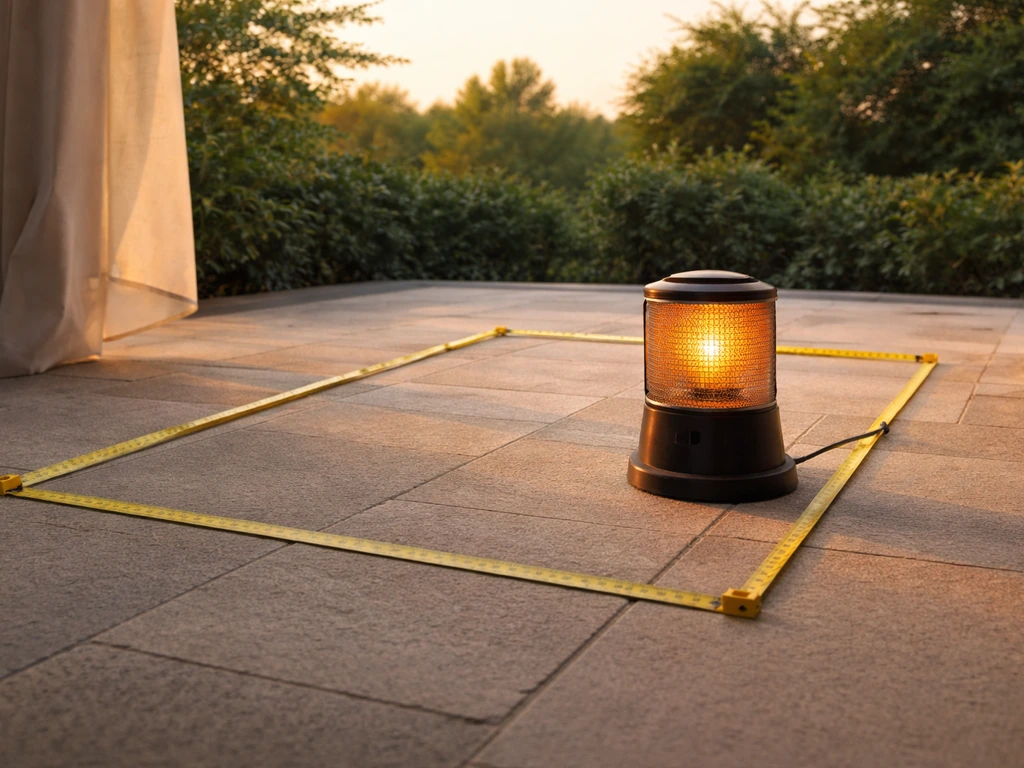
For electric heaters, a rough rule is 10 watts per square foot for a covered or enclosed patio. A 1,500W heater covers about 150 sq. ft. under those conditions. For an open, exposed patio, cut that estimate by 30 to 40 percent. The SereneLife 900W model's listed 15 sq. ft. heating area is unusually conservative, but it illustrates that coverage claims are design-dependent, not just wattage-dependent. Mounting angle, element type (carbon filament vs. quartz vs. ceramic), and reflector quality all factor in.
For propane and natural gas heaters, the standard sizing guideline is roughly 1,000 BTU per 10 square feet for outdoor use, with adjustments upward for cold climates or open unprotected spaces. A 40,000 to 50,000 BTU tower heater is appropriate for a 400 to 500 sq. ft. open patio area in mild weather. In colder climates (regular subfreezing nights), you'd want multiple heaters or a higher-output model to stay comfortable.
| Space Size | Climate Type | Recommended Output | Heater Type |
|---|---|---|---|
| Under 100 sq. ft. (covered) | Mild (40°F+) | 900W–1,200W electric | Wall/ceiling mount infrared |
| 100–200 sq. ft. (covered) | Mild to moderate | 1,500W electric | Pole-mount or tower infrared |
| 200–400 sq. ft. (semi-open) | Moderate (30°F+) | 1,500W electric or 40,000 BTU gas | Tower infrared or propane mushroom |
| 400–600 sq. ft. (open patio) | Moderate to cold | 40,000–50,000 BTU gas | Propane or natural gas mushroom/pyramid |
| 600+ sq. ft. (open/commercial) | Any | Multiple 40,000–50,000 BTU units | Propane or natural gas, multiple units |
Climate matters beyond just temperature. Wind is the biggest performance killer for any patio heater. Electric infrared models handle wind best because they heat surfaces directly. Propane and natural gas flame heaters lose significant effective heat output in windy conditions, and some listings specifically note wind-resistance ratings (or lack thereof). If your patio is exposed and breezy, lean toward infrared regardless of fuel type, or plan to use a windscreen.
Safety, installation, and maintenance you should plan for
Electric models
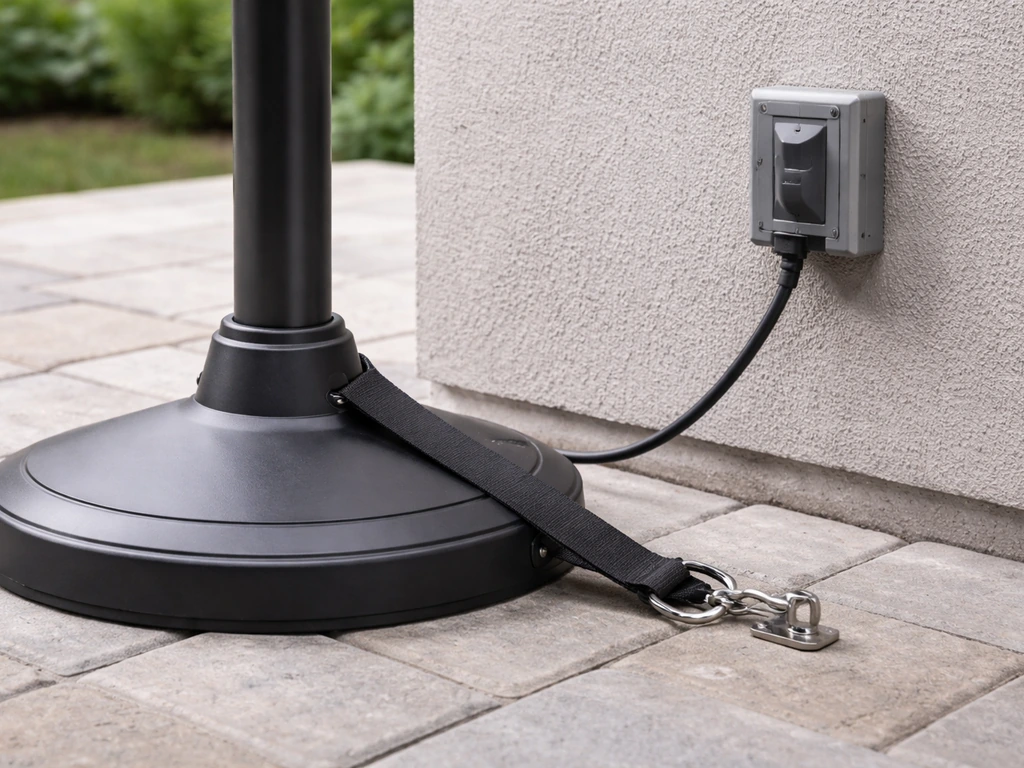
The non-negotiables for electric outdoor heaters: GFCI-protected outlet (required by most manufacturers and electrical codes), correct IP rating for your exposure level, and tip-over protection if freestanding. Wall and ceiling mounts eliminate tip-over risk entirely. Check that the mounting hardware is rated for outdoor conditions, and make sure the heater's power cord reaches your GFCI outlet without an extension cord. If you need an extension, use a heavy-duty outdoor-rated one sized for the heater's amperage draw (a 1,500W heater draws about 12.5 amps on a 120V circuit).
Propane models
Every propane heater listing on Best Buy should show blank" rel="noopener noreferrer">clearance requirements. The Costway 41,000 BTU model, for example, specifies 3 feet of clearance from combustibles on the sides and 5 feet from the top. These numbers matter, especially if you're placing a heater under a pergola or umbrella. Before first use, check the regulator and hose with a soapy water solution at the joints while the gas is on but the heater is off. Bubbles mean a leak. Fix it before you light anything. When storing the heater indoors for the season, always disconnect and remove the propane tank. CSA-certified models include tip-over shutoff and flame-failure (100% shutoff) features by the ANSI Z83.26/CSA 2.37 standard, so verify that certification is present on any gas heater you're considering.
Natural gas models
Natural gas heaters require a dedicated outdoor gas line connection. Unless you're a licensed gas fitter, this means hiring a plumber or gas technician. Once installed, maintenance is simpler than propane since there's no tank to manage, but you should inspect the burner and orifice at the start of each season and check connections annually. The same clearance rules apply as propane models.
General maintenance for all types
- Store or cover the heater during off-season to prevent corrosion and UV damage
- Clean the reflector on electric infrared models annually; dust buildup reduces efficiency
- Inspect the power cord on electric models each season for cracking or damage
- Check the regulator hose on propane models for cracking before each season
- Verify tip-over switch function by gently tilting the unit slightly before relying on it
- Keep the area around any heater clear of furniture, fabric, and decorative materials
Budget vs performance: value picks and how to compare models
On Best Buy's listings, electric infrared heaters are generally the most affordable entry point, with quality 1,500W models from brands like DR. Infrared, Fire Sense, and Lifesmart in the sub-$150 range. Propane tower heaters typically start around $150 to $200 and run up to $400 or more for 50,000 BTU premium designs. Natural gas models are comparable in hardware price but add installation cost.
When comparing two models at a similar price, the comparison should come down to these factors in order: safety certifications (CSA or ETL), IP/weather rating, heat output for your space size, and then convenience features (remote, timer, multi-level heat settings). Don't pay a premium for a remote if you're mounting the heater 4 feet away from your seating. Do pay a small premium for IP65 over IP34 if your patio gets any rain or heavy dew.
The DR. Infrared DR-238S consistently shows up as a strong value in the electric category: 1,500W, IP55, three power levels, remote, 9-hour timer, and ETL/CSA-level carbon element quality. It's a wall or ceiling mount, so it's not portable, but that's a feature in bad-weather climates. For propane, the Costway glass-tube 41,000 BTU model offers solid output with CSA certification and tip-over protection at a competitive price point. The Mondawe 50,000 BTU round table design commands a higher price but delivers 360-degree coverage, which matters if your gathering space isn't in a fixed direction from the heater.
If budget is your primary constraint, the best approach is to filter Best Buy's results by your price cap, sort by customer rating, and then manually check that any shortlisted model has: (1) an IP rating of at least IP44, (2) tip-over protection, (3) a recognized safety certification, and (4) an advertised wattage or BTU output that matches your space size using the sizing guidelines above. If a model doesn't show all four of those clearly in the listing, skip it regardless of price. For more focused budget guidance, the best budget patio heater picks are worth reviewing alongside these listings. For the best patio heater for the money, focus on the best safety certifications and an IP/weather rating that matches how exposed your patio really is best budget patio heater picks. Review these best budget patio heater picks side by side with the models on Best Buy listings for the most value. If you want the wirecutter best patio heater style of guidance, focus on safety certifications, heat output, and coverage for your specific space best budget patio heater picks.
Quick decision guide: which Best Buy patio heater fits your needs
Use this as a fast filter before you start clicking through listings. Answer the questions in order and you'll land on the right category immediately.
- Do you have a natural gas line on your patio? If yes, a natural gas model (like the Fire Sense 45,000 BTU) is your most cost-efficient long-term option. If no, continue.
- Is your patio covered or semi-enclosed? If yes, an electric infrared heater (1,500W, IP55+, wall or ceiling mount) is your cleanest and easiest option. If no, continue.
- Is your patio larger than 200 sq. ft. or regularly exposed to wind? If yes, go propane: 40,000–50,000 BTU, CSA-certified, with tip-over protection. The Mondawe 50,000 BTU or Fire Sense pyramid are solid choices.
- Is your patio under 200 sq. ft., open but not too windy, and you want portability? A 1,500W electric infrared tower (like the Lifesmart outdoor tower) works well and avoids fuel logistics entirely.
- Are you primarily budget-constrained and the patio is small? Go with a wall-mount 1,500W electric infrared with at least IP44, tip-over protection, and a remote. The DR-238S is the most proven option in this slot on Best Buy.
One last thing worth flagging: the heater type you choose affects not just heat output but the whole ownership experience. Electric is the least maintenance-intensive and the easiest to control precisely. Propane gives you serious output without any installation work but requires tank management. Natural gas is the best "set it and forget it" solution if the infrastructure is already there. If you're still deciding between types more broadly, the guides on how to choose an outdoor patio heater and what to look for when buying a patio heater cover the trade-offs in more detail. For Best Buy shoppers specifically, use the filters, verify the four core specs on every listing, and you'll have a solid heater ordered today. If you want a straight answer, this guide will help you narrow down which patio heater to buy based on your patio size, exposure, and fuel type.
FAQ
What IP rating should I target if my patio is uncovered or gets rain?
Check whether the listing states a specific IP rating and whether it’s rated for your exposure (direct rain vs. splashes). For uncovered patios, don’t rely on “weather-resistant” language, pick IP55 or higher for electric models.
Can I install a patio heater under a pergola or close to an umbrella?
Yes, but many heaters still need spacing around the unit (especially gas models) and you should never block radiant output. If you’re using infrared electric, keep at least the manufacturer’s clearance, and make sure the mounting angle isn’t hidden by the structure.
Is it safe to use an extension cord with an electric best buy patio heater?
For electric heaters, use a GFCI-protected outlet and avoid plugging into non-GFCI power strips. If the heater’s cord won’t reach, choose a heavy-duty outdoor-rated extension sized for the heater’s amperage draw, since under-sizing can create heat at the plug.
What maintenance checks should I do before using a propane or natural gas patio heater each season?
Do a season-start check for any gas connection and burner area, and confirm the unit’s clearances from combustibles have not changed (for example, after adding patio furniture). For propane, also verify the regulator hose and fittings for leaks using soapy water before first light each season.
Should I pay extra for remote control and a timer if I’m buying an electric infrared heater?
Not if the seating is close. If your goal is to heat people at a specific spot, a remote or timer is best for dialing output down between waves of use. If the heater sits far from the seating, prioritize placement and coverage first, then convenience features second.
How can I confirm a patio heater’s safety certification before buying?
Look for the heater’s certified safety mark on the product page and then verify it matches the fuel type (CSA for many gas units, ETL for many electric units). Don’t assume certification based on brand reputation, different models in the same family can have different listings.
Will an infrared electric heater work well in windy conditions, or do I still need a windscreen?
Yes. Electric infrared heaters generally keep more heat effectiveness in breeze, but coverage still drops as wind increases because more heat is carried away from exposed surfaces. If you’re in a very windy location, consider a windscreen or choose radiant (infrared) over open-flame designs.
How do I size a patio heater if my space is larger than the listing’s coverage claim?
Use the heater’s stated heated area as an ideal condition benchmark, then downscale for open patios (the article suggests reducing for exposure). If you’re between two sizes, pick the higher-output model or add a second smaller heater to improve comfort coverage.
What are common mistakes that lead to poor performance or unsafe placement of gas heaters?
For gas models, make sure you have clearances from combustibles and keep the heater away from curtains, furniture overhangs, and low ceilings. Also check that the controller controls are accessible and that airflow around the unit is not blocked, since airflow affects burner performance.
Is a built-in-tank propane heater actually simpler than natural gas, or is it still a hassle?
A built-in tank “portable” propane heater is still a tank-to-exchange situation, you’re not eliminating fuel logistics. If your plan is frequent use in one spot, compare the cost of regular propane swaps or consider whether natural gas infrastructure is already available.
Can I use a floor-standing heater safely if I have kids or pets around?
Often you can, but confirm the mounting style and cord requirements first. Wall or ceiling mounting usually eliminates tip-over risk, while tower or floor-standing units should have tip-over protection and should be placed on level, non-slip outdoor surfaces.
Which fuel type is best if I want the lowest effort ownership over the long run?
It depends on your fuel type and exposure. Natural gas systems can be lower hassle after installation, propane is flexible without infrastructure, and electric is easiest to operate but may require higher watts for open patios. Pick based on which trade-off you’re most willing to manage: fuel logistics, installation work, or power and weather limits.
Next Articles
Wirecutter Best Patio Heater Guide: Picks by Type
Wirecutter-style picks for the best patio heater by type, with safety, coverage, setup, and buying steps.
Best Price on Outdoor Patio Heaters: Compare Costs & Deals
Score the best price on outdoor patio heaters, price ranges, top picks, deal tactics, total-cost & safety checklist.
Where Can I Rent Patio Heaters Near Me Today
Find where to rent patio heaters near you today, choose the right fuel type, compare costs, and book safely.