
The Amazon Basics 46,000 BTU outdoor propane patio heater is a solid, no-frills standing heater that covers roughly an 18-foot diameter (9-foot radius) on a calm evening, runs about 9 hours on a standard 20-lb propane tank at full blast, and ships with the regulator and gas hose already included. It works well for open patios up to about 250 square feet in mild-to-moderate climates. If you need portability on a budget and you have an open outdoor space, this heater is genuinely worth considering. If you're in a high-wind area, dealing with temps consistently below 4.4°C (40°F), or want something wired in permanently, read the 'best-fit' section near the bottom before you order.
Amazon Basics 46,000 BTU Outdoor Propane Patio Heater Guide

Caleb Vale
27 May 2026
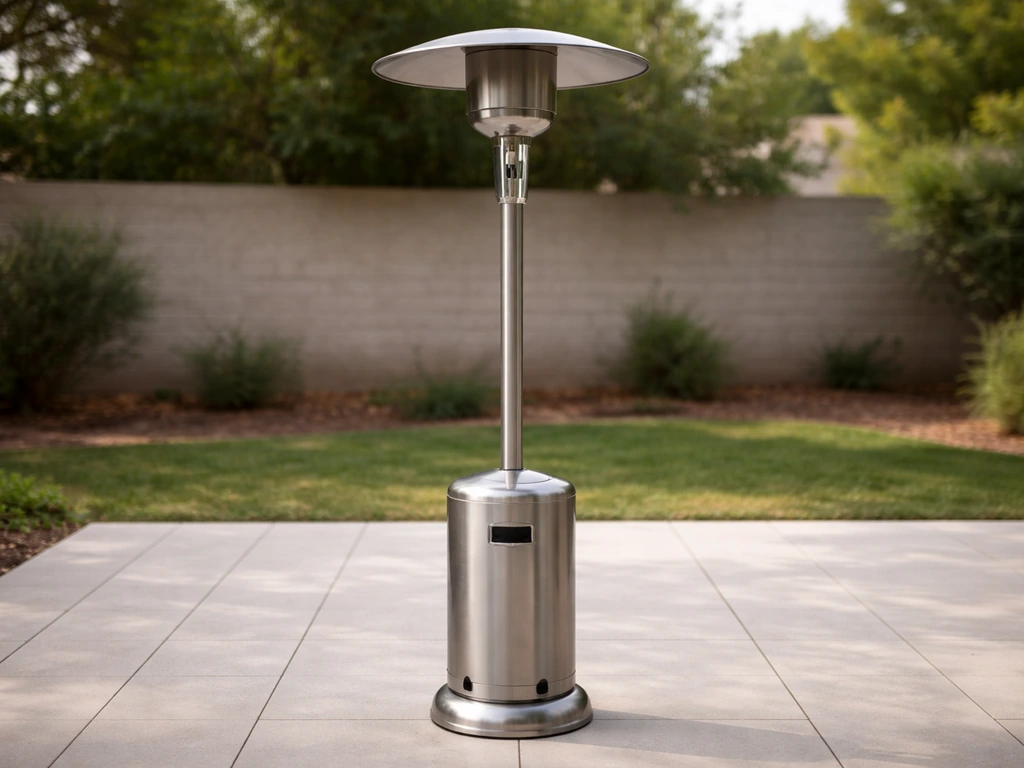
Is this the right heater for your space?
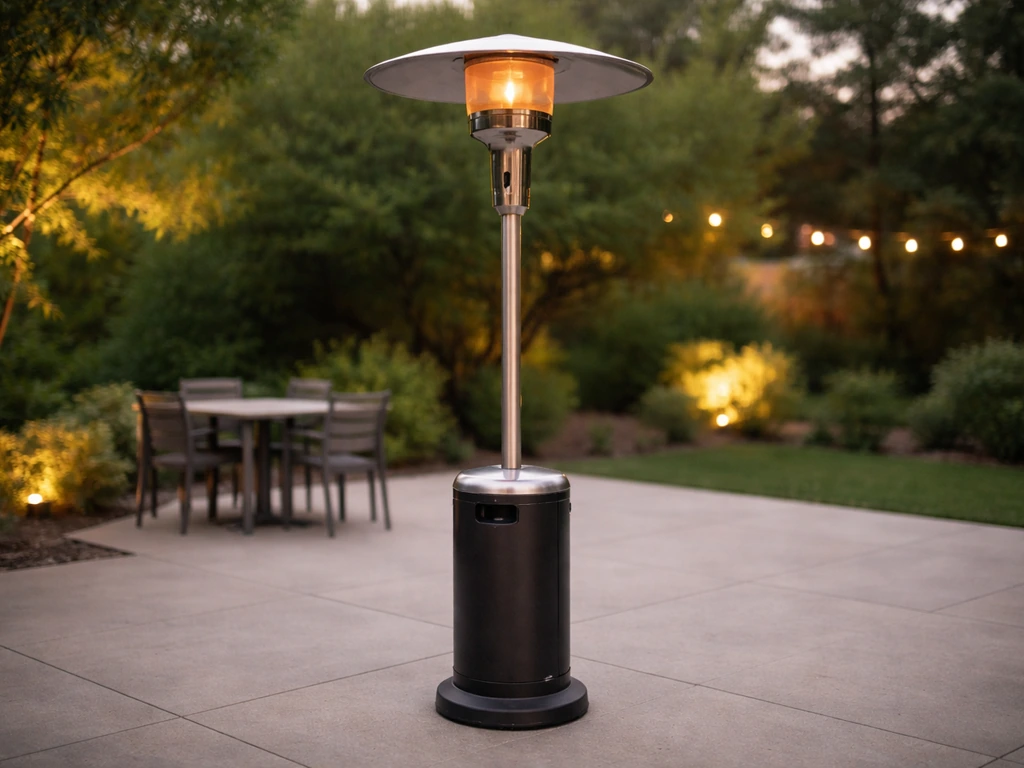
The Amazon Basics 46,000 BTU model is a full-size mushroom-style standing propane heater, measuring 32.1 × 32.1 × 91.3 inches tall. It's designed for open, outdoor use only. The manufacturer is explicit: never use it indoors, in a garage, screened porch, or any enclosed space. That's not a disclaimer to skip over. Propane combustion produces carbon monoxide, and the manual's language on adequate fresh-air ventilation is there for a reason.
This heater is best suited for homeowners with open backyard patios, restaurant owners with uncovered outdoor seating, or anyone who wants a freestanding, portable unit they can wheel around (the base has wheels). It is NOT a good fit for covered pergolas with enclosed sides, apartment balconies, or any space that limits airflow. If that sounds like your situation, you'd be better off looking at an electric infrared heater designed for covered spaces.
One thing worth confirming before you order: this is the standard fixed-head version. Amazon Basics also sells a variant specifically noted as having wheels as a primary feature callout. If the wheels are a priority for moving it between patio and storage, that wheel-focused Amazon Basics model is worth a closer look variant specifically noted as having wheels. The dimensions and BTU rating are essentially the same, but it's worth double-checking the product listing to confirm you're getting the exact configuration you want.
Heat coverage, wind limits, and propane runtime
At 46,000 BTU (about 13.5 kW at nominal input), this heater is rated to cover an approximately 9-foot radius. In still air on a cool evening around 50-60°F, that claim is realistic. You and up to 6-8 people sitting within that radius will feel genuine warmth. Beyond 9 feet, you'll feel some radiant heat but not enough to be comfortable in a jacket-weather situation.
Wind is where this heater's real-world performance diverges from the spec sheet. The manufacturer directly states not to operate the heater when wind velocity exceeds 16 kph (about 10 mph). That's a light-to-gentle breeze on the Beaufort scale. In practice, anything above a steady 8-10 mph significantly reduces heat output and coverage radius because propane mushroom heaters radiate heat outward, and moving air disperses it fast. If you regularly deal with gusty evenings, this is a meaningful limitation.
The manual also notes reduced efficiency below 4.4°C (40°F). Propane pressure drops in cold temperatures, so the flame output shrinks when you need it most. On a 20-lb tank at maximum output (roughly 982 g/h of gas consumption per the spec table), expect about 9 hours of continuous runtime. Dial back to reduced heat settings and you'll stretch that further. A single 20-lb tank should comfortably get you through multiple evening sessions before needing a refill or swap.
What to know before you buy
Tank, regulator, and hose
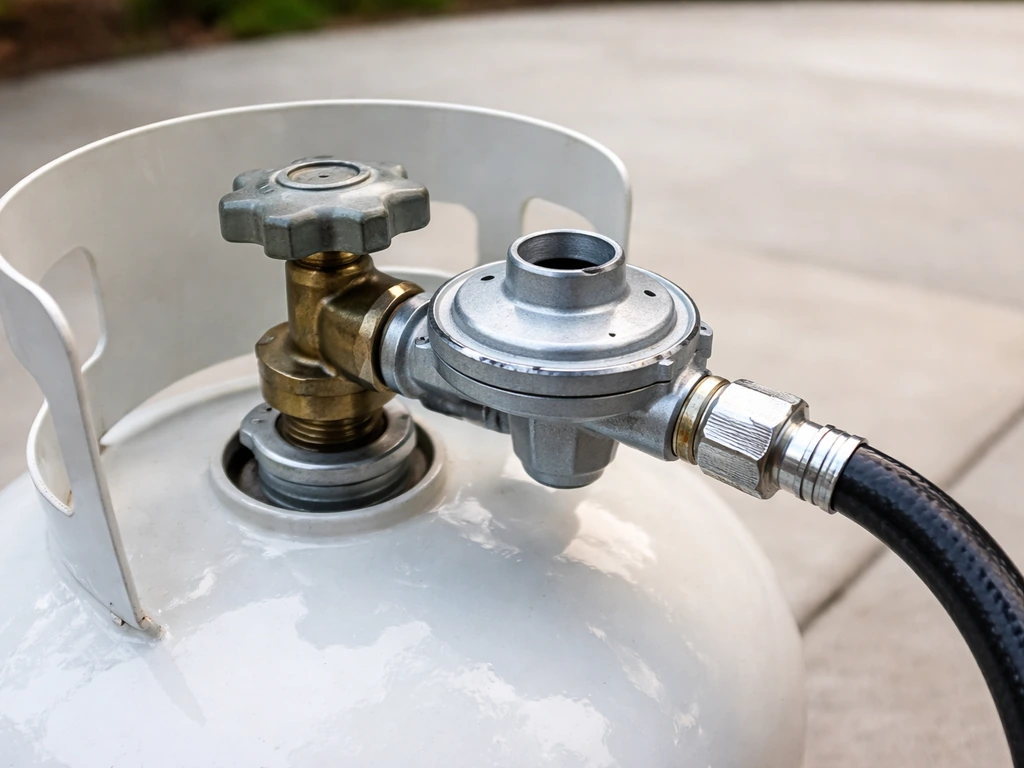
The heater uses a standard 20-lb liquid propane (LP) tank. The tank is sold separately, which is standard for this category. The good news is the regulator and gas hose are included in the box, so you don't need to buy those separately. The regulator is designed for a pressure range of 28-30/37/50 mbar depending on your gas category. If you ever need to replace the regulator or hose, the manual is specific: use only replacement parts that meet your national/local gas regulations. Don't substitute random hardware-store hoses.
Clearance requirements
The manual specifies a minimum clearance of 1,000 mm (about 39 inches) above the top of the reflector head, and 500 mm (about 20 inches) on all sides from any combustible material. That means patio umbrellas, string lights, awning fabric, wood fencing, or anything flammable needs to be at least 20 inches away from the heater body. Overhead clearance is the one people most commonly underestimate. If you have a pergola overhead, measure before you set this up.
Surface and placement
The heater must be placed on a hard, level surface. Grass, gravel, or uneven pavers are problematic because the unit can tip if it's not fully stable. The base has a ballast area designed for sand or water to add stability. Fill it. A tipped-over propane heater is a serious hazard, and adding ballast weight is the single most important setup step most people skip.
Assembly and first use: step-by-step
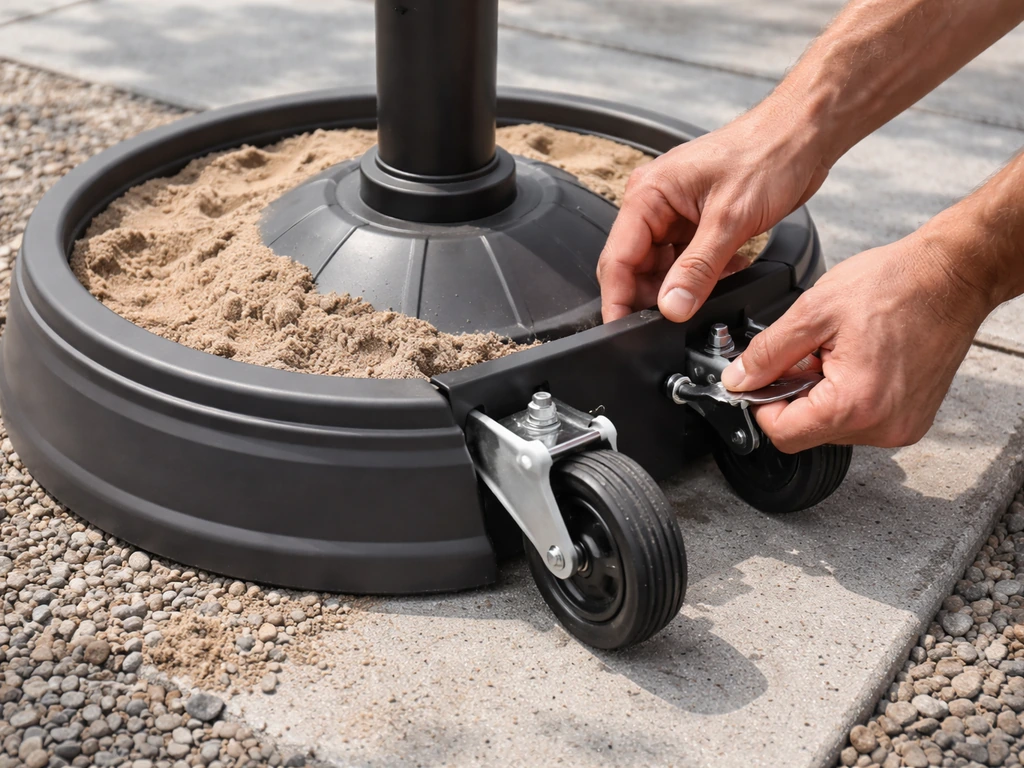
- Secure the base and fill the sandbox/ballast area with sand or water for stability.
- Attach the wheel assembly to the base according to the included hardware.
- Connect the post supports and attach the main post to the base.
- Install the gas-cylinder housing onto the post supports.
- Attach the reflector studs, panels, and center cap; secure the reflector assembly with the included wing nuts.
- Place your 20-lb propane tank into the cylinder housing and secure it with the chain.
- Connect the regulator and gas hose to the propane tank. Hand-tighten first, then snug with a wrench.
- Perform a leak test: set the control knob to OFF, open the tank valve, and brush soapy water over all hose connections and fittings. If bubbles appear, close the tank valve, tighten the fitting, and re-test. Never leak-test near an open flame or while smoking.
- Air purge for first use: push and hold the control knob in for two full minutes before attempting ignition. This clears air from the gas lines. Skip this and the heater likely won't light on the first attempt.
- Ignition: fully open the propane tank valve, push and hold the control knob in, then press the red igniter button repeatedly until the burner lights. Continue holding the knob in for 30 more seconds after ignition, then release.
- First burn-in: the heater may produce some smoke or odor from manufacturing oils burning off. This is normal and dissipates within about 30 minutes. Stay upwind and don't inhale the fumes. If you see thick black smoke, shut the heater off immediately.
Safety checklist and common mistakes
Most incidents with propane patio heaters come down to a handful of avoidable mistakes. Here's what to keep in mind every time you use this heater.
- Never operate indoors, in a garage, screened porch, or any partially enclosed space. Carbon monoxide has no odor and will not warn you.
- Do not operate in winds above 16 kph (10 mph). The pilot can blow out, leaving unburned gas escaping.
- Fill the base ballast area with sand or water every time. An empty base is a tip-over risk, especially on slightly uneven ground.
- Maintain clearances: 39 inches above, 20 inches on all sides from combustible materials.
- Always leak-test after connecting or reconnecting the gas line. Always.
- After use, turn the control knob to OFF first, then close the propane tank valve, then disconnect the regulator. Do not skip the sequence.
- Do not touch or move the heater for at least 45 minutes after shutting off. The reflector head stays dangerously hot.
- Keep kids and pets out of the 9-foot radius while operating.
- Do not use the heater if the gas control assembly has been submerged in water or is visibly wet.
Maintenance and troubleshooting
Routine maintenance
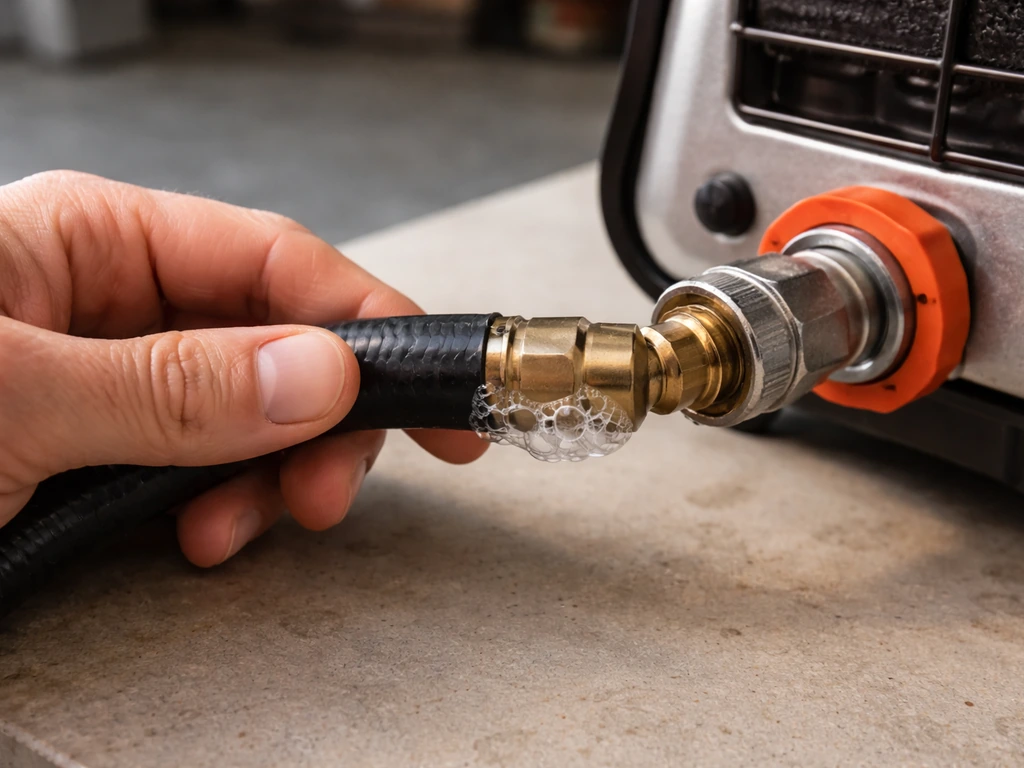
Inspect the heater before every use. Visually check the hose for cracks, kinks, or signs of wear. Do a quick soap-bubble leak test every few uses, especially if the heater has been sitting in storage. At least once a year, have a qualified service person inspect the unit, particularly the burner, orifice, and gas valve. Clean exterior surfaces with soapy water. Do not use flammable or corrosive cleaners. Keep the control compartment dry and do not submerge the valve assembly.
Clearing clogs and burner maintenance
Spider webs and insect nests inside the burner or orifice are one of the most common causes of heater problems after storage. Before the season starts, visually inspect the burner holes and air passages. Use a heavy-duty pipe cleaner to clear burner holes, and compressed air for smaller particles. If you skip this step and the heater has been sitting for months, expect ignition problems or a dangerously uneven flame.
Troubleshooting common problems
| Problem | Likely Cause | Fix |
|---|---|---|
| Won't ignite | Air in gas line (first use or after tank swap) | Hold control knob in for 2 full minutes to purge air, then retry ignition |
| Won't ignite | Empty or low propane tank | Weigh the tank or swap for a full one |
| Won't ignite | Blocked orifice or burner from insect nest | Inspect and clean burner holes with pipe cleaner; use compressed air |
| Won't ignite | Faulty igniter | Try lighting with a long-reach lighter at the burner while holding knob in |
| Low or weak flame | Regulator in bypass mode (triggered by rapid tank valve opening) | Close tank valve, wait 30 seconds, then slowly reopen the valve |
| Low or weak flame | Cold temperature reducing propane pressure | Normal below 4.4°C; warm the tank slightly or accept reduced output |
| Uneven or extremely yellow flame with gas odor | Blocked burner holes causing incomplete combustion | Shut off heater, let cool, clean burner holes thoroughly |
| Popping noise | Partial blockage in burner or orifice | Shut off, cool down, inspect and clear blockage |
| Heater tips over easily | Base ballast not filled | Fill base with sand or water; ensure placement on level surface |
Storage at end of season
Close the gas valve completely, then disconnect and remove the regulator and hose. Store the heater upright in a sheltered location. Once the unit is fully cool, cover it to keep dirt, insects, and moisture out of the air passages and burner. The propane tank should be stored upright, away from direct sunlight or heat sources. Do not store the tank indoors.
When to choose this heater vs electric, natural gas, or infrared
The Amazon Basics 46,000 BTU propane heater makes the most sense when portability and output are the priorities. You can wheel it around the patio, take it to a tailgate, or move it into storage without any permanent installation. If you want a compact option, a portable patio heater or propane table top heater can be easier to move and place exactly where you need warmth. If you're comparing this against other fuel types, here's the honest breakdown.
| Heater Type | Best For | Limitations | Vs. This Propane Unit |
|---|---|---|---|
| Propane (this unit) | Open patios, portability, high output, no electrical hookup needed | Wind-sensitive, tank refills, outdoor-only | Best choice if you want to move the heater around and don't have gas or electrical runs nearby |
| Electric infrared | Covered patios, screened porches, pergolas with overhead structure | Requires outdoor-rated outlet; lower BTU output than propane | Better for covered or partially enclosed spaces where propane is unsafe |
| Natural gas (hardwired) | Permanent outdoor setups, commercial patios, frequent use | Requires professional gas line installation; not portable | More cost-effective long-term if you use a heater heavily and have an existing gas line |
| Tabletop propane | Small spaces, intimate settings, tabletop use | Much lower output (10,000-15,000 BTU range), very limited coverage | Choose tabletop only for very small or personal-scale setups; not a substitute for area heating |
If you consistently host on a wide-open patio and you're comfortable swapping 20-lb tanks a few times per season, this Amazon Basics unit is a competitive choice at its price point. It delivers genuine heat for a genuine area, ships with the hose and regulator you need, and assembles in under an hour. The trade-off is that it's a fair-weather tool in the truest sense: once winds pick up or temps drop hard, you'll feel its limits. For anyone who wants to dig into how it stacks up against other Amazon Basics models or the broader best-in-class propane heater field, the full Amazon Basics patio heater lineup and the best outdoor propane heaters guide on this site cover those comparisons in depth. For more options beyond this model, see our picks for the best patio heater on Amazon. If you want more options, our guide to the best outdoor patio heater propane models walks through top picks by size and typical use cases.
Bottom line: buy this heater if you have an open outdoor space, want portability, and are okay managing propane tanks. Set it up properly (fill that ballast, do the leak test, purge the air lines on first use), respect the wind and clearance limits, and it will do exactly what it promises.
FAQ
Can I use the Amazon Basics 46,000 BTU heater under a covered patio or pergola?
Use the heater on an open, uncovered outdoor surface. If it is under a roof, but the area still has significant airflow on all sides (not enclosed), it can be workable. Do not use it in any partially enclosed structure (like three-sided enclosures or a screened porch with limited cross-breeze), because the propane combustion products can accumulate.
How do I estimate whether a single 20 lb propane tank will last through my event?
Yes, you should plan for a 20 lb LP tank swap based on typical evening runtime. At full output, the heater is around 9 hours per standard tank, and in cold or windy conditions you may reach usable comfort faster. Keep a spare tank ready if you host longer events or if temperatures regularly drop below 40°F.
If the regulator and hose are included, do I ever need to buy replacements, and what should I match?
The heater includes the regulator and gas hose, so you do not need to buy those as part of setup. However, if you ever replace components, match the replacement part to your local/national gas requirements, and do not mix generic hoses or regulators, because incorrect pressure/fit can cause leaks or improper flame behavior.
What’s the best way to check for propane leaks on this heater?
Do not rely on smell. Propane leaks can be subtle at first. Before first use and after long storage, check with a soap-bubble leak test around the connections (hose-to-regulator and regulator-to-tank). If bubbles form, shut off the valve, disconnect, and re-seat the connection before retesting.
Is it safe to run it for a few minutes in a garage or inside if a door is open?
You cannot operate it in enclosed or semi-enclosed spaces, even for short periods. Turning it on inside a garage or indoors is unsafe because carbon monoxide can build up rapidly. If you need heat under a roof with limited airflow, an electric infrared heater meant for covered areas is the safer category.
What surface is safest, and what should I avoid to prevent tipping?
Insist on a hard, level base and use the ballast area as designed. If you place it on grass, gravel, or uneven pavers, it may not sit securely and can tip. If you are on pavers, confirm the surface is level and the legs fully contact the ground without wobble.
How should I adjust expectations when it is windy at night?
Yes, wind can reduce coverage more than most people expect. The manual limit is 10 mph (about 16 kph). If you regularly see gusts around that range, plan to either move guests closer, reduce the number of people expected to be comfortable, or choose a different heater type that is less affected by dispersing air.
How much clearance do I need from overhead and nearby flammable materials?
Start with the clearance requirements as the minimum. Keep the heater at least 39 inches above the reflector head from overhead combustibles, and at least 20 inches from all sides to anything flammable like umbrellas, awning fabric, or wood fencing. Overhead clearance is frequently the problem, especially with umbrellas or pergola beams.
My heater sat all winter. What should I do before trying to light it for the first time?
After storage, ignition issues are often caused by debris or insect nests in the burner or around the orifice. Do a visual check of burner holes and air passages, clear them (for example, with a heavy-duty pipe cleaner for burner holes), and consider using compressed air for finer particles before your first lighting.
When should I involve a professional service technician, and what symptoms mean I should stop?
If the unit has a burner or gas valve inspection by a qualified service person once per year, it can help catch wear that a basic visual check misses. Also, if you notice changes in flame pattern, repeated ignition failure, or frequent sooting, stop using it and have it serviced rather than continuing troubleshooting on your own.
Can I convert it for permanent installation or connect it to a fixed gas line?
This model is intended for outdoor use only, and its portability is for moving it between outdoor locations. For permanent wiring or installation, it is not designed as a fixed unit. If you want fixed, consider a heater designed for permanent installation rather than repurposing this propane standing model.
What is the safest way to shut down and store it between seasons?
Yes, but use a safe method. Always shut off the gas valve completely first, let the heater cool fully, and only then disconnect the regulator and hose. Store the heater upright and sheltered, and keep the propane tank upright away from heat and direct sun.
Next Articles
Amazon Basics Patio Heater Buying Guide and Manual Help
Compare Amazon Basics propane and commercial patio heater variants, find manuals, and fix common issues safely.
Best Price on Outdoor Patio Heaters: Compare Costs & Deals
Score the best price on outdoor patio heaters, price ranges, top picks, deal tactics, total-cost & safety checklist.
Where Can I Rent Patio Heaters Near Me Today
Find where to rent patio heaters near you today, choose the right fuel type, compare costs, and book safely.