
The best outdoor propane patio heater for most people is a freestanding mushroom-style unit in the 40,000–46,000 BTU range, like the AmazonBasics 46,000 BTU model or a Dyna-Glo or Fire Sense equivalent. It runs on a standard 20 lb propane tank, heats a 15–20 ft diameter circle, moves wherever you need it, and costs between $100 and $200. If you have a small table-top setup or a bar cart situation, drop down to a 10,000–12,000 BTU tabletop unit. If you're heating a large open deck for a crowd, step up to a commercial-grade 48,000 BTU tower or a pyramid heater. The rest of this guide helps you nail the right size, style, and safety setup for your specific patio. If you want the easiest way to find the best patio heater on Amazon, start by matching BTU and coverage to your space, then compare safety and clearance details.
Best Outdoor Patio Heater Propane: Top Picks and Buyer Guide

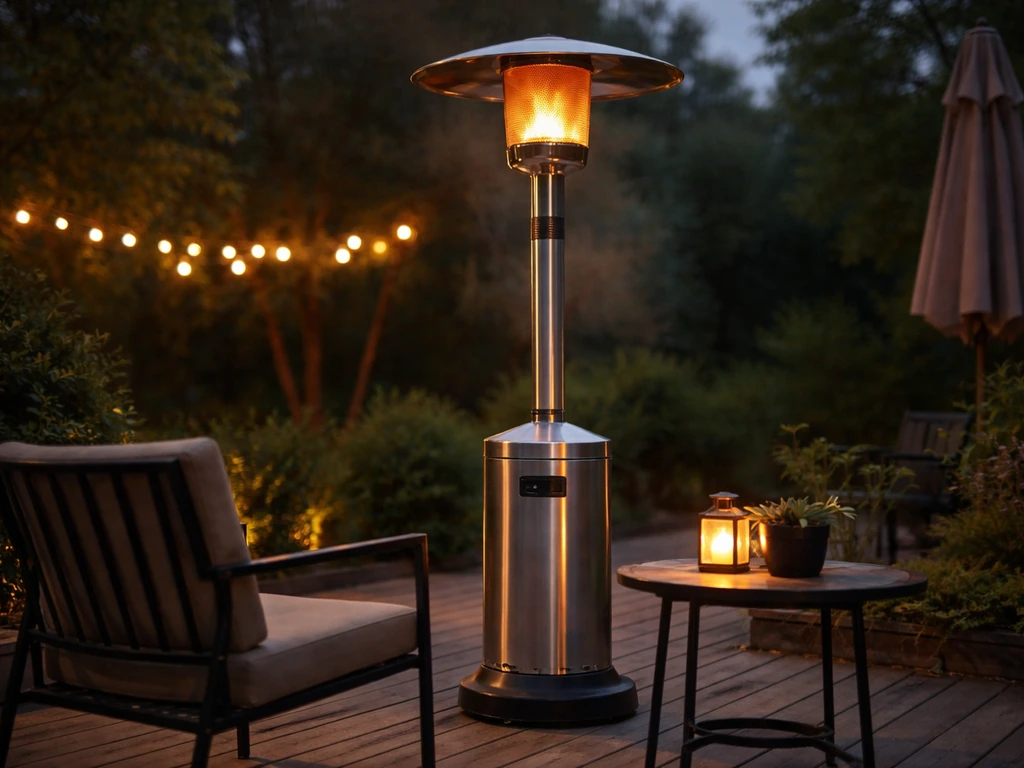
How to choose the best propane patio heater for your space
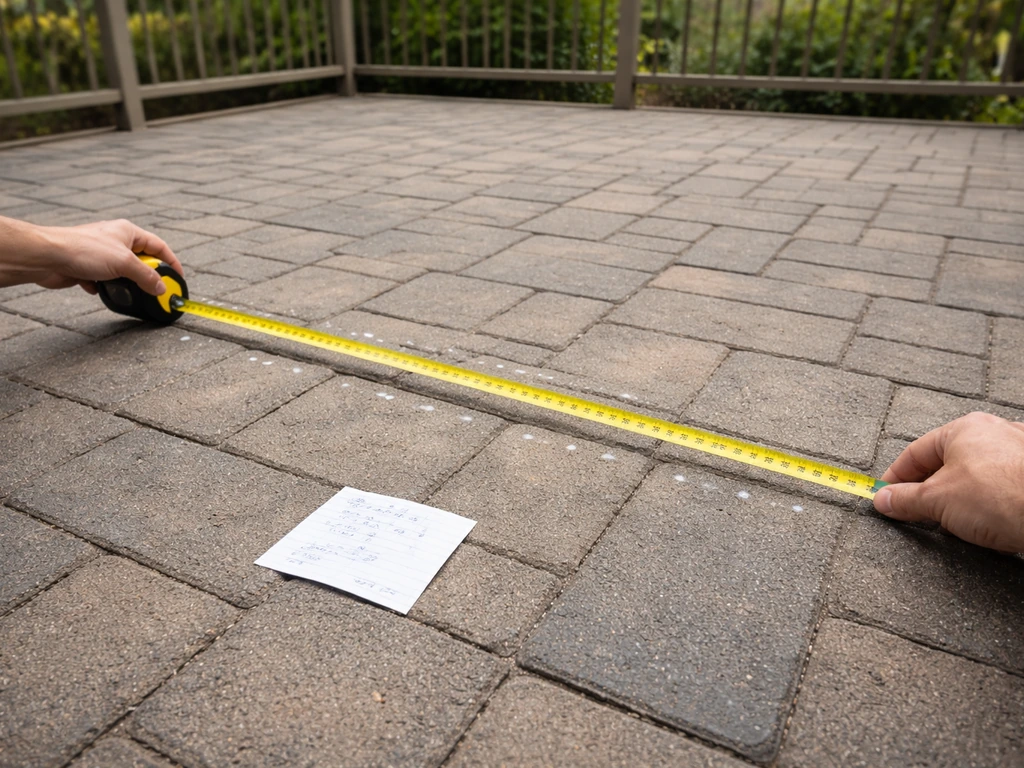
Before you look at a single product listing, you need three numbers: your patio's square footage, how exposed it is to wind, and your typical cold-weather temp. Those three factors determine your BTU target more than any brand name or feature list.
Square footage is straightforward. Measure length times width. A 10x12 covered porch is 120 sq ft. A 20x25 open deck is 500 sq ft. Propane heaters are rated for radiant heat, not forced-air fill, so a single 40,000 BTU tower heater comfortably covers about 200–225 sq ft in a calm, 40°F evening. Wind cuts that number significantly, sometimes by 30–40% in exposed settings.
Wind exposure matters a lot. If your patio faces open yard or has no windbreak (fence, wall, or pergola), you need more BTUs than the product label suggests, or you need to create a windbreak. Enclosed or semi-enclosed patios get dramatically better performance out of the same heater. Covered patios with a low ceiling concentrate radiant heat and can make a mid-range 40,000 BTU unit feel like a furnace.
Style choice comes down to how you use the space. Freestanding tower heaters (the classic mushroom or pyramid shape) are the most popular for residential patios because they're portable, work with standard propane tanks, and throw heat 360 degrees. Tabletop propane heaters are compact and great for small gatherings or restaurant-style setups. Wall-mount propane heaters are less common but useful when floor space is tight. Commercial patio heaters (usually 48,000 BTU and up) are built for restaurant outdoor seating and larger commercial decks.
Key specs to compare on any propane heater
- BTU output: the actual heat rating, not the maximum possible
- Coverage area (sq ft): manufacturer's number assumes calm weather and mild temps, so apply a 20–25% real-world discount
- Fuel tank compatibility: most freestanding units use a standard 20 lb (5 gallon) propane cylinder stored in the base
- Ignition type: piezo push-button vs electronic auto-ignition (electronic is more reliable in wet/cold conditions)
- Heat settings: single output vs adjustable flame (adjustable saves fuel and lets you fine-tune comfort)
- Materials: stainless steel reflectors and aluminum poles hold up better than painted steel in humid or coastal climates
- Weight and wheels: important if you move the heater frequently or store it inside between uses
- Tilt shut-off / tip-over safety switch: should be non-negotiable, especially on any portable unit
Top propane patio heater picks and who they're best for
There's no single best propane patio heater because patios, budgets, and use cases vary too much. Here's how the main categories shake out and what to look for in each.
Best for most residential patios: 40,000–46,000 BTU freestanding tower
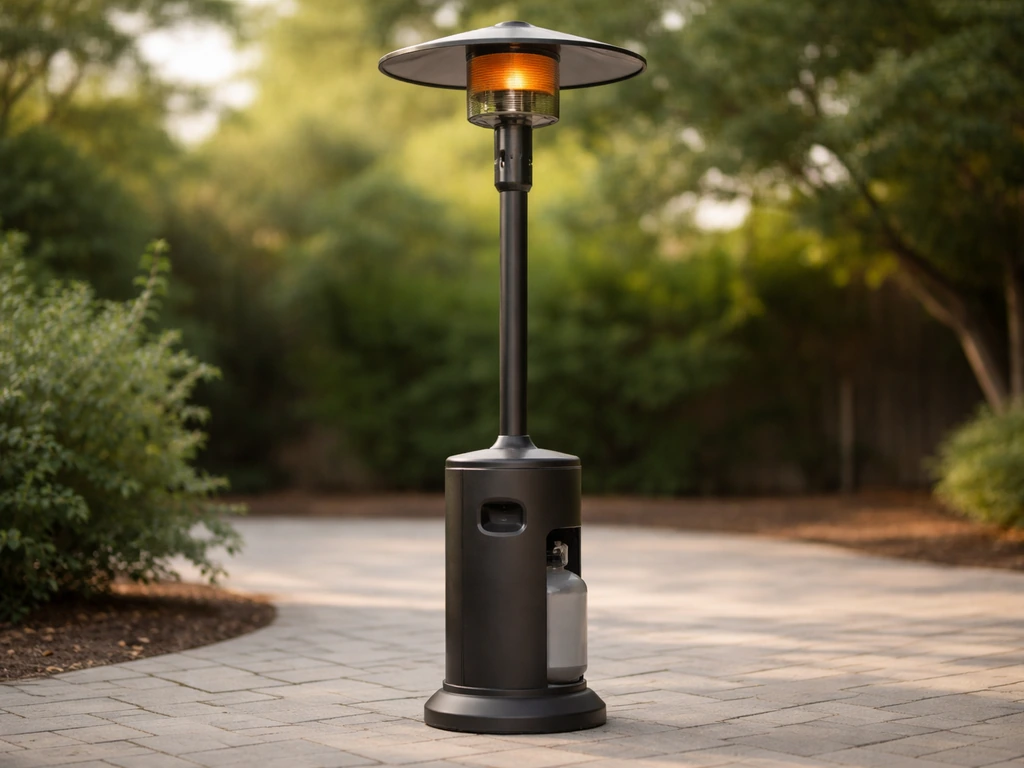
This is the workhorse category. Units like the AmazonBasics 46,000 BTU propane patio heater, Dyna-Glo DGPH301BL, and Fire Sense Standard Series all hit the same basic formula: stainless or bronze finish, 7–8 ft tall, 360-degree radiant heat from a dome reflector, and a tank hidden in the base. They run about 8–10 hours on a standard 20 lb tank at medium output. For a 200–300 sq ft patio with some wind protection, these are the right call. Prices typically run $100–$180 for solid mid-range builds, with commercial-grade stainless versions stretching to $250–$350. The AmazonBasics 46,000 BTU model with wheels is a particularly practical pick if you need to roll it in and out of a garage or shed for storage.
Best for small patios and tabletop setups: 10,000–12,000 BTU tabletop
Tabletop propane heaters like the Bali Outdoors portable tabletop model run on a 1 lb propane canister or connect to a larger tank via an adapter hose. For a compact, close-in setup, a Bali Outdoors portable tabletop propane heater is a great fit when you want portability Bali Outdoors portable tabletop model. They're ideal for a bistro table for two, a camping trip, a covered balcony, or supplementing a larger heater for close-in warmth. Heat output is much lower (effective range of about 4–6 ft), but for intimate settings they're genuinely useful and very portable. Budget: $40–$90 for reliable units.
Best for large open patios and commercial use: 48,000 BTU and up
If you're heating a 400+ sq ft open deck, hosting outdoor events, or running a restaurant patio, step up to a commercial-spec unit or a pyramid/flame heater that outputs 48,000 BTU. These typically use the same standard 20 lb tank but burn through it faster (6–8 hours at full output). Look for units with a stainless steel burner, commercial-grade regulator, and a wide reflector diameter. Pyramid heaters (with a visible flame column) add ambiance and are popular for entertainment spaces. These run $200–$400 and up.
| Category | BTU Range | Best Patio Size | Tank Size | Typical Price |
|---|---|---|---|---|
| Tabletop propane | 10,000–12,000 BTU | Up to 50 sq ft (close-range) | 1 lb canister or adapter to 20 lb | $40–$90 |
| Freestanding tower (mid-range) | 40,000–46,000 BTU | 150–250 sq ft | 20 lb standard | $100–$200 |
| Freestanding tower (commercial/premium) | 46,000–48,000 BTU | 200–350 sq ft | 20 lb standard | $200–$400 |
| Pyramid / flame column | 40,000–48,000 BTU | 200–350 sq ft | 20 lb standard | $180–$400 |
| Wall-mount propane | 25,000–40,000 BTU | 100–200 sq ft | 20 lb external or piped | $150–$350 |
BTU and coverage: sizing guidance for real patios and weather
The BTU number on the box is the maximum output under ideal conditions. Real-world coverage is almost always lower, and manufacturers know buyers compare specs, so they often publish optimistic numbers. Here's how to think about it practically.
A 40,000 BTU mushroom heater in calm 45°F weather genuinely heats a 15 ft diameter circle (about 175 sq ft) well enough to sit comfortably in a jacket. Drop the temp to 35°F or add a 10 mph breeze, and that same heater now comfortably heats maybe 100–120 sq ft. That's a huge difference and why so many buyers feel underwhelmed when their new heater arrives and they test it on a breezy night.
Use this rough sizing table as a baseline, then adjust for your climate and wind exposure.
| Patio Size | Calm / Mild Weather (45°F+) | Windy or Cold (Below 40°F) | Recommended BTU |
|---|---|---|---|
| Under 100 sq ft (balcony, small patio) | 10,000–15,000 BTU adequate | 15,000–20,000 BTU minimum | 12,000–20,000 BTU |
| 100–200 sq ft (standard residential patio) | 30,000–40,000 BTU adequate | 40,000–46,000 BTU minimum | 40,000–46,000 BTU |
| 200–350 sq ft (large deck, covered porch) | 40,000–46,000 BTU (2 heaters) | 2x 46,000 BTU units | 46,000+ BTU (multiple) |
| 350–500 sq ft (large open entertaining space) | 2–3 commercial units | 3+ commercial units | 48,000 BTU per unit, multiply as needed |
If you're in the Pacific Northwest, upper Midwest, or Northeast, where fall and winter temps drop into the 20s and 30s, size up. One common mistake is buying a single 40,000 BTU unit to heat a large open patio in cold weather and expecting it to do the job. It won't. Two heaters positioned strategically on opposite sides of a seating area almost always outperform one bigger heater in the center, because you're reducing the total area any single person is away from a heat source.
Portability, setup, and convenience (tanks, ignition, controls)
Most freestanding propane patio heaters arrive partially assembled. You're typically attaching the pole sections, the reflector dome, and the base. Budget 20–30 minutes and have a wrench handy. Instructions vary in quality: Fire Sense and Dyna-Glo generally have cleaner manuals, while some budget-tier imports have frustrating assembly guides. Watch for misaligned burner jet connections during assembly, that's the most common installer error that causes ignition failures later.
Propane tank setup
Standard freestanding heaters take a 20 lb propane cylinder (the same type used for gas grills) that stores in the heater's hollow base. The base door usually latches closed to conceal the tank. You connect the regulator hose from the heater to the tank valve. Always hand-tighten first, then snug with a wrench. Before first use, do a soapy water leak check: brush soapy water on all connections and look for bubbles. Don't skip this step.
Tank run time at full blast (46,000 BTU) on a 20 lb tank is roughly 8–10 hours. At medium output (around 30,000 BTU), you'll get closer to 14–16 hours. Keep a spare tank if you're hosting an event, because running out mid-party is a real scenario.
Ignition types: piezo vs electronic
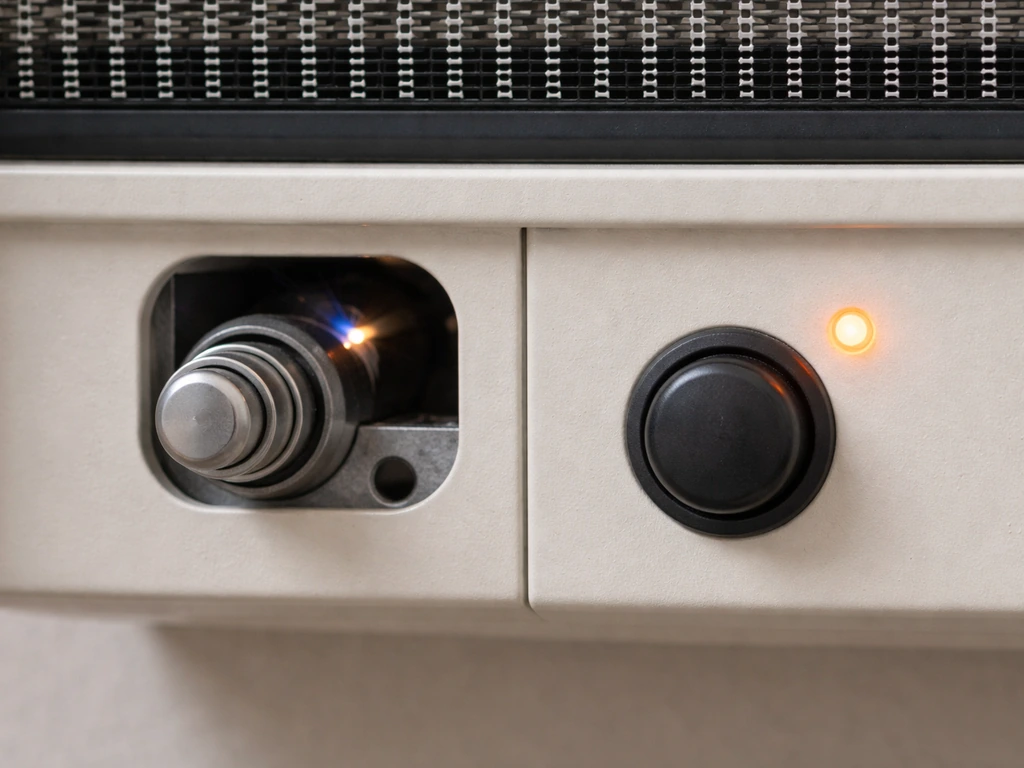
Piezo push-button ignition is mechanical: you click a button that creates a spark. It works most of the time but can fail more often in damp or cold conditions and wears out over years of use. Electronic ignition (battery-powered auto-spark) is more reliable in cold, wet weather and generally lights more consistently. If you're using a heater in a cooler, wetter climate, electronic ignition is worth prioritizing. The difference in product price is usually $20–$40.
Controls and features worth having
- Variable flame control (turn down output to extend tank life and dial in comfort)
- Auto shut-off when tilted (tilt/tip-over sensor, standard on most reputable brands)
- Wheels on the base (a must if you store the heater indoors between uses or move it across the patio regularly)
- Cover compatibility (nearly all major brands sell matching covers, keeping the unit clean when stored outdoors)
- Carry handle or pole grip for repositioning without wheels
Safety and installation essentials for propane outdoor heaters
Propane is genuinely safe when set up correctly, but it does require following a few non-negotiable rules. For outdoor events, NPS cites NFPA 58 and advises that portable outdoor heaters used for temporary heating be located at least 6 ft from any cylinder, noting that patio heaters should not be located within 5 ft. Don't shortcut these.
Clearance requirements
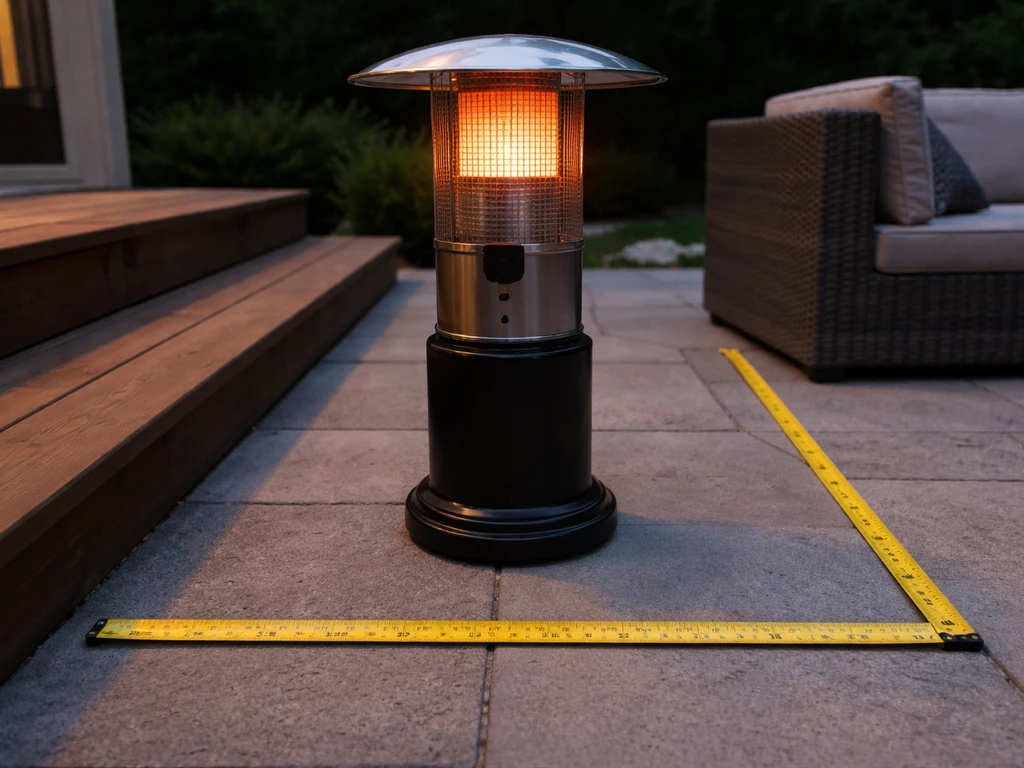
Every propane patio heater comes with minimum clearance specs from combustible materials, and these vary by brand and model, so always check your specific manual. As a general baseline: Fire Sense manuals specify a minimum of 48 inches from combustible materials (or at least 24 inches from the top and 24 inches on the sides). Dyna-Glo manuals call for at least 36 inches (91 cm) side and rear clearance. When in doubt, the more clearance you can give, the better. Overhead clearance matters especially for covered patios and pergolas.
blank" rel="noopener noreferrer">The NFPA specifically addresses propane patio heaters in its outdoor heater guidance, recommending proper ventilation and turning off portable heaters when not in use or unattended. Per NPS fire safety requirements drawing on NFPA 58, portable outdoor heaters should be located at least 6 feet from any propane cylinder. That's separate from combustible clearance, so keep the heater itself away from spare tanks stored nearby.
Before every use: a quick safety checklist
- Inspect the regulator hose for cracks, kinks, or wear before connecting
- Do a soapy water leak check at the tank valve and regulator connection after each tank swap
- Confirm the tip-over safety switch is functional (tilt the unit slightly; the flame should extinguish)
- Check overhead clearance at the installation spot before lighting
- Keep the heater at least 6 feet from propane cylinders not actively in use
- Never use a propane patio heater indoors or in an enclosed space, including screened porches without open walls
- Turn off the gas at the tank valve after use, not just at the heater control knob
- Store the heater covered and with the tank valve closed when not in use
Wind stability
Tall freestanding heaters are top-heavy when the flame is running, and a strong gust can tip them. Most quality units have a weighted base when a full tank is installed, which helps. In windy areas, look for heaters with a wider base footprint or add sandbag anchors to the base. Some models include anchor holes in the base feet for exactly this reason. Never leave a running heater unattended in gusty conditions.
Propane vs electric vs natural gas vs infrared: when propane is the right call
Propane is the right choice when you don't have a convenient outdoor electrical outlet or a natural gas line on the patio, when you need portability (move the heater between spaces, bring it to events, store it in the off-season), or when you need serious heat output fast. A 46,000 BTU propane tower heater cranks up in seconds and puts out a lot of heat for a big open area. Nothing electric comes close at the same footprint and price point for open-air use.
| Heater Type | Heat Output | Portability | Operating Cost | Best For | Main Drawbacks |
|---|---|---|---|---|---|
| Propane | High (40,000–48,000 BTU typical) | Excellent (no cords or gas lines) | Moderate ($1.50–$2.50/hr at full output) | Open patios, events, no utility access | Tank refills, fuel cost, tank storage |
| Electric (standard) | Low-moderate (1,500–5,000W) | Good (needs outlet) | Low (electricity rates vary) | Covered patios, small spaces, apartments | Limited output for open/cold spaces |
| Electric infrared | Moderate-high (1,500–6,000W) | Moderate (needs outlet or hardwire) | Low-moderate | Covered patios, targeted radiant warmth | Needs power source, less effective in wind |
| Natural gas | High (40,000–50,000 BTU) | None (fixed installation) | Low (gas line cost) | Permanent outdoor kitchens, large decks | Requires gas line installation, not portable |
| Pellet | Moderate (variable) | Moderate (no fuel lines) | Low (pellets are cheap) | Ambiance plus heat, rustic settings | Slow heat-up, ash management, less common |
Electric infrared heaters are a strong competitor for covered patios specifically because they direct heat at people rather than heating the air, which matters a lot when ceilings are low. If your patio is covered, enclosed on two or three sides, and within reach of an outlet, an electric infrared unit might actually outperform a propane tower in perceived warmth at a lower operating cost. But for an open backyard deck, a rooftop space, or any situation without a dedicated outlet, propane wins.
Natural gas is the long-term cost winner if you already have a gas line nearby or are willing to run one. Operating cost is significantly lower than propane (roughly half or less per hour), and you never deal with tank swaps. But the installation cost is real, and you lose all portability. For most homeowners without an existing outdoor gas stub-out, propane is the practical default.
Buying checklist and next steps before you order
Before you click buy, work through this checklist. It takes five minutes and will save you from the most common return scenarios.
- Measure your patio square footage and note whether it's open, covered, or semi-enclosed
- Check your typical fall/winter evening temps and whether the space gets wind
- Use the sizing table above to set your minimum BTU target, then add 15–25% for wind and cold margin
- Decide on style: tower/mushroom for most residential use, tabletop for small setups, pyramid for ambiance
- Confirm your storage plan: do you have indoor space for off-season storage, or do you need a weatherproof cover?
- Check overhead clearance at your intended placement spot against your chosen heater's manual specs (minimum 24–48 inches depending on model)
- Verify ignition type preference: electronic for cold/wet climates, piezo acceptable for mild climates
- Confirm the unit includes a tip-over safety switch and CSA or ETL certification
- Budget for a spare 20 lb propane tank and a cover in addition to the heater price
- Read verified reviews specifically mentioning assembly quality, ignition reliability, and performance in cold or wind
If you're still comparing specific models, the AmazonBasics 46,000 BTU propane patio heater (and the wheeled version for easier storage) is a legitimate starting point for most buyers at a competitive price. For a budget-friendly tabletop option, the Bali Outdoors tabletop propane heater covers small-space needs well. For a premium or commercial application, step up to a dedicated commercial-grade unit with stainless construction and a higher-rated regulator. Whatever you buy, take 10 minutes after delivery to do a proper leak check and review your model's specific clearance requirements before the first light-up.
FAQ
My new 46,000 BTU propane patio heater feels underwhelming, what should I check first?
Most heaters run hotter when their reflector dome is fully assembled and positioned correctly, but the biggest “fix” for weak performance is usually placement. Put the heater closer to the center of the seating area, or use two smaller units on opposite sides, so fewer people sit beyond the effective warm zone. If you still feel cold, reduce wind exposure first (temporary windbreak panels, close patio screens, or positioning behind a wall), then reassess BTU.
How do I interpret the advertised BTU coverage so I do not under-buy?
For propane heaters, treat any advertised coverage as a best-case radius. A practical approach is to size for your coldest typical night and your wind exposure, then subtract performance if the patio is open or breezy. Also account for “comfort distance” from each user, meaning people sitting farther than about 6 to 8 feet from the heater will feel much less heat than the center of the circle.
Can I connect a best outdoor patio heater propane unit to a larger propane tank instead of a 20 lb cylinder?
Yes, but only within the heater’s permitted fuel system. If you switch from a 20 lb cylinder to a larger tank, you need the correct regulator and hose setup designed for that heater, or you risk improper pressure and unsafe operation. Never try to “adapt” using random fittings, and follow your manual’s specified regulator type and connection.
What is the best way to use a tabletop propane heater if I have a larger patio?
In general, tabletop propane heaters are meant for close-in warmth, they are not substitutes for a tall tower on an open deck. A common mistake is expecting a 10,000 to 12,000 BTU tabletop heater to cover the same area as a 40,000+ BTU unit. If you want tabletop heaters, plan them as spot heaters over smaller tables, or pair multiple units for a lounge setup.
Is piezo ignition okay for winter use, or should I choose electronic ignition?
Look for the ignition type based on your climate. Piezo systems are often fine in dry moderate weather, but in cold, damp conditions they can take several tries or fail to light consistently. Battery electronic ignition tends to light more reliably, so if you frequently use your heater in the 30s or below, prioritize electronic ignition even if it costs a bit more.
Can I leave my propane patio heater outdoors year-round or store it with the tank attached?
Do not store an outdoor propane heater under a porch roof with the tank installed unless your manual explicitly allows it. The key is keeping the heater and cylinder in a well-ventilated area away from ignition sources, and performing a leak check after any disconnect and reconnection. Many people choose to store the heater dry and keep the cylinder stored separately following local practices.
What are the most common reasons a propane patio heater fails to light or keeps shutting off?
A heater that won’t ignite after setup is often caused by a connection issue or misassembly alignment. Re-check the regulator-to-tank connection for leaks using soapy water, confirm the burner and jet connections are seated during assembly, and inspect the ignition area for moisture. If it lights but shuts off, the gas flow or a safety control can be involved, so stop and troubleshoot per the manual rather than continuing repeated attempts.
How can I make a propane patio heater work better in strong wind?
For windy areas, placement and stability matter more than chasing extra BTU. Choose a model with a wider base footprint, and if it has anchor points, use them (ground anchors or sandbagging) before operating. Also avoid placing it where gusts can repeatedly hit the reflector side, since that increases soot risk and reduces effective warmth.
Does having a low ceiling on a covered patio change what heater I should buy?
Yes, and it changes how safe and effective the setup is. Covered patios concentrate radiant heat, but they also increase the importance of overhead clearance to combustibles and circulation. A tighter ceiling height can reduce safe use options, so verify your model’s clearance from the top and sides exactly, and keep the heater positioned so the dome is not too close to eaves or hanging storage.
How far should a spare propane tank be stored from the patio heater?
Keep spare cylinders at least 6 feet from the heater, and follow both clearance-to-combustibles and separation-from-propane-cylinder rules. Practically, store the spare cylinder in a separate, ventilated location, not in a nook right next to the heater where it could be exposed to heat or accidental valve contact.
What signs mean I should stop using the heater and troubleshoot immediately?
If you notice any of these: a gas smell, persistent bubbling at a connection during leak test, hissing near the valve/regulator, or yellow sooty residue that keeps increasing, stop using it immediately. Tighten only if the manual instructs you to, otherwise disconnect and re-seat parts as directed, then re-test with soapy water before relighting.
How can I estimate propane cost for my patio heater use, and how do I stretch tank runtime?
For cost, propane price swings by region, but fuel use is fairly predictable by output. Expect roughly 8 to 10 hours at full output on a 20 lb tank and closer to 14 to 16 hours at medium. If you want to stretch runtime for events, run medium output most of the evening and reserve full output for colder moments or peak arrival time.
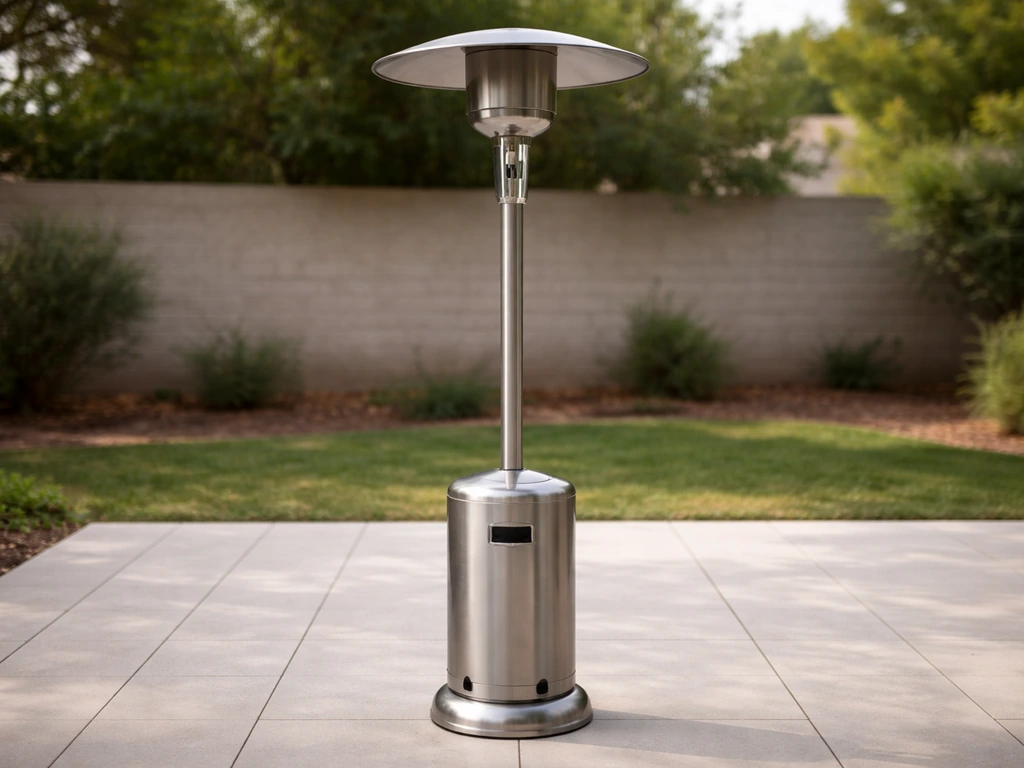
Step-by-step guide to the Amazon Basics 46,000 BTU propane patio heater: sizing, setup, safety, troubleshooting, and fue
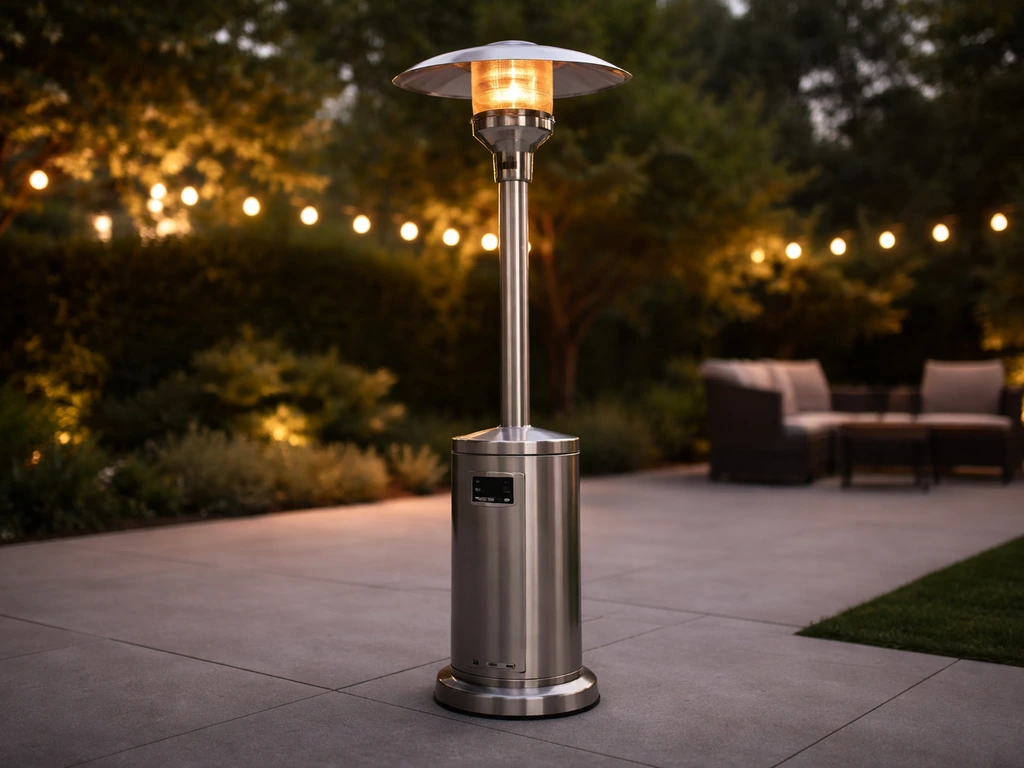
Compare Amazon Basics propane and commercial patio heater variants, find manuals, and fix common issues safely.
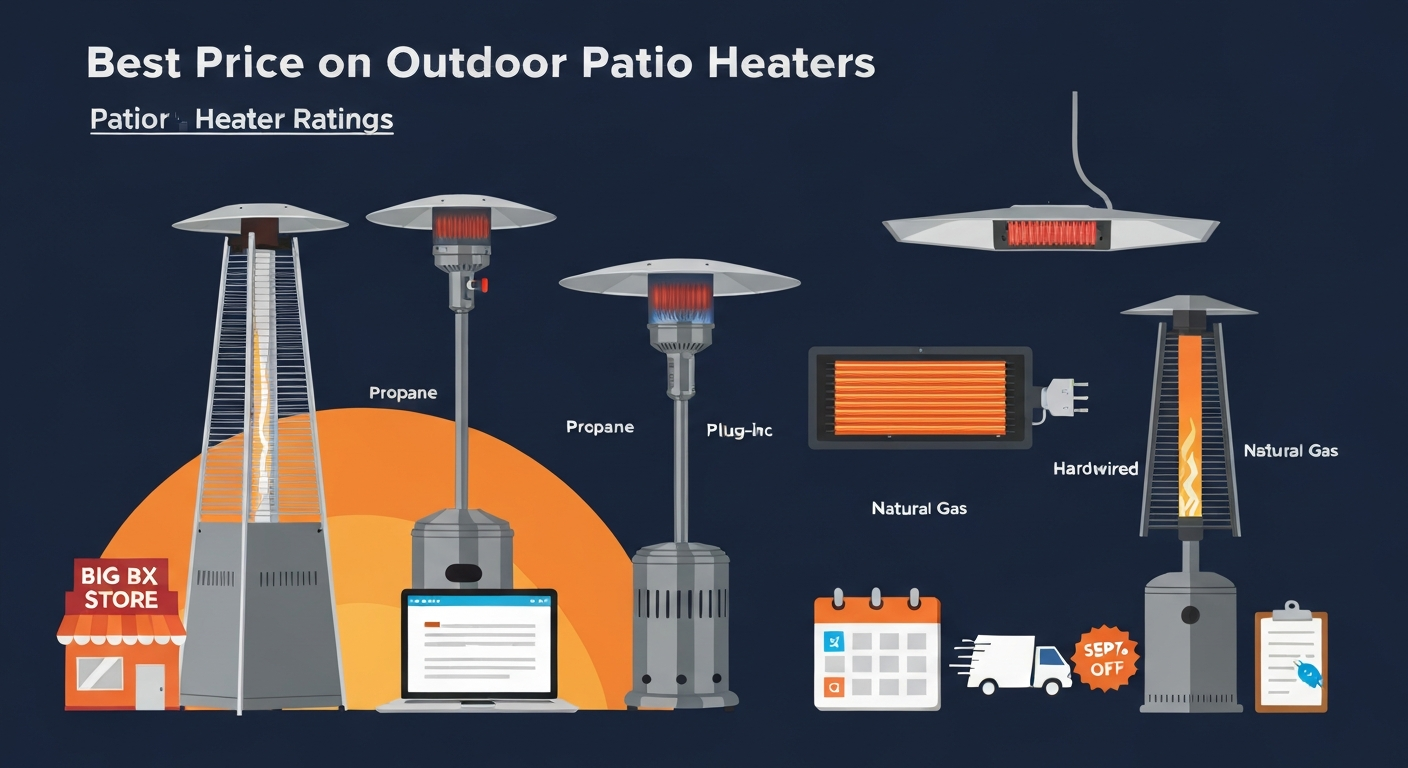
Score the best price on outdoor patio heaters, price ranges, top picks, deal tactics, total-cost & safety checklist.