
The Amazon Basics patio heater lineup centers on a 46,000 BTU propane tower heater that comes in a few distinct finishes: a standard stainless steel residential-style model, a stainless steel commercial variant, a slate grey commercial version, and a sable brown commercial version. They all run on the same core platform, use the same 20 lb propane tank, and follow the same instruction manual, but the finish and "commercial" branding signal slightly heavier-duty construction intended for higher-traffic use. If you want the short version: the stainless steel residential model is the best value for a typical home patio, the commercial stainless is worth the upgrade for a restaurant patio or deck that sees daily use, and the slate grey and sable brown variants are purely aesthetic choices on top of that same commercial build.
Amazon Basics Patio Heater Buying Guide and Manual Help

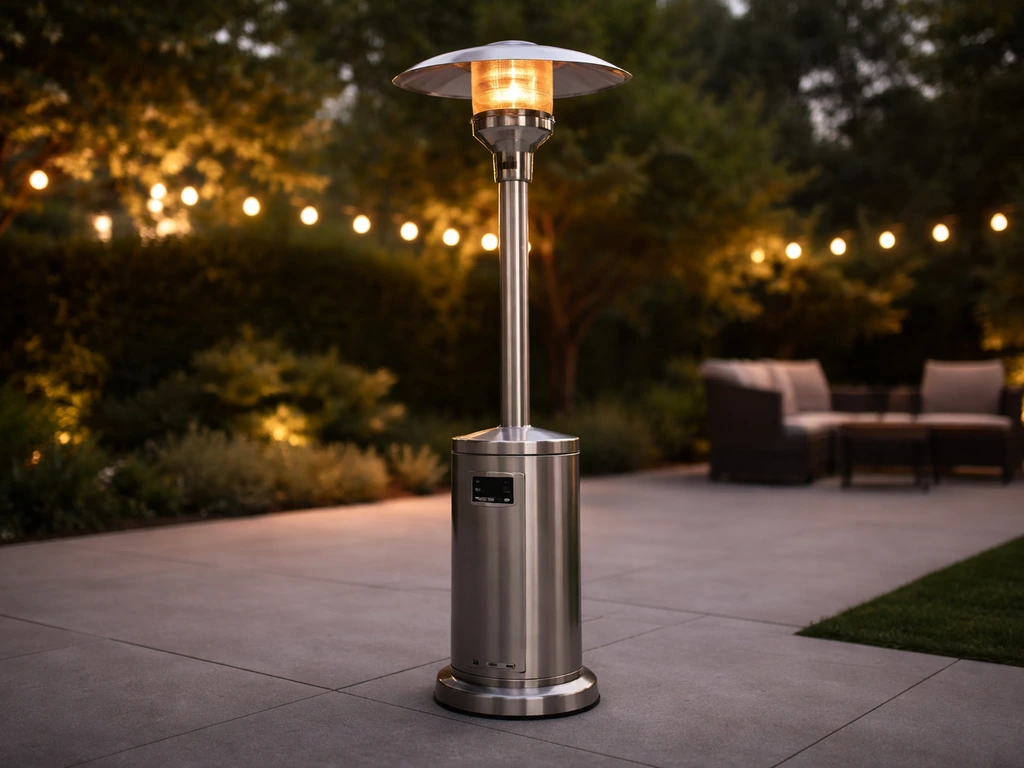
Which Amazon Basics model are you actually looking at?
Amazon lists these heaters under multiple ASINs, which causes a lot of confusion. The core product family for the 46,000 BTU model includes ASINs B00LILH3V4, B00LILH47C, and B010VFKZEO, and they all share model code 62108 in the manual. The AmazonBasics patio heater instruction manual for the 46,000 BTU model (which covers variants under ASINs like B00LILH3V4, B00LILH47C, and B010VFKZEO) shows that these variants share model code 62108 and use the same instruction set. The instruction set is identical across all of them. What changes is the finish and how Amazon categorizes the listing.
| Variant | Finish | Target Use | Same 46K BTU Engine? |
|---|---|---|---|
| Standard Propane | Brushed Stainless Steel | Residential patio | Yes |
| Commercial Stainless | Polished/Heavy Stainless Steel | Restaurant, bar, high-traffic deck | Yes |
| Commercial Slate Grey | Slate Grey Powder Coat | Commercial or modern residential | Yes |
| Commercial Sable Brown | Sable Brown Powder Coat | Commercial or rustic/warm aesthetic patios | Yes |
The powder-coated commercial finishes (slate grey and sable brown) are genuinely good-looking options if you want something that doesn't scream "generic stainless heater." That said, powder coat requires a little more attention in wet or salty coastal climates because chips can lead to rust faster than on bare stainless. More on that in the maintenance section.
Amazon Basics patio heater review: performance, build, and value
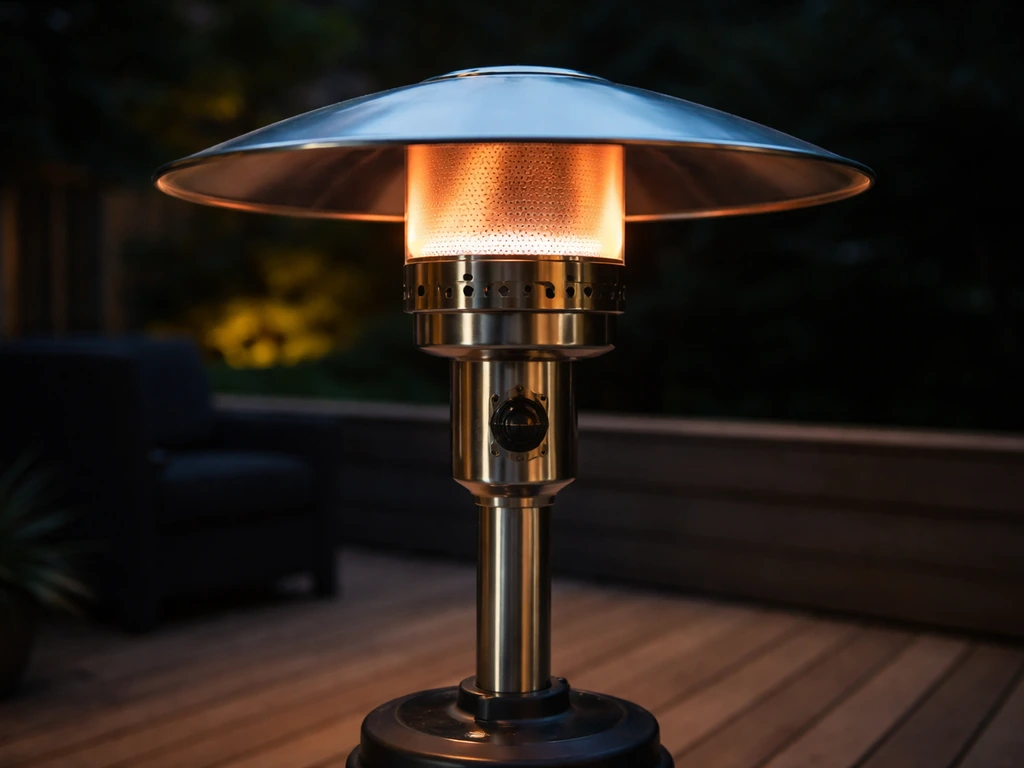
At 46,000 BTU, this heater sits in the sweet spot for a full-size propane tower. It puts out enough heat to warm a circle of roughly 15 to 18 feet in diameter under calm conditions, which is realistic for a mid-size patio or outdoor dining area. In practice, real-world coverage depends heavily on wind and ambient temperature. Below 40°F (4.4°C), the manual explicitly states the unit operates at reduced efficiency, so if you're in a northern climate trying to extend a short outdoor season into late fall, manage your expectations.
Build quality on the commercial variants is noticeably better than the base residential model. The pole sections feel more substantial, and the base is heavier. That said, both versions are competitive with similarly priced heaters at the $100 to $160 price point. For a first patio heater or a rental property setup, the value is hard to argue with. For a commercial setting running the heater five nights a week, the commercial stainless version is the right call because the cheaper base model shows wear faster under that kind of use cycle.
The ignition system uses a piezo electric push-button igniter, which is convenient but the most common point of failure over time. After a season or two, many users find the igniter becomes unreliable and resort to a long-reach lighter, which works fine and is worth keeping nearby regardless. The heat dome directs heat outward well, and the flame pattern (blue with straight yellow tips at the top, per the manual's spec) is a good indicator of clean combustion when everything is dialed in.
Compared to other popular propane tower heaters, the Amazon Basics models compete directly with options like the Bali Outdoors tabletop and full-size propane heaters on heat output, but the AmazonBasics full-size tower form factor gives better area coverage than a tabletop unit. For more general buying tips on the best outdoor patio heater propane style for your space, compare heat output and coverage alongside this Amazon Basics tower model. If you prefer a smaller heat footprint, a Bali Outdoors portable patio heater tabletop propane model can be a convenient alternative for tight spaces Bali Outdoors tabletop. If you're comparing with other top-rated propane options, the Amazon Basics models generally land in the mid-tier: not the most premium build, but solidly above budget no-name imports.
What to check before you buy
Before you add one to your cart, run through these checks to make sure this heater actually fits your setup.
- BTU and coverage: 46,000 BTU works well for a roughly 15 to 18 foot diameter area in calm, mild conditions. If your patio is consistently windy or you're trying to heat more than about 200 square feet, you may need two units or a windbreak.
- Fuel and tank compatibility: this heater requires a standard 20 lb (9 kg) LP propane tank. The manual is explicit: only use a propane vapor withdrawal supply system with a standard 20 lb tank. A 1 lb camping-style canister will not work here.
- Physical footprint: the unit measures 32.1 x 32.1 x 91.3 inches (LxWxH). Make sure you have the vertical clearance and the floor space. The base is wide enough that it won't tip easily, but placing it in a tight corner is not ideal for safety or airflow.
- Climate considerations: if you live somewhere with regular sub-40°F temps or coastal salt air, the commercial stainless variant is a better long-term investment. Powder-coated finishes in salt-air environments need more frequent inspection.
- Propane heater vs. alternatives: propane gives you portability and strong heat output without an electrical hookup, which makes it the right choice for most open patios. Electric infrared heaters are better for enclosed or semi-enclosed spaces where ventilation is limited, since propane needs to be used fully outdoors.
Key parts, controls, and how to operate it safely
The manual for the 46,000 BTU Amazon Basics family (model 62108) covers all variants. You can find it in PDF form through the Amazon product listing or on manuals.plus. Here's what you actually need to know from it.
Key components to know
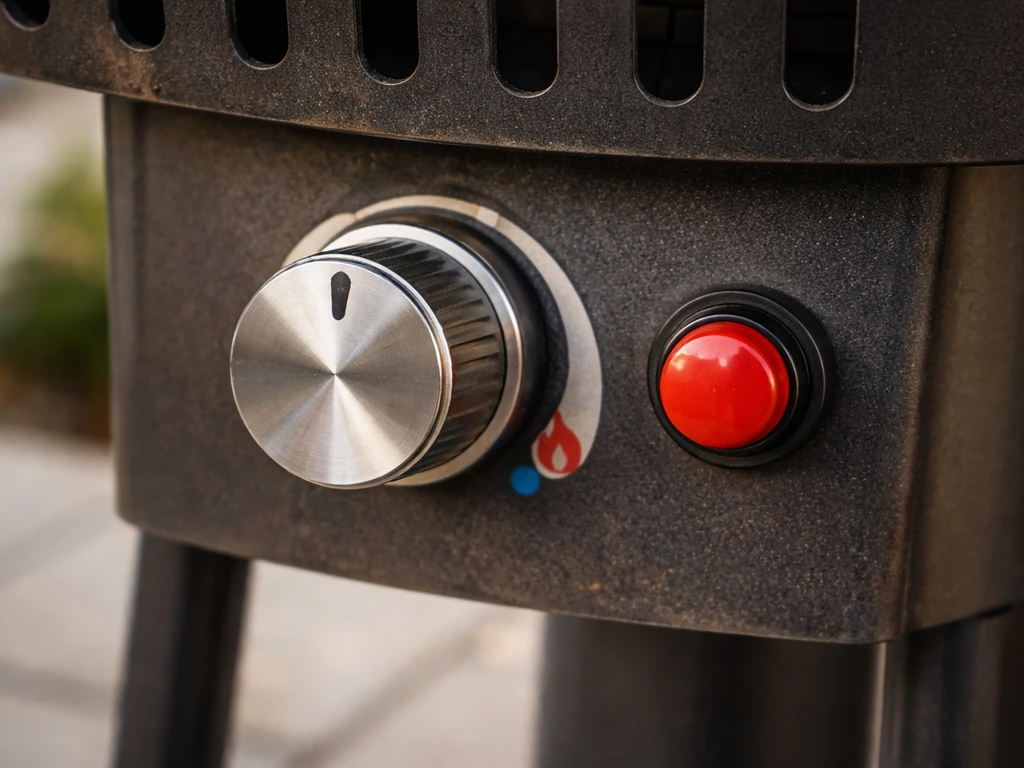
- Control knob: the main gas valve. Push in and turn to set heat level. Pushing it in while turning also activates the gas flow needed for lighting.
- Red ignitor button: the piezo igniter. Press repeatedly while holding the control knob in to spark the burner.
- Regulator and hose: connects the tank to the heater's gas supply. This is the part most likely to cause issues if connections are loose.
- Heat reflector/dome: the top mushroom-shaped cap that directs heat outward and downward toward seated guests.
- Burner assembly: at the top of the pole, where combustion happens. Keep it clear of debris and insect nests.
- Base with tank compartment: houses the 20 lb propane tank. The base also has wheels on most models for repositioning.
First-start operating procedure
- Confirm wind speed is below 10 mph. Use the heater outdoors only, never inside an enclosure, garage, or tent.
- Check that the burner and air passages are clear of spider webs, insect nests, or debris before the first start of each season.
- Place the heater on a hard, level surface.
- Open the propane tank valve slowly. On first use or after changing a tank, hold the control knob in for two full minutes to purge air from the gas lines.
- After purging, press the red ignitor button repeatedly while still holding the control knob in. The burner should light within a few presses.
- Once lit, continue holding the control knob in for 30 seconds, then release. This allows the thermocouple to heat up and hold the gas valve open.
- Expect some light smoke and odor on the first use. This is normal and dissipates within about 30 minutes. Do not inhale the fumes directly.
- The flame should display as blue with straight yellow tips at the top. Excessive yellow flame or thick black smoke means something is wrong; turn the heater off and troubleshoot.
Shutdown procedure
- Push the control knob in and turn to the OFF position.
- Close the propane tank valve completely.
- Disconnect the regulator from the tank when the heater won't be used for an extended period.
- If re-lighting a heater that was recently on and is still hot, wait at least five minutes for residual gas to dissipate before attempting to relight.
Leak check (do this every time you connect a tank)
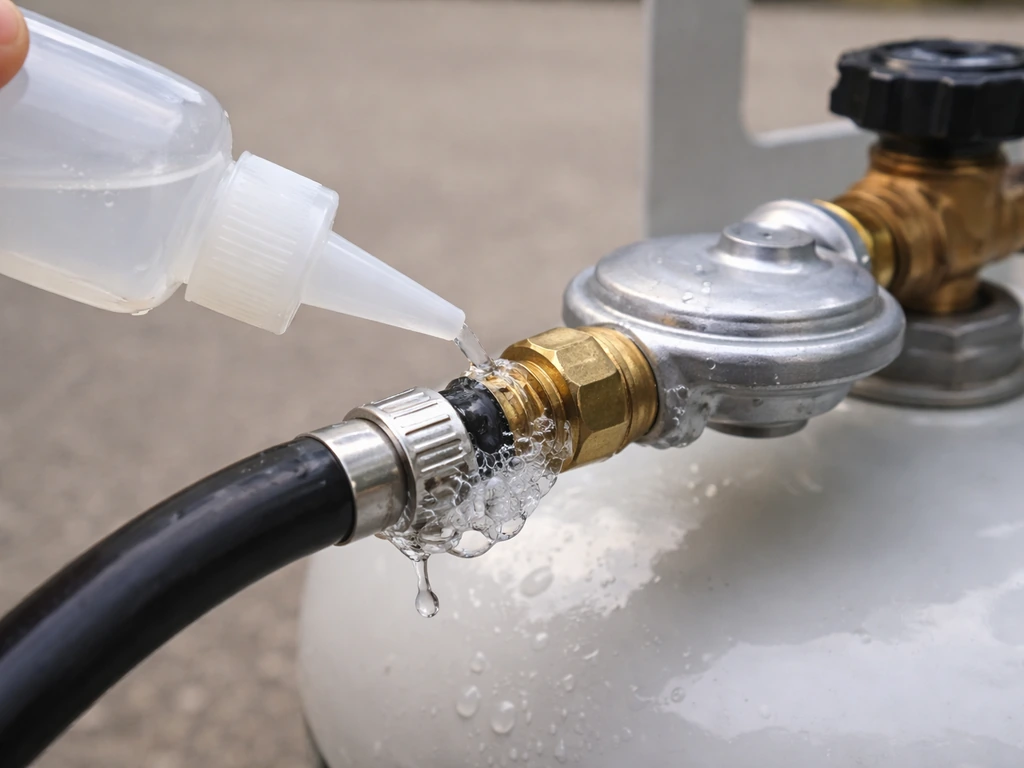
Mix 1 part liquid dish soap with 3 parts water to make about 2 to 3 ounces of leak-test solution. Apply it to both connections: the hose-to-regulator joint and the regulator-to-tank joint. Open the tank valve slowly and watch for bubbles. Bubbles mean a gas leak. Tighten the connections and retest. If bubbles persist after tightening, do not use the heater, replace the defective component, or call Amazon Basics customer service.
Setup and installation: where to put it and how to assemble it
Assembly is straightforward and takes most people 20 to 30 minutes. The pole sections stack and bolt together, the dome attaches at the top, and the regulator hose connects to the gas inlet near the base. Follow the manual's diagram closely for the pole connections since getting a section misaligned makes the whole unit wobble.
Placement matters more than most people realize. The manual requires at least 36 inches of clearance above the heat dome from any combustible material (overhangs, umbrellas, string lights, wood pergola beams) and at least 24 inches of clearance on the sides. That's a hard minimum. In practice, aim for more clearance if you can. A heater jammed under a low pergola roof is a fire risk regardless of what the spec sheet says.
Keep the heater on a hard, level surface: concrete, pavers, or a solid deck board. Avoid grass or gravel, where the base can sink or tip. If your patio gets wind from a consistent direction, positioning the heater so guests are downwind improves perceived warmth significantly. This is one of the most underrated setup moves with any propane tower heater.
Troubleshooting common early problems
Most issues with the Amazon Basics heater happen in the first few uses or at the start of a new season. Here's what the manual covers and what actually tends to cause problems in the real world.
| Problem | Likely Cause | Fix |
|---|---|---|
| Burner won't light | Air in gas line (common after tank swap) | Hold control knob in for 2 to 3 minutes to purge air, then try igniting again |
| Burner won't light | Tank valve closed or empty tank | Open tank valve fully; replace tank if empty |
| Burner won't light | Igniter failure | Use a long-reach lighter or match at the burner; replace igniter if needed |
| Burner won't light | Blocked burner orifice | Turn off gas, let cool, inspect and clean the orifice or replace it |
| Burner won't light | Loose regulator connection | Tighten regulator-to-tank and hose-to-regulator connections; re-run leak check |
| Low or weak flame | Low propane in tank | Replace with a full tank |
| Low or weak flame | Regulator pressure issue | Try a replacement regulator; cold temps below 40°F also reduce output |
| Excessive yellow/sooty flame | Blocked air passages or burner | Shut off heater, let cool, clear debris from burner and air inlets |
| Thick black smoke | Obstruction or airflow problem | Shut off immediately; inspect and clear burner assembly before restarting |
| Heater goes out after lighting | Thermocouple not hot enough | Hold control knob in for a full 30 seconds after lighting before releasing |
| Heater operates poorly in cold weather | Sub-40°F ambient temperature | Expected behavior; manual confirms reduced efficiency below 40°F (4.4°C) |
One thing worth calling out: insects and spiders nesting in the burner assembly during off-season storage is one of the most common reasons a heater fails to start properly in spring. A blocked burner orifice from a small nest can cause erratic flame behavior or prevent ignition entirely. Always inspect and clear the burner before the first start of the season.
Keeping it running: maintenance, cleaning, and seasonal storage
This heater will last several seasons with basic care. The manual's guidance here is practical and worth following closely.
Regular cleaning
- Wipe down exterior surfaces with soapy water. Do not use flammable cleaners, abrasive pads, or corrosive chemicals on any surface.
- Keep the area around the burner and control compartment dry. Do not submerge the control valve assembly or regulator in water for any reason.
- Inspect and clean the burner air passageways at the start of each season and after any extended period of non-use. Clear out any insect nests, spider webs, or debris.
- For powder-coated finishes (slate grey, sable brown): inspect for chips or scratches regularly, especially in humid or coastal environments. Touch up chips promptly to prevent rust progression.
End-of-season storage
- Turn the heater off and let it cool completely before doing anything else.
- Close the propane tank valve, then disconnect and remove the regulator and hose from the tank.
- Store the propane tank outdoors in a well-ventilated area, away from the heater. Do not store propane tanks indoors.
- Store the heater upright in a sheltered location: a garage, shed, or under a covered patio works well.
- Cover the heater with a weather-resistant cover after it's fully cooled. Covering a warm heater traps moisture and accelerates corrosion.
- If you're near the coast or in a high-humidity environment, the manual specifically flags that salt air accelerates corrosion faster than normal. Inspect the burner assembly, pole connections, and base welds more frequently and address any rust spots early.
One maintenance habit worth building: at the start of each season, reconnect everything, run the soap-and-water leak test on all connections, and check that the burner orifice and air passages are clear before the first light. It takes five minutes and prevents almost every common startup failure.
The bottom line on which model to pick
For most home patios, the standard stainless steel Amazon Basics 46,000 BTU propane heater is the right call. It delivers solid heat output, uses a widely available fuel source, and the price-to-performance ratio is genuinely good. If you want to compare across brands and prices, this is a strong contender for the best patio heater on Amazon in the 46,000 BTU propane tower category.
If you're outfitting a commercial space or a patio that sees heavy daily use, step up to the commercial stainless variant. The slate grey and sable brown commercial versions are essentially the same heater with a different aesthetic, so let your patio's look guide that choice. What matters operationally is the same across all four: 46,000 BTU, a 20 lb propane tank, and the same manual governing how you set it up, light it, and keep it running.
In the specifications for model 62108, the manual lists the heater’s heat output as 46,000 BTU and specifies it uses liquid propane gas with a 20 lb tank. If you want the exact model, the Amazon Basics 46,000 BTU outdoor propane patio heater with wheels is the one to compare against.
FAQ
Can I use a different propane tank size or hose with the amazon basics patio heater 46,000 BTU tower?
Stick with a compatible 20 lb propane cylinder and the regulator hose configuration intended for this model. Using a different tank size or an unapproved regulator can change gas pressure and create unsafe flame or leak-test results, even if the connections look similar. If you want a larger tank for longer run time, the safer approach is having your setup use the same approved regulator with a tank exchange that still fits the intended connection spec.
What should I do if the heater ignites but the flame keeps going out?
First, confirm the burner is clean and the burner orifice is not obstructed (insects and small debris are common). Next, do a fresh leak test at the hose-to-regulator and regulator-to-tank joints, then retry ignition slowly. If it still shuts off repeatedly, check that the unit is assembled without a wobble and that the heat dome and burner area are aligned as shown in the manual, since misalignment can affect airflow and flame stability.
How windy is too windy for the amazon basics patio heater to be effective?
The manual discussion of coverage assumes calm conditions, so treat wind as a real performance limiter. If you notice flames leaning excessively or reduced heat on the downwind side, increase spacing from the heater to keep people in a safe clearance zone, reposition so guests sit in the wind-shadow of the heater, or avoid use during stronger gusts rather than trying to compensate with closer seating.
Is it safe to run the amazon basics patio heater under an overhang or near an umbrella?
No, follow the clearance rules. The manual calls for at least 36 inches above the heat dome and at least 24 inches on the sides from combustibles like overhangs, umbrellas, string lights, and wood pergola beams. If you cannot maintain those distances in real-world conditions, choose a different placement, not a “partially covered” setup.
What’s the best way to store it between seasons to prevent startup problems?
Let it fully cool, then store it where the burner area can stay free of insects and moisture. A common mistake is covering the heater outdoors without ensuring the burner stays unobstructed, which can trap insects or humidity. Before the first light each season, inspect and clear the burner, then run the soap-and-water leak test on all connections.
How often should I leak-test the connections, and do I need to retest after every tank change?
Do a leak test at the start of each season as the manual advises, and it is also smart to retest after any regulator or tank swap, especially if you tightened connections or noticed a gas smell. The leak-test solution method (watching for bubbles after opening the tank valve slowly) helps catch issues early. If bubbles persist after tightening, stop using the heater until the defective component is replaced or serviced.
If the piezo igniter fails, is it safe to light with a long lighter only?
Yes, many owners use a long-reach lighter as a backup, but treat ignition reliability issues as a maintenance signal. Keep the lighter nearby for convenience, and still inspect the burner before troubleshooting repeated start failures. If ignition remains unreliable after you clear the burner and verify correct assembly, consider replacing the igniter component rather than relying on repeated attempts.
Does the commercial finish (slate grey or sable brown) require different maintenance than stainless?
Powder-coated surfaces can show chipping over time, and in wet or coastal environments, that increases the risk of rust at chips. If you see damage in the coating, touch up or protect that area promptly and keep the heater clean and dry. For bare stainless, routine cleaning is still important, but the “chip leads to rust faster” issue is typically more pronounced with powder coat.
Can I place the heater on pavers or should I use a specific base?
Pavers are fine if they are solid and level, the base cannot rock, and the surface won’t shift. Avoid placing it on grass or gravel since the base can sink or tip, which changes stability and can affect how the heater sits relative to clearance requirements. If your patio has uneven slabs, add a stable leveling pad under the heater base rather than shimming loosely.
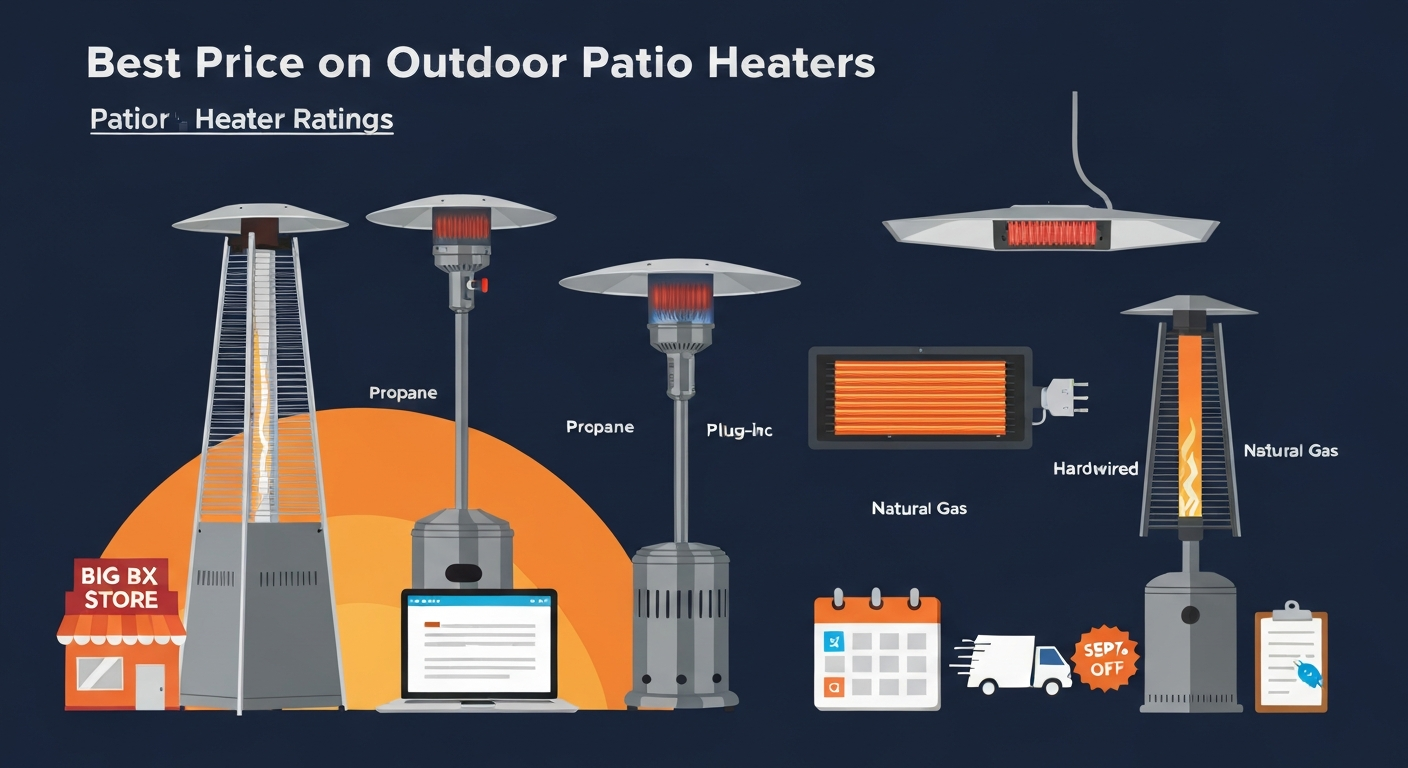
Score the best price on outdoor patio heaters, price ranges, top picks, deal tactics, total-cost & safety checklist.
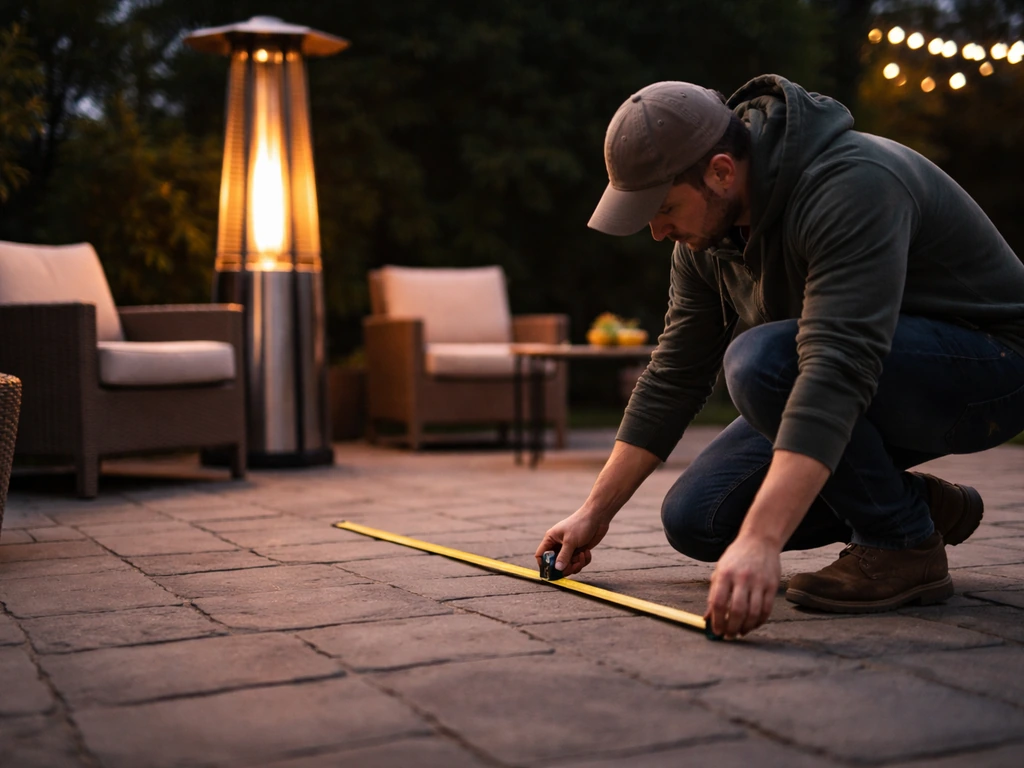
Find where to rent patio heaters near you today, choose the right fuel type, compare costs, and book safely.
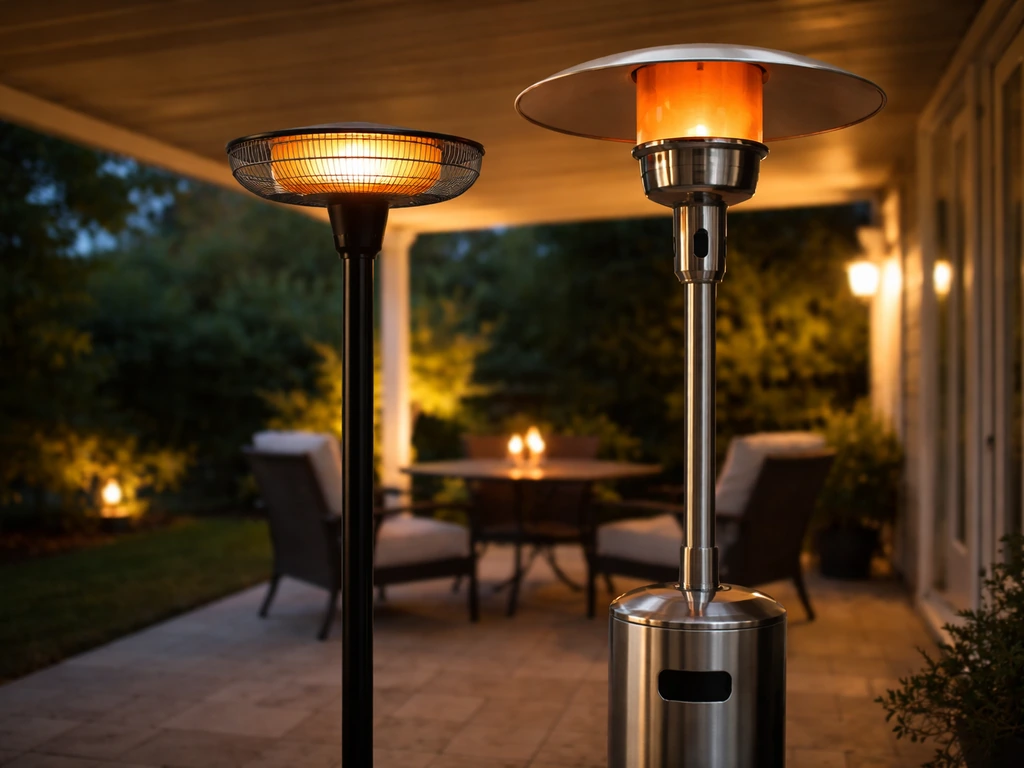
Where to buy a patio heater now, plus electric vs gas vs propane tips, safety checks, and size/BTU buying checklist.