
Choosing the right outdoor patio heater comes down to four things: how much space you need to heat, how cold and windy your climate gets, what fuel or power source you have access to, and how much you want to spend upfront versus over time. Match those four factors correctly and you'll have a heater that actually gets used. Get them wrong and you'll end up with an underpowered unit that can't fight the wind, or a fuel-hungry tower burning through propane tanks on a small covered balcony where a single hardwired electric infrared panel would have done the job for a fraction of the running cost.
How to Choose an Outdoor Patio Heater: Guide for Size, Fuel & Budget

Caleb Vale
10 Aug 2026
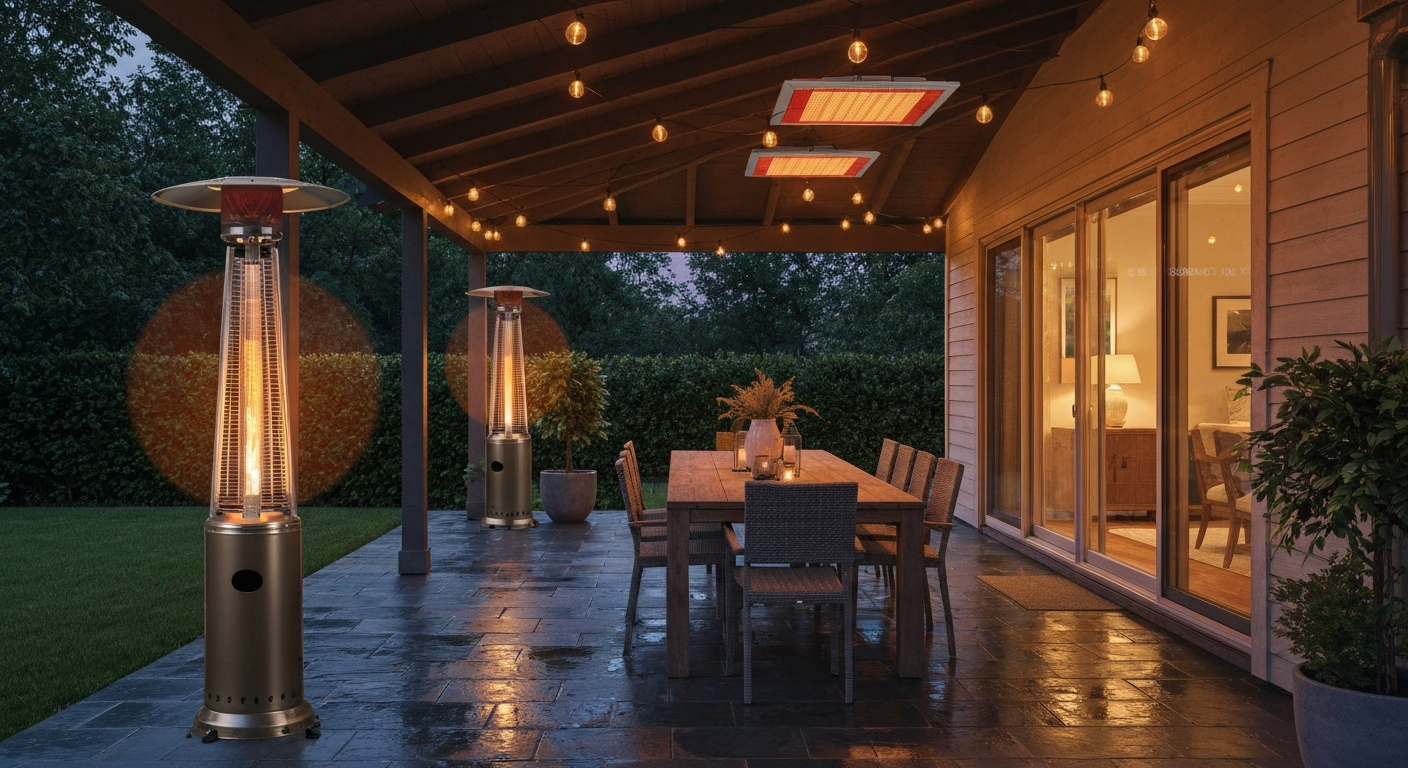
Start here: match your heater to your patio size, climate, budget and style
Before comparing specific models, spend two minutes answering these four questions. They'll eliminate most of the wrong options immediately.
Patio size and shape: measure the area in square feet where people actually sit, not the total patio footprint. A single freestanding propane tower radiates heat outward in a roughly circular pattern to about an 8–9 foot radius, covering approximately 200–250 sq ft. A hardwired 6,000 W electric infrared panel covers around 130–160 sq ft from the right mounting height. Oversized open decks often need multiple heater heads or zones, while compact balconies are well served by one tabletop or wall-mount unit.
Climate and exposure: if you regularly deal with sustained wind above 10–15 mph, a standard propane tower or open-flame unit loses most of its effective heat to convective loss. Frontiers in Sustainable Cities, Systematic review: large‑scale outdoor thermal comfort studies (wind, MRT, humidity effects) highlights wind speed and mean radiant temperature as dominant variables and recommends using microclimate data and sheltering factors when sizing outdoor heaters Frontiers in Sustainable Cities — Systematic review: large‑scale outdoor thermal comfort studies (wind, MRT, humidity effects). Infrared radiant heaters (both gas and electric) are more wind-tolerant because they heat surfaces and people directly rather than warming ambient air. If your patio is covered or semi-enclosed, any heater type performs better, and you can often downsize the BTU or wattage rating.
Budget: there are two numbers that matter here, upfront cost and operating cost. Budget propane towers run $70–$350 at retail. Premium commercial gas infrared units like the Bromic Platinum 300 Series list around $2,298. Hardwired electric infrared panels (Infratech W-Series, Bromic Cobalt) typically land in the $600 range per fixture. Always factor in the cost of fuel, electricity, or installation when comparing options, especially if you're buying for a business running the heater four or five hours a night.
Aesthetic fit: restaurants and upscale patios increasingly use flush-ceiling or wall-mounted infrared heads that are nearly invisible. Homeowners entertaining occasionally tend to prefer the classic mushroom-top tower look. Pellet heaters offer a visible flame for ambiance. Think about whether the heater will be left out year-round, stored seasonally, or moved between spaces, that affects both format and build quality requirements.
Heater types compared: propane, natural gas, electric, infrared and pellet
Each fuel type has a genuine best-fit scenario. Here's an honest look at all five, based on real-world testing and customer feedback patterns.
| Type | Typical Output | Best For | Main Pros | Main Cons |
|---|---|---|---|---|
| Propane (tower/mushroom) | 40,000–46,000 BTU/h | Open patios, portability needed | No wiring/gas line required, portable, inexpensive upfront | Ongoing propane cost, wind-sensitive, tank swaps |
| Natural Gas (built-in tower or infrared) | 30,000–55,000 BTU/h | Permanent installations, high-use patios | Continuous fuel supply, lower per-hour cost than propane | Requires gas line, professional install, fixed location |
| Electric Infrared (hardwired panel) | 1,500–6,000 W (5,118–20,475 BTU/h) | Covered patios, commercial, wind-exposed spots | Wind-tolerant, silent, low maintenance, precise control | Higher upfront + electrical infrastructure cost |
| Electric Radiant (plug-in) | 750–2,000 W (2,559–6,824 BTU/h) | Small balconies, enclosed porches | Plug-and-play, low cost, easy storage | Limited coverage, not suited to large or open spaces |
| Pellet | 30,000–75,000+ BTU/h | Ambiance-focused use, off-grid spots | Visible flame, high output, renewable fuel option | Requires hopper refilling, more maintenance, clearance rules |
Propane heaters
The classic freestanding propane tower is the most common consumer choice for good reason: no installation, no permits in most residential settings, and retail prices as low as $70 on sale. Most consumer towers run 40,000–46,000 BTU/h on a standard 20 lb (5-gallon) propane tank. At that input rate and at a propane energy content of approximately 91,452 BTU per gallon, a full tank delivers roughly 10–12 hours of runtime at max output, less if you're running it hard in cold weather. The tradeoff is that open-flame towers are genuinely wind-sensitive. Above about 15 mph, you're heating the air around the heater rather than the people near it.
Natural gas heaters
Natural gas units offer the same flame-based heat as propane but run off your home or building's gas line, which means no tank swaps and a lower per-BTU fuel cost. They're a strong choice for permanent deck installations, restaurants, and any situation where the heater will run multiple hours per day. The constraint is obvious: you need a gas line nearby, and most jurisdictions require a licensed plumber or gas fitter for the hookup. Expect to budget $200–$500 or more for professional installation on top of the heater price.
Electric infrared heaters
Hardwired electric infrared is my top recommendation for covered patios, restaurants, and any wind-exposed space. These units heat people and surfaces directly through radiant energy rather than warming the air, so wind has far less impact on their effectiveness. A 6,000 W panel produces roughly 20,475 BTU/h equivalent and covers approximately 130–160 sq ft from the right mounting height. Brands like Bromic and Infratech dominate this segment. Prices per fixture run $600–$700 at quality tier, but the operating cost per hour is predictable and there's almost nothing to maintain beyond occasional cleaning.
Pellet heaters
Pellet patio heaters are a niche but legitimate category. Gravity-fed tower designs can claim 30,000–75,000+ BTU/h and deliver a visible flame that adds real ambiance to a patio. If you want the look of a fire feature plus functional heat and don't have propane or gas access, pellets are worth considering. The realities: you're refilling a hopper, you're dealing with ash cleanup, and combustion clearances apply just like any open-flame unit. They're sold through retailers including big-box stores, and are best suited to homeowners who want ambiance alongside warmth.
Heat output and coverage: what BTU, watts and square-footage ratings actually mean
BTU/h and watts measure the rate at which a heater produces energy, not how warm it makes a specific area. The conversion is exact: 1 watt equals 3.412 BTU/h, so a 6,000 W electric infrared panel is outputting approximately 20,475 BTU/h. A 40,000 BTU/h gas tower is about 11,731 watts (11.7 kW). Use this when comparing gas and electric units on spec sheets, the numbers can look very different until you convert them.
Square-footage coverage numbers from manufacturers are a useful starting point but come with important caveats. Those figures assume a specific mounting height, a relatively sheltered location, and a target comfort temperature that may differ from your coldest use night. Bromic, for example, publishes coverage charts for its Platinum Gas series tied to specific mounting heights (around 2,400 mm / 7.9 ft) and lists different heat areas for its 23,600 BTU and 39,800 BTU models. Use those charts as a floor, not a ceiling, especially if your patio is open-sided or regularly windy.
Radiant vs. convective heat matters enormously outdoors. Convective heaters warm the air, which gets blown away the moment wind picks up. Radiant (infrared) heaters emit electromagnetic energy that warms people and solid surfaces directly, the same way sunlight does. Wind has very little effect on this mechanism. For open or semi-exposed patios, a lower-wattage infrared unit often outperforms a higher-BTU convective tower in practice because the delivered heat actually reaches the people sitting under it.
A quick sizing rule: for a semi-enclosed covered patio in a moderate climate (needing roughly 10–15°F of temperature rise), plan for about 25–30 watts per square foot of seating area using electric infrared, or approximately 85–100 BTU/h per square foot using a radiant gas heater. In colder climates or fully open spaces, scale up by 30–50%. These are rough baselines, always cross-reference with the specific heater's manufacturer coverage chart.
Placement and mounting options: how and where you install changes everything
Where you put the heater affects coverage, safety, aesthetics and installation cost just as much as the heater's rated output. Here's a rundown of the main configurations.
- Freestanding (tower/mushroom): portable, no installation, easy to reposition. Best for open residential patios. Requires flat, stable surface and clearance from overhead structures (typically 3 ft minimum above the emitter head). Propane and natural gas tower models fall here.
- Tabletop: small electric or propane units for intimate seating areas. Output is limited (typically 1,000–10,000 BTU/h), best for heating two to four people within 3–4 feet. Plug-in electric tabletop models are the simplest possible setup.
- Wall-mounted: brackets fix the heater head to a vertical surface, pointing heat downward and outward. Common for electric infrared panels. Requires mounting hardware and, for hardwired units, a nearby electrical circuit. Installation complexity is moderate — an electrician visit for hardwired models.
- Ceiling-mounted (overhead flush or pendant): heater heads mount directly to a covered ceiling, directing infrared heat straight down into the seating zone. This is the cleanest aesthetic option and the most effective per-unit placement for covered patios and restaurant terraces. Requires structural ceiling support and electrical rough-in. Installation complexity is moderate to high depending on ceiling construction.
- Recessed and commercial overhead installations: high-end commercial setups recess infrared elements into the ceiling structure entirely, leaving only a flush grille visible. These require professional design and installation, proper venting if gas-fired, and local permits. Common in hotel terraces and upscale restaurant patios. Installation complexity is high.
One practical note on mounting height: going too high reduces heat density at ground level, while going too low creates a burn hazard. Most manufacturers specify minimum clearances in their installation manuals. Infratech W-Series units, for example, specify minimum mounting heights of 7–8 feet from the floor, with IP X4-rated wiring components required for any outdoor circuit. Follow these specs exactly, they're not suggestions, they're the basis for safe and warranted operation.
Fuel supply, hookup options and what you'll actually spend per hour
Operating cost is where many buyers get surprised. A heater that's cheap to buy can be expensive to run, and vice versa. Here's how to estimate your real hourly cost for each fuel type.
Propane
Propane contains approximately 91,452 BTU per gallon. A standard 46,000 BTU/h patio tower burns about 0.50 gallons per hour at max output (46,000 ÷ 91,452 = 0.503 gal/h). At a retail propane refill price of roughly $4–$5 per gallon, that's $2.00–$2.50 per hour at full blast. If you run the heater at medium output (around 25,000 BTU/h), you're looking at about $1.10–$1.35 per hour. Propane is convenient but the most expensive per-BTU of the piped/bottled fuel options for high-use scenarios.
Natural gas
Natural gas delivers approximately 1,035–1,037 BTU per cubic foot of pipeline gas. A 40,000 BTU/h natural gas heater consumes roughly 38.6 cubic feet per hour (40,000 ÷ 1,036 = 38.6 cf/h), which is about 0.386 therms per hour (1 therm = 100,000 BTU). At a national average residential gas price of around $1.25–$1.50 per therm, that works out to roughly $0.48–$0.58 per hour. Natural gas is significantly cheaper than propane per hour of heat, which is why it wins for high-use commercial and residential permanent installations.
Electricity
A 6,000 W hardwired electric infrared heater running on the U.S. average residential electricity rate of approximately $0.16 per kWh costs about $0.96 per hour at full output. Lower-output settings reduce that proportionally. For a 3,000 W panel at $0.16/kWh, you're spending $0.48 per hour. Electric infrared has no combustion losses, so near-100% of the electricity becomes radiant heat output. In wind-exposed applications where gas heaters lose efficiency, the effective cost comparison often swings further in favor of electric.
Pellets
Wood pellets typically sell for $5–$9 per 40 lb bag, with an energy content around 6,500–8,000 BTU per pound, so a 40 lb bag contains roughly 260,000–320,000 BTU. A pellet heater running at 50,000 BTU/h burns approximately 0.37–0.46 lbs per hour, meaning a $6 bag lasts 87–108 hours at that output, making pellets cost-competitive with natural gas per BTU. However, pellet heaters are not throttle-precise, and running costs vary by model efficiency and ambient conditions.
| Fuel Type | Typical Input Cost | Example Heater Output | Estimated Hourly Running Cost | Installation Cost Typical Range |
|---|---|---|---|---|
| Propane (bottled) | ~$4–$5/gallon | 46,000 BTU/h | $2.00–$2.50/hr at max | $0 (freestanding) to $150 (dedicated line) |
| Natural Gas (piped) | ~$1.25–$1.50/therm | 40,000 BTU/h | $0.48–$0.58/hr | $200–$500+ for gas line/permit |
| Electricity (hardwired) | ~$0.16/kWh (avg) | 6,000 W (20,475 BTU equiv.) | $0.96/hr at full output | $150–$400+ for electrical circuit |
| Electricity (plug-in) | ~$0.16/kWh (avg) | 1,500 W (5,118 BTU equiv.) | $0.24/hr | $0 (standard outlet) |
| Pellets | ~$5–$9/40 lb bag | ~50,000 BTU/h | ~$0.45–$0.65/hr (est.) | $0 (freestanding) |
Noise, durability, materials and weatherproofing: what holds up and what doesn't
Noise is rarely a major issue with most patio heaters. Freestanding propane towers produce a soft hiss from the burner and are essentially silent from a conversation distance. Electric infrared panels are completely silent, no moving parts, no combustion. Pellet heaters can produce audible combustion sounds and the occasional pop or crack, similar to a small fire, which some people consider part of the ambiance.
Material quality is where budget and premium units diverge most visibly. Budget propane towers typically use powder-coated steel, which holds up reasonably well with seasonal storage but starts showing surface rust within two to three seasons if left out year-round in humid or coastal environments. Mid-tier units use stainless steel (304 grade), which is noticeably more corrosion-resistant. Premium commercial heaters like the Bromic Platinum line use high-grade stainless and ceramic components, and Bromic offers a marine-grade 316 stainless option specifically for coastal installations where salt air accelerates corrosion.
For electric infrared heaters, the IP (Ingress Protection) rating tells you how well the unit handles outdoor exposure. Outdoor wiring components should meet at minimum IP X4 (splash-resistant from any direction), per Infratech's installation requirements. Some fixtures carry IP55 or IP65 ratings (dust-tight and water-jet resistant), which are appropriate for locations receiving direct rain exposure. If you're mounting a heater under a pergola that gets some weather intrusion, verify the IP rating before buying.
Lifespan expectations vary a lot by build quality and use. A $150 propane tower stored properly each winter can last 5–8 years. A well-maintained commercial-grade Bromic or Infratech hardwired unit is designed for 10,000+ hours of service. The element replacement interval on quality electric infrared units is typically listed in the manufacturer's installation manual, plan on replacing heating elements after several seasons of heavy use, with parts readily available from the manufacturer.
Safety features, clearance requirements and what local codes actually require
Safety is non-negotiable here, and it's one of the areas where I see buyers cut corners most often. Here's what you need to understand before you buy or install any heater.
Built-in safety devices
Any gas or propane heater you consider should include both a tip-over switch (shuts off fuel flow if the heater is knocked over) and an oxygen depletion sensor or flame-failure device (cuts fuel if the pilot flame goes out, preventing unburned gas from accumulating). These are standard on reputable brands and listed in product specs. If a heater doesn't explicitly list both, that's a red flag. Electric heaters should have overheat protection and, for wall/ceiling-mounted units, the installation should include a GFCI-protected circuit.
Clearance requirements
Every heater has minimum clearances specified in its installation manual. Freestanding propane towers typically require at least 3 feet of clear space above the emitter head, with no overhanging material (umbrellas, fabric covers, wood framing) within that zone. Hardwired electric infrared units specify minimum floor-to-heater mounting heights, commonly 7–8 feet, plus clearance from adjacent walls and ceiling materials. These aren't arbitrary, insufficient clearance above a propane tower under a low wood pergola is a genuine fire hazard.
Venting, permits and local codes
Outdoor propane and natural gas heaters are designed for open-air use and don't require dedicated exhaust flues, but they must not be used in fully enclosed spaces. Even semi-enclosed patios need adequate airflow to prevent carbon monoxide buildup from combustion units. Natural gas line installations require a licensed gas contractor and usually a permit from your local building department, this is true whether you're a homeowner or a business. Commercial electric infrared installations involving new circuits or panels typically require an electrical permit and inspection. If you're opening a restaurant patio or adding a permanent commercial heating system, check with your local authority having jurisdiction (AHJ) before purchasing equipment. Permit requirements vary significantly by municipality, and some coastal or wildfire-zone communities have stricter rules around outdoor combustion appliances.
Maintenance, repairs and troubleshooting: keeping your heater working season after season
Patio heaters are fairly low-maintenance, but skipping basic care is the most common reason they fail prematurely. Here's a practical maintenance schedule based on heater type.
Propane and natural gas heaters
At the start of each season, inspect the burner orifice for spider webs and debris, this is the single most common cause of gas heaters that won't light or burn unevenly. A can of compressed air or a soft brush solves this in two minutes. Check the igniter electrode for carbon buildup and clean with fine sandpaper if needed. Inspect the gas hose and regulator for cracks or brittleness, especially if the heater was stored folded or compressed. Replace the regulator hose if you see any signs of cracking, they're inexpensive and a failed hose is a safety issue. Wipe down all metal surfaces with a stainless-steel cleaner or mild soap solution and dry thoroughly. If you're storing the heater for winter, remove the propane tank, store the tank upright and outdoors (never in an attached garage or enclosed space), and cover the heater with a fitted weather cover.
Electric infrared heaters
Electric infrared panels require very little routine maintenance. Wipe the emitter surface and reflector with a dry cloth or very lightly dampened rag when the unit is fully powered off and cooled. Do not use water directly on the electrical components. Inspect mounting hardware and wiring connections annually, wall and ceiling mounts take vibration over time and connections can loosen. Check that the protective guard or screen is intact and free of debris. Heating elements do eventually fail (the quartz tube or element wire burns out) and are typically field-replaceable, most quality brands stock replacement elements. For heavy-commercial use, budget for element replacement after approximately 3–5 years of nightly operation.
Common troubleshooting issues
- Heater won't ignite: check that the propane tank has fuel and the valve is fully open; clean the burner orifice and igniter electrode; test with a lighter held to the burner to isolate whether it's a fuel or ignition issue.
- Flame blows out repeatedly: most likely low gas pressure (check tank level and regulator), wind exposure, or a failing thermocouple/flame-failure device — the thermocouple is a $5–$15 part on most consumer units.
- Uneven or yellow flame on a gas unit: blocked or partially clogged burner orifice; clean with compressed air and a fine needle.
- Electric heater element glows unevenly or one side is dark: the quartz element is partially failed and needs replacement; source the part from the manufacturer using the model number on the unit's label.
- Rust appearing on the heater body: treat immediately with a rust converter, then a high-temperature-rated paint; powder-coat failures on budget units are common after two to three seasons of outdoor exposure without covers.
- Igniter clicks but won't light: the spark gap may be too wide or covered in carbon; adjust the gap (typically 3–5 mm) and clean with fine-grit sandpaper.
Recommended heater types for common scenarios
To tie everything together, here are the heater configurations I'd point to for the most common situations, based on the criteria above. If you're comparing specific models and want side-by-side ratings, the detailed product review sections on this site cover best buys at multiple price tiers, budget picks, and the top performers across categories. If you want a direct recommendation, see our concise guide on which patio heater to buy for model-by-model advice. For shoppers focused on value, see our roundup of the best patio heater for the money for top picks that balance performance and cost. For a focused recommendation, see our roundup of the best budget patio heater for reliable warmth without breaking the bank. For an independent roundup of top-rated models, see Wirecutter's best patio heater guide. See our guide to the best buy patio heater for top picks across price tiers and use cases.
| Scenario | Recommended Type | Why It Works | Rough Budget (heater only) |
|---|---|---|---|
| Small apartment balcony (under 60 sq ft) | Plug-in electric infrared or tabletop propane | No installation needed; low output matches small space | $50–$200 |
| Medium open residential patio (150–250 sq ft) | Freestanding propane tower (40k–46k BTU/h) | Portable, affordable, good coverage for the area | $100–$350 |
| Covered patio or pergola (any size) | Hardwired electric infrared (ceiling or wall mount) | Radiant heat works under cover; clean look; low maintenance | $500–$800 per fixture |
| Large open deck in a cold/windy climate | Multiple natural gas or premium electric infrared heads | Wind-tolerant radiant output; continuous fuel for cold nights | $600–$2,500+ per head |
| Commercial restaurant terrace | Commercial overhead gas infrared (e.g., Bromic Platinum) or hardwired electric zones | Designed for continuous use, wind exposure, and aesthetics | $1,500–$2,500+ per unit |
| Ambiance-focused home patio | Pellet tower or natural gas tower with flame visibility | Visible fire adds atmosphere alongside functional heat | $200–$800 |
| Budget pick for occasional use | Entry-level freestanding propane tower | Low upfront cost; works for 2–4 hours per week of casual use | $70–$150 |
Your buying checklist before you purchase
Run through these questions before you finalize any purchase. They cover every variable that determines whether a heater will actually deliver in your specific situation. For a quick primer on what to look for when buying a patio heater, see our concise buying guide.
- Measure your seating area in square feet and note the ceiling height (if covered) — this determines the minimum BTU/wattage you need.
- Identify your fuel access: do you have a natural gas line nearby, standard 120V or 240V outdoor outlets, or will you use bottled propane?
- Assess your exposure: is the patio fully open, covered, semi-enclosed, or coastal? Wind and enclosure dramatically affect which heater type performs best.
- Set a total budget that includes the heater, installation (electrician or gas fitter if needed), and estimated operating cost for your typical weekly use hours.
- Check local codes: does your city or county require permits for gas appliance installation or new electrical circuits on outdoor structures?
- Confirm clearances: measure the height from floor to ceiling and from the planned heater location to any combustible materials (wood, fabric, roofing) before buying a specific model.
- Verify the IP rating for any electric unit you're considering — outdoor wiring and fixtures in rain-exposed locations need at minimum IP X4.
- Decide on portability vs. permanence: a freestanding propane unit can move, a hardwired panel cannot — match the format to how you actually use the space.
- Check warranty coverage and local parts availability for the brand you're considering, especially for hardwired electric or commercial gas units where element or part replacement is expected over time.
FAQ
How do I decide which type of outdoor patio heater is best (propane, natural gas, electric, infrared, pellet)?
Match fuel availability, installation complexity, wind/exposure, noise, aesthetics and budget. Propane: portable, high output, simple install, higher running cost and cylinder changes. Natural gas: lower operating cost, clean and continuous supply but requires hard‑plumbed installation. Electric (resistive or electric infrared): easiest to install when power exists, quiet, low maintenance, ideal for covered areas; limited by electrical capacity. Infrared (gas or electric): provides radiant warmth to people and surfaces—better in breezy/outdoor settings. Pellet/wood‑pellet: visual flame and long run times, stove‑like combustion with clearance and ventilation needs. Use radiant infrared or high‑BTU gas for exposed, windy patios; electric infrared or lower‑output heaters for small, covered, or apartment balconies.
How do I size a heater for my patio (heat output vs. coverage)?
Use manufacturer heat‑area charts as the primary guide because they account for radiant pattern and mounting height. Practical two‑step method: 1) decide target comfort ΔT and how sheltered the area is (fully open needs much more heat), 2) sum the manufacturer’s rated heat areas at the recommended mounting height until you cover the usable seating area. As a technical alternative, compute required heat Q = U × A × ΔT (Q in watts) and convert to BTU/h if needed (1 W = 3.41214 BTU/h). Remember wind, ceiling height, and radiant vs convective performance change effective coverage—use higher margins for exposed sites.
How do I convert between BTU/hr and watts when comparing heaters?
Use the exact conversion: 1 watt = 3.412141633 BTU/hr (so 1 BTU/hr = 0.29307107 W). For quick conversions: W = BTU/hr ÷ 3.41214; BTU/hr = W × 3.41214. Example: a 6,000 W electric heater ≈ 20,475 BTU/hr; a 40,000 BTU/hr gas heater ≈ 11,731 W.
What mounting and placement options are best (freestanding, wall/ceiling mount, recessed)?
Choice depends on space, wind and local rules. Freestanding towers: portable and good for small, semi‑sheltered patios but top‑heavy and wind‑sensitive. Wall/ceiling‑mounted units (gas or electric infrared): more stable, better for permanent installations and covered patios; give consistent radiant coverage at designed mounting heights. Recessed or built‑in heaters provide clean aesthetics for commercial/architectural installs but require professional installation and clearances. Place heaters to radiate directly toward seating and maintain manufacturer clearances from combustibles and walkways. For windy or open sites prefer low‑profile gas or directional infrared with wind‑resistant design.
How much does it cost to run different types of patio heaters?
Running cost depends on fuel price and unit efficiency. Convert heater input to fuel use: propane ≈ 91,452 BTU per US gallon (so gallons/hr = BTU/hr ÷ 91,452). Natural gas ≈ 1,035 BTU/ft³ (so cu ft/hr = BTU/hr ÷ 1,035). Electric cost = (kW × hours) × electricity rate. Electric heaters convert nearly all input to usable heat at the head (but distribution matters); gas infrared provides strong radiant feel so perceived comfort per energy can be higher outdoors. Use local fuel/electric rates to compute per‑hour costs; outdoor losses due to wind can increase required run time and cost.
What safety and local code issues should I check before buying and installing a heater?
Check local building/fire codes for outdoor heating appliances, permits for hard‑plumbed gas, and allowable clearances. Follow manufacturer minimum clearances, combustible‑material distances and mounting requirements. For gas appliances ensure certified gas connectors and shutoff valves; for electric units use proper outdoor‑rated wiring, GFCI protection and required IP/wet‑location components. Maintain stable placement for freestanding heaters and secure mounting for wall/ceiling models. Consider automatic tip‑over shutoffs, oxygen depletion sensors for enclosed areas, and fuel leak detection where applicable.
Next Articles
Best Budget Patio Heater Buying Guide & Top Affordable Picks
Top budget patio heater picks and buying guide: compare propane, electric, infrared options for best value.
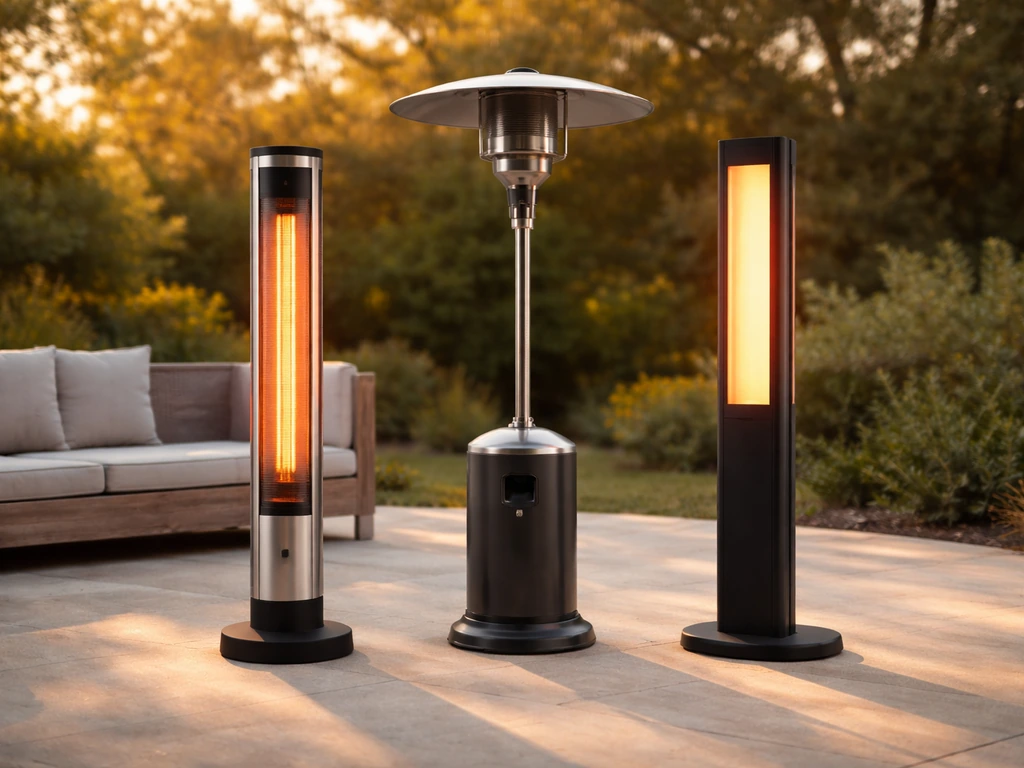
Best Buy Patio Heater Guide: Choose the Right One Today
Guide to the best buy patio heater: size, compare electric, propane, natural gas, infrared options, plus safety and setu
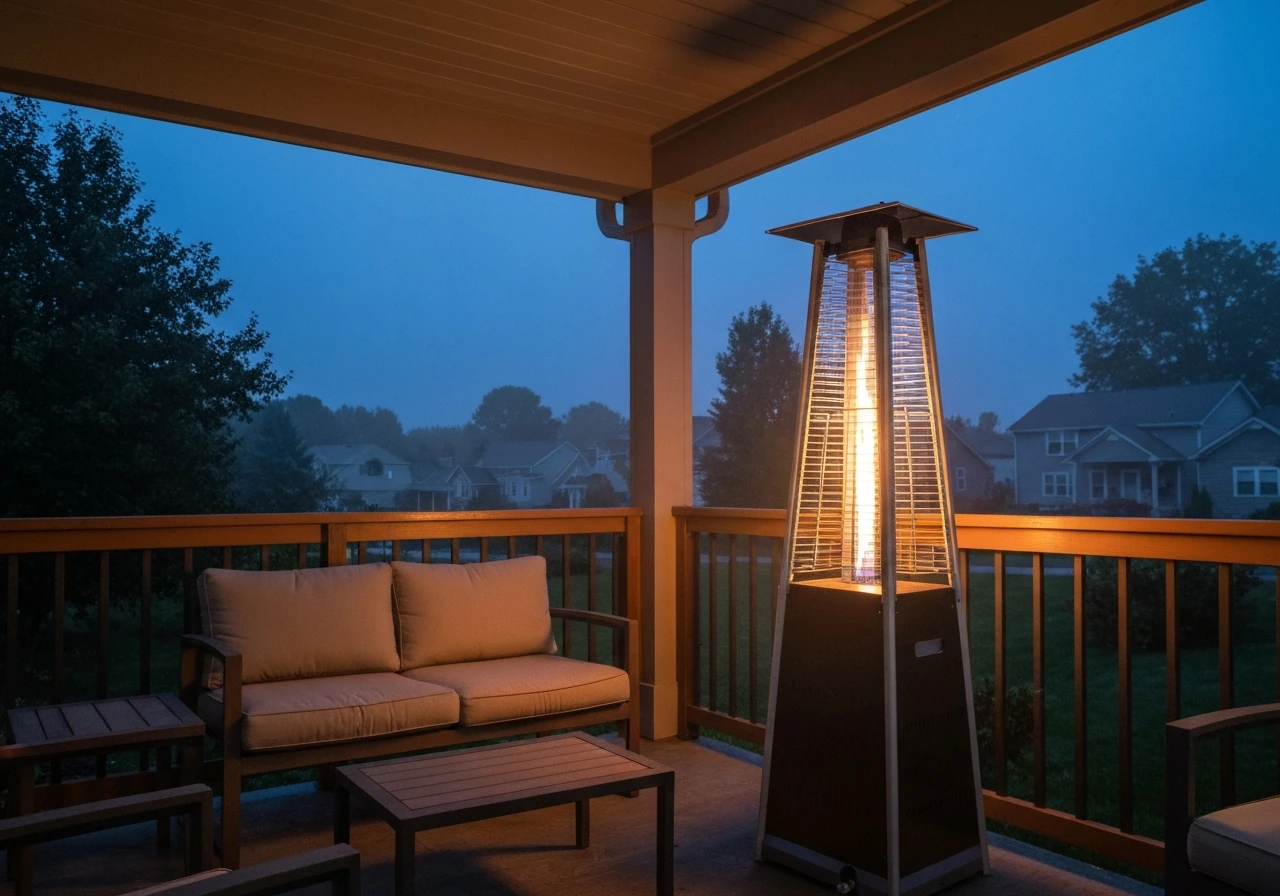
Wirecutter Best Patio Heater Guide: Picks by Type
Wirecutter-style picks for the best patio heater by type, with safety, coverage, setup, and buying steps.