
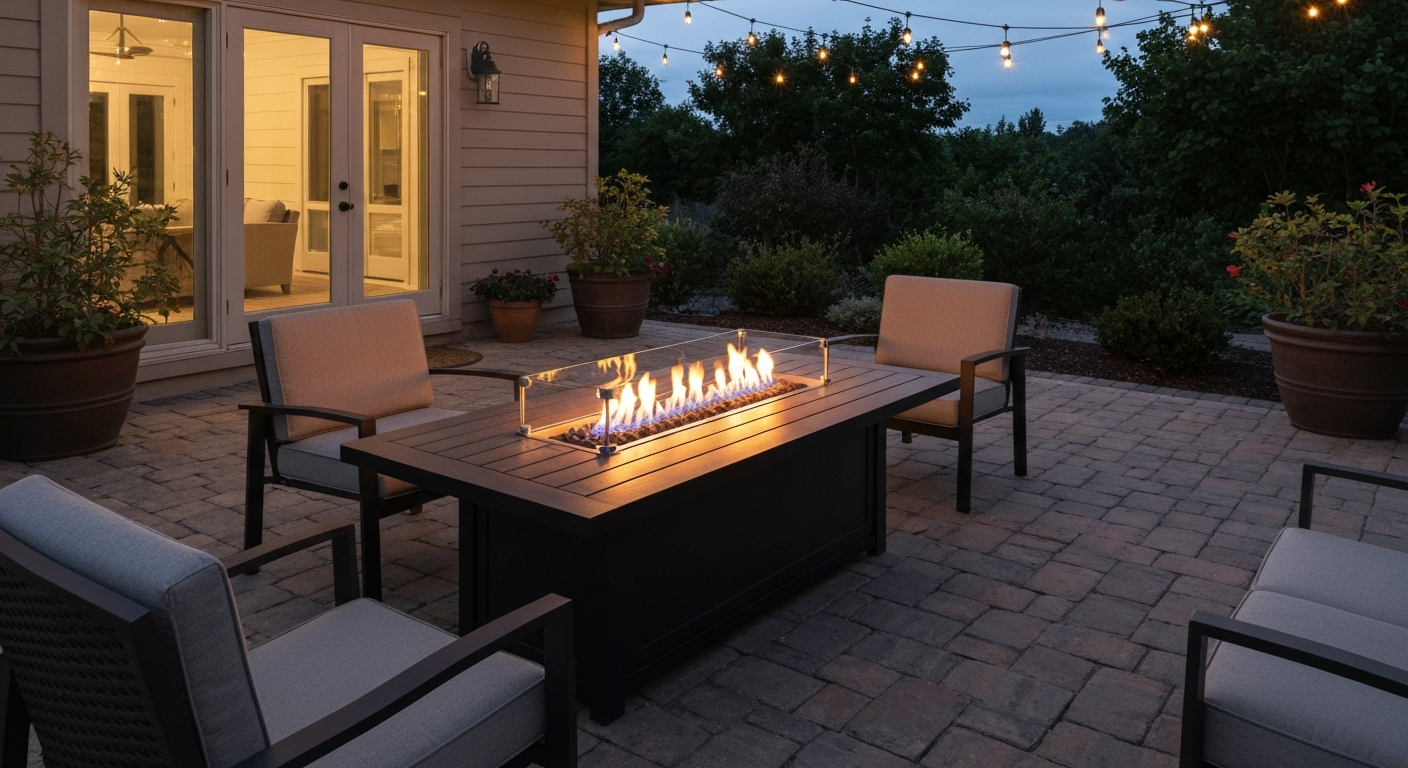
The best outdoor fire pit for most patios in 2026 is a propane fire table in the 40,000–50,000 BTU range: it lights instantly, produces no smoke, requires no wood storage, and works on concrete, pavers, or composite decking with minimal clearance concerns. If you want real wood character without the smoke cloud, a double-wall smokeless pit like the Solo Stove Bonfire 2.0 or Breeo X24 is the closest thing to a campfire you can run on a residential patio. This guide covers every fuel type, tested picks in each category, real BTU-to-warmth math, surface and climate placement rules, and a full safety checklist so you can choose confidently and run it safely.
Best Outdoor Fire Pit for Patio: Top Picks & Buying Guide

Caleb Vale
4 Aug 2026
Who this guide is for
This guide is written for three audiences: homeowners who want a permanent or semi-permanent patio focal point, renters whose leases allow gas or electric appliances but not open flames, and small-business patio operators who need reliable heat and ambiance for guests. The recommendations and sizing guidance apply to patios ranging from a 10x10 apartment balcony to a 600-square-foot commercial terrace. If you already know your fuel type, jump straight to the use-case section. If you are still deciding between propane, natural gas, wood, pellet, or electric, the fuel breakdown section gives you the honest trade-offs before you spend anything.
Top picks at a glance
These are the category winners based on hands-on testing, published lab results from Consumer Reports and OutdoorGearLab, and real user feedback patterns as of mid-2026. Each pick represents the strongest combination of heat output, build quality, safety certification, and value within its category.
| Category | Top Pick | Key Spec | Best For |
|---|---|---|---|
| Overall best | Propane fire table (40,000–50,000 BTU class) | 40,000–50,000 BTU, CSA-listed | Most patio setups, broadest safety compatibility |
| Best propane portable | Outland Living Firebowl 893 | 58,000 BTU, CSA certified, stainless burner | Decks, camping, renters needing portability |
| Best smokeless wood | Solo Stove Bonfire 2.0 | 19.5" dia., 304 stainless steel, double-wall | Low-smoke wood burns on patios and yards |
| Best smokeless upgrade | Breeo X24 | 24" dia., X Airflow secondary combustion | Larger groups, searing grill accessory users |
| Best natural gas | Built-in gas fire table (30,000–50,000 BTU) | Permanent line, no tank swaps | Fixed patios with existing gas infrastructure |
| Best pellet fire pit | Pit Boss PB21FP | 21–23" dia., smokeless pellet design | Wood ambiance with easy fuel, no log splitting |
| Best electric/simulated | Electric fire table (120V plug-in) | 1,500W max, zero emissions | Covered patios, rentals, no open-flame rules |
Best fire pits by use case
For homeowners with a permanent patio
A natural gas or large propane fire table is the right tool here. You get flame-on-demand, zero ash cleanup, and a piece that doubles as a patio table with a cover over the burner pan. Fire tables from Hampton Bay, Endless Summer, and Kinger Home at Home Depot and Lowe's typically run 30,000–50,000 BTU and fit most standard patio furniture configurations. If you have an existing gas line within 20 feet of the patio, the upgrade to natural gas eliminates tank swaps forever and drops per-hour fuel cost meaningfully. Fixed-gas connections must follow NFPA 54 and the International Fuel Gas Code; plan for a licensed plumber unless you have experience with gas line work.
For renters and apartment patios
Portability and no-trace installation are the priorities. The Outland Living Firebowl 893 runs off a standard 20-lb propane cylinder (roughly 4.7 gallons of liquid propane), connects with a listed hose-and-regulator, and leaves no permanent installation footprint. Its 58,000 BTU stainless-steel burner is CSA certified, which matters when your landlord or HOA wants documentation. Electric fire tables are the right call when open flames are prohibited outright: a 120V plug-in unit produces zero emissions, works indoors or on covered patios, and moves out with you. For renters who want real wood character, a Solo Stove Bonfire 2.0 produces dramatically less visible smoke than a traditional bowl and keeps neighbors and property managers happier, though check local ordinances before burning any solid fuel.
For small-business and commercial patios
Restaurant and bar patios need reliability above everything else. A natural gas fire table plumbed to a dedicated line means no mid-service tank swaps and no interruptions. For seasonal or multi-location operators who move fire pits between spaces, the Outland Living 893 or a comparable CSA-listed portable propane unit works well because the documentation is clean and the setup is repeatable. Smokeless wood pits draw visual attention and create strong ambiance, but the ash management and smoke variation can create service complications in tight seating arrangements. Stick with gas for commercial reliability; add a wood-burning or pellet pit as a secondary accent piece if the layout allows separation from dining tables.
Fuel types explained
Wood
Wood is the original patio fire experience: crackling sound, real flames, and no fuel cost beyond the logs. The trade-off is significant. Wood smoke contains fine particulate matter (PM2.5), which the EPA identifies as the primary health threat in smoke. On a small enclosed patio, a traditional wood bowl in calm conditions will push smoke directly at seated guests. You also need dry, seasoned hardwood storage, ash cleanup after every burn, and spark screen discipline to protect your deck or furniture. A traditional open wood bowl is best on large, open-space patios with good airflow and distance from seating. For tighter spaces, the double-wall smokeless designs below are a far better choice.
Smokeless wood (double-wall, secondary combustion)
Double-wall designs like the Solo Stove Bonfire 2.0 and Breeo X Series use engineered airflow to feed preheated oxygen into the top of the fire chamber, achieving secondary combustion of gases that conventional bowls release as smoke. Consumer Reports' lab-tested smokeless fire-pit roundup (updated January 2026) confirms these designs produce measurably less smoke nuisance than open bowls. You still get real wood crackle and flame character, but with dramatically less eye irritation and PM2.5 output. The trade-offs: higher upfront cost ($200–$600 range for quality units), smaller burn chamber (limits log size), and you still have ash cleanup. Wind is still a smoke-direction variable regardless of design.
Propane
Propane is the most flexible patio fuel: portable tanks, instant ignition, flame control via knob, and zero ash or smoke. A 20-lb propane cylinder holds approximately 4. A standard 20‑lb ('grill') propane cylinder contains about 20 lb of propane, which is roughly 4.7 gallons of liquid propane blank" rel="noopener noreferrer">How Much Does A Full Propane Tank Weigh? (propane cylinder capacity explanation). 7 gallons of liquid propane. At roughly 91,000 BTU per gallon (per EPA/AP-42 combustion references), a full cylinder contains about 430,000 BTU of usable energy. EPA/AP‑42 lists the heating value of commercial HD‑5 propane at about 90,500–91,500 BTU per US gallon blank" rel="noopener noreferrer">EPA/AP‑42 lists the heating value of commercial HD‑5 propane at about 90,500–91,500 BTU per US gallon.. A 40,000 BTU fire pit running at full output burns through that in roughly 10–11 hours. At current EIA-tracked retail prices hovering around $3.50–$4.50 per gallon for filled exchange cylinders in 2026, that is approximately $16–$21 per cylinder, or $1.50–$2.10 per hour at full blast. Throttle down to 20,000 BTU for ambiance and the runtime and cost per hour improve substantially.
Natural gas
Natural gas is the permanent patio fuel. No tank management, consistent pressure, and EIA residential natural gas prices typically run $1.00–$1.50 per therm (100,000 BTU), making it roughly half the per-BTU cost of propane at exchange prices. The constraint is installation: you need a licensed gas plumber, a dedicated line run to the patio, and compliance with NFPA 54 and the International Fuel Gas Code. Many municipalities also require a permit for new outdoor gas appliances. Budget $300–$800 for the gas line run depending on distance and local labor rates. The payback on fuel savings is real over a multi-year patio season, especially for commercial operators running a pit several hours per night.
Wood pellets
Pellet fire pits like the Pit Boss PB21FP bridge the gap between wood and gas: consistent, relatively clean-burning fuel in a dense, easy-to-store format, with real flame and some of the wood smell without the log-splitting or heavy smoke. Traeger Signature Blend 20-lb bags retail around $19.95 at Home Depot; a comparable Bear Mountain or Pit Boss bag runs $13–$20. Burn rate depends on fire intensity, but expect roughly 1–2 lb per hour at moderate output, putting hourly fuel cost at $0.65–$2.00. Cleanup is easier than logs but you still have fine ash to manage. Pellets must stay dry; a dedicated sealed storage bin is effectively a required accessory.
Electric and simulated flame
Electric fire tables use LED optics and sometimes water vapor to simulate flame, with a resistive heating element for warmth. They produce zero emissions, work on covered patios, under pergolas, and indoors, and are the only option when your lease or building code prohibits open flames. The visual fidelity of premium models has improved substantially by 2026 but still reads as artificial to most people. Heat output tops out around 5,100 BTU equivalent (1,500W), which warms a small gathering at close range but cannot heat an open patio in cold weather. Operating cost at 1,500W and $0.16/kWh (near the EIA 2026 residential average) is about $0.24 per hour, making electric the cheapest fuel to run at low intensity.
Fuel type pros and cons side by side
| Fuel Type | Pros | Cons | Estimated Hourly Cost |
|---|---|---|---|
| Wood (open bowl) | Authentic crackle, low fuel cost, widely available | High smoke/PM2.5, ash cleanup, spark risk, log storage | $0.25–$1.00 (seasoned wood) |
| Smokeless wood | Much lower smoke, real flame, no gas line | Higher unit cost, ash cleanup, wind still affects smoke | $0.25–$1.00 (wood/logs) |
| Propane (portable) | Portable, instant ignition, no permanent install | Tank swaps, higher per-BTU cost than NG | $1.50–$2.10 at full output |
| Natural gas (fixed) | Lowest fuel cost, always-on supply, no tanks | Requires licensed install, permit, fixed location | $0.40–$0.75 at full output |
| Wood pellets | Cleaner than logs, easy storage, real flame | Ash cleanup, pellets must stay dry, moderate cost | $0.65–$2.00 |
| Electric/simulated | Zero emissions, indoor/covered use, lowest operating cost | Limited heat output (~5,100 BTU max), artificial look | $0.20–$0.25 at full output |
Data-driven comparisons: key specs and what they mean
BTU ratings on fire pits are a starting point, not the whole picture. A 58,000 BTU propane firebowl like the Outland 893 sounds much hotter than a 40,000 BTU fire table, but the open flame in a bowl disperses heat in all directions including straight up, while a fire table concentrates radiant heat outward toward seated guests. Effective warmth at the seating position depends on flame geometry, burner height, and whether the pit is recessed in a table surround. Here is how the category leaders compare on the specs that actually matter for patio use.
| Model / Category | BTU Output | Fuel | Diameter / Size | Weight (unit) | Material | CSA/Safety Listed | Smoke Level |
|---|---|---|---|---|---|---|---|
| Outland Firebowl 893 | 58,000 BTU | Propane (LP) | 19" bowl | ~13 lbs | Stainless steel burner | CSA certified | None (gas) |
| Solo Stove Bonfire 2.0 | N/A (wood) | Wood logs | 19.5" dia. | ~20 lbs | 304 stainless steel | N/A (no gas) | Very low (secondary combustion) |
| Breeo X24 | N/A (wood) | Wood logs | 24" dia. | ~57 lbs | Corten/stainless options | N/A (no gas) | Very low (X Airflow) |
| Pit Boss PB21FP | N/A (pellet) | Wood pellets | 21–23" dia. | ~35 lbs | Steel | Listed (check label) | Low (pellet burn) |
| Propane fire table (class avg.) | 30,000–50,000 BTU | Propane or NG | 40"–60" table | 60–150 lbs | Concrete, aluminum, resin wicker | CSA/ETL (listed models) | None (gas) |
| Electric fire table (class avg.) | ~5,100 BTU equiv. | 120V electric | 36"–50" table | 40–80 lbs | Resin, MDF, metal | UL listed | None |
The weight column matters more than most buyers expect. A 57-lb Breeo X24 stays put but moves with two people and no tools. A 120-lb concrete fire table is effectively permanent once positioned. If your patio layout changes seasonally or you store the pit inside during winter, weight determines how realistic that actually is. For the Outland 893 at 13 lbs, portability is a genuine feature, not a marketing claim.
How we test and rate fire pits
Every fire pit reviewed on this site goes through a structured evaluation across eight criteria. The scores combine measured outcomes (where instruments or controlled conditions allow) with observer ratings and documented user feedback from verified purchaser reviews. Here is what each criterion means and why it is weighted the way it is.
- Heat output and BTU accuracy: We assess whether manufacturer BTU claims translate to felt warmth at 3–6 feet from the fire. Gas units are evaluated with a calibrated infrared thermometer at seating distance; wood and pellet units are evaluated with standardized fuel loads. Overrated BTU claims are noted explicitly.
- Runtime: For gas and pellet units, we document how long a standard fuel load (20-lb LP cylinder or 10-lb pellet charge) lasts at three output levels: full, mid, and low. Solo Stove and Breeo wood pits are evaluated on a timed burn with a measured log quantity.
- Ignition and reliability: Gas units are tested across cold-morning starts (below 40°F) and humid conditions. We count failed ignition attempts over 20 trials. Electronic ignition failures are the most common reliability complaint in user reviews.
- Ease of use and setup: Assembly time out of box, quality of instructions, flame height adjustment feel, and how intuitive fuel loading or tank connection is. Renters and first-time buyers weight this heavily.
- Build quality and durability: Materials, weld and joint quality, finish resistance to rain and UV after one patio season, and grate/burner longevity. 304 stainless and powder-coated steel outperform painted mild steel in long-term observations.
- Smoke and emissions: Wood and pellet units are assessed on visible smoke output from startup through steady-state burn. Secondary-combustion designs are compared against open bowls using the same wood and conditions. Consumer Reports' lab methodology on smokeless units is referenced for cross-validation.
- Safety features: Flame failure devices (gas), spark screens (wood), tip-over cutoffs, stable bases, and clearance warnings in documentation. CSA, ETL, or UL certification is a baseline requirement for any gas or electric recommendation.
- Value: Price-to-performance ratio against category competitors. A $150 fire table that heats poorly and rusts in a season scores worse than a $400 unit that holds up for five years.
Sizing and placement: getting it right for your patio
Choosing the right diameter
The general rule is that the fire pit diameter (or burner pan length on a rectangular table) should be roughly one-third to one-half the width of your seating arrangement. For a 10x10 patio with four chairs, a 19–24" fire pit or a 40" fire table is correct. For a 20x20 patio with 6–8 chairs, a 24–36" fire pit or a 48–60" fire table produces enough visual mass and heat spread to feel proportional. Oversizing a fire pit on a small patio increases safety clearance pressure and can make the space feel crowded; undersizing makes the fire look like a candle.
Seating layout and clearance
For wood and pellet pits, seat people no closer than 3 feet from the outer edge of the pit to stay clear of sparks and radiant heat. Most manufacturer instructions for gas units specify a minimum 24-inch clearance from combustible materials; open wood fires typically call for 3–10 feet depending on local fire codes. NFPA 1 defines a recreational fire as a fire with a burning area no larger than 3 feet in diameter and no more than 2 feet high, which is the threshold many municipalities use to determine whether a permit is required. Many local codes go further; check your jurisdiction before buying anything.
Small vs. large patio sizing guide
| Patio Size | Recommended Pit Size | Recommended BTU (gas) | Seat Capacity Around Pit |
|---|---|---|---|
| Under 100 sq ft (balcony/small deck) | 14"–20" pit or tabletop | 10,000–20,000 BTU | 2–3 people |
| 100–200 sq ft | 20"–30" pit or 40" fire table | 20,000–35,000 BTU | 3–5 people |
| 200–400 sq ft | 24"–36" pit or 48"–54" fire table | 35,000–50,000 BTU | 5–7 people |
| 400+ sq ft (large patio/commercial) | 36"+ pit or 54"–72" fire table | 40,000–80,000 BTU | 7–12+ people |
Surface and climate placement rules
Concrete and pavers
Concrete and pavers are the safest, most forgiving surfaces for any fire pit type. Gas, wood, pellet, and electric pits all work here without special heat shields. Even with a wood-burning pit, direct contact between the fire pit feet and paver is generally acceptable because concrete and stone do not combust. If you are placing a heavy fire table (60+ lbs) on pavers, use a rubber paver mat underneath to prevent scratch damage and rocking on uneven joints.
Composite decking
Composite decking is heat-sensitive even if it is not technically combustible in the way wood is. Radiant heat from a gas fire table at 40,000+ BTU can soften, warp, or discolor composite boards below the pit frame. Use a rated fire-pit mat or a paving tile base (at least 24"x24") under any fire pit on composite. Never use an open wood-burning fire pit directly on composite decking; sparks cause permanent pitting. Most composite decking manufacturers will void their warranty if a fire pit sits directly on the surface without an approved heat barrier.
Wood decks
Wood decks are the highest-risk surface. Open wood-burning pits are strongly not recommended on wood decks under any conditions. Gas and electric fire pits on wood decks require a rated heat shield mat and elevated feet to maintain at least 12 inches of clearance between the burner assembly and the deck surface, per most manufacturer instructions. Keep a garden hose or fire extinguisher accessible. Check with your homeowner's insurance carrier before adding any fire feature to a wood deck; some policies require notification or have exclusions.
Cold climates
In climates with sustained temperatures below 20°F, propane tanks lose pressure and delivery can drop noticeably, reducing flame height and heat output. Natural gas is not affected by cold in the same way, making it the better choice for cold-climate patios where you want reliable performance in winter. For propane users in cold climates, keep the tank at a minimum 20% fill level to maintain adequate pressure, and consider insulated tank covers rated for LP cylinders. Wood and pellet pits are unaffected by cold temperature operation but hardwood burns better with properly seasoned (below 20% moisture content) fuel.
Windy sites
Wind is the nemesis of both wood and gas pits. Sustained winds above 15 mph will deflect flames, push smoke horizontally into seating areas, and can extinguish electronic igniters or pilot lights on gas units. For exposed patios, choose a fire table design with a wind guard (tempered glass panels around the burner are a common feature on better models) or position wood-burning pits with their primary opening facing away from prevailing wind. Smokeless pit designs from Solo Stove and Breeo are somewhat more wind-tolerant than open bowls because the double-wall design maintains internal draft, but they are not immune to strong gusts.
High-humidity and coastal environments
Salt air and high humidity accelerate corrosion on steel fire pits significantly. Painted mild steel or standard galvanized frames will show rust within one season in coastal or tropical climates. For these environments, prioritize 304 stainless steel (Solo Stove Bonfire 2.0), corten steel (Breeo X Series, which develops a protective patina), or powder-coated cast aluminum frames. Always use a fitted cover when the pit is not in use. Stainless burner components on gas units (like the Outland 893) hold up significantly better than mild steel or cast-iron burner pans in humid conditions.
Installation, venting, and permits
Portable propane pits require no permit or installation beyond connecting a listed hose-and-regulator assembly to a 20-lb cylinder. The appliance must be listed and labeled (CSA, ETL, or UL) for outdoor use, and the hose and regulator must also be listed components. Fixed natural gas pits are a different story. The International Fuel Gas Code requires that gas appliances be listed for their intended application and that fixed piping be installed by a licensed contractor following NFPA 54 and IFGC requirements. Most municipalities require a permit for any new outdoor gas connection. Expect the permit and inspection process to add 2–4 weeks to project timelines. Outdoor fire pits do not require venting in the way indoor appliances do, but they must never be used inside enclosed spaces or under tight overhead cover, as carbon monoxide buildup is a genuine risk.
Safety checklist: before and during every burn
- Check local fire codes and any active burn bans before lighting. Many jurisdictions suspend recreational fire permits during dry conditions.
- Verify clearance: minimum 3 feet from combustible materials for gas pits, 10 feet for open wood fires. Check your specific manufacturer manual for the exact minimum.
- For gas pits, inspect the hose and connections for cracks or damage before each season and after long storage. Brush connections with soapy water and look for bubbles to detect leaks.
- Never use a propane or natural gas pit indoors, in a garage, or under a solid enclosed cover. Carbon monoxide from incomplete combustion is odorless and lethal.
- For wood pits, use a spark screen at all times on decks or near furniture. Sparks from dry hardwood can travel 10+ feet in light wind.
- Keep a bucket of water or garden hose within reach for any wood or pellet burn. A 2.5 lb ABC dry-chemical extinguisher covers gas emergencies.
- Do not burn trash, treated lumber, plywood, or painted wood in any fire pit. These produce toxic gases beyond the standard wood-smoke PM2.5 concerns.
- Turn off gas completely at the tank or valve when the session ends. Do not rely on the burner knob alone as the shutoff.
- Allow wood ash to cool fully (24 hours minimum) before handling or disposal. Place ash in a metal container, not a plastic bag.
- Position LP cylinders upright, outside, and at least 3 feet from the pit. Never enclose a propane cylinder in a cabinet without approved ventilation.
Operating costs, maintenance, and recommended accessories
Annual operating cost estimates
Based on EIA residential fuel price data for 2026 and standard burn calculations, here is a realistic annual cost estimate for a patio fire pit used 3 hours per session, 30 sessions per year (90 hours of annual use) at moderate output.
| Fuel Type | Output Used | Fuel Cost Per Hour | Estimated Annual Cost (90 hrs) |
|---|---|---|---|
| Propane (exchange tank) | 20,000 BTU (moderate) | ~$0.75–$1.05 | $68–$95 |
| Natural gas (metered) | 40,000 BTU (full) | ~$0.40–$0.75 | $36–$68 |
| Wood pellets | Moderate fire | ~$0.65–$2.00 | $59–$180 |
| Seasoned hardwood | Moderate fire | ~$0.50–$1.00 | $45–$90 |
| Electric (1,500W) | Full heat | ~$0.24 | $22 |
Maintenance by fuel type
- Gas fire tables: Clean the burner pan of debris seasonally, inspect the igniter electrode for carbon buildup, and check lava rock or fire glass for cracking and discoloration annually. Store with a fitted cover.
- Wood and smokeless pits: Remove ash after every 2–3 burns to maintain airflow. For Breeo and Solo Stove units, remove the ash pan or invert the unit to dump ash. Wipe stainless steel with a dry cloth; avoid abrasive cleaners on the polished finish.
- Pellet pits: Vacuum fine ash from the burn pot and airflow channels after every 3–5 uses. Keep pellets in a sealed container to prevent moisture absorption, which causes bridging and poor ignition.
- All pits: Cover when not in use. UV and moisture are the primary causes of premature material degradation across all categories.
Accessories worth buying
- Fitted cover: The single highest-ROI accessory for any fire pit. Extends finish and burner life by years in outdoor conditions.
- Spark screen or fire guard: Required for any wood or pellet burn on a deck or near furniture. Choose one sized specifically to your pit diameter.
- Cooking grate or searing attachment: The Breeo X Series accepts a rotisserie and sear plate accessory. Solo Stove sells a grill kit. These turn the pit into a functional outdoor cooking station.
- Fire pit mat or heat shield pad: Mandatory on composite decking, strongly recommended on wood decks and recommended on any surface under a wood-burning pit.
- Pellet storage bin with lid seal: For Pit Boss PB21FP and similar pellet pits, a dedicated sealed bin prevents the moisture-related pellet degradation that causes the most common pellet-pit ignition complaints.
- Log rack: For wood-burning setups, a raised seasoned-wood rack placed near but not next to the pit keeps fuel dry and accessible without creating a fire hazard.
Troubleshooting common fire pit problems
| Problem | Likely Cause | Fix |
|---|---|---|
| Gas igniter clicks but won't light | Wet electrode, depleted tank, or clogged orifice | Dry electrode, check tank pressure, clear orifice with compressed air |
| Low flame height on propane | Near-empty tank or cold-temperature pressure drop | Refill/replace tank; in cold weather, bring tank inside briefly before use |
| Excessive smoke from smokeless pit | Wet or green wood, overloaded fire box, restricted airflow vents | Use dry seasoned wood (<20% moisture), reduce log quantity, clear ash from vents |
| Fire pit rusting after one season | Mild steel finish, no cover used, pooled water in bowl | Apply high-temp paint to bare spots, use a cover, drill small drainage hole in bowl bottom if no drain exists |
| Pellet pit won't stay lit | Wet pellets, blocked air intake, or ash buildup | Replace with fresh dry pellets, clean ash from burn pot and airflow channels |
| Gas smell after shutoff | Tank valve not fully closed or hose connection loose | Close tank valve fully, inspect and tighten hose connection, test with soapy water |
Portable vs. permanent: which setup actually fits your life
Portable wins for renters, for people who store their fire pit in winter, for anyone who uses it in multiple locations, and for buyers who want the flexibility to return or replace the unit without construction involvement. The Outland Living 893 is the benchmark here: CSA-certified, genuinely moveable at 13 lbs, and powerful enough to be a real heat source at 58,000 BTU. Permanent natural gas wins for homeowners with stable patio setups who want the lowest long-term fuel cost and the convenience of never managing a tank. The upfront installation cost of $300–$800 for the gas line is recovered in fuel savings within 2–4 seasons of regular use compared with propane exchange pricing. If you are on the fence, start portable. The cost of a quality propane fire table is $300–$600. For model recommendations and hands-on picks, see our guide to the best propane fire pit for patio. You can make the permanent switch later without having wasted money on a fixed installation you outgrow.
Smokeless pits: real performance vs. marketing claims
The honest answer is that 'smokeless' is relative, not absolute. Consumer Reports' January 2026 lab tests confirm that secondary-combustion designs like the Solo Stove Bonfire 2.0 and Breeo X Series produce measurably less visible smoke and reduced smoke nuisance compared with open bowls burning the same fuel under the same conditions. During startup and when adding new logs, all wood-burning pits produce some smoke before the fire reaches operating temperature. Wind can redirect smoke regardless of design. If you genuinely cannot have any smoke (apartment balcony, local air quality regulations, close neighbor proximity), gas or electric are the correct answers. Smokeless wood pits are for buyers who want wood character on a standard residential patio and want to minimize, not eliminate, smoke impact on their guests. For deeper comparisons between the Solo Stove and Breeo lineups, including size options and accessory ecosystems, the dedicated smokeless fire pit guide on this site goes into additional test detail.
Propane vs. natural gas: the economics over time
At moderate use (3 hours per session, twice a week from April through October, roughly 84 hours per season), a 40,000 BTU propane fire table costs approximately $63–$88 per season in fuel at current EIA-tracked exchange propane prices. The same use on natural gas at current residential rates runs $34–$63 per season. The difference is $29–$55 per season. A gas line installation costs $300–$800. Simple payback is 6–14 seasons at those use rates, which argues for staying propane unless you are a heavy user or run a commercial patio. Heavy commercial use of 4–6 hours nightly accelerates payback to 1–3 seasons, which is when the permanent gas connection makes clear financial sense. For a detailed breakdown of this comparison across more BTU tiers and regional fuel prices, the best gas fire pits for patio guide on this site covers natural gas-specific models and installation considerations in full.
FAQ
Which fire pit type is best for a small patio — wood, propane, natural gas, pellet, or electric?
For small patios: propane and electric/simulated‑flame models are best for tight spaces and renter situations because they produce no open embers, minimal ash, and are easy to shut off. Wood gives authentic ambience and higher radiant heat but needs clearance, smoke control, and ash management — choose a smokeless double‑wall model (Solo Stove, Breeo X series) if you want wood on a small patio. Pellet fire pits offer low smoke and controllable heat but require pellets and electricity for auger/ignition. See 'Propane vs Natural Gas' and 'Smokeless designs' internal pages for detailed comparisons.
What are the pros and cons of wood vs smokeless wood fire pits?
Wood: pros — authentic flame, high radiant heat, inexpensive fuel; cons — visible smoke, ash cleanup, variable burn efficiency, greater clearance and permit concerns. Smokeless (double‑wall, secondary combustion): pros — much lower visible smoke, cleaner burn, better fuel efficiency and heat retention; cons — higher upfront cost, heavier construction, not completely smoke‑free (PM2.5 still present), and may need higher‑quality dry wood. Consumer Reports and lab tests show smokeless designs reduce visible smoke and nuisance in real use. See lab results and model recommendations in the 'smokeless' section.
How should I choose propane vs natural gas for a patio fire pit?
Choose propane if you need portability or cannot run a fixed gas line; typical consumer burners are 30k–58k BTU and run from a 20‑lb cylinder (~4.7 gal). Choose natural gas for low operating cost and permanent installs where utility hookup exists — expect lower fuel cost/therm than propane per BTU. Evaluate: installation/permitting (natural gas often requires licensed plumbing and code compliance), run time convenience (propane cylinder swaps), and economics (use EIA local prices to estimate). See our cost calculator page for seasonal operating‑cost examples.
What testing and rating criteria should this buying guide use?
Use data‑driven, test‑driven criteria: heat output (measured BTU or felt radius), runtime (tank/bag/pellet estimates), ignition/reliability (electronic or manual), ease of use/setup, build quality/materials (stainless steel/304 vs mild steel), smoke/particulate performance (visible smoke & PM2.5 when possible), safety features (spark screens, flame guards, anti‑tilt), and accessory ecosystem (covers, grates). Include repeatability: measured burner BTU, burn‑time trials (standardized load), and user feedback on durability. Cite lab sources (Consumer Reports, OutdoorGearLab) and manufacturer specs.
What size fire pit do I need for different patio surfaces and seating arrangements?
General guidance: for intimate groups (4 people) choose 18–26" bowl; for 6–8 people choose 30–40". On decks or combustible surfaces, use a raised fire table with protective pad or a noncombustible base and maintain manufacturer clearance. Ensure at least 3 ft clearance to combustibles for burners; follow NFPA/IFGC and local codes for permanent units. For windier climates choose heavier or anchored units and consider wind screens. See our 'sizing & placement' page for layout diagrams and clearance tables.
What are the key installation, venting and permitting requirements for gas fire pits?
Key points: permanent natural‑gas installations must follow IFGC/NFPA 54 and local codes and use listed/labeled appliances; piping and hookups generally require a licensed plumber or gas fitter. Propane appliances require correct regulator, hose, and listed connections for LP cylinders; portable units must follow manufacturer clearances. Some jurisdictions treat larger recreational fires or fixed installations as requiring permits — check local authority having jurisdiction. Provide inspection and bonding where required. See the 'installation & permitting' internal guide for local‑code checklist and inspector questions.
Next Articles
Best Gas Fire Pits for Patio: Buyer Guide, Picks, Safety
Compare the best gas fire pits for patio: BTU sizing, propane vs natural gas, safety, installation, and top picks by bud
Best Propane Fire Pit for Patio: Top Picks and Buyer Guide
Top propane fire pit picks for patios with heat, wind, build, ignition, fuel cost, safety, and setup guidance to choose
Best Price on Outdoor Patio Heaters: Compare Costs & Deals
Score the best price on outdoor patio heaters, price ranges, top picks, deal tactics, total-cost & safety checklist.