
The best gas fire pit for most patios in 2026 is a 50,000 BTU propane table model if you don't already have a natural gas line outside, or a dedicated natural gas drop-in burner system if you do. Propane gives you flexibility and zero installation cost upfront; natural gas cuts your operating cost by roughly half over time and eliminates tank swaps. Either way, look for ANSI Z21.97/CSA 2.41 certification, a minimum 40,000 BTU output for real warmth (not just ambiance), stainless steel burner components, and a thermocouple flame-sense shutoff for safety. Get those four things right and the rest is mostly about aesthetics and budget.
Best Gas Fire Pits for Patio: Buyer Guide, Picks, Safety

Caleb Vale
7 Jun 2026
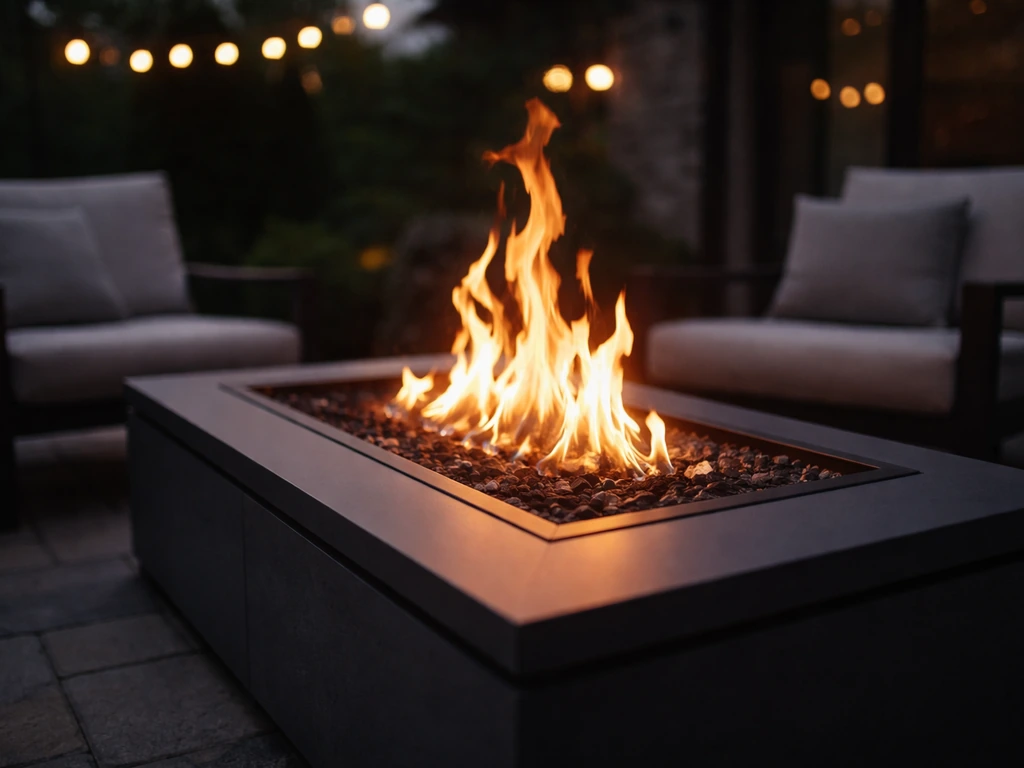
Propane vs natural gas: which one actually makes sense for your patio
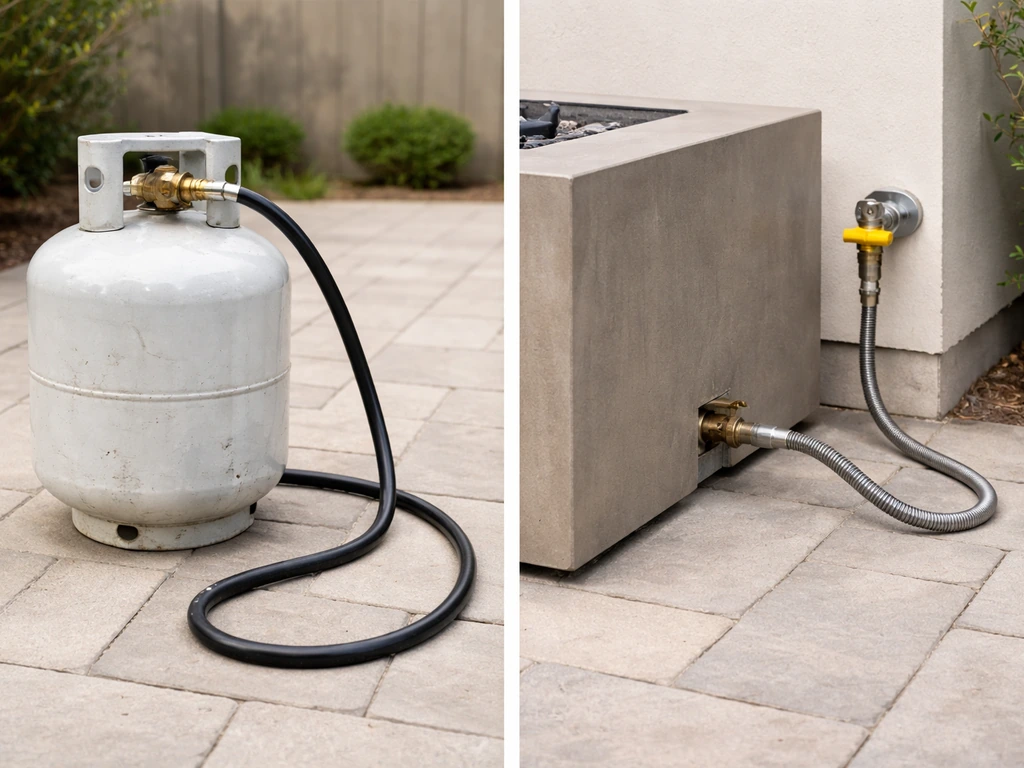
This is the single most important decision you'll make, and it's mostly determined by what's already at your house. If you have a gas stub-out on or near your patio, natural gas is almost always the better long-term choice. If you don't, running a new gas line typically costs $300–$800 or more depending on distance and local labor rates, plus you'll need a licensed plumber or gas fitter to do the work legally in most jurisdictions. For a lot of people, that math only works if you're building a permanent outdoor kitchen or patio setup that you plan to use for 10+ years.
Propane is the practical default for everyone else. A standard 20 lb tank holds roughly 4.7 gallons of propane (at 91,500 BTU per gallon, that's about 430,000 BTU total), and you can get it filled or exchanged at most hardware stores. The downside is cost per BTU and the inconvenience of running out mid-evening. Propane fire pits are also fully portable, which matters if you rent, move seasonally, or want to relocate the unit to a different spot on the patio.
| Factor | Propane | Natural Gas |
|---|---|---|
| Upfront cost | Low (just buy the unit) | Higher if gas line needed ($300–$800+) |
| Fuel cost (2026 avg.) | ~$2.67/gallon (EIA, March 2026) | Lower per equivalent BTU |
| Portability | Yes, fully portable | Fixed installation |
| Installation complexity | DIY-friendly (tank + regulator) | Requires licensed gas fitter |
| Convenience | Refill/exchange needed | Always-on supply |
| Long-term savings | Moderate | Significant over several years |
| Best for | Renters, flexible setups, first-time buyers | Permanent patios with existing gas line |
One practical note: propane installations require only a tank and regulator connection, which you can do yourself following the manufacturer's instructions. Natural gas requires connection to a gas line and, in most states, a licensed plumber or gas fitter to run and pressure-test that line. Both types must be installed per local codes and, where local codes are silent, per the National Fuel Gas Code (ANSI Z223.1 / NFPA 54).
BTU output and how much patio it actually heats
BTU ratings on fire pits are not always honest about what they'll actually heat. A 40,000–50,000 BTU unit is a solid target for a patio seating area up to roughly 20 feet in diameter under calm conditions. As a working rule, budget about 20 BTU per square foot of seating area, then add 10–20% if your patio is fully open and exposed to wind. A covered or partially enclosed patio retains heat better and you can get away with the lower end of that range.
The LayinSun Alturas, frequently cited as a best-overall propane table by testing sources, hits around 50,000 BTU and comfortably warms a 20-foot diameter zone in calm conditions. That's a realistic benchmark. Units below 30,000 BTU are mostly ambiance products: they look great but won't actually warm you on a 50-degree night. Units in the 60,000–125,000 BTU range (common in commercial linear burner systems) are genuine heat sources but are overkill for a residential patio table.
| BTU Range | Practical Use Case | Coverage Area (calm conditions) |
|---|---|---|
| 20,000–30,000 BTU | Ambiance only, mild climates | Up to ~10 ft diameter |
| 35,000–50,000 BTU | Residential patio warmth | ~15–20 ft diameter |
| 55,000–80,000 BTU | Large patios, cool climates | ~20–25 ft diameter |
| 80,000–125,000 BTU | Commercial/large custom installs | 25+ ft or linear coverage |
Wind is the number one enemy of gas fire pit performance. Even a 50,000 BTU unit can feel underwhelming on a breezy evening because convective heat just blows away. A glass wind guard panel around the burner area makes a noticeable difference in perceived warmth without increasing BTU at all. If your patio is consistently windy, prioritize a model that includes or is compatible with a wind guard before chasing a higher BTU number.
What fuel actually costs you in 2026
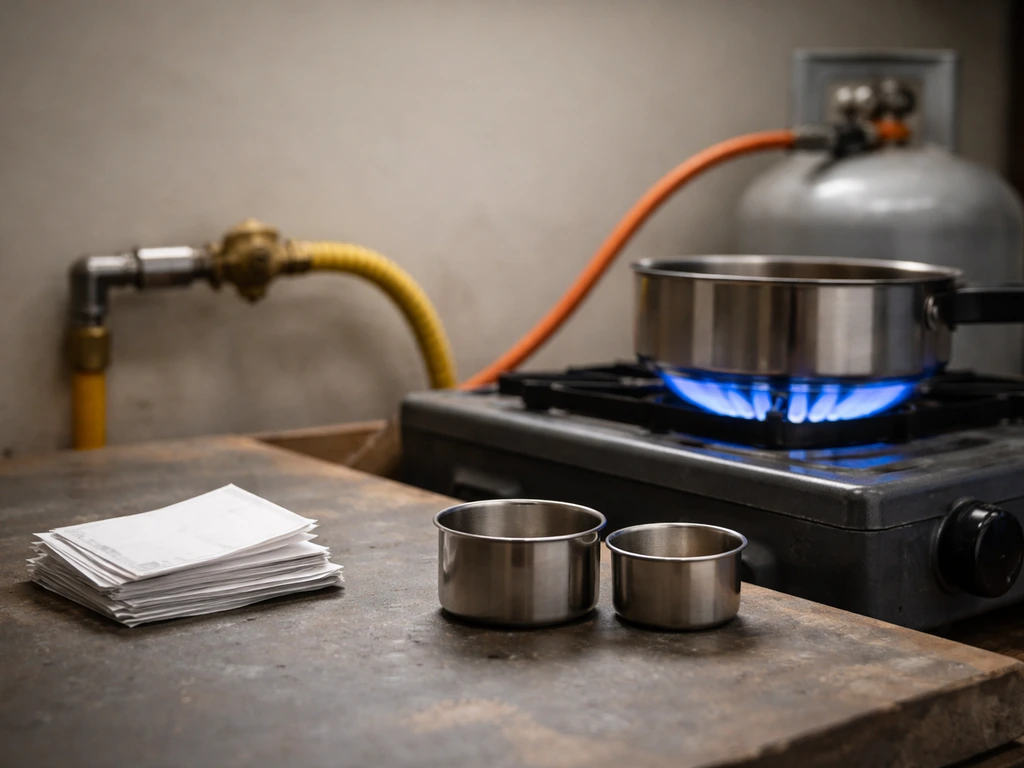
Propane averaged $2.674 per gallon nationally for the week of March 30, 2026 (EIA Weekly Heating Fuels Survey), though regional prices vary significantly. At 91,500 BTU per gallon, a 50,000 BTU fire pit running full-bore burns through roughly 0.55 gallons per hour, which costs about $1.47/hour at that average price. A 20 lb tank (about 4.7 gallons) gives you roughly 8.5 hours of full-output burn, or longer at lower settings. Budget around $12–$15 per tank fill depending on your region. For region-binned propane prices in $/gallon updated in May 2026, NYSERDA’s Monthly Average Propane Prices can help you estimate a more accurate tank-fill cost Budget around $12–$15 per tank fill depending on your region..
Natural gas costs considerably less per equivalent BTU. The exact savings depend on your local utility rate, but side-by-side comparisons for identical BTU output over 100 operating hours show natural gas running materially cheaper, with one licensed installer's analysis showing the annualized gap being substantial enough to recover gas-line installation costs within a few seasons of regular use. If you entertain often (say, 3–4 evenings per week through fall and spring), natural gas almost certainly wins financially within two years.
Climate matters too. In cold or damp climates, propane's energy density drops slightly in freezing temperatures, and tank pressure can weaken when temps fall below 20°F, affecting flame performance. Natural gas lines don't have this problem. If you're in a northern climate and plan to use your fire pit through late fall, a natural gas unit (or a propane unit with a bulk tank rather than a 20 lb cylinder) will give you more consistent output.
Design and size: tabletop vs full-size, logs vs modern media
Tabletop vs full-size fire pit tables
Tabletop gas fire pits (usually under 20,000 BTU) are decorative accent pieces. They're easy to move and store but don't provide meaningful heat. Full-size fire pit tables in the 36–60 inch range are the sweet spot for residential patios: they anchor a seating area, serve as functional table space around the burner, and deliver actual warmth. For most patios with 4–8 chairs around the fire, a 42–48 inch square or round fire table is the standard choice. Larger rectangular/linear formats (like the Kenwood Linear Dining Height models) work well for long dining tables but direct flame forward rather than outward, so seating placement matters more.
Log sets vs fire glass vs lava rock vs disc media
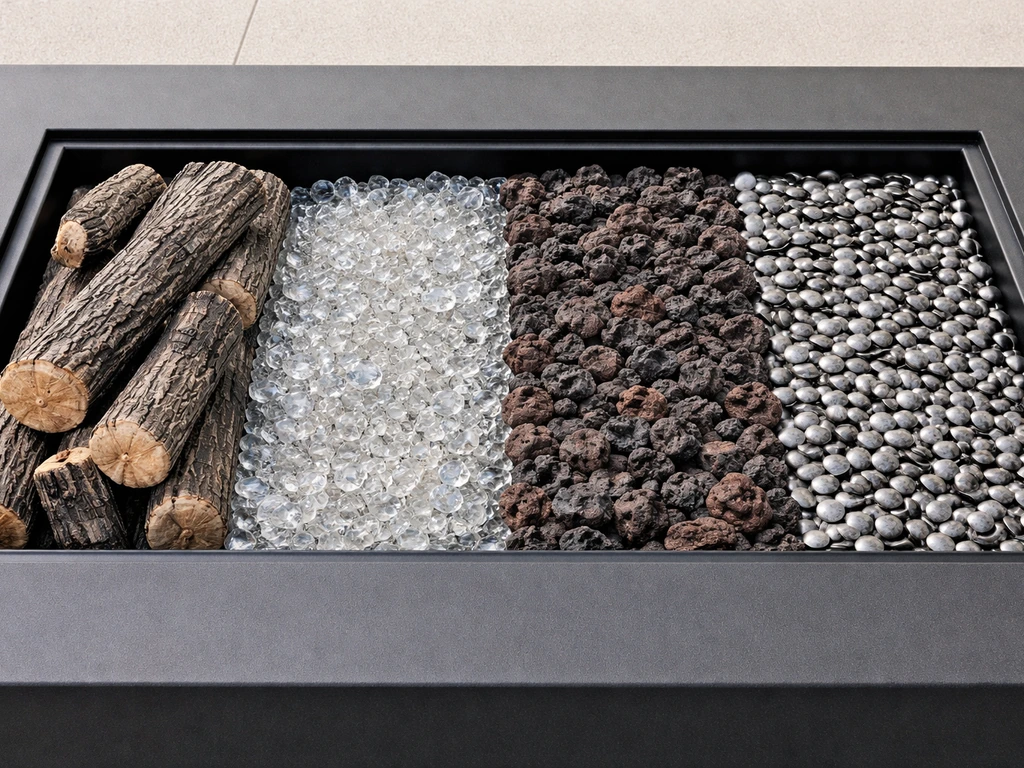
The burner media is mostly aesthetic, but it affects heat radiation and maintenance. Ceramic log sets give a traditional campfire look and radiate some stored heat from the ceramic mass. Fire glass (tempered glass chips) and lava rock are the most popular choices for modern fire tables because they distribute flame visually across the pan and are easy to refresh or swap out. Flat disc media (used in some Firegear burner systems) gives a clean, contemporary appearance. None of these choices meaningfully changes the BTU output, which is set by the burner, not the media. Pick whatever look matches your patio furniture and replace it every few seasons as it fades or collects debris.
Height, shape, and seating comfort
Seating height around a fire table matters more than most buyers realize. The ideal fire-to-face distance for warmth and comfort puts the flame roughly at or just below knee height when seated. Standard fire tables are around 24–26 inches tall, which works with most outdoor lounge chairs. Dining-height fire tables (30–36 inches) are comfortable for dining chairs but sit lower relative to your body when you're in a tall outdoor chair. Keep at least 18–24 inches of clearance from the edge of the burner pan to the front of any seating for both comfort and safety.
Safety basics every gas fire pit owner needs to know
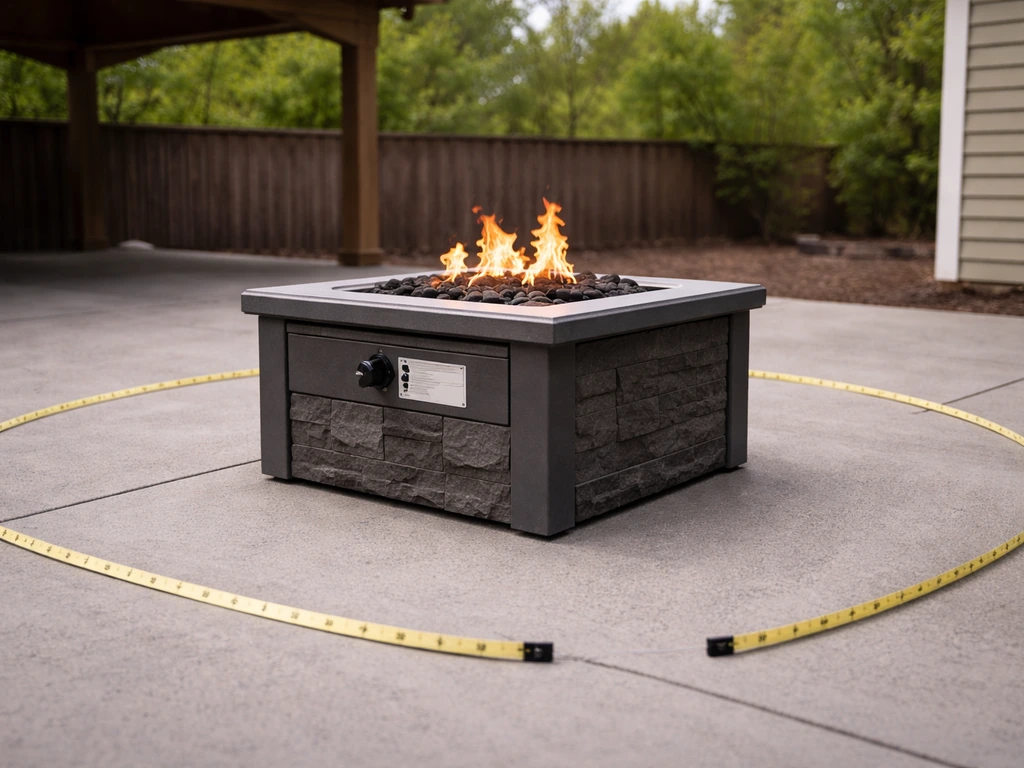
Always buy a unit that's certified to ANSI Z21.97/CSA 2.41, the outdoor decorative gas appliances standard. This certification (look for the listing mark from a recognized testing lab like Intertek/ETL or UL) means the unit has been evaluated for safe construction and performance under that standard. A fire pit without this listing may be denied coverage by your homeowner's insurance or flagged during a home inspection. It's not optional.
- Minimum 10-foot clearance from any overhead structure (pergola, overhang, umbrella) unless the manufacturer's manual specifies otherwise
- Never operate a gas fire pit indoors or in an enclosed space, including screened-in porches without adequate ventilation
- Check clearance-to-combustibles requirements in your specific model's manual before installation, since these vary by unit
- A thermocouple or flame-sense (TFS) safety shutoff is a must-have feature: it cuts gas if the flame goes out
- Always shut off the gas supply valve when the unit is not in use and when you're done for the season
- Have a licensed professional pressure-test any natural gas line connection before first use
- Keep children and pets at least 36 inches from the burner area during operation
Installation must follow local codes. Where local codes don't specify, the National Fuel Gas Code (ANSI Z223.1 / NFPA 54) is the governing reference for gas line sizing, pipe installation, and pressure requirements. Some states and municipalities also have additional restrictions on ventless or vent-free appliances indoors, so check local rules before buying any unit marketed as 'ventless.' For outdoor fire pits, this is rarely an issue since they're designed for open-air use, but it's worth confirming with your local building department if you're installing in a covered outdoor space.
Installation and setup: what you can DIY and what you shouldn't
Propane setup (DIY-friendly)
- Unbox the fire table and assemble the frame and tabletop per the manual (usually 30–60 minutes)
- Connect the propane regulator hose to the burner's gas valve inlet (hand-tighten, then snug with a wrench)
- Attach a 20 lb propane tank to the regulator; most tables have a storage compartment underneath
- Apply a soap-and-water solution to all connections, open the valve slightly, and check for bubbles indicating leaks
- Place your media (lava rock, fire glass, etc.) per the manual's depth and coverage instructions
- Light the burner per the ignition instructions (most modern units have electronic push-button ignition)
- Adjust flame height, verify the flame-sense shutoff works by manually extinguishing the flame and confirming the gas shuts off
Natural gas setup (hire a pro)
If you're connecting to a natural gas line, stop at step 2 above and call a licensed plumber or gas fitter for everything from the gas stub-out to the burner connection. They'll size the supply pipe correctly for your BTU load (a 50,000 BTU burner has different pipe sizing requirements than a 125,000 BTU commercial unit), run the line per ANSI Z223.1, and pressure-test the system before handing it back to you. This typically takes half a day and costs $200–$600 depending on distance and your market. Even if you're technically handy, this is not the place to cut corners: an improperly installed gas line is a carbon monoxide and explosion risk, and unpermitted work can void your homeowner's insurance.
For drop-in burner systems (where you're building the fire pit into a custom surround or table), manifold inlet pressure setup and commissioning is part of the installation. Units like Firegear's square-pan and spur burner systems include specific pressure-testing and gas-line installation sections in their manuals. Follow those exactly, or have your installer walk through them during commissioning.
Top picks by patio type and budget
Here's how I'd match specific categories of gas fire pits to real patio situations. I've grouped these by use case rather than brand loyalty because the right unit depends heavily on your space, fuel type, and how often you'll use it.
| Patio Type / Budget | Recommended Category | BTU Target | Fuel | Key Feature to Prioritize |
|---|---|---|---|---|
| Small patio/balcony, under $400 | Compact propane table (30–36 in.) | 30,000–40,000 BTU | Propane | Wind guard, ignition reliability |
| Mid-size patio, $400–$900 | 42–48 in. propane fire table | 50,000 BTU | Propane | Thermocouple shutoff, stainless burner, media included |
| Large patio, $900–$2,000 | 48–60 in. propane or NG fire table | 50,000–65,000 BTU | Propane or NG | All-weather frame, glass wind guard, CSA/ANSI listed |
| Permanent/luxury patio, $2,000+ | Linear or custom drop-in NG burner system | 65,000–125,000 BTU | Natural gas | Stainless steel burner, flame sense TFS, pro install |
| Covered patio with NG line | Built-in NG fire table or drop-in | 50,000–80,000 BTU | Natural gas | Verified clearance-to-combustibles per manual |
| Rental or portable use | Tabletop or compact propane pit | 20,000–40,000 BTU | Propane | Portability, easy storage, lightweight |
For the mid-size propane category, the LayinSun Alturas sits at roughly 50,000 BTU and covers a 20-foot seating area well in testing, making it the benchmark unit at that price point. If you're looking specifically for a patio unit that stays cleaner with less smoke, compare models in the best smokeless fire pit for patio guide before you decide on fuel and BTU.
The Forbes Vetted Kenwood Linear Dining Height fire table is the reference pick for the premium linear format if you want the modern rectangular flame look at a dining table. For buyers considering propane specifically, the sibling guide on the best propane fire pit for patio goes deeper on tank sizing, regulator specs, and model comparisons across that fuel type. For buyers considering propane specifically, the sibling guide on the best propane fire pit for patio goes deeper on tank sizing, regulator specs, and model comparisons across that fuel type.
To compare the right fuel type, size, and safety features, see the full guide to the best outdoor fire pit for patio. For buyers considering propane specifically, the sibling guide on the best propane fire pit for patio goes deeper on tank sizing, regulator specs, and model comparisons across that fuel type.
If you're weighing other fuel types or want a smoke-free alternative, the guides on the best smokeless fire pit for patio and best outdoor fire pit for patio cover wood-burning and alternative options that might fit your patio better depending on local fire regulations.
Durability, maintenance, and warranty: what to expect long-term
What actually wears out
Gas fire pits are mechanically simple, which is why they last longer than most buyers expect if you maintain them. For gas units, maintenance is typically minimal and mainly involves periodic burner cleaning, checking connections, and refreshing media such as fire glass or lava rock maintenance for gas units is minimal.
The components that wear out first are the igniter (electronic igniters eventually fail, usually after 3–5 seasons of regular use), the thermocouple/flame sensor (replace every 2–4 years depending on use), and the burner pan if it's mild steel rather than stainless. Burner media (lava rock, fire glass) fades and gets dirty over time and should be refreshed every 2–3 seasons. The regulator and hose on propane units should be inspected annually and replaced every 5 years as a precaution.
Annual maintenance checklist
- Inspect all gas connections with a soap-and-water solution at the start of each season
- Remove and clean the burner pan of debris, insects, and moisture that accumulate over winter storage
- Check media depth and placement per the manual, as improperly placed media can block burner ports and create uneven flame
- Test the igniter and thermocouple shutoff before your first use of the season
- Inspect the regulator hose for cracks, brittleness, or damage (replace if in doubt)
- Cover the unit or store the burner insert inside during extended wet or winter periods if your model allows
- For natural gas units, have a professional check the line connection and pressure every 3–5 years
Warranty and parts availability
Most mid-range and premium gas fire table manufacturers offer 1-year limited warranties on the full unit and sometimes longer on the burner or frame components. Firegear, for example, provides model-specific installation manuals and replacement parts support, which is a good sign for long-term serviceability. When comparing brands, check whether replacement igniters, thermocouples, and burner components are actually available and priced reasonably before buying. A $700 fire table from a brand that has disappeared from the market in three years is a worse value than a $900 unit from a manufacturer with active parts support. Stainless steel burner pans and frames are worth the price premium for durability in humid or coastal climates.
Bottom line: buy ANSI-listed, buy stainless burner components, confirm parts availability, and don't skip the thermocouple shutoff. Do those four things and you'll have a gas fire pit that heats your patio reliably for 8–12 years with minimal hassle.
FAQ
Why does my gas fire pit keep shutting off even though the controls are set correctly?
Because most gas fire pits use a flame-sensing shutoff (thermocouple), they can extinguish quickly if airflow changes. If you notice frequent shutoffs, check that the wind guard area is unobstructed, verify the burner ports are clean, and confirm the thermocouple tip is positioned correctly. If it keeps happening, replace the thermocouple rather than increasing the burner setting.
Can I use a gas fire pit under a covered patio or pergola?
Yes, in many cases, but you need to treat the unit like a fixed appliance. For patio covers, leave manufacturer-specified clearance around the burner and ensure the area remains open enough for safe combustion (no trapping smoke or heat). If the fire pit is marketed as “outdoor only,” you should not install it in a partially enclosed space without confirming local code and ventilation requirements.
How do I tell if my fire pit is burning at the right level for real heat?
Don’t rely on the flame size as a heat indicator. Gas fire pits should be adjusted to the correct setting, then you can verify airflow and performance by checking for even burner ignition across the pan. If flames are uneven, orange, or lifting away from the burner, clean the burner media and ports, inspect the regulator/hose (propane), or have the gas fitter verify manifold pressure (natural gas).
Does it have to be perfectly level, and can I move the fire table around my patio?
Mostly, you need it to be level and properly supported, and you should also protect the gas connection area from strain. For propane, avoid routing the hose so it can tug when you move the table or chairs, and use the manufacturer’s recommended grommet or connection method. For natural gas, ensure the stub-out location doesn’t create a side-load on the flex connector.
What clearance distances should I follow from the burner to cushions, walls, and umbrellas?
If your fire pit is ANSI Z21.97/CSA 2.41 listed, it still must be installed with the correct clearances to combustibles (railings, furniture cushions, wall cladding). As a practical check, keep seating at least 18 to 24 inches from the burner pan edge and keep any overhang materials farther than that based on the manual, since patio fabrics and umbrellas can be heat-sensitive.
Where should I keep a spare propane tank for a patio fire pit?
You generally don’t want to “store” spare propane cylinders near the unit. Follow the tank manufacturer guidance and local code, typically meaning the cylinder stays outside in a stable, upright position, away from heat sources and ignition points. If your table needs a tank, plan for safe placement on a stable surface with a secured connection.
What safety features matter most beyond “it lights easily”?
Look for a full safety shutdown path, not just a knob or lighter. A quality unit should include flame-sensing technology and an automatic shutoff, plus correct regulator compatibility for propane. If you ever see a model without a documented flame-sense feature, treat it as a red flag for both safety and long-term reliability.
Can I convert a propane gas fire pit to natural gas (or back)?
They are separate systems. Even if a unit can be converted, you need the exact conversion kit for that specific model and you must confirm the regulator and burner inlet requirements after conversion. Have a qualified installer perform the conversion or at least pressure verification, especially if moving from propane to natural gas or vice versa.
What should I do if I smell gas near the patio fire pit?
If you smell gas, treat it as a leak until proven otherwise. Turn the burner off, close the cylinder valve (propane) or shut off the supply (natural gas), ventilate the area, and do not relight. After that, check connection points (hose and fittings for propane) with a leak-detection solution, then replace defective components. If the leak persists or you cannot locate it, stop and call a licensed gas professional.
What’s a better way to size a fire pit for my seating area than just looking at BTUs?
For most patios, the key measurement is the seating area radius plus wind exposure, not just the BTU number. Use the “about 20 BTU per square foot” approach, then add 10 to 20 percent if the space is wind-exposed, and aim for a unit around 42 to 48 inches wide for typical 4 to 8 chair setups.
What maintenance should I do each season to prevent poor ignition or soot buildup?
You can reduce maintenance surprises by checking three things on a schedule: clean burner ports, inspect the igniter and electrode alignment, and refresh media as it collects soot or blocks airflow. Plan to inspect the propane regulator and hose annually, and replace wear items on the timeline the manufacturer specifies rather than waiting for failure.
Should I just buy a higher-BTU fire pit if my patio is windy?
Yes, but the best “upgrade” is usually compatibility with wind management and correct burner performance. If you frequently entertain in breezy conditions, choose a model that includes or supports a wind guard. Increasing BTU alone often makes cost worse without solving the core issue of convective heat loss.
How can I tell if a fire pit’s warranty is actually useful in the long run?
Warranty is not just about length. Before buying, confirm you can buy replacement igniters, thermocouples/flame sensors, and burner components, and that the parts are still listed for your model number years later. Also check whether installation issues can void coverage, especially for natural gas hook-ups.
Next Articles
Best Propane Fire Pit for Patio: Top Picks and Buyer Guide
Top propane fire pit picks for patios with heat, wind, build, ignition, fuel cost, safety, and setup guidance to choose
Best Price on Outdoor Patio Heaters: Compare Costs & Deals
Score the best price on outdoor patio heaters, price ranges, top picks, deal tactics, total-cost & safety checklist.
Where Can I Rent Patio Heaters Near Me Today
Find where to rent patio heaters near you today, choose the right fuel type, compare costs, and book safely.