
For 2020, the strongest natural gas patio heater picks for most homeowners and small businesses were the Hampton Bay 48,000 BTU stainless steel freestanding heater (model NCZH-G-SS), the AZ Patio Heaters GS-2600-NG commercial glass-tube unit, and the Fire Sense 45,000–50,000 BTU NG series. All three were widely available through major US and Canadian retailers, covered 150–200 sq ft per unit in mild climates, and connected directly to a dedicated natural gas line, no tank swaps, no refills. If you want the single best all-around buy from that era, the Hampton Bay NCZH-G-SS remains the benchmark: it hit 48,000 BTU, used commercial-grade stainless, and was sold at Home Depot for roughly $300–$350 with in-store support.
Best Natural Gas Patio Heaters 2020: Top Picks & Guide for USA & Canada

Caleb Vale
12 Aug 2026
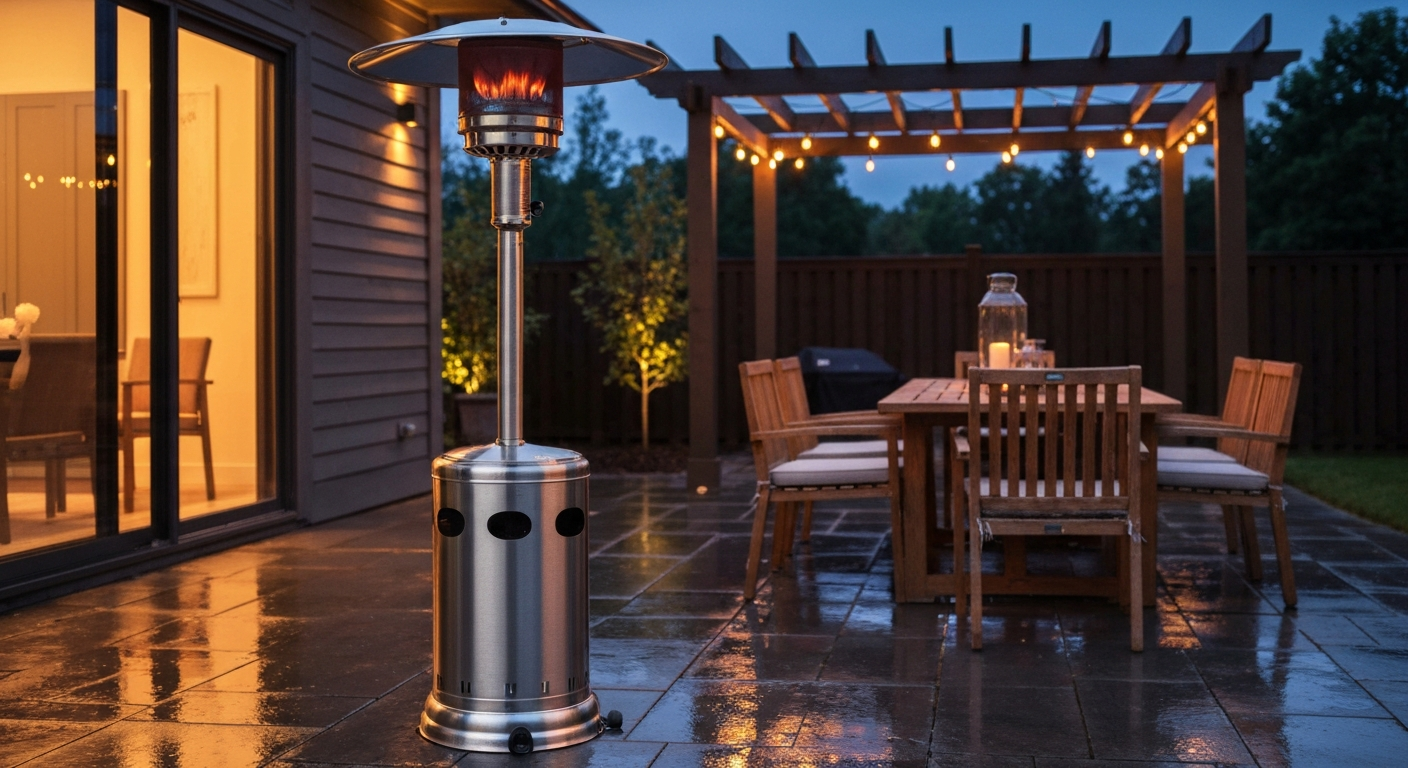
Quick verdict and top picks at a glance
Here is where the 2020-era natural gas patio heater market stood for US and Canadian buyers. For a concise roundup of the best gas patio heaters 2020, see our full recommendations and buying guide. For a concise buying guide and ranked options, see our roundup of the best natural gas patio heater for top picks and practical buying advice. The market split clearly between mass-market freestanding mushroom-style heaters (Hampton Bay, AZ Patio Heaters, Fire Sense) and premium fixed or infrared units (Bromic Heating). Most homeowners and restaurants landed in the $250–$600 range for freestanding NG units; commercial and hospitality buyers spent $600–$1,200+ for Bromic's Platinum or Tungsten Smart-Heat systems. Canadian buyers faced the same product families, with the AZ Patio Heaters NG-SS and NG-HB lines appearing through Canadian retail channels and CSA B149.1-compliant installation requirements applying in all provinces.
| Category | Top Pick (2020) | BTU Output | Approx. Price (USD) | Where Sold |
|---|---|---|---|---|
| Best Overall | Hampton Bay NCZH-G-SS | 48,000 BTU | $300–$350 | Home Depot (US/CA) |
| Best Budget | Fire Sense 45,000 BTU NG Series | 45,000 BTU | $200–$280 | Costco, Target, Home Depot |
| Best for Small Spaces | AZ Patio Heaters NG-HB (Hammered Bronze) | 40,000 BTU | $250–$320 | Online, specialty retailers |
| Best for Businesses | AZ Patio Heaters GS-2600-NG (Glass Tube) | 46,000 BTU | $350–$450 | Commercial suppliers, online |
| Best Premium | Bromic Heating Tungsten Smart-Heat NG | 58,000 BTU | $700–$1,100 | Bromic dealers, online |
Canadian buyers: the Hampton Bay and AZ Patio Heaters lines were available through Home Depot Canada and online retailers in 2020. For more on Canadian-specific models, certifications, and retailers, see our guide to the best patio heaters Canada. For a current shopping guide and comparisons tailored to Canadian shoppers, see our roundup of the best natural gas patio heaters Canada. Confirm CSA/ULC certification on the product label before purchase, this is a hard requirement under CSA B149.1, Canada's natural gas and propane installation code. Bromic's Tungsten and Platinum lines were also sold through Canadian dealers and carry the certification needed for Canadian installs.
Top 2020 natural gas patio heater recommendations
Best overall: Hampton Bay 48,000 BTU NCZH-G-SS
The Hampton Bay NCZH-G-SS (Home Depot SKU 1002693240) was the most widely purchased natural gas patio heater in the US during 2020. It puts out 48,000 BTU from a stainless steel mushroom-style head, stands about 90 inches tall, and has a weighted base that accepts a natural gas line through the pole. The stainless steel construction handles outdoor exposure better than painted steel, and the commercial-grade burner assembly held up well in extended-season use based on user feedback at the time. Setup requires a 3/8-inch or 1/2-inch natural gas supply line, and the unit complies with ANSI Z83.26:2020, the standard for gas-fired outdoor infrared patio heaters. It covers roughly 150–180 sq ft comfortably in moderate climates. The one-year limited warranty was standard for the category. Trade-off: the mushroom-head aesthetic is utilitarian; if you want something that looks like it belongs in a boutique restaurant, look at the AZ glass-tube or Bromic options.
Best budget: Fire Sense 45,000 BTU NG series
Fire Sense sold several natural gas variants in the 45,000–50,000 BTU range through Costco, Target, and Home Depot in 2020 at prices often $50–$100 below comparable Hampton Bay models. The one-year limited warranty was standard on consumer models, though certain Costco-listed Fire Sense models carried a three-year limited warranty, always check the specific listing before assuming. Build quality was a step below the Hampton Bay NCZH-G-SS: finish durability reports from owners showed more surface oxidation on the painted-steel models after one or two seasons, especially in coastal or wet climates. For a covered patio in a mild climate, Fire Sense delivers solid BTU-per-dollar value. For exposed installations or year-round use, pay the extra $50–$70 for stainless.
Best for small spaces: AZ Patio Heaters NG-HB
AZ Patio Heaters' hammered-bronze (NG-HB) model ran at around 40,000 BTU, making it better-sized for smaller patios of 100–140 sq ft rather than trying to heat a large open terrace. The hammered-bronze finish is one of the better-looking surface treatments in the mass-market segment, which matters if the heater is visible from a dining area. AZ's product line also included the NG-SS (stainless) and NG-GT-BRZ (glass tube, bronze) variants if you need more output or a different aesthetic in the same brand family. The one-year limited warranty applied to consumer models across the AZ/Hiland product line. For Canadian buyers, AZ Patio Heaters units appeared through Canadian online retailers in 2020, verify CSA certification before ordering.
Best for businesses: AZ Patio Heaters GS-2600-NG
The GS-2600-NG is a commercial glass-tube freestanding natural gas heater, meaning the burner is enclosed in a cylindrical glass tube that radiates heat outward in a 360-degree pattern rather than projecting it downward from a mushroom head. This design works well for restaurant patios where tables surround a central heater: the glass tube glows visually, the heat distribution is more even at table height, and the commercial-grade construction is rated for heavier use cycles. AZ's spec sheet for this model lists it as natural gas only (not convertible). Output sits around 46,000 BTU. The trade-off versus the Hampton Bay or Fire Sense mushroom units is price ($350–$450) and the fact that you need to keep the glass tube clean to maintain appearance and safe operation.
Best premium: Bromic Heating Tungsten Smart-Heat NG
Bromic's Tungsten Smart-Heat natural gas heater sat at the top of the 2020 residential and light-commercial market in terms of design and build quality. It outputs up to 58,000 BTU and is a fixed wall- or ceiling-mounted unit (not freestanding), which changes the installation conversation entirely: you are hiring a gas fitter and likely a structural installer, not just a plumber. Bromic's 2020–2021 catalog listed clearance requirements, mounting hardware, and natural gas inlet specs in detail. The result is a heater that looks architectural rather than utilitarian, it disappears into a pergola or covered patio design. For hospitality businesses and high-end residential patios, the Bromic Platinum and Tungsten lines set the standard, but budget at least $700–$1,100 per unit before installation labor.
Side-by-side comparison: performance, BTU, build quality, aesthetics, and warranty
| Model | BTU Output | Coverage (est.) | Build Material | Aesthetic Style | Warranty | Price Range (USD) |
|---|---|---|---|---|---|---|
| Hampton Bay NCZH-G-SS | 48,000 BTU | 150–180 sq ft | Stainless steel | Mushroom freestanding | 1 year limited | $300–$350 |
| Fire Sense 45K NG Series | 45,000 BTU | 140–170 sq ft | Painted steel (some SS) | Mushroom freestanding | 1–3 year limited | $200–$280 |
| AZ Patio NG-HB | 40,000 BTU | 100–140 sq ft | Hammered bronze finish | Mushroom freestanding | 1 year limited | $250–$320 |
| AZ Patio GS-2600-NG | 46,000 BTU | 150–180 sq ft | Steel + glass tube | Glass tube commercial | 1 year limited | $350–$450 |
| Bromic Tungsten NG | 58,000 BTU | 175–215 sq ft | Steel + ceramic | Fixed wall/ceiling mount | 2 year limited | $700–$1,100 |
One note on BTU verification: independent third-party laboratory testing of freestanding natural gas patio heaters specifically was limited in the 2020 period. Consumer Reports and trade coverage at the time noted that most publicly available output data came from manufacturer nameplates rather than independently verified lab measurements. The BTU figures above are nameplate ratings. Real-world output depends on gas supply pressure (most residential systems deliver 7 inches water column for natural gas), altitude, and ambient temperature.
What to look for when choosing: selection criteria and key metrics
Buying a natural gas patio heater in 2020 (or shopping for a comparable unit today) comes down to five factors: BTU output, coverage area, fuel efficiency, durability, and installation complexity. Here is how each plays out in practice.
- BTU output: For freestanding residential heaters, 40,000–50,000 BTU is the standard range. Commercial glass-tube and premium fixed units go higher (up to 58,000+ BTU). Higher BTU does not automatically mean better warmth if the heat is dispersed poorly — heat distribution pattern matters as much as raw output.
- Coverage area: Use the 40–70 BTU per square foot rule of thumb (40 BTU/sq ft for mild climates; 70 BTU/sq ft for cold climates) to work backward from your patio dimensions. A 48,000 BTU unit covers roughly 685 sq ft at 70 BTU/sq ft — but realistically, in an open outdoor space, expect effective warming in a 150–200 sq ft radius per freestanding unit.
- Fuel efficiency: Natural gas burns at about 1,037 BTU per cubic foot (EIA, 2020 average). There is no mechanical efficiency rating for most freestanding patio heaters — the BTU output listed on the nameplate is the gas input consumed, not net heat delivered to occupants. Heat efficiency in practice is heavily affected by wind, enclosure, and unit placement.
- Durability and build quality: Stainless steel outlasts painted steel in exposed outdoor environments by several seasons. If the heater will be exposed to rain, humidity, or coastal salt air, stainless steel or powder-coated aluminum is worth the price premium over painted carbon steel.
- Ease of installation: Freestanding NG heaters require a dedicated natural gas line to the patio location. That means a licensed gas fitter or plumber for the gas line, correct pipe sizing, a shutoff valve, and a flexible corrugated stainless steel tubing (CSST) or rigid iron pipe connection. Fixed/wall-mounted units like the Bromic add structural mounting requirements on top of the gas line work.
Natural gas vs. propane vs. electric vs. infrared: how each type actually works
There are four main heater types you will encounter when shopping for outdoor patio heating, and the differences are not trivial. Choosing the wrong fuel type for your setup can mean hundreds of dollars in unnecessary installation costs or a heater that simply does not perform in your climate.
Natural gas
Natural gas heaters burn methane delivered through your home or building's utility gas line. The heat output is continuous as long as the gas supply is on, there are no tanks to manage, and running costs per BTU are typically lower than propane. The downside is fixed placement: the heater must be within reach of a permanent gas line. Installation requires a licensed professional in virtually all jurisdictions. Natural gas works best when you have a permanent patio location and want the lowest ongoing fuel cost.
Propane
Propane heaters use liquefied petroleum gas stored in portable tanks (typically 20 lb tanks for residential freestanding units). They are portable and require no permanent installation, which makes them flexible and easier to set up. For a direct comparison of propane options, see our roundup of the best propane patio heaters 2020. The trade-off is fuel cost: propane costs more per BTU than utility natural gas in most US and Canadian markets, and you have to manage tank refills or exchanges. One gallon of propane delivers about 91,333 BTU (the DOE/EIA standard conversion), so a 48,000 BTU heater running on propane burns through roughly one gallon every 1.9 hours at full output.
Electric (resistance and infrared)
Electric patio heaters convert electrical energy directly to heat, either through resistance heating elements or infrared emitters. They require no gas line and no fuel storage, and they can be installed on a dedicated outdoor electrical circuit by an electrician. The operational advantage of infrared electric heaters specifically is that they warm objects and people directly (like sunlight) rather than heating the air, which means they work well even in breezy conditions where convective gas heaters lose efficiency. The running cost per BTU for electric heating is higher than natural gas in most North American markets, but for small spaces or covered patios where only brief heating is needed, the lower installation cost can offset the higher running cost.
Consumer Reports' December 2020 guidance noted that all three fuel types had legitimate use cases, and safety considerations varied: electric units carry no combustion risk, while propane and natural gas units require proper ventilation (never use indoors or in enclosed spaces), correct clearances from combustibles, and tip-over protection. Natural gas units tied permanently to a gas line carry additional risks from gas leaks at fittings.
Fuel and running-cost comparison: natural gas vs. propane vs. electric
Running-cost math for patio heaters is straightforward once you have current fuel prices and the EIA's conversion factors. The numbers below use 2020 approximate US average retail prices as a baseline.
| Fuel Type | Energy Content | Approx. 2020 US Retail Price | Cost per 100,000 BTU (1 therm equiv.) | Notes |
|---|---|---|---|---|
| Natural gas | ~1,037 BTU/cu ft; 1 therm = 100,000 BTU | $0.80–$1.20/therm (residential avg.) | $0.80–$1.20 | Lowest cost per BTU; fixed line required |
| Propane (LP) | ~91,333 BTU/gallon | $2.00–$2.80/gallon (2020 avg.) | $2.19–$3.07 | Portable; costs ~2–3x NG per BTU |
| Electric (resistance) | 3,412 BTU/kWh | $0.12–$0.14/kWh (2020 US avg.) | $3.52–$4.10 | Highest cost/BTU; no install for gas line |
To put that in practical terms: a 48,000 BTU natural gas heater running at full output for one hour consumes about 46.3 cubic feet of gas (48,000 ÷ 1,037), or roughly 0.48 therms. At $1.00 per therm, that is about $0.48 per hour. Running the same BTU output with propane would cost roughly $1.05–$1.47 per hour. Running an equivalent electric heater would cost $1.68–$1.97 per hour. Over a 100-hour heating season (moderate use), that gap between natural gas and propane represents $57–$99 in fuel savings per unit. For a restaurant running five heaters over a 200-hour season, the savings become significant.
Canadian natural gas pricing in 2020 varied by province but was generally comparable to US residential rates, with some provinces like Alberta and British Columbia having lower-than-average delivered prices due to proximity to production. Canadian buyers comparing fuel costs should use their local utility's current rate per GJ or per cubic meter and apply the same BTU conversion math.
Sizing your heater: BTUs, coverage area, number of units, and layout
The most common sizing mistake is buying one large heater for a space that actually needs two or three positioned units. A single 48,000 BTU freestanding heater provides effective warmth within about a 9–10 foot radius directly beneath and around the unit. Beyond that radius, heat falls off quickly, especially in open or breezy conditions.
- Measure your usable patio area in square feet (length x width for rectangular spaces; estimate for irregular shapes).
- Determine your climate category: mild (40 BTU/sq ft), moderate (55 BTU/sq ft), or cold (70 BTU/sq ft). This range comes from the standard planning heuristic used in 2020-era buyer guides and installer estimates.
- Multiply your patio area by your BTU/sq ft target to get total BTU demand. Example: 300 sq ft patio in a moderate climate = 300 x 55 = 16,500 BTU total needed for ambient warmth. One 48,000 BTU unit covers this comfortably.
- For larger patios, divide total BTU demand by the output of your chosen unit to get the number of units needed. Example: 600 sq ft in a cold climate = 600 x 70 = 42,000 BTU minimum; one 48,000 BTU unit is borderline — two units positioned at opposite ends will distribute heat far more effectively.
- For open or uncovered patios, add a 20–30% buffer to account for heat loss to wind and open sky. Covered or pergola patios retain heat better and may not need the buffer.
- Position freestanding units at the perimeter of seating areas rather than in the center, so they radiate inward toward occupants. For glass-tube commercial units, center placement works well because the heat radiates 360 degrees.
One layout principle worth emphasizing: two 40,000 BTU heaters placed strategically in a 400 sq ft space will outperform a single 80,000 BTU unit in the same space, because the heat distribution is wider and more even. Budget permitting, plan for multiple units rather than one oversized unit.
Installation and hookup essentials: what your gas fitter will ask for
Natural gas patio heater installation is not a DIY project in most jurisdictions. In the US, the National Fuel Gas Code (NFPA 54) governs natural gas installations, and virtually every local jurisdiction requires a licensed plumber or gas fitter to make the gas line connection and a permit for the work. In Canada, CSA B149.1 applies in every province, and the same licensing requirements hold. Here is what the installation process looks like and what your installer will need to know.
Gas line sizing and supply pressure
Most residential natural gas freestanding patio heaters require a 3/8-inch or 1/2-inch gas supply line and operate at standard low-pressure natural gas delivery (7 inches water column, or approximately 0.25 PSI, for most residential systems). Your installer will calculate the required pipe diameter based on the total BTU load, the length of the run from the meter or manifold to the heater location, and the number of appliances on the same branch. Longer runs or higher BTU loads require larger diameter pipe to maintain adequate pressure at the appliance inlet. Hampton Bay's PH02-SS Use and Care Guide, for example, explicitly references inlet pressure requirements and ANSI Z83.26:2020 compliance, your installer should verify these specs against the heater's manual before sizing the line.
Regulators, shutoff valves, and fittings
Every natural gas patio heater installation requires a dedicated manual shutoff valve within reach of the heater, this is a code requirement under NFPA 54 and CSA B149.1. The shutoff allows you to isolate the heater without shutting off gas to the rest of the building. The connection from the rigid supply line to the heater itself is typically made with a flexible corrugated stainless steel tubing (CSST) connector or an approved flexible appliance connector, which allows for minor movement and simplifies removal for storage. Do not use unapproved flexible connectors, manufacturer manuals and NFPA 54 specify approved connector types.
Common questions installers will ask before starting
- Where is the existing gas meter and main shutoff, and what is the current capacity of the meter (in BTU/hour or cubic feet per hour)?
- What is the total BTU load of all current gas appliances in the building (furnace, water heater, range, etc.)? The installer needs to confirm the meter and main line can handle the added patio heater load.
- How far is the heater location from the nearest gas connection point? Distance drives pipe sizing.
- Will the supply line run underground (requires approved underground-rated CSST or coated steel pipe), through a wall, or along the exterior surface?
- What is the heater's minimum inlet pressure per the manufacturer's manual?
- Is the installation in Canada? If yes, confirm the unit carries CSA/ULC certification, which is required under CSA B149.1.
- Will there be more than one heater on this branch (for a restaurant patio with multiple units)? Combined BTU load changes pipe sizing significantly.
Clearances and code requirements
Manufacturer manuals for all 2020-era models covered here specify minimum clearances from combustible materials (walls, fences, overhangs, furniture). Typical minimums for freestanding mushroom-style heaters are 24–36 inches from any combustible surface and a minimum overhead clearance of 36–48 inches. Bromic's fixed Tungsten units have specific wall and ceiling clearance requirements listed in their installation catalog. Always install to the greater of the manufacturer's specification or the local code requirement, whichever is more restrictive controls.
Canadian-specific requirements
In Canada, CSA B149.1 is the controlling standard for natural gas and propane installations. The core requirements, licensed installer, shutoff valve, approved flexible connector, correct pipe sizing, and permit, mirror the US NFPA 54 requirements, but the certification mark on the appliance must be CSA or ULC rather than (or in addition to) the US AGA or CSA-US marks. Canadian buyers should confirm the specific model's certification mark before purchasing, since some US-market SKUs sold through cross-border channels may not carry the Canadian certification mark required for a legal Canadian installation.
Safety, maintenance, and what the CPSC record shows
Outdoor gas patio heaters have a solid safety record when installed correctly and maintained annually. The CPSC's most relevant recall in the outdoor gas appliance category leading into 2020 was a February 2018 recall of Hampton Bay Cross Ridge outdoor gas fire pit tables for burn hazards, a reminder that burner-type outdoor gas products in the patio category have had documented safety issues, and checking the CPSC recall database for your specific model number before installation is worth 10 minutes of your time.
- Inspect all gas connections at the start of each heating season using a soap-and-water solution or an approved gas leak detector. Bubbles at a fitting mean a leak that must be fixed before operating the heater.
- Clean the burner head and emitter screen annually. Spider webs and insect nesting in burner tubes are a leading cause of partial blockage, incomplete combustion, and yellow/orange flame (rather than clean blue flame).
- Check the tip-over safety mechanism before each season — most freestanding models have an automatic shutoff that triggers when the unit tilts beyond about 45 degrees. Verify it functions by tilting the unit gently; the gas should cut off.
- Never operate a natural gas patio heater in an enclosed or semi-enclosed space without adequate ventilation. These units produce combustion byproducts including carbon monoxide. Manufacturer manuals, ANSI Z83.26:2020, and Consumer Reports all reinforce this — outdoor use only.
- Store or cover freestanding units during the off-season to protect burner components and finish from weather degradation. Stainless steel units tolerate exposure better than painted steel, but all units benefit from a fitted cover.
- Have a qualified gas fitter inspect and re-torque connections every two to three years, or immediately after any physical impact to the unit or the supply line.
Purchasing guidance and budget planning
The purchase price of the heater itself is only part of the total budget for a natural gas patio setup. For homeowners without an existing exterior gas connection, the gas line installation typically runs $300–$800 or more depending on run length, local labor rates, and permit fees, sometimes exceeding the cost of the heater. Factor that in before concluding that a natural gas setup is cheaper than buying a propane unit.
| Cost Component | Typical Range (USD) | Notes |
|---|---|---|
| Heater (consumer NG freestanding) | $200–$450 | Hampton Bay, Fire Sense, AZ Patio Heaters |
| Heater (premium fixed/mounted) | $700–$1,100+ | Bromic Tungsten/Platinum NG |
| Gas line installation (new run) | $300–$800+ | Varies by run length, permit, local labor |
| Shutoff valve + fittings + connector | $30–$80 | Parts only; included in most installer quotes |
| Permit (where required) | $50–$150 | Required in most US/CA jurisdictions |
| Cover/accessories | $30–$60 | Optional but recommended for longevity |
If you already have a gas stub-out on your patio from a previous grill or fire table installation, the heater hookup is a relatively simple job for a gas fitter: add a shutoff valve, connect the flexible appliance connector, test for leaks, and commission. In that scenario, the installed cost for a freestanding NG heater from the 2020 lineup is genuinely lower than the equivalent propane setup over a two-to-three season horizon.
Natural gas vs. propane in 2020: a direct comparison and recommendation
If you are deciding between natural gas and propane for a patio heater, the decision tree is straightforward. Choose natural gas if you have an existing gas line within reasonable distance of the patio, you plan to use the heater regularly (making the fuel savings meaningful), and you want permanent, uninterrupted operation. Choose propane if you rent, if your patio is far from the gas meter, if you need portability, or if the gas line installation cost would exceed several seasons of fuel savings. The best gas patio heaters of 2020 were available in both fuel configurations, many models, including some Fire Sense units, were available as convertible NG/propane configurations, though converting a unit requires the correct orifice kit and must be done per the manufacturer's conversion instructions.
Decision checklist before you buy
- Confirm you have (or can install) a natural gas supply line at the heater location. Get a quote from a licensed gas fitter for the line run before committing to a NG unit.
- Measure your patio and calculate BTU requirements using the 40–70 BTU/sq ft rule. Determine how many units you need, not just which unit.
- Decide on mounting style: freestanding mushroom (most versatile, easiest to reposition), glass-tube commercial (better aesthetics and 360-degree heat for restaurant layouts), or fixed wall/ceiling mount (best heat distribution, highest installation cost).
- Check the certification mark for your jurisdiction: look for ANSI Z83.26 compliance for US installations; CSA/ULC certification for Canadian installations.
- For Canadian buyers: confirm the specific SKU carries a Canadian certification mark, not just a US-market mark.
- Check the CPSC recall database for your specific model number before installing.
- Budget for total installed cost (heater + gas line + permit + labor), not just the heater price.
- Plan maintenance: annual burner inspection, gas connection leak test, and tip-over safety test before each season.
FAQ
Quick verdict — what were the best natural gas patio heaters in 2020 for U.S. and Canadian homeowners and small businesses?
In 2020 the best choices split by use and budget: (1) Best value / mass market — Hampton Bay 48,000‑BTU (Home Depot) and Fire Sense 45,000‑50,000‑BTU convertible models for straightforward freestanding installations; (2) Best mid‑range / consumer‑grade — AZ Patio Heaters NG stainless and hammered‑bronze models (reliable build, common parts); (3) Best premium / commercial — Bromic Platinum/Tungsten natural‑gas models (higher radiant performance, commercial mounting options). Selection depends on coverage needs, installation method (fixed vs. freestanding), durability expectations and local gas hookup availability.
How did these 2020 models compare side‑by‑side on performance, BTU/coverage, build, aesthetics and warranty?
Performance/BTU: most mass‑market freestanding NG units listed 45,000–48,000 BTU input, covering ~40–70 ft² at useful comfort levels (rule‑of‑thumb); premium Bromic infrared gas units offered focused radiant heating with similar or higher firing rates but better directional warmth. Build/aesthetics: Hampton Bay/Fire Sense/AZ were stainless or powder‑coat steel consumer finishes; Bromic used polished or powder‑coated aluminum with integrated controls. Warranty: typical consumer models carried 1‑year limited warranties in 2020; some retailer promotions extended this (e.g., select Fire Sense listings). For publication, present a comparison table per model with rated BTU, estimated coverage (use 40–70 BTU/ft²), construction materials, weight, listed clearances and warranty term (pull from each manual).
What testing and selection criteria should an authoritative 2020‑era review use?
Use these verifiable criteria: manufacturer spec sheets and owner manuals (input BTU, fuel type, inlet pressure, clearances, weight, materials); measured output/performance where available (radiant surface temp, directional flux, effective coverage based on BTU/ft² rule); retailer/consumer feedback (reliability, assembly issues, ignition problems); independent safety/recall records (CPSC); installation complexity and required gas service specs (line size, pressure); warranty terms and service support; price and total installed cost. Flag where independent lab verification of nameplate BTU is unavailable and rely on manufacturer specs plus installer measurements for real‑world output.
How do running costs compare — natural gas vs. propane vs. electric/infrared (2020 inputs)?
Compute using typical energy content conversions: natural gas ≈1,037 Btu/ft³ (≈103,700 Btu per Ccf ≈1.037 therm); propane ≈91,333 Btu/gal. For 45,000 BTU input running 3 hours/day: daily Btu = 135,000 Btu → natural gas ≈1.30 therms/day; propane ≈1.48 gal/day. Using 2020 average U.S. retail prices (example inputs — use EIA/state prices for accuracy), multiply therms or gallons by local unit price. In general 2020 natural gas (per usable heat Btu) tended to be cheaper than propane and electric resistance heat; infrared electric heaters have higher electrical cost per heat delivered but can be more efficient at point‑source warming. Provide worked examples for typical regional prices and note Canadian pricing differences (use provincial utility rates).
How should buyers size a natural gas patio heater for their space?
Use the common 2020 rule‑of‑thumb: plan ~40–70 BTU per square foot depending on climate and wind exposure (40 for mild, 70 for cold/windy). Example: for a 200 ft² covered patio in a temperate area, target 8,000–14,000 BTU for ambient raise — but because freestanding patio heaters are directional, select a 45,000–48,000 BTU unit to supply focused radiant heat for a seated area of ~40–70 ft²; for full‑patio ambient warmth, consider multiple units spaced per manufacturer coverage guidance or higher‑capacity commercial gas infrared arrays.
What installation and hookup requirements and local code considerations applied in 2020 (U.S. and Canada)?
Manufacturer manuals require a qualified installer/plumber for natural‑gas hookups and reference standards such as NFPA 54 (U.S.) and CSA B149.1 (Canada). Key items: confirm available gas service pressure and line size (inlet pressure and required BTU flow), use approved fittings and sediment traps, maintain manufacturer‑specified clearances to combustibles, and obtain local permits/inspections where required. Canada: follow CSA B149 series and provincial/municipal permitting; ensure installers are licensed per provincial rules. Always check local authority having jurisdiction (AHJ) for permit and inspection requirements; document compliance with manuals and retain receipts.
Next Articles
Best Natural Gas Patio Heater: Quick Buying Guide
Find the best natural gas patio heater with BTU, safety, wind, coverage, and setup tips plus a quick buying checklist.
Best Price on Outdoor Patio Heaters: Compare Costs & Deals
Score the best price on outdoor patio heaters, price ranges, top picks, deal tactics, total-cost & safety checklist.
Where Can I Rent Patio Heaters Near Me Today
Find where to rent patio heaters near you today, choose the right fuel type, compare costs, and book safely.