
For most NYC balconies and smaller backyard patios, a wall-mounted or ceiling-mounted electric infrared heater is your best bet. It handles wind better than a standing mushroom-style propane heater, needs no fuel storage, and skips the FDNY permit headaches that come with propane in outdoor dining setups. If you have a larger uncovered backyard or a commercial patio, a 40,000-50,000 BTU propane standing heater or a hard-plumbed natural gas infrared system will cover more ground per unit. The right answer depends on your space, your wind exposure, and whether you can run a dedicated 240V circuit. Here's how to work through all of it.
Best Heated Patios NYC: How to Choose the Right Heater

Caleb Vale
7 Jul 2026
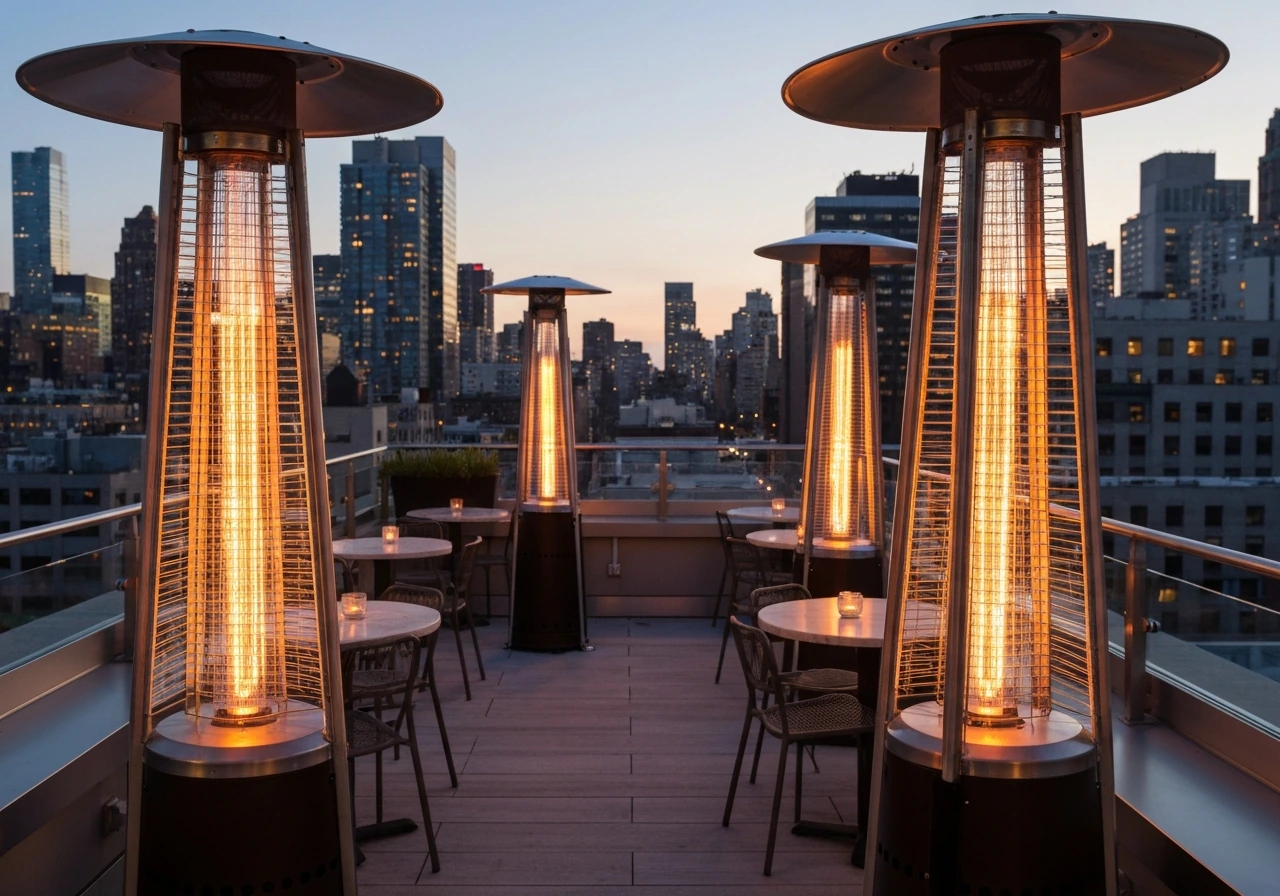
How to choose the right heater for your NYC patio
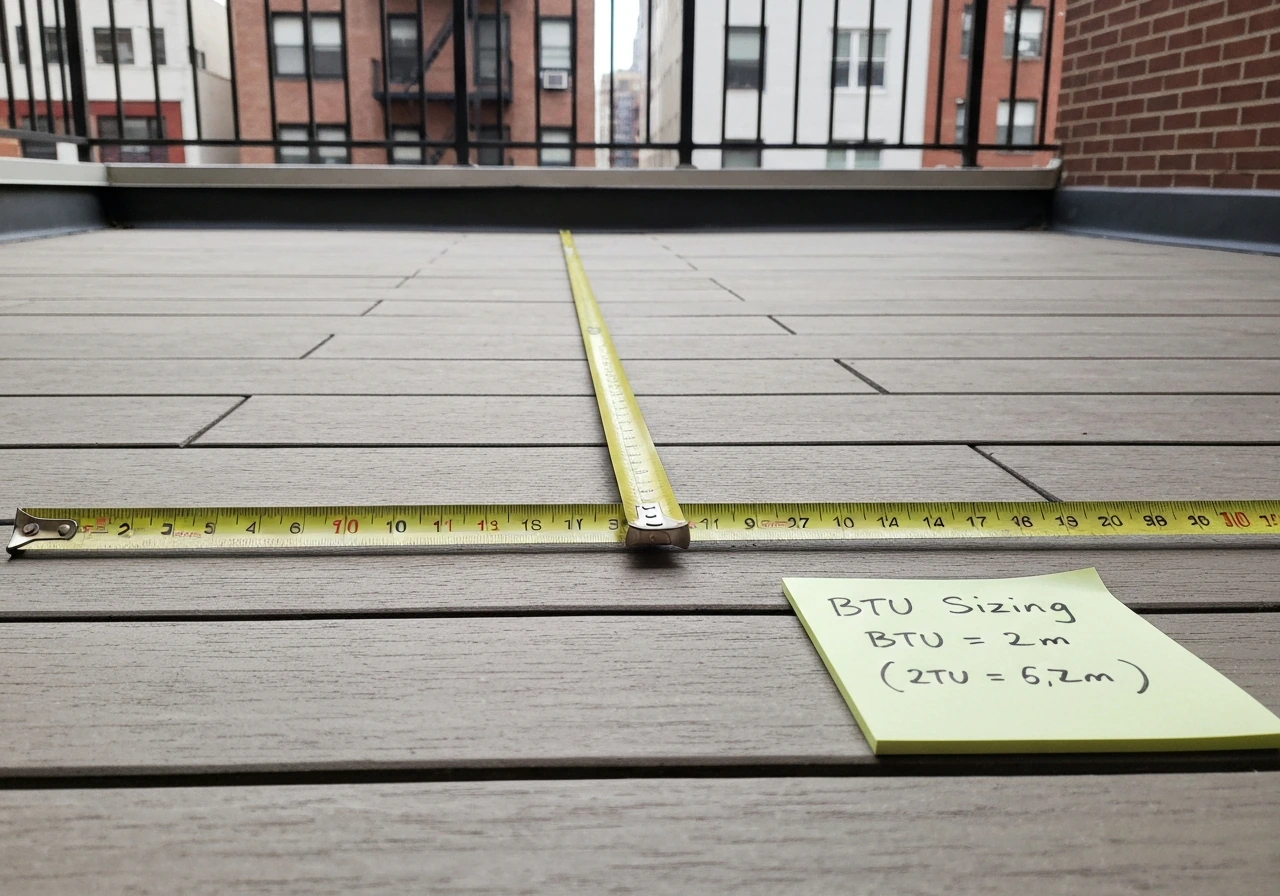
New York City throws a specific set of conditions at outdoor heaters: gusty urban wind tunnels between buildings, small footprints (many patios are under 200 square feet), overhead clearance constraints on covered terraces, and dense building stock that limits fuel delivery and storage. Before you shop, you need to answer four questions about your specific space.
- How big is the patio? Measure length by width in feet and multiply by 20 to get your rough BTU target. A 150 sq ft NYC balcony needs around 3,000 BTU at minimum; a 400 sq ft backyard patio needs roughly 8,000 BTU.
- Is it covered or open to the sky? Covered patios trap radiant heat and work beautifully with ceiling-mounted infrared panels. Open patios lose heat faster, especially on windy nights, and need more powerful or more numerous heaters.
- How exposed is it to wind? A high-rise terrace or a narrow alley patio can see sustained wind that cuts radiant efficiency by 30-40%. Infratech's own installation manual notes that coverage can be less than average in extremely cold or windy conditions.
- What power/fuel access do you have? An electric heater on a balcony needs a dedicated circuit—most 1,500W units run on standard 120V, but higher-output wall-mount models (2,000-4,000W) require 240V. Natural gas requires a licensed NYC master plumber and a DOB filing. Propane is portable but comes with FDNY permit requirements for commercial use.
Once you have those four answers, heater selection narrows fast. A covered 120 sq ft Manhattan balcony almost always points toward a 2,000W mounted electric infrared panel. A 600 sq ft Brooklyn backyard used for weekend entertaining points toward two 40,000 BTU propane standing heaters or a pair of hardwired natural gas infrared units if you want to avoid tank management.
Heater type breakdown: which fuel source actually fits NYC
Each heater type has a real niche in the NYC context. Here's an honest look at all five, including where each one falls short.
Electric infrared
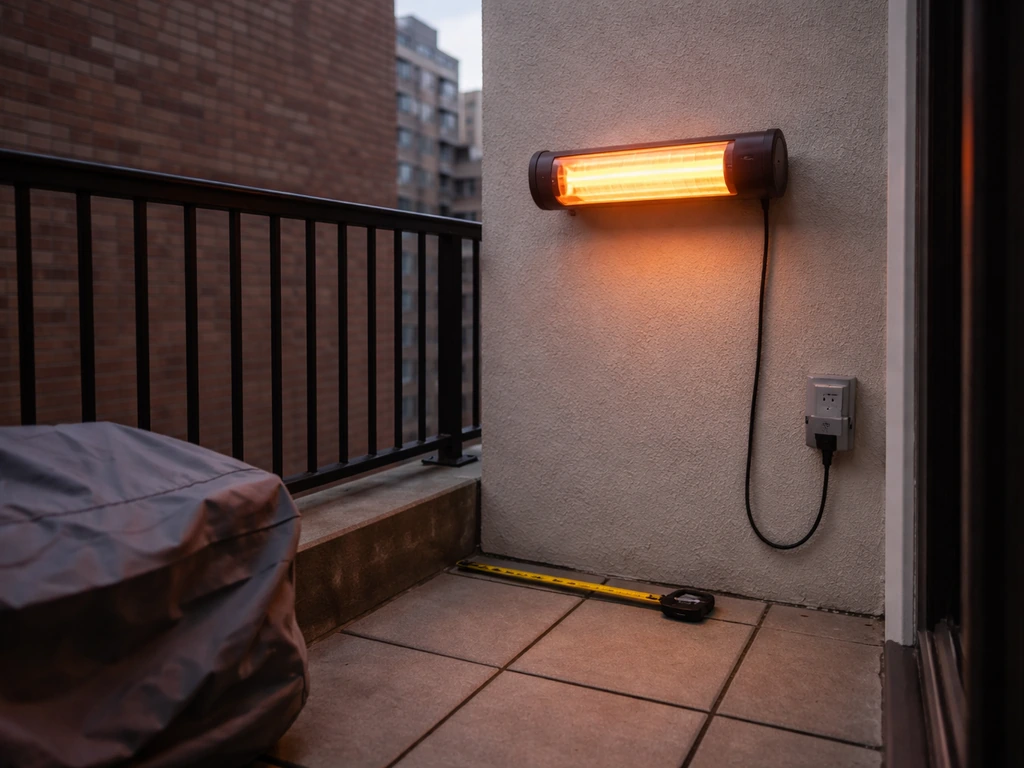
This is the most practical choice for apartments, co-op terraces, and small commercial patios. Electric infrared heaters produce radiant heat that warms people and objects directly, not the surrounding air, so wind has less effect on felt warmth compared to convective heaters. Wall-mount and ceiling-mount models (think Infratech W-series or Bromic Tungsten Electric) eliminate floor space issues. The 1,500W Home Depot-class models work on standard 120V outlets; serious 2,000-4,000W units need a 240V circuit, which means an electrician visit and compliance with NYC's 2025 Electrical Code (in effect since December 21, 2025, based on the 2020 NEC with NYC amendments). No permits from FDNY. No fuel tanks. No combustion products. The trade-off: heat feels less ambient than a flame-based heater, and running costs on Con Edison electricity can add up in a commercial setting.
Propane (portable)
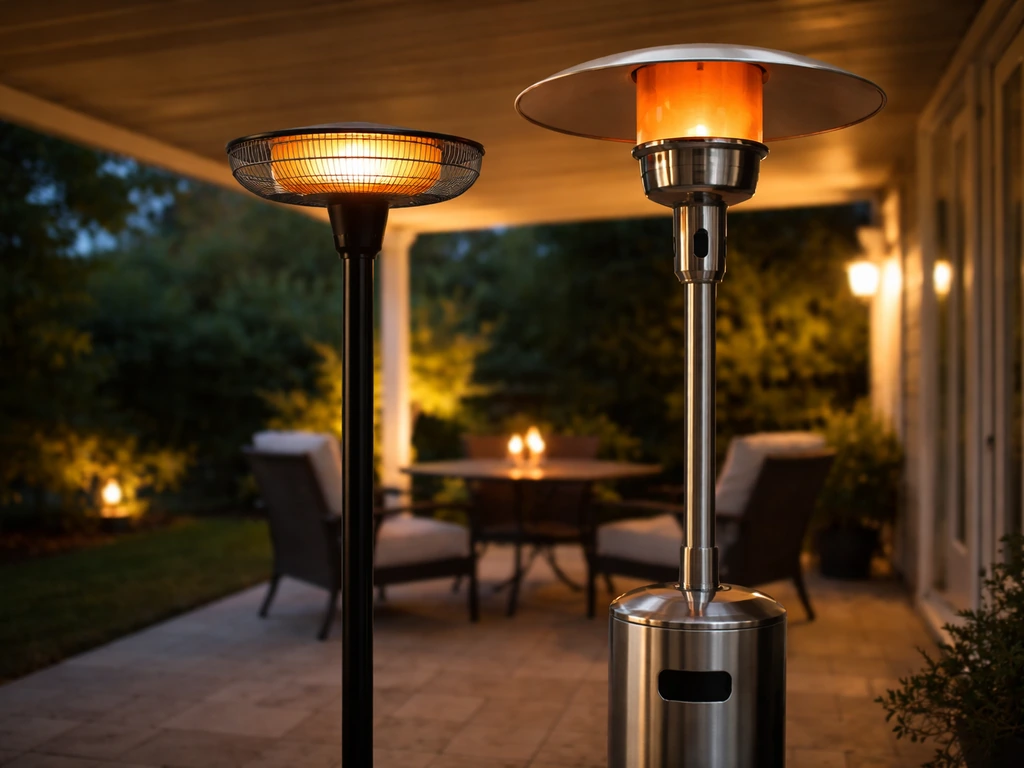
Portable propane standing heaters are the most common patio heater you'll see at NYC restaurants and bars. A standard 40,000-50,000 BTU mushroom-style unit covers a diameter of roughly 9-12 feet and runs about 10 hours on a 20-lb tank at full output. They're easy to reposition, require zero wiring, and produce noticeable warmth quickly. The NYC-specific catch: restaurants and commercial outdoor dining spaces are required to submit an attestation and site plan to FDNY and must hold a Portable Fueled Space Heaters Permit, which requires a letter of request, proof of liability insurance, a DOB/AHJ work permit, and a certificate of fitness. For private residential use, propane portables are much simpler, but you still need to store cylinders outdoors or in well-ventilated areas only, never in a garage or inside your home. The STANDING PATIO HEATER owner’s manual also warns not to store propane cylinders in enclosed areas such as a house or garage, and directs cylinder storage for outdoor use only requires outdoor-only cylinder storage guidance. Propane vapors are heavier than air and accumulate in low spots, which is a real risk in enclosed urban spaces.
Natural gas (hard-plumbed)
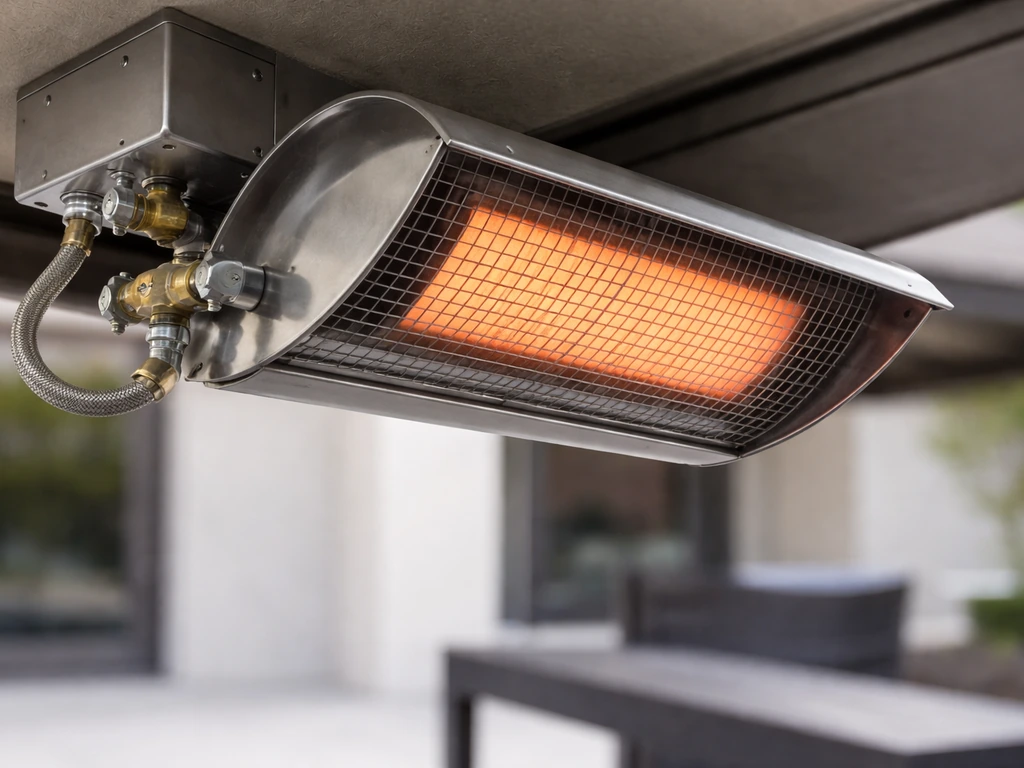
If you own your building or have a permanent commercial patio, natural gas is the most cost-effective and operationally convenient fuel over time. No tank swaps, no refill runs, and Con Edison gas rates are generally competitive. The barrier is installation: NYC Buildings explicitly requires permanently located gas appliances and all associated piping to be installed by a NYC Licensed Master Plumber and filed with the Department under the NYC Fuel Gas Code. That means real upfront cost, typically several thousand dollars in labor and filing fees on top of the heater. Once it's in, though, it's the lowest-friction heated patio setup you can run in the city.
Infrared (gas-fired)
Gas-fired infrared heaters, like those from Schwank or Reverberray, are a category of their own. They combine the fuel flexibility of gas with the targeted radiant efficiency of infrared technology. These are ceiling or wall-mounted, silent, and very effective in covered commercial spaces like restaurants with pergolas or canopied sidewalk setups. They require the same NYC Licensed Master Plumber installation path as any hard-piped gas appliance, plus proper venting per NFPA 54 requirements. For a covered NYC restaurant patio, this is often the most professional and efficient long-term solution.
Pellet heaters
Pellet patio heaters are an interesting option in other markets but are a poor fit for most NYC setups. They produce real ambient warmth and a fire-like ambiance, but they require pellet storage (bulk and awkward for urban spaces), regular ash cleanup, and are safety-listed under UL-1482/ASTM E1509 standards that treat them more like appliances than simple heaters. In a small NYC backyard without covered storage for pellets, the logistics outweigh the experience. They make more sense in suburban settings where storage and cleanup space aren't issues.
BTU, coverage, and how many heaters you actually need
The widely used sizing rule is simple: multiply your patio's square footage by 20 to get the BTU target. A 300 sq ft covered backyard patio needs around 6,000 BTU. A 500 sq ft open patio needs about 10,000 BTU. That's a starting point, not a ceiling, because NYC wind exposure can require you to add 20-40% buffer on exposed terraces.
For standing propane heaters, Ferrellgas's planning guidance suggests one freestanding unit per roughly 1,500 sq ft as a general rule, but that's for mild conditions. In NYC, plan for one 40,000-50,000 BTU standing heater per 150-200 sq ft of open patio seating area to actually keep guests comfortable on a cold November night. For wall-mounted or ceiling-mounted infrared, Schwank's coverage guidance distinguishes between an effective comfort zone of roughly 8x8 feet and a broader thermal influence area of around 12x12 feet. For dense seating, use the 8x8 footprint as your planning unit.
| Patio Size | BTU Target (sq ft x 20) | Standing Propane Units Needed | Infrared Panel Units Needed |
|---|---|---|---|
| 100 sq ft balcony | 2,000 BTU | 1 (40,000 BTU, lowest setting) | 1 (2,000W wall mount) |
| 200 sq ft covered terrace | 4,000 BTU | 1 | 1-2 (2,000W ceiling mount) |
| 400 sq ft open backyard | 8,000 BTU | 2-3 | 3-4 (2,000-3,000W) |
| 600 sq ft restaurant patio | 12,000 BTU | 4 | 4-6 (depending on coverage zones) |
Keep in mind that a 40,000-50,000 BTU propane standing heater will always put out more total BTU than you need for a small balcony. You're not running it at full output constantly. Adjustable flame/output controls matter here: look for units with at least a low/medium/high setting or, better, a fully variable control so you're not baking one table while the rest of the patio goes cold.
Installation and placement in NYC
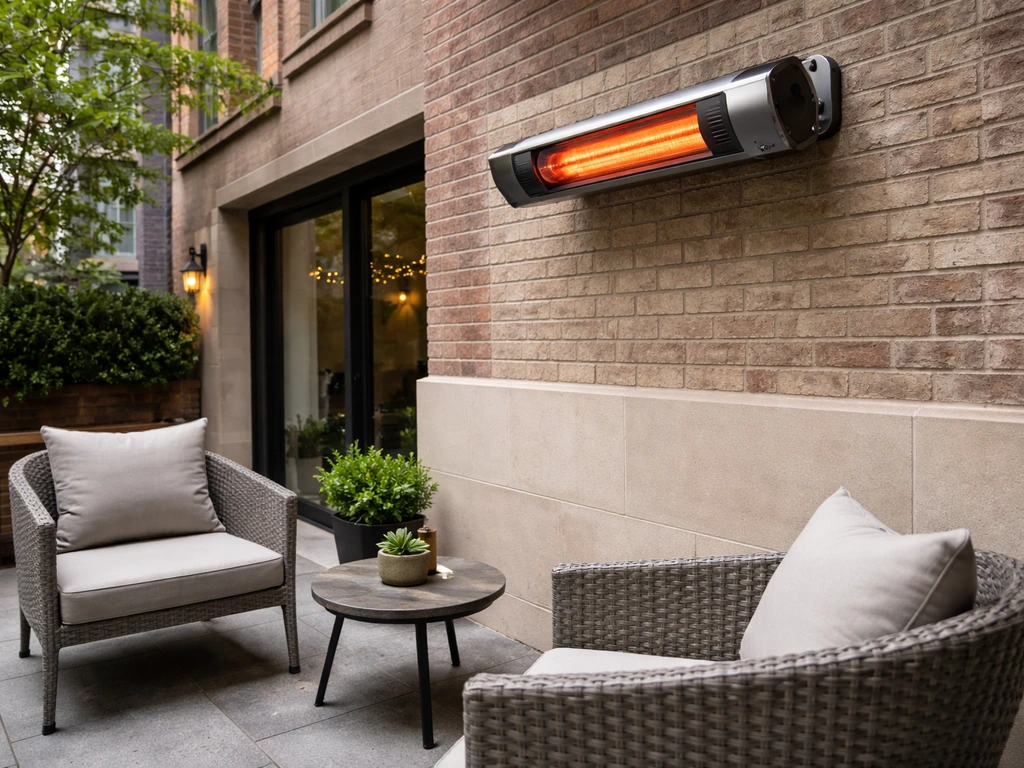
Placement isn't just about heat distribution. In NYC's built environment, you're also working with clearance rules, building codes, and physical constraints that don't apply the same way in a suburban backyard.
Clearances
Bromic's installation guidance states that the recommended mounting height for infrared heaters typically ranges between 2 to 3 meters (roughly 6.5 to 10 feet) from floor to heater, depending on output wattage. Infratech's W-series manual requires a minimum IPX4 weather rating on all outdoor components and specifies that the heating element must be securely installed and level before operation. A Reddit thread about Infratech CD52 heater clearances notes that an “orientation/tilt” assumption changes the effective clearance requirement, so you need to verify using the specific mounting assumptions for your setup Infratech's W-series manual requires a minimum IPX4 weather rating on all outdoor components and specifies that the heating element must be securely installed and level before operation.. For propane standing heaters, the NYC Fire Code and general best practice require at least 10 feet of clearance from building walls, deck surfaces, and combustibles, mirroring the barbecue clearance guidance from NYC Buildings. On a tight NYC balcony, this can be legitimately difficult to achieve with a standing mushroom heater, which is one more reason to mount electric infrared on the wall or ceiling instead. If you want the best heated patio in Chicago, start by matching the heater type and mounting style to your coverage needs and clearance constraints mount electric infrared on the wall or ceiling instead.
Mounting and wiring for electric
Wall and ceiling mounts for electric infrared heaters require proper anchoring into masonry or framing, not just drywall toggles. NYC building stock is heavily masonry construction, so you'll need masonry anchors and likely a hammer drill. The wiring must comply with NYC's 2025 Electrical Code (effective December 21, 2025). For 240V units, hire a licensed NYC electrician to run the circuit and pull the permit. It's not a DIY job here.
Gas installation
Any permanently piped gas heater requires a NYC Licensed Master Plumber for installation and filing with the Department of Buildings under the NYC Fuel Gas Code. Gas-fired outdoor heaters that are not direct-vent models also require proper venting per NFPA 54, with vent connector runs sloping toward the vent. In most NYC backyard and terrace scenarios, direct-vent or vent-free outdoor-rated infrared gas heaters are the practical choice because running a flue in an urban building is complex and expensive.
Propane tank placement
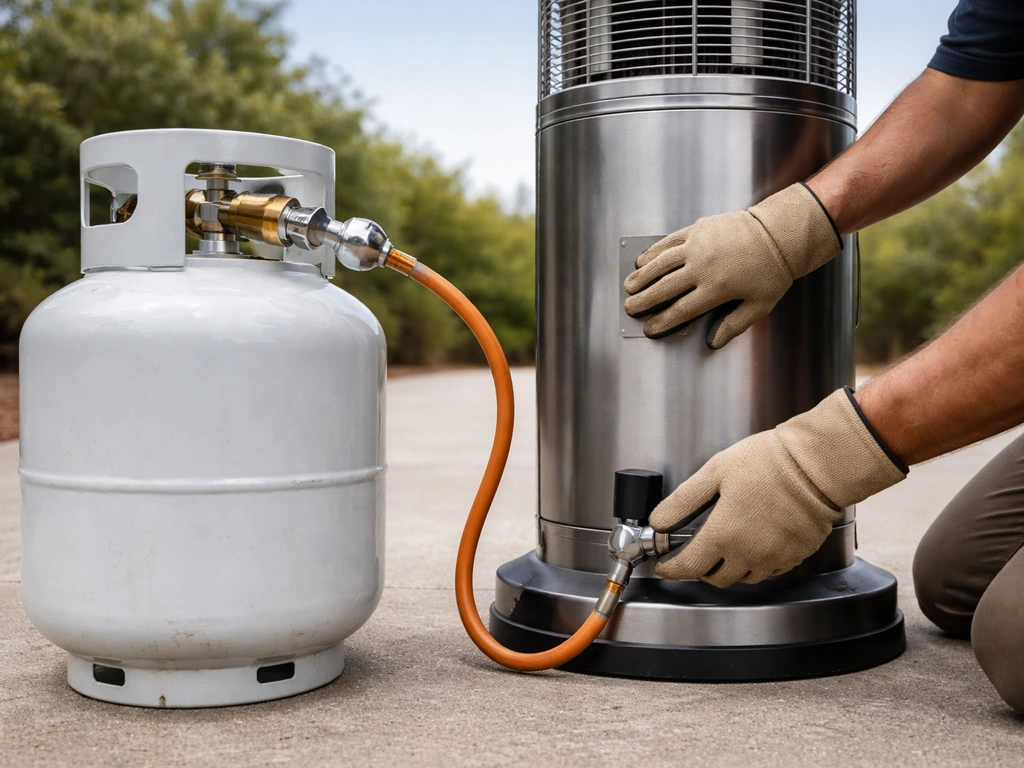
Propane cylinders must be stored upright on a level surface outdoors or in well-ventilated areas. They cannot be stored inside your apartment, basement, or garage under any circumstances. On a small NYC backyard patio, designate a dedicated outdoor spot away from foot traffic and exits for tank storage, and keep spare tanks there. FDNY's propane outdoor dining guidance specifically requires a site plan showing heater and tank placement for commercial applications, so plan accordingly if you're running a restaurant or bar patio.
Safety checklist before you run anything
Patio heaters in an urban environment with close-set buildings, crowded tables, and foot traffic need more safety attention than a suburban deck setup. Work through this list before your first use of the season.
- Check IPX/weather rating: Any outdoor electric heater must be rated at minimum IPX4 (splash-resistant). NYC rain and humidity make this non-negotiable.
- Inspect hoses and regulators on propane units: Look for cracks, brittleness, or corrosion annually. Replace hoses every 3-5 years regardless of visible condition.
- Confirm anti-tilt shutoff: All standing propane heaters should have an automatic shutoff if tipped over. This is a listed feature on most modern units (including 50,000 BTU models from major retailers) but verify it before buying used equipment.
- Never use combustion heaters in enclosed or semi-enclosed spaces: Propane and natural gas heaters produce carbon monoxide. Open-air patios with good airflow are fine; covered patios with walls on three or more sides are not. The rule is simple: if it's enclosed enough to trap CO, use electric only.
- Keep a 10-foot clearance from combustibles: Building walls, wood decking, outdoor furniture, and fabric umbrellas all count. This applies to propane standing heaters specifically.
- Never install or remove a propane cylinder while the heater is lit or still hot: Propane vapors are heavier than air and pool in low spots. Even a small ignition source can cause a flash fire.
- Secure standing heaters against wind: NYC wind gusts regularly exceed 20-30 mph. Use sandbag bases, base weights, or anchor straps on any freestanding unit. Bromic recommends stable placement on level ground with anti-tilt features engaged.
- Wind shutoff features: Look for heaters with flame-failure devices (thermocouples) that kill the gas supply if the flame blows out. This prevents unburned propane from accumulating.
- NYC commercial permit compliance: Restaurants and bars must hold FDNY's Portable Fueled Space Heaters Permit and comply with the attestation/site-plan submission process for propane outdoor dining.
- Winter storage for portable units: At end of season, remove propane cylinders, store the heater covered in a dry location, and store cylinders outside in a ventilated enclosure.
What heated patio heating actually costs in NYC
NYC energy costs are among the highest in the country, and the fuel type you choose has a real impact on monthly operating costs for a heated patio season (roughly October through April).
Electric
Con Edison electricity rates are available on their published tariff schedules, and residential rates in NYC typically run in the range of $0.20-0.30+ per kWh when you factor in all delivery and supply components. A 2,000W infrared panel running 4 hours per evening costs roughly $0.16-0.24 per hour, or about $0.64-0.96 per evening session. For a small residential balcony, that's very manageable. For a commercial patio running six 3,000W units for 5 hours a night, you're looking at 90 kWh per session, which at $0.25/kWh is $22.50 per night, or around $675/month for a 30-day period. Electric is convenient but not cheap at scale.
Propane
NYSERDA tracks monthly average propane prices for New York state in their annual price tables. Prices fluctuate seasonally but typically range in the $3.50-$5.00+ per gallon range during peak heating months in New York. A standard 40,000 BTU propane patio heater at full output burns roughly 0.4 gallons per hour. At $4.00/gallon, that's about $1.60/hour per heater. A 20-lb tank holds roughly 4.7 gallons, giving you approximately 10-12 hours of runtime at full output, which aligns with Ferrellgas's 10-hour estimate. Running one heater for 4 hours a night, 5 nights a week during a 6-month season costs roughly $768 in propane alone. For a restaurant running 4-6 heaters, multiply accordingly.
Natural gas
Con Edison posts gas rates in dollars per therm, and the July 2026 posted rates document is the current reference for NYC gas pricing. Natural gas generally runs cheaper per BTU than propane or electricity. EIA data from late 2025 through early 2026 shows U.S. natural gas prices in the $8-12 per thousand cubic feet range at the industrial level, with residential delivery markups adding significantly to that. For a hard-plumbed outdoor heater, natural gas operating costs are typically 40-60% lower per BTU than propane, making it the most economical fuel for high-volume commercial use once the installation investment is recouped.
| Fuel Type | Approx. Cost Per Hour (Per Heater) | Setup Cost | NYC Permit Required? | Best For |
|---|---|---|---|---|
| Electric (120V, 1,500W) | $0.08-0.12/hr | Low (plug-in) | No | Small balconies, residential |
| Electric (240V, 3,000W) | $0.15-0.22/hr | Medium (electrician + circuit) | No (just electrical permit) | Covered terraces, small commercial |
| Propane (40,000 BTU) | $1.40-1.80/hr | Low-medium (heater only) | Yes (commercial); No (residential) | Flexible residential & commercial patios |
| Natural gas (hard-piped) | $0.60-1.00/hr | High (LMP install + DOB filing) | Yes (DOB + FDNY) | Permanent commercial patios |
| Pellet | Variable + labor | Medium-high | Varies | Not recommended for NYC |
What to prioritize when buying and how to shop right now
There's no single best patio heater for every NYC space, but there is a clear decision path based on your setup. If you’re searching for the best heated patios in Denver, focus on weather exposure, coverage area, and the heater fuel type that best fits your setup best heated patios denver. Here's how to narrow it down quickly and what specs to actually care about.
Specs that matter in NYC conditions
- BTU or wattage vs your square footage: Use the sq ft x 20 rule as your floor, then add 30% for open, wind-exposed patios.
- Weather rating: Minimum IPX4 for any outdoor electric heater. Look for IPX5 or higher if the unit is in a fully exposed rooftop or balcony setting.
- Mounting type: Wall/ceiling mounts win for small spaces and covered patios. Standing heaters work better for large open areas where you need flexible positioning.
- Anti-tilt shutoff (propane): Non-negotiable in NYC where guests, servers, or wind can knock a heater over.
- Flame-failure device (gas/propane): Ensures gas shuts off if flame extinguishes in wind. Standard on quality units, but check the specs.
- Variable output control: A single high/low switch is fine for a small balcony. A dimmer-style or full-range control is worth the premium for a commercial patio where seating density changes.
- Aesthetic: Stainless steel and powder-coated aluminum hold up best in NYC's wet winters. Avoid chrome-plated units that will look corroded within a season.
NYC scenario quick-pick guide
| Scenario | Recommended Heater Type | Key Spec to Prioritize | Permit Notes |
|---|---|---|---|
| Apartment balcony (under 150 sq ft) | Wall-mount electric infrared, 1,500-2,000W | IPX4+, 120V plug-in or 240V hardwired | No FDNY permit; electrician for 240V |
| Covered backyard patio (200-400 sq ft) | Ceiling-mount electric infrared or propane standing | 2,000-3,000W or 40,000 BTU; variable output | FDNY permit if commercial propane use |
| Open backyard (400-700 sq ft) | 2-3 propane standing heaters or natural gas infrared | 40,000-50,000 BTU each; anti-tilt shutoff | FDNY permit (commercial); LMP for gas |
| Restaurant/bar sidewalk patio | Propane standing or hard-piped gas infrared | Flame-failure device; IPX5; site plan ready | FDNY Portable Fueled Heaters Permit required |
| High-rise terrace (windy exposure) | Ceiling/wall electric infrared, high-output (3,000W+) | IPX5, directional mounting, wind-rated | Electrician + electrical permit only |
Your next steps before you buy
- Measure your patio now: length x width in feet. Multiply by 20 for baseline BTU need. Add 30% if it's open and windy.
- Check your power access: Is there a 120V outlet nearby? Can you run a 240V circuit? This determines whether electric infrared is a simple plug-in install or requires an electrician.
- Decide: permanent or portable? Permanent installs (gas or hardwired electric) cost more upfront but are cheaper to run and require no season-start setup. Portable propane is lower cost to start but involves ongoing tank management and FDNY paperwork for commercial use.
- For commercial operators: contact FDNY's Bureau of Fire Prevention before buying propane equipment. Get your attestation, site plan, certificate of fitness, and proof of liability insurance lined up first.
- For gas: call a NYC Licensed Master Plumber for a quote before committing. The installation cost often shifts the math toward electric infrared for smaller operations.
- Compare at least two models at your BTU/wattage target: check IPX rating, anti-tilt/flame-failure features, mounting hardware quality, and warranty length before buying. Read verified customer reviews specifically about performance in cold, windy conditions.
The NYC heated patio market is not short on options, and the same decision framework applies whether you're in a Brooklyn brownstone backyard or a Manhattan restaurant sidewalk setup. If you're comparing notes with heated patio setups in other cities, the permit complexity and wind exposure in NYC typically push more users toward electric infrared than you'd see in places like Austin or Dallas, where open-flame propane is simpler to run year-round. If you are looking for the best heated patios in Austin, the same size and wind considerations apply, but propane and natural gas options may be easier to set up year-round places like Austin. Get your measurements, check your power access, and match your fuel choice to your space. That sequence makes every other buying decision straightforward.
FAQ
Can I use an electric patio heater with a standard 120V outlet, or do I need 240V in most NYC cases?
Some smaller infrared panels can run on 120V, especially lower-watt models, but many “serious” comfort heaters are 2,000W to 4,000W class and often require a 240V circuit. The practical test is to check the heater’s rated watts and whether your outlet circuit has enough headroom, then plan on hiring a licensed electrician for any 240V run and related code compliance.
What weather rating should I look for on an outdoor electric infrared heater for NYC winters and wet days?
Go beyond “outdoor-safe” and target a minimum IPX4 weather rating or better on all outdoor components, since NYC brings wind-driven rain and snow melt. Also confirm that the heater’s electrical box, wiring ingress points, and outdoor mounting hardware are rated for wet locations, not just the heating element.
How do I decide between wall-mounted versus ceiling-mounted electric infrared for a covered NYC terrace?
Choose wall mount if your ceiling height or soffits limit where you can place a panel, and choose ceiling mount when you want more even coverage across seated diners. For tight clearances, ceiling mounting also reduces obstructions from tables and chairs, but you must still anchor into masonry or proper framing, not drywall.
Is it safe to run propane patio heaters on a balcony that feels enclosed or partially covered?
Use caution and avoid enclosed or low-ventilation areas where propane vapors could accumulate, especially on lower floors. If the balcony has corners, planters, or basement-like recesses, prioritize heaters designed for outdoor use and keep cylinder placement away from foot traffic and exits. If you cannot maintain real ventilation, electric infrared is usually the safer planning choice.
What’s the biggest mistake people make when sizing BTUs for NYC patios?
Undersizing the BTU for wind and assuming BTU is the only factor. In NYC, gusty airflow can erase felt warmth, so you typically add buffer on exposed terraces and you also need to think in terms of “comfort zone” coverage, not just total square footage.
Do I need to buy multiple small heaters or one large heater for a big party on a long NYC patio?
For long or segmented layouts, multiple heaters positioned to create overlapping comfort zones usually work better than one source, because infrared is more line-of-sight and ceiling height affects distribution. Use the guidance of an 8x8 comfort planning unit for dense seating, then space units so hot spots don’t bake one table while the far end stays cool.
How much clearance do I really need for a propane standing heater on an NYC deck or near walls?
Plan around a minimum of about 10 feet from building walls and combustibles, but confirm with the specific heater manual and local requirements since tight balconies can make compliance difficult. If you cannot realistically achieve clearance, switch to wall or ceiling-mounted electric infrared to avoid a clearance-driven compromise.
If I’m installing hardwired electric infrared, is it a DIY job in NYC?
Usually not. For mounted panels, you must anchor correctly into masonry or framing and run wiring that meets the NYC Electrical Code requirements in effect. For 240V units, a licensed NYC electrician should handle circuit work and permits, since improper grounding or undersized circuits are common failure points.
What should I know about gas venting when choosing natural gas infrared heaters in NYC?
Many setups are impractical if they require a complex vent path through an urban building. If you cannot route venting easily, look for direct-vent or vent-free outdoor-rated infrared models, because running a flue in dense NYC layouts can be expensive and difficult to engineer.
How should I store propane cylinders for a residential NYC patio?
Keep cylinders upright on a level outdoor surface in a well-ventilated area, and never store them inside your apartment, basement, or garage. If you host frequently, designate a stable storage spot away from doorways and foot traffic, and keep spare tanks in the same dedicated area.
What operating cost should I expect if I use a heated patio every night during the season?
Estimate by heater wattage (electric) or burn rate (propane) and then multiply by hours and days. The key NYC caveat is scale, commercial use can quickly become expensive with multiple high-watt units, so many operators choose fewer units with better placement and controls instead of turning everything to full power.
Are there FDNY permitting requirements for propane heaters if I’m using them for a private residential balcony?
The FDNY portable fueled space heater permitting process is aimed at commercial outdoor dining setups, but private residential use is still subject to safe storage and outdoor use rules. Even for residential, follow cylinder storage rules and keep cylinders away from exits and foot traffic, since vapor accumulation in low spots is a known risk.
Next Articles
Best Price on Outdoor Patio Heaters: Compare Costs & Deals
Score the best price on outdoor patio heaters, price ranges, top picks, deal tactics, total-cost & safety checklist.
Where Can I Rent Patio Heaters Near Me Today
Find where to rent patio heaters near you today, choose the right fuel type, compare costs, and book safely.
Where to Buy a Patio Heater: Best Places and Types
Where to buy a patio heater now, plus electric vs gas vs propane tips, safety checks, and size/BTU buying checklist.