
The best hanging electric patio heaters right now are overhead infrared radiant units in the 2,000W to 6,000W range, suspended from a ceiling, soffit, or pergola beam using a pendant kit or rigid bracket. For most covered patios under 150 sq ft, a 4,000W to 6,000W model like the Infratech CD Series, Bromic Platinum Smart-Heat Electric, or Schwank eSchwank Ghost will deliver consistent, wind-resistant warmth without the hassle of propane tanks or combustion venting. If you want the short answer: pick your wattage based on square footage (roughly 10W per sq ft as a baseline), confirm your ceiling height is between 8 and 12 feet, verify your electrical panel can handle a 240V/20A or 240V/30A dedicated circuit, and choose a model rated IP65 or better for any outdoor exposure.
Best Hanging Patio Heaters: Electric Options, Buying Guide

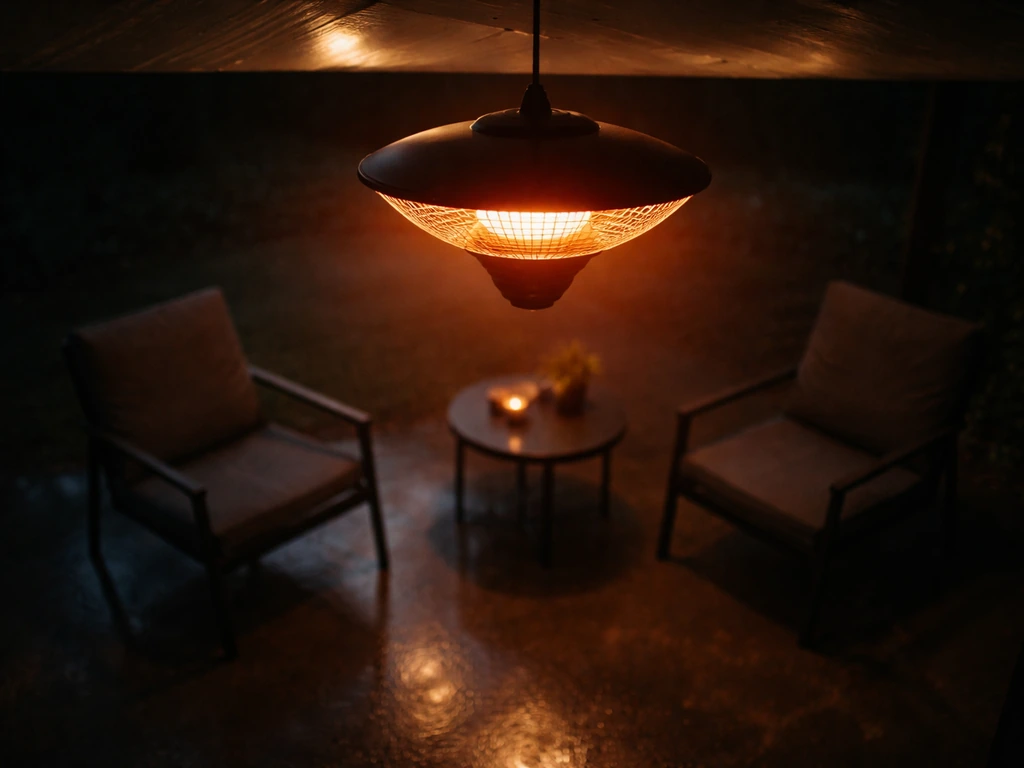
What "hanging" actually means for patio heaters
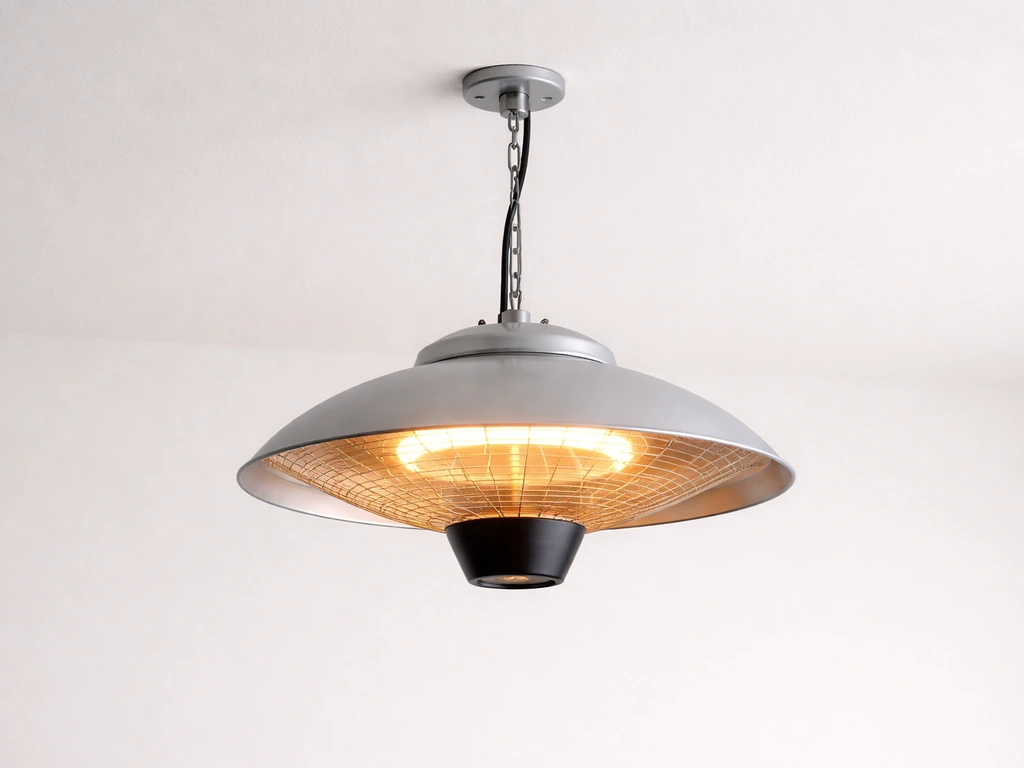
In patio heater terms, "hanging" almost always refers to a ceiling-suspended or overhead-mounted infrared radiant unit. These are not the same as a freestanding mushroom-style propane heater or a flat wall-bracket mount. Hanging models are specifically designed to drop down from a ceiling junction box or beam using a suspension kit, which typically includes a chain, hook, canopy cover, and a safety retaining pin. Some models, like the Solaira Radius Pendant Series, ship with the entire suspension kit included and can even be installed at an angle to direct heat toward a specific seating zone.
The key distinction from wall-mounted or ceiling-flush models is that pendant-style heaters hang below the mounting surface, giving you more flexibility with beam direction and height adjustment. That said, the term "hanging" in search results also catches overhead patio heaters mounted directly to ceiling joists or soffit brackets, so this guide covers both configurations. The heat delivery mechanism is the same either way: short-wave or medium-wave infrared radiation travels in a directional beam from the heater element to people and surfaces below, rather than warming the surrounding air.
What these heaters actually require to work well
Mounting requirements vary by model, but a few things are consistent across the category. You need a structurally sound overhead anchor point, whether that is a rated ceiling junction box, a solid wood beam, or a steel pergola rafter. The suspension hardware has to support the heater's weight plus dynamic load from wind or accidental contact. Most pendant models weigh between 8 and 20 lbs, so a standard ceiling fan-rated junction box (rated for 35 lbs or more) usually works, but always confirm this against the manufacturer spec sheet.
Coverage and heat throw depend heavily on mounting height. Overhead infrared heaters are typically optimized for 8 to 12 foot mounting heights. If you are focused specifically on the best ceiling mounted electric patio heaters, the key differences are mounting height, IP rating, and whether the unit is flush-mounted or a pendant-style drop optimized for 8 to 12 foot mounting heights. Below 8 feet you risk discomfort from concentrated heat on one spot; above 12 feet the beam disperses too broadly and loses effective warmth at seated height. A 6,000W unit like the Infratech CD Series covers approximately 121 sq ft at proper mounting height, which is roughly an 11 by 11 foot zone. The Eurofase EF60 at the same 6,000W wattage gives you a similar 11 by 11 ft footprint. Scale down to a 4,000W model for smaller zones around 80 to 100 sq ft.
On the electrical side, most 4,000W to 6,000W hanging heaters require a dedicated 240V circuit. Schwank specifies electric patio heaters in wattage classes (for example, 4,000W and 6,000W models) for sizing and electrical planning blank" rel="noopener noreferrer">most 4,000W to 6,000W hanging heaters require a dedicated 240V circuit. A 4,000W unit typically draws around 16.7A at 240V, so a 20A breaker is the minimum. A 6,000W unit pulls 25A, which means a 30A dedicated circuit is the standard. You will also need outdoor-rated wiring and, depending on your jurisdiction and NEC requirements, GFCI protection at the breaker or outlet serving the heater.
Electric vs. propane vs. natural gas for overhead use
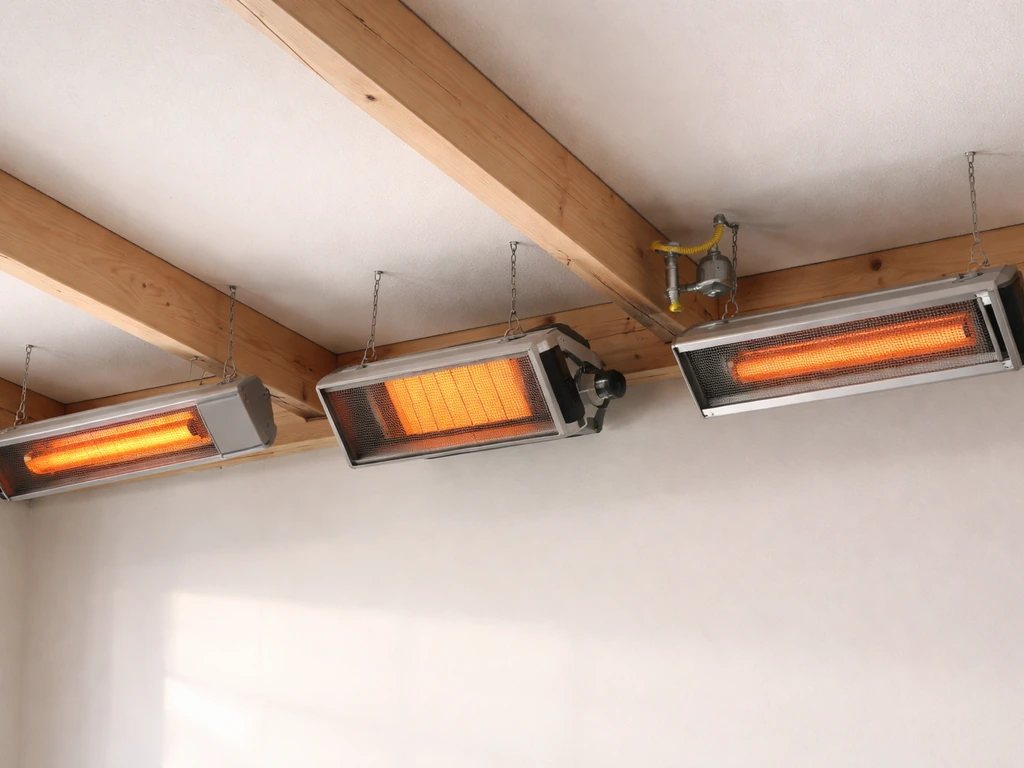
If you are still deciding between fuel types, this comparison matters. Electric infrared is almost always the better choice for a permanently hung overhead installation, and here is why: blank" rel="noopener noreferrer">there is no open flame, no combustion byproduct, no requirement for gas line routing or propane tank storage, and the heat is not affected by wind in the same way that a flame-based system is. Electric radiant heaters convert energy directly into infrared radiation aimed at people and objects, so a gust of wind does not blow your heat source away, though very strong drafts will still reduce perceived warmth by cooling skin faster.
| Fuel Type | Output Spec | Wind Resistance | Combustion/Venting Needed | Best Overhead Use Case | Typical Installation |
|---|---|---|---|---|---|
| Electric Infrared | Watts (e.g., 2,000W–6,000W) | High (no flame) | No | Covered patios, pergolas, enclosed spaces | Dedicated 240V circuit, hardwired or plug-in |
| Propane | BTU/h (e.g., 40,000–60,000 BTU) | Low–Medium (open flame) | Yes (open flame) | Open-air spaces, portable setups | Tank connection, no electrical required |
| Natural Gas | BTU/h (e.g., 40,000–60,000 BTU) | Low–Medium (open flame) | Yes (requires gas line) | Permanent outdoor kitchens, commercial patios | Gas line run, professional install |
| Infrared Gas (Bromic, etc.) | BTU/h + radiant efficiency | Medium (partially radiant) | Yes (gas line or propane) | Open-air large commercial zones | Gas line, bracket or ceiling mount |
One thing worth clarifying: "infrared" is a heat delivery method, not a fuel type. You can have electric infrared heaters and gas infrared heaters. The ones in this guide are electric infrared, which are the dominant choice for hanging overhead residential patio installations. Gas infrared models from brands like Bromic also mount overhead, but they require combustion and are typically a better fit for very large open-air commercial zones. For a residential covered patio or screened porch, electric wins on safety, simplicity, and running cost at typical usage hours.
Top picks: best hanging electric patio heaters
These are the models I consistently recommend after reviewing specs, installation documentation, and real-world customer feedback. Each one is designed for overhead use, carries outdoor-appropriate IP ratings, and has the electrical specs to back up its advertised coverage claims.
Best overall: Infratech CD Series (4,000W and 6,000W)
The Infratech CD Series is the benchmark for residential overhead electric patio heaters. The dual-element design means you get a wider coverage footprint than single-element models at equivalent wattage. The 6,000W variant (CD6024) covers approximately 121 sq ft (roughly 11 by 11 feet) at a mounting height of 8 to 12 feet. It runs on 240V and requires a 30A dedicated circuit. The anodized aluminum housing holds up well to moisture and UV, and Infratech's flush surface-mount bracket integrates cleanly into covered porch ceilings. This is the pick if you want a proven, widely-installed model with solid retailer support and an extensive dealer network for service.
Best for design-forward spaces: Bromic Platinum Smart-Heat Electric
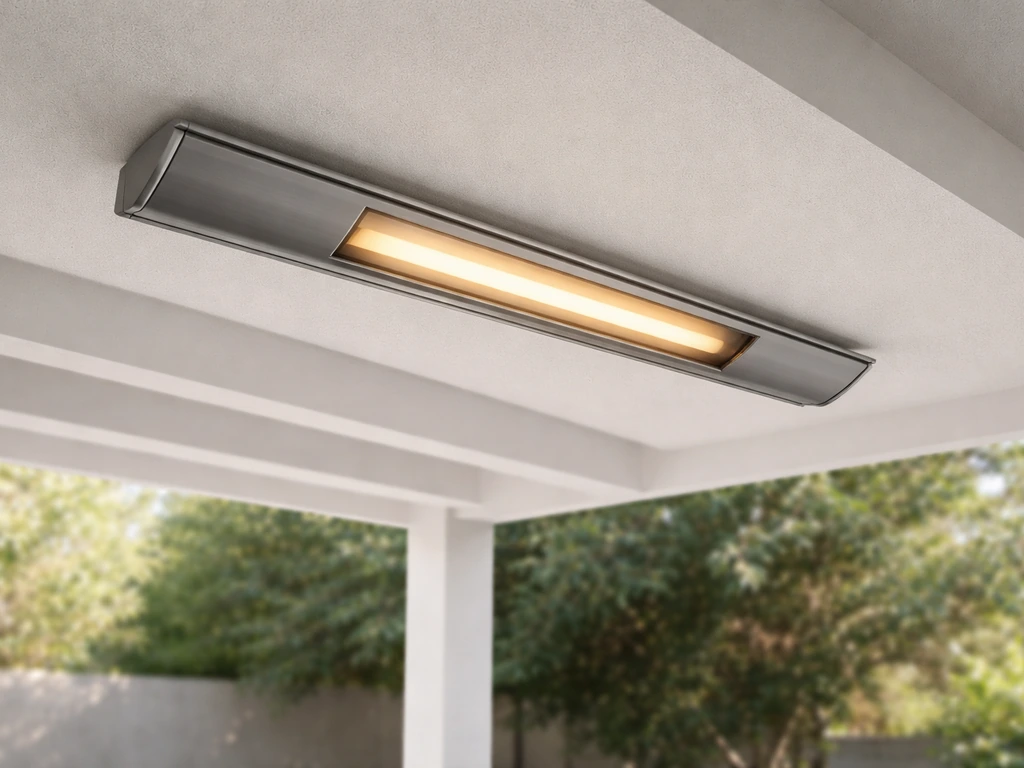
Bromic's Platinum Smart-Heat Electric is a slim, minimalist heater available in 2,300W and 3,400W versions. It is the pick for architects, designers, and homeowners who want the heater to disappear visually into the ceiling rather than dominate it. The 3,400W model works well for patios in the 80 to 100 sq ft range. Bromic's documentation covers IP-rated outdoor suitability and provides clear voltage and amperage specs per model variant. The Smart-Heat controller compatibility is a genuine advantage if you want zone control, dimming, or integration with a smart home system. Trade-off: it costs more per watt than the Infratech, and coverage per unit is smaller, so larger spaces will need multiple units.
Best for windy or semi-exposed patios: Schwank eSchwank Ghost
The eSchwank Ghost is IP65-rated (dust-tight and protected against water jets), which is the highest weather protection I typically see on residential hanging electric heaters. It offers flexible mounting including ceiling and wall configurations, ships with angle-adjustment capability, and includes remote control out of the box. The IP65 rating makes it a legitimate option for semi-exposed pergola setups or coastal environments where other IP44 or IPX4 models would not hold up long-term. It is also one of the cleaner-looking units in the category. If your patio is not fully covered or sits near the ocean, start here.
Best pendant/hanging-specific install: Solaira Radius Pendant Series
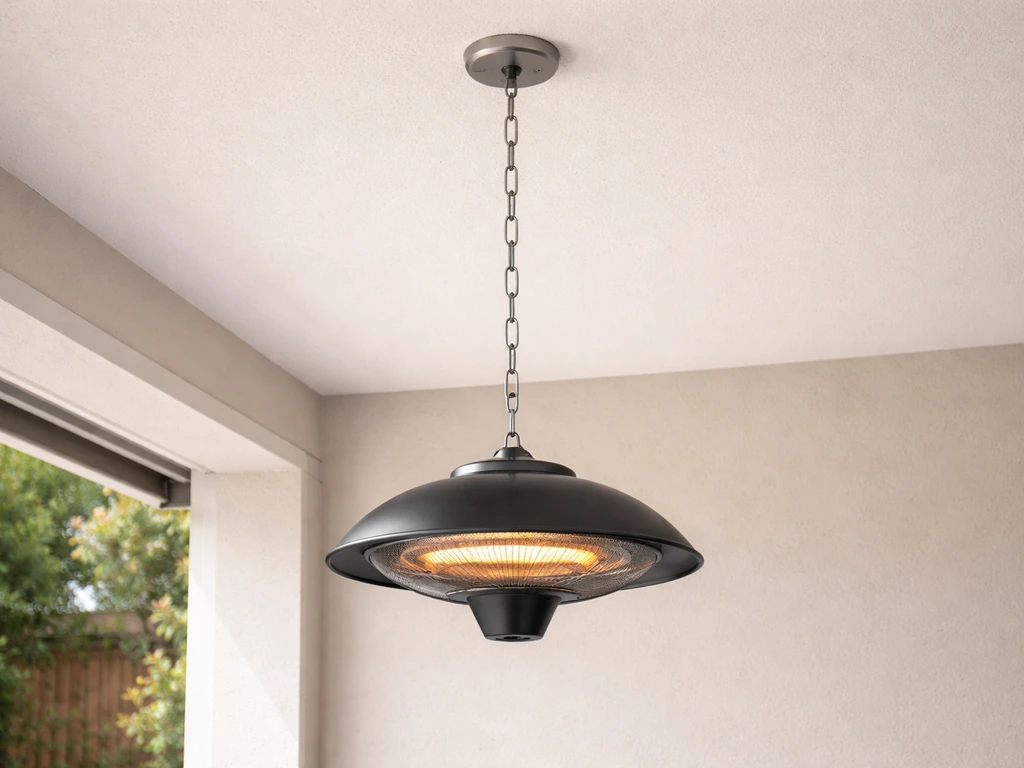
If you want a true pendant-style hanging heater that drops below the ceiling on a chain and canopy, the Solaira Radius is purpose-built for that application. It ships with a ceiling suspension kit including chain, hook, canopy, and safety pin. The unit can be installed at an angle using the supplied suspension hardware, which is useful for targeting heat toward a specific seating zone rather than straight down. Solaira offers multiple voltage options (208V, 240V, 277V), which is helpful if you are working with a commercial or non-standard electrical service. This is the pick for pergola posts, high-ceiling outdoor rooms, or any situation where flush ceiling mount is not an option.
Best value for smaller patios: Eurofase EF60 (6,000W)
The Eurofase EF60 at 6,000W delivers comparable coverage to the Infratech CD Series (approximately 11 by 11 feet) but typically comes in at a lower price point through major lighting and outdoor living retailers. It is a solid ceiling-mount option for covered patios that want strong output without the premium brand pricing. If you are outfitting a budget-conscious project or a rental property, this is a practical choice with well-documented specs.
Quick comparison: top hanging electric patio heaters
| Model | Wattage | Coverage (approx.) | IP Rating | Mount Style | Best For |
|---|---|---|---|---|---|
| Infratech CD Series (CD6024) | 6,000W | ~121 sq ft (11'x11') | Outdoor rated | Ceiling/wall bracket | Best overall, covered patios |
| Bromic Platinum Smart-Heat Electric | 2,300W / 3,400W | ~80–100 sq ft | IP-rated (per manual) | Ceiling/wall slim mount | Design-forward spaces, smart control |
| Schwank eSchwank Ghost | Varies by model | Model-dependent | IP65 | Ceiling/wall, angle-adjustable | Windy, semi-exposed, coastal patios |
| Solaira Radius Pendant | Multiple (208V/240V/277V) | Model-dependent | Outdoor rated | Pendant/chain suspension | True pendant install, angled throw |
| Eurofase EF60 | 6,000W | ~121 sq ft (11'x11') | Outdoor rated | Ceiling mount | Best value, covered patios |
How to choose the right heater for your patio size, height, and climate
Start with square footage and ceiling height, because those two numbers will eliminate most wrong choices immediately. Use the 10 watts per square foot rule as a starting point for covered, semi-enclosed patios in mild to moderate climates. If you live somewhere that drops below freezing regularly or your patio is exposed on two or more sides, bump that to 12 to 15 watts per square foot. A 200 sq ft patio in Chicago winter needs a different plan than the same footprint in Austin in November.
Ceiling height is the other major variable. Most overhead electric heaters are optimized for 8 to 12 feet. If your ceiling is under 8 feet, choose a lower-wattage model (2,000W to 3,000W) to avoid uncomfortable concentrated heat at head level. If you have a vaulted ceiling above 12 feet, you will need either a higher-wattage model, a pendant that drops the heater down closer to the 8 to 12 foot effective range, or multiple units. This is where the Solaira Radius pendant configuration earns its keep: you can hang it at any height you want by adjusting the chain length.
For open-air or semi-exposed patios (pergolas without solid roofs, poolside installations, coastal properties), prioritize IP65-rated models over IPX4. IPX4 means protection against water splashing from any direction, which is fine for a well-covered porch. IP65 means fully dust-tight and protected against water jets from any direction, which is what you want for a structure that takes wind-driven rain. Do not assume any IP rating means the unit can be installed in a completely uncovered, fully rain-exposed position unless the manufacturer explicitly states it.
Climate also affects your thermostat and control needs. In a climate with a long shoulder season (spring and fall use), programmable timers and dimmers matter because you are not running at full power every session. Models with dimmer compatibility (like the Bromic Platinum with Smart-Heat controller) let you run at 50% to 75% capacity on mild nights, which extends element life and reduces electricity costs meaningfully over a season.
What to measure and confirm before you buy
Getting these numbers before you order will save you a return. Measure your patio zone dimensions (length by width in feet) to calculate sq ft. Measure ceiling or soffit height from floor to the mounting surface. Note the distance from the mounting point to where people will be seated directly below, since that is your effective throw distance. Identify the nearest electrical panel and whether you have capacity for a new 240V circuit, because most of these heaters cannot run on a standard 120V outlet.
- Patio zone dimensions (length x width in feet) to calculate the coverage area you need
- Ceiling or soffit height from floor to mounting surface (target: 8 to 12 feet for most models)
- Distance from proposed mounting point to nearest seated occupant (for heat comfort zone verification)
- Whether your mounting surface is a solid wood beam, metal structure, or drywall ceiling (affects anchor hardware requirements)
- Available electrical supply: confirm whether you have a 240V panel with an open breaker slot for a dedicated 20A or 30A circuit
- Distance from panel to heater location (longer runs may require larger wire gauge; consult a licensed electrician)
- Local climate exposure: fully covered, partially covered, or open-air (determines required IP rating)
- Clearance to nearest combustible surfaces on all sides (ceiling above, adjacent walls, any decorative wood trim)
Clearance requirements are model-specific and published in each heater's installation manual. Do not skip this step. A typical outdoor radiant heater manual specifies minimum distances to combustibles on the ceiling above, the walls to either side, and the open space in front of the element. Violating these clearances is not just a fire risk, it will likely void your warranty and could create a code compliance issue if you ever sell the home. Look up the specific clearance table for your model before you mount anything.
For pendant-style hanging heaters, also confirm the junction box rating. Most pendant heaters weigh between 8 and 20 lbs, and a standard lighting junction box rated for only 50 lbs static load may not meet the requirement once you factor in the heater's weight and dynamic movement. A ceiling fan-rated box (rated for 35 lbs or more dynamic load) is typically appropriate, but verify against your model's specs.
Installation essentials
Most 240V hanging electric heaters are hardwired installations, not plug-in. That means a licensed electrician needs to run a dedicated circuit from your panel to the heater location. All outdoor wiring must comply with the National Electrical Code (NEC) and applicable local codes for outdoor and wet-location wiring. Where the circuit serves an outdoor location classified as wet or damp, GFCI protection is typically required, either at the breaker level or at the first outlet in the circuit. Do not skip the GFCI requirement, it is both a code issue and a genuine safety measure for outdoor electrical installations.
For pendant heaters with a suspension chain and canopy kit, the typical installation sequence goes: secure the ceiling canopy plate to the junction box, thread the electrical supply wire through the chain, connect wiring at the canopy, hang the heater body, and install the safety retaining pin that prevents the heater from accidentally separating from the suspension hook. The safety pin is not optional, it is the backup retention element that keeps a heavy, hot heater from falling if the primary hook connection loosens. Models like the Solaira Radius explicitly include this pin in the suspension kit for this reason.
If you are installing a ceiling-bracket model (flush or semi-flush to the ceiling rather than pendant), the mounting hardware needs to reach solid structural framing, not just drywall. Use an appropriate toggle bolt or structural anchor for masonry ceilings, and wood screws into joists for standard framed ceilings. Many heater mounting brackets include slotted holes for minor position adjustment, so it helps to map out your joist locations before committing to a position.
Safety checklist for overhead electric patio heaters
Overhead electric heaters are among the safer outdoor heating options because there is no open flame and no combustion byproduct, but they still carry meaningful risks if installed or used incorrectly. Run through this checklist before you use a newly installed unit for the first time.
- Confirm all minimum clearances to combustibles (ceiling, walls, framing, trim) match the values in your specific model's installation manual before first use
- Verify the mounting hardware (junction box rating, fasteners, structural anchor) is rated for the heater's weight with an appropriate safety margin
- Check that the suspension safety pin (on pendant models) is installed and fully seated so the heater cannot accidentally detach from the chain
- Confirm the circuit is on a dedicated breaker of the correct amperage (typically 20A for 4,000W or 30A for 6,000W at 240V) and is not shared with other high-draw appliances
- Ensure GFCI protection is in place on the outdoor circuit as required by NEC and local code for your installation location
- Verify the heater's IP rating is appropriate for the actual weather exposure at your installation site (IP65 for semi-exposed or coastal, at minimum IPX4 for fully covered patios)
- Do not mount directly above flammable materials including synthetic patio rugs, fabric cushion storage, or wood piles within the clearance zone
- Inspect the suspension hardware, chain, and mounting bracket annually for corrosion, loosening fasteners, or signs of wear, especially in coastal or high-humidity environments
- Follow manufacturer instructions for all electrical connections; do not use extension cords or non-rated splices for hardwired installations
- Keep the heater powered off and allow it to cool fully before handling, adjusting angle, or performing any maintenance
One thing NFPA guidance consistently emphasizes: the manufacturer installation manual is the governing document. Code compliance sets the floor, but a heater manufacturer's clearance requirements and installation instructions are often more specific than code minimums. Treat the manual as required reading, not optional fine print.
How this compares to other mounted heater styles
If a ceiling pendant install is not workable for your space, the closest alternatives are wall-mounted patio heaters (which mount on a vertical surface and project heat outward at an angle) and ceiling-flush overhead models (which sit tight against the ceiling on a bracket rather than hanging down). Wall-mounted patio heaters are a practical option when you want electric infrared heat directed outward from a vertical surface instead of hanging from the ceiling. Both can deliver similar electric infrared heat but with different beam geometry and aesthetic profiles. Freestanding floor heaters are a completely different category with obvious portability advantages but no ability to direct heat from above. For large patios needing heat across the full ceiling plane, a grid of ceiling-mounted units is often the better solution compared to a single high-wattage pendant.
The bottom line: for most covered residential patios between 80 and 150 sq ft with a 8 to 12 foot ceiling and access to a 240V circuit, a single 4,000W to 6,000W hanging or ceiling-mount electric infrared heater from Infratech, Bromic, Schwank, Solaira, or Eurofase will get the job done. Pick based on your IP rating need, mounting configuration, and budget, and let the square footage and ceiling height numbers drive your wattage decision.
FAQ
Can I use a hanging patio heater in an uncovered, rain-exposed area if it’s “outdoor rated” (IP rating)?
Only if the manufacturer explicitly allows that exposure. Even with a high IP rating, many overhead heaters are intended for covered locations, wind-driven rain, or occasional splashing. For any truly uncovered use, confirm the installation location language in the manual (wet vs damp vs covered), and verify the minimum clearance around the unit will keep water from pooling on hot surfaces.
What’s the safest way to choose wattage if my patio has partial wind or open sides?
Start with your square footage, then add a buffer rather than just maxing out wattage. If your patio is semi-exposed (for example, open on two sides), the article suggests a higher W-per-sq-ft range, but also consider reducing “dead zones” by aiming heat toward seating and, if needed, using two lower-output units so you get more uniform coverage rather than one strong hotspot.
Do hanging infrared heaters warm objects and people, or do they actually heat the air?
They primarily warm people and surfaces directly by infrared radiation, not the surrounding air. That means you feel warmth quickly if you’re in the beam path, but you may still feel cooler air movement around you. In windy areas, perceived warmth can drop because cooled skin loses heat faster, even if the heater is working normally.
What distance from the heater to the seating area matters most, and how do I measure it?
The effective “throw” depends on mounting height and the unit’s design, but your real-world measurement should be the vertical drop distance from the heater’s element location to the seated head or torso level, plus any offset to account for where people sit. Measuring from the mounting point to the seated zone helps you avoid buying based on square footage alone and ending up with the heater aimed too high or off to the side.
Are hanging patio heaters compatible with 120V outlets, or do I need a 240V circuit every time?
Most of the best hanging options in this category are designed around 240V dedicated circuits, especially in the 4,000W to 6,000W range. If you only have 120V available, you will likely end up with lower-wattage models that may not meet your coverage needs. The practical next step is to check the heater’s voltage and amperage for the exact model variant you want before planning the installation.
Can I control a hanging electric patio heater with a dimmer, smart plug, or wall switch?
Often you need a compatible control method, not a generic plug-in device. Many 240V hardwired heaters require specific wall controls, switches, or a manufacturer controller designed for the heater’s electronics. A smart plug is usually not appropriate for these high-watt units because they are hardwired or exceed plug circuit ratings, and using the wrong controller can shorten element life or cause fault behavior.
Do I need an electrician for installation, even if the pendant kit looks straightforward?
Yes, for typical hanging electric patio heaters that require a dedicated 240V circuit. The heater is usually hardwired, the wiring must meet outdoor and wet-location rules, and GFCI requirements often apply. Even if you can mount the hardware yourself, a licensed electrician should handle the electrical connection and any code-required protection devices.
How do I make sure my ceiling junction box can safely hold the heater long-term?
Don’t rely on the box rating from the product you have, confirm it against the heater’s suspension and installation requirements. Pendant heaters typically weigh more than many standard lighting boxes, and dynamic forces from contact, vibration, or wind can matter. A practical check is to ensure the box is rated for the heater’s static load plus safety margin, and that it is anchored to the correct structural framing, not drywall alone.
What’s the most common clearance mistake people make with overhead heaters?
Ignoring the clearance table for combustibles and assuming the general outdoor spacing rules apply. The manual often specifies minimum distances to ceiling materials above, to walls on the sides, and to the open space in front of the element. Skipping this step can lead to warranty denial, installation failure, or a safety issue, especially if there’s insulation, a soffit, or decorative trim near the beam.
If my ceiling is vaulted or sloped, can I still install an overhead infrared heater?
Sometimes, but you must account for mounting geometry and clearance, and you may need a pendant-style drop or an angled mounting kit. Some models are designed to be installed at an angle using their suspension hardware, which can help aim the beam at seating. The key is to follow the manual’s allowed mounting orientations, because clearance distances can change with angle.
What should I do if I’m between two wattage sizes, for example 4,000W vs 6,000W?
If you’re truly between sizes, prefer better beam targeting and more uniform coverage before simply jumping to the highest output. Consider whether your patio has insulation and how exposed it is, then choose the lower wattage if your ceiling height and seating distance keep you within the heater’s coverage footprint. If you need the higher end, using multiple units (or a pendant drop that places the element in the effective 8 to 12 foot zone) can feel more even than one maximum-output heater.

Compare overhead patio heater types and fuels. Choose the right coverage, mounting fit, safety, and running costs fast.
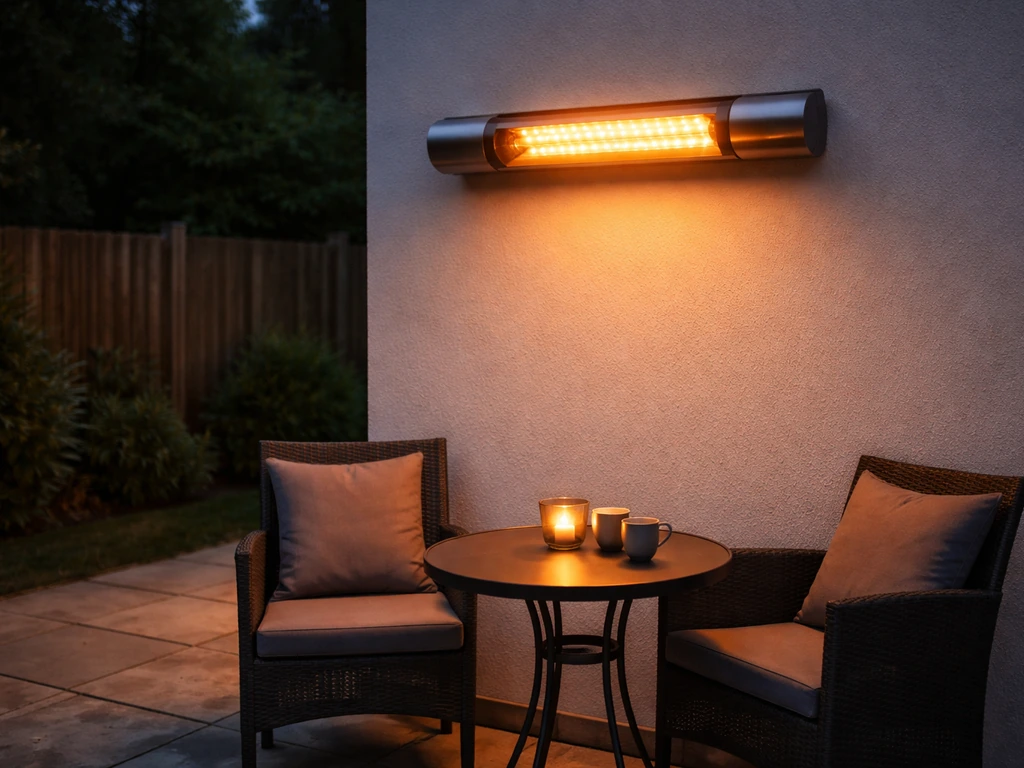
UK guide to the best wall mounted patio heaters: electric vs infrared, coverage, costs, placement, and safety checks.
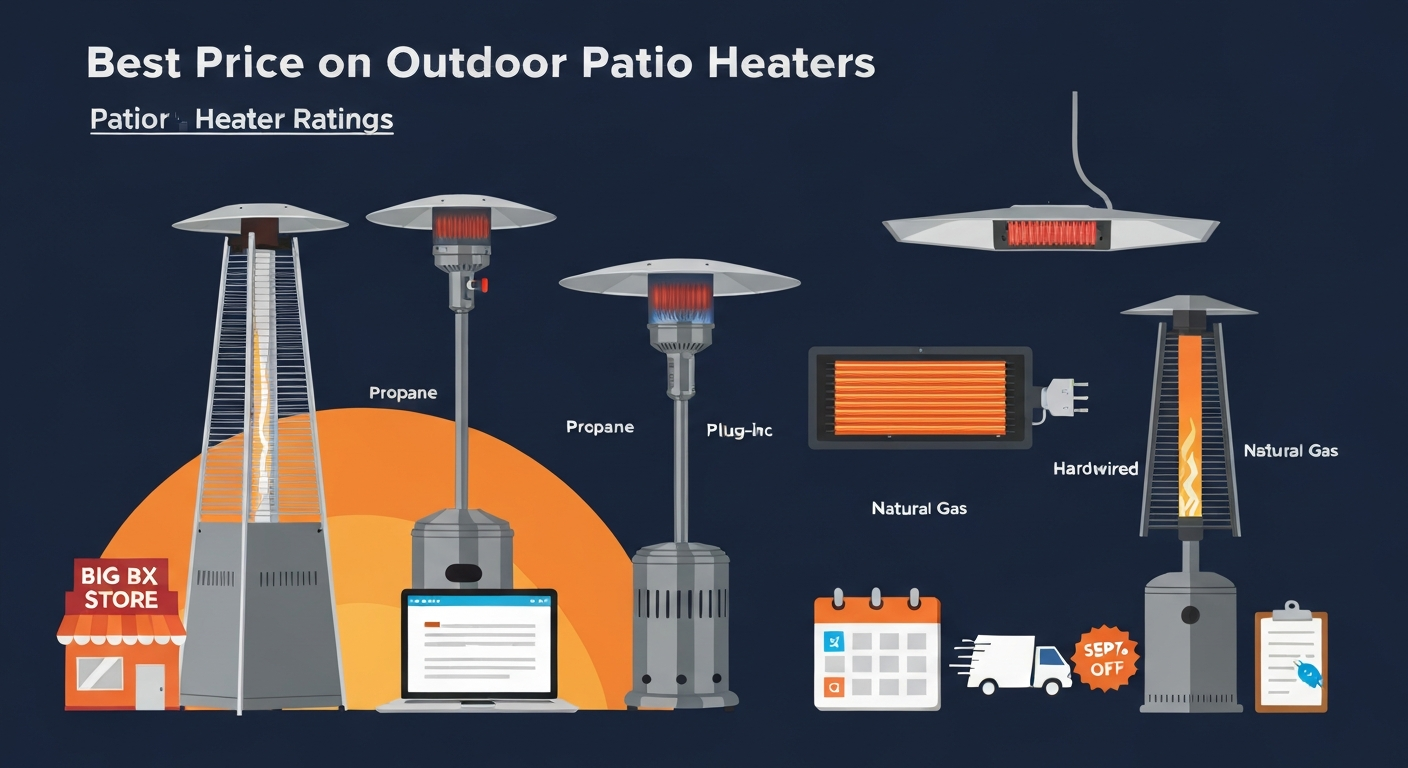
Score the best price on outdoor patio heaters, price ranges, top picks, deal tactics, total-cost & safety checklist.