
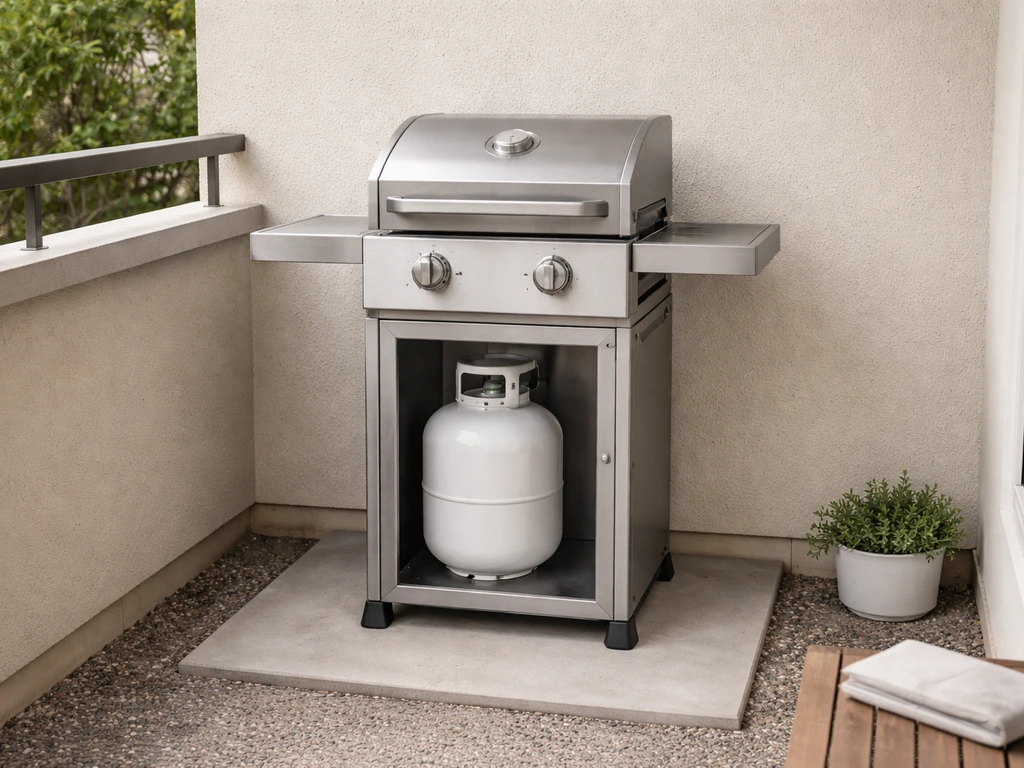
For most apartment patios in 2026, a compact 2-burner propane gas grill with a folding side shelf, a footprint under 40 inches wide, and at least 280 square inches of cooking area is the right call. Models in the Weber Spirit E-210, Cuisinart CGG-7400, and Char-Broil Performance 300 class consistently hit that mark. But before you buy anything, you need to check your lease and local fire code first, because in some cities and buildings, any gas grill on a balcony is simply not allowed, and buying first is an expensive mistake.
Best Gas Grill for Apartment Patio: Quick Buying Guide

Caleb Vale
26 Jun 2026
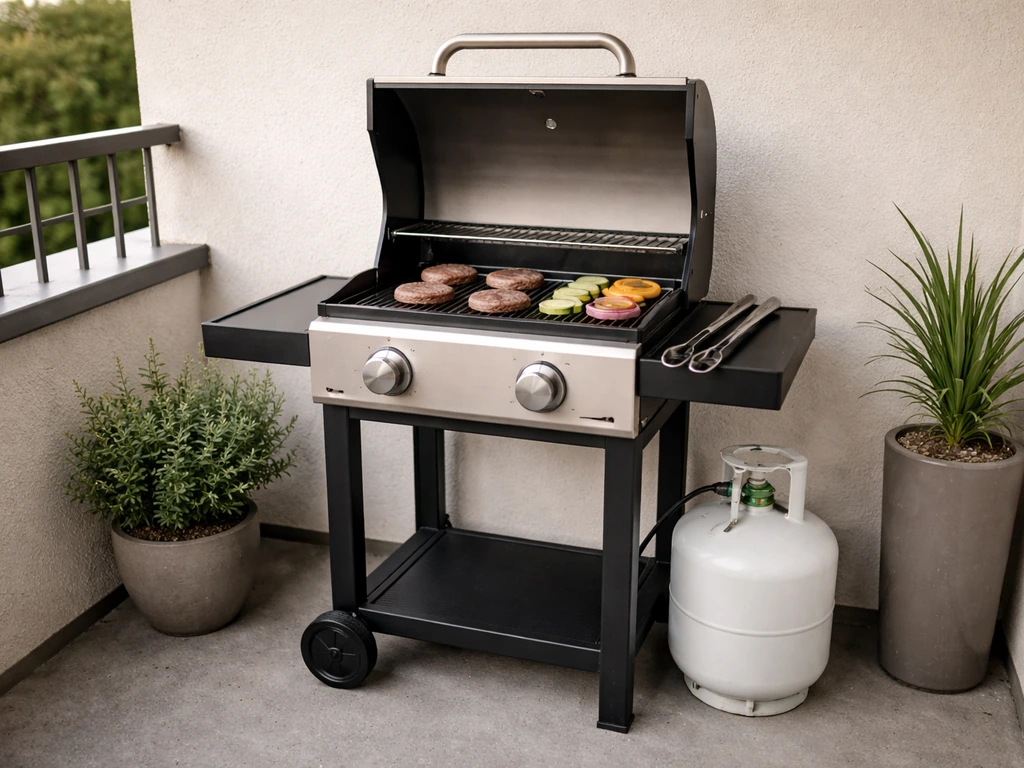
Apartment patio rules and restrictions to check before anything else
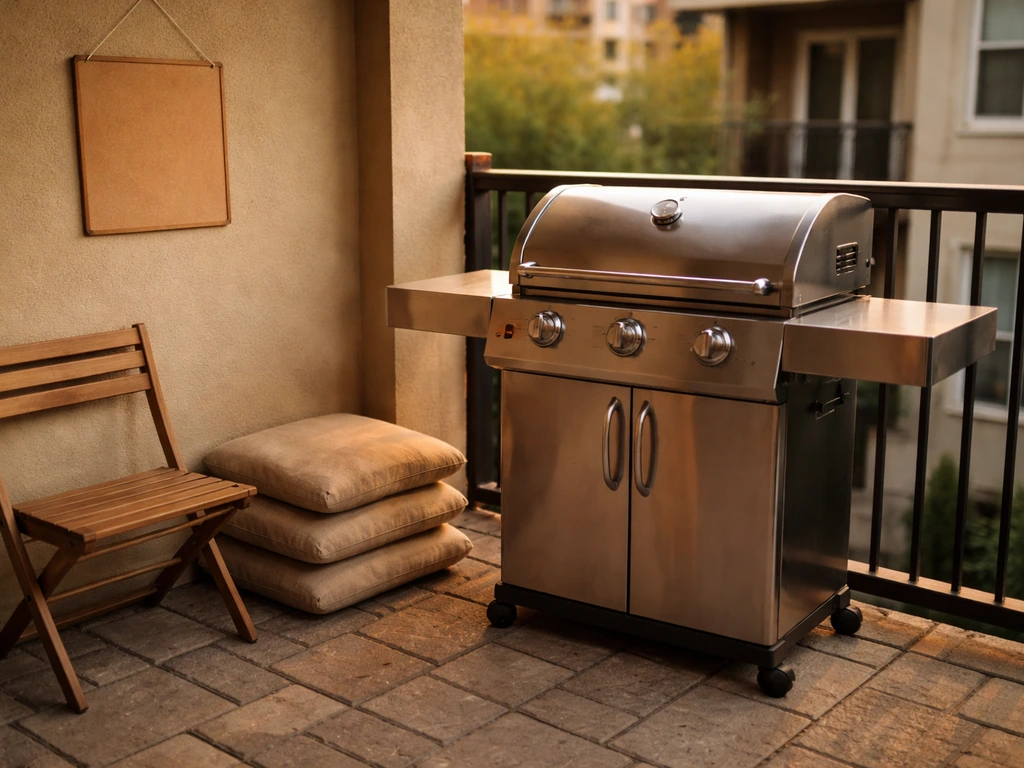
This is not a formality. A surprising number of apartment residents buy a grill and then find out they cannot legally use it where they live. Rules come from three directions at once: your lease, your building's fire-safety addendum, and your local fire code or ordinance. Many HOA management guidance pieces recommend aligning grill rules with your city or county fire code and checking lease or addenda for propane and where grills or tanks can be stored align HOA rules with local fire code. All three can restrict or outright ban gas grilling on balconies, and they do not always match.
On the lease side, some landlords include explicit addenda stating that tenants will not operate a charcoal, gas, or electric grill anywhere on the property. That language leaves no room for interpretation. Other leases are silent on grills, which means local fire code fills the gap. Cities like Somerville, MA ban propane grills on porches and balconies entirely. blank" rel="noopener noreferrer">Madison, WI prohibits storing grills on decks or balconies above the first floor. New York City requires a minimum 10-foot horizontal clearance between a grill and any building structure. blank" rel="noopener noreferrer">Minnesota's fire code references an 18-inch minimum clearance on all sides for listed gas barbecue grills, but only when the fire chief has approved the setup. Kodiak, AK defers to the International Fire Code's open-flame cooking device framework.
The fastest way to get a clear answer: pull out your lease and look for a grilling or open-flame clause. Then Google your city name plus 'apartment grill fire code' or call your local fire department's non-emergency line. HOA boards and property managers can also clarify building-specific rules, and they often publish written policies. If your building or jurisdiction prohibits propane grills on elevated balconies, an electric grill is your only compliant option, so check out dedicated guides on the best electric grills for patio use before going further. If you are limited to electric models, the section on the best electric grills for patio will help you narrow down the right size and heat output.
- Read your lease and any fire-safety addendum for explicit grill language
- Check your city or county fire department website for balcony/open-flame cooking rules
- Confirm whether your jurisdiction follows the International Fire Code or a local ordinance
- Ask your landlord or HOA in writing so you have a paper trail
- Check LP gas storage limits, since many codes cap propane cylinder size (typically 1 lb disposable or one 20 lb tank) on balconies
- Ground-floor patios usually have fewer restrictions than elevated balconies, so confirm which type of outdoor space you have
Propane vs natural gas: what actually works for apartment setups
For almost every apartment patio situation, propane wins by default. Natural gas grills require a permanent gas line connection, and apartment patios essentially never have one. Even if your building uses natural gas, tapping into that line for a portable grill is a landlord and permitting conversation that most tenants will not win. Natural gas makes sense if you own a condo with a permanent outdoor cooking zone and have a plumber-installed hookup, but that is a different scenario than a typical apartment balcony or ground-floor patio.
Propane cylinders, on the other hand, are fully portable and require no installation. A standard 20 lb (5-gallon) tank gives roughly 20 to 25 hours of cooking time on a mid-size 2-burner grill. Many small apartment-friendly grills also run on the smaller 1 lb disposable canisters, which are convenient but expensive per cook and create waste. If your lease or fire code restricts propane cylinder size on your balcony, a 1 lb canister may be the only compliant option, which makes per-session costs significantly higher.
One real advantage of propane for apartment use is precise heat control. Propane burners respond almost instantly to knob adjustments, which matters on a small patio where you cannot walk away from the grill easily. Propane also performs well in cold weather without significant BTU drop-off, making it a practical pairing when you are also running a patio heater to extend your outdoor cooking season. Natural gas BTU output is roughly 10 to 15 percent lower at the same orifice size, which is a minor issue at warm temperatures but noticeable in winter.
| Factor | Propane | Natural Gas |
|---|---|---|
| Availability on apartment patios | Yes, portable tank | Rarely, requires permanent line |
| Installation required | None | Plumber + landlord approval |
| Fuel cost per hour (approx.) | $0.75 to $1.25 | $0.40 to $0.70 |
| Cold-weather performance | Good | Slightly lower output |
| Portability | Fully portable | Fixed position only |
| Code restrictions on tanks | Size limits often apply | N/A for apartments |
| Best for apartments | Yes | No (for most renters) |
How to measure your patio or balcony before you buy
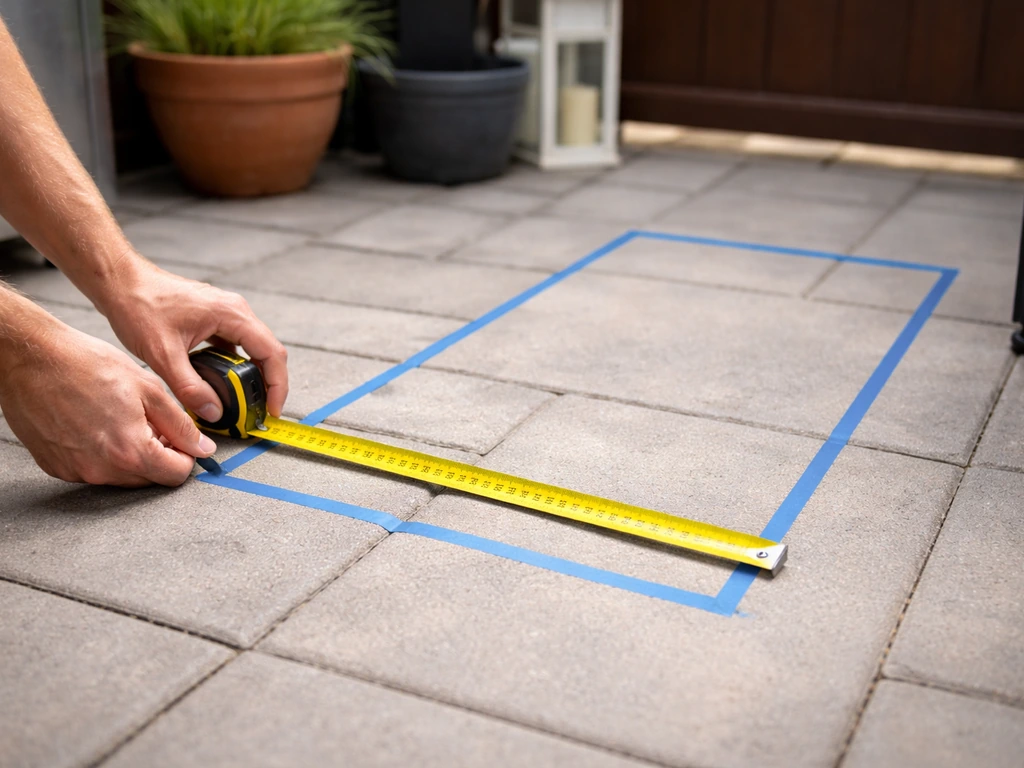
Grill dimensions on product pages are almost always the overall footprint with side shelves extended. That number can be 20 to 25 percent wider than the grill body itself, so measure the full extended dimensions against your available space before ordering. On a typical apartment balcony (roughly 40 to 60 square feet), you also need to account for clearance, not just the grill's physical size.
Most fire codes and grill manufacturers specify a minimum 18-inch clearance from the grill to any wall, railing, overhead structure, or combustible surface. NYC-specific guidance pushes that to 10 feet from a building structure in some contexts, which effectively eliminates balcony use. In practice, for a ground-floor patio with open sides, the 18-inch rule is workable. For a recessed balcony with walls on three sides, you may simply not have enough room to comply with clearance requirements on a grill wider than 36 inches.
- Measure the width and depth of your patio or balcony in inches
- Subtract 18 inches from each wall or railing side to find your usable grill zone
- Check the grill's total width with side shelves open and closed (look for both specs)
- Confirm height clearance if you have an overhang or low-ceiling balcony above
- Leave a clear path for movement, ideally at least 24 inches between the grill and any seating or furniture
- Note the surface material: combustible wood decking requires a grill mat or additional clearance
As a general rule, look for grills with a total footprint under 40 inches wide when shelves are open, and under 24 inches wide when shelves are folded or removed. Many 2-burner tabletop models collapse to under 20 inches wide, which gives you real flexibility. If you are shopping for a slightly larger ground-floor setup, guides covering the best gas grills for small patios are useful for comparing models in the 40 to 48-inch range.
What performance specs actually matter on an apartment grill
BTUs: more is not always better in a small space
BTU output is one of the most misunderstood specs in gas grills. Raw BTU numbers mean very little without knowing the cooking area they are heating. A better metric is BTU per square inch of cooking surface. For gas grills, you want somewhere between 80 and 100 BTU per square inch for effective searing without flare-up overload. A 2-burner grill rated at 20,000 BTU total over 280 square inches hits about 71 BTU per square inch, which is solid for most apartment cooking. If a small grill claims 40,000 BTU over 300 square inches, that is over 130 BTU per square inch, and in practice it often means the grill runs too hot at the edges and has hot-spot problems.
Cooking area and burner count
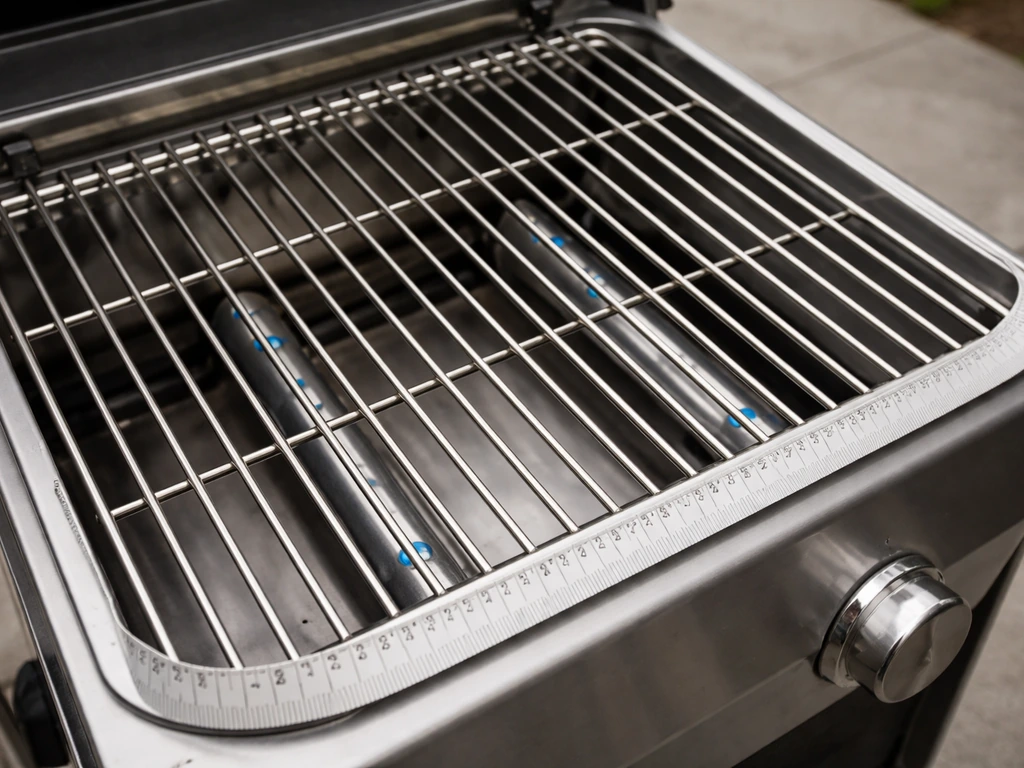
For one to two people cooking regularly, 240 to 300 square inches of primary cooking area is plenty. That handles 4 burgers, a couple of chicken breasts, or 2 steaks side by side without crowding. For a small family of 3 to 4, push for 300 to 400 square inches. Two burners is the right configuration for an apartment grill: it lets you run a two-zone setup (direct high heat on one side, indirect lower heat on the other), which is the most useful technique for cooking proteins evenly. Three-burner grills are available in compact footprints, but they typically add width that eats into your clearance budget.
Even heating and lid quality
Even heat distribution matters more on a small grill than a large one, because you cannot shuffle food to cooler zones as easily. Look for a grill with cast iron or porcelain-coated cast iron grates, which retain and distribute heat better than thin stainless rods. A fitted, tight lid is also important for roasting and indirect cooking, and it helps contain flare-ups, which is a safety consideration on a confined patio. Avoid grills with warped or loose lids, which is a common complaint in budget models under $150.
Wind resistance on a balcony
Balconies and elevated patios are often windier than ground-level spaces, and a low-BTU burner without a good wind guard will struggle to maintain temperature or even stay lit. Look for grills with enclosed burner tube designs or integrated wind baffles. Grills with push-button piezo igniters also tend to relight more reliably in wind than manual push-to-ignite systems. Weber's Spirit line has a reputation for wind resistance that holds up in real-world balcony use.
Safety and placement: clearance, ventilation, and grease management
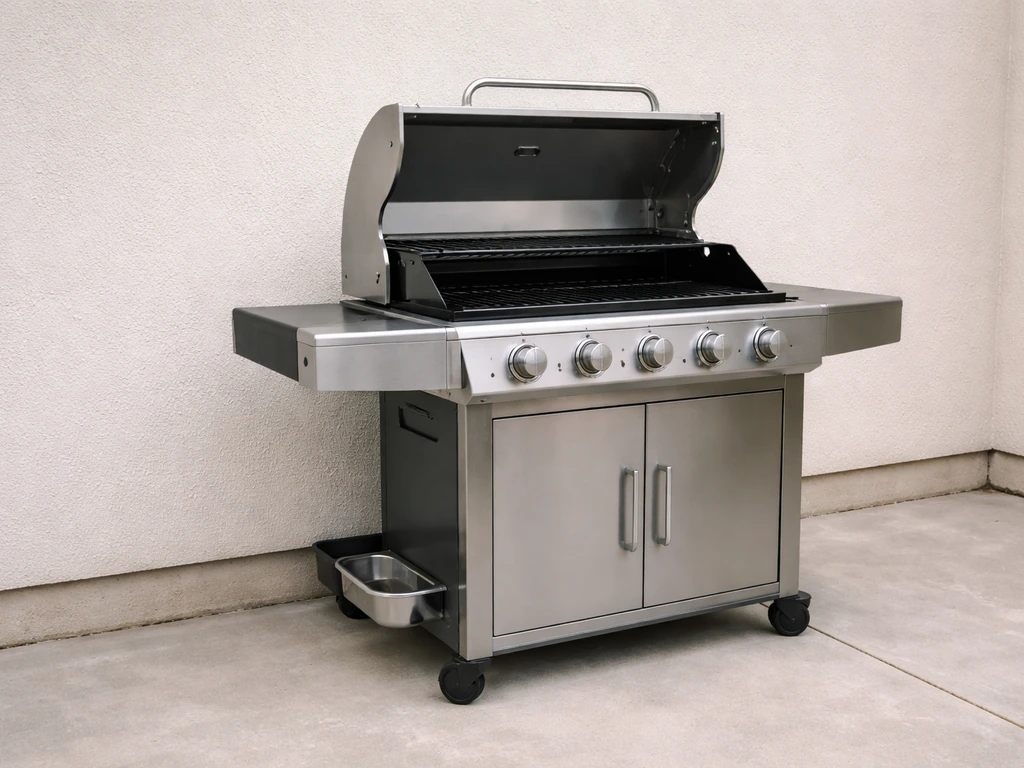
Even if your building allows gas grills, safe placement is your responsibility. The 18-inch minimum clearance rule applies to the sides and back of the grill from any wall, combustible railing, or overhead structure. If your balcony has a fabric awning, pull it back before using the grill. Overhead combustibles, including wood ceilings on covered patios, are a real fire risk that many apartment grillers underestimate.
Ventilation is the other half of the equation. A covered or semi-enclosed balcony needs enough open air movement to prevent carbon monoxide buildup. Never use a propane grill in an enclosed space, including screened-in patios without open walls, a garage with the door open, or under a tight pergola with little airflow. Ground-floor patios with open sides are naturally better ventilated than recessed upper-floor balconies. If your outdoor space feels enclosed, err toward electric options or ensure at least two open sides before grilling. If gas or space restrictions limit you, the best small electric grill for patio use is often the simplest way to keep cooking without needing a permanent hookup.
Grease management is often overlooked but it is one of the most common causes of grill fires. On an apartment patio, a grease fire is especially dangerous because you cannot move away from the structure quickly. Prioritize grills with a rear-positioned or centrally-collected grease tray rather than drip holes that deposit grease onto the burner area. Clean the grease tray after every 2 to 3 uses. Keep a small fire extinguisher within reach, ideally mounted or placed just inside the patio door.
- Maintain at least 18 inches of clearance on all sides and back from walls, railings, and overhead surfaces
- Never grill under a closed awning, low wood ceiling, or in a screened enclosure without open airflow
- Check propane connections before each use with soapy water for bubbles at the hose fitting
- Store propane tanks upright, outdoors or in a ventilated space, never inside the apartment
- Empty and clean the grease tray every 2 to 3 cooks to prevent grease fire buildup
- Keep a dry chemical or CO2 fire extinguisher accessible at the patio entry point
- Use a grill mat on wood or composite decking to prevent heat damage and catch drips
- Never leave a lit gas grill unattended on a confined apartment patio
Top picks by apartment patio scenario
The right grill depends on your specific patio size, how often you cook, and how much you want to spend. Here are practical recommendations by scenario, based on real-world performance and apartment-specific usability.
Tight balcony, 1 to 2 people: best compact 2-burner propane grills
The Weber Spirit E-210 (2025/2026 version) remains the benchmark for this category. It measures 44.5 inches wide with both side shelves open, but only 26 inches wide with one shelf folded, which is the configuration most balcony users will run. It puts out 26,500 BTUs across 360 square inches of primary cooking area, the grates are porcelain-enameled cast iron, and the lid fits tightly. The porcelain-coated catch pan sits underneath the burner box and is easy to pull and clean. At around $500 to $550 in 2026, it is not cheap for an apartment setup, but the build quality means you are not replacing it in 3 years.
The Char-Broil Performance 300 2-Burner is the budget-performance pick at roughly $180 to $220. It is 41 inches wide with shelves open, 24 inches with shelves folded, and delivers 24,000 BTUs across 300 square inches. The stainless burners hold up reasonably well, though the grates are porcelain-coated steel rather than cast iron, so they lose heat faster. For someone who grills 1 to 2 times per week in warm weather, it is a solid value.
Medium ground-floor patio, 2 to 4 people: best mid-size propane grills
The Weber Spirit E-310 steps up to 3 burners and 424 square inches of primary cooking area, putting out 30,000 BTUs. It is 52 inches wide with shelves open, which rules it out for tight balconies but works well on a ground-floor patio with room to breathe. If you regularly cook for a family of 4 or entertain occasionally, the larger grate area makes a real difference. Pricing is around $650 to $700 in 2026.
The Nexgrill 720-0896B 4-Burner (also sold under the Dyna-Glo and Expert Grill labels at Costco and Home Depot) is a step down in build quality but covers a lot of cooking area at around $250 to $300. It is better suited to a larger patio than a balcony. If you are comparing this scenario with options from a full outdoor kitchen perspective, patio-specific gas grill roundups cover this tier in more detail.
Budget pick under $200 for occasional use
The Cuisinart CGG-7400 Propane Grill is a 4-burner tabletop model that folds flat for storage. It measures 26.5 inches wide and 17 inches deep when open, with 443 square inches of cooking area and 40,000 BTUs. As a tabletop unit, it sits on a table or cart rather than its own stand, which makes it one of the most balcony-friendly options available. Build quality is light (thin steel, basic grates), but for someone who grills 4 to 6 times a summer, it delivers surprisingly even heat and packs away when not in use. At around $130 to $160, it is the easiest way to test apartment grilling before committing to a full grill.
| Model | BTUs | Primary Cooking Area | Width (shelves open) | Best For | Approx. Price (2026) |
|---|---|---|---|---|---|
| Weber Spirit E-210 | 26,500 | 360 sq in | 44.5 in | Tight balcony, 1-2 people, best build quality | $500–$550 |
| Char-Broil Performance 300 | 24,000 | 300 sq in | 41 in | Tight balcony, budget, occasional use | $180–$220 |
| Cuisinart CGG-7400 (tabletop) | 40,000 | 443 sq in | 26.5 in | Most compact, folds flat, entry-level | $130–$160 |
| Weber Spirit E-310 | 30,000 | 424 sq in | 52 in | Ground-floor patio, 2-4 people | $650–$700 |
| Nexgrill 720-0896B 4-Burner | 48,000 | 529 sq in | 55 in | Larger patio, budget family option | $250–$300 |
A quick note on pairing with a patio heater
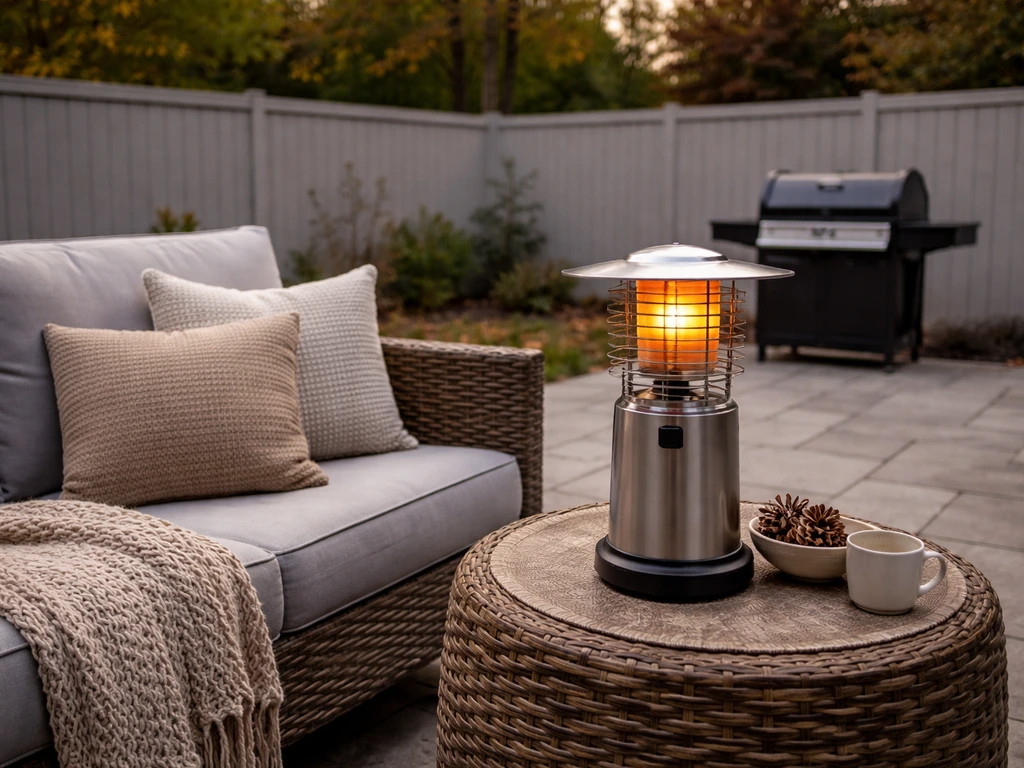
If you are planning to extend your outdoor cooking season into fall or early spring, a compact patio heater positioned near your seating area (not near the grill itself) makes a real difference. A tabletop propane heater or a wall-mounted electric infrared unit keeps the ambient temperature comfortable without competing with your grill's heat zone. Keep the heater at least 3 feet from the grill and never position it where it could ignite dripping grease or contact the propane hose. For tight balconies, an electric infrared wall heater is a cleaner, safer choice than a freestanding propane tower heater, which adds another fuel cylinder to manage on an already constrained patio.
Your buying checklist before you hit checkout
Most people who end up with a grill they cannot use made one of three mistakes: they did not check the rules, they did not measure with clearances in mind, or they bought a grill sized for a backyard and were surprised it dominated their balcony. Run through this checklist before you buy.
- Check your lease and any fire-safety addendum for explicit grill restrictions (do this first, before any shopping)
- Confirm your city or county fire code rules for gas grills on balconies and elevated patios
- Measure your usable patio space after subtracting 18-inch clearance zones from each wall and railing
- Check the grill's dimensions both with shelves open and folded, and compare to your measured zone
- Confirm the grill runs on propane (not natural gas only) and check whether it accepts standard 20 lb tanks or only 1 lb canisters
- Verify your patio surface: buy a grill mat if you have wood or composite decking
- Check the grease management system: look for a removable drip tray rather than open drip holes
- Look for push-button ignition with a reliable spark, especially if your patio is exposed and windy
- Plan your propane tank storage location before the grill arrives: it must stay upright, outdoors, and away from heat sources
- Add a dry chemical fire extinguisher to your cart if you do not already have one accessible at the patio
- If your rules or space prevent propane use, pivot to an electric grill option before buying
The best gas grill for your apartment patio is the one that fits your space legally, clears the walls safely, and gives you enough cooking area for your household without overwhelming a compact outdoor zone. For most people, that is a 2-burner propane model in the 280 to 360 square inch range. If you want the shorthand version, these specs are also what most shoppers mean by the best patio gas grills for apartments 2-burner propane model in the 280 to 360 square inch range. Spend more if you cook frequently and want a grill that lasts 8 to 10 years. Go tabletop if storage is tight and you grill occasionally. Either way, check the rules first and measure twice.
FAQ
Can I use a natural gas grill on an apartment patio if my building has an outdoor line available?
Only if your landlord explicitly approves the connection and the setup is permitted. Even when a line exists, many jurisdictions treat a patio grill connection like an outdoor gas appliance installation, which usually requires a licensed plumber or gas fitter and a shutoff valve plan.
What’s the difference between “primary cooking area” and the grill’s total dimensions, and which one should I trust?
Use cooking area for capacity, use overall footprint for fit. Primary cooking area is usually the stated grate surface where food actually cooks, while product width measurements often include side shelves, so you should re-check both for clearance compliance.
If my lease allows gas grills, do I still have to follow fire code clearance rules?
Yes. Lease language rarely overrides local fire code requirements. If the building permits propane but your balcony cannot meet clearance to railing, walls, or overhead structures, you can still be cited or forced to stop using the grill.
How do I tell whether my patio is too enclosed for safe propane grilling?
If you cannot maintain strong cross-breeze with two open sides or significant ventilation, treat it as too enclosed. Screened patios, tight pergolas, and areas near doors where air movement is limited can increase risk, and you should switch to an electric option if airflow feels constrained.
Are 1 lb propane canisters always the only option when larger cylinders aren’t allowed?
Sometimes, but it depends on your building rules. Some allow refillable small cylinders or specific listed cylinder sizes, others prohibit cylinders entirely on elevated balconies, so confirm with property management what container types are permitted before buying.
How hot is “too hot” for a small apartment grill, and how can I prevent flare-ups?
If BTU-per-square-inch is unusually high for the stated cooking area, you may see edge scorching and flare-ups from frequent temperature surges. Use two-zone cooking (one side lower, one side higher), keep the lid closed during searing, and avoid over-oiling food.
What should I do about windy conditions on a balcony?
Use a grill with wind baffles or enclosed burner tubes, and position it so prevailing wind hits the grill from the open side of the canopy rather than blowing directly under the front. Also, do a quick ignition test before adding food, because wind can prevent burners from staying lit.
How often should I clean parts to reduce grease fires on a balcony grill?
Beyond wiping the exterior, focus on the grease tray or collection area after every few uses as well as periodic burner inspection for buildup. If grease drips onto burner components or you notice heavy smoke, stop and clean before the next cook rather than “powering through.”
Do electric patio grills need clearance or safety steps too?
Yes, but the risk profile differs. You still need safe placement away from combustibles and you should avoid running cords where they can snag or get hot, especially on balconies. If your building bans open-flame gas grilling, electric models still need compliance with any electrical and balcony rules in your lease or HOA policy.
Should I buy a tabletop gas grill or a freestanding 2-burner model for an apartment patio?
Choose tabletop if storage is tight, you cook occasionally, and your balcony clearance is limited, because tabletop units can fold down and fit on a cart. Choose freestanding 2-burner if you grill more often or want better grate longevity, but confirm the folded and open shelf widths still meet clearance and access needs.
Next Articles
Best Electric Grills for Patio: Buyer Guide and Top Picks
Top electric patio grills ranked with buying tips on size, heat, safety, setup, and cleaning for your budget and space.
Best Patio Gas Grills 2026: Buyer Guide, Picks, Safety
Best patio gas grills 2026 buyer guide: top picks, natural gas vs propane tips, safety checks, sizing, and decision step
Best Gas Grills for Small Patios: Top Picks and Buying Guide
Practical guide to the best gas grills for small patios, with compact picks and fit, safety, and fuel comparisons.