
The best electric grill for most patios in 2026 is one rated for outdoor use, pulls at least 1,500 watts (ideally 1,750 to 2,000W), and sits on a dedicated GFCI-protected outlet within reach without an extension cord. For a mid-size patio with standard outlet access, the Char-Broil Patio Bistro TRU-Infrared Electric Grill hits that target well: it uses infrared technology to reduce flare-ups, includes a lid-mounted temperature gauge for real monitoring, and delivers more even heat than most open-coil competitors at a price that doesn't require a second mortgage. If you're working with a small balcony, a compact unit like the Weber Q 1400 or a similar 1,560W tabletop model makes more sense. Premium users with large patios who want gas-like sear performance should look at higher-output models in the 2,000W-plus range with cast-iron grates.
Best Electric Grills for Patio: Buyer Guide and Top Picks

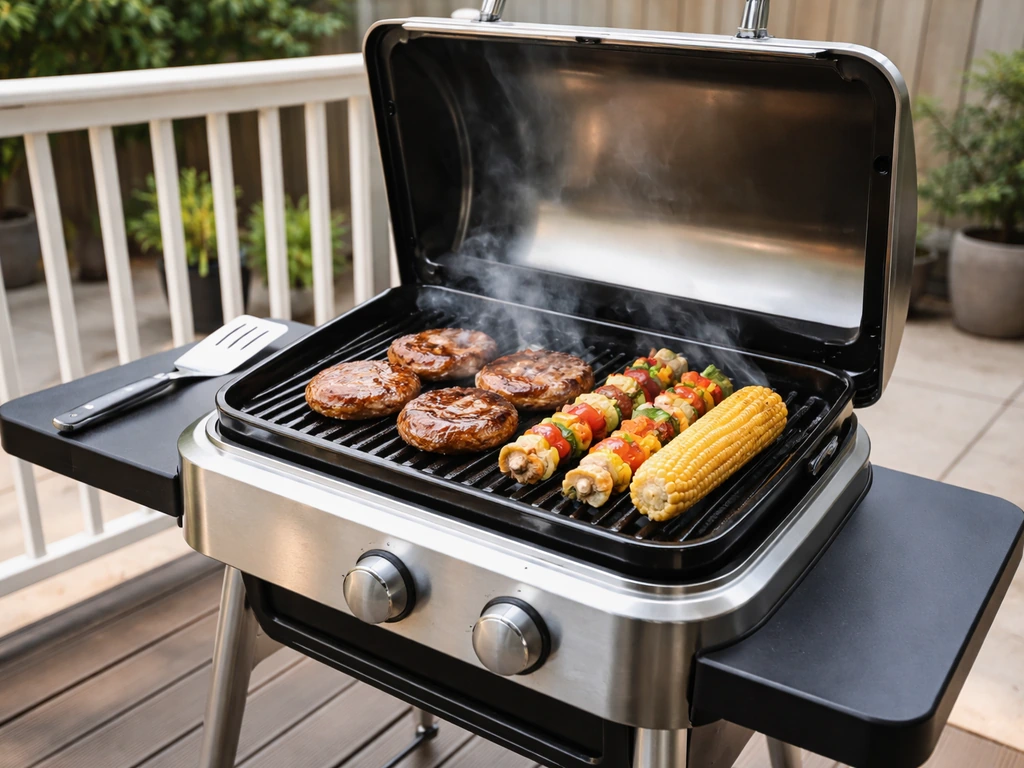
How to choose the right electric patio grill for your setup
Before you look at any specific model, you need to nail down three things: how much cooking surface you actually need, how much power your outdoor outlet can deliver, and what kind of cooking you do most. Get those wrong and no amount of positive reviews will save you.
Cooking surface size
A solo cook or couple can get by with 200 to 280 square inches of cooking area. That fits four to six burgers or a couple of chicken breasts comfortably. If you're regularly cooking for four or more, aim for 350 to 500 square inches. Anything larger than that on an electric grill starts running into power limitations, because you need proportionally more wattage to heat a bigger cooking surface evenly, and most residential outdoor circuits top out at 15 or 20 amps.
Power and outlet access
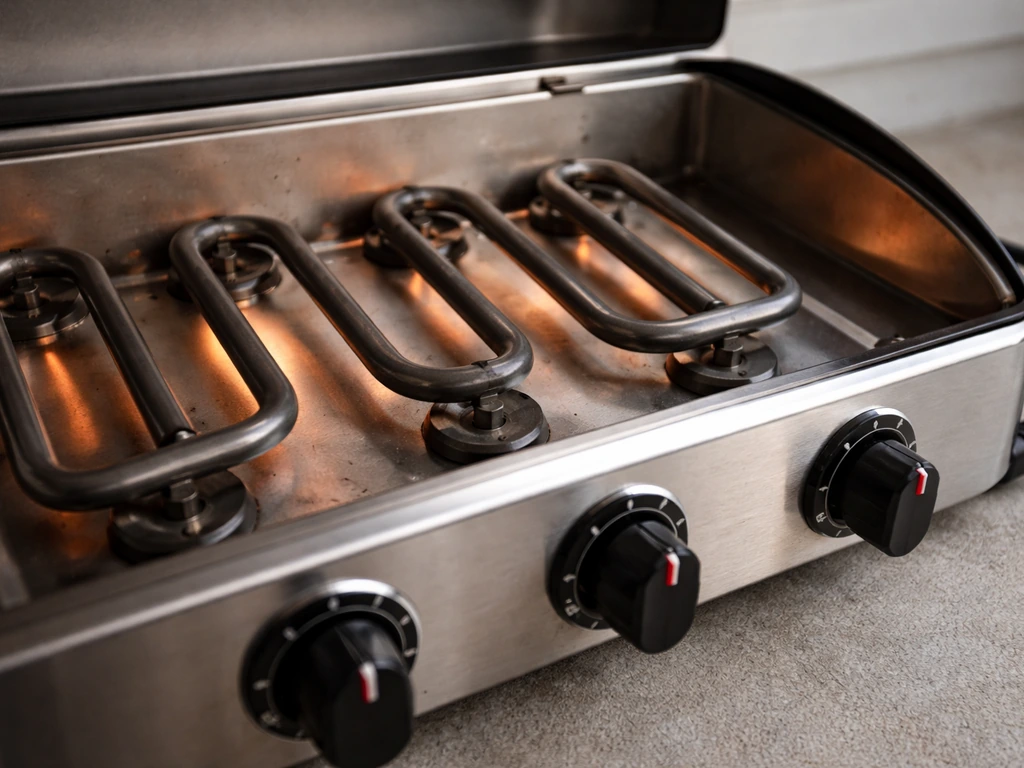
Most patio electric grills run on standard 120V household current and draw between 1,200W and 2,000W. At 120V, a 15-amp circuit gives you a theoretical 1,800W max (with safe continuous load at 80 percent being around 1,440W), and a 20-amp circuit gives you about 2,400W. This matters because if you're plugging into a shared outdoor outlet that also runs your patio lights or a heater, you can trip the breaker constantly. Check your outlet's amperage before you buy. A dedicated 20-amp GFCI outlet is the gold standard for outdoor electric grilling.
Cooking style
Electric grills are genuinely great for weeknight cooking: burgers, fish, vegetables, chicken thighs. They preheat in 10 to 15 minutes, produce little smoke, and are easy to control. Where they lag behind gas and charcoal is in raw sear heat. If you decide to go with gas, these are the best patio gas grills to prioritize for consistent sear performance and reliable heat. Most electric grills top out at 450 to 500 degrees Fahrenheit at the grate, compared to 600-plus for a gas grill. If searing thick steaks is your primary use case, manage your expectations or look specifically at infrared electric models, which concentrate heat more efficiently and can push closer to true searing temperatures.
Top features that actually move the needle
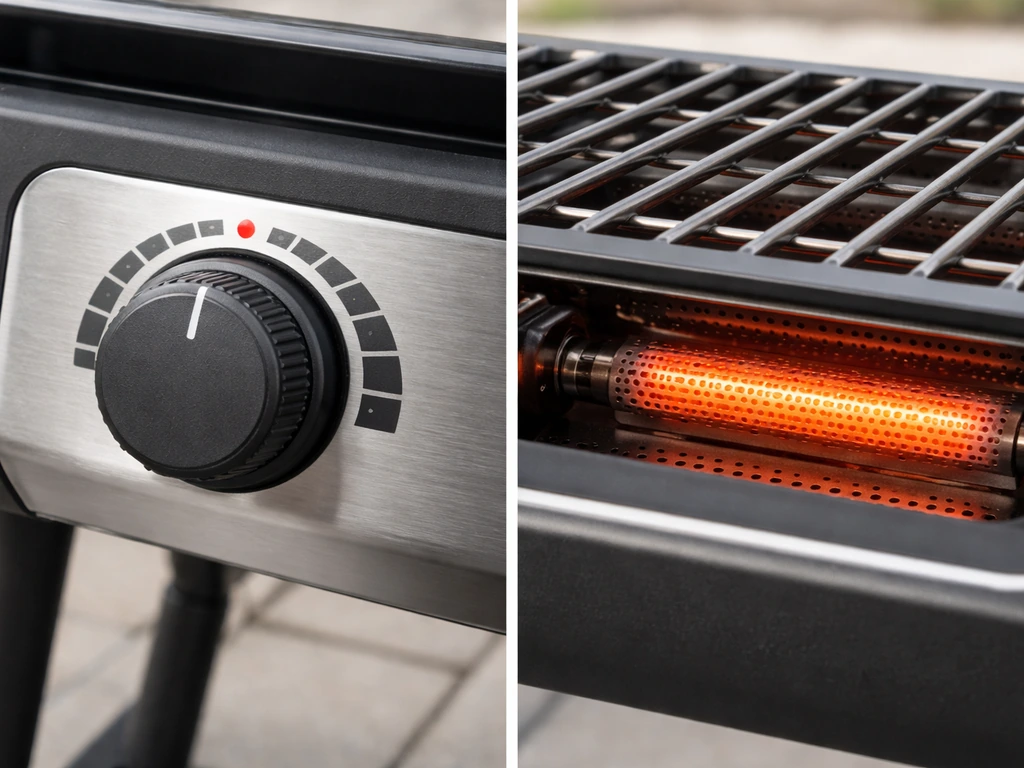
Not every feature on a spec sheet translates to better grilling. These are the ones worth paying attention to.
- Wattage and heat range: 1,500W is the practical floor for outdoor grilling. Below that, you're fighting ambient temperature and wind. 1,750 to 2,000W gives you enough headroom to actually sear.
- Infrared vs. open-coil heating element: Open-coil elements are cheaper but heat unevenly and can create hot and cold zones across the grate. Infrared elements (like the Char-Broil TRU-Infrared system) radiate heat more evenly and reduce flare-ups from dripping grease significantly.
- Temperature control: Look for a stepless dial or a wide thermostat range rather than just Low/Medium/High settings. The more precise the control, the better your results on delicate foods like fish or vegetables.
- Lid-mounted temperature gauge: A built-in gauge (as found on the Char-Broil Patio Bistro) lets you know actual grill interior temperature without guessing or opening the lid and losing heat.
- Grate material: Cast-iron grates retain heat better and produce better sear marks. Porcelain-coated grates are easier to clean but don't hold heat as well. Stainless steel grates are durable but can stick without proper seasoning.
- Grease management system: A sloped drip tray or removable grease cup is essential for outdoor electric grills. Poor grease management means flare-ups, smoke, and a messy grill that's hard to clean.
- Build materials: Powder-coated or stainless steel housing resists rust and UV degradation. Cheap painted steel will pit and flake within a season outdoors.
Best electric grills by patio type
The right grill for a 60-square-foot apartment balcony is not the same as the right grill for a 400-square-foot backyard patio. Here's how to match the grill to the space.
Small balconies and apartment patios
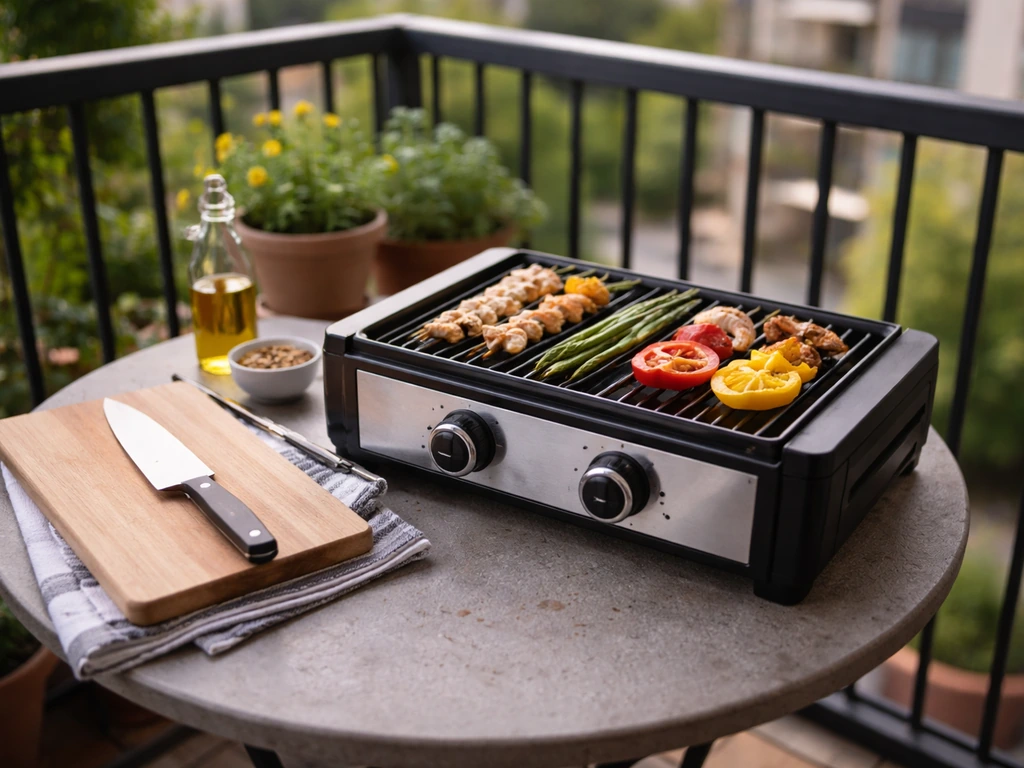
For tight spaces, a compact tabletop electric grill is the practical answer. These units typically offer 150 to 280 square inches of cooking area, weigh under 30 pounds, and can sit on a table or railing mount. The Weber Q 1400 (1,560W, 189 square inches) is a proven workhorse here: it heats evenly, has a cast-iron grate, and is built well enough to last years with minimal maintenance. If you want something even more portable, the Cuisinart CEG-980T Outdoor Electric Tabletop Grill offers 145 square inches and folds flat for storage, which matters when every square foot of balcony counts. If you're also comparing gas options for smaller setups, compact propane models are an option, but in apartment buildings where open flames are often prohibited by lease or fire code, electric is frequently the only legal choice. That's a key reason electric grills dominate in dense urban balcony settings.
Mid-size patios (100 to 250 square feet)
This is the sweet spot for full-size electric grills on carts. The Char-Broil Patio Bistro TRU-Infrared Electric Grill (model 20602109) is consistently one of the top picks here. It has 320 square inches of primary cooking space, uses infrared heating to minimize flare-ups, and includes that lid-mounted temperature gauge that takes the guesswork out of indirect cooking. Char-Broil notes that the Patio Bistro TRU-Infrared Electric Grill (model 20602109) has a TEMP GAUGE mounted on the lid to monitor the inside grill temperature includes that lid-mounted temperature gauge. It rolls on wheels, so repositioning it on the patio is easy. At around $200 to $250 retail, it sits at a price point that's easy to justify for regular use.
Large patios and outdoor entertaining spaces
If you're cooking for larger groups on a dedicated outdoor patio, look at higher-wattage electric grills with 400-plus square inches of cooking area and, ideally, a 240V connection if your setup supports it. Some commercial-grade and premium residential electric grills run on 240V circuits, which allows for significantly higher output (3,000W or more) and much more gas-like performance. The George Foreman GFO3320GM Indoor/Outdoor and the Kenyon All Seasons series offer options in this tier. That said, if you have a large patio with no restrictions on fuel type, it's worth noting that gas grills in the same budget range will typically outperform electric on raw sear capability. Electric shines here when convenience, low maintenance, and clean operation matter more than maximum BTU output.
Safety, installation, and weather: what you need to sort out before plugging in
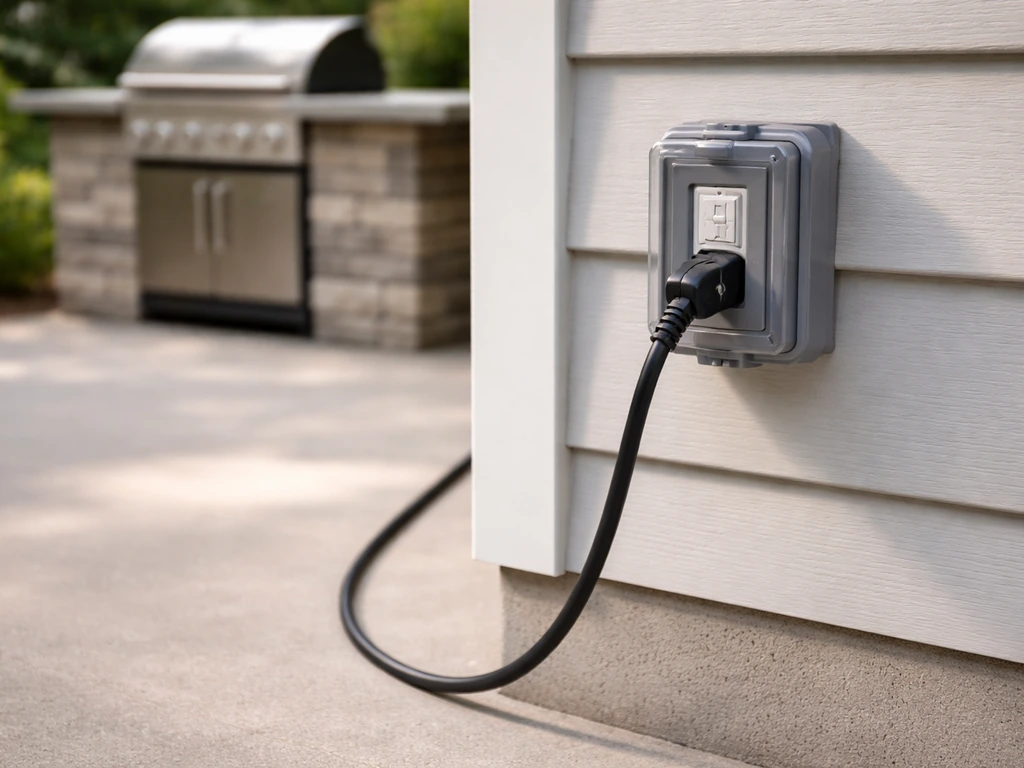
This is the section most buyers skip and then regret. Outdoor electric grilling has specific safety and installation requirements that don't apply indoors.
GFCI outlets are non-negotiable
Any outdoor outlet used for an electric grill must be GFCI (Ground Fault Circuit Interrupter) protected. This is both a safety requirement and, in most jurisdictions, a building code requirement for outdoor receptacles. A GFCI outlet cuts power within milliseconds if it detects a ground fault, which is the difference between a nuisance trip and a serious electrical shock when water is involved. If your outdoor outlet isn't GFCI protected, have an electrician add one before you plug in a grill. This is a $50 to $150 fix and it's not optional.
Extension cord risks
Most electric grill manufacturers explicitly state in their warranties and manuals that extension cords are not recommended. The reason is resistance: a long or undersized extension cord creates voltage drop that reduces the grill's output power and can cause the cord itself to overheat. If you absolutely must use one (and really try not to), use a heavy-duty outdoor-rated cord rated for at least 15 amps, 12-gauge wire, and keep it as short as possible. A 6-foot 12-gauge outdoor extension cord is far safer than a 25-foot 16-gauge cord from the garage.
Outdoor-rated construction
Not every electric grill marketed as an "outdoor" grill is actually built to withstand sustained outdoor exposure. Check that the unit has weather-resistant housing (powder-coated steel or stainless), sealed or protected heating elements, and that the electrical connections and control panel are protected from rain splash. Look for UL or ETL outdoor listing on the product spec sheet. If the listing says "indoor/outdoor," that often means it can be used outside but should not be left outside uncovered.
Wind and temperature effects
Wind is the enemy of electric grills in a way it isn't for gas. Gas grills are enclosed enough that wind mainly affects the burners at ignition. On an electric grill, wind drawing heat off the cooking surface can meaningfully reduce grate temperature and extend cook times. If your patio is exposed, a grill with a tightly fitting lid and a solid enclosure does better than an open-top model. Cold ambient temperatures have a similar effect: on a 40-degree day, preheat times will be noticeably longer and you may lose 50 to 75 degrees of max grate temperature compared to a 75-degree day.
How to evaluate performance in reviews
When you're reading reviews, whether from testing sources like Consumer Reports or from verified purchasers, know what performance criteria actually matter for electric grills specifically. Consumer Reports evaluates grills using test criteria that include preheat performance and high- and low-temperature evenness, among other factors.
- Preheat time: A well-performing electric grill should reach cooking temperature (around 400 degrees Fahrenheit) in 10 to 15 minutes. Models that take 20 or more minutes are frustrating for weeknight cooking.
- Temperature evenness at high and low settings: Consumer Reports specifically tests for high- and low-temperature evenness across the cooking surface. Hot spots at high heat mean inconsistent searing; cold spots at low heat mean uneven cooking on delicate items. Look for reviews that map temperature across the grate, not just a single center reading.
- Sear performance: Does the grill produce actual sear marks and a Maillard crust on a burger or steak? This is the most common complaint with electric grills. Models with cast-iron grates and infrared elements do meaningfully better here.
- Smoke and grease management: Electric grills produce less smoke than charcoal but more than many people expect from grease drip. Models with good drip tray design and infrared elements that vaporize grease (rather than letting it pool and smoke) get consistently better reviews.
- Temperature recovery after lid lift: Every time you open the lid, heat escapes. Better grills recover to set temperature within 2 to 3 minutes. Weak models take 5 or more minutes, extending total cook time significantly.
- Build quality and durability at 12 to 24 months: Early reviews miss this. Look for longer-term owner feedback on whether paint chips, grates pit, or thermostats become inaccurate after a season or two of outdoor exposure.
Budget vs. premium: where the money goes
Electric grills for patios span roughly $80 to $600. Here's an honest breakdown of what changes as price goes up.
| Price tier | Typical wattage | Grate material | Heat technology | Build quality | Warranty |
|---|---|---|---|---|---|
| Budget ($80-$150) | 1,200-1,500W | Porcelain-coated steel | Open coil | Painted steel housing, thinner gauge | 1 year limited |
| Mid-range ($150-$300) | 1,500-1,750W | Porcelain-coated cast iron | Open coil or infrared | Powder-coated steel, better seams | 2-3 years |
| Premium ($300-$600+) | 1,750-2,000W+ (or 240V) | Cast iron or stainless steel | Infrared or dual-element | Stainless housing, commercial-grade components | 3-5 years or more |
For most homeowners who grill two to four times a week during warm months, the mid-range $150 to $300 tier is the right call. You get meaningful improvements in heat evenness and build quality over budget models without paying a premium for features you may not need. The Char-Broil Patio Bistro lives in this tier and represents solid value. Budget picks like the Hamilton Beach or Techwood tabletop units are fine for occasional use or as a backup grill, but expect to replace them more frequently. Premium models from Kenyon or higher-spec commercial units are worth it if you're cooking for groups regularly, want a longer service life, or are outfitting a commercial outdoor space where downtime costs money.
Setup, daily use, and keeping your grill in shape
First-use setup
Before your first cook, do a burn-off: run the grill at high heat for 15 to 20 minutes with the lid closed and nothing on the grates. This burns off any manufacturing residue, oils from packaging, and surface coatings on new grates. You'll likely see some light smoke and smell something plasticky the first time. That's normal and it clears quickly. After the burn-off, let the grates cool to warm (not cold), then wipe them with a lightly oiled paper towel. This seasons the grates and helps prevent food from sticking.
Daily use habits that make a difference
- Always preheat fully before adding food. Putting food on a cold or partially warm grill is the top cause of sticking and uneven cooking.
- Keep the lid closed as much as possible during cooking to hold heat and speed cook times.
- Lightly oil the grates (not the food) before each cook session to prevent sticking.
- Don't use metal scrapers on porcelain-coated grates. Use a brass-bristle brush or a grill stone instead.
- Empty the grease tray after every two to three uses at most. A full or overflowing grease tray is a fire hazard even on an electric grill.
Cleaning and long-term maintenance
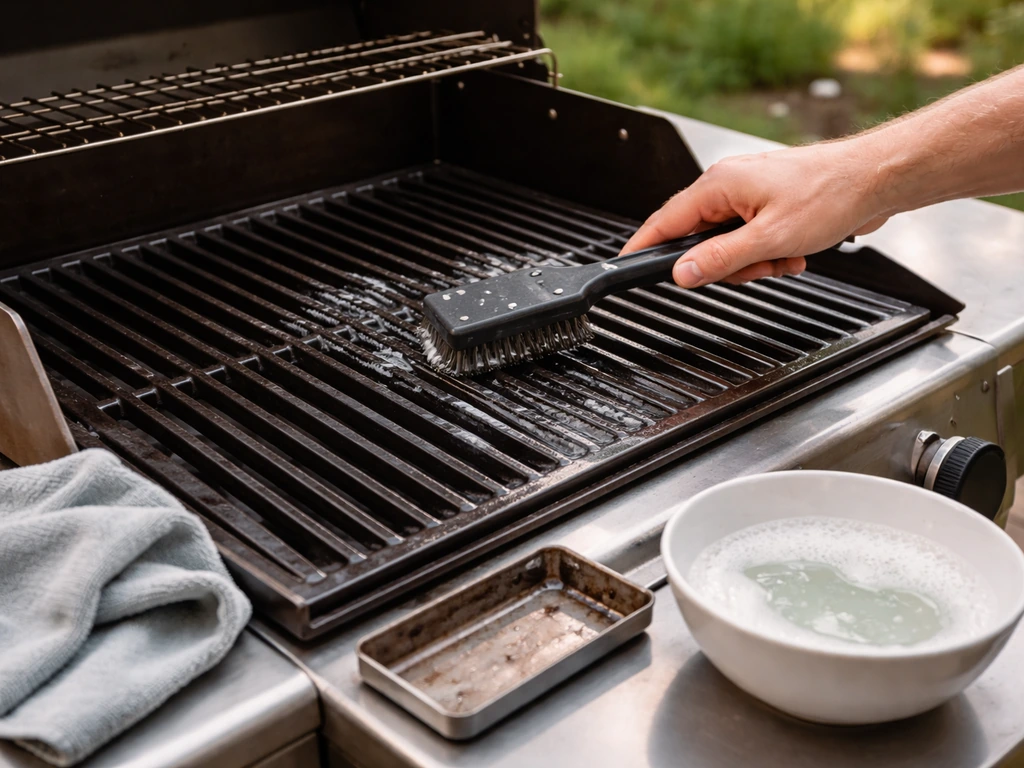
After each cook, while the grill is still warm (not hot), brush the grates clean. Once a month, do a deeper clean: remove the grates, wash them with warm soapy water, dry them completely, and re-season them with a thin layer of cooking oil before the next use. Clean the grease tray and drip cup with soapy water. Wipe down the interior with a damp cloth. Never spray water directly onto the heating element or control panel. For the exterior, a damp cloth and occasional application of a stainless steel cleaner (if applicable) is all you need.
Storage between uses and off-season
Even if your grill is rated for outdoor use, covering it when not in use extends its life significantly. A well-fitted grill cover keeps UV rays, rain, and bird debris off the unit. At the end of the season, clean the grill thoroughly, dry it completely (running it at low heat for 10 minutes after cleaning helps), and store it either covered outdoors or in a garage or shed. Never store an electric grill with a full grease tray. Grease sits, goes rancid, and attracts pests. Disconnect the power cord and coil it loosely rather than wrapping it tightly, which can damage the cord insulation over time.
Electric vs. gas: a quick honest comparison
If you're deciding between electric and gas for your patio, here's the honest version. If you want a practical answer for most renters, the best gas grill for apartment patio setups is usually a compact model that prioritizes safe clearance and simple controls. Gas grills in the same budget range will deliver higher max temperatures, faster preheat recovery, and a more traditional grilling experience. If you have no restrictions on gas and you're primarily searing, a gas grill is likely the better tool. Electric grills win on convenience (no tank swaps, no ignition issues in cold weather), safety in restricted environments (apartments, condos, fire-prone areas), and simplicity of temperature control. They also produce less open flame risk. For anyone on a balcony or in a complex where gas grills are prohibited, electric isn't a compromise, it's the right answer. Smaller patio setups where space and portability matter also favor electric tabletop models over compact gas grills, which still require propane storage and transport. If you decide you'd rather have gas for small, space-limited setups, check the best gas grills for small patios as a related option.
FAQ
Do I need a dedicated outlet to use the best electric grills for patio safely?
If your patio outlet is shared with other outdoor loads like lights, a heater, or a fridge outlet, you increase the chance of breaker trips. The safest setup is a dedicated GFCI-protected receptacle, ideally 20-amp, within reach so you avoid extension cords. If you must share, plan around the grill’s wattage and avoid running high-draw devices at the same time.
Can I use a regular extension cord with an electric patio grill?
Most manufacturers discourage it because voltage drop reduces heat output and can make the cord run hot. If you absolutely have no choice, use an outdoor-rated heavy-duty cord with at least 12-gauge wire and a short length (for example, 6 feet is generally safer than 25 feet). Still, try to choose a grill whose wattage fits your outlet so you do not need a workaround.
What cooking surface size should I target if I mainly cook for a family on weeknights?
If you regularly cook for four or more people, target roughly 350 to 500 square inches of cooking area, that range accounts for real-life spacing and turning room, not just the theoretical grid footprint. For foods that stick or need space like burgers with toppings, err toward the higher end, especially if your grill design has a thicker food spacing requirement.
Is 120V really enough for larger electric grills?
In many homes, 120V can handle smaller to mid-size cooking zones well, but larger grills can struggle to heat evenly, especially when ambient temps are cool or wind is strong. If you’re considering 400+ square inches of cooking area, prioritize models designed for higher power, including options that support 240V where available, because wattage limits can otherwise cap maximum grate temperature.
How do I know if my outlet is actually GFCI protected?
Look for “GFCI” on the outlet face or the downstream reset button, some outdoor circuits are GFCI protected at the breaker panel instead. If you are unsure, test with a plug-in GFCI tester or have an electrician confirm the protection upstream. A non-GFCI outdoor receptacle should be updated before you use any electric grill outdoors.
What’s the best way to handle wind on an electric grill?
Wind can pull heat away from the heating elements and reduce grate temperature, which extends cook times. Choose a grill with a lid that seals well and a more enclosed cooking chamber, then place it in a sheltered spot away from strong drafts. Avoid positioning it so the heat has to travel through open gaps like a railing-only setup.
Why does my electric grill feel weak or slow to heat up?
Common causes are using the wrong outlet amperage, tripping power limits by running other devices, using a long or undersized extension cord, and cold-weather performance loss. Also check that the grill is fully preheated to its normal working state, many models need the full preheat window before temperature stabilizes, especially after opening the lid frequently.
How hot do electric grills really get compared with gas?
Many electric models top out around the mid 400s Fahrenheit range at the grate, and that can limit true steak sear compared with gas. If searing thick steaks is a priority, prioritize infrared or concentrated heat designs, and plan to preheat longer and manage batch sizes so the grill does not cool down from too many additions at once.
Is it safe to leave my electric grill outside under a cover year-round?
A cover helps, but “outdoor-rated” does not mean you should leave it exposed all season without protection against pooling water and corrosion. Clean and dry it at the end of the season, then store it either covered outdoors with good airflow or inside a garage or shed. Also, never store it with a full grease tray because residue can go rancid and attract pests.
What routine maintenance prevents food sticking and uneven cooking?
After each cook, brush grates while they are warm, not scorching. Once a month, wash with warm soapy water, dry completely, then re-season with a thin layer of cooking oil. Never spray water on the heating element or control area, and empty the drip tray promptly to reduce odors and residue buildup.
Do I need to burn-in a new electric grill every time I buy one?
Yes, do a one-time burn-off before the first cook. Run at high heat with the lid closed for about 15 to 20 minutes with nothing on the grates to remove manufacturing residue and oils. Expect some initial smoke or a plastic-like smell, it should clear quickly before you cook food.
Can I use a patio electric grill on a balcony?
Sometimes, but you must follow your building rules and also consider clearance for the lid and safe placement. In many apartment settings where open flame is restricted, electric is the practical option, but still prioritize a properly outdoor-rated unit and safe cord routing, never run cords through door gaps or where they can be pinched.
How do I choose between a tabletop electric grill and a full-size cart model?
Tabletop models are best when space and portability matter, typically they fit smaller cooking needs and often weigh under 30 pounds. Cart models make sense when you need more cooking area, easier repositioning, and features like infrared heating and lid temperature monitoring. If your power outlet is limited, tabletop units also tend to have wattage that matches typical 120V outlets more comfortably.
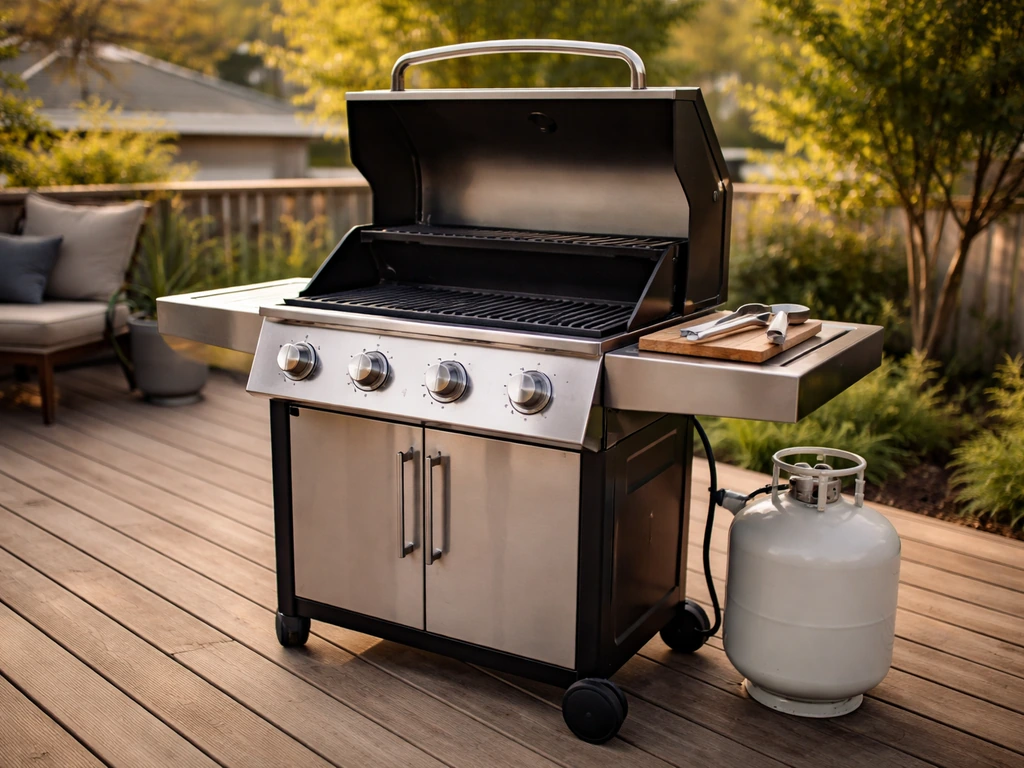
Best patio gas grills 2026 buyer guide: top picks, natural gas vs propane tips, safety checks, sizing, and decision step
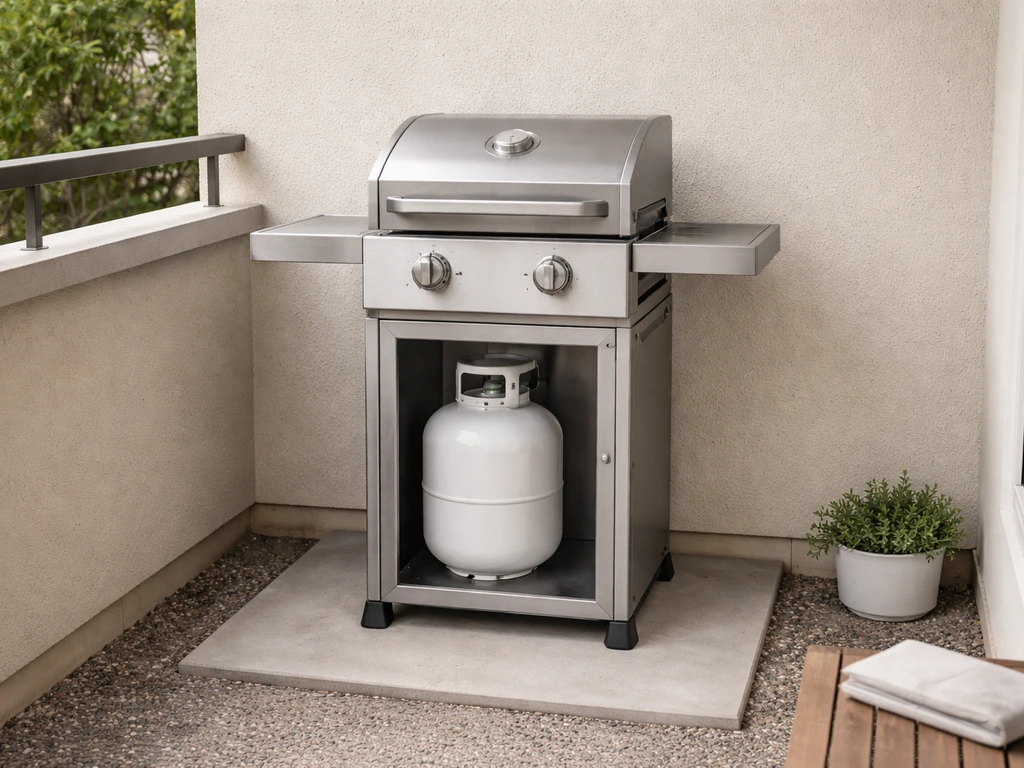
Practical guide to the best gas grills for small patios, with compact picks and fit, safety, and fuel comparisons.
Score the best price on outdoor patio heaters, price ranges, top picks, deal tactics, total-cost & safety checklist.