
For most small patios, a two-burner propane gas grill in the 280 to 360 square inch cooking range is the sweet spot. It gives you enough surface area to feed four people, folds down to a manageable footprint, and lets you control heat precisely without the ash and airflow headaches of charcoal. If your patio is under 150 square feet or you're working around a railing, overhang, or sliding door, that compact two-burner format is almost always the right call. Below I'll walk you through exactly how to pick the right model, what dimensions and clearances actually matter, and which specific grills I'd put on a small patio today.
Best Gas Grills for Small Patios: Top Picks and Buying Guide

Caleb Vale
5 May 2026
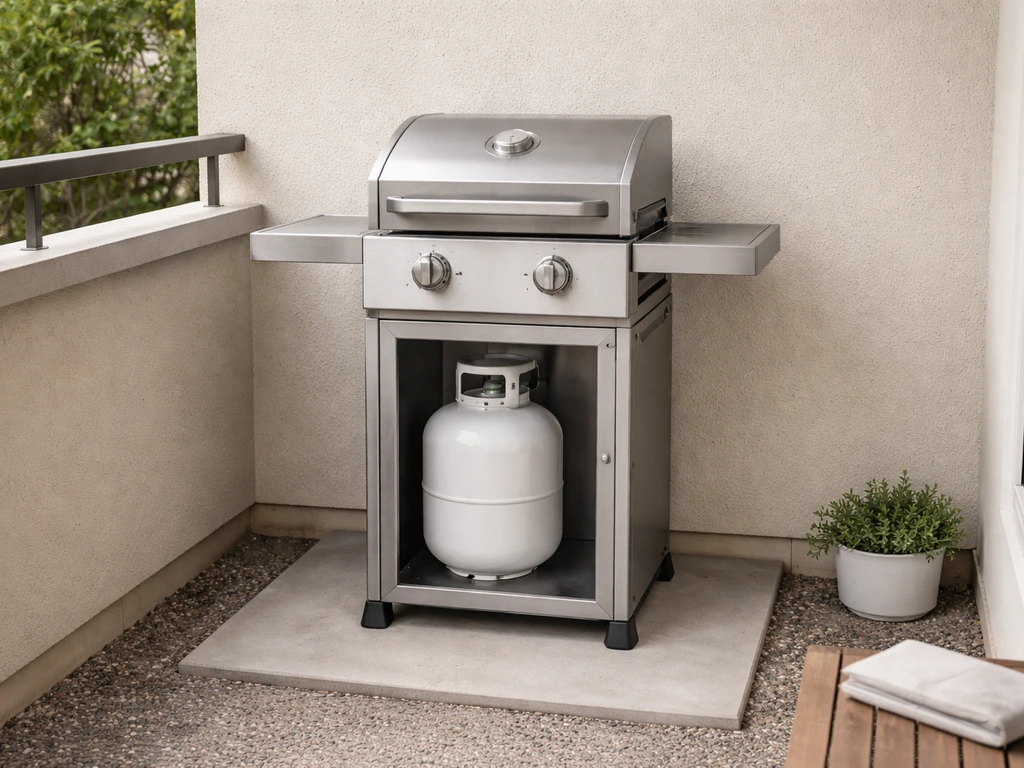
How to Choose a Grill for a Small Patio
Three things drive the decision on a small patio: how much physical space you have, how often and how much you cook, and what fuel source is practical for your setup. Get any of those wrong and you'll either end up with a grill that's too cramped to use comfortably or one that's a safety hazard because it's too close to the wall or overhang.
Space: Think Footprint, Not Just Cooking Area
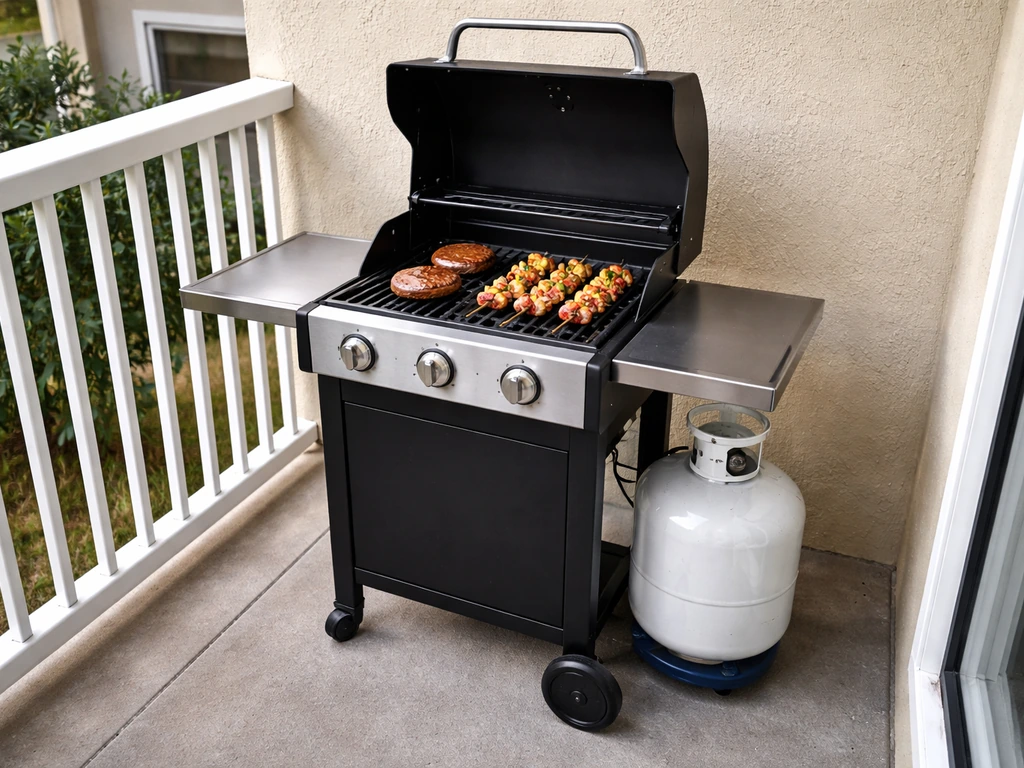
Cooking area gets all the attention in spec sheets, but on a small patio the total footprint of the grill including its open lid, side shelves, and any attached propane tank is what actually matters. A grill listed at 300 square inches of cooking surface might sit on a cart that's 48 inches wide with shelves extended. Measure your available patio space before you shop, and check whether the side shelves fold down, because on a tight patio that feature alone can save you 10 to 14 inches on each side.
Cooking Needs: Match the Burners to Your Style
If you're typically cooking for two to four people and you're doing burgers, chicken, or vegetables, a two-burner grill with 25,000 to 30,000 BTUs total is plenty. Three-burner models make sense if you're regularly cooking for six or doing whole-roast cooking with a two-zone setup, but they add significant width (often 50 to 60 inches on the cart). On a small patio that size difference usually isn't worth it. A single high-output burner tabletop grill works for one or two people but gives you very little zone flexibility.
Fuel Type: Propane Is the Most Flexible Starting Point
Propane wins on flexibility for small patios because you don't need any permanent hookup, you can reposition the grill, and tanks are universally available. Natural gas costs less per BTU long-term but requires a gas line installation (which adds cost and permanently anchors the grill location), so it only makes sense if you know exactly where the grill will live and you're committed to that spot. Charcoal is technically viable but comes with ash management and longer heat-up times that most small-patio users find more trouble than they're worth. More on that comparison in the next section.
Propane vs Natural Gas vs Charcoal on a Tight Patio
Each fuel type has a different set of real-world trade-offs when your patio is small. Here's the honest breakdown.
| Fuel Type | Setup Complexity | Cost to Run | Flexibility | Best For |
|---|---|---|---|---|
| Propane | Low — just connect a 1 lb or 20 lb tank | Moderate | High — move it anywhere | Most small patio situations |
| Natural Gas | High — requires gas line and professional hookup | Low long-term | Low — fixed location | Dedicated permanent grill station |
| Charcoal | Low to start, messy ongoing | Low | High — portable models available | Flavor-focused cooks with tolerance for cleanup |
Propane is the practical default for most people. You can pick up a 20 lb tank at any hardware store, there's no installation cost, and if you move or rearrange your patio furniture you can take the grill with you. Natural gas makes sense if you're building out a dedicated outdoor kitchen and you already have or plan to run a gas line to the area. If you're comparing electric options alongside gas, compact electric grills can be worth a look for covered patios where open flame clearance is difficult, but they don't replicate the sear performance of gas.
Charcoal on a small patio is workable if you pick a compact kettle-style grill (the classic 18-inch or 22-inch Weber kettle is a proven space-efficient choice) and you're comfortable with the setup time and ash disposal. The flavor payoff is real, but on a 6x8 foot patio with an overhang, managing live coals and ash introduces extra safety considerations that a propane grill just doesn't have. If charcoal is what you want, I'll cover the best compact options later in this guide.
Size and Layout: What Clearances and Dimensions Actually Matter
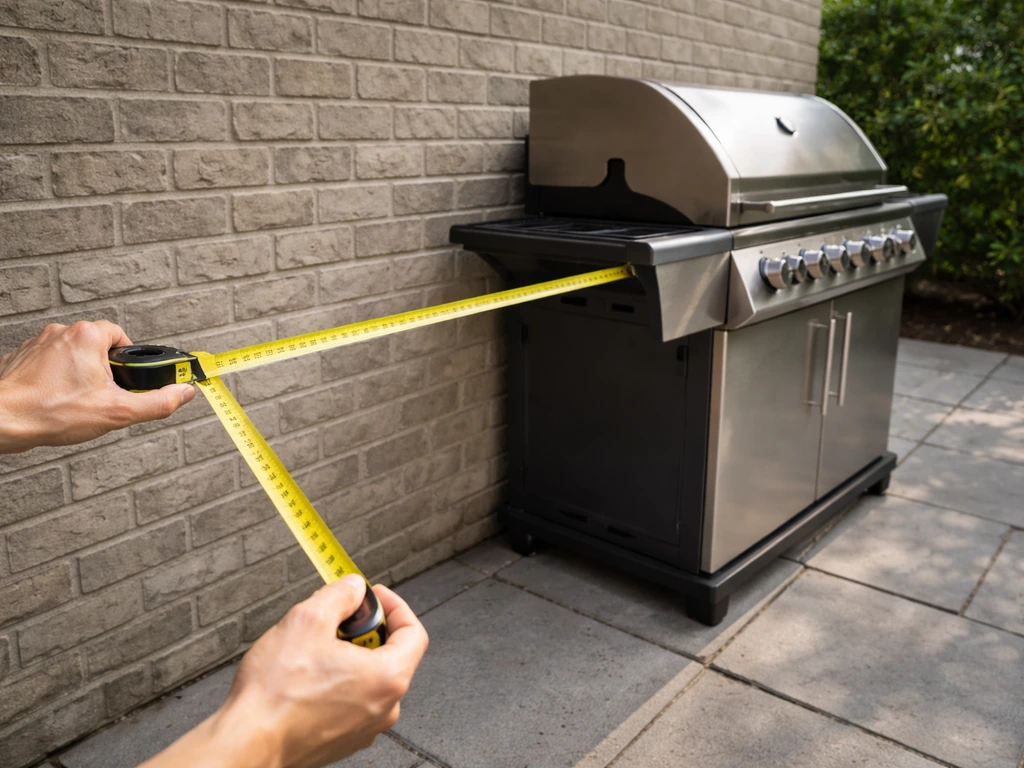
This is where most buyers make mistakes. They measure the grill's footprint but don't account for the clearances needed to use it safely. On a small patio with a wall behind it, a railing to the side, or an overhang above, those clearances quickly become the binding constraint.
Required Safety Clearances
Weber's installation guidance requires that combustible materials stay at least 24 inches from the top, bottom, back, and sides of the grill. Char-Broil's safety guidelines call for a minimum of one metre (about 39 inches) from any building or roofing structure and three metres from flammable objects. Wolf's guidance for their outdoor grills states combustible material should not be within 12 inches of the side or rear, and nothing combustible should be at or above grill level within that zone. For practical planning on a small patio, I'd use 24 inches as your working minimum clearance from any wall, railing, or overhead structure made of wood or another combustible material. Give yourself more if you can.
Covered patios deserve special attention. Wolf explicitly states their outdoor grills cannot be installed under any roof or overhang, including eave overhangs, because enclosed or semi-enclosed use can cause carbon monoxide buildup. Even grills that don't carry that specific restriction should be placed where there's adequate open-air ventilation overhead. If your small patio has a full roof cover with only partial open sides, gas grills should be positioned at or near the open edge where exhaust can freely escape. Never operate any gas or charcoal grill in a fully enclosed space.
Practical Dimensions for Common Small Patio Sizes
A typical apartment balcony or small condo patio runs between 40 and 80 square feet. On a 6x8 foot patio you realistically have about 3 to 4 linear feet to dedicate to a grill after accounting for clearances. That points you toward a two-burner cart grill with a closed-shelf footprint of roughly 42 to 48 inches wide, or a tabletop or pedestal grill that sits on an existing table or freestanding post and takes up almost no floor space. On a slightly larger 8x10 or 10x10 patio you have room for a compact three-burner model, but check that the 24-inch clearance rule still holds on all sides before you buy.
Wind, Ventilation, and Placement
Position the grill where prevailing wind blows smoke away from your seating area and doorways. On a small patio this usually means placing the grill at one end or corner, with the back of the grill toward an exterior wall (maintaining your clearances) rather than facing a door or window. Avoid placing the grill directly under a windward corner of the overhang where gusts can funnel down onto the flame. If your patio is particularly windy, look for grills with a reliable electronic ignition and a lid that latches, since wind can blow out pilots and knock lids open during cooking.
Best Gas Grills for Small Patios
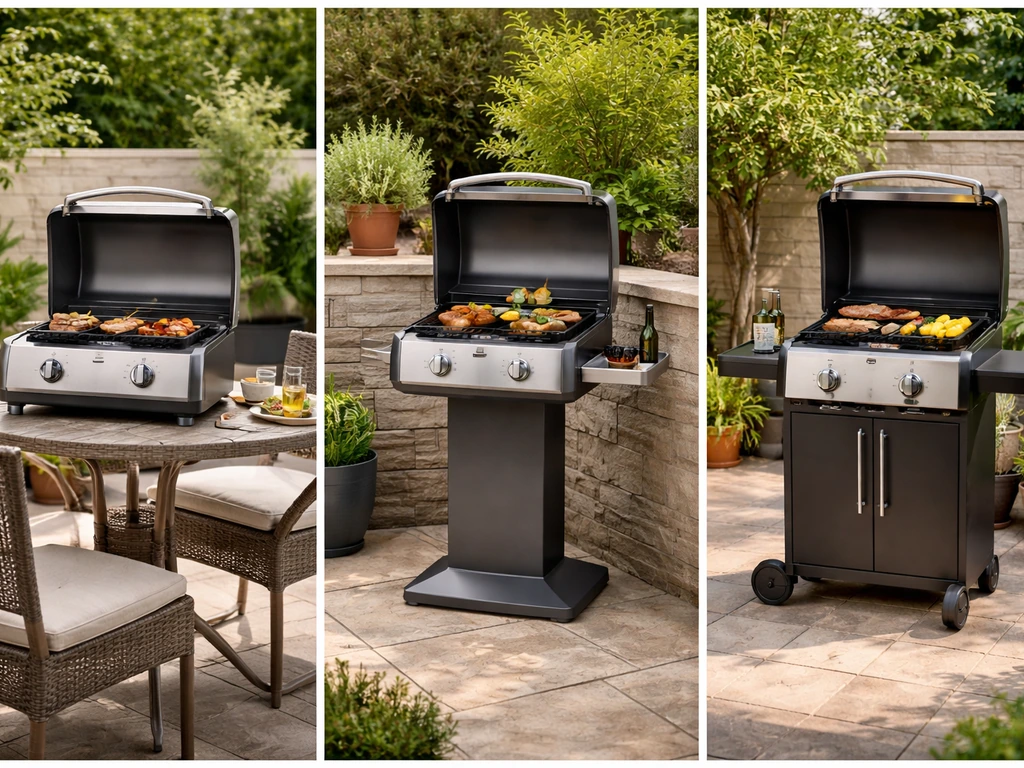
These picks are organized by size category: tabletop/pedestal models for the most space-constrained setups, and compact two-burner cart models for those who have a bit more room but still need a restrained footprint. For more options like the best gas grills for different patio sizes, see our guide to the best patio gas grills. All are gas (propane or dual-fuel) models chosen for reliable ignition, real heat output, durable construction, and manageable dimensions. For apartment patio spaces, these compact gas grill picks are among the best options to consider before you buy.
Best Overall Compact Gas Grill: Weber Spirit E-210
The Weber Spirit E-210 is the benchmark two-burner gas grill for small patios and has been for years. It has 360 square inches of primary cooking space, runs on propane (with a natural gas conversion option), and the cart folds to about 43 inches wide with side tables down. Two stainless steel burners deliver 26,500 BTUs, which is enough for consistent searing and zone cooking. The porcelain-coated cast iron grates retain heat well and clean up without drama. It's not the cheapest option (typically $499 to $549), but the build quality and Weber's parts availability mean it'll outlast budget alternatives by years. For a small patio where the grill might live outside year-round, that durability matters.
Best for Very Tight Spaces: Weber Q2200
If the Spirit E-210 is still too large for your patio, the Weber Q2200 is the next step down. It's a single-burner, 280 square inch porcelain enamel cast iron grate grill in a compact oval form factor. The [Weber](https://www. weber.
com/cms-remote-assets/Weber-Q-Premium-Q2200-Spec-Sheet-v2. pdf) Q2200 spec sheet documents key specifications for the model, including its total cooking area (280 sq. in. ).
The entire unit with the cart stands about 44 inches tall and has a footprint of roughly 51 x 27 inches, which is small enough for narrow balconies. It puts out 12,000 BTUs from a single burner, which sounds modest but the shape of the cooking chamber concentrates heat well. The Q2200 is consistently recommended by users in apartment and condo settings where the combination of small footprint and solid performance is the priority.
It runs on a 1 lb propane cylinder or a 20 lb tank with an adapter hose.
Best Budget Compact Gas Grill: Char-Broil Performance 300 2-Burner
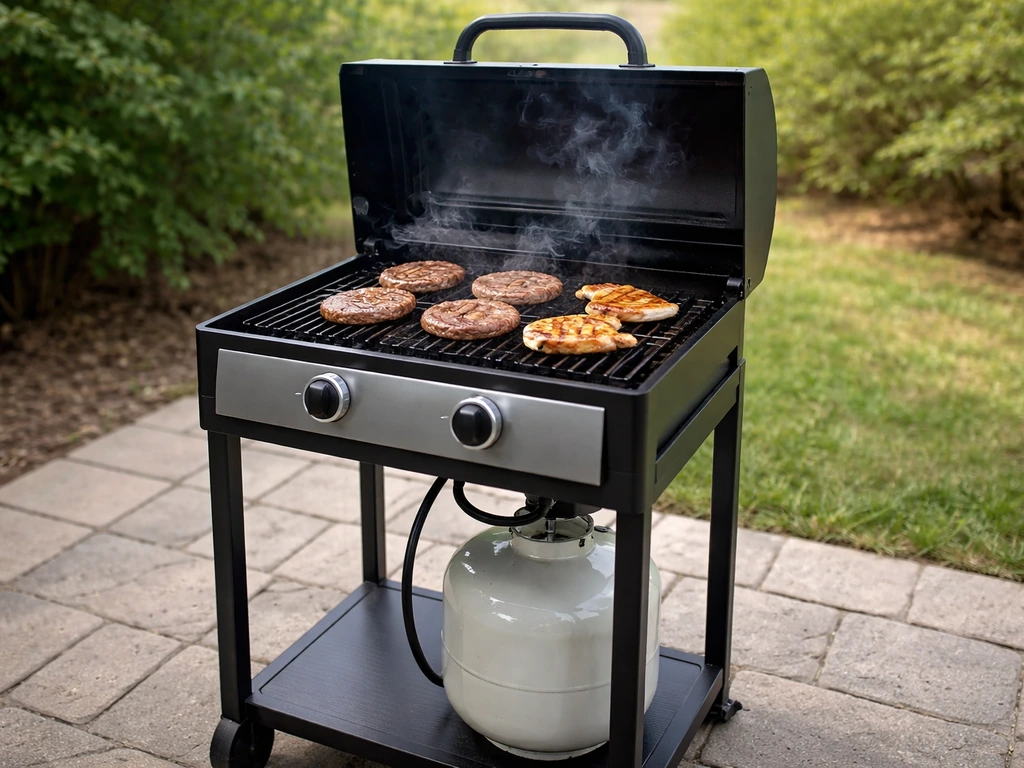
For a sub-$300 option, the Char-Broil Performance 300 Two-Burner is the most reliable budget pick. It has 300 square inches of primary cooking area, two burners totaling 24,000 BTUs, and a folding side shelf design that keeps the cart footprint compact when not in use. The stainless steel construction isn't as thick as Weber's, so it won't hold up as long in a harsh outdoor environment without a cover, but for the price it grills consistently well. It's a solid starting point if you're not sure how much use you'll actually get out of a patio grill before investing more.
Best for Portability: Coleman RoadTrip 285
The Coleman RoadTrip 285 is a folding, wheeled propane grill with 285 square inches of cooking area and two swappable burner options. It's not a permanent patio setup, but if you need a grill that can fold flat for storage when you're not using it (great for patios with limited year-round storage), it's one of the best options. The stainless steel burners put out 20,000 BTUs total, it runs on 1 lb canisters or a 20 lb tank, and the entire unit weighs about 47 pounds folded. The Instastart ignition is dependable in mild wind conditions.
Best Propane Grills for Small Patios
If propane is your confirmed fuel and you want models dialed in specifically for compact, efficient performance, here are the top picks across different use cases and budgets. These overlap somewhat with the gas grill section above since most compact gas grills are propane-powered, but this section focuses on the ones that handle propane tank storage and connection most cleanly for small-patio situations.
Best Tabletop Propane Grill: Cuisinart CGG-180T Petit Gourmet
The Cuisinart CGG-180T is a 145 square inch single-burner tabletop grill that runs on a 1 lb propane canister. At 13.5 x 16.5 inches and about 13 pounds, it takes up almost no space at all. Output is 5,500 BTUs, which is light duty but appropriate for two people doing burgers, fish, or vegetables. It's not a grill you'd use to host a dinner party, but for a solo cook or a couple on a very small balcony where floor space is genuinely at a premium, it's a practical and inexpensive ($60 to $80) solution. The porcelain-coated grates clean easily and the fold-down legs make storage simple.
Best Mid-Size Propane Grill for Small Patios: Napoleon Freestyle 365
The Napoleon Freestyle 365 is a two-burner propane grill with 365 square inches of cooking space and a notably clean, compact design. The ACCU-PROBE temperature gauge, cast iron cooking grids, and 16,000 BTU JETFIRE ignition burners make it a step above the budget options. Napoleon builds it on a sturdy wheeled cart with the propane tank compartment enclosed in the base, keeping the 20 lb tank neatly out of the way. The overall cart width with side shelves folded is about 48 inches, making it workable on most small patios. Typically priced around $399 to $449, it sits between the Char-Broil and Weber price points and competes well on construction quality.
Best High-Performance Compact Propane Grill: Weber Genesis E-325s (3-Burner)
If your small patio is closer to the larger end of the spectrum (say, 10x12 feet) and you want premium performance, the Weber Genesis E-325s is worth the investment. It's a three-burner propane grill with 513 square inches of cooking space, a sear station, and a side burner, all on a cart that's 60 inches wide with shelves extended but only 26 inches deep.
Clearances will be tight on a genuinely small patio, so measure carefully, but the folding side table option trims the width to about 46 inches when not entertaining. At $899 to $999 it's a premium price, but the cooking performance and build quality are best-in-class for this category. It's a grill you keep for 10 to 15 years.
Charcoal and BBQ-Style Grills When Gas Isn't the Right Fit
Gas isn't the only answer for a small patio. If you're renting and can't have a gas tank on your balcony (some building rules prohibit propane on elevated balconies above a certain floor), or if you genuinely prefer charcoal flavor and you have the patience for it, there are compact charcoal options worth considering. And if you're weighing a compact electric option for a covered or semi-enclosed patio where open flame clearances are hard to meet, that's a legitimate alternative too.
Best Compact Charcoal Grill: Weber Kettle 18-Inch
The 18-inch Weber Kettle is one of the most space-efficient charcoal grills you can buy. The cooking surface is 240 square inches, the overall diameter is 18 inches, and the total footprint with legs is small enough to fit in a corner of most small patios. It does everything the larger 22-inch model does, just for two to three people rather than four to six. The One-Touch ash management system makes cleanup manageable without hauling a full ash pan.
At around $109 to $139 it's one of the most proven grills in any category. The trade-off is the same as any charcoal grill: 20 to 30 minutes to reach cooking temperature, no instant heat control, and ash disposal after every cook.
Best Compact BBQ-Style Option: PK Grill PK-Original
The PK Grill (sometimes called the PK-Original or PKO) is a cast aluminum charcoal grill that's been around since the 1950s and is particularly good for small patios because the cast aluminum body holds and distributes heat much more evenly than a thin steel kettle. It has 300 square inches of cooking area and a four-vent system for precise airflow control. The oval shape and lower cart profile give it a tighter footprint than a kettle grill at a similar cooking area. It's more expensive at around $349 to $399, but the virtually indestructible cast aluminum construction means it won't rust out in a year like budget charcoal options.
When to Consider Electric Instead
If your patio is covered to the point where a gas or charcoal grill would violate the 24-inch combustible clearance requirement overhead, an electric grill is worth a serious look. Compact electric grills can be a great fit for covered patios where open-flame clearance is tricky. They produce no carbon monoxide, need no fuel storage, and can be used safely in partially covered situations where open flame is not appropriate.
The trade-off is sear performance: even the best electric grills don't reach the surface temperatures of a gas or charcoal grill, which affects crust development on steaks. For everyday grilling of chicken, fish, and vegetables, the gap is smaller and the convenience is real. If you are searching for the best electric grills for patio spaces, start by looking at convenience features like easy cleanup and consistent temperature control.
Buying Checklist and Setup Basics
Before you pull the trigger on a grill, run through this checklist. It covers the setup details that trip up most first-time small-patio grill buyers.
- Measure your available patio space with the clearances factored in. You need at minimum 24 inches from any combustible wall, railing, or overhead structure. Write down the maximum grill width and depth you can accommodate before you start shopping.
- Confirm your fuel situation. If you're using propane, decide whether you'll use a 20 lb tank (most economical, requires cart with tank storage or external tank placement) or 1 lb canisters (convenient but expensive per BTU). If you want natural gas, get a quote on running a gas line before you buy the grill, since that cost can be $200 to $500 or more.
- Check your building or HOA rules. Many apartment buildings and condominiums prohibit propane tanks above the second or third floor. Electric grills are usually the only option in those cases.
- Verify the regulator and hose are included. Most standalone propane grills include a regulator and hose for a 20 lb tank. Tabletop models designed for 1 lb canisters may need an adapter hose if you want to run a larger tank. Don't assume the connection you need is in the box.
- Buy a properly sized grill cover. It's the single best maintenance investment you can make on a small patio where the grill may stay outside year-round. Measure the grill dimensions (width, depth, height with lid closed) and buy a fitted cover rather than a generic one.
- Plan your ash disposal if you're buying charcoal. On a small patio, ash can't just be dumped over the railing. You need a metal ash bucket and a plan for disposing of fully cooled ash safely.
- Set a realistic budget. For a gas or propane grill that will last, budget at least $300 to $500. Below that threshold, you're looking at grills with thinner steel, less reliable ignitions, and shorter lifespans. The Weber Spirit E-210 at around $499 to $549 is the most defensible value in the long-run for a small-patio gas grill.
- Keep the area clear during and after cooking. Patio furniture, cushions, planters, and wind breaks made of combustible materials should be moved back to maintain your clearances before you light the grill. This is especially important on small patios where furniture is naturally packed close together.
Maintenance Basics That Make a Difference
After every cook, preheat the grill on high for five minutes with the lid closed to burn off food residue, then brush the grates with a stainless steel grill brush while they're hot. This five-minute habit prevents buildup that eventually ruins grates and causes flare-ups. Every few months, remove the grates and burner covers and wipe out the firebox. Check the burner tubes for spider nests or debris, which can block gas flow and cause uneven heating or dangerous flashback. Check the regulator hose for cracks or brittleness once a season, especially if the grill lives outside in temperature extremes. Replace hoses that show any cracking or stiffness regardless of how new they look.
For natural gas setups, have the flexible gas connector inspected annually by a professional. The flexible connector between the fixed gas line and the grill is the component most likely to degrade over time, and it's inexpensive to replace proactively compared to dealing with a gas leak. Store a 20 lb propane tank upright and outside only, never in a garage, shed, or interior space, even when not in use. A full 20 lb tank has enough energy to cause serious damage if it's exposed to heat in an enclosed area.
The Bottom Line for Small Patios
If I were setting up a small patio today, the Weber Spirit E-210 on propane is what I'd start with for most setups with a patio of 80 square feet or more. For genuinely tight balconies under 60 square feet, I'd step down to the Weber Q2200 or the Cuisinart CGG-180T tabletop depending on how serious my cooking needs are.
Charcoal is a viable path if flavor is the priority and you're comfortable with the extra setup and cleanup, and the 18-inch Weber Kettle is the most space-efficient and proven option in that category. Whatever you choose, getting the clearances and safety basics right matters as much as the grill itself on a small patio. Get those right and you'll get years of safe, consistent cooking out of any of these picks.
FAQ
What size gas grill should I buy if my patio is smaller than 6x8 feet?
Aim for the narrowest total footprint that still works with open-lid space. In practice, many 2-burner carts still measure around 42 to 48 inches wide and need extra clearance in front when the lid is up, so a tabletop like the CGG-180T or a compact single-burner may be safer than trying to squeeze a cart grill into a very tight walkway.
How much clearance do I really need around a gas grill on a small patio?
The cooking clearance rules in the article are for fire safety, but you also need “use clearance” for the lid swing, knob access, and to avoid overheating sidewalls from trapped heat. If possible, leave at least 24 inches not just from combustible materials, but also from walls or rails that would block where hot air exits when the lid is open.
Can I put a small gas grill on a balcony or apartment patio that is partially covered?
You can, but only if the setup is genuinely ventilated and clearances are met. If the space is enclosed by a roof overhang on multiple sides, use a grill placement near the open edge for exhaust, and never operate in a fully enclosed area. Also confirm your building rules about propane tank location, many restrict tanks on higher floors or in certain configurations.
Do I need a natural gas line for the best results on a small patio?
No, propane is usually simpler for small patios because you can position the grill based on wind and clearance needs, and you avoid a permanent connection. Natural gas can still be a good fit if you are building a dedicated outdoor kitchen spot and can run the line safely to match the grill’s fixed location.
Is a single-burner propane grill actually enough for meal cooking for two to four people?
Sometimes, but it depends on your cooking style. A single-burner like the Q2200 is often great for burgers, fish, and vegetables, but it lacks a true two-zone layout, so you may need more time managing doneness and indirect cooking. If you regularly cook thicker cuts or want fast sear plus lower-heat finishing, two burners are usually the better small-patio choice.
How do I choose between fold-down shelves and fixed side tables on a compact cart grill?
Prioritize fold-down shelves if your patio is tight because it can save 10 to 14 inches per side when closed. Also check latch stability, some grills wobble if shelves are folded incorrectly or if you tighten the screws inconsistently, so confirm the shelf locks positively before each cook.
What is the most common reason small patio gas grills perform poorly even if the BTUs look fine?
Incorrect gas delivery and blocked airflow, especially with long or mismatched hose setups or debris in the burner area. If you notice uneven heating after swapping tanks or regulators, check the burner tubes for spider nests, confirm the regulator is the correct type for propane, and ensure the hose is not kinked or under tension.
How often should I inspect the regulator hose and what should I look for?
Do a quick check seasonally and a closer inspection at least once a year, look for cracks, stiffness, brittleness, or any bulging near fittings. Replace the hose if it shows any visible cracking or hardening, even if it still “seems to work,” because small surface damage can worsen under temperature swings.
Can I store a propane tank on the balcony next to the grill?
Only if you can do it upright and outdoors, never inside an enclosed area like a shed, garage, or the interior of the building. If your tank must stay on-site, use the grill’s built-in compartment when available and keep the compartment clear and ventilated, also keep it away from heat sources and direct sun exposure where practical.
Why does my grill have trouble lighting in wind, and what should I do?
Wind can blow out pilots and knock open the lid on some models, which interrupts the ignition sequence. The practical fixes are to cook in a less wind-exposed spot when possible, use a model with reliable electronic ignition, and double-check that lid latches and ignition buttons are functioning before your first cook of the season.
What maintenance steps matter most for small patios where grills are used frequently?
Focus on burner cleanliness and grate condition. Clean burners periodically to prevent gas flow blockage from insects and debris, keep the grates hot and brushed after cooks to stop residue buildup, and wipe the firebox periodically so grease doesn’t accumulate and increase flare-ups.
If I want the best sear on a covered patio, is gas still better than electric?
In most cases, yes for sear performance, but “covered patio” affects eligibility due to clearance and ventilation. If you cannot maintain safe clearance for open flame, an electric grill can be the workable option for everyday items like chicken and vegetables, but expect less crust formation than gas for steaks and thick burgers.
What should I check before buying a grill for an 8x10 or 10x10 patio?
Do a full “footprint with lid and shelves” measurement, not just the cooking area. Confirm clearances on every side to satisfy the combustible rules, verify your seating location relative to smoke, and measure how far the grill’s depth extends when shelves are used, some carts are much wider in real life than spec sheets suggest.
Next Articles
Best Price on Outdoor Patio Heaters: Compare Costs & Deals
Score the best price on outdoor patio heaters, price ranges, top picks, deal tactics, total-cost & safety checklist.
Where Can I Rent Patio Heaters Near Me Today
Find where to rent patio heaters near you today, choose the right fuel type, compare costs, and book safely.
Where to Buy a Patio Heater: Best Places and Types
Where to buy a patio heater now, plus electric vs gas vs propane tips, safety checks, and size/BTU buying checklist.