
The best freestanding patio heater for most people right now is an electric infrared model in the 1500W to 2000W range, with at least IP44 weather protection, tip-over cutoff, and a thermostat or timer. If you're in the UK, you want one that ships with a UK 3-pin plug, runs on a standard 13A socket, and carries an IP44 or higher rating for outdoor use. Propane mushroom heaters still make sense for large open areas or when you're completely off-grid, but for a typical domestic patio, a freestanding electric heater is easier to control, cheaper to run per session, and far safer when children or pets are nearby.
Best Free Standing Patio Heater: Electric Guide UK 2026

Caleb Vale
8 Jul 2026
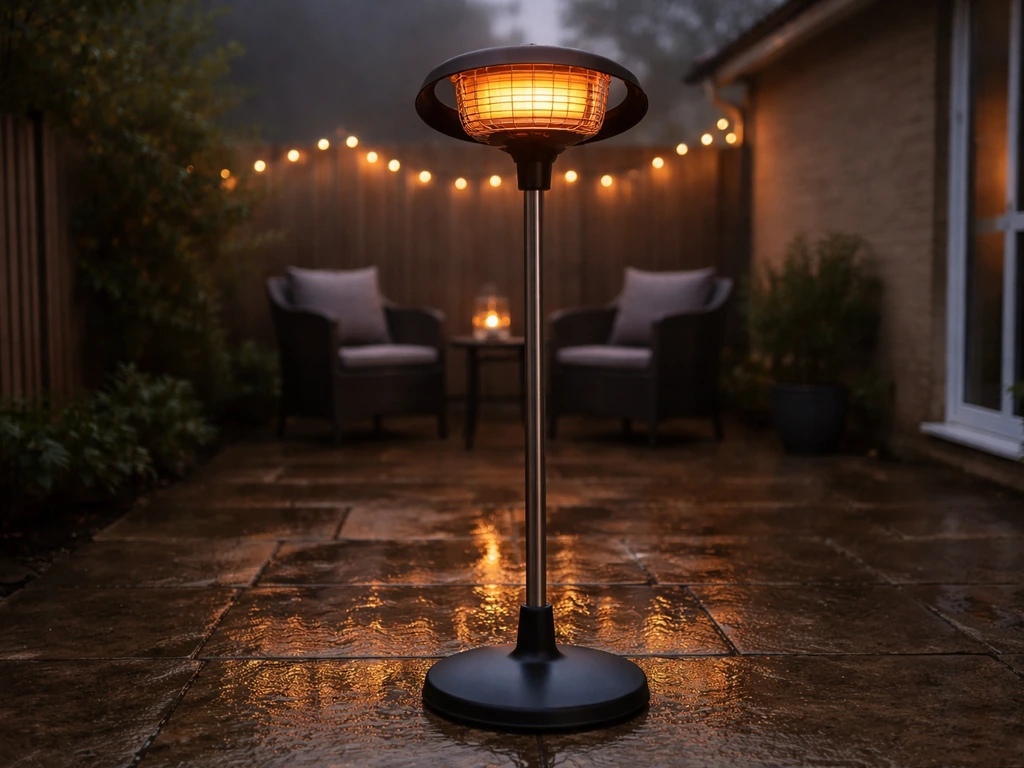
What to look for in a freestanding patio heater
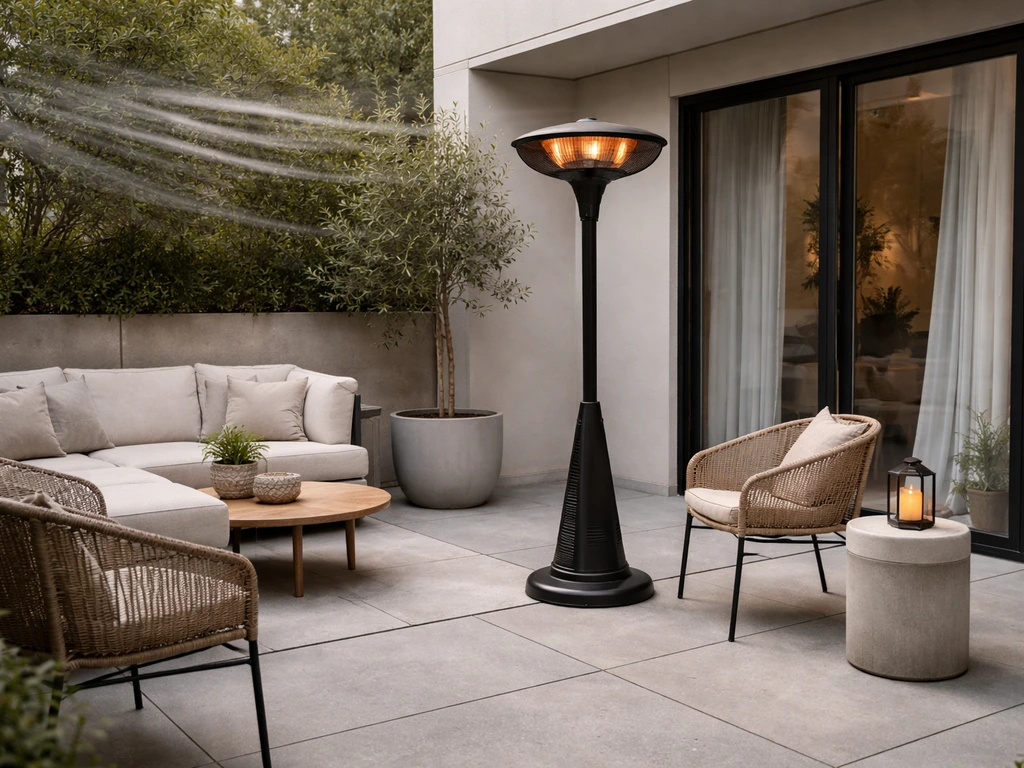
Before you spend a penny, get clear on three numbers: the square footage of your patio, how exposed it is to wind, and how long you typically use it per session. Everything else flows from those.
Heat output and coverage area
For a small urban patio (up to about 6 sq m), a 1500W electric infrared heater is sufficient, covering a comfortable zone of roughly 2 metres around one or two people seated. A 2000W or 2100W model is the sweet spot for a medium patio (up to about 12 sq m) and gives you meaningful headroom on windier evenings. Propane tower heaters typically start at 40,000 BTU (around 11.7 kW), which sounds enormous, but most of that heat disperses upward and outward in open conditions rather than reaching people directly.
Size and build
Freestanding models need a stable base, full stop. Look for a weighted round base, not a thin tripod, especially if your patio is exposed. The Blumfeldt Heat Guard 2100W, for instance, explicitly uses a heavy round base that can be weighted down further, which is exactly what you need in a breezy garden. Height matters too: most freestanding electric heaters sit between 120 cm and 180 cm tall, with the heating element positioned roughly at head height when seated, which is where infrared heat delivery works best.
Controls and usability
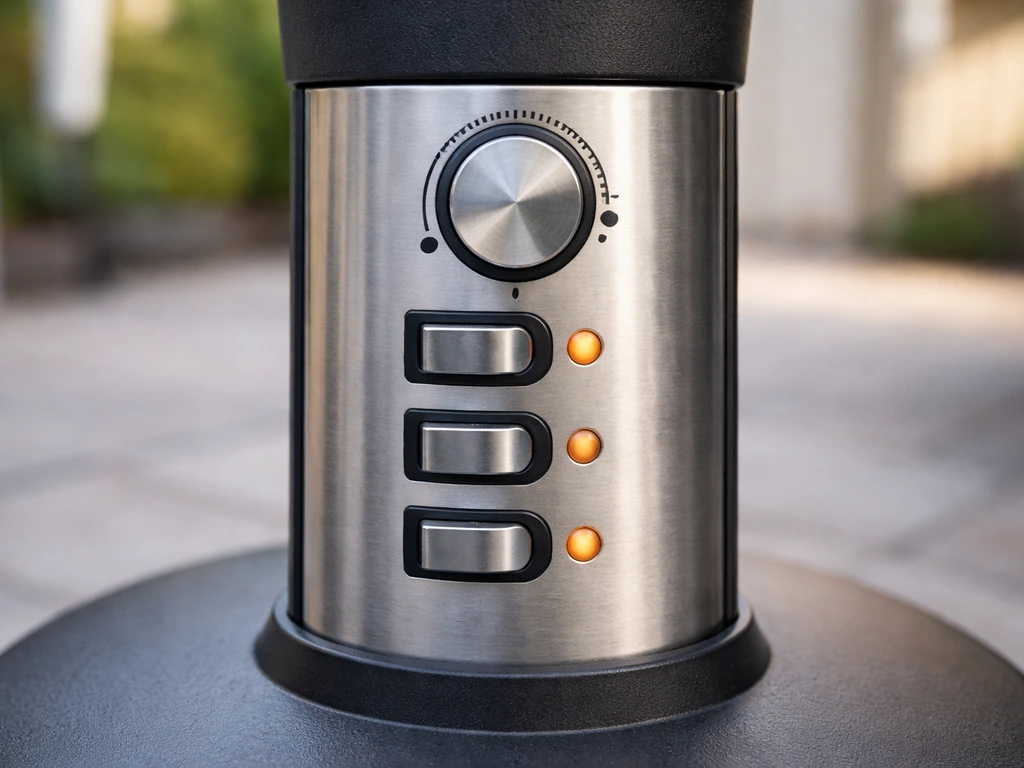
A thermostat or at least two or three adjustable power levels makes a real difference day to day. Models with only a single on/off setting waste energy and force you to choose between too hot and off. A built-in timer is a genuine quality-of-life feature, not a gimmick, especially if you want the heater to shut down after guests leave. Remote control is nice but not essential for a freestanding unit you can walk up to easily.
Weather resistance (IP rating)
The IP (Ingress Protection) rating under IEC/EN 60529 tells you how well a heater handles moisture and dust. For any outdoor electric heater in the UK, IP44 is the minimum you should accept, meaning it resists splashing water from any direction. IP65 is better, offering full dust exclusion and protection from water jets, which matters if your heater stays outside through unexpected showers. The Enders Madeira, for example, carries an IP65 rating alongside its 2000W three-level output, making it one of the more weather-robust electric freestanding options available. Models like the Beliani OLLERIA at IP44 are fine under a pergola or awning but less suited to a fully exposed position.
Electric vs propane vs natural gas: which fuel type actually suits you
This is the decision most people get wrong because they default to propane out of habit or because they saw a mushroom heater at a pub. Here's the honest breakdown.
| Fuel Type | Typical Output | Coverage | Running Cost (approx.) | Best For | Main Drawbacks |
|---|---|---|---|---|---|
| Electric (infrared) | 1500W–2000W | 2–4 m personal zone | Low–medium (socket power) | Domestic patios, covered areas, UK gardens | Needs outdoor socket or safe lead |
| Propane (gas) | 9–13 kW | Large open area | Higher (gas canister cost) | Big open spaces, off-grid, events | Tank management, CO risk if enclosed |
| Natural gas (piped) | 9–13 kW | Large open area | Lower than propane | Permanent installs, commercial | Requires gas connection and installer |
| Infrared (electric) | 1200W–3000W | Directional zone | Same as electric above | Targeted spot heating, wind-prone spots | Directional only, not ambient fill |
Electric freestanding heaters win for most domestic situations because they plug into a standard outdoor socket, turn on instantly, have no fuel to store or run out of, and can be regulated precisely. They also have no combustion, which removes the carbon monoxide risk entirely. If you only use your patio for two or three hours in the evening, the per-session running cost at the current Ofgem rate (26.11p per kWh for July to September 2026) works out to roughly 39p to 52p per hour for a 1500W to 2000W model. That's genuinely cheap.
Propane still wins when you need to heat a large, open, completely unenclosed space, or when there's no outdoor socket within reach. Natural gas models are hard to beat for a permanent commercial install with a piped supply, but they need a qualified Gas Safe engineer to connect and they stay where they're plumbed, so they're not truly freestanding in practical terms.
If you're comparing freestanding options against wall-mounted, overhead, or ceiling-mounted electric heaters for your space, the main trade-off is flexibility versus efficiency. If you're comparing wall-mounted options, focus on mounting height, heat spread, and whether the heater is rated for outdoor use in your conditions best wall mounted patio heaters. A freestanding unit moves wherever you need it, but fixed overhead models direct heat downward more efficiently and clear floor space. That's worth considering if your patio layout is fixed.
Top picks: the best freestanding patio heaters right now
These are the models worth looking at seriously based on real-world specs, build quality, and what UK buyers are actually finding useful in 2026. If you are specifically hunting for the best overhead patio heaters, prioritize units with strong weatherproofing, multi-level output, and reliable safety cut-off features.
Best overall electric freestanding: Enders Madeira
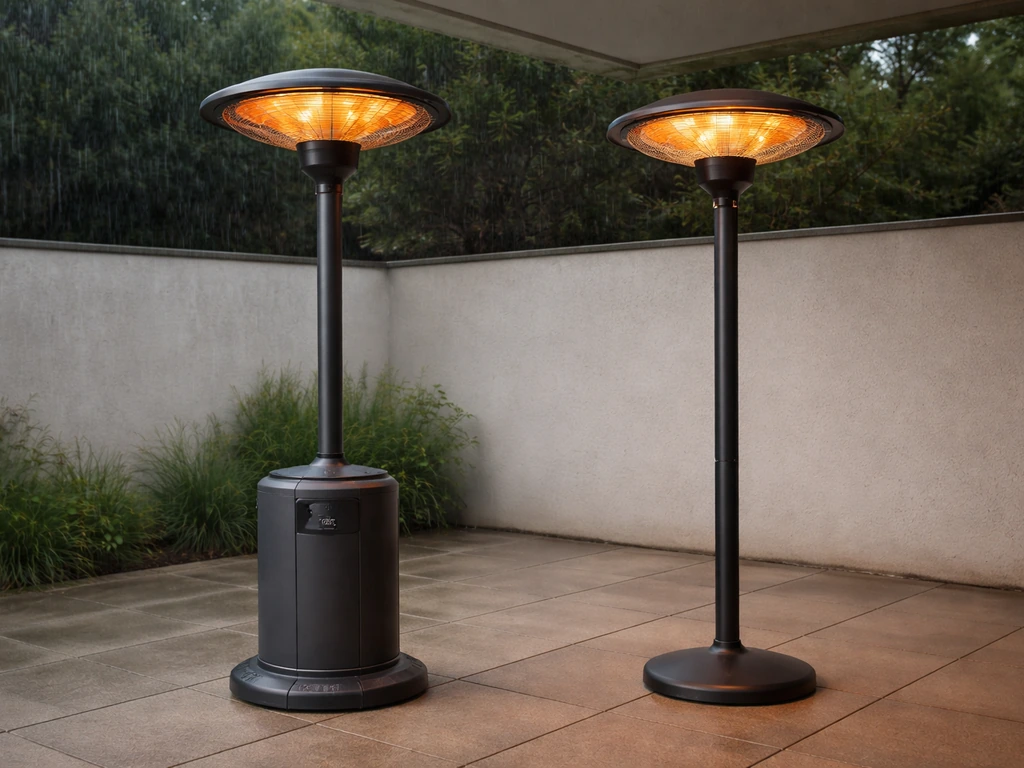
The Enders Madeira stands out for its IP65 weatherproofing and three power levels up to 2000W. That IP65 rating is genuinely unusual at this price point and means you can leave it outside in light rain without panic. The three power settings give you real control over output and running cost, which is more than many competitors offer. It's clean-looking enough to not embarrass a decent patio, and the setup is straightforward. If you want one electric freestanding heater to recommend to someone without needing to know much about their setup, this is it. If you want the simplest way to choose, start with the best hanging patio heaters for your space and comfort level.
Best for targeted spot heating: Herschel Rio
Herschel is one of the more respected names in UK infrared heating, and the Rio freestanding model ships with a UK plug on a 2.6 m power lead, which is a practical detail that matters. It's designed specifically for outdoor use with a proper UK-market setup, and the infrared element delivers heat directly to people rather than trying to warm the air around them, which is exactly what you want on a cool, slightly breezy evening. It's a good choice if you're heating one or two people in a focused zone rather than trying to warm a whole patio.
Best budget electric freestanding: Beliani OLLERIA 1500W
At 1500W with IP44 protection and a 24-month warranty, the Beliani OLLERIA is a solid entry point. The recommended optimal heating range is about 2 metres, which is realistic and honest for a heater of this output. It runs on standard 220–240V (50 Hz), fits any UK outdoor socket, and doesn't overclaim its capabilities. If your patio is small, sheltered, and you want to spend as little as possible upfront, this gets the job done.
Best for windier exposed patios: Blumfeldt Heat Guard 2100W
The Blumfeldt Heat Guard's heavy round base design, which can be weighted down further for extra stability, makes it the pick for exposed or elevated patios where tipping is a genuine risk. At 2100W with IP44, it delivers a bit more heat than the standard 2000W class while keeping the safety base design that matters most when the wind picks up. It's a practical choice for exposed UK gardens where lighter tripod-base models have no business being.
Best propane freestanding: tall mushroom or tower style (40,000 BTU class)
If you genuinely need to heat a large open terrace, host events, or have no outdoor socket available, a 40,000 BTU propane tower heater is the classic solution. The main things to look for are a good-quality piezo ignition, a sturdy base with a cover for the gas canister, and a thermal tip-over cutoff. Build quality varies enormously in this category, so invest in a well-reviewed branded model rather than an unbranded import. Gas canisters need storing safely, and these units must never be used in enclosed or semi-enclosed spaces.
UK buying guide for freestanding electric patio heaters
UK buyers have a few specific things to check that don't always come up in generic buying guides written for other markets.
- UK 3-pin plug: the heater must come fitted with a UK BS 1363 plug and the correct fuse for its load. Electrical Safety First explicitly flags this requirement. If a product ships with an EU 2-pin plug and an adapter, that's a red flag for a product not properly certified for the UK market.
- Voltage compatibility: UK mains is 230V (nominally, with actual supply between 216V and 253V). Any model rated 220–240V at 50Hz is compatible. Models rated only for 120V are US-market products and must not be used.
- IP rating for UK weather: UK gardens are wet. IP44 is the minimum acceptable; IP65 is better for anything left outdoors between sessions.
- RCD protection: Electrical Safety First recommends RCD (Residual Current Device) protection for all outdoor electrical equipment. Check whether your outdoor socket circuit already has RCD protection at the consumer unit. If not, use an RCD adapter in the socket before plugging in your heater.
- Extension leads: avoid standard indoor extension leads with patio heaters. If you need a longer run, use a fully outdoor-rated heavy-duty extension lead with the appropriate current rating, never coiled. Ideal Home experts and safety bodies both flag this risk strongly.
- Product registration: register your heater with the manufacturer after purchase so you can be contacted in the event of a safety recall.
The July to September 2026 Ofgem price cap set electricity at 26. Ofgem’s Energy Price Cap sets the electricity unit rate for 1 July to 30 September 2026 at 26.11p per kWh (typical Direct Debit SVT) and a daily standing charge of 57.19p/day. 11p per kWh (with a daily standing charge of 57.19p). That's 13% higher than the previous quarter, following Ofgem's announcement on 27 May 2026. A 2000W heater running for two hours costs approximately 104p (£1.04) in electricity, not counting the standing charge (which you pay regardless of whether you use the heater). That's a real and manageable cost for an evening on the patio.
Safety, installation, and day-to-day use
Outdoor use only
Freestanding patio heaters, electric or gas, are designed for outdoor use. Electric models must not be used indoors (they're not rated for enclosed spaces), and gas models must never be used in any enclosed or semi-enclosed area due to carbon monoxide risk. A conservatory, gazebo with sealed sides, or covered porch counts as semi-enclosed for these purposes.
Tip-over protection and placement
All modern electric freestanding heaters should have a tip-over auto-cutoff switch. Check for this feature explicitly before buying, and don't assume it's there just because the heater is from a recognisable brand. Place the heater on flat, stable ground away from combustible materials. Keep a clear zone of at least 1 metre around the unit and never drape anything over or near the heating element.
Extension leads and power supply
This is where most patio heater accidents originate. A standard indoor extension lead is not rated for the current draw of a 2000W heater and is not designed for damp outdoor conditions. If you don't have an outdoor socket close enough, either have one installed by a qualified electrician or use a heavy-duty outdoor-rated extension lead with the correct current rating, laid out fully uncoiled to prevent heat buildup. Never run an extension lead under a mat, through a door gap, or along a wet surface.
RCD protection
An RCD (Residual Current Device) cuts power in milliseconds if it detects a fault current, protecting you from electric shock if the heater's wiring fails or gets wet. Electrical Safety First explicitly recommends RCD protection for patio heaters. If your outdoor socket circuit already runs through an RCD at the consumer unit, you're covered. If you're unsure, fit an RCD plug adapter at the socket. It costs a few pounds and is not optional.
Storage and maintenance
Even IP65-rated heaters benefit from being brought indoors or covered during prolonged periods of non-use. Storing a heater in a dry place during winter extends element life significantly. Wipe down the reflector occasionally; a dirty reflector reduces infrared output more than most people realise.
How to compare models and make sense of the specs
Infrared vs convection heating
Infrared heaters warm objects and people directly, the same way sunlight warms you on a cold day. They don't try to raise the air temperature, so wind barely affects them. Convection heaters warm the air, which then disperses quickly outdoors, making them largely pointless for open patios. For any outdoor use, infrared is the right technology. If a freestanding electric model doesn't specify infrared, check carefully before buying.
Thermostat and timer features
A thermostat is more useful for enclosed or semi-covered spaces where air temperature builds up. For open patios, multiple power levels (two or three steps) are more practical than a true thermostat since you're not heating a contained space. A timer, however, is genuinely useful anywhere: set it for two or three hours and you won't forget to switch it off when you head inside.
Wind resistance
Infrared is inherently more wind-resistant than convection because it delivers radiant heat directly. However, the heater itself still needs a stable base. In exposed UK gardens, take base weight and stability specifications seriously, not just wattage and IP ratings.
Reading customer feedback and ratings
When reading reviews, filter for comments about long-term durability (after 6 to 12 months), wind stability, and whether the heat output matched the claimed coverage. Negative reviews about heat being 'weaker than expected' often reflect buyers who bought a 1500W heater expecting it to heat a 20 sq m open terrace, which no heater at that output will do. Match the spec to your actual space first, then evaluate the reviews.
| Feature | What to Look For | Red Flag |
|---|---|---|
| Heat output | 1500W–2000W for domestic use | Single fixed output with no adjustment |
| IP rating | IP44 minimum, IP65 preferred | No IP rating listed |
| Tip-over protection | Auto-cutoff switch confirmed in spec | Not mentioned anywhere in product listing |
| Base stability | Heavy round base, weighted option | Thin tripod base on exposed patio |
| Heating type | Infrared confirmed | Convection or unspecified |
| UK plug | BS 1363 UK 3-pin plug included | EU plug with adapter only |
| Warranty | 12 months minimum, 24 months better | No warranty or 'warranty card inside' |
Running costs, power needs, and value for money
At the current Ofgem rate of 26.11p per kWh (July to September 2026), here's what different output levels actually cost to run per hour.
| Heater Output | Cost Per Hour (26.11p/kWh) | Cost for 2-Hour Evening Session | Monthly Cost (5 sessions/week) |
|---|---|---|---|
| 1200W | ~31p | ~63p | ~£12.60 |
| 1500W | ~39p | ~78p | ~£15.60 |
| 2000W | ~52p | ~104p | ~£20.80 |
| 2100W | ~55p | ~110p | ~£22.00 |
These numbers assume the heater runs at full output for the entire session, which rarely happens in practice if you have adjustable power levels. Running at medium power (say 1000W on a 2000W model) cuts the cost roughly in half. Compare this with propane: a standard 13 kg propane canister currently costs around £25 to £35 and provides approximately 145 kWh of heat energy, but combustion efficiency outdoors is lower than a clean electric infrared element because so much heat goes upward. For a regular-use domestic patio, electric is almost always the more cost-effective choice once you factor in the hassle and cost of gas canisters.
On purchase price, expect to pay £60 to £120 for a solid entry-level electric freestanding heater and £150 to £250 for a premium model with IP65, multi-level output, and a timer. Don't buy the cheapest unbranded model you can find: the tip-over switch and weatherproofing quality on budget imports are often underdocumented and under-tested. The extra £40 to £60 for a well-reviewed branded model with a proper warranty is worth it every time.
Finally, remember that the 13% energy price cap increase effective July 2026 makes the case for lower-wattage, targeted infrared heating even stronger. A 1500W model heating two people directly costs less than half what a 3000W+ convection-style heater wastes trying to warm the air around them. Buy less wattage with better infrared targeting, not more wattage with poor delivery, and you'll spend less to feel warmer.
FAQ
How do I work out the safe cable and plug setup for a best free standing patio heater in the UK?
Check the heater’s stated plug rating and ensure the lead length lets you reach an outdoor socket without using adapters. For 2000W class models on 13A sockets, avoid using extension reels unless they are fully unwound and outdoors-rated for the correct amperage, because heat build-up in a partially wound cable is a common failure point.
Can I use a best free standing patio heater under a pergola or near a roof overhang?
Yes, but keep the heater’s clearance requirements for the heating element in mind and do not place it where reflected heat can build up against the underside of a roof. Even if the heater is IP65, trim back nearby furnishings, cushions, and hanging décor, because the safety distance is about surface temperatures, not just water resistance.
What’s the difference between a thermostat and multi-level power on a freestanding infrared heater?
A thermostat cycles to maintain a set temperature, which works best when the heater is warming a contained or semi-contained volume. On open patios, thermostat readings can be misleading, so multi-level power (two or three steps) is often more predictable, letting you reduce output when wind picks up or when guests arrive.
Do I really need IP65, or is IP44 enough for a fully exposed patio?
IP44 is a minimum for outdoor splashing, but fully exposed conditions mean driving rain and prolonged damp periods. If the heater will sit outside through winter or frequent showers, IP65 is a better fit, and you should also plan to cover it or store it when not in use to protect the element and reflector.
Is a propane mushroom heater ever safer or better than a best free standing electric patio heater?
It can be better for very large, open areas because it can deliver higher total output, but safety depends heavily on stable placement and correct use with an open environment. For homes with children or pets near seating areas, electric infrared is usually safer because there is no flame, combustion, or hot gas canister to manage.
How close can people be to a best free standing infrared heater without overheating?
Infrared is targeted to people, so comfort depends on distance and height, not just wattage. As a starting point, use the manufacturer’s stated effective zone, then adjust by moving seats rather than increasing power, since too-close placement can cause uncomfortable radiant heat even when the heater is operating correctly.
What should I check in reviews to avoid buying the wrong coverage area?
Look specifically for comments about the heater’s real-world reach (often described as the distance to feel warmth) and whether it remained effective in breezy conditions. If reviewers mention “not enough heat,” confirm their patio size and exposure, because a 1500W unit may be fine for 6 sq m but will struggle on a much larger or windier terrace.
Can I use my best free standing patio heater on a wooden deck or grass?
Use flat, stable ground and confirm the heater’s minimum surface and stability instructions, some bases can get hot at contact points. If you place it on grass, use a solid, level base platform to prevent wobble, and never operate it on uneven ground where tipping risk increases.
What outdoor electrical protections should I confirm before plugging in?
Confirm your outdoor socket is protected by an RCD, then perform a quick visual check for damage to the plug, socket, and heater inlet. If you are unsure whether the socket is RCD-protected, an RCD plug adapter can help, but it does not replace the need for a fully outdoors-rated lead and correct current rating.
Should I cover or store the heater when it’s not in use?
Even with a high IP rating, prolonged storage outdoors accelerates wear from damp, dirt, and corrosion. For longevity, cover it during bad weather only if the cover is breathable and remove it after rain, ideally store it in a dry place during winter, and wipe the reflector so infrared output is not reduced.
Is it safe to use a best free standing patio heater indoors if the weather is bad?
No. Freestanding outdoor electric heaters are not rated for enclosed indoor use, and infrared output and safety clearances are designed for outdoor conditions. Indoors, you can also face incorrect ventilation and higher risk from combustible items that would be placed differently outdoors.
Next Articles
Best Hanging Patio Heaters: Electric Options, Buying Guide
Find the best hanging electric patio heaters with coverage, mounting, safety, and quick picks for every patio setup.
Best Overhead Patio Heaters: Buying Guide and Comparisons
Compare overhead patio heater types and fuels. Choose the right coverage, mounting fit, safety, and running costs fast.
Best Wall Mounted Patio Heaters UK: Electric vs Infrared Guide
UK guide to the best wall mounted patio heaters: electric vs infrared, coverage, costs, placement, and safety checks.