
For a covered patio, your safest and most effective choices are electric infrared heaters, hard-piped natural gas fireplaces with proper venting, and CSA/UL-listed propane patio heaters used in semi-open (not fully enclosed) spaces. Wood-burning fireplaces and open fire pits are the most problematic under any roof because of smoke, embers, and CO buildup. Pellet appliances and patio torches sit in a gray zone, usable in the right configuration but restricted in many jurisdictions. Electric infrared units are the least restrictive and easiest to install; they produce zero combustion byproducts, mount to the ceiling or wall, and work in fully or partially covered patios without ventilation concerns.
Best Fireplace for Covered Patio: Top Picks & Buying Guide

Caleb Vale
20 Jul 2026
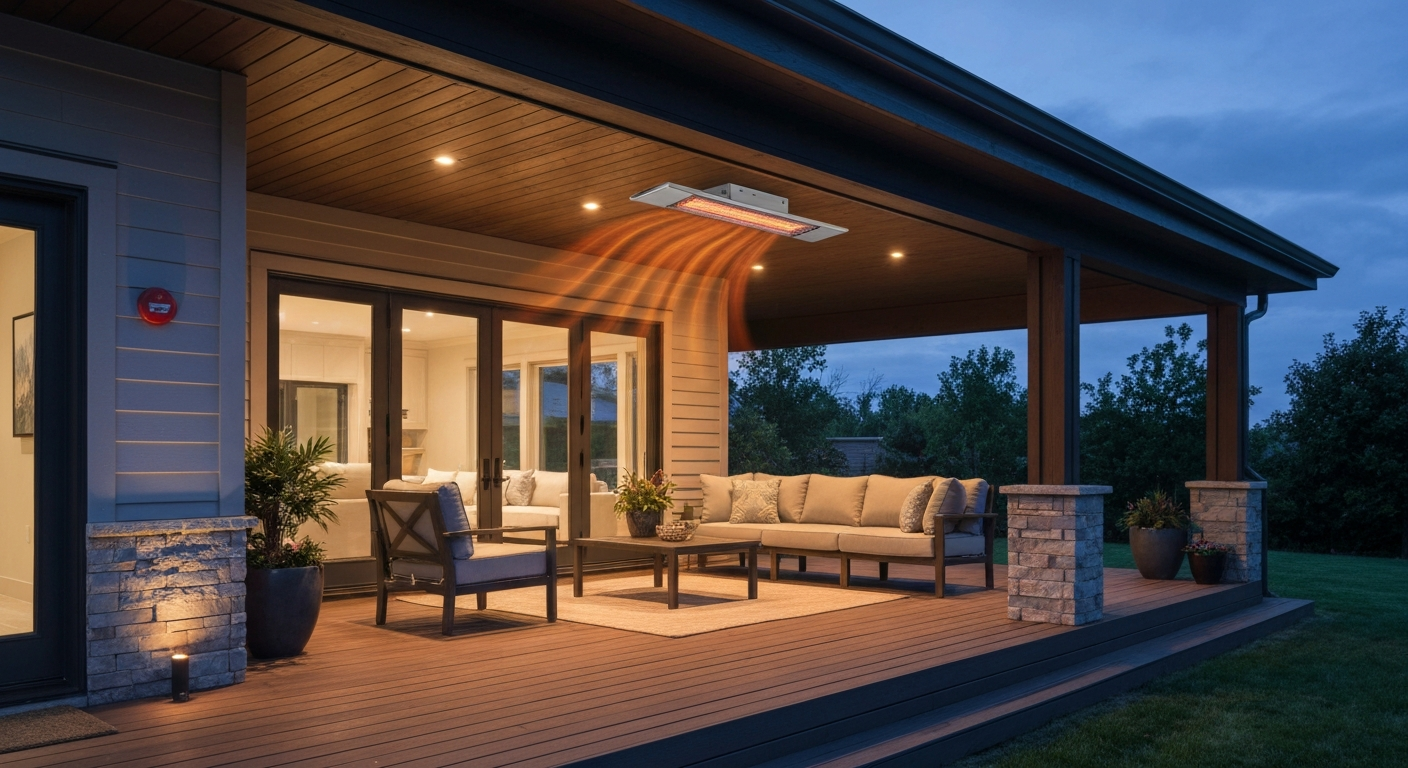
Covered, semi-open, and fully enclosed patios, why the roof type changes everything
These three categories are not interchangeable, and confusing them is the single most common reason people end up with an unsafe or code-violating setup.
- Open patio: no overhead structure, no walls. Any heater or fire feature is viable assuming local burn rules allow it. Wind exposure is your main sizing variable.
- Semi-open (covered/roofed patio): a permanent or attached roof — pergola with solid panels, solid patio cover, or a home extension roof — with at least two sides open to the outdoors. IRC Appendix BF applies in jurisdictions that have adopted it. Combustion appliances need adequate ventilation, and the IFC (Section 307.4.3) restricts portable outdoor fireplaces within 15 ft of a structure — a rule local fire officials also extend to roofed structures. This is the most common scenario for homeowners.
- Fully enclosed patio (screened room or season room): four walls plus a roof, even with mesh screens. Treated as semi-indoor space by most codes. Combustion appliances other than properly vented gas appliances or electric units are almost always prohibited here. CO accumulation risk is high, consistent with CDC/NIOSH findings that semi-enclosed spaces trap combustion gases at dangerous concentrations.
The practical rule: the more enclosed the space, the more you must restrict combustion and prioritize electric or fully vented gas. NFPA 54 (National Fuel Gas Code) sets the ventilation opening requirements for gas appliance installations, and NFPA 211 governs chimney and venting design for any factory-built or masonry fireplace. Both codes get adopted locally in various editions, so always confirm what your municipality has in effect before you buy or build.
Quick picks by who you are and how you use the space
Homeowners
For a typical attached covered patio (semi-open, two or more open sides), a wall-mounted or ceiling-mounted electric infrared heater is the cleanest install, no permit in most areas, no fuel line, and brands like Bromic, Infratech, and Schwank all publish tested coverage ratings tied to mounting height. If ambiance is the priority, a natural gas fireplace with a UL 127-listed factory-built insert and a properly terminated chimney is the upgrade path. It requires a permit and a licensed contractor for the gas piping but delivers genuine flame presence. Avoid wood-burning in any covered setup.
Restaurants and cafes
Commercial operations almost universally need commercial-rated infrared heaters (Bromic Tungsten Smart-Heat, Schwank, or Sunpak) or hard-piped natural gas patio heaters certified to CSA/ANSI Z83.26. Restaurants face fire marshal inspections, so portability is not an advantage, permanently mounted, certified equipment documented on a permitted plan is the standard. CO alarms wired per NFPA 720 / UL 2075 are required wherever a fuel-burning appliance is present in occupied commercial space.
Short-term rentals (Airbnb, VRBO)
Guest safety and liability drive the decision here. Electric infrared heaters and CSA-listed LP patio heaters (tank-top mushroom style, repositioned away from the roof when in use) are the most defensible choices. Many STR platforms' host guidelines and local short-term rental ordinances now require CO alarms in any room with a fuel-burning appliance, so install one regardless of appliance type. Open-flame wood features or unvented gas logs in enclosed patios are a liability and insurance risk.
Which heater and fireplace types actually work under a covered patio
Electric infrared heaters
The most universally appropriate choice for any covered patio. No combustion means no CO risk, no venting requirement, and no fuel storage concern. Ceiling and wall-mount units from Infratech, Bromic, and similar brands specify minimum mounting heights (Bromic's Tungsten Smart-Heat, for example, requires a minimum 96-inch ceiling mount) and publish tested coverage areas tied to that geometry. Output is measured in watts, not BTUs, a 4,000W unit delivers roughly 13,600 BTU-equivalent, and the heat is felt immediately on occupants rather than warming air, which makes it efficient in breezy semi-open spaces. No permit is usually needed unless you're adding a dedicated 240V circuit, which requires an electrical permit in virtually every U.S. jurisdiction.
Natural gas fireplaces (vented, factory-built)
A UL 127-listed factory-built gas fireplace with a properly installed and terminated chimney is a code-compliant solution for a covered patio with sufficient clearance and venting. NFPA 211 governs the chimney design, and IRC Chapter 10 sets the installation requirements including hearth dimensions, clearances to combustibles, and chimney-top termination rules. These are permanent, permit-required installations, expect to involve a licensed plumber for gas piping (NFPA 54 compliance) and a licensed contractor or certified chimney professional for the unit itself. Heat output typically ranges from 25,000 to 60,000+ BTU depending on firebox size. This is the premium ambiance option and the only gas-flame fireplace I'd recommend for a fully covered roofed patio.
Propane patio heaters (freestanding and mounted)
The classic mushroom-top freestanding LP heater is rated for semi-open outdoor use, not for fully enclosed spaces or tight canopies with little airflow. Models certified to CSA/ANSI Z83.26 are appropriate for covered commercial and residential patios that are genuinely open on at least two sides. NFPA 58 governs propane storage and sets container siting rules, most residential patios are fine with a standard 20 lb (5 gal) or 40 lb tank as long as it's not stored against the structure. Freestanding LP heaters with a tip-over safety shutoff are a must; look for the CSA or UL mark. Output typically runs 40,000 to 46,000 BTU per unit.
Natural gas patio heaters (hard-piped)
Permanently piped natural gas heaters eliminate the propane refill problem and are popular for restaurants. They require a permit for the gas line (municipalities routinely list exterior gas line work for patio heaters as a permit trigger, Scottsdale's permit services page is a typical example). City of Scottsdale, Permit Services lists 'Exterior appliance natural gas or propane gas line (BBQ, Pool Heater, Fire Pit/Fireplace, Torches, Gaslights, Patio Heater)' as a permit trigger City of Scottsdale — Permit Services (example listing: gas piping and exterior appliance permits). Output and clearance specs are set by the manufacturer and must be followed; CSA/ANSI Z83.26-certified models are the commercial standard. Coverage per unit is similar to LP heaters: 10 to 20 ft diameter comfort zone per mushroom-head unit, or wider with commercial infrared strip heaters.
Pellet fireplaces and stoves
Pellet appliances emit significantly less PM2.5 than open wood fires, EPA-certified pellet units are among the cleanest solid-fuel options available, but they still require venting and produce combustion byproducts. On a semi-open covered patio, a pellet fireplace with a properly installed flue can work, but the venting route through a roof adds structural and code complexity (NFPA 211 and UL 103 for the factory-built chimney). They're less popular for covered patios than gas or electric, and the pellet-feed mechanism and igniter add maintenance overhead. I'd only recommend them if the buyer specifically wants solid-fuel ambiance and is willing to run a compliant vent stack.
Freestanding and built-in fireplaces
Freestanding gas fireplaces (think a standalone unit on legs or a pedestal) are a middle-ground option, portable enough to reposition, but still requiring a gas connection and proper clearances. Built-in fireplaces integrated into a masonry or concrete patio wall are the most permanent and aesthetically refined option, and they typically deliver the highest heat output, but they're also the most expensive and permit-intensive. Both types need manufacturer-specified clearances to any combustible overhead structure, which is the critical checkpoint on a covered patio.
Patio torches
Tiki-style and gas patio torches are primarily decorative and produce minimal usable heat. Under a covered patio, open-flame torch designs are restricted or prohibited by many local fire codes, the IFC treats them as portable outdoor fireplaces with the same 15-ft-from-structure restrictions in some jurisdictions. Gas torches that are hard-piped and designed for architectural installations are safer than liquid-fuel torches, but neither type meaningfully heats a space. If you're considering torches for ambiance alongside a heater, check local code compliance before installing them under a solid roof. For recommendations and top-rated models, see our roundup of the best patio torches.
Side-by-side: heat output, coverage, and trade-offs
| Type | Typical Output | Coverage Area | Under Roof? | Permit Needed? | Key Trade-offs |
|---|---|---|---|---|---|
| Electric infrared (wall/ceiling) | 1,500–6,000W (5,100–20,500 BTU equiv.) | 60–200 sq ft per unit | Yes — all roof types | Only for new 240V circuit | No combustion, low ambiance, higher electricity cost vs gas |
| Natural gas fireplace (vented, built-in) | 25,000–60,000+ BTU | 200–400 sq ft | Yes — with proper chimney/venting | Yes — gas line + mechanical/building | High ambiance, permanent, expensive install, requires licensed contractor |
| Propane freestanding heater | 40,000–46,000 BTU | 10–15 ft diameter | Semi-open only (2+ open sides) | No (tank connection only) | Portable, no install cost, refill hassle, IFC fire-distance rules apply |
| Natural gas patio heater (hard-piped) | 40,000–50,000 BTU | 10–18 ft diameter | Semi-open to partially covered | Yes — exterior gas piping | No refill, reliable, requires licensed plumber, upfront piping cost |
| Pellet fireplace (vented) | 8,000–50,000 BTU | 150–350 sq ft | Semi-open with vent stack | Yes — building/mechanical | Clean-burning solid fuel, high maintenance, complex venting |
| Freestanding gas fireplace | 20,000–40,000 BTU | 100–250 sq ft | Semi-open with clearances | Yes — gas connection | Portable-ish, good ambiance, must meet clearance specs |
| Gas patio torch (hard-piped) | 3,000–8,000 BTU | Minimal (decorative) | Restricted — check local IFC | Yes — gas piping | Primarily ambiance, not a heat source, open flame restrictions under roof |
| Wood-burning fireplace/fire pit | Variable / uncontrolled | Variable | Not recommended under any roof | Often yes — chimney permit | Smoke, embers, CO risk, PM2.5 emissions, IFC restrictions |
How to size your heater for the space
BTU rules of thumb exist, but they break down fast if you apply them without accounting for patio exposure and climate. The standard starting point for outdoor heating is roughly 1,500 to 2,000 BTU per square foot of space you want to keep comfortable in mild conditions (50–60°F ambient). In colder climates or windy exposures, push that toward 2,500 BTU per square foot. For electric infrared, convert: 1 watt equals approximately 3.41 BTU/hr, so a 4,000W unit delivers about 13,600 BTU/hr.
The catch with infrared and patio heaters is that manufacturers rate coverage area based on a specific mounting height and a protected (no-wind) environment. Bromic and Infratech both publish heat maps in their installation manuals that show how the heating footprint changes with mounting height, a heater mounted at 8 ft covers a different area than the same unit at 10 ft. Always cross-reference the manufacturer's installation manual, not just the marketing spec sheet, and use the coverage rating for the mounting height you'll actually achieve.
- Measure your patio's usable heated square footage — the seating area, not total patio size.
- Identify your coldest operating temperature. Design for the coldest nights you realistically expect to use the patio.
- Multiply square footage by 1,500–2,500 BTU depending on exposure (sheltered vs. breezy semi-open).
- Divide total BTU needed by the rated output per unit to get unit count.
- Cross-check the manufacturer's coverage map at your actual mounting height.
- Place units to avoid cold spots near open sides — position heaters closer to exposed edges where heat loss is highest.
For a 200 sq ft covered patio in a moderate climate, you're typically looking at 300,000 to 400,000 BTU total, which is two to three 46,000-BTU propane heaters, or three to four 4,000W infrared units. In a warm climate like Arizona or Southern California, you can cut those numbers by 30 to 40 percent.
Wood-burning under a roof: the honest assessment
I get asked about this constantly, and the honest answer is: don't do it without a properly engineered, fully vented chimney system, and in many jurisdictions, don't do it at all. The IFC's Section 307.4.3 classifies portable outdoor fireplaces as regulated equipment with setback requirements from structures. Local fire codes routinely use this authority to restrict or prohibit wood-burning appliances under roofed patios, particularly portable fire pits.
The safety case is straightforward. Wood-burning produces sparks and embers that can ignite roof materials or overhead combustibles, the #1 hazard on a covered patio. Open wood fires also produce significant PM2.5 and hazardous organic compounds, as EPA BurnWise data and peer-reviewed research confirm, creating air quality and health issues when smoke is trapped under a roof. In any semi-enclosed space, combustion gases including CO can accumulate to dangerous levels, consistent with CDC/NIOSH findings about semi-enclosed environments.
If you want a wood-burning fireplace on a covered patio, the path is a masonry or factory-built fireplace with a compliant chimney system meeting NFPA 211 and local IRC/IFC requirements, a chimney that fully draws combustion gases up and away from the occupied space. This is a significant construction project, not a DIY weekend task. EPA-certified wood inserts in a properly built firebox reduce (but do not eliminate) particulate emissions. An open wood-burning fire pit, by contrast, has no real safe application under a permanent roof. If you're weighing wood-burning options more broadly, the surface damage and air quality questions are covered in more depth in the context of wood-burning fire pits generally. For product recommendations, see our guide to the best patio wood burning fire pit.
Surface heat and patio damage, what actually happens and how to prevent it
Any combustion appliance placed on a patio surface can cause heat damage, discoloration, or structural damage to pavers, composite decking, or wood decking if it's placed without adequate protection. For more detail on how fire pits affect different patio materials, see do fire pits damage patios. The risks are real and show up in predictable ways.
- Concrete pavers and flagstone: radiant heat from a fire pit or portable heater can cause surface spalling (the popping and cracking of the top layer) if moisture is trapped in the stone. This is more common with natural stone and lower-quality concrete pavers. Heat mats and non-combustible pads rated for outdoor appliances (UL 1618 addresses floor and wall protectors and hearth extensions) create an air gap that reduces conductive heat transfer.
- Composite decking: extremely vulnerable. Most composite deck manufacturers void their warranties if any open-flame appliance is placed directly on the deck. Minimum clearances and protective pads are mandatory. Some brands specify that no combustion appliance should be used on their decking regardless of protection.
- Wood decking: even more vulnerable than composite. Ember drop is the primary risk from wood-burning features. A non-combustible pad with at least 12 inches of clearance beyond the appliance footprint on all sides is the code-influenced baseline (UL 1618 / NFPA 211 hearth extension logic applied to outdoor use).
- Tile and hardscape: generally the most tolerant, but grout lines and the adhesive beneath tiles can be affected by sustained radiant heat from low-profile appliances.
The practical protection stack: use a UL-listed or manufacturer-specified non-combustible floor protector under any combustion appliance, maintain the minimum clearance to combustibles specified in the product manual, and for any open-flame or wood-burning feature, add a spark screen. For built-in fireplaces, the IRC mandates hearth extension dimensions, at least 16 inches in front and 8 inches on each side of the firebox opening for smaller units, scaling up for larger openings. Those dimensions exist for a reason; replicate the logic even for freestanding appliances.
On pavers specifically, elevating a portable heater or fire pit on legs that provide at least 6 inches of air clearance below the unit dramatically reduces surface heat. Most quality freestanding propane heaters already achieve this by design. The fire pit surface damage question gets even more involved when you're dealing with wood-burning models, that topic is worth examining in detail separately.
Permits, codes, and HOA, the checklist you need before buying
Skipping the permit step is the most expensive mistake you can make. A non-compliant gas line or improperly installed appliance can void homeowner's insurance, create liability in a rental, or require costly removal. Here's the practical workflow based on how building professionals approach this. For a practical permit workflow for gas line work, review adopted model codes, check local permit triggers (gas piping, electrical circuits, structural tie‑ins, chimney penetrations, and fuel storage), and submit product listings, piping plans, and a licensed contractor’s signature where required, see Do You Need a Permit for Gas Line Work?, PermitMint guide (practical workflow) blank" rel="noopener noreferrer">Do You Need a Permit for Gas Line Work? — PermitMint guide (practical workflow).
- Identify which model codes your municipality has adopted — specifically the IRC, IFC, IFGC (International Fuel Gas Code), and NFPA editions in effect locally.
- Check your local building department's permit triggers. Exterior gas piping for a patio heater, fire pit, or fireplace is almost universally a permit item. The City of Scottsdale's permit page is a good benchmark: it explicitly lists exterior gas appliances including patio heaters, fire pits, and torches as triggers.
- For gas appliances, a licensed plumber or pipefitter must typically sign off on the gas piping under NFPA 54/IFGC rules. Many jurisdictions won't activate a new gas meter or open a new gas circuit without a passed inspection.
- For factory-built fireplaces, gather the UL 127 listing documentation, the manufacturer's installation manual, and confirm you're using listed components (UL 103 chimney, UL 1618 hearth protector where required).
- For electrical infrared heaters, a new 240V dedicated circuit requires an electrical permit. Standard 120V plug-in units typically don't trigger a permit.
- Check HOA rules separately — they often exceed code minimums on flame features, propane storage visibility, chimney height, and deck/patio surface types.
- Install CO alarms per the adopted code. Where any fuel-burning appliance is present, CO detection is required under most adopted IRC/IFC editions; NFPA 720 and UL 2075 cover the performance standard for those alarms.
Carbon monoxide: the non-negotiable safety item
Any combustion appliance, gas, propane, pellet, or wood, produces CO. On a fully open patio, wind disperses it quickly. On a covered patio, particularly one with screens, temporary plastic weather panels, or even furniture that restricts airflow, CO can accumulate faster than most people expect. CDC/NIOSH research consistently shows that semi-enclosed spaces like covered patios, porches, and garages create hazardous CO conditions with combustion appliances. If you run a gas fireplace, a propane heater, or any solid-fuel appliance on a covered patio, install a UL 2075-listed CO alarm in the space. This is not optional, it's increasingly a code requirement under adopted IRC/IFC provisions, and it's the one safety item that has a clear, documented track record of preventing deaths.
Operating cost, maintenance, and lifespan, the realistic picture
| Type | Fuel/Operating Cost | Annual Maintenance | Expected Lifespan |
|---|---|---|---|
| Electric infrared | ~$0.10–$0.18/kWh; ~$0.40–$1.00/hr at full power | Clean elements, check mounts annually | 10–15+ years (no combustion wear) |
| Natural gas fireplace (built-in) | ~$0.80–$2.00/hr (varies by gas rate) | Annual burner/pilot inspection, chimney cleaning | 20–30 years with maintenance |
| Propane freestanding heater | ~$1.50–$2.50/hr (20 lb tank ≈ 8–10 hrs) | Clean burner/pilot, replace O-rings, check hose | 5–10 years (commercial grade longer) |
| Natural gas patio heater (hard-piped) | ~$0.50–$1.20/hr | Annual burner inspection, clean igniter | 10–15 years |
| Pellet fireplace | ~$3–$6 per 40 lb bag (covers several hrs) | Clean ash, auger, and burn pot frequently | 15–20 years with upkeep |
| Wood-burning fireplace (built-in) | Low fuel cost if wood is sourced locally | Annual chimney sweep required (NFPA 211) | 30–50 years (masonry) / 20–30 yrs (factory-built) |
Electric infrared wins on maintenance simplicity by a wide margin, there are no combustion components to degrade, no pilots to relight, and no flue to clean. Natural gas built-ins have the best ambiance-to-long-term-cost ratio once the install is paid for. Propane freestanding heaters have the lowest upfront cost but the highest per-hour fuel cost, and the refill logistics get old fast on a patio that's used frequently.
Features worth paying for vs. features that sound good on a spec sheet
Based on testing across product categories, here's what actually matters when you're comparing models in the same class.
- CSA or UL certification mark: non-negotiable for any gas or electric appliance. Uncertified products may not be covered by homeowner's insurance and will fail inspection.
- Tip-over auto-shutoff (propane/gas): required by CSA Z83.26 for portable gas heaters and worth verifying is functional before every season.
- Adjustable heat settings: important for electric and gas units — single-output heaters waste energy and fuel in mild weather.
- Smart controls / thermostat integration: Bromic and Infratech offer smart switching; for commercial applications this pays for itself quickly in reduced run time.
- Spark screen or glass door: essential for any open-flame fireplace to prevent ember ejection. For gas fireplaces, tempered glass is standard; for any wood or pellet unit, it's critical.
- Powder-coat or marine-grade finish: matters in humid or coastal climates. Rust is the primary lifespan killer on outdoor gas heaters.
- Manufacturer-published mounting height and coverage map (not just peak BTU): the only way to actually compare output across models for your specific patio geometry.
The bottom line: which type fits your patio
For most homeowners with a covered patio, the practical hierarchy is: electric infrared first (easiest, safest, no fuel management), followed by hard-piped natural gas if ambiance and sustained warmth matter more than install simplicity. For curated recommendations and buying guidance, see our best patio fireplace roundup. For businesses, commercial-grade infrared or hard-piped gas is the only defensible choice under a permanent roof. Propane freestanding heaters are a legitimate option for semi-open patios where portability matters and open sides provide airflow, but they're a stopgap, not a long-term solution for serious use. Wood-burning under any roof requires a properly vented, permitted chimney system, treat it as a construction project, not an appliance purchase. And regardless of what you choose, a CO alarm and proper surface protection are the two items that never make the marketing material but always matter in real-world use.
FAQ
Short answer: what types of fireplaces and heaters are appropriate for covered patios (fully enclosed, semi-open/roofed, partially roofed)?
Use only appliances listed for the intended covered configuration. Best options: permanently installed, vented gas fireplaces and factory-built vented units with approved chimneys for fully enclosed spaces; hard‑plumbed natural gas or properly vented propane gas heaters and commercial infrared gas heaters for semi-open/roofed patios with adequate clearances and ventilation; electric and electric infrared heaters (hardwired or plug‑in) for tight/fully enclosed covered patios where combustion is unacceptable. Avoid unvented wood‑burning fire pits or portable open wood fires under a roof. Portable propane tiki torches and unvented portable gas fire pits are generally unacceptable for roofed or tightly screened patios unless the appliance listing and local authority expressly permit them.
Why are wood‑burning fire pits usually a poor choice for covered patios?
Wood fires emit smoke, PM2.5, sparks and carbon monoxide; covered patios can trap combustion products and embers, increasing health and fire risks and damaging surfaces. Codes and health guidance discourage open wood burns in semi‑enclosed spaces. If wood is essential, only use a factory‑built, listed, wood‑burning fireplace with correct chimney/clearances and professional installation, but expect neighbor/air‑quality issues and more maintenance.
What are the main code and permit checkpoints to verify before buying or installing a fireplace/heater on a covered patio?
Check the adopted local editions of IRC/IFC/NFPA and municipal code for: (1) whether the appliance type is permitted under eaves or canopies; (2) required clearances, chimney penetrations and hearth protection per IRC/NFPA 211 and UL listings; (3) gas‑piping and appliance permits (NFPA 54/IFGC) for permanent lines; (4) propane storage/separation rules per NFPA 58 for cylinders or ASME tanks; (5) need for mechanical or electrical permits for hardwired electric heaters; and (6) HOA restrictions/architectural review. Submit manufacturer manuals and certified installer info when required.
How should I treat ventilation and carbon‑monoxide risk on roofed or semi‑enclosed patios?
Treat roofed patios as potentially hazardous for unvented combustion. Use only appliances listed for semi‑enclosed use or provide engineered ventilation. Install CO detectors per adopted codes (outside sleeping areas and near appliances). Avoid unvented gas heaters in tight spaces. For permanent gas appliances, follow NFPA 54 venting and combustion‑air requirements and local fire authority guidance.
What clearance and mounting rules matter for gas patio heaters and infrared heaters?
Follow the appliance manual and applicable standards (CSA/ANSI Z83.26 for gas infrared, manufacturer UL listings). Typical rules include minimum mounting heights (commonly 7–8+ ft for ceiling mounts), lateral distances to combustible walls/roof members, and minimum clearances above/beside the unit. Never reduce clearances unless explicitly permitted by the listing or an approved protective shield with tested clear‑ances.
How do BTUs/watts translate to usable heat coverage on a covered patio?
Manufacturer heat ratings assume specific mounting heights and protected conditions. BTU or watt rating alone is insufficient; use manufacturer coverage area guidance for the intended mounting height. As a rule of thumb: outdoor gas infrared heaters of 40–60k BTU warm a 100–200 sq ft table area under cover; electric infrared panels (1–2 kW) typically heat 10–40 sq ft of close, radiant‑only space. Expect reduced effective coverage in breezy, open‑sided patios.
Next Articles
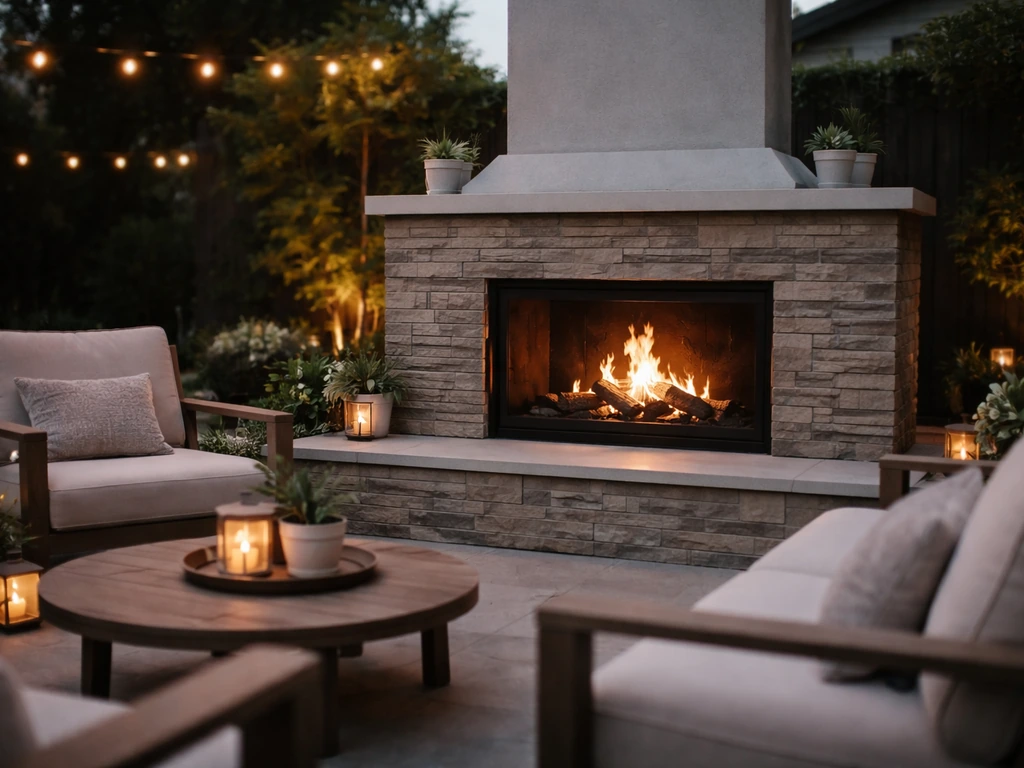
Best Patio Fireplace: How to Choose by Fuel, BTUs, and Size
Pick the best patio fireplace by fuel, BTUs, and size with safety, cost, and scenario-ready recommendations.
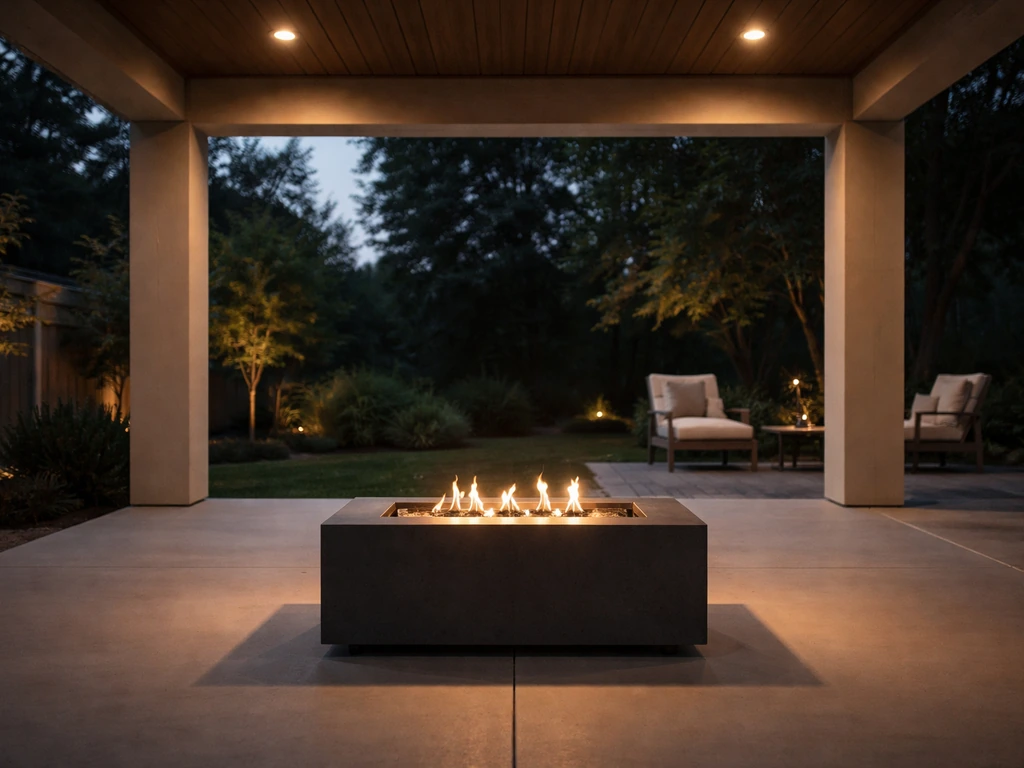
Best Fire Pit for Covered Patio: Safe, Best Picks Guide
Find the best covered-patio fire pit with safety clearances, low-smoke options, and gas or electric picks for your patio
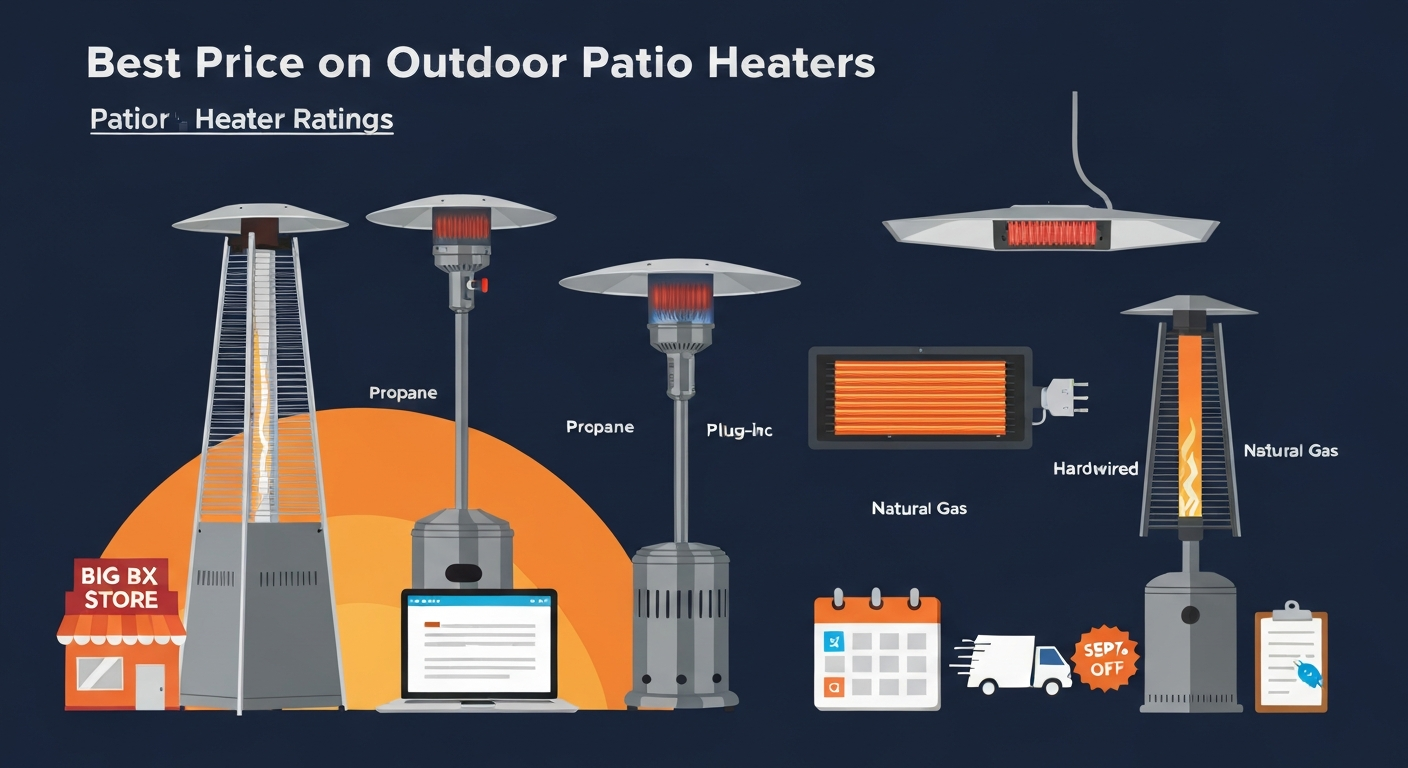
Best Price on Outdoor Patio Heaters: Compare Costs & Deals
Score the best price on outdoor patio heaters, price ranges, top picks, deal tactics, total-cost & safety checklist.