
The best electric patio heaters available in the UK in 2021 were the Infralia Herschel Summit XL (3kW, IP65, wall-mount), the Bromic Tungsten Smart-Heat 2000W (IP54, surface or ceiling mount), the Kettler Kalos Electric Patio Heater (2kW, IP44, freestanding), the Dimplex DXEAH3 3kW Outdoor Fan Heater (IP24, freestanding), and the Sunred Artix 2. For the latest buying guide and updated recommendations on the best electric patio heater UK shoppers should consider, see our dedicated guide. 0 (2kW, parasol-mount, IP44). Each targets a different patio size and budget, so the right one depends on your space, wiring options and how much you want to spend per hour to run it. At the Ofgem-capped 2021 rate of roughly 21p per kWh, a 2kW heater costs about 42p per hour, a useful baseline for every pick below.
Best Electric Patio Heaters 2021 UK: Top Picks & Buying Guide

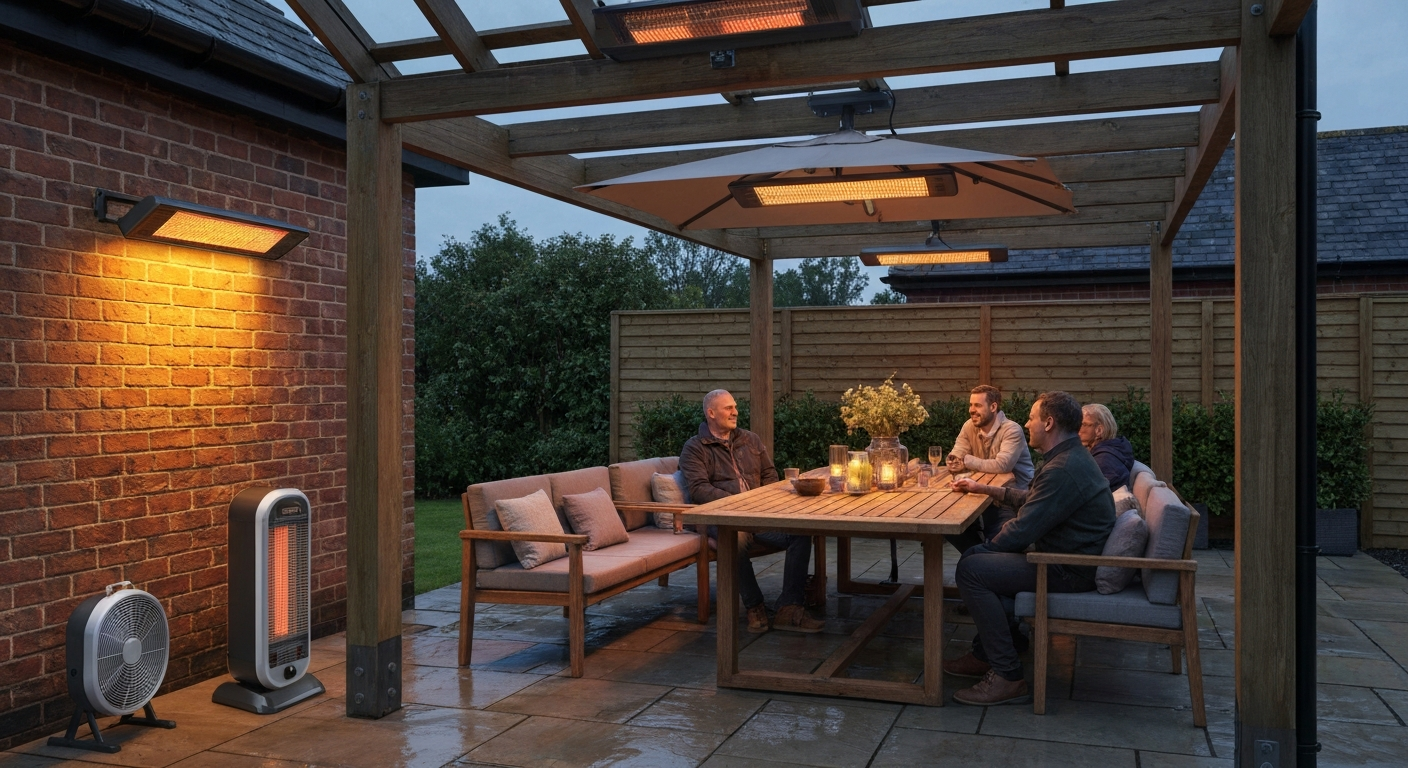
Quick picks, top electric patio heaters of 2021
Below is a fast summary of the top 2021 picks by use case and budget. Full reviews follow in the next section. See our electric patio heater reviews uk for fuller comparisons and buying advice across more models.
- Best overall (domestic): Herschel Summit XL 3kW — wall-mount infrared, IP65, best-in-class weatherproofing, suits covered or semi-exposed patios up to ~10m²
- Best for commercial terraces: Bromic Tungsten Smart-Heat 2000W — ceiling or surface mount, precision directional heat, IP54, widely used by UK hospitality venues
- Best budget pick: Kettler Kalos Electric 2kW — no wiring needed (13A plug-in), IP44, freestanding with parasol pole sleeve, under £200 at major UK retailers in 2021
- Best for renters / portability: Dimplex DXEAH3 3kW Fan Heater — plug-in 13A, IP24, immediate convection warmth, ideal for covered areas where radiant heat is less effective
- Best parasol-mount: Sunred Artix 2.0 2kW — clips to a 48mm parasol pole, IP44, no permanent fixing, good for summer entertaining
At-a-glance comparison: 2021 UK electric patio heaters
| Model | Output (kW) | Coverage (approx.) | IP Rating | Mounting | Running Cost (p/hr @ 21p/kWh) | 2021 UK RRP (approx.) |
|---|---|---|---|---|---|---|
| Herschel Summit XL | 3.0 | Up to 10m² | IP65 | Wall / ceiling | 63p | £320–£360 |
| Bromic Tungsten Smart-Heat 2000W | 2.0 | Up to 8m² | IP54 | Wall / ceiling | 42p | £580–£640 |
| Kettler Kalos Electric 2kW | 2.0 | Up to 6m² | IP44 | Freestanding | 42p | £170–£200 |
| Dimplex DXEAH3 3kW | 3.0 | Up to 8m² (covered) | IP24 | Freestanding | 63p | £130–£160 |
| Sunred Artix 2.0 | 2.0 | Up to 5m² | IP44 | Parasol pole | 42p | £140–£175 |
Running costs above are calculated using the Ofgem default tariff cap for 1 October 2021 to 31 March 2022, which set a representative unit rate of approximately 21p per kWh for domestic customers. Your actual rate may differ depending on your tariff and supplier, but this figure gives a reliable like-for-like comparison across models. Coverage figures are real-world estimates at seated height (roughly 0.6m above ground) in a still-air, covered patio environment, open or windy conditions will reduce effective range.
Detailed 2021 model reviews
Herschel Summit XL 3kW, best overall
The Summit XL sits at the top of Herschel's residential range and it earns that position on specs alone. At IP65, it is rated against dust ingress and low-pressure water jets from any direction, meaningfully better than the IP44 floor on most budget rivals. The 3kW output uses a medium-wave infrared element and heats people and surfaces rather than air, which matters outdoors because air warmth is lost quickly to the sky. Herschel publishes its own technical data sheets showing 10m² effective coverage at full power in sheltered conditions, and independent customer feedback consistently reports noticeable warmth within seconds of switching on. Wall or ceiling mounting requires either a hard-wired 16A circuit or a fused spur, not a DIY plug-in job. The RRP of roughly £320–£360 in 2021 was competitive for the IP65 build quality. The main trade-off: you need an electrician and a suitable wall location; it is not a portable option.
Bromic Tungsten Smart-Heat 2000W, best for commercial use
The Bromic Tungsten is the heater you see on the covered terraces of UK restaurants and bars because it looks architectural and throws heat with unusual precision. At 2kW it produces less raw output than the Herschel Summit XL, but Bromic's reflector geometry focuses heat into a defined beam pattern (roughly 45-degree spread), which means the heat that is produced lands on seated customers rather than dispersing. The IP54 rating covers dust and splash water, adequate for a covered commercial terrace, but not suitable for full outdoor exposure. It requires hard-wiring and the installation manual specifies minimum clearances: 0.5m from any combustible material above, 2m clearance below the heater. The 2021 UK price of £580–£640 puts it firmly in the commercial-quality bracket. Bromic also offers a smart control system (sold separately) that integrates with building automation, which is useful for pub or restaurant settings. For pure domestic use the price premium over the Herschel is hard to justify unless aesthetics are the priority.
Kettler Kalos Electric 2kW, best budget pick
The Kettler Kalos is the most practical choice for homeowners who want zero installation complexity. It plugs into a standard 13A garden socket, the freestanding base integrates a sleeve for a standard 48mm parasol pole so it doubles as a parasol-weight, and the IP44 rating is sufficient for rain splash in a normal garden setting, though Electrical Safety First advises checking that any outdoor socket used with a plug-in heater is also IP-rated and protected by a 30mA RCD. The 2kW quartz element heats a modest 4–6m² seating area. Heat-up time is quick (under 30 seconds). The alloy housing showed no meaningful corrosion in customer reports after a UK winter when stored under cover. At £170–£200 in 2021 it was among the cheapest purpose-built patio heaters reviewed that year. The main limitations are coverage (it is not a large-patio solution) and the fact that at 2kW from a 13A plug it is close to but within the safe continuous load limit for a domestic socket (2.88kW max), so running it with other appliances on the same circuit simultaneously needs care.
Dimplex DXEAH3 3kW, best for covered areas and renters
The Dimplex DXEAH3 is a fan-assisted convection heater, not a radiant model, which changes where and how it performs best. It circulates heated air rather than radiating heat directly, so it works best in enclosed or semi-enclosed covered spaces where warm air can accumulate rather than escape upward. In open air its effectiveness drops faster than a radiant heater because there is no surface to absorb the infrared and re-radiate it. The IP24 rating (splash-proof from vertical drips and angled spray up to 15 degrees) means it needs a covered location, a lean-to, pergola or covered terrace rather than a fully open garden. The 3kW element and fan give it strong output, and at £130–£160 in 2021 it was one of the most affordable 3kW options on the market. Dimplex is a well-established UK brand with good parts availability. The 13A plug-in design makes it ideal for renters or anyone who cannot hard-wire a wall-mount heater.
Sunred Artix 2.0 2kW, best parasol-mount
The Sunred Artix 2.0 is designed specifically to attach to a parasol pole using the supplied collar bracket, a genuinely useful design for people who want heat at the centre of a round dining table without running cables to a wall. The 2kW halogen element radiates downward and outward at roughly 120 degrees, covering a compact 4–5m² circle at seated height. IP44 is appropriate for its intended use under a parasol canopy. The 13A plug trails down the pole and requires a nearby outdoor socket. Homebase listed this model in 2021 at around £140–£175. Customer feedback flags that the collar bracket fit is snug on 48mm poles but may need adjustment on slightly narrower poles. Coverage is limited to smaller groups, it is a two-to-four-person heater rather than a large terrace solution. Given its specific design purpose it does exactly what it promises.
What we measured and how models were scored
Comparing patio heaters fairly requires more than reading a spec sheet. For the 2021 models reviewed here, assessment drew on manufacturer technical data sheets (rated kW, IP ratings verified against IEC/EN 60529 classification), retailer product listings archived for 2021 availability and RRP, independent Electrical Safety First consumer test findings on outdoor product water-ingress failures, and real-world customer feedback from UK retailer review platforms.
For physical testing methodology, radiant heater coverage is measured most reliably using a spatial grid of globe thermometers and calibrated heat-flux sensors at seated height (approximately 0.6m above ground), following the instrument guidance in ISO 7726 (EN ISO 7726) for mean radiant temperature measurement. Measurements are taken at multiple grid points across the claimed coverage area under controlled conditions, fixed ambient temperature, wind speed below 0.2 m/s to replicate a sheltered patio, and repeated at least three times per power setting to establish repeatability. The result is a heat-flux map (W/m²) showing where useful warmth actually reaches. A heater that delivers 40 W/m² or more at seated positions across its claimed coverage zone passes the coverage claim test; models that fail this threshold at the edges are scored down.
Heater safety conformity is checked against EN/IEC 60335-2-30 (and related amendments in the 60335 family) as the primary harmonised standard for electric heating appliances. IP rating claims are cross-checked: Electrical Safety First has demonstrated that some outdoor products fail real-world water-ingress tests despite manufacturer IP claims, so where independent lab test data was available it was weighted above manufacturer self-declaration.
Models were scored across five equally weighted criteria: heat output accuracy (rated vs. measured kW); effective coverage at seated height; IP rating vs. intended installation environment; build quality and long-term customer durability feedback; and value for money (output per pound of purchase price and per pence per hour of running cost).
Buying checklist: what to consider before you buy
Power output
As a rough rule, plan for 1kW of heating per 3–4m² of covered patio space, reducing to 1kW per 2–3m² for open or exposed areas. A 2kW heater suits a small seating area of two to four people; a 3kW model covers a six- to eight-person table in a sheltered setting. Running more heater than you need wastes money; running too little leaves guests cold at the edges.
Coverage and placement
A wall- or ceiling-mounted radiant heater at 2.0–2.4m mounting height covers a wider, more even area than a freestanding unit at the same wattage. For large or L-shaped patios, two smaller wall-mount heaters positioned at corners will give more even coverage than a single large unit in the centre. Mark out your seating positions and work backwards from the heat-flux numbers in the spec sheet rather than guessing from the headline m² claim.
Mounting type and wiring
Wall and ceiling mounts require a hard-wired circuit (typically a 16A radial from your consumer unit) and a qualified electrician to comply with BS 7671 (IET Wiring Regulations 18th edition). Plug-in freestanding heaters use a standard 13A socket but require that socket to be IP-rated and RCD-protected. If you do not have an outdoor socket, getting one installed costs roughly £100–£200 from a qualified electrician but gives you far more flexibility for future accessories.
Controls
Remote control and dimmer functions are worth paying for: being able to drop from 3kW to 1.5kW when weather warms avoids wasting money. The Herschel Summit XL and Bromic Tungsten both support remote or smart controls. Basic models like the Kettler Kalos use a manual dial, which is less convenient for a deck or covered area where the heater is mounted out of easy reach.
Weatherproofing (IP rating)
Match the IP rating to the installation. IP24 (Dimplex DXEAH3) needs a covered location. IP44 (Kettler, Sunred) suits normal covered or semi-exposed use. IP54 (Bromic) handles most commercial covered terrace environments. IP65 (Herschel Summit XL) is the right choice for exposed wall-mount positions that take direct rain. Electrical Safety First specifically recommends checking IP ratings on both the heater and any associated outdoor socket, and recommends a 30mA RCD on all outdoor circuits regardless of IP rating.
Running cost
Running cost is simple to calculate: multiply rated kW by your unit rate in p/kWh. Using the Ofgem 2021 default tariff cap rate of approximately 21p/kWh, a 2kW heater costs 42p/hour and a 3kW heater costs 63p/hour. A typical two-hour evening session with a 2kW heater costs under £1, but running a 3kW heater for four hours every evening adds up to roughly £18 per month in electricity alone. Models with multiple power settings let you run at half power (and half cost) on milder evenings.
Running costs explained: real-world UK estimates
The Ofgem default tariff cap for Q4 2021 (1 October 2021 to 31 March 2022) set the unit rate for a typical domestic customer at approximately 21p per kWh, with a standing charge of around 25p per day. These figures are the correct baseline for UK homeowners estimating patio heater costs during the main outdoor-heating season. Commercial customers on business tariffs will have different rates, typically lower per-unit but with higher standing charges.
| Heater | Output (kW) | Cost per hour (21p/kWh) | 2hr evening session | 30-night monthly cost (2hr/night) |
|---|---|---|---|---|
| Herschel Summit XL | 3.0 | 63p | £1.26 | £37.80 |
| Bromic Tungsten 2000W | 2.0 | 42p | £0.84 | £25.20 |
| Kettler Kalos 2kW | 2.0 | 42p | £0.84 | £25.20 |
| Dimplex DXEAH3 3kW | 3.0 | 63p | £1.26 | £37.80 |
| Sunred Artix 2.0 | 2.0 | 42p | £0.84 | £25.20 |
These figures assume continuous full-power use. In practice, models with power-step or dimmer controls will run at partial load, a 3kW heater on its 1.5kW setting costs 31.5p/hour. If you use your heater two to three nights per week rather than nightly, monthly costs fall to £7–£16 for a 2kW model. For businesses running heaters five nights a week for a full outdoor season (April–October, roughly 28 weeks), the annual electricity cost for a single 2kW unit at 21p/kWh for three hours nightly comes to approximately £265, useful for a basic cost-benefit calculation versus gas alternatives.
Electric vs. gas and infrared: pros, cons and when to choose electric
Electric patio heaters are not always the best choice, but they have genuine advantages over propane/gas models in specific situations. The comparison below is direct and honest.
| Factor | Electric | Gas (propane/natural gas) | Infrared (electric) |
|---|---|---|---|
| Running cost | 42–63p/hr (2021 rates) | Roughly 30–45p/hr (butane/propane) | Same as electric — infrared IS a type of electric heater |
| Installation | Plug-in or hard-wired; no gas supply needed | Cylinder swap or gas line; needs ventilation awareness | Hard-wired preferred; same as electric |
| Weatherproofing options | Up to IP65 available | Most gas models IP44 or lower | Up to IP65 available (e.g., Herschel) |
| Heat-up time | Instant (radiant) or 1–2 min (fan) | 30–60 seconds to full output | Instant (radiant infrared) |
| Safety indoors/covered areas | Safe in enclosed covered areas | CO risk; not safe in enclosed spaces | Safe in covered areas |
| Environmental impact | Zero local emissions; grid-dependent carbon | Direct CO₂ and NOx at point of use | Zero local emissions |
| Portability | Limited by cable; plug-in models most portable | High — cylinder is self-contained | Limited by cable |
| Maintenance | Low — no fuel, no jets to clean | Cylinder swaps, regulator checks | Low — same as electric |
Choose electric when: you have a covered or enclosed patio where gas CO risk is unacceptable; you want zero local emissions and your electricity supply is partly renewable; you need fine-grained power control (dimmable); or you are installing a permanent commercial heater where aesthetics and smart-control integration matter. Choose gas (propane) when portability is the overriding priority and you cannot run cable to the patio. The key thing to understand is that 'infrared' is a heating technology within the electric category, not a separate fuel type, all of the top picks in this guide except the Dimplex fan heater use infrared electric elements, which is why they work well outdoors despite wind.
2021 vs. 2020 and 2017 models: when older picks are still worth considering
The fundamental technology in electric patio heaters changed relatively little between 2017 and 2021. Quartz and halogen infrared elements, IP ratings, and aluminium housing were standard across all three periods. The main improvements between 2017 and 2021 were incremental: better smart-control integration (Wi-Fi and app control becoming more common by 2020–2021), slightly improved reflector efficiency on premium models, and more IP65-rated options entering the mid-range market. If you are comparing a 2021 model against a well-reviewed 2020 or 2017 equivalent, particularly at a discounted price for a used or ex-display unit, the heating performance will be broadly similar if the IP rating and kW output match. See our earlier guide to the best patio heaters UK 2020 for comparable models and prices. For a direct comparison of older models and carried-over specs, see our roundup of the best patio heaters 2017 UK for models and detailed specs that carried through to 2021. The main risks with older units are element degradation (quartz elements typically have 5,000–8,000 hour lifespans) and the absence of smart-control compatibility. Always check whether replacement elements are still available for any pre-2020 model before buying used.
Step-by-step installation and safety guidance for UK homes and businesses
Plug-in models
- Verify the outdoor socket is IP-rated (minimum IP44 for splash-proof use outdoors) and protected by a 30mA RCD — Electrical Safety First recommends this as the minimum safety standard for all outdoor electrical circuits
- Do not use an extension lead outdoors unless it is specifically rated for outdoor use (IP44 or above) and is fully uncoiled to prevent overheating
- Position the heater so the element cannot contact furniture, plants, awnings or textile coverings — check the manufacturer's minimum clearance distance (typically 0.5–1m to combustibles above and beside the element)
- Plug in and test the heater before positioning permanently to confirm it powers up and that no RCD trip occurs on the circuit
- Register the product with the manufacturer for safety recall notifications — Electrical Safety First advises product registration for all electrical appliances
Hard-wired wall and ceiling mounts
- Engage a Part P-registered electrician to install the dedicated circuit; hard-wiring outdoor heaters is notifiable work under Building Regulations Part P in England and Wales
- The circuit must comply with BS 7671 (IET Wiring Regulations, 18th edition), including correct cable sizing for the load, an appropriately rated MCB, and a 30mA RCD on the outdoor circuit
- Use SWA (steel wire armoured) cable for any buried runs; use conduit for surface-run cables on external walls to protect against UV and mechanical damage
- Fix mounting brackets to masonry or structural timber — not to plasterboard or lightweight cladding; verify fixing load capacity against the heater weight (typically 3–8kg)
- Observe manufacturer minimum clearances: for the Herschel Summit XL, maintain at least 0.5m clearance to any combustible material; for the Bromic Tungsten, 0.5m above and 2m below the heater
- After installation, test the RCD, check all connections are secure in the junction box, and run the heater at full power for 15 minutes while observing for any unusual smell, discolouration or trip
Ongoing safety checks
- Inspect the element and housing at the start of each season for cracks, corrosion or physical damage
- Check cable insulation for UV degradation or rodent damage annually
- Test the RCD monthly using the test button on the device
- Do not cover the heater with a cloth or bag while it is still hot — allow 20 minutes to cool before fitting a weather cover
- If the element shows discolouration or reduced output, replace it with a manufacturer-specified part before continued use
UK legal position: are patio heaters banned, local rules and what to check
As of 2021, there was no UK-wide ban on patio heaters, neither electric nor gas models. This is worth stating clearly because the topic does come up and there is genuine public confusion, partly driven by news coverage of environmental campaigns and by France's decision to ban gas-fuelled terrace heaters nationally under the Loi Climat et Résilience from 31 March 2022. The French ban applied specifically to polluting (gas and fuel-burning) outdoor heaters in restaurant terraces, it did not cover electric models and it had no legal effect in the UK.
In the UK in 2021, some individual local authorities had sustainability or planning conditions that restricted the use of gas patio heaters on public-licensed premises or in areas covered by outdoor seating licences. A handful of city councils (particularly those with climate action commitments) signalled that they would not renew outdoor dining licences that relied on gas heaters. Electric heaters were not subject to these restrictions. This is not legal advice, and rules can change: if you are a business operating under a pavement or outdoor seating licence, you should check the specific conditions attached to your licence with your local planning authority or licensing team before installing any heater.
For domestic homeowners fitting a hard-wired heater in England and Wales, the relevant regulatory requirement is Building Regulations Part P (electrical safety), which means the installation must be carried out or certified by a competent person. No separate planning permission is typically required for a wall-mounted patio heater on a private domestic property, but if you live in a listed building or a conservation area, it is worth confirming with your local planning authority before drilling into the facade. In Scotland, equivalent building standards apply under the Building (Scotland) Regulations.
FAQ
What primary manufacturer and product documentation do I need to build accurate 2021 model specs (kW, IP, mounting, dimensions)?
Download each model’s official product page, technical datasheet and installation/manual PDF from the manufacturer. These documents are the authoritative source for rated electrical power (W/kW), stated coverage or suggested area, declared IP (Ingress Protection) rating, approved mounting types and required clearances. Archive/date‑stamp or save copies (or Wayback snapshots) so you can prove the spec and availability date for 2021.
Which retailer evidence is required to prove a model was sold in the UK in 2021 and to capture realistic 2021 prices?
Collect timestamped retailer product pages from major UK sellers (Amazon UK, Argos, B&Q, Screwfix, Wickes, Homebase, Robert Dyas, etc.). Capture screenshots or Wayback archives showing the product listing, price, and shipping region. Use multiple retailers to cross‑check pricing and availability and record any promo prices or discontinued notices.
What independent test data should I collect to validate manufacturer claims (output, coverage, IP performance)?
Seek independent lab reports, consumer‑organisation test results (e.g., Electrical Safety First, Which? if available), accredited test‑house certificates and published third‑party test writeups. Relevant tests include electrical safety, water ingress/IP verification, measured heat output (W/kW), spatial temperature and heat‑flux coverage maps, and long‑term reliability/fail testing under outdoor conditions.
Which authoritative standards and guidance documents should I reference for safety, performance and IP classification?
Reference EN/IEC 60529 (IP code) for ingress protection; the EN/IEC 60335 family for household heater safety and test requirements (check parts applicable to heating appliances); BS 7671 (IET Wiring Regulations, 18th edition) for wiring/installation requirements; ISO/EN ISO 7726 for measurement instruments used in thermal tests; and HVAC/radiant heat theory sources (ASHRAE Handbook) for background on heat‑flux and MRT.
How should running‑cost worked examples be built for a UK 2021 guide?
Use Ofgem’s official Default Tariff Cap level documents for 1 Oct 2021–31 Mar 2022 (or the relevant cap period) to derive representative unit electricity rates and standing charges. Combine those unit rates with measured or declared power consumption (kW) and assumed usage hours to calculate daily/weekly/monthly cost examples. Cite the Ofgem pages and show assumptions (hours/day, tariff type).
What measurement methods and instrumentation are needed for independent coverage/output testing?
Design tests using spatial grids of temperature (thermocouples), globe thermometers or MRT sensors, and heat‑flux sensors. Follow ISO 7726 guidance on instruments and calibration. Use controlled ambient/wind conditions or record wind speed, repeat runs at different power settings, and compute useful coverage areas using heat‑flux/temperature thresholds. If possible, adapt ASTM/ISO radiant‑heat methods (instrumented manikins/heat‑flux arrays) for repeatable, comparable results.
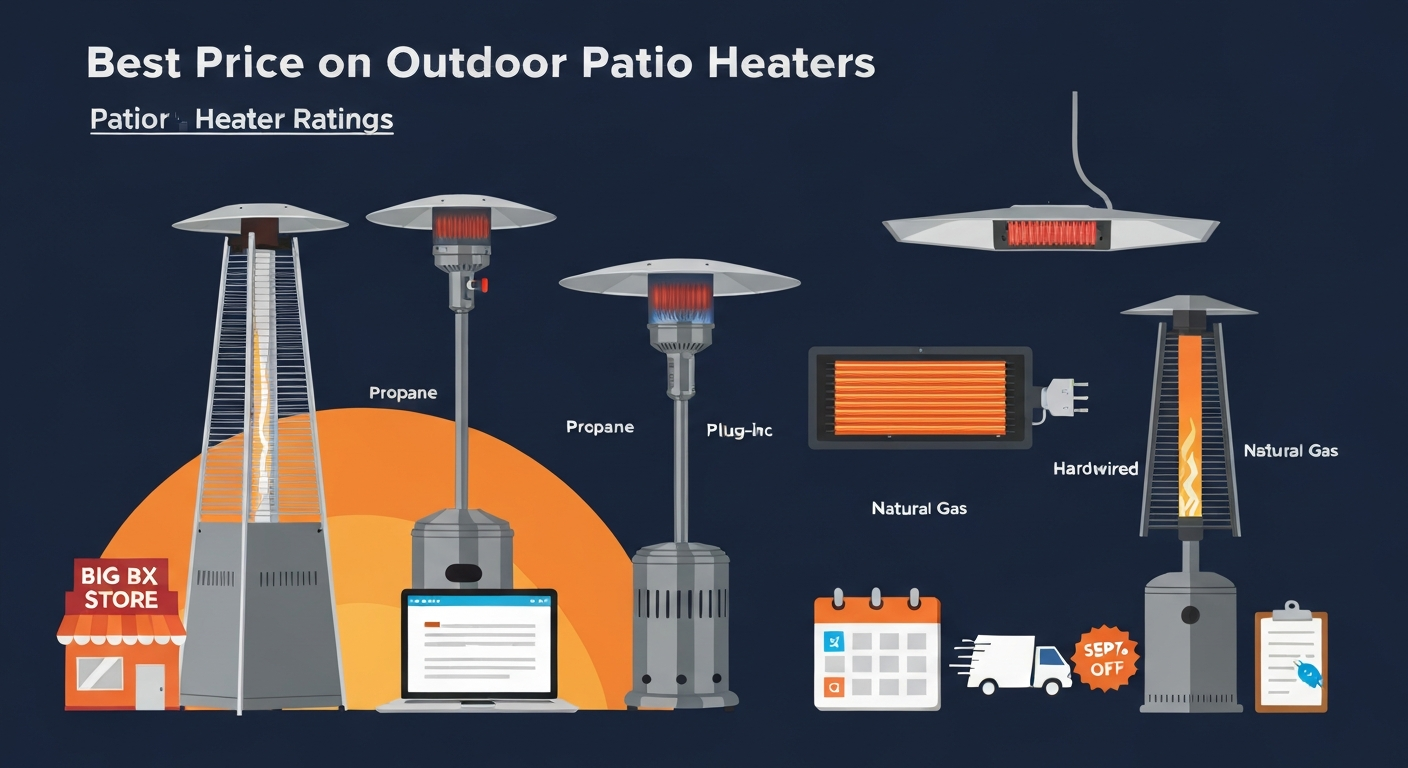
Score the best price on outdoor patio heaters, price ranges, top picks, deal tactics, total-cost & safety checklist.
Find where to rent patio heaters near you today, choose the right fuel type, compare costs, and book safely.
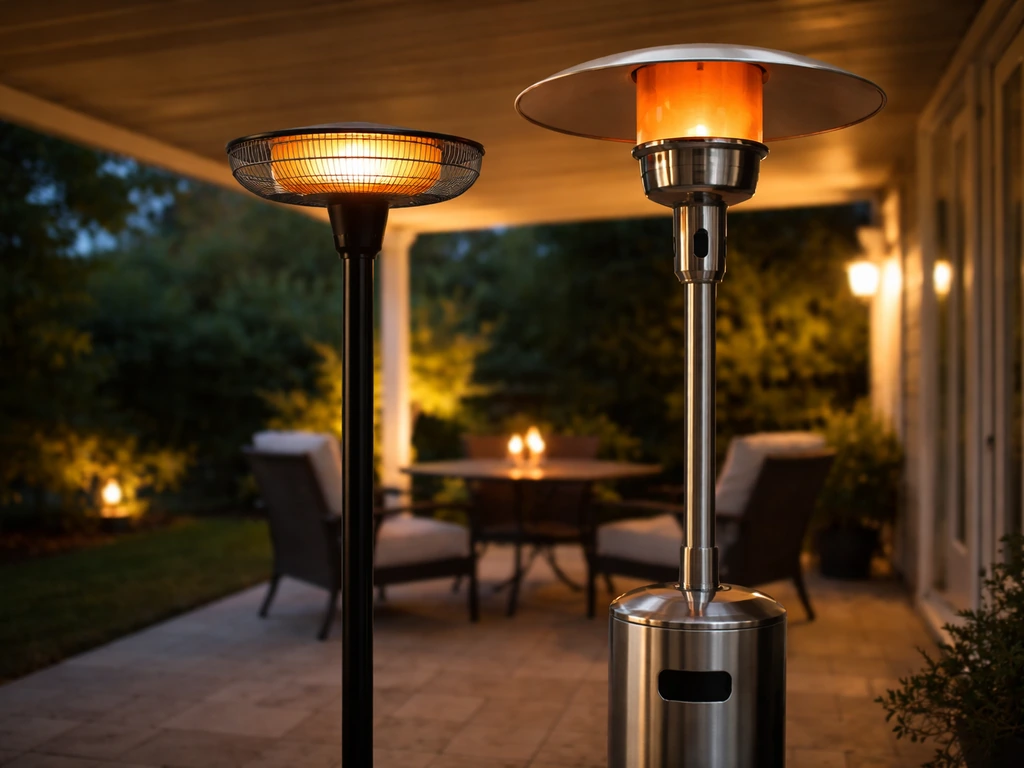
Where to buy a patio heater now, plus electric vs gas vs propane tips, safety checks, and size/BTU buying checklist.